
The first complete English translation of the Nag Hammadi Library, titled The Nag Hammadi Library in English, was published in 1977 (hardcover) and 1978 (paperback). Edited by James M. Robinson, it brought together over 50 previously lost Gnostic texts into a single volume for the first time. [1, 3]
Earliest Published Books and Editions
Before the 1977 definitive collection, only individual texts or partial translations were available in print:
- The Jung Codex (Codex I) Partial Translations (1956): The very first published texts from the library appeared in Cairo in 1956, focusing on a specific codex named after psychologist Carl Jung.
- Gospel of Thomas English Translation (1960): The most famous text in the collection, the Gospel of Thomas, was published individually in English by Jean Doresse in 1960.
- The Facsimile Edition (1970s): Under UNESCO sponsorship, a complete set of photographic (facsimile) reproductions of the original Coptic manuscripts was published throughout the 1970s, concluding in 1984.
- Major Revisions (1988): A widely used third revised edition of Robinson’s complete library was released in 1988, which added 10 years of further research and is still a primary scholarly reference. [1, 2, 3, 4]
Key Early Scholarly Projects
- Coptic Gnostic Library Project: Formed at the 1966 Messina Congress, this international team led by James M. Robinson worked to produce the bilingual editions and final translations.
- The Gnostic Gospels (1979): Shortly after the first full translation, Elaine Pagels published this landmark popular work, which introduced the Nag Hammadi findings to a mainstream global audience. [1, 2, 3]
Would you like to know more about the specific translators involved or the details of a particular text like the Gospel of Truth?
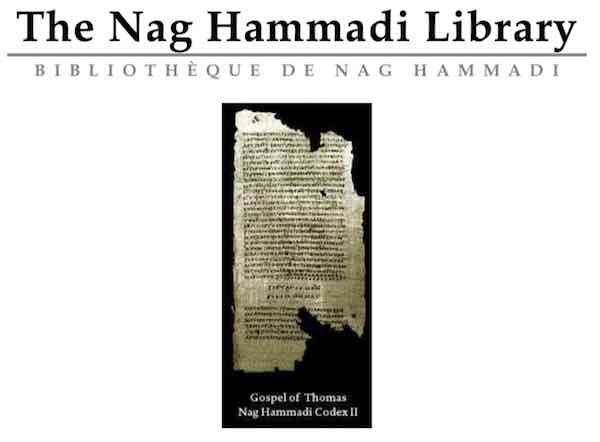
The complete Nag Hammadi Library: all 13 codices
I've cross-checked the earlier list against the scholarly Coptic Gnostic Library catalog and a codex-by-codex reference. The important correction is that the collection is conventionally cataloged as 52 tractate entries, not 52 entirely different books. Codex XI's five sections belong within A Valentinian Exposition, and Codex XIII consists of surviving leaves rather than a complete thirteenth codex.  Scholarly Editions +1
The list below includes the standard tractates, repeated copies, and surviving fragmentary material, with alternative titles noted where helpful.
Codex I — The Jung Codex
- The Prayer of the Apostle Paul
- The Apocryphon of James (The Secret Book of James)
- The Gospel of Truth
- The Treatise on the Resurrection (The Epistle to Rheginos)
- The Tripartite Tractate
Codex II
- The Apocryphon of John (The Secret Book of John)
- The Gospel of Thomas
- The Gospel of Philip
- The Hypostasis of the Archons (The Reality of the Rulers)
- On the Origin of the World
- The Exegesis on the Soul
- The Book of Thomas the Contender
Codex III
- The Apocryphon of John
- The Gospel of the Egyptians (The Holy Book of the Great Invisible Spirit)
- Eugnostos the Blessed
- The Sophia of Jesus Christ (The Wisdom of Jesus Christ)
- The Dialogue of the Savior
Codex IV
- The Apocryphon of John
- The Gospel of the Egyptians (The Holy Book of the Great Invisible Spirit)
Codex V
- Eugnostos the Blessed
- The Apocalypse of Paul
- The First Apocalypse of James
- The Second Apocalypse of James
- The Apocalypse of Adam
Codex VI
- The Acts of Peter and the Twelve Apostles
- The Thunder, Perfect Mind
- Authoritative Teaching (The Authoritative Discourse)
- The Concept of Our Great Power
- Plato's Republic, 588A–589B — an excerpt
- The Discourse on the Eighth and Ninth
- The Prayer of Thanksgiving
- A passage from the Hermetic Asclepius (sections 21–29)
Codex VII
- The Paraphrase of Shem
- The Second Treatise of the Great Seth
- The Apocalypse of Peter
- The Teachings of Silvanus
- The Three Steles of Seth
Codex VIII
- Zostrianos
- The Letter of Peter to Philip
Codex IX
- Melchizedek
- The Thought of Norea
- The Testimony of Truth
Codex X
43. Marsanes
Codex XI
- The Interpretation of Knowledge
- A Valentinian Exposition, comprising five distinguishable sections:
- On the Anointing
- On Baptism A
- On Baptism B
- On the Eucharist A
- On the Eucharist B
- Allogenes (The Foreigner)
- Hypsiphrone
Codex XII
- The Sentences of Sextus
- The Gospel of Truth — a fragmentary copy
- Fragments of otherwise unidentified writings
Codex XIII
- Trimorphic Protennoia (The Three-Formed First Thought)
- On the Origin of the World — a small fragment
Important notes for using this list
- Repeated works: The Apocryphon of John occurs in Codices II, III, and IV; Eugnostos the Blessed occurs in Codices III and V; the Gospel of the Egyptians occurs in Codices III and IV; and the Gospel of Truth occurs in Codices I and XII.
- Codex XI: The five sections under A Valentinian Exposition are subdivisions of one larger work, not five additional independent tractates in the conventional count.
- Codex XIII: The surviving leaves were found inside the binding of another codex. They are not evidence of a complete thirteenth manuscript book surviving intact.
- Not all writings are Gnostic in the narrow sense: The collection includes Hermetic material, a passage from Plato, and ethical wisdom literature alongside Christian and Gnostic revelations.
The strongest scholarly reference for checking individual titles and manuscript locations is the Coptic Gnostic Library Online, which provides the original Coptic texts, translations, introductions, and codex references. Scholarly Editions +2
This is the standard complete codex-by-codex inventory, including duplicate witnesses and the fragment entries, rather than a list of only distinct works.