Transcript:
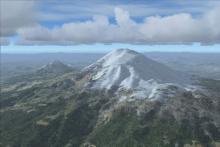
High in the mountains where the sky (0:02) meets the stone lies one of the oldest (0:04) lands on the planet, the Armenian (0:07) Highlands. Between the Black Sea, the (0:10) Mediterranean, and the Caspian.
0:13 Here began what scientists call the (0:15) genetic mystery.
0:17 A people whose blood has frozen in time.
0:20 3,000 years ago, something happened.
0:24 Genetic mixing suddenly stopped.
0:26 The study by Haber and colleagues (0:28) published in the European Journal of (0:30) Human Genetics in 2016
0:33 analyzed the complete genomes of 173
0:36 Armenians.
0:37 The result was shocking. Genetic signals (0:40) of mixing cease after 1200 BC. After the (0:45) collapse of the Bronze Age, when the (0:46) great civilizations of the Mediterranean (0:48) fell in flames, the Armenians closed (0:51) themselves off. What caused one people (0:54) to turn into a genetic island? And why (0:56) does their blood hold a code that has (0:58) disappeared from all others? Armenians (1:00) call themselves High. Legends speak of (1:02) their ancestor Hike, a descendant of (1:05) Noah, a giant who rose against the (1:07) tyrant bell. Hike's arrow tore the sky (1:11) over Babylon.
1:12 Blood, freedom,
1:15 the beginning of a people. But myth is (1:18) always a distorted memory. What if (1:21) beneath the layer of legends lies the (1:23) true story? A story of migrations, wars,
1:26 and mixtures.
1:28 For decades, scientists could not answer (1:31) one question. Where did the Armenians (1:34) come from? They do not resemble Turks.
1:37 They do not resemble Iranians. They do (1:40) not resemble Greeks. They are a genetic (1:42) bridge between Europe, the Middle East,
1:45 and the Caucasus.
1:47 Whole genome analysis showed they form a (1:49) distinct cluster linking three (1:51) continents. Are you ready to discover (1:53) whose blood flows in the veins of this (1:55) people and why they ended up where all (1:57) paths converge? U5 U4 maternal lines as (2:01) old as ice itself. 40 to 50,000 years (2:05) ago. The last glacial maximum Europe (2:08) buried under layers of ice. But here (2:11) life hunters, gatherers, survivors.
2:15 Shonberg and colleagues sequenced (2:17) complete mitochondrial genomes of 30
2:19 Armenians in 2011. The result, all 30
2:23 sequences are unique. The diversity is (2:26) astonishing. HLOype U accounts for (2:29) 26.7%.
2:31 The oldest European lineage. U5 hunters (2:34) of the Paleolithic. Dark skin, blue (2:38) eyes. They roamed Europe long before (2:40) agriculture.
2:42 Demographic analysis showed two waves of (2:44) expansion around 45,000 years ago and 15
2:47 to 18,000 years ago after the glaciers (2:50) receded. What protected this land from (2:53) the extinction of ancient lines? And why (2:55) has the blood of hunters survived for (2:57) millennia here? X a haplo group that (3:00) should not exist. 10% of Armenians carry (3:04) this maternal line. It is found only (3:06) among the Caucasian peoples. Armenians,
3:09 Azerbaijanis and Georgians, but it is (3:13) absent in Turks, absent in Iranians.
3:17 Genetic data showed X is characteristic (3:19) exclusively of the Caucasus.
3:22 This is not an introduced lineage. It is (3:25) indigenous, born here, ancient,
3:28 isolated, unique. the harvest.
3:31 Imagine that thousands of years ago, a (3:32) group of people climbed into the (3:34) mountains (3:35) and stayed there (3:37) forever.
3:38 Their daughters passed down mitochondria (3:40) from generation to generation until they (3:43) became a living artifact, a genetic (3:46) testament to isolation.
3:49 Can you imagine that someone in modern (3:50) Yeravan carries the DNA of a woman from (3:53) the age of mammoths? Blood that has (3:56) never left these mountains. 9,000 years (3:59) ago, the world changed. From Anatolia,
4:02 the territory of modern Turkey, people (4:04) emerged with grain, pottery, and (4:06) livestock. They moved in all directions,
4:10 settled Europe, brought civilization.
4:13 Their patrinear lines G2A, J2, J1, their (4:17) maternal lines HK JT. The study by (4:21) Rootsy and colleagues in 2012
4:23 established the homeland of Hapla group (4:25) G as eastern Anatolia, Armenia and (4:28) Western Iran. G2A P15 is found in 6 to (4:32) 13% of modern Armenians. These are (4:35) farmers, builders, those who turn stone (4:38) into homes and grass into bread. J2A
4:42 M410 makes up 17 to 32% of Armenians, a (4:46) lineage associated with the spread of (4:48) agriculture across the Middle East. J1
4:51 M267 comprises 4 to 15%,
4:55 the Levant, the fertile crescent, the (4:59) first crops.
5:01 But the farmers were not the last. What (5:04) if I told you that after them came the (5:06) horsemen and they changed everything?
5:08 RZ2103,
5:10 a lineage that should have disappeared.
5:13 6,000 years ago, from the Black Sea (5:15) steps came the Yamna culture. Horsemen,
5:19 warriors, pastoralists. They carried the (5:22) patrinear Hapla group R1B, one of the (5:25) most widespread in Europe. The Yamaya (5:28) conquered the continent. Their (5:30) descendants, Kelts, Germans, Slavs. But (5:34) in Europe, the male line dissolved into (5:37) other peoples. The Caesar arc project (5:40) published in science in 2022 analyzed (5:43) 727 ancient genomes over 11,000 years.
5:48 The sensation descendants of Yamna men (5:51) through the Y chromosome RZ2103
5:54 have survived in Armenia.
5:56 Armenia has become an enclave of step (5:58) origin. 15 to 33% of modern Armenians (6:03) carry Hapla group R1B1B1 T L23.
6:07 Imagine horsemen from the Ukrainian (6:09) steps left a genetic trace and only (6:11) there is their lineage alive. How is (6:14) this possible? Uratu,
6:17 Hayasa,
6:19 Nai.
6:20 Names of kingdoms dissolved by time.
6:23 Armenian chronicles speak of great (6:25) ancestors of heroes fighting the (6:27) Assyrians. But historians debated the (6:30) truth of these myths.
6:32 DNA provided the answer.
6:35 Genetic analysis showed that the (6:36) diversity of Armenians is explained by (6:39) several waves of mixing between 30,000
6:41 and 2,000 years BC. The Bronze Age, the (6:46) era of great migrations,
6:48 the domestication of the horse, the (6:51) invention of chariots, the spread of (6:54) metallurgy.
6:55 Peoples moved, met, mixed. Hunters from (6:59) the north, farmers from the south,
7:02 horsemen from the east.
7:03 Try and catch me.
7:04 Each wave left a mark in the genes.
7:07 Scientists have proven that the myths of (7:09) great relocations were true. Legends (7:12) emerged as memories of DNA. Can we trust (7:15) ancient chronicles when genetics (7:17) confirms they were right? A crossroads (7:19) of migrations. The study by Kovkanisian (7:22) and colleagues in 2014 analyzed 757
7:26 Armenian men from six geographical (7:28) regions. The discovery at least two (7:31) directions of Neolithic migrations (7:33) passed through Armenia. The first is (7:36) western haploype R1B1 A2 M269
7:41 a route along the Mediterranean to (7:42) Europe. Western Armenians from the Lake (7:45) Van region show genetic proximity to Cit (7:47) and Greece. The second is northern HLO
7:50 type GM201,
7:52 a path to the north cauasus. Central (7:55) Armenian populations show a 16%
7:57 frequency of G and genetic similarity (7:59) with North Caucasian peoples. J2 M172
8:03 moved both ways to Europe and the (8:06) Caucasus. HLO groups J2G and R1B1 A2
8:10 M269 comprise between 49 and 70% of all (8:14) patrinear lines of Armenians. Armenia (8:18) was not just a home. It was a gateway.
8:21 Armenians did not come from somewhere (8:23) else. They were always here. Everyone (8:26) else passed through them. The time of (8:28) warriors, the Bronze Age. About 29% of (8:33) the ancestral component of Armenians (8:35) traces back to Neolithic Europeans, the (8:38) Tylean Iceman Otsi, who lived 5,300
8:42 years ago. This is significantly higher (8:45) than in modern Middle Eastern (8:46) populations. What does this mean? The (8:50) ancient near east was genetically closer (8:52) to Europe than it is today. Neolithic (8:55) migrations connected the continents.
8:57 Peoples did not move in straight lines.
9:00 They diverged in circles, collided,
9:03 merged, diverged again. Hlettype E1 B1B1
9:09 M35 is found in 3 to 8% of Armenians.
9:13 The Mediterranean,
9:14 the trace of ancient sailors and traders (9:16) crossing the seas long before the (9:18) Phoenicians.
9:19 Analysis indicated that Armenians (9:21) preserved a genetic landscape from the (9:23) Bronze Age. Their genes are a frozen (9:26) imprint of that world that has (9:28) disappeared and will never return. Can (9:31) you accept that modern Armenians are (9:32) living heirs of the builders of the (9:34) first empires? In 301 AD, Armenia became (9:38) the first Christian state in the world.
9:41 The religious choice turned into a (9:43) genetic barrier.
9:44 Surrounding peoples, Zoroastrians,
9:47 pagans, later Muslims.
9:50 Marriages with them were forbidden.
9:52 Within isolation, maternal lines over a (9:55) thousand years old were preserved. You (9:57) approached 27%.
9:59 The oldest European hunter line. H 20%
10:03 the most common in Europe. J 16.7%.
10:07 The Middle East. T 10% X1 in 10 a unique (10:12) Caucasian line K and HV 6.7% each all (10:18) these lines are as ancient as (10:19) agriculture locked within one people for (10:22) centuries Christianity became a fortress (10:25) the church protected identity more (10:27) effectively than any army. Imagine a (10:30) religion working as a biological shield (10:33) separating one people from all others (10:35) for 17 centuries.
10:37 Is this possible? Cassoon, a mountainous (10:40) valley in western Armenia, a place cut (10:42) off from the world. Genetic analysis (10:45) revealed the Sassoon population is a (10:47) unique outlier. They do not resemble (10:50) other Armenians. TM184 20%. Nowhere else in Armenia are such (10:56) frequencies found. R2M124 17%.
11:01 A lineage characteristic of India and (11:03) Central Asia. How did it get to the (11:06) Armenian mountains? Trade routes,
11:09 ancient migrations.
11:11 Scientists link this to prolonged (11:12) geographical isolation. Cassoon has been (11:16) closed for centuries. Marriages within (11:18) the community. No outsiders. The result,
11:22 a unique genetic profile distinct from (11:25) all other Armenians.
11:27 Cissoon is proof that isolation creates (11:29) new genetics. One valley, one people. A
11:34 thousand years without contact with the (11:36) outside world. What happens to DNA when (11:39) time stops? Armenia at the crossroads of (11:42) empires. Byzantium from the west. Persia (11:46) from the east. Arabs from the south.
11:49 Turks from the north.
11:51 Conquests, wars, genocides. Yet Armenian (11:56) genetics changed little. Whole genome (11:59) studies have shown Armenians (12:00) significantly differ from modern Turks.
12:03 Turks exhibit a genetic shift towards (12:05) central Asia with about 8% East Asian ad (12:08) mixture dated to approximately 800 years (12:10) ago. This reflects Turk migrations.
12:14 Selljukes,
12:16 Ottomans, Armenians show no signs of (12:19) this shift. Genetically, they are most (12:22) closely related to criate Greeks,
12:24 Lebanese Christians, and Jews.
12:27 Other genetic isolates of the Middle (12:29) East that have preserved an ancient (12:31) genetic landscape.
12:33 Empires tried to erase them, assimilate (12:36) them, dilute them. But the memory (12:38) encoded in genes turned out to be (12:40) stronger than any empire. How did one (12:43) people preserve themselves among giants?
12:45 Faith, language, or something in the DNA
12:48 itself, the Armenian language,
12:51 Indo-Uropean,
12:53 but a separate branch. not Slavic, not (12:56) romance, not Germanic, a distinct group (12:59) within the Indo-Uropean family. The (13:02) Caesar arc project established a (13:04) connection between the Armenian language (13:06) and a common step heritage through the Y
13:08 chromosome line that has survived only (13:10) here. This supports the hypothesis of a (13:13) West Asian origin of the (13:14) protoindo-uropean language. The language (13:17) created an invisible barrier. An (13:20) Armenian speaking Armenian could not (13:22) understand a Turk. A Turk could not (13:25) understand an Armenian. The linguistic (13:28) gulf turned into a genetic one. The (13:30) inability to communicate implied the (13:32) impossibility of marriage. About 500
13:36 years ago, internal structures emerged.
13:39 A period of division between the Ottoman (13:41) and Sapphavid empires. Western (13:43) Armenians, Eastern Armenians.
13:47 Two clusters divided by borders but (13:49) connected by language.
13:51 Words became mightier than swords.
13:54 But at what cost? The 11th century, the (13:57) Armenian kingdom of Celicia, the (14:00) Mediterranean coast, ports, ships,
14:03 crusades, Armenians traded with Franks,
14:06 Venetians, and Genoies, contacts with (14:08) Europe, dynastic marriages. It seemed (14:12) the genetic barrier should have broken.
14:14 Yet even here, it held firm. Analysis of (14:18) contemporary Western Armenians showed (14:20) they formed a distinct cluster while (14:21) preserving their core genetics. The (14:24) Mediterranean influence proved to be a (14:26) drop in an ancient ocean. The Middle (14:28) Ages did not destroy their separateness.
14:31 It reinforced it. Armenian quarters in (14:34) Jerusalem, Constantinople, Venice. The (14:37) diaspora scattered around the world.
14:40 They lived among Italians, Greeks, and (14:42) Arabs, but did not mix. The church,
14:46 language, memory, invisible walls (14:50) stronger than stone. Is it possible to (14:53) live for centuries among strangers and (14:55) not dissolve?
14:57 Armenians proved that it is possible.
15:00 But what held them together when the (15:02) whole world pushed them apart? Armenia (15:04) is not homogeneous.
15:06 Geography created a genetic mosaic. The (15:09) western regions lean towards the (15:11) Mediterranean. Their genes indicate (15:13) ancient ties with the island peoples of (15:15) the Aian Sea. Central regions bear an (15:18) enhanced Caucasian imprint with 16%
15:21 northern lines. Mountain passes allowed (15:24) migrations for centuries. Isolated (15:27) valleys became genetic traps. Here,
15:30 ancient lines from distant lands froze (15:32) in proportions reaching 20% and higher.
15:35 Not found anywhere else in Armenia. The (15:38) eastern territories reflect an averaged (15:40) portrait. All streams converged here.
15:43 Mountains divided, valleys connected,
15:47 rivers determined the paths. Each region (15:50) received its unique signature recorded (15:52) in the genes. But despite this internal (15:54) diversity, outside there is one (15:57) identity. A single memory proved (15:59) stronger than geography. How is it (16:02) possible to remain one people when the (16:04) very land pushes apart? Three major (16:06) studies, leading scientific journals in (16:09) the world, 727 ancient genomes over (16:13) 11,000 years, 173 modern complete genomes, 757 Y chromosomeal analyses.
16:23 All results converge to one conclusion.
16:26 Armenians preserved a genetic profile (16:28) that has disappeared in all others.
16:31 Their ancestral components are about 30%
16:34 Neolithic Europeans, higher than in any (16:37) modern Middle Eastern populations.
16:40 The step component is present but does (16:42) not dominate. The Neareastern remains (16:44) foundational. The oldest European (16:47) lineage has survived. A unique (16:50) combination of three worlds,
16:52 Paleolithic, Neolithic, and Bronze Age (16:55) in proportions unchanged for 30
16:57 centuries. Scientists call this genetic (17:00) continuity, a rare phenomenon in human (17:03) history. How did one people achieve what (17:06) no one else could? And what price did (17:09) they pay for it? Genetic ties no one (17:11) suspected. A large-scale analysis of (17:14) ancient DNA traced migration paths over (17:16) millennia. The results were shocking.
17:20 Armenians were found to be genetically (17:22) close to people separated by thousands (17:24) of kilome.
17:25 Criate Greeks, Drews of Lebanon, Jews,
17:30 all are genetic isolates that preserved (17:32) an ancient neareastern profile that has (17:34) disappeared in others. Neolithic farmers (17:37) from Anatolia settled in a wave from the (17:40) Aian Sea to the Armenian highlands. They (17:43) created a genetic continuum extending (17:45) across three regions. Then each group (17:48) closed itself off. Religion, language, geography.
17:54 Isolation conserved a common past in (17:56) different peoples. Modern technologies (17:59) showed Armenians are not an isolated (18:01) island. They are a knot in a web of (18:04) ancient connections. A shared memory of (18:07) an era when the world had not yet (18:08) divided.
18:10 Can you believe that peoples who have (18:12) never met carry the same DNA? The 20th (18:15) century, a time of wars, revolutions, and mass migrations.
18:21 Old empires collapsed. New states redrew (18:24) the maps. Ideologies attempted to erase (18:27) the past. Urbanization mixed regions.
18:30 Migration severed connections.
18:33 Traditional barriers faced unprecedented (18:35) pressure. It seemed nothing would (18:37) withstand the tide. But genetics told a (18:40) different story. Modern studies (18:43) confirmed that Armenians maintained (18:45) continuity despite monumental disasters.
18:48 Their genetic profile remained stable.
18:51 Genetic continuity indicates the (18:53) preservation of traditional practices (18:54) even as geographical boundaries (18:56) vanished.
18:58 Memory proved stronger than chaos. The (19:00) 21st century opened a new era of mixed (19:03) marriages, international families, and (19:06) blurred identities. Many peoples are (19:08) changing before our eyes.
19:11 Armenians remain. What holds a people (19:14) together when everything around pushes (19:16) for change? Closeness has consequences.
19:19 When a population exists within itself (19:21) for centuries, certain genetic variants (19:24) do not disappear. They accumulate. The (19:27) founder effect, genetic drift. The Fins (19:31) face this directly. About 40 rare (19:35) hereditary conditions are concentrated (19:36) in their population. Scientists call (19:39) this the Finnish heritage of diseases.
19:42 Ashkanazi Jews paid a similar price.
19:45 Tay-axs gaucher accumulation diseases (19:48) arising from centuries of indogamy. This (19:51) is a universal law of population (19:53) genetics. Any isolated group potentially (19:56) carries such imprints. This is not a (19:59) curse. It is a biological reality. What (20:03) preserves uniqueness simultaneously (20:05) conserves rare variance. Survival as a (20:08) distinct genetic unit always comes with (20:10) a cost. Can one maintain oneself without (20:13) paying a genomic price? The Armenian (20:15) Highlands, a land where time has stopped (20:18) in the genes. From the Ice Age to the (20:21) digital era, one people has maintained (20:24) continuity.
20:25 They survived the cold of the (20:27) Paleolithic,
20:28 met the first farmers of the Neolithic,
20:31 accepted the horsemen of the steps,
20:34 endured the fall of empires, the (20:36) collapse of civilizations, invasions (20:39) from all four corners of the world.
20:41 Their DNA is a frozen chronicle of (20:43) humanity. R1B, J2, GTE hold the memory (20:48) of the Yamna, Anatolians, hunters, and (20:51) sailors. U HJX are maternal lines as old (20:55) as the Earth itself. Three millennia of (20:58) genetic continuity, a phenomenon that (21:01) exists nowhere else. Studies call this a (21:04) genetic miracle. One of the rarest (21:06) instances in the history of Homo (21:08) sapiens. Armenians are not just a (21:11) people. They are witnesses. Carriers of (21:14) a code that has disappeared from all (21:15) others. Ararat stands. A people live.
21:20 Memory is immortal.
21:22 Do you want to know what ancient blood (21:24) flows in you?
21:26 Like, subscribe.