PARAMAHANSA YOGANANDA
PRAISE FOR PARAMAHANSA YOGANANDA’S COMMENTARY ON THE BHAGAVAD GITA...
God Talks With Arjuna: The Bhagavad Gita—A New Translation and Commentary
(published by Self-Realization Fellowship, 1995)
“Yogananda’s commentary penetrates to the heart of the Bhagavad Gita to reveal the deep spiritual and psychological truths lying at the heart of this great Hindu text.” —Publishers Weekly
“One of the finest works on the subject...a masterpiece of spiritual, literary and philosophical work.” —India Post
“This lavish two-volume edition...is a delight for the eye and the heart...a testimony to [Yogananda’s] extraordinary understanding, springing from direct experience of the higher realities, and also his compassion for seekers thirsting for spiritual truth....Experience the true pulse of the Bhagavad Gita and be pulled into its sphere of influence through the luminous words of one of this century’s great yoga masters.”— Yoga Journal
“A flower of great beauty has risen from the writings and tradition of Paramahansa Yogananda...he brings the Bhagavad Gita into immediate focus for modern times....Most highly recommended!”— Leading Edge Review
“This monumental translation and commentary on the Bhagavad Gita, by one of India’s illustrious saints, breaks new ground.... Yogananda explores the science of yoga encrypted in the Gita...and the way this ancient discipline makes possible the direct experience of God. In simple but eloquent language, he sets forth a sweeping chronicle.” — The Quest
“Each verse is meticulously translated by Yogananda, but it is [his] explanations drawing on a vast array of knowledge that is the main attraction here....An impressive panorama of wisdom, of psychology, spirit, epistemology, physiology and yoga doctrine...Stunning.”— The Book Reader
“[Yogananda’s] commentary...reveals the highest truth, yet remains accessible to all seekers by its immediacy and_ simplicity of expression....What [his] Autobiography achieves in the realm of human experience, God Talks With Arjuna achieves as a complete teaching for the spiritual life....This is a book that one can study and cherish for a lifetime.
It will be remembered as one of the great commentaries on the Gita....” —
Yoga International ett
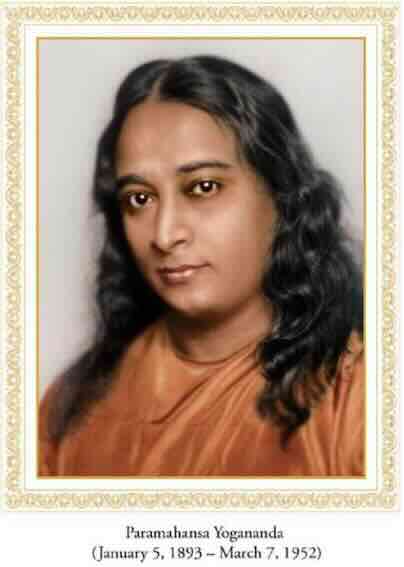
Paramahansa Yogananda
(January 5, 1893 — March 7, 1952)
Copyright © 1995, 1999 Self-Realization Fellowship All rights in this digital edition of God Talks With Arjuna: The Bhagavad Gita are reserved by Self-Realization Fellowship.
NOTE TO THE READER
Subject only to any conditions established by the distributor from which you obtained this book, Self-Realization Fellowship welcomes you to download this edition onto any number of your own devices for your individual, non-commercial use; and to print excerpts for your own reference.
Kindly note, however, that upon acquiring this edition the reader agrees to abide by applicable national and international copyright laws; and to abstain from distributing, reproducing, or transmitting the contents to other individuals or entities, by any means (electronic, mechanical, or otherwise) without the publisher’s prior written consent. We appreciate your cooperation in respecting the author’s work and in helping to preserve its integrity by upholding these principles.
Thank you for supporting our non-profit publishing endeavors in connection with the legacy of Paramahansa Yogananda.
We acknowledge with appreciation the work of the artists Mr. V. V. Sapar and Sapar Brothers, under the supervision of Mr. B. D. Vyas, who created the paintings in this publication under exclusive commission by Self-Realization Fellowship according to designs originated by the publisher.
Acknowledgments for quoted material appear here.
Authorized by the International Publications Council of SELF-REALIZATION FELLOWSHIP
3880 San Rafael Avenue Los Angeles, California 90065-3219
The Self-Realization Fellowship name and emblem (shown above) appear on all SRF books, recordings, and other publications, as an assurance that a work originates with the society establisehd by Paramahansa Yogananda and faithfully conveys his teachings.
Second edition, 1999. Ebook edition, 2018.
Library of Congress Catalog Card Number: 95-71657
ISBN: 978-0-87612-030-9 (hardcover)
ISBN: 978-0-87612-03 1-6 (paperback)
ISBN: 978-0-87612-779-7 (Kindle edition)
ISBN: 978-0-87612-780-3 (ePub edition)
DEDICATION
To the Arjuna-devotee within every true seeker
THE SPIRITUAL LEGACY OF PARAMAHANSA YOGANANDA
His Complete Writings, Lectures, and Informal Talks
Paramahansa Yogananda founded Self-Realization Fellowship in 1920 to disseminate his teachings worldwide and to preserve their purity and integrity for generations to come. A prolific writer and lecturer from his earliest years in America, he created a renowned and voluminous body of works on the yoga science of meditation, the art of balanced living, and the underlying unity of all great religions. Today this unique and far-reaching spiritual legacy lives on, inspiring millions of truth-seekers all over the world.
In accord with the express wishes of the great master, Self-Realization Fellowship has continued the ongoing task of publishing and keeping permanently in print The Complete Works of Paramahansa Yogananda.
These include not only the final editions of all the books he published during his lifetime, but also many new titles—works that had remained unpublished at the time of his passing in 1952, or which had been serialized over the years in incomplete form in Self-Realization Fellowship’s magazine, as well as hundreds of profoundly inspiring lectures and informal talks recorded but not printed before his passing.
Paramahansa Yogananda personally chose and trained those close disciples who formed the Self-Realization Fellowship Publications Council, giving them specific guidelines for the preparation and publishing of his teachings. The members of the SRF Publications Council (monks and nuns who have taken lifelong vows of renunciation and selfless service) honor these guidelines as a sacred trust, in order that the universal message of this beloved world teacher will live on in its original power and authenticity.
The Self-Realization Fellowship emblem (shown above) was designated by Paramahansa Yogananda to identify the nonprofit society he founded as the authorized source of his teachings. The SRF name and emblem appear on all Self-Realization Fellowship publications and recordings, assuring the reader that a work originates with the organization founded by Paramahansa Yogananda and conveys his teachings as he himself intended they be given.
— SELF-REALIZATION FELLOWSHIP
CONTENTS
I: THE DESPONDENCY OF ARJUNA
The Significance of Chapter I
“What Did They?”
—Survey of the Inner Psychological and Spiritual Battlefield
The Opposing Armies of the Spiritual and Materialistic Forces
The Conch Shells: Inner Vibratory Battle in Meditation
The Devotee Observes the Enemies to Be Destroyed
Arjuna’s Refusal to Fight
II: SANKHYA AND YOGA: COSMIC WISDOM AND THE METHOD OF ITS
ATTAINMENT
The Lord’s Exhortation to the Devotee, and the Devotee’s Plea for Guidance
The Eternal, Transcendental Nature of the Soul
The Righteous Battle Is Man’s Religious Duty
Yoga: Remedy for Doubt, Confusion, and Intellectual Dissatisfaction
The Yoga Art of Right Action That Leads to Infinite Wisdom
Qualities of the Self-realized
III: KARMA YOGA: THE PATH OF SPIRITUAL ACTION
Why Is Activity a Necessary Part of the Path to Liberation?
The Nature of Right Action: Performing All Works as Oblations (Yajna)
Righteous Duty, Performed With Nonattachment, Is Godly
How Egoless Action Frees the Yogi From Nature’s Dualities and the Bondage of Karma
Right Attitude Toward One’s Spiritual Guide and Sadhana
Conquering the Two-sided Passion, Desire and Anger
IV: THE SUPREME SCIENCE OF KNOWING GOD
The Historical Basis and Esoteric Essence of Yoga
The Incarnations of the Divine
Paths of Liberation From the Rounds of Rebirth
The Lord’s Modes of Action Within His Creation
Freedom From Karma: The Nature of Right Action, Wrong Action, and Inaction
Yajna, the Spiritual Fire Rite That Consumes All Karma
The All-sanctifying Wisdom, Imparted by a True Guru
V: FREEDOM THROUGH INNER RENUNCIATION
Which Is Better—Serving in the World or Seeking Wisdom in Seclusion?
The Gita’s Way of Freedom: Meditation on God Plus Desireless Activity
The Self as Transcendental Witness: Ensconced in Bliss, Unaffected by the World
Good and Evil and Their Relation to the Soul
The Knower of Spirit Abides in the Supreme Being
Transcending the Sensory World, Attaining the Bliss Indestructible
VI: PERMANENT SHELTER IN SPIRIT THROUGH YOGA MEDITATION
True Renunciation and True Yoga Depend on Meditation
Transforming the Little Self (Ego) Into the Divine Self (Soul)
How the Sage of Self-realization Views the World
Krishna’s Advice for Successful Practice of Yoga
Attaining Self-Mastery and Control of the Mind
Mergence of the Self in Spirit, Pervading All Beings
The Lord’s Promise: The Persevering Yogi Ultimately Is Victorious
VII: THE NATURE OF SPIRIT AND THE SPIRIT OF NATURE
“Hear How Thou Shalt Realize Me”
Prakriti: The Dual Nature of Spirit in Creation
How the Creator Sustains the Manifested Creation
Cosmic Hypnosis (Maya) and the Way to Transcend It
Which “God” Should Be Worshiped?
Perceiving the Spirit Behind the Dream-Shadows of Nature
VIII: THE IMPERISHABLE ABSOLUTE: BEYOND THE CYCLES OF CREATION AND
DISSOLUTION
The Manifestations of Spirit in the Macrocosm and Microcosm
The Yogi’s Experience at the Time of Death
The Method of Attaining the Supreme
The Cycles of Cosmic Creation
The Way of Release From the Cycles of Rebirth
IX: THE ROYAL KNOWLEDGE, THE ROYAL MYSTERY
Direct Perception of God, Through Methods of Yoga “Easy to Perform”
How the Lord Pervades All Creation, Yet Remains Transcendent
The Right Method of Worshiping God
X: THE INFINITE MANIFESTATIONS OF THE UNMANIFEST SPIRIT
The Unborn and Beginningless, Beyond Form and Conception
The Diverse Modifications of God’s Nature
In Joy and Devotion, the Wise Adore Him
The Devotee Prays to Hear From the Lips of the Lord Himself: “What Are Thy Many
Aspects and Forms?”
“I Will Tell Thee of My Phenomenal Expressions”
XI: VISION OF VISIONS: THE LORD REVEALS HIS COSMIC FORM
XII: BHAKTI YOGA: UNION THROUGH DEVOTION
Should the Yogi Worship the Unmanifest, or a Personal God?
The Levels of Spiritual Practice and the Stages of Realization
Qualities of the Devotee, Endearing to God
XIII: THE FIELD AND THE KNOWER OF THE FIELD
The Divine Forces That Create the Body, the Field Where Good and Evil Are Sown and Reaped
The True Nature of Matter and Spirit, Body and Soul
Characteristics of Wisdom
Spirit, as Known by the Wise
Purusha and Prakriti (Spirit and Nature)
Three Approaches to Self-realization
Liberation: Differentiating Between the Field and Its Knower
XIV: TRANSCENDING THE GUNAS
The Three Qualities (Gunas) Inherent in Cosmic Nature
Mixture of Good and Evil in Human Nature
The Fruits of the Sattvic, Rajasic, and Tamasic Life
The Nature of the Jivanmukta—One Who Rises Above Nature’s Qualities
XV: PURUSHOTTAMA: THE UTTERMOST BEING
Eternal Ashvattha: The Tree of Life
The Abode of the Unmanifest
How Spirit Manifests as the Soul
The Supreme Spirit: Beyond the Perishable and the Imperishable
XVI: EMBRACING THE DIVINE AND SHUNNING THE DEMONIC
The Soul Qualities That Make Man Godlike
The Nature and Fate of Souls Who Shun the Divine
The Threefold Gate of Hell
The Right Understanding of Scriptural Guidance for the Conduct of Life
XVII: THREE KINDS OF FAITH
Three Patterns of Worship
Three Classes of Food
Three Grades of Spiritual Practices
Three Kinds of Giving
Aum-Tat-Sat: God the Father, Son, and Holy Ghost
XVIII: “IN TRUTH DO I PROMISE THEE: THOU SHALT ATTAIN ME”
Renunciation: The Divine Art of Acting in the World With Unselfishness and
Nonattachment
The Roots of Action and the Consummation of Action (Liberation)
Three Grades of Knowledge, Action, and Character
Intelligence (Buddhi), Fortitude (Dhriti), and Happiness (Sukham): Their Higher and
Lower Expressions
Discerning One’s Divinely Ordained Duty in Life
Summary of the Gita’s Message
The Dialogue Between Spirit and Soul Concludes
ADDENDA
Afterword, by Sri Daya Mata
Ode to the Bhagavad Gita, by Paramahansa Yogananda
Transliteration and Pronunciation of Sanskrit Terms
Epithets of Lord Krishna and Arjuna
Lahiri Mahasaya’s Diagram of Chakras
About the Author
Aims and Ideals of Self-Realization Fellowship
Self-Realization Fellowship Publications and Lessons
Terms Associated With Self-Realization Fellowship
Notes
ILLUSTRATIONS
Paramahansa Yogananda (frontispiece)
Bhagavan Krishna as a child in Brindaban
Chart: Chronology of creation, symbolized in genealogy of the Kurus and
Pandus
Bodily Kingdom as ruled by King Soul
Bodily Kingdom as ruled by King Delusive Ego
The blind King Dhritarashtra asked: “What did they, O Sanjaya?”
Sri Krishna with the Pandava princes and Kunti and Draupadi
The chariot of meditative consciousness
The soul’s journey at the time of bodily death
“Be a yogi by uniting yourself to My blessed presence in your soul”
Arjuna and Duryodhana seeking Sri Krishna’s aid in battle
At the court of Sri Krishna
Sri Krishna proposing peaceful compromise to Duryodhana at Kurus’
palace
The Pandavas and Draupadi retire to the Himalayas
Bhagavan Krishna as Yogeshvara,
“Lord of Yoga”
Yoga meditation: the esoteric fire-rite (yajna) of union with Spirit
The meditating yogi’s unwavering perception of the Divine
“He who perceives Me everywhere…
”
Prakriti, Cosmic Mother Nature, and Her universal work of creation
“A devotional offering acceptable in My sight”
Arjuna beholding the Cosmic Vision
Sri Krishna instructs Arjuna about the three gunas, qualities, of Nature
Bhagavan Krishna and Arjuna on the field of Kurukshetra
Sage Vyasa, author of the Bhagavad Gita
Diagram of chakras by Lahiri Mahasaya
Paramahansa Yogananda, 1950
PREFACE
By Sri Daya MATA
Spiritual successor to Paramahansa Yogananda and president of Self-Realization Fellowship/Yogoda Satsanga Society of India from 1955 until her passing in 2010
“NO SIDDHA LEAVES THIS WORLD WITHOUT having given some truth to mankind.
Every free soul has to shed on others his light of God-realization.” How generously Paramahansa Yogananda fulfilled this obligation! —scriptural words voiced by him early in his world mission. Even if he had left to posterity nothing more than his lectures and writings, he would rightly be ranked as a munificent giver of divine light. And of the literary works that flowed so prolifically from his communion with God, the Bhagavad Gita translation and commentary may well be considered the Guru’s most comprehensive offering—not merely in sheer volume but in its all- embracing thoughts.
My own first introduction to India’s renowned scripture was as a youth of fifteen, when a copy of Sir Edwin Arnold’s translation of the Gita was given to me. Its beautifully poetic lines filled my heart with a deep longing to know God. But where was someone who could show me the way to Him?
It was two years later, in 1931, that I met Paramahansa Yogananda. That he knew God was immediately, overwhelmingly apparent, in his countenance and in the joy and divine love that literally radiated from him. I soon entered his monastic ashram; and throughout the more than twenty years that followed I was blessed to live and seek God in his presence, with his guidance—as a disciple, and as his secretary in both ashram and organizational matters. The passing years only deepened my first awed recognition of his spiritual stature. I saw that in him the world had been given a true exemplar of the essence of the Gita—in his active life of service for the upliftment of humankind, and in his constant intimacy with God, a beloved God of unconditional love.
Paramahansaji manifested utter mastery of the yoga science of meditation cited by Lord Krishna in the Gita. I often observed how effortlessly he would enter the transcendent state of samadhi; each of us present would be bathed in the ineffable peace and bliss that emanated from his God-communion. By a touch, a word, or even a glance, he could awaken others to a greater awareness of God’s presence, or bestow the experience of superconscious ecstasy on disciples who were in tune.
A passage in the Upanishads tells us: “That sage who has solely engaged himself in drinking the nectar which is no other than Brahman, the nectar which is the outcome of incessant meditation, that sage becomes the greatest of ascetics, paramahansa, and a philosopher free of worldly taint, avadhuta. By the sight of him the whole world becomes consecrated. Even an ignorant man who is devoted to his service becomes liberated.”
Paramahansa Yogananda fit the description of a true guru, a God- realized master; he was a living scripture in wisdom, action, and love for God. As the Gita advocates, his spirit of renunciation and service was one of complete nonattachment to material things and to the acclaim heaped on him by thousands of followers. His indomitable inner strength and spiritual power resided in the sweetest natural humility, in which a self-centered ego found no place to dwell. Even when he made reference to himself and his work, it was without any sense of personal accomplishment. Having attained the ultimate realization of God as the true soul-essence of one’s being, he knew no other identity apart from Him.
In the Gita, the zenith of Krishna’s revelations to Arjuna comes in Chapter XI, the “vision of visions.” The Lord reveals His cosmic form: universes upon universes, inconceivably vast, created and sustained by the infinite omnipotence of Spirit which is simultaneously aware of the tiniest particle of subatomic matter and the cosmic movement of the galactic immensities—of every thought, feeling, and action of every being on the material and heavenly planes of existence.
We witnessed the omnipresence of a guru’s consciousness, and therefore his sphere of spiritual influence, when Paramahansa Yogananda was blessed with a similar universal vision. In June 1948, from late evening throughout the night until about ten o’clock the next morning, a few of us disciples were privileged to glimpse something of this unique experience through his ecstatic description of the cosmic revelation as it unfolded.
That awe-inspiring event foretold that his time on earth was drawing to a close. Soon after this, Paramahansaji began to remain more and more in seclusion in a small ashram in the Mojave Desert, devoting as much as possible of the time that was left to him to completing his writings. Those periods of concentration on the literary message he wished to leave to the world were a privileged time for those of us who could be in his presence.
He was completely absorbed, completely at one with the truths he was perceiving within and expressing outwardly. “He came into the yard for a few minutes,” recalled one of the monks working on the grounds around Paramahansaji’s retreat. “There was a look of incalculable remoteness in his eyes, and he said to me: “The three worlds are floating in me like bubbles.’
The sheer power radiating from him actually moved me back several steps away from him.”
Another monk, entering the room where Guruji was working, remembers: “The vibration in that room was unbelievable; it was like walking into God.”
“T dictate scriptural interpretations and letters all day,’ Paramahansaji wrote to a student during this period, “with eyes closed to the world, but open always in heaven.”
Paramahansaji’s work on his Gita commentary had begun years earlier (a preliminary serialization had started in Self-Realization Fellowship’s magazine in 1932) and was completed during this period in the desert, which included a review of the material that had been written over a period of so many years, clarification and amplification of many points, abbreviation of passages that contained duplication that had been necessary only in serialization for new readers, addition of new inspirations— including many details of yoga’s deeper philosophical concepts that he had not attempted to convey in earlier years to a general audience not yet introduced to the unfolding discoveries in science that have since made the Gita’s cosmology and view of man’s physical, mental, and spiritual makeup much more understandable to the Western mind—all to be literarily prepared for publication in book form.
To help him with the editorial work, Gurudeva relied on Tara Mata
(Laurie V. Pratt), a highly advanced disciple who had met him in 1924 and worked with him on his books and other writings at various times for a period of more than twenty-five years. I know without doubt that Paramahansaji would not have allowed this book to be published without due ledgment and commendation of the role played by this faithful disciple.
“She was a great yogi,” he told me, “who lived many lives hidden away from the world in India. She has come in this life to serve this work.” On many public occasions he expressed his considered evaluation of her literary acumen and philosophical wisdom: “She is the best editor in the country; maybe anywhere. Excepting my great guru, Sri Yukteswar, there is no one with whom I have more enjoyed talking of Indian philosophy than Laurie.”
In the latter years of his life, Paramahansaji also began to train another monastic disciple whom he had chosen to edit his writings: Mrinalini Mata.
Gurudeva made clear to all of us the role for which he was preparing her, giving her personal instruction in every aspect of his teachings and in his wishes for the preparation and presentation of his writings and talks.
One day toward the end of his life on earth, he confided: “I am very worried about Laurie. Her health will not permit her to finish the work on my writings.”
Knowing the Guru’s great reliance on Tara Mata, Mrinalini Mata expressed concern: “But Master, who then can do that work?”
Gurudeva replied with quiet finality: “You will do it.”
In the years after Paramahansaji’s mahasamadhi in 1952, Tara Mata was able to continue uninterruptedly the serialization in the magazine of his commentaries on each Bhagavad Gita verse (despite her many time- consuming duties as a member and officer of the Board of Directors and editor-in-chief of all Self-Realization Fellowship publications). However, as Paramahansaji had predicted, she passed away before she could complete the preparation of the Gita manuscript as he had intended. This task then fell on the shoulders of Mrinalini Mata. She is, as Guruji foresaw, the only person after Tara Mata’s passing who could have accomplished it properly, because of her years of training from the Guru and her attunement with the Guru’s thoughts.
The publication of Paramahansa Yogananda’s Bhagavad Gita translation and commentary is the joyous fulfillment of many years of anticipation.
Indeed, it is a milestone in the history of Self-Realization Fellowship, which celebrates this year its seventy-fifth anniversary.
Paramahansa Yogananda had a dual role on this earth. His name and activities are uniquely identified with the worldwide organization he founded: Self-Realization Fellowship/Yogoda Satsanga Society of India; and for those thousands who embrace his SRF/YSS Kriya Yoga teachings, he is their personal guru. But he is also what in Sanskrit is called a jagadguru, a world teacher, whose life and universal message are a source of inspiration and upliftment for many followers of different paths and religions —his spiritual legacy a blessing offered to the entire world.
I recall his last day on earth, March 7, 1952. Gurudeva was very quiet, his consciousness inwardly withdrawn to an even greater extent than usual.
Often that day we disciples observed that his eyes were not focused on this finite world, but rather were gazing into the transcendent realm of God’s presence. When he spoke at all, it was in terms of great affection, appreciation, and kindness. But what stands out most vividly in my memory was the influence, noticed by everyone who entered his room, of the vibrations of profound peace and intense divine love that emanated from him. The Divine Mother Herself—that aspect of the Infinite Spirit personified as the tender caring and compassion, the unconditional love, that is the salvation of the world—had taken complete possession of him, it seemed, and through him was sending out waves of love to embrace all of Her creation.
That evening, during a large reception in honor of the Ambassador of India, at which Paramahansaji was the principal speaker, the great Guru left his body for Omnipresence.
As with all those rare souls who have come on earth as saviors of humankind, Paramahansaji’s influence lives on after him. His followers regard him as a Premavatar, incarnation of God’s divine love. He came with God’s love to awaken hearts sleeping in forgetfulness of their Creator, and to offer a path of enlightenment to those already seeking. In reviewing the Gita manuscript, I felt anew in Paramahansaji’s commentaries the magnetism of divine love that ever calls to us to seek God, the Supreme Goal of every human soul, and that promises its sheltering presence all along the way.
I hear again and again, echoing in my own soul, Paramahansa Yogananda’s consummate Universal Prayer—the one that perhaps most characterizes the force behind his world mission and his inspiration in giving to us this enlightening revelation of the holy Bhagavad Gita:
Heavenly Father, Mother, Friend, Beloved God,
May Thy love shine forever on the sanctuary of my devotion, and may I be able to awaken Thy love in all hearts.
Los Angeles September 19, 1995
INTRODUCTION
THE BHAGAVAD GITA IS THE MOST beloved scripture of India, a scripture of scriptures. It is the Hindu’s Holy Testament, or Bible, the one book that all masters depend upon as a supreme source of scriptural authority. Bhagavad
Gita means “Song of the Spirit,” the divine communion of truth-realization between man and his Creator, the teachings of Spirit through the soul, that should be sung unceasingly.
The pantheistic doctrine of the Gita is that God is everything. Its verses celebrate the discovery of the Absolute, Spirit beyond creation, as being also the hidden Essence of all manifestation. Nature, with her infinite variety and inexorable laws, is an evolute of the Singular Reality through a cosmic delusion: maya, the “Magical Measurer” that makes the One appear as many embracing their own individuality—forms and _ intelligences existing in apparent separation from their Creator. Just as a dreamer differentiates his one consciousness into many dream beings in a dream world, so God, the Cosmic Dreamer, has separated His consciousness into all the cosmic manifestations, with souls individualized from His own One Being endowed with the egoity to dream their personalized existences within the Nature-ordained drama of the Universal Dream.
The main theme throughout the Gita is that ie miasninenioor the one should be an adherent of sannyasa, a Bhagavad Gita renouncer of this egoity ingrained through
+ avidya, ignorance, within the physical self of man. By renunciation of all desires springing from the ego and its environments, which cause separateness between ego and Spirit; and by reunion with the Cosmic Dreamer through ecstatic yoga meditation, samadhi, man detaches himself from and ultimately dissolves the compellent forces of Nature that perpetuate the delusive dichotomy of the Self and Spirit. In samadhi, the cosmic dream delusion terminates and the ecstatic dream being awakens in oneness with the pure cosmic consciousness of the Supreme Being—ever-existing, ever-conscious, ever new Bliss.
This God-realization cannot be attained merely by reading a book, but only by dwelling every day on the above truth that life is a variety entertainment of dream movies full of the hazards of duality—villains of evil and heroic adventures with goodness; and by deep yoga meditation, uniting human consciousness with God’s cosmic consciousness. Thus does the Gita exhort the seeker to right action— physical, mental, and spiritual — toward this goal. We came from God and our ultimate destiny is to return to Him. The end and the means to the end is yoga, the timeless science of God-union.
So comprehensive as a spiritual guide is the Gita that it is declared to be the essence of the ponderous four Vedas, 108 Upanishads, and the six systems of Hindu philosophy. Only by intuitive study and understanding of these tomes, or else by contacting Cosmic Consciousness, can one fully comprehend the Bhagavad Gita. Indeed, the underlying essential truths of all great world scriptures can find common amity in the infinite wisdom of the Gita’s mere 700 concise verses.
The entire knowledge of the cosmos is packed into the Gita. Supremely profound, yet couched in revelatory language of solacing beauty and simplicity, the Gita has been understood and applied on all levels of human endeavor and spiritual striving —sheltering a vast spectrum of human beings with their disparate natures and needs. Wherever one is on the way back to God, the Gita will shed its light on that segment of the journey.
— ART REVEALS THE MIND of a people—a crude HISTORICAL ORIGIN OF arrow drawing suggests a crude mind—but the THE GITA literature of a civilization is a much finer indication of a culture. Literature is the index of the mind of a nation. India has preserved in her literature her highly evolved civilization dating back to a glorious golden age. From the undated antiquity in which the Vedas first emerged, through a grand unfoldment of subsequent exalted verse and prose, the Hindus have left their civilization not in stone monoliths or crumbling edifices, but in architecture of ornamental writing sculpted in the euphonious language of Sanskrit. The very composition of the Bhagavad Gita—its rhetoric, alliteration, diction, style, and harmony— shows that India had long since passed through states of material and intellectual growth and had arrived at a lofty peak of spirituality.+
The age and authorship of the Gita, as with so many of India’s ancient writings and scriptures, remains an engaging subject of intellectual and scholarly research and dispute. Its verses are found in the sixth of eighteen books that constitute India’s great epic poem, the Mahabharata, in the Bhishma Parva, sections 23-40. In 100,000 couplets this hoary epic— perhaps the longest poem in world literature—recounts the history of the descendants of King Bharata, the Pandavas and Kauravas, cousins whose dispute over a kingdom was the cause of the cataclysmic war of Kurukshetra. The Bhagavad Gita, a sacred dialogue on yoga between Bhagavan Krishna—who was at once an earthly king and a divine incarnation—and his chief disciple, the Pandava prince Arjuna, purportedly takes place on the eve of this fearsome war.
The authorship of the Mahabharata, including the Gita portion, is traditionally assigned to the illumined sage Vyasa, whose date is not definitely known.2 It is said that the Vedic rishis manifested their immortality by appearing before mankind in different ages to play some role for man’s spiritual upliftment. Thus they appeared and reappeared at various times throughout the extensive period of time encompassed by the revelation of the scriptures of India, a phenomenon confounding to any scholar who relies on facts rather than faith in an unenlightened age in which man has learned to use hardly ten percent of his brain capacity, and that quite awkwardly for the most part. Whether these immortals retain their physical forms like Mahavatar Babaji (as recounted in Autobiography of a Yogi), or remain immersed in Spirit, they emerge from time to time in some tangible expression to man.
So long as divine beings are in a state of absolute oneness with Spirit, as was Sage Vyasa, they cannot record in writing their indescribable spiritual perceptions. Such Self-realized souls have to come down from the state of Spirit-oneness, which is unalloyed by duality, to the state of human consciousness, which is governed by the law of relativity, in order to bring truth to mankind. When the little soul is blessed to merge with the vast ocean of blissful Spirit, it takes care not to lose its identity if it wants to come back and chronicle its experiences of the Infinite for the enlightenment of the world.
Tradition involves Vyasa in many literary works, primarily as an arranger of the four Vedas, for which he is referred to as Vedavyasa; compiler of Puranas, sacred books illustrating Vedic knowledge through historical and legendary tales of ancient India’s avatars, saints and sages, kings and heroes; and author of the epic Mahabharata, which purportedly was accomplished nonstop in two and a half of his latter years spent in secluded retirement in the Himalayas. He not only authored the Mahabharata and its sacred Gita discourse, but showed himself throughout playing a significant role of involvement in the events and affairs of the Pandavas and Kauravas. Indeed, he is the paternal origin of these chief characters through the two sons he sired, Pandu and Dhritarashtra.
The Gita is generally conceded to predate the Christian era. The testimony of the Mahabharata itself is that the Kurukshetra war took place toward the end of Dwapara Yuga, when the world was on the verge of descending into the Dark Age or Kali Yuga. (The yugas, or world cycles, are explained in the commentary on IV:1.) Traditionally, many Hindus have fixed the beginning of the last descending Kali Yuga at 3102 B.c., thus placing the Kurukshetra war described in the Mahabharata a few decades prior to this.+ Scholars of East and West have advanced various dates for the Mahabharata events—some basing their estimates on archaeological evidence and others on references in the poem to specific astronomical phenomena such as eclipses, solstices, positions of stars, and planetary conjunctions. By these means, the dates proposed for the Kurukshetra war range from as early as 6000 B.c. to as recently as 500 B.c.—hardly a definite consensus!*
There is no effort or presumption in this publication to add to the work of scholarly researchers and commentators who have labored long and studiously to label and categorize such data dear to historians as authorship, time frames, and factuality of names, places, and events. These have their necessary place in the world library of knowledge, whether speculative or proven. My only purpose is to speak of the exoteric and esoteric— material and spiritual—message of the Bhagavad Gita based on the form and tradition in which it has been handed down to us from the archives of timeless truth by God-knowing sages. What may defy definitive scrutiny in one generation may prove to be quite commonplace in higher ages that mirror those more enlightened times in which such scriptures originated.
The ancient sacred writings do not clearly Gime firocpanias distinguish history from symbology; rather, spiritual allegory they often intermix the two in the tradition of % scriptural revelation. Prophets would pick up instances of the everyday life and events of their times and from them draw similes to express subtle spiritual truths.
Divine profundities would not otherwise be conceivable by the ordinary man unless defined in common terms. When, as they often did, scriptural prophets wrote in more recondite metaphors and allegories, it was to conceal from ignorant, spiritually unprepared minds the deepest revelations of Spirit. Thus, in a language of simile, metaphor, and allegory, the Bhagavad Gita was very cleverly written by Sage Vyasa by interweaving historical facts with psychological and spiritual truths, presenting a word- painting of the tumultuous inner battles that must be waged by both the material and the spiritual man. In the hard shell of symbology, he hid the deepest spiritual meanings to protect them from the devastation of the ignorance of the Dark Ages toward which civilization was descending concurrent with the end of Sri Krishna’s incarnation on earth.
Historically, on the brink of such a horrendous war as that related in the Mahabharata, it is most unlikely that, as the Gita depicts, Krishna and Arjuna would draw their chariot into the open field between the two Opposing armies at Kurukshetra and there engage in an extensive discourse on yoga. While many of the chief events and persons in the compendious Mahabharata indeed have their basis in historical fact, their poetic presentation in the epic has been arranged conveniently and meaningfully (and wonderfully condensed in the Bhagavad Gita portion) for the primary purpose of setting forth the essence of India’s Sanatana Dharma, Eternal Religion.
In interpreting scripture, one must not, therefore, ignore the factual and historical elements in which the truth was couched. One must distinguish between an ordinary illustration of a moral doctrine or recounting of a spiritual phenomenon and that of a deeper esoteric intent. One has to know how to recognize the signs of the convergence of material illustrations with spiritual doctrines without trying to drag a hidden meaning out of everything. One must know how to intuit the cues and express declarations of the author and never fetch out meanings not intended, misled by enthusiasm and the imaginative habit of trying to squeeze spiritual significance from every word or statement.
The true way to understand scripture is through intuition, attuning oneself to the inner realization of truth.
—— My GURU AND PARAMGURUS—Swami Sri A New REVELATION OF = Yukteswar, Lahiri Mahasaya, and Mahavatar THE BHAGAVAD GITA Babaji—are rishis of this present age, masters FOR THE MODERN who themselves are God-realized living Wortb scriptures. They have bequeathed to the world —along with the long-lost scientific technique of Kriya Yoga—a new revelation of the holy Bhagavad Gita, relevant primarily to the science of yoga and to Kriya Yoga in particular.
Mahavatar Babaji, at one with Krishna in Spirit, through his grace intuitively transferred the true knowledge of the Bhagavad Gita to his disciple Lahiri Mahasaya—a Yogavatar, “Incarnation of Yoga’ —through whom he revived for mankind the Kriya Yoga science as the technique of salvation for this age. Lahiri Mahasaya himself never wrote any books, but his divine expositions of the scriptures were expressed through the writings of various of his advanced disciples. Among his greatest disciples, Swami Sri Yukteswar, Swami Pranabananda, and Panchanon Bhattacharya recorded his Gita explanations. The earliest small edition of the Bhagavad Gita with Lahiri Mahasaya’s interpretation was brought out by Panchanon Bhattacharya, founder of the Arya Mission Institution, Calcutta. Later, my guru Sri Yukteswarji—a Jnanavatar, “Incarnation of Wisdom”—in his elaborate unrivaled way, explained the most significant first nine chapters of the Gita according to Lahiri Mahasaya’s interpretation.
After that, the great Swami Pranabananda, “the saint with two bodies” (about whom I have written in my Autobiography of a Yogi), brought forth an amazing interpretation of Lahiri Mahasaya’s interpretation of the entire Gita. The eminent yogi, Bhupendra Nath Sanyal, whom I personally highly regard, also brought out a remarkable edition of Lahiri Mahasaya’s interpretation of the Gita. I have had the blessing to be inspired in the greatest way about Lahiri Mahasaya’s divine insight and perceptive method of explaining the Gita, which I learned first from my Master.
Through the help of a God-realized guru, one learns how to use the nutcracker of intuitive perception to crack open the hard shell of language and ambiguity to get at the kernels of truth in scriptural sayings. My guru, Swami Sri Yukteswar, never permitted me to read with mere theoretical interest any stanza of the Bhagavad Gita (or the aphorisms of Patanjali, India’s greatest exponent of Yoga). Master made me meditate on the scriptural truths until I became one with them; then he would discuss them with me.® Once when in my enthusiasm I hurried Master to teach me faster, he sharply rebuked me: “Go and finish reading the Gita; why come to study it with me?” When I became calm, having stilled my intellectual eagerness, he told me to put myself in rapport with God as manifested in Krishna, Arjuna, and Vyasa when the message of the Gita was revealed through them.
In this way, during those precious years in the blessed company of Master, he gave to me the key to unlock the mystery of scripture. (It was from him I also learned how to put myself in tune with Christ to interpret his sayings as he wanted them to be understood.) Master’s example was his guru, Lahiri Mahasaya. When disciples and students sought instruction from the Yogavarar, he used to close his eyes and read aloud from the book of his soul-realization. Sri Yukteswar did the same; and that method is what he taught to me. I am grateful to Master for this, for within the soul is a source of infinite realization, which I could not have gleaned in all my life from intellectual study. Now when I touch my pen, or look within and speak, it comes in boundless waves.
Master also taught me the specific symbology in just the first few verses of Chapter I of the Gita and a few related aphorisms of Patanjali. When he saw that I had mastered these through his instruction and my unfolding intuitive perception born of meditation, he declined to teach me further.
Early on, he had foretold my work to interpret the Gita. Master said to me: “You don’t want to understand and explain the Gita according to your own concepts or with the twistings of the intellect. You want to interpret to the world the actual dialogue between Krishna and Arjuna as perceived by Vyasa and revealed to you.”
This Bhagavad Gita that I offer to the world, God Talks With Arjuna, is a spiritual commentary of the communion that takes place between the omnipresent Spirit (symbolized by Krishna) and the soul of the ideal devotee (represented by Arjuna). I arrived at the spiritual understanding expressed in these pages by attunement with Vyasa, and by perceiving the Spirit as God of creation relating wisdom to the awakened Arjuna within myself. I became Arjuna’s soul and communed with Spirit; let the result speak for itself. | am not giving an interpretation, but am chronicling what I perceived as the Spirit pours Its wisdom into an attuned soul’s devotional intuition in the various states of ecstasy.
Many truths buried in the Gita for generations are being expressed in English for the first time through me. And I again acknowledge that I owe much to my paramgurus, Mahavatar Babaji and Lahiri Mahasaya, and to my Gurudeva, for their revelations, which have inspired the birth of a new presentation of the Gita; and above all, to their grace in blessing my endeavor. This work is not mine; it belongs to them, and to God, Krishna, Arjuna, and Vyasa.
— ALL EVENTS AND ALL WISDOM are permanently THE SPIRITUAL recorded in the superether of omniscience, the ALLEGORY HIDDEN IN akashic (etheric) record. They can be directly THE GITA contacted by any advanced sage in any clime and age. Thus the whole span of history of the King Bharata dynasty could be perceived fully by Vyasa when later he conceived the Mahabharata and decided to write the epic as spiritual metaphor based on historical facts and persons.
That the instruction and revelations of the Bhagavad Gita are ascribed to Bhagavan Krishna, though probably not delivered by him as one discourse in the midst of a battlefield, is quite in keeping with the incarnate earth- mission of Krishna as Yogeshvara, “Lord of Yoga.” In Chapter IV, Krishna proclaims his role in the dissemination of the eternal science of yoga.
Vyasa’s attunement with Krishna qualified him to compile from his own inner realization the holy revelations of Sri Krishna as a divine discourse, and to present it symbolically as a dialogue between God and an ideal devotee who enters the deep ecstatic state of inner communion.
Vyasa, being a liberated soul, knew how the consummate devotee, Arjuna, found liberation through Krishna; how, by following the yoga science imparted to him by his sublime guru, Arjuna was liberated by God.
As such, Vyasa could write this out as a dialogue between the soul and Spirit in the form of the Bhagavad Gita.
Thus, when we find in the Gita Bhagavan (God) speaking to Arjuna, we are to realize that God is revealing these truths through the intuition of the receptive devotee (Arjuna). Whenever Arjuna asks questions of God, it is to be understood that the meditating devotee by silent thoughts is communing with God. Any advanced devotee can translate into words of any language the silent intuitive communion between his soul and God; so Vyasa reproduced the inner experience between his soul and God as the Bhagavad Gita dialogue between the awakened soul of Arjuna and his omnipresent preceptor, the God-incarnate Krishna.
It will become evident to the reader after thoughtful perusal of the key to a few stanzas in the first chapter that the historical background of a battle and the contestants therein have been used for the purpose of illustrating the spiritual and psychological battle going on between the attributes of the pure discriminative intellect in attunement with the soul and the blind sense-infatuated mind under the delusive influence of the ego. In support of this analogy, there is shown an exact correspondence between the material and spiritual attributes of man as described by Patanjali in his Yoga Sutras and the warring contestants cited in the Gita: the clan of Pandu, representing Pure Intelligence; and that of the blind King Dhritarashtra, representing the Blind Mind with its offspring of wicked sense-tendencies.
As with most scriptures— which are meant to be a source of inspiration to society, to materialists and moralists, and to people seeking God and spiritual enlightenment—the Bhagavad Gita has a threefold reading: material, astral, and M “Threefold meaning of the Gita: material, astral, spiritual, applicable to man on all levels of his spiritual being, his body, mind, and soul. Incarnate man id is encased in a physical body of inert matter, which is animated by a subtle inner astral body of life energy and sensory powers; and both his astral and his physical body have evolved from a causal body of consciousness, which is the fine covering that gives individual existence and form to the soul. In this overview, the material interpretation of the Gita pertains to the physical and social duties and well-being of man. The astral is from the moral and psychological standpoint— man’s character resulting from the astral Nature- born sensory and life-energy principles that influence the formation of habits, inclinations, and desires. And the spiritual interpretation is from the perspective of the divine nature and realization of the soul.
Hence, while I have emphasized the spiritual aspects of the Bhagavad Gita, the material and psychological import has also been interwoven to stress the need for practical application of the Gita wisdom in all phases of life. Truth is of all-round benefit to man; it is not for binding in an attractive cover to be reverently enshrined in a bookcase!
° THE KEY FIGURE OF the Bhagavad Gita is, of BHAGAVAN KRISHNA: course, Bhagavan Krishna. The historical THE Curist OF INDIA Krishna is enshrouded in the mystery of scriptural metaphor and mythology.
Similarities in the titles “Krishna” and “Christ” and in the tales of the miraculous birth and early life of Krishna and Jesus led some analyzing minds to propose that they were indeed one and the same person. This idea can be wholly rejected, based on even scanty historical evidence in the countries of their origin.
Nevertheless, some similarities are there. Both were divinely conceived, and their births and God-ordained missions foretold. Jesus was born in a lowly manger; Krishna, in a prison (where his parents, Vasudeva and Devaki, were held captive by Devaki’s wicked brother Kansa, who had usurped the throne of his father). Both Jesus and Krishna were successfully spirited away to safety from a death decree to all male infants meant to seek out and destroy them at birth. Jesus was referred to as the good shepherd; Krishna in his early years was a cowherd. Jesus was tempted and threatened by Satan; the evil force pursued Krishna in demonic forms seeking unsuccessfully to slay him.
“Christ” and “Krishna” are titles having the same spiritual connotation:
Jesus the Christ and Yadava the Krishna (Yadava, a family name for Krishna, signifies his descent from Yadu, forerunner of the Vrishni dynasty). These titles identify the state of consciousness manifested by these two illumined beings, their incarnate oneness with the consciousness of God omnipresent in creation. The Universal Christ Consciousness or Kutastha Chaitanya, Universal Krishna Consciousness, is “the only begotten son” or sole undistorted reflection of God permeating every atom and point of space in the manifested cosmos. The full measure of God’s consciousness is manifested in those who have full realization of the Christ or Krishna Consciousness. As their consciousness is universal, their light is shed on all the world.“
A siddha is a perfected being who has attained complete liberation in Spirit; he becomes a paramukta, “supremely free,’ and can then return to earth as an avatara—as did Krishna, Jesus, and many other saviors of mankind through the ages. As often as virtue declines, a God-illumined soul comes on earth to draw virtue again to the fore (Gita IV:7—-8). An avatar, or divine incarnation, has two purposes on earth: quantitative and qualitative. Quantitatively, he uplifts the general populace with his noble teachings of good against evil. But the main purpose of an avatar is qualitative —to create other God-realized souls, helping as many as possible to attain liberation. This latter is the very personal and private spiritual bond formed between guru and disciple, a union of loyal spiritual endeavor on the part of the disciple and divine blessings bestowed by the guru. Students are those who receive only a little light of truth. But disciples are those who follow completely and steadfastly, dedicated and devoted, until they have found their own freedom in God. In the Gita, Arjuna stands as the symbol of the ideal devotee, the perfect disciple.
When Sri Krishna incarnated on earth, Arjuna, a great sage in his previous life, took birth also to be his companion. Great ones always bring with them spiritual associates from past lives to assist them in their present mission. Krishna’s father was the brother of Arjuna’s mother; thus, Krishna and Arjuna were cousins—related by blood, but bound together in an even stronger spiritual unity. a SRI KRISHNA WAS RAISED IN A PASTORAL Setting in The divine 1 elon Gokula and nearby Brindaban on the banks of Kishi the Yamuna River, having been secretly carried there by his father Vasudeva immediately after his birth to Devaki in the prison in Mathura.
(Miraculously, the locked doors had opened and the guards had fallen into a deep stupor, allowing the infant to be carried safely to his foster home.) His foster parents were a kindly cowherd Nanda and his loving wife Yasoda. As a child in Brindaban, Krishna amazed all with his precocious wisdom and display of incredible powers. His inner joy frequently erupted in prankish outbursts—to the amusement and delight, and sometimes consternation, of those at whom his fun was directed.
One such incident was the cause of revealing to Yasoda the divine nature of the child she was mothering. The infant Krishna loved to snatch away and consume the cheese made by the milkmaids. Once he had so stuffed his cheeks that Yasoda feared he would choke, so she rushed to pry open his gorged mouth. But instead of cheese (popular accounts say it was mud he had eaten), she beheld in his open mouth the whole universe—the infinite body (vishvarupa) of the Creator—including her own image.
Awestricken, she turned away from the cosmic vision, happy to see and clasp to her bosom once again her beloved little boy.
Beautiful in form and feature, irresistible in charm and demeanor, an embodiment of divine love, giving joy to all, the young boy Krishna was beloved of everyone in the community, and an entrancing leader and friend to his childhood companions, the gopas and gopis, who with him tended the village herds of cows in the sylvan environs.
The world, addicted to the senses as the sole means of gratification, can little understand the purity of divine love and friendship that bears no taint of carnal expression or desire. It is absurd to take literally the supposed dalliances of Sri Krishna with the gopis. The symbolism is that of the unity of Spirit and Nature, which when dancing together in creation provides a divine lila, play, to entertain God’s creatures. Sri Krishna, with the enchanting melodies of his heavenly flute, is calling all devotees to the bower of divine union in samadhi meditation, there to bask in the blissful love of God.
Their thoughts fully on Me, their beings surrendered to Me, enlightening one another, proclaiming Me always, My devotees are contented and joyful.
— Bhagavad Gita X:9
“As often as virtue declines, a God-illumined soul comes on earth to draw virtue again to the fore....
“As a child in Brindaban, Krishna amazed all with his precocious wisdom and display of incredible powers....Beautiful in form and feature, irresistible in charm and demeanor, an embodiment of divine love, giving joy to all, the young boy Krishna was beloved of everyone in the community, and an entrancing leader and friend to his childhood companions, the gopas and gopis, who with him tended the village herds of cows in the sylvan environs....Sri Krishna, with the enchanting melodies of his heavenly flute, is calling all devotees to the bower of divine union in samadhi meditation, there to bask in the blissful love of God.”
—Paramahansa Yogananda
Peet cae ys © fy as
DigerSe
It would seem that Krishna was hardly more than a boy when it came time for him to leave Brindaban in fulfillment of the purpose of his incarnation: to assist the virtuous in restraining evil. His first feat— among many heroic and miraculous exploits—was the destruction of the wicked Kansa and the freeing of his parents Vasudeva and Devaki from prison.
Thereafter, he and his brother Balarama were sent by Vasudeva for their education to the ashram of the great sage Sandipani.
Of kingly birth, as an adult Sri Krishna fulfilled his kingly duties, engaging in many campaigns against the reigns of evil rulers. He established the capital of his own kingdom in Dwarka, on an offshore island in the western state of Gujarat. Much of his life is intertwined with that of the Pandavas and the Kauravas, whose capital was in north-central India near the present site of Delhi. He participated in many of their secular and spiritual affairs as ally and counselor; and was particularly significant in the Kurukshetra war between the Pandus and Kurus.
When Sri Krishna had completed his divinely ordained mission on earth, he retired to the forest. There he relinquished his body as a result of an accidental wound inflicted by an arrow from the bow of a hunter who mistook him for a deer as he rested in a glade—an event that had been foretold as the cause of his earth exit.
IN THE BHAGAVAD GITA OUR ATTENTION is focused
Sienincance OF Knshna s on the role of Sri Krishna as the guru and life for the modern world counselor of Arjuna, and on the sublime yoga
+ message he preached as preceptor to the world
—the way of righteous activity and meditation for divine communion and salvation—the wisdom of which has enthroned him in the hearts and minds of devotees throughout the ages.
We hear of saintly ascetics, or prophets in the woods or secluded haunts, who were men of renunciation only; but Sri Krishna was one of the greatest exemplars of divinity, because he lived and manifested himself as a Christ and at the same time performed the duties of a noble king. His life demonstrates the ideal not of renunciation of action— which is a conflicting doctrine for man circumscribed by a world whose life breath is activity — but rather the renunciation of earth-binding desires for the fruits of action.
M
“
Without work human civilization would be a jungle of disease, famine, and confusion. If all the people in the world were to leave their material civilizations and live in the forests, the forests would then have to be transformed into cities, else the inhabitants would die because of lack of sanitation. On the other hand, material civilization is full of imperfections and misery. What possible remedy can be advocated?
Krishna’s life demonstrates his philosophy that it is not necessary to flee the responsibilities of material life. The problem can be solved by bringing God here where He has placed us. No matter what our environment may be, into the mind where God-communion reigns, Heaven must come.
A grasping for ever more money, a plunging deeper into more prolonged work with attachment or blindness, will produce misery. Yet mere outward renunciation of material things, if one still harbors an inner attachment to them, leads only to hypocrisy and delusion. To avoid the pitfalls of the two extremes, renunciation of the world, or drowning in material life, man should so train his mind by constant meditation that he can perform the necessary dutiful actions of his daily life and still maintain the consciousness of God within. That is the example set by Krishna’s life.
Sri Krishna’s message in the Bhagavad Gita is the perfect answer for the modern age, and any age: Yoga of dutiful action, of nonattachment, and of meditation for God-realization. To work without the inner peace of God is Hades; and to work with His joy ever bubbling through the soul is to carry a portable paradise within, wherever one goes.
The path advocated by Sri Krishna in the Bhagavad Gita is the moderate, medium, golden path, both for the busy man of the world and for the highest spiritual aspirant. To follow the path advocated by the Bhagavad Gita would be their salvation, for it is a book of universal Self-realization, introducing man to his true Self, the soul—showing him how he has evolved from Spirit, how he may fulfill on earth his righteous duties, and how he may return to God. The Gita’s wisdom is not for dry intellectualists to perform mental gymnastics with its sayings for the entertainment of dogmatists; but rather to show a man or woman living in the world, householder or renunciant, how to live a balanced life that includes the actual contact of God, by following the step-by-step methods of yoga.
= == AS A BACKGROUND for this Gita exposition, the
THE Epic TALEOF THE lengthy tale of the highly symbolic
Kurus AND PANDUS Mahabharata, in which the Krishna-Arjuna discourse is set, need not be recounted. But a brief summation touching upon some of the principal characters and events will provide a basis to show author Vyasa’s allegorical intent.
The Mahabharata story begins three generations before the time of Krishna and Arjuna, at the time of King Shantanu. Shantanu’s first queen was Ganga (personification of the holy river Ganges); she gave birth to eight sons, but the first seven were withdrawn by her, immersed in the sacred Ganges waters. The eighth son was Bhishma. At the pleading of Shantanu, Bhishma was allowed to remain in the world; but in consequence, Ganga then immersed herself in the holy stream from which she had been personified. In time, Shantanu married his second queen Satyavati and through her begat two sons—Chitrangada and Vichitravirya; both of whom died without producing offspring: Chitrangada as a mere boy, and Vichitravirya leaving two widowed queens, Ambika and Ambalika.
Before her marriage to Shantanu, Satyavati had been raised as the daughter of a fisherman; she was cursed to smell so foully of fish that no one could come near her, let alone consider her a prospect for marriage.
Taking pity on her for her plight, Sage Parasara blessed her not only with a son—who was none other than Vyasa—but also that thereafter she was radiant with beauty and the fragrance of lotuses. Therefore, Vyasa was half- brother to Vichitravirya. That the succession to the throne not be terminated because there was no successor to Vichitravirya, the law of the land was invoked whereby a brother could produce progeny on behalf of a childless brother. Vyasa was persuaded to fulfill this role: from Ambika, Dhritarashtra was born, blind at birth; and from Ambalika, Pandu was born. Dhritarashtra married Gandhari— who, out of respect for her blind husband, blindfolded her own eyes and thus shared his darkness throughout their life together.
They had one hundred sons; Duryodhana, the eldest, in time became king- regent on behalf of his blind father. From his second wife, Vaishya,
Dhritarashtra had another son.
Pandu had two wives, Kunti (sister of Vasudeva, Krishna’s father) and
Madri. For the accidental killing of a sage
Dine morcnaceen he during a hunting expedition, Pandu had been lDpnadionsn Ipeanaes cursed that if he embraced a woman he would
: die. It thus seemed that he and his two queens must remain childless. But Kunti then revealed that before her marriage to Pandu she had received the blessing of a miraculous power: Impressed by her piety and devotional service, a sage had granted her five mantras with which she could receive offspring from any god she chose to invoke. When Kunti told Pandu of her mantras, he entreated her to use them. She bore three sons for Pandu: Yudhisthira,
Bhima, and Arjuna from invoking respectively the devas Dharma, Vayu, and Indra. As Pandu wished Madri also to have a child, he asked Kunti to give the remaining sacred mantra to her.2 Having obtained the mantra,
Madri invoked the twin devas, the Ashvins, and thereby received twin sons,
Nakula and Sahadeva.
The five Pandava princes and the one hundred Kaurava offspring were raised and educated together, receiving the tutelage of their preceptor Drona. Arjuna excelled all of them in prowess; none could match him.
Jealousy and enmity grew among the Kauravas against the Pandus.
Duryodhana resented Yudhisthira’s position as the rightful heir to the throne, so he conspired repeatedly but unsuccessfully to destroy the Pandus.
In an elaborate ceremony called svayamvara, held by King Drupada to choose a husband for his daughter Draupadi, Drupada made the condition that the hand of his daughter would be given only to the prince who could bend a gigantic bow provided for the occasion, and with it hit the eye of a cleverly concealed and suspended target. Princes from far and near tried and failed even to lift the bow. Arjuna succeeded easily. When the five Pandus returned home, their mother Kunti, hearing their approach from a distance and presuming they had won some wealth, called out to them that they must equally share their winnings. As the mother’s word must be honored,
Draupadi became the wife of all five brothers. She bore one son by each.
In time, the dispute between the Kurus and Pandus over the rulership of the kingdom reached a climax. Duryodhana, consumed by jealous desire for supremacy, concocted a cunning scheme: a fraudulent game of dice.
= Through a clever plot hatched by Duryodhana
Dine Parfait ae and his wicked uncle Shakuni, who was an
Pandavas’ kingdom adept in trickery and deceit, Yudhisthira was
+ defeated in throw after throw, finally losing his kingdom, then himself and his brothers, and then their wife Draupadi. Thus Duryodhana filched from the Pandus their kingdom and sent them into exile in the forest for twelve years, and to live a thirteenth year in disguise, unrecognized. Thereafter, if they survived, they could return and lay claim to their lost kingdom. At the allotted time, the good Pandus, having met all the conditions of their exile, returned and demanded their kingdom; but the Kurus refused to part with a piece of land even as long and as broad as a needle.
When war became inevitable, Arjuna for the Pandus and Duryodhana for the Kurus sought Krishna’s aid in their cause. Duryodhana arrived first at Krishna’s palace and seated himself boldly at the head of the couch upon which Krishna was resting, feigning sleep. Arjuna arrived and stood humbly with folded hands at Krishna’s feet. When the avatar opened his eyes, it was, therefore, Arjuna whom he saw first. Both requested Krishna to side with them in the war. Krishna stated that one party could have his massive army, and the other side could have himself as a personal counselor— though he would not take up arms in the combat. Arjuna was given first choice. Without hesitation he wisely chose Krishna himself; the greedy Duryodhana rejoiced to be awarded the army.
Before the war, Krishna served as mediator to try to settle the dispute amicably, journeying from Dwarka to the Kuru capital city at Hastinapura to persuade Dhritarashtra, Duryodhana, and the other Kurus to restore to the Pandavas their rightful kingdom. But even he could not move the power- mad Duryodhana and his followers to accept a fair resolution, and war was declared; the field of conflict was Kurukshetra. The first verse of the Bhagavad Gita begins on the eve of this battle.
In the end it was a victory for the Pandus. The five brothers reigned nobly under the kingship of the eldest, Yudhisthira, until at the end of their lives they retired to the Himalayas and there entered the heavenly realm.
Now FOR THE SYMBOLISM. As will be seen in the Gita commentary that ee ee follows, the genealogical descent of the Kurus
SPIRITUAL SYMBOLISM and Pandus from Shantanu parallels in analogy OF THE MAHABHARATA _ the step-by-step descent of the universe and STORY man from Spirit into matter. The Gita dialogue concerns itself with the process by which that descent may be reversed, enabling man to reascend from the limited consciousness of himself as a mortal being to the immortal consciousness of his true Self, the soul, one with the infinite Spirit.
The genealogy is diagrammed in the chart “Chronology of Creation,
Symbolized_in Genealogy of the Kurus and Pandus,” along with the spiritual significance of the various characters as was handed down from Lahiri Mahasaya. These esoteric meanings are not arbitrary. In explaining the inner meaning of words and names, the primary key is to hunt for it in the original Sanskrit root. Terrible mistakes are made in definitions of Sanskrit terms if there is no intuitive ability to arrive at the correct root, and then to decipher the correct meaning from that root according to its usage at the time of the origin of the word! When the basis is correctly established, one may then also draw meaning from the various sources relative to the common meaning of words and the specific way they were used to form a cogent connective thought.
It is remarkable how the author of this great Bhagavad Gita has clothed every psychological tendency or faculty, as well as many metaphysical principles, with a suitable name. Each word, how beautiful! Each word growing from a Sanskrit root! A proliferation of pages would be required to delve fully into the Sanskrit underlying the metaphors—tedious to all but scholarly minds. But I have now and then given a few examples based in part on the explanations learned from my guru Sri Yukteswar.
The universe’s creative principles and creation itself are deformations of the one Infinite Spirit become God the Father of Creation. Allegorically,
Shantanu is Para-Brahman, God the Father of Creation, the transcendental unchanging Source and Essence of creation, the Sole Reality supporting the forces, forms, and beings that evolve from His cosmic consciousness. The first expression of this evolution is through the intelligence and the creative vibratory force that goes out of Him, represented by His two consorts,
Ganga and Satyavati.
Ganga is the spiritual aspect, Chaitanya or Tikelerenpenieleenees on Consciousness, Nature as Intelligence, Maha-Spirit present in all Prakriti or Holy Ghost—God’s consciousness creation which when differentiated becomes eight ig intelligences, or “eight sons”: Kutastha
Chaitanya, the Universal Unchangeable Spirit shining everywhere in the universe; six intelligences governing the three macrocosmic manifestations (en masse) and the three microcosmic manifestations (individual units) of the causal, astral, and physical universes; and Abhasa Chaitanya, the reflected Spirit. The latter is a reflection from the Universal Spirit (Kutastha Chaitanya) cast upon all individual material objects; by this, they are energized, spiritualized. Matter in this spiritualized state becomes conscious of a separate existence, endowed with mind, intellect, and consciousness. This self-consciousness is ahamkara, universal ego, the seeming dichotomy of Spirit and matter by individualization. This aspect of reflected Spirit Intelligence is represented as Bhishma, of whose role in the Gita Sri Yukteswar wrote: “He is called
Kuruvriddha, (‘the Aged Kuru’ —I:12) as he is the veteran worldly man! and has existed ever since creation. But for him, our narrow worldly ideas and activities would not have any tendency to work. The whole created world is based on this individualistic force alone.”
Me “
CHRONOLOGY OF CREATION, SYMBOLIZED IN
(GENEALOGY OF THE KURUS AND PANDUS
Shantanu Lhe transcendental Para Brahman —God che Father of Creation
Satyavats (Pad wile}
Promordial Nature aS rater
Ganga (Ist wife)
Ciwestoare aye, Cons ipusness—
Nature as Inte ligence
Meha-Prakriti or Holy Ghost
Psychological Children:
Fight psychological chiltrest:
Kielusti Chatlangw, azul sia
"apn Vvasa Chitrangada Boverning intelligences and a“
Conscivusrwss cf relativity
Vichitravirya PAsioct Takin, Divine Ege: choked, Universal ¢go— ,
Bhishma and discriminating power — Divine Primordial
Ambika (1st wite}
Negative: clint ot
Dhritarashtra Manas, the blind senseem nd
20 discern differentiation Element
Ambalika (2nd wife}
The positive distciminating fuarlty
Pandu Sualdie, the pure discriminating incell perme
Gandhari [1st wfc)
The power of
Vaishya ‘2nd wite}
The attachment ot
Kanti (1st wife}
The power of
Maclri (21x wile}
‘The power of cksires Gesites dispassion altacament ta dispassiun Durveathanse Yuyutsu The Five Pandava the desire to give psychnologies! battle
(Vainglorious desire} anc his brothers, the 99 other Kurus {sense tendencies)
Princes:
Yudhisthira Bhirna Arjuna Nakula Sahadeva Vibratory ether Vibeacory air ar Vibratory tire Vidratory Vibratory clement life-force element clemen: water clement earth element
(akueha dette Crxtyer taller) (igjas falter’ fap Catton) (islet? Aatiow)
Draupadi Aide Kundatiev—the cofled tite bocce Chat energizes the spiral oaks
Spirit thus remains in creation in seven universal forms or intelligences, but hidden from ordinary consciousness, “drowned” by Ganga in the universal stream. Abhasa Chaitanya, reflected Spirit, the eighth offspring, alone remains manifested in this world, working with and energizing the gross tendencies of the mind; yet it maintains an indifference as to the outcome of events. (Accordingly, Bhishma renounces his right to the throne of Shantanu and takes a vow never to marry. He loves, and in turn is revered by, both the Kurus and Pandus as their Grandsire.) Ego is noble or degraded only as it expresses its pure nature of divine individuality (soul consciousness expressing through the bodily instrument) or as it entangles itself with the gross inclinations of the sensory mind (see Bhishma in I:8).
As Ganga is the spiritual or consciousness aspect of Nature as
Intelligence, Satyavati is the aspect of Primordial Nature as matter. From
Satyavati evolve the forces that coalesce into a manifested universe and its sensory, thinking, active beings. Here the first expression, or offspring, is
Vyasa: In order to conceive creation, God must cloak His consciousness in relativity, i.e., the Singular Reality must project the idea of duality and the discriminating power to perceive and discern differentiation; this is Vyasa, allegorically.
The other two sons of Satyavati are Te eVOLUROTGR Chitrangada and _ Vichitravirya: Divine manifested creation and its Primordial Element and _ Divine Ego, beings from Primordial respectively. According to Sankhya philosophy Nature (see I[:39 and XIII:5—6), the first of twenty- bd four principles of creation is referred to as mahat-tattva (the primordial element), the basic inclusive mental consciousness, chitta. With this conscious awareness, or feeling, the primordial element precipitantly degenerates into constituent parts—symbolically, Chitrangada dies at an early age. The first transformation is the sense of “I” or ego as the experiencer—the pure or divine ego of the causal body of man, which individualizes the soul from
Spirit.
Vichitravirya, Divine Ego, had two wives, Ambika and Ambalika, the result of the differentiation of the forces: Ambika represents negative doubt (perception without clear discernment); and Ambalika, the positive discriminating faculty. When Vichitravirya dies, it means that the divine ego is obscured from subjective consciousness by its contact with these outward deformations of consciousness. Then Vyasa, relativity and discriminating
Me “ power, sires through Ambika the blind Dhritarashtra—manas, the sense mind, blind because it lacks discriminating power. Through Ambalika,
Vyasa also begets the pure offspring, Pandu, buddhi, the pure discriminating intelligence.
The blind Dhritarashtra, “the sense mind,” gives birth through his first wife Gandhari, “the power of desires,’ to Duryodhana, “vainglorious desire,” and his ninety-nine brothers: the ten senses (five of perception and five of action) with their ten inclinations. From Vaishya, “the attachment of desires,” the second wife of the sense mind, another son is born: Yuyutsu,
“the desire to give psychological battle.” In the war, Yuyutsu spurns his Kuru brothers and sides with the Pandavas.
Pandu, buddhi, the positive aspect of the mind, the pure discriminating intelligence, has five sons, the five tattvas or vibratory elements that inform all matter: earth, water, fire, air (prana, life force), and ether.2 In the body of man they manifest in the five spinal chakras, subtle centers of life and consciousness, to create and sustain the body; and as awakened spiritual consciousness in the spinal centers, they bestow divine powers on the enlightened yogi. (See “The Principal Discriminative Powers of the Soul” in Chapter I.)
The first three sons are born of Kunti, “the Sonaiemmonsmenmes Power of dispassion” that invokes the cosmic five Pandava brothers principles governing creation: Yudhisthira,
% “divine calmness” and the “vibratory ether” in the vishuddha or cervical center, born of
Dharma, presiding deity of all righteousness; Bhima, “vibratory air” (vayu or life force) in the anahata or dorsal chakra, born of the strongest of the gods, Vayu or Pavana; and Arjuna, “divine self-control” and the “vibratory fire element” in the manipura or lumbar chakra, born of Indra, king of the gods.
Then from the second wife, Madri, “the power of attachment to dispassion,” twin sons are born from the Ashvin devas: Nakula, the “divine power of adherence” and the “vibratory water element” in the svadhisthana or sacral chakra; and Sahadeva, the “divine power of resistance” and the “vibratory earth element” in the muladhara or coccygeal chakra.
Me “
Even the anatomy of the physical body hints at the symbology of the five Pandavas as coming from two mothers: Kunti, and then Madri through the instrumentality of Kunti. The spinal cord extends from the medulla to below the lumbar chakra, accommodating the location of the subtle centers of the first three brothers born of Kunti. From the lower end of the spinal cord extend the spinal nerves with their ganglia to the base of the spine, accommodating the location of the subtle centers of the twin sons of Madri.
This, too, is metaphysically significant: though all five centers are operative in maintaining life and consciousness in the body and mind, the three upper spinal centers are especially auspicious and helpful to the aspiring devotee in his inner spiritual activities in meditation, while the two lower centers are a powerful support for the spiritualization of his external activities.
The common wife of the five Pandavas is Draupadi, the life force in the body that is coiled or centralized in the spine and referred to as kula kundalini, which awakens the spiritual powers in the spinal centers of the advanced devotee; i.e., produces a son for each of the Pandava princes in each of the five spinal chakras.
—— SYMBOLICALLY, THEN, THIS is the scene as the THE Gita DIALOGUE Gita dialogue commences: Man’s _ soul COMMENCES consciousness—the realization of his oneness with the eternal, all-blissful Spirit—has descended through various gradations into mortal body-consciousness. The senses and blind mind, and the power of pure discrimination, both reign in the bodily kingdom; there is constant conflict between the forces of the materialistic senses (engaging the consciousness in the pursuit of external pleasure) and the pure discriminative power that tries to return man’s consciousness to its native state of soul-realization.
The “game of dice” is the game of delusion, through which man’s consciousness devolves from Spirit to matter, from soul consciousness to bondage to the body. The game is very charming; and man stakes all his bodily kingdom, all his power of soul bliss, in gambling with the deceitful, matter-inclined senses, only to be overpowered by them—i.e., the pure discriminative intelligence of the soul is ousted from its reign over the bodily kingdom and sent into exile.
Originally, in childhood, man’s senses and life force, and the development of his body, are governed more or less automatically by the soul’s intelligent powers (pure discrimination and calmness). But with the onset of youth, strong sense desires are roused by temptations in this life and habit tendencies from past lives and begin to foment turmoil in the bodily kingdom to gain control. The kindred princely faculties of discrimination are enticed into a deceitful gamble with sense lures and are banished from the kingdom. After man goes through many years of evil experiences, and takes many painful “hard knocks” under the sense regime of greed, anger, sex, jealousy, and egotism, then discrimination and its noble offspring seek to regain their lost bodily kingdom.
Once bad sense habits are well established in the body, the free will of wisdom is banished for at least twelve years. Complete physiological and mental changes, as well as the creation and firm establishment of new good habits, often are possible only in twelve years. In twelve-year cycles man is slowly advanced in his spiritual evolution. (It requires twelve years of normal healthful living and observance of natural laws to effect even slight refinements in brain structure—and a million such transgression-free years to purify the brain sufficiently to express cosmic consciousness. By the technique of Kriya Yoga, however, this process of evolution is greatly hastened.)
The symbolic thirteenth year spent by the Pandus “in disguise” refers to samadhi yoga meditation, from which the devotee must draw the soul’s discriminative qualities and make them ready for the battle to reclaim their bodily kingdom. Thus the Gita describes how—having roused and trained the psychological astral powers of Yudhisthira calmness, Bhima life-force control, Arjuna nonattachment of self-control, Nakula power to adhere to good rules, and Sahadeva power to resist evil—these offspring of discrimination along with their army and allies of good habits and spiritual inclinations try to return from banishment. But the crooked sense tendencies with their sense armies are loath to part with their reign over the bodily kingdom. So, with the help of Krishna (the guru, or awakened soul- consciousness, or meditation-born intuition), war must be fought— materially and mentally, and also spiritually in repeated experiences of samadhi meditation—to reclaim the kingdom from Ego and its army of evil mental tendencies. On the battlefield of man’s body—Kurukshetra, “the field of action” —the offspring of the blind sense-mind and those of the pure discriminative intelligence now confront each other.
The negative aspects of the one hundred Gharacensacsermesnes, sense inclinations are formidable foes (whose hundred sense inclinations Variations can be innumerable). Some of the (Kurus) more recognizable offspring of the blind mind are as follows: material desire; anger; greed; avarice; hate; jealousy; wickedness; lust; sex attachment, abuse, and promiscuity; dishonesty; meanness; cruelty; ill will; desire to hurt others; destructive instinct; unkindness; harshness of speech and thought; impatience; covetousness; selfishness; arrogance; conceit; pride of caste or social birth; racial pride; false sense of delicacy; high- handedness; saucy temper; impudence; ill feeling; quarrelsome attitude; inharmoniousness; revengefulness; sensitive feelings; physical laziness; lack of initiative; cowardice; absentmindedness and mental sloth; spiritual indifference; unwillingness to meditate; spiritual procrastination; impurity of body, mind, and soul; disloyalty to God; ungratefulness to God; stupidity; mental weakness; disease-consciousness; lack of vision; littleness of mind; lack of foresight; physical, mental, and spiritual ignorance; impulsiveness; fickle-mindedness; sense attachment; enjoyment in seeing evil, listening to evil, tasting evil, smelling evil, touching evil; thinking, willing, feeling, speaking, remembering, and doing evil; fear of disease and death; worry; superstition; swearing; immoderation; too much sleeping; too much eating; dissimulation; pretense of goodness; partiality; doubt; moroseness; pessimism; bitterness; dissatisfaction; shunning God; and postponing meditation.
These sense bolsheviks—offspring of the blind sense-mind—have brought only sickness, mental worries, and the pestilence of ignorance and spiritual famine, owing to the dearth of wisdom in the bodily kingdom. The awakened soul force and the meditation-evolved self-control must seize the kingdom and plant therein the banner of Spirit, establishing a reign resplendent with peace, wisdom, abundance, and health.
Me “
-
Each person has to fight his own battle of Kurukshetra. It is a war not only worth winning, but in the divine order of the universe and of the eternal relationship between the soul and God, a war that sooner or later must be won.
In the holy Bhagavad Gita, the quickest attainment of that victory is assured to the devotee who, through undiscourageable practice of the divine science of yoga meditation, learns like Arjuna to hearken to the inner wisdom-song of Spirit.
O Krishna, Lord of Yoga! surely there shall not fail Blessing, and victory, and power, for Thy most mighty sake,
Where this song comes of Arjun, and how with God he spake.
—Chapter XVIII:76—78 (poetic rendering by Sir Edwin Arnold)
I
THE DESPONDENCY OF ARJUNA
“
The Significance of Chapter I
},
“
“What Did They?’ —Survey of the Inner Psychological and Spiritual Battlefield o,
“~~
The Opposing Armies of the Spiritual and Materialistic Forces o,
“~
The Conch Shells: Inner Vibratory Battle in Meditation we
The Devotee Observes the Enemies to Be Destroyed o,
“
Arjuna’s Refusal to Fight x “The timeless message of the Bhagavad Gita does not refer only to one historical battle, but to the cosmic conflict between good and evil: life as a series of battles between Spirit and matter, soul and body, life and death, knowledge and ignorance, health and disease, changelessness and transitoriness, self-control and temptations, discrimination and the blind sense-mind.”
CHAPTER I
THE DESPONDENCY OF ARJUNA
THE SIGNIFICANCE OF CHAPTER I
AS A PREEMINENT TREATISE ON YOGA, the renowned Bhagavad Gita speaks both pragmatically and esoterically to embrace the broad spectrum of human seeking that has for generations sheltered itself in the counsel and solace found in the verses of this beloved scripture. It cites not only the practical application of spiritual principles required of the aspirant, but also the consummate expression of those principles as realized by the advanced yogi.
In modern books, the Introduction usually gives the reader a general idea of the contents; but the Hindu scriptural writers of ancient India often used the first chapter instead to indicate their purpose. Thus the opening chapter of the Bhagavad Gita serves as an introduction to the holy discourse that follows. But it does not merely set the scene and provide a backdrop, to be lightly perused as insubstantial. When read as the allegory intended by its author, the great sage Vyasa, it introduces the basic principles of the science of Yoga and describes the initial spiritual struggles of the yogi who sets out on the path to kaivalya, liberation, oneness with God: the goal of Yoga. To understand the implied truths in the first chapter is to begin the yoga journey with a clearly charted course.
My revered guru, Swami Sri Yukteswar—himself a Jnanavatar, incarnation of wisdom—taught me the hidden meaning in just a few significant verses from the first Gita chapter. “You now have the key,” he said. “With calm inner perception, you will be able to open this scripture to any passage and understand both its substance and its essence.” It is with his encouragement and by his grace that I offer this work.
“WHAT Dip THEY?’ — SURVEY OF THE
PSYCHOLOGICAL AND SPIRITUAL BATTLEFIELD
VERSE | dhrtardstra uvdca dharmaksetre kuruksetre samavetd yuyutsavah mamakah pdndavas caiva kim akurvata samjaya
Dhritarashtra said:
On the holy plain of Kurukshetra (dharmakshetra kurukshetra), when my offspring and the sons of Pandu had gathered together, eager for battle, what did they, O Sanjaya?
THE BLIND KING DHRITARASHTRA (the blind mind) enquired through the honest Sanjaya (impartial introspection): “When my offspring, the Kurus
(the wicked impulsive mental and sense tendencies), and the sons of the virtuous Pandu (the pure discriminative tendencies) gathered together on the dharmakshetra (holy plain) of Kurukshetra (the bodily field of activity), eager to do battle for supremacy, what was the outcome?”
The earnest enquiry by the blind King
MefanrOn Calm ennicanee Dhritarashtra, seeking an unbiased report from of Dhritarashtra’s question the impartial Sanjaya as to how fared the battle
2 between the Kurus and the Pandavas (sons of
Pandu) at Kurukshetra, is metaphorically the question to be asked by the spiritual aspirant as he reviews daily the events of his own righteous battle from which he seeks the victory of Self- realization. Through honest introspection he analyzes the deeds and assesses the strengths of the opposing armies of his good and bad tendencies: self-control versus sense indulgence, discriminative intelligence opposed by mental sense inclinations, spiritual resolve in meditation contested by mental resistance and physical restlessness, and divine soul- consciousness against the ignorance and magnetic attraction of the lower ego-nature.
The battlefield of these contending forces is Kurukshetra (Kuru, from the Sanskrit root kyi, “work, material action”; and ksetra, “field”). This “field of action” is the human body with its physical, mental, and soul faculties, the field on which all activities of one’s life take place. It is referred to in this Gita stanza as Dharmakshetra (dharma, ie., righteousness, virtue, holiness; thus, holy plain or field), for on this field the righteous battle is waged between the virtues of the soul’s discriminative intelligence (sons of Pandu) and the ignoble, uncontrolled activities of the blind mind (the Kurus, or offspring of the blind King Dhritarashtra).
Dharmakshetra Kurukshetra refers also, respectively, to religious and spiritual duties and activities (those of the yogi in meditation) as contrasted with mundane responsibilities and activities. Thus, in this deeper metaphysical interpretation, Dharmakshetra Kurukshetra signifies the inner bodily field on which the spiritual action of yoga meditation takes place for the attainment of Self-realization: the plain of the cerebrospinal axis and its seven subtle centers of life and divine consciousness.
Competing on this field are two opposing forces or magnetic poles: discriminative
Me %
Two opposing forces: inclinations of the lower intelligence (buddhi) and the sense-conscious mind vs. soul mind (manas). Buddhi, the pure discriminating discrimination intellect, is allegorically represented as Pandu, husband of Kunti (the mother of Arjuna and the other Pandava princes who uphold the righteous principles of nivritti, renunciation of worldliness). The name Pandu derives from pand, “white’—a metaphorical implication of the clarity of a pure discriminating intellect. Manas is allegorically represented as the blind King Dhritarashtra, sire of the one hundred Kurus, or sensory impressions and inclinations, which are all bent toward pravritti, worldly enjoyment. Buddhi draws its right discernment from the superconsciousness of the soul manifesting in the causal seats of consciousness in the spiritual cerebrospinal centers. Manas, the sense mind, the subtle magnetic pole turned outward toward the world of matter, is in the pons Varolii, which
RD
“ physiologically is ever busy with sensory coordination4 Thus, buddhi intelligence draws the consciousness toward truth or the eternal realities, soul consciousness or Self-realization. Manas or sense mind repels the consciousness from truth and engages it in the external sensory activities of the body, and thus with the world of delusive relativities, maya.
The name Dhritarashtra derives from dhrta, “held, supported, drawn tight (reins),” and rastra, “kingdom,” from rdj, “to rule.” By implication, we have the symbolic meaning, dhrtam rdstram yena, “who upholds the kingdom (of the senses),” or “who rules by holding tightly the reins (of the senses).”
The mind (manas, or sense consciousness) gives coordination to the senses as the reins keep together the several horses of a chariot. The body is the chariot; the soul is the owner of the chariot; intelligence is the charioteer; the senses are the horses. The mind is said to be blind because it cannot see without the help of the senses and intelligence. The reins of a chariot receive and relay the impulses from the steeds and the guidance of the charioteer. Similarly, the blind mind on its own neither cognizes nor exerts guidance, but merely receives the impressions from the senses and relays the conclusions and instructions of the intelligence. If the intelligence is governed by buddhi, the pure discriminative power, the senses are controlled; if the intelligence is ruled by material desires, the senses are wild and unruly.
SANJAYA MEANS, LITERALLY, — completely victorious; “one who has conquered himself.”
M
“ee
Symbolism of Sanjaya: impartial intuitive self- He alone who is not self-centered has the analysis ability to see clearly and to be impartial. Thus,
Me “ in the Gita, Sanjaya is divine insight; for the aspiring devotee, Sanjaya represents the power of impartial intuitive self-analysis, discerning introspection. It is the ability to stand aside, observe oneself without any prejudice, and judge accurately.
Thoughts may be present without one’s conscious awareness. Introspection is that power of intuition by which the consciousness can watch its thoughts. It does not reason, it feels—not with biased emotion, but with clear, calm intuition.
In the Mahabharata, of which the Bhagavad Gita is a part, the text of the Gita is introduced by the great rishi (sage) Vyasa bestowing on Sanjaya the spiritual power of being able to see from a distance everything taking place over the entire battlefield, so that he could give an account to the blind King Dhritarashtra as the events unfold. Therefore, one would expect the king’s enquiry in the first verse to be in the present tense. Author Vyasa purposely had Sanjaya narrate the Gita dialogue retrospectively, and used a past tense of the verb (“What did they?’”), as a clear hint to discerning students that the Gita is referring only incidentally to a historical battle on the plain of Kurukshetra in northern India. Primarily, Vyasa is describing a universal battle—the one that rages daily in man’s life. Had Vyasa wished merely to report the progress of an actual battle that was taking place at the moment on the field of Kurukshetra, he would have had Dhritarashtra speak to the messenger Sanjaya in the present tense: “My children and the sons of Pandu— what are they doing now?”
This is an important point. The timeless message of the Bhagavad Gita does not refer only to one historical battle, but to the cosmic conflict between good and evil: life as a series of battles between Spirit and matter, soul and body, life and death, knowledge and ignorance, health and disease, changelessness and _ transitoriness, self-control and temptations, discrimination and the blind sense-mind. The past tense of the verb in the first stanza is therefore employed by Vyasa to indicate that the power of one’s introspection is being invoked to review the conflicts of the day in one’s mind in order to determine the favorable or unfavorable outcome .2
EXPANDED COMMENTARY: [THE BATTLE OF LIFE
FROM THE MOMENT OF CONCEPTION to the surrender of the last breath, man has to fight in each incarnation innumerable battles—biological, hereditary, bacteriological, physiological, climatic, social, ethical, political, sociological, psychological, metaphysical—so many varieties of inner and outer conflicts. Competing for victory in every encounter are the forces of good and evil. The whole intent of the Gita is to align man’s efforts on the side of dharma, or righteousness. The ultimate aim is Self-realization, the realization of man’s true Self, the soul, as made in the image of God, one with the ever-existing, ever-conscious, ever-new bliss of Spirit.
The first contest of the soul in each incarnation is with other souls seeking rebirth. With the union of sperm and ovum to begin the formation of a new human body, a flash of light appears in the astral world, the heavenly home of souls between incarnations. That light transmits a pattern which attracts a soul according to that soul’s karma—the self-created influences from actions of past lives. In each incarnation, karma works itself out partly through hereditary forces; the soul of a child is attracted into a family in which heredity is in conformance with the child’s past karma.
Many souls vie to enter this new cell of life; only one will be victorious. (In the case of a multiple conception, more than one primal cell is present.)
Within the mother’s body, the unborn child struggles against disease, darkness, and periodic feelings of limitation and frustration as the soul consciousness in the unborn child remembers and then gradually forgets its greater freedom of expression during its astral sojourn. The soul within the embryo also has to contend with karma, which is influencing for good or ill the formation of the body in which it is now a resident. Additionally, it encounters the vibratory influences that reach it from outside—the environment and actions of the mother; external sounds and sensations; vibrations of love and hate, peace and anger.
After birth, the struggles of the infant are between its instincts to seek comfort and survival and the opposing relative helplessness of its immature bodily instrument.
A child begins his first conscious struggle when he has to choose between his desires to play aimlessly and his desire to learn, study, and pursue some course of systematic training. Gradually, more serious battles arise, forced upon him by karmic instincts from within or by bad company and environment from without.
The youth finds himself confronted suddenly with a host of problems that often he has been ill-prepared to meet: temptations of sex, greed, prevarication, money-making by easy but questionable means, pressure from the company he keeps, and social influences. The youth usually discovers he possesses no sword of wisdom with which to fight the invading armies of worldly experiences.
The adult who lives without cultivating and employing his innate powers of wisdom and spiritual discrimination finds inexorably that the kingdom of his body and mind is being overrun by the insurgents of misery- making wrong desires, destructive habits, failure, ignorance, disease, and unhappiness.
Few men are even aware that a state of constant warfare exists in their kingdom. Usually, it is only when the devastation is nearly complete that men helplessly realize the sad ruin of their lives. The psychological conflict for health, prosperity, self-control, and wisdom has to be started anew each day in order for man to advance toward victory, reclaiming inch by inch the territories of the soul occupied by the rebels of ignorance.
The yogi, the awakening man, is confronted not only with the external battles fought by all men, but also with the internal clash between the negative forces of restlessness (arising from manas, or sense consciousness) and the positive power of his desire and effort to meditate (supported by buddhi intelligence) when he tries to reestablish himself in the soul’s inner spiritual kingdom: the subtle centers of life and divine consciousness in the spine and brain.
THE GITA THEREFORE POINTS OUT in its very first The neces pore stanza the prime necessity to man of nightly introspection introspection, that he may clearly discern
Me “ om
° which force—the good or the evil’—has won the daily battle. To live in harmony with God’s plan, man must ask himself each night the ever pertinent question:
“Gathered together on the sacred bodily tract—the field of good and evil actions— what did my opposing tendencies do? Which side won today in the ceaseless struggle? The crooked, tempting, evil tendencies, and the opposing forces of self-discipline and discrimination—come now, tell me, what did they do?”
The yogi, after each practice of concentrated meditation, asks his power of introspection: “Assembled in the region of consciousness in the cerebrospinal axis and on the field of the body’s sensory activity, eager for battle, the mental sense-faculties that try to pull the consciousness outward, and the children of the soul’s discriminative tendencies that seek to reclaim the inner kingdom— what did they? who won this day?”
The ordinary individual, like a skirmish-scarred beleaguered warrior, is all too conversant with the battles. But often his haphazard training has been wanting in an understanding of the battlefield, and of the science behind the attacks of the opposing forces. That knowledge would increase his victories, and lessen the bewildering defeats.
In the historical telling of the cause of the war of Kurukshetra, the noble sons of Pandu reigned virtuously over their kingdom, until King Duryodhana, the wicked reigning son of the blind King Dhritarashtra, cleverly took away from the Pandavas their kingdom, and banished them into exile.
Symbolically, the kingdom of body and mind rightfully belongs to King Soul and his noble subjects of virtuous tendencies. But King Ego and his kinsmen of wicked, ignoble tendencies cunningly usurp the throne. When King Soul arises to reclaim his territory, the body and mind become the battleground.°
How King Soul rules over his bodily kingdom, loses and then regains it, is the essence of the Gita. et ee THE ORGANIZATION OF MAN’S body and mind THE ORGANIZATION OF reveals, in its detailed perfection, the presence
THE BopiLy KINGDOM: _ of a divine plan. “Know ye not that ye are the DWELLING PLACE OF temple of God, and that the Spirit of God THE SOUL dwelleth in you?”2 The Spirit of God, His reflection in man, is the soul.
The soul makes its entry into matter as a spark of omnipotent life and consciousness within the nucleus formed by the union of the sperm and ovum. As the body develops, this original “seat of life’ remains in the medulla oblongata. The medulla is therefore referred to as the gateway of life through which King Soul makes his triumphal entrance into the bodily kingdom. In this “seat of life” is the first expression of the incarnate soul’s fine perceptions, imprinted with the karmically designed pattern of the various phases of life to come. By the miraculous power of prana, or intelligent creative life force, guided by the faculties of the soul, the zygote develops through the embryonic and fetal stages into a human body.
The creative faculties or instruments of the soul are astral and causal in nature. When the soul enters the primal cell of life, it is wearing two subtle bodies: a causal form of thoughtrons, which in turn is encased in an astral form of lifetrons.2 The causal body, so named because it is the cause of the other two soul encasements, consists of thirty-five ideas or thought-forces (which I have termed “thoughtrons”) from which is formed the astral body of nineteen elements and the physical body of sixteen gross chemical elements.
The nineteen elements of the astral body are intelligence (buddhi); ego (ahamkara); feeling (chitta); mind (manas, sense consciousness); five instruments of knowledge (the subtle counterparts of the senses of sight, hearing, smell, taste, touch); five instruments of action (the mental correspondence for the abilities to procreate, excrete, talk, walk, and exercise manual skill); and five instruments of prana (empowering the performance of the crystallizing, assimilating, eliminating, metabolizing, and circulatory functions of the physical body).
These nineteen powers in the astral body are what build, maintain, and enliven the gross physical form. The centers of life and consciousness from which these powers function are the astral brain (or “thousand-petaled lotus” of light), and the astral cerebrospinal axis (or sushumna) containing six subtle centers or chakras. These are located, in relation to the physical body, in the medulla and in five centers in the spine: cervical, opposite the throat; dorsal, opposite the heart; lumbar, opposite the navel; sacral, opposite the generative organs; and coccygeal, at the base of the spine.
COARSER FORCES OF THE MIND manifest in grosser structures of the body, but the fine forces of the soul—consciousness, intelligence, will, feeling— require the medulla and delicate tissues of the brain in which to dwell and through which to manifest.
In simplistic terms, the inner chambers of the palace of King Soul are in the subtle centers of superconsciousness, Christ or Krishna Consciousness (Kutastha Chaitanya, or Universal Consciousness), and Cosmic re Consciousness. These centers are, respectively,
Cay eiin Ate ation in the medulla, frontal part of the brain body-identified ego between the eyebrows (seat of the single or
% spiritual eye), and at the top of the cerebrum
(the throne of the soul, in the “thousand- petaled lotus’). In these states of consciousness, King Soul reigns supreme
—the pure image of God in man. But when the soul descends into body consciousness, it comes under the influence of maya (cosmic delusion) and avidya (individual delusion or ignorance, which creates ego consciousness).
When deluded and tempted by cosmic delusion or psychological Satan, the soul becomes the limited ego, which identifies itself with the body and the body’s relatives and possessions. The soul, as the ego, ascribes to itself all the limitations and circumscriptions of the body. Once so identified, the soul can no longer express its omnipresence, omniscience, and omnipotence. It imagines itself to be limited—just as a rich prince, wandering in a state of amnesia in the slums, might imagine himself to be a pauper. In this state of delusion, King Ego takes command of the bodily kingdom.
The soul consciousness can say with the awakened Christ in Jesus, “I and my Father are one.” The deluded ego consciousness says, “I am the body; this is my family and name; these are my possessions.” Though ego thinks it rules, it is in reality a prisoner of the body and mind, which in turn are pawns of the subtle machinations of Cosmic Nature.
In the macrocosm of creation a great battle between Spirit and the imperfect expressions of Nature is continuously going on. Everywhere on earth we are the witnesses of the silent struggle between perfection and imperfection. The flawless patterns of Spirit strive ceaselessly against the ugly distortions manifested by the universal delusory force of maya, the deceiving attribute of the “devil.”? One power is consciously expressing all good; the other force is secretly at work to manifest evil.
Similarly in the microcosm: the human body and mind are veritable battlegrounds for the war between wisdom and the conscious delusive force manifesting as avidya, ignorance. Every spiritual aspirant, aiming to establish within himself the rule of King Soul, must defeat the rebels, King Ego and his powerful allies. And this is the battle that takes place on the field of Dharmakshetra Kurukshetra.
——— THIS BODILY FIELD of activity and consciousness THE DIVISIONS OF is actually divided into three parts, according to DHARMAKSHETRA the manifestation of the three gunas or KURUKSHETRA influencing qualities inherent in Prakriti or
Cosmic Nature. The three gunas are (1) sattva,
(2) rajas, (3) tamas. Sattva, the positive attribute, influences toward good— truth, purity, spirituality. Jamas, the negative attribute, influences toward darkness or evil—untruth, inertia, ignorance. Rajas, the neutral attribute, is the activating quality: working on sattva to suppress tamas or on tamas to suppress sattva, it creates constant activity and motion.
The first portion of the three divisions of the bodily field consists of the periphery of the
Me “
First portion of the field: } ; the surface of the body body and includes the five instruments of * knowledge (ear, skin, eye, tongue, nose) and the five instruments of action (the mouth, which produces speech; the hands and feet; and the organs of excretion and procreation). This outer surface of the human body is the scene of continuous sensory and motor activities. Hence, it is fittingly called Kurukshetra, the field of external action where all activities of the outer world are accomplished.
This place is the abode of rajas and tamas—predominantly rajas. That is, the gross atomic matter of the physical body is created by the action of tamas on the cosmic creative elemental vibrations of earth, water, fire, air, and ether, causing matter to appear in its recognizable five different varieties: solid, liquid, fiery, gaseous, and ethereal. Being the negative or dark quality of Nature, tamas is thus responsible for concealing the true subtle essence of matter under the cover of grossness, and of creating ignorance in man, the perceiver. The predominance of rajas, the activating quality, in this field of Kurukshetra is evidenced in the restlessly active nature of man and in the ever-changing character of the world he strives so ineffectually to control.
The second portion of the bodily field of action is the cerebrospinal axis with its six subtle centers of life and consciousness (medulla, cervical, dorsal, lumbar, sacral, and coccygeal), and its
NECOU OTOH CERIERGF two magnetic poles of mind (manas) and life and consciousness in intelligence (buddhi). Pulled toward grossness the spine and brain by manas, the subtle faculties in these centers
2 emerge outwardly, projecting like the rays of a full-flamed gas light, keeping the sensory and motor faculties active in the human body. Retiring inwardly, pulled by buddhi, the subtle faculties are absorbed in the cerebral region and become merged into one soul consciousness, like the flames of a lowered gas light.
This cerebrospinal axis with the six subtle centers is called Dharmakshetra
Kurukshetra, field of subtle energies and supramental forces as well as of grosser action.
The dominant attributes of Nature here are rajas and sattva. Rajas, acting on the five subtle elemental vibrations mentioned before, produces the powers of the five organs of action: manual skill (hands), locomotion (feet), speech, procreation, and excretion; it also produces the five specialized currents of prana that sustain the vital bodily functions. Sattva, acting on the five subtle vibratory elements, creates the subtle organs of perception—the powers that enliven the five physical sense instruments.
The true subtle nature of matter, and the calmness, self-control, and other spiritual powers (to be discussed) experienced in the cerebrospinal centers by the deeply meditating yogi are also the effects of sattva in this field of Dharmakshetra Kurukshetra.
Me “
The third portion of the bodily field is in the Mirdpor on tabod aor brain. It extends the breadth of the extension of divine consciousness inthe ten fingers from the point in the middle of the brain eyebrows to the circle or ring spot on top of the
. head (the frontal fontanelle, a little opening in the skull that gradually closes after the birth of the infant) to the medulla.
This place is called Dharmakshetra, and consists of the medulla and the frontal and middle upper parts of the cerebrum, with their astral centers of the spiritual eye and thousand-petaled lotus, and corresponding states of divine consciousness.
The literal meaning of dharma applies here in this use of
Me “
Dharmakshetra: “that which upholds,” from the Sanskrit root dhri, “to hold or support.” This Dharmakshetra portion of the bodily field upholds, or is the cause of, man’s being. The expressions of life and consciousness here in their finest forms are the source of the forces that create and sustain man (and his physical, astral, and causal bodies) and through which forces the soul ultimately quits the three bodies and returns to Spirit. Thus sattva, the pure and enlightening quality of Nature, is the predominating attribute in the territory of Dharmakshetra.
This Dharmakshetra is the abode of the soul. From this realm, the pure soul consciousness in its individualized or incarnate state is the creator and ruler of the threefold bodily kingdom. But when the soul is concentrated within rather than manifesting outwardly, it is one with the absolute Spirit, ensconced on the throne of ever new bliss within the thousand-petaled lotus, in a region beyond circumscription by the three bodies and their subtle causes, and untouched by the creative attributes and activities of Nature.
From the thousand-petaled lotus and the sun of the spiritual eye in the cerebral region of Dharmakshetra, the subtle energies and vibratory forces that create life and sustain it flow down through the subtle and gross centers in the cerebrospinal axis to enliven the body and its senses of perception and action. But in addition to being channels for subtle and gross life energies, the brain and cerebrospinal axis are also spoken of as “the seat of consciousness.”
From Dharmakshetra, soul consciousness follows the descent of life energy. Through the spiritual eye, the sun of the soul sends “electric rays” of consciousness down through the cerebrospinal axis into the six subtle centers. Behind the energetic forces in each center is an expression of the divine consciousness of the soul. Descending further into the familiar subconscious and conscious states, the consciousness enters the physical spinal cord and flows out into the afferent and efferent nerve branches in the plexuses, and on to the periphery of the body. This is how, during the conscious state, the outer surface of the human body is kept responsive to the stimuli of the senses, identifying the externalized consciousness of the soul, as ego, with the body.
THE BATTLE OF KURUKSHETRA described in the Gita is therefore the effort required to win the battles on all three portions of the bodily field: eS (1) The material and moral struggle between The three battles: moral, good and evil, right and wrong action on the psychological, and sensory plain of Kurukshetra. spiritual
* (2) The psychological war waged in yoga meditation on the cerebrospinal plain of Dharmakshetra Kurukshetra between the mental tendencies and inclinations of manas pulling the life and consciousness outward toward matter, and the pure discriminative tendencies of buddhi intelligence drawing the life and consciousness inward toward the soul.
(3) The spiritual battle, fought in deeper yoga meditation on the cerebral plain of Dharmakshetra to overcome the lower states of consciousness and dissolve all egoity and sense of separation from God in samadhi, the victorious union of soul and Spirit in cosmic consciousness.
The advanced yogi may rejoice in this blissful achievement of samadhi many times, yet find that he cannot maintain this union permanently. He is drawn down again into ego and body consciousness by his karma—effects of past actions—and by remnants of desires and attachments. But through each triumphant contact with Spirit, the soul consciousness becomes strengthened and more firmly in control of the bodily kingdom. At last, karma is overcome, the lower nature of desires and attachments is subdued, and ego is slain—the yogi attains kaivalya, liberation: permanent union with God.
The liberated yogi may then discard his three bodily encasements and remain a free soul in the ever-existing, ever-conscious, ever-new bliss of Omnipresent Spirit. Or if he chooses to descend again from his samadhi into the consciousness and activities of his body, he does so in the sublime state of nirvikalpa samadhi. In this highest state of externalized soul consciousness, he remains in his pure soul nature, untouched and unchanged, with no loss of God-perception, while he outwardly performs whatever exacting duties may be his portion in the fulfillment of the Lord’s cosmic plan. This supernal state of being is the uncontested reign of King Soul over the bodily kingdom. ge By APPLYING ILLUSTRATIVE designations to
THE BoDILy KINGDOM specific areas of the body, and figurative
UNDER THE REIGN OF personalities and names to the activities that
KING SOUL take place therein, the bodily kingdom and how it is affected by its “rulers” and “inhabitants” can be vividly portrayed. Figure | represents the bodily kingdom under the rule of King Soul.
From the Royal Palace—the centers of superconsciousness, Christ consciousness, and cosmic consciousness in the cerebrum and medulla—
King Soul bestows his beneficence of bliss, wisdom, and vitality throughout all the kingdom.
The King is assisted by his loyal subjects—the lordly discriminative tendencies—in the Parliamentary “House of Lords,” the “upper house” or higher seats of consciousness in the medulla, cervical, and dorsal centers.
These are under the influence of Prime Minister Discrimination — buddhi, the intelligence that reveals truth and is attracted to Spirit.
In the Parliamentary “House of Commons”—in the “lower house,” or lower seats of consciousness in lumbar, sacral, and coccygeal centers —the common sensory powers of manas (mind or sense consciousness) become obedient to the wise influence of Prime Minister Discrimination and the lordly discriminative tendencies. The ordinary man is primarily under the influence of the sense-conscious mind (manas), that power of repulsion from Spirit which obscures truth and links the consciousness to matter.
Sense consciousness works through the three lower spinal centers. But when man’s life comes under the guidance of the soul, the senses operating through the three lower centers become obedient to the discriminative tendencies in the upper cerebrospinal centers of consciousness. Thus it may be said that the worldly man lives in the lower centers of consciousness in the lumbar, sacral, and coccyx, with mind (manas or sense consciousness) predominating. The spiritual man lives in the upper centers of consciousness in the dorsal, cervical, and medulla, with discriminating intelligence (buddhi, or truth-revealing consciousness) predominating.
DEF AIS IIT REE TRE EES a
Bodily Kingdom as Ruled by King Soul
tha tatetas of the lan Sense Frinsas: the te erpans ot snowiades and fren organs of action ‘with thee crinncsly powers:
_o Mutiny bate nolan by Pinna Teuth.(istener
Tho palace ot King Saul; tha nanters at divine cansninusness if the ca rebrur and medille
_~ Opticel Esteve ruled by Prince Noble Vision _~ Olfactory Estate red by Prince Pure Fragrance —— Gusiniury Cetete ruled by Prince Roght-Euting
Estate of Vocalzstion moth)
The Parliamentary = ruled Gy Prince Kind Truthful Speech
House of Locs—berily discriminative tanden: ties: in Ube “upper hover” of conciousness nthe medulla, carvical. and dorsal certers
| MEDULLA ~~
| Tactual Estate rulee ty Prinoa Paacelul Sansecon , Estata cf Manual Ocxterity [nancst / ruled by Prince Corstructys Grasp
Estate af Lonometan Ifset / tiled oy Frincs Vituous Steps
The Fafliamemary “House ot Commons” - low abe ing cemmoe slon Sepruduclive eanaary peers in the | 4 orgenst rveo by “lower house” ct SACRAL—— >} my Prince Controled noneciqusnass inthe » ~~ Creative Impulse honbar, secret, anc!
Coocyyeal Centers
Estate of Procn:-
Exate & Dimnetcn fonus) ruled by Prince
The tracts uf tee Bodiy Kingdum: Se coccyysal Hyyiteic Manifivr vector tall Metore's culn croductve energy, and al the regicns of flesh, inclucing bones, The freeborn Citizens of the Boddy Kinguun: headed by Prime Minister marroe, urgacs. nowes, boos, veens, arierics, Discrimination —the intelligent, vial, joyousy comenied chitenry of ghinds, muscles, skin thoughts, wil, feplings, tnlions of cele countless mokedas ain, elec trons, and units of creative life sperks—all live and work topetier in berumaty, offivency, and prosper ty in he verivue regens ul lie body. aj Figure 1 Ls
The physical tracts of the Bodily Kingdom Heaupebeauandpeaca | =e all kept vibrant under the rule of King Soul. in the bodily kingdom These tracts include the coccygeal center and x all the regions of flesh: bones, marrow, organs,
M%
Xa nerves, blood, arteries, veins, glands, muscles, skin. Of primary importance is the coccygeal center. All the subtle powers of consciousness and life force at work in the higher centers come into physical manifestation through the channel of the coccygeal center: Matter appears in five varieties (solid, liquid, gaseous, fiery, ethereal—from the action of the elemental vibrations of earth, water, fire, air, and ether in the coccygeal, sacral, lumbar, dorsal, and cervical centers) as the life force flows outward from the coccyx, creating and sustaining the tracts of flesh, bones, blood, and so forth. Under King Soul, the creative “Mother Nature” in the coccyx is calm and controlled, bringing health, beauty, and peace to the kingdom. At the command of the yogi in deep meditation, this creative force turns inward and flows back to its source in the thousand-petaled lotus, revealing the resplendent inner world of the divine forces and consciousness of the soul and Spirit. Yoga refers to this power flowing from the coccyx to Spirit as the awakened kundalini.
The physical tracts of the Bodily Kingdom all come under the influence of ten Sense Princes, sensory powers, which reside in their respective estates, or sensory organs. These are the five senses of knowledge (sight, sound, smell, taste, and touch) and five sensory powers of execution (the power of speech, the power of locomotion in the feet, the power of manual dexterity, the power of elimination in the anus and excretory muscles, and the power of reproduction in the genital organs).
The Sense Princes are all noble and good, in tune with the discriminative, harmonious powers of the soul. The senses thus serve their intended purpose of providing a means whereby the soul, incarnate as the pure consciousness in man, can experience and express itself in the world of matter as well as in the realm of Spirit.
The Citizens of the Bodily Kingdom are the beneficiaries of the blessings and wise guidance of King Soul, his Parliamentary Counselors of discriminative and mental (sense) tendencies, the Prime Minister Discrimination, and the pure Sense Princes. The citizenry of thoughts, will, and feelings are wise, constructive, peaceful, and happy. The masses of conscious, intelligent laborers of cells, molecules, atoms, electrons, and units of creative life sparks (lifetrons, prana) are vital, harmonious, efficient.
During the rule of King Soul, all laws regarding the health, the mental efficiency, and the spiritual education of the thoughts, will, feelings, and intelligent cellular inhabitants of the bodily kingdom are carried on under the supreme guidance of wisdom. As a result, happiness, health, prosperity, peace, discrimination, efficiency, and intuitive guidance pervade the bodily kingdom—a pure realm of light and bliss!
— FIGURE _2 REPRESENTS MAN’S nature when it is
THE BopiLy KincboM ruled by King Ego, the tool of the Cosmic
UNDER THE REIGN OF Delusory Force that induces man to believe
KING Eco himself separate from God.
Figure 2 therefore represents a_ vastly different picture from that of Figure 1; the second figure illustrates the changes in the bodily kingdom when it has been usurped by King Ego and his rebels. The ego is called the pseudosoul, for it imitates the authority of King Soul and tries to dominate the entire bodily kingdom. But the Usurper can never gain entry to the palatial inner chambers of superconsciousness,
Christ consciousness, and cosmic consciousness. Ego can rule only the conscious and subconscious states of man. The inwardly turned consciousness in the medullary center is the soul’s superconsciousness.
Flowing outward into the subconscious and conscious states in the brain and spine, and becoming identified with the body instead of with Spirit, the consciousness as King Ego begins its desultory reign.
The lower chamber of consciousness and subconsciousness of the brain under King Ego is no longer ruled by the peaceful, all-knowing, all- powerful soul, but becomes the home of the ever-restless, proud, ignorant, body-limited weakling—the rebel Ego. The Prime Minister Ignorance, instead of Discrimination, wields its influential power.
PT TIP PE Uk erik te OL Ie a eed
The pelece of dictatorial Rabel King Ego canter af ousvard-tunad conscgus: ness in boo medulla, and the Gorecious and subsu te scious bedy-identified states of being in Ue orsin Be spirid pleases
Ths Ministry: ministers of desires. eeucuns, habils, wel wl soplined sunve it-
duces of the Par amentary “Howes of Lords” ere cinsed and hs lorcty dis- crimipative tendencies n the “upper bouse” of the (eadls, carveal, and dor- sal comers ars renderse powerless. The cons eunsiey power’ a the “House of Commons,” the “luwer house” uf dre lui ber, suurel, and coceyyual centers, ere influences hy Pring Micister ignerance ly support die bees sense nelineters of King Equa
The trace of the Bodily Kingdon the coneyg mal nenter with Nanera's rast lexs swrise-etislaved el- ergy, and te various Sachs ot banes, marry, argans, uerves, kwel vag, urtur es, gands, Muecks, shin
Bodily Kingdom as Ruled hy Rebel King Kg
Ime Letatee cf tho Jon Sense Princes:
Medtory Oslale, ded by Pnnce Natiery
~ Optical Cexate, Prince ignable Visian
_— Ulactery tslate, Prince J etased Sill
~ fustalory Estate, Princ: Great bstars af Vorsiization,
Prince Ceual Dishorast Spacer
DORSAL —)-*
— Techie Estate,
Panna Sansanis touch Fetate of Marual Dexariy,
Pres Oestuctve Crssp LUMBAR
Estete of Locomotan.
—~ Prince Witted Snape Estate of Preeroation,
SACRA bf t ~ Prince Promiscuity DOCCYOEAL Exts te of Eftrinetion,
Prince Poise Retainer
Enslaved cititons of the Sority Kngcame thoughts, will. ‘ceings, cells, molecules, sloms, aicctrons, lile scarks —ol working r unnatere and inhanmenigus conditons te cpease King Epo andris hencrmen, ancin consequenes, suttccing arictio, sickness, ne“ciancy.
‘. a] Higare 2 Th,
King Ego is a dictator; he only wants counselors who are yes-men, and who will do his bidding to keep the bodily kingdom away from King Soul.
Ego’s ministers are material desires, emotions, habits, and undisciplined sense inclinations under Prime Minister Ignorance. These insurgents close the doors of the Parliamentary “House of Lords,” and thereby render powerless the lordly discriminative tendencies in the “upper house” of the medulla, cervical, and dorsal centers. The common sensory powers in the “House of Commons,” the “lower house” of the lumbar, sacral, and coccygeal centers, that were obedient and loyal to their former King Soul and Prime Minister Discrimination, are influenced by Prime Minister Ignorance to support instead the base sense inclinations of King Ego. That is, when the discriminative intelligence (buddhi) that reveals truth and is attracted to Spirit is overpowered by ego and the accompanying influence of ignorance (maya and avidya), then sense consciousness (mind, manas) predominates—manas being the power of repulsion from Spirit which obscures truth and links consciousness to matter.
The physical tracts of the bodily kingdom under King Ego are often fallow and unhealthy from epidemics of diseases and premature aging that spread over the realm. In the main tract—the coccygeal center—creative “Mother Nature” is constantly agitated, her formative life energy abused and dissipated by the ungoverned demands of the senses.
The Sense Princes are body-identified pleasure-seekers, indulgent and self-centered. Influenced by ignorance, they fall into evil ways and self- destructive habits.
The citizenry of thoughts, will, feelings, become negative, limited, jaded, unhappy; the intelligent workers of cells and atomic and subatomic units of life become disorganized, inefficient, debilitated. Under the Ego regime, with Prime Minister Ignorance in charge, all laws are broken that would lead to the well-being of the mental and cellular citizens in man’s kingdom. It is a realm of darkness fraught with many fears, uncertainties, and miseries to counteract every brief moment of pleasure.
COMPARISON OF THE SENSES AS RULED BY THE
SOUL AND AS RULED BY THE EGO
The Optical Estate: When Prince Noble Vision is in charge of the optical estate, man sees only the good in everything. Good objects, nature’s wonders, exquisite scenery, holy faces, spiritual expressions of art, saintly pictures, are photographed as sensations; their motion pictures are shown before the mental inhabitants in the brain (thoughts, will, and feelings) for their instruction, enjoyment, and peace.
The motion pictures of Ego’s regime, promoted by Prince Ignoble Vision, give instruction in scenes of conflicts, and ugly places; luring, evil- awakening faces, and sense-rousing art; sensuous, materialistic suggestions are poured into the brain to degrade the natural good taste of all the intelligent cells and thoughts.
Ego’s attraction to beautiful objects and faces leads to material attachments and sensual indulgences. The soul perceives in all beauty the expression of Divine Beauty and feels a blissful expansion of consciousness and love through that experience.
The Auditory Estate: During the Soul regime, the auditory estate is ruled by Prince Truth-Listener; the sense of hearing loves the voices of beneficial truth, which guide man’s thoughts to the goal of wisdom.
Under the Ego regime, Prince Flattery prefers to hear nothing but artificially sweetened, poisonous untruths, leading the thoughts to a false consciousness of self-sufficiency and self-importance, and to a conviction that evil deeds carry no inherent punishment. Witness the big and little despots of this world!
Sweet words of sincere praise are desirable when they encourage a person to right action. Flattery, or false words, however, is pernicious — serving, as it often does, to hide psychological wounds, which then fester and poison man’s whole nature. Flattery is like poisoned honey.
The voice of one’s own thoughts, furthermore, tends often to insulate him from reality. He excuses his faults, and hides so far as possible the serious psychological tumors within him, instead of exposing them to the healing knife of analysis and self-discipline. Flattery from others and the comforting whispers of his own rationalizing thoughts strike sweetly on his sense of hearing.
Human wisdom is often carried a prisoner in the hands of poisonous flattering words. Many persons willingly sacrifice their time, money, health, reputation, and character just to receive constantly the honeyed praise of
“parasitic” friends. In fact, most people prefer flattery to intelligent criticism. They indignantly deny a shred of truth to any analysis that reveals them in an unfavorable light. Often out of sheer egoistic spite against just criticism, persons readily dash themselves on the rocks of misbehavior.
Numerous are those who have perished by not listening to the stern words of right warning, and by embracing instead the easygoing philosophy of wicked associates. Better it is to live in hades with one harsh-speaking wise man than to dwell in heaven with ten sweet-mouthed liars! Fools turn a heaven into hades; a wise man transforms any hades into a heaven.
Many benefits accrue to those who listen quietly to kind criticism.
Admirable the man who is able to receive harsh but true criticism, hearing it with a sincere smile and a sense of gratitude that someone is taking the trouble of trying to improve him. Few are already perfect! Without necessarily admitting one’s faults to others, one should silently correct himself when justly criticized.
A saint I once knew had a sharp-tongued friend who employed most of his time in criticizing the master. One day a disciple of the saint arrived at the hermitage with momentous news.
“Master,” he cried exultantly, “your enemy —the constant fault-finder— is dead!”
“Oh, I feel helpless!” the saint’s eyes filled with tears. “I am heartbroken; my best spiritual critic is gone!”
One should ask himself, therefore, on many introspective nights: “How have I reacted today to mild or harsh criticism? Have I rejected the words of my associates without first considering the possibility that in them was much, or even a little, truth?”
It is not only sweet words of flattery that the ego loves to hear, but also praise for accomplishments and promises of devotion from loved ones. But the delusion here is that praise for name and fame in this world is fickle and evanescent, and promises of everlasting love come from the “must-die” lips of mortals; even the sweet voices of mothers at last become silent. All these will be buried in the grave of oblivion, unless in their echo one hears—as does the soul—the Divine Lover’s voice, and recognizes therein His presence, His love, His approbation.
The Olfactory Estate: Under Soul’s guidance, Prince Pure Fragrance loves to entertain with the natural scents of flowers and pure air; devotion- arousing temple incense; and the aroma of health-producing, savory foods.
Counseled by Prince Debased Smell, however, the thoughts and cells crave and indulge in heavy, sensuous perfumes; and their appetite is aroused by the smell of unhealthful, malnutritious, rich, or too-spicy foods. When the sense of smell is enslaved, it loses its natural attraction to simple foods that are good for the body, and develops a special attachment to the odors of meats, rich desserts, denatured preparations—foods that are injurious to the body.
Debased Smell may even find enjoyable the noxious odors of such evils as alcohol and cigarette smoke. When the thoughts and olfactory cells are coarsened and made less sensitive by Prince Debased Smell, the small olfactory protuberance in the middle of man’s face can lead the body to greed and indulgences that result in ill health and lack of mental peace.
Depending, therefore, on the pure or debased nature of the olfactory sense, one is either wise or ill-advised to adopt the old adage, “Follow your nose.”
The Gustatory Estate: Under Soul’s rule, Prince Right-Eating governs the gustatory estate. Guided by natural attraction, he supplies the right foods possessing all necessary elements, especially fresh raw fruits and vegetables with natural flavors and undestroyed vitamins. These natural foods nourish the body cells, helping to make them immune to disease, and aiding in preserving their youth and vitality.
Under the Ego regime, Prince Greed creates an unnatural craving for overcooked, devitalized, and injurious foods. The taste thoughts and body cells become vitiated, subject to indigestion and sickness.
Prince Greed also tempts man to eat more food than is necessary for health. Even as children, most human beings are tempted by taste-lures to come out of the protective entrenchment of right-eating habits. They find themselves shot by the bullets of indigestion; these “wounds,” if chronically repeated, often develop into serious diseases later in life. Every pound of needless flesh puts an additional load on the heart, which must then pump its blood through needless territory. Obese men and women are not long- lived—a fact attested to by insurance companies.
Millions of people in each generation lose their daily battle with greed; they pass their lives as prisoners of disease, and die prematurely. In ordinary men, the sense of taste with its evil army of memories of uncontrolled eating, hasty swallowing, and other bad habits is daily victorious over the good inward soldiers whose counsel is ignored—the counsel of moderation, right selection of foods for a balanced diet, proper mastication, and so forth.
The man who allows the armies of greed to advance little by little over the territory of his proper dietary habits gradually finds himself surrounded by the enemy of disease. Morning, noon, and evening, when savory delicacies are spread before man’s eyes, Prince Greed aims to lure him into trouble by sending psychological spies to delude his powers of self-control by whispering: “Eat a little more today; never mind what will happen to you one year hence.” “Eat more today; you can quit overeating tomorrow.”
“Never mind yesterday’s little warning of indigestion: just think how delicious tonight’s dinner is!” “Eat today; never mind about tomorrow; who knows anything certain about tomorrow? Why then worry about it?”
Every time Prince Greed defeats a man, it leaves some slight mark of damage in the bodily kingdom, a damage that gradually becomes irreparable and ends in death.
Every day, before each meal, the aspirant to God-realization should say to himself: “Prince Greed and his taste-spies have been engaged in battle for a long time with Prince Right-Eating; which side has been winning?” If a man finds that Greed has been the victor, he should summon his armies of self-control, train them in spiritual resistance, and command them to show themselves worthy soldiers before the enemy, Greed, who relentlessly advances in hope of man’s destruction. The sincere beginner in the spiritual path never eats without first reflecting that his action is reinforcing the power of one, or the other, inward army. One must weep, while the other rejoices! One is man’s friend; the other, his enemy.
The Tactual Estate: Under the Soul regime, the bodily sense of touch as Prince Peaceful Sensation loves moderation in climate, food, and the real necessities of life. He loves the warmth of sun and the sensation of a cool breeze. Healthy and wholesome bodily habits—promptness, cleanliness, alertness, and activity—mathematically result in peace. Being consistently evenminded, Prince Peaceful Sensation is not affected or disturbed by extremes of heat and cold, hard and soft, that which is irritating and that which is soothing, that which is comfortable and that which is uncomfortable. He is constantly caressed by inner peace—an insulation against the friction of a rough world.
Under Ego’s control, however, Prince Sensuous Touch makes the body attached to comforts and luxuries, and to sensuous feelings that rouse sexual desire. Anything not soothing causes great agitation in the thoughts and cells, and rouses fear of hurts and exertion. The body takes pleasure in idleness, lethargy, the oblivion of too much sleep. Prince Sensuous Touch makes the thoughts restless and the body cells nervous, lazy, sickly, and inert.
The Estate of Vocalization: Under Soul’s rule, Prince Kind-Truthful Speech entertains the cells and thoughts with the magic of harmony and of euphonious words. Soul-awakening songs, peace-producing, heart-melting speech, vital words of truth, educate and inspire the thoughts and the cell- inhabitants of the body toward divine activities for the elevation of one’s self and others.
Under the Ego regime, Prince Cruel-Dishonest Speech creates ugly vibrations by belching out fires of inharmonies, bombarding with cannons of cruel, angry, or vengeful words the castles of peace, friendship, and love —all those structures that might protect the happiness of the mental and cellular inhabitants in the bodily kingdom.
There is tremendous creative power behind the words of one who always speaks truth. But he must also be in attunement with the pure heart quality of feeling and the soul quality of wisdom to know in any given instance “What is truth?’—a question that even Jesus refused to answer, knowing that the one who questioned him would not understand. Facts, which can be hurtful, are not always truth, which brings only blessings. For example, the voicing of negative truths should usually be avoided. A man of broad sympathies does not refer needlessly to a cripple’s infirmity or to a liar’s unsavory reputation. Because there is indeed truth in such words is no excuse, in ordinary circumstances, for uttering them; only sadistic persons under the egoistic Prince Cruel-Dishonest Speech enjoy shooting arrows into the Achilles’ heel or point of vulnerability that is present, in one form or another, in every human being.
It is also wrong to tell a man of his faults if he has not sought such criticism. And it is despicable to gossip and spread unkind rumors.
The voice is a valuable God-given power to be used to soothe, comfort, instruct, and convey wisdom and love—a veritable alchemist that removes taint by the magic of its vocalized potions.
The Estate of Manual Dexterity: Under Soul’s rule, the instruments of manual action, the hands, guided by Prince Constructive Grasp, reach out for beneficial things, for constructive work and service, for doing good deeds and sharing with others, and for soothing and healing. Under Ego’s rule, the hands are busy, almost automatically, in performing misdeeds— grasping for more possessions, taking more than one’s share, thieving, murdering, striking out in anger or revenge—all actions that make for the inharmony and ruin of the inhabitants of the bodily kingdom. Prince Destructive Grasp would seem to need a hundred hands to satisfy his avarice, while Prince Constructive Grasp makes the world, as well as the bodily kingdom, a better place with only two.
The Estate of Locomotion: Under Soul’s control, the instruments of motion, the human feet, seek places of inspiration—temples, spiritual services, good entertainments, nature’s scenic acres, and the company of worthwhile friends and holy people. Prince Virtuous Steps also loves wholesome exercise to invigorate the cellular citizens of the body, and never shirks his responsibility to provide the necessary mobility for the other noble princes.
Under Ego’s rule, the bodily footsteps are urged toward places of noxious amusements—gambling dens, bars, liquor shops, suggestive movies—and to evil, rowdy, distracting company. Prince Wicked Steps often becomes lazy and lethargic. When the power of motion refuses to move, the rest of the Princes and bodily inhabitants are also denied mobility.
The Estate of Elimination: Under Soul’s rule, Prince Hygienic Purifier keeps all excretory muscles functioning properly to eliminate poisons from the system. Under Ego’s rule, Prince Poison Retainer is sluggish and the muscular instruments of healthy action become weak and diseased, retaining poisons that infect the bodily kingdom.
The Estate of Procreation: Under Soul’s rule, Prince Controlled Creative Impulse rightly guides the sex inclination, enabling parents to bring on earth, by the law of attraction, other noble spiritual human beings like themselves, who will by example guide matter-entangled souls, inspiring them to retrace their footsteps toward spiritual blessedness.
Under Soul’s guidance, the sex impulse in man may also be transmuted into the creation—on a purely spiritual plane—of noble ideas, of artistic masterpieces, of soul-revolutionizing books.
Under the Ego regime, Prince Promiscuity lives in unbridled passion.
The bodily kingdom is kept constantly excited and restless with morbid impulses of sex temptation. The insatiable lust imparted to the thought- citizens makes them sense slaves, subject to moodiness, depression, irritability; the cellular inhabitants suffer debility, ill health, and premature old age and death.
At the beginning of the cycle of manifested creation, God materialized all forms by direct, special, creative command: the “Word,’!2 or cosmic creative vibration of Aum (Om), with its manifest powers of creation, preservation, and dissolution. God endowed man, made in His omnipotent image, with this same creative power. But Adam and Eve (symbolic of the first pairs of human beings), yielding to touch-temptation, lost the power of “immaculate creation” by which they had been able to clothe all their mental pictures with energy and life, thus materializing children from the ether (bringing them into manifestation from the ideational world), even as gods.
Man and woman, instead of seeking emancipation in God through soul unity, sought satisfaction through the flesh. The seed of the original error of “Adam and Eve” remains in all human beings as the first temptation of the flesh against the immaculate laws of Spirit (“touch not the tree in the center of the garden!’’). Each individual since that dim era has had to engage his soul in battle with the cosmically present temptation of sex. The creator in man has become a dictatorial creature.
The sex impulse is the single most SEER eee ee physically magnetic power that pulls the life keeps man in body and consciousness down from Spirit in the consciousness higher centers in the brain, out through the
$ coccygeal center into matter and body consciousness. The beginner in yoga meditation experiences all too definitely how grounded he is by the stubborn attachment of his life and energy to the body, sometimes without realizing that it is his uncontrolled thoughts and acts of sex that are primarily responsible for his earthbound condition. The seeker after Self- realization is therefore urged by yoga to take command of this rebel force: married couples should practice moderation, with love and friendship predominating; the unmarried should abide by the pure laws of celibacy —in thought as well as in act.
They are blessed who are victorious over the sexual instinct. Because suppression may only increase one’s difficulties, yoga teaches sublimation.
The average person can be free of temptation by avoiding the company, environments, books, movies, that stimulate sex thoughts; and by training the armies of self-control, by seeking good company, by proper diet (eating little or no meat and taking more fresh fruits and vegetables), by exercising regularly, by engaging in creative activities such as art, invention, writing.
Above all, by keeping the thoughts on the wonder, peace, and all-satisfying love of God, the insatiable desire for the pleasure of sex is transmuted by the divine love and ecstatic joy experienced in deep meditation.
The bravest of prophets dare to intrude their often unwelcome voices into the realm of this natural instinct to remind of the scriptural injunctions against promiscuity, adultery, aberrant behavior—indulgences the modern world calls “free love.” Slavery to sex is seldom based on love, and it is never “free.” Condemnation by religious moralists, however, does little more than create feelings of guilt in the so-called “sinner”; or cause him either to turn against religion or, more commonly, to justify his behavior by associating with those of comparable standards—the availability of whom
Me “ is never lacking.
Morality, like a chameleon, tends to take on the color of the circumambient society; but the inscrutable laws of Nature, through which God upholds His creation, are ever unaltered by man’s determinations. The simple fact is, man enslaves himself in bonds of karmic fetters whenever he transgresses any sacred code of nature; and then when suffering results, he woefully cries, “Why me, Lord?” Understanding is the art of untying the Gordian knots bound by ignorance. Thus yoga teaches why man, Nature’s highest achievement, should have respect for her sacred mode of procreation, and, correspondingly, why it should not be abused.
Consider, as a start, that every being is in Hannonan eine essence a soul, made in the image of God— masculine and feminine neither man nor woman, but in the embodied natures state possessing both a masculine and a
. feminine nature. The masculine tendency manifests in the powers of discrimination, self-control, exacting judgment
—all the qualities of reason or intellect. The emotional element in every being, consisting of the tenderness of love, sympathy, kindness, mercy —all the qualities of feeling—constitute the feminine nature. Unless these two phases are properly united and harmonized, spiritual procreation, whose offspring is permanent peace, is impossible. Spiritual procreation requires the proper “mating”—within oneself—of the sterner masculine qualities with the softer feminine nature; it results in, and manifests in, the birth and expression of true knowledge and total Self-contentment. In one who has attained Self-realization, this perfect union has been achieved. In the ordinary man, the imbalance makes him dissatisfied and restless. The attraction between man and woman, when based on true love and not sensual obsession, is the effort of the soul to regain its normal harmony.
This gives birth to the oft abused argument proclaiming the necessity to seek and find one’s soul mate. But all too frequently attraction for the wrong reasons results instead in cell mates!
Karmic patterns created by a person’s past actions— mental and physical —determine the birth of that person’s soul in either a male or female body.
The sexless soul has experienced both forms throughout its many
Me Ye incarnations—one good reason to respect the equality and virtues of both these expressions of God. Marriage between man and woman is for the purpose of each partner helping to uplift the other in a commitment of divine friendship, love, and loyalty that will move both souls closer to their true nature in the incarnation they share. And it further provides the medium and right environment to invite other souls seeking rebirth on earth to come into the circle of their expanding love.
Whether one seeks soul harmony through right marriage or a celibate life, the culmination will be finally achieved by union with God: that is, the reunion of a man or a woman—both of which are the products of Nature, the negative or feminine aspect—with the Positive Force, the one true Beloved of all lovelorn souls, Spirit.
MANY PSYCHOLOGICAL SKIRMISHES Occur before King Soul reigns supreme, or before King Ego gains total control of the bodily kingdom.
No matter how many times in one life or in Hoouanorieoorser many incarnations King Ego appears to be in ’ complete domination of the bodily kingdom, he cannot rule for eternity. But if King Soul once gets firm control of man’s kingdom, he rules forever. This is owing to the blessed truth that sin and ignorance are only temporary veils of the soul; wisdom and bliss are its essential nature. Although a man may be a sinner for a time, it is impossible for him to be a sinner forever or to suffer everlasting perdition. Made as man is in the image of God, he may seemingly deface that image, through the human misuse of free choice, but the soot of ignorance cannot destroy the immortal stamp of God in man.
Because the divine image in man can never be fully hidden, even the darkest kingdom has some illuminating rays of virtue. By introspecting on the infallible criteria suggested by the comparison of the two analogous illustrations under discussion, the devotee should analyze his daily mental and physical actions to determine just how much of his life is ruled by the ego’s ignorance (delusion) and body consciousness, and how much he is able to express of the soul’s wisdom and divine nature.
Me “
WHETHER AN ACTION is in tune with the discriminating soul or with the a deluded ego depends on the decision a man
Hasir VERSUS makes, consciously or unconsciously, when DISCRIMINATIVE FREE that action is initiated.
CHOICE Actions of each human being are determined in several ways. A man may be guided by free choice, or by the influence of prenatal karmic tendencies (the habits and effects of actions carried over from past lives), or by the suggestions of postnatal habits, or by environmental vibrations.
The great paradoxes and anomalies of life observed as deep contrasts between rich unhealthy persons, for instance, and poor healthy persons; some living a long life, some dying at an early age; some who succeed at everything, some who fail repeatedly; persons who are naturally peaceful, and those who are chronically choleric—all are the results of their own prenatal and postnatal actions. A wicked man, an artist, a businessman, a dogmatist, an intellectual, a talkative do-nothing, a man of Self-realization, are all self-made. Very few human beings, however, use exclusively their God-given power of free choice in making themselves the persons they want to be. The majority allow their characteristics to change passively and desultorily in various, undirected ways, according to the patterns of passing moods engendered by specific environments, or according to the helpful or sinister influences of prenatal and postnatal habits.
Prenatal habits establish themselves in the trenches of the subconscious mind and try to influence the discriminative power of the conscious mind. I believe that any man may become an ideal person if his prenatal habits, under the guise of heredity, are not permitted to influence his divine power of free choice.
Every person should be able to act freely, guided only by the highest wisdom, uninfluenced by any undesirable prenatal habit. The influence of prenatal good habits is not harmful, of course, but it is best to perform good actions chiefly through the inspiration of the present free choice of the soul.
Similarly, one should not allow his good judgment to be enslaved by bad habits acquired in this life. Most people do not know the consequences of acting under the influence of bad habits until they suffer excruciating bodily pain or undergo heartbreaking sorrow. It is pain and sorrow that impel man —all too late—to inquire into the cause of his present condition.
Very seldom does man realize that his health, success, and wisdom depend in great part on the issue of the battle between his good and bad habits. He who would establish within himself the rule of the soul must not allow the bodily kingdom to be occupied by bad habits. All such evils must be banished by training diverse good habits in the art of victorious psychological warfare.
The soldiers of bad habits, ill health, and negativeness become invigorated by any actual performance by man of a bad action; whereas the soldiers of good habits are happily stimulated by any performance of a good action. Bad habits must not, therefore, be fed with bad actions. They should be starved out by self-control; and good habits strengthened with the nourishing food of good actions.
No action, inner or outer, is possible without the energizing power of will. Will power is that which changes thought into energy! Man is endowed with free will and should not abdicate his freedom of choice and action. To ensure right action, the challenge to the seeker after Self- realization is to overcome prenatal and postnatal bad habits with good habits, and to increase actions that are initiated solely by wisdom-guided free choice, emancipated from all karmic, habitual, and environmental influences.
——— INEXTRICABLY LINKED to the senses and habits is TRANSMUTING DESIRES __ desire. The saints call this foe “man’s greatest enemy,” because it is desire that ties the soul to endless rounds of rebirths in the realm of delusion.
So another important battle the soul must win consists in rising above all personal desires—whether for money, mental power, physical health, possessions, name, fame—whatever binds the soul to matter and makes the consciousness forgetful of God.
Desirelessness does not mean an ambitionless existence. It means to work for the highest and noblest goals without attachment. The desire to destroy poverty and ill-health, for example, is a laudable one, and to be encouraged. But, after winning riches and health, one must still rise above all material conditions of the body to ultimately reach Spirit.
The modern trend is to use religion and God as “baits” for mere health, prosperity, and material happiness. One should seek God first, last, and all the time, not for His gifts, but as one’s ultimate Aim. Then he will find, in the abundance of God’s love, all else for which he longs. “But seek ye first the kingdom of God, and His righteousness; and all these things shall be added unto you.”!2 In oneness with God, man finds the satisfaction of the heart’s every desire.
As an awakened “son of God,” man may rightfully demand of his loving Father health, prosperity, or anything else needful. Before discovering God, people usually want the toys of material things; after finding Him, however, even the greatest material desires become insipid—not through indifference, but through comparison with the all-satisfying, all-desire- quenching God-Bliss. Many people unsuccessfully strive for a material goal all their lives, failing to realize that if they had put forth one-tenth of the concentration used in seeking worldly things into an effort to find God first, they could then have had fulfillments of not only some, but all of their hearts’ desires.
Seeking God wholeheartedly does not imply nor excuse neglect of the various physical and worldly battles of life. As a casket of even the most brilliant jewels cannot be seen in the dark, so the presence of God cannot be felt in the darkness of spiritual ignorance, mental inharmony, or overpowering disease. The spiritual aspirant therefore learns to conquer in all battles in order to make the kingdom of life free from every cause of darkness, so that God’s perfect presence therein may be perceived.
—— THEREFORE, THE NEXT BATTLE to be mentioned is
MAINTAINING HEALTH one’s duty to maintain the guardian forces of IN THE BopILy health in the bodily kingdom. Material success,
KINGDOM mental efficiency, the practice of meditation for attaining Self-realization—all are made easier if the body is not a hindrance because of debility or illness.
To possess health, man should live in such a hygienic way as to make his body immune to disease. An ideal diet should generally consist chiefly of fruits, vegetables, grains, milk and milk products. He should exercise and have plenty of fresh air and sunshine; practice self-control of the senses; and employ techniques to relax body and mind. Overindulgence in the senses (especially sex), overeating, wrong eating, lack of exercise, lack of fresh air, lack of sunshine, lack of cleanliness, habitual worry, nervousness and stress, ungoverned emotions—all help to destroy the body’s natural immunity to disease.
Sluggish circulation often culminates in poisonous deposits in the system. By exercise and fresh air, the tissues, cells, and red and white corpuscles become charged with fresh prana-laden oxygen. The system of Energization Exercises, which I discovered and developed in 1916, is a most beneficial, simple, and nonstrenuous method for recharging the body consciously with life-giving prana. This stimulation and electrification of the tissues, cells, and blood helps to immunize them against disease.
When vitality is low—that is, when the life force in the body is insufficient or not functioning properly—the body becomes susceptible to invasion of all kinds of diseases and disorders. The life force will perform efficiently when kept replenished and nourished with right health habits as mentioned above, and also with the necessary reinforcement of good character, positive thoughts, right living, and right meditation.
° A MAN IS NOT YET a master if he is still engaged RAISING THE LEVEL OF in the ordinary life-battles—those of sensory CONSCIOUSNESS temptations, desires, habits; identification with the physiology and limitations of the body; restlessness of mental doubts and complexes; and soul ignorance. His perceptions are limited, and include consciousness of bodily weight and other physiological conditions; of internal sensations, arising from activities of the inner organs and of the breath within the body; of sensations of touch, smell, taste, hearing, and sight; of hunger, thirst, pain, passion, attachment, sleepiness, fatigue, wakefulness; and of his mental powers of reasoning, feeling, and willing. The consciousness of this ordinary man is subject to fears about death, poverty, disease, and innumerable other ills. He is bound by attachments to name, social standing, family, race, and possessions.
Spiritually, the ordinary man cannot feel his presence beyond the body except in his imagination. In subconsciousness he sleeps, dreams, and can move in an unreal world of fanciful imaginings. By flights of fancy he can move through the stars and vast spaces, but only in mind; such thoughts do not belong to the domain of outer reality.
In short, the average human being is conscious only of his body and mind and of their outer connections. He remains hypnotized by the world delusions (expressed in many ways in ancient and present-day literature) which reinforce his tacit assumption that he is a finite and limited creature.
Having descended from omnipresent Spirit to the little body, and having become identified with physical imperfections, the soul appears to lose its omnipresent, perfect status; it must battle to overcome all the limitations of the physical world. The soul must dissolve all sense of identification with duality—both the good and the bad conditions that limit the body and all material life. For instance, disease is a state of sailing the boat of life over stormy seas. Health is a state of skimming over a gently stirred Sea of Being. Wisdom is the state of realizing one’s native soul-independence of all matter; no longer clinging to the fleshly boat of a maya-tossed surface existence, the liberated consciousness of man plunges boldly into the Sea of Spirit.
So long as man concentrates wholly on the changing waves of the alternates of this world of relativity, so long will he forget to reidentify himself with the underlying changeless sea of all-protecting Spirit. Only in soul-realization does he get away from the superficial flux and attain the changeless state: one in which health and disease, life and death, pleasure and pain, and all pairs of opposites appear merely as waves of change, rising and falling on the ocean-bosom of Changelessness.
Identification of the consciousness with the alternating waves of change is known as restlessness; identity with Changelessness is calmness. The conquest of the soul’s calmness over the ego’s restlessness advances in four stages: (1) Always restless, never calm. (2) Part of the time restless, part of the time calm. (3) Most of the time calm, occasionally restless. (4) Always calm, never restless. These states are elaborated as follows:
(1) Under the control of Ego, the characteristic state of the bodily kingdom is _ restlessness. With restlessness comes the eclipse of discrimination (buddhi). The sense mind (manas), under complete control of ego and desire, makes no effort to fight evil and to bring back the noble General Calmness as the protector of the fortress of life. The mind therefore suffers from continuous restlessness, inefficiency, and ignorance (as illustrated in Figure 2).
(2) In the second stage of psychological battle, King Soul occasionally attains a temporary victory in the enemy kingdom of restlessness and ignorance. This stage is reached when Calmness makes long, strenuous efforts to bombard the ramparts of restlessness. His guns are the regularly repeated, continuous sieges of months of deep meditation.
In this state the bodily kingdom is still infested with restlessness, broken occasionally by calmness.
(3) In the third stage of psychological battle General Calmness and his soldiers, by repeated invasions with the big guns of deep and continuously higher meditation, are able to advance significantly farther into the territory occupied by restlessness. The glorious result of this battle is made known by a state of prolonged peace; the bodily kingdom experiences only occasional outbreaks from the rebels of restlessness.
(4) In the fourth stage of the psychological battle, King Ego and all his soldiers are completely routed; the peaceful kingdom of King Soul is forever established as the Empire of Life. This state is the one illustrated in Figure 1.
In a body and mind ruled by King Soul and his discriminative faculties, all rebels have met their just fate: decapitation! The enemies—ego, fear, anger, greed, attachment, pride, desires, habits, temptations —no longer lurk in the secret subconscious cellars to plot against the rightful king. The peaceful realm manifests nothing but abundance, harmony, and wisdom. No disease, failure, or consciousness of death dwell in the bodily realm under the reign of King Soul.
— THE PRACTICAL METAPHYSICIAN, in the course of THE METHOD OF his attempts to free his soul from material ATTAINING VICTORY bondage, learns the exact methods for victory.
By consistently right thoughts and actions, in harmony with divine law, the soul of man ascends slowly in the course of natural evolution. The yogi, however, chooses the quicker evolution- hastening method: scientific meditation, by which the flow of consciousness is reversed from matter to Spirit through the same cerebrospinal centers of life and divine consciousness that channeled the soul’s descent into the body. Even the novitiate meditator quickly finds that he is able to draw upon the spiritual power and consciousness of the inner world of soul and Spirit to enlighten his bodily kingdom and activities—physical, mental, and spiritual. The more adept he becomes, the greater the divine influence.
As the yogi’s consciousness moves ever upward from body consciousness to cosmic consciousness, he experiences the following:
First: By the practice of guru-given Sane sof pranessvoward meditation, the aspiring yogi is strengthened in superconsciousness his resolve to find God through Self-
Me “
* realization/= He no longer wishes to remain identified with worldliness, subject to the limitations of the body and the delusions of nature’s opposites of life-death, joy-sorrow, health-disease. With newly awakened discrimination, the yogi is able to free his consciousness from egoistic attachment to his earthly possessions and his little circle of friends. His motive is not a limited and negative one of denial, but a natural expansion toward all-inclusiveness. He severs limiting mental attachments, that they stand not in the way of his perception of the Omnipresent. After achieving his Goal, the love of the perfect yogi includes not only his own family and friends, but all mankind.
The ordinary human being is the loser by attachment to a few persons and things, all of which he must forsake at death. The wise yogi therefore first reclaims his divine birthright; then he finds flowing to him all needful experiences and possessions.
Second: Though the yogi finds his consciousness free of all external attachments, it still clings tenaciously within to body consciousness when he tries to meditate on God. Experiences of peace and intuitive flashes of the bliss to come encourage him to persevere against the resistance of restlessness and of the ensuing doubts as to whether his efforts are truly worthwhile.
Third: By deep concentration on yoga techniques, the yogi next tries to silence the internal and external body-sensations, so that his thoughts may focus solely on God.
Fourth: By the right technique of life-force control (pranayama), the yogi learns to quiet his breath and his heart; he withdraws his attention and his life energy into the spinal centers.
Fifth: When the yogi can quiet his heart at will, he enters superconsciousness.
The ego experiences joy and relaxation when it feels in peaceful sleep the subconscious mind. In the sleep state, the heart still works, pumping blood through the blood vessels while the senses are asleep. When in meditation the yogi consciously withdraws his attention and energy from his heart, muscles, and senses, these all remain as though asleep, but he has passed beyond the subconscious sleep-state of mental awareness into superconsciousness. Such conscious sensory-motor sleep bestows on the yogi a joy greater than that of a million ordinary dreamless sleeps; greater than that of any sleep a man might experience after many days of enforced sleeplessness!
IN THE STATE OF SUPERCONSCIOUSNESS, man’s perceptions are internalized rather than externalized. An analogy will explain this:
Man may be said to possess two bundles of The year seqperieneea ah searchlights, one inner and one outer: The ego, the state of or body-identified consciousness, holds five superconsciousness outer sensory searchlights of sight, smell,
‘ sound, taste, and touch; and the soul holds five inner searchlights that reveal God and the true nature of creation. A searchlight reveals only objects in front of it, not those behind. The outer searchlights of the senses, turned toward matter, reveal to the ego only the various forms of transient and external material objects, not the vast kingdom within. The ego, with its attention identified with the five outer senses, thus becomes attached to the world of matter and its gross limitations.
When in superconscious meditation the heart is calmed, and the yogi can stimulate at will the spiritual center of the medulla or point between the
M
“ eyebrows, he can control the inner and outer searchlights of perception.
When he switches off the lights of the gross senses, all material distractions vanish. Then the ego automatically turns to behold, through the reinforced inner searchlights held by the soul, the forgotten beauty of the inner astral kingdom.
The heart-quieted yogi in superconsciousness becomes able to see visions and great lights; to hear astral sounds; and to become identified with a vast dimly lighted space—alive with glimpses of beauties hitherto unknown.
In the external conscious state, man does not see God’s active manifestation as the beautiful Cosmic Energy that is present in every point of space, and that constitutes the luminous building blocks of every object; he perceives only the gross dimensional forms of human faces, of flowers, and of other beauties of nature. The soul coaxes man to turn his attention- searchlights inward to behold, through its astral vision, the ever-burning, ever-changing, multicolored lights of the fountain of Cosmic Energy playing through the pores of all atoms.
The physical beauty of a face, or of nature, is fleeting; its perception depends on the power of the physical eyes. The beauty of Cosmic Energy is everlasting, and can be seen with or without the physical eyes. God makes a grand display of Cosmic Energy in the astral realm of vibratory light. The astral loveliness of roses, scenery, heavenly faces, all play their infinitely fascinating roles of ever-changing colors on the stage of the astral cosmos.
Beholding this panorama, the yogi can never again be foolishly attached to the changeable objects of bedimmed beauty in nature, nor expect any everlasting beauty from earth. The most exquisite face wrinkles and droops with age. Roses too must wither, mocking man’s desire for any eternal beauty in materiality. Death will destroy the buds of youth; cataclysms will demolish the grandeurs of this earth, but nothing can destroy the splendor of the astral cosmos (and of the still finer ideational world from which emanates all cosmic artistry). The astral atoms assume wonderful forms of light at the mere command of the imagination of one in this subtle realm, and disappear when he so wishes. They wake again, in an ever new garb of beauty, at his call.
In superconsciousness, the physical body, which once seemed so solid and vulnerable, takes on a new dimension composed of energy, light, and thought—a marvelous combination of currents emanating from the elemental creative vibrations of earth, water, fire, air, and ether in the subtle cerebrospinal centers.
The yogi who moves his consciousness to the coccyx or earth center feels all solid matter to be composed of the atomic and subatomic energy of life force, prana.
When the yogi draws his consciousness and energy to the sacral or water center, he experiences all liquid forms to be composed of rivers of electrons of the subtle life force.
When the yogi retires to the lumbar or fire center, he sees all forms of light as made of the cosmic “fire” of prana.
When the yogi retires his consciousness to the dorsal or air center, he sees all gaseous forms and air as made of pure prana.
When the yogi is able to place his consciousness within the cervical or ether center, he perceives that the subtle etheric background on which grosser forces are imprinted is made of sparks of cosmic intelligent life force, or prana.4
When the yogi retires into the medulla center, and into the point between the eyebrows, he knows all matter, energy, and intelligent prana to be composed of thought force. These two centers in the brain are electrical switches of life force and consciousness that are responsible for the creation of the supervitaphone picture of the body through the action of earth, water, fire, air, and ether—the five elements that compose all matter-2 (The profound cosmological branch of the yoga science—dealing with the true nature of the macrocosm of the universe and the microcosm of man’s body —is treated extensively in various Hindu scriptures, and will be discussed further in the interpretation of other related Gita verses.)
Persons whose knowledge comes through books and not through intuition may often speak of matter as thought, yet still remain grossly attached to the body and material limitations. Only the yogi whose knowledge is based on experience, not on imagination—the yogi who can withdraw his consciousness as well as his life force from the body by quieting the heart, taking them through the cerebrospinal centers to the point between the eyebrows—is developed enough to say: “All matter is thought.” Unless consciousness and energy reach the medullary plane, all matter will be experienced as solid, real—quite different from thought no matter how fervently one intellectualizes otherwise. Only upon reaching the medullary plane (through Self-realization acquired by years of yoga practice with the aid of the guru) is one enabled truly to proclaim that all matter is merely the condensed thoughts or visualized dreams of God. And only when one goes beyond superconsciousness to cosmic consciousness can one demonstrate the dream-thought nature of matter.
A legendary story here will illustrate the “matter is thought” point. A great master in India used to travel by foot from village to village with many disciples. At the devotional plea one day of their host, the saint ate meat; he told his disciples, however, to take only fruit. The whole group then undertook a long march through the woods to another village. A disgruntled disciple began to spread discontent by saying: “The master, who preaches the nonexistence of matter, himself eats meat! He gives us only watery, unsubstantial food! Certainly he can march without fatigue; hasn’t he good meat in his stomach? We are tired; the fruits we ate were all digested long ago!”
The master sensed this criticism, but said nothing until the group arrived at a cottage where a blacksmith was making nails from molten iron.
“Can you eat and digest everything I can?” the master inquired of the troublemaking student.
Thinking the master was going to offer him meat, which he saw roasting on a fire nearby, the student answered: “Yes, sir!”
The master bent over the fire of the blacksmith. Pulling out, with his bare fingers, some of the red-hot nails—still pliably soft from the intense heat—the master began to eat them.
“Come, son,” he remarked encouragingly, “eat and digest! To me all foods — meat or molten nails—are identically the same; they are Spirit!’!®
A necessary warning to students is this: “Do not think you are spiritually advanced just because you have heard a lecture or read a book on cosmic consciousness, or because you fancy yourself to have attained it, or even because you have experienced astral visions (entertaining and enlightening, but still in the domain of matter).” You can know all matter to be thought only when you are able to withdraw life force and consciousness to the medullary plane, and can enter the spiritual eye—doorway to the highest states of consciousness.
’ THIS, THEN, IS THE BATTLE Of consciousness that THE SouL Has Won every man must fight—the war between the Back Its KINGDOM human consciousness that beholds the alternately pleasurable and suffering lives of mortals in delusive, changeable matter, and the cosmic consciousness of the soul, beholding the kingdom of all-powerful, ever-blissful Omnipresence!
The deeper the yogi’s meditations, and the more he is able to hold on to the aftereffects of awakened soul-virtues and perceptions and express them in his daily life, the more spiritualized his bodily kingdom becomes. His unfolding Self-realization is the triumphal reestablishing of the reign of
King Soul. Amazing changes take place within an ordinary man when King
Soul and his noble courtiers of intuition, peace, bliss, calmness, self-control, life-force control, will power, concentration, discrimination, omniscience, rule the bodily kingdom!
The yogi who has won the battle of
Api riniaired mercepiions consciousness has overcome the misguided of the illumined yogi ego’s attachment to human titles, such as, “I
% am a man, an American, with so many pounds of flesh, a millionaire of this city,” and so on, and has released the prisoner of his attention from all limiting delusion. His freed attention, which beheld creation only through the restrictive outer searchlights of the senses, withdraws into an infinite kingdom seen only through the searchlights of inner perception.
In the ordinary man, the ego, the pseudosoul, floats down the current of sense pleasure, finally wrecking itself in the torrents of satiety and ignorance. In the superman, the entire current of life force, attention, and wisdom moves floodlike toward the soul; the consciousness swims in a sea of God’s omnipresent peace and bliss.
In the ordinary man, the senses (searchlights turned on matter) reveal
Me Og only the pseudopleasurable, the superficially attractive presence of gross matter. In the superman, the inwardly reversed searchlights of perception reveal to the yogi the hiding place of the ever beautiful, ever joyous Spirit in all creation.
Entering the door of the spiritual eye, he ascends to Christ consciousness (union with God’s omnipresence in all creation) and cosmic consciousness (union with God’s omnipresence in and beyond all creation) 4
The man of cosmic consciousness, never feeling himself as limited to a body or as reaching only to the brain, or only to the cerebral-lotus light of a thousand rays, instead feels by true intuitive power the ever-bubbling Bliss that dances in every particle of his little body, and in his big Cosmic Body of the universe, and in his absolute nature as one with the Eternal Spirit beyond manifested forms.
The man into whose pure hand his divine bodily kingdom has been wholly delivered is no longer a human being with limited ego consciousness. In reality, he is the soul, individualized ever-existent, ever- conscious, ever-new Bliss, the pure reflection of Spirit, endowed with cosmic consciousness. Never a victim of imaginary perceptions, fanciful inspirations, or “wisdom” hallucinations, the superman is always intensely conscious of the Unmanifested Spirit and also of the entire cosmos in all its bewildering variety.
With his consciousness extended and awakened in every particle in the circumambience of infinite space, the exalted yogi feels his little physical body and all its perceptions not as an ordinary human being, but in oneness with omniscient Spirit.
Freed from the intoxications of delusion and delusive mortal limitations, the superman knows his earthly name and possessions, but is never possessed or limited by them. Living in the world, he is not of the world. He is aware of hunger, thirst, and other conditions of the body, but his inner consciousness identifies itself, not with the body, but with Spirit. The advanced yogi may own many possessions, but will never sorrow if all things are taken away. If he happens to be materially poor, he knows that, in Spirit, he is rich beyond all dreams of avarice.
The spiritual man performs all right actions of seeing, touching, smelling, tasting, and hearing without feeling any mental attachment. His soul floats on the foul waters of dark earthly experiences—of man’s sad indifference to God—like an unsoiled lotus arising from the muddy waters of a lake.
The superman experiences sensations, not in the sensory organs but as perceptions in the brain. The ordinary man feels cold or heat on the body surface; he sees lovely flowers externally, in a garden; he hears sounds in the ears; he tastes with the palate; and smells through olfactory nerves; but the superman experiences all such sensations in the brain. He can distinguish between pure sensation and the reaction on it of thought. He perceives sensations, feelings, will, body, perception—everything —in thought, as mere suggestions of God as He dreams through man’s consciousness.
The superman beholds the body, not as flesh, but as a bundle of condensed electrons and life force, ready to be dematerialized or materialized at the yogi’s will. He feels no weight of the body, but perceives the flesh merely as electric energy. He sees the motion picture of the cosmos going backward and forward on the screen of his consciousness: he knows in this way that time and space are dimensional forms of thought, displaying cosmic motion pictures, dreams that are constantly new, infinitely varied—and true-to-touch, true-to-sound, true-to-smell, true-to- taste, and true-to-sight.
The superman sees that the birth of his body was merely the beginning of certain changes; he knows death to be the change that naturally follows earthly life. He is ready and able, at the moment of his choosing, to part consciously with his bodily dwelling.
Being one with God, he dreams within his cosmic consciousness all the divine dreams of cosmic creation.
The superman’s body is the universe, and all things that happen in the universe are his sensations.
He who has become one with the omnipresent, omniscient, and omnipotent God is aware of the coursing of a planet trillions of light-years distant, and, at the same moment, of the flight of a nearby sparrow. A superman does not see Spirit as apart from the body; he becomes one with Spirit, and beholds, as existing within himself, his own body as well as the bodies of all other creatures. He feels his body, a tiny atom, within his vast luminous cosmic body.
Withdrawing his attention, during deep meditation, from the outward sensory world, the superman perceives by the power of the inner eye.
Through the searchlights of the astral powers of vision, sound, smell, taste, and touch, and through the even finer causal perception of pure intuition, he beholds the territory of omnipresent Cosmic Consciousness.
In this state, the superman knows the twinkling atoms of cosmic energy to be his own eyes, through which he peers into every pore of space and into Infinity.
He enjoys in all creation the fragrance of Bliss; and inhales the sweetness of astral atom-blossoms, blooming in the cosmic garden.
He tastes the astral nectar of liquid cosmic energy, and sips the fluid honey of a tangible joy, existing in the honeycomb of electronic space. No longer is he lured by material food, but lives by his own divine energy.
He feels his voice vibrate, not in a human body, but in the throat of all vibrations, and in his body of all finite matter. He listens to his voice of creative cosmic Aum, conjoined with the song of Spirit, singing through the flute of atoms, and through the shimmering waves of all creation; and he desires to hear naught else.
He feels his blood of perception run through the veins in the body of all finite vibratory creation. Having conquered the touch-sense of material- comfort desires of the body, the divine man feels the sensations of all matter as expressions of God’s creative cosmic energy playing upon his cosmic body, in a bliss unmatched by any physical pleasure of touch. He feels the smooth glide of the river over the breast of the earth. He feels the home of his Being in the ocean of space, and perceives the swimming waves of island universes on his own sea bosom. He knows the softness of the petals of blossoms, and the tenderness of the love in all hearts, the aliveness of youth in all bodies. His own youthfulness, as the ageless soul, is everlasting.
The superman knows births and deaths only as changes dancing on the
Sea of Life—even as waves of the ocean rise, fall, and rise again. He cognizes all past and future, but lives in the eternal present. For him, the conundrum of the why of being is resolved in the singular realization:
“From Joy we have come. In Joy we live and move and have our being.
And in that sacred perennial Joy we melt again.”
This is Self-realization, man’s native state as the soul, the pure reflection of Spirit. Dreams of incarnations play on the delusive screen of individuality; but in reality, never for a moment is man separate from God.
We are His thought; He is our being. From Him we have come. In Him we are to live as expressions of His wisdom, His love, His joy. In Him our egoity must melt again, in the ever-wakeful dreamlessness of eternal Bliss.
— THUS HAS BEEN DESCRIBED the metaphorical Every HUMAN BEING significance of the battle of Kurukshetra, and Must FIGHT THE the victorious goal to be won. Every man is BATTLE OF confronted with the same challenge. The KURUKSHETRA timeless popularity of the Gita lies in its universality as a divine textbook for living, applicable to all men. It enlightens every plane of existence.
The material man will know inner peace and happiness only if he sides with goodness and wins the battle between the good and evil inclinations that guide his actions on the external bodily field of action, or Kurukshetra.
The spiritual aspirant of any true religious path must in addition win the victory on the inner field of Dharmakshetra Kurukshetra, the subtle cerebrospinal centers where the interiorization of God-communion takes place (in deep prayer, in meditation, and in practicing the presence of God during daily activities), defeating the opposition of mental restlessness and sense attractions.
The yogi, he who seeks the ultimate goal of Self-realization and kaivalya (liberation), leads in battle his righteous warriors of self-control and moral behavior on the Kurukshetra plain of material action; he fights for the victory of interiorized God-communion on the inner spiritual plain of Dharmakshetra Kurukshetra; and further, on the field of Dharmakshetra, or spiritualized consciousness, he strives to maintain, against the pull of the lower ego nature of body consciousness, the superconsciousness, Christ consciousness, and cosmic consciousness attained by successful yoga meditation.
The vastness of the import of the first stanza of the Bhagavad Gita is glimpsed when we thus see how it is to be applied in practical experience.
God, through Krishna, or the soul, talks to Arjuna, the devotee: “O
Arjuna, each night ask your impartial introspection (Sanjaya) to reveal to your blind mind (Dhritarashtra): “The impulsive mental and _ sense tendencies, and the self-disciplined offspring of the soul’s discrimination, assembled on the bodily field of sensory activities and spiritual activities, eager for psychological battle, what did they do?’ Tell all My future devotees to keep each night, like you, a mental vigil-diary in order to assess their daily inner battles, and thereby to better resist the forces of their blind mental impulses and to support the soldiers of discerning wisdom.”
Each worldly person, moralist, spiritual aspirant, and yogi—like a devotee—should every night before retiring ask his intuition whether his spiritual faculties or his physical inclinations of temptation won the day’s battles between good and bad habits; between temperance and greed; between self-control and lust; between honest desire for necessary money and inordinate craving for gold; between forgiveness and anger; between joy and grief; between moroseness and pleasantness; between kindness and cruelty; between selfishness and unselfishness; between understanding and jealousy; between bravery and cowardice; between confidence and fear; between faith and doubt; between humbleness and pride; between desire to commune with God in meditation and the restless urge for worldly activities; between spiritual and material desires; between divine ecstasy and sensory perceptions; between soul consciousness and egoity.
rT Or a ere a ae Sr a ar a ee
LS SPR LS LAD ES PAS ED aw
PZ E ST ARLE
* at 24
SST el eS ae Oa Sr oe Sa Caer we
‘o>
& ee i 8 B09 0 et Ha we Te Raa DS &
Dhritarashtra said: “On the holy plain of Kurukshetra (dharmakshetra kurukshetra), when my offspring and the sons of Pandu had gathered together, eager for battle, what did they, O Sanjaya?”
— Bhagavad Gita I:1
SZ
“~~
“The blind King Dhritarashtra symbolically represents the sense-mind.
The mind is said to be blind because it cannot see without the help of the senses and intelligence; it merely receives the impressions from the senses and relays the conclusions and instructions of the intelligence....
“For the aspiring devotee, Sanjaya represents the power of impartial intuitive self-analysis, discerning introspection. It is the ability to stand aside, observe oneself without any prejudice, and judge accurately....The Gita is referring only incidentally to a historical battle on the plain of Kurukshetra in northern India. Primarily, Vyasa is describing a universal battle—the one that rages daily in man’s life....
“The earnest enquiry by the blind King Dhritarashtra, seeking an unbiased report from the impartial Sanjaya as to how fared the battle between the Kurus and the Pandavas (sons of Pandu) at Kurukshetra, is metaphorically the question to be asked by the spiritual aspirant as he reviews daily the events of his own righteous battle from which he seeks the victory of Self-realization. Through honest introspection he analyzes the deeds and assesses the strengths of the opposing armies of his good and bad tendencies: self-control versus sense indulgence, discriminative intelligence opposed by mental sense inclinations, spiritual resolve in meditation contested by mental resistance and physical restlessness, and divine soul- consciousness against the ignorance and magnetic attraction of the lower ego-nature.”
—Paramahansa Yogananda
THE OPposING ARMIES OF THE SPIRITUAL AND
MATERIALISTIC FORCES
VERSE 2 samjaya uvaca drstvd tu pandavantkam vyiidham duryodhanas tada dcaryam upasamgamya raja vacanam abravit
Sanjaya said:
Then King Duryodhana, after having seen the armies of the Pandavas in battle array, repaired to his preceptor (Drona), and spoke as follows:
“SANJAYA (THE IMPARTIAL INTROSPECTION Of Arjuna, the devotee) revealed:
“After beholding the armies of the Pandavas (the discriminative qualities) in array for psychological battle (ready to fight the sense tendencies), King Duryodhana (material desire, royal offspring of the blind sense-mind) conferred solicitously with his preceptor Drona (samskara, the impressions left by past thoughts and actions, which create a strong inner urge for repetition).’”
The blind King Dhritarashtra had one hundred sons, Duryodhana being the first, or eldest. Because his father was blind, Duryodhana ruled in his stead, and was thus recognized as raja, or king. The metaphorical analysis is that the one hundred offspring of the blind Dunodianaamboucer sense-mind (King Dhritarashtra) consist of the PCr five sense instruments of perception (sight,
* hearing, smell, taste, and touch) and the five sense instruments of action (speech, manual ability, locomotion, procreation, and excretion), each of which has ten propensities. All together, these make one hundred offspring born of the sense mind. The eldest, Duryodhana, represents Material Desire—the firstborn, that which wields power over all the other sense inclinations of the bodily kingdom. He is one who is well-known for evil wars or causes.
The metaphorical derivation of Duryodhana is duh-yudham yah sah—“one who is hard to be countered in any way.” His very name comes from the Sanskrit dur, “difficult” and yudh, “to fight.” Material desire is extremely powerful, for it is the king and leader of all worldly enjoyments, and is the cause and perpetrator of the battle against the soul’s rightful claim to the bodily kingdom.
The second stanza of the Gita points out that as soon as the spiritual aspirant introspects to rouse and train by meditation his soldiers of discrimination, immediate opposition is manifested by the king of all sense tendencies, Material Desire. Fearful of losing the mental and bodily kingdom, Material Desire seeks to reinforce himself by consulting his preceptor Drona, representing samskara, the impressions made on the conscious and subconscious mind by past thoughts and actions.
The name Drona comes from the Sanskrit
M
Ye
Dine pes force of root dru, “to melt.”/® Therefore, Drona implies habitual tendencies “that which remains in a melted state.” A
+ thought or physical act once performed does not cease to be, but remains in_ the consciousness in a more subtle or “melted” form as an impression of that gross expression of thought or action. These impressions are called samskaras. They create strong inner urges, tendencies, or propensities that influence the intelligence to repeat those thoughts and actions. Oft-repeated, such impulses become compelling habits. Thus, we may simplify the translation of samskara in this context as inner tendency or urge, or habit.
The preceptor Drona symbolizes samskara, broadly defined as inner tendency, or habit.
According to the historical story in the Mahabharata, Drona was the masterly preceptor who had taught archery to both the Kurus and the Pandavas. During the battle between the two parties, however, Drona sided with the Kurus.
The good discriminative tendencies of the soul’s pure intelligence (buddhi) and the wicked mental tendencies of the sense mind (manas) had both learned from Inner Tendency, Drona, the battle arts of wielding, respectively, the weapons of soul-revealing wisdom, and of truth-obscuring sense consciousness.
The subconscious urges of one’s samskaras, if good, help to create present good thoughts, actions, and habits. When these innate urges are evil, they rouse wicked thoughts that turn into evil actions and habits. Just as a bird turns its head to focus one eye at a time on a given object, so Drona, the samskara- or habit-guided intelligence, uses one-sided vision and supports the dominant tendencies. This Drona, inner urge, joins the wicked mental tendencies (Kurus) when they are predominant in a man. Therefore, unless samskara, or the sense-habit inclination, is purified by wisdom, it will be found to be a follower of Duryodhana, or King Material Desire. This is why, in the devotee who has yet to win the victory in the battle of Kurukshetra, Drona or the bad-habit-influenced intelligence joins the side of the Kurus or the wicked mental tendencies, helping them to direct their arrows of piercing evil against the discriminative powers.
MATERIAL DESIRE IS THE SUPREME RULER in the
Railesmatery fraarenat| PeTson who does not meditate. It is Desire’s desire and habit power that lures man to follow the path of
% sense pleasure rather than the path of soul happiness. The ordinary person, knowing nothing of the intoxicating Joy flowing from meditational practices, unwittingly reconciles himself to sense pleasures. But as soon as meditation awakens discriminative qualities, so that the devotee tastes the true joys of the inner world of Spirit, King Material Desire becomes alarmed and begins to reinforce his position by summoning Drona—recalling to man’s mind the
Me — pleasures of past sense indulgences.
King Material Desire, acting alone in the shape of a series of new desires, is easily overcome by an act of judgment, but Material Desire that is supported by Habit is hard to eject merely by discrimination. Therefore, the battle strategy of King Material Desire is to try to overcome discriminative tendencies by presenting alluring memories of the joys of past bad habits.
Devotee, beware! As soon as the spiritual aspirant tries to meditate and to rouse the powers of self-control and discrimination, he will find King Material Desire tempting him in several ways. New desires will invade his thoughts to distract him from meditation: “There is an excellent movie at the neighborhood theater....Your favorite television show is on...Remember you wanted to call your friend about next week’s party....Now is a good time to do those neglected extra chores....You have worked hard, take a little sleep first...Go ahead, get these things off your mind, then you can meditate.” Too often, the time for “then” never comes.
Even the resolute devotee who resists these lures and sits to meditate will be invaded by pernicious inner urges of past habits of restlessness, mental lethargy and sleepiness, and spiritual indifference.
The aspiring devotee should be aware of these dangers, which are merely tests easily mastered if one is forewarned by wisdom. By deep spiritual introspective intuition, he will discover these invariable ruses of King Material Desire.
The restless man who does not cultivate spiritual discrimination and self-control becomes the victim of Duryodhana—Material Desire’s temptations and of Drona-Samskara’s inner urges of past habits of spiritual indifference and sense pleasures. The worldly man foolishly resists any suggestions to explore the deeper, unending joys and wisdom-whispers of those inner perceptions which are to be felt in yoga meditation by concentrating on the subtle centers of divine life and consciousness in the spine and in the spiritual eye between the two eyebrows.
By constant self-indulgence, the ordinary person remains sense- ensnared. He finds himself limited to enjoyments connected only with the surface of the flesh. This sense pleasure yields a fleeting happiness, but shuts off the manifestation of the subtle, more pure and lasting enjoyments
—the taste of silent blessedness and the innumerable blissful perceptions that appear whenever the meditating yogi’s consciousness is turned from the outer sensory world to the inner cosmos of Spirit. The transient, misleading physical sense emotions are a poor substitute for heaven!
The life of an ordinary man is monotonous,
By hahgeman become at best. He wakes, bathes his body, enjoys the human automaton after-bath sensation, eats breakfast, hurries to
% work, begins to get weary, is refreshed by lunch, again pursues his work, and finally goes home, bored and listless. The hour of his too-heavy dinner is punctuated by various noises from radio or television and often ill-humored remarks from wife or children. This typical man may then attend the movies or a party for a brief diversionary respite; he comes home late, is very tired and sleeps heavily. What a life! But he repeats this performance, with unimaginative variations, throughout the best years of his life.
By such habits man becomes like a machine, a human automaton, fueled with food, automatically performing tasks sluggishly and unwillingly, without joy or inspiration, and partially shutting down its activities by sleep —only to repeat, on the following day, the same routine.
The Bhagavad Gita commands man to avoid this mere “existence.” Its verses proclaim that the practice of contacting God in the ever new joy of yoga meditation will enable man to keep the state of blissful consciousness ever present with him, even during the performance of those mechanical actions that must enter into all human lives. Discontent, boredom, and unhappiness are the harvest of a mechanical life; whereas the infinite spiritual perceptions gained in meditation whisper joyously to man countless thrilling inspirations of wisdom that enlighten and enliven every aspect of his life.
The Gita does not teach that it is a sin to use the senses with discrimination and self-control, nor that living an upright, honest family life necessarily makes one worldly; but a spiritual aspirant is warned not to allow these to crowd out his supreme duty to seek God and Self-realization.
Settling into ruts of material habits and sense pleasures causes forgetfulness
Me “ of God and loss of desire to seek the unending ever-increasing happiness of the true nature of the soul felt in meditation. Mental peace and happiness are forfeited when sensory passions displace soul perceptions. Can they be considered as other than fools who drown their souls’ inimitable happiness in mires of sensory enslavement, indulged in against the warnings of reason and conscience? That entrapment by delusion is what is at issue in the Gita.
Pure enjoyments of the senses, experienced with spiritual discrimination and self-control, are not enslaving to a man of Self-realization. Pure sense pleasures are known to the yogi after he has won by meditation the true contact of God.
Thus we find the second stanza of the Bhagavad Gita forewarning the spiritual aspirant that King Duryodhana—Material Desire will try to arouse man’s Drona sense-habit tendencies to fight against the soul’s forces of discrimination.
When the sense faculties (the Kurus) have been allowed to take command of the bodily kingdom, man’s powers of introspection and discrimination are held incommunicado, in silent exile, by the sense armies.
The dictates of Duryodhana—Material Desire, supported by Drona-Habit, are all-powerful. But when the devotee is ready to support the soul’s discriminative tendencies (the Pandavas) to help them become victorious,
Material Desire and the evil protégés of Drona-urge will be driven out pell- mell.
VERSE 3 pasyaitam padnduputradndm acarya mahatim camiim vyiidham drupadaputrena tava Sisyena dhimatd
O Teacher, behold this great army of the sons of Pandu, arranged in battle order by thy talented disciple, the son of Drupada.
(KinG MareriAL Desire, during the devotee’s introspection, addresses his preceptor Drona, Habit:)
“Behold the mighty army of the Pandavas (the discriminative forces entrenched in the spinal centers) all poised for battle under the direction of thy disciple (the calm inner light of intuitive awakening, disciple of the ‘Drona’ past habit of meditation). This son of Drupada (born of the ‘Drupada’ dispassion for material enjoyment resulting from deep spiritual ardor and divine devotion) was trained by thee to be skillful in psychological wars. He now stands against us! a powerful general of the Pandava army (a leader of the occult soldiers of discrimination).”
Duryodhana—Material Desire is both
Sr nonemawener Cain astonished and displeased to find that the inner light of divine formidable general who is preparing the pure perceptions discriminative faculties for psychological battle
¢ is a brother disciple, the son of King Drupada, a skilled pupil of Duryodhana’s own teacher and chief supporter, Past Habit, Drona. The son of Drupada,
Dhrishtadyumna, metaphorically represents the calm inner light of divine perception, the awakening intuition of the devotee. A brief reference to the Mahabharata allegory will explain the significance:
In their youth, Drona and Drupada were close friends. In later years when Drupada ascended to the throne as King of Panchala, he scorned Drona, who presuming on their former friendship came seeking favors from the king. The angered Drona, with the aid of the Pandavas, took revenge on Drupada by causing him to suffer a humiliating military defeat in which he lost his kingdom and was taken prisoner by Drona. Out of kindness, Drona released Drupada and allowed him to retain the southern half of his former kingdom. Drupada, however, vowed vengeance against Drona. Through sacrificial rite he prayed for, and was granted, a son who would have the courage and ability to destroy Drona. This son, Dhrishtadyumna, rose out of the sacrificial fire as a celestial warrior, shining with a great brilliance and endowed with confident courage. During the war of Kurukshetra, it was at the hand of Dhrishtadyumna that Drona was finally slain.
It has already been established that Drona represents samskara or past habit-tendency. Drupada, as will be explained more fully in the next verse, represents dispassion, a distaste for material enjoyment because of deep spiritual ardor and divine devotion. In the beginning, the devotee finds that his fervent spiritual desire and his inner inclinations, or samskaras, seem to be friends. But when samskara manifests its material sense tendencies, spiritual desire spurns that company. Then habit retaliates and seeks to take revenge on the devotee’s spiritual ardor by making it a prisoner of past habits and latent tendencies roused to thwart him. Until the devotee is strongly established in his spiritual life, he will first be confronted with his bad habits. Shunning these, he will suddenly find that his cherished sovereign freedom is still not wholly free, but imprisoned by heretofore latent samskaras that bind his discriminative free will. The devotee sees that his spiritual ardor can rule effectively that half of the bodily kingdom connected with the materially inclined senses—the southern portion, or lower spinal centers, which govern the sensory activities of the physical bodily kingdom. But habit, with its compelling tendencies and impulses, still holds in thralldom the realm of pure discrimination. The determined devotee then rouses his spiritual ardor with the resolution to liberate the soul from all bondage. His persistent, deep devotion gives him an offspring, a son, which is the truth-revealing light and power of awakening intuition,
Dhrishtadyumna. This inner conviction, trained by the habit of meditation, becomes the general of the devotee’s spiritual forces, determining the requisite battle array and strategy that controls his restless mind in meditation and leads the discriminative forces to victory.
Good powers, trained by habit, are able to destroy their brother disciples, material desires and their evil powers, which, too, are habit- trained. But ultimately the yogi rises above the influence of all habits and relies solely on the soul’s pure discriminative faculty, intuition, to guide all actions. It is the pure discriminative light of intuition alone, divine realization, that has the power to slay Drona, or habit. In the name Dhrishtadyumna we find this implied. Drsta means bold, daring, confident; dyumna means splendor, glory, strength. From this we get, “bold or confident splendor,’ which can be defined as Calm Inner Light, truth- revealing intuition, which is bold and confident because it is unerring; it is the only power that can destroy habit. It is the inner light of increasing realization in meditation, evolving ultimately into samadhi, that destroys all bondage of samskaras.
Dhrishtadyumna is spoken of as the skilled disciple of Drona (samskara in its good or spiritual aspect) because the power of habit repeatedly applied to the practice of meditation is what develops the Calm Inner Light of intuitive divine perception. In time of need, this Calm Inner Light is seen or felt by the meditating devotee, guiding, supporting, and encouraging his meditative efforts.
IT Is A PSYCHOLOGICAL TRUTH that habit is the an iimne precencn arr “preceptor” of both good and evil tendencies in good as well as evil man. When evil Material Desire tries to tendencies exercise the influence of habit to destroy the
2% powers of discrimination, the King of Evil is amazed to find that there are good protégés of habit, which are prepared to resist. It is a consoling thought for man that, no matter how strong the powers of evil habit and material desire are at any given moment, soldiers of good habits of this life and of past incarnations exist, ever ready to give battle. These good samskaras, the good impressions of divine perceptions left by past habit actions, are the occult soldiers, the rear guard, of King Soul. These warriors remain hidden behind the psychological armies of discrimination, eager to rush forward and display their prowess if the battle seems about to be won by the evil sense- soldiers of Material Desire. That is, when the devotee has a strong army of good samskara tendencies from past habits and actions, they will timely come to his aid to support present good habits and discriminative actions.
Most people, however, voluntarily allow their kingdom of consciousness to be ruled by the evil tendencies born of past habits. Thus the discriminative tendencies become ostracized; and the discriminative occult soldiers of past habits, the metaphysical rear guards hidden behind the armies of discrimination, must also remain without action.
The man who is always restless and who never meditates believes that he is “all right” because he has become accustomed to being a sense slave.
He realizes his true plight as soon as spiritual desire awakens in him and he tries to meditate and be calm; he then naturally meets fierce resistance from the bad habits of mental fickleness.
The yogi-beginner finds his soldiers of discrimination guided by a desire to be good, yet suffering many discouraging defeats. As he meditates longer
Me “ and prays ardently for inner help, he sees that the calm conviction of intuitive perception, the veteran occult general of awakening Inner Light, emerges from the superconsciousness to be the active guide for the forces of discrimination. No matter how many times he suffers from powerful attacks of sense habits, the meditation-born occult soldiers of this life and past lives still come to his aid. When the habits of restlessness try to usurp the throne of his consciousness, these occult soldiers offer effective resistance.
The occult soldiers appear at the scene of a psychological battle on two occasions only: first, when the advance soldiers of discrimination have been routed by the soldiers of sense lures; secondly, when the discriminative soldiers, through the trumpet call of meditation, have asked the aid of the occult forces. Together, the occult soldiers of past realizations and the soldiers of discrimination can easily rout the forces of restlessness if the battle takes place before the throne of consciousness has been completely usurped by King Material Desire. It is much more difficult for the occult soldiers to help in reclaiming the kingdom of peace once it has fallen into the hands of Material Desire. One, therefore, must make the most of his spiritual inclination while the forces of his willingness-to-meditate are strong. It is good to start meditation at an early age; or, failing that, to start meditation on a regular daily schedule as soon as the mental discriminative inclination develops.
Habits of meditation, whether acquired recently or in the distant past, have the power to bring forth the General of Inner Light. Persons who become discouraged in meditation because of restlessness are yet unaware of the evil-resisting power of their discriminative tendencies and the rear guard of occult soldiers of past good habits of meditation. But even though they are prisoners in the hands of restlessness, if they persist in struggling to calm themselves, they will become aware that hidden occult soldiers —the redoubtable, sturdy, intuitional powers—are trying to emerge from the superconsciousness to offer spiritual aid.
Thus it is explained in this verse of the Bhagavad Gita that when Material Desire and his army of sense tendencies and their restless thoughts try to reinforce themselves by Past Material Habit in order to dissuade the spiritual aspirant from the practice of meditation, they find that the Calm
Inner Light of awakening intuition, well trained in meditation by Past Spiritual Habit, has effectively arrayed the discriminative faculties to give metaphysical resistance.
VERSES 4—6 atra Siird mahesvadsa bhimarjunasama yudhi yuyudhdno virdtas ca drupadas ca maharathah (4) dhrstaketusS cekitanah kdsirdjas ca viryavadn purujit kuntibhojas ca Saibyas ca narapumgavah (5) yudhamanyus ca vikrdnta uttamaujds ca viryavan saubhadro draupadeyds ca sarva eva maharathdah (6)
(4) Here present are mighty heroes, extraordinary bowmen as skillful in battle as Bhima and Arjuna—the veteran warriors,
Yuyudhana, Virata, and Drupada;
(5) The powerful Dhrishtaketu, Chekitana, and Kashiraja; eminent among men, Purujit; and Kuntibhoja, and Shaibya;
(6) The strong Yudhamanyu, the valiant Uttamaujas, the son of Subhadra, and the sons of Draupadi—all lords of great chariots 2
THE DIVINELY GUIDED INTROSPECTION of Arjuna reveals King Duryodhana—
Material Desire pointing out to Drona-Samskara, the preceptor of evil and good tendencies:
“Archers of discrimination, like unto the masterful Arjuna (Self-Control) and Bhima (Life Control), mighty swayers of the bodily chariot, are all arrayed to destroy my soldiers of sense activities. They are Yuyudhana (Divine Devotion), Virata (Samadhi), Drupada (Extreme Dispassion); Dhrishtaketu (Power of Mental Resistance), Chekitana (Spiritual Memory), Kashiraja22 (Discriminative Intelligence), Purujit (Mental Interiorization), Kuntibhoja (Right Posture), Shaibya (Power of Mental Adherence); Yudhamanyu (Life-Force Control), Uttamaujas (Vital Celibacy); son of Subhadra, i.e., Abhimanyu (Self-Mastery); and the sons of
Draupadi (the manifestations characteristic of each of the five awakened spinal centers).”
The above fourth, fifth, and sixth stanzas shall be taken together because of their interrelated meaning. These describe the metaphysical soldiers of the soul that are aroused by meditation in preparation for the inner spiritual battle by these forces of Self-realization against those of the innate sense- habits of body-identification—a contest that must be won by the spiritual forces before the soul, enthroned in its cerebral palace, can reign with its divine courtiers of intuitional qualities.
The soul enters this highest metaphysical battle after winning the moral fight between good and evil thoughts and actions, and the initial inner psychological war that takes place in the early stages of spiritual endeavor between the pull of the sense mind toward body-conscious physical and mental restlessness and the pull of the inner discriminative forces of the soul toward calmness and concentration on God. The moral and psychological battles between sense-mind inclinations and_ the discriminative soul qualities are fought with the aid of habits and the occult soldiers of the inner tendencies (samskaras) that result from past actions, good or bad. The metaphysical battle is concerned with the still deeper conflict of inner forces, when the yogi has begun to experience in meditation the fruits of his sadhana or spiritual practices.
EXPANDED COMMENTARY: [THE SYMBOLIC FORCES
OF SOUL QUALITIES
A POPULAR MISCONCEPTION is that the practice of yoga is for adept mystics only, and that this science is beyond even the ken of ordinary man. Yet yoga is the science of the whole creation. Man, as also every atom in the universe, 1s an externalized result of this divine science at work. The practice of yoga is a set of disciplines through which an understanding of this science unfolds through direct personal experience of God, the Supreme Cause.
The material scientist starts with the observable effect of matter and attempts to work backward toward a cause. Yoga, on the other hand, describes the Cause and how it evolved outward into the phenomena of matter, and shows how to follow that process in reverse to experience the true Spirit-nature of the universe and man.
To understand the significance of the Gita verses 4, 5, and 6, which describe the metaphysical soldiers of the soul (and the following verses that describe the opposing soldiers of body consciousness), certain basics of the yoga science must be kept in mind. ge THE PHYSICAL WORLD is in reality nothing more YOGA PHYSIOLOGY OF than inert matter. The inherent life and THE ASTRAL AND animation in all forms, from atoms to man,
CausaL Bopies come from the subtle forces of the astral world.
These, in turn, have evolved from the still finer forces of the causal or ideational creation, the creative vibratory thoughts emanating from the consciousness of God. Man, the microcosm, is in all respects an epitome of the macrocosm. His physical body is gross matter; his life and his ability to perceive through the senses and cognize through the consciousness are dependent on the subtle powers and forces of his astral and causal bodies—instruments of the indwelling soul, or individualized consciousness of God.*!
The physical body is directly created and sustained by the forces of the astral body. The astral body and powers are principally life current or prana. Life current is a mixture of consciousness and electrons, to which I have given the terminology “lifetrons.” The difference between lifetrons and electrons is that the former is intelligent and the latter is mechanical.
The electricity shining in a bulb does not grow a bulb. There is only a mechanical relation between the bulb and the electricity burning in it. But life current present in the united sperm and ovum cell develops that primal cell into an embryo and ultimately into a full-grown human being. The creative life energy of the astral body descends into the physical body through seven subtle centers in the spine and brain, and remains concentrated in and expresses outwardly through these centers. Within only days after conception, a “neural groove” may be distinguished in the embryo. From this first developmental phase is formed the spine, brain, and nervous system, and from these developing parts, the rest of the human organism evolves —all the work of the forces of the astral body.
As the physical body has a brain, spinal cord with nerve pairs forming plexuses at the cervical, dorsal, lumbar, sacral, and coccygeal regions, and a many-branched peripheral nervous system, so the astral body has an astral brain of a thousand rays (the thousand-petaled lotus), an astral spine with subtle centers of light and energy, and an astral nervous system whose myriad luminous channels are called nadis. The physiology of the astral body animates the physiology of the physical body. The astral body is the source of the powers and instruments of the five senses of perception and five of action. The astral nervous system channels the flow of life or prana in its five differentiated forms that in the physical body manifest as crystallization, circulation, assimilation, metabolism, and elimination. The main astral spine of light, the suwshumna, has within it two other luminous spines. The sushumna, or outer covering of light, controls the gross function of the astral lifetrons (those associated with all the functions carried on by the seven astral spinal centers with their five vibratory creative elements — earth, water, fire, air, and ether) that create and sustain the physical body.
The sushumna extends from the muladhara chakra, or coccygeal center, to the brain. Auxiliary to the sushumna are two astral nadis on either side of it —on the left, ida; on the right, pingala. These two, preeminent among 72,000 nadis, constitute the primary channels of the astral sympathetic nervous system—which, in turn, controls the corresponding sympathetic nervous system of the gross physical body.7#
Within the sushumna is the second astral spine called vajra, which provides the powers of expansion, contraction, and all activities of motion of the astral body. The vajra extends upward from the svadhishthana chakra, or sacral center. Within the vajra is hidden the chitra astral spine, which controls the spiritual activities (those related to consciousness). The activities of these three astral spines are controlled primarily by the astral brain or sahasrara of a thousand rays. Specific rays of life and intelligence from the thousand-petaled lotus of light are directly reflected in the different astral spinal centers, giving each its characteristic activities and consciousness, just as portions of the physical brain are connected to specific nerves and nerve centers in the physical spinal plexuses.
As the physical body is made principally of SHucane opie ainaland flesh, and the astral body of prana, intelligent causal spines. light or lifetrons, so the causal body is made
+ specifically of consciousness, ideas, which I have termed “thoughtrons.” It is the presence of the forces of the causal body behind the astral and physical bodies that causes and sustains their very existence and makes man a conscious, sentient being. The causal body has a spiritual brain of wisdom, and a spiritual spine called the brahmanadi. The brahmanadi has no covering of light as does the threefold astral spine; it is made of a strong current of consciousness. The brahmanadi is commonly described as inside, or the inside, of the chitra astral spine. This is at once both a fact and a misnomer.
The brahmanadi, being the “spine” of the causal body, which is thought vibrations or consciousness, can only be described in relative terms as being
“inside” or covered by the three astral spines, which in turn are covered by the spine of the physical body. The “forms” of the three bodies and their
“spines” are a matter of degree of grossness superimposed on one another, with the finer obscured by the grosser, though not obstructed by it. The physical, astral, and causal instruments of the soul exist and function as an integrated whole through interaction between the various gross and finer forces.
Within the causal cerebrospinal “channel,” or brahmanadi, are seven spiritual centers of consciousness, corresponding to the subtle centers of light and power in the astral body. The physical, astral, and causal bodies are knitted together at these centers, uniting the three bodies to work together: a physical vehicle, empowered by astral life, with causal consciousness providing the power to cognize, think, will, and feel.
The causal brain is a reservoir of cosmic consciousness, the ever- existing, ever-conscious, ever-new bliss of Spirit, and of Its individualized expression, the soul. As this consciousness descends through the causal cerebrospinal centers, it manifests as wisdom in the causal cerebrum, intuition in the causal medulla, calmness in the causal cervical center, the
Me “ consciousness behind the power of life force in the causal dorsal center, the consciousness or power of self-control in the causal lumbar center, the power of adherence in the causal sacral center, and the power of restraint in the causal coccygeal center. These manifestations of the cosmic consciousness of the soul descending through the causal cerebrospinal centers, send wisdom, through the action of will, to the “cells” of endless thoughts which constitute the causal body.
As this consciousness flows outward from the causal body into the astral body, and then into the physical body, drawn by the magnetism of sense attachment to matter, the fine expression of original cosmic consciousness becomes increasingly deluded and gross, losing its true Spirit nature. Pure blissful intelligence, or wisdom, becomes discrimination. Discrimination distorted by the limitations of sense impressions becomes the blind whim- led mind. Expressing even more grossly, mind becomes life without cognizing power. Life becomes inert matter.
THESE STAGES OF EXPRESSION are referred to in lie Kasrasastace sor yoga as sheaths or koshas. All creation is
ET nanm ere aon encased in one or more of five koshas. These man are screens of delusion, each of which, in i descending order, obscures to a greater degree the real Cause and Essence of all creation,
God. The five koshas are anandamaya kosha, or bliss sheath; jnanamaya kosha, the intellect or discriminative sheath; manomaya kosha, the sheath of the mind, manas; pranamaya kosha, the life sheath or prana; and annamaya kosha, gross matter. The bliss sheath is that which covers and causes the causal world and body of man. The three sheaths of intellect, mind, and life are the coverings of the astral universe and body of man. The matter sheath manifests as the physical universe and body of man.
In ascending order, from matter to Spirit, the five natural evolutionary stages of life are results of these five sheaths. When one by one the sheaths are unfolded, there is a corresponding manifestation of a progressively higher expression of life.
Inert minerals are enlocked in all five sheaths. With the unfolding of the annamaya kosha or matter sheath, pranamaya kosha or the life sheath is
Me Og revealed, and the resulting manifestation is the life in plants. When pranamaya kosha is unfolded and manomaya kosha or the mind sheath becomes manifested, the animal kingdom is expressed. (Animals have perceptions and consciousness, but not the intellect to discriminate between right and wrong.) When manomaya kosha is unfolded, and jnanamaya kosha or the discriminative sheath is revealed, we have the manifestation of intellect, or man, with the ability to think, reason, and guide his actions by discrimination and free choice. When man rightly uses this discriminative power, jnanamaya kosha is ultimately rolled back and anandamaya kosha or the bliss sheath is revealed. This is the state of the divine man, with just a thin veil of individuality between himself and God.“
Man, being a microcosm of the universe, has within him all five sheaths —matter, life, mind, intellect, and bliss. He alone, of all forms of creation, has the ability to unfold all of these sheaths and free his soul to become one with God. Yoga, as described in the Bhagavad Gita and elucidated in these present stanzas, is the method through which this liberation can be attained.
By the correct practice of meditation, the accomplished yogi, through pranayama, or life-force control, “unfolds” the life-energy sheath (pranamaya kosha). He finds that this life energy is the link between matter and Spirit. With mastery of the life force he realizes the true nature of matter (the annamaya kosha) as a delusive objectification of Spirit. And as the inwardly flowing life energy disconnects the consciousness from identification with the limited sense-mind (manomaya kosha), that sheath unfolds so that the discriminative qualities of the intellect sheath or buddhi (jnanamaya kosha) can predominate in his life and in his meditation. The cultivation of the discriminative qualities by right spiritual action and yoga meditation gives him ultimately the ability to roll back the intellect sheath to reveal the fine bliss sheath (anandamaya kosha), which is the causal- body covering of his soul with its faculty of pure all-knowing intuition and wisdom. Unfolding the bliss sheath in deepest meditation, the yogi merges his soul in blissful oneness with God.
AS EXPLAINED IN THE discussion of the first verse, the devotee may attain enlightening experiences in meditation, and even the bliss of samadhi, but a still find that he is unable to maintain that
THE PRINCIPAL consciousness permanently—as he is drawn DISCRIMINATIVE POWERS back again into body consciousness by OF THE SOUL samskaras, or imprints, remaining on _ his consciousness from past habits and desires.
This, then, is the state of the yogi as he prepares for the metaphysical battle.
The pure discriminative powers—the principal ones being symbolically represented as the five divine sons of Pandu—have been roused within the yogi, ready to reclaim the bodily kingdom of the soul.
The five Pandavas are the central heroic figures of the Gita analogy, controlling the armies of consciousness and energy (prana) in the five subtle centers of the spine. They represent the qualities and powers acquired by the devotee whose deep meditation is attuned to the astral and causal centers of life and divine consciousness.
In ascending order, the significance of the five Pandavas is as follows:
SAHADEVA: Restraint, Power to Stay Away From Evil (Dama, the active power of resistance, tenacity, by which restless outer sense organs can be controlled); and the vibratory earth element in the coccyx center, or muladhara chakra.
NakuLa: Adherence, Power to Obey Good Rules (Sama, the positive or absorbing power, attention, by which mental tendencies can be controlled); and the vibrating water element in the sacral center, or svadhishthana chakra.
ARJUNA: Self-Control; and the vibratory fire element in the lumbar center.
This center, the manipura chakra, bestows the fire-force of mental and bodily strength to fight against the vast onslaught of the sense soldiers. It is the reinforcer of good habits and actions; the habit trainer. It holds the body upright, and causes purification of the body and mind, and makes deep meditation possible.
We see further why this center allegorically represents Arjuna, the most skilled of all the Pandava army, when we consider its dual function. It is the pivotal or turning point of the devotee’s life from gross materialism to finer spiritual qualities. From the lumbar to the sacral and coccygeal centers life and consciousness flow downward and outward to materialistic, sense- bound body consciousness. But in meditation, when the devotee assists the life and consciousness to be attracted to the magnetic pull in the higher or dorsal center> the power of this fiery lumbar center dissociates itself from material concerns and upholds the spiritual work of the devotee through the powers in the higher centers.
When the devotee’s consciousness has gone very deep in meditation, traversing the physical consciousness and the primary states of the astral soul-encasement, he finds in the inmost astral spine (the chitra) at the lumbar center or manipura chakra, the opening from the astral body to the finer soul covering of the causal body. This is the common opening of the brahmanadi, or causal spine with its centers of divine consciousness, leading through the chitra, vajra, and sushumna. When the life and consciousness have been reversed inward in deep meditation, here is where the devotee merges in the stream of brahmanadi and enters the finer causal realm of the soul, the last encasement through which the yogi must pass before he can, by still deeper meditation, ultimately ascend through brahmanadi to Spirit.
When Arjuna, the power of self-control in the lumbar center, rouses the fire of meditation and spiritual patience and determination, he draws upward the life and consciousness that was flowing downward and outward through the lumbar, sacral, and coccygeal centers, and thereby gives the meditating yogi the necessary mental and bodily strength to pursue the course of deep meditation leading to Self-realization. Without this fire and self-control, no spiritual progress is possible. Thus Arjuna, more literally, also represents the devotee of self-control, patience, and determination within whom the battle of Kurukshetra is taking place. He is the chief devotee and disciple of the Lord, Bhagavan Krishna, who in the Gita dialogue is being shown by Krishna the way to victory.
The remaining two Pandavas are:
BuimMa: Power of Vitality, soul-controlled life force (prana); and the vibratory creative air (or prana) element in the dorsal center, or anahata chakra. The power of this center aids the devotee in the practice of the right techniques of pranayama to calm the breath and control the mind and sensory onslaughts. It is the power to still the internal and external organs and thus destroy the invasion of any passion (as of sex, greed, or anger). It is the destroyer of disease and doubt. It is the center of divine love and spiritual creativity.
YUDHISTHIRA: Divine Calmness; and the creative vibratory ether element in the cervical center, or vishuddha chakra. Yudhisthira, the eldest of the five offspring of Pandu (buddhi, or pure intellect) is fittingly portrayed as the king of all discriminative faculties, for calmness is the principal factor necessary for any expression of right discernment. Anything that ripples the consciousness, sensual or emotional, distorts whatever is perceived. But calmness is clarity of perception, intuition itself. As the ubiquitous ether remains unchanged, notwithstanding the violent roil of Nature’s forces that play upon it, so the Yudhisthira discriminative faculty is the immutable calmness that discerns all things without distortion. It is the power of being able to plan the overthrow of an enemy passion. It is the power of attention, continued attention on the right object. It governs the span of attention, and the penetration of attention. It is the power of inference of the effects of wrong actions, and the power of assimilation of goodness through calmness.
It is the power of comparison between good and evil; and common sense in perceiving the virtue of reinforcing a friend and destroying an enemy (as of the senses and habits, for example). It is the power of intuitive imagination, the ability to image or visualize a truth until it manifests 7°
The Pandavas’ chief counsellor and support is the Lord Himself, who, in the form of Krishna, represents variously the Spirit, the soul, or intuition as manifested in the states of superconsciousness, Kutastha or Christ consciousness, and cosmic consciousness in the medulla, Christ center, and thousand-petaled lotus; or as the guru instructing his disciple, the devotee Arjuna. Within the devotee, Lord Krishna is thus the guiding Divine Intelligence speaking to the lower self that has gone astray in the entanglements of sensory consciousness. This Higher Intelligence is the master and teacher, and the lower mental intellect is the disciple; the Higher
Intelligence advises the lower vitiated self on how to uplift itself in accord with the eternal verities, and in fulfillment of its inherent God-given duty.
— A DESCRIPTION OF THE SUBTLE cerebrospinal CORRELATION OF centers and their intricate functions of life and PATANJALI’S YOGA WITH consciousness has challenged the minds of Gita’s ALLEGORICAL scholars for generations. Ponderous volumes BATTLE have been produced, in which even the keenest intellects have become lost in labyrinths of their own making. The untold thousands of nadis (astral nerve-conductors of prana), the electromagnetic forces of the astral and causal bodies, their interaction on consciousness, all serve to operate the atomic, cellular, and chemical activities, and the states of consciousness, of the gross physical body and mind. But being of another dimension, they strain the resources of the language of man and fit uncomfortably in the limited confines of a three-dimensional sphere. Yet even without an intellectual understanding, there have been in every clime and age those who, practicing the basics of true religion, have arrived at an intuitive perception of the real nature of man and the universe in which he lives, and the Divine Cause from which both have come. The ponderous Mahabharata of the divine seer Vyasa is not only a history but a comprehensive allegory of this science of creation and the nature of the Creator. The Gita, a small portion of the Mahabharata epic, is the essence of that yoga science. It sets forth the essentials of true religion by the practice of which Self-realization is attained.
India’s great sage Patanjali, whose date is a
Me “
Intent of the Gita made matter of conjecture by the scholars,” clear when correlated with understood that the Bhagavad Gita was the yoga “Song Celestial” by which the Lord wanted to
Me “ unite the soul of His ignorant and wandering children with His own Spirit. This was to be accomplished scientifically through physical, mental, and spiritual law. Patanjali explained this spiritual science in definite metaphysical terms in his renowned Yoga Sutras. His purpose was to get at the very core of yoga, the application of which provides the means for the devotee to realize God and from that vantage point to know, through intuitive Self-realization, the intricate phenomena of manifested creation. While the Gita describes in allegory the process of realizing God, Patanjali speaks of the scientific method of uniting the soul with the undifferentiated Spirit in such a beautiful, clear, and concise way that generations of scholars have acknowledged him as the foremost exponent of yoga.
The intent of the Gita is brought immediately into focus when we see how each of the warriors mentioned in verses 4 through 8 relate to the practice of yoga as described by Patanjali in his Yoga Sutras. The correlation is found in the metaphorical significance of the various metaphysical warriors, implied in the meaning derived from their names, or from a Sanskrit root within their names, or from their significance in the Mahabharata epic.
In verses 4, 5, and 6, King Desire (Duryodhana) informs his preceptor Past Habit (Drona) about the spiritual soldiers in the cerebrospinal centers that have lined up in battle array. These metaphysical soldiers, which have gathered to support the cause of the five Pandavas, are the spiritual effects engendered by the devotee’s practice of yoga. They, along with the five principal Pandavas, come to the aid of the yogi to help him battle the evil soldiers of the sense mind.
Duryodhana identifies them as Yuyudhana, Virata, Drupada,
Dhrishtaketu, Chekitana, King of Kashi (Kashiraja), Purujit, Kuntibhoja,
Shaibya, Yudhamanyu, Uttamaujas, the son of Subhadra (Abhimanyu), and the five sons of Draupadi. Their metaphorical significance will be explained in the categorical order adopted by Patanjali.
Patanjali begins his Yoga Sutras with the definition of yoga as “the neutralization of the alternating waves in consciousness” (chitta vritti nirodha—\I:2). This may also be translated as “cessation of the modifications of the mind-stuff.” I have explained in Autobiography of a Yogi, “Chitta is a comprehensive term for the thinking principle, which includes the pranic life forces, manas (mind or sense consciousness), ahamkara (egoity), and buddhi (intuitive intelligence). Vritti (literally ‘whirlpool’) refers to the waves of thought and emotion that ceaselessly arise and subside in man’s consciousness. Nirodha means neutralization, cessation, control.”
Patanjali continues: “Then the seer abides in his own nature or self”
(1:3). This refers to his true Self, or soul. That is, he attains Self-realization, oneness of his soul with God. Patanjali explains in sutras 1:20—21: “[The attainment of this goal of yoga] is preceded by shraddha (devotion), virya (vital celibacy), smriti (memory), samadhi (the experience of God-union during meditation), prajna (discriminative intelligence). Its attainment is nearest to those possessing fivra-samvega, divine ardor (fervent devotion and striving for God, and extreme dispassion toward the world of the senses).”
From these sutras we have the first six metaphysical soldiers, which stand in readiness to aid the yogi’s battle for Self-realization:
1. YUYUDHANA — DIvINE DEVOTION (SHRADDHA)
From the Sanskrit root yudh, “to fight,’ Yuyudhana means literally “he who has been fighting for his own benefit.” The metaphorical derivation:
Yudham caitanya-prakdsayitum esanah abhilasamana iti—“One who has an ardent desire to fight to express spiritual consciousness.” It represents the attracting principle of love whose “duty” it is to draw creation back to God.
Felt by the devotee as shraddha, or devotion for God, it is an inherent pull of the heart in longing to know Him. It stirs the devotee to spiritual action and supports his sadhana (spiritual practices). Shraddha is frequently translated as faith; but it is more accurately defined as the natural inclination, or devotion, of the heart quality to turn toward its Source, and faith is an integral part of surrendering to this pull. Creation is a result of repulsion, a going away from God—an externalization of Spirit. But inherent in matter is the force of attraction. This is the love of God, a magnet that ultimately pulls creation back to Him. The more the devotee is attuned to it, the stronger the pull becomes, and the sweeter the purifying effects of the yogi’s divine devotion.
Yuyudhana, Divine Devotion, fights the forces of irreverent satanic disbelief or doubt, which try to dissuade and discourage the aspirant.
2. UTTAMAUJAS — VITAL CELIBACY (VIRYA)
The literal meaning of Uttamaujas, the Mahabharata warrior, is “of excellent valor.’ The common interpretation given to Patanjali’s virya is heroism or courage. But in yoga philosophy, virya also refers to the creative semen, which, if instead of being sensually dissipated is transmuted into its pure vital essence, gives great bodily strength, vitality, and moral courage.7®
Thus we find that Uttamaujas from the Sanskrit uttama, “chief, principal” and ojas, “energy, power, bodily strength,’ may also be translated as “the principal power, the chief bodily strength.” Thus, the metaphorical derivation: Uttamam ojo yasya sa iti—““One whose power is supreme (of highest or superlative quality).” The vital essence, when mastered by the yogi, is a principal source of his spiritual strength and moral fortitude.
The vital essence, the sense mind, the breath, and prana (the life force or vitality) are closely interrelated. Mastery of even one gives control over the other three also. The devotee who employs scientific yoga techniques to control simultaneously all four forces quickly reaches a higher state of consciousness.
Uttamaujas, Vital Celibacy, lends its power to the devotee to defeat the forces of temptations and habits of debauchery, and thus to free the life force to be lifted up from gross pleasure to divine bliss.
3, CHEKITANA — SPIRITUAL MEMory (SMRITI)
Chekitana means “intelligent.” From its Sanskrit root chit come the derivative meanings, “to appear, to shine, to remember.” The metaphorical derivation: Ciketi jdndati iti—“He remembers, realizes, true knowledge whose perception is clear, concentrated.” Patanjali’s smriti means memory, divine and human. It is that faculty by which the yogi recalls his true nature as made in the image of God. As this memory appears or shines on his consciousness, it gives him that intelligence or clear perception which helps to light his path.
Chekitana, Spiritual Memory, stands in readiness to oppose the material delusion that makes man forget God and consider himself a body-bound mortal being.
4. ViraTA— Ecstasy (SAMADHI)
When the five Pandavas were exiled from their kingdom by Duryodhana, the conditions were that they must spend twelve years in the forest and that in the thirteenth year they must live undiscovered by the spies of Duryodhana. Thus it was that the Pandavas spent the thirteenth year in disguise in the court of King Virata. The metaphorical significance is that once material desires as habits take complete control, it requires a cycle of twelve years to rid the bodily kingdom of the usurpers. Before the rightful discriminative qualities can regain their kingdom, the devotee must draw those qualities from his experiences in samadhi meditation, and then be able to hold on to them while expressing through the physical body and senses.
When the discriminative qualities have thus proven their power, they are ready for the metaphysical battle to reclaim their bodily kingdom. Thus,
Virata represents Patanjali’s samadhi, the temporary states of divine union in meditation from which the yogi draws spiritual strength. Virata comes from the Sanskrit vi-rdj, “to rule, to shine forth.” Vi expresses distinction, opposition, implying the difference between ruling in an ordinary way and ruling or reigning from the divine consciousness experienced in samadhi.
The metaphorical derivation: Visesena dGtmani rdjate iti—““One who is wholly immersed in his inner Self.” Under the influence or rule of samadhi, the devotee himself is illuminated and governs his actions by divine wisdom.
Virata, Samadhi, the state of oneness with God attained during deep meditation, routs the delusion that has made the soul behold, through its ego nature, not the One True Spirit, but the diverse forms of matter and the pairs of opposites.
5. KASHIRAJA— DISCRIMINATIVE INTELLIGENCE (PRAJNA)
The word Kashiraja derives from kasi, “shining, splendid, brilliant,’ and raj, “to reign, to rule, to shine.” It means to reign with light, or in a splendid or brilliant way; the light that reveals the substance behind the seeming. The metaphorical derivation: Padarthan kdsyan prakdsSayan rdjate vibhaiti iti —“One whose shining causes other things to shine (to be accurately revealed).” This ally of the Pandavas represents Patanjali’s prajna, discriminative intelligence—insight or wisdom—which is the principal enlightening faculty in the devotee. Prajna is not the mere intellect of the scholar, bound by logic, reason, and memory, but an expression of the divine faculty of the Supreme Knower.
Kashiraja, Discriminative Intelligence, protects the devotee from entrapment by the cunning troops of false reasoning.
6. DRUPADA— EXTREME DISPASSION (TIVRA-SAMVEGA)
The literal translation of the Sanskrit roots in Drupada are dru, “to run, hasten,” and pada, “pace or step.” The metaphorical derivation: Drutam padam yasya sa iti—“One whose steps are quick, or swift.” The implied meaning is one who advances swiftly. This correlates with Patanjali’s tivra- samvega; literally, tivra, “extreme,” and samvega, from sam, “together,” and vij, “to move quickly, to speed.” The word samvega also means dispassion toward the things of the world arising from an ardent longing for emancipation. This dispassionate detachment from worldly objects and concerns is referred to elsewhere in the Gita as vairagya.22 Patanjali says, as cited earlier, that the goal of yoga is nearest (that is, is reached most quickly by) those who possess tivra-samvega. This intense dispassion is not a negative disinterest or deprived state of renunciation. The meaning of the word rather encompasses such an ardent devotion for attaining the spiritual goal—a feeling that stirs the devotee into positive action and mental intensity — that longing for the world is transmuted naturally into a fulfilling desire for God.
Drupada, Extreme Dispassion, supports the devotee’s fight against the strong army of material attachment that seeks to turn him from his spiritual goal.
Gy THE NEXT PANDAVA ALLIES represent the THE EIGHT EssENTIAL essentials of yoga. These yogangas, or limbs of STEPS OF RAJA YOGA yoga, have come to be known as Patanjali’s
Eightfold Path of Yoga. They are enumerated in his Yoga Sutras, 1:29: Yama (moral conduct, the avoidance of immoral actions); niyama (religious observances); asana (right posture for bodily and mental control); pranayama (control of prana or life force); pratyahara
(interiorization of the mind); dharana (concentration); dhyana (meditation); and samadhi (divine union).
Continuing, then, to describe the metaphysical soldiers:
7. DHRISHTAKETU— POWER OF MENTAL RESISTANCE (Y AMA)
In the Sanskrit root dhris are the meanings, “to be bold and courageous; to dare to attack.” Ketu means “chief or leader”; also “brightness, clearness; intellect, judgment.” The metaphorical derivation: Yena ketavah Gpadah dhrsyate anena iti—“One by whose discriminative intellect difficulties are overpowered.” The object against which Dhrishtaketu directs his power is found also within his name. In addition to meaning bold and daring, dhrishta means “licentious.” Dhrishtaketu represents that power within the devotee which has the right judgment to attack with courage—that is, the mental power to resist—evil inclinations toward immoral behavior. It thus represents Patanjali’s yama, moral conduct. This first step of the Eightfold Path is fulfilled by observing the “thou shalt nots” — abstaining from injury to others, falsehood, stealing, incontinence, and covetousness. Understood in the full sense of their meaning, these proscripts embrace the whole of moral conduct. By their observance, the yogi avoids the primary or fundamental difficulties that could block his progress toward Self- realization. Breaking the rules of moral conduct creates not only present misery, but long-lasting karmic effects that bind the devotee to suffering and mortal limitation.
Dhrishtaketu, Power of Mental Resistance, battles the desires to indulge in behavior that is contrary to spiritual law, and helps to neutralize the karmic effects of past mistakes.
8. SHAIBYA— POWER OF MENTAL ADHERENCE (NIYAMA)
Shaibya, often written Shaivya, relates to Shiva, which word in turn derives from the Sanskrit root s7, “in whom all things lie.” Shiva also means “auspicious, benevolent, happy; welfare.” The metaphorical derivation of Shaibya: Sivam mangalam tat-sambandhi-yam iti mangala-dayakan—‘One who adheres to what is good or auspicious—to what is conducive to one’s welfare.” Shaibya corresponds to Patanjali’s niyama, religious observances.
It represents the devotee’s power to adhere to the spiritual prescriptions of niyama, the “thou shalts”: purity of body and mind, contentment in all circumstances, self-discipline, self-study (contemplation), and devotion to God.
Shaibya, Power of Mental Adherence, provides the yogi with an army of positive spiritual self-discipline to defeat the battalions of evil misery- producing ways and the effects of past bad karma.
Yama-niyama are the foundation on which the yogi begins to build his spiritual life. They harmonize body and mind with the divine laws of nature, or creation, producing an inner and outer well-being, happiness, and strength that attract the devotee to deeper spiritual practices and make him receptive to the blessings of his guru-given sadhana (spiritual path).
9. KUNTIBHOJA— RIGHT POSTURE (ASANA)
Bhoja, in Kuntibhoja, derives from bhuj, “to take possession of, to rule or govern.” Kuntibhoja is the adoptive father of Kunti. The metaphorical derivation: Yena kuntim kund dmantrand daiva-vibhiti dkarsikd saktim bhunakti pdlayate yah sah—“‘He who takes possession of and supports the spiritual force—Kunti—by which divine powers are invoked and drawn to oneself.” Kunti is the wife of Pandu and mother of the three elder Pandava brothers— Yudhisthira, Bhima, and Arjuna—and stepmother to the two younger brothers, twins—Nakula and Sahadeva. She had the power to invoke the gods (cosmic creative forces), and through this means these five sons were born.22 Metaphorically, Kunti (from ku, to call) is the ardent devotee’s spiritual power to invoke the aid of the creative life force in his sadhana. Kunti (as does Drupada) represents the devotee’s dispassion for the world and longing for God which, during meditation, reverses the outward flowing life force to concentrate within. When the life force and consciousness are united to Pandu, buddhi (discrimination), the tattvas or elements in the subtle spinal centers (conceived in the microcosmic womb or centers of the body by the macrocosmic or universal creative forces) become manifested to the yogi (that is, are given birth to by Kunti).
Kuntibhoja represents Patanjali’s asana, the faculty derived from the poise or control of the body, for the correct posture is essential to the yogi’s practice of life-force control. As Kuntibhoja “adopted and reared” Kunti, so does asana “support” the ability to invoke divine life energy in preparation for the practice of pranayama, or life-force control (the step following asana on the Eightfold Path).
Asana prescribes the necessary correct posture for yoga meditation.
Though many variations have evolved, the essential basics are a steady body with straight, erect spine; chin parallel to the ground; shoulders back, chest out, abdomen in; and eyes focused at the Kutastha center between the eyebrows. The body must be still and unmoving, without strain or tension.
When mastered, the correct posture or asana becomes as expressed by Patanjali, “steady and pleasant.”*! It bestows bodily control and mental and physical calmness, enabling the yogi to meditate for hours, if so desired, without fatigue or restlessness.
It is evident, then, why asana is essential to life-force control: It supports the inner dispassion toward the demands of the body and the ardent power necessary to invoke the aid of the life energies in turning the consciousness inward to the world of Spirit.
Kuntibhoja, Right Posture, provides the physical and mental pacification necessary to fight the body-bound tendencies toward laziness, restlessness, and flesh attachment.
10. YUDHAMANYU — LIFE-FORCE CONTROL (PRANAYAMA)
From yudh, “to fight,’ and manyu, “high spirit or ardor,” Yudhamanyu means “he who fights with great zeal and determination.” The metaphorical derivation: Yudham caitanya-prakdsayitum eva manyu-kriyd yasya sah —“One whose chief action is to fight to manifest divine consciousness.”
The life force is the link between matter and Spirit. Flowing outward it reveals the spuriously alluring world of the senses; reversed inward it pulls the consciousness to the eternally satisfying bliss of God. The meditating devotee sits between these two worlds, striving to enter the kingdom of God, but kept engaged in battling the senses. With the aid of a scientific technique of pranayama, the yogi is at last victorious in reversing the outward-flowing life energy that externalized his consciousness in the action of breath, heart, and sense-ensnared life currents. He enters the natural inner calm realm of the soul and Spirit.
Yudhamanyu, Life-Force Control, is the invaluable warrior in the Pandava army that disarms and renders powerless the sense army of the blind mind.
11. PurusT— INTERIORIZATION (PRATYAHARA)
Purujit, translated literally, means “conquering many,” from puru (root prt), “many,” and jit (root ji), “conquering; removing (in meditation).” The metaphorical derivation: Paurdn indriya-adhisthatr-devdn jayati iti—“One who has conquered the fortresses of the astral powers ruling the senses.”
The Sanskrit word pur (root pri) means “fortress” and here refers to the sensory strongholds of the mind (manas) and its sensory organs, the functions of which are governed by the astral powers in the subtle cerebrospinal centers. In the Sanskrit root ji is the meaning “subdue, master.” Purujit, as referred to in the Gita context, implies the one by which the many (the sense soldiers) of the sensory fortresses of the body are mastered or subdued. That is, Purujit represents Patanjali’s pratyahara, the withdrawal of consciousness from the senses, the result of successful practice of pranayama or control of the life force (the astral powers) that enlivens the senses and bears their messages to the brain. When the devotee has attained pratyahara, the life is switched off from the senses, and the mind and consciousness are still and interiorized.
Purujit, Interiorization, provides the yogi with that steadiness of mental calm that prevents the prenatal habits of the sense army from causing sudden scattering of the mind on the material world.
12. SAUBHADRA, I.E., SON OF SUBHADRA (ABHIMANYU)—SELF-MASTERY
(SAMYAMA)
Subhadra is the wife of Arjuna. Their son’s name is Abhimanyu, from abhi, “with intensity; toward, into,’ and manyu, “spirit, mood, mind; ardor.”
Abhimanyu represents the intense mental state (one’s spiritual mood, or bhava) in which the consciousness is drawn “toward” or “into” union with the object of its concentration or ardor, giving perfect self-control or self- mastery. It is referred to by Patanjali in his Yoga Sutras, Il:1-4, as samyama, a collective term under which the last three steps of the Eightfold Path are grouped together.
The first five steps are the preliminaries of yoga. Samyama, from sam,
“together,” and yama, “holding,” consists of the occult trio, dharana (concentration), dhyana (meditation), and samadhi (divine union), and is yoga proper. When the mind has been withdrawn from sensory disturbances (pratyahara), then dharana and dhyana in conjunction produce the varying stages of samadhi: ecstatic realization and, finally, divine union. Dhyana, or meditation, is the focusing of the freed attention on Spirit. It involves the meditator, the process or technique of meditation, and the object of meditation. Dharana is concentration or fixity on that inner conception or object of meditation. Thus arises from this contemplation the perception of the Divine Presence, first within oneself, and then evolving into cosmic conception—conceiving of the vastness of Spirit, omnipresent within and beyond all creation. The culmination of samyama self-mastery is when the meditator, the process of meditating, and the object of meditation become one—the full realization of oneness with Spirit.
By reference in the Gita text to Abhimanyu’s metronymic, Saubhadra, we are directed to the meaning of Subhadra, “glorious, splendid.” Thus Abhimanyu is that self-mastery which bestows light or illumination. The metaphorical derivation: Abhi sarvatra manute prakdSate iti—““One whose intensely concentrating mind shines everywhere,” 1.e., lights or reveals everything; makes manifest the illumined state of Self-realization.
Abhimanyu, Self-Mastery, is that great Pandava warrior whose victories enable the yogi to hold back the onslaught of the restless, delusive consciousness of ego, senses, and habits and thus to remain longer and longer in the state of divine soul consciousness—both during and after meditation.
13. SONS OF DRAUPADI— FIVE SPINAL CENTERS AWAKENED BY KUNDALINI
Draupadi is the daughter of Drupada (Extreme Dispassion). She represents the spiritual power or feeling of kundalini,* which is roused, or born of, the Drupada divine ardor and dispassion. When kundalini is lifted upward, it is “wedded” to the five Pandavas (the creative vibratory elements and consciousness in the five spinal centers), and thereby gives birth to five sons.
The sons of Draupadi are the manifestations of the five opened or awakened spinal centers—such as the specific forms, lights, or sounds characteristic of each center—upon which the yogi concentrates to draw divine discriminative power to fight the sense mind and its offspring.
Bhagavan Krishna with the five Pandava brothers— Yudhisthira (greeting Krishna with the worshipful salutation of pranam), Bhima (with mace),
Arjuna, and the twins Nakula and Sahadeva. To the left of Sri Krishna are Kunti (far left) and Draupadi.
o,
“~~
“The five Pandavas are the central heroic figures of the Gita analogy, controlling the armies of consciousness and energy (prana) in the five subtle centers of the spine. They represent the qualities and powers acquired by the devotee whose deep meditation is attuned to the astral and causal centers of life and divine consciousness.” o,
“~
“The Gita describes how—having roused and trained the psychological astral powers of Yudhisthira calmness, Bhima life-force control, Arjuna nonattachment of self-control, Nakula power to adhere to good rules, and Sahadeva power to resist evil—these offspring of discrimination along with their army and allies of good habits and spiritual inclinations try to return from banishment. But the crooked sense tendencies with their sense armies are loath to part with their reign over the bodily kingdom. So, with the help of Krishna (the guru, or awakened soul-consciousness, or meditation-born intuition), war must be fought—materially and mentally, and also spiritually in repeated experiences of samadhi meditation—to reclaim the kingdom from Ego and its army of evil mental tendencies.”
—Paramahansa Yogananda
VERSE 7 asmdakam tu visistd ye tan nibodha dvijottama nayaka mama sainyasya samjndrtham tan bravimi te
Listen, too, O Flower of the twice-born (best of the Brahmins), about the generals of my army who are prominent amongst ourselves: these I speak about now for thine information.
THE DIVINELY GUIDED INTROSPECTION of Arjuna, the devotee, continues: “O
Learned One (Drona—Habit—common preceptor of both good and evil tendencies), having reviewed the commanding generals of the soldiers of wisdom, I, Duryodhana, King Material Desire, relate now for your information the names of the most distinguished and powerful defenders of my sense army, poised to annihilate the wisdom forces.”
VERSE 8 bhavan bhismas ca karnas ca krpas ca samitimjayah asvatthama vikarnas ca saumadattirjayadrathah
These warriors are thyself (Drona), Bhishma, Karna, and Kripa — victors in battles; Ashvatthaman, Vikarna, the son of Somadatta, and Jayadratha>
“THE LEADERS OF MY SENSE ARMY are thyself (Drona, Habit or Inner Tendency), Bhishma (Inner-seeing Ego), Karna (Attachment), Kripa (Individual Delusion), Ashvatthaman (Latent Desire), Vikarna (Repulsion),
Somadatti (son of Somadatta, i.e., Bhurishravas, representing Karma or Material Action) and Jayadratha (Body Attachment).”
King Duryodhana—Material Desire, having reviewed in fear the awesome power of the rival forces of discrimination, now tries to console his alarmed mind and that of his preceptor Drona-Habit by describing the strength of his own army —the sense soldiers and generals arrayed to defend him.
Man’s inclination toward material desire, when confronted by the host of resistance of discriminative reason, newly aroused to assert its lost right, becomes internally nervous, conscious of its own weakness and impending defeat. Frailties and weaknesses that have become one’s comfortable second nature are always troubled by the awakening of sleeping conscience and inherent discernment. Desire generally has undisputed sway over the bodily kingdom of the sense-inclined mind. As long as desire satisfactorily and uninterruptedly gratifies all its propensities and fulfills its ends, it doesn’t bother anyone. But desire becomes alarmed as soon as the sense-identified animal-man (bound mostly by manomaya kosha) awakens through introspection his higher discriminative faculties (unfolds more fully the jJnanamaya kosha) with its clearer consciousness of duty and right action.
Then no more has desire its free sway, for these new discriminative warriors begin to interrupt desire’s wayward ungodly activities.
King Material Desire wishes Past Habit-Tendency, which has sided with the prevailing evil sense inclinations, to be in possession of the full facts about the strength of the opposing metaphysical army, so that the necessary means might be devised to overcome it.
EXPANDED COMMENTARY: SYMBOLIC FORCES
THAT OPPOSE SOUL QUALITIES
AS THE PANDAVAS ENUMERATED in verses 4—6 represent the principles necessary for the yogi to attain realization or oneness with God, the Kauravas named by Duryodhana in verse 8 are metaphorically representative of specific principles that oppose spiritual progress.
In the Yoga Sutras, 1:24, Patanjali says: “The Lord (Ishvara) is untouched by klesha (troubles), karma (action), vipaka (habit), and ashaya (desire).” In the Yoga Sutras, 11:3, klesha, or troubles, is defined as fivefold: avidya (ignorance), asmita (ego), raga (attachment), dvesha (aversion), abhinivesha (body attachment). Since the Lord is free from these eight imperfections inherent in creation, the yogi who seeks union with God must likewise first rid his consciousness of these obstacles to spiritual victory.
Correlating these principles, in the order given by Patanjali, with the Gita warriors named by Duryodhana, we have the following:
1. KripA— INDIVIDUAL DELUSION (AvIDYA)
Traditionally, the name Kripa is said to derive from the Sanskrit root krip, “to pity.” But phonetically, which is the basis of pure Sanskrit, in transliteration the root corresponds to klrip.*4 From this root is the meaning “to imagine,” the intent of author Vyasa in symbolizing Kripa as avidya, individual delusion—ignorance, illusion. The metaphorical derivation:
Vastunyanyatvam kalpayati iti—“One who imagines matter to be other than what it is.” Avidya is the first of the five kleshas. This individual delusion is the ignorance in man that clouds his perception and gives him a false concept of reality. Patanjali describes avidya in these words: “Ignorance is perceiving the non-eternal, impure, evil, and what is not soul, to be eternal, pure, good, and the soul.”=2
Maya, cosmic delusion, is the universal substance of forms in the Infinite Formless. Avidya is the individual cosmic hypnosis or illusion imposed on the forms that makes them express, perceive, and interact with one another as though each has its own separate reality. God’s omnipresent undifferentiated cosmic consciousness underlies its mayic separations into parts through which the Creator expresses His manifoldness. By the visualization of His thoughts, through the power of maya, “the magical measurer,’ God creates, sustains, and dissolves dream worlds and beings.
Similarly, man’s unmodified divine consciousness, as the individualized soul, is the basis of all his expressions. God’s mayic power of visualization has been inherited by man in the form of avidya. Through this personalized “measurer,’ man’s one soul-consciousness becomes differentiated. By delusive imagination, the power of visualization or imaging the ego’s concepts, man creates his own illusions of reality and “materializes” or brings them into being or expression through the instruments of his differentiated consciousness (mind, intelligence, feeling, and sensory organs of perception and action).*° Thus is he a miniature creator, fashioning good or ill for himself and the phenomenal world of which he is an operative part. It is this creative force inherent in man’s thoughts that makes them so formidable. The truth in the adage “Thoughts are things” should be duly respected!
The influence of the force of avidya is such Glare ie war aaa that no matter how irksome the _ illusion, ignorance deluded man is loath to part with it. Anyone
2% who has tried to change the view of an opinionated person—or even to alter his own strong opinion, for that matter—knows how compelling the “reality” of avidya-fashioned concepts can be to the one who cherishes them. And therein lies the ignorance. The confirmed materialist, captive in his own realm of “reality,” is ignorant of his deluded state and therefore has no wish nor will to exchange it for the sole Reality, Spirit. He perceives the temporal world as reality, eternal substance—insofar as he is able to grasp the concept of eternity. He imagines the grossness of sensory experience to be the pure essence of feeling and perception. He fabricates his own standards of morality and behavior and calls them good, irrespective of their inharmony with eternal Divine Law. And he thinks that his ego, his mortal sense of being—with its inflated self-importance as the almighty doer—is
Me “ the image of his soul as created by God.
Avidya is a mighty archenemy of divine realization when under the negative influence of worldly sense inclinations. Yet in the Mahabharata epic, we see that Kripa, the Kuru warrior-general representing avidya, is one of the few survivors of the war of Kurukshetra; and that after the battle he makes peace with the Pandavas and is appointed a tutor to Parikshit, grandson of Arjuna—sole heir and progenitor of the Pandavas. The meaning is that in the creative sphere of relativity, naught can exist without this principle of individuality. If avidya is completely withdrawn, the form that it maintains would resolve again into formless Spirit.
Ordinary man is dumbfounded by the enticing propositions of illusory sense experiences, and clings to delusive material forms as though they were the reality and the cause and security of his existence. The yogi, on the other hand, is ever conscious inwardly of the sole Reality, Spirit, and sees maya and avidya—universal and individual delusion—as merely a tenuous web holding together the atomic, magnetic, and spiritual forces that give him a body and mind with which to play a part in the cosmic drama of the Lord’s creation.
2. BHISHMA— Eco (AsmITA)
Yasmat pancatattvani vibheti sah—“One who ‘frightens,’ rouses or causes the manifestation of, the five tattvas (elements).” The metaphorical significance of Bhishma as Ego has already been explained (see Introduction). He is the grandsire of individual existence, the cause for which form and the perception of form come into being through the creative elements (fattvas) that produce the body of man and its instruments of sense perception and action.
The name Bhishma derives from the Sanskrit root bhi or bhis, “to frighten.” By the power of this awesome force—which is reflected Spirit (abhasa chaitanya) whose individuality identifies not with Spirit but with the world of seeming—the forces of nature through the tattvas are roused from quiescence to produce and enliven a bodily instrument for expression.
In the psychological-metaphysical battle being described, Bhishma-Ego is the most powerful opponent of the Pandavas, thus igniting the greatest fear in the hearts of the spiritual forces in the spinal centers that are striving to turn toward Spirit to reestablish the kingdom of divine soul consciousness.
Patanjali’s asmita, the second of the kleshas, derives from the Sanskrit asmi, “I am,” (from as, to be). It is thus egoism, the same as the allegorical Bhishma in the Gita.
The consciousness of a man in a dream becomes many images —beings, creatures, objects. In his dream, he gives his own existence to all forms and sensory objects. To each human character he lends his own ego consciousness so that they all behave, think, walk, talk to the dreamer as individualized beings, with separate “soul” identities, even though all are created by the one spirit and mind of the dreamer. Similarly, God in His cosmic dream becomes earth, stars, minerals, trees, animals, and manifold human souls. God lends His own consciousness of existence to all things in His cosmic dream, and sentient creatures feel it as though it were their own separate identities.
Patanjali describes the klesha of the individualized sense of being thus:
“Asmita (egoism) is the identifying of the seer with the instruments of seeing.”*/ Ego is when the soul, or seer, the image of God in man, forgets its true divine Self and becomes identified with the powers of perception and action in the instruments of the body and mind. Asmita is therefore the consciousness in which the seer (the soul or its pseudonature, the ego) and its discriminating powers are present as though indivisibly one and the same.
The degree of ignorance or enlightenment Pigisaaiecowersus dine inherent in this identification depends on the ego nature of the respective instruments through = which the “I-ness” or individuality is manifesting. When identified with the gross senses and their objects (the physical body and material world), the “I-ness” becomes the wisdom-destroying physical ego. When identified with the subtle instruments of perception and knowledge in the astral body, the “I- ness” becomes a clearer sense of being, the astral ego, whose true nature may be adversely affected by the delusive influence of the physical nature; or, conversely, be in tune with the instrumentality of the wisdom
Me “ consciousness of the causal body and thus become the discriminating ego.
When the “I-ness” expresses solely through pure intuitive wisdom, the instrument of the causal body, it becomes the pure discriminating ego (the divine ego), or its highest expression, the soul, the individualized reflection of Spirit. The soul, the purest individualized sense of being, knows its Spirit-identity of omniscience and omnipresence, and merely uses the instruments of the body and mind as a means of communication and interaction with objectified creation. Thus the Hindu scriptures say: “When this ‘I’ shall die, then will I know who am I.”
In the context of this present verse, in which the inner metaphysical forces of the Kaurava army are described, the implication of Bhishma—Ego Consciousness is in the form of the astral, or inner-seeing ego: the consciousness identified with the subtle form of the instruments of sense mind (manas), intelligence (buddhi), and feeling (chitta). At this stage of the devotee’s advancement, this astral or inner-seeing ego is strongly affected by the outward pull of the sense mind; that is, it has sided with the Kurus. In the victory of samadhi, this “I-ness” (asmita), inner-seeing ego, becomes more transcendent as the discriminating ego of the astral and causal bodily instruments, and ultimately as the pure individualized sense of being, the soul.*®
3. KARNA— ATTACHMENT (RAGA)
The name Karna derives from the Sanskrit root kyi, “to do, to work.”=2
The metaphorical derivation: Karanasila iti—“One who behaves according to his natural habitual tendency in performing actions (that give pleasure).”
Karna signifies the propensity for pursuing material action, toward which there is natural attachment because of enjoyment or pleasure derived from it. Thus Karna represents Patanjali’s raga, the third klesha, which is described in Yoga Sutras II:7: “Raga is that inclination (attachment) which dwells on pleasure.”
Karna is a half-brother to the five Pandavas. Their common mother Kunti, before her marriage to Pandu, used her divinely given power to invoke the god Surya, the sun, through whom she was given a son, Karna.
Because she was unmarried at the time, she abandoned the child, who was found and raised by a charioteer and his wife. Karna became a close friend of Duryodhana and thus sided with him in the battle of Kurukshetra, even though he had learned of his true relationship with the Pandavas. Out of spite he became the avowed enemy of the Pandavas, especially Arjuna. The significance is that Kunti, the power of invoking spiritual energy, begets an offspring from the sun, the light of the spiritual eye, which is the light from which the whole body of man, the devotee, evolves. “The light of the body is the eye: if therefore thine eye be single, thy whole body shall be full of light.”“2 Because this power of invoking spiritual energy, Kunti, is not yet united to the divine discriminative power, or Pandu, the offspring Karna (attachment to pleasure) comes under the influence of the material sense inclinations and thus sides with them in opposition to the righteous Pandava qualities.*! Karna feels it is his duty to be loyal to the friendship he has given to Duryodhana, Material Desire. Raga, or Karna, then is the principle in the deluded man that causes him to seek that work or action to which he is attached because of the pleasure it gives him. And he justifies that action by proclaiming it to be his duty. Thus whatever he wants to do, because of his attachment to it, he can rationalize as necessary and right.
4. VIKARNA— REPULSION (DVESHA)
As Karna represents attachment, so Vi-karna implies the opposite. The metaphorical derivation: Akaranasila iti—“One who behaves according to his natural habitual tendency in avoiding actions (that do not give pleasure —that are disagreeable).” Vikarna is symbolic of Patanjali’s fourth klesha, dvesha, or aversion. Yoga Sutras U:8 says: “Dvesha is aversion toward that which brings suffering.” Ordinarily the avoidance of suffering is a noble goal; but as applied in this context, suffering has a baser implication: that which is disagreeable. Man’s ignorance (avidya) distorts his sense of right and wrong, good and evil, and creates in him the dual opposites of likes and dislikes (raga and dvesha). He is attached to what he likes and avoids what he dislikes, rather than exercising discriminative free choice and following what is truly right and best for him.
5. JAYADRATHA — BoDY-BOUND INCLINATION (ABHINIVESHA)
The metaphorical derivation: Ramitva anurakto bhittvd jayati utkrstarupena tisthati iti—““One who conquers by deep attachment to life— deep attachment to the continuation of one’s embodied state of existence.”
Jayad (from jayat) means “conquering,” and ratha means “chariot,” 1.e., the body. Jayadratha represents an inherent tenacity of body attachment that seeks to conquer the devotee’s aspirations toward Self-realization by making him cling to mortal consciousness. This tenacity is a finer or more subtle grade of attachment than the possessiveness man feels for objects or persons. Even when these latter attachments are burned in the fire of wisdom, the strong body-attachment persists as the last remaining dying embers. My gurudeva, Swami Sri Yukteswaryji, often illustrated in these words the obstinate affection man feels for his mortal bodily residence:
“Just as the long-caged bird, when offered freedom, is afraid of it and is reluctant to leave its enclosure, so even great men whose wisdom is constant are nevertheless subject to infatuation about the body at the time of death.” Western psychologists have labeled this inherent compelling force “the desire for self-preservation,’ and noted that it is the strongest natural urge in man. It not only expresses itself as fear of death, but also gives rise in man to a host of mortal characteristics and actions contrary to the immortal nature of the true Self, the soul—selfishness, greed, possessiveness, the storing-up of treasures on earth as though this will be his permanent home.
Jayadratha, then, represents this subtle tenacity to body attachment, and is the correlate to Patanjali’s fifth Alesha, abhinivesha, in Yoga Sutras 1:9:
“The tenacity that clings to life as a result of body attachment, even in the wise, and that propagates itself (from the subtle memory of repeated experiences of death in previous incarnations) is abhinivesha.”
6. SON OF SOMADATTA, I.E., BHURISHRAVAS — MATERIAL ACTION (KARMA)
In the name Bhurishravas is the meaning “frequent or repeated” (bhiri), and “stream, flow” (Sravas). The metaphorical derivation: Bhirt bahulam §ravah ksaranam yah sah iti—“That flow which frequently, repeatedly disappears (wanes, vanishes).” That which disappears frequently and repeatedly is obviously replaced in order to maintain this continuity. It can be likened to water in a stream, which flows by, yet the flow remains continuous because of the water following that which passes. This is akin to man’s actions and the results accruing from them. Bhurishravas thus represents karma, the sixth obstacle listed by Patanjali in Yoga Sutras 1:24, cited previously.
Here karma means material action, that which is instigated by egoistic desire. It sets into motion the law of cause and effect. The action produces a result that binds itself to the doer until the cause is compensated by the appropriate effect, whether forthcoming immediately or carried over from one lifetime to another. Though not always as literal, it is as exacting as the Old Testament law “an eye for an eye.” One’s present condition and circumstances are a composite of current free-will-initiated action and the bondage of the accumulated effects of past actions, the causes of which have often been long-since forgotten or disassociated from the results. Thus man laments his present misfortunes as bad luck, fate, injustice. By enduring, learning from, and constructively and spiritually working his way out of these effects, past karma is destroyed. But unless present actions are guided by wisdom, and thereby carry no binding impressions, new karmic effects will replace those that have been justly compensated. So long as karmic effects from past and present actions do not fade away by being worked out or dissolved by wisdom, it is impossible to attain final emancipation.
Karma or action is of four kinds according to Patanjali, Yoga Sutras IV:7. “The actions of a yogi are neither pure nor dark; in others, they are of three kinds [pure, dark, or a mixture of pure and dark].” The actions of an evil man are dark, binding him to disastrous effects. The works of the ordinary worldly man are a mixture of both good and evil, binding him to the corresponding results of same. The actions of a spiritual man are pure.
They produce good effects that lead toward freedom; but even good karmic effects are binding. The works of a yogi who is established in Self- realization, the ultimate wisdom, leave no impressions, either good or evil, to bind him. Bhurishravas—material action that produces binding effects because it is instigated by egoistic desire—is thus to be conquered by the aspiring yogi.
7. DRONA (ADDRESSED IN THIS VERSE AS BHAVAN, “THOU”)—HABIT OR
SAMSKARA, INNER TENDENCY (VIPAKA)
The metaphorical derivation: Karmandm dravibhadvandm vipdkah iti —“The fruition of actions (karma) that are dormant (i.e., in the subtle or ‘melted’ state).”
The allegorical significance of Drona was established in the second verse. He represents habit, or more precisely, samskara, the impressions made on the consciousness by past thoughts and actions, which create strong tendencies to repeat themselves. It was seen that the name Drona comes from the Sanskrit root dru, implying that which remains in the melted state. That is, past actions remain in a subtle or “melted” form as these impressions, or samskaras. We therefore find the concomitance between Drona and Patanjali’s vipaka. The word vipaka derives from vi- pac, from which come the derivative meanings “to bear fruit, develop consequences” and “to melt, liquefy.” The samskaras or impressions of past actions in their subtle or “melted” state will ultimately, under the right conditions, come to fruition as the consequences of those actions. Yoga Sutras I1:12-13 says: “Impressions of action have their root (cause) in the kleshas [the five obstacles just described], and are experienced in the seen (manifested in the present life) or the unseen (lying partially dormant awaiting the right conditions; often carried over into the next or a future life). From these roots the specifics of one’s rebirths are determined — what type of man, his health and vitality, his joys and sorrows.”
8. ASHVATTHAMAN— LATENT DESIRE (ASHAYA)
The metaphorical derivation: Asnuvan safcayan tisthati iti—“That which remains stored up or preserved.” The allegorical meaning of Ashvatthaman is found in the key Sanskrit roots from which the name derives. As-va means “preserved or stored up”; and tthaman (from the root sthd), “to remain, to continue in a particular condition” and “to continue to be or exist (as opposed to ‘perish’).” That which accumulates and remains unchanged, and does not perish with death is desire—Patanjali’s ashaya (from d-sa@). More specifically, it is latent desire or desire-seed —vasana, or the impressions of desire on the consciousness. The Yoga Sutras IV:10 states: “This desire is the eternal root of Nature’s creation.” It is the universal cause of all that exists since the beginning of time.
The Hindu scriptures say that it is the desireless desire of Spirit to enjoy Its singular nature in many forms that spawns this drama of the universal cosmic dream. This impression of the wish to exist and to enjoy the experience of existing is part of the nucleus of individuality in these multiple forms of Spirit. Desire is thus a fundamental law that assures the continuity of creation. Men dream their individual desires within the ever awake somnolence of the Cosmic Dreamer. Avidya, ignorance, produces egoism; from ego arises feeling or desire and concomitant identification with the senses and sense objects as a means of enjoyment. This leads to desire-motivated good and bad actions and their results or impressions, which in turn produce new causes and effects from one lifetime to another in a self-perpetuating cycle. So long as there is no end to desire, there is no end to rebirth.
In man, this desire-seed or latent desire (Ashvatthaman) should be distinguished from active desire (Duryodhana). There is a vast difference between the two. Active desire is an impulse of the mind that produces an independent wish. This act of the mind has no roots in the subconscious.
When this impulse arises fresh in the mind of the agent, it is not powerful enough that it cannot be easily checked or suppressed by a quick act of will.
Every desire, however, whether acted on or not, is soon followed by another. Such desires for the gratification of ego do not cease even when they are supposedly satisfied; in every worldly accomplishment or every attainment of a material possession, something always remains unfulfilled.
Desire-seeds are born of these ego-instigated active desires. Every unfulfilled active desire, unless roasted by wisdom, plants a new desire-seed in the mind. These desire-seeds are more compelling than impulsive fresh desires, deeply rooting themselves in the subconscious, ready to spring up suddenly with demands that are most often unreasonable, frustrating, and sorrow-producing. As desire begets desires, the only way to end the cycle is to destroy the causes.
At the end of the Mahabharata war, after the Pandava defeat of the
Kurus, we find that Ashvatthaman has survived but is rendered powerless, and is destined to roam the world forever, alone and friendless. When the yogi attains liberation, becoming irrevocably established in divine soul consciousness, his “desires” are like the desireless desire of Spirit, having no conquering power or ability to bind the soul.
The destruction of the causes of bondage—material desire, ego, habit, attachment, and so forth—is thus the aim of the yogi-devotee as he battles the evil Kuru forces with the divine Pandava army of discrimination and soul power.
VERSE 9 anye ca bahavah Sird madarthe tyaktajivitah nandSsastrapraharanah sarve yuddhavisaradah
And numerous other warriors, all well-trained for battle and armed with various weapons, are here present, ready for my sake to lay down their lives.
“DIVERSE WARRIORS OF TEMPTATION and prowess, well-skilled in psychological and spiritual warfare against good, and armed with the various sense lures, are abiding in the kingdom of the body, all prepared to expend their entire vitality in fighting for me (King Material Desire).”
The massive Kuru army has been rallied from the one hundred offspring of Dhritarashtra (the ten materialistic propensities of each of the ten senses —five instruments of knowledge and five of action—of the blind sense- mind); the loyal forces built up by them (illimitable sense temptations); and the well-skilled Kaurava allies, with their powers to obstruct and destroy (the principal ones of which have just been enumerated by Duryodhana in verse 8).
Here, then, is introduced a specialized grouping of the Kaurava forces.
Lest the reader feel perplexed at yet another “list,” he should rather let his thought processes merge with those of the rishis, ancient and modern, who realized that yoga is a science demanding exactitude in definition. Like the scientist who correlates interacting and related forces and principles in the attempt to define them, the rishis compartmentalized those principles that interrelate to produce a specific effect. As each is a part of the whole, there are inevitable overlappings and shades of difference in meanings according to the specific concept under consideration.
s WHEN THE EGO OR “I”’ consciousness has sided THE SIx FAULTS OF THE with the materialistic forces of creation, it is MaTteERIALLY IDENTIFIED said to have six faults (doshas): 1. kama (lust);
Eco 2. krodha (anger); 3. lobha (greed); 4. moha
(delusion); 5. mada (pride); and 6. matsarya
(envy). Only when man has conquered these does he acquire knowledge of his true soul nature.
These enemies give further insight as to the nature of some of the Kurus already mentioned, and also introduce other of the warriors who play significant roles in the battle of Kurukshetra as analogized in the Mahabharata, warriors not specifically mentioned in the Gita but alluded to in discussion of the qualities they represent. For example, in X VI:7—24, in the definition of the demonic or wholly egotistical being, we find a general correspondence with the six faults of the ego.*2
Within man’s weakness, therefore, there hides the stamp of ego. Since ego loves matter and narrow form, all the different phases of consciousness that are trained by it receive its narrow formal selfish quality. As a result, the following troubles (doshas) visit the human mind:
1. Kama (Lust)
In the name and guise of fulfilling one’s needs, ego lures man to continuous seeking of self-satisfaction, resulting in suffering and vexation.
What would content the soul is forgotten, and the ego goes on endlessly trying to satisfy its insatiable desires. Kama (lust) is therefore the compelling desire to indulge in sensory temptations. Coercive materialistic desire is the instigator of man’s wrong thoughts and actions. Interacting with the other forces that obstruct man’s divine nature—influencing as well as being influenced by them—lustful desire is the consummate enemy. The perfect exemplar is Duryodhana, whose unwillingness to part with even an inch of sensory territory or pleasure was the cause of the war of Kurukshetra. Only little by little, with fierce determination in battle, could the Pandavas win back their kingdom.
Kama, or lustful desire, supported by the other Kaurava forces, can corrupt the sensory instruments of man to expression of their basest instincts. It is taught in the Hindu scriptures that under the strong influence of kama, sane learned men act like asses, monkeys, goats, and swine.
Lust applies to the abuse of any or all of the senses in the pursuit of pleasure or gratification. Through the sense of sight man may lust after material objects; through the sense of hearing, he craves the sweet, slow poison of flattery, and vibratory sounds as of voices and music that rouse his material nature; through the lustful pleasure of smell he is enticed toward wrong environments and actions; lust for food and drink causes him to please his taste at the expense of health; through the sense of touch he lusts after inordinate physical comfort and abuses the creative sex impulse. Lust also seeks gratification in wealth, status, power, domination—all that satisfies the “I, me, mine” in the egotistical man. Lustful desire is egotism, the lowest rung of the ladder of human character evolution. By the force of its insatiable passion, kama loves to destroy one’s happiness, health, brain power, clarity of thought, memory, and discriminative judgment.
2. KRODHA (ANGER)
Desire that is frustrated results in anger. Thus the first son of the blind sense-mind King Dhritarashtra is Duryodhana—Material Desire, and his second son (closest brother to Duryodhana) is Duhshasana, symbolizing anger. The name means, “hard to restrain or control,” from the Sanskrit duh,
“difficult”; and sds, “to restrain or control.” In the Mahabharata, the altogether despicable Duhshasana well characterizes the evil of anger. In the second chapter of the Gita#* Krishna explains to Arjuna that anger causes the wrongdoer to be enveloped in delusion, which then obscures memory of the correct behavior of the Self, causing decay of the discriminative faculty.
From this confusion of intelligence, annihilation of right behavior follows.
Anger demonstrates its peace-destroying, reason-blinding, health- impairing behavior in many forms: impatience, violence, irritation, inner seething, jealousy, resentment; malicious anger, passionate anger, childish and superficial anger; Lucifer-anger, satanic in violence and meanness; paroxysms of anger, arising from little or no external stimulation, caused by a chronic habit of anger; and deep-rooted anger from past-life bad karma.
Even if anger is supposedly justified, so-called “righteous anger,’ it must never take the place of calm, discriminative judgment and action.
3. LOBHA (GREED)
Ego makes one enslaved to his whims, so that he fails to scrutinize and judge the errors that might be ingrained in his conceptions and ideas of things. Under this influence, he acts not for the sake of duty, or rightness, but to fulfill undisciplined whims. From childhood, most persons are conditioned to be governed by their ego, and hence led by their feelings and guided by scheduled likes and dislikes. This enslavement to whim, likes and dislikes, is lobha, greed. It is covetousness, avarice, acquisitiveness, a confusion of the mind between necessary necessities and unnecessary “necessities.”
It has already been shown that the Kaurava warriors, Karna and Vikarna, attachment to material action and repulsion to what is disagreeable, are the root of likes and dislikes. Therefore, of the faults of the ego, Karna and Vikarna represent /obha or greed.
The most common form of greed is man’s ungoverned appetite for food.
But the following principles apply equally to any expression of the ego’s gluttony. Depending on the power of its influence, greed may be insatiable gluttony; mental attachment that dwells on the thought and desire for food, even when the body has been well-fed; powerful greed that is unquenchable until health is ruined (as in overeating and wrong eating, fully knowing the consequences of doing so); medium greed, possible to be checked momentarily, usually when it has produced suffering; mild greed, often labeled “harmless indulgence,” but which is never so.
In its most covetous and avaricious display, greed leads to stealing, dishonesty, cheating, self-surfeit at the expense of the well-being of others.
If man allows himself to be conquered by greed, his life and spirit will be ruined and shattered by suffering.
Krishna warns the devotee Arjuna that the threefold gate to hell is lust, anger, and greed; therefore, these must be abandoned.
4. Mona (DELUSION)
This fault of the ego suppresses the evolution and manifestation of the soul. Ego is the pseudosoul, or the consciousness under the influence of delusion. The soul and ego are like light and darkness, respectively, unable to live together. Ego and soul both are subjectively conscious entities. But ego is born and conditioned; the soul is immortal and unconditional. The ego is circumscribed by age, nationality, likes and dislikes, form, possession, wish for fame, personality, pride, attachment—everything that serves to circumscribe and limit. It is the consciousness within man that connects him with his body and environment through the instruments of feeling, will, and cognition. As it is true that the material man cannot be self-conscious if ego is subtracted, so it is true that ego cannot for long remain disassociated from its binding inner and outer environment. It loses itself if there is no attachment.
Moha is the basic attachment of the ego, its indivisible cohesion to delusion. Avidya, individual delusion, represented by the Kuru ally Kripa, was explained in verse 8. This illusion of individuality produces the ego or “T” consciousness as that which perceives and experiences through this individuality. Moha is the ego’s attachment to this delusion, causing the mind to become darkened, unable to perceive what is truth and reality. The word moha means “delusion, illusion, ignorance, bewilderment, infatuation (attachment).” But in addition, it means a magical art employed to bewilder an enemy.
In the Mahabharata allegory, moha is represented by the Kuru Shakuni, brother of the first wife of the blind King Dhritarashtra, Gandhari. Shakuni was noted for his mastery of illusion, winning battles through deceptive bewilderment of his opponents. It was Shakuni’s counsel that urged Duryodhana to challenge the five Pandavas to a game of dice in which they were forced to stake their kingdom. Shakuni threw the dice, and by clever deceit won all from the Pandavas for Duryodhana.*? When the symbology of the characters is understood, the meaning of the allegory cannot be missed. Through the “dice-play” of delusive sense temptations and material lures, the soul and its divine discriminative qualities are banished from the bodily kingdom. The consciousness of man is thereafter ruled over by the ego with its six faults.
Through this attachment to delusion, the proscriptions of human limitations are made firm. The ego not only gives human beings the consciousness of certain positive things that they can do, but it negatively influences with the consciousness of limitations of what mortals think they are unable to do. This is the most dangerous aspect of being under the subjection of the ego regime, for it obstructs the potentially omniscient and omnipotent power of the true Self, the soul. To break this attachment to delusion is to allow the soul to express its supremacy, establish its influence, and enlarge the manifestation of its infinite possibilities.
5. MADA (PRIDE)
This fault of the ego makes the mind narrow and limited. Pride chokes and suppresses the illimitable soul qualities by its constricted consciousness. Pride here means that love for the “I or ego-self that is constantly on the defensive (or offensive) to support and promote the interests of that self. Because of mada, within the ego there arises arrogance, conceit, haughtiness, presumptuous behavior, and passionate or wanton lust after the desires, interests, or demands of the “I, me, and mine.”
“My good name, my rights, my status, my race, my religion, my feelings. I am justified, I am as good or better than anyone else, I want, I have, I am.”
Among the meanings encompassed by the word mada, in addition to “pride,” are “intoxication, insanity.” It could aptly be said that mada is such an intoxication with the ego “I” consciousness that man takes leave of his sane or true Self, the soul.
In the Mahabharata allegory, mada as pride is represented by Shalya.
He is the maternal uncle of the two younger Pandavas, Sahadeva and Nakula. Shalya set out to join forces with them against the Kurus, but Duryodhana bribed him with flattery and gifts, so that he sided with the Kurus instead. Thus does egoistic pride often turn man’s head—and feet — in the wrong direction. The word shalya means “fault or defect,” implying in this context the nearsightedness of ego’s pride, the narrow perspective of which confuses man’s reason and judgment.
Shalya also means “abuse, defamation.” Mada creates in the ego-man a hostile power that expresses its self-centered haughtiness toward others as intolerance, prejudice, bigotry, unforgiving attitude, and the prejudiced or fearful hostility of hatred. Pride makes the egotistical man, consciously or unconsciously, try to cut off the heads of others to make himself appear taller. It likes to belittle or humiliate others, to gloat on their mistakes and discomfiture, and to gossip and criticize. But woe unto any person, even well-meaning, who intrudes into ego pride’s own sanctum sanctorum. He is met with instant wrath, vengefulness, or at the very best, a “you should feel ashamed for hurting my feelings.”
Ego pride in a man repulses others, producing in them vexation and dislike toward him; whereas good qualities of humbleness, calmness, thoughtfulness, cheerful sincere smiles, patient understanding, always engender in others joy and peace and comfort. Thus the man of discriminative qualities has an attractive personality; through sympathy he truly rules the hearts of others. The proud only deceive themselves that their overbearing attitude makes them leaders among men.
Even a very spiritual man may fall from a great height because of pride in his attainments. Such is the nature of mada that the ego esteems itself not only for the good it has in actuality attained, but also for qualities that it falsely imagines it possesses. The greater the good in man, the more there is to be proud about, increasing the chance of succumbing to egotistic pride.
Cunning, indeed, are the traps of delusion!
6. MATSARYA (ENVY, MATERIAL ATTACHMENT)
The marvel of the Sanskrit language is its ability to convey an entire concept in one word, understood by those already versed in the concept being defined. Sanskrit evolved as “the language of the gods,” through which scripture was conveyed to mortals. Each word may have many meanings, the context determining the correct application. The difficulty of translation into English is the cumbersome definition required to convey that which is implied by a single term. To avoid repetitious verbiage, a relevant English phrase or word is thus chosen to represent the meaning, which is then to be understood in its full philosophical sense. Matsarya, commonly translated as “envy,” in the broader sense signifies material attachment. The word derives from matsara, meaning “envy, jealousy, selfishness, hostility; passion for; exhilarating; intoxicating or addictive.”
The meaning of matsarya, then, is that the wealth of possible possessions and attainments in the world of matter creates in the ego dissatisfaction, and a passion (envy) for obtaining those material enjoyments. This rouses an exhilaration, a power or force, directed toward fulfillment and resulting in intoxication with and addiction to the objects gained, 1.e., material attachment. Sometimes hostile in nature, this material attachment can be jealous, malicious, and selfish.
The Kaurava warrior representing this fault of the ego is Kritavarma. He was the only Yadava (the clan of Sri Krishna) who supported Duryodhana in the war of Kurukshetra. He became maliciously envious when the bride he coveted was denied to him, and taken instead to Krishna’s kingdom.
Matsarya, or ego envy, in its full implication, incites the lust of desire, and makes it practically impossible for one to reach straightway to one’s goal and ideal of life. It is a dreamer. It makes man dream of a world of fulfilled desires, causing him to run after them through endless corridors of births and rebirths. It makes one forget his true duty, those actions that are correct for his own soul evolution, and creates in him longings to imitate the position of others—that he might be or have what has roused envy in him.
To destroy this consciousness, one should disassociate himself from his own personality and in his imagination identify himself with others. He will find out that the resultant state of mind is the same in everyone— momentary pleasure followed by dissatisfaction and more desires. Ceasing to desire, he will discover that what he really wants is not ego-satisfaction, or whim-satisfaction, but satisfaction of the Self or soul.
The soul, being unlimited, does not allow itself to be circumscribed by the ego’s narrowness. The destruction of ego consciousness does not mean that we should live aimless lives, but that we should not limit ourselves by being identified with ego’s attachments. We are not to throw away our possessions, or not take care of the things we have, or cease trying to possess what we really need; but in the course of performing our duties, we should eliminate the bondage of attachment. Those who free themselves from ego’s narrowness and the consciousness of ego’s possessions hold dominion over earth and heaven. A child of Spirit who is free from ego’s material attachment may surely have everything that is in the universe as his rightful divine inheritance. All his desires are satisfied.
IN SUM, THE PRINCIPAL PRACTICAL EVIL that comes FUOwOn SC OusHeS Ise along with ego consciousness and its six faults false personality is the increasing compulsion to forget one’s
2 Self—the soul — and its expression, manifestation, and requirements; and _ to become stubbornly inclined to engage oneself in pursuing the insatiable
“necessities” of the ego.
Psychologically, ego consciousness is a transference and grafting of a false personality. It is necessary to understand and uproot the picketing of ego consciousness and its various tendencies, which preclude familiarity with the true Self. The aspiring yogi should always bear in mind, when he feels angry, “That is not me!” When his self-possession is being overpowered by lust or greed, he should say to himself, “That is not me!”
When hatred tries to obscure his real nature with a mask of ugly emotion, he should forcefully dissociate himself from it: “That is not me!” He learns to shut the doors of his consciousness against all undesirable visitors
Me “ seeking lodging within. And whenever that devotee has been used or abused by others, and yet he feels within a stirring of the holy spirit of forgiveness and love, he can then affirm with conviction, “That is me! That is my real nature.”
Yoga meditation is the process of cultivating and stabilizing the awareness of one’s real nature, through definite spiritual and psychophysical methods and laws by which the narrow ego, the flawed hereditary human consciousness, is displaced by the consciousness of the soul.
VERSE 10 aparydptam tad asmadkam balam bhismabhiraksitam parydptam tvidam etesam balam bhimabhiraksitam
These our forces protected by Bhishma are unlimited (but may be insufficient); whereas their army, defended by Bhima, is limited
(but quite adequate).*©
“OUR FORCES OF DESIRES and _— sensory Bea incre temptations, though unlimited in number and maintaining delusions of protected by the vehement power of the ego body and material world nature, may yet be inadequate because our a strength is relative to the body-identified state; whereas the Pandava army, though it may be limited in number, consists of absolute principles of unchanging truth and is defended by the power of soul-guided life force; together these are capable of destroying body identification and thereby defeating our cause.”
Bhishma (asmita or delusion-born ego consciousness) is the supreme commander over all units of the sense army. The purpose of Bhishma, the ego or pseudosoul, is to keep the consciousness continually busy with sensory reports and activities by focusing the searchlight of attention outwardly on the body and the world of matter, instead of inwardly on God and the true soul nature. This deluded flesh-bound consciousness is responsible for awakening all the countless soldiers of temptations and attachments couched within the human body.
Me “
Without ego consciousness the entire army of evil and temptation vanishes like a forgotten dream. If the soul dwelt in the body without being identified with it, as do the souls of saints, no temptations or attachments could keep it tied to the body. The troubles of an ordinary man arise from the fact that when the soul descends into the body, it projects its individualized, ever-conscious, ever-new-bliss nature into the flesh and thereafter identifies itself with the limitations of a physical form. The soul then thinks of itself as the miserable ego of many temptations. The identification of the soul with the body, however, is only imaginary, not real.
Essentially the soul is ever pure. Ordinary mortals allow their souls to live as flesh-entangled egos, not as Spirit’s reflection or true soul.
A wealthy young prince, held captive in the slums, lived there so long that he thought he was poor and miserable. He accepted as his own all the troubles that go with poverty. When he was at last returned to his palace and had lived there again for some time, he realized that, except in his imagination created by his temporary experiences, he had never really been poor.
It is hard, however, for mortal man to realize that he is not a fleshly being, that in reality he is neither an Indian nor an American nor any of the other limited things he appears to be. In sleep, in an unconscious way, the soul makes one forget the flesh consciousness. Sleep is a temporary healing salve to relieve one’s hallucinations about matter. Meditation is the real panacea by which man can permanently cure himself of the daydream of matter and all its evils, and realize himself as pure Spirit.
DuRYODHANA—MATERIAL DesiRE knows that his
Premios kingdom is seriously threatened when the yogi’s victory aspiring devotee begins to rouse the inner
2 spiritual army by the practice of meditation.
Bhima, the soul-guided vital force, is the primary general of this army, for life force is the link between matter and Spirit; no realization is possible until this energy is brought under control and turned toward Spirit. As the meditating devotee becomes adept in the proper pranayama techniques, Bhima, the inwardly turned life force and resultant life and breath control, leads that victorious yogi to divine
Me — consciousness.
By the proper breathing exercises of pranayama, the venous blood is purified and man’s body is directly supplied with cosmic energy. Decay in the body is arrested, and the heart receives a welcome rest from the usually unceasing task of oxygenating and nourishing the body through blood circulation, and of directing the life force to the five sense telephones of touch, smell, taste, sound, and sight. When life force is shut off from the sensory organs, material sensations cannot reach the brain to snatch away the meditator’s attention from God. This is why Bhima, or the power of life-force control, and a few other strong soldiers—concentration, intuition, inner perception, calmness, self-control, and so on (as described in verses 4—6)—must be awakened to fight the forces of the pseudosoul or ego.
Bhima, or soul-guided life force, heads the spiritual army and is the principal enemy of ego or Bhishma, because when the invasion of the five senses is halted by life-force control, the soul is automatically freed from the captivity of the body-identified ego-consciousness. The soul, having regained supreme command of the consciousness, says: “I was never anything but joyous Spirit; I only imagined for a time that I was mortal man being imprisoned by delusive limitations and sensory temptations.”
This “awakening” of the soul, or Self-realization, occurs first as a temporary awareness during the experience of samadhi in deep meditation, after successful practice of pranayama has produced life-force control and reversed the life and consciousness from the senses to the divine inner states of soul- and God-awareness. As the yogi’s samadhi experiences deepen and expand, this realization becomes a permanent state of consciousness.
Attaining samadhi or oneness with God is the only method by which the ego consciousness can be completely defeated.
THERE ARE VARYING DEGREES Of realization or ; oneness with God. First there is the realization Stages of samadhi, oneness i sein lay of the oneness of the ego and the soul in ” superconsciousness. Then there is_ the realization of the oneness of the soul and Spirit in the states of Christ consciousness (Kutastha Chaitanya) and cosmic consciousness.
Me “
As there are progressively expansive states of realization, so are there different states of samadhi in which these experiences occur. Broadly classified, there are three kinds of samadhi: jada or unconscious trance; savikalpa or perception of Spirit, without the waves of creation; and nirvikalpa, the highest state—that of simultaneous perception of the ocean of Spirit and all its waves of creation.
Jada samadhi, or the unconscious cataleptic state, is spiritually useless because it only temporarily suspends the consciousness and actions of the ego; it cannot transform material consciousness into spiritual consciousness.
Jada samadhi, or unconscious trance, is produced by methods of physical control, or by the mental anesthetic of keeping the mind blank, or by pressing on certain glands. In this state a sense-bound man can do no more than temporarily refrain from increasing his desires, attachments, and karmic indebtedness —he can never acquire wisdom nor eliminate the seeds of prenatal or postnatal karma and bad habits.
A story from the ancient religious lore of India relates that a wicked snake charmer put himself into a trance, and in doing so fell into a well. In time, the well dried up and became filled with dirt. The man remained buried there, his body perfectly preserved in a state of suspended animation.
A hundred years later, a group of villagers who were digging out the old well found the man and revived him by the application of hot water. As soon as he regained consciousness he began to scold everyone within earshot, accusing the group of having stolen the musical instruments with which he charmed his snakes. The hundred years of unconscious trance had no salutary effect on the snake charmer’s behavior, nor did it destroy the seeds of evil habits lodged in his brain. Jada samadhi had in no way improved the man’s wicked nature.
In the state of savikalpa samadhi, the attention and the life force are switched off from the senses and are consciously kept identified with the ever joyous Spirit. In this state the soul is released from the ego consciousness and becomes aware of Spirit beyond creation. The soul is then able to absorb the fire of Spirit-Wisdom that “roasts” or destroys the seeds of body-bound inclinations. The soul as the meditator, its state of meditation, and the Spirit as the object of meditation—all become one. The separate wave of the soul meditating in the ocean of Spirit becomes merged with the Spirit. The soul does not lose its identity, but only expands into Spirit. In savikalpa samadhi the mind is conscious only of the Spirit within; it is not conscious of creation without (the exterior world). The body is in a trancelike state, but the consciousness is fully perceptive of its blissful experience within.
In the most advanced state, nirvikalpa samadhi, the soul realizes itself and Spirit as one. The ego consciousness, the soul consciousness, and the ocean of Spirit are seen all existing together. It is the state of simultaneously watching the ocean of Spirit and the waves of creation. The individual no longer sees himself as a “John Smith” related to a particular environment; he realizes that the ocean of Spirit has become not only the wave of John Smith but also the waves of all other lives. In nirvikalpa the soul is simultaneously conscious of Spirit within and of creation without. The divine man in the nirvikalpa state may even engage in performance of his material duties with no loss of inner God-union.
The savikalpa and nirvikalpa states of samadhi are described in the following ancient Hindu song:
In savikalpa samadhi yoga You will drown yourself (ego) in Yourself (Spirit);
In nirvikalpa samadhi yoga You will find yourself (ego) in Yourself (Spirit) 2!
The ego consciousness in man keeps the soul attached to matter by presenting a series of mortal desires, and by emphasizing the “individuality” or peculiarities of each man, reminding him of the limited physical relations of country, race, nation, family, possessions, individual characteristics, and so forth. The soul, a reflection of Spirit, should manifest its omnipresent, all-knowing character. Samadhi reminds the soul of its omnipresence. Struggling for the state of samadhi through meditation is thus the way to overcome the ego consciousness.
VERSE I|1 ayanesu ca sarvesu yathabhagam avasthitah bhismam evabhiraksantu bhavantah sarva eva hi
All of you, properly stationed in your places in the divisions of the army, do protect Bhishma.
“ALL OF YOU (DRONA-SAMSKARA, and the rest of our Kaurava army of sense inclinations and supportive allies) stand firm in your respective places on the bodily field of Kurukshetra and on the inner plains of the cerebrospinal centers, and concentrate your forces on protecting Bhishma-Ego.”
King Duryodhana—Material Desire is fearful by nature; he is never quite sure of his kingdom. He knows that his very existence is precarious, based as it is on the support of the false or illusory ego consciousness. The ego, or the consciousness of being identified with a body, is carried through many incarnations in the heart of the soul. It is this persistence of body identification that has made King Material Desire strong and rouses him to strive by all means to perpetuate the body consciousness—for it is that consciousness along with its army of limitations that can and does keep the soul a prisoner of matter. Material Desire knows that if the ego consciousness once meets complete defeat at the hands of the soldiers of meditation, the soul will remember its perfect state and will then totally annihilate the armies of desire and delusion.
The ego is even more powerful in exercising delusive influence and in defeating the soldiers of the soul than Material Desire’s preceptor, Past Habit-Tendency. Thus Duryodhana presumes to order even his respected teacher Drona to place himself in defense of the ego. Even if past evil tendencies are destroyed, other evil tendencies, or even egotistical good tendencies, can easily be created to keep the soul in bondage. Since the ego consciousness is the primary power to delude the soul and to entangle it in the meshes of flesh and matter, King Material Desire stresses the importance of defending Bhishma-Ego at all costs. He knows it will be very hard to kill the basic ego consciousness if it is staunchly protected by Drona-Samskara and the rest of the sense army.
A REVIEW OF THE PRINCIPAL watriors and generals in the Kuru and Pandu
—— armies, who have been described in verses 4-9,
SUMMARY OF THE will show that the strength of both sides is Forces GATHERED TO nearly equal. For every evil inclination, desire,
Do SPIRITUAL BATTLE or bad habit there is a corresponding divine discriminative quality that the determined yogi can employ to defeat or rout the enemy. Or, conversely, it can be said that, in the negligent or slothful devotee, for every good quality there is an evil counterpart well-prepared to deter the army of Self-realization.
The spiritual battle array is as follows:
The soldiers of the soul, present in man’s seven cerebrospinal centers, are: (1) Sahadeva, the power to observe the negative rules of morality (the “thou-shalt-nots”), in the coccygeal or earth center; (2) Nakula, the power to follow the prescribed positive spiritual rules (the “thou-shalts”’), in the sacral or water center; (3) Arjuna, or divine fire-force, and the power of patience and self-control, in the lumbar or fire center; (4) Bhima, soul- controlled vital breath and life force, in the dorsal or air center; (5)
Yudhisthira, or King Calmness as divine discrimination, in the cervical or ether center; (6) the Soul or superconscious samadhi, intuitional oneness with God, in the medulla; and Krishna or the Spirit as Christ Consciousness, in the point between the two eyebrows, directly connected and interrelated with the medulla center; (7) Pure Spirit, in the sahasrara or ““thousand-petaled lotus” in the brain.
Supporting them are the metaphysical warriors described in verses 4-6:
Yuyudhana—Divine Devotion (shraddha), Uttamaujas—Vital Celibacy (virya), Chekitana—Spiritual Memory (smriti), Virata-Ecstasy (samadhi),
Kashiraja—Discriminative Intelligence (prajna), Drupada—Extreme Dispassion (tivra-samvega), Dhrishtaketu-Power of Mental Resistance (yama), Shaibya—Power of Mental Adherence (niyama), Kuntibhoja—Right Posture (asana), Yudhamanyu—Life-Force Control (pranayama), Purujit-Interiorization (pratyahara), Abhimanyu—Self-Mastery (samyama— dharana, dhyana, and samadhi), and Draupadeya or the manifested spiritual vibrations, lights, and sounds of the five spinal centers, which are focal points of meditation.
The Mahabharata describes the divisions of the Pandava army as facing east. East means wisdom. In the body, or field of Kurukshetra, the east is inward, in the all-seeing spiritual eye.
The battle array on the evil or Kaurava side is facing west, outward toward the senses. Together with the forces of the three Pandavas that are in the lower spinal centers, the soldiers of King Material Desire occupy the coccygeal, sacral, and lumbar centers—which govern body-identified sense activity—plus the entire skin surface and the stronghold encampments of the ego-controlled sense organs and their nerve forces in the physical brain and spinal plexuses.
IN A DEEPER METAPHYSICAL interpretation, it may Meraphemienlccniicnn be said that the Pandava forces in the medulla each cerebrospinal center and five spinal centers are directly confronted
% by the evil Kaurava forces in the same six centers. Each center has a spiritual and a gross function, as was cited by the example of Arjuna in the lumbar center. All creation and creative forces emanate from Spirit. In the microcosm of the human body, the Divine and Its reflection, the soul, are enthroned in the highest spiritual centers in the brain, with subdynamos of life and consciousness in the medulla and spinal centers. The interaction of the creative principles produces the physical body and human consciousness.
When ego and its supporters of delusion, ignorance, attachments, desires, habits, senses, persistently pull outward on the Spirit-attuned creative forces and consciousness, man becomes identified with grossness as the normal, desirable “reality.” A duality or polarity has been established: the negative pull of the sense mind and ego, turning the currents and perceptions outward toward identification with matter; and the positive pull of the soul, through the pure discriminative intelligence that reveals truth, by which the consciousness and life currents are kept in attunement with the soul and
Spirit.
When the awakening yogi, by the application of right action and
Me “ meditation“® tries to regain his natural state of divine consciousness, he finds at each point of advancement the negative opposition of the Kuru forces. Having won the moral battle by his power to resist wrong actions and adhere to spiritual duties, and the inner psychological battle of restlessness by control of the body, mind, and life force, he now confronts the metaphysical battle in the cerebrospinal centers. As he tries to lift his consciousness upward through the centers to Spirit, he is fiercely resisted by the strong habitual body-bound powers and attachments.
The instigator of the war against the divine PRs ene oe Pandava qualities in the centers is forces of delusory ego Duryodhana—Material Desire (kama) in the consciousness coccygeal center—the main channel of strong ss outflowing life force and consciousness — that feeds lustful sense desires and produces gross egotism and materialism.
Duryodhana’s existence depends on the support of Bhishma-Ego (asmita),
Drona—Habit Tendencies (samskara), and Kripa—Individual Delusion
(avidya) located in the medulla center. The spiritual consciousness in this center, turned inward, is the superconsciousness of the soul. Turned outward it becomes the pseudosoul and its inclinations. This is why
Duryodhana in this present verse exhorts all the Kuru forces to protect Ego with all their might. The consciousness must not be allowed to reach this center and turn inward to the soul and Spirit 2° To this end, the rest of the
Kuru army is roused into action in their various positions of combat in the spinal centers to oppose the spiritual progress of the Pandava forces therein:
Duhshasana, as anger, hard to control (krodha); and Jayadratha, as fear of death (abhinivesha), in the sacral center. Karna, as attachment to material actions (raga), and Vikarna as repulsion to unpleasantness (dvesha)— together, Karna and Vikarna produce likes and dislikes, or greed (lobha)— active in the lumbar center. Shakuni, as attachment to delusion (moha), in the dorsal center. Shalya, as pride (mada) in the cervical center.
Supporting these Kaurava forces in the six subtle cerebrospinal centers —from Bhishma, Drona, and Kripa in the medulla to Duryodhana in the coccygeal center—are the remaining aforementioned, firmly entrenched,
Kritavarma, envy, material attachment (matsarya); Bhurishravas, the binding effects of material action (karma); Ashvatthaman, latent desire (ashaya or vasana), the son of Drona; and, additionally, all of the other
Me “ principals and subordinates of the sense army.~2
The two opposing armies are equally powerful, as alternately they rule the kingdom of the body. But the yogi draws courage and perseverance from knowledge that the inevitable final victory will be on the side of virtue. He holds to the truth that it is unnatural to be evil or allow unhappy disturbing conditions born of delusion and wrong action to rule one’s mind, whereas it is quite natural to be virtuous and blessed. Man is created by God in His own image. It is because of this spiritual inheritance that he can rightfully claim to possess the all-conquering qualities of Omnipotent Spirit.
EXPANDED COMMENTARY: [THE NATURE OF THE
Eco
BHISHMA, OR EGO, 1S chidabhasa, reflected consciousness; not the true Self or light, but reflected light! Ego is the sensualization of superconsciousness or subjective soul—the identifying of the superconscious soul with the sense-bound consciousness of the body. Ego is the pseudosoul, described also as the shadow of the soul. It is the reflected, subjective consciousness within man that makes him conscious of his feelings, will, cognition (sensation, perception, conception), and his environment. It is the conscious nucleus of “I-ness” around which all human thoughts, feelings, and experiences revolve. All of these may be subtracted from the ego, but still the ego itself would remain—aloof, always beyond reach, like the will-o’- the-wisp; seemingly beyond the power to define it, except to explain what it is not. Hence negatively defined, the ego or “I’—the subject—is that which cannot be eliminated from myself as can everything else with which the “I” thinks that it is identified.
The aloofness of the ego is only superficial, however, and is different from the soul’s aloofness and power of transcendental indifference. The ego cannot maintain its self-conscious expression without its titles; indeed, the ego defines itself by these identifying marks. The ego’s titles are amassed from its accumulation of experiences and traits, and are thus constantly changing, even as its bodily instrumentation undergoes metamorphosis: The child changes into a youth, the youth grows and passes through adolescence into adulthood, and the adult progresses into old age.
Positively defined, “I or ego is the changeless consciousness of sameness during the processes of ever-changing thoughts and sensory- motor experiences. Everything that clusters around the ego, all the accoutrements of the “I,” are in a state of constant flux, but the “I-ness” as the individual who is undergoing these remains the same. Hence this nucleus is the central life of the little self and its experiences. It is the author of them, the subject who lords over these changes: “I think, I see, I hear, I will, I love, I hate, I have pain, I have joy.”
The subject lording over experiences is distinctly different from the thoughts and the objects of the thinking process. When a person says that he is blind, that is a misnomer. The eyes are blind. If my eyes are gone, am I gone also? No. If I lost my hand, I would not say that I am gone. The delusion of the ego is such that in spite of man’s best rationalization, he cannot help but identify the “I,” the experiencer, with the experiencing. It is because of this identification that the ego impresses human consciousness with the idea of change and impermanency. Yet, if everything is removed— thoughts, sensations, emotions, the body itself—the “I would still remain.
By what power does the “I” know it exists, bereft of all else? By the intuitive power of the true eternal Self, the soul.
INTUITION IS LIKE A LIGHT, a flame of knowledge,
Nahata the fouls newer that comes from the soul. It possesses all-sided of intuition power to know all there is to be known. Every
2% man inherently possesses something of this power; but in most it is undeveloped. This undeveloped intuition is a crystal placed before the soul, producing a double image. The soul itself is the real image; the reflection is unreal—the ego or pseudosoul. The more undeveloped the intuition is, the more distorted the ego image will be. When human life is guided by this false identity, which is brought about by the presence of undeveloped intuition, it is subject to all the limitations and false notions of delusion. A chaotic existence of error and its consequences is therefore inevitable.
Without ego, with its vestige of intuition, undeveloped though it may be,
Me “ man would be relegated to the domain of animal consciousness— sensation plus instinct. Man is ego plus sensations, plus some discriminative intellect, plus latent intuition. Man’s ego, with its superior faculties, is considered as some kind of a master and central principal. If there were thousands of persons working in a factory without any guide or principal, there would be no coordination. But if they all accept the leadership of one principal, then they will act in harmony. In man, ego is that principal. It is that quality of “T-ness” in man without which the different phases of consciousness— thinking, feeling, and willing—cannot cooperate to work toward a consciously intended end. Without the ego, the ordinary man could not relate to his thoughts, feelings, experiences; he would not know what he was doing. For example, in insanity, the ego is affected and forgets to understand its relations with thoughts and experiences, producing uncoordinated, irresponsible behavior.
While animals are guided primarily by instinct, and ordinary man is guided by his ego, the yogi who is united to the Self is guided by the soul.
Animals, bound by instinct, have very limited intelligence. Man as super- animal, guided by ego, has more power and intelligence than beasts, but is still very limited by thoughts and sensations. The yogi alone is free from limitations, guided by the limitless Self.
THE EGO IN THE ORDINARY MAN is not the pure Piccuna npieens ego, but ego entangled in all the ramifications % that have grown out of it—that is, from its identification with the intellect, mind, and senses. When man becomes conscious of the pure ego, untrammeled by any of its evolutionary products, he is very near to soul-realization. The pure ego is nothing but the soul, the jivatman or incarnate individualized Self.
(See commentary on [:8.) The intent of yoga is to provide measures by which the purity of the ego can be established outwardly as well as inwardly. The fault-infested ego of the ordinary man is the mind-ego, the ego that has the potential of being perverted by intellect waves, mental vibrations, and sense impressions. When the possibility of the ego’s being influenced by these has been removed, then and only then is man safe from the disturbances and sufferings inevitable in forgetfulness of the soul.
Me “
In sleep, man gets a glimpse of the soul. ach day inlcen wien When the ego sleeps, it takes with it into the glimpses the soul subconscious, in a latent way, its experiences.
& Indirectly in sleep, the ego has to forsake its titles, possessions, name, and form. The senses are absorbed into the mind, the mind into the intellect, and the intellect into the ego. But the possibility of disturbances has not been removed. These faculties have merely become inactive and shrunken, but are yet ready to express themselves again in dreaming or in waking. In the deepest dreamless sleep, man contacts the blissful pure ego or soul; but because he enters this state unconsciously he loses the spiritual benefit of it. If he can go into this state consciously, in samadhi meditation, spiritual growth is at his command. The pure conscious feeling of “I exist” is then ready to be absorbed into the highest realization of soul consciousness.
Daily in sleep, every man becomes a renunciant, sloughing off all his sham titles; and once in a while he even becomes a saint. But because of sense habits during the conscious state, he cannot preserve that nonattachment while actively engaged in duties.
If man can for a sufficient length of time remain unidentified with his thoughts and sensations, without being in a blank or unconscious state, he will know his true Self through undistorted pure intuition. Thus the absolute calmness of deep meditation is the only way the ego consciousness can be eliminated. Having removed the crystal of undeveloped intuition that was reflecting the soul in a distorted way, there is no longer any conflict in the yogi as to his true identity.
Me “
In the Mahabharata, we find that from the ihe deren ee beginning of Duryodhana’s determination to by Arjuna—Self-Control fight the Pandavas, Bhishma counseled him e against war and encouraged an amicable settlement; for Bhishma-Ego is the grandsire of both the Kauravas and Pandavas, and regards them equally. That is, the ego serves its purpose of keeping the consciousness sense-bound to the body whether a man’s desires and actions are basically good or evil. When the Kauravas or offspring of the sense mind are stronger, Bhishma sides with them. However, as the divine discriminative qualities become more victorious, Bhishma-Ego wearies of supporting evil. It begins to feel more tenderness toward the discriminative qualities. But their victory of Self- realization or Soul rule cannot be complete so long as Ego lives. Bhishma is invincible, however, for the “I can never be destroyed without its consent and cooperation. So Bhishma himself finally reveals to the Pandavas the sole way he can be killed in battle by the skill of Arjuna, the devotee in deep meditation. After this most fierce of all battles, Bhishma’s body is mortally wounded by Arjuna’s countless arrows. Even so, Bhishma says he will remain thus on this bed of arrows and not give up his body until the sun moves north in the heavens. Literally, this is taken to refer to an astronomical calculation of the seasonal placement of the sun. But symbolically, it means that even though the ego is rendered powerless and benign by the samadhi meditation of the devotee, it will not fully die (the pure sense of “I-ness” or individuality remains) until the sun of divine consciousness in the spiritual eye during savikalpa samadhi moves to the north—upward to the place of the finer forces in the brain; that is, in the innermost divine region in the sahasrara (the highest spiritual center in the body), in union with Spirit in nirvikalpa samadhi.
At this point in the Gita, however, Ego still stands as the most formidable force confronting the Pandavas in their quest to regain their rightful kingdom.
THE CONCH SHELLS: INNER VIBRATORY BATTLE
IN MEDITATION
VERSE 12 tasya samjanayan harsam kuruvyddhah pitamahah simhanddam vinadyoccaih sankham dadhmau pratdpavan
Grandsire Bhishma, oldest and most powerful of the Kurus, with the purpose of cheering Duryodhana, blew his conch shell with a resounding lion’s roar.
DurRYODHANA—MATERIAL Desire did not find immediate response from his preceptor Drona-Habit, even though (in stanza 11) he had said to him: “Let all the soldiers of the restless mind (the Kurus) get together and protect the ego consciousness (Bhishma).” Seeing that lack of response from Drona, and with the purpose of cheering King Material Desire and preventing him from getting discouraged, the all-knower Bhishma-Ego sent forth a strong vibration of pride and determination, and “blew his conch shell” of restless breath that causes body identification and disrupts the stillness of deep meditation =
Drona is depicted as not altogether Alleanee or NGhiNesOr Gra enthusiastic about fighting the Pandavas. This Pere ine is because, as stated before, he is not only the a preceptor of the wicked Kurus but of the good Pandus as well. Until the yogi is firmly established in Self-realization, the Drona—Habit Tendency in him is a miscellany of both good and evil samskaras, or habit tendencies brought over from past incarnations, most of which have manifested themselves as fixed habits in the present life. However, since Drona—Habit Tendency has presently sided with the evil Kurus, or body-bound sense habits and wicked mental tendencies, his concentration is on protecting those Kaurava forces against the threat posed by the invasion of good habits and habit-destroying discriminative tendencies.
The very nature of habit is automatic compulsion to do what one has become accustomed to do. Habits go on repeating their same old pattern, often ignoring a desire’s new command. When bad habits are challenged, their self-preserving instinct makes them behave as though they were sufficient unto themselves to crush opposing good habits and intentions, and have no time to pay attention to urgings to cooperate with a long-range and broader view of action. Bad habits are therefore ultimately self-defeating — circumscribed by their narrow fixity and shortsightedness, dependent for their very existence on the important parts played by Material Desire and Ego. For example, in a psychological battle between the habit of yielding to a temptation and the habit of self-control, if self-control is stronger it may easily subdue temptation. But good habits find it very hard to overcome the
Me “ persistence of a constantly replenished army engaged in evolving endless new material desires, and in reinforcing the body-bound inclinations of the ego. Without Ego’s attachment to the body, there would be no Material Desire; and without Desire there would be no Samskara, or Habit.
Conversely, Ego can be slain if not protected by Habit and Material Desire.
Thus Ego, in his own defense, initiates the ewe stesebreamh keene call to arms. In the context of this Gita verse, consciousness body-bound this means that during deep meditation, when 2% the breath has become calm, producing a very enjoyable state of peace wherein the mind is withdrawn from the senses, the worried ego rouses in the devotee the thought of body identification, reviving the restless breath, which is like a lion’s roar compared to the absolute stillness of the interiorized meditative state. As soon as the devotee resumes his “natural” practice of dependency on fast breathing (the “blowing of the conch shell” that produces the consciousness of material sounds through the vibration of the gross akasha or ether), the Material Desire of the body is aroused and cheered on to rally the senses against the powers of meditation.
The devotee should not be discouraged at this, which is due to a lack of long-continued practice of meditation. The truth is, in the earlier stages of meditation all devotees find their limited body-consciousness resisting expansion into Omnipresence. The Ego, through Material Desire and his sense army, uses all kinds of tactics to drive away the blissful consciousness of Omnipresent Spirit that manifests only in meditative stillness. Any vibration sent forth by Ego during meditation helps to awaken Material Desire to revive the consciousness of the body and dispel the consciousness of Spirit. By deeper and longer concentration, the meditating yogi must learn to hold on to the hard-won territory of calmness of breath and senses, in spite of the efforts of Ego and the army of sense distractions of Material Desire.
Me “
VERSE 13 tatah sankhds ca bheryas ca panavadnakagomukhah sahasaivabhyahanyanta sa Sabdas tumulo ’bhavat
Then suddenly (after Bhishma’s first note), a great chorus from conch shells, kettledrums, cymbals, tabors, and cowhorn-trumpets sounded (from the side of the Kurus); the noise was terrific.
AFTER THE EGO CREATES A MATERIAL vibration, reawakening the thought of body consciousness and rousing the restless breath, the senses also begin to send out their various distracting vibratory sounds in order to disrupt the devotee’s meditation. The vibrations of the senses (Kurus), which keep the devotee’s attention upon the internal sounds of the physical body, are shrill and disturbing—comparable to shattering a quiet atmosphere with the clamor of drums, horns, and cymbals.
Stanzas 12-18 describe the inner
Viliraiory sounds psychological battle that is carried on in experienced as the meditation through the vibratory sounds consciousness passes from emanating from the sense tendencies on the the material world to the one side and the discriminative tendencies on ai eee aaa the other. It is a battle in which both the
© physical and the astral vibratory sounds of the senses pull the consciousness toward the body; and the vibrations of a wondrous astral music, emitted by the inner discriminative powers and vital activities in the spinal centers, draws the consciousness toward the soul and Spirit.
In meditation, the return of the consciousness to the kingdom of the soul requires the yogi to pass from awareness of flesh to awareness of astral existence. That is, the way from body consciousness to superconsciousness lies through an intermediate world—man’s astral or vital-electrical system.
The 12th and 13th stanzas describe not only the gross physical vibrations emanating from the senses, but also the ugly agitated and agitating vibratory noises of the aroused astral nadis (subtle astral “nerve” currents) that incite sensory and other bodily activities. Stanzas 14-18, in contrast, describe the spiritual experiences and divine uplifting vibrations emanating from the soul and the astral kingdom. The gross vibrations are heard when man is still on the plane of body consciousness. The astral vibrations are not heard
Me “ until the yogi’s consciousness reaches the inner astral plane.
Aspiring yogis know all too well from experience that during the first state of meditation the concentration may become deep enough to shut off the sounds of the external world, but the resultant inner peace is short-lived.
When ego consciousness is still awake and blows the conch shell of breath, the sense organs of heart, circulation, and lungs make many peculiar thumping, throbbing, and purring sounds; behind these is a cacophony of their body-bound astral counterparts. But no fine astral music is heard. The mind becomes discouraged and unsteady, a prisoner of its own sense- enslaved nature. The body begins to complain and wants to break its meditation pose.
Great determination of will is required to oun ficiorsin medanon win this first inner psychological battle to keep mind, breath, vital essence, the concentration steady and interiorized. The life force devotee will be aided in this if he recognizes
= the intimate interrelation of the four factors of mind, breath, vital essence, and bodily life energy. When any one of the four factors is disturbed, the other three are also automatically disturbed, as is the case when the ego consciousness revives the senses by disrupting the calmness of breathlessness.
The devotee, therefore, who aspires to develop steadily in spirituality must calm the mind by the practice of the right techniques of concentration; must keep the breath quiet by pranayama and proper breathing exercises; must preserve the vital essence (generally the most abused of the senses) by self-control and by seeking only the company of good people; and must free the body from restlessness and aimless motions by conscious control of the life force, and by keeping the body in good health and training it by patient discipline to sit absolutely still in meditation.
Me “
VERSE 14 tatah Svetair hayair yukte mahati syandane sthitau mddhavah pdndavas caiva divyau Sankhau pradadhmatuh
Then also, Madhava (Krishna) and Pandava (Arjuna), seated in their grand chariot with its yoke of white horses, splendidly blew their celestial conch shells.
WHEN THE EGO DISTURBS THE BREATH during deep meditation, the soul again tries to revive the intuitive consciousness in the persevering devotee by sounding a series of astral vibrations, and illumining the inner gaze with divine light.
Pandava, or the devotee Arjuna, seated in the chariot of meditative intuition, with his attention focused on the Spirit as Krishna or divine Christ Consciousness at the Kutastha center between the eyebrows, beholds the light of the spiritual eye and hears the sacred sound of Pranava, the creative Aum vibration with its different cosmic sounds vibrating from the spinal centers in the astral body.
The devotee, first listening within, hears only the gross sounds of the breath, heart, circulation, and so on—and perhaps the astral vibratory sounds behind these—ready to bring him back to matter. As his attention deepens, he hears the astral music of divine consciousness within. If his concentration is steady he may also see the light of the spiritual eye, the intuitive all-seeing eye of the soul.
Behold the chariot of intuition drawn by stallions of white lights racing in all directions from a dark blue center (soul’s abode)!
Krishna in this verse is referred to as Madhava (Ma, Prakriti>= or Primordial Nature; Dhava, husband—the blue radiance of the telescopic spiritual eye—the sole “door” through which a devotee is able to enter the state of Krishna or Kutastha Chaitanya, Universal Christ Consciousness).
Surrounding this blue light is the brilliant white or golden light—the telescopic astral eye through which all Nature is perceived. In the center of the blue light is a white starlike light, doorway to the Infinite Spirit, or Cosmic Consciousness.
Then also, Madhava (Krishna) and Pandava (Arjuna), seated in their grand chariot with its yoke of white horses, splendidly blew their celestial conch shells.
— Bhagavad Gita I:14
,
“
“Arjuna, seated in the chariot of meditative intuition, with his attention focused on the Spirit as Krishna or divine Christ Consciousness at the Kutastha center between the eyebrows, beholds the light of the spiritual eye and hears the sacred sound of Pranava, the creative Aum vibration with its different cosmic sounds [“conch shells” ] vibrating from the spinal centers in the astral body....
“Behold the chariot of intuition drawn by stallions of white lights racing in all directions from a dark blue center (soul’s abode)!...
“Surrounding this blue light is the brilliant white or golden light—the telescopic astral eye through which all Nature is perceived. In the center of the blue light is a white starlike light, doorway to the Infinite Spirit, or Cosmic Consciousness.”
\7
“~~
“Pranava, the sound of the creative Aum vibration, is the mother of all sounds. The intelligent cosmic energy of Aum that issues forth from God, and is the manifestation of God, is the creator and substance of all matter. This holy vibration is the link between matter and Spirit. Meditation on Aum is the way to realize the true Spirit-essence of all creation. By inwardly following the sound of Pranava to its source, the yogi’s consciousness is carried aloft to God.”
—Paramahansa Yogananda
VERSES 15-18 pdiicajanyam hrstkeso devadattam dhanamjayah paundram dadhmau mahasankham bhimakarma vrkodarah (15) anantavijayam raja kunttputro yudhisthirah nakulah sahadevas ca sughosamanipuspakau (16) kdsyas ca paramesvasah Ssikhandi ca maharathah dhrstadyumno virdtas ca satyakis cadpardajitah (17) drupado draupadeydas ca sarvasah prthivipate saubhadras ca mahabahuh sankhan dadhmuh prthakprthak (18)
(15) Hrishikesha (Krishna) blew his Panchajanya; Dhananjaya (Arjuna), his Devadatta; and Vrikodara (Bhima), of terrible deeds, blew his great conch Paundra.
(16) King Yudhisthira, the son of Kunti, blew his Anantavijaya;
Nakula and Sahadeva blew, respectively, their Sughosha and Manipushpaka.
(17) The King of Kashi, excellent archer; Sikhandi, the great warrior; Dhrishtadyumna, Virata, the invincible Satyaki,
(18) Drupada, the sons of Draupadi, and the mighty-armed son of Subhadra, all blew their own conches, O Lord of Earth.
IN THESE VERSES REFERENCE IS MADE to the specific vibratory sounds (the conch shells of the various Pandavas) the meditating devotee hears emanating from the astral centers in the spine and medulla. Pranava, the sound of the creative Aum vibration, is the mother of all sounds. The intelligent cosmic energy of Aum that issues forth from God, and is the manifestation of God, is the creator and substance of all matter. This holy vibration is the link between matter and Spirit. Meditation on Aum is the way to realize the true Spirit-essence of all creation. By inwardly following the sound of Pranava to its source, the yogi’s consciousness is carried aloft to God.
In the microcosmic universe of the body of man, the Aum vibration works through the vital activities in the astral spinal centers of life with their creative vibratory elements (tattvas) of earth, water, fire, air, and ether.
Through these, man’s body is created, enlivened, and sustained. These vibrations emit characteristic variations of Pranava as they operate.2* The devotee whose consciousness becomes attuned to these inner astral sounds finds himself gradually ascending to higher states of realization.
PATANJALI DEFINES these states in his classification of the various stages of interiorized meditation. In Yoga Sutras 1:17—-18, he refers to two basic categories of samadhi: (1) samprajnata and (2) asamprajnata. As applied
=) to advanced stages of realization, samprajnata
STAGES OF INTERIORIZED refers to savikalpa (“with difference”)
MEDITATION samadhi, or divine union in which there remains some distinction between the knower and the known, as in the realization “Thou and I are One.” In greater or lesser degree, some modifications of nature remain. But in asamprajnata samadhi, all differentiations of nature are resolved into the one Spirit. The consciousness of “Thou and I are One” becomes “I am He, who has become this little form of ‘I’ and all forms.” This is not the egotist’s proclamation,
“IT am God!”—the brass crown of megalomania—but rather the full realization of the absolute truth: God is the only Reality. Thus asamprajnata, in its absolute definition, is nirvikalpa (“without difference’’) samadhi, the highest yoga or union manifested by fully liberated masters or those on the threshold of soul freedom.
However, when used to define the Diemeanedan a! preliminary stages of realization rather than its supersensory experiences advanced states of fulfillment, then in meditation from true samprajnata and asamprajnata are relative samadhi or won terms used to distinguish initial supersensory
: experiences in meditation (samprajnata) from true samadhi or union with the object of meditation (asamprajnata).
Samprajnata then refers to those primary states wherein the object of meditation is “known accurately or thoroughly” through intuition that is still somewhat mixed with, or interpreted by, nature’s subtle instruments of perception—an interaction of the knower, the knowing, and the known. It is therefore sometimes called “conscious” samadhi because those faculties of nature that operate outwardly in ordinary consciousness—such as mind
(manas), intellect (buddhi), feeling (chitta), ego (asmita)—are active inwardly in their pure or subtle form.
By contrast, asamprajnata then means. those superconscious experiences that are perceived through pure intuition or realization—the direct perception of the soul by being one with the object of meditation— transcendent of any intervening instrument or principle of nature. Intuition
Me “ is the “face-to-face” knowledge of reality, without any intermediary.°>
Patanjali says that asamprajnata is the result of the samskara (impression) left by samprajnata samadhi. In other words, by repeated efforts at deeper and deeper samprajnata meditation, the end result is the transcendent state of asamprajnata samadhi. But it is a misnomer to refer to this latter state as “unconscious samadhi” in keeping with the previous state’s being called “conscious.” Rather, as samprajnata means “known accurately or thoroughly,” that idea does not arise in the opposite, asamprajnata, because in the unity of the knower and known there is nothing to be known; the devotee becomes the object of his meditation. Far from unconsciousness, it is a state of supreme heightened awareness and enlightenment.
Patanjali divides samprajnata samadhi into
Me “
Samprajnata and four stages:2° (1) savitarka (‘with doubt or asamprajnata samadhi conjecture”): intuitive experience mixed with
= argumentative or doubt-ridden mind; (2) savichara (“with reasoning or pondering”): intuitive experience mixed with discrimination-guided intellect; (3) sananda (“with joy”): interiorized intuitive experience interpreted by chitta or joy-permeated feeling; and (4) sasmita (‘with ‘I-ness’” or individuality): intuitive experience mixed with a pure sense of being. These four states, which come after interiorization (pratyahara), are the result of deep concentration (dharana), or superconscious perception as limited to the body.
When these four stages of samprajnata have been resolved one by one into the next higher state, the yogi goes beyond them and _ attains asamprajnata samadhi. This comes in deep meditation (dhyana) in which concentration (dharana) is continuous, with no flicker of interruption; then the object of meditation (i.e., a particular concept or manifestation of God) is experienced as manifested not only in the body but in omnipresence.
Beyond these states, in the advanced stages of realization, samprajnata and asamprajnata are understood to mean, respectively, savikalpa and nirvikalpa samadhi.
Patanjali says that attainment of the highest samadhi is possible “by profound, devoted meditation on (the Lord) Ishvara (1:23)....His symbol is
Aum (1:27).”
——— THE APPLICATION OF ALL the foregoing to Gita YOGA SCIENCE APPLIED verses 15—18 is as follows: (The significance of TO VERSES 15-18: the conches of the five sons of Pandu,
EXPERIENCES IN THE mentioned in verses 15 and 16, is given first,
SPINAL CHAKRAS explained according to the spiritual progression of realization rather than in the sequence in which they are referred to in the verses).
Sahadeva, with his conch called Manipushpaka (“that which becomes manifest by its sound”),” represents the earth element in the coccygeal center (muladhara chakra) in the spine. The devotee concentrating upon this center hears the Aum or cosmic vibration in a peculiar sound like the drone of a honey-mad bee. The devotee then wonders doubtfully whether this sound is a bodily vibration or an astral sound. This state of concentration is therefore called savitarka samprajnata samadhi, “the doubt-ridden state of inner absorption.” This center is the abode of the interiorized meditational mind in its very first stage.
Nakula, with his conch named Sughosha (“that which sounds clearly and sweetly”), represents the water element manifested in the sacral center (svadhishthana chakra). The devotee concentrating upon this center is lifted beyond the doubting state of mind to a surer, more discriminating state; he listens to a higher astral sound, which is similar to the beautiful tones of a flute. The doubting ceases, and his intellect begins to fathom the nature of this sound. This state is called savichara samprajnata samadhi, or the “imtellectual, reason-guided state of inner absorption.”
Arjuna (here referred to as Dhananjaya, “Winner of Wealth’), with his conch named Devadatta (“that which gives joy’”)=°° represents the fire element in the lumbar center (manipura chakra). The devotee concentrating upon this center hears an astral sound that is like a harp or vina. Owing to the dissolution of the doubting mental state and of the discriminating intellectual state, he now attains the state of perceptive Self-realization in which the clear perception of the sound and its true nature produces a joy- permeated feeling of inner absorption or sananda samprajnata samadhi.
Bhima, with his conch named Paundra (“that which disintegrates” the lower states),°2 represents the air or life-force (prana) element in the dorsal center (anahata chakra). The devotee concentrating on this center hears the Aum “symbol of God” as a deep, long-drawn-out astral bell. The mental, intellectual, and perceptive states having all been dissolved, the devotee arrives at an intuitive inner-bliss absorption that is mixed with ego consciousness, not as body consciousness but as a pure sense of individualized being or “I am.” This state is sasmita samprajnata samadhi.
Yudhisthira, with his conch named Anantavijaya (“that which conquers infinity”), represents the ether element in the cervical center of the spine (vishuddha chakra). The devotee concentrating at this center hears the eternity-controlling, infinity-spreading cosmic sound of the all-pervasive etheric vibration of Aum whose sound is like thunder, or the roar of a distant mighty ocean. In this state, the four preceding phases of interiorization— mental (manas), intellectual (buddhi), perceptive (chitta), and egoistic (asmita) —have been dissolved, giving rise to a deeper state of pure intuitive perception of limitless bliss, the state called asamprajnata samadhi.
Although the cognitive instruments of human consciousness are now extinct, asamprajnata samadhi is not unconsciousness, but a direct knowing through Self-realization, the pure intuition of the soul. As the devotee’s “I- ness” or sense of individual existence has been transcended, his consciousness identifies with the etheric vibration of Aum in all space: expanding from the little body to infinity, his blissful consciousness embraces omnipresence.
Sri Krishna (who is here referred to as Hrishikesha, “Lord of the Senses”) then blows his conch called Panchajanya, “that which generates the five tattvas or elements.” The sound is a mingling of the various sounds of the five lower centers. This is the true or undifferentiated cosmic Aum vibration. This “symphony” of the five sounds of Pranava is heard in the united medullary and Christ-consciousness center (ajna chakra). Here the devotee enjoys a greater savikalpa samadhi. He attains full realization of God in His creative aspect, manifested as the Aum vibration. “In the beginning was the Word (the creative vibration—the Holy Ghost, Amen, or Aum), and the Word was with God, and the Word was God.” Attunement with God as Aum lifts the consciousness to the immanent Christ Consciousness. Through Christ Consciousness the advanced yogi ascends to Cosmic Consciousness in the highest cerebral center. “No man cometh unto the Father (Cosmic Consciousness), but by me (through the Son, or Christ Consciousness).”°! These states of the “Holy Trinity” are symbolized in Hindu scriptures as Aum, Tat, Sat—Holy Ghost vibration, Kutastha or Christ Consciousness, and God or Cosmic Consciousness.
When the devotee attains cosmic consciousness in the highest cerebral center (the sahasrara) and can enter that state at will and remain in it as long as he wishes, he will in time be blessed to experience that ecstasy in the supreme or final undifferentiated state—nirvikalpa samadhi.
When the yogi’s union with God is experienced in these elevated states wherein the consciousness has been lifted to the centers in the medulla (pure superconsciousness of the soul), the point between the eyebrows (Kutastha or Christ consciousness), and the cerebrum (cosmic consciousness), he realizes the higher significance of samprajnata and asamprajnata as, respectively, savikalpa samadhi and nirvikalpa samadhi.
In samprajnata savikalpa samadhi, the savitarka experience of God is not “doubt-ridden” in a negative sense, but a questioning with reverence and wonderment: “Is this really the Lord, He who has been so silent and invisible in the universe? Is it true that He has come at last to me?” The savichara experience is a keen discernment of the nature of God in one of His many aspects or qualities—Cosmic Love, Bliss, Wisdom, and so forth.
The sananda experience tastes the indefinable bliss that accompanies communion with God in His eternal nature of ever-existing, ever-conscious, ever-new Bliss. In the state of sasmita, the devotee feels his expanded self in every atom of space as though all creation were his own body—it is a state of perfect calmness in which the devotee is like a mirror reflecting all things. When the devotee becomes anchored in cosmic consciousness and retains his state of God-perception and omnipresence even when he returns to body consciousness and material activities, he has then attained asamprajnata nirvikalpa samadhi.
Now, in Gita verses 17 and 18, are mentioned the other key Pandava warriors whose significance has been elaborated on in the interpretation of earlier verses. These divine Pandavas, following the lead of Krishna and the five Pandus, sound their respective conches. These are the supportive nadis, or astral nerve currents, conductors of life energy, whose vibratory activities also produce characteristic sounds. All these vibrations during meditation are turned Godward to spiritualize the whole body and mind and draw the consciousness inward toward Self-realization.
The layman, reading these explanations, may wonder what it is all about! But those conscientious seekers after truth who have practiced right methods of Raja Yoga meditation, as do those devotees who follow Lahiri Mahasaya’s Kriya Yoga path through the Self-Realization Fellowship Lessons, know from their own experience that these astral sounds may be distinctly heard. This truth can be proved by anyone who practices the yoga techniques. In a book available to the general public I cannot give the techniques themselves; for they are sacred, and certain ancient spiritual injunctions must first be followed to insure that they are received with reverence and confidentiality, and thereafter practiced correctly. I have, however, throughout this manuscript, endeavored to give sufficient theoretical explanation to satisfy any intelligent layman that yoga is indeed a science, perfectly organized by the sages of ancient India. In preparing the interpretation of the holy Bhagavad Gita, my intent and prayer is to awaken new hearts and minds to the physical, mental, and spiritual blessings available through right knowledge and application of the yoga science, and to encourage and hasten the progress of those devotees who are already steadfast on the yoga path.
— AN ILLUSTRATION MAY help to explain the deep
ANALOGY OF CREATION _ subject in these present Gita verses:
AS A Cosmic Motion A primitive tribesman who has had no PICTURE contact with modern civilization, and who sees a talking motion picture for the first time, might easily believe the motions to be those of living men and women. One way to convince him that the talking picture is nothing but a play of film and electric vibrations is to take him near the screen and there let him touch the shadowy images to discover their deceptive nature. Another way to educate him that the talking pictures are a play of lights and shadows is to show him the film and movie equipment, and how the torrent of electric light emanating from the opening in the operating booth is carrying within its beam the power to project on a screen a series of realistic forms.
To a materialist, the whole world—its complications of solids, liquids, fire, gases, and so forth—seems to be composed of real material substances:
“This is the way I perceive it; therefore, it must be fact.” But the advanced yogi, whose Self-realization has penetrated to the inner source of external matter, is able to say: “This world, this cosmos, are only shadows of life thrown on the screen of space, and reflected in our conscious and subconscious mental chambers.”
Just as the etheric flood of light going out The world and cosmos are © the movie booth is seen to be like a shadows of life thrown on transparent searchlight free from any inherent the screen of space pictures, yet images mysteriously appear on the bs screen; so God, from His booth in the center of eternity, is emanating a spherical bundle of rays, invisible searchlights, which—passing through the film of delusion’s interacting principles of nature—produce within their core on the screen of space an endless variety of apparently real pictures. But the images are shadowy illusions; the only reality is God and His individualized consciousness in the forms that behold and interact in the play of cosmic delusion.
The yogi, peering with closed eyes into the dark invisibility within, finally finds there six subtle astral booths—the coccygeal, sacral, lumbar, dorsal, cervical, and the combined medullary and Christ centers, situated in the spinal column, and at the base of the brain and the point between the eyebrows. He sees that the true-to-life picture of his body is produced by an earth current in the coccyx, a water vibration in the sacral, a fire vibration in the lumbar, an air vibration in the dorsal, an ether vibration in the cervical, and a consciousness-and-life- force vibration in the medulla and Christ centers.
Just as the beam of electric light thrown on a screen makes a peculiar noise at its source, which is caused by electrical vibration, so the astral spinal centers emanate different “musical” sounds as they send out their
Me “ various pranic, life-force, currents that produce the technicolor picture of the physical body, with its true-to-sight, true-to-touch, true-to-hearing, true- to-smell, true-to-taste perceptions. By concentrating on the six centers, the meditating devotee hears successively the music of the bumblebee, the flute, the harp, the gong bell, the sea roar, and then the symphony of all the astral sounds. These emanations from the six centers are the vibrations of the five elements or fattvas in nature, macrocosmically present in the universe, and microcosmically operative in the body of man.
The earth life-current in the coccyx is the force responsible for the solidifying of the
Me “
The five elemental
“STE TI EOE EAE. primal life force into atoms of flesh, and for sustain the body producing the sense of smell; as it operates, this center emanates the sound of a buzzing bee.
The water element in the sacral center sustains the atoms of all the watery substances in the body, and is responsible for the sense of taste; its work makes the musical sound of a flute.
The fire element in the lumbar center maintains the astral life-glow and electrical heat of the body, and produces the sense of sight—activities that are accompanied by beautiful harplike sounds.
The air element in the dorsal center enables the oxygen and life energy, or prana, in the body to combine with the physical cells and is also responsible for the sense of touch; its work gives forth a bell-like or gong sound.
The ether element in the cervical plexus maintains the etheric background in the body, timing it to all spatial vibrations. The subtle etheric vibration is the screen on which the image of the body and all nature is projected. The cervical center produces the sense of hearing, and reverberates with the cosmic vibration of ocean rumblings.
The united medulla and Christ center is the dynamo of consciousness, of life force, and of the vibratory-element matrixes. This high center continuously recharges with life and consciousness all the subdynamos of the elemental vibrations of earth, water, fire, air, and ether that maintain the body’s flesh, blood and all watery substances, heat, oxygen and life force, and etheric activities 2
In other words, the body is not at all what it appears to be! It is a complicated result of the combination of six currents that emanate from six astral centers. And these currents are, in turn, emanations of the spherical cosmic energy of the creative Aum vibration, which produces in its core the macrocosmic dream pictures of the universe.
The spiritual aspirant, eager to solve the mystery of the body, only understands it when his attention is withdrawn from the body to the six inner booths, which, throwing out six currents, are responsible for producing the picture of the body. By knowledge of those six currents, and by years of meditation, the yogi learns to know the body, not as a solid mass, but as a manifestation of vibratory light. The yogi then rightly understands that the basis of the physical cells is atomic energy, which comes from lifetrons or astral energy, which comes from thoughtrons or causal (mental) energy; and that all these are different rates of vibration of cosmic consciousness, or different dreams of God’s mind. When that perception becomes a part of the yogi’s own Self-realization, he will be able to control consciously all functions of the bodily instruments and even to materialize or dematerialize his body at will.
TO SUMMARIZE THE IMPORTANT Significance of the sounding of conch shells by the Pandavas in these Gita verses:
The worldly man whose attention is matter-Sarnia branOnsor me bound hears only the noises of the external senses and soul forces world. But in the _ psychological and
* metaphysical battle between the sense mind and the soul-bound discrimination, both the warring senses and the soul forces give rise to various vibrations in an effort to win the consciousness of the meditating devotee.
During meditation, the devotee’s attention first leaves the realm of physical sounds in the material world. Then the attention is caught by the various sounds resulting from the inner activities of the physical body — such as the circulation of the blood, the pumping of the heart, the restlessness of the breath. These vibrations become very audible and
Me “ disturbing when man’s attention is fully concentrated within. By deeper meditation, the devotee goes beyond the inner physical sounds; and when he passes through the astral kingdom, he begins to hear the various vibratory sounds of the astral vital forces (sounds like the blowing of conch shells: or round, full, rolling vibrations of musical quality): the bumblebee, flute, harp, gong bell, sea roar, and astral symphony. Following those sounds, he learns to locate the centers of life and consciousness. Locating the centers, he in time actually sees them. This achievement ordinarily requires years of meditation under the guidance and blessing of an advanced guru. Finally, viewing the centers, and ascending his consciousness through them in the various stages of samadhi, the yogi has solved the mystery of the body; he knows it as a manipulatable form of light vibrations.
VERSE 19 sa ghoso dhartaradstranam hrdaydni vyadarayat nabhas ca prthivim caiva tumulo vyanunddayan
That tremendous sound reverberating throughout heaven and earth pierced the heart of the Dhritarashtra clan.
“THE VIBRATORY SOUNDS (the conch shells of the Pandavas’ army) emanating from the activity of the astral centers, as heard by the devotee in meditation —resounding in the astral body (heaven) and the physical body (earth)— discouraged the body-bound mental and material desires and senses (Dhritarashtra’s clan).”
The soldiers of King Material Desire become much worried at seeing the devotee fast escaping from the snares of the sense plane.
Just as materially minded children delight in the primitive rhythms of jazz and take no interest in the great symphonies, so the senses love the noisy world of gross pleasures and are insensible to the soothing music of the astral world. When a devotee develops sufficiently to be able to hear the astral harmonies, he feels distaste for materialistic sense pleasures and carefully avoids the noisy surroundings of sense-ensnared people.
Stanza 12 stated that the ego creates many material vibrations to cheer the mind and its restless clan. In stanza 19 we find an opposite development; the astral sounds exert a _ stupefying effect on the undisciplined mental tendencies.
THE DEVOTEE OBSERVES THE ENEMIES TO BE
DESTROYED
VERSES 20—23 atha vyavasthitadn drstva dhartarastran kapidhvajah pravrtte Sastrasampate dhanur udyamya pdndavah (20) hrstkesam tada vakyam idam aha mahipate senayor ubhayor madhye ratham sthdpaya me ’cyuta (21) ydvad etan nirtkse >ham yoddhukaman avasthitan kair maya saha yoddhavyam asmin ranasamudyame (22) yotsyamanadn avekse ’ham ya ete ‘tra samdgatah dhartarastrasya durbuddher yuddhe priyacikirsavah (23)
(20) Beholding the dynasty of Dhritarashtra ready to begin battle,
Pandava (Arjuna), he whose flag bears the monkey emblem, lifted his bow and addressed Hrishikesha (Krishna).
(21-22) Arjuna said: O Changeless Krishna, please place my chariot between the two armies, that I may regard those who stand ready in battle array. On the eve of this war, let me comprehend with whom I must fight.
(23) Here in this field (of Kurukshetra) I wish to observe all those who have gathered with desire to fight on the side of Dhritarashtra’s wicked son (Duryodhana).
DURING MEDITATION, PANDAVA (the soulful powers of discrimination) beholds the mind’s resentment at the devotee’s enjoyment of the music of the astral plane. The devotee then triumphantly hoists his flag of self-control with the monkey emblem, signifying man’s control over restlessness. He straightens his spine: by holding his neck straight, pulling his shoulders back and pushing his chest forward, and drawing his abdomen in. This position of the spine, curved in the front and not in the back, is called “the bow of meditation,” well strung and ready for the battle with the senses!
In all physical activities, man sends thought and energy down from the brain to the bodily surfaces, thus keeping the ego engaged in material things.
In every process of meditation, man sends thought and life energy away from the sense centers toward the brain.
For the spiritual adept, the “monkey emblem” signifies the control of restless thoughts by certain guru-given spiritual exercises of reversing the life force from the external senses to the medulla, aided by the practice of Khechari Mudra: touching the tip of the “little tongue,” or uvula (the negative pole), with the tip of the regular tongue (the positive pole). When this exercise is practiced under the guru’s guidance by an advanced yogi— such as one who has first made significant spiritual progress in Kriya Yoga —it turns the sense-bound life current Godward.
AN ESSENTIAL ADJUNCT to successful meditation inane wire sessenvic is right posture. A bent spine throws the spinal successful meditation vertebrae out of their proper order, thus
* squeezing the nerves of the principal plexuses of the nervous system. These maladjustments prevent clear sensory perceptions of material objects, and also retard the flow of life force into the brain to reveal the Spirit. Just as a rubber tube, squeezed in the middle, stops the flow of water forward or backward, so the pinched spinal nerves, due to misplaced vertebrae, do not conduct to the senses the amount of outgoing energy necessary to obtain clear sense perceptions; and during meditation, the squeezed spinal nerve plexuses obstruct the retirement of energy from the senses to the brain.
Thus the devotee who meditates with a bent spine gets little spiritual result. His bent spine is a broken bow, unable to protect him against the
Me “ forces of restlessness. When he tries to concentrate and fix his attention at the point between the eyebrows, he finds his consciousness tied with the outgoing nerve current flowing toward the senses. Owing to the pinched nerves, the flow of life force cannot reverse itself through the spinal centers.
Devotees who unscientifically try to “enter the silence” are unable to do so as long as the currents of life energy flow downward to the senses. The scientifically trained yogi knows how to withdraw the life energy as well as the mind from the senses. When the life energy retires into the spine, the five sense telephones of smell, taste, sight, sound, and touch are automatically switched off, preventing mental disturbance by sensations.
AFTER MAKING THE SPINE STRAIGHT, and hoisting the flag of self-control, the devotee directs the nerve-force flow inwardly through the spine into the abode of Spirit in the cerebrum. This is the state in which Pandava (the discriminating soul faculty) addresses Krishna, the Spirit (here referred to as Hrishikesha, “Lord of the Senses”)—a state in which the devotee’s discrimination stands ready to discharge its missiles of unshaken concentration at any outbreak of rebellion from restless thoughts.
In this perfectly recollected state, the devotee prays: “O Spirit, station the chariot of my intuition in the spinal centers, that I may behold therein the forces ready to oppose each other and thereby understand the enemy I must fight.”
The Mahabharata tells us that in the battle between the good Pandus and the wicked Kurus, Krishna became the charioteer of the noble Pandu brother, Arjuna. The interpretation of this allegory is that when man’s fiery self-control (Arjuna) is ready to battle all the forces of the senses, then the Spirit (Krishna) becomes the devotee’s charioteer, or guiding power. The Spirit expresses Itself through the instrumentality of the intuition of the soul, Spirit’s individualized reflection in man.
In the first stage of meditation, the RECIER USCS ero Caner devotee’s mind is inextricably bound up with battle of meditation sense consciousness. His mind is concentrated
% upon material sounds and restless thoughts. He is aghast to behold all the forces of restlessness and mental opposition arrayed against him. Millions of superficial devotees
Me “ never pass beyond this state of a deadlocked psychological struggle between the senses and the soul forces of calmness and intuition.
The devotee who is victorious in the initial psychological battle enters the second state of meditation, the metaphysical battle wherein his consciousness and life energy become centralized in the spinal centers. He sees himself as a warrior on the battlefield of the spine—the common field of spiritual forces and of the opposing mental or sense tendencies in their subtle form. When this battle is about to begin, the devotee feels a simultaneous pull toward the outgoing sense tendencies in the spinal centers and toward the inwardly turned spiritual forces of the soul. It is then that the devotee contacts the calm Spirit within and prayerfully asks that Divine Power to place the chariot of intuition between the subtle divine perceptions and the gross sense perceptions. The devotee expects, with the aid of the Spirit, to rally his forces of meditation to fight the forces of restlessness.
If the senses win, the devotee falls prisoner to the flesh, and that particular meditative battle is lost. If the spiritual intuitive forces win, the devotee is taken deeper into the kingdom of pure Spirit. This is the third state of meditation—deep, blissful samadhi, in which there is little danger that the consciousness could be caught by any sensory invasion.
IN STANZAS 21-22, it is the second state of meditation that is being described; that is, before the devotee has secured his consciousness in blissful samadhi. These verses hold a further, deeper meaning, which I shall explain briefly.
The placement of the chariot of intuitive perception between the opposing forces refers in general to the spinal centers, but also specifically to the coccyx, dorsal, and medullary-Christ centers. These are three important places, intuitional caravanserai, vantage points in which the devotee’s consciousness becomes ensconced while moving Godward through the centers to the brain. There is a special polarity between these centers that helps the attuned consciousness to be lifted upward. First there is the magnetism between the negative pole of the coccyx center (muladhara) and the higher or positive dorsal center (anahata). Then by deep meditation, when the consciousness is raised to the dorsal center, that center becomes a negative pole and the medullary-Christ (Kutastha) center becomes the positive pole, pulling the consciousness upward to the centers of highest realization in the brain. From the intuitive perceptions received during his sojourn in these three centers, the devotee gains full understanding of the principles of his lower (material) nature, by experiencing them at their source in their subtle form.
It has already been noted that the thousand-Poinnibemecnchecyn petaled lotus (sahasrara) in the cerebrum is the dorsal, and medullary- matrix of all forces in the body, operative Christ centers through the subdynamos of the spinal centers. sd The ancient seers correlated the vibrations of the cerebral forces and their respective centers in the spine. From the seed sounds emitted by the action of these vibrations,
Me “ the rishis evolved the phonetically perfect Sanskrit alphabet.“ In a footnote in Autobiography of a Yogi, 1 wrote regarding Sanskrit: “Sanskrita,
‘polished, complete.’ Sanskrit is the older sister of all Indo-European tongues. Its alphabetical script is called Devanagari; literally, ‘divine abode.’ “Who knows my grammar knows God!’ Panini, great philologist of ancient India, paid that tribute to the mathematical and psychological perfection of Sanskrit. He who would track language to its lair must indeed end as omniscient.”
In a highly simplified description, it may be said that the fifty letters or sounds of the Sanskrit alphabet are on the petals of the sahasrara,> and that each alphabetical vibration in turn is connected with a specific petal on the lotuses in the spinal centers (which have a total of fifty corresponding petals: coccygeal, 4; sacral, 6; lumbar, 10; dorsal, 12; cervical, 16; and medullary-Christ center, 2). “Petals” mean rays or vibrations. These vibrations, singularly and in combinations, and in conjunction with the five elements (tattvas) and other principles of nature, are responsible for various psychological and physiological activities in the physical and astral bodies of man. I include with this commentary a chart authored by my paramguru,
Yogavatar Lahiri Mahasaya, diagramming this concept as he perceived it.
The illustration is a basic outline, for the total number of nadis in the body are variously numbered by the scriptures to be as many as 72,000. During my visit to India in 1935, a copy of Lahiri Mahasaya’s chart was given to me by Ananda Mohan Lahiri, grandson of my paramguru, for inclusion in the Gita commentary he knew I had undertaken to write.
From the realization of the potencies of these vibratory bija or “seed” sounds, the rishis devised mantras that, when properly intoned, activate these creative forces to produce the desired result. Mantras, therefore, are one means of tuning in with subtle or divine forces. Too often, however, the inquiring seeker focuses on the forces of nature, and the resulting effects are thus in the realm of phenomena and powers, an entrapment to be avoided by the sincere devotee who seeks union with God. Those sacred mantras that are a part of the Kriya Yoga science, including meditation on Aum as mentioned in I:15—18° (and other techniques and instructions of the Kriya path), take the devotee’s consciousness straightway to God.
I have mentioned in this commentary the various vibratory seed sounds and their derivations because they are a part of the details of the yoga science. They need not be concentrated on, however; their effects will be automatically realized by the advanced devotee, as follows:
When the devotee’s mind is concentrated at the coccygeal center, he hears the vibratory sound between the coccyx and the sacral centers; he then understands the domain of desires. This center is the first stopping place.
When the devotee understands the vibration of the seed sounds in the dorsal center, he is enabled to feel his coccygeal, sacral, lumbar, and dorsal centers simultaneously, and comprehends the mysteries of their subtle powers. This stage constitutes the second stopping place.
When the advancing devotee understands the vibration of the seed sound between the cervical and the medulla-Christ centers, he understands the six centers (the elements of earth, water, fire, air, ether, and superether) in their subtle, separated state; and understands, further, the combinations of the elements that take place in order to produce man’s illusion of the solid, physical body.
VERSES 24—25 samjaya uvaca evam ukto hrstkeso gudakesena bharata senayor ubhayor madhye sthapayitvd rathottamam (24) bhismadronapramukhatah sarvesam ca mahiksitam uvaca partha pasyaitan samavetan kuriin iti (25)
Sanjaya said (to Dhritarashtra):
O descendant of Bharata, requested thus by Gudakesha (Arjuna), Hrishikesha (Krishna) drove that best of chariots to a point between the two armies, in front of Bhishma, Drona, and all the rulers of the earth, and then said: “See, Partha (Arjuna), this gathering of all the Kurus!”
INTROSPECTION (SANJAYA) REVEALED to the blind mind (Dhritarashtra, here referred to as the descendant of King Bharata: common ancestor of the Kurus and Pandus; symbolically, Cosmic Consciousness):
“Ordered thus by the devotee (Gudakesha, ‘ever-ready, sleepless, delusion-defeating’), the Soul (Hrishikesha, “King of the Senses’) drove the best of chariots (spiritual perception) between the Pandava army of Discrimination and the Kaurava army of Material Desire, confronting the mental generals, Ego and Latent Tendency, and all the other rulers of body consciousness (earth)—the powerful ruling material tendencies—and intuitively commanded the devotee to face (acknowledge) his inner enemies.”
Now is the moment of decision. When the good and evil in the spiritual aspirant are poised to fight, each side facing a “do-or-die” struggle for victory, the uncertain devotee begins to rationalize what such a battle really means. So his charioteer-soul—at one with Spirit—places him face-to-face with the enemies he must destroy.
THE SPIRITUAL ASPIRANT—Who is worthy to be TRO GREONGR Seine! called Gudakesha when he conquers sleep, or perception sloth, in order to meditate long and deeply —
© can command his soul-identified consciousness to centralize, or focus clearly and impartially, his spiritual perception. This perception is the grand chariot with which a
Me “ devotee moves from the wilderness of the misery-inflaming senses through the oasis of the spinal centers to the plane of omnipresent consciousness in the divine cerebral centers. When the devotee is spiritually advanced, he can centralize his car of spiritual perception on any plane. The “ever- awake” devotee in his blissful soul-centered state beholds his chariot of spiritual perception properly situated for right observation between the crooked sense tendencies of the mind and the discriminative tendencies of the soul.
The state of man on the material plane is marked by the complete identification of consciousness with worldly struggles and goals. This is the perception of the ordinary businessman, for instance, who never tries to understand the Intelligence behind his brain—the Power without which no business can be carried on.
By sporadic attempts at deep meditation, the awakening devotee reaches the second plane of perception in which once in a while he gets away from the senses and feels the deep peace and joy of his soul.
On the third plane of perception, the self-controlled yogi has arrived at the middle point wherein he finds glimpses of Bliss and divine realization as his consciousness becomes centralized in the spinal centers. Here he sees the soul qualities and sense tendencies evenly matched. This point is reached as a result of steady meditation and proper schooling in the right habits of yoga.
On the fourth plane of perception, when the consciousness becomes completely one with the only good, or God, the devotee goes beyond the opposites of good and evil. Man, awake in God, is not subject to the dualities of Nature—joyous and sorrowful experiences, health and disease, life and death. These phantoms of “good” and “evil” vanish, like the dreams they are.
THE YOGI IS EVER MINDFUL that all consciousness
Pe ES of good and evil and of material and intuitive expressions of one tendencies in man are relatives of the same Absolute Absolute Consciousness (referred to o symbolically in this stanza as Bharata, common ancestor of both the Kurus and the Pandus).
Me “
Absence of light is darkness; absence of darkness is light. Similarly, lack of self-control is weakness; lack of weakness is self-control. In this sense we can understand how duality, or good and evil, are the contrasted (positive and negative) expressions of the Sole Unity —God.
Each man’s individual characteristics of behavior are in large measure the sum total of all his habits. These habits, both good and bad, are formed by man’s own consciousness—through repetition of a thought, and by thought-produced actions. If the consciousness can think and dream itself into bad habits, it has only to think and dream differently in order to form good habits. Good and bad ideas are different forms or different dreams of consciousness. It is better to dream beautiful phases of consciousness than to have nightmares. Consciousness is imaginative, sensitive, and pliable; it can think and dream itself into any state.
The devotee’s consciousness, when degraded, is spoken of as the “mind racing blindly with uncontrolled sense steeds.” When man’s consciousness is moving toward the soul, it has reached the disciplined “state of discrimination.”
Consciousness, when identified with the soul, is called “Krishna, the King of the Senses,” or “the Savior, the Kutastha or Christ Consciousness in man,’ the pure reflection of Spirit, the charioteer that leads the discriminating tendencies victoriously toward the kingdom of the Infinite.
Man’s consciousness, when identified with egoism, is called the “Bhishma” state. When the consciousness is one with the past tendencies, that stage is called the “Drona-Samskara” or latent tendency state. When the mind impartially weighs all the faculties of the soul against sense pleasures, it is called “Sanjaya” or the introspective state. When the consciousness of the devotee is ever ready to meditate, scorning sleep, it has reached the “Arjuna-Gudakesha” state of fiery spiritual determination and self-control.
The “Arjuna-Partha” state is that consciousness in which the devotee feels sympathetic toward the mental sense tendencies (his Kuru relatives) and needs to be reminded that he is the son of Pritha® (another name for Kunti) who represents the power of dispassion, or renunciation; and that he should therefore act accordingly and not give in to instincts born of nature.
The duality of consciousness, the progenitor of all states of both good and evil, with their common ancestor of the Absolute, or Cosmic Consciousness, will now be the cause of a painful quandary in the devotee.
The Bhagavad Gita—a comprehensive metaphysical and psychological treatise —describes all experiences that will come to the spiritual traveler on the path of emancipation. Thus far, concentration has been primarily on the positive states the devotee is striving toward. In the verses that follow —to the end of Chapter I and the first part of Chapter II— warning is given as to the negative states that try to intimidate the devotee and turn him from his goal. “Forewarned is forearmed!” The devotee who understands the route he must travel will never feel unsure or dismayed at inevitable opposition.
The true devotee gives not only trust to God; he worships Him through understanding and wisdom. Blind piety is not unacceptable to the Supreme Being, but it is a low form of spiritual-mindedness. Man, blessed with the divine gift of intelligence, of reason and free choice, should worship his Creator in truth and in understanding. It pleases the Lord to see His human children, made in His own image, employ in their quest of Him the highest gift He has given to them: their divine birthright of intelligence. The devotee who uses this intelligence to study sincerely the message of the Gita will find it a faithful travel companion that will not only guide and encourage, but also caution and protect.
VERSE 26 tatrdpasyat sthitan parthah pitrin atha pitamahdn acarydn matulan bhratrin putrdn pautrdn sakhims tatha (26)
$vasuran suhydas caiva senayor ubhayor api“. (27)
Partha (Arjuna) beheld positioned there—as members of both armies—grandfathers, fathers, fathers-in-law, uncles, brothers and cousins, sons, and grandsons, and also comrades, friends, and teachers.
THROUGH INTUITIVE SELF-CONTROL born of meditation, the devotee beholds his good and bad psychological! relatives in the warring armies of divine discrimination and of the wicked senses. There are the psychological grandfathers, the good or evil deep-seated ego-consciousness; mental fathers and fathers-in-law, such as the paternal tendency of keen dispassion with its negative inner feminine-tendency (or daughter) of coiled life force; psychological uncles, such as pride and other delusion-intoxicating tendencies; brothers and cousins of discriminative powers and of sense tendencies; psychological children-tendencies, evolved from self-control and from other discriminative powers, and also from the sensory mind; grandsons, or interrelated offshoots of good and evil desires; friendly good and bad habits; and action-inspiring past tendencies, teachers of the soul qualities and the sensory inclinations.
When the devotee passes through the initial state of meditation and arrives at the middle state, as described in the previous stanza, he obtains this keen vision of his dear psychological relatives of good and bad tendencies gathered together on the battlefield of consciousness, ready to destroy one another.“
——— TO NAME A FEW, the devotee can find the good
SYMBOLIC MEANING OF and _ bad grandfathers, or good and bad egos.
RELATIVES AND FRIENDS The good ego draws the devotee toward
IN THE WARRING CLANS meditation and good action; the bad ego attracts one to evil. A person is born with either a spiritual or a material ego predominating, according to his actions in past lives. This chief ego or “individuality” of any particular life is called the “grandfather tendency” because it rules all other tendencies. Psychological “erandfathers” can be dual or triple in a complex personality. Many persons are Jekylls-and-Hydes—those whose good and bad egos in one life are equally powerful.
The father-in-law psychological tendency (Drupada) is keen dispassion, which “fathers” or rouses the coiled life force (Draupadi) at the base of the spine. When the devotee causes the coiled force at the coccyx center to reverse its flow from the senses to the brain through the inner insulation of the spinal cord, it awakens the spinal centers; and when this Spiritward life force unites with the five Pandus (tattvas) in these centers, it gives birth to offspring of divine qualities that arouse a longing for God and a bitter distaste for material things. These qualities are called “Draupadeya” (sons of Draupadi). When the devotee in meditation controls the coiled life force and reverses its flow, his consciousness in the spinal centers becomes the
“husband” of Draupadi and he meets his “father-in-law” Drupada, or keen dispassion.
The psychological uncles are the intoxicating delusion-creating tendencies of attachment to the senses, to material objects, and so forth; and false pride, with its narrow-mindedness that tries to dissuade the devotee from giving up social position, and from bearing criticism from others for “foolishly” following the path to God. Such “uncles” are almost fatherly in their power because they wield vast control over the human consciousness.
Among the psychological brothers and cousins are the five divine Pandu brothers born of discrimination, and their one hundred cousins born of the blind sense-mind. The cousin sense-tendencies at first seem friendly, like well-meaning but wrongly informed brothers who try to convince the devotee of the justness of their cause.
The psychological sons consist of the devotee’s spiritual qualities, born of self-control and the other offspring of Draupadi (as mentioned above); and also the offspring of the evil sense tendencies. The psychological grandsons are the good and bad desires that evolve out of the practice, feeling, and perception of good and evil.
The psychological friends and comrades are Gate Een good and bad habits; good habits are helpful comrades” —good and bad and friendly to one in his performance of good habits actions, just as evil habits are friendly and
2 helpful when one is performing evil actions.
The psychological teachers are the strong tendencies of good and evil from past good and bad habits that serve as the stimulating motive power of present good and evil actions and habits.
Until one is wholly under the influence of the independent wisdom of the soul, almost all that he is and does is a result of habit, or conditioning. If one is bound by a bad ego, subject to desires and likes and dislikes, conditioned to respond in a materialistic way to his senses; if his thoughts and actions are under the compulsion of delusion, his will bound by karma
Me “
—then, because of the way these influences control and condition his mental makeup and manner of behavior, all of them may be said to be “bad habits,” the army of the Kurus.
Conversely, “good habits” are the spiritual opposites, the army of the Pandus, the friends and supporters of the cause of the soul that are necessary to oust the evil or materialistic nature. The aspiring devotee reconditions his consciousness with the cultivation of spiritual qualities until these predominate as his natural habits, the aggregate of his nature.
The good habits, having then fulfilled their purpose, willingly surrender their rights to the wisdom reign of the soul.
Meditation is the inner war-drum that rouses these good and bad habits from a long slumber of indifference and makes each side willing to increase its forces in order to obtain full victory over man’s consciousness. When one is passively under the influence of bad habits—his materialistic nature —he does not find any noticeable resistance from his innate good habits — his soul qualities or spiritual nature. It is only when the devotee actively tries to cultivate good habits—concentration, calmness, peace—and marches them as soldiers toward the kingdom of the soul, that fierce resistance is stirred up from bad _ habits—fickleness, restlessness, disquietude.
The enthusiastic spiritual beginner, in the heat of his zeal, does not realize the power of resistance possessed by bad habits. Nor do the bad habits notice, at first, the silent invasion of good habits. It is only when the devotee “means business” and makes repeated struggles to establish the generals of good habits in the kingdom of consciousness that the generals of bad habits become alarmed and make furious attempts to oust the “intruders.”
Thus it was with Arjuna (self-control of the devotee). After he had been placed by Krishna (soul perception) between the two armies of good discrimination and bad sense-tendencies, Arjuna looks at the array with awe, for the members of both armies are his own dear relatives, his self- created good and bad habits. In spite of a growing power of discrimination behind the army of good habits, self-control will find it hard, and often distressing, to destroy the dear old familial bad habits.
ARJUNA’S REFUSAL TO FIGHT
VERSE 27 tan samtksya sa kaunteyah sarvan bandhiin avasthitdn (27) krpayd paraydavisto vistdann idam abravit (28)
Beholding all those relatives arrayed before him, the son of Kunti (Arjuna) became filled with deep sympathy and spoke dolefully:
WHEN THE DEVOTEE ARJUNA, son of Kunti, beheld his favored bad habits about to be slain by the accumulated wisdom of meditation, his positive masculine nature of fiery self-control became influenced by the inner negative feminine nature of feeling. With foolish emotional sympathy, the devotee dolefully introspects.
In every being there exists a masculine and a feminine nature. The masculine or positive side reveals itself as the powers of discrimination, self-control, exacting judgment— qualities that express or respond to reason.
The negative or feminine nature consists of feeling—love, sympathy, kindness, mercy, joy. In the ideal being, these two aspects are perfectly balanced. But if reason lacks feeling, it becomes calculating, harsh, judgmental; and if feeling lacks reason it becomes blind emotion.“
Arjuna, the devotee, is here referred to as the son of Kunti, signifying his mental state as one who is subject to nature; that is, he is behaving not as the soul, but as an ordinary man born of woman. Furthermore, because his masculine good judgment and self-control have given way to feminine emotionalism of unwise sympathy toward the enemy forces, this epithet also means he needs to be reminded that he should behave more like a true son of the noble Kunti (who represents the ardent devotee’s power to invoke the aid of spiritual energy in his sadhana).
THE DEVOTEE, FOLLOWING THE PATH Of meditation in hope of complete emancipation, realizes that he has to destroy his material tendencies because they militate against the pursuance of the superior soul pleasures. But because of his long familial relationship with these tendencies, he becomes dejected at the prospect and is spoken of as
The devotee’s reluctance to ‘©°ling sympathetic toward these dear slay his worldly tendencies pSychological relatives. What mortal does not
% feel this tender compassion for self? After all,
“That’s me; that’s the way I am.” But the Gita is addressing the true Self, the soul, cautioning the aspiring devotee against sympathy for that part of the nature that opposes the soul. It is good to feel good about the good in one’s self; but it is bad to feel bad for the bad that should be destroyed.
The reason few people seek God in earnest as do the saints is that millions believe they cannot do without evil, misery-producing pleasures.
They are addicted, as is the alcoholic toward health-killing drink. But these very persons, if they were to form good habits, would say: “We cannot do without the pleasure and peace of meditation. We become miserable now if we have to mingle in our old environments.”
Those who cling to their materialistic nature fail to understand why the pleasure-producing senses are inimical to the joy of the Spirit. “Why,” they ask, “were the senses given to man if he is not to enjoy them?” (This query is supposed to completely “floor” the ascetic!)
The metaphysical reason for self-control is nothing but a spiritual business proposition calculated to bring the greatest happiness to man. Just as One must invest a certain sum of money in order to reap a greater gain, so the devotee forgoes indulgence in materialistic pleasures for the sake of gaining the pure joy of Spirit found in meditation.
Man is the image of God; within himself, as the tree is hidden in the seed, is the latent unmanifested bliss of the Spirit. As roasted seeds do not germinate, so when the seed of consciousness is scorched by flames of material desires, the innate tree of Divine Happiness never has a chance to sprout.
Therefore, self-control is not self-torture, but leads instead to soul happiness. By withdrawing the mind from indulgence in lower kinds of paltry pleasures of the senses, man enters a vast kingdom of unending joy. It is the arrant chicanery of the malevolent ego that tells man otherwise.
M
“
VERSES 28—30 drstvemam svajanam krsna yuyutsum samupasthitam (28) stdanti mama gdatrdni mukham ca parisusyati vepathuS ca Sartre me romaharsas ca jdyate (29) gdndivam sramsate hastdat tvak caiva paridahyate na ca Saknomy avasthatum bhramativa ca me manah (30) nimittani ca pasyami viparitdni kesava (31)
O Krishna, seeing these, my relatives, met together desirous of battle, my limbs are failing and my mouth is parched. My body trembles; my hair stands on end. The sacred bow Gandiva slips away from my grip, and my skin is afire. Neither can I remain standing upright. My mind is rambling; and, O Keshava (Krishna) “4 I behold evil omens.
THE DEVOTEE SAYS to his inner soul-guide:
“Because of love for my indwelling, clashing, good and bad habits, I am reluctant to kill my kinsmen of the senses who have dwelt so long in my bodily kingdom! My limbs of will-power-to-exercise-self-control are failing me, and my mouth of spiritual intuition is dry. I am quivering with mental nervousness. My energies and thoughts shoot toward the senses. The sacred bow of self-control and of spinal perceptions is slipping away, and my mental skin (covering my consciousness) is burning with restlessness. O
Soul, destroyer of evil, I cannot keep my mental balance. My mind wanders as I face the enemy-senses in meditation. I feel a premonition of impending disaster.”
This is a true description of the state experienced by devotees after they have traveled some distance on the spiritual path. The beginner yogi, in the initial stages of soul contact, is eager, happy, satisfied. With further progress, he finds that the sense desires are diehard inmates of his life; he begins to wonder, even in the midst of divine realizations, if he has been wise in his decision to kill material joys for the sake of gaining spiritual happiness. In such confusion, the devotee tries to split his allegiance — giving half his attention to the body and its sense enjoyments and half to the inner assembly of soul joys. The result of these half-measures is that the devotee’s limbs of will power become paralyzed by the disease of latent sense attachment. He feels a dying-away of the finer intuitive spiritual perceptions; the taste for material habits, like a fire, dries up the taste for the subtle spiritual perceptions.
Just as physical fear causes the hair to stand Connselonihepen od on end, so mental nervousness at the prospect when initial spiritual of losing sense enjoyment causes the devotee’s enthusiasm dies away thoughts and his hairlike nerve energies to flow
¢ like streams away from soul happiness toward the region of the senses. During this period of dubiousness, the devotee finds that the astral perceptions of the spine begin to fade away. As described in previous stanzas, when one walks, or works in any way with the body, he is cognizant of sensory perceptions; but in meditation bodily sensations gradually vanish, the sense of physical weight is forgotten, and a strong perception of astral spinal power and of blissful calmness takes possession of the consciousness. But because the devotee is not yet advanced enough to hold on to this state and deepen it, his materialistic tendencies—his karma or the effects of all his past bad sensory actions—rise up in the consciousness. When the devotee then begins to be restless, the spiritual bow of spinal energy and perception (which kills sense attachments with arrows of soul happiness) slips away from the grasp of self-control. All thoughts lose their power of concentration and start to burn with restlessness, even as skin is scorched by an overexposure to the sun’s rays. The mind wanders again and again into subconscious experiences — led by the samskaras or strong impressions of past wrong actions —and is unable to remain concentrated upon the object of meditation. It feels instead a dreary loneliness, and beholds a mental desert created by the renunciation of material joys.
When tilling the ground for cultivating crops, the lush growth of useless weeds must first be destroyed. Their disappearance causes the ground to look barren, until the time arrives for the invisible potential within the seeds
Me “ to sprout up into plants and yield a goodly harvest! The field of consciousness is similarly overgrown with weeds of meaningless sense pleasures — habits which, in the beginning, are very difficult to forsake.
People would rather do anything to while away their time except meditate. Witness the hours lost in movies, card-playing, aimless chattering, reading cheap novels or sensational newspapers, watching television. When the guru and the self-control of the aspiring devotee ask him to destroy his mental weeds and to plant the spiritual seeds of meditation, his habits suddenly make him see his life as a desolate desert if it lacks the customary weedy abundance of useless activities.
In this pitiable state of momentary bleakness, the devotee must cast away all feelings of doubt and despair and have faith that after the field of consciousness has been well sown with the seeds of deep meditation, they will produce the mystic trees of Omnipresence, bearing fruits of undying happiness.
It is not to the long-established sense “upstarts” in the bodily kingdom that the devotee owes his loyalty, but to the long-banished soul perceptions.
VERSE 31 na ca $reyo ’nupasyami hatva svajanam Ghave (31) na kankse vijayam krsna na ca rdjyam sukhani ca (32)
O Krishna, neither do I perceive any worthwhile effect in slaying my own kinsmen in the battle. I crave neither triumph, nor kingdom, nor pleasures!
“O Sout, I Do NOT PERCEIVE any beneficial result to be gained by slaying my intimate sense habits. My mind loathes the idea of destruction of sense pleasures. I crave nothing —neither mental victory, nor the kingdom of soul happiness, nor sense pleasures!”
In this despondent state of mental vacillation the devotee suddenly makes a negative decision. “I don’t see any use in destroying all sense comforts,” he reflects. “I do not crave an empty mental victory. I don’t want the kingdom of cosmic consciousness. I don’t want sense happiness either!”
The devotee thus turns from a torturing state of bewilderment to the state of negative definiteness. The devotee says to himself: “Down with both spiritual and sense happiness! I want nothing! I can forgo the possession of cosmic consciousness, if, to obtain it, I have to destroy the dear sense habits with whom I have long dwelt in the cozy home of life.”
This is one of man’s favorite ploys, mastered early in childhood: “If I have to eat my carrots before I can have ice cream, then I don’t want ice cream either!” The plan is that this will be applauded as a great sacrifice worthy, at least, of pity; and better still, of favorable compromise. The wise parent doesn’t give in to the willful child; the wise cosmic law is passively unmoved by the devotee’s “heroic” display of negative renunciation.
This state of negative renunciation may Renan cahonioaininar occur not only in meditation, as in this context, of tastes from inferior but also after deep meditation. The devotee pleasures to everlasting joy who has for some time made _ concerted id spiritual effort—practicing self-denial and regular meditation—may find his complacency shattered when after a quiet meditation he suddenly is thrown into restlessness by the memory or samskaras of sense joys. He feels distressed and bewildered, realizing he has neither passing pleasures nor inner joys.
Since he has neither, he pacifies his discouragement by proclaiming he wants neither. If he doesn’t pull himself out of this indifference, he becomes a slothful devotee whose spiritual life will stagnate and die. But if he continues to persevere, he finds that this state is only a momentary vacuum in his sadhana.
Renunciation is not an end in itself. Parting with a small sum of money in order to invest it may place a poor man temporarily in a very awkward financial position, but that small sacrifice may later yield him an immense fortune. The wise devotee similarly knows that renunciation of paltry materialistic passions is necessary to attain the never-ending happiness of Spirit. He knows that he is not denying himself anything, but is only shifting his tastes from inferior, impermanent sense pleasures to superior, lasting soul happiness. As one should be glad to renounce a hundred dollars in order to gain five thousand dollars, so the devotee is happy to renounce a
Me “ sensory pittance for the everlasting joy found in God-realization. The divine state of final emancipation is not a state of blank nothingness or a condition of inner extinction; it is, rather, the demesne of a positive conscious sense of eternal blessed expansion.
Nevertheless, worldly people are seldom impressed by stories of the saints who have worn sackcloth and lived in seclusion. “What lives of foolish self-denial and misery!” With this airy summing-up, the average man turns his entire attention on the world. To him it appears that happiness must be sought in family life, with its dinner parties, dances, and general stimulation of the senses. The unthinking man does not notice that mankind, busily engaged like himself in chasing the rainbow of lasting happiness, never finds it. Materially minded people suffer from conflicting desires and remain in a mire of suffering. Saints, on the other hand, are well aware that true and undying happiness can be found only in the inner perceptions of the Blissful Source of unalloyed eternal joy.
Many spiritually sincere persons reason that renunciation of material involvement, as exemplified by ascetics, is almost an impossibility in the modern world. No saint, however, advises that man has to seek solitude in Himalayan caves in order to find God. The ideal is to be in the world and yet not of it. Superconsciously awakened men—those who have meditated long, deeply, and persistently, no matter what their responsibilities or environment—become nonattached to material objects, but are not indifferent! The true devotee is not like a hobo, too lazy to make any decent effort to enjoy either material or spiritual prosperity! The yogi who has tasted the extra-fine perceptions of soul bliss remains unmoved and without cravings for material pleasures even though he may move among them. He has reached the true, secure spiritual state.
Spiritually weak devotees often do not persevere long enough to know the positive
Me “
Perseverance produces ; a, : positive fruits of fruits of renunciation, and so give up renunciation meditation after a few trials, or even after a few
Me “ years of halfhearted effort. Plunging again into the eddies of ordinary habits of living, they finally drown in ignorance. The sincere devotee is not misled when the crafty sense-attached mind says to him: “Why give up the pleasures indulged in by most people? Why sit in the dark in fruitless meditation? Go out every day to the movies or social gatherings, and have a good time!”
The devotee must fortify his good resolutions by remembering the example of Jesus and the great masters who attained immortality and everlasting happiness by renouncing the false pleasures offered man by the Satan of Cosmic Delusion.~ Whenever the mind feels a longing for the forsaken sense pleasures, the devotee should instantly picture to himself the end of his pleasure-loving body—its eventual entry into the earth or the crematory flames. A realization of this inexorable destiny for the body arouses in man a powerful anxiety to get acquainted with his indestructible Self, the Scorner of Death—the soul. The meditating devotee who has felt, even once, the inexhaustible charm of the soul and its eternal relationship with God can never forget the joy of it. He may pass through dreary tests in which he comes down from that state for a while, as typified in the despondency of Arjuna; but as long as the devotee continues to make the effort, the haunting memory of that pure joy will call again and again to urge him forward on the divine path.
VERSES 32-34 kim no rdjyena govinda kim bhogair jivitena vd (32) yesam arthe kanksitam no rdjyam bhogah sukhani ca ta ime ’vasthita yuddhe pranams tyaktvad dhandni ca (33) acaryah pitarah putras tathaiva ca pitamahah matulah §vasurah pautrah syalah sambandhinas tathda (34)
Of what use to us is dominion; of what avail happiness or even the continuance of life, O Govinda (Krishna)?“° The very ones for whose sake we desire empire, enjoyment, pleasure, remain poised here for battle, ready to relinquish wealth and life—preceptors, fathers, sons, grandfathers, uncles, fathers-in-law, grandsons, brothers-in-law, and other kinsmen.
“TF BY KILLING THE EGO FORCES | attain dominion over the bodily empire, and establish therein the kingdom of God” with the soul as monarch, I fear the victory would be meaningless. If all my desires—the relatives and supporters of King Material Desire—are killed by spiritual discipline, how can I be happy? Even with the kingdom of God in my possession, can I possibly enjoy it if I am bereft of all desire?”
The Hindu scriptures describe the body as a product of Nature, with six defects of delusion: “It is born; it exists; it grows; it changes; it decays; it is annihilated.” Most human beings nevertheless expect permanent happiness from this impermanent body. Because of the precedence of the experience of material pleasures, the ego is unwilling and unable to conceive of any higher state of happiness. Even heaven is often pictured as containing beautiful things that please the senses of vision, hearing, smell, taste, and touch—a place of glorified earthly enjoyments.
The devotee who is still bound by the habit of sensory experience clings subconsciously to the notion that divine attainment consists in forever enjoying the kingdom of God—with the senses. In the light of intuitional awakening, when he discovers that the soul forces are ready to destroy his material desires, his sensory-conditioned logic begins to mislead him. He reasons that if he annihilates the ego-consciousness and all its gross sensory pleasures, desires, habits, in order to gain spiritual dominion over the bodily empire, the victory will be meaningless without these channels of enjoyment. He thinks: “If I destroy all desires—all these forces of King Material Desire—then no energy or ambition or interest will be left in me with which to enjoy the newly acquired soul-governed kingdom.”
VERSE 35 etan na hantum icchami ghnato ’pi madhustidana api trailokyardjyasya hetoh kim nu mahikrte
Even though these relatives should try to destroy me, O
Madhusudana (Krishna), still I could not want to destroy them, not even if thereby I attained mastery over the three worlds; how much less, then, for the sake of this mundane territory of earth!
“CO MY DIVINE SOUL, DESTROYER OF ALL DIFFICULTIES, though these sense desires may try to destroy my spiritual life with their temptations, still I do not wish to slay them, even if by doing so I would attain dominion over the three worlds—physical, astral, and causal. How much less willing am I to kill these my relatives for the sake of spiritual mastery over the little territory of the physical body (earth)!”
Thwarted in his efforts to delve deep into soul happiness, the devotee loses confidence in his spiritual future. He has already determined that all the golden hopes of eternal happiness pictured by inner wisdom would be empty and useless if desire is slain. Now his subconscious habitual love for sense pleasure leads his power of reason into deeper doubt. He is momentarily not even sure there is a greater happiness beyond the senses.
His irrationality asserts itself to the limit as he weighs the tangible against the Intangible:
“O Soul, I should not destroy my favorite present sense pleasures, even if they destroy my unknown future spiritual happiness. I cannot live in hopes of a perhaps nonexistent blessedness and thus lose tangible pleasures that are entertaining me now.”
It is difficult to forsake any earthly happiness that is present and active in the consciousness and that sways the mind with the influence of habit. It is hard to give up the known sense pleasures of the present for unknown pleasures that may arrive in the future. This is the reason why millions of people would rather eat, drink, and try to be merry today than take the trouble to meditate and make an investment for a future of lasting happiness.
To be an emperor of the whole earth is not TTGrOnal tener seccne the highest goal man can aim for, because he Pence ees has to leave it all at death; but to possess
* cosmic consciousness, oneness with God—the
Me “
Creator who is able to materialize worlds out of ideas—is an everlasting power given to all supremely advanced souls in the spiritual path. The beginner devotee, nevertheless, may be so much attached to immediate material passions that he passes through these periods of irrational doubt in which he does not crave the bliss and security of cosmic consciousness, with its mastery over the three worlds.
When this mental state arises in the devotee— when he thinks that he would rather die in sense indulgence than look for an unknown happiness in the bleakness of self-control—he should reason in the following way: “I lack spiritual imagination and spiritual experience; that is why I think that the present sense happiness is the only happiness worth possessing. Let me rather believe in the truthful words of the scriptures and of my guru. Let me meditate deeply and attain cosmic consciousness; then I shall see the difference between everlasting divine happiness and the temporary enjoyment of sensory entertainment. I shall then reverse my present judgment and say that I would rather die for spiritual happiness than yield to the false promises of the senses.”
VERSE 36 nihatya dhartarastran nah kd pritih syaj jandrdana pdpam evdsrayed asman hatvaitadn atatdyinah
What happiness could we gain, O Janardana (Krishna), from destroying the clan of Dhritarashtra? The slaying of these felons would only put us in the clutches of sin.
‘““WHAT STRANGE HAPPINESS COULD be expected by destroying Material Desire and the other offspring of the blind sense-mind, King Dhritarashtra? The slaying of these friendly enemies, even though they have committed painful felonies against me, would leave my life dismally empty; and would be sinful according to the highest scriptures— which teach that we should live in harmony with cosmic law, and which also advocate love rather than violence in confronting one’s enemies.”
Through divine intervention, a glimmer of an edifying thought springs up in the mind of the rationalizing, dubious Halsaranonalcaonnor devotee: “The senses are indeed felons dine PONTE GE (atatayin), deserving extinction, because they enslaved reason have already given me physical, mental, and if spiritual suffering.” Through intuition, the Divine Presence thus reminds the devotee of the many ills that have come to him through sense indulgence— disease, disillusionment, heartaches, bereavements, and ignorance. Yet the devotee may still argue: “O Spirit, Deliverer of Devotees! although it seems right to slay these inimical senses that have already hurt me, nevertheless, according to the scriptures, we incur sin when we go against cosmic law; and after all, the sense properties are a result of the divinely created forces of Nature through which man and the universe exist. Surely it is sinful to interfere with what is only natural to the embodied soul endowed with these sensory instruments. Also, the scriptures say we must love our enemies. Is it not better, O Lord, gradually to win the senses, by loving example, to the spiritual mode of living—rather than destroy them?’ A_ brilliant remonstrance! What better support for false reasoning than quoting scripture.
“Have a little compassion and understanding for your weaknesses, which are a natural inheritance of all mortals.” This is one of the strongest arguments advanced by the wily sense habits in order to keep the would-be fleeing devotee in their clutches. The scriptures and masters do instruct the devotee not to destroy the actual senses, but to slay their bad habits. The devotee is not asked to blind his eyes, deafen his ears, nor to paralyze his senses of smell, taste, and touch. He is directed only to dislodge the enemies of optical, auditory, olfactory, gustatory, and tactual attachments, which keep the soul imprisoned, forgetful of its omnipresent kingdom.
When all sensory attachments—unwholesome lure of physical beauty, love of flattery and of words of temptation, bondage of greed, attraction of sex —are dislodged from the matrixes of the senses, it is then that the senses relinquish their material prejudices, inclinations, instincts, and obsessions; they become ready to be attached only to divine bliss.
When false argument invades the mind of the devotee, he should
Me “ suggest to himself: “By the repetition of my ignorance-born evil actions and bad habits initiated by me, I have been compelled to love sense pleasures.
Now I will undo all the evils by substituting good actions through the exercise of self-control, until good habits are firmly formed. I will substitute for the evil habit of sensory restlessness the good habit of calmness in meditation. My good habits will so convert my senses that I may truly say that I see, smell, taste, touch, hear, think, and feel only that which is good.”
This is the challenge for the strong-minded, self-controlled devotee.
Halfheartedness will not suffice. Lackadaisical measures to substitute good habits for bad habits is a veritable fortress that will continue to protect the evil forces behind parapets of false reasoning and procrastination.
VERSE 37 tasman narhda vayam hantum dhdartardstran svabandhavan svajanam hi katham hatvd sukhinah syama maddhava
Therefore, we are not justified in annihilating our very own relatives, the progeny of Dhritarashtra. O Madhava (Krishna) ,® how indeed could we attain happiness by killing our own kindred?
“O SOUL, WE ARE NOT JUSTIFIED in slaughtering our sense habits, the offspring of our own mind. How could we benefit by destroying the senses, through which alone the mind expresses itself?”
When false reasoning reaches a wrong conclusion and becomes attached to it, the intelligence loses more and more of its discriminative and intuitive powers, and instead relies on rationalization to justify its conviction. This is what has happened to Arjuna, the devotee.
I have diagnosed many psychological Word yananvedsous 1Or “patients,” and have witnessed many curious according to truth, but traits in people when they feel called upon to according to his habits support their own favorite habits. One student,
. an inveterate smoker and a coffee-drinker, but a rabid vegetarian, was arguing one day with another student who occasionally ate chicken, lamb, and fish, but who
Me “ strictly abstained from smoking and from drinking coffee.
“How terrible of you to eat a decaying carcass!” the vegetarian exclaimed. “I can’t see how anyone can eat meat! Think of the poor animal that is killed to satisfy your appetite; and besides, meat is harmful to man’s body.”
“It is impossible to eat anything that is not killed,’ the other man retorted. “You chop off the head of the cauliflower and eat its boiled carcass! No matter what you eat you are destroying some form of life and transmuting it into a different form as a part of your own living body.
Anyway, the big fish eat the little fish; why should man not assert his superiority and eat the big fish? Meat is nourishing—but how dreadful of you deliberately to inhale nicotine and to swallow caffeine when science tells you they are injurious!”
Here both students were arguing according to the influence of their favored habits.
Man, at the behest of Director Habit, performs, like an obedient actor, various psychological roles on the stage of consciousness. When he is identified with his good habits and moods, he feels sympathetic toward the performance of good actions and apathetic toward evil actions; but when he is under the influence of unwholesome moods and habits, he leans toward evil. This is the way, by being an actor of good roles, the devotee acts as his own friend, and by being an actor of evil roles, he unknowingly acts as his own enemy.
This stanza of the Gita carries a great ethical warning for devotees, even for those traveling fast on the metaphysical path. Most devotees who sincerely take up the spiritual path do so because they are already imbued with good habits, and so are fully inclined toward good. Nevertheless, if hidden inner seeds (samskaras) of bad prenatal or postnatal actions germinate under suitable psychological circumstances, the “good” devotee becomes strongly inclined to do evil. For instance, if a man has formed habits of moderate eating, of regularity in work, in recreation, in meditation, and in mixing in good company, he will feel that is the only possible life for him. If, however, latent bad tendencies suddenly surface as a result of temptation, environment, or other such conducive circumstances, the man may alter his habits—suddenly feeling desires for immoderate eating, for irregular habits (overwork or idleness), for disregard of meditation, and for the unholy pleasures of mixing with bad company.
So the warning to be inferred from this stanza is that the devotee who suddenly becomes identified with the enemy (bad habits and moods) will find himself sympathizing with and justifying unwholesome actions. By a little psychological analysis of himself, he can discover how apt he is to support equally his good or bad actions when he is under their specific influence. Man is in a dangerous state when he responds to his evil habits as easily, as pleasantly, and as willingly as he responds, in a better frame of mind, to his good habits.
VERSES 38—39 yady apy ete na pasyanti lobhopahatacetasah kulaksayakrtam dosam mitradrohe ca pdtakam (38) katham na jneyam asmabhih padpdd asman nivartitum kulaksayakrtam dosam prapasyadbhir jandrdana (39)
Even if these others (the Kurus), whose understanding is eclipsed by greed, behold no calamity in the ruin of families, and no evil in enmity to friends, should we not know to avoid this sin, O
Janardana (Krishna)—we who do distinctly perceive the evil in the disintegration of the family?
“THE CLAN OF THE BLIND SENSE-MIND (manas), its understanding eclipsed by greed (passionate attachment to likes and dislikes), follows its outward wanton inclinations in seeking gratification. Because this is the habitual or natural mode of expression of the blind senses when they are not guided by discrimination (buddhi), they behold no calamity in the decay of the human personality, and no wrong in their hostility to their true friends, the discriminative faculties. But we, the discriminative forces, do distinctly perceive what evil can befall the consciousness if all its faculties do not perform their functions as a united, harmonious family—so should we not turn away from the sin of this battle, which will surely destroy many members of this family?”
The devotee reasons that the sense inclinations are necessary for the expression and experience of the incarnate soul, just as much as wisdom inclinations are, and thus he sees no reason why the one set of sense members of the family of consciousness should be destroyed and the other set of discriminating inclinations should be allowed to live on. It seems unreasonable to destroy the family clan of sense inclinations, since they have their specific functions to perform in the drama of life.
So the devotee in introspection says to the Inner Self:
“O Soul, since you are Creator and Lord of the senses as well as of discrimination, why counsel me to destroy the pleasure-giving senses by the wisdom-bringing forces of discrimination? They are both members of my consciousness! How could I live with only the dry wisdom-bringing inclinations, deprived of the company of my merrymaking senses?”
THE DEVOTEE IS CAUTIONED’ about the
Dancer oniantae overwhelming influence of bad habits. From preserve both good and past experience, bad habits seem to have little bad habits fear—they behold no evil consequences — that i they will not be able to destroy their psychological kinsmen, the good inclinations.
They are strengthened in this conviction as the devotee continues to think in the same strain of sympathy towards these sense habits: “What a pity my favorite bad habits do not see how foolish they are to fight my favorite good habits and thus take the risk of being destroyed!”
In this state, the devotee wants to carry on with both good and bad habits; apparently they both satisfy him. How quickly he forgets that his sweet-mouthed bad habits, though they belong to his own family of consciousness, stealthily carry with them the weapons that slay his peace.
The devotee at this stage believes that the evil or animal-like (devoid of discrimination) sense-indulging habits could exist side by side with the good habits and thus make the kingdom of life complete. But it is impossible to have harmony and peace as long as contradictory forces work in one’s life. The good habits and the bad habits, though they are the
M
“ offspring of the same consciousness, manifest different results.
When the devotee asks himself, “Why can’t I enjoy material and spiritual pleasures together?” such reasoning is tantamount to arguing the reasonableness of using devitalizing “dope” while at the same time taking an invigorating tonic; the effect of the dope will counteract the effect of the tonic! If, however, one is faithful in taking the strengthening tonic and has the will power simultaneously to ingest less and less dope, that is one way to freedom from the drug habit.
Similarly, those who equally enjoy sensory indulgences and meditational pleasures will not get anywhere for a long time. “A double minded man is unstable in all his ways.”®! However, even if one cannot immediately conquer the flesh, he should meditate just the same, for then he will have at least some standard of comparison between the material gratification of the senses and the inner fulfillments of the soul. Those who fail to conquer sensory passions and who also give up meditation fall into an almost hopeless condition of spiritual decay.
One who meditates daily and cultivates the taste for peace and contentment, gradually forsaking indulgence in sense pleasures, has a chance for spiritual emancipation. A very good habit to cultivate is the one of meditating immediately upon awakening from sleep. After that period of meditation, filled with the offerings of the soul, one may enjoy, with no feeling of compulsion or sensory attachment, the self-controlled use of the senses in such pleasures as eating, association with friends, and so forth. In this way man finds that he is spiritualizing or changing the quality of all material enjoyments. In other words, if a man caters to his bad habits of greed and eats himself to ill health and death—that is bad; but if he harnesses the pleasure of eating to the power of self-control and moderation —that is good.
The difficulty is that the spiritual beginner Recooniniia tempranons —and even the advancing devotee when he lurking in subconscious temporarily falls into a negative state—can mind scarcely distinguish between his _ reason-2 governed use of the senses and his greed- governed sense appetites. His bad sense habits,
Me “
OO even if they appear to be under control and friendly, may be merely waiting for the right moment to destroy him with their temptations.
A story will illustrate this point. John, a drunkard, met a saint and made an abstainer’s vow. He asked his servants to keep the key to the wine cellar and not to serve him, even at his command, with any liquor. Everything went along satisfactorily for some time because of John’s elation over his new resolution. For a while he did not feel the unseen gripping lure of the liquor-tempting habit.
As time went on, John asked his servants to leave the key to the wine cellar with him so that he himself could serve his friends. Then he decided it was too much bother to go to the cellar; he placed some wine bottles in a cabinet in the parlor. After a few days, John thought: “Since I am proof against liquor, let me look at the sparkling red wine in a bottle on the table.”
Every day he looked at the bottle. Then he thought: “Since I no longer care for liquor, I will take a mouthful of wine, taste it, and then spit it out.”
After he had done this, he had a further inspiration. “Since I am fully free from liquor temptation, there will be no harm if I have a little swallow.”
After that he thought: “Since I have conquered the liquor habit, why should I not take wine again at meal times? My will is quite unenslaved.” From that day on, John was again a drunkard, in spite of his protesting will.
A bad habit may be temporarily subdued by a good resolution and self- control; but not necessarily conquered. John failed to realize that his resolution had not had enough time to ripen into a good habit. It may take from eight to twelve years to substitute a good habit for a strong bad habit.
Before the strong good habit is fully formed, a man must not put himself in the way of temptation. John disregarded this psychological law; he brought near him the wine bottle, reviving memories of the drinking habit. To starve out bad habits, one must get away from evil surroundings; and above all, one must never dwell mentally on evil thoughts. The latter reinforces the influence of the former and is more dangerous. One must fortify himself with the right outer environment and the right inner environment.
John not only forgot that he should not have brought liquor so near him, but he also failed to recognize the psychological weapons of flattery and false reasoning by which his bad habit defeated his good resolution. The liquor habit remained hidden in his subconscious mind, secretly sending out armed spies of desire and pleasing thoughts of taste; thus the way was prepared for the reinvasion of the alcoholic habit.
Man is plagued by such soul-humiliating defeats at the hands of his own particular habits until his consciousness is securely anchored in his true divine nature. The sensory functions have their rightful place in man’s life only after he has subordinated them by realizing himself as the soul, one with Spirit, not a body subject to sense domination.
VERSES 40-41 kulaksaye pranasyanti kuladharmah sandtanah dharme naste kulam krtsnam adharmo ’bhibhavaty uta (40) adharmabhibhavat krsna pradusyanti kulastriyah strisu dustdsu varsneya jayate varnasamkarah (41)
(40) With the decimation of the family, the age-old religious rites of the family fade away. When the upholding religion is annthilated, then sin overpowers the whole family.
(41) O Krishna, from lack of religion the women of the family become bad. O Varshneya (Krishna), women being thus contaminated, adultery is engendered among castes.
“BY DESTROYING THE FAMILY MEMBERS Of sense inclinations, the age-old sense rituals, ‘dharmas,’ of the family of consciousness will fade away — because the senses, having thus lost their power to produce sense enjoyment, will cease to perform the rites of their specific duties. With the annihilation of these rites of the senses—which have been the upholding principle of conscious existence—sin (sorrow and corruption) will overtake all of the family members of human consciousness.
“If we, the wisdom forces, suspend in ecstasy the sense capabilities, then from ‘adharma’ (lack of the performance of the sense rituals) the sense perceptions (the feminine force or ‘feeling’ for material things) will become corrupted. From neglect and disuse, they will forget, and stray from, their individual functions or caste and become mixed with indifference, indolence, and confusion. All of the sense clan, and the rest of the members of the family of consciousness, following the adulterous feminine force of feeling, will similarly lose their distinctive ‘caste’ characteristics (their individualized powers and functions).”
The “family” refers to the inner and outer forces of cognition and expression through
Me “
Constituents of the psychological “family” : which the ego (or the soul, in the enlightened individualized functions man) is provided with a means of experiencing through which the soul and interacting with its environment. The interacts with th ld ie an ag aati members of this family consist of the powers of sight, smell, taste, touch, hearing; the powers of speech, and of activity involved in the motions of the hands and feet, and in the genital (reproduction) and rectal (elimination) muscles; the mind (manas), which, like chariot reins, holds together the stallions of the senses; the five life forces (the metabolizing, circulatory, assimilating, eliminating, and crystallizing functions of the One Life present in the body); and the head of the family, intelligence (buddhi). All are expressions of the one cosmic consciousness of Spirit through Its individualized Self, the soul.
Each member of the family of consciousness, with both its inner and outer nature, manifests a characteristic behavior, or “performs the ritual” of a specific function. For example, the duty of the sense of sight is to see, the duty of the mind is to coordinate the senses, and the duty of the life force is to keep the senses, body, and mind together in a psychophysical unity. The duty of intelligence is to harmonize the inner and outer forces, inspiring them to live according to the supreme plan of wisdom, as behooves the followers of the will of God.
Dharma, referred to in these two Gita verses, is often translated as “religion” or “duty.” It is a comprehensive term for the natural laws governing the universe and man, inherent in which are prescribed duties applicable to given circumstances. Broadly speaking, man’s dharma is to adhere to that natural righteousness that will save him from suffering and lead him to salvation. The dharma or natural law of a seed is to produce a plant. The dharma or natural order of the senses is to provide a means of
Me “ exchange between the perceiving ego or soul and the objects perceived. The rationalizing devotee in his negative doubting state descends further into misunderstanding as he argues in concern about destroying the natural “rites” of the senses, which are an integral part of the dharma, or natural order, of the family of consciousness.
The family members to be destroyed by the tobe desroyed: norte devotee are not the senses themselves, but their senses themselves, but offspring, or inclinations—desires for objects desires for objects of the of the senses. There are two kinds of objects. one The first kind consists of material objects, perceptible to man’s outer senses. The second kind consists of subtle objects in the astral world, which are perceived by the Godward-moving inner consciousness.
The outward objects of the senses breed material attachment; the inner objects of the senses destroy this physical attachment. However, long- continued association with even the inner objects of sense may divert the mind of the devotee from higher soul perceptions and ultimate realization of God—a caution to devotees who become preoccupied with phenomena and powers.
These material and astral objects are perceived and acted upon by the ten senses, by the five life forces, and by the mind and intelligence. The action and interaction of these seventeen inner and outer forces of perception, and their ego-guided or soul-governed reaction to the objects of perception, arouse in the devotee accordingly either good or evil inclinations: desire or self-control, attachment or dispassion, and so forth.
The meditating devotee is shown as having arrived at a state in which he feels that, in the battle for Self-realization, with the growing perception of the Inner Self, all the inclinations of the inner and outer members of the family of consciousness will be annihilated; and that without these inclinations with their desires for inner and outer objects, the specific functions of the senses, mind, vital forces, and intelligence will be lost.
The novitiate devotee who has yet to experience the deeper states of meditation, and even the advancing yogi who has reached the early stages of samadhi (as described by Patanjali and explained in I:15—18), feels some
Me “
Me — apprehension about the new states of consciousness he is moving toward.
Age-old attachment to his familiar family members of inner and outer faculties does not let go easily in favor of an as-yet-unknown ecstatic state of consciousness beyond the functioning of these powers.
In an ecstatic contact with God, though the soul consciousness is awake and keenly alert,
RO
“
God-contact destroys harmful sense- the senses, mind, vital forces, and intelligence attachments, but revitalizes remain in a suspended state. The devotee the senses themselves wonders if all these inner and outer functions,
Me “ remaining long in a suspended state, will ultimately be annihilated, or rendered impotent or confused. Will the senses, with their natural inclinations destroyed, lose their power to enjoy the outer objects of the beauties of Nature and the exquisite inner astral objects perceived during visions; or being suppressed, become confused and misled by fanciful imaginings or hallucinations? Will the mind lose its power of coordination, and the intelligence its power of determination and discrimination?
Such concerns are born of untrue surmises—foolish fears. In the conscious contact of God, the inner and outer members of consciousness, though suspended, do not lose their individual powers or become distorted.
Instead, they are doubly recharged in perceptive power from the cosmic battery —the spring of all life. The senses become rejuvenated and develop more subtle powers in expressing their individual characteristics. With enhanced perceptions rooted in a knowledge of the unending joy of God, the advanced yogi, far more than a worldly man, is able to enjoy the sensory world—its people, its roses, its skies!
Even in sleep the inner and outer powers are partially suspended, as the vital functions slow down and the senses turn inward. They do not die as a result, but are recharged by the accumulated cosmic current in the brain. In conscious ecstasy (samadhi) the truant inner and outer forces of consciousness turn away from their malevolent, devitalizing wanderings over the land of matter, and return to the presence of all-rejuvenating God.
As these inner and outer sensibilities move in the deepest tracts of Spirit and become wholly engrossed in God, they are invisible and imperceptible in the body. In Revelation 1:17, Saint John described this state of ecstasy, saying: “And when I saw Him, I fell at His feet as dead.” When John perceived the Spirit, he did not become unconscious, but his expanded soul consciousness kept vibrating in his astral body above the physical body and was hovering over the latter as it remained in a trance state of suspended animation. So he speaks of perceiving his physical body as dead, or in a deathlike, restful, deep trance; but not “dead” as human beings understand the term. One can revive his bodily consciousness at will from the trance state; but not from the mysterious bourne of death.
The state of ecstasy (attained by consciously passing beyond dreamless sleep to the superconsciousness, and ultimately to cosmic consciousness) not only rests, but reinforces, the inner powers with limitless keenness, vitality, and divine wisdom.
The man of realization develops extraordinary powers of clairaudience and clairvoyance; the mind comprehends everything intuitively; the intelligence is no longer guided by fallible human reason but by unerring divine wisdom. It is as ridiculous for a person to fear that his various powers will be annihilated by entering the superior ecstatic state of God- union, as it would be for him to fear the extinction of any of his powers by their nightly state of suspended animation in sleep.
VERSES 42-43 samkaro narakayaiva kulaghnadnam kulasya ca patanti pitaro hy esam luptapindodakakriyah (42) dosair etaih kulaghnandm varnasamkarakarakaih utsddyante jatidharmah kuladharmds ca sasvatah (43)
(42) The adulteration of family blood consigns to hell the clan- destroyers, along with the family itself. Their ancestors, by being denied the oblations of rice-ball and water, are degraded.
(43) By these misdeeds of the family-destroyers, producing admixture of castes, the time-old rites (dharmas) of the caste and clan are annihilated.
“IF THE SELF-DENIAL activities of the wisdom forces destroy the clan of masculine sense inclinations, then the feminine sense perceptions will become a mixture of castes—precipitated by the intermixing of the distinctive powers and functions, or caste characteristics, of the senses with discrimination and of their outer with their inner forces. The clan- destroying wisdom forces, as well as the other remaining members of the family of consciousness, will find themselves fallen into a living hades of inner loneliness and meaninglessness. Without the stimulation of the senses, the discriminating faculties will become weak from lack of use and will not make the proper offerings to inspire the family ancestors (ego, soul, intuition) to bless their offspring (the family of consciousness).
“By this disruption of the natural external activities of the faculties of consciousness, and by their ultimate suspension in samadhi, surely all the rites (activities) of the family of consciousness will be annihilated.”
THE DEVOTEE CONTINUES to add new arguments Devoe seariat to his same trend of rationalization. As he tries subjecting sense faculties to make up his mind to engage in a battle to to soul discrimination will destroy the senses—that is, to withdraw in TAG SED OTL meditation his wisdom and life force which problems : enliven the senses—he now _ expresses apprehension lest his discriminative faculties suffer disintegration owing to their lack of interaction with the senses. If the wisdom faculties are not utilized in the normal enjoyment of the senses, but are made to reside in the inner sanctum of the soul, will not the wisdom faculties along with the sense faculties then be thrown into a hades of loneliness and meaninglessness?
His assertion, furthermore, is that in ecstasy the family rites (dharmas)
—the accustomed functions of the sense and wisdom faculties—will be annihilated if these faculties lose their “caste” or distinctive characteristics by a mixing of family blood (the mixing of the external faculties of
Me “
Me “ consciousness with their inner proclivities, and the intermixing of the sense and wisdom propensities). The absurdity of such a conclusion—that the family of consciousness suffers disintegration in ecstasy—was exposed in the commentary on the two previous verses.
The truth of the matter is quite to the contrary. The negative feminine sense pleasures (the feeling or experiences of the senses) are guided by the positive masculine sense capabilities. If the masculine sense faculties— desire, material achievement, creative ability, initiative for material enjoyment—are destroyed in their battle with the discriminative faculties, then the feminine or “feeling” sense faculties—material pleasure, attachment, delusion, sense slavery—lose their “caste” consciousness of materiality and submit to the inner proclivities of the discriminative faculties. That is, when the springs of sense activities, sense desires, are destroyed, the feminine sense perceptions lose their material edge and guiding spirit, owing to the powerful influence of the discriminative tendencies. The whole clan of sense faculties thereby becomes not extinguished, but enlightened, by this domination of the wisdom faculties.
But the devotee in his state of confusion falsely reasons (as described in the two preceding verses) that after the wisdom faculties have destroyed the masculine sense inclinations, the feminine sense pleasures will merely become adulterous with indifference, indolence, and confusion, leading all the family of consciousness into caste admixture, or loss of their distinctive functions. The devotee’s irrational imaginings warn that not only will the senses lose their inherent faculties (dharmas or rites) to enjoy pleasure, but their vanquishment will cause the discriminative faculties also to lose their distinctive external function from lack of interaction with the senses. And then both the sense clan and the discriminative clan of the family of consciousness will find themselves in a hades of meaningless existence.
This error of reasoning is born of the attachment of the devotee’s mind to the world of sense pleasures. When he withdraws his wisdom faculties from the enslavement of sense pleasures, he at first feels an emptiness; but when he goes deeper into meditation, his discriminative faculties consciously enjoy a new world of superconscious bliss, found only in soul contact with the Infinite.
THE “ANCESTORS” OF THE FAMILY of human consciousness are the soul and its faculties of
M
“
The yogi, inwardly cats performing the true the inner-seeing ego, intuition, and so forth.
“ancestral oblation,” These ancestors are degraded into ordinary cle Vales alle Cure human sense consciousness unless they receive psychological clan ; . . ae from the wisdom faculties a flow of inspiration and inwardly turned life force (water) and regular offerings of vital spiritual enthusiasm (rice-balls). When the vitality of concentration and wisdom is developed, it inspires the soul and the intuitional powers; the inspired soul in turn reinforces the wisdom and intuition with all-seeing powers.
But the devotee persists in his erroneous conjecturing: “If I destroy the sense inclinations, the discriminative faculties will be starved from lack of action; the emaciated wisdom will fail to inspire the soul; the uninspired soul will cease to illumine man. Thus human wisdom will degenerate.”
The baseless fears of the devotee are suggested to his mind by the forces of King Material Desire. Their skill in argument is equaled only by their duplicity!
The advancing yogi, firm in meditative self-control, performs the true ancestral ceremony. He astrally disconnects the life force from the sensory nerves; it begins to flow inward and, becoming focused at the point between the eyebrows, forms into an opalescent light. The inward astral flow and the inner light are the oblations of the human wisdom to its ancestors of soul,
Me “ divine ego, and intuition.*+ Human wisdom must offer these vitalities to the soul faculties. Without the oblations of inwardly flowing life force and spiritual perceptions, and of the light of the spiritual eye, the soul faculties remain dormant, degradingly undeveloped.
Instead of being doubtful or despondent, the seeker of God should be glad to consign all sense pleasures to limbo in exchange for the lavish treasures of the soul. And with purest devotion and mastery of pranayama, he should perform the true ancestral rite of offering oblations to the enlightenment-bestowing soul.
VERSES 44 — 46 utsannakuladharmanadm manusydndm janadrdana narake ’niyatam vaso bhavatity anususruma (44) aho bata mahat padpam kartum vyavasita vayam yadrajyasukhalobhena hantum svajanam udyatah (45) yadi mam apratikdram asastram Sastrapadnayah dhartarastra rane hanyus tan me ksemataram bhavet (46)
(44) O Janardana (Krishna), often have we heard that men devoid of family religious rites are most certainly committed to reside indefinitely in hell.®>
(45) Alas! actuated by greed for the comfort of possessing a kingdom, we are prepared to kill our own kinsmen—an act surely entangling us in great iniquity.
(46) If, weapons in hand, the sons of Dhritarashtra kill me, wholly resigned and weaponless in the battle, that solution will be more welcome and beneficial to me!
“THOSE MEN IN WHOM THE SENSE and wisdom faculties no longer perform their accustomed rites of habitual body-bound behavior are surely consigned thereafter to a hellish life of corroding inner boredom and torturing emptiness. Yet out of greed to acquire sole possession of the kingdom of consciousness, in the uncertain hope of some future better gratification, we the discriminative forces are willing to incur the sin (unhappy existence) of killing our sense kinsmen. It would be better for me if the armed children of King Dhritarashtra (the sense inclinations of the blind sense-mind) were instead to slay me in battle, unresisting and unarmed.”
The beginner yogi, forced to be quiet in meditation to peer behind the screen of darkness, often wonders if he is not being foolish to relinquish the tangible pleasures of the senses for a possible glimpse of the presently intangible pleasures of the Spirit. While he is held captive in this negative state of mind by past bad habits and karmic influences, he feels disinclined to arm himself with the austere laws of self-control. “Soul pleasures are a matter of future speculation,’ he finds himself believing. “I would be foolish to give up present tangible joys. My life will be sunk in constant misery by the destruction of my God-given sense pleasures, so easily available to me right now! Later on I may be more ready to meditate deeply and to seek God more one-pointedly.”
Surrendering to the demands of the senses does not satisfy them, but rather creates insatiable desires for further sense experiences. Sense pleasure is like a drink of hemlock, which, instead of quenching thirst, only increases it! Soul pleasure, though hard to attain, when once gained is never diminished; it knows no satiety, and yields ever new joys.
The despondent devotee thinks: “It would be a better fate for me to meet disillusionment and death from the senses—like all other worldly people who travel through life unarmed by any weapon of self-control —rather than to be involved in a devastating battle between the discriminative forces and the sense proclivities.”
He thus concludes: “I will refrain from further practice of meditation. I will not use the weapon of life-control (pranayama) to destroy the magnetic attraction of the senses. It does not matter if I am overpowered by the material instincts and suffer at their hands! I simply will not become a semiparalytic, a half-dead individual, deprived of all desires for material things!”
In this state of mind the devotee is dissatisfied both because of his lack of spiritual progress and because of his long separation from _ his accustomed sense habits. These ready arguments of self-pity show why self-discipline demands not only the forswearing of indulgence in wrong pleasures, but also, with the sword of wisdom, the destruction of the thoughts of them from the sense-sympathetic mind. At this unpropitious moment, however, when the Inner Self is urging the devotee to destroy even the mental or imaginary gratification of a sense pleasure, he reacts childishly by rebelling against all modes of self-discipline. The devotee should now relax and not be too strict in disciplining the unruly child, his unconvinced mind. This state is finally overcome by concentrating upon the peace born of even partial renunciation and reasonable effort in meditation, enjoying moderate appeasement in wholesome sense pleasures.
In addition, the devotee should use a little spiritual imagination to visualize the lasting joys of spiritual attainment. When he finds himself bothered with doubts, picturing a hollow victory with his mind a deserted battlefield full of the corpses of wisdom-slain material desires (dear friends and relatives), he should rather think of the habitual material desires as enemies in disguise. They promised him happiness, yet planned to give him only worries, insatiable longings, broken hopes, disillusionments, and death! Although it is hard in the beginning for him to give up the kinds of material pleasures that obstruct the expression of the soul, renouncing such evil is his only hope of gaining lasting spiritual blessedness. And while self- control, in itself, in the negative state, produces momentary unhappiness because of separation from pleasure-yielding bad habits, after self-control achieves its end the devotee experiences finer perceptions and joys of the soul—far superior to those he knew when he lived identified with the ego and its gross pleasures. The devotee is amply compensated for any sacrifice made when he at last attains the peerless ever new bliss of the soul’s awakening in Spirit.
VERSE 47 samjaya uvaca evam uktvarjunah samkhye rathopastha updviSsat visrjya sasaram cadpam Sokasamvignamdnasah
Sanjaya said (to Dhritarashtra):
Arjuna, having spoken thus on the battlefield, his mind disturbed by grief, flinging away his bow and arrows, sat down on the seat of his chariot.
ARJUNA, OR SELF-CONTROL, casting away his bow of meditation and the ignorance-piercing arrows of inner powers, remains at a standstill in the middle of the psychological-metaphysical battlefield—though not actually leaving the chariot of intuition.
It often happens that, unless the devotee has sufficient spiritual power to quiet his doubts, he feels himself to be a weakling, unfit for battle. Full of grief, and casting away his divine weapons, he indifferently settles on a piece of intuitive experience (seats himself in the chariot). The chariot represents intuitive perception, the vehicle in which the devotee’s discriminative forces engage in psychological and metaphysical battle with the sense hordes. The seat of the chariot on which the devotee settles himself in withdrawal from battle signifies the particular powerful sense perception which at that moment has been strong enough to cause his spiritual dejection and refusal to fight.
If devotees do not progress, it is because they discard their weapons of self-control; a discouraged devotee often gives up all self-discipline when he does not attain spectacular achievements in the spiritual path. He refuses to meditate, avoids his spiritual instructor (teacher or lessons), and drifts into a mental dimness of spiritual indifference in which there is only an occasional glimmer of intuitive perception. This lackadaisical state of mind should be remedied by regular meditation and constant discrimination against the sense mind’s false arguments. All is far from lost so long as the devotee thus strives to attune himself to the guidance and grace of the Divine Charioteer who, in the next chapter of the Gita, comes to the aid of the devotee. om tat sat iti Srimadbhagavadgitdsu upanisatsu brahmavidydydm yogasastre $ritkrsndrjunasamvdde arjunavisddayogonama prathamah adhyayah
Aum, Tat, Sat.
In the Upanishad of the holy Bhagavad Gita—the discourse of Lord Krishna to Arjuna, which is the scripture of yoga and the science of God-realization—this is the first chapter, called “The Despondency of Arjuna on the Path of Yoga.”
CHAPTER II
SANKHYA AND YOGA:
CosmMiIc WISDOM AND THE METHOD OF
Its ATTAINMENT
2,
“~
The Lord’s Exhortation to the Devotee, and the Devotee’s Plea for Guidance
7
“~~
The Eternal, Transcendental Nature of the Soul o,
“~~
The Righteous Battle Is Man’s Religious Duty
“~
Yoga: Remedy for Doubt, Confusion, and Intellectual Dissatisfaction
},
“~
The Yoga Art of Right Action That Leads to Infinite Wisdom
},
“~~
Qualities of the Self-realized
Se
50
“With Arjuna basking in the illumining smile of Spirit and attuned to the inner Divine Voice, the sublime spiritual discourse of Bhagavan Krishna to Arjuna (the Lord to the devotee) begins fully to unfold— ‘The Song of Spirit’ that in the 700 verses of the Gita encompasses the essence of the ponderous four Vedas, the 108 Upanishads, and the six systems of Hindu philosophy— a universal message for the solace and emancipation of all mankind.”
CHAPTER II
SANKHYA AND YOGA:
Cosmic WISDOM AND THE METHOD OF
Its ATTAINMENT
THE Lorb’s EXHORTATION TO THE DEVOTEE, AND
THE DEVOTEE’S PLEA FOR GUIDANCE
VERSE | samjaya uvaca tam tathd krpayavistam asrupirndkuleksanam vistdantam idam vakyam uvadca madhusitdanah
Sanjaya said (to Dhritarashtra):
Madhusudana (Krishna) then addressed him whose eyes were bedimmed with tears, and who was overcome with pity and discouragement.
THE LorD, WHO IS THE DESTROYER Of ignorance, now comes to the aid of the distraught devotee, Arjuna, whose tear-bedimmed eyes plead for consolation. These tears are not only from memories of sense enjoyments lost through intense spiritual discipline—and to be forever renounced— but are also the devotee’s expression of grief for not having advanced far enough on the spiritual path to be showered with ecstatic bliss.
In this state, having gained happiness neither from the senses nor from meditation, the devotee weeps, “I gave up tangibles for intangibles; now I have nothing!” Of its very nature, the despondency is a longing for spiritual progress. If there were no such desire, there would be no regret over lost sense enjoyments, for they could be returned to instantly—their ready availability being indigenous to life itself. Therefore the first chapter of the Gita is referred to as “Arjuna Vishada Yoga,” or the sorrow involved in the devotee’s initial effort to attain scientific union (yoga) with God.
The second chapter opens with a better outlook for the devotee. After the dismal state of being thrown into doubt and the inability to gain happiness either in the forsaken senses or in the state of meditation, the devotee suddenly feels a great inner sympathetic response. This development comes about as a result of one’s past and present hard, steady work in meditation. Spirituality is generated slowly, sometimes imperceptibly. Even though the meditating devotee feels that his attempts at controlling the mind are fruitless, yet if he continues with zeal, believing in the words of his preceptor, he suddenly finds response from God, intimated through his long-silent meditation. A thrill passes through his entire being from this sudden ecstatic contact with the Divine (symbolized in this stanza as the response of Krishna).
SPIRIT DOES NOT NECESSARILY talk through the lips of a form in a vision, or a materialized
Me “
God talks through the lee intuition wisdom through the medium of the devotee’s
Me “ awakened intuition. God may counsel a devotee by assuming the form of a saint, but usually He adopts the simple method of speaking through the devotee’s own intuitive perception.
Mind and intelligence perceive and enjoy the five different kinds of material sense pleasures; when the sixth sense, intuition—the God-attuned all-knowing faculty of the soul—is suddenly awakened as a result of the spiritual meditating habit, the devotee feels a blissful exhilaration throughout his entire nervous system. His tears of despondency turn into tears of joy that shut out the vision of the external world and rivet the devotee’s mind on an indescribable internal happiness of divine communion.
Thus far, the devotee’s sense-enslaved mental faculties have been wandering in rationalization. Now, a calmness of spiritual surrender and receptive devotion settles over the distressed consciousness. Truth-revealing intuition—beyond thoughts, perceptions, and inference—expresses the inexpressible Spirit and soul and Their nature of supernal bliss. It silences the ego’s strong mental assertions: false conviction under the influence of erroneous judgment; self-sufficiency; imagination; false hope; attachment to desires in expectation of fulfillment; conviction invaded by doubts— fallacy upon which the ego has built its existence and its obstinacy in persisting in these delusions. Intuition, the voice of Spirit and of Its immanent manifestation as the soul, begins an unfoldment of revelations that ultimately will quell all doubts and establish the consciousness in its true Self.
VERSE 2
Sribhagavdn uvdca kutastva kasmalam idam visame samupasthitam anaryajustam asvargyam akirtikaram arjuna
The Blessed Lord said:
In such a critical moment, whence comes upon thee, O Arjuna, this despondency—behavior improper for an Aryan, disgraceful, detrimental to the attainment of heaven?
HAVING FELT GOD’S RESPONSE, the devotee’s consciousness soars to the transcendent Kutastha state, attunement to the Kutastha Chaitanya (the universal Krishna or Christ Consciousness), the presence of Spirit immanent in all creation and individually manifested in each being as the soul whose voice is intuition. Spirit speaks to the devotee through that intelligible intuitive voice:
“O devotee Arjuna, prince of self-control, why are you overcome by dejection? These relatives are your fierce enemies and have but one purpose —to destroy your soul’s peace. To feel pity for them is un-Aryan! (not befitting a noble saint), a disgraceful treachery to the soul, a weakness that will tie you to the nether spheres of bodily limitation and deny you the heaven of blissful omnipresence.”
Any sincere, persistent devotee can feel within in meditation the urgings of Spirit. But it is evident that the devotee must be far advanced in the path of meditation before he can prevail on the Infinite to vibrate Its presence through an intelligible voice of counsel. Such a devotee has already gone through a great many battles with the senses and has attained a high spiritual state before being blessed to hear the voice of God made manifest through etheric vibration.
A devotee who has once reached that exalted state of consciousness might be supposed to be completely free from all attachment to his lower nature. However, owing to past incarnations of ignorant identification with the body, even an advanced devotee may temporarily lose sight of the divine state and consequently feel a miserable longing for the fulfillments he has renounced.
At this time, Spirit—ever conscious of the Gotlcomenonierercie ar aspirant—comes to the rescue of the devotee, the faltering devotee who then hears the Voice of God, pleading with
* him from within. Thus it is that this stanza describes Spirit, or Lord Krishna, talking to
Arjuna, the true devotee—he who through self-control has procured God- communion.
Speaking through the power of intuition, the Lord rebukes Arjuna for despondency. The Spirit points out to the aspiring yogi that the senses, through proximity, have established themselves as his relatives. But, as enemies can pose as friends and thus gain entry to one’s home, so material desires, the great enemies of man, can reside, apparently harmlessly, within his consciousness along with his true friends, the spiritual faculties. The senses appear friendly because they promise a temporary intoxicating pleasure in the flesh, but in the end invariably bring misery.
The first effort of Spirit is to strike at the root of the devotee’s momentary lapse. The pity Arjuna feels for his relatives—the devotee’s sympathetic rationalization in favor of the senses—is the channel of exchange between the material and spiritual forces. The Spirit warns the devotee not to sorrow over the senses. To lower a drawbridge of pity over the moat that separates the wisdom-castled soul and the segregated inimical senses is to permit psychical enemies to break through the ramparts of self- control and overrun the fair inner kingdom. Instead of feeling pity, the
Me “ devotee should rouse the ardor of psychological battle until every inordinate desire of the senses has been completely annihilated! To sympathize with evil is ultimately to hand over to it the throne of one’s consciousness.
Do no evil, do not let evil be done through others by your command, and do not tolerate evil by silence. Noncooperation with evil is the best way —without making a pretentious display of your own goodness. A true devotee will not foolishly attract evil states unto himself through sympathy with them. He who feels sorrow for lost sense happiness, and who dares to sympathize with it, allots to a lower place the superior, lasting happiness he has known in meditation. Such an ignorant reversal of values is a disgraceful thought for a devotee.
Krishna thus refers to this weakness as “un-Aryan,” an_ attitude unbecoming one of spiritual nobility. A wise man feels pity for the banished good qualities, not for the ostracized evil qualities.
MAN’S LIFE IS A PARADOX. He is the soul, made in the image of Spirit, which can be satisfied only with divine pleasures; yet bodily incarnate, he is familiar only with sensory experiences. Placed as he is between the material and the spiritual, he must use his endowment of discrimination to distinguish between the real soul pleasures and the illusory pleasures of the senses. Krishna says: “If you want to know the joy of heavenly consciousness vibrating in every cell of the ether, do away with sense attachment!”
“Heaven,” in this stanza, consists of the limitless spheres of divine consciousness, as contrasted with the nether region of bodily limitation.
Every soul that is imprisoned by the senses is an omnipresent child of heaven serving out a jail sentence of bodily existence.
When the soul is identified with Spirit, it feels itself as one with the Joy of limitless space; when the soul, as ego, limits itself to a particular body, it is pitiably “cabin’d, cribb’d, confin’d.” The soul, identified with the body, loses its consciousness of omnipresence and becomes identified with the trials and misfortunes of a small ego.
As the ordinary man’s consciousness dwells in the brain and heart, so God’s consciousness dwells in the universe; as human consciousness 1s felt in every cell of the body, so God’s intelligence dwells in every cell-unit of space. The devotee who is constantly responsive to bodily sense gratifications is unable to spread his consciousness into the space cells and thus share the vaster joys of the Space-Dweller, or Spirit. Dulled by material pleasures, man loses all fine sensitiveness to the rarefied joys of Spirit. Thirsting for physical enjoyment, circumscribed within the walls of the body, such a one fails to visualize the attainment of omnipresent heaven.
If one loves the bodily prison, how can he attract the divine experience of living in the joy of God resplendent in every atom of space?
VERSE 3 klaibyam mda sma gamah partha naitat tvayy upapadyate ksudram hrdayadaurbalyam tyaktvottistha paramtapa
O Partha (“Son of Pritha,’ Arjuna), surrender not to unmanliness; it is unbecoming to thee. O Scorcher of Foes, forsake this small weakheartedness! Arise!
“Q DEVOTEE, SON OF RENUNCIATION, surrender not to behavior that is unbecoming to the positive nature of your true Self, the soul. O Scorcher of Foes, use your fiery will of self-control to overcome this frail weakheartedness resulting from your attachment to sense habits. Arise! Lift yourself from the sense strongholds to the higher spinal centers of divine consciousness.”
By the devotee’s continued meditation, divine guidance becomes more and more tangible; God manifests His presence to the devotee through a profound peace, joy, or wisdom felt in the thousands of sensory channels in the inner lining of the body and its encompassing cuticle. In this state, the advancing devotee is intuitively instructed by the Spirit as he hears, within, the voice of the Infinite.
In referring to Arjuna as Partha (“son of Pritha’’), the Inner Voice is reminding the devotee-prince of his inherent power of renunciation that can save him from his present weakness if he but exerts his will.
Pritha was the beautiful, virtuous daughter of the great King Shura (grandfather of Krishna; Pritha’s elder brother Vasudeva was Krishna’s father). When she was a very young girl, Pritha was given in adoption to Kuntibhoja, Shura’s childless cousin and close friend. Because of her willingness to leave her own father to fill the emptiness of the home of her foster father, Pritha metaphorically signifies the power of renunciative will of the devotee. When she became the child of Kuntibhoja, Pritha was thereafter called Kunti, the excellent heroine of the Mahabharata, mother of the noble Pandu princes Yudhisthira, Bhima, and Arjuna, and stepmother of Nakula and Sahadeva—all sired as a result of Kunti’s power to invoke the gods. Thus, spiritually interpreted, Pritha-become-Kunti signifies the devotee’s power to invoke divinity gained through dispassion, or renunciative will.
Every man has the power to resist the influence of his sense-identified, habit-bound
Me “
“Partha”: the power of renouncing all that is existence. This power of renunciation does not contrary to the nature of involve any loss to the devotee, but gives him the soul opportunity to remove and forsake all those things that retard his spiritual progress. As Pritha renounced a noble father in response to fulfilling a higher duty, so the devotee does not hesitate to reject the guidance of his dearest bad habits that display a fatherly interest in subjugating his will.
The Inner Voice says: “Forsake attachment to the senses! Use the power of renunciation to relinquish all unmanly qualities! Do nothing that goes against the grain of the soul!”
“Unmanliness” signifies that which is unbecoming to the positive aspect of the soul. To be unmanly is to be either negative or indifferent.2 The devotee in a negative state of mind has lost sight of his manly, positive will factor. Without the positive action of will, the devotee succumbs to unmanly neutrality, the condition that has overtaken Arjuna. The Spirit therefore warns him not to be neutral; that state is worse than negativeness! In the negative state the devotee is afraid to forsake sense attachment; in the neutral state he has attachment neither to God nor to the senses—his entire powers of activity are paralyzed.
It requires some mental activity even to entertain negative thoughts, but in neutrality of mind the devotee becomes incapable of any activity, good or
Me “ bad. The Spirit warns him about falling into such a state of inertia, wherein the desire for good or evil uniformly vanishes. aes ae THE ENCOURAGING Inner Voice intuitionally
Yooic INTERPRETATION: urges the devotee: “O thou scorcher of sense
“ARISE” TO THE HIGHER foes, with thy fiery will, arise —lift thyself from
CEREBROSPINAL the lower planes where sense attachments
CENTERS dwell, up to the higher seats of consciousness in the spine.”
The word arise is well chosen. With this command, taken literally,
Krishna seeks to rouse Arjuna to positive dutiful action befitting his true soul nature. The key to the deeper spiritual implication is in the epithet scorcher of foes, reference to Arjuna as symbolizing the power of the fire element in the lumbar center, or manipura chakra? Life energy and consciousness flowing downward and outward from this chakra energize the two lower centers; these three centers then become associated with all sentient body consciousness. When instead, by the power of Arjuna or self- control in the lumbar center, the fire energy is turned upward, concentrating life and consciousness in the higher centers, the whole being becomes spiritualized.
Though all sensations are felt in the brain, they appear to be localized in certain points on or within the skin-covering of the body. The entire skin surface possesses various kinds of sensitiveness; taste is perceived by the mouth, sound through the eardrums, touch with the skin, sight through the eyes, and smell by the nostrils.
The materialistic man identifies his consciousness with these outer sensibilities. The devotee does away with “living on the skin surface”; he is tired of gambling with sense pleasures! He withdraws his consciousness from the coccygeal, sacral, and lumbar plexuses, which control the lower sense inclinations, into the dorsal and cervical centers, or roams even further, into the high Christ center.
The dorsal is the divine-love and life-energy-control center; the cervical is the oceanic vibratory and divine-calmness center; the Krishna, or Christ,
Center (the Kutastha, at the point between the eyebrows) is a focus for the
Kutastha Chaitanya or Christ Consciousness, which is the Intelligence —the reflection of Spirit—within every atom of creation and circumambient space.
A man who is mentally negative, or neutral, or identified with sex thoughts or other sensory preoccupations, finds his consciousness operating outwardly through the three lower centers of the spine. He is said to be “living on the skin surface” because his consciousness is bounded by the periphery of his own small body.
Whenever anyone feels divine love or _ spiritual vitality, his consciousness has reached the dorsal center. During the contact of the cosmic vibratory energy and cosmic calmness, the devotee roams in the cervical region. An experience of the ever new bliss felt in meditation means that the devotee is functioning in the Kutastha-Christ Center.
The mind of Arjuna had been wandering in the delusion-localized sense centers on the skin surface; Spirit, felt as the ever new bliss of meditation, is therefore sending him an intuitive call: “O devotee, do not wander lost in the garden of the sense sirens! They promise a little honey of pleasure in the beginning, but are poisoned with unending sorrow! Come back to the Castle of Inner Perception in the higher spiritual centers, where joys are pure and inexhaustible!”
Without deep yoga meditation, in which the devotee trains the mind and life force to remain
M
“
Without yoga meditation, there is little hope of concentrated in the higher spiritual centers of overcoming the lower expression, there is little hope of the sensory nature re self-control necessary to overcome the bad habits that constitute one’s lower nature.*
Habits, according to psychologists, are both mental and physiological.
To conquer temptation, the devotee must not only drive evil from the mind, but should also withdraw his mind—by training it through self-control in meditation—from those sense centers on the outer surface of the body which give rise to mental temptations.
Physiological sense habits, with mental cooperation, become mental habits. Mental habits solidify into physiological habits; bad habits must therefore be driven from the senses as well as from the mind. Think no evil, and come in contact with nothing that can give rise to thoughts of evil.
VERSE 4 arjuna uvadca katham bhismam aham samkhye dronam ca madhusiidana isubhih pratiyotsyami pijarhavarisiidana
Arjuna said:
O Slayer of Madhu, O Destroyer of Foes (Krishna)! how can I, in this war, direct arrows against Bhishma and Drona—beings who should be worshiped!
THE RATIONALIZING THOUGHTS of Self-Control responded to the inner voice of
Intuition: “O Slayer of the Demon of Ignorance and of Inner Temptations! how can I, in this psychological war, loose the arrows of my determination against my psychological grandparent Bhishma—Ego and my preceptor
Drona—Past Habits? These are venerable mentor-tendencies, originators of my present mental states! How frightful to destroy them by spiritual renunciation and by the arrows of yoga meditation!”
As previously cited, the various characters The devotee’s reluctance to 1entioned in the Bhagavad Gita symbolize the destroy habits and ego different psychological states with which a
% devotee is identified. When the devotee is identified with the restless mind, he is spoken of as being in the desireful “Duryodhana state,”’very difficult to control. The state in which the devotee is concentrated on the human instincts and the prenatal tendencies (samskaras) born of past-life habits is said to be the
“Drona state.’ When the devotee forgets his true soul nature and is identified with all the circumscriptions of the mortal body, then he is in the ego or “Bhishma state.”
During meditation, when the life force and the mind are withdrawn internally, this partially interiorized state of Self-realization is spoken of as the “Arjuna state,” or state of self-control.
As the yogi withdraws his mind within, and his sixth sense, intuition,
Me “ begins to develop, he finds himself pulled toward the vastness of his soul.
He gradually loses sight of all mental and physical boundaries. At this time, the devotee feels a certain fear, like a person on his first airplane flight, when he has left behind customary landmarks and is soaring into a wall-less ether.
When he has only half-climbed the spinal centers of inner perception (the Arjuna state of self-control being in the third or lumbar center), he is afraid to look at the roofless Infinity toward which he appears to be headed.
He loses sight of his physical ego-consciousness. This does not signify the loss of consciousness, but only the forgetting of the confinements of the human ego. Discovering this illimitability, the devotee begins to be fearful of losing all human traits. This state signifies the killing of Bhishma, the venerable psychological relative, the Ego, or grandfather of all mental tendencies.
In this inner meditative state, the devotee also finds himself rising above all habitual instincts and tendencies, no longer seeking mundane happiness.
This state signifies the killing of “Drona.”
In this stanza the meditating devotee is described as being filled with the memory of the vanishing ego and of those habits and instincts that have become so “natural” to him. He is reluctant to use the darts of his inwardly retiring life force (through pranayama) and of his controlled mind (through pratyahara) to destroy his association with his ego and his so-called pleasurable sense habits and inner tendencies in order to gain the native but deeply profound pleasures of soul expansion.
To take the mind from the senses by meditation means the devotee must involve his self-control in a psychological war in which the retiring life force and concentration act as arrows to destroy the venerable, ignorantly worshiped physical ego and the inner habitual tendencies that keep man in a state of delusion.
VERSE 5 gurin ahatva hi mahadnubhavan sreyo bhoktum bhaiksam aptha loke hatvarthakamams tu guriin thaiva bhunjiya bhogan rudhirapradigdhan
Even a life of beggary would be more salutary for me than a life marred by slaying my high-souled preceptors! If I do destroy these mentors who are intent on wealth and possessions (the objects of the senses), then surely here on earth all my would-be enjoyment of material happiness will be dreadfully bloodstained!
“T WOULD FEEL BETTER as a conscience-free beggar than as a king who has destroyed his preceptors, Ego and Prenatal Habit-instincts! If I annihilate these chief inmates of my mental kingdom, then for the remainder of my life whatever wealth of glory, sense comforts, and fulfilled desires I have will be ‘blood-stained’ —I shall see them as permeated with evil vibrations that will repulse me from any enjoyment of my hard-won psychological and spiritual victory. It would therefore be better to live by begging pleasure from the senses than for the sake of an otherworldly spiritual kingdom to destroy my lifelong masters—Ego and Past Habits, who have guided and shaped my destiny throughout incarnations.”
In ordinary consciousness, the ego is the guiding principle of thoughts, feelings, and aspirations; it molds desires and ambitions according to the influence of habits. The ego and the bodily habits are thus the preceptors of all human activities.
THIS STANZA POINTS OUT the persistent power of
Winieroune age isareso he ego-habit delusion that assails the
FAROE advancing devotee. At this stage he is still
: reiterating, as in previous stanzas, his fear that a spiritual victory will mean a desolate existence. Without ego and habit-inclinations—the guardian stimulators, preceptors, and counselors of his mental tendencies—will he then, for the remainder of his life, look upon all material things and sensory experiences as being permeated with evil vibrations (“bloodstained”) in contradistinction to his victorious soul-state?
The answer, of course, is no. Evil lies only in the misuse of the powers and products of nature. The senses touched by the bliss of the soul will spiritualize their perceptions; the enjoyments of the “wealth” of possessions will be unsullied by attachments; the inclinations, habit-free, will seek fulfillment in the noblest achievements. But even though the devotee knows this as a promise in the scriptures and from the lips of God-knowing souls, his attachment to the influences of the Ego-Habit stubbornly persists, woven as it is into the very fiber of human nature.
All bad habits, and their enjoyer, the ego, are very tenacious and monopolizing in their claims on human beings. No matter how pernicious in its effect a habit is, it is hard to remove because of the ego’s attachment to it. When a person sincerely tries repeatedly to get rid of a bad habit and does not succeed, he becomes despondent and cannot summon up courageous thoughts. Bad habits almost paralyze the will. The victim helplessly thinks: “What is the use of trying?”
Mental slavery to a sense habit is the result of continued repetition of the specific act that gives birth to a particular habit. By attentively thinking about a certain thing every day, an individual makes that thing a part of his consciousness. When a habit becomes an integral facet of one’s thought, it becomes “second nature.” This “second nature” is so powerful it convinces one that he can never get rid of his own “nature,” even if in exchange he were to receive a whole world of superior satisfaction.
How many people are convinced that they cannot sacrifice even a little sleep to attain the high bliss of meditation. Some think that they could never give up living on the sex plane, even if they received in exchange the ever new joy of Eternal God. Others are sure they could never give up one iota of attachment to family, friends, fame, or any portion of material success in order to acquire divine bliss. Because most people have no true basis of comparison, they cannot separate sense pleasures from their conception of soul pleasures. Continuously catering to sense demands, they thus involve themselves in ever-growing dissatisfactions, disillusionments, and suffocating inner afflictions.
Only when one pleasure after another fails him does man finally begin to wonder if, after all, happiness is possible through the senses. This thought has a liberating effect: man tries to find joy in meditation, in silence, in wisdom, in service, in contentment, and in self-control. He forsakes the old restless pursuit of desires, with their concomitant noisy actions, ignorant behavior, and sense slavery. When a man discovers that sense joys are not a synonym for human happiness, he then sincerely wishes to get rid of his parasitical senses, his so-called “relatives,” who apparently offer him solace and sympathy and yet continually practice deception.
THE DETERMINED YOGI, imploring the aid of Wuderstandive etrue divine guidance, begins to disentangle himself nature of sensory pleasures trom the ego-habit cords of his “second nature”
2% by learning to differentiate clearly between body and soul, which is Self and not Self; and why, metaphysically, sense pleasures are not considered pleasures at all, since they produce only the illusion of happiness and ultimately end in
Sorrow.
Sense delights, in reality, are felt as pleasurable only through an act of imagination by the soul, created by the interaction of the sense mind with the objects of the senses. Man can be truly happy only within his soul nature of bliss, omniscience, and wisdom. He can never be contented by imagining himself to be happy because the senses are happy.
A mother, for example, might be able to resist the sensation of hunger during a food shortage in a besieged city by saying: “I am happy if my starving child eats.” If, however, she continues to go without food, she finds that her hunger is being satisfied only in fancy and not in reality. Sense identification, similarly, is very delusive; it makes man believe, only in mind and imagination, that he is contented with sense indulgences.
Therefore it is important to understand why sense pleasures are not true pleasures, and why soul pleasures are real happiness.
First of all, the sensations of beauty, melody, fragrance, taste, and touch are not experienced on the skin surface, but in the brain. The sensation of the taste of a strawberry is felt in the brain as a mental reaction, evolving from the contact of the fruit with the surface of the tongue. When the mind identifies favorably with the sensation of strawberry flavor, it likes it.
However, the taste of strawberries was at first very unpleasant to me; I had to acquire a taste for them, and now I like them—my mind was influenced
Me “ by seeing how much Americans enjoy them. Therefore, no one can say generally that strawberry flavor is pleasing. Everyone agrees, though, that sensations produced by burning or physical blows cause uncomfortable feelings and thoughts in the body and brain, and therefore are called painful sensations. Other sensations that are not necessarily painful are not necessarily pleasurable either. By mental training, the so-called most pleasurable sensations can be made very repulsive to the mind; and, conversely, the most unpleasant, or even painful, sensations can be made pleasurable. Thus the need for soul discrimination, rather than ego-habit, in guiding the blind mind in its contact with objects of sense.
= Much of man’s suffering in this world is Tene on as caused by his inability to discriminate between discrimination in guiding good sensations and bad ones. Any sensation the blind mind in its of the body whose ultimate effect on the contact with objects of consciousness is suffering, remote or ene immediate, must be termed bad. Any sensation that impresses on the consciousness lasting peace is good. A sensation may cause initial displeasure, but may carry with it an ensuing consciousness of peace; or a sensation may produce momentary satisfaction, and thus wrongly be thought to be good, while the lasting effect will be suffering. Whether a sensation is good or bad cannot be judged solely from the thoughts and feelings that flow immediately from its contact. Only by careful and patient discrimination and watchfulness can the true nature of a sensation be clearly detected. Therefore it is prudent to follow the guidance of the spiritually wise, or to wait and find out through one’s own deeper powers, as to whether the first impression of a sensation is lasting or temporary, sincere or hypocritical, in its behavior. It is very difficult to distinguish between good and bad, friendly and unfriendly, sensations, because both use disguises. Out of ignorance, people accept the first impressions that a good or bad sensation presents to them. Thus they welcome and desire to repeat “pleasant” sensations and try to reject “unpleasant” ones, regardless of the immediate or long-term end result.
Once repetition of an action or mental concept allows the law of habit to take hold, the mind becomes greatly prejudiced in its judgment as to what is
Me Oo good or bad.
All sensations that are harmonious to our sense organs and are favorably interpreted by the mind as soothing or pleasurable are given ready shelter by their mental host. But no sensation of sight, sound, touch, smell, or taste should be luring or enthralling enough to enslave the mind. It is when the mind becomes attached to a sensation that it develops a correspondingly pleasing idea in the brain. This pleasant idea about a sensation causes an individual to repeat his experiences with that sensation. When a sensation is constantly repeated, it causes a repetition of its corresponding pleasing idea.
This liking-idea becomes “grooved” in the brain and fixed in the mind as a mental habit. This mental habit—formed by repeating a pleasing idea that evolved from a sensation—is what causes the attractiveness of sensations.
Just as everybody is more or less in love with his own ideas about things, whether they are right or not, so also, the mind likes its own personal collection of mental sense habits.
The mind can contact sensations only through thoughts. In the ultimate analysis, sensations are nothing but relatively different thoughts about God- thought things. The dream state is the best analogy. The enjoyment of encountering the sensation of ice cream in a dream is nothing but an idea that is pleasurably enjoyed by another idea: The idea taste of ice cream is reacted upon by another idea of pleasurably enjoying it. The consumer of ice cream, the mental reaction, the sensations accruing from the consciousness of a dream mouth and palate tasting the ice cream, and the resulting pleasure are all made of nothing but relative ideas. Hence, it cannot be assumed that the sensation of ice cream in dreamland is pleasurable, except that it is an idea that is liked by another idea.
One lesson that God tries to teach us through the experience of dreams is that we should recognize the dream nature of this seemingly real world.
All sensation-producing objects are materialized ideas of God, which create the ideas of pleasure or pain in our minds. We should stop being fooled into thinking that the sensations of touch, smell, taste, sound, and sight have pleasure in themselves. There is no enjoyment in sensations except as we react favorably and pleasurably toward them.
The soul, the individualized image of Spirit, is not imposed upon by these ideas or sensations, as is the mind. The soul is self-born, with inherent bliss-producing qualities. Contentment, ever new joy, omniscience, omnipotence, and omnipresence are not acquired qualities, but are an integral part of the soul. Hence, the devotee who is engrossed in these soul qualities is enjoying real lasting happiness belonging to his own true Self.
As there is a difference between the self-born contentment of one’s mind and the happiness issuing from the external stimulus of beholding a long-lost dear friend, so also, the bliss of meditation is self-born, whereas the ego’s enjoyment of a sensation is due to identification with the bodily senses.
To take the mind from the senses by meditation is to destroy the physical ego and habit tendencies, the venerated patriarchs of the state of delusive ignorance, in order to regain the true joy self-born in the soul.
VERSE 6 na caitad vidmah kataran no gartyo yad vad jayema yadi vad no Jayeyuh yan eva hatvé na jijivisdmas te ’vasthitah pramukhe dhartardstrah
I can hardly decide which end would be better—that they should conquer us? or that we should conquer them? Confronting us are Dhritarashtra’s children—the very ones whose death would make our life undesirable!
THE DEVOTEE THINKS: “I do not know the right standard for decision—is it better for the sake of my happiness to surrender to the senses? or to conquer them by soul discrimination? Destroying the desire-children of the mind will leave nothing to live for.”
Worldly people decry sense renunciation as a method of torture—not realizing that their sense slavery is excruciating to the soul qualities! Even the resolute devotee questing for soul joy wearies now and then of the requisite constant self-discipline. But disciplining the senses is essential for well-being in every stratum of life. As servants of the soul, the senses should be trained always to please it. When the wisdom of the soul is overpowered by the vagaries of the impulse-directed, habit-blinded senses, the result of this anarchy is misery.
Though the senses in unison cry: “Please us, and never mind the soul!” man nevertheless finds himself unable to satisfy their ever-increasing demands. The sense consciousness, active from birth in human beings, early establishes its dominion. Even to the advancing devotee, soul happiness seems exotic, while sense joys appear familiar, indigenous. But behind the clamor of the senses lie the silent calls of the bliss-demanding soul. The law is: The greater the false sense happiness, the weaker the soul happiness.
The life energy that flows outwardly in the nerves to the five senses makes sensory experiences attractive to man. When he is asked by his guru to reverse that flow of life energy and to withdraw his mind and energy from the senses, that instruction appears to be bizarre, impractical—and perhaps even irrational! Man moans: “Oh, what is the use of living at all, if I have to deny myself the tangible joys of sense indulgences?”
Only a sense slave finds it torture to eat moderately, to control the sex urges, to abstain from intoxicants. Even a well-balanced worldly man, not to mention a saint, knows from practical experience how necessary for well- being is a discipline of the senses. The sense slave eats to satisfy his palate and ultimately finds himself the victim of disease. The soul urges man to discipline the palate; after a short period of demonstrations of outraged dignity, the palate gives no further trouble! Like a good servant, the sense of taste learns to be satisfied with the wholesome decisions of its master, the soul.
The senses disregard the bliss of the soul and try to be happy by making the soul miserable. The soul, on the other hand, does not seek to torture the senses, but to relegate them to their true station of man’s servant, not master.
VERSE 7 karpanyadosopahatasvabhavah prcchdmi tvam dharmasammidhacetah yacchreyah syan niscitam brihi tan me Sisyas te *>ham $ddhi mam tvam prapannam
With my inner nature overshadowed by weak sympathy and pity, with a mind in bewilderment about duty, I implore Thee to advise me what is the best path for me to follow. I am Thy disciple. Teach me, whose refuge is in Thee.
““WEAK THOUGHTS OF COMMISERATION with the senses have so overpowered my real nature that I do not know whether my duty lies in leading a self- controlled existence by destroying my sense kinsmen, or in making the senses happy. I implore the Spirit within me to tell me decisively, a duty- confused individual, what is for my highest good. O Lord! Iam Thy shishya (disciple), taking refuge in Thee!”
The devotee, after egotistically pleading the cause of the senses, at last is filled with remorse and acknowledges his ineptitude. He prostrates himself in humble surrender before his inner Self (or before his guru- preceptor, if he has one), thus demonstrating both his need and his sincere desire for divine guidance. The devotee feels that although he is naturally drawn to his sense relatives, still he is intuitively devoted to the glimpses of soul peace he has felt during deep meditation.
Sometimes clinging to the memories of sense comforts and sometimes inclining toward the soul’s bliss, he reaches the supreme act of renouncing faulty self-determination in favor of impeccable wisdom. In this state the devotee becomes open or receptive to his Inner Self and to his spiritual guide on earth, the first stage of obedience to higher principles. By tuning in to the instruction of the Invisible Spirit within (through the intuition of the soul) and by following faithfully the advice of his guru, the devotee can get out of his mental entanglements.
IN THE PRIMARY STATE OF MEDITATION, the voice of Inner Silence lacks clarity; hence the advice of
The purpose and value of a : ; i } true guru a spiritual guru is highly desirable. He gives : the disciple a sadhana, those guideposts and practices by which the devotee is led unerringly. The devotee should listen eagerly to the guru, learning from him the deep truths of soul development. It is easy to misinterpret the Inner Voice or to act against it, but no such excuse exists for not heeding the definite counsel and warnings of a true guru.
Even in hermitage life many spiritual novices are tormented with inner weakness and mental doubts. They undergo a sort of psychological tug-of- war between good and evil. Evil may seem alluring, and good dryly unattractive. At this time, the doubt-inflicted student throws himself at the feet of his preceptor and says: “Master, I don’t know the way. You, who know, must instruct me, your disciple.”
The advanced devotee who has a penitent, all-surrendering attitude toward God, and who meditates deeply and persistently, will gradually, intuitively feel response from the Inner Silence.
So long as egoism puffs up the devotee, he may cultivate a false pride in his own strength. “I myself will gain heaven!” he may think. “I will enslave God Himself by my meditation!”
To the proud the highest spiritual realization does not accrue. Only in the valley of inner humbleness do the floods of divine mercy come and remain.
In India the masters teach only extremely willing, self-surrendering disciples. There is no coddling or coaxing of “church members” —no lack of administering discipline when discipline is necessary! The true master does not have an eye on his disciples’ wealth; therefore he talks freely for their good, and is not afraid of their “leaving” if admonished.
So this stanza of the Gita illustrates how the bewildered, doubt-drenched devotee must humbly take refuge in the uncompromising advice of the Inner Self and of his guru-preceptor.
VERSE 8 na hi prapasyami mamdpanudydd yac chokam ucchosanam indriyanam avapya bhiimadvasapatnam rddham rdjyam surdnadm api cddhipatyam
I behold nothing that will do away with this inner affliction that pounds my senses—nothing! not even my possession of an unrivaled and prosperous kingship over this earth and lordship over the deities of heaven!
“TAM UNABLE TO SEE ANYTHING in my spiritual vision by which I can become free of this haunting mental affliction of attachment to sense pleasure; it pounds away at the sense organs and stimulates them to incessant activity. I feel that even if I gained a prosperous and adversary-free kingship over this earth (the body) and mastery of the inherent subtle forces of life (the ‘deities,’ or heavenly astral powers that enliven the body), still I would not get rid of attachment to the senses, and could not without devastating sorrow even think of relinquishing their pleasures.”
In the previous stanza, the devotee expressed his desire and need for divine guidance. He continues by emphasizing his feeling of being hopelessly bound by attachment to the senses, seeing no way to be free of them. He is saying, in effect, “It cannot be done! Even if I possess a bodily kingdom that has no enemies and is prosperous with health and well-being,
I will still be attached to the senses; for without them, such a ‘perfect’ kingdom would be virtually inanimate, devoid of both perception and expression. As long as I dwell in the body, I would have to communicate and experience through the senses. I would thereby continue to be dependent on them, and thus to enjoy the pleasure they give. Why, then, do I have to engage in a battle against these, my dear supportive relations and friends?”
THE “EARTH” STANDS for the perishable body; its “prosperity” is health, well- being, and happiness as a result of freedom from its basic threefold troubles.
These three evils or inner rivals of the welfare of the bodily kingdom are as follows:
(1) Impaired inner subtle life-forces, causing bodily ravages and disturbances in the form of colds and disorders of body heat, respiration, and pancreatic action (digestion).
(2) Bad karma, or the influences of past wrong actions. Unless these seeds of action lodged in the brain are roasted by the
Mineeold deliverance fiom fire of wisdom, it is difficult to reap the desired bodily adversities fruits of newly initiated action. For example, if
: one has a karmic tendency toward physical weakness, carried over from a past life in which he disobeyed health laws, and he strives for health in this life, he may not get enough results from his present actions to bring about a healthy condition, unless he also destroys the prenatal karmic seeds of ill-health tendencies.
(3) Samskaras of bodily identification and sense attachment—compelling inclinations of past habits of the delusion of bodily limitation, and of evil tendencies of sense attachment that create insatiable desires which burn out the bodily instruments, destroy peace, and give untold misery to the soul.
Threefold deliverance from these bodily adversaries means freeing the body from disease, from susceptibility to the irritations of the universal opposites—heat and cold and so forth—and from the devastation of old age; conditioning the mind to hold to the consciousness of health and other perfect attributes of the soul, thus making the body feel an_all- accomplishing, ever-growing vigor of mental youthfulness; and liberating the body from slavery to the samskaras of bodily limitations and sense attachments, and from the consciousness of death by beholding the corporeal form as a dream of God, a shadow of the indwelling immortal Self, the soul.
When the body is purged of the threefold disturbances, it is spoken of as “free from rivals,’ or enemies. This desirable state is attained only by practicing the eightfold yoga (embodying the prescriptions and proscriptions of self-discipline; posture; mastery of the life energy or pranayama; mental interiorization; concentration and meditation; and ecstasy).
Through yoga, the body becomes ripe with wisdom and spiritual power, and invulnerable to physical maladies through the yogi’s control over atomic vibrations, acquired by contacting in meditation the cosmic vibration of Aum, the source of all powers of life. This state is known as “gaining spiritual prosperity on earth.”
This stanza depicts the depth of material attachment in which the devotee is sunk, even to the extent of being ready to abandon the efforts that would assure him a wisdom-permeated, disease-free body. Preferring sense- instigated actions in seeking health and well-being, he ignores the wisdom of acquiring the power to control the bodily atoms and life itself, a power by which man may understand the body to be a dream shadow of the ever- perfect deathless soul.
In the mentally depraved state, the devotee inclines toward his love for sense pleasures to such a degree that he is willing to forgo even the idea of attainment of divine bliss. When a good thing is abhorred and an evil thing is craved, the man possessing such thoughts is in a dangerous state; he is quite likely to plunge into material indulgences, oblivious to all liberating aspirations. Unless this state is quickly removed by deeper meditation, the devotee is sure to fall from grace and to lose himself in delusion.
VERSE 9 samjaya uvaca evam uktva hrstkesam guddkesah paramtapah na yotsya iti govindam uktva tisnim babhiiva ha
Sanjaya said (to Dhritarashtra):
Having thus addressed Hrishikesha (Krishna), Gudakesha-Parantapa (Arjuna) declared to Govinda (Krishna): “I will not fight!’’; then remained silent
THIS STANZA REVEALS a peculiar psychological state in which the devotee is sufficiently developed to behold Spirit as the Lord of the Senses, and is far enough advanced to be spoken of as the “Conqueror of Ignorance” and “the Tormenter of the Sense Enemies through the Fire of Self-Control” — yet has not attained an unshakable determination to subdue the senses. He remains mentally inactive, neither advancing spiritually nor going backward.
All these experiences are revealed by introspection (Sanjaya) to the sense-inclined, wisdom-blind mind (Dhritarashtra). When the devotee becomes spiritually blind, the sense-bent mind is delighted, expecting an easy recapture of the devotee from the soldiers of self-control. But introspection also reveals to the prematurely rejoicing blind mind that the fall of the devotee may be only temporary. Introspective discrimination reminds the blind mind that, though the devotee remains inactive at present, undecided as to whether or not he will meditate, yet he has already proven himself to be a potential “conqueror of ignorance” and a habitual “scorcher of the senses by the fire of self-control.”
In this stage the devotee beholds the glory of the Spirit as the Sustainer of the body, the senses, and the cosmos; yet, owing to the subconscious pull of bad habits, he is not fully awakened for action. The devotee realizes that he is a conqueror of ignorance and has the ability to destroy with self- control! his sense inclinations—yet he feels pity for his once-dear habits, which turned into enemies when he became spiritually inclined. Unable to decide, and finding the pull between virtue and vice of equal strength, he remains without further efforts at meditating, inwardly saying: “O God of the Universe! I will not go through the pitiable task of this slaughter!”
VERSE 10 tam uvdca hrstkesah prahasann iva bharata senayor ubhayor madhye vistdantam idam vacah
O Bharata (Dhritarashtra), to him who was lamenting between the two armies, the Lord of the Senses (Krishna), as if smiling, spoke in the following way:
THE ADVANCED DEVOTEE—Wwho has found himself in an uncompromisable position between the sense soldiers of the ego and the discriminative warriors of the soul, who is lamenting the necessity for renouncing sense habits, and who has therefore become indecisively inactive, surrendering himself passively to the Infinite—beholds the Spirit, come to dispel the gloom of doubt with the gentle light of His smile and His voice of wisdom heard through intuition.
Those devotees who, during the invasion of doubt, completely give themselves up to Spirit in inner silence and submission are able to perceive the indescribable, all-purifying Light of God playing across the firmament of their inner perception. When the mind remains neutral while beholding the two opposing armies of self-control and sense temptation, it feels sad and discouraged; but that devotee who offers absolute resignation to the Divine Will hears the voice of Spirit speak to him through the wondrously strange whispers of his intuition.
Only devotees who have led a clean spiritual life (proper eating, right behavior, and deep meditation), and have thus attained advancement, are fortunate enough to behold the “smile” of Spirit and to hear His voice of wisdom. Even though such a devotee is temporarily not advancing, if he surrenders completely to God, and lifts his consciousness from the senses and focuses it at the Kutastha (Krishna or Christ center), he will hear the instructive etheric vibrations of Spirit—the secret sounds of emancipating vibrations. In the elevated state of Krishna or Christ consciousness, the devotee actually hears the voice of Spirit vibrating into intelligible, instructive words in the etheric expanse of his mind. As one’s conscience whispers silent words of advice, so the Spirit vibrates words of counsel to the yogi’s mind. (This is why the Vedas, the Wisdom Scriptures, are spoken of as shruti—‘“that which has been heard.’’)
The whispers of mind are different from the whispers of conscience; and different from both is the Voice of Spirit. The mental voice is nothing but the vibrations of an undecided sense mind. The voice of conscience is that of discrimination and inner wisdom. But the Voice of God, from which prophecies come forth, is the Presence of an Infallible Intuition.
With Arjuna thus basking in the illumining smile of Spirit and attuned to the inner Divine Voice, the sublime spiritual discourse of Bhagavan Krishna to Arjuna (the Lord to the devotee) begins fully to unfold—“The Song of Spirit” that in the 700 verses of the Gita encompasses the essence of the ponderous four Vedas, the 108 Upanishads, and the six systems of Hindu philosophy —a universal message for the solace and emancipation of all mankind.
THE ETERNAL, TRANSCENDENTAL NATURE OF THE
SOUL
VERSE 11
Sribhagavdn uvdca asocydn anvasocas tvam prajndvadams ca bhdsase gatdsiin agatasims ca ndnusocanti panditah
The Blessed Lord said:
Thou hast been lamenting for those not worth thy lamentations! Yet thou dost utter words of lore. The truly wise mourn neither for those who are living nor for those who have passed away.
“YOUR HEART IS SHEDDING TEARS Of blood for those whose death merits no grief! You justify your sorrow with arguments from the lore of ages. But the truly wise, endowed with celestial knowledge, do not allow their discernment to become besmirched with the foul delusion of viewing as reality the restlessness called life, and the seemingly endless sleep in the gloom of the grave, called death.”
To speak like the wise and to behave like the ignorant: is it not contradictory? The devotee under the influence of delusion experiences the state in which he can utter words of wisdom even while he is acting like a simpleton! Yogi-novices may speak as if they were calm with wisdom, while in reality they are motivated by restlessness. Between the words of such a person and what he is, there is an unbridged gulf. One ought not to be a hypocrite in anything. There should be a connection of equality between one’s life and the expression of one’s thoughts.
A devotee, who is willing to relinquish the high joys of the soul kingdom rather than destroy the beloved sense enemies, may assume an affectation of a man of wisdom and renunciation. His state is one, rather, of dejection and “cold feet”! Mental weakness is never wisdom, but a sign of deep subconscious attachment to the ego and its delusive pleasures. He who cannot stand firm in righteous behavior before a test of the Almighty loses the right to speak as a wise man.
And what of the many people in the world who, while speaking words of wisdom, are sunk in unbecoming misery and worries of their own making? For the merest trifle—if they so much as miss breakfast, lunch, or dinner—their calmness is stressed. The test of man’s wisdom is his equanimity. Little stones that are pelted into the lake of consciousness should not throw the whole lake into commotion.
The moral here is that one must relinquish the mental state of playing the roles of Jekyll-and-Hyde, of talking like the wise and acting like the ignorant. This duality must be avoided by acting wisely as well as speaking like the wise. The illumined devotee synchronizes his actions with his utterances, and follows the good advice he may often give to others!
TO FORSAKE THE IGNORANT double-life, the Pee ee ORs devotee should not be stirred by the restless Changeless changes of life nor fearful of the momentary eS calmness of so-called death (suspension of physical activity). This is what is meant by the wise mourning neither for the living nor the dead. The wise do not indulge in grief for things that are inevitably changeable and evanescent. Those who always weep and complain that life is filled with bitter things reveal the narrowness of their minds. In God’s consciousness, all worldly things are trifles, because they are not eternal. The distressful changes in life and death seem real because of man’s sense of possession—“my body, my family, my acquirements.” This is God’s world; death reminds us that nothing belongs to us, except what we are as souls. To be identified with the body and its surroundings is to meet time and again with the unexpected—the frightful changes that bend one down in unwilling submission.
The dance of life and the danse macabre must be unchangingly, immovably, unswervingly perceived from the safe anchorage of soul consciousness. The unsettled devotee only talks like one immovably anchored in Spirit. But those resolute devotees who deeply practice the technique of yoga concentration become riveted to the supreme unchangeable state in Spirit. They master the restlessness that is
Me “ synonymous with mortal life, and experience consciously the complete calmness, or silence, accompanying freedom from identification with the body. When such a devotee reaches this immutable state of perfection, he witnesses all the changes of life and death without being moved by them.
Identification with the waves of changes leads to misery, for to live and find pleasure in the changeable is to be separated from the Eternal. The wise, therefore, are not tossed with the ups and downs of the waves of happiness and misery. They dive deep into the Spirit-Ocean of Bliss, avoiding the storms of delusion, the waves of change that rage on the surface of human consciousness.
The state of constant calmness (neutralization of restless thoughts) is attained by the continuous practice of meditation and by keeping the attention fixed at the point between the eyebrows. In this state of calmness, man witnesses the thoughts and emotions and their workings without being disturbed at all, reflecting in his consciousness only the unchangeable image of Spirit.
Those who look at the surface of the sea must behold the birth and death of the waves, but those who seek the depths of the ocean behold one indivisible mass of water. Similarly, those who acknowledge “life” and “death” are tossed by sorrow, while those who live in the illimitable superconsciousness behold and feel the One Ineffable Bliss.
The contrasting experiences of dreamland are tricks of one consciousness. During the state of a sense-conscious dream, a man beholds its sorrowful and delightful changes with one part of his subconscious mind; with another part he beholds himself as the dreamer witnessing the dream. Similarly, the wise man, in his inner Self, perceives the One Undiluted Spirit as the Dreamer of this cosmic dream, apart from the excitement of the dream cosmos; in his outer consciousness he learns to witness the awesomeness of death and all the sad and joyous experiences of life as nothing but contrary events in God’s cosmic dreamland. Attainment of oneness with God in cosmic consciousness bestows the ultimate perception in which all the differences of dream life melt into one Everlasting Joy.
Forget the past, for it is gone from your domain! Forget the future, for it is beyond your reach! Control the present! Live supremely well now! It will whitewash the dark past, and compel the future to be bright! This is the way of the wise.
VERSE 12 na tvevdham jdtu ndsam na tvam neme janddhipah na caiva na bhavisyamah sarve vayam atah param
It is not that I have never before been incarnated; nor thou, nor these other royal ones! And never in all futurity shall any one of us not exist!
I have bloomed before in the garden of life,
Even as now!
You, and all these royal ones—here once more! —
Blossomed fragrantly in lives long gone.
All barren trees of future lives
We may choose to adorn anew
With buds of our reincarnated souls!
Erstwhile did we abide in formless form
In Spirit’s everlastingness,
And thither do we wend again!
IN THE TRANSIENT REALM OF TIME and space, there is constant change, or cessation, in form and expression; but the essence within these changes endures. Everlasting is the soul of man (the true Self) and the soul of the universe (Kutastha Chaitanya, the Krishna or Christ Consciousness) —the “thou and I” expressions of Spirit. Permanent also are the principles of Nature, the Spirit-essentials of being or manifestation—“these other royal ones.” In some form or another all that is and has been shall ever be. (This concept is developed further in II:16.)
A mortal has the consciousness of duality, which seemingly separates the “present” from both the “past” and the “future.” Through the operation of the law of relativity or duality that is structurally inherent in phenomenal creation, a mortal man, in a particular body, is convinced that he is living only “now” —as essentially distinguished from Pasta paurevanaiie a life either in the past or in the future. He is iran Mave circumscribed by his experience that he, and all
M
“
% his contemporaries, are living only “now.”
The truth is that man lives in an “Eternal Now.” The emancipated devotee rightly realizes the Eternal Now through his omnipresent God-consciousness; the mortal man experiences the Eternal Now through a punctuated series of lives, whose settings, alternately, are the physical world and the astral world.
Not only has man existed in some form from an indeterminate past, but, so long as he is ignorantly identified with his body (either the gross physical body or the subtle astral body), he will continue, throughout an indefinite future, to reinhabit fresh bodies.
“Reincarnation” signifies not only a change of residence by the soul from one body to another body, but also a change in the composite expression of the ego from one state of consciousness to another state of consciousness within one lifetime. A man of fifty years, for instance, might introspect and say to himself and to his present consciousness (i.e., “you and |’) and to other noble thoughts (the “royal ones”) that he had existed before in the states of childhood, young manhood, maturity, and so forth; and that, if his body lives for a few more decades, he will continue to exist in other states in the future. In this sense, one can live many lives in one life span—simultaneously conscious of all the different lives (or habits of life) encompassed by that one incarnation, with no imposition of the forgetfulness of intervening death.
The soul (or Krishna, the preceptor of Arjuna), possessing cosmic consciousness (the ever awake consciousness uninterrupted by death), could perceive all the stars of its series of reincarnations as they twinkled in the firmament of the “Eternal Now” consciousness.
Krishna therefore points out to Arjuna that all mortals who appear “now” to be separate individuals (one’s self and one’s contemporaries) are mere cause-and-effect expressions, in bodily form, of desires carried over by the ego from the past (previous lives); and that all new desires engendered “now” by the ego would be required to find expression through new bodies in the future. Krishna, the Spirit, asks the devotee to rise above the law of causation and mortal desires, which chain man to a series of inherently painful incarnations, and to become established instead in the eternal freedom of his immortal soul.
VERSE 13 dehino ’smin yatha dehe kaumdram yauvanam jara tatha dehantarapraptir dhiras tatra na muhyati
As in the body the embodied Self passes through childhood, youth, and old age, so is its passage into another body; the wise thereat are not disturbed.
THE EGO IS CONTINUOUSLY CONSCIOUS of itself in childhood, youth, and old age; the embodied soul is uninterruptedly conscious, not only in infancy, adolescence, and old age, but also of its series of “lives” and “deaths” —the ego’s alternations between the physical and the astral worlds. The soul perceives all the bubbles of states of consciousness floating in the past- present-future river of time.
The ordinary man, without severing his sense of “I-ness” or ego consciousness, gradually perceives the states of infancy, youth, and old age; a sage perceives the series of lives and deaths to be different experiences in an uninterrupted consciousness of soul perception.
A mortal does not experience a prenatal and postmortem continuity of consciousness; he therefore sees the past as dark, and the future as unknown. But a meditating devotee shifts his consciousness from the changes of birth and death to the Changeless Being in whose bosom all changes dance. He beholds all prenatal, postnatal, and post-mortem changes without being emotionally affected by them. This unattachment insures the devotee of an everlasting, changeless happiness. Those who are engrossed in change delusively expect permanent happiness from the changeable sense world.
The wise do not expect to reap everlasting happiness from friends, beloved family, or dear possessions! The forms of loved ones are snatched away by death. Material objects turn out to be meaningless when one becomes used to them; or when, in old age, the senses grow unappreciative, powerless. Concentrate on the immortal Spirit through meditation and find there a harvest of eternal, ever new peace!
VERSE 14 matrasparsds tu kaunteya sttosnasukhaduhkhadah dgamapayino ’nityds tams titiksasva bharata
O Son of Kunti (Arjuna), the ideas of heat and cold, pleasure and pain, are produced by the contacts of the senses with their objects.
Such ideas are limited by a beginning and an end. They are transitory, O Descendant of Bharata (Arjuna); bear them with patience!
‘““WHEN THE FRAIL SENSES WANTONLY consort with sensory objects, a motley throng of pain and pleasure, of warmth and chill, dances wildly through the temple of life. The individual dualities in these troublesome crowds revel or sigh for a while, then finally die, leaving traces of confusion in the sanctum of the soul. Fear them not, however strong and perdurable they may seem; they come and go, like bubbles on the sea of time. Ignore them, or bear them with a brave, cheerful heart and an even mind!
“O devotee, as you are the son of Kunti, born of nature, striving to call forth the power of renunciation and divine ardor, the feminine quality of feeling still grips your consciousness, making it susceptible to dualities. But within you, awaiting divine arousal, is the positive masculine power of cosmic consciousness, your ancestral inheritance as a descendant of Bharata (Spirit)—your true manliness of unconquerable equipoise and transcendence.”
THE SENSE ORGANS ARE REACTIVELY Sensitive; their nature is to respond pleasurably or painfully to stimuli. They have been conditioned to have strong likes and dislikes; thus, liking produces enjoyment, and disliking causes repulsion, or pain. The sense impressions flow through the tunnel of fine nerve-points, using the life force and mind
Hownian ofeeinenane as the rivers to carry them along. When good reactions arise from and bad, or hot and cold, material objects sensations contact the sensitive sense organs, the result is id pleasure and pain, or heat and cold. These resultant sensations are transitory, fickle, evanescent. They come and go; man should bear them with patience, with mental evenness (titiksha).
An environment-enslaved body is a constant trouble to the mind, holding in bondage the potentially all-powerful mental faculties. In the Western world, the general tendency is to concentrate on removing external causes of discomfort. Buy a cozy warm coat if you are cold! Install a heating system—even if you have to borrow the money! If the climate is a hot one, install an air-conditioning machine! And so on.
The Eastern masters admire the Western ingenuity and inventive genius.
They teach, however, that while man should adopt reasonable measures to overcome external discomfort, he should also develop a state of inner “aboveness.” He should not permit his mind to be adversely affected by sensations.
Man experiences sensations as the feelings produced by the contact of the senses with matter. A sensation or first-flowing feeling produced in the mind is elaborated initially as a perception. It is then expanded into conception by the action of the intelligence. And lastly, the conception changes into feeling, the faculty that passes judgment on the experience in terms of pain or pleasure of the body, sorrow or happiness of the mind, according to habitual attitudes of likes and dislikes. Therefore, the masters teach, if feeling can be neutralized—made impervious to transitory dualities of heat and cold, pleasure and pain—then all experiences will be merely intellectually cognized, ideas to be properly acted upon.
A stone contacting a block of ice becomes cold. A man holding a piece of ice feels cold. In both cases the stone and the human hand become cold, but the reactions are different. There is no doubt that there are hot and cold objects, and that they produce hot and cold sensations in a body equipped with sensitivity; it is obvious, however, that the stone, unlike the human
Me “ hand, possesses no inner organs of response to external stimuli.
The ice on a man’s hand is reported to the brain, through the sensory nerves and life force, as a sensation. The mind reacts through perception and recognizes the sensation as “cold.” The preconditioned feeling then interprets the sensation as pleasurable or disagreeable, and the body responds accordingly. The coldness of the flesh is material, the cold sensation or perception is purely mental. All experiences of cold and heat, in order to be cognized as such, must first be converted into mental perceptions. A chloroformed man feels no sensations of cold when a piece of ice is placed on his hand. In short, the mind is the sole power for recognition of any bodily sensation.
Sensations are powerful or powerless according to whether the mind is, or is not, impressed by them. Continuous impressions of cold or hot sensations gradually make the mind accustomed to them, with the result that less and less sensation of cold or heat is perceived. This is the reason why man’s mind becomes acclimatized to extremes of frigid or torrid weather. A strong, controlled mind can ignore external stimuli, for no sensory sensations can be perceived by man without the acceptance and response of his mind.
So the Eastern savants say that the influences of cold and heat, or pleasurable and painful sensations, produced in the body through the contact of objects with the sense organs, can be neutralized if man can meet them with an unresponsive state of mind. This mental victory over, or “aboveness” to, the invasion of temporary sensations leads to self-mastery, to the ultimate knowledge that material objects or sensory stimuli possess no inherent power over man. This is what Krishna is stressing in this stanza by the use of the word titiksha, “endurance with firmness of mind.”
THE YOGA SYSTEM OF BODILY DISCIPLINE and sh a a2 endurance is not intended to be a method of Yoga discipline of rising above sense slavery self-torture, but a necessary mental ” conditioning for lessening the disturbing effects of sensations by developing the resisting power of the mind. Titiksha does not mean rashness. If the body is sense-enslaved and unspiritualized, it should be reasonably protected from
Me “ harmful extremes while mentally and gradually disciplining it to rise above its slavery. Continued catering to sensitiveness weakens the mind, thus nurturing pain and constant mental irritation.
The conditioned responses of the mind—through perception, cognition, and feeling—are largely hereditary, having been bequeathed to mankind from his early ancestors who fell from their godly nature into matter-bound consciousness. But the degree of sensitivity in each person, which determines how much he is bound by this inheritance, is of his own making.
Through ignorance, the mind of the ordinary man chooses to be sensitive and to imagine itself hurt through the senses. The devotee, therefore, should lay great stress upon a mental “rising above” cold and heat, pain and temporary pleasures. When a cold or a hot sensation invades the body, when a pleasure visits or a pain attacks, it tries to overwhelm man’s mind with the idea that the sensation has an inherent power of permanence. Aware of this “trick,’ man should try to adopt a transcendental, indifferent attitude in his response to the inroads of all sensations.
When a man adopts a nonexcitable state toward sorrows, a nonattached state toward temporary happiness, a stoicism toward irritants that rouse fear and anger and pain, his mind attains an unruffled state of poise.2
VERSE 15 yam hi na vyathayantyete purusam purusarsabha samaduhkhasukham dhiram so ’mrtatvadya kalpate
O Flower among Men (Arjuna)! he who cannot be ruffled by these (contacts of the senses with their objects), who is calm and evenminded during pain and pleasure, he alone is fit to attain everlastingness!
“THAT BLESSED BEING WHO IS unchanged like the anvil under the hammer stroke of trials, the one who is evenminded during both cloudy winter days of pain and sunny springtime days of pleasures, the one who calmly absorbs trials into himself as the sea quietly swallows rivers, he is ordained by the
17? gods to attain the eternal kingdom
The basic principle of creation is duality. If one knows pleasure he must know pain. One who cognizes heat must cognize cold also. If creation had manifested only heat or only cold, only sorrow or only pleasure, human beings would not be the irritated victims of the pranks of duality. But then, what would life be like in a monotone existence? Some contrast is necessary; it is man’s response to dualities that causes his trouble. So long as one is slavishly influenced by the dualities, he lives under the domination of the changeful phenomenal world.
Man’s egoistic feelings, expressing as likes and dislikes, are entirely responsible for the
Me “
Likes and dislikes are responsible for the bondage of the soul to the body and earthly bondage of the soul environment. His cognizing intelligence is a
Me “ mere registrar of experiences, in a disinterested, academic way; it records the events of a dear one’s death or the birth of one’s child alike in the same honest, prosaic manner. Whereas intelligence simply informs human consciousness about its loss of a dear friend, feeling marks and classifies this experience as distinctly painful. Likewise, the birth of a baby, cognized by an interested human consciousness, is classified by feeling as a distinctly pleasurable experience.
These psychological twins, man’s feelings of pleasure and sorrow, have a common father: they spring from desire. Fulfilled desire is pleasure and contradicted desire is pain or sorrow. They are inseparable: Just as night inevitably follows day as the earth revolves on its axis, so pleasure and pain revolve on the axis of desire—the one ever alternating with the other.
Desire is produced by indiscriminate contact with the objects of the senses. Expressing as the likes and dislikes of the ego, desire creeps into the consciousness of one who is not watchful enough in governing the reaction of his feelings to his various experiences in the world. It is a condition the ego imposes on itself, and is therefore detrimental to man’s evenmindedness. Whatever has its origin in desire is a disturbing element, for desires are like stones pelted into the calm lake of consciousness.
Attachment to pleasure or aversion to pain both destroy the equilibrium of the inner nature.
Recognizing the inseparability of the opposites, the masters of India deem that even pleasures, being temporary, are harbingers of pain. Pleasure that comes like a brief straw-fire to illumine a dark heart with a message of joy and then suddenly dies down only deepens the original sorrow. This is why the Gita teaches that the excitation of pleasures should be avoided as avidly as one seeks to avoid the unpleasantness of pain. Only when feeling is neutralized toward both opposites does one rise above all suffering. It is very difficult, indeed, to hurt an ever-smiling wise man.
IN ORDER TO ATTAIN MENTAL ABOVENESS, man vennnuede ne must practice a neutral attitude to all earthly happiness and peace changes. Many people reason: “Ah, well! if I
% cultivate a neutral attitude, how could I enjoy life?” The answer is a matter of logic. Even though we enjoy pleasure after pain, still it seems hardly reasonable that, in order to appreciate health, we should first undergo accidents and disease! or that, in order to enjoy peace, we should first experience excruciating mental suffering! Friendship may surely exist between two persons without their first indulging in enmity! The mortal way, therefore, of taking life “as it is,” of accepting as inevitable the periodical incursions of pain and pleasure, is not the right way of carrying on this mundane existence.
The saints have found that happiness lies in a constant mental state of unruffled peace during all the experiences of earthly dualities. A changeable mind perceives a changeable creation, and is easily disturbed; the unchangeable soul and the unruffled mind, on the other hand, behold, behind the masks of change, the Eternal Spirit. The man whose mind is like an oscillating mirror beholds all creation as distorted into waves of change; but the man who holds his mental mirror steady beholds there naught but the reflections of the Sole Unity—God. Through realization, not mere imagination, he sees that his body and all things are the condensed consciousness of Spirit. The mind, free of artificial excitation, remains centered in its native state of inner peace and soul joy.
When the mind by deep spiritual development manifests its aboveness to the suggestions born of the external activity of the senses, the advancing
Me “ yogi, like Arjuna, finds that before he can attain the promised state of everlastingness he must also neutralize, by meditation, the effects of the inner action of the sensory powers.
When by guru-given techniques the yogi withdraws his attention and life force from the muscles and heart, and plies his boat of meditation over the river of spinal electricity, he finds (like Ulysses of old) that the sirens of sound, touch, smell, taste, and sight take many forms and try to lure him toward dangerous waters. If the mind is impressed by these subtle sense promises, the soul-boat of meditation enters a whirlpool of ignorance. The sincere devotee, however, finds that this lure of the senses does not last long; it soon wears off. These “sense sirens” are only the last vestiges of prenatal tendencies, long ingrained in the brain.
The devotee should ignore all astral and mental impediments and keep his mind riveted to the pinpoint of luminous light in the center of the spiritual eye, perceived between the two eyebrows during deep meditation.
The devotee thus reaches the celestial land of permanency; never again is he thrown back into a whirlpool of reincarnations and misery!
VERSE 16 nasato vidyate bhavo nabhavo vidyate satah ubhayor api drsto ’ntas tvanayos tattvadarsibhih
Of the unreal, there is no existence. Of the real, there is no nonexistence. The final truth of both of these is known by men of wisdom.
THE SENSES SAY THAT THE FLOWER that was never born has shed no fragrance; things that were never real have ever been nonexistent. But the garden rose, by its fragrance, and the stars, by their twinkle in the sky, proclaim their reality. The seers of truth, however, know them all to be equally unreal; for the rose will fade away, and many a distant star whose glimmer dots the heavens has long since ceased to be. Could something become nothing?
Possessors of wisdom perceive as real only That which changes not—the Essence that became the star and the idea of the flower in the poet’s mind.
The wise alone know the mystery of the real and the unreal.
The ocean can exist without the waves, but the waves cannot manifest without the ocean. The ocean is the real substance; the waves are only temporary changes on the ocean, and therefore “unreal” (in themselves they have no independent existence). The ocean, in essence, does not change whether it is calm or restless with waves; but the waves change their forms —they come and they go. Their essence is change, and therefore unreality12
THE ETERNAL SUBSTANCE is said to be divided a aie GHEE aa into two—the Sat or Changeless Spirit, and the Nature Asat, the unreal or the ever-changing Nature,
Me “
Ke?
° the Cosmic Mother of twenty-four attributes 1!
There are two ways of perceiving Substance: as the changeless Spirit, and as the ever-changing creation.
These modes of perception are called anuloma (in the correct direction) and viloma (turned in the wrong way). To behold Nature (Spirit as matter) is the viloma (delusive) way, in which the vision, being directed outward through the senses toward the “end products,” perceives only the waves of delusive creation. To turn the perception inward, and thus to see from the outward peripheries of matter into the inner point of Spirit, is the anuloma or wisdom mode of vision. Through inward-turned perception, one can trace the cause of all activities of creation. When the mind is fixed on the Primal Root Principle of all manifestation, one realizes that gross matter is the result of the mixture of the five subtle astral elements of earth, water, fire, air, and ether; and that all elements successively melt into the Ultimate Cause, or Spirit.
Those, therefore, who do not look into matter through the senses but who look through matter into Spirit, really know the mystery of the unreal and the Real. The Real, unchanged through eternity, is existent; the unreal, changeable, is only relatively existent. Substance exists; phenomena, which cannot exist without the existence of Substance, have no separate existence.
The ordinary individual considers matter as real (because manifest); he ignores the Spirit as unreal (because hidden). This delusion enshrouds him in ignorance and suffering. The wise man tears aside the appearance of delusive creation and, perceiving the Everlasting Reality, is permanently happy.
Sages behold the way in which the waves of unreality crop up from Reality and cover Its oneness—just as many waves hide the inseverable unity of the ocean. By this view, the wise ones become fixed in the unchangeable Spirit and ignore the changes of the so-called matter-of-fact world. Knowledge of Reality does not make one vague or visionary, shirking his duties! The knower of Reality may be said to be a sane person in the midst of lunacy!
VERSE 17 avindasi tu tad viddhi yena sarvam idam tatam vindsam avyayasydsya na kaSscit kartum arhati
Know as imperishable the One by whom everything has been manifested and pervaded. No one has power to bring about the annthilation of this Unchangeable Spirit.
THE ONE LIFE THAT BREATHES into existence all temporal things, forming them out of His own one Being, is indestructible, everlasting. Though all changeable objects of creation melt away, nothing affects the immutability of God.
When an adobe house is shattered by an earthquake, the clay does not change its nature. Similarly, when this cosmic clay-house of change is touched by dissolution, its essence remains unchanged.
Just as electrons, or atoms of hydrogen and oxygen that compose steam, water, and ice, are manifestations of different rates of vibration of one primal energy, so man, beasts, worlds, and all projections of creation are changeable forms of the One Spirit. Even if planets were hurled from their orbits, even if all matter were to melt into nothingness, there could be no iota of vacant space—space empty of Spirit. Forms of creation and the Great Void—both are equally pervaded by Spirit. Kingdoms may topple,
Oceans evaporate, and the earth turn into vapor—still Spirit remains untouched, hidden and indestructible.
When, through meditation, man chooses to be identified with the unchangeable Spirit, he will no longer be deluded and tortured by the pandemonium of change.
VERSE 18 antavanta ime dehd nityasyoktah Sartrinah andsino ’prameyasya tasmdd yudhyasva bharata
Regarded as having a termination of existence are these fleshly garments; immutable, imperishable, and limitless is the Indwelling Self. With this wisdom, O Descendant of Bharata (Arjuna), battle thou!
“THE DIVINE INDWELLER, the Ever Youthful One whom the fingers of decay dare not touch, the One whose home is the region without boundaries, the One who can never be invaded by destruction—he it is who wears many costumes of flesh. Though his bodily garments decay, he himself is imperishable! Equipped with this armor of wisdom, O Arjuna, descendant of brave Bharata! boldly enter the arena of inner battle!”
The devotee, while still contending with the strong inner persuasion of delusion—attached to the body, afraid to relinquish the senses and identification with mortal consciousness—is a bird of eternity locked in a little cage. Man, as an eagle of immortality, at home in eternal space, should not be fearful to rise above the body from which, in any case, he will be ousted at the call of Death.
Krishna therefore tells Arjuna: “Concentrate on your Inner Self, the image of the Eternal Spirit, which, like It, is immortal! Fear not to fight the senses and to destroy the attachment to the body! This, sooner or later, you will be compelled to do!”
The dread of losing the body often invades even an advanced devotee when the delusive cohesion between body and soul makes him temporarily forget that, as he is immortal Spirit, his body is no part of him.
The yogi aims at such complete mastery over the body that its very atoms will obey his command, even as Jesus and Kabir!*—and many other illumined masters— were able not only to give up the body at will, but also to demonstrate its illusory nature by resurrecting it after death or dematerializing it into Spirit.
Even in a material war of righteousness, where the protection of the weak is necessary, a soldier should not be afraid to give up his perishable body. Virtue acquired by sacrifice is never lost. Better a death of righteousness than the ordinary ignoble death! It is more laudable to die for the general welfare than to expire on the comfortable bed of selfishness!
VERSE 19 ya enam vetti hantdram yaScainam manyate hatam ubhau tau na vijanito ndyam hanti na hanyate
He who considers the Self as the slayer; he who deems that it can be slain: neither of these knows the truth. The Self does not kill, nor is it killed.
HE DREAMS WHO DEEMS the Self a dark slayer. Error-drunk is he who thinks death can touch the Self. Neither view is truth. The Self could never soil its hands of justice with the blood of slaughter; nor is there any power by which the soul may be slain!
Just as the dying hero on a motion picture screen has not really been slain, so the soul of man, playing a role in the cosmic motion picture of life, is ever living. The victim and the killer in the screen drama are only two forms of electric shadows. The villain of the screen, and the villain of Death, alike kill no one!
The immortal Self remains untouched when its body-cloak is destroyed, just as a man does not die when his house crumbles away. One soul cannot kill another soul—both are reflections of the immortal Spirit.
This deep philosophy should not be misused by those who may erroneously think: “Let us murder our enemies! Their souls are immortal anyway. We cannot be called killers even if we do kill.” This kind of reasoning impresses neither God nor the mundane police!
The quantity of water contained in ocean waves remains the same whether the waves play on the sea breast or lie hidden beneath it. Similarly, the soul-waves of life remain constant whether they play on the surface of the sea of life or rest deep within its bosom.
This stanza expresses the profound truth of the immortal nature not only of the soul but of matter. As a reflection of Spirit, even matter is indestructible. The essence of matter is never destroyed; the human body, made of patterns of condensed electrons that are superficially changed by death, is in reality never annihilated.
Every form, thought, motion that has been exhibited on the screen of time and space is recorded permanently. These cosmic motion pictures — and they were never more than that, portrayed by immortal souls—are preserved in the Infinite Archives. Those God-realized souls who earn entrance into the secret vaults of Spirit know the wonder of this mystery of immortality.
VERSE 20 na jayate mriyate va kaddcin ndyam bhiitva bhavita va na bhityah ajo nityah $asvato ’yam purdno na hanyate hanyamane Sarire
This Self is never born nor does it ever perish; nor having come into existence will it again cease to be. It is birthless, eternal, changeless, ever-same (unaffected by the usual processes associated with time). It is not slain when the body is killed.
THE SOUL, IN ESSENCE the reflection of Spirit, never undergoes the pangs of birth nor the throes of death. Nor having once been projected from the womb of immortal Spirit will Prince Soul, on return to Spirit, lose its individuality; having entered the portals of nativity, its existence will never cease. In all its bodily births, the Spirit-soul never felt birth; it exists everlastingly, untouched by the maya-magic fingers of change. It is ever the same —now, past, future—as it has always been; ageless, unchanged, since its immemorial beginnings. The deathless soul dwelling in the destructible body is ever constant through all cycles of bodily disintegrations; it does not taste death even when the body quaffs that fatal cup of hemlock.
The body, as a part of matter, is spoken of as undergoing the following six transformations of impermanent Nature: birth, existence, development, change, decay, and annihilation. The man dwelling in a perishable body forgets the imperishable soul within it. His body-identified consciousness is aware only of its six conditions. The wise man learns by meditation to differentiate between the indwelling immortal soul and its perishable bodily encasement. People who believe that the Absolute Spirit (ever-existing, ever-conscious, ever-new Bliss) is immortal must also accept the truth that Its reflection, the soul, even though encased in a mortal body, is immortal too. Bhagavan Krishna’s words in these lines particularly emphasize this truth. As God is immortal, every man’s soul, made in the image of God, must also be immortal.
THE DIFFERENCE BETWEEN SOUL and Spirit is this: The Spirit is ever-existing, ever-conscious, ever-new omnipresent Joy; the soul is the individualized reflection of ever-existing, ever-conscious, ever-new Joy, confined within the body of each and every being.
Souls are the radiating rays of Spirit,
Sule vudiaane Te OF individualized as formless, vibrationless Spirit “atoms” and “tissues” of Spirit. Hence, they are
S: coexistent with Spirit and of the same essence, as the sun and its rays are one. Though incarnate, the soul belongs to the noumenal region, which changes not. All material forms belong to the regions of phenomena; their very nature being alienated from Spirit, they change constantly. Phenomena arise from and are inseparably linked with noumena; but the latter, being of Spirit, are immutable and transcendent. The outer surface of the soul’s consciousness that is cloaked with the instrumentalities of the ego, mind, and senses undergoes the permutations of Nature, but the soul’s essence remains inviolable.
Worldly men do not know what the soul is, or how it comes into the physical body, and then, after a short sojourn, to what destiny it slips away.
Trillions of men have mysteriously come on earth and just as mysteriously departed. That is why people in general cannot but wonder if the soul
M
“ undergoes extinction along with the destruction of the body.
The following analogy gives an illustration of the nature and immortality of the soul. (No analogies are perfect in expressing absolute verities, but they do help the mind to image abstract concepts.) The moon is reflected in a cup containing water; the cup is broken and the water runs out; where does the reflection of the moon go? The reflection of the moon may be said to have returned to its inseverable identity in the moon itself. If another cup of water is placed under the moon, another reflection of the moon would be reincarnated!
The soul is similarly reflected in the bodily cup filled with the water of the mind; within it we see the moon-soul, circumscribed by the bodily limitations, as the reflection of the omnipresent moon of Spirit. With the destruction of the body-cup, the moon reflection may for a time disappear in the Spirit; but, by use of the power of the free choice bestowed on it as the image of the Spirit, it created desires and karma while on earth that cause it to choose to be reflected again as the moon-soul within another bodily cup.
Thus, though the bodies of man be mortal and changeable, immortal is the soul within them.
The reflected moon, circumscribed by a little cup, becomes, at the destruction of the cup, the one moon whose rays spread over the sky.
Similarly, the soul, when fully liberated from imprisoning desires, becomes omnipresent like the Spirit.
HOWEVER, MAN HAS THREE BODIES from which he must free his consciousness before he can achieve final emancipation. These soul confinements are the physical body of sixteen elements; the astral body of nineteen elements; and the causal body of thirty-five elemental ideas. The physical body is made of blood and flesh; the astral body is composed of life force and mind; and the causal or ideational body is woven together with wisdom and ever new bliss.
Rxd
God originated, in the form of the causal MeMeranonpromunediiee body, thirty-five ideas as the matrix of human adios creation. These ideas are the basic or thought
* forces required to create the astral and physical body. Nineteen of these ideas were manifested as the subtle astral body, which contains the ten senses; the five life forces; and the ego, feeling, mind, and intelligence. The remaining sixteen ideas were converted into the gross physical body of sixteen basic elements. In other words, before God created the physical body consisting of iron, phosphorous, calcium, and so forth, and the subtle astral body of lifetronic composition, He had first to project them as ideas, the constituents of the causal body. Each of the three bodies has its distinguishing qualities. The dense physical body is the result of solidified vibrations, the astral body of energy and mind vibrations, and the causal body of nearly pure vibrations of Cosmic Consciousness.
The physical body may be said to be dependent on food; the astral body is dependent on energy, will, and evolution of thought; the causal body is dependent on the ambrosia of wisdom and bliss. The soul is encased in these three bodies. At death the physical body is destroyed. The other two bodies, astral and causal, are still held together by desires and by unworked- out karma. The soul, wearing these two bodies, repeatedly reincarnates in new physical forms. When all desires are conquered by meditation, the three body-prisons are dissolved; the soul becomes Spirit.
Again, an analogy may help to illustrate the reabsorption of the soul into Spirit:
The perfected man’s consciousness is apparently dissolved in the Ocean of God. Those soul-waves which are not driven by any postmortem storms of desires become Absolute Oceanic Spirit. In becoming Spirit, they possess omnipresent memory, even of the individual consciousness of their own past soul-wave. The fully dissolved wave merges into the Ocean of Spirit but still remembers that, from the original Ocean of Spirit, it became a soul- wave, and again changed from a soul-wave into the One Spirit.
For example: God is the soul of a particular
Monineaiaarniean man, John, a mortal through delusory body never be erased from him identification. By meditation, John again united
‘ himself with God, finding that it was God in the first place who became John; by developing wisdom, John again became God. In the deluded mortal state, John found himself to be the soul-wave apart from the Ocean of Spirit. Then, by spreading his consciousness and realizing the Spirit as his Foundation, he discovered it was the Spirit-Ocean that had become his soul-wave, now merged again in the One Spirit. The liberated soul of John, even though one with Spirit, would retain its individuality in the sense that it would always remember and know that it had once been John, the soul-wave that, without knowing it, had floated on the surface of the Ocean of Spirit. When John the mortal became John the immortal, he did not lose his identity, but realized that he was John the soul-wave (mortal man), as well as John the Ocean of Spirit (immortal man). John, the wise man, lost the consciousness of his separation from God only as the awakened soul-wave loses the consciousness of its separation from the Ocean of Spirit.
Man’s individuality as an existent entity can never be erased from him.
In the ordinary death-in-bondage, the soul of man merely changes its residence; and in the final death-in-freedom, the soul expands into the Spirit, at home in Infinity!
The deep truths of the Gita should not be looked upon as metaphysical abstractions, but should be applied in daily life. Particularly during those times when cosmic delusion presents sickness, physical torture, the experience of ordinary death, and morbid thoughts of the impermanency of the body, one should strongly counteract these negative suggestions by remembering the truth that the Self is reflected Spirit-Immortality, ever itself and free from the whims of change.
Thus does the Bhagavad Gita emphasize the following qualities of the Self: It is unborn, though born in a body; it is eternal, though its bodily dwelling is impermanent; it is changeless, though it may experience change; it is ever the same, though in the long pathway of reincarnation which ultimately leads to God, the soul appears in countless forms; the soul is not slain when the body dies; and even when the soul returns to Spirit, it does not lose its identity, but will exist unto everlastingness.
VERSE 21 vedavindsinam nityam ya enam ajam avyayam katham sah purusah partha kam ghatayati hanti kam
How can he who knows the Self to be imperishable, everlastingly permanent, birthless and changeless, possibly think that this Self can cause the destruction of another? O Partha (Arjuna), whom does it slay?
THAT PERSON WHOSE VISION is in his spiritual eye beholds the true nature of the soul; and thus, through direct perception, is absolutely certain that the Self is immutable— above birth and death, change and annihilation. Such a yogi sees the indestructible Beam of Spirit as the Cause of the formal life and death in the cosmic dream pictures of being, and thus cannot consider himself as the extinguisher of life or even as the indirect cause of extinction of life in another.
The moral interpretation is that in a
Waeniltine z orally material struggle wherein virtuous people, justified without provocation, are attacked by vicious : people, it is not unrighteous for the good people to defend themselves. If the latter, in the course of protecting their innocent women and children, should slay some of the invaders, such action is not incompatible with the laws of virtue.
Krishna points out that, although the physical bodies of the wicked people are slain, their souls cannot be destroyed. Of course, this should not be used as an argument to kill wicked people; but a soldier, for instance, who is defending his country and righteously protecting helpless persons, may console his conscience about killing the enemy by realizing that he is the instrument and not the real author of the destruction of wicked beings.“
Even on the battlefield he should feel he is not the doer, but that all things have been ordained by Nature and God. He must not think that he slays or that God slays, but that the karmic forces of evolution have evicted the invaders from their bodily fortresses to reinhabit other residences in which they will have a new opportunity to learn necessary lessons.
Above all, the soldier should realize that all living is a mock battle between life and death, and that those who are killed in a battle are not really dead, and that those surviving are not really living (since man in his ordinary state is separated from God, the Only Life).
In a dream one may behold a battle between the righteous and the wicked, and may witness the killing of the evil by the good. On waking from the dream, the dreamer will realize that the killing of the vicious people and the surviving of the righteous were both an outcome of his interior imagination; there was no actual destruction. Similarly, Krishna told Arjuna that the battle between his righteous relatives and his wicked ones was nothing but a struggle witnessed by Arjuna in a state of cosmic delusion in which he was spiritually asleep or not yet awake in wisdom.
Krishna reminded Arjuna that the cosmic consciousness of all-pervading Spirit should be retained within himself under all circumstances, whether during a physical or an inner battle or any other experience.
THIS STANZA CONVEYS ALSO a deep metaphysical Mefapinieabanporier lesson. The soul, Krishna, says to the ego,
PeRSe OT Arjuna: “O my lower self, you must lift
% yourself to my plane of higher soul consciousness! Even if you destroy the wicked attachments of the senses, you are foolish to think that the senses themselves will be destroyed! Your higher Self only purifies the lower self;
It does not destroy it.”
The preceptor is telling the student that even if the devotee slays sense pleasures by self-restraint and renunciation, or causes them to be slain by soul force in deep meditation, he can nevertheless lift his consciousness to the plane of wisdom and perceive that nothing has been destroyed; all things are immortal. Thus, not even the senses of human beings can be killed or annihilated permanently; they only pass through a process of change.
When sense pleasures are routed by self-control, their forces are at first inhibited, suppressed within. The devotee’s continued spiritual actions then cause the Self to transmute them to a finer state for the sensing of higher bliss. For example, if a person is greedy and eats too much, he may suffer from indigestion; if by self-control he abstains from overeating, he is initially only suppressing greed. But if he transmutes his greed for physical food into greed for continuous communion with God, he does not destroy his excessive appetite but changes it from an evil agent into a medium for
Me — good.
When a man begins to slay his temptations and desires for material comfort, he should not condemn himself as a cruel tyrant, a joy-killer! Nor should he label the Divinity within him as the Devourer of sense pleasures!
As the devotee gradually destroys his evil inclinations and feels desolate without those pleasures, he should console himself with the thought that his pleasure-loving experiences have not been destroyed; they are in the process of transformation, to be lifted through meditation from the plane of misery to the joyful plane of God-attachment.
The devotee is therefore justified in transmuting his evil desires. He does not suppress or kill them, for that would make him a mental fossil. On the contrary, it is through the thirsty mouth of transmuted desires that he drinks the immortal nectar of God-Bliss!
VERSE 22 vdsamsi jirndni yatha vihdya navani grhndati naro ’pardni tatha Sarirdni vihdya jirndny anydni samydati navani deht
Just as an individual forsaking dilapidated raiment dons new clothes, so the body-encased soul, relinquishing decayed bodily habitations, enters others that are new.
AS IT IS COMMON PRACTICE for a human being during a lifetime to change his attire many times, so it is a habit of the eternal soul, during its wanderings on the path of delusion and mortal desires, to cast off karma-worn bodies for new ones. As a person is glad to throw away worn-out, useless clothes for new garments, so should an individual rejoice and feel it just as natural to change a disease-torn or karmically outdated body for a new one.
This stanza refers to the doctrine of reincarnation. Its lines remove the gruesome conception of a danse macabre in which a motley crowd of human beings is led to a chasm of destruction; death is here described as nothing more than the discarding of a worn-out garment for a new one.
When the body becomes diseased, old, or karmically useless, the undying soul forsakes it for a fresh disguise.
A stage director sends his players in new costumes to play various characters on the
Me “
The doctrine of ; ; ats reincarnation stage at different times; similarly, the Immortal % Cosmic Director sends soul-actors, made in His image, to play the parts of numerous incarnations on this stage of life. The actors, costumed variously, look different in each new role, yet remain themselves unchanged.
Costumes and makeup disguise an actor and identify him with a particular role; the actor can even be changed from man to woman, or vice versa. Similarly, when a soul changes its fleshly costume, it is no longer recognizable to those who were familiar with its identity in a previous-life role. Only masters who can peer behind the stage and watch the changing parts and disguises recognize individual souls from one lifetime to another, no matter their different raiment. The eyes, facial features, and bodily characteristics reveal a certain similarity to the soul’s costume in a former existence—to the master who knows how to read those signs. He sees truly that death is but a change of attire in an uninterrupted continuity of immortality.
The life span or durability of a physical body in any one incarnation is ordained by the law of karma (the law of cause and effect governing human actions). According to the natural order of evolution, the body should mature gradually over a period of many years; and then, like ripened fruit, fall voluntarily and without resistance from the tree of life. Transgressions against God and Nature—in the present or in past lives— may, however, cut short that normal span by disease or accident. Or virtue, also, may win the soul an early release. In every case, the bodily dwelling is fashioned and destined to best serve, for each lifetime, the self-created karmic pattern of the indwelling ego-identified soul.
A DELUSION-STEEPED INDIVIDUAL considers (in Spraialnnemianneer practice if not in theory) his body, family, and eat position as invulnerable; therefore, at the % sudden advent of death in the family he is shocked and bewildered. Not understanding the difference between the immortal soul and the changeable mortal body, he is
Me “ stricken with grief and horror when he witnesses death or sees himself nearing it. He finds it very difficult to maintain mental balance when confronted by seemingly cruel Death, arriving like a tyrant to mar the harmony and peace of life!
Usually, it is not difficult for an individual to give up an old garment when he has the prospect of a new one, but some persons are so deeply attached to their possessions that they are loath to discard even worn-out but highly prized clothing! Similarly, ordinary mortals—no matter what wisdom is offered them—grieve when they have to give up their much- loved bodies.
Because the ordinary body-bound individual is lacking in divine inner assurance of the continuity of life, and has no recollection of the countless times he, the soul, has walked in and out of the portals of birth and death, he is full of fear, as well as grief, at the approach of death. As children fear the possibility of meeting ghosts in the dark, so some people are afraid of the unknown awaiting them beyond the door of death. As frightening ghost stories are told by people with strong imaginations, so death is depicted by ignorant men as a gruesome and terrible experience!
In sleep every night an individual discards the consciousness of the tired body and mind and so finds peace; in the greater sleep of death, a man forsakes the disease-torn body and the attachment-corroded mind for a restful state of joy.
From joy people are born; for joy they live;
Deaniscmectaa toe in joy they melt at death. Death is an ecstasy, removes the burden of for it removes the burden of the body and frees body identification the soul of all pain springing from body
¢ identification. It is the cessation of pain and sorrow. Though death is often erroneously associated with a state of suffering, the physical tortures of disease are far worse than the liberating experience of death. Often, the consciousness passing out of the old body at death feels a wonderful sense of release and peace: “So this is death. Oh, how nice! It is not at all as I thought. I am life apart from the sensitive, troublesome body. God’s anesthetic of death has removed from me all physical pain.”
For a time, there may linger a sense of mental suffering of losing the physical body and of parting with loved ones: “How can I leave those whom I had thought were mine?” There is then a gradual diminishment of the memories of earthly existence. Ordinary persons enjoy the rest of a peaceful death-sleep in the astral heaven. Virtuous souls alternate sleep with wakefulness in this land of blissful freedom and beauty. Devoid of the harsh, often destructive clashes of gross matter, these virtuous astral beings move freely and at will in bodies of light through endless tracts of rainbow- hued densities of luminosity that inform multivaried lifetronic landscapes, scenes, and beings. Their very breath and sustenance are rays of subtle lifetrons. In time, again determined by their karma, their mortal inclinations, transgressions, and latent material desires draw them back into new physical embodiments.
As desire for life brings the sleeping man to the state of wakefulness, so subconscious desires for a lost physical body and for the earth environment act as vibratory attractive forces that reembody the soul again within a mother’s womb.
A BIRD LONG CONFINED in a cage may return to it Medaraion fee vinaniron even when set free; so also, a man much attachment to the body attached to bodily existence desires to return to
=: a physical form even after being released by death. Long imprisonment in a cage makes the bird forget its free home in the skies; similarly, the soul consciousness of man, confined in the bodily prison through many incarnations, forgets its free blessed home in vast space.
It takes a long time—many incarnations of right action, good company, help of the guru, self-awakening, wisdom, and meditation—for man to regain his soul consciousness of immortality. To reach this state of Self- realization, each man must practice meditation to transfer his consciousness from the limited body to the unlimited sphere of joy felt in meditation. By continuous unity with Spirit in samadhi, and by nonattachment to the body, the devotee realizes the body as a temporary place of confinement; he looks forward eagerly to return to his home of everlasting blessedness in Spirit.
Devotees who are not rudely hurled out of the flesh by Death, but who
Me “ depart in conscious dignity through meditation-acquired power, find their way back to oneness with Omnipresent Bliss.
Swami Pranabananda,“ an exalted disciple of Lahiri Mahasaya, who was about to transfer his soul from the limitations of the physical body to the omnipresent kingdom of Spirit, found his disciples crying. “Beloved ones,” he said consolingly, “I have been long with you, serving you with joy of divine wisdom. Please don’t be selfish about your loss in me, but rejoice that I am discarding the prison house of my body by having worked out my term of karmic obligation. I go now to reclaim my kingdom of omnipresence, to meet my Cosmic Beloved!” So saying, he blessed the devotees; and, practicing the advanced technique of Kriya Yoga, consciously left his body.
VERSE 23 nainam chindanti Sastrani nainam dahati padvakah na cainam kledayantydpo na Sosayati marutah
No weapon can pierce the soul; no fire can burn it; no water can moisten it; nor can any wind wither it.
IMMUTABLE EVER, OF THE FINEST VIBRATION Of Spirit-Bliss, this soul cannot be touched or harmed by anything of grosser vibratory quality—neither by cruel thrusts of weapons nor hungry all-consuming flames; nor can liquids drench or drown it, nor defile its lips, which quaff only immortal drink; nor can the stoutest wind render it dry unto dust, nor withholding, take away its breath of life.
The Spirit differentiates Its manifestations in creation into two sets of distinctly different attributes: the invisible soul and its powers of life, mind, and wisdom; and the visible forms of vibratory body and matter.
By the use of fine vibrations, the Spirit created the soul, intellect, mind, life; and, by grosser vibrations, body, kinetic energy, and atomic matter. The “weapons” of earth or solids, of fire or energy, of water or liquids, of air or wind—all these constitute gross vibrations. The soul, the individualized reflection of Spirit, is made of a “vibrationless” or reactionless vibration of joy—the immortal, omniscient, omnipresent, ever new Bliss of Spirit—it cannot be disturbed by the gross vibrations of solids, liquids, air, or energy.
Ice collides with ice, water dashes against water, energy is matched against energy; but stones cannot impinge upon the finer vibratory elements of air or fire. Similarly, gross vibrations of matter or “atomic stones” cannot in any way impose their crudity on soul consciousness.
Gross and fine vibratory manifestations are both naught but one dreaming consciousness of Spirit, expressing through Its individualized dreaming consciousness, the soul. Even as God creates on a cosmic scale, the consciousness of man in the dream state can create individualized personalities, or “souls,” will, thought, and feeling, and also the appearances of bodies, solids, liquids, gases, and energy. The man’s dream might depict a battle with terrible weapons, or show the devastation of floods, fires, or storms, but none of these affect the inner ego-consciousness of the dreamer. He is not hurt or destroyed by any dream object or weapon, water, fire, or energy. Neither is the soul affected by its cosmic-dream- created objects of solids, liquids, wind, and fire. Just as the dreamer is untouched by his dream, so the soul—one with Spirit—is unaffected by the objects evolved and vibrated out of the divine dream-consciousness of the Dreamer-Spirit.
The awakened soul becomes conscious of its oneness with Spirit. When the physical consciousness of man changes by meditation from delusive dreams to the divine wakefulness of soul consciousness, he beholds all solids, liquids, energies as a play of forces—as dream images floating in the mind of the Cosmic Dreamer. Then he knows that in reality the dream sword cannot slay the dream body nor is anything able to harm or destroy him!
No matter how devastating the happenings in his dream, the dreamer is never hurt by them; he finds himself safe after the dream is over. Similarly, the human soul-dreamer may be frightened temporarily by his experiences during this dream of life, but when he awakes in God, lo! he is safe and sound.
VERSE 24 acchedyo ’yam adahyo ’yam akledyo ’Sosya eva ca nityah sarvagatah sthanur acalo ’yam sandtanah
The soul is uncleavable; it cannot be burnt or wetted or dried. The soul is immutable, all-permeating, ever calm, and immovable— eternally the same.
THE MYSTERIOUS SOUL abides forever, changing never, even when the bubble of cosmos melts in the spatial Ocean of Infinity.“° The subtle soul secretly sleeps in every blade of grass, in every nook of creation. The soul hides in the honeycomb of atoms. Thoughts cannot ruffle it. It loves to live in the grottos of change, ever steadfast and immovable. It never dreams aught but eternity.
In the previous stanza, the Gita proclaims that no outside objects, whether weapons, fire, water, or wind, can affect the soul. It now further explains that the soul itself possesses those mysterious qualities of self- conscious existence that are not vulnerable to any phenomena. Every man is a soul and has a body. Through delusion, he constantly finds his soul identified with the body; thus he ascribes to himself all the bodily limitations. It is the body that can be cut, burned, wetted, dried, hurt, made restless; moved from one place to another, yet able to occupy only one place at a time because it is circumscribed by a small space; and it is short- lasting. So the individual identified with the body thinks that it is he who is thus afflicted and then subjected to the final indignity of death!
The man of Self-realization, on the other hand, knows himself to be the soul—omnipresent, eternal, ever undisturbed in the largest and the tiniest caves of vibrations.
The paradox of delusion is possible because man, as mortal, is a mixture of the changeless soul and the changeable body. If he wants to avoid permanently all forms of misery, he must learn soul identification. By body identification, man has to suffer incarnations of soul-oblivion, undergoing numerous rebirths and their attendant miseries.
No matter how much one has been meditating, if he still becomes overwhelmed with bodily suffering or is afraid of disease or death, he has advanced little and has realized little. The aspirant must meditate deeper and deeper until he can attain ecstatic communion with God and thus forget the limitations of the body. During meditation he must not only think, but realize, that he is formless, omnipresent, omniscient, far above all bodily changes!
Every advanced devotee during ecstasy realizes omnipresence, omniscience, and ever new joy of Spirit. After coming out of ecstasy, he should try to retain in the conscious mind those experiences of Spirit.
Human consciousness thus becomes expanded into Cosmic Consciousness.
This Self is never born nor does it ever perish; nor having come into existence will it again cease to be. It is birthless, eternal, changeless, ever- same (unaffected by the usual processes associated with time). It is not slain when the body is killed...
Just as an individual forsaking dilapidated raiment dons new clothes, so the body-encased soul, relinquishing decayed bodily habitations, enters others that are new.
No weapon can pierce the soul; no fire can burn it; no water can moisten it; nor can any wind wither it. The soul is uncleavable; it cannot be burnt or wetted or dried. The soul is immutable, all-permeating, ever calm, and immovable —eternally the same.
— Bhagavad Gita I1:20, 22-24 o,
“se
“From joy people are born; for joy they live; in joy they melt at death.
Death is an ecstasy, for it removes the burden of the body and frees the soul of all pain springing from body identification. It is the cessation of pain and sorrow....Ordinary persons enjoy the rest of a peaceful death-sleep in the astral heaven. Virtuous souls alternate sleep with wakefulness in this land of blissful freedom and beauty. Devoid of the harsh, often destructive clashes of gross matter, these virtuous astral beings move freely and at will in bodies of light through endless tracts of rainbow-hued densities of luminosity that inform multivaried lifetronic landscapes, scenes, and beings. Their very breath and sustenance are rays of subtle lifetrons.”
—Paramahansa Yogananda
VERSE 25 avyakto ’yam acintyo ’yam avikaryo ’yam ucyate tasmdd evam viditvainam ndnuSsocitum arhasi
The soul is said to be imponderable, unmanifested, and unchangeable. Therefore, knowing it to be such, thou shouldst not lament!
BEFORE THE SPARKS OF CREATION blinked their luminous eyes, before the cosmic dream took form, the soul resided ever awake and unmanifested in Spirit. Before the Spirit spumed Its thought waves, the soul remained in Its bosom unthinkable by thought, undisturbed by change. And when Spirit cast forth Its dreams of universes, and the soul dreamed dreams of body- covered forms, still the soul remained the same. Anyone who—espousing this truth—knows the soul to be the image of immortal Spirit should not behave in a contradictory manner and foolishly lament, thinking the Self to be vulnerable and destructible with the afflicted and perishable body.
A METAPHYSICAL CONTROVERSY arises when the 7A eee Bhagavad Gita speaks of the soul as existence of the body unmanifested while it is apparently manifested
: in the body of every individual. This paradox can be explained by analyzing the dream state.
If John dreams that he has become a fabulous giant catching wild elephants and holding them captive in the palm of his hand, his dream consciousness undergoes a temporary change; but when he wakes up, he finds that his essential ego or “John” consciousness has remained unchanged by the absurd dream experience. The essence of his consciousness was aloof or unmanifested in the dream; and the dream thoughts were not aware or conscious of the true “John” consciousness. The soul similarly dreams the body, and ascribes to the dream ego inherent in it all the dream body states.
When man enters deep dreamless sleep, however, the soul temporarily forgets all its dreams about the body and the world and remains locked up in its true nature of bliss. Thus, even during the period of delusion throughout which the soul has daydreams about the body, the soul itself remains unchanged, unborn with the dream. The dream comes and goes; the soul is changeless. The flowers of many lives successively come and go; the soul soil of the garden remains the same.
The body emanating from the soul is not conscious of the soul, but the soul is aware of the body. Just as a person can watch through a screen a crowd of people in front of him, without himself being seen by them, so the soul through the screen of intuition watches all its thoughts, but the unenlightened thoughts cannot know the soul. That is why the Gita speaks of the soul as imponderable — beyond thought.
The “I,” or ego—the dream projection of the soul, and the subject of the objective dream—is what thinks and uses its powers of sensation to know and relate to the dream of material creation. Thus, thought and sensation are not a part of the soul, but are the experience of the ego consciousness in the dream. “Thinking” is inseparable in concept from the one who is doing the thinking and the object about which he is thinking. It thus involves the subjective and objective consciousness as well as the thinking process itself.
One knows he exists because of the confirmation of his thoughts and feelings that it is so. But what of a person in deep sleep or absolute calmness in which—even if for just an instant—there is neither thought nor feeling, nor is he unconscious (that is, without any consciousness)? He is not nonexistent at that time; but his existence is without the consciousness of ego and without the support of thinking “I exist.” This fragmentary “moment of truth” is intuition, fleeting because undeveloped. It reveals momentarily the presence of the soul, which exists above ego and its instruments of thought and feeling.
Thoughts and sensations are like searchlights: they throw their rays in front on material objects; they do not reveal the soul behind them. Intuition is like a spherical light, with rays on all sides, revealing the soul and also its outward projections of thoughts and sensations connected with the ego.
Intuition is the bridge between the soul and the ego’s thoughts and sensations. If one can for a sufficient length of time remain unidentified with thoughts and sensations, and without being unconscious, he will know through the development of intuition the nature of the soul. When one is thus perfectly calm, neither thinking or sentient, nor unconscious, yet knowing he exists—a keenness of joyful being in which the thinking, thought, and thinker have become one (unity of the knower, knowing, and known) — therein is the soul’s consciousness.
From this unmanifested aboveness, the soul, the individualization of the Creator, projects those forces that create the bodily form and the ability to experience through that image.
Just as the light falling on the movie screen produces many motion pictures, so the “ray” of the soul coming from Spirit produces a picture of the body on the screen of human consciousness and of space. A person watching motion pictures on a theater screen may take his attention away from them and look up; he will see over his head a transparent beam of light in which there are no visible pictures whatever. It may therefore be said that the electric ray that produces pictures on the screen is unchanged or unborn, even though the pictures emanating from it change, and are born from it.
When a man is identified with his body, he feels nothing more than the sensations of sight, smell, taste, touch, sound, weight, and movement. If by meditation he withdraws his consciousness within, he finds a silent light, finer and subtler than X-rays—the ray of the soul coming from the Spirit— projecting the picture of the body on the screen of human consciousness and of space. Through his eye of intuition the devotee perceives this soul-ray; in it is no body with its various complexities, yet it is producing on the screen of human consciousness the changeable picture of the body. The body is not “matter,” but is composed of several forces, emanating from the soul’s ray.
As the movie beam creates pictures on the screen by passing through a film that differentiates its light into forms, so the ray of the soul passing through the film of maya (delusion) is differentiated into the various creative forces that become the body and its inherent powers of consciousness and life (ego, mind, life force, and so forth) that enable it to act in and react to its environment. Modern science is moving closer to truth in acknowledging the body to be an expression of electromagnetic waves.®
God sent man to earth to be entertained by the bodily dreams, not to obscure his consciousness of immortality by being identified with the body.
It is therefore foolish for one to grieve about the bodily changes of which the soul, the Self, is the changeless witness.
The advanced student should meditate deeply until his thoughts become dissolved into intuition. In the lake of intuition, free from the waves of thought, the yogi can see the unruffled reflection of the moon of the soul.
Forgetting his dreams of the body, he knows that the soul exists behind the screen of thoughts and is therefore unknown to them. When the yogi perceives the soul as made in the image of Spirit, he knows himself to be unchangeable, unmanifested, ever calm, like the Spirit. All devotees should meditate and interiorize their consciousness until they realize the true nature of the soul.
VERSES 26—27 atha cainam nityajdtam nityam vd manyase mrtam tathapi tvam mahabdaho nainam Ssocitum arhasi (26) jdatasya hi dhruvo mrtyur dhruvam janma mrtasya ca tasmdd aparihdarye ’rthe na tvam Socitum arhasi (27)
But if thou dost imagine this soul incessantly to be born and to die, even in that case, O Mighty-armed (Arjuna), thou shouldst not grieve for it. For that which is born must die, and that which is dead must be born again. Why then shouldst thou grieve about the unavoidable?
“BUT IF DELUSION’S DREAM makes you think of the Self as constantly modifying itself with its change of mortal residences, even then, O devotee Arjuna, you should not allow yourself to sorrow! You who are mighty- armed with mental power and self-control should perceive the uselessness in lamenting what is unavoidable—a fate of one’s own making. For the deluded Self that is enamored of its cosmic-dream bodily residence must be prepared to undergo, through the magic potion of karma, the nightmares of bodily births inevitably pursued by bodily deaths, and dreams of physical dissolutions followed by physical manifestations!”
The greatest dread of ordinary man is Ovewonmneyearter seat death, with its rude imposition interrupting % fortuitous plans and fondest attachments with an unknown and unwelcome change. The yogi is a conqueror of the grief associated with death. By control of mind and life force and the development of wisdom, he makes friends with the change of consciousness called death—he becomes familiar with the state of inner calmness and aloofness from identification with the mortal body.
However, when the aspiring devotee persistently but only absentmindedly meditates, seemingly without making progress, he cannot always maintain that mental neutrality. Then, like the ordinary man, he is sometimes haunted with the desire to avoid his inevitable death—severing him from familiar moorings and memories—and its corollary of rebirth in which he has to start all over again in a slowly developing new form, among new faces, new
Me “ surroundings, and new circumstances.
If, through delusion, the devotee still feels himself, the soul, somehow inextricably linked with a perishable body, it is nevertheless foolish for him to grieve. So long as the soul is compelled by karma to be imprisoned in the chambers of births and deaths, nothing is gained by succumbing to grief. It is more profitable and in keeping with his true nature for the devotee to concentrate in a positive way on destroying the subconsciously stored prenatal and postnatal reincarnation-making impulses by exercising his will force and determination, and by identification of his mind with the blissful soul.
It is senseless to bemoan the operation of universal laws. According to the law of cause and effect, the soul is destined to change its mortal residences. Once the soul has been caught by maya, or delusion, it must occupy a series of prison houses of births and deaths to fulfill its desires and pay to the Justice of Cause and Effect the debts incurred by its own actions.
There is no use in lamenting!!“ Rather, man should take practical steps to try in every way to extricate himself from all earthly attachments and bodily identification by tuning in with Spirit in meditation and thus parole himself from the mortal prison into the free world of immortality.
The average person, suffering from ignorance and material attachment, lives a narrow life—he is born, he marries, and he dies! He must unavoidably repeat the same experiences until by meditation and identification with Spirit, he gains eternal freedom. Once the immortal soul loses its body identification, it is free! The true pragmatist, eager for “results,” will therefore spend time in deep meditation rather than waste his life occupied in nothing more than trivial material pursuits and vague speculations about the wheel of births and deaths.
THERE ARE TWO KINDS of births and deaths: the
TSE RO ee ae breath way and the astral way. Human birth is death: earthly and astral accompanied by the presence of breath
* (inhalation and exhalation of the airborne cosmic currents). Earthly death is marked by the absence of bodily breath. The breath-marked births and deaths are
& peculiar to the earthly plane of existence.
The astral way of birth and death has a deeper meaning. In the physical world the soul is encased in a fleshly body made of sixteen gross elements.
After death the soul is rid of its heavy overcoat of flesh but remains encased in its two other subtle garments—the astral body of nineteen subtle principles and the causal body of thirty-five ideas or thought forces.
(“Body” signifies any encasement, whether gross or subtle, which surrounds the soul.)/8
When a devotee by divine ecstasy completely identifies himself with omnipresent Spirit, he goes out of the three bodies and _ attains Omnipresence. But when a man leaves the physical body in ignorance, he awakens in an astral world, encased in his astral body. In accordance with karmic law, he lives and develops in the astral for some time, working out some of his past tendencies. At the timing of cosmic law, man again experiences the death-disintegration of the astral body and is reborn once more in the physical world.
At physical death man loses his consciousness of the flesh and becomes conscious of his astral body in the astral world. Thus physical death is astral birth. Later, he passes from the consciousness of luminous astral birth to the consciousness of dark astral death and awakens in a new physical body.
Thus astral death is physical birth. These recurrent cycles of physical and astral encasements are the ineluctable destiny of all unenlightened men.
A TRUTH-SEEKER REALIZES by introspection and self-analysis and by study under a God-realized guru that the universal laws which govern the phenomenal world ordain that the karma-pursued man must undergo this series of births and deaths. The wise devotee does not grieve over his dire fate and difficult future experiences; rather he concentrates his utmost powers to destroy those evil karmas by identifying himself with the omniscient Spirit!
Births and deaths are inevitable for man nding ihe quele or hiins only during the state of ignorance in which he area diane thinks he is the body and cannot exist without
% it. Only the man who will not seek the
RO
Oo awakening of wisdom must suffer the nightmares and delusive dreams of births and deaths and the fanciful miseries and limitations attending them. A man through persistent wrong living may suffer from continual nightmares that he is being suffocated and murdered. Only by right living may he disgorge his subconscious mind of those evil impulses which are the sole cause of his nightly hallucinations.
A man with an extreme fear of the cycle of births and deaths may dream every night that he is being born as a baby and then that he dies after he becomes an adult. These dreams may continue indefinitely, until by wisdom the man becomes free from the harrowing fears that are motivating his dreams.
The same truth may be applied to the soul: if a man through delusion experiences births followed by deaths, he must inexorably continue to do so until by wisdom, meditation, discrimination, and ecstatic communion with God he identifies his soul with Spirit. A man awake in omnipresent Spirit loses all delusive nightmares.
VERSE 28 avyaktddini bhiitani vyaktamadhyani bharata avyaktanidhananyeva tatra ka paridevanad
The beginning of all creatures is veiled, the middle is manifested, and the end again is imperceptible, O Bharata (Arjuna). Why, then, lament this truth?
THE SOURCE OF THE DANCING STREAM Of lives is secretly hidden behind mists of delusive ignorance; the end of the same silvery stream is also shrouded in mystery. Only the middle part is visible to humanity’s myopic vision. Why, then, grieve over a matter no mortal can solve?
Every man wonders from what mystery chamber came original man, birds, amphibians, crustaceans, stones, flowers, rivers, light, magnetism, electricity, worlds, stars, and universes. From what source do they appear on the screen of human consciousness? And—engrossing puzzle! — what happens to the two billion population of the globe!? which, every century, vanishes without a trace?
Through history, biology, and other sciences, man learns only about the manifested period of human existence on earth. No physical science sheds light on either the beginning or the end of that existence.
When we see a tray of watches displayed in a shop window, we may note their shapes, sizes, and styles, and hear them tick; but we do not see their factory of origin. Nor do we know what fate will befall the watches after they have been bought and used by various people. We are concerned casually only about the middle or present existence of those timepieces. We should look with like equanimity upon the mysteries of life, which seem understandable and comprehensible in the middle, but inscrutable in their source and end.
Negative and grief-inducing philosophies inquire mainly about the prenatal and postmortem conditions of man—rejoicing in birth and lamenting the advent of death. Pessimistic philosophers concede the insolubility of the beginning and end of life, and surrender either to conjecture or to blind belief in some dogma about the unknown. The wise, instead, use the precious moments of the present in practicing the laws of concentration, meditation, and self-discipline by which they can contact the Absolute and know from Him, if He would condescend to explain, the secrets of His eternal kingdom!
Human beings endowed with a questioning intelligence are sent to this partly understandable world to do their best to struggle and succeed according to the light of their intelligence; no clear outward revelation is vouchsafed them regarding the purpose of life or its source or final end.
This fact is a clue to the entire mystery; it silently suggests that the search for truth must be not an outer but an inner one.
The stage of the earth is well set with food, air, water, and fire; man has to study Nature to his best advantage and to act out his part according to the innate guidance of his intuition, and by imitation of his fellow beings. The great Dramatist-Director of this mystery play of lives on the stage of the earth remains hidden somewhere! everywhere! directing the play of His children-actors only through the suggestions of conscience and innate
Me “
Solving the mystery of life understanding.
The drama, though puzzling, is not inexplicable. Even ordinary men tend to reform their lives in some degree when they discover, by the warnings of self-created suffering, that they have not been acting according to the wishes of the Infinite Director!
Devotees who are trying to contact God through the study of philosophy and the practice of self-discipline, yoga, and meditation should not divert their attention, like worldly men, in lamenting about fate, destiny, and the ineffectiveness of human reason as a tool in discovering the solution of life’s enigmas.
I remember occasions in the past when, finding great joy in contacting God by meditation, my mind would suddenly be very curious. “Why not ask God for further information about Jesus, Krishna, Shakespeare—or about my own relatives now departed from the earth?” When the Lord would not immediately respond to these irrelevant if not irreverent inquiries, I would become a doubting Thomas and cast myself into a dungeon of grief. Knowledge of the complete history of the series of incarnations of every man on earth and in heaven (I would later feel remorsefully) would not be worth the temporary loss of the blissful God- contact!
The devotee must beware of the dangers involved in wandering into the byways of curiosity, forgetful of the direct highway to God. Many, many devotees would have found God and heard from His infinite lips the solution to all puzzles had they not strayed into blind alleys of unsatisfied spiritual or intellectual curiosity.
Man should not desire knowledge of the mysteries of God’s creation in preference to knowledge of God Himself. The true devotee loves God so ardently that He is compelled to manifest Himself in the devotional consciousness; the devotee leaves unto God the right to reveal, or not reveal, the secrets of His kingdom. Even with the best human friends, one does not betray a vulgar curiosity! Eventually those friends, without one’s rude probing, confide fully and naturally all secrets of their lives.
UNTIL A DEVOTEE’S INTELLIGENCE becomes cosmic consciousness, God cannot convey to man the meaning of creation. How to explain to the highest human faculty—reason, which reduces all concepts to cause-effect relationships—the motives of the uncaused God?"
All created things seem to be explainable in TT ee ere the middle, as we have seen, but are infinite grasp the meaning of and invisible in beginning and end. This creation mystery should spur man to trace the visible
. effect to the Invisible Cause, the Spirit.
Nothing can be gained by grief about an unknown fate or the unanswered
“whys,” or by negative thought about the limitations of reason—the prevalent philosophies of our era discourage man from seeking in meditation to go beyond reason. The only way to know the beginning and the end of all things is to contact God.
This wonderful drama of life, this mystery play, this visible effect of Universal Existence, could never have come into being without a Cause; having existed, it could not be annihilated into nonexistence! Something cannot spring from nothing; neither can something end in nothing. All enigmas can be solved by the development of intuition, the divine medium of communication between God and man.
M
“
VERSE 29 ascaryavat pasyati kaScid enam Gscaryavad vadati tathaiva cdnyah as$caryavaccainam anyah srnoti Srutvapyenam veda na caiva kascit
Some behold the soul in amazement. Similarly, others describe it as marvelous. Still others listen about the soul as wondrous. And there are others who, even after hearing all about the soul, do not comprehend it at all.
THROUGH THE INSTRUCTION of a true guru, the deep-delving devotee with beatific vision beholds the soul as an amazing luminous wonder. Others, diving into the ocean of ecstasy, describe it unceasingly as a marvelous vibratory entity of wisdom. Others who listen to the wondrous Cosmic Vibration of Aum, the Amen, feel the soul as an exquisite dream-song of ever new joy. There are others who have not experienced the soul; their ears of spiritual perception are deaf, unable to grasp its philosophy even when they repeatedly hear about it.
THE THREE MODES of perceiving the soul mentioned in this stanza— beholding, describing or speaking of, and listening about—imply three of the manifestations by which the soul reveals itself: Light (beholding);
Wisdom (describing its wonder); and Cosmic Sound (hearing; communion with the bliss-imparting cosmic sound of Aum).
The Spirit in the unmanifested state is ever-Gpieanaoulmaanesnas existing, ever-conscious, ever-new Bliss; the light, wisdom, and sound soul is a ray of the Spirit. The Spirit manifests 2 Itself as bliss-imparting Cosmic Light, Cosmic Wisdom, and Cosmic Sound; the soul, therefore, is also perceived as blissful Cosmic Light, Cosmic Wisdom, and Cosmic Sound. Through various techniques, learned through a true guru, the devotee finds his intuition absorbed in these manifestations of the soul.
When yogis develop deep intuition, they may experience the soul as an amazing mystical Light. When devotees feel the soul as a ray of Cosmic Intelligence, they speak of it in terms of marvelous Wisdom. Others perceive the soul as an exquisite audible vibration of the wondrous Cosmic Sound, or blissful Aum.
Superficial truth-seekers remain so engrossed in restlessness that no matter how many times they listen to a wise man’s discourse about the soul, they understand him no better than if listening to one speaking a foreign language! It can be safely said that only an advanced devotee perceives the soul as Cosmic Light or Cosmic Wisdom or Cosmic Sound.
Me —
ORDINARY HUMAN BEINGS, studying and working Tnpnonbrilvesnneehaun with material life, are circumscribed in their between intellectual understanding by their sense perceptions and knowledge and realization _ rationalizing intelligence. With undeveloped
. intuition, their limited power of intellectuality cannot truly comprehend matters of the spirit even when such truth is expounded to them. Though colossal intellects and famous theologians may be well read about the soul, they may nevertheless understand little about it!
Me “
On the other hand, even illiterates given to deep meditation will be able clearly to describe the nature of the soul from their own direct experience.
Intuition bridges the chasm between intellectual knowledge of the soul and actual realization of the divine Self.
Soul and Spirit and all inner truths can be apprehended only by developing the power of intuition by regular deep meditation. Intelligence and sense perceptions can perceive only phenomena or qualities of the Eternal Substance; intuition alone can perceive the essence of that Substance. Therefore, it is evident that the culture of intuition by meditation must precede true perception.
In the life of every person, two forces of knowledge are operative from birth: (1) the power of human reason, along with its satellites of sensation, perception, conception, and so forth; (2) the power of intuition. The former is developed through social institutions and interactions. The latter usually remains uncultured, undeveloped, because of want of proper guidance and methods of training.
In almost everyone, lower forms of intuition now and again express themselves in otherwise inexplicable experiences of “knowing” — those that come of themselves independent of the testimony of the senses and reason.
These intuitive glimpses are so-called hunches, strong inner feelings, premonitions, “prophetic” dreams. These are sometimes the crystallized experiences of former births (for example, certain knowledge about persons or events carried over from the past that have a predictable future), and have no great spiritual value. Other such experiences indicate a little capacity for being calm and intuitively receptive; others indicate just an unusually keen but passive rationality.
All power of knowing borrows its ability from intuition. The highest expression of intuition is that by which the soul knows Itself: The knower, knowing, and known exist as one. When intuition comes in touch with matter, it passes through various stages of evolution. As the soul evolves in expression through five stages, or koshas!—as the various qualities of inert matter in minerals, as life without cognizing power in plants, as consciousness and sense perception in animals, as intellect and ego consciousness in man, and as divinity in enlightened man—so also the knowing powers of the soul undergo evolutional progress and refinement through these various stages of soul evolution: as unconscious response in minerals, as feeling in plant life, as instinctive knowledge in animals, as intellect, reason, and undeveloped introspective intuition in man, and as pure intuition in the superman.
IN MAN, THE CONSCIOUS AWAKENING of intuition rive armen nation expresses itself in five forms, as determined by
> the effects of the five koshas inherent in his consciousness. They are as follows:
The first form of intuition, the crudest form, is the basic feeling that “I exist with a body and a mind.” This feeling every human being has. This is called the intuition of the annamaya kosha—the consciousness of existence in the gross or matter plane. When one is limited to sense knowledge or inferential knowledge, he is on this crude plane of intuition. Why is this called intuition at all? Because in every thinking or sensing process, there is the immediate feeling of “my-ness.” This feeling is a direct awareness; it cannot be given by any mediary in the world. Every being knows that he exists. It is a feeling that is with him even in sleep and dreams. This knowing comes from the knowledge or intuition of the ever conscious soul.
The second form of intuition is of the pranic energy, the vital or life current that courses through every cell of the body. It is the intuition, or immediate knowledge, of the pranamaya kosha, the plane of the life forces that create and sustain the body. In the primary form of this intuition, one hears subtle sounds, sees subtle lights, feels subtle sensations, smells subtle fragrances, and tastes subtle flavors. These are not outward sensations; they have nothing to do with the physical sense organs. In the higher form of this intuition, one feels the pranic force in the subtlest way in every part of the body. Intensified forms of the intuition of prana—for example when the yogi perceives the soul as Cosmic Sound, as noted in this Gita stanza— depend upon the succeeding stages of intuition. When one is in this second form of intuitive knowledge, or prana, he has partially or wholly withdrawn his consciousness from the matter plane of annamaya kosha.
The third form of intuition is the direct knowledge of manas or mind— its effects and its combinations with other principles of perception and
Me “ cognition—along with the separate knowledge of the subtle organs of sense.
When one has attained this stage of intuition, the attention is not on the matter plane—that is, the body—nor much on the pranic plane; though some action of prana may be involved in the experiences of this state. This is called the intuition of the manomaya kosha, or mind plane. The consciousness in this plane may be worked on by prana, or life energy, and visions are then seen. In this form of intuition, one is not conscious of the outside world at all, or very little, depending on the depth of meditation. In the undeveloped stage of this form of intuition, one may see visions of all sorts, either fitfully generated, or voluntarily willed. For some people, it is not under control and so visions are fitfully generated. For the adept, such phenomena are voluntary and under control of the will. Visions are astral in substance, projections of prana and consciousness as lifetronic images.
Visions experienced by those whose intuition is still in undeveloped stages may be little more than entertaining phenomena— glimpses into the subtle astral realms (distractions eschewed by the serious God-seeker).
Meaningful visions, having true spiritual value, are engendered by the soul and Spirit through pure intuition working on prana and the God-attuned consciousness of the devotee for the purpose of elevating him to ever higher spiritual states—as for example, beholding the soul as Cosmic Light.
The fourth form of intuition is the direct knowledge of the operation of buddhi, or discriminative intellect along with knowledge of the ego. One in this stage does not feel the whirl of mind, the race of prana, or the weight and confinement of the body. He feels existent above them, an existence without any other adjunct or condition; though there may remain a doubt in him whether he is knowing his true Self or not. This is the intuition of the jJnanamaya kosha, or intellect plane. When this stage is high, fully developed, it is called cognitive meditation. It begets keen discernment of truth, manifesting as Wisdom.
The fifth form of intuition is the direct knowledge of bliss as depending upon no object, mediary, or condition. This is intuition of anandamaya kosha. It bestows all-fulfilling joy, crowning divine experiences with ultimate satisfaction. In this, as in the previous states, the consciousness has been wholly withdrawn from the body plane, or at least nearly so. me Remember that the first form of intuition is Oni ihe ee a possessed by everyone; the other four forms spiritual beings—very few Must be developed. These latter four forms of in this world—have pure intuition are not wholly separate. As they SEER ee eae develop, one form may manifest when others are present also in some measure. In meditation, when the devotee sees subtle light or hears subtle sound, for example, he may have the intuition of bliss mixed with it to some degree. Or when he intuitively feels himself consciously existent without consciousness of the body (as in the intuition of jnanamaya kosha) he may have simultaneously the intuition of unending bliss flowing throughout his being. The highly advanced devotee has this intuitive experience: He feels the soul reflected in the purified, adjunctless intellect and ego; and that ananda, divine bliss, is flowing therefrom. Even during the performance of worldly duties, the higher intuition of that spiritual man remains with him in greater or lesser extent according to his spiritual development.
Pure intuition is soul intuition— knowing the soul by the soul; seeing the soul with the eyes of the soul, so to speak. Here there are no modifications of intuition—as the intuition of intellect, or prana, or mind, or matter. The yogi in this state is above them all—knower, knowing, and known having become one. He is fully conscious of his true Self. This is the real soul- consciousness; and, in fact, it is God-consciousness, for the soul is realized as nothing other than the reflection of Spirit.
Only the highest of spiritual beings—very few in this world—have this pure soul intuition. Some have it at times, as when in deep meditation.
Some are often fixed in it for longer periods, even after meditation. The more one is anchored in this consciousness, the more one feels the whole world to be akin. Stars, earth, plants, animals, man—he feels all to be pervaded by the same soul, which he feels to be himself. When soul intuition intensifies, and the yogi remains unbrokenly in that consciousness for a long time, with no desire or effort to hold on to the accoutrements of delusion, then even his body-cage cannot last. He is one with God.
Thus is it declared in this Gita stanza, the wonder of the soul; and that it
Me “ cannot be known by the ordinary or even keen intellect, but only by those who actually perceive it through intuition. Progressively unfolding by the practice of the right techniques of meditation, intuition makes possible the experience of the various manifestations of the soul, and ultimately the realization of oneself as soul, one with Spirit.
VERSE 30 dehi nityam avadhyo ’yam dehe sarvasya bharata tasmat sarvadni bhittdni na tvam Socitum arhasi
O Bharata (Arjuna), the One who dwells in the bodies of all is eternally inviolable. Grieve not, therefore, for any created being.
AS THE DREAMER REMAINS unchanged even though he nightly witnesses himself participating in different dream fantasies, so the invisible soul, dreaming the bodies of many incarnations, itself remains unchanged.
Knowing that the bodies of all creatures are spumescent bubbles on God’s cosmic dream-ocean of creation, there is no cause to lament when any cosmic-dream-manifested body is withdrawn into the Infinite Dreamless Dreamer.
IT IS NATURAL FOR HUMAN beings to moan the loss of loved ones. But the Bhagavad Gita points out the proper attitude of mind that will free one from inordinate grief.
Life and death, pleasure and pain, and all ie proper atenidel may opposites of this world of relativity, produce in will free one from man distinct states, depending on his specific inordinate grief sensitivity. Bereavement over the loss of one’s id mother may be thus differently experienced by two individuals. The sensitive person, unprotected by a balance of reason, is overwhelmed by his loss; and like one who has taken leave of his senses, he becomes emotionally incapable of even carrying on with his worldly duties. The less sensitive person is only normally affected by his sorrow; he grieves, but life goes on for him. The
Me “ sensitive man on the battlefield of life has no armor to protect him when he fights the invading hordes of sentiments. He is therefore likely to be overpowered, or slain. The average man finds protection, to some degree, behind his armor of reason.
The yogi, the man of perfect equilibrium, is neither hypersensitive nor stoically heartless. During bereavement caused by the death of a loved one, he understands, and thus feels and appreciates, the nature of the loss he has sustained. But inwardly he remains neutral and unmoved, because he perceives that the nature of all material things is impermanent, and that it is thus foolishness to expect permanent happiness by clinging to material forms and objects. Knowledge is light; it illumines and reveals the nature of reality. Hence, the yogi, enlightened by wisdom, is prepared beforehand to meet such changes. Understanding also gives him great sympathy and compassion for those who incur devastating losses without the buffer of wisdom.
In India, those possessing spiritual understanding never speak of an individual’s death. They would not say, “Rama is dead.” Instead, they say,
“Rama has left his body.” The ordinary expression, “John is dead,” is misleading and a very saddening thought. It presumes the annihilation of the owner of the body along with the death of the body. The wise do not grieve for a soul who has gone from one bodily residence into another, just as an understanding person does not grieve for someone who leaves one residence to move into another house.
Grief is born of ignorance, attachment, and selfish love, because the ordinary man sees only the present frame of existence. The universal nature of his true Self and of all souls is incomprehensible to him—if indeed not untenable—in his time-space capsule of what and who is “mine” in the known now. When those whom he calls his own are snatched away by death, he rails at his loss, little knowing that in truth there is no loss at all in the limitless scope of the soul’s eternal existence.
Even while dreaming different forms and experiences, the dreamer’s basic consciousness remains the same, unchanged. Upon awakening, it absorbs into itself all the dream manifestations; the dreamer’s imagination retains within it all the elements of his dream. Similarly, God dreams many beings through the dreams of countless immutable souls made in His image.
In each dream incarnation, unchanging souls wear new bodily forms to play different roles in God’s dream. The new dream image forgets its previous roles, but the soul remembers them all. And God’s consciousness forever retains the dream images of all human beings. Instead of helplessly grieving for the loss of human relatives or friends, one should get in touch with God, who, to satisfy the desires of a devotee, can project into instant visibility any vanished loved one.
Once, while beholding a motion picture about the life of Abraham Lincoln, I became interested in the wonderful acting and noble deeds of this historical hero; I became his ardent friend! Later in the picture he was slain;
I felt very sad. As I got up to leave the theater, the thought struck me that if I waited for the rerun, I could again see his noble living presence! At the start of the second showing I was as pleased to behold him, moving and laughing, as if he had indeed been resurrected! I kept on watching the show until it was nearly time for him again to be slain. Then I left the theater precipitantly! In my memory he is still living!
True devotees may successfully pray to God to show them the cosmic- motion-picture manifestation of their “dead” loved ones. All persons, being the materialized thoughts of God, are at last again dissolved into His consciousness but can never be annihilated. God can manifest those beings at will. That is how Elijah and Moses appeared to Jesus Christ,22 and how Lahiri Mahasaya** appeared and appears before many of his devotees on earth.
Some waves are on the surface of the ocean and some waves retire into its bosom; but in either case, the wave and the ocean are one. Similarly, human beings who are floating in “life” on the Cosmic Bosom or who are hidden within it through “death,” are equally at home in the Eternal Sea.
Realizing that the nature of the soul is immortality, human beings will not unwisely grieve about others’ deaths. When a being is gone from earth, it is almost impossible to get in touch with that form unless one is spiritually far advanced. It is therefore futile to moan helplessly. But if one has spiritual perseverance and patience, he can again see his departed loved ones, by first contacting God. In attunement with Him, one can surely see, or know about, his missing dear ones.
The Gita does not teach us to be heartless, to forget friends or obliterate their memory, but merely to avoid unreasonable feelings of bereavement and useless lamentations. It is not good to mourn ignorantly for loved ones whom death has taken away, and thus send them sad vibrations, or to try to keep them earth-bound or to disturb them in the astral world.
The mother, for example, should not lament long or unduly over the loss by death of her child. A child may be required to leave the earth for the purpose of a higher education in the astral world, or for a definite release from physical torture due to an incurable disease, or for certain imperative karmic duties elsewhere. It is God who gives us children and friends; we should be grateful so long as we have them, and grateful for our memories of them when it suits the Divine Planner to remove them to another plane of existence.
A widower might do well never to remarry if in his departed wife he had found satisfaction in his heart for the demands of an ideal divine love.
He should always remember her gratefully as one who gave him release, through fulfillment, from the earthly duties of matrimony. If a man found some happiness with his first wife and married again after her death, he should not forget all the good vibrations he received from his first wife, but should occasionally send messages of goodwill to her in the astral world.
Advanced devotees on earth can consciously broadcast vibratory communications to persons who are spiritually evolved in the astral world.
Such conscious communication is possible only between advanced souls.
But even the ordinary man has power to waft his weightless thoughts in love toward departed dear ones; the vibrations of good thoughts are never lost, but are a quiet stimulus of joy and well-being to those beloved ones who have gone on to the astral world.
The grief of most human beings over the deaths of those close to them is due to selfishness, because of a personal loss of some form of service or comfort. Very few people love others without a tinge of selfish interest — that is the nature of human love. Most people grieve, not for the beloved, but for their personal deprivement!
Divine love recognizes all good persons who enter our lives as expressions of God’s love for us. Every friend—in the guise of relatives, friends, beloved, spouse— who is with us now or who has left this earth is a medium through which God Himself symbolizes His friendship. To ignore or abuse friendship, therefore, is an affront to God. In all our harmonious relations we must remember that it is God who is playing hide-and-seek from behind the living hearts. We should never ignore or forget any kindness or service extended to us by a friend. Ingratitude and indifference wither even the stoutest oak of friendship.
Man should not, however, limit the manifestation of God through friendship to only one or a few relatives and friends. All mankind are not only our friends, but our Self! Friends are God in disguise. God the Friend behind all friends! God the only faithful Lover!
God gives us friends and beloved relatives oped Ones arena en aii that we may have the opportunity through these not as a punishment, butto Yelationships to culture elementary love, the teach the law of universal first stage of expansion beyond self-love love toward divine love. But because man becomes attached to dear ones in a limiting way, the divine law takes them away, not as a punishment, but to teach the law of universal love. It is God who appears for a time as a loving son or daughter—or mother, father, friend, or beloved —and it is He who disappears again from view. If karmic bonds are strong, especially spiritual ties, He may come again in relationships with the same souls in different incarnations.
It is God, and God alone, who has encased Himself as the soul in the many human beings He has created. And when one human being loves another with pure divine love, he sees the spirit of God manifesting in that person. In order to demonstrate His Spirit-nature as soul, distinct from the body, the one God who exists in all bodies appears in one form, takes leave of another; reappears in new forms, then again disappears. It follows, therefore, that it is not the body we should love, but the immortal Spirit within. Those who love the body as the self, rather than as the tabernacle of the true Self, are unduly grieved in the end because the body must perish.
Those who love the indwelling Spirit hold on to a lasting joy, because they
Me “
Me “ know the soul is immortal—death cannot touch it at all. The lover of the body has his eyes fixed on the body and cannot see the immortal Spirit within; so when the body is taken from view his eyes grow dim with tears.
Those who learn how to keep their gaze fixed on the souls of their loved ones, do not lose “sight” of them, even when their bodies perish; hence, that relationship is not marred by selfish grief.
ON THE METAPHYSICAL PLANE Of interpretation, as Mefupiaisical relates to the inner spiritual battle of the interpretation of verse 30 devotee-Arjuna, an important point is made in
% this and preceding verses about the inviolability of the soul. The Lord reminds the aspirant of his innate soul-power to become victorious over his lower ego- nature. Devotees who are addicted to the weakness of their senses and bad habits are not only reluctant to destroy these friendly enemies, but also feel that the overwhelming power of these forces shall surely succeed in the genocide of the soul’s divine qualities and aspirations. But though ego, habit, senses, desires, may enshroud man’s consciousness for a while, they cannot destroy nor change the soul, nor suppress it forever. Every soul, no matter how “dead” it seems, nor how deeply buried beneath bad habits of ego consciousness, is able to resurrect itself from the sepulchre of wickedness and prenatal and postnatal weaknesses. The soul is indestructible, and untouched and unchanged by its would-be enemies; it only awaits the rallying call of the determined divine warrior.
M
“
THE RIGHTEOUS BATTLE Is MAN’S RELIGIOUS
DuTy
VERSE 31 svadharmam api cdveksya na vikampitum arhasi dharmydd dhi yuddhacchreyo ’nyat ksatriyasya na vidyate
Even from the point of view of thine own dharma (one’s rightful duty) thou shouldst not inwardly oscillate! There is nothing more propitious for a Kshatriya than a righteous battle.
BEHOLDING THE “GODDESS of righteous duty” as she stands on the sacred altar of life, the spiritual warrior should not hesitate to accept his supreme duty to strive to rout her enemy invaders of ignorance by fighting to acquire wisdom.
Nor should a strong soldier, nurtured on the lap of his mother country, ever waver in protecting her and safeguarding her worthy interests and ideals.
LIFE IN MAN’S BODILY KINGDOM is cooperatively Whar evens rion served and protected in general by the head, duty? skin surface, hands, and feet. The feet provide
* basic labor and service in the form of support and locomotion of the whole body. The surface of the body (including the sense organs) carries on all the “business” transactions through communication with the outer world; and it is also a
“field” tilled and reaped of experiences connected with material life. The hands act as shields to protect the body from harm, and govern the body by providing for its needs, care, and welfare. The head with its mental faculties provides the intelligence and the spiritual and moral counsel necessary for maintaining a wise and harmonious kingdom of trillions of cells, and countless sensations, perceptions, and activities. Man instinctively imitated the archetype of the bodily government when organizing his society. Each nation has its intellectual and spiritual people or Brahmins, its soldiers and rulers or Kshatriyas, its businessmen or Vaishyas (“tillers of the soil’), and its laborers or Sudras.
By scientists’ discoveries of seals, potteries, coins, statues, from ancient cities unearthed in Mohenjo-Daro and Harappa in the Indus Valley, northern
India, India’s civilization has been established as far older than that of
Me “
Egypt—“taking us back to an age that can only be dimly surmised.”~“ As the most ancient civilization on earth, India is the cradle of all forms of culture.2> Her rishis found that every nation evolves through physical, emotional, intellectual, and spiritual states—even as a man passes through the state of physical growth in childhood (bodily activity governed by restless energy), the emotional state of youth (activities and desires spurred by heightened sense awareness), and the intellectual and spiritual states of maturity (reason-guided action to meet needs and responsibilities; and ultimately a deepening of consciousness in understanding, wisdom, and spiritual values).
The sages of India were the first to pattern their civilization after the bodily government. That is why they emphasized the recognition of four natural castes, according to man’s natural qualifications and actions.2° The rishis maintained that four castes are necessary in the proper government of a country. The intellectual and spiritual Brahmins, the Kshatriya soldiers and rulers, the Vaishya businessmen, and the Sudra laborers should cooperate in a successful government of a country—even as the brain, the hands, the tissues, and the feet all cooperate for the successful maintenance and progress of the bodily kingdom.
In India the four castes were originally based on the innate qualities and the outward actions of the people. All had a respected and necessary place in society. Later, through ignorance, the caste rules became a hereditary halter. Confusion crept in; unworthy children of intellectual and spiritual Brahmins claimed to be Brahmins by sheer virtue of birth, without a corresponding spiritual stature. Children of Kshatriyas became soldiers and rulers even if they had no aptitude or skill in arms or capability to govern.
The children of the Vaishyas, even without understanding management of agriculture or trade, laid claim to their inheritance as farmers or businessmen. Sudras were confined to menial labor and _ servitude, regardless of their superior qualifications. This rigid hereditary caste system is defended only by the orthodox minority in India.
A “caste” system is pernicious also in the West, where divisions have been created according to money, color, and race. The breeder of hatred and wars! The Bible says all nations have been made of one blood; that all men—irrespective of color and race—have been made in the image of God; that all men are the children of common parents, symbolically called Adam and Eve. The grouping of races according to an Aryan and Nordic superiority over other races is a fiction fostered by races suffering from a “superiority complex.” The Hindus originally considered themselves, as Aryans or “nobles,” to be superior to other nations; in those days India possessed both spiritual and material power. The Western nations, now materially more prosperous than the Eastern nations, consider themselves as superior. Westerners who profess to follow Christ should follow the doctrine of the brotherhood of man and the fatherhood of God, thus banishing hatred-making, war-inciting distinctions. Wise men like Lincoln try to destroy divisions in the West, as the sages of India are trying to destroy the superficial divisions of caste, and class, and creed.
APART FROM DIVISIONS OF CASTE and class, there SPINAL TAC aR EOF OH isa spiritual interpretation of the caste system caste system that applies to the natural classes of humanity.
Me “
~>
° Every human being belongs to one of the four natural castes, according to his predominant quality. A slave of the senses is in the Sudra, or Kayastha,2® state (kaya, body; stha, attached to), the body-identified state; often he is a materialist who doubts the existence of Spirit, owing to his sense enslavement. Anyone who is cultivating wisdom and weeding out ignorance is in the Vaishya state, “cultivating” the discriminative spiritual states of mind. One who is fighting in meditation the invasion of sense proclivities, instincts, moods, and evils in the bodily kingdom is considered to be going through the Kshatriya or fighting state of mind; ruling with the power of self-control.
He who possesses the knowledge of Spirit through communion with God in meditation has attained the Brahmin or Spirit-identified state.
According to the spiritual interpretation of the bodily kingdom, man in the sense-identified or Sudra state of mind should struggle to recognize his senses as his servants, not his masters. The duty of the devotee who is in the “cultivation” or Vaishya state of spirituality is to weed out ignorance and to sow wisdom-seeds within the field of consciousness. In the Kshatriya state the spiritual warrior must do his utmost to protect his mental kingdom from the invasion of the meditation-disrupting inner forces of ego, habit, and senses. He thus passes naturally into the Brahmin state of invulnerability —
God-realization.
This stanza of the Gita has special reference to the duty of a spiritual man who has attained the Kshatriya state. Krishna, the soul, says to the devotee: “O Arjuna, you are in the warrior state of spirituality! Your duty lies in fighting the momentarily pleasurable sense attachments of body consciousness! Do not waver! Awake! Rouse the soldiers of discrimination and meditative calmness! Assemble them on the battlefield of introspection!
Rout the invading forces of sense attachments!”
The same spiritual instruction can be applied in everyday life. In a righteous material battle, for instance, one should fight nobly and fearlessly to defend his homeland from evil invading forces, safeguarding the well- being and interests of his countrymen and upholding the ideals of virtuous human existence.
VERSE 32 yadrcchayd copapannam svargadvaram apdavrtam sukhinah ksatriyah partha labhante yuddham tdrsam
O Son of Pritha (Arjuna), fortunate are the Kshatriyas when such a righteous battle has, unprovoked, fallen to their lot; they find therein an open door to heaven.
“O PRITHA’S WAVERING SON, a noble-minded warrior should eagerly seize any opportunity of fighting for an exalted cause! Those who respond to the call of a righteous battle, one that comes without aggressive seeking and demands fulfillment of the karmic law of justice, will surely behold in that duty a secret door to heavenly happiness!”
There are two kinds of noble warriors—the soldier of any land who engages himself in a righteous war for the protection of his country, and the spiritual warrior who is ready to use self-control and undaunted endeavor to protect the inner kingdom of peace. No warriors of the Spirit should hesitate because of the delusive stratagem of the inner enemy; no dutiful soldier should waver because of the danger to his life or because of the necessary bloodshed.
In Krishna’s exhortation to Arjuna that he must perform his righteous duty as a Kshatriya (warrior), the Gita warns man against the temptation to use a metaphysical doctrine of nonviolence as a subterfuge for tolerating the slaughter of innocent people by conscienceless marauders. The doctrine of nonviolence as taught by Leo Tolstoy and by Mahatma Gandhi includes resistance to evil. A nonviolent person should resist evil, however, not with physical force but with spiritual force. Gandhi was a warrior without armor, save the invulnerable breastplate of Truth. Nonviolence is passive resistance to evil by love and by spiritual force and reason, without a use of physical force. The nonviolent man maintains that if it is necessary to shed blood in the protection of innocence, then let that blood be his own! If a person spiritually resists a program of wrong, to the point of inviting his own death at the hands of his infuriated foes, there will ultimately be less blood shed in the world. The point has been proven a practical truth in recent Indian history—India’s victory of independence from foreign rule through Gandhi’s principles of passive resistance.
Thousands of Gandhi’s followers martyred themselves in adhering to the doctrine of nonviolence. On numerous occasions Gandhi’s unarmed followers resisted by noncooperation a law that they considered unjust; they were attacked and beaten by political enemies. Many of Gandhi’s disciples, mercilessly cudgeled, rose again to their feet and, calmly pointing to their broken skulls and limbs, urged their enemies to beat them again! Witnesses have testified that this display of nonviolent courage caused many political enemies to throw down their weapons, remorseful at having attacked brave men who, for the sake of their convictions, were not afraid either of maiming or death.
The doctrine of nonviolence maintains that the sacrifice of one’s self teaches one’s
Me “
Right application of ; : : doctrine of nonviolence enemies, through the awakening of conscience © and the inner urgings of repentance, to eschew violence. This premise presupposes that the enemy’s conscience is capable of being touched. If you walk into a tiger’s cage and start preaching nonviolence to him, his bestial nature, which is unprincipled in the moral standards of man, will cause him to devour you— utterly ruining your fine dissertation! The tiger learns nothing from the experience unless it be that a fool is an easy meal. The smart crack of a trainer’s whip might have engendered a more meaningful conversation between man and beast.
Parallelisms can be drawn from accounts of atrocities in the history of man. Though force in itself is an evil, when employed against a greater evil, the lesser of the two evils becomes in this world of relativity an act of righteousness. But this is not a free license to resort to force or retaliation.
For example, there is a great difference between a righteous and an unrighteous war. A country may be purposely aggressive and foment wars to satisfy its greed; a war so motivated is unrighteous action by the aggressors and no soldier should cooperate with it. To defend one’s country against the aggression of another, however—protecting innocent, helpless people and preserving their noble ideals and freedom—is righteous duty.
It is best to consult true men of God whenever there is doubt as to whether or not a war is righteous.
To condone defensive force in certain circumstances is not to demean the superiority of spiritual power over brute force. Even a tiger in the company of a yogi filled with the love of God becomes a pussycat. Patanjali says: “In the presence of a man perfected in ahimsa (nonviolence), enmity
[in any creature] does not arise.”~2
“Love your enemies”““ is a central part of the teachings of Christ. This is not a sentimental dictum nor a gesture merely to ennoble the giver, but expresses an important divine law. Good and evil are relative opposites in this world of duality. Good draws its power from the pure creative vibrations of Spirit; evil derives its force from delusion. The effect of delusion is to divide, agitate, and cause inharmony. Love is the attracting power of Spirit that unites and harmonizes. When man tunes in with God’s love and consciously directs its vibratory force against evil, it neutralizes the power of evil and reinforces the vibrations of good. Hate, vengeance, anger, on the other hand, are of the same ilk as the evil being resisted, and so only inflame the evil vibration. Love smothers that fire by denying it fuel! God has shown me many times the power of His love in conquering evil.
The resistance of evil by good, not by evil, is thus the ideal method for eradicating the plague of war. The use of force down the millenniums has certainly not banished that plague!
Jesus said, “All they that take the sword shall perish with the sword.”2!
Yet how many so-called “righteous wars” have been fought in the name of that beloved Christ! If one brandishes his sword against his enemy, that act excites his foe to use any weapon he can get to defend himself. War breeds war. War can be outmoded by practicing a doctrine of peace in international life. Aggressive wars should be effectively outlawed. Wars of defense are not wrong, but a far greater achievement is to be able to conquer one’s would-be conquerors by nonviolent resistance. Jesus could have borrowed twelve legions of divinely armed angels to destroy his enemies**—but he chose the way of nonviolence. He conquered not only the Roman Empire, but mankind, by his love and by saying: “Father, forgive them; for they know not what they do.”=2 The nonviolent Jesus, allowing his blood to be shed and his body to be destroyed, immortalized himself in the eyes of God and man. A nation that can maintain its independence by peaceful methods will be the greatest example and savior to the arming and warring nations of the earth.
Gandhi maintained, however, that it is better to resist with physical force than to be a coward. If a man and his family, for example, are attacked by a criminal who levels his gun at them, and the man (being actuated by inward fear) says: “Gunman, I forgive you for whatever you may do,” and then flies away, leaving his helpless family—these actions cannot be called a display of nonviolence but of cowardice. According to Gandhi, a man in such a situation should resort even to force rather than hide his act of cowardice under a mask of nonviolence.*4
To return a slap for a slap is easy, but more difficult it is to resist a slap by love! Any warrior who uses physical force or spiritual power to defend a righteous cause always derives in his soul a heavenly satisfaction.
According to the law of karma a man who dies courageously on a battlefield with a clear conscience attains a blissful state after death and is reborn on earth with a valiant mind in a noble family. A storm creates changeful waves on the bosom of the ocean; when the storm vanishes, it is seen that the waves, far from having been destroyed, had merely disappeared by slipping back into the bosom of the sea. A soldier in a righteous war confronted with the grim specter of death has to keep this reality foremost in his mind: There is no death, only a return of the soul- wave to the Sea. And when righteous people, even indirectly, are the cause of slaying evildoers in a battle, they should not flatter themselves by thinking that they personally have any power of destruction! Evil, by the judgment of cosmic law, writes its own death sentence. The hero and the villain are karmically in the right place at the right time (according to God’s view, not man’s) for the judgment to be carried out.*2
Applying these principles to the spiritual warrior, when he finds himself in a scene of inner psychological war in which peace and spiritual victory are threatened by sense temptations, he should not waver, but should see in his inner battle an opportunity to conquer his enemy-habits and, further, to establish within himself the heaven of permanent happiness.
A devotee who tries to conquer his psychological tests and the trials of delusion by the Christ-command of his self-control, as Jesus stilled the storm on the sea° will gradually find within himself a permanent state of heavenly peace. According to the spiritual law, the devotee who holds on to the aftereffects of meditation and who maintains, against any trial, his inward peace and joy in this life will pass after death to the Eternal Blissful Peace of God.
VERSE 33 atha cet tvam imam dharmyam samgradmam na karisyasi tatah svadharmam kirtim ca hitva padpam avapsyasi
But if thou declinest to undertake this righteous combat, then, having relinquished thine own dharma and glory, thou wilt reap sin.
“IF YOU REFUSE THE OPPORTUNITY to fight and conquer the enemies that are threatening your welfare and inner kingdom of true happiness, you will have shirked your righteous duty and sullied the honor of your true Self—a sin against the Divine Image in which you are made.”
The beauty of the Gita is the universality of its teachings, applicable to all phases of life.
This stanza instructs the businessman, for
Wilke Menon The WwarTOnin instance, that when he enters the spiritual path daily life he must not become indolent, unpractical, or
% foolish in his ordinary worldly affairs— forgetting to protect righteously his interests against unscrupulous competitors. He can practice unselfishness without neglecting his own necessary interests. A businessman who through foolhardiness and false spirituality declines to fight a righteous business battle will surely lose the glory and the success befitting his position. By his neglect of business laws, he invites the state or “sin” of uncalled-for losses and failures. Nor should a businessman rob Peter to pay Paul—that is, make money dishonestly in order to use it for philanthropic purposes! One should earn his living honestly, and should fight all crafty business competition that tries to paralyze him! It is possible to be unselfish and nonattached to possessions, without supinely permitting others to trample on one’s rights.
A spiritual businessman who allows unethical persons to crowd him out of existence is guilty of tolerating injustice and thus of permitting evil practices to spread in the business world. In short, nearly every good businessman must be, in modern competitive life, an embattled warrior!
The moral man, one who tries to subjugate the seemingly uncontrollable proclivities of the senses, so trains them that they rejoice in his true happiness and not rebel against it. The self-controlled moral individual does not give quarter to any temptation that militates against the pure nature and true happiness of the soul.
“Sense-controlled” is applied to a man who is the slave of his senses.
Me “
The “self-controlled” devotee is one who is governed and disciplined by the wisdom of the Self. The more an individual becomes sense-controlled, the less is he self-controlled. He who has tasted the happiness of a self- controlled life automatically resists the inordinate temptations of the senses.
He is a deserter who does not want to battle the wicked cravings of the conscious or subconscious mind. He loses honor and virtue and the joy of self-control; ultimately he falls into the “sinful” or sorrow-making pit of an uncontrolled existence. Just as an automobile with a broken steering rod becomes a runaway from its proper path and falls into a ditch by the roadside, so a man with broken self-control falls into the pit of inner disquietude. To avoid the miserable state of a moral derelict, everyone should protect himself against the invaders of false temptations, those that promise happiness but impart misery.
Many a moralist encounters an inner psychological battle when companions tempt him to digress from the straight and narrow path of morality. Confronted by unscrupulous individuals with blunt consciences and poor spiritual judgment, the true moralist should redouble his mental determination to travel in the path of contentment, continuously fighting any temptation that waylays him to prevent his reaching the destination of happiness.
Similarly, any husband or wife who forgets to protect the happiness of a moral life together will certainly plunge that relationship into the pit of disharmony and complex sufferings. One’s self-controlled happiness must be staunchly guarded against attacks of the wandering hordes of visual, auditory, olfactory, gustatory, and tactual sensations. Even though entrenched by self-control, one must constantly be on the watch for the sudden guerrilla-warfare tactics of sense temptations.
The mental and moral strength of man become successively stronger by valiantly battling every trial and temptation. The law of life offers man the power of resistance in his God-given will and immortal soul qualities. It is his duty to bring out this hidden strength, this divine heritage, and prove himself a worthy “son of God.” And it is a sin against soul progress for a man to lay down his arms of will and self-control and acknowledge defeat when challenged by any kind of trial.
EVERY SPIRITUAL DEVOTEE who regularly and deeply meditates realizes that he is the emperor of a kingdom of peace which he himself has won by battling the forces of restlessness. But before the empire has been fully secured, even a veteran warrior will find that he is subject to manifold outer and inner influences that strive to usurp the glorious realm. On such occasions the spiritual conqueror must advance boldly. Any devotee who refuses to engage himself in a righteous conflict with the suddenly invading soldiers of disquietude and unmeditative moods will lose the strenuously gained, honorable, enviable, and unending joy of the soul.
The yogi who strives scientifically to unite his soul with Spirit through guru-given techniques of meditation realizes that the greatest dharma or protective virtue of the soul is ever new joy. The religion of the soul consists in the manifestation of this true spiritual happiness, gained by constant efforts of deep meditation. After having earned this soul joy by waging many wars with restlessness, the devotee should be perpetually vigilant, never jeopardizing his joyful kingdom by becoming careless and negative during the invasion of cosmic delusion through the channels of sense disturbances.
Adepts who have become extremely elated Oieeie Conseoumes by a metaphysical victory over the senses and has been metamorphosed _ by the first overwhelming perception of the joy into soul consciousness,no_ of the soul may forget that the soldiers of oat WVGSIOn has power _ yestlessness can again rise up and usurp the
: newly conquered kingdom of peace. Instead of relaxing carelessly on his laurels, the devotee should concentrate on permanently identifying the mind with the soul’s intuition and ineffable peace, that no invasion of sensations or subconscious thoughts ever again gain victory!
Once the ego consciousness of the body has been metamorphosed by meditation into soul consciousness, no sense invasion has any further power. Until that finality is securely gained, however, the devotee must protect the vulnerable perceptions of the soul’s ever new joy (the firstborn of meditative ecstasy) by manifesting a vigilant willingness to wage a righteous war with restlessness and body consciousness. If at any time he
Me “ forsakes this duty and surrenders instead to the consciousness of the flesh, he sins against the image of God in which his true Self is made.
Ignorance (born of cosmic delusion) is the greatest sin because it eclipses that divine Self and produces the limitation of ego or body consciousness, the root cause of the threefold sorrow of man—physical, mental, and spiritual. “The wages of sin is death.” The unspiritual man living in the sin of ignorance experiences a living death—denied the life breath of truth-realization, he is a dream puppet dancing on strings of illusion. The yogi, too, reaps the wages of the sin of delusion in the death of his spiritual perceptions—if only momentarily— whenever he neglects his righteous duty to battle in meditation the onslaughts of body consciousness.
The devotee must rather demonstrate to the glory and honor of his true Self —the “son of God,” the image of God dwelling in the flesh—his immortal kinship with the beloved Father-God.
VERSE 34 akirtim capi bhiatdni kathayisyanti te ’vyayam sambhdavitasya cakirtir marandd atiricyate
Men will ever speak of thine ignominy. To the man of repute, dishonor is veritably worse than death.
THE PERDURABLE DARK MONUMENT Of a dishonorable action draws criticism from men of the world even for centuries to come! Beware, that the valiant spiritual hero betrothed to virtue be not disloyal to her! He who falls into disrepute in the eyes of honorable virtue suffers pangs in life worse than physical death. A life stripped of honor is a living death.
A deserter brings disrepute upon himself for failing his country; he is an object of wide derision. Stigmatized with cowardice, his unhappy lot is to go through the experience of a living death of world censure and self- recrimination. Death obliterates physical suffering; but a dishonorable act infects the living mind and body. A deserter finds no peace within himself or in society.
He also is a coward who permits sense temptations to devastate his bodily kingdom. It requires definite mental resistance and will power to fight the battalions of strong sensual cravings. A moral deserter finds himself constantly criticized by his own conscience, not to mention the hordes of “holier-than-thou” worldly people!
The moral hero who once reigned as the master of his respectful thoughts undergoes severe mental disquietude when he permits those thoughts to become lax and disobedient. Physical death obliterates from man’s consciousness any memory of dishonor; so a life of moral turpitude, fraught with painful memories of a forfeited honorable past, is worse than death. A backsliding devotee finds all his refined happiness dead within him; he must live with gibing memories of his lost moral wealth.
Therefore, he who dishonorably relinquishes the fight against temptations experiences a living death. So long as life lasts, the moral hero must never submit to defeat nor fly away from a difficult battle with temptation. No matter how many times the soldiers of evil tendencies invade the castle of self-control, the emperor of peace—he who is at peace with himself and the spiritual laws of his Creator—must again and again launch his battles of inner resistance, never courting the perpetual disgrace of moral desertion.
Jesus said: “Follow me; and let the dead
A aerino Genapap ine bury their dead.” Jesus meant that the man dead” who was bent on burying the dead was himself spiritually dead, without having noticed it! All persons who live a temporarily enjoyable life without ever perceiving in communion with God the everlasting joy of Spirit are the dead-while-living. The physical life without spirituality can be spoken of as a “variant” of death! The physical life, temporary and subject to death, is not true life. Spiritual consciousness, eternal and devoid of the change of death, is the true state of life.
Devotees who have enjoyed the really living state through the meditative contact of God, and who then fall from grace through the influence of body consciousness and materialistic habits, are the living dead. Such formerly spiritually living but subsequently spiritually dead men experience the mental torture of loss of God-consciousness. But even though they have lost their divine wealth out of spiritual negligence, they can never fully lose the memory of their spiritual happiness; it is never completely forgotten no matter how sunk in materialism such persons become. Though one be spiritually dead, he will not be free from suffering an acute, ever present sense of loss urging him to reclaim his relinquished blessedness. A devotee, even in earlier stages of spiritual progress, who has attained calmness in meditation but later succumbs to habits of restlessness constantly feels the painful contrast—a contrast he also endures between the formerly experienced deep happiness of the meditative state and the subsequently experienced evanescent mundane pleasures if he returns to his “old ways” of materialistic habits after a deep meditation. The luster of earthly pleasure is pale before the splendor of God-joy! From communion with the bliss of God the devotee breathes true life and happiness— once quaffed, never forgotten!
A devotee who has experienced divine bliss should not permit any obstacle to stop his accelerated progress in God. No matter how many times he is dislodged from the divine state, the devotee should make renewed efforts at concentration to counteract the adverse sense victories. Spurning the deserter’s badge of dishonor, let him conquer the inner enemies of restlessness, delusion, and temptation by the all-powerful soldiers of spiritual resistance.
VERSE 35 bhaydd randd uparatam mamsyante tvam maharathah yesam ca tvam bahumato bhiitvd ydsyasi laghavam
The mighty chariot warriors will assume that thou hast shunned this war through fear. Thus wilt thou be lightly regarded by those who had thought highly of thee.
“O DEVOTEE, THE ALL-POWERFUL chariot-warriors of spiritual faculties— which have so long fought with you against the materialistic ego-forces, and rejoiced with you in many victories—will assume that out of fear (weakness) you have forsaken the righteous cause. They who looked to you for leadership will begin to regard you doubtfully, seeing you as a conqueror of the senses who has given in to inner weakness.”
When a devotee, swayed by attachment to material habits, shrinks from waging the psychological battle, he falls into disrepute in the eyes of his own powerful faculties of spiritual resistance. These faculties born of soul wisdom are allegorically spoken of as chariot warriors, for they help the devotee to control the vehicle of consciousness that is drawn by the stallions of the ten senses. Warrior-devotees of prowess and bravery who successfully use their mind-chariots to fight the destructive forces are spoken of as maharathas, “lords of great chariots” — great chariot warriors.
(See 1:6.)
When a mighty devotee falls from a victorious psychological-warrior state, he is considered by his inner forces of wisdom as one who shrinks from battle. His faculties of self-control and will power revile him as a psychological coward, a spiritual deserter. In the light of introspection the oscillating devotee beholds himself as an object of pity. His inner faculties ridicule him: “What is the matter with you? You whom we always esteemed as invincible; you, conqueror of many inner wars! now yielded to cowardice and mental lethargy!”
Those who are wont to conquer thoughts of strong temptations find themselves thus inwardly criticized when they shrink from fighting the smaller temptations that beset their daily life and harass meditative efforts.
Many devotees who by powerful acts of daily concentration have driven away the forces of restlessness may suddenly be stricken with love of bodily happiness and of easygoing ways of life and thus refrain from combating, by fresh acts of deep meditations, mental inertia and distractions.
Every devotee who at will can command his attention to retire from the territory of the senses and to enthrone itself within is an object of admiration in the eyes of his own thoughts.
It is not salutary, not spiritually wholesome, to discourage the usually triumphant habits of deep meditation by sudden fitful abandonment. The will-disciplined devotee must not allow himself to lose his composure and resolution in unexpected trials.
VERSE 36 avacyavddams ca bahiin vadisyanti tava hitah nindantas tava sdmarthyam tato duhkhataram nu kim
Thy foes will speak contemptuously (words improper to utter), maligning thy powers. What could be more painful than this?
WHEN A_ VETERAN SELF-DISCIPLINARIAN suddenly succumbs to some subconscious temptation, the hitherto-restrained inimical senses rejoice and ridicule the erstwhile supremacy of their master. What else could so painfully destroy inner tranquility than such derision hurled at a defeated self-control?
Both good and bad habits people the kingdom of consciousness. When the devotee plays the searchlight of his introspection on his inner kingdom and beholds the invading hordes of evil tendencies advancing to obtain the wealth of his peace and to defeat the protecting soldiers of good tendencies, he should act then as a spiritual general to reinforce his good qualities. If, instead, the devotee—through misjudgment, mental inertia, or fear of resistance—fails to fight his base instincts, he will find himself jeered and mocked at by his own evil habits.
When a man is afraid to fight the inner battle, his evil tendencies appear, as though in the shapes of distinct mental personalities, to taunt him from all sides like specters darting out from gloomy shadows. Their mockery riddles the fallen devotee with a gnawing remorse. Physical pain invades only the body, but uncontrolled moods and lack of spiritual government produce disorganization within the entire inner being.
The backsliding devotee is thus doubly criticized by his good and his evil habits. When the good tendencies find themselves deserted by their Kshatriya-warrior leader, they silently rebuke him. And the evil tendencies silently throw invectives and shoot psychological darts: “You cowardly one! you dare not raise your head to resist our onslaughts!” The devotee of self- respect does not tolerate an audacious invasion by the evil tendencies of his own past and present.
VERSE 37 hato va pradpsyasi svargam jitvad va bhoksyase mahim tasmdd uttistha kaunteya yuddhdya krtaniscayah
If thou shouldst die (battling thine enemies), thou wilt gain heaven; if thou conquerest, thou wilt enjoy the earth. Therefore, O son of Kunti (Arjuna), lift thyself up! Be determined to fight!
THOSE WHO ENTER THE PORTALS of death while engaged in righteous battle to banish any kind of evil fall asleep on the soft down of meritorious inner soul-satisfaction and are lifted in glory to the astral heaven. Those who on earth attain valiant victory over darkness will bask in the light and glory of a tangible peace and inner happiness. A victor in the battle with the senses enjoys the ineffable peace of self-control on earth. A devotee who dies fighting the inimical senses, even without being able completely to subjugate them, attains heavenly peace in the hereafter and great merit in his next life for his resistance to evil. Therefore, “O son of Kunti, endowed with her spiritual ardor to invoke divine power,” forsake negative psychological weakness; arise and be determined to wage an overpowering battle with your opponents.
THIS STANZA CAN BE INTERPRETED in three ways.
(1) Life is a battle; each man has to struggle for his physical existence, and is more or less subject to his own peculiar difficulties. Everyone who conscientiously fights will either be victorious in solving his problems or fail in the attempt. The Gita points out, however, that a man who puts up a great fight against a particular problem and fails to solve it, has gained rather than lost, for he has acquired strength in the struggle. So valiant a loser has not been an idle coward.
Those who resist failure to the end are reborn in the next life as individuals ready for success. Anyone who dies with the thought of having been completely vanquished will be reborn, through the cosmic law of cause and effect, with a tendency toward failure. So no individual should remain in a state of inertia; when confronted with failures and difficult problems he should, if necessary, die struggling. On the other hand, he who continuously battles to conquer his problems may succeed, thus enjoying satisfaction even in this life. Struggle! and keep struggling! no matter how difficult the problem.
This applies also to those called to bear arms in a war of defense against unholy aggression. The soldier should not shrink from a righteous battle; the noble-minded and valiant will but gain in the end. If he dies in fulfilling his duty of protecting the innocent, the warrior’s good karma will follow him into the afterlife, bestowing on him an ineffable inner contentment in the astral world. Or if he be victorious, he will enjoy on earth the happiness and satisfaction of heroism.
(2) The man who is a victim of sensuality, greed, anger, or egotism must in no wise become neutral and give up the battle just because many times he has failed. To remain in a state of inertia is to be a prisoner of evil in this life and hereafter. The indolent man who dies in the consciousness of his inability or unwillingness to fight his evil habits is reborn with a negative weak will lorded over by formidable inner tendencies that dictate the policies, moods, and habits of his life. But he who struggles against evil tendencies every day in his existence, never realizing complete success, will nevertheless accumulate sufficient merit to come back in his next life as a man of self-control with a strong tendency to resist temptations and fight bad habits. It is far better to be reborn with a serious weakness plus a determination to fight it, than to be reborn with a serious weakness plus a sense of helplessness!
The sense slave who continually fights his temptations ultimately conquers them. No evil tendency, no matter how strong, is as powerful as the mighty soul—which every individual has inherited from God. Even a supreme “sinner” who never gives up trying to conquer his moral difficulties draws on this invincible power. He who attains a well-earned victory over his senses by continuous exercise of the soul power of self- control will find himself enjoying a tangible mental and physical happiness in this world.
(3) Spiritually, the devotee should strive continuously to win back his lost soul kingdom of bliss and immortality, no matter how many incarnations of accumulated ignorance he has to fight. Those who acquire scant progress after years of regular but mechanical and absentminded meditation may become discouraged at not having gained a footing in the kingdom of Cosmic Consciousness. They fail to perceive that the accumulation of incarnations of delusion cannot be removed with the indifferent spiritual efforts of a few years of one lifetime.
Only the yogi who can delve into the region of superconsciousness can know precisely the karmic ratio between his virtuous and evil tendencies.
But everyone knows generally whether his good or his evil traits outweigh the other. If an individual has acquired a preponderance of evil traits in previous lives, he might wrongly conclude that his lesser good tendencies have no chance. But just below the crude coverings of evil and the fine covering of spirituality is the omnipotent, transcendent soul. By meditation, the devotee steadily increases the strength and number of his virtuous tendencies by attuning his consciousness to the consummate goodness of the soul.
Every man, no matter what his predominant tendencies, should strive to rouse his spiritual powers with scientific techniques of meditation. If the spiritual aspirant finds himself habitually wandering into the hands of restless thoughts during meditation, he should not discontinue his efforts. If he dies in a state of discouragement he will be reborn with the same weak tendencies; again he will be confronted with similar temptations. Until all inner evils have been overpowered by a devotee, they pursue him through many lives, causing unending woes. No matter how restless a devotee’s mind is, he should continuously try to achieve deeper concentration in meditation.
The devotee whose physical death takes place amidst the continuum of his spiritual efforts and constant practice of meditation experiences a state of high spirituality in the after-death state. According to the cosmic law of cause and effect, he attracts to himself, after death and during his next incarnation, a high spiritual consciousness. He is reborn with stronger mental equipment and valiant spiritual resolve.
No matter how much restlessness—born of habits of delusion—a man may harbor in his subconscious mind, he can always successfully fight it through an indomitable determination. Any devotee who continuously tries to meditate regularly and deeply will ultimately find himself a master of the kingdom of happiness. That devotee who is able to conquer all evil tendencies by continuous ever-increasing depths of meditation will become established in the everlasting bliss of cosmic consciousness. He will enjoy transcendent happiness and freedom forever in the Eternal Now.
VERSE 38 sukhaduhkhe same krtva labhadlabhau jaydjayau tato yuddhdya yujyasva naivam pdpam avapsyasi
Equalizing (by evenmindedness) happiness and sorrow, profit and loss, triumph and failure—so encounter thou the battle! Thus thou wilt not acquire sin.
THE DEVOTEE OF DIVINE FORTITUDE remains unchanged like a stainless steel — alike whether under the sunshine of happiness, gain, or victory, or under a corroding vapor from a sea of melancholy, loss, and failure! The brilliancy of his being thus does not become encrusted by the sin of wrong judgment and action and their corrosive karmic effects. By calmly acting in the divinely imposed dream drama of life he will be free from the anguishes and afflictions caused by contrary emotions.
A basic principle of yoga is that practicing mental equilibrium neutralizes the effects of delusion. Without the involvement of the emotions of the dreamer reacting to the sensations and incidents of a dream, the dream loses its significance—and especially its hurtful effects. Similarly, the cosmic dream of life loses its delusive power to affect the yogi who with unruffled inner calmness and evenmindedness views the dream of life without emotional involvement. This advice of the Gita enables the yogi to keep himself aloof from the agitation and sting caused by the clash of the opposites sporting on the mental screen of his consciousness, even while he perceives and enacts his part in the dream drama.
This does not mean that a yogi goes through life as an automaton; but he remains in control of contrary emotions, attachment and repulsion, longing and unwillingness. Discriminative and self-controlled, devoted to God and ambitious only to please Him by playing well his unique part in the dream drama, the calm yogi remains free of the sin of ignorance and its devastating karmic effects, and finds his way to liberation in the ever- wakeful blessedness of Spirit.
THE WORLDLY MAN MAY INTERPRET this Gita stanza in the following way:
Anyone who seeks material fulfillment ppicd ionustess should keep his mind unruffled during success success or failure. A businessman who is_ not 2 overelated by achievements finds that his concentration is ready for the path of greater successes. A man overjoyed at temporary success seldom attains permanent prosperity; in false self-confidence he may spend his money unwisely and thus court failure. On the other hand, a man who becomes depressed by business reverses loses the focusing power of his concentration, thus impairing his ability to renew his efforts.
A general who is overelated at temporary success in a battle loses concentration on preventing any further invasion by the enemy. And one who grieves too much for a temporary loss in battle is psychologically unfitted to win future battles.
Every worldly man seeking success in the financial arena or in any other kind of competition needs to keep his mind calm to meet the constantly changing circumstances of his life. He must be able like a tractor to move easily over ups and downs in the field of life.
An evenminded individual is like a mirror of discretion that reflects the true nature and appearances of favorable and unfavorable events; thus he holds himself in readiness to act wisely and properly without being misled by emotional distortions.
Me “
THE MORAL MAN can derive inspiration from this stanza in the following way:
A fairly successful moral man should not become unduly over-joyed at his victory over his senses, for then he might relax his efforts and try to run over the thin ice of deficient self-control and ee eeTe consequently fall into deep waters of
* temptation. Until the final victory is gained, no moral man should be overconfident. Nor should he be despondent during temporary lack of self-control and thus acknowledge defeat.
The resolute evenminded moral man steadily marches on to the goal of complete self-mastery. The premature joy of temporary success or the depression of temporary failure should not be allowed to obstruct the way of moral progress.
Me “
THE PRACTICAL ADVICE in this stanza for the spiritual man is as follows:
The devotee who knows the art of
Spiral suceese systematically destroying delusion practices iS evenmindedness even in regard to his spiritual endeavors. A few years of deep meditation gives the devotee wonderful glimpses of divine joy, but this should not make him presumptuous—he has not yet reached the final beatitude! Many devotees become self-satisfied with the superconscious joy of the soul and with beholding a few astral lights and make no further deep efforts at meditation; thus they fail to project their consciousness on the omnipresent joy and light of the Spirit.
Neither should a devotee who meditates regularly but who finds himself battered by a sudden storm of subconscious restlessness become discouraged nor stop making renewed efforts at deeper meditation and God- contact. Until one is anchored in the Infinite, he must valiantly and evenly race his mental ship of concentration on the calm or rough seas of inner experiences. A yogi whose mind is free from the waves of temporary mental elation, sadness, or emotional disturbances finds within himself the clear reflection of Spirit.
The inner calmness of the meditating yogi penetrates like X-rays through all outer material obstructions; it photographs the hidden Spirit. A constant unruffled tranquility can be gained by ever deeper meditation, ultimately becoming an all-penetrating light that runs through the coverings of matter into the heart of the omnipresent Spirit. The yogi intent on the
Me “ attainment of cosmic consciousness, union with God, must keep his mind steadily fixed on the inner perception acquired by meditation, not overly involving his mind with the excitation of the initial stages of superconscious joy or the explosion of temporary subconscious restlessness. Such a yogi finds his unchangeable altar of calmness the resting-place of Spirit.
YOGA: REMEDY FOR DOUBT, CONFUSION, AND
INTELLECTUAL DISSATISFACTION
VERSE 39 esd te ’bhihita samkhye buddhir yoge tvimadm srnu buddhya yukto yaya partha karmabandham prahasyasi
The ultimate wisdom of Sankhya I have explained to thee. But now thou must hear about the wisdom of Yoga, equipped with which, O
Partha (Arjuna), thou shalt shatter the bonds of karma.
HAVING RECEIVED INSTRUCTION about the sublime wisdom of Self-realization (Sankhya),*2 the devotee must then learn about the secret celestial route of Yoga, by which Self-realization can be attained—the way that leads out of the prison of karma. When by yoga the ego is united to the soul, and the soul to the Spirit, the ego loses its delusion of being a mortal whose actions are governed by the law of karma.
The wisdom of the cosmos is knowledge of twenty-four principles of Nature in interplay with Spirit. All inference, perception, and understanding about creation are explained in Sankhya philosophy. Yoga is the science or techniques for practical realization of the philosophical truths of Sankhya.
The word yoga signifies “union,’ mergence. When the soul of man unites with the Spirit, the union is described as yoga. This yoga is the goal of every truth-seeker. Anyone who practices an effective technique to attain this supreme union is a yogi.
Realizing the theoretical Sankhya by practical Yoga has a definite meaning. The yogi “involves” creation (reverses the twenty-four evolutionary processes of Nature, as expounded in Sankhya), starting with matter (the grossest form of creation) and proceeding through the linked chain of the twenty-four primordial qualities, whose origin is Spirit. 72
By ascent of the consciousness through the lie mation (arthe subtle centers of life and spiritual awakening in twenty-four principles of the spine, the yogi learns the inner science of creation changing the consciousness of gross matter s into the consciousness of its primordial principles. He resolves the five vibratory elements along with their manifestation of the five senses, five organs of action, and five life forces from grosser to finer principles: changing the consciousness of vibratory earth into the consciousness of vibratory water; the consciousness of water into that of vibratory fire; the consciousness of fire into that of vibratory air; the consciousness of air into that of vibratory ether; the consciousness of ether into that of mind (sense consciousness or manas); the consciousness of mind into that of discrimination (buddhi); the consciousness of discrimination into that of ego (ahamkara); the consciousness of ego into that of feeling (chitta). By thus dissolving the twenty-four principles successively into one another, the yogi then merges the consciousness of feeling into that of the primordial cosmic vibratory force (Aum), and the consciousness of Aum into Spirit. He thereby reaches the Ultimate Unity — the One from whom has sprung the many.
By gradual steps the yogi in this way converts all consciousness of matter into the consciousness of Spirit. This realization is not attainable through either reason or imagination, but solely through intuitive experience. Such experience is, in nearly all cases, the result of practicing meditation and yoga techniques as taught by the great sages of ancient and modern India.
A poet or philosopher may imagine this cosmos to be only mind. But that imagination cannot help him overcome death and attain immortality.
The yogi, on the other hand, wins an unshakable knowledge that all matter is Spirit by daily employing a technique that uproots from his mind all the delusions implanted in it by maya, the cosmic delusive force. He thus beholds the universe as a dream of God—a dream from which one awakens
Me “ only when he is conscious of the omnipresent Spirit.
Anyone who uses the yoga techniques is a yogi-practitioner, but he who attains the final union with Spirit is a perfected yogi. Self-realization consists in experiencing the different states of intuitive consciousness attained by meditation that lead to this ultimate union.
Sankhya-Yoga philosophy, therefore, is not only analytical and discriminative knowledge of the cosmos but includes definite methods for Self-realization. By Sankhya- Yoga the yogi perceives the exact nature of his body, mind, and soul, as well as of the cosmos in its entirety. Through scientific techniques he attains by gradual steps the knowledge of the Ultimate Substance of creation. Without yoga no devotee can know the true character of all forces in nature, in cosmic vibration, and in Spirit.
By the moral discipline of yoga (right Yona ccuscricee Hie action and renouncing desires—that is, Karma brain-cell grooves in which Yoga) and the use of a technique of meditation past tendencies are hidden (Raja Yoga), the devotee gradually frees
2 himself from experiencing, over and over again, the fruits of his past actions and stored- up tendencies. He learns to destroy the stored-up seeds of this life and of all previous existences. The devotee who knows the art of yoga, experiencing the pure joy of meditation, does not further involve himself in new desires and new karma. And by yoga techniques the cosmic energy “cauterizes” the brain-cell grooves in which past tendencies are hidden. Yoga practice therefore not only prevents the formation of new karma-making desires, but also scientifically frees the devotee from impending karma (nearly ripe fruits of past actions).
Every individual acts partly with free choice and partly under influences from past tendencies. The latter appear as psychological biases that modify and prejudice man’s power of free will. The predominating tendencies of good or evil in a child have their roots in his past life. Every truth-seeker should analyze himself to discover the extent to which his free will is guided by the dictators of his past tendencies, which appear now as octopus-like habits. The daily events of one’s life tend to resurrect in man’s subconscious mind his ancient habits of response, good or bad, to external
Me “ stimuli.
Different individuals have different “fates.” The sense-enslaved man is guided largely by his habits of the past; his free will is meager. He is permeated with desires (whether able or not to fulfill them). A spiritual man, on the other hand, has freed himself from all worldly desires springing from past-life seeds, and has thus redeemed from bondage his free will. The ordinary man eclipses his free will with dark shadows of the past. The spiritual man, ever watchful for freedom, safeguards it by meditation. When the will is free, it vibrates in harmony with the Infinite. Man’s will is then God’s will.
Blind renunciation of material objects does not insure freedom; it is by enjoying the bliss of Spirit in meditation and by comparing it with the lesser joy of the senses that the devotee becomes eager to follow the spiritual path.
VERSE 40 nehabhikramandsSo ’sti pratyavayo na vidyate svalpam apy asya dharmasya trdyate mahato bhayat
In this path (of yoga action) there is no loss of the unfinished effort for realization, nor is there creation of contrary effects. Even a tiny bit of this real religion protects one from great fear (the colossal sufferings inherent in the repeated cycles of birth and death).
YOGA IS THE PATH OF SPIRITUAL ACTION, the infallible means by which concept is transmuted into realization. For those who embrace this “real religion,” there is no waste of any holy effort! The least attempt will be to their lasting benefit. Mathematically certain, right spiritual endeavor to reach God produces only salutary results; whereas material pursuits are like wandering in blind alleys, risking encounters with their unseen hazards.
Poignant reminders abound that it is a surer protection to live under the canopy of truth than to expose oneself on the open fields of error! Even a little practice of the divine method of yoga will bring relief from the dire disease of ignorance and its sufferings. This last sentence of this Gita verse was often quoted by Mahavatar Babaji in referring to Kriya Yoga*!
Herein is a message of encouragement to devotees who, having entered the spiritual path, have not yet achieved any noticeable progress. In the material world, all successes are known by their tangible, though often short-lasting, results. But in the spiritual path all results, being primarily psychological, are intangible. They are real, nonetheless, and everlastingly beneficial.
Spiritual results begin as subtle transformations in the consciousness of the inner being. They are to be measured according to their peace-giving qualities. When a devotee meditates deeply, he is bound to feel an ever- increasing peace, which, after all, is more precious than any worldly possession! To maintain the peace within, in spite of the ever-changing circumstances of life, is to be happier than a king, who, amid outwardly favorable circumstances, may be inwardly miserable.
When a devotee advances very far, this inner peace becomes the consciousness of omnipresence, omniscience, and omnipotence. The devotee then controls the switch that runs the factory of cosmic creation.
ANOTHER INTERPRETATION Of this stanza is that eoponete Pe ui the correct practice of true yoga can never meditation never produce | produce harmful effects; whereas certain harmful results formal religious rites calculated to give specific
© powers, as described in various scriptural texts, may produce no results or wrong results if performed with even the slightest inaccuracy.
This point is illustrated in a story in the Puranas. An inept practitioner of Mantra Yoga (incantations) was trying out the efficacy of certain vibratory seed-words in order to destroy his enemy; but because he pronounced them wrongly he turned that power against himself instead.
(The word peace, for instance, normally produces a peaceful effect, but if one says the same word loudly and angrily, the result is not peace but disturbance. Certain vibratory sounds, known by occultists, produce by proper pronunciation a specific good or malefic result; the slightest mistake, however, may give rise to results opposite to those expected.)
&
The incantator of our story was an avowed enemy of the god Indra.
Planning to destroy Indra by psychic means, he was performing a prescribed ritual, but was unwittingly intoning “Indra’s enemy!” instead of “Indra, the enemy!”—thus changing, by mispronunciation, the entire direction of the vibratory power set in motion. By uttering “Indra’s enemy,” he was unknowingly designating himself as the victim. The incantation operated in accordance with his words, not his intention; at the end of the ceremony, it was not Indra but “Indra’s enemy” who lay dead!
The devotee should understand that at the worst it is dangerous, and at best it is spiritually worthless, to meddle with psychic phenomena and powers, or with ceremonial rituals of uncertain or limited results. In following the spiritual path of right action and of right methods of meditation for the purpose of realizing God, there is no waste of any spiritual toil, and all efforts are divinely rewarded.
Right methods of meditation can never produce untoward results.
Wrong methods, of course, are not beneficial— whether in meditation or in anything else! Charlatans occasionally devise strange methods, which they prudently fail to practice themselves, but which they recommend to their followers to impress and mystify them! Some misled or unbalanced people, following wrong techniques, such as violent breathing exercises or other deviations from the pure science of meditation, have found themselves in trouble. Citing these aberrants as examples, uninformed people then look with suspicion even on true, salvation-giving yoga techniques.
Great masters who have realized God have taught the spiritual methods and techniques that lead to God-realization and liberation. As pure sugar can never taste bitter, so divine techniques of meditation—such as Kriya Yoga—can produce nothing but the sweetness of peace and infinite blessings —and ultimately, God-contact.
Saints have declared that if a person, even once, really desires salvation, that desire is firmly planted in the superconscious mind; no matter how long ignored, it will germinate when favorable opportunity arises, whether in this life or in a later incarnation. So the devotee should remember that even a momentary entry into the kingdom of meditation may ultimately mean his freedom from the karmic prison of births and deaths. Some day, some life, each man must take that first divine step.
This stanza does not mean, of course, that a The wowenar uncer little meditation will ensure freedom from desire for God cosmic delusion. The Gita simply points out eS that it is far better to start on the path of eternal safety by meditation than to remain on the death-ending material plane of thought.
If even the mere desire for liberation ultimately leads one to liberation, as the sages promise, it is obvious that determined, steady efforts at meditation must immensely quicken one’s spiritual evolution.
Until the desire for liberation is first awakened in the heart, and fulfilled by meditation, salvation is impossible even though one passes through innumerable incarnations.
Me “
Hear about the wisdom of Yoga, equipped with which, O Partha (Arjuna), thou shalt shatter the bonds of karma....Even a tiny bit of this real religion protects one from great fear (the colossal sufferings inherent in the repeated cycles of birth and death).
In soul bliss all grief is annihilated. Indeed, the discrimination of the blissful man soon becomes firmly established (in the Self).
— Bhagavad Gita 11:39-40, 65
S2
“~
“The Pandavas...represent the principles necessary for the yogi to attain realization or oneness with God; the Kauravas...are metaphorically representative of specific principles that oppose spiritual progress.”
&
“The yogi, after each practice of concentrated meditation, asks his power of introspection: ‘Assembled in the region of consciousness in the cerebrospinal axis and on the field of the body’s sensory activity, eager for battle, the mental sense-faculties that try to pull the consciousness outward, and the children of the soul’s discriminative tendencies that seek to reclaim the inner kingdom—what did they? who won this day?’”
>,
“~
“Krishna says: ‘By the practice of yoga meditation withdraw your mind, intelligence, life force, and heart from the clutches of the ego, from the physical sensations of sight, hearing, smell, taste, and touch, and from the objects of sense pleasures! Forsake all duties toward them! Be a yogi by uniting yourself to My blessed presence in your soul....’
“The ordinary man’s mind is usually identified with external possessions and sense pleasures connected with the surface of the body....The yogi reverses the searchlights of intelligence, mind, and life force inward through a secret astral passage...to reveal finally the soul’s presence in the highest center (sahasrara) in the brain....He experiences in the sahasrara the ineffable bliss of his soul.”
—Paramahansa Yogananda
VERSE 41 vyavasayatmika buddhir ekeha kurunandana bahusakha hy anantds ca buddhayo ’vyavasdyindm
In this Yoga, O Scion of Kuru*2 (Arjuna), the inner determination is single, one-pointed; whereas the reasonings of the undecided mind are unending and variously ramified.
THE YOGI FOCUSES HIS MIND on God, and on naught else. Undecided dreamers dissipate their mental powers in the confusion of endless, many-branched pathways of interests and desires. The yogi reaches the great Goal of his life. The restless person wanders incessantly in the labyrinths of successive births and deaths, unable to find fulfillment.
The Gita points out the difference between the meditating devotee who is intent on finding God, and the restless individual who is content with theoretical teachings.
A curiosity seeker pursues haphazardly numerous paths of philosophy and religion, but in his newfound views and beliefs he stumbles constantly over doubts and dissatisfactions. The yogi, on the other hand, having fixed his discrimination and concentration on a single goal—God-Bliss— begins quickly to prove through his own inner awakening the Divine Reality.
The Self-realized devotee, having reached God, finds that the thirst of his desires of many incarnations becomes quenched at once; he is released from all reincarnation-making desires. But the curiosity seeker, ever indecisive and uncommitted, remains tangled in his fancies and complex of desires; fettered by karma, he is forced to incarnate again and again.
The spiritual aspirant needs to forsake indecision. Following one true guru-preceptor and one definite path, he will save himself from endless roamings.
Many persons do not take religion seriously; they consider it a matter of intellectual speculation or emotional stimulation. New philosophical theories engage their immediate interest; they ignore any practice of the ancient, the time-proven, truths! He who considers a spiritual path of discipline to be outmoded and useless because it lacks the appeal of emotional and intellectual novelty will always be traveling in new lanes and strange bypaths, never arriving at the final destination of divine blessedness.
The real spiritual aspirant, single-pointed on God alone, quickly recognizes a true guru and a true path of Self-realization; he occupies his time with the guru-given technique of meditation that leads to God. Thus, without difficulty, steadfast in his aim, he reaches the pinnacle of spiritual emancipation.
A chronic wanderer in the path of theologies seldom tastes even a sip of the pure divine waters of truth. He craves only newly flavored ideational concoctions! This desire for untried novelties merely leads one into a desert tract of intellectual doubts. The God-thirsty individual is busy drinking the nectar of joy in God.
VERSES 42-44 yam imdm puspitam vacam pravadanty avipascitah vedavddaratah partha ndnyad astiti vadinah (42) kamatmanah svargapara janmakarmaphalapradam kriyavisesabahulam bhogaisvaryagatim prati (43) bhogaisvaryaprasaktanadm taydpahrtacetasam vyavasayatmika buddhih samdadhau na vidhiyate (44)
O Partha (Arjuna), no single-pointed resolution (no fixity of mind) in the meditative state of samadhi grows in those who cling tenaciously to power and sense delights, and whose discriminative intelligence is led astray by the flowery declamations of the spiritually ignorant. Contending that there is naught else than to rejoice in the laudatory aphorisms of the Vedas, their true nature being afflicted with earthly inclinations, having heaven (the pleasurable phenomena of the astral world) as their highest goal, performing the numerous specific sacrificial rites for the purpose of obtaining enjoyment and power—such persons embrace instead the cause of new births, the consequences of these (desire- instigated) actions.
THOSE WHO ARE ATTACHED to sense pleasures and powers, whether of the material world or astral in nature, cannot gain the mental equilibrium of meditation; they fail to receive union with God through ecstasy (samadhi).
Misled by specious words of the unenlightened, desire-infected and paradise-loving, eagerly scanning the scriptures about a “profitable” heaven, rejoicing in the rhetoric of Holy Writ and exuberant in performing outer ceremonies that promise gifts of pleasure and power, here and in the hereafter, such men lose all of their spiritual discrimination and seek no higher aspiration. Their actions, filled with desire, sow inexorable seeds of births and deaths.
These inner delusions prevent men from tuning in with cosmic consciousness, ecstatic union with God. As a radio may register the static of various atmospheric conditions and thus be prevented from clearly receiving a broadcasting program, so the man who is filled with the static of material desires—including those masquerading as spiritual aspirations— cannot fine-tune his inner radio to the one-pointed samadhi state of God- consciousness. These delusions or psychological static of desires arise from attachment to power and sense pleasures.
The devotee should avoid undiscriminating belief in the superficially convincing words of the unwise. He is advised to guard his spiritual discrimination, lest it be stolen by the sophistry of those who espouse the philosophy of sensory aggrandizement—those who are pleasure-mongers or seekers of psychic and astral powers. The devotee should concentrate not on astral phenomena or miraculous powers, but only on the attainment of joy in God.
The Gita also warns the devotee against desires for the pleasures and engrossing phenomena of the astral heaven as the highest goal. Nor should he desire a heaven after death that is nothing more than a glorified place for sense pleasures. Heaven is not a “happy hunting ground”—a land where, without satiety, earthly sense pleasures will continue to be enjoyed! He who desires any other heaven than oneness with God—the very Source of Bliss!
—is in delusion.
A man is also caught in delusion if he concentrates on the employment of scriptural rites and sacrificial rituals for material rewards—the evanescent pleasures and supernatural abilities that may be attained by the literal performance of the deeply symbolic Vedic or other scriptural rites.
These delusions based on desires for enhanced forms of pleasure and grandiose powers fragment the singularity of desire for God. Being of matter, not Spirit, the karmic fruits of these desires are planted not in liberation but in the soil of compulsory rebirth—a dire consequence the true yogi longs to avoid.
An individual might reason thus: “Since I do not bear any burden of knowing what I was before this life nor what I shall be afterward, why should I fear various births and deaths?” It is true that man’s ego is embodied only once under one personality and form. But although the ego successively relinquishes the individualities of its incarnations, it yet carries, within subconscious chambers, the pleasures and terrors of the experiences of all past lives. Each man feels within himself many subterranean fears that are rooted in dark experiences of lives long forgotten.
Those who spend their earthly sojourns in emotionally reacting to the endless dream pictures of life continue to behold turbulent dream pictures of death and new incarnations. Until such men abandon their search for a paradise of pleasures in the emotional dream-drama—lured by the specious promises of the flowery enticements of the senses—they cannot merge in the changeless Everlasting Blessedness behind the fanciful tumult of change. By deep samadhi meditation, the haunting specters of man’s inexplicable fears are eradicated, along with mandatory rebirths.
VERSE 45 traigunyavisayd veda nistraigunyo bhavarjuna nirdvandvo nityasattvastho niryogaksema adtmavan
The Vedas are concerned with the three universal qualities or gunas. O Arjuna, free thyself from the triple qualities and from the pairs of opposites! Ever calm, harboring no thoughts of receiving and keeping, become thou settled in the Self.
“THE VEDAS PRAISE AND WORSHIP the activating forces of Nature that spume her many forms from the roil of the trifold qualities. But, O devotee, concentrate your attention not on matter but on Spirit, and thus free yourself from emotional involvement in Nature’s dream pictures of good, active, and evil existence. Ever adherent to your true nature (nityasattvastha)— quiescent, undisturbed by the triadic qualities and their light-and-shadow pairs of opposites—free from the delusion-woven nets of desires and attachments, become permanently established in your transcendent Self.”
This stanza points out the spiritual
Terai tes ony Feo inefficacy of the practice, however perfect and powers, but not liberation austere, of the merely external rites mentioned
¢ in the scriptures. Nothing but the cleansing of man’s inward being has the power to free him from the trifold reincarnation-making qualities of human nature —the sattvic
(elevating), the rajasic (activating), and the tamasic (degrading).
Many Vedic scriptures, profoundly symbolic and carrying hidden meanings not apparent to the superficial scholar, also possess external significance as rites and rituals for merely worldly purposes. Some Vedic stanzas, on the surface, are concerned with methods for developing the rajasic or activating qualities of man for definite results, such as victory in battle over one’s enemies, or making mundane life healthful or profitable or progressive. Other Vedic verses tell of the development of tamasic qualities, powers and acquisitions that feed man’s vanity and base nature. Still others deal with the culture of sattvic qualities, those that sweeten and ennoble a man.
The ordinary devotee who understands only the surface import of the Vedas and who blindly follows the literal instruction is unaware of the truth that any man who concerns himself primarily with the phenomenal world of the three qualities is thereby subject to reincarnation through the strength of associated desires. If, for instance, a man employs certain Vedic chants in order to triumph over an enemy, his success in that aim will establish in his consciousness a desire for the power of future victories. This subconscious desire leads to the development of the activating (rajasic) quality in the devotee, and is the direct cause of another rebirth in which he must work out the unfulfilled desire. Any desire develops in man one or more of the three qualities—elevating, activating, or degrading—and ties him to the wheel of reincarnation.
Me “
The word Veda signifies knowledge. The Vedas, the “divinely revealed,” most highly revered Hindu scriptures, are books of wisdom both material and spiritual. A scripture is meant primarily for the liberation of the soul from the bondage of rebirth and secondarily for teaching the art of success in material life. Certain classes of people blindly worship the Vedas and consider all of their injunctions—to be observed literally—as divine prescriptions essential to liberation. The authors of these ancient treatises were wise enough to stimulate interest in the scriptures by showing the general populace ways of material success, and then to try to lead them on to follow those self-disciplinary rules that end in spiritual liberation.
THE GITA, THE QUINTESSENCE of the path to ia aa eens liberation, advises the devotee to free himself desirelessness to freeman trom any activities that rouse the reincarnation- from bondage making threefold human qualities, and to
“e develop, instead, the desireless intuitive state by right meditation. He who receives the freely given all-sufficient blessings and guidance of God in divine inner communion need not propitiate the lesser “gods” of natural forces, who extract a karmic fee for favors.
By remaining ever calm, a natural sequel to deep meditation, the sincere devotee frees himself from the sway of the pairs of opposite qualities coexistent with the triad of gunas: good and bad, virtue and vice, happiness and sorrow, heat and cold, like and dislike, and so forth. When man develops one quality, he is automatically required to experience its opposite.
One who has pain looks for happiness, and one who has happiness is afraid of losing it!
The tranquil, evenly balanced state of mind that cannot be disturbed by pain or happiness leads the devotee to the unchangeable ever new joy hidden in the soul. Materially minded people shun this philosophy because they are afraid of a tasteless, colorless existence. They are so used to clinging to the buffeted raft of delusive mundane hopes, they do not know that real unending joy lies in attuning the consciousness to its true, ever calm soul nature by meditation, and in thus preventing the mind from riding on the crests of sorrow and happiness or from sinking into the depths of
Me “ indifference.
The gain of temporary happiness is followed by its loss, thus increasing one’s misery. Therefore the devotee is advised to liberate himself from all exciting qualities and to concentrate on the bliss nature of the soul.
Further, the soul’s superconsciousness should become anchored on the immutable rock of cosmic consciousness where no waves of change make any impression. The devotee should remove all forms of conditioned existence that stimulate desires and attachments—the frantic consciousness of getting and holding on to objects; his goal should be unconditioned Existence in God.
GREAT YOGIS GIVE A SPIRITUAL interpretation of sale HevnenpreranOntor the Vedas and their injunctions. The exoteric Vedas, according to yoga division of the Vedas is that which deals with
* rituals; and the esoteric, with knowledge. The outer surface of the body and the nerve centers that stimulate sensory-motor activity are compared to the exoteric ceremonial rites of the Vedas. The inner subtle astral centers and higher states of consciousness correspond to the esoteric principles of the Vedas.
The yogis say that the meditating devotee on his way to the perception of the Self rises above the consciousness of the world, the senses, and the body
(the Vedic rituals) and becomes concentrated on the spinal region and its subtle spiritual centers of consciousness and vital energy (the Vedic esoteric principles). The devotee is then counseled to rise above the perceptions of the coccygeal, sacral, and lumbar regions (corresponding to the three lower
Vedas that deal with the material side of life) and to concentrate on the regions of the dorsal, cervical, medullary, and cerebral centers
(corresponding to the Rig Veda, the highest and most spiritual of the
Vedas) 2
Me “
VERSE 46 yavan artha udapdne sarvatah samplutodake tavan sarvesu vedesu brahmanasya vijdnatah
To the knower of Brahman (Spirit), all the Vedas (scriptures) are of no more utility than is a reservoir when there is a flood from all directions.
THE BRAHMIN, HE WHO POSSESSES the supreme sacred knowledge, realization of Spirit, finds needless any study of the descriptions of God that appear in the scriptures. Even as a reservoir is useless when a flood spreads everywhere, so formal scriptures are superfluous to one who is merged in the Infinite Sea. At one with the Supreme Wisdom of Spirit, the yogi finds all other forms of knowledge of little consequence.
The world’s scriptures are superseded by the fullness of direct experience when the devotee has commingled his consciousness in the Ocean of God.
Jesus said: “But seek ye first the kingdom of God, and His righteousness; and all these things shall be added unto you.”““ Expansion of human consciousness into cosmic consciousness by the art of concentration brings to the devotee a joyous wisdom far greater than the satisfaction of theoretical knowledge—however profound—resulting from the study of books. That devotee is like a man who has been trying all his life to get one thousand dollars, and who suddenly finds himself a billionaire!
The yogi who goes into the depths of silence, the kingdom of God within, finds that as his consciousness and life force begin to withdraw from body consciousness, he soars through the aesthetic tunnel of the spine into the God-contact perceptible in the subtle cerebral centers as ever new Bliss.
Enthroned in this palace of joy, the yogi never yearns again for the suffocating slums of sense pleasures!
The true devotee may be said to lose desire for “Vedic rites” (sensory knowledge) when he becomes an omniscient knower of Brahman (Spirit).
THE YOGA ART OF RIGHT ACTION THAT LEADS
TO INFINITE WISDOM
VERSE 47 karmany evddhikaras te ma phalesu kaddcana md karmaphalahetur bhir ma te sango ‘stv akarmani
Thy human right is for activity only, never for the resultant fruit of actions. Do not consider thyself the creator of the fruits of thy activities; neither allow thyself attachment to inactivity.
THE DEVOTEE IS A DIVINE LARK, immersed in the spirit of his song; he has no thought about personal gain or impressing others with his singing. The actions of the devotee are for the Infinite alone, not to please mankind nor to satisfy his own material desires. Hence, he does not concentrate on expected rewards but is devoted to right activity for its own sake, to please his Divine Beloved. Knowing that it is God who has made him an incarnate being with faculties of animation for the purpose of enacting a part in the cosmic drama, the devotee ever recognizes God’s image and power within him as the initiator and doer of all actions. As such, he has no claim on, nor can he be held accountable for, the effects of his God-identified activities.
But in surrendering to God the fruits of action, the devotee takes care lest his mind, being denied its accustomed reward, steer him toward apathetic inaction.
Thus the Gita expresses the art of wise action by which true happiness and freedom can be attained.
MEN WITH THEIR DIFFERING MOTIVES and the results of those motives can be classified in the following way:
(1) The first group consists of those who live for their own selfish happiness and for no other
Me “
How selfish action, withdrawal from action, reason. The self-centered man may acquire and spiritually liberating wealth by his works and, for that reason, the action dijfer respect of his family and others who benefit
Me “ thereby; but with the approach of death he is forced to relinquish everything he has treasured. Such people, when it is too late, may discover by many types of worldly disillusionment that happiness does not follow a life of egotistical interest. The intelligent man perceives by reflection that he is not the ultimate creator of actions or duties; thus the work assigned to him by God should never be performed merely for self. Those who act for themselves must bear the binding karmic burden of responsibility for their actions.
Human beings should therefore play their designated roles, not for the satisfaction of their own egos, but for the working-out of the divine plan.
This teaching does not mean that human life is mathematically predestined in every way; it simply points out that human beings endowed with free choice and intuition must properly use these faculties to discover and fulfill the duties assigned to them by God. Even though it is difficult for a man to find out what his life’s duties are, still, if he seeks God in meditation, the voice of his inner conscience guides him aright. Whether one’s work is that of a corporate executive or managing a household and bringing up a family, such duties fulfill a necessary and noble part in the cosmic scenario.
Many people falsely think it is impossible to carry out material endeavors without possessing a motivating personal desire for the fruit of action in the form of success. The truth is that when a person works for his own material gain he is not so alert, wise, and happy as when he executes his small or large plans just to please God.
A rich man who accomplishes his business ends only for selfish gain, and who considers himself to be the sole creator and owner of his success, dreads the thought that he will be dispossessed of everything by death. But if a successful magnate employs his abilities with the consciousness that his accomplishments are for God, and uses his good fortune for worthy causes and to help those less fortunate, he will find the newly roused attributes of his soul bestowing on him an even greater enthusiasm for success and a joyous inner fulfillment in being able to do more for God’s children. Far better this is than hoarding wealth for personal satisfactions, only to have to part with it at the edge of the grave, leaving it, generally, to unworthy relatives to fight over and squander.
(2) There is a second class of persons, who, through misunderstanding of the scriptural injunctions, think of all human activities and ambitions as the outcome of egotism; hence in sanctimonious retreat from duty they espouse inactivity. The Gita warns against such a view; even egotistical activity is better than nonactivity!
The egotistical performer of his life’s duties, giving no credit to God as the Originator of all actions, nevertheless does perform his duties; therefore he receives divine grace in the form of some good karma and material happiness. But the inactive man who bluntly refuses to work either for egotistical or divine satisfaction is deprived, with a grim justice, of both material and spiritual reward!
This is also a warning to all “half-baked” spiritual aspirants who, in the name of being unattached to the fruits of actions, become mentally and physically slothful and idle. Spiritual growth is impossible in the stagnant soil of indolence.
(3) The third class of beings consists of those who are wise and perform all mundane, moral, and spiritual duties only with the thought of pleasing God.*
When the Gita says not to desire the fruits of action it does not mean that one should work like an automaton, without thought for the probable results of one’s activities! The teaching of the Gita is to work intelligently, ambitiously, keenly! trying to create the right fruits of actions, not for oneself, but for God and all His children.
The devotee who performs all good actions just for God lives on earth with divine approval and great inner satisfaction, without being hurt by failures or overjoyed by successes. When a true devotee meets with some failure, in spite of his mathematically laid plans, he is not discouraged, but continuously tries harder for a successful outcome to offer to God. When his efforts are crowned with success, he is not unduly elated or self- congratulatory, but divinely content with the thought that he may have pleased God and served others by his accomplishment.
The ordinary man does not know why he “happened” to be born in a certain family, nor why he “happened” to have certain specific duties (rather than other duties) assigned to him. Realizing his ignorance, the devotee- aspirant lays all responsibility on God (“renounces the personal fruits of actions”). He denies all satisfaction to his human ego that falsely considers itself as the doer, quite crowding God out of the picture!
A righteous man who performs his duties to the body, such as eating, bathing, and exercising, and who performs his duties to the mind by educating it and teaching it concentration, and who performs his duties to his soul by meditation, realizes that these activities are aimless and futile except for one purpose — that of attaining God-consciousness.
Man should think of the body as a divine animal that God has given into his charge; therefore, he takes proper care of it4° He should harbor beautiful thoughts just because the mind is a temple of the Lord; man is merely a custodian of that mental temple. He should honor his soul and contact its superconsciousness by meditation just because the soul is an image of the Heavenly Father.
The actions of the body, mind, and soul, when performed with egotism, induce one to concentrate on the fruits of actions; these lead to complex karmic reactions and desires, which, in turn, give rise to rebirths. But he who lives in and cares for a body, mind, and soul just for God and not for his ego, is devoid of all reincarnation-making desires; at death he is liberated in Omnipresence.
Therefore, each devotee should perform all duties to the body, mind, and soul by hygienic, thoughtful, and meditative living, avoiding selfishly ambitious activity by being divinely ambitious, and avoiding nonactivity which satisfies neither the human ego nor God.
ACTORS ON THE STAGE of life who remain
TinLNnmOne MGORSEIER inactive or become rebellious, throw the divine role in life drama into confusion. In a theater, a man with wi even a minor role may upset the plot by noncooperation, or by _ thrusting himself forward against the wishes of the director. In life, similarly, the divine plan is hampered when the actors do not intelligently play the parts assigned to them.
When a man tries to find out by meditation what activities he should perform according to the divine plan, he also discovers, to his discomfiture, that he has to work out many other activities of karmic debt engendered by egotistical desires and actions of former incarnations. If, for example, a man
Me “ has been a material businessman in a former incarnation, and later (through disillusionment with worldly life) attains birth in a spiritual environment, he will nevertheless find that recurrent material desires will crop up in his mind unless he has concurrently cultivated a firm desire for God. He should eliminate the past-life material desires by discrimination, saying within himself: “In this life I will perform only the divine duty of knowing God; I will have no other ambition.”
If his mind still does not find satisfaction, he may engage himself in some material activity, thinking: “Since I am impelled by a desire of a former incarnation to carry on a business, I will fulfill the desire this time by working not for the gratification of my egotistical self, but only to please God.”
Strong prenatal evil tendencies must not be catered to, but rather severed by the sword of wisdom. If one finds the task beyond him (“the spirit is willing but the flesh is weak’), he should daily implore the unfailing aid of God.
Anyone who tries sincerely and unceasingly to work out the tendencies of his past incarnations, not for egotistical satisfaction but for spiritual freedom, finally becomes liberated through not having succumbed to karmic compulsions. The man who tries to work out his past karma with the thought of pleasing the Lord alone ultimately understands the fine distinctions between the duties instigated by his own past egotistical tendencies and the duties assigned by God.
Human existence is not predestined; every man is given free choice to accept the divine plan of existence or to follow the path of ignorance and misery. If people rightly understood this point, Utopia would dawn!
To summarize the precepts of this stanza: A man is on the right path when he concentrates on the performance of his duties only to please God.
He succumbs neither to inactivity—the ego’s escape into comfortable lethargy—nor to the performance of duty to satisfy egotistical desires, but does his part to fulfill the perfect cosmic plan.
Those who work for themselves as the beneficiaries of their actions are continuously led from one desire to another until they become so completely involved that they cannot liberate themselves from their entanglement in misery-making “personal fruits of action.” The impersonal or non-karma-making fruits of action, on the other hand, follow those activities that are performed only to please God. When this is man’s sole motive, he can eat, sleep, walk, exercise, look after his family, earn money, and do good in the world with no resultant karmic bondage. Remaining untouched by success and failure, he always enjoys the blessing of a peaceful conscience.
A DEEPER INTERPRETATION Of this stanza can also be given.
All beginners in the path of meditation are partially tied
Me “
Principles of a : ; right action, to the activity and distractions of the senses when they interpreted try to go deep in divine communion. This unsatisfactory esoterically
Me — state is called unspiritual activity or nonactivity. (Not idleness merely, but any activity that is not productive of spiritual progress is “nonactivity.’’)
The persevering yogi succeeds in rising above the sensations of the body and directs his consciousness between the lumbar and the medullary centers until he reaches the Christ-consciousness center between the eyebrows. Sometimes the yogi, free from all sensory activities and feeling a state of great joy, experiences a sense of inactivity, a lack of desire for further progress.
Any yogi who is satisfied with this state of sattvic joy does not try to reach the cerebral region to perceive there the infinite bliss of final liberation. Therefore the Gita is advising the yogi to continue on the highway of meditation without being attached to the wayside joys and powers. The determined yogi does not become engrossed with any minor states of intuitive joyous perceptions but goes on developing until he reaches the Absolute Spirit.
Thus, even the highly developed yogi is reminded that he should meditate only to find God and to win His divine approval, and not to satisfy any latent egotistical desires for spiritual powers and phenomenal experiences.
When a person becomes interested in a particular phase of the ever- changing motion pictures of life, even those of a spiritual nature, he remains limited. But when he watches all motion pictures of life to learn the divine lesson in them in order to find the One behind them, he becomes supremely happy and free!
VERSE 48 yogasthah kuru karmani sangam tyaktvad dhanamjaya siddhyasiddhyoh samo bhiitva samatvam yoga ucyate
O Dhananjaya (Arjuna), remaining immersed in yoga, perform all actions, forsaking attachment (to their fruits), being indifferent to success and failure. This mental evenness is termed yoga.
“O WINNER OF WEALTH!” intoxicated with the joy of divine union, perform dutifully all your actions without being attached to the outcome, whether of success or failure. Just as an invisible river beneath undulated tracts of sand glides smoothly and silently, so should mental equilibrium flow rippleless beneath all successful or unsuccessful activities. To remain ensconced in evenmindedness during all states of activities is yoga; he who can preserve in himself this mental balance in every kind of changeful circumstance is a yogi.
The word yoga signifies the perfect poise or mental evenness that is the result of communion of the mind with Spirit. Yoga indicates also the spiritual technique of meditation through which one attains union with Spirit. Yoga signifies, further, any act that leads to this divine union.
Mental evenness is the native state of the
PET mane Gre actors soul. The ordinary man, by identifying himself while inwardly united with With the world, divorces his consciousness the joy of Spirit from union with Spirit. The remedy for this all- e too-often-disastrous disassociation lies in performing one’s actions while inwardly united with the joy of Spirit. God’s consciousness is perpetually in the state of yoga or everlasting evenness that remains unaffected by the incessant changes of creation. Man also, made in God’s image, should learn to manifest that divine equilibrium by which he can live and act in this world without being victimized by its dualities.
Me “
The devotee who feels no attachment to the results of either meditative or mundane activities remains unconcerned as regards success or failure. To perform actions thus undisturbed by their results is to maintain the mental balance of yoga. This state of evenness becomes an altar for Spirit.
The worldly man engages in activity with his full concentration on the results thereof. Consequently, he is _ persistently affected by his interchanging triumphs and defeats. Working for himself and not for God, he is elated by gain and cast down by loss. A mind attached to the meager fruits of actions springing from limited material or meditative activities cannot feel the omniscient tranquility of the omnipresent Spirit.
The little mind of the little man attached to little things cannot possibly identify itself with the universal consciousness of God. Just as a wavy mirror cannot properly reflect the objects in front of it, so a mind whose calmness is distorted by the thoughts of success or failure is unable to reflect the unchangeable Spirit. Man’s consciousness, when constantly identified with material changes or mental disturbances, cannot mirror the immutable Divine, whose image is present within him as his true Self, or soul.
The devotee should perform activities with the mind immersed in God.
Anyone who carries out all actions in this way is in the state of liberation, even as the Heavenly Father works through all creation without being attached to or bound by its constant flux. The Lord’s consciousness manifests in all states of creation, preservation, and destruction—yet remains unchanged. As God is omnipresent in the cosmos but is undisturbed by its variety, so man, who as a soul is individualized Spirit, must learn to participate in this cosmic drama with a perfectly poised and equilibrated mind.
Endowed with free choice, man has misused his independence and identified himself with a transient body and a cosmos of antithetical organized chaos. He should train his mind away from restlessness to the perception of changelessness. The ordinary individual, through restlessness, perceives only the tumultuous universe. The man following the art of yoga (inner calmness) perceives the immanent-transcendent ever tranquil Spirit.
The spiritual aspirant should counterbalance his restlessness-producing material activity by calmness-producing spiritual meditation. He should learn to perform material duties as well as meditation with a mental evenness that does not look for material or spiritual gain, and is not disturbed by material or spiritual failure.
No material or spiritual activities performed with attachment (mental unevenness) can produce lasting happiness. The bhogi, or the man of attachment, reaps unhappiness. A yogi, whether engaged or not in outer activities, feels the unending ever new joy of Spirit.
Man is a walking God. No human being should behave like an animal, identified with his lower nature. He should manifest his true divine Self.
The Lord works in all creation with undifferentiated poise; the man who learns to perform all activities with inner balance, without attachment to anything and without restlessness, remembers his true Self and reclaims his oneness with God.
The only way one can permanently establish himself in the inner evenness of yoga is by meditation. So the words of Krishna to Arjuna are particularly significant to the meditating devotee. Any yogi practicing meditation who is impatient or easily disturbed by the seemingly meager and slow results of meditation is acting with a selfish motive focused on the fruits of his actions. He should meditate only with the thought of pleasing and loving God; then yoga, or divine union with the immutable Spirit, is sure to follow.
VERSE 49 diirena hy avaram karma buddhiyogdd dhanamjaya buddhau Saranam anviccha krpanah phalahetavah
Ordinary action (performed with desire) is greatly inferior to action united to the guidance of wisdom; therefore, O Dhananjaya (Arjuna), seek shelter in the ever-directing wisdom. Miserable are those who perform actions only for their fruits.
ALL MEN GO ASTRAY in the dense shadowy forest of activity except those who are guided by their inner discrimination. Therefore, O devotee, seek protection from the darkness of error by keeping the lamp of divine remembrance ever burning to light the way! Miserably lost and disillusioned are those who wander in lightlessness, groping for ever elusive fancied treasures of lasting happiness.
Activities motivated by material desire are an inferior way of fulfilling life’s duties; they entangle the doer in a tight net of ever-growing desires that must be worked out in subsequent lives. Actions guided by the soul’s inner intuitive discrimination (buddhi-yoga) are instituted only to satisfy the cosmic plan and therefore leave no traces of misery-making karma.
The devotee should never act in a desultory way, driven by whims, moods, and habits, or by the customs and fashions of the environment, or by inherited or prenatal desires. He should place all his activities under the shelter of the God-directed wisdom that is felt in meditation. Any action done with the inspiration of God does not in any way bind the performer with the cords of results. When the devotee acts under the inspiration of God, it is the Lord who is responsible for those activities, just as the father is responsible for an obedient son.
Intelligence that is guided by egotistical motives is liable to error, but wisdom guided by God-consciousness can never make mistakes. The ordinary individual, ignorantly performing actions with the desire for earthly results, wanders through ages in the dark abyss of reincarnations.
The yogi follows to freedom the path of action that is illumined by the inner light of true wisdom.
As a mule carrying a heavy bag of gold does not profit by it but only suffers under its weight, so does a rich miser suffer through the burden and responsibility of possessing wealth without having any benefit from it. As miserly people are only conscious of the weight of responsibility of possessing riches, so people who are prodded by their desires work incessantly with their minds weighted down by the desire for worldly results— wishing for more and more—without being able to know true joy.
The devotee is counseled to live and work in the world for God and thus remain aloof from reincarnation-making desires. All devotees who work under the guidance of wisdom are free; all ignorant people who work for gain are bound to know misery, because the results of actions are uncertain and transitory.
It is therefore foolish and an inferior mode of behavior continuously to work for personal gain, gathering only troubles through ever-increasing desires. It is wisdom to live and work to please God and thus remain free and divinely content.
VERSE 50 buddhiyukto jahdattha ubhe sukrtaduskrte tasmdd yogdya yujyasva yogah karmasu kausalam
One who is united to cosmic wisdom goes beyond the effects of both virtue and vice, even here in this life. Therefore, devote thyself to yoga, divine union. Yoga is the art of proper action.
THAT EXALTED ONE WHO by ecstatic meditation has united his consciousness with the Universal Omniscience remains no longer imprisoned by the judgments of karmic law. In this very life, the prison bars of karma and desires—the effects of ego-instigated good and evil actions—are removed.
Therefore, O devotee, strive above all else to become merged in constant divine union; in oneness with the transcendent wisdom of God perform all your actions. To work united with God is the greatest art to be mastered in this world. To carry on all activities with God-consciousness is the supreme yoga (nirvikalpa samadhi yoga).
When a man is identified with material life, owing to a false consciousness of himself as the doer of actions, he is bound to reap the good and bad results of his prenatal and postnatal actions. But when he becomes one with omnipresent wisdom he possesses immunity to the limiting good and bad influences in the prison-house of earthly life. He feels not the ego but God working in all his actions.
To earn money in difficult times, to create anything unusual in this world, to invent new things, to attain great skill—these achievements are laudatory; but when a person’s actions are performed solely with the consciousness of God, he has become a specialist in the greatest art of all.
To carry on life’s activities with God-consciousness is called the supreme art of proper action because it totally frees the soul from the earthly bondage of karmic effects of actions and ensures permanent freedom in Spirit.
A prisoner who serves his time rebelliously is not set at liberty until he has worked out his full term, but a prisoner who works to please the warden by right action and behavior may find himself quickly paroled! Similarly, men who labor in this world guided by their rebellious desires find themselves long imprisoned in misery, while those who work only to please God find themselves quickly liberated.
The ordinary individual, in everything he he spree Geof acon: does, is wholly identified with the body, its which totally frees the soul Sensations, and the multiple desires patterned from karma after its sensations. When such a man dies he z takes with him from this world his unfinished longings and karmic debts. Just recompense being due, he has to come back again.
In the state of ecstasy the false consciousness of the ego as the doer is dissolved. Hence the vanished ego’s prenatal seeds of good and evil actions, implanted in the brain, wither away, not finding any egotistical consciousness as soil on which to grow.
Yoga, or union with Spirit, is the only way to evade being swept along in the flood of the effects of good and evil past actions. Being otherwise unable to stem the karmic tide, the devotee should seek refuge by meditating on the oneness of the little self with the almighty Spirit. The expanded consciousness is thereby rendered invulnerable; the flood of action sweeps past without affecting it. The effects of past actions cannot impress themselves on a God-tuned ego. Yoga is thus spoken of as the art of preventing past karma from overwhelming the soul.
A soul united to God becomes God; that soul automatically disowns all the effects of its past actions of past lives. The status of the soul is changed from a body-identified, limited, and karma-bound entity to a state ever free, beyond the influence of karma. Therefore the yogi should always remain concentrated at the Christ-consciousness center between the eyebrows, feeling the omnipresent joy of God even while attentively performing dutiful actions. When he is able to do that, he knows the greatest art of action and is a true yogi.
Bhagavan Krishna’s instruction to the highly advanced disciple Arjuna concerning divine union expresses the ultimate state to be attained. Though unbroken continuity in God-consciousness while yet performing all of life’s exacting duties (nirvikalpa samadhi) is not quickly attained by even the veteran devotee, yet every moment of deep meditation spent in seeking union with God, every effort to practice evenmindedness and renunciation of desire for the fruits of actions, brings its reward—removing sorrow and establishing peace and joy; and mitigating karma and lessening errors in decisive actions by greater attunement with God’s guiding wisdom.
As advised by the Gita, in serious spiritual endeavor the blessing and guidance of the guru are essential. The true disciple follows with great devotion the sadhana (the path of spiritual discipline and yoga technique of meditation) given by the guru. Through this sadhana, his guru invisibly helps him to attain the successively higher steps in the art of divine union.
The disciple who daily and deeply practices his spiritual exercises and advances in the path may find the guru appearing visibly on the astral plane to guide him onward. With the help of the guru, all the screens of ignorance in the true disciple are burnt away, revealing to him the indescribable glory of the inner world of soul and Spirit.
VERSE 51 karmajam buddhiyuktéa hi phalam tyaktvé manisinah janmabandhavinirmuktah padam gacchanty andmayam
Those who have mastered their minds become engrossed in infinite wisdom; they have no further interest in any fruits of actions.
Freed thus from the chain of rebirth, they attain the state beyond sorrow.
THE REWARD OF PERFORMING all actions with a God-tuned mind—desireless and with discrimination unruffled by emotion—is freedom from the fetters of rebirths, liberation from all forms of misery-making evil.
The purpose of God’s plan for man is not an endless series of rebirths.
The divine scheme is to afford man countless opportunities to use his free choice and discrimination to distinguish between body and soul, to forsake the miserable life of the senses by reclaiming his true identity in Spirit.
As soon as man discovers the true purpose of existence, he has made the first step toward salvation. He understands that he is not compelled to reincarnate again and again. By performing, in this one life, all actions with the consciousness of God, he can win the final liberation.
God had planned to liberate the human soul after a short wisdom- experience on this earth. Through misuse of his free will, however, man became earthbound, involving himself needlessly in a prolonged series of reincarnations “/
Human misery is not part of God’s plan. The unhappy man is simply the one who is out of touch with the Lord. God has gone to considerable trouble to produce this drama of life; it hurts Him when we miss the whole point and wear a long face!
VERSE 52 yada te mohakalilam buddhir vyatitarisyati tadad gantdasi nirvedam Srotavyasya Srutasya ca
When thine intelligence penetrates beyond the darkness of delusion, then wilt thou attain indifference regarding matters that have been heard and matters yet to be heard.
A YOGI WHOSE DISCRIMINATIVE intelligence is fixed in the Infinite Wisdom becomes impervious to delusive feelings of the delusive senses—no longer influenced by their fallacious past counsel and promises, nor will he be susceptible to their wily lures in future. He acts in the dualistic dream drama without attachment, his wisdom untainted by emotion, free of haunting desires — past or future.
The deluded man, habitually compelled by the inner voice of the sense mind, sorrows about unaccomplished experiences of the past and is greedy for future satisfactions. In contrast, the advanced yogi, who has routed egoistic desires and inclinations from his mental castle and reestablished the wisdom rule of the soul, is impervious to past fears and future hopes.
The ordinary person is bound like a prisoner in a dungeon; his life experiences are narrowly confined to the dismal realm of the senses. The advanced yogi, on the other hand, is so overwhelmed by having contacted the Surprise of all surprises—the ever new bliss of God—that he becomes indifferent to all thoughts of sense pleasures. His mind is no longer disturbed either by memories of past sense joys or by daydreams for the future. He is conscious only of glorious Omnipresence and Its everlasting joy.
The man who does not meditate is indifferent to the soul because he does not know any better, but the yogi is indifferent to the senses because he knows them too well! The devotee who has known both sense inclinations and the soul bliss possesses a standard of comparison that is nonexistent for the worldly man.
The separative and relative qualities inherent in the sense-identified consciousness compel it to behold, not the Unity of God, but the multiplicity of creation. The “Eternal Now” is split for man into inconstant states of past, present, future. In cosmic consciousness these delusions of relativity disappear; and with them, the illusory dreams of past sense pleasures and unfulfilled desires, and future will-o’-the-wisp hopes and promises. The yogi in blissful cosmic consciousness experiences the eternal undifferentiated Sole Reality.
The deeply meditating devotee ascends to this realization by several steps: First, by practice of a specific yoga technique of meditation on the Cosmic Vibration (the Aum, or Amen), he ceases to “hear” the voice of the senses as he rises above all physical sounds and distractions and concentrates within on the spiritual vibratory sounds emanating from the astral body. He must go beyond the astral “music” and listen to the Cosmic Aum. Within the Cosmic Aum he perceives the Spirit as Cosmic Light. He must penetrate the Light and contact Cosmic Consciousness. He then unites his soul with Cosmic Consciousness, becoming one with Spirit.
VERSE 53
Srutivipratipanna te yada sthasyati niscala samadhay acald buddhis tadd yogam avapsyasi
When thine intelligence, bewildered by the variety of revealed truths, becomes securely anchored in the ecstasy of soul bliss, then wilt thou attain the final union (yoga).
AS A STORM-TOSSED SHIP finds safety once it reaches the calm harbor, and being well-anchored cannot drift out to sea; similarly, when the discriminating intellect, buffeted by theological opinions, enters the transcendent samadhi state of intuitive Self-realization and becomes immovably settled therein, the devotee attains the desirable consummation and destined goal of all souls—the ultimate yoga, final union with Spirit.
From this union there is never again any separation.
The previous stanza stressed to the devotee the importance of becoming impervious to the voice of the senses by going beyond delusion to the ever new joy of God. This present stanza cites the prerequisite of samadhi meditation, not theological knowledge, as the means to reach that ultimate end. In the beginning, when the sense mind is rejected as not being a suitable guide to right action, the devotee turns to the authority of the saints or scriptures for counsel. But to his unenlightened mind, this presents a bewildering variety of ways and means—not always homogeneous, and not infrequently contradictory.
In their underlying unity, all true scriptures reveal the same truths about Spirit. The Vedas, the Old and the New Testament of the Christian Bible, and all other scriptures of divine authority have one refrain—the indissoluble unity of God and man. The seeming differences of revelations are on the surface merely, caused by the racial and environmental influences surrounding the prophets. Each one is singing his own hymn of the same one Infinite.
When a devotee tries to understand various revelations by the limited powers of reason and inference, which are rigidly conditioned by the testimony “heard” from the voice of the senses, he is misled and becomes lost in a theological wilderness. The unity of all true scriptures is perceived only through meditation-developed intuition, the all-knowing faculty of the soul.
The Sats ae Here again is highlighted the necessity for guidance of a true guru, the guidance of a true guru, and for the loyalty and for the loyalty of the of the disciple who will follow the guru’s disciple sadhana faithfully. With guru-given techniques of divine communion, the devotee’s spiritual intelligence grows from _ sense-bound rationalism to the developed intuition of deep meditation. By following the steps summarized in the commentary of the previous stanza, the yogi attains unshakable steadiness in the realization of his true Self in the state of samadhi. When he can remain unbrokenly in that soul bliss, then he is ready for the final union—of the beatific bliss of the soul with the Omnipresent Eternal Bliss of Spirit. This is the ultimate state of yoga. When the devotee attains this final union, he can never fall; he need never again be parted from God.
QUALITIES OF THE SELF-REALIZED
VERSE 54 arjuna uvadca sthitaprajniasya ka bhdsa samddhisthasya kesava sthitadhth kim prabhdseta kim Gsita vrajeta kim
Arjuna said:
O Keshava (Krishna)! what are the characteristics of the sage who possesses ever calm wisdom and who is steeped in samadhi (ecstasy)? How does this man of steady wisdom speak and sit and walk?
“O KRISHNA, MY SPIRITUAL CURIOSITY is inflamed by thy words about the ultimate state of samadhi-yoga; what is that sage like who is settled in this final union? Does he behave like other men in his speech and actions?”
After attaining union with Spirit, a devotee’s consciousness never descends. Once established in God-consciousness, the devotee remains in samadhi-union. His plane of activity changes; instead of working in the world while looking toward God, he feels himself in God while working in the world. His discrimination is merged with the Spirit, even when he sleeps, eats, or works. He realizes that God has become his nature, his little self, as well as all other selves. He beholds the entire material world as a God-saturated cosmos. Even in the wakeful state he enjoys nirvikalpa samadhi or the state in which the devotee perceives both Nature and God.
To be in divine ecstasy and simultaneously to be actively wakeful is the paramahansa state; the “royal swan” of the soul floats in the cosmic ocean, beholding both its body and the ocean as manifestations of the same Spirit.
VERSE 55
Sribhagavadn uvdca prajahdati yada kaman sarvadn partha manogatdn adtmany evatmana tustah sthitaprajiias tadocyate
The Blessed Lord replied:
O Partha (Arjuna)! when a man completely relinquishes all desires of the mind, and is entirely contented in the Self, by the Self, he is then considered to be one settled in wisdom.
WHEN BY THE MEDITATIVE and spiritualized actions of the outer or ego-self the yogi drinks unceasingly the pure nectar of bliss from the chalice of the inner or true Self, he is so wholly satisfied by that joy that he casts away all poisoned honey of human cravings—his ego-self is supremely happy in its true Self. This being is then said to be a perfect sage, a man of Self- realization encircled by the ever-protecting halo of steady wisdom.
In this stanza there is a play on the word atman, the Self or soul, to express its dual nature in the incarnate man: (1) the outer Self or ego, the pseudosoul, with its bodily instruments and faculties (the experiencer of the world of the sense mind without, and of the soul within); and (2) the inner or true Self (that which is to be experienced by the ego, and which in turn then experiences God). The outer nature of even the perfect sage retains at least some degree of egoity, or individualized consciousness, for without this the soul could not remain in the body, but would dissolve in Spirit.
When by the action of the outer Self, or spiritualized ego, the divine man attains samadhi and is able to hold on to the effects of this blissful union even after meditation, then the ego-Self may be said to be ever content in the true Self alone.
Most people do not understand why the Gita advises man to do away with sense pleasures and to concentrate on the soul. There could be no pleasures of the flesh except through the delusive identification of the soul with the body —just as a mad lover, identified with his beloved, thinks his happiness dependent on her and her alone!
The ordinary person is like a king who goes out of his beautiful palace and becomes engrossed in sordid pastimes in the slums. He is bound to suffer from the effects of his indiscriminate actions. The wise man perceives that his inner Self contains within it all bliss. He who is satisfied only with that complete joy possesses the steady wisdom characteristic of that being who has attained the final union.
VERSE 56 duhkhesv anudvignamandah sukhesu vigatasprhah vitardgabhayakrodhah sthitadhitr munir ucyate
He whose consciousness is not shaken by anxiety under afflictions nor by attachment to happiness under favorable circumstances; he who is free from worldly loves, fears, and angers—he is called a muni of steady discrimination.
THE MEDITATION-PERCEIVED SPIRIT continues Its revelation to the introspective devotee concerning the behavior or marks of a wise man:
He is a mastermind, a muni (one who can dissolve his mind in God), who remains in the calm depths of soul bliss beyond reach of common human emotions. Afflictions do not distract his steady wisdom; favorable circumstances do not rouse in him attachment to the pleasure of that condition nor desire for its tempting offerings.
The muni or man of wisdom has withdrawn his consciousness from the distorted testimony of the sense mind and has focused it on the soul. The searchlight of his wisdom is thrown steadily on the kingdom of an inner everlasting joy.
The divine man, finding the nature of the soul to be different from the nature of the body, does not become inwardly ruffled when trouble invades the body, nor unduly elated over impermanent worldly joys. The soul is not in any way identified with the transitory bodily experiences. Thus, when the ego-self is settled in the true Self, wisdom-paralyzing emotions cannot impinge upon the consciousness of that superman.
The “worldly loves” of the ego toward its prized possessions— its inordinate affection for the body, for sensory pleasures, for fickle human attachments — touch not the man of wisdom.
As fear is caused by a sense of impending misfortune, the wise man, identified with the soul, never has cause for alarm.
Anger results from the nonfulfillment of a bodily or mental desire; the muni harbors no such desires.
Having noted the difference in the sorrows and pleasures of the wakeful or conscious state of bodily identification, and the pure calm of sleep in the subconscious state, and the untrammeled joy of the superconscious state of soul awareness, the muni by discrimination sets his goal above the lesser states and through meditation permanently establishes his wisdom in the everlasting joy of the inner Self.
VERSE 57 yah sarvatradnabhisnehas tat-tat pradpya Subhasubham nabhinandati na dvesti tasya prajnd pratisthita
He who is everywhere nonattached, neither joyously excited by encountering good nor disturbed by evil, has an established wisdom.
HE WHO CAN GLIDE like a swan in the waters of life without wetting the feathers of his faculties in a deep sea of attachment, who is not excited while riding on the sunny crests of the waves nor afraid while floating down the dark currents of evil happenings, has a wisdom ever poised, unwavering.
The previous two stanzas emphasized the “aboveness” of the sage of steady wisdom. He is desireless, content in his true Self, and free from emotions because he is united to the ever new joy of his inner soul nature.
This present stanza elaborates that as a result of this identification with the soul, the Self-realized muni is “everywhere” —at all times and under all conditions—in a state of neutrality toward good and evil, the light-and- shadow pictures of creation that cause the ordinary man to react with pleasure or pain. The neutrality of the wise man is not a heartless indifference, but the conscious control and calming of the faculties of consciousness. In the man who is a puppet of Nature, the mind components of feeling, ego, senses, and discrimination (chitta, ahamkara, manas, and buddhi) are an excitable mix of delusion-influenced actions and reactions.
Though a divine man of steady wisdom must live and move in a body, mind, and external environment like every other man, he has achieved what Patanjali describes in Yoga Sutras (1:2) as “chitta vritti nirodha,” cessation of the modifications of the mind-stuff.4® His perceptions are not through the excitable distortions of Nature, but from the calm perspective of pure soul wisdom.
Just as the ordinary man remains indifferent to the pleasures and pains of a stranger, the divine man learns to ignore the pleasures and pains of that intimate stranger—his body. One should try to rid his body and mind of the causes of suffering, while at the same time realizing that these afflictions are not his own; they do not belong to the soul. The soul is ever at peace, while the sense-identified body and mind ceaselessly experience the phenomenal dualities— good and evil, pleasure and pain.
A person who can perceive the separateness between the blessedness of his soul and the excitable nature of the body and mind, and, further, can control the instruments of this excitability, is spoken of as one having a fixed discrimination, an established wisdom.
VERSE 58 yadda samharate cadyam kiirmo ’ngdniva sarvasah indriydnindriyarthebhyas tasya prajna pratisthita
When the yogi, like a tortoise withdrawing its limbs, can fully retire his senses from the objects of perception, his wisdom manifests steadiness.
THE TORTOISE SWIFTLY WITHDRAWS its limbs within the armor of its shell to protect itself from harm. Similarly, when the five senses of a yogi are withdrawn in his subconscious mind during sleep, or dissolved in his superconsciousness during deep concentration, or disconnected any time at will in the conscious state by Self-mastery or by nirvikalpa samadhi, that muni of steady wisdom is protected from the contact or tempting invasion of the sensory world.
Control of the senses is vitally linked to control of the prana or life energy in the body—an intelligent, electric-like medium whose instrumentality enlivens the whole human mechanism. In the sensory nerves, prana makes perceptions possible; all messages of the senses, all pleasurable and painful sensations from the periphery of the body, are reported to the brain through the medium of this life energy. In the motor nerves, prana makes movement possible. It is responsible for the activity of the involuntary organs; and thoughts and will require its help to express themselves in action.
Prana holds the key to the bodily dwelling and to its inner apartments of the brain and consciousness. It lets in or shuts out all welcome or unwelcome visitors of sensations and actions, according to the guidance it receives or the free rein it is allowed.
When the devotee’s mind is identified with the prana or energy in the optical, auditory, olfactory, gustatory, and tactual nerves, he is tempted by beauty, music, fragrances, tastes, sex, and other attractive sensations. The holy Gita tells the yogi to learn to withdraw his mind and energy from the five sensory channels to attain Self-mastery.
If, for example, a man has determined not to eat sweets, he may not be successful with will power alone, but he can conquer temptation scientifically by the technique of withdrawing his mind and energy from the nerves of taste and thus temporarily banish the thought and sensation of sweetness. If a telephone is disconnected, its message is cut off instantly.
The yogi must be an expert switchboard operator for his sense telephones, able at will to switch on and off his mind and life force flowing through the five message-carriers of sight, hearing, smell, taste, and touch.
If a rose is held before a sleeping man, he will not see it. Neither can he smell the rose nor hear any sound. One who is in the state of deep sleep will not taste food that may be put in his mouth, nor feel sensations of gentle touch. The yogi can consciously attain this freedom from sensory intrusion.
A devotee is not being advised by the Gita to banish all sensory temptations by a continuous escape into sleep or into’ the superconsciousness! Nevertheless, at the slightest command of will, the devotee should be able to withdraw the mind and energy from any of the five senses. Eventually, undesirable sense lures lose all power of attraction.
For example: During excitement of the sex
Cunpoinnnesenvenana impulse in the nerves it is almost impossible to attaining self-mastery control the mind and its desire. That is why through Kriya Yoga people in general succumb to sex temptation.
2 The impulse results from identification of the mind with the physiological sex nerves. The yogi knows the art of withdrawing the mind and energy from the procreative nerves so completely that no unwanted sexual arousal in the body nor any outside object of sexual temptation can overcome him. By this mastery of the mind and life force, he wholly releases himself from both physiological and mental temptation.
When the mind is identified with any sense sensation, it finds itself unable to understand the difference between its own happiness and the pleasures of the senses. When the yogi learns how to withdraw his mind and energy from the senses, his mind concentrates on its own real joy found in the soul contact and interiorization; the pleasures of the senses by comparison then seem foreign and repugnant.
If a hungry person feeds somebody else he can never thus appease his own hunger. Similarly, when a soul is hungry to find its own lost happiness, it cannot do so through the senses. All sense addicts find themselves
Me “ disillusioned and dissatisfied because they are seeking happiness in foreign territory hostile to soul bliss.
The Kriya Yoga technique taught by Lahiri Mahasaya (my guru’s guru) is a form of highest pranayama—the art of switching off the prana or life force from the five senses. Breath is the cord that ties the consciousness to the body and senses. Breath control is a sequel of control of the heart and the life force. Even to quiet the heart partially, at will, is to be able to switch off the life current from the five sense telephones. By control of the heart (the switchboard of the telephonic five senses) the yogi can disconnect his mind from the five forms of sensations. When the heart is controlled, breath control follows.
It is erroneous to think that the unscientific holding of breath in the lungs leads to the control of the heart. Those, too, who try to control the mind only by mental meditations find it takes a long time for the mind to control the heart effectively. Only the science of yoga—a technique such as Kriya Yoga—follows the quick or “airplane” route to God, since it advocates a psychophysical method by which the heart can be quieted in a natural way, causing it to withdraw the life force from the senses.
In order to control the heart one must control the body, lessen the carbon in the blood by following a non-toxin-creating diet (which includes a bounty of fresh fruits), and learn the yoga art of burning the carbon in the venous blood so that the heart will not have to pump dark blood into the lungs for purification. By deep stillness the heart is released from constant work and is then automatically free to withdraw the life force from the five senses. No sensations then reach the brain to harass the mind.
In the bodily house there are actually two sets of telephones—the motor nerves and the sensory receptors. Through the motor nerves man works his muscles and limbs and internal organs. Through his sensory telephones his brain receives sensations from the outside world of sight, smell, hearing, taste, and touch. A yogi at will can both still all voluntary and involuntary movements of his body, and also switch off his mind and life force from sensory perceptions.
The ordinary person can disconnect his mind from the senses, and partially from the body, only in the unconscious state of sleep. The yogi learns that the true way of happiness lies in the art of controlling mind and life force at will, consciously. The ordinary person cannot disengage his mind from the senses when they are tempted; but the yogi, like the tortoise, can securely withdraw his limbs of mind and life force from any sensory attack.
Bhagavan Krishna thus tells the yogi to follow the art of scientific control of the senses. An adept yogi can withdraw his mind from all sensations of the material world and can unite his mind and energy with the intoxicating joy of inner ecstasy or samadhi? In a high state of yoga perception and deep interiorization of the mind, the yogi feels retirement of the senses of smell, taste, sound, touch, and sight into the cosmic sound Aum, which ultimately melts into Cosmic Consciousness.22 This experience is one that can be understood only by those who have gone into a deep state of meditation.
VERSE 59 visayd vinivartante nirahdrasya dehinah rasavarjam raso "py asya param drstvd nivartate
The man who physically fasts from sense objects finds that the sense objects fall away for a little while, leaving behind only the longing for them. But he who beholds the Supreme is freed even from longings.
AN ABSTINENT MAN UNGUIDED by wisdom is not delivered from the dark mental forest of lurking longings. He only outwardly shuts his eyes to the sense objects, while the specters of sense longings continue to haunt him inwardly. But the wise man who opens his eyes of wisdom and sees the Supreme Light everywhere perceives no lingering shadows of sensory desires.
The greedy man by the penance of physical fasting may stay away for a time from food, but at the slightest thought or suggestion of food, his partially subdued longing for it is roused and quickly revives his sense of taste, weakened only temporarily by fasting. Similarly, by physical self- control without mental self-control, the sensual man may for a while distance himself from sense lures, but his mind, constantly dwelling on temptation, will sooner or later cause him to fall a victim to it.
Physical renunciation must be accompanied by mental renunciation and by constant discrimination between body and soul.
The royal road to safety, however, is experience of the supreme joy of Spirit. Once the yogi has tasted the unparalleled bliss of God he takes no interest in the insignificant offerings of sense pleasures.
In this stanza the Gita may be said to be YosAa neo renUne anon comparing the exterior method of renunciation for monastics and as followed by monks and swamis to the householders interior method as followed by yogis. Many is monastics believe that by living in a hermitage and by not marrying they will be free from attachment to worldly objects. The truth is that all swamis and other renunciants who do not, in addition, become yogis (those who practice a scientific method of God-union) are in grave danger of losing sight of their divine goal, as are householder yogis who do not practice inner nonattachment.
By physical renunciation alone the recalcitrant mind is not convinced fully that the pleasures of the senses must be forsaken. But the yogi, be he a monastic or a householder, who contacts the supreme joy of Spirit by deep meditation not only thinks but knows that a man is a fool not to renounce the lesser joy of the senses for the supreme joy of Spirit.
The ordinary renunciant, outwardly forsaking the objects of pleasure, has won only the first round with the senses. The inner longings have by no means acknowledged defeat! So the renunciant must learn not only the outer but the inner art of self-defense.
Water added to milk freely mixes with it and dilutes its natural character; milk that has become butter, however, can float in water without undergoing any adulteration. Similarly, the ordinary renunciant’s mind has to stay away from the diluting potential of sensory temptations; yet the yogi who has churned the butter of realization finds himself impervious, inwardly and outwardly, to all attachment to sense objects even when he is
Me “ surrounded by them.
Renunciation of the world without practicing a definite yoga technique of meditation, which controls the life force in the senses, is not only unlikely to yield the desired spiritual benefits, but often places the monk in an awkward hypocritical position. Outwardly a renunciant, inwardly he is tormented by temptations.
Yoga says to fill the mind to the brim with the joy of God! In that overwhelming bliss can one still long for sense pleasures? Yoga is thus the true royal road to salvation.
VERSE 60 yatato hy api kaunteya purusasya vipascitah indriydni pramathini haranti prasabham manah
O son of Kunti (Arjuna), the eager excitable senses do forcibly seize the consciousness even of one who has a high degree of enlightenment, and is striving (for liberation).
THE POWERFUL SENSES EXTEND their psychological tentacles and occasionally get a dangerous octopus-grip on even advanced devotees who are close to escape from the dark waters of delusion.
A note of warning is given to the smug and self-satisfied devotee who may have attained some spiritual advancement and a degree of self-control over his life and thus considers himself immune to the subtle lures of the senses. No one is actually safe from the predatory senses—not even the nearly perfect wise man—until he has reached the final shelter of unbreakable union with Spirit.
A devotee may long separate himself from Notre assure ponte objects that excite temptation in the senses and predatory senses until he thus rashly believe that their inner luring has attained unbreakable _ activity is gone. They are quite as likely to be PROUD WO Sen merely dormant, hibernating within him, ready to spring into movement under a sudden contact of suitable circumstances.
Me “
Me “
No germ of evil, however seemingly insignificant, should be allowed to remain lurking within, growing and undetected. As contact with germs may not appear harmful at first because one’s immune qualities hold them in check, so also a slight measure of evil may apparently be untroublesome when one’s spiritual health is good and strong; but if in any way the immune spiritual qualities become weakened, then the bacteria of evil are quickly aroused and invigorated, and quite overwhelm the vulnerable host.
Thus the wise man should introspect and find out whether his greed, sex temptation, love of physical beauty, desire for flattery, and so forth have been actually slain by wisdom or whether they are only feigning their demise.
Even without the outward contact of specific objects, the five senses of knowledge (sight, hearing, smell, taste, touch) and the five executive powers (speech, hand and foot movement, sexual and excretory activities) may internally be excited by mere thought. For instance, a wise man trying to overcome a particular temptation not only must stay away outwardly from all stimulating occupations and people akin to his weakness but also must control his senses internally so they do not feed his mind with associated images that arise from the subconscious mind owing to its picturizing power or to its memory of past sensual experiences.
No devotee should underestimate the formidable power of the subconsciousness, whose tentacles are more far-reaching than those of the conscious mind.
VERSE 61 tdni sarvadni samyamya yukta astta matparah vase hi yasyendriydni tasya prajnd pratisthita
He who unites his spirit to Me, having subjugated all his senses, remains concentrated on Me as the Supremely Desirable. The intuitive wisdom of that yogi becomes steadfast whose senses are under his sway.
SCORNING THE TINSEL LUMINOSITY Of sense objects, the God-united devotee focuses his thoughts on the ever joyous Spirit. His senses soon forsake their rebellion and obey him as their rightful sovereign.
Two things are required of a wise man. First, he must withdraw his mind from the senses; secondly, he must keep the mind united with the Deity, yielding only to that Supreme Temptation!
This outer and inner control makes the wisdom of the devotee unwavering —that is, not hovering between divine and sensual pleasures.
The advanced yogi finds his senses ever obedient, well trained in subservience to the better and finer joys of God-perception.
A man’s intellect is not steady if he is the victim of self-indulgences. A sense slave’s mind and judgment are persistently clouded; he passes from one error to another, from one wrong action to another, from one pitfall to another.
The sage of steady wisdom exercises good judgment in all decisions and actions, for his inner intuitive wisdom is ever united to the omniscience of Spirit.
VERSES 62—63 dhyayato visayan pumsah sangas testipajdyate sangat samjdyate kamah kamat krodho ’bhijdyate (62) krodhad bhavati sammohah sammohat smrtivibhramah smrtibhramsdd buddhindso buddhindasat pranasyati (63)
Brooding on sense objects causes attachment to them. Attachment breeds craving; craving breeds anger. Anger breeds delusion; delusion breeds loss of memory (of the Self). Loss of right memory causes decay of the discriminating faculty. From decay of discrimination, annthilation (of spiritual life) follows.
VISUALIZING SENSORY HAPPINESS produces an increasing attachment to that feeling of attraction. Such attachment becomes crystallized into an active desire for acquirement, giving birth to crafty cravings, the pernicious foe of peace. Desires unfulfilled enmesh man in the travails of anger. Wrath creates a distorting cloud of delusion. From delusion flows the loss of memory and self-respect of one’s own position and normal behavior. From a mangled memory of one’s proper self exudes the stench of decayed discrimination. When discrimination degenerates, the destruction of the spiritual life follows.
The Hindu sages were psychological experts.2! They recognized the futility of merely laying down commandments and passing laws—neither of which can balk man’s ingenuity for breaking constraints. By appealing to the rationality of the human mind, the sages instead presented compelling analyses of the “why” of right conduct.
In concise verse, these two Gita stanzas Glen TSarerIeRCenTOR describe the fateful step-by-step descent of noble man down the ladder potentially noble man down the ladder of of temptation into ruin temptation into ruin. These stages of descent
= are the baneful results of brooding over sense lures, the psychological origin of desire and its offspring and _ their consequences. The sage views with detachment all external beauty, whether in the face of a woman or a jewel or a flower; he has no longings for possession. The sense slave craves possession; and, as beautiful women and costly treasures are numerous in this world, so are his desires! And when he is frustrated by nonpossession, he finds himself in a state of bitterness or anger.
Anger arises from nonfulfillment of desires, good or bad. Obstruction of good desires gives birth to a righteous anger; hindrance of evil desires rouses a destructive and unreasonable wrath.
Righteous indignation may inspire a man to extraordinary efforts to right some wrong. A righteous anger employs reasonable and constructive methods for the attainment of a good end. But egotistical anger blinds a man so that he becomes increasingly irrational in trying to fulfill his obstructed desires. Unrighteous anger causes a man to lose his inner balance. Through anger, many men have been unwillingly and suddenly turned into criminals and murderers, and doers of sundry ungodly actions.
All unenlightened men are subject to the inner or outer wrath of nonfulfillment of desires. The Gita warns man, therefore, against the blind
Me “ worship of sense objects.
Devotees should picture to themselves the way in which anger originates from frustrated desires, and how it leads to grave consequences.
The paroxysm of anger has physiological and psychological effects.
Physiologically, the angry man’s whole system undergoes a change. The heart action is accelerated. The heat of the blood rises, and the angry man feels a burning sensation all over his body. There is a rush of blood to the head, causing internal tension of the tissues of the brain. The electric circuits of the nerves become overloaded. Chemicals at toxic levels are secreted and circulated throughout the body. The functions of the digestive apparatus are arrested or adversely affected. Extreme, uncontrollable anger has been known to trigger heart attacks, strokes, and death. In persons who are susceptible to outbursts of anger, which they love to indulge rather than transmute, the heart and nervous system begin to weaken from the repeated emotional shocks. The beautiful face of man, wherein wonderful peace- giving emotions can be registered, undergoes ugly contortions in the angry man.
The psychological effect of anger is equally acute, and spiritually lethal.
It stupefies the mind, anesthetizing its functioning power. At this stage, strong motor impulses of anger are very apt to overrule the rational guidelines set by the normal psychological state. The motor area of the angry man will react more quickly than the anger-dulled psychological reason. The motor impulses of anger, eager for an outlet, gush forth in channels of irresponsible activities leading to gravest consequences. A man who in his sane moments could never dream of injuring anyone, may become abusive and violent under the motor paroxysm of anger. Before the person realizes the dangerous magnitude of his action, before his mind realizes the gravity of his heinous act, the motor impulse has done the deed.
Thus the Gita warns that anger gives birth to an enveloping delusion, a state of psychological blindness that spreads through all the reasonable faculties. It overclouds the mind and makes it grope aimlessly. In the normal state one knows what he ought to do. The light of reason is present to guide the man of normal consciousness. But as soon as the thunderbolt of anger extinguishes that light, the angry man is left in the darkness of delusion without a guide and doesn’t remember what he is supposed to do.
Thus it is said that loss of memory follows delusion.
Under the hypnotic influence of delusion produced by anger, a man loses his memory of what he was and how he should behave according to what is becoming to his inner real nature. The memory of his normal feelings and good sentiments fades. Under continued darkness, the angry man’s memory of himself and his good qualities becomes chronically confused and utterly forgotten.
Reasonable thought finds no means of expression in an angry person.
Reasonable words have no effect because they are directed not to the real man but to the angry self, who from confused memory has lost the consciousness of his true Self. Confused memory is utterly incompatible with discriminative reason.
With discrimination lost, the way of destruction is speedily paved.
An example: A man who is cheerfully driving a car on the way to a picnic ground is suddenly requested by his wife to change the destination and to go, instead, to the house of his mother-in-law. His joy changes to anger. (I choose this particular example in full confidence that it possesses a fairly wide applicability!)
In ordinary cases, the result is either that the husband refuses to change the destination or (more commonly) that he fumingly complies with his wife’s demand. In either case, anger has disrupted the harmony of the day.
Sometimes, however, in the case of a violent-tempered man, the initial anger leads to tragedy. His wrath affects his memory: he may have temporary mental blocks of his recall of safe driving habits, or he fails to exercise his customary caution about other vehicles on the road. Result: an accident, sometimes fatal.
Anger and its evolutes freeze the steering wheel of the car of life and stop it from reaching its material and spiritual destination.
The evolution from sense attraction to destruction may thus be summarized as follows: Sense attractions, if not sublimated in the beginning, are bound to grow into desires. Obstruction of desires agitates the calmness of the consciousness and rouses a blinding confusion in the normally working mind. When this obscuring fog arises in the average man he loses memory of his own human dignity. The loss of memory confuses and blocks his discrimination, the motivating force of all right action. When the steering wheel of discrimination in the mental car of man’s life is broken he ends up in a ditch of misery.
ALL THE FOREGOING, concerning the ordinary Socienlas@avholeneaise.| ™an and his material desires, is pertinent also subject to degradation to the yogi and his encounters with what are through the same process — sometimes more subtle entrapments. Even he 2 REV IES who has progressed far on the spiritual path may suddenly find some sense attraction catching hold of his consciousness. Immediate action by the discrimination and self-control applied toward stronger spiritual effort and deeper meditation will save him. But allowing the mind to dwell “harmlessly” on that attraction, or to feed it in any way, is to invite the ensuing consequences. Though it may manifest more subtly, the course it takes and the spiritually destructive result are the same: sense attraction degenerating into loss of remembrance of the true Self or soul and its divine contentment, along with the loss of the guidance of discrimination that attracts the consciousness toward Spirit.
Society as a whole is also subject to degradation through the same process as individuals, who, after all, are the constituents of communities and nations. All the miseries and ghastly terrors of civilization have their roots in indiscrimination, which is the gradual ripening of the evil that sprouts unwittingly in the mind of man through the stages of attraction and attachment, longing and desire, anger and passion, delusion and recklessness, and impropriety from loss of memory of man’s true divine Self. Thus does yoga adjure man to maintain an iron grip on the thought system of his mind. Self-control must not be lost even at the greatest provocation. When evil exists within, then what appears without is its double. He who conquers the mind, conquers the world.
Me “
Me “
VERSE 64 rdgadvesaviyuktais tu visaydn indriyais caran atmavasyair vidheyadtma prasddam adhigacchati
The man of self-control, roaming among material objects with subjugated senses, and devoid of attraction and repulsion, attains an unshakable inner calmness.
WHEN THE SPIRITUAL WARRIOR, armored with self-control, passes over the dangerous territory of tempting objects with a band of disciplined, obedient sense soldiers, guiding them around the snares of attraction or aversion by strong commands of discrimination, he is secure in an inner joyousness that is confident of victory.
The man of self-control who finds his senses under the full control of the soul’s discrimination abandons attraction and aversion—the root cause of entanglement in material objects—using his obedient, unprejudiced, unentangled senses to perform duties rightfully and joyously.
Just as a rich man who succumbs to flattery and temptation loses his money and health, so any man, inherently rich in his soul, when lured by sense inclinations loses his wealth of peace and his health of spirit.
The ordinary, untrained, unguarded individual who wanders into the territories of temptation falls captive to sense attraction or aversion; being thus waylaid, he fails to reach the kingdom of happiness.
Attraction to certain sensations of taste, touch, sound, sight, and smell carries with it an invariable companion: aversion. Sudden attachments and aversions — likes and dislikes—to sense objects prejudice the mind’s power of free judgment and make human beings slaves to moods and habits.
Millions of men, solely through habit and lack of inner reflection, engage in “pleasures” that have long lost any real savor.
Just as a man who becomes attached to a practice of the speeding of a high-powered automobile and runs it over tempting but dangerous mountain roads may swerve off the path and meet injury or death, so a man who becomes enamored of the charming sense power of the bodily machine and speeds heedlessly on the difficult roads of sense pleasures is sure to leave the straight and narrow path of the soul’s tranquility.
The pathway of life that every incarnate soul must travel to the Ultimate Goal leads through the territory of sensations and sense traps. Only the man of self-control knows how to behave in the material surroundings through which he must perforce roam and work. The man of self-control puts on an armor of wisdom and nonattachment while he performs his duties in the tricky sense world.
VERSE 65 prasdde sarvaduhkhadnam hdanir asyopajdyate prasannacetaso hy Gsu buddhih paryavatisthate
In soul bliss~2 all grief is annihilated. Indeed, the discrimination of the blissful man soon becomes firmly established (in the Self).
ALL DARK SHADOWS OF SORROW are banished from the consciousness of him who enters the state of the soul’s perfect inner tranquility and remains concentrated on the clear guiding light of his true ever joyous Self. Verily, the magnetic needle of his mind soon becomes immovably fixed, ever facing the North Star of soul bliss.
The man of self-control enjoying the immutable bliss of the soul has passed beyond the grief-bestowing phenomenal world. Man’s wavering reason, becoming fixed on the soul, changes into an unswerving discrimination. When the light of soul happiness comes, the accumulated darkness of incarnations is dispelled in a trice.
The sense-entangled often find their reason jumping from one sense pleasure to another, seeking the permanent happiness that is promised but never granted by the deceitful senses.
The wise man, enjoying the pure unchanging bliss of the soul in constant meditation, finds that his reason no longer tempts him to fly from one material object to another; he is guided and guarded solely by a stable discrimination. Human reason can always find the pros and cons for good and for bad actions alike; it is inherently disloyal. Discrimination acknowledges only one polestar criterion: the soul.
VERSE 66 nasti buddhir ayuktasya na cdyuktasya bhavanad na cabhavayatah sdantir asantasya kutah sukham
To the disunited (one not established in the Self) does not belong wisdom, nor has he meditation. To the unmeditative there is no tranquility. To the peaceless how comes happiness?
HE WHO DOES NOT REMAIN concentrated on his true Self, intent on the qualities of his pure soul-nature, is wanting in the divine discrimination inherent in the soul. Without this wisdom, his mind is diffused and distracted, scattered by the whims of the senses, leaving him bereft of the faculty of deep meditation with its bestowal of ineffable peace. The unmeditative man, peaceless, finds lasting happiness ever eluding him.
The individual who is attached to the senses is, as a_ logical consequence, disunited from the soul, utterly uncognizant of its superb qualities. If one is not in light he is in darkness; similarly, he who is not aware of the luminous beauties of the soul is identified with the dark delusions of the senses. Identification of the human mind with the senses produces a state of “disunion” characterized by restlessness, inharmony, and scattered faculties. It thus follows that the man who has separated his mind from the soul cannot manifest a true discrimination.
The intellect can be cultured by education, but discrimination flows from intuition and is obtained only through soul force, through contact with the soul. Both reason and discrimination consist of a process of passing through a series of judgments in order to reach a conclusion. Reason, however, is guided by the imperfect intellect, which is full of the limitations of emotions, desires, habits; therefore, even the highest flights of thought, the most mathematical and calculating reason, are uncertain and liable to errors. Discrimination born of intuition through soul contact insures right judgment in any given situation. The soul, through the agency of intuition, drops divine guidance into the consciousness of the devotee; the intuitive guidance manifests as wisdom through the discriminative faculty to guide the intellect or reason to the right determination. Theoretical philosophers limit themselves to the development of error-prone discursive reasoning; yogis devote themselves to acquiring unerring intuition through soul contact in meditation.
Peace, also, is a quality of the soul; he who is not in tune with the soul has no peace. The peaceless person has no happiness, because peace means absence of sorrow, a prerequisite to happiness.
Sadness is usually followed by mental indifference—the negative state of peace. When peace in its negative state of absence-of-sorrow has been immediately preceded by deep grief, then through contrast a mental tranquility is experienced, which the ignorant man calls “peace.” His peace is conditional on sadness. For him, “I have long been peaceful” signifies “I have long been without excitement of troubles.” Negative peace, unmarred by the contrast of pain, in time becomes insipid or meaningless—a state of sheer boredom.
Positive peace, however, emanates from the soul and is the sacred inner environment in which true happiness unfolds. This positive state of peace may be said to be the precursor of divine bliss.
Happiness is positive and tangible. In order to be really happy, however, one must first win the state of unbroken peace. One who is in tune with the soul possesses all its qualities, including peace, divine bliss, and unerring wisdom.
VERSE 67 indriyanam hi caratam yan mano ’nuvidhtyate tad asya harati prajnam vadyur ndvam ivambhasi
As a boat on the waters is carried off course by a gale, so an individual’s discrimination is driven from its intended path when the mind succumbs to the wandering senses.
A BOAT PLYING ON PEACEFUL WATERS is tossed willy-nilly and thrown off course when suddenly struck by a furious wind; similarly, man’s discrimination, sailing its destined chartered course of right action toward Spirit, is helplessly set adrift when the mind yields its steerage to the helter- skelter storm of the senses.
On calm seas during good weather, a boat has smooth sailing and reaches its destination without difficulty. But a boat venturing out during stormy weather will certainly be buffeted and possibly sunk. Similarly, the devotee who sails the sea of life in the good weather of spiritual habits is bound to reach easily the shores of Infinite Bliss. But the man of spiritual aspirations who navigates his life through the stormy waters of an ungoverned mind will surely be diverted from his course of good intentions, and may even lose sight completely of the Divine Polestar.
This does not mean that a man who encounters tempests of sensuality should not try to navigate toward divine shores in spite of the gusts of his bad habits and temptations. The lines of this verse merely remind us that he who would sail smoothly toward Spirit must calm the storms of the senses.
Even a yogi who is rapidly nearing his Goal may find himself amidst storms of sense addictiveness through error or through past life or postnatal subconscious bad habits; then, by the Christ-power of his soul’s strong will he should command the sensory gales to subside.
VERSE 68 tasmdd yasya mahabaho nigrhitani sarvasah indriydnindriyarthebhyas tasya prajna pratisthita
O Mighty-armed (Arjuna), his wisdom is well-established whose sense faculties are wholly subjugated in regard to sense objects.
“O SCION OF SELF-CONTROL,” a person whose consistent wisdom is the charioteer of the stallions of the senses prevents them from racing wildly over the precarious terrain of sense objects; he guides them with a sure and steady rein over the straight pathway to blessed liberation.
A man without discriminating self-control is powerless to hold the steeds of his senses on the straight and narrow path of virtue. A man who is ruled by his senses is confused. His calm inner soul judgment is displaced by the restless, purposeless habits of a whim-governed, dissatisfied, sense- enslaved mind. Such a person can never have peace. The aspiring yogi must keep the stallions of the senses under his full control.
The driver of life’s chariot is not counseled to tie up his sense stallions and consign them to inactivity out of a fear that they might run wild. That would be unwise. All that is necessary is so to train his steeds that they remain obedient and allow him to make all decisions.
“Wherefore if thy hand or thy foot offend thee, cut them off, and cast them from thee: it is better for thee to enter into life halt or maimed, rather than having two hands or two feet to be cast into everlasting fire.”>3
When Jesus urged, “If thy hand offend thee” (prevent thee from entering into God’s kingdom) “cut it off,’ he was not advising literal dismemberment, but rather the severance of the impulse that had actuated it to do evil.
Removal of a man’s eyes does not destroy his desire for sensuous beauty. Cutting off the hands does not affect one’s power of desire to hurt or to steal. What is needed is to control the misery-making desires that guide man’s instruments of perception and action.
I was once told about an obsessive woman thief, who in a moment of repentance followed the Biblical advice literally and cut off both her hands.
But so compulsive was her habit that she started to steal articles with her toes and mouth!
The senses are mere instruments of the mind; they cannot act by themselves. It is the mind and discrimination that must be freed from enslavement. A wise man keeps his wisdom free and steady, directing his life on the Godward path.
VERSE 69 yd nisa sarvabhiitanadm tasyadm jdgarti samyami yasyam jagrati bhitdni sd nisa pasyato muneh
That which is night (of slumber) to all creatures is (luminous) wakefulness to the man of self-mastery. And what is wakefulness to ordinary men, that is night (a time for slumber) to the divinely perceptive sage.
WHILE CREATURES SLUMBER in delusion’s gloom, the X-ray eyes of the seer are open to wisdom’s light. The power of maya that keeps all beings engrossed in the wakefulness of attachment to material objects induces in saints only the slumber of nonattachment.
This stanza uses as an analogy the habit of those Hindu yogis who devote their nights to meditation, when people of the world are asleep.
These yogis sleep for a few hours in the daytime, when most men are awake and busy with material pursuits.
The metaphysical correlation is that while most people are spiritually somnolent, immersed in the delusive dreams of life, the man of realization is spiritually awake, his alert divine vision ever intent on the luminous Reality behind the dark “night” of maya. People who are engrossed in matter use all wakeful hours to pursue their goals. Realizing the wasteful, foolish lives of such men, the yogi remains in a slumber of indifference toward worldly concerns. The yogi whose whole attention is fixed on God withdraws himself from the world, undergoing a state of spiritual “somnambulism.” He is in the world but not of the world. Seeing, the yogi sees not (cares not). Though physically awake in the world, the yogi is spiritually asleep in the oblivion of nonattachment.
Thus it can be said that the worldly man is alive or awake in material pursuits, and asleep in spiritual matters. The yogi, in contrast, is spiritually awake and materially asleep. The worldly man is asleep in ignorance and the yogi is awake in wisdom. The wise man is slumbering in indifference while the average man is awake in pursuing matter.
The sense-hypnotized man sees nothing but the world and is unable to perceive God. The wise man wakefully enjoys the presence of God in all things.
The Gita does not literally mean that all yogis should sleep during the day and remain awake at night, nor that all worldly people should labor at night and join the yogi in daily slumber! A fine topsy-turvy “Alice-Through-the-Looking-Glass” world we should have then!
A yogi does not achieve his goal just by remaining awake at night! He must practice meditation and lead a life of self-discipline, service, and active kindness to all.
A worldly man, busy during the day with reasonable material duties, should slumber at night but should use some part of the quiet hours to meditate and to devote himself to spiritual duties. Little sleep suffices when the habit of meditation is well established.
True yogis, perceiving the indestructible Omnipresence, the true Reality, automatically remain indifferent to the delusive appearances of material unreality.
People should not remain engrossed in impermanent material pleasures, oblivious of the everlasting blessedness hidden in the soul. Nor should the yogi, indifferent to material desires, neglect to perform his worldly duties.
The yogi who loves God can never forget Him just because of outward activities. An unselfish man pursuing material duties with the constant remembrance and perception of God is not asleep in ignorance but is ever awake in Him.
Nonactivity is far from God-consciousness. The lazy man, bound to flesh, is not free; he is not a yogi. The materially active man, ever fixed in the inward peace, is not a worldly man but one united to God; he is a true yogi.
The sincere devotee loves God deeply whether he is nonactive and silently meditating on God, or in the midst of a whirl of outer activities. He is awake in God during all hours and in all walks of life. He does not become so deeply engrossed in material duties as to be oblivious to the inner state of divine bliss.
To ignore the cultivation of God-consciousness through being overwhelmed with material duties is man’s common error. To be inactive, on the other hand, with the pretense of being “spiritual,” is dangerous self- deceit.
The worldly man should lessen his material activities sufficiently to give him time for meditation. He should remember he could not perform his material duties if God suddenly said: “Well, I am so busy with cosmic creation that I cannot throb in your heart!”
Nor should the yogi, just because he meditates upon God, refuse to fulfill his necessary material responsibilities. When a devotee becomes really engrossed in God, during both the state of nonactivity and intense activity, the compassionate Lord arranges for his pension, his liberation from earthly duties. But the yogi should abide by God’s will in everything and not depend complacently on this promise!
VERSE 70 apiryamdnam acalapratistham samudram apah pravisanti yadvat tadvat kamd yam praviSanti sarve sa SGntim Gpnoti na kamakami
He is full with contentment who absorbs all desires within, as the brimful ocean remains unmoved (unchanged) by waters entering into it—not he who lusts after desires.
AS RIVERS FLOWING INTO THE SEA keep it ever full but do not disturb its changeless vastness, so the streams of desires, transmuted and absorbed within the changeless oceanic Self, have no ripple effect in the muni, but keep him overflowing with energy, contentment, and a peace that never oscillates.
The ordinary man has no peace. His shallow mental reservoir is constantly roiled by the inrush of sensory stimulation. Restlessly he bores holes of desires in the dam of consciousness, draining away his inner powers and contentment.
This stanza was a favorite with my great master, Swami Sri Yukteswarji, and was oft quoted by him. He would experience some new manifestation arising from his vast inner ocean of peace (an infinite sea informed and fed by absorbing, transmuting, the inflowing rivers of all material desires); then he would express in a sonorous voice the realizations he was feeling within.
His very face shone with a great inward light. At such times, those around him who were spiritually sensitive could feel my Master’s overflowing perception of peace being transferred to them. I often inwardly hear him reciting this Gita verse in Sanskrit, just as I used to in years gone by.
When the waters of the reservoir of inner peace trickle out through many tapholes of little desires, those streamlets are greedily absorbed by the desert soil of material perceptions. Soon the reservoir and the desert alike are dry!
The sea, unlike a small reservoir, is vast, ever newly supplied by the rivers that flow into it. The sea is deep, too; its mighty heart seems quiet, motionless.
But such a tide as moving seems asleep,
Too full for sound and foam.. =
In the man of peace, his soul is a sea of contentment in which his whole consciousness is immersed. Instead of losing that peace through the avenues of small yearnings, he absorbs within himself all the rivers of desires, thereby keeping his quiescent sea filled to the brim!
On the contrary, a man who possesses a small reservoir of peace and, instead of enlarging it by self-control and meditation, lets the waters run out through a thousand channels of harmful desires, soon loses all his contentment.
Thus the advice of the Gita: Do not drain dry your reservoir of peace by diverting its waters into channels of small but ever-growing desires. The true devotee desires less and less and finds more and more in his soul a sea of contentment.
This counsel does not mean that one should abandon good aspirations, such as helping others to know God. By noble desires the devotee does not lose his peace, which gathers reinforcement by distribution! This paradox is similar to Jesus’ words: “For unto every one that hath shall be given, and he shall have abundance; but from him that hath not shall be taken away even that which he hath.”>> In spiritual life, giving is receiving.
A desire to give joy to others and the outgoing activity of giving peace to others bring back to the devotee a greater peace and joy. But the satisfaction of any selfish desire leaves the devotee a poorer man.
Letting the soul peace run out through the channels of harmful desires is wrong, but reinforcing the soul with spiritual ambitions that yield joy is right.
Everyone should try to become an ocean of peace by bringing within himself the rivers of joy from the ecstasy with God and from association with good men, study of the scriptures, selfless serviceful activities, and nurturing spiritual desires and ambitions. The inner bed of one’s consciousness should be dug deeper and deeper with the dredging machine of profound meditation, that the incoming joys of others and their powers of virtue, and the rivers of all other sources of goodness, may find ample accommodation.
The man of God is constant and changeless in his joys, like to a vast deep ocean. His mental reservoir has become expanded into the sea of the divine Self. He attracts the rivers of goodness in other souls to flow into his being, all finally commingling in the Eternal Sea of God.
VERSE 71 vihdya kamdn yah sarvadn pumams carati nihsprhah nirmamo nirahamkarah sa santim adhigacchati
That person realizes peace who, relinquishing all desires, exists without craving and is unidentified with the mortal ego and its sense of “mine-ness.”
HE WHO ROAMS ON EARTH, having freed himself from the compulsions of past desires, and who keeps himself impervious to the invasion of new cravings, and is no slave to the ego’s mean consciousness of “I” and “mine,” is wholly free from bondage. With the magic flute of his soul he enchants the peace within him to follow faithfully wherever he goes.
The formula of peace given in this stanza of the Bhagavad Gita is much quoted by complete renunciants and monks whose ascetic lives are free from worldly duties. A recluse seeks peace by minimizing bodily cares and renouncing worldly possession, and by keeping the field of his mind ablaze with wisdom thoughts so that no seeds of material desires may ever again take root. By perfect renunciation he severs all links with the personal or human ego with its desires for temporal possessions.
Peace is the first product of freedom from all desires. To the recluse of the Jnana Yoga school, the rationale of asceticism is that even desires for health and ordinary creature comforts, considered good by most people, are to be looked upon as producers of evil. All desires born of the bodily contact cause endless roamings in the corridors of earthly incarnations, since one desire leads to another—like being lost in a maddening labyrinth!
When a person dies without having cast off all desires, he remains tied to rebirth on earth. Hence the renunciant not only forsakes evil desires that deeply entangle the soul in the insatiable weavings of lust for sense objects, but also does away with all personal good desires, as these may also enmesh one in earthly longings. (Noble inclinations and spiritual ambitions that are free of ego and selfish interest, and are motivated solely by a wish to please God, are desireless desires and carry no binding effects.)
In relinquishing past desires, lest they spread like cancer roots and ultimately strangle his peace, the renunciant also prevents by proper thoughts, actions, and environment all possible growths of new desires. He observes an eternal vigil, keeping ever burning the sacred flame of wisdom.
He learns also to separate his soul from his ego, the only absolute means of immunity to delusion. He who can disconnect his mind at will from the body realizes the difference between the pure soul made in the image of God and the soul in bondage to the body — the ego.
A king slept on a bed of gold in a stately castle and dreamed he was a beggar. He cried: “Please give me a penny—give me a penny—I am a hungry beggar.” When the queen awakened him, he sat up, free from his dream delusions, amused by their absurdity.
The kingly soul, a perfect image of the omnipresent all-powerful Spirit, is similarly sleeping in ignorance, dreaming that it is a poor mortal with afflictions and limitations. When by meditation this false body consciousness or ego consciousness disappears, the soul realizes its own status as the prince-son of the King of the Universe.
The renunciant and the wise man therefore train themselves not to identify the transcendent Self with the mortal ego and its reincarnation- making desires. Free from the ego and its afflictions and attachments to earthbound existence, man inherits the everlasting peace that is his birthright.
The philosophy in this stanza, as noted, is particularly applicable to the life of the renunciant, the man of wisdom who has burnt up nearly all roots of desires of this life and of past lives, and naturally inclines to a casting-off of ordinary worldly pursuits and possessions.
But to the modern householder who wants to perform worldly duties as well as find God, the Bhagavad Gita gives other counsel in Chapter III on
Karma Yoga, wherein Krishna teaches that he who renounces actions is not a renunciant, nor a yogi united to God; by merely forsaking action, no one reaches perfection and the actionless state. To this end my Guru had said to me, shortly before I became a monk of the Swami Order, “He who rejects the usual worldly duties can justify himself only by assuming some kind of responsibility for a much larger family.” Both the renunciant and the householder must learn to be wholly active, but without desiring the fruits of actions.
Any man who renounces the fruits of action and acts only for God is a man of renunciation as well as a yogi. He is a man of renunciation because he relinquishes the desire to be the beneficiary of his actions; he is also a yogi, united to God, because he works only to please Him.
A devotee can attend to his health, his family, his business, and still be a renunciant within. He says to himself: “I did not create this body or this world. So why should I have attachments to them? I perform my material duties to family and others, because God gave those tasks to me. I will meditate deeply and play this temporary role just to please Him.” Such a man of inner renunciation is also a yogi, for he is ever moving toward union with God through both meditation and right action.
By this way of being in the world but not of the world one can obtain peace. It is difficult, but it can be accomplished by an iron will. The path of outward renunciation, complete escape from the earthly scenes of material trouble, relinquishing longings by constant discrimination and withdrawal from objects of temptation, is suited to the nature of a choice few devotees.
The yogi-householder, who moves among sense objects, must free himself from internal desires that cause bondage more real than the temptations of the outer world. The man of renunciation must remove himself from the entanglements of the outer jungle of material objects as well as free himself from inner longings for the objects he has relinquished.
Then and then only—whether in the world or in a woodland seclusion, whether a householder or a renunciant—one can attain peace.
Whether he is working in the world or sitting silently in a forest, the one objective of the yogi should be to recover the lost peace of the soul, and the soul’s lost identity with Spirit. He who is wholly desireless and ego-free has realized this objective.
VERSE 72 esd brahmi sthitih partha nainadm prdpya vimuhyati sthitvasyam antakdle ’pi brahmanirvadnam rcchati
O Partha (Arjuna)! this is the “established in Brahman” state.
Anyone entering this state is never (again) deluded. Even at the very moment of transition (from the physical to the astral), if one becomes anchored therein, he attains the final, irrevocable, state of Spirit-communion.
ENTHRONEMENT IN THE OMNIPRESENT consciousness of Spirit is spoken of as Brahmasthiti, the state of reigning in the Royal Spirit. The Spirit-reigning yogi, freed while living, is never again deluded, nor does he come down to a lesser state. He lives in the consciousness of God. His soul expands into the Spirit, yet he retains his individuality, immersed everlastingly in Spirit- communion. When the yogi is established in the Ethereal Infinitude, even if attained only at the moment when the soul slips from the physical tenement into the astral, that soul enters Brahmanirvana, expansion in Spirit through the extinguishment of ego and all desires that compel a soul to reincarnate.
An omnipresent being cannot be caged behind the bars of finite incarnations. He can of his own free will retain a physical or an astral body, but it cannot imprison his overarching spirit.
Thus Krishna tells his disciple Arjuna: “He who forsakes desires for sense enjoyments, is unattached to sense objects, and is devoid of the consciousness of the limited ego, relinquishing its afflictions of ‘me and mine,’ receives the lasting joy of God-peace—that permanent blessedness of Spirit-communion spoken of as Brahmasthiti or ‘anchored-in-the-Infinite state.’”
Anyone who tastes this ultimate state of Spirit-union finds all his desires immediately and completely satisfied for all time. He cannot possibly stoop to lesser pleasures, even as a person having access to a store of orange- blossom honey could not crave rancid molasses.
Through his counsel to Arjuna, Krishna tells God-seekers of all eras: “It is worthwhile, this struggle! Attain the final goal! Drink the nectar of Bliss, never flat, never stale, always fresh and new!”
Krishna further says encouragingly that it does not matter when and how man attains this state of finality; that if a devotee is successful, even at the very moment preceding death, in acquiring the all-blessed state (through his past, continuous, ever-increasing meditative efforts), he will certainly never again be parted from that Spirit-Blessedness.
Unsatisfied desires at the time of death are the cause of reincarnation.
The man who still roams in the wilderness of matter, seeking the temporary blossoms of pleasures, works out his mortal desires by reincarnation; desireless, he finally enters the perfection of Spirit. Krishna advises the devotee to keep on working for this state of emancipation, even up to the moment before death. “Him that overcometh will I make a pillar in the temple of my God, and he shall go no more out (will reincarnate no more),”
Jesus assures man.>° A soul must attain freedom from earthly desires and egoity before death in order to escape from the merry-go-round wheel of births and deaths. If this freedom is not attained before physical death one has to incarnate again on earth. For man to tarry in ignorance is stupid and unwholesome, fraught with untold miseries; one can never tell into what abysmal troubles his ego and unsatisfied mundane desires may lead him.
Strive ceaselessly; never be impatient. Once the finality is achieved, incarnations of troubles will be over in a second, just as when light is admitted within a room that has been locked for decades, the darkness vanishes instantly. om tat sat iti Srimadbhagavadgitdsu upanisatsu brahmavidydydm yogasastre $rtkrsnarjunasamvdde samkhyayogonama avitiyah adhydyah
Aum, Tat, Sat.
In the Upanishad of the holy Bhagavad Gita—the discourse of Lord Krishna to Arjuna, which is the scripture of yoga and the science of God-realization—this is the second chapter, called “Sankhya-Yoga.”
a” as “tal,” Ae aes BIDS: y ee hw
When war became inevitable, Arjuna for the Pandus and Duryodhana for the Kurus sought Krishna’s aid in their cause. Duryodhana arrived first at Krishna’s palace and seated himself boldly at the head of the couch upon which Krishna was resting, feigning sleep. Arjuna arrived and stood humbly with folded hands at Krishna’s feet. When the avatar opened his eyes, it was, therefore, Arjuna whom he saw first. Both requested Krishna to side with them in the war. Krishna stated that one party could have his massive army, and the other side could have himself as a personal counselor—though he would not take up arms in the combat. Arjuna was given first choice.
Without hesitation he wisely chose Krishna himself; the greedy Duryodhana rejoiced to be awarded the army. o,
“~
“Where Krishna is, there is victory.”
&
“The Pandavas’ chief counsellor and support is the Lord Himself, who, in the form of Krishna, represents variously the Spirit, the soul, or intuition...or as the guru instructing his disciple, the devotee Arjuna. Within the devotee, Lord Krishna is thus the guiding Divine Intelligence speaking to ea Bes
Cee a
PDE SoG F cae yh © 1a omer ea
Mears
1387 S) or ats the lower self that has gone astray in the entanglements of sensory consciousness. This Higher Intelligence is the master and teacher, and the lower mental intellect is the disciple; the Higher Intelligence advises the lower vitiated self on how to uplift itself in accord with the eternal verities, and in fulfillment of its inherent God-given duty.”
>,
“~~
“Any devotee who will emulate Arjuna—epitome of the ideal disciple— and perform his rightful duty with nonattachment, and perfect his practice of yoga meditation...will similarly draw the blessings and guidance of God and win the victory of Self-realization.”
—Paramahansa Yogananda
KARMA YOGA: THE PATH OF SPIRITUAL
ACTION o,
“
Why Is Activity a Necessary Part of the Path to Liberation? o,
“
The Nature of Right Action: Performing All Works as Oblations (Yajna) o,
“~~
Righteous Duty, Performed With Nonattachment, Is Godly How Egoless Action Frees the Yogi From Nature’s Dualities and the Bondage of Karma
“
Right Attitude Toward One’s Spiritual Guide and Sadhana
>,
“~~
Conquering the Two-sided Passion, Desire and Anger
~
50
“From the vibrationless region, through a cosmic rhythm of ordered activity, the Spirit brought into being all vibratory creation. Man is a part of that vibratory cosmic activity. As an integral entity in the cosmic plan that all creation, projected out of Spirit, must evolve back into Spirit, man also must ascend through activity in harmony with the divine schema.”
CHAPTER III
KARMA YOGA: THE PATH OF SPIRITUAL
ACTION
Why Is Activity A NECESSARY PART OF THE
PATH TO LIBERATION?
VERSE | arjuna uvadca Jyayast cet karmanas te mata buddhir jandrdana tat kim karmani ghore mam niyojayasi kesava
Arjuna said:
O Janardana (Krishna)! if thou dost consider understanding to be superior to action, why then, O Keshava (Krishna), dost thou enjoin on me this awful activity?
““YOUR DISCOURSE, O DIVINE DELIVERER, holds that it is better to behold through aloof eyes of wisdom the dramatic events of life as a dream issuing from Spirit, rather than be emotionally caught up in the histrionics of this world of delusion. Why then, O Lord, dost Thou harness me to dreadful, boisterous activity, like a stallion yoked to a chariot of war?”
When Arjuna here addresses Krishna as Janardana, the epithet signifies the ideal guru who shows the devotee the way to eradicate the causes of rebirth and thereby achieve salvation. Keshava signifies the ultimate state of Spirit-oneness—beyond vibratory conditions of creation, preservation, and dissolution—attained by destroying the demon of evil, delusion, which disunites the soul from Spirit. Allegorically, the devotee, in his contact with God through intuitive experience, addresses the inner Divine Consciousness as the guiding Guru who is pointing the way to liberation, and also as the
Supreme Absolute beyond all modifications of delusion. This stanza depicts the mental conflict of a devotee who occasionally contacts God through fitful intuition; and who often wonders why the Inner Voice, while extolling the primacy of intuitive wisdom, nevertheless insists that the devotee engage in tremendous mind-engrossing activities!
ULTIMATE WISDOM IS _ ETERNAL Infinite
Einployineiaen onto Intelligence, the Ocean of Bliss devoid of acne nature’s changeable waves (passing sorrows or as momentary pleasures or any form of actions that belong to the world of temporal vibrations). The unchangeable sea of Spirit is superior to Its manifesting waves of changeable vibratory creation—as an ocean is superior to its waves because it is the foundation and substance of the waves, and because the ocean can exist without the waves whereas the waves cannot exist without the ocean.
Spirit is the supreme cause—changeless, self-sufficient Intelligence. All vibratory activities coming out of the Absolute are conditioned, and hence inferior. Similarly, ultimate wisdom is found in man’s deepest interior consciousness, his soul; the waves of vibrating activities coming out of that intelligence are found in his exterior body. Hence, though bodily activities are indeed inferior to soul wisdom, nevertheless, wisdom cannot be achieved by man without some sort of mental and bodily participation. The vibrationless state of all-supreme wisdom cannot be attained by man in the beginning, as he is born to a “natural” body consciousness. Until the body delusion is conquered, man is totally unable to manifest wisdom.
To destroy his false identity with the body, man has to engage in the “inferior,” yet necessary, liberating outer activities. Employing action to attain inaction is illustrated in the Hindu scriptures as “using a thorn to remove another thorn,” just as a man may use a sharp thorn to eject from his finger a painful thorn embedded there. Once the devotee has rid himself of the delusions of body consciousness, he is automatically freed from the necessity for action (karmic duties). He now “throws away both thorns”
(that is, neither the body nor its activities have any further value; they have already served the purpose for which they were created), and the yogi is
Me “ ripe for the manifestation of wisdom—the ultimate state transcending all activities.
THE DEEPER ESOTERIC IMPLICATION of Arjuna’s Nece rs formed tin on query in this stanza, developed in the following techniques several verses, is in reference to Sri Krishna’s
2 repeated exhortation that the devotee must engage in the wisdom-procuring action of conquering sensual body consciousness by yoga meditation. The coccygeal, sacral, lumbar, dorsal, cervical, and medullary plexuses should become centers of man’s conscious spiritual activities. The devotee, by the processes of proper breathing methods and various deep meditative activities (as in Kriya Yoga), should constantly centralize his consciousness in the spinal centers. Thus he becomes eligible to remain in the vibrationless, nonactive state within the cerebral thousand-rayed lotus light of Spirit.
Some devotees, temporarily attaining the vision of the centralized light of Spirit in the brain, give up their definite yoga exercises, considering them to be inferior meditation. This is a mistake. All spiritual activities, special meditations, and proper pranayama techniques (Kriya Yoga) must be continuously followed in order to have not only the vision of the thousand- rayed light of Spirit in the brain, but to be permanently anchored there.
Meditative activities are inferior to wisdom after it is attained, but they inexorably precede that final realization.
Me “
VERSE 2 vyadmisreneva vakyena buddhim mohayasitva me tad ekam vada niSscitya yena Sreyo *ham Gpnuyam
[Arjuna continues:]
With these apparently conflicting speeches thou art, as it were, confusing my intelligence. Please let me know for certain that one thing by which I will achieve the highest good.
““YOUR COUNSEL, THOUGH ELOQUENT and assuredly wise, is yet seemingly contradictory. My grasping power is bewildered by Your subtly conflicting words. Can you not simply point out to me that one portal which leads directly into the palace of perfection?”
This typifies the psychological state of the devotee whose understanding is not yet finely tuned to intuition. He is often confused by apparently contradictory advice from the scriptures or his guru.
For example, when a master once told his disciple, “You must eat and you mustn’t eat,” the disciple replied, “Master, I do not understand; your commands are contradictory!”
The master replied, “True—you do not understand! My advice is perfectly harmonious. What I mean is that you must eat when you are truly hungry, only to give proper nutrition to your body for maintaining the temple of your soul. But you must not eat when you are tempted by the deep-seated wicked appetite of greed, under the guidance of which you will overeat and destroy your health.”
Similarly, whenever Krishna advises, in essence, “Live in this world but do not live in it,” he meant that man should live and fulfill his duties in this world since God put him here, but he should not live in attachment to its wiles and ways.
Spiritual advice is often paradoxical. Far from being contradictory, it rather reflects the inadequacy of corporeal expression to convey that which is above the familiar “this or that” duality of Nature. Among Christian saints, how given to paradoxes is Saint John of the Cross in his mystical poesy: “The music without sound,” “With fire that can consume and yet do no harm,” “Eternal life you render /And change my death to life, even while killing!” Jesus said: “For whosoever will save his life shall lose it: but whosoever will lose his life for my sake, the same shall save it.”!
God is the Great Paradox: the sole Life, the only Being—yet invisible, intangible! The Formless and the Every Form!
In spiritual life worldly standards are reversed. “Sell all thou hast and give to the poor....” “Take ye no thought for the morrow....”2 These uncompromising reversals of “common sense” are dismissed by the average man as bewildering or “paradoxical.”
Arjuna is thus confused at the advice of his guru, Krishna, who extols wisdom as superior to action and at the same time advises him to act.
VERSE 3
Sribhagavan uvdca loke ‘smin dvividha nisthd purd prokta maydnagha Jiidnayogena samkhydndm karmayogena yogindm
The Cosmic Lord said:
O Sinless One, at the onset of creation, a twofold way of salvation was given by Me to this world: for the wise, divine union through wisdom; for the yogis, divine union through active meditation.
‘““WHEN I SENT MAN OUT in creation, I gave him two paths by which he could retrace his steps to Me—discrimination (Sankhya, or Jnana Yoga) and right action (Karma Yoga, the highest activity of which is the scientific meditation of the yogis). Both take man on the right course toward salvation. But when the devotee is nearing ultimate freedom, then wisdom and meditative action merge into one inner highway to Self-realization, the culmination of which is union of the soul with Spirit.”
Commonly interpreted, Jnana Yoga is the way of knowledge and discrimination (Sankhya); Karma Yoga, the way of right action—spiritual and meditative. The way of discrimination is for the rare, keen-eyed wise man; for all others, the path of activity and meditation combined.
In this stanza, however, Krishna refers Tian Yona cul Rarea specifically, in both cases, to divine union Yoga are two stages of one (yoga)—the liberation of the soul in Spirit. In path this higher context, the paths of discrimination s and spiritual action are really one “twofold” highway of Self-realization (wisdom) produced by following a definite technique of active meditation. (Meditative activity, and not just ordinary activity, is implicit in Krishna’s reference to Karma Yoga as the path for the
“yogis.” ) Ultimate knowledge of God is the goal of human freedom, but
Me “ this final all-satisfying lore cannot be attained without first having practiced the methods of meditation.
As an apple blossom and the apple are inseparably linked, so are meditation and wisdom. No blossom, no apple—no meditation, no wisdom.
Wisdom is the house, meditation is the foundation.
The Gita emphasizes both wisdom and meditation because many devotees falsely imagine that a theoretical knowledge of scriptures without meditation will lead to ultimate freedom. But mere theoretical study of scriptures is detrimental to real attainment of wisdom if it produces egotism and the false conviction that one knows when one does not know. Scriptural knowledge is gainful only when it produces the desire to demonstrate in one’s own life the validity of the spiritual precepts.
Thus, after all, there is only one way to God-wisdom. Even the jnana yogi who achieves God-union through the sole path of Vedanta or constant mental discrimination (“God alone is real; all else is unreal”) has been, in past lives, a yogi or successful follower of a meditation technique of interiorization for God-communion. Such an advanced being has been born in his present life with an already established wisdom acquired from past- life meditative efforts. He is one of the “wise” referred to in this Gita verse —one who is already far along on the path of wisdom, or God-realization.
With the stimulus of divine ardor and wisdom thoughts, he rouses the wisdom samskaras (karmic propensities) already within him, and attains God-union without further application of a formal technique of meditation.
For the final union, his consciousness, as that of all ascending beings, follows the inner meditative route of ascension through the cerebrospinal yogic centers to Spirit.
Even the yogi, however, does not attain perfection if he meditates without concentrating on the final goal of wisdom, like a man who becomes so fond of walking on a path that he saunters aimlessly without reaching a predetermined destination. Many devotees love meditation and the joy of it (or they become enamored with seeking powers or phenomena), forgetting that meditation is only a means to an end—the goal is God.
Because God-wisdom is unattainable except by following the path of deep meditation, the Gita here speaks of wisdom and meditation as the two ways—or the twofold way—to the Infinite. In WE iovinti) As stanza nothing is mentioned of devotion, or liberating action of spiritual activities for redeeming others, or
% of the discriminative study of scriptures, or of prayer—they are all byways; that is,
M
“ insufficient in themselves .*
God-wisdom is not attained by such religious activities as trying to save others’ souls without having first achieved one’s own salvation. Nor does man find God through ordinary distracted prayers or chants or spiritual singing—a superficial devotion during which the mind runs in sundry directions.
Spiritual activities are necessary bypaths that one should follow in order to reach the highway of meditation. After one has finished traveling over the highway of meditation he attains the all-coveted God-wisdom.
No devotee of any religion should be satisfied with untested beliefs and dogmas, but should engage himself in practical efforts to attain God- realization. Union with Spirit is possible only when the devotee, casting aside the superficial method of ceremonial worship or of the ineffective “going into the silence,” begins to practice a scientific technique of God- realization. One cannot reach this goal just by mental meditation. Only deep concentration that disconnects the mind from breath, life force, and senses, and that unites the ego to the soul is successful in producing the God- wisdom of Self-realization. All other methods are preliminary or supportive bypaths.
Withdrawing mind and life force from the sensory and motor nerves, the yogi leads them through the spine into the brain into eternal light. Here the mind and life become united with the eternal wisdom of Spirit manifested in the cerebrum.
The center of consciousness for the average individual is his body and the outer world. The yogi changes his center of consciousness by nonattachment to the body and to worldly hopes and fears. By a technique —such as Kriya Yoga—of consciously controlling the life processes that tie the consciousness to the body (stilling the heart and breath), the yogi becomes established in the eternal wisdom-perception of Spirit that manifests in the spiritual center of cosmic consciousness in the brain. The yogi who can change his center of consciousness from the sentient body to the cerebral throne of Spirit ultimately centralizes his consciousness on omnipresence. He attains the Eternal Wisdom.
VERSE 4 na karmanadm anadrambhdan naiskarmyam puruso ’snute na ca samnyasandd eva siddhim samadhigacchati
Actionlessness is not attained simply by avoiding actions. By forsaking work no one reaches perfection.
NONE REACH DIVINE ACTIONLESSNESS without having worked for the pension of that blissful state. By rash renunciation of responsibilities one finds no true felicity.
The Unmanifested Absolute, by projecting a portion of His consciousness as a cosmic creative force, descended from His nonactive or vibrationless state into the active or vibratory state that upholds the universe. From the vibrationless region, through a cosmic rhythm of ordered activity, the Spirit thus brought into being all vibratory creation.
Man is a part of that vibratory cosmic activity. As an integral entity in the cosmic plan that all creation, projected out of Spirit, must evolve back into Spirit, man also must ascend through activity in harmony with the divine schema.
All activity is intelligent vibration. Evil actions are wrong disordered vibrations, repulsive forces, that take man away from Spirit and involve him, by his indulgence in them, with the gross world of matter. Good actions are attractive vibrations that direct the devotee toward the Spirit.
Through the vibratory state of proper activity of the world in which he has been born, man ascends into the high vibrationless state of the transcendent Spirit. By ordered activities of body and mind and by self- discipline, the devotee withdraws from different vibratory spheres, from gross matter to the finer realms of consciousness, into the region of the vibrationless Spirit that is beyond the activity of all creation.
Worklessness in the mystical sense is the goal of life. It can be attained not through idleness, nor through material or evil activities—nor, as commonly assumed, by merely leading a normally “good” life—but only through intense liberating activities.
A lazy man cannot be one with Spirit. If he The real workless state not. GO&S not go forward he is bound to drift attained by forsaking backward. Many seekers erroneously think that action to forsake all worldly activities and to remain
- in idle seclusion is the way to the highest or inactive state of Spirit! But the ordinary man—whose mind is identified with the senses and bodily environments, and who equates himself with the breath and body—is imprisoned in a material world. Even if he tries to
“leave the world” and lives in the seclusion of a jungle, he will find that without proper meditation his mind will still be attached to his senses.
Simple renunciation alone is not a net ample enough to capture the omnipresent Spirit!
The renunciant should not be satisfied with living idly as a recluse. He should learn to practice breathlessness and heart control by which he can switch off the life force from the five sense-telephones of sight, hearing, smell, taste, and touch. By such intense spiritual activity, devoid of laziness, the devotee learns to disengage his mind from the invasion of thought- creating sensations. When the mind is disconnected from the senses in deep Sleep, it is free from the disturbances of sensations and thoughts. In deep meditation the mind is consciously liberated from all sensations and their train of multifarious, disruptive cognitions.
As the mind in deep dreamless sleep reaches a passive inactive state, so in deep meditation the mind reaches a conscious inactive state. But as idleness produces insomnia or lack of that refreshing sleep which is readily bestowed after hard physical or mental work, so spiritual inertia gives no beneficial results that are readily available if one is engaged in proper activities. The real workless state is therefore attained by the intense good activities of meditation and service, never by forsaking action and becoming paralyzed with idleness.
Me “
IN INDIA MANY RENUNCIANTS who leave the world, doing no work socially or meditatively, and living on charity, become Them ently euded deve lazy and worthless, never attaining God- is intensely active ina consciousness. But those who sincerely divine way perform good actions and who are active
2 inwardly in meditation receive the spiritual pension of remaining forever in the free
Me Ye inactive state of the Spirit.
The rightly guided devotee is intensely active in a divine way, disengaging his mind from restlessness and desires. By following moral principles, bodily disciplines, practice of life-force control, meditation, spiritual service by interesting others in the divine path, interiorization of the mind, and samadhi (ecstasy), the true student lifts himself from the eddies and whirlpools of wrong activities and rides the crest of the rhythmic waves of good activities toward the vibrationless inactive state of Spirit.
By ordered activities the devotee gradually arrives at the inactive state of divine union (the highest or paramahansa state). Even as God the Father is free from all vibratory creation, so any of His sons who returns home becomes free; he is under no karmic compulsion to work.
A master is one who, by intense humanitarian and spiritual meditative activities, has attained God-union. Free from all worldly desires, he can be active or inactive, ever one with the vibrationless Spirit beyond all creation.
No mortal or conscription of nature has control over a master; he is a pensioner only of God!
The aspiring devotee should heed the warning of the Bhagavad Gita:
Though wisdom is superior to activity, still ultimate knowledge cannot be attained without activity. Social, moral, religious, and meditative actions are all spiritual activities. They are different rungs on the ladder of salvation that every devotee must first climb in order to reach the illimitable sky of wisdom. When one has attained the finality, he is then not bound to any activity, though he may continue, at will, to perform actions.
To set a good example to their followers, fully emancipated masters such as Jesus, Babaji, Lahiri Mahasaya, and my own guru Sri Yukteswar engaged themselves in various spiritual activities.
The meaning in this stanza of the Gita can be illustrated in the following way:
A businessman by intense activity becomes rich and then takes life easy; he is one of the “deserving” idle. But if a poor man is ambitionless and lazy, and remains inactive, he is one of the “undeserving” idle. His lot is misery.
When man makes idleness his goal it is very harmful to him. The rich idler is a far better man (other things being equal) than the poor idler. Similarly, the workless man who is a master has attained his state after earning a pension in the office of good activities. But the idle spiritual beginner has no right to a workless state.
The ordinary idle man is body-bound; the motionless meditative man, though apparently idle, is free from the body, working and resting in the omnipresent Spirit. The idle man is a slave to the body, afraid to work, while the calm meditative man is a master of the body, never hesitating to engage it in intense activity.
A DEVOTEE MUST CONTINUE to travel on the path of spirituality until he reaches his goal. One day, lo! he is there! He will not have to continue his walk in order to get there again!
The flower comes before the fruit. When
Laiunencopun wom the fruit is ready to appear, the flower falls off. brings everlasting pension The flower has been indispensable for the of peace production of the fruit, but the fruit is a tree’s _ highest achievement.
The flower of liberating action is necessary to attain the fruit of wisdom. When wisdom is achieved it is complete and whole, making action unnecessary. It is not all work and effort throughout eternity! When God’s wisdom is attained the devotee has earned the everlasting pension of peace.
Me “
In Autobiography of a Yogi* I quoted the Persian mystic Abu Said, with the following commentary: ““To buy and sell, yet never to forget God!’ The ideal is that hand and heart work harmoniously together. Certain Western writers claim that the Hindu goal is one of timid ‘escape,’ of inactivity and antisocial withdrawal. The fourfold Vedic plan for a man’s life, however, is a well-balanced one for the masses, allotting half the span to study and householder duties; the second half to contemplation and meditational practices.
“Solitude (time for meditation and thoughts of God) is necessary to become established in the Self, but masters then return to the world to serve it. Even saints who engage in no outward work bestow, through their thoughts and holy vibrations, more precious benefits on the world than can be given by the most strenuous humanitarian activities of unenlightened men. The great ones, each in his own way and often against bitter opposition, strive selflessly to inspire and uplift their fellows....The Bhagavad Gita (III:4—8) points out that activity is inherent in man’s very nature. Sloth is simply ‘wrong activity.’”
VERSE 5 na hi kascit ksanam api jatu tisthaty akarmakrt kdryate hy avasah karma sarvah prakrtijair gunaih
Verily, no one can stay for even a moment without working; all are indeed compelled to perform actions willy-nilly, prodded by the qualities (gunas) born of Nature (Prakriti).
No BEING UNDER THE Sway of Nature can remain action-free even for a trice, for all perforce must abide by the laws that govern a universe whose every part owes its existence and character to the constant flux and silent influence of three inherent gunas, or qualities.>
The gunas of Nature—her qualities or modes of expression—are sattva (positive or elevating); rajas (neutral, activating); and tamas (negative, obstructing). Sattva produces Godward-leading qualities; rajas, materially progressive qualities; and tamas, evil- and ignorance-producing qualities.
The entire cosmos is created and guided by the action and interaction of these three gunas on the twenty-four attributes of Nature. The human body, a product of Cosmic Nature, is inexorably ruled by the three motion- producing qualities. Man cannot stand still—he will be compelled to perform actions of good, bad, or mixed qualities.
Tamasic or evil activities make one abnormal and unhappy. Rajasic or energizing activities make one normal and able in disciplining the body and mind. Sattvic or good activities awaken God-consciousness and guide man to the region of Spirit.
The soul is beyond the creative vibratory attributes of Nature, but when it becomes identified with the mind, life force, and body, it puts on their restless active nature. As ego it cannot remain without some sort of organized mental, vital, and bodily actions. This stanza elucidates the preceding verse that worklessness cannot be achieved without having followed some kind of interiorizing activity. No beginner in the spiritual path must dream of resting on the roof of worklessness without having first made the active effort of climbing the stairway!
He who is still a stranger to his soul, which is beyond all active states, must choose to move inward by good activities or he will be forced by Nature to move outward by material activities or by God-eclipsing evil actions.
Every man is thrown, as it were, into a boisterous river of the activities of Nature. If he does not swim, if he tries to remain neutral, he will disappear from a world whose keynote is “Struggle!” The universal flux does not accommodate a stationary man. He who does not move forward with wisdom and determination, will surely drift backward — just another bit of flotsam caught in the current of delusion. But if he ceaselessly swims, he will reach land, safe from the raging river!
Idleness or so-called nonactivity acts like a petrifying agent on the mental and bodily processes, preventing one from making a free-will choice to go either backward or forward. But the Gita says that even the idle person cannot remain wholly without activity. His undisciplined mind will be active in delusion, even as his body is inactive in sloth. His organic processes of life will be working, moved by the laws of nature. He may lie down and forsake all bodily movements; even so, without the technique of yoga, he is unable to stop his heart action, breath, circulation, and the activity of his internal organs, not to mention the activities of his thoughts and memory! For him nonactivity is impossible.
The hardworking honest worldly man, devoted to duty, is extolled in the Gita as better than the self-deceiving recluse who leads an _ idle nonmeditative existence. The man who meditates, however—be he householder or renunciant—is actively moving Godward and is better than the worthy worldly man who moves very slowly toward perfection through the purifying influence of good activities only.
Activity of mind and body guided by the soul’s discrimination or by the guidance of a
Me “
Wisdom-guided activity: meditation, introspection, guru is called wisdom-guided or sattvic right behavior, moral activity. It consists in control of the senses, discipline meditation, introspection, right behavior, moral
Me “ discipline, and spiritual culture. This wisdom- guided activity should be substituted for wrong activities in which the senses govern the mind by a lure of temporary pleasure. Wisdom-guided activity leads to eternal ever new bliss and should therefore govern the devotee’s entire life.
When the yogi advances and can disengage his soul from the body by controlling the heart and by switching off the life current and the pulsation of the life force and mind in the body, he has reached the refuge of the eternal nonactive calmness. The yogi who rests on the Self becomes established in the vibrationless calm joy of the Infinite. After uniting with the Spirit that dwells beyond all vibrations, then alone can one be free from the compulsory influence of all active vibrations of the cosmos.
The idle, slothful man is helpless; his soul is ruled by body and mind.
The ordinary man cannot help being active, voluntarily or involuntarily; but he is restlessly active and actively restless. The calm yogi can whirl his body and mind into intense action without being identified with them, and can then instantly return to his inner action-free state of meditative communion with Spirit. He is ever calmly active and actively calm.
VERSE 6 karmendriyadni samyamya ya aste manasa smaran indriyarthan vimiidhatma mithydcarah sa ucyate
The individual who forcibly controls the organs of action, but whose mind rotates around thoughts of sense objects, is said to be a hypocrite, deluding himself.
HE WHO SUBDUES HIS SENSES outwardly and not inwardly, as might a recluse who renounces worldly pleasures but continually broods over objects of his deprivation, is self-deluded and living a lie. A false sense of assurance and self-sufficiency will allow temptation to catch him off guard.
At whatever level of activity one begins his spiritual ascent— dutiful or serviceful actions, altruism, religious worship, meditation—the spiritualizing of that activity must begin in the mind and not in outward behavior only.
Many people refrain from certain acts, but not from thoughts about them! A man may inwardly covet the beautiful wife of another, but restrain himself from getting involved for fear of trouble. His inner inclination, reinforced by constant brooding, however, is likely to lead him to succumb to temptation.
Destroy evil in thought as well as in deed. Persons who do not harmonize their thoughts with their actions cannot trust themselves; their inner temptations daily become stronger by being fed with continuous supportive thoughts. These thoughts of temptation are the real cause of trouble. If the inner temptation increases to floodlike proportions, the little embankment of outward self-control is swept away. It is thus unsafe to forsake outwardly an evil action and inwardly to keep on nurturing it. When the evil thought becomes strong enough, it will destroy all the obstructions of outward self-control.
Of course, it is better to exercise even an outward control than loosely to succumb to temptations. A man who flouts moral laws just because he feels tempted is evil and disgraces himself and others. Even a hypocrite, if he has enough mental power to control his sensual activities, although he cannot restrain himself from lustful thoughts, is a better and stronger man than the boasting libertine.
In the long run, however, it is inadequate to control the organs of action from outward evil without also controlling the mind—the real instigator of all actions. Those who remain in a castle with all gates closed against intruders cannot long be safe if enemies are Gonpolopasnonbecns hidden within the castle itself. with control of the mind If one wants to conquer a temptation and to
% be free from the physical, social, mental, and spiritual troubles that it brings, he must exterminate within himself the seed of evil that may otherwise grow into a huge tree, bearing the fruits of misery. Like a cancer, the inside roots of evil must be taken out lest they suddenly spread and destroy the spiritual life.
Oversexuality, greed for food or money —the “many foolish and hurtful
Me “ lusts, which drown men in destruction and perdition’®°—in the end unfailingly bring unhappiness, after having overcome the tempted one with the chloroform of a temporary joy. The delusive pleasure-coating of evil eclipses the right judgment of people, making them choose pleasure-coated poisonous evil and forsake good. Good is the sweet pill of lasting happiness, coated over with a momentarily bitter difficulty of discipline.
Each person must judge for himself and make the wiser choice.
In overcoming a temptation or bad habit, man should first seek to convince his mind, giving the reasons for abandoning the evil. Then he should reject the thoughts of temptation as they appear, as well as relinquish the habitual actions. Repetition of evil acts produces and reinforces evil thoughts; evil thoughts lead to and reinforce evil actions. Both must be restrained!
Hypocrisy is an assumed physical pose or conduct that does not sincerely represent the corresponding mental state.
The Gita warns one against such mental inconsistencies as hypocrisy; but it does not say that because of a lack of inner self-control, outer restraint should be given up. Outer self-control should ideally be preceded and accompanied by inner discipline; nevertheless a merely outward self-control is better than no control at all!
To renounce worldly pleasures without forsaking them inwardly, just to impress others or to escape into a less taxing reclusive sanctuary —that is hypocritical. But to renounce the world to seek God in a positive way even though there is still a struggle with inner desires, that is not hypocrisy, but spiritual heroism. To sit like a calm yogi in lotus posture, inwardly engaging in earthly thoughts like a worldly man, is hypocrisy if the intent is to win the praise and adulation of others rather than to secure the bliss of God. But it is not hypocrisy to practice scientific meditation sincerely in a self- controlled quiet bodily posture, even if the mind is restless, when the goal is God. Eventually, this highest form of action will harmonize the restless mental state with the calm physical pose. When the mind and body are both quieted by yoga, the devotee quickly advances toward the joyous state of Spirit.
VERSE 7 yas tvindriydni manasa niyamydrabhate ’rjuna karmendriyaih karmayogam asaktah sa visisyate
But that man succeeds supremely, O Arjuna, who, disciplining the senses by the mind, unattached, keeps his organs of activity steadfast on the path of God-uniting actions.
HE WHO WITH NONATTACHMENT to sensory pleasures governs the stallions of his senses, by holding tight the reins of the mind, keeps them on the wisdom-directed, Karma Yoga-—prescribed path of proper action; a royal expert, he rides the bodily chariot to the supreme Goal.
The man of worldly responsibilities who keeps his senses under mental control, who works only for God and thus remains unattached to his own desires or ambitions, ultimately by right action will reach the divine goal.
The ordinary worldly man erroneously thinks he is in the world to chalk out his own selfish career. The spiritual man engaged in material duties realizes he is in the world not to satisfy his own desires and sense appetites but to fulfill a divine mission—that of attaining God-realization and liberation in Him by performing those serviceful actions most pleasing to God.
The moral man who governs his senses by his mind and remains unattached to the body, looking after it only as a divinely given charge, and who, with such controlled senses and wisdom, directs his organs of activity (brain, hands, mouth, feet, sex, speech) to the path of right action in everything, specializes in activity that leads to the supreme goal of life—the attainment of God and His ever new joy.
The spiritual devotee masters the activities of the senses by controlling the mind in meditation and turning it Godward, constraining the senses to follow.Z He is unattached to the fruits of his meditation; he meditates, not solely for the enjoyment of supreme bliss, but to please God by returning home from the tour of incarnations to be reunited with the Divine One after whose image he is made. His motive is therefore not selfish joy, but a desire not to desecrate that perfect image. The spiritual man so loves God that he becomes spiritual only to please Him. The true devotee finds his happiness only in what is pleasing to God.
The words Karma Yoga (the path of works or activity) have been used in this stanza to signify those proper activities (karma) that unite the soul with Spirit (yoga). Whenever the good worldly man, or the moral man, or the meditative spiritual man keeps his senses under control, and harnesses his wisdom-guided desires to the organs of actions, he moves in the proper path of activity. All God-leading activity is Karma Yoga.
The worldly way of good action provides a lengthy path to God. A life of moral discipline is a quicker way to God. The meditative life is the fastest way to God.
Meditation may seem to be a withdrawal from activity because it demands from the beginner an absence of bodily movement. But deep meditation is intense mental activity —the highest form of action. Through the divine science of Kriya Yoga, the advanced yogi is able to withdraw his mind from the physical senses and direct their subtle astral powers to the inner activities of soul-freeing work. Such a spiritual specialist performs the true God-uniting activity (Karma Yoga).
This is the highest path of karma or action. It leads directly to God, as differentiated from outer activities of religion, such as ceremonies and missionary work in which the mind is on precepts rather than absorbed in the actual inner experience of God. Many preach the kingdom of God; yogis find it within.
VERSE 8 niyatam kuru karma tvam karma jydyo hy akarmanah Sartrayatrapi ca te na prasidhyed akarmanah
Perform thou those actions that are obligatory, for action is better than inactivity; even simple maintenance of thy body would be impossible through inaction.
No ACCOMPLISHMENT IS POSSIBLE in a state of inertia; complete inactivity precludes even bare bodily existence. Having understood that dynamic activity is superior to devitalizing idleness, one should embrace those requisite duties to which one is bound by the laws of nature, and those divine duties that foster soul culture.
Activity of life none can completely forsake and live—even the idle man has to maintain his body. However, it is not merely action itself that is purifying and uplifting, but dutiful actions. These attract the devotee to the path of Spirit. Evil actions—on the contrary—repulse the soul vibrations.
Inaction is inhibitory, stultifying.
When idleness hypnotizes the ego into inactivity, it may bring no apparent trouble, whereas evil actions may swiftly result in dire miseries.
Yet it takes a long time for lazy people to get back to God—pushed along by the slow evolutionary process operable in even apparently inert matter— whereas an enterprising, somewhat unscrupulous businessman, for example, might (after abandoning evil!) progress swiftly in his search for God simply because he had already cultivated progressive activity, resourcefulness, and initiative! The habitually idle man and the unscrupulous businessman, however, have one obstacle in common—both find it very difficult to change their respective habits, and so remain enslaved.
As wrong business exploitation is a social crime, idleness is a spiritual crime that debases the human being. Hence the Gita adjures man to be spiritually active and keep moving onward through dutiful actions rather than remain a prisoner of the flesh through indolence.
In His Absolute Nature as Spirit, God transcends all the activity of creation, yet He works in every atomic cell of His vast body of the physical cosmos. God expects man, created in His image, to perform similarly the duties connected with his daily life and the maintenance of the body, and, at the same time, to remain aloof inwardly, enthroned in his soul perception.
Mind in conjunction with the senses has to work. Mind drawn into God becomes inactive and transcendental like the Spirit. Anyone who can gradually transmute the work of the life current in the body, by switching off the life force from the nerve-telephones and disconnecting the mind from the senses, attains the true inactive state of the Spirit. When the yogi by this method has reached savikalpa samadhi he can keep his body indefinitely entranced in God, if he wishes to do so—remaining above all activities.
In the highest state, nirvikalpa samadhi, the yogi is consciously united with God without the necessity of suspending the activities of the body.
Being one with the Supreme, and having no personal desires, he performs all of his actions only to please God; hence, they are termed inactive actions (nishkama karma, desire-free actions that produce no binding effects).
When one acts only to please God, he has achieved the real or spiritual inactive state that is free from both obligatory duties and from karmic bondage resulting from actions.
The highest dutiful activity, therefore, consists in practicing those methods of meditation through which the devotee is ultimately freed from worldly karmas.
To become a renunciant and _ forsake
Ma ea apanaee meditative activities as well as _ worldly who leave the world activities will not free one from identification
% with the body and its other prenatal karmic tendencies. A renunciant who is satisfied by merely withdrawing from the world and who makes no definite effort to reach God through meditation does not attain the ultimate goal. But whether a yogi is living in the world as a family man or away from the world as a renunciant, if he learns the right technique of meditation from a true guru and diligently practices it and lives rightly, in time he will burn away all the stored-up evil tendencies of past lives and become free to unite with God.
In stressing dutiful actions, this stanza of the Gita is an admonition addressed especially to monks and all renunciants who leave the world in order to live in an endowed hermitage and there pass the time in eating,
Me “ sleeping, reading, and chatting, doing very little uplifting work for themselves or others. Such monastics are bound to be idlers; they live on the earnings of the hardworking worldly man without fulfilling their duty to give, in return, spiritual or material service.
The inactive man does not do his duty to his Creator or to the society that maintains him. The recluse who devotes his entire life to sincere effort in meditation fulfills part of his duty by trying to find and love God, and thus spiritualize his own life. To improve one’s self is to help society by the example of virtue and by making at least one of its members good!
But the yogi (monastic or householder) who does his duty to God, and also to the world through some form of uplifting service, is the most highly evolved type of being. He becomes a master (a siddha) when by such dutiful action he attains the supreme inactive state (nirvikalpa God-union), which is free from karmic effects of actions and is filled with the bliss of Spirit.
THE NATURE OF RIGHT ACTION: PERFORMING
ALL WorkKS AS OBLATIONS (Y AJNA)
VERSE 9 yajnarthat karmano ’nyatra loko ’yam karmabandhanah tadartham karma kaunteya muktasangah samdcara
Worldly people are karmically bound by activities that differ from those performed as yajna (religious rites); O Son of Kunti (Arjuna), labor thou, nonattached, in the spirit of yajna, offering actions as oblations.
WORLDLY PEOPLE PERFORM ACTIONS with selfish motives and the desire to gain material profit and happiness. Owing to that inclination, they are karmically tied to the earth throughout successive incarnations. The yogi, however, strives to perform good actions in a spirit of selflessness and nonattachment; he thereby quickens his evolution toward soul freedom. All such liberating divine duties may be termed yajna.
The word yajna has many meanings. It refers not only to the act of ritualistic worship, but to the sacrifice or oblation offered into the sacred fire; it is also the fire itself, and the Deity (Vishnu)® to whom the offering is made. Yajna is any selfless act or sacrifice offered solely to God. It is the religious rite in which the soul offers itself as an oblation in the Fire of Spirit.
A number of Fire Offerings are described in the Hindu scriptures as follows:
(1) Pitri Yajna—Offering oblations to ancestors, i.e., the past, essence of whose wisdom illumines man today.
(2) Nri Yajna— Offering food to the hungry, 1.e., the present responsibilities of man, his duties to contemporaries.
(3) Bhuta Yajna—Offering food to the animal kingdom, i.e., man’s obligations to less evolved forms of creation, instinctively tied to body identification (a delusion that affects man also), but lacking in that quality of liberating reason which is peculiar to humanity. Thus the ceremony of Bhuta Yajna symbolizes man’s readiness to succor the weak, as man in turn is comforted by countless solicitudes of higher unseen beings. Humanity is also under bond for rejuvenating gifts of Nature herself, prodigal in earth, sea, and sky. The evolutionary barrier of incommunicability among Nature, animals, man, and astral angels is thus overcome by offices of silent love.
(4) Deva Yajna— Offering life current from the senses, as sacrifices to soul sight. This “Rite to the Gods” is performed by advanced yogis, as a preliminary step to the fifth rite.
(5) Brahma Yajna—Offering the soul on the altar of the all-pervading Spirit. This finality is attainable only after faithful performance of the preceding four ceremonies, which inwardly as well as outwardly acknowledge man’s debt to (1) past, (2) present, (3) worlds of lower beings, and (4) worlds of higher beings. Thus proving his fidelity to creation, man is fit to touch the hem of the Creator’s robe.
Most PEOPLE THINK Of religious rites as the Hae neicanmecrie performance of ordinary ceremonies. Formal rite understood through worship is better than worldly actions, but, in yoga itself, is not a bestower of wisdom. When the
. outward rite is observed with the proper chanting and concentration, it produces some result of peace even in worldly people because it diverts their minds from material concerns to the spiritual calmness within. But when such rites are habitually performed with absentmindedness, they yield neither peace, nor wisdom, nor significant benefit of any kind.
The formal rite in India of pouring into a fire clarified butter (ghee)—a form of fire-purified matter—is symbolical of uniting life energy with cosmic energy.
The initiate in guru-given yoga meditation performs the esoteric real fire rite enjoined by the Hindu scriptures. He withdraws his life force from the sensory and motor nerves and pours that energy into the sacred fires of life gathered in the seven occult cerebrospinal centers. When the yogi switches off the life current from the nerves, he finds his mind disconnected from the senses. This act of withdrawing life from the body and uniting that energy with the light of God is the highest yajna, the real fire rite—casting the little flame of life into the Great Divine Fire, burning all human desire in the divine desire for God. Then the yogi takes his sense-withdrawn mind and casts it into the fire of Cosmic Consciousness; realizing, finally, his own soul as something entirely different from the body, he casts that Self into the fire of Eternal Spirit.
Me Ye
The true exoteric fire rite of life—by which Feoieneuieaniae: the bodily life is united with the Cosmic Life, desireless action offeredto and the human mind and soul are united with God the Cosmic Mind and Spirit—consists in
= offering right actions to God, without desire or attachment. These followers of right actions performed as yajna do not remain tied to the earth, but are liberated.
The blessed state of the jivanmukta (one who has overcome delusion and recovered his divine Identity, becoming freed while still incarnate)
Me “ cannot be won by neglecting or running away from the duties of this life; by such unworthy conduct a man ignores God in His aspect of Lord of the World. The true jivanmukta therefore makes a “sacrifice” of his bodily powers in God’s service, and thus works in sinlessness, his actions creating no new seeds of earth-binding karma.
Ordinary people who work in the factory of life with only their desires as tools, and without any spiritual training, receive mostly sorrow; just as an untrained mechanic who tries to handle an intricate piece of machinery gets hurt. The Gita therefore advises all men to perform the soul-redeeming activities of meditation, devotion, morality, service, and divine love as their observance of a purifying spiritual fire rite in which all mortal blemishes are burnt.
Work actuated by selfish desires militates against the divine plan. The worldly man is inclined to perform wrong actions in obedience to the entangling shortsighted ego. To fulfill his self-created, ever-increasing desires, the worldly man has to reincarnate again and again until he is free.
But the yogi who works to please God alone is already free. Fulfilling his divine mission on earth, he becomes liberated. Even the spiritual fire rite of casting human ignorance in the flames of wisdom must be performed solely with the desire to please God, and not because of spiritual ambition. The divine man performs right actions for God only. His every act is yajna.
VERSE 10 sahayajnah prajah srstvad purovdca prajdpatih anena prasavisyadhvam esa vo ’stvistakamadhuk
Prajapati (Brahma as the Creator of praja or human beings), having made mankind in the beginning, along with Yajna, said:
“By this shalt thou propagate; this will be the milch cow of thy longings....[See continuation, verse I1.]
FROM THE BEGINNING there was Yajna, the Cosmic Fire or Light imbued with God’s Cosmic Intelligence from which the Lord’s Creative Consciousness brought forth all human beings—souls made of Cosmic Intelligence informed or individualized by God’s creative light. The Creator-Lord commanded, “Thou shalt multiply thyself after the wisdom-image in which thou art made. The divine wisdom within thee shalt be the all-fulfilling milch cow? offering the milk of happiness to all thy desires.”
Of primordial creation it is written in Genesis: “In the beginning...God said, Let there be light: and there was light.”!° Inherent in this light is God’s Cosmic Intelligence, Kutastha Chaitanya, the Krishna or Christ Consciousness, God’s reflection in all creation! This Intelligence is the upholder of creation, the first expression of God made manifest. (In this sense, it is sometimes personified as Vishnu, the Preserver.) The Creator formed all human creatures after the image of His luminous preservative force (Light and Intelligence), souls shining with the light of perfect wisdom.
Expressing through the conscience in man, God commands, “Ye shall develop and nourish thyself through the soul-born discrimination within thee.” As the motherless child is nourished by the milk of the cow, so the devotee, orphaned without the contact of God, may feed all his mental powers with the milk of wisdom, drawn from his soul by discrimination.
Man has the potential to direct himself always through inner guidance, in every phase of his material, mental, and spiritual life. This is the blessed truth! “To err is human,” is a comfortable, if invalid, excuse for nonuse of man’s God-given faculty of discrimination.
For the yogi, the milch cow of inner wisdom fulfills all his spiritual longings. During meditation, he beholds the “yajna fire” of astral light and receives wondrous spiritual perceptions and powers that fill him with inner joy. But the true aspirant does not remain content with these initial gifts of Spirit. From divine wisdom, poured out through intuition, he begets those soul qualities and realizations of higher and higher states of consciousness, and receives finally the ultimate boon of emancipation in Spirit, which quenches forever all accumulated desires of incarnations.
VERSE I1 devdan bhdvayatanena te deva bhdvayantu vah parasparam bhavayantah Sreyah param avadpsyatha
[Prajapati continues:] “With this yajna, meditate on the devas, and may those devas think of thee; thus communing with one another, thou shalt receive the Supreme Good....[See continuation, verse 12.]
“WITH THE TRUE INNER FIRE RITE performed in yoga meditation, become attuned to the devas (literally, ‘shining ones’)—the astral forces, angels, divine souls who as God’s cosmic agents are instrumental in the governing of the worlds; to those in harmony with the exacting laws of Nature, the devas respond favorably. Thus, continuing in this manner of attunement, thou wilt become eligible to unite with the Formless Spirit, Creator of the astral deities who supervise the workings of this ordered universe.”
Among the customs of all ancient peoples were nature rites whose purpose was to acknowledge man’s dependence on the natural forces and bounty of his environment. Instinctively, they recognized the debt and reverence owed to a Higher Intelligence working within the circumambient wonders. It is no coincidence that the godlessness prevalent in the modern age has spawned a civilization out of touch with the beneficence of Nature.
The God-given role of guardianship of the earth did not confer on man absolute sovereignty. His wanton domination is destructive of the very conditions necessary for his existence.
The universal structure and man’s infinitesimal place in it are made possible only by the working together in precise harmony of an awesome combination of intelligent cosmic forces guided by a Supreme Creator. Man would do well to put himself in attunement with these. For modern man to hold that the mathematical perfection of the universe could come about by chance is nothing but an expression of man’s egotism—a loathing to concede that there could be Something greater than he from which he only borrows his powers and intelligence, and to which he owes his humble allegiance and worship.
The Hindu masters of ancient times knew the art of worshiping with special fire ceremonies and vibratory chants by which they could invoke the manifestation of the angels of God. Correspondingly, a literal interpretation of this stanza is that, through fire oblations and chants, properly performed, one should invoke and pay honor to the astral deities, superior to man in the order of evolution, who through the divine laws of Nature carry on the cosmic functions. Thus, man will create good karma that will free his life from the hazards of sudden fruition of effects from unseen evil causes set in motion by him in the past.
Materially minded people live their days by the “sweat of their brows,” like a mule that carries a huge bag of gold; this treasure is not only of no use to the mule, through the animal’s ignorance, but is the cause of its active suffering from the burden of the weight. Worldly men, like the dumb animal, carry a heavy burden of material duties, suffering and fearing but reaping little benefit from onerous labors. They only eat, sleep, earn, and procreate, giving not a single truly reflective thought to God or to His spiritual government. When misfortune visits such men, they call it ill luck or fate. When good fortune smiles on them, they say it is good luck or chance. Few realize that their lives are governed by the effects of past actions (karma), and that they are subject to universal laws administered by higher forces.
The Gita therefore points out that, instead of leading an ignorant life, the average man should perform certain spiritual ceremonies, religious observances outlined by saints, to place one’s self in harmony with high astral deities and the unseen laws they govern, thus bringing about a conscious control of life’s developments.
ALL PLANETS AND STARS, for example, are in the
So Se
SPIRITUAL charge of divine astral beings. The influence on UNDERSTANDING OF man from the heavenly bodies is the result of a ASTROLOGY universal symbiosis, governed by laws upheld by these higher beings. Planets and stars of themselves have no conscious power to guide or determine the destiny of man. But as the whole universe consists of and is held in existence by Nature’s creative vibratory power, each individual unit radiates a characteristic electromagnetic vibration that links it with other units in the cosmos. Depending on the interaction, these vibrations are productive of good or ill.
Man is a miniature of the universe in which
Relatiomopasolosial he lives. His basic composition—of which his forces to spinal chakras physical body is merely a gross manifestation
* —is his astral body formed from the thoughts of God and structured around and from the creative forces and consciousness in the spiritual eye and the subtle cerebrospinal centers. The spiritual eye has a correspondence with the cosmic sun; and the six—twelve by polarity—spinal centers (medullary, cervical, dorsal, lumbar, sacral, and coccygeal plexuses) correspond to planetary influences represented by the twelve zodiacal signs of astrology.
The astrological stars of a person are nothing but an environment that he himself has chosen by the karmic pattern he has fashioned by his past-life actions. According to this karmic pattern he is attracted to be reborn on earth at a given time that is favorable to the fulfillment of that pattern. In that sense, astrology is only a very poor way of finding out what one’s past karma is. It is at best an unsure art when practiced by those who lack divine intuitive perception. I wrote at length about this in Autobiography of a Yogi,
“Outwitting the Stars.”
As commonly calculated today, an astrological chart is drawn for a person according to the time and place of birth; even a slight inaccuracy in this data affects the accuracy of the chart. Further, one is actually “born” at the moment of conception, when the soul enters the first cell of its new body. One’s karmic pattern has already begun to unfold at that instant. The intuition of wise men, such as my guru Sri Yukteswarji, who was masterful in astrology as the divine science it was intended to be, knows how to factor this “birth at conception” into calculating a horoscope.
In any case, it is not the stars themselves that control the happenings in man’s life, but rather his individual karma that, when ripe for fruition, is affected beneficially or adversely by the electromagnetic vibrations of the heavenly bodies. The relation of the stars to the human body and mind is very subtle. The astral forces radiating to the earth from the heavens interreact with those in the spinal centers that sustain man’s body. Ignorant man does not realize how body and mind are changed through his good and bad actions, and how his actions affect—positively or negatively —the
Me “ centers of the spine. Persons whose bodies and minds and material environment are out of order, the result of transgressions of spiritual law, have inharmony between the energies in the spinal centers and those radiating from the twelve signs of the zodiac.
The true science of astrology, therefore, is mathematics of one’s own actions, not the mathematics of the brainless stars. Karma governs the stars and one’s destiny, but karma is governed by one’s will power. What is to be does not necessarily have to be. Man’s free will and divine determination can change the course of events in his life, or at the least mitigate adverse aspects. One whose body and mind are very strong is impervious to adverse astrological influences; there may be no outwardly observable reaction at all, even when evil vibrations may be radiating from negative configuration of the stars. But if body and mind have been weakened by wrong eating, wrong thinking, bad character, and bad company, then the stellar rays have the power to activate latent harmful effects of past karma.
On a cosmic scale, the combined karma of groups of individuals — social or racial groups, or nations, for example—or of the world at large, constitute the mass karma of the earth or portions thereof. This mass karma responds to the electromagnetic vibrations of the earth’s cosmic neighbors according to the same laws that affect each individual, thereby inducing beneficial or malevolent changes in the course of world and natural events.
A store of good mass karma from living in harmony with divine laws and forces blesses man’s earthly environment with peace, health, prosperity.
Accumulated bad mass karma precipitates wars, diseases, poverty, devastating earthquakes, and other such calamities. During times of prevalent negative vibratory influences, the individual must thus contend not only with his personal karma, but also with the mass karma affecting the planet on which he lives.
Therefore, it is beneficial to follow certain astrological injunctions, based on the mathematical or orderly nature of the unified cosmos—if such advice is received from Self-realized sages, and not from the superficial professional caster of horoscopes.
Horoscopes tend to influence and paralyze the free choice of man’s inherent divine-will-to-conquer. Further, intuition is needed to read correctly the messages of the heavens and to interpret their significance in relation to one’s individual karma. For guidance and support it is far better to appeal to God and His angelic agents. Why look to the mute stars? From them man can receive neither sympathetic response to his plight, nor personal succor in the form of divine grace.
When one is following God’s path, to give too much thought to such lesser sciences as astrology is a hindrance. The highest way to create the right influences in one’s life, the yogi’s way, is to commune with God. All stars bow down before the presence of God.
By meditation the yogi reinforces the positive spiritual power in the cerebrospinal centers that are acted upon by the planetary influences. In this way, the yogi harmonizes body and mind with the universal laws and God’s divine cosmic agents who govern them.
CONTACT WITH THE DEVAS by attuning the ce ~~
ConTAcT WITH THE consciousness to these higher forces in DEVAS, OR ANGELIC meditation elevates man, who may thus avoid FORCES the fructification of evil karma; misfortune can be greatly lessened, while the liberating effects of good actions are enhanced. Man and his astral preceptors in higher realms, by mutual communion, can find great good and control destiny.“
Eventually, by constant contact with spiritual forces, the devotee comes into harmony with the Supreme Creator, Organizer of all higher and all lower beings.
Scriptures of all religions bear testimony to the intercession of divine beings between God and man. References to angels are common in the Biblical narrative of the life of Jesus: His birth was foretold to Mary by an angel of God;!5 angels heralded his nativity; he was protected from the death decree of King Herod by an angel’s warning to Joseph. When Jesus fasted forty days in the wilderness, the “angels came and ministered unto him.”!© When he prayed in the Garden of Gethsemane, before his arrest and crucifixion: “Father, if thou be willing, remove this cup from me....there appeared an angel unto him from heaven, strengthening him.”!4 And when he was taken into custody by soldiers sent to arrest him, he declared:
“Thinkest thou that I cannot now pray to my Father, and he shall presently give me more than twelve legions of angels? But how then shall the scriptures be fulfilled, that thus it must be?’”!= When Christ’s disciples were imprisoned, “The angel of the Lord by night opened the prison door, and brought them forth.”!2
In the Old Testament, also, are frequent references to God’s aid to man through angels: When Abraham was commanded, as a test, to sacrifice his son, “The angel of the Lord called out unto him out of heaven....Lay not thine hand upon the lad...for now I know that thou fearest God, seeing thou hast not withheld thy son, thine only son from me.”~2 Elijah in the wilderness, as was Jesus, was ministered to by an angel of the Lord: “...As he lay and slept under a juniper tree, behold, then an angel touched him, and said unto him, Arise and eat....And he did eat and drink, and laid him down again.”2!
As God personified Himself in the soul of every human being, so to fulfill His purpose in creation He personified in many divine forms His multifaceted personality as the Creator, through which to govern the universal structure. Joining the ranks of these God-manifested angels and deities are the souls of liberated human beings who when freed choose not to dissolve their natures in the Infinite, but to remain in the higher realms of creation to work for the upliftment of still-evolving souls.
Communion with these devas or “shining ones” is not to be misunderstood as the spirit communion of spiritualists.22 Truly divine ones cannot be contacted by this means. Only by lifting one’s own consciousness, through the right method of meditation, to the higher spiritual realms of the astral heaven—home of the divine forces that uphold the material world—can such attunement with the deities be realized. The worldly man, unable consciously to commune with astral deities, gains the same result by associating with earthly angels—true God-knowing saints — and by following their counsel.
A DEEPER INTERPRETATION Of this stanza can be understood only by advanced yogis. It follows: Withdraw the life force from the muscles, efferent and afferent nerves, heart, and other bodily activities, and unite it with the subtler astral nerve currents in the spine—the
Receivine Diesvapearene subtle centers in the coccygeal, sacral, lumbar, deities in the spinal dorsal, and cervical regions, where enthroned, chakras respectively, are the five astral angels: Ganesh,
= god of success; Shakti, goddess of power;
Surya-Creator, god of fire; Vishnu, god of preservation; Shiva, god of dissolution.
These deities, as differentiated forces of God’s creative consciousness, sustain the human body and are naught else than diverse manifestations of the One Spirit. The yogi should let the life current automatically flow from the lower spinal centers to the higher ones by mental pushes of concentration; he should never be unduly attracted to the beauty of one center, for thus his attention would remain locked there, unable to proceed to the medulla and the cranial or highest center.
The five spinal deities are temporary manifestations of Spirit in man; in time they are dissolved in the higher centers of consciousness. After the yogi can direct his life force to the throne of light occupied by each of the five temporary deities, he learns to withdraw the current and unite it in the medullary center and the Kutastha (Christ) center, at the point between the two eyebrows—the single or spiritual eye where the Changeless Spirit dwells on the thousand-rayed throne in the cranium, the principal seat of the individualized Spirit, or soul.
In the astral withdrawal of life force, the yogi perceives his blue life current commingling with the variously colored currents in the five spinal centers, and is also cognizant of the different states of consciousness resident in and characteristic of each center. In the astral withdrawal, the yogi is principally concentrated on visible lights and other phenomena.
But during a higher or spiritual withdrawal of mind from the body through the centers, the yogi, after experiencing the outstanding states of consciousness present in the five regions, then unites the current with the Christ consciousness prevailing in the spiritual eye. (The medullary center in the back of the head and the Kutastha, Christ-consciousness, center in the forehead are two poles that act in conjunction, and are thus often referred to as one center, the ajna chakra.)
Me “
The yogi who has reached his goal, the Kutastha center, is then able to unite himself with Cosmic Consciousness, perceived in the brain as a starting point. He then feels his mind united simultaneously with Kutastha (Christ) Consciousness—present throughout all vibratory creation—and with Cosmic Consciousness, which exists beyond the limits of any vibratory phenomena.
In the superior spiritual withdrawal, even though the yogi may perceive lights and astral beings, he dissolves them in the different states of consciousness in the spine. He first unites his mind with semiconsciousness, subconsciousness, and superconsciousness, in the three lower spinal centers —coccygeal, sacral, lumbar—then lifts his mind to unite it with a higher state of superconsciousness present in the dorsal and cervical regions. Then he unites himself with Kutastha (Christ) Consciousness (the Omnipresent Mind in creation) and finally with Cosmic Consciousness (the Absolute Spirit in the vibrationless realms beyond creation).
The Lord Buddha’s ascension to enlightenment, as his consciousness rose through the dark illusions and temptations of earth, then through the heavenly spheres of the devas (experienced as the yogi unlocks the mystery doors of ascension in the spine), is wondrously described by the masterful pen of Sir Edwin Arnold in The Light of Asia:
And in the middle watch
Our Lord attained Abhidjna— insight vast Ranging beyond this sphere to spheres unnamed....
He saw those Lords of Light who hold their worlds By bonds invisible, how they themselves
Circle obedient round mightier orbs
Which serve profounder splendors, star to star Flashing the ceaseless radiance of life
From centers ever shifting unto cirques
Knowing no uttermost. These he beheld
With unsealed vision, and of all those worlds...
Measureless unto speech—whereby these wax And wane; whereby each of this heavenly host Fulfills its shining life and darkling dies.
OK 2 2g 2K 2K 2 2 ok 2s 2g 2K ok
But when the fourth watch came the secret came....
The outcome of him on the Universe,
Grows pure and sinless; either never more Needing to find a body and a place,
Or so informing what fresh frame it takes
In new existence that the new toils prove
Lighter and lighter not to be at all,
Thus “finishing the Path.” ...
Blessed Nirvana—sinless, stirless rest—
That change which never changes!
This interpretation, then, is the higher meaning of this stanza: The yogi must first attain conscious attunement (“communion’’) with higher forms of consciousness in the various spinal centers and thus become eligible to unite with the Higher Good, the Spirit, in creation as Kutastha Chaitanya or Christ Consciousness, and beyond creation as Brahman Chaitanya or Cosmic Consciousness.
VERSE 12 istan bhogan hi vo deva ddsyante yajnabhdavitah tair dattan apraddyaibhyo yo bhunkte stena eva sah
[Prajapati concludes:] “The devas communed with by yajna will grant thee the craved-for gifts of life.’”” He who enjoys benefactions of the universal deities without due offerings to them is indeed a thief.
ALL LIFE’S PROCESSES ARE CONTROLLED by the inner or astral deities. With the divine fire rite of meditation, every man thus should seek attunement with these “shining ones.” He should worship with the offering of respectful devotion these enriching influences or agents of God for bounties of life, health, knowledge, prosperity (received according to one’s individual karma). Materially minded persons who thoughtlessly accept the gifts of life without conveying in some way their respects to the Giver are ingrates indeed, pilferers before a shrine.
As the Absolute Verity is abstract beyond Reperenee tan cosmenl the comprehension of ordinary men, these agents on whom all life should reflect upon the cosmical angels, depends sleeplessly laboring for universal maintenance,
. whose conceptual formulations are within the scope even of unlettered peasants. The mythology and folklore of every land are rich in personifications of these potent intercessionary influences.
Gross man seldom or never realizes that his body is a kingdom governed by Emperor Soul on the throne of the cranium, with subsidiary regents in the six spinal centers or spheres of consciousness. This theocracy extends over a throng of obedient subjects: trillions of cells (endowed with a sure if seemingly automatic intelligence by which they perform all duties of bodily growths, transformations, and dissolutions) and fifty million substratal thoughts, emotions, and variations of alternating phases in man’s
RO
— consciousness in a life span of sixty years.2* Any apparent insurrection in the human body or mind against Emperor Soul, manifesting as disease or irrationality, is due not to disloyalty among the humble subjects, but stems from past or present misuse by man of his individuality or free will— given to him simultaneously with a soul, and revocable never.
Each man’s intellectual reactions, feelings, moods, and habits are circumscribed by effects of past actions, whether of this or a prior life.
Lofty above all such influences, however, is his regal soul.
The human being seeking a more spiritual consciousness should not withhold a natural expression of gratitude for the possession and functioning powers of his bodily temple—for the forces that throb in his heart; circulate in his blood; speed his digestion; condition his telephonic nervous system to receive and transmit all communications among soul, body, and outward world; and direct the metabolic, crystallizing, assimilating, procreative, and eliminative functions of his body, the ramifications of thought and will in his brain, and the emotional responses of his heart.
Man, identifying himself with a shallow ego, takes for granted that it is he alone who thinks, wills, feels, digests meals, and keeps himself alive, never admitting through reflection (only a little would suffice) that in his ordinary life he is naught but a puppet of past actions (karma) and of Nature, directed and controlled by intelligent deities. Man is thus out of touch with universal harmonies, and is little better than a lawless pirate, rendering no homage to countless forces that mercifully provide for the whole of his allotted span.
Ancient scriptures, for this reason, extolled the value to man of some form of worship that would acknowledge his indebtedness to cosmical agents on whom depends the proper functioning of all life. By such reverence, man finds the untoward effects of already-performed evil actions much lessened, since ignorance of true causes is also lessened.
The Gita, in this stanza, tries to inspire man, that he “be not like dumb, driven cattle” on the road of life.2* Universal perceptions arise when man strives to understand the powers that work in the silent humility of all Nature, and behind his body and his mind in conformance with the rulings of Emperor Soul. Each one should know he has been born, not solely owing to compulsions of past actions, but primarily because God created him as a soul, dowered with individuality, and therefore essential to the universal structure, whether in the temporary role of pillar or parasite.
Each one should understand that death comes not only as the cumulative effect of past actions, but also by the secret decree of deities in the subtle spinal centers. They work God’s will to remove a man from earth for at least an invigorating space, his duties of that life being terminated normally by righteous fulfillment, or prematurely by destructions caused by his evil tendencies, oft hidden from the casual sight.
A HIGHER OR MORE ESOTERIC interpretation of Kia varaohe reat re this Gita stanza is counsel to yogis that life rite extolled by the Gita force can be withdrawn from enslavement to
* body and senses, to be united with liberating subtle currents and forces in the seven cerebrospinal shrines. Lives of such yogis are influenced, not by effects of past actions, but solely by directions of the soul deities. These enable
Me “ aspirants to avoid the slow, evolutionary monitors of egoistic actions, good and bad, of common life—cumbrous and snail-like to the eagle hearts.
The superior mode of soul living frees the yogi: emerging from his ego prison, he tastes the deep air of omnipresence. The thralldom of natural living is, in contrast, set in a pace humiliating. Conforming his life merely to the evolutionary order, a man can command no concessionary haste from Nature. Though he live without error against the laws that govern his body and mind, he still requires about a million years of masquerading incarnations to attain final emancipation.
The telescopic methods of a yogi, disengaging himself from physical and mental identifications in favor of soul-individuality, are therefore commended to those who eye with revolt a thousand thousand years. This numerical periphery is enlarged for the ordinary man, who lives in harmony not even with Nature, let alone his soul; pursuing instead unnatural complexities and offending in his thoughts and body the sweet sanities of Nature. For him, two times a million years can scarce suffice for liberation.
By practice of Kriya Yoga, deep meditation, and guidance of an enlightened guru, a determined soul can accomplish a million years of evolutionary unfoldment within a space of forty-eight or twenty-four or twelve or six or even three years, according to the adamance of his efforts and the quality of his past karma.
By Kriya, the outgoing life force is not wasted and abused in the senses, but is constrained to reunite with subtler currents in the astral spinal centers.
By such reinforcement of life force, the yogi’s body and brain cells are electrified with the spiritual elixir. Thus he removes himself from studied observance of natural laws, which can only guide him (by circuitous means as given by proper food, sunlight, and inoffensive habits) to a million-year Goal. It needs twelve years of normal healthful living to effect even slight refinements in brain structure; a million solar returns are exacted to purify the cerebral tenement sufficiently for manifestation of cosmic consciousness.
This, then, is the real yajna or fire rite mentioned in the Gita. The life current in the senses is withdrawn and united in the vaster flame of the light of Spirit present in the main brain region and in the subdynamos of the spinal centers.*° This fire ceremony alone can give true knowledge to one who understands how to practice it, and differs much from the little- effective outward fire rites, where perception of truth is oft burnt, to chanted accompaniment, along with the incense!
The true yogi, withholding his mind, will, and feeling from false identifications with bodily desires, uniting them with the superconscious forces in the seven cerebrospinal shrines, thus lives in this world as God hath planned; he is impelled neither by impulses from the past nor by fresh motivations of human witlessness. Receiving fulfillment of his Supreme Desire, he is safe in the final haven of inexhaustibly blissful Spirit. This is indeed the true fire ceremony, in which all past and present desires are fuel consumed by love for God. The Ultimate Flame receives the sacrifice of all human madness, and man is pure of dross. His metaphorical bones stripped of all desirous flesh, his karmic skeleton bleached in the antiseptic sun of wisdom, inoffensive before man and Maker, he is clean at last.
O Man! Offer thy labyrinthine longings into a monotheistic bonfire consecrated to the unparalleled God. Burn desire for human affection in the fire of aspiration for God alone, a love solitary because omnipresent! Throw faggots of ignorance to incandesce the blaze of insight! Devour all sorrows in sorrow for God’s absence! Consume all regrets in meditative bliss!*°
VERSE 13 yajnasistasinah santo mucyante sarvakilbisaih bhunjate te tvagham papa ye pacantyatmakarandat
Saints —those who eat the remnants of due fire offerings (yajna) — are freed from all sin; but sinners—those who make food just for themselves —feast on sin.
TO EAT AFTER OFFERING THE FOOD to the Giver is an act free from the binding effects of mortal karmic laws. Those who live, eat, and behave like mortals, oblivious to the spring of Infinitude within, remain under the compulsions of the law of karma, which causes sufferings and rebirth.
During a fire ceremony, as enjoined by the Hindu scriptures, a fire is built into which the worshiper pours ghee (clarified melted butter) and other symbolic items of nourishment while uttering certain awakening vibratory chants, offering these to God and to the various deities who govern the human body and the cosmos. Though neither God nor the angels eat mortal food, They receive the gift of the devotional attention and concentration of
Their devotees.
When an offering is made of flowers or incense or flame from oil lamps or candles on the altar, they represent the devotion of man to God. The flowers symbolize the fragrant love of the devotee; the incense conveys reverence; the flame typifies the light of calmness in which is revealed the Divine Deity, residing on the altar of the heart.
The Gita thus points out that a true devotee eats food only after having performed the outer ritual of a fire ceremony, or having inwardly offered the food directly to the Creator. Worldly people who eat without thanks commit a sin of ignorance: forgetfulness of the Giver.
However, the real or inner fire ceremony to RPV ORVORaS GRTrED We OF which this verse refers is the uniting of life feeding the body cells with the greater Life, by practice of pranayama
% or Kriya Yoga, the technique of life control.
And “food” refers to the divine cosmic energy imbibed from this inner rite. In sleep the bodily life retires into the fires of spinal centers. This is an unconscious performance of the fire ceremony, in which the sleeper is made to unite his life current with the superior currents in the spine; he thus unknowingly moves toward the cosmic energy that sustains all life.
By life-control technique, the yogi consciously retires his life current from bodily muscles and from the heart into the spine. With the awakening of the spinal centers, he saturates and feeds all his bodily cells with undecaying light, and keeps them in a magnetized state. This practice makes the body healthful, filled with divine life, as the yogi realizes that the body, too, is a shadow of the Infinite Energy, and can be transmuted into it.
This is the astral way of feeding the body cells, superseding the lower method of using physical food and oxygen. By the astral method the body can remain magnetized or in a suspended state, registering no decay.
Me “
Prana, the divine life-energy in the body, is the subjective intelligent worker in all the bodily cells. It is the “soul” of the cells. Outgoing life (which as pure prana is spiritual and subjective) becomes dependent on food and breath when it is identified with matter. But ever since this intelligent life energy was projected as a vibratory force from the soul into the body, it has been trying to spiritualize the bodily cells, while gross food and breath as secondary sources of life keep the cells matter-bound, in the domain of change and death. Prana subjectively preaches the soul’s message to the cells and works to awaken in them divine consciousness of immortality.
When in the astral fire-rite the pranic current withdraws into the subtle centers of the spine and brain, then instead of wasting its energies in reforming matter-bound cells, the freed reinforced prana awakens those cells with divine life by baptizing them with the light of Spirit.
For the determined yogi, the time may come when through discipline of the cells by the practice of pranayama he will be able to live unconditioned by food or breath—when his soul will manifest life in the body in perfect freedom from the limited laws of nature. The soul will no longer have to obey or suit the conditions of the body, but can command the body as its servant to accept any condition it chooses to impose upon it.
The body of man, however healthy or observant of natural laws, has to die and decay Kriya frees man from bodily laws that govern —unless it becomes spiritualized, which mortal beings immortalizes the body if the soul so wills.
Certain yogis can thus keep their bodies indefinitely. My supreme master, Mahavatar Babaji, has a young body, preserved for many centuries through this system of astral feeding. To use food to replace decayed material in the body involves constant changes in the physical cells, which ultimately give up their limited power of absorbing food, deteriorate, and die. By the astral way, the yogi performs the astral fire-ceremony, feeding his cells with immortal fire. Such a yogi becomes free from the sins of the bodily laws of action (karma) that govern every mortal being. The yogi can register even immortality in his body, by transmuting its cells into energy. Certain yogis, like Elijah and Kabir, converted their bodies into astral currents and merged them in the Cosmic Light without having experienced the ordinary phenomena of death.2/
Worldly people digest food in the mortal way and thus witness death—a result of the sinful habits of living in ignorance of God and His cosmic laws and creative forces. The divine yogi unites his soul with God by ecstatic meditation. He saturates his body cells and all his thoughts with the joy of God. Beginners who meditate feel great joy, but when they have concluded their meditation, they again become identified with their mortal bodily habits. Men who unite their minds with sense pleasures (eating the food of various sensations, to satisfy the human ego) become easily dissatisfied, and suffer from disillusionment—the inevitable outcome of all temporarily enjoyable pastimes. Such actions are karmically binding. But advanced saints, united with God, spread their joy over all the actions of daily life.
Such yogis no longer live like human beings, but as God-men. By substituting divine joy for human happiness, they become completely free from the human law of karma and rebirth, forever nourished by God’s bliss.
VERSES 14—15 anndd bhavanti bhiitani parjanydd annasambhavah yajndd bhavati parjanyo yajnah karmasamudbhavah (14) karma brahmodbhavam viddhi brahmadksarasamudbhavam tasmat sarvagatam brahma nityam yajiie pratisthitam (15)
(14) From food, creatures spring forth; from rain, food is begotten.
From Yajna (the sacrificial cosmic fire), rain issues forth; the cosmic fire (cosmic light) is born of karma (divine vibratory action).
(15) Know this divine vibratory activity to have come into being from Brahma (God’s Creative Consciousness); and this Creative Consciousness to derive from the Imperishable (the Everlasting Spirit). Therefore, God’s Creative Consciousness (Brahma), which is all-pervading, is inherently and inseparably present in Yajna (the cosmic fire or light, which in turn is the essence of all components of vibratory creation).
“FOOD IS THE FOUNTAIN OF LIFE, and rain is the stream that brings forth body- sustaining food. Cosmic fire, cosmic light, the quintessence of matter, condenses into enlivening rain; and Cosmic Vibration, the creator of cosmic light, throbs out of the heart of Brahma,2® the Creative Consciousness of God immanent in creation. The supreme cause from which evolve these successive links in the chain of creation is the Sole Imperishable, the Everlasting Spirit beyond creation. Spirit’s reflection in vibratory creation as the divine Creative Consciousness is omnipresent, indivisibly inherent in every part and particle of the manifested universe.”
These stanzas describe the entire law of creation: the outward evolution of creation from Spirit into Cosmic Vibration, and the condensation of vibration as light into man and the universe in causal, astral, and physical forms.
All living creatures evolved from matter (earth, “food”). As every form of material life and life-sustaining nourishment issued forth from the primordial ocean of gathered waters or liquids (“rains”) that formed as the earth solidified from gaseous nebulae, so in turn the nebulae (and all inanimate and animate matter) were precipitated from the ocean of gathered rains of astral cosmic energy, which is the essence of atoms, electrons, and the other elemental particles of matter. The “rains” of astral cosmic energy stream out of the cosmic light (Yajna); and cosmic light, or “fire,” results from the ordered vibration or will of God (cosmic karma or vibratory activity).
The Bible puts it thus: “In the beginning God created the heaven and the earth. And the earth was without form, and void (being of the finest expression of vibration, or God’s thought); and darkness (maya, that divides the One into the many) was upon the face of the deep. And the Spirit of God moved (vibrated His active will) upon the face of the waters (creative elements). And God said, Let there be light: and there was light.”=2
The cosmic vibration and laws of action
Fei es (karma), which govern the universe, came from came Cosmic Light, and the Brahma or Christ Consciousness (Kutastha all creation Chaitanya), God’s_ Infinite Intelligence
2 inherently present in all vibratory creation.
This consciousness of God the Son (Tat) immanent in all vibratory creation sprang from the Immutable God the
Father (Sat) existing beyond all vibratory creation. The Christ
Consciousness or Creative Brahma, being a reflected consciousness and existing in relation to the cosmos, is therefore a temporary manifestation, dissolving in Spirit when at the time of cosmic dissolution all creation resolves back into the Absolute, the Sole Imperishable.
Within the Brahma Creative Consciousness is Mula-Prakriti, uncreated or undifferentiated Nature, which holds the seed of all creation. Through the outflowing vibratory activity (karma) of God’s will in the form of intelligent creative Cosmic Vibration (Aum or Amen, or the Holy Ghost), the quiescent Mula-Prakriti is differentiated; and as various vibratory forces and energies, the now-active Prakriti brings into manifestation the multiform creation.
The intelligent Cosmic Vibration has two properties, cosmic light (Yajna, creative fire, or light—“Ethereal, first of things, quintessence,
Me “ pure”=") and the cosmic sound of Aum. The Aum or Amen or Holy Ghost—
‘ all are significations of the Cosmic Vibration, all are the “witness”=2 or evidence of the Creator in His creation.
RELATIVE TO THE CREATION of man, this verse Metin «may be explained as follows: The cosmic born of the Cosmic Light energy of the creative Cosmic Vibration is the a immediate source of all life and life-sustaining food. Thus man, who is a microcosm of the universe, is a product of cosmic energy, of astral life current that became the condensed vibratory current of earth or matter, referred to in this verse as
Me “
“food.” The gross outer sheath of the soul (and of all matter) is called annamaya kosha, literally, the “covering made from food,” and refers to the physical body. This gross or solid vibration of earth or matter sprang from and is in turn nourished by the subtler or liquid-flowing vibration of astral energy, referred to in this verse as “rain.” As rain nourishes the life of the earth, so astral life energy vitalizes all matter. The fluid vibrations of astral cosmic energy are condensations of the subtle cosmic fire, or cosmic light, which is the essence, the building block, of all things. And cosmic light is born from the intelligent creative Cosmic Vibration (Aum or Holy Ghost), the active vibratory will of God as the forces of Prakriti or Nature in man.
This ordered vibration, expression of divine law, springs forth from the soul, the individualized Brahma Creative Consciousness in man. And the soul is the reflected consciousness of Spirit or Cosmic Consciousness. Thus, ultimately, man is made in the image of God, Eternal Consciousness.
God’s Creative Consciousness may be described as a Dreamer who dreams the ideational, astral, and physical creation of man and the cosmos.
The Creator dreamed, and the cosmos and man became dream realities in thought- or idea-form. From this ideational or causal dream, God made the astral energy-creation. From the energy-creation, God called forth the so- called solid universe and man with his illusory heavy body. The weight of the body, or a piece of clod, is a suggestion of God. The body as matter is in actuality an electromagnetic wave.
In a dream, one can think and work merely in thought or ideas, or work with dream electrical currents, or build dream houses out of dream bricks for dream people. In the dream state there appears to be differentiation among the dream thought, dream electricity, and dream brick houses for dream people. But on waking, the dreamer realizes that everything in his visionary world was nothing more than different vibrations and manifestations of his frozen mind-stuff. From the unity of his dream consciousness came all the illusory objects and events of his dream.
Man is thus the materialized mind of God. All creatures are informed or materialized from the “frozen mind” or ideas of God. All illusions of solid matter came from the liquid astral energy or fluid frozen mind of God. This frozen liquid-mind of God came from the cosmic energy as light or fiery frozen mind of God. The source of this light is the active vibratory frozen mind of God—intelligent Cosmic Vibration, Holy Ghost or Prakriti— which directs all laws of the entire illusory vibratory creation that is nothing but dreams of God.*#
This active Cosmic Vibration of God came from the reflected consciousness of God, or Brahma Creative Consciousness, Lord of all illusive creation. His Creative Consciousness, which mentally vibrated the cosmic dream creation, came from the original unchangeable Cosmic Consciousness— the Uncreated—that exists beyond the vibratory or created realms.
VERSE 16 evam pravartitam cakram ndnuvartayattha yah aghdyurindriyaradmo mogham partha sa jivati
That man, O Son of Pritha (Arjuna), who in this world does not follow the wheel thus set rotating, living in iniquity and contented in the senses, lives in vain!
COSMIC CREATION AND MAN’S PLACE within it is a great revolving wheel of activity, descending from Spirit and reascending to liberation. The benighted man—having descended and become intoxicated with the wine of sense pleasures, and failing to climb aboard the ascending cycle of the wheel with its lawful disciplinarian activities of life—remains in the pit of sinful misery, rendering useless the purpose of his God-given life.
He who does not heed the liberating laws laid down by his Creator misses the sole point of earthly existence. He who identifies himself with his senses is rooted in the soil of materialism. As a person who mounts a Ferris wheel can climb high and see a beautiful panorama, or can climb down again, so a person who, instead of remaining stationary on the ground of materialism, climbs on the wheel of uplifting action can reach the high points in evolution; he is free to go to any world, whether the lower plane of earth or the rarefied regions of the devas.
The man who performs higher and higher duties rises steadily in the scale of evolution. The sense-identified person walks dully on the lowly levels of material consciousness. His sorrow-producing error lies in not acquiring a standard of comparison, which can only be found by mounting the rotating wheel of right actions. Such men never know the purpose of life: the search for the Holy Grail, the chalice of supreme bliss!
A DEEPER INTERPRETATION Of this Gita stanza is ie ee that of the human spine as the descending and descending and ascending ascending wheel of life. The consciousness of wheel of life man has come down from its home in the
. cerebrum, descending through the six plexuses.
After reaching the lowest or coccygeal center, consciousness spreads out in the nervous system and becomes responsive to the outer world. The soul descending into the flesh thus becomes entangled, remaining a prisoner of the momentary-pleasure-producing sensations. The man who allows his consciousness to become saturated with the delusive pleasures of sensations finds that his life is vain; it leads but to negation.
The purpose of life is to ascend the six spinal centers, reinforcing the human consciousness progressively with greater and greater lights, until it is able to unite with the all-pervading, thousand-rayed brilliance in the highest center in the brain. This ascent of the consciousness through the spine may be achieved slowly through right actions and right thoughts. The yogi, however, chooses the quicker and more scientific method of meditation.
The soul in man has descended from Cosmic Consciousness to the immanent Christ Consciousness and thence to the vibratory creation. It continued to descend until it became encased in a physical body, which is characteristically permeated with sense consciousness. When a man becomes a yogi, his soul consciousness begins to follow the path of ascension. It first leaves the soil of material attachments and concentrates away not only from objects of bodily enjoyment but from the body itself.
The yogi detaches himself first from the possessive consciousness and then from all sense identifications. Thus he removes his mind from the three lower centers that connect man with all bodily sensations and attachments.
The yogi then immerses his consciousness in the Divine Love radiating
M
“ from the heart center. He ascends further to enjoy the Cosmic Calmness of the cervical center. Climbing on, the yogi rests in the Christ Consciousness in the medulla and the point between the eyebrows. Here he experiences the joy and wisdom of God inherent and omnipresent in all vibratory creation.
He finally stabilizes himself in the cerebral center of Cosmic Consciousness, the “uncaused” Infinite Bliss beyond the cause-effect reciprocity of vibratory creation.
The internal consciousness of ordinary people operates only from the lumbar, sacral, and coccygeal centers that direct all material sensory perceptions and enjoyments. The divine lovers and celestial poets work from the heart center. The calm unshaken yogi operates from the cervical center. He who can feel his presence in the entire vibratory creation has awakened the medullary and Christ centers. The illumined yogi functions in the cerebral center of Cosmic Consciousness; he may be spoken of as an ascended yogi.
The sense-identified man who knows nothing of his higher, inner life is a “descended one,” a mortal, conscious only of the lowest rung of human evolution.
VERSES 17-18 yas tvdtmaratir eva sydd atmatrptas ca madnavah datmanyeva ca samtustas tasya kdryam na vidyate (17) naiva tasya krtenartho ndkrteneha kaScana na casya sarvabhiitesu kascid arthavyapasrayah (18)
(17) But the individual who truly loves the soul and is fully satisfied with the soul and finds utter contentment in the soul alone, for him no duty exists.
(18) Such a person has no purpose of gain in this world by performing actions, nor does he lose anything by their nonperformance. He is not dependent on anyone for anything.
A MAN IDENTIFIED WITH HIS BODY becomes the ego. The ego views as reality the unreal world. When by yoga that man unites his ego with his soul, he beholds life as a dream of God in which the soul as individualized Spirit is a participant. When by further advancement he finds supreme contentment by uniting his soul with unending bliss of Spirit, he no longer has to perform any duties in the Lord’s dream playhouse.
He who realizes and manifests his soul’s oneness with God, and who can switch off his life current from the senses and unite his life with Eternal Life, feels neither profit nor loss by keeping his senses working or not working. Dependent wholly on God, he has no karmic involvement with creation.
The man _ possessing _ self-respect,
Depenien Sith Aa Gee remembering always that he is a child of God, the yogi has no karmic protects and reflects that soul-image by involvement with creation performing right duties and by behaving
= properly toward others. He follows an inner guidance and, as though automatically, does what is right morally, religiously, socially, and in every other way. Such people do not need others’ counsel. Those who know how to command from others a spontaneous respect by reflecting true soul qualities, and how to manifest toward others the respect due them as souls—for such illumined men no compulsion of karmic duties exists.
The yogi who has discovered the ever new joy in the soul by deep meditation is completely satisfied; he has found within a perfect happiness.
He has achieved the purpose of life! fulfilled the duty for which he was born! In reuniting himself with God, he has automatically discharged all his obligations to creation.
A Biblical story illustrates this point. Mary was completely satisfied to serve Jesus, a natural outpouring of the pure intense devotion of her soul, transcending thought of other duties (to Martha’s dismay!). Martha considered it necessary to put worldly duties first, hoping to please God through the path of outward good works. Christ, however, commended Mary for having chosen the better part=* one that released her from the observance of all lesser duties.
All mortals who live and work solely for pleasure and gain, remaining ignorant of the divine purpose of life, are inexorably bound by their actions —elevated by performance of proper actions and degraded by evil actions.
But the yogi who has by Self-realization attained the supreme goal of life is neither required to perform actions nor, if he does, is he bound by any karmic results of such actions. Having fulfilled all his desires by attaining the all-satisfying supreme bliss of Spirit, he possesses no motive for worldly gain through actions.
Far above any selfish motivation, the accomplished yogi may engage in dutiful actions for the sole purpose of setting a good example to others.
Some great yogis live and teach in the world just to demonstrate to mankind the way to freedom; while other illumined masters remain aloof, never mixing with the world.
I myself prefer the first kind of yogi—the one who shares with others his divine lore. Yet I can understand the yogi who wants only to be with God and not to mingle in the world—for he knows whether or not his ever present Lord wants him to work in ways other than meditation and silent intercession to uplift and save others. Many self-appointed religionists try to “save souls” without having saved themselves. God guides the enlightened yogi to action in the world or to complete withdrawal from it; and in either case, his spiritual attainment bestows its blessings on others.
RIGHTEOUS Duty, PERFORMED WITH
NONATTACHMENT, IS GODLY
VERSE 19 tasmdd asaktah satatam karyam karma samdcara asakto hydcaran karma param Gpnoti piirusah
Therefore, always conscientiously perform good material actions (karyam) and spiritual actions (karman) without attachment. By doing all actions without attachment, one attains the highest.
THE YOGI WHO FORSAKES EVIL ACTIONS and performs noble material duties and meditative religious actions without selfish attachment is a worker for God, and attains thereby union with Him.
Worldly people work day and night to gain ephemeral material objects.
The yogi becomes increasingly attached to spiritual actions and thereby displaces material desires by spiritual ones. Then, says the Gita, when attachment to divine actions has produced contact with God, one no longer has attachment even to spiritual actions.
That is the meaning of “performing all actions with nonattachment.” All actions, as motions, are confined to the realm of vibration. Material actions performed with desire lead one away from God, while spiritual actions lead one to God. After the devotee is united to the Infinite, however, he has reached the vibrationless state beyond all action.
Material actions are performed by engaging the life current and mind with the senses; meditative actions are performed by withdrawing energy and mind from the senses. At first the devotee must cultivate attachment to spiritual actions in order to banish attachment to material actions. Reaching the Finality, however, the devotee is freed from all attachment (cause-effect involvements with creation).
VERSE 20 karmanaiva hi samsiddhim Gsthita janakddayah lokasamgraham evdpi sampasyan kartum arhasi
By the path of right action alone, Janaka and others like him reached perfection. Also, simply for the purpose of rightly guiding mortals, thou shouldst perform action.
JANAKA, A NOBLE KING and an enlightened yogi of antehistorical India, performed his proper worldly mission (good government of his subjects) and also accomplished the supreme duty enjoined on every incarnate soul, the attainment of God-realization. Already perfected beings such as Janaka, who are no longer required to perform actions for their own evolution, continue nevertheless to engage in constructive actions in order to set a high example to society, whose members can be liberated only by good actions and not by unearned presumptuous inaction.
The great saint Janaka was so strong-willed that he never permitted his intricate state duties to interfere with his supreme engagement with God.
Ordinary devotees, on the other hand, incline to overemphasize the necessity for performance of their worldly duties as a condition to happiness. Engrossed in these pursuits they neglect meditation for the attainment of everlasting Divine Bliss.
Idlers, and error-stricken immature yogis, citing the actionless state some illumined yogis have attained, conveniently conclude that the Supreme Goal can be attained without action. The Gita therefore reminds them that King Janaka and similar saints attained perfection by right action (and neither by desire-influenced selfish actions nor by a premature assumption of actionlessness).
Great yogis can keep the life force switched off from the senses in ecstasy so that the body is inert, corpselike. They have attained complete control over the body by pranayama (life-control techniques). They may forgo that state part of the time, however, just to illustrate to young yogis the necessity for performing certain duties in the divinely planned cosmic drama before they can reach the inactive state.
Commenting upon stanzas 19 and 20, Swami Pranabananda*~® says that in them the difference between material action and spiritual action has been shown: “Material actions are those that are performed in connection with the physical man, whereas spiritual actions are those that are performed in connection with the spiritual man.” Physical actions are gross and tangible.
Spiritual actions are real but subtle. The purpose of material actions is to acquire some material comfort in the world. The aim of spiritual actions is to find the soul.
“By material actions (cleanliness, right diet, and proper worldly behavior), the devotee purifies his body and makes it more harmonious for spiritual culture. But spiritual actions (dispassion to sense objects, love of soul, intuition, meditation), although intangible, are imperatively required to find the hidden power of the soul.”
It may appear to a devotee that the Gita’s emphasis on nonattachment means even nonattachment to the soul. That interpretation is not valid, because the misery-producing thorn of attachment to sensations can only be plucked out by the use of the sharp thorn of attachment to the divine love in the soul.
Lahiri Mahasaya often quoted the great rishi Ashtavakra’s teaching: “If you want freedom from reincarnation, abhor sense pleasures as you would sugarcoated poison; and be as devotedly attached to acts of forgiveness, pity, contentment, love of truth, and God, as to drinking nectar!”
VERSE 21 yadyad dacarati sresthas tattad evetaro janah sa yat pramdnam kurute lokas tad anuvartate
Whatever a superior being does, inferior persons imitate. His actions set a standard for people of the world.
KNOWING THAT EXAMPLE SPEAKS louder than words, many masters, even after they have attained the Ultimate and thereby transcended the circumscriptions of cosmic imperatives, nevertheless continue to observe the rules of right conduct and constructive action as a proper criterion for well-intentioned but unadvanced worldly people.
By his mere presence one who has reformed himself is able to reform thousands, though he may not utter a single word. Like a rose, he diffuses his fragrance to all.
A man who has attained God could smoke
Oneaiomarerane? or drink or eat meat, could marry and have himself is able to reform children—all without losing his divine status. thousands For the sake of setting an example, however, he i would probably do none of these actions but would continue his ascetic conduct because asceticism is imperative for yogi-beginners. Persons of ordinary consciousness may reason: “Jesus drank wine and ate fish; therefore I will imitate those actions. I shall imitate his spiritual actions later!”
How readily people imitate any worldly habit of a master, but must inevitably omit following his highest virtues if these are hidden in his soul
Me “ and are not outwardly illustrated.
Untrained disciples may reason: “Master does this or that with no ill effects. He doesn’t meditate regularly; therefore I needn’t do so.”
The disciple does not understand the spiritual state of a master: once a master is one with God he has attained the object of meditation and thus no longer requires that sadhana. The aspiring disciple enjoys no such exemption.
A devotee may say to himself, albeit perhaps unconsciously, “Why shouldn’t I follow Master’s actions rather than his words?” The Gita therefore reminds the “superior individual” to be careful for the sake of others, since his meditations and practice of good habits are really a series of demonstrations for those who follow him, or even for those who watch him from a distance or otherwise hear of him. Worldly people are as quick to misunderstand the outward actions of a master as they are slow to grasp his divine message!
Even though great masters sometimes ignore the rules established for novices, they can always prove to a true disciple that they are not attached to nor affected by any material habit. I often cite the story of the meat- eating saint who with equal ease consumed and digested molten nails to chasten his nonunderstanding vegetarian disciple.*/
THE WORDS OF THIS STANZA Of the Gita can also be interpreted as referring to powers rather than to persons. When the life force is withdrawn from the senses and transferred toward the brain, a sense of superior power ensues in which the inferior bodily sensations are dissolved. A yogi has learned that he must not keep the life force attached continually to the senses, or it will remain dictatorially habituated to the enjoyment of sensations. By ecstatic meditation he withdraws his life force to the superior path of spine and brain, automatically causing all the inferior senses to follow, that is, to be absorbed in the cerebral light. This experience occurs even in deep sleep, when all sensory perceptions are absorbed in the semiconscious enjoyment of the soul. In the very deep state of dreamless sleep, the life force is switched off completely from any subconscious cognition of the outer world. Tuned in with supreme Bliss, man’s senses are revitalized, causing him to say upon awakening: “I had a wonderful sleep!”
Similarly, one can think of the mind as the superior force in the body.
Whatever the mind sees and stresses will be blindly followed by the inclinations, moods, desires, and habits. They automatically put on the dominant habits and actions of the mind and reflect its salient traits. The supreme force of the mind must outwardly be kept busy in a routine of constructive actions even while it is inwardly united to the supreme Bliss. If the mind indulges in moods or anger, the senses will exhibit gloom or wrath; but if the mind is blissful, the senses too will register bliss. 2°
VERSE 22 na me parthasti kartavyam trisu lokesu kimcana ndnavdptam avaptavyam varta eva ca karmani
O Son of Pritha (Arjuna), no compelling duty have I to perform; there is naught that I have not acquired; nothing in the three worlds remains for Me to gain! Yet I am consciously present in the performance of all actions.
“T AM THE Cosmic BEAM that creates the various dream pictures of life, not from any necessity, but from a desireless desire to express Myself as many dream forms. I am the Ultimate; nothing remains for Me to attain in My dream dramas, for nothing is outside of Myself. I continue, however, to produce My dream shows and to keep an active part in them, that My children, the individualized multiforms of My One Being, may similarly act in them as divine beings, and then return to Me in My dreamless home of eternal blessedness.”
The Infinite is the Supreme Cause behind all causation, all cause- evolved objects. Krishna therefore says to the perplexed disciple Arjuna:
“When you attain My consciousness you will discover that the Originating Spirit has no obligatory duty to perform. The threefold creation evolved from My mind as an intricately organized pleasure ground (lila, play of the Lord).”
God, popularly conceived as the omnific Creator and Ruler of the universe, appears thus to most men to be in eternal motion, or activity, only because they perceive creation through the delusory powers of the senses.
The man of cosmic consciousness perceives God not only as a whirlpool of eternal motion but as the vibrationless infinitude of eternal joy.
The Infinite is divided into two: The
Oe ae vibrationless sphere of the Absolute— transcendentally calm and quiescent, unborn, self-contained, eternal; and simultaneously active the vibratory cosmos wherein Spirit dreams
% Itself into the many. As the universe is naught but God’s dreaming consciousness, He is omnipresent therein, impartially witnessing and indirectly directing the ordered activity of creation as the Cosmic Intelligence (Kutastha
Chaitanya), and actively giving birth to all forms through His Creative
Consciousness (Nature or Prakriti). Similarly, all human beings made in the image of God have a vibrationless, blissful soul within; and also the soul’s guiding intelligence, and its pseudonature as the ego active in the mind, vital forces, and bodily activities. Every human being ought to behave like the Spirit-image he is: transcendentally calm and locked in ecstatic bliss in his soul, and simultaneously active in the body without entanglement in delusive desires and their resultant karmic complications.
“The three worlds” refers to the triple cosmos: causal (mental), astral (energy), physical (matter). God created all matter mentally; then He manifested the causal ideas as an astral or energy universe; finally He precipitated the astral lifetrons into the forms of the visible universe. The essential nature of matter is thus the mind-stuff of God. By the law of relativity He differentiated mind, energy, and matter so that they seem divergent, different. They all are as real and as unreal as the substance of a dream. Through cosmic delusion God makes us aware of seeming differences among the three forms of vibration: consciousness, astral energy, and physical substance.
God knows the world as a creation of His mind; He has no hopes or fears about it. But He continues to act in and through it that by reminders of His innate Presence His deluded children, too, may realize that this universe is an ever to-be-continued cosmic cinema serial, not to be taken seriously as
Me % a reality, but to be viewed as an entertaining and educational spectacle.
Krishna encourages Arjuna to manifest his oneness with Spirit instead of indefinitely remaining a beggar, frustrated by unfulfillment, dissatisfied with paltry crumbs of pleasure and insults of pain. By divine unity the devotee understands that all things which belong to his Father belong also to him. He has regained the lost inward paradise.
“But,” the Lord emphasizes, “even as I am nonattached to the cosmos and yet am present in every action, so each of My divine offspring must do some work to help My deluded creation and its mortals to come back home to Me.” All must work since the Lord of the cosmos has chosen to work.
Because it is the Almighty’s desireless will to work in everything as the Cosmic Intelligence, He realizes well that man and the vibratory life in all created atoms do not remember their oneness with Spirit. What misery!
Human beings and all particles of nature are therefore being helped by God and by each liberated saint to regain their lost memory. In this intercession, we find God’s sublime assurance that all souls who went forth from Him will return to Him. That is why, as the Divine Intelligence, He continues to work through man’s conscience, and through the prophets, who rouse man to his heritage by such beautiful wisdom as Jesus expressed in: “Seek ye first the kingdom of God, and his righteousness; and all these things shall be added unto you.”=2
By using His unlimited soul force, God could act like a Cosmic Dictator and forcibly retire creation into Himself. But since He has given all men free choice to accept Him or to reject Him, He works secretly, and through His saints, sweetly to persuade alienated mortals to come back to Him.
x.
=
- od
SARAH ELA AD SAAN oe a5.
— o> (2)
7
CP PT an eT rT as Ca ae aaa ree
Cpls e a 23
Tere ee ella arti e ar Se ee ea tea rere
a BW DW FW SW WV NV OP OO
Whatever a superior being does, inferior persons imitate. His actions set a standard for people of the world.
O Son of Pritha (Arjuna), no compelling duty have I to perform; there is naught that I have not acquired; nothing in the three worlds remains for Me to gain! Yet I am consciously present in the performance of all actions.
— Bhagavad Gita IIT:21-—22
SZ
“~~
“We hear of saintly ascetics, or prophets in the woods or secluded haunts, who were men of renunciation only; but Sri Krishna was one of the greatest exemplars of divinity, because he lived and manifested himself as a Christ and at the same time performed the duties of a noble king. His life demonstrates the ideal not of renunciation of action—which is a conflicting doctrine for man circumscribed by a world whose life breath is activity—but rather the renunciation of earth-binding desires for the fruits of action....
“Sri Krishna’s message in the Bhagavad Gita is the perfect answer for the modern age, and any age: Yoga of dutiful action, of nonattachment, and of meditation for God-realization. To work without the inner peace of God is Hades; and to work with His joy ever bubbling through the soul is to carry a portable paradise within, wherever one goes.”
—Paramahansa Yogananda
VERSE 23 yadi hyaham na varteyam jatu karmanyatandritah mama vartmanuvartante manusyah partha sarvasah
O Partha (Arjuna), if at any time I did not continue to perform actions, without pause, men would wholly imitate My way.
“TI, THE CREATOR OF ALL THINGS in the vibratory cosmos, am ceaselessly working — bringing worlds into being; keeping them balanced by the laws of attraction and repulsion; throbbing in human intelligence, heart, and activity. Through My colossal example, and by My having given man compelling responsibility for a soul, mind, body, family, country, world—I am unmistakably telling him that there is no salvation without proper activity on earth.
“All My human children—made in My image, and for whom I have built this ever-changing cosmic home—must perforce act, even as I do. In atoms, stars, and all creation I work ceaselessly, through My immanent intelligence, that all mortals be silently inspired and empowered to act intelligently and spiritually according to My cosmic plan. This plan has been revealed in scriptures by My illumined children who, attaining Me, know My wishes. If I upheld the universal structure, yet ceased to work in creation as the intelligent silent influence of goodness and righteousness, man, too, would cease to act rightly. Falling into degenerative sloth, he would neither progress himself nor help to promote the betterment of the world he lives in. He would be unable to come back to Me, because of a lack of active involuntary motion, through which I work to push him and all nature upward in progressive evolution, aided (when not hampered) by the choices of his free will.
“But if I, the Creator, ceaselessly work to serve creation with My intelligence and influence of goodness, then My reflections — human beings
—will perforce continue to help My creation to its goal of perfection.”
VERSE 24 utstdeyur ime loka na kuryam karma ced aham samkarasya ca kartd syam upahanydm imah prajah
If I did not perform actions (in a balanced way), these universes would be annihilated. I would be the cause of dire confusion (“the improper admixture of duties”). I would thus be the instrument of men’s ruination.
Gop, AS THE CREATOR OF UNIVERSES, works immanently as the Universal Intelligence in matter and in human consciousness for the purpose of maintaining order while working out His cosmic plan. He says, “If I, the Father of all, did not act in creation, all universes would explode and vanish. My cosmic consciousness keeps the floating islands of planets swimming rhythmically in the cosmic sea. It is My intelligence as Kutastha Chaitanya that consciously holds all atoms together and keeps them working in coordination.*2
“Tf I did not work through the lives of saints, balancing material duties with spiritual obligations, humanity, without the presence of exemplary lives, would lead unbalanced lives, be confused about their duties, and perish.”
If God removed His cohesive Intelligence, all universes and beings would disappear from objectivity, just as the scenes and actors vanish from a screen when the light running through a film is shut off.
Without the Lord’s secret but active intelligent guidance, utter confusion would arise among men; admixture of duties would be the result, causing ruination.
Many nonunderstanding people interpret the reference to “admixture” in this stanza of the Gita as a proscription against the mixing of castes or races. This interpretation reinforces blind orthodoxy and prejudice, and fosters division and strife. This verse does not support the caste system; nor does it refer to the admixture of ethnological races, on the basis of color or on any other basis.
All human races and skin colors have come from one spiritual Father,
God, and from the first created human parents. It is right, therefore, that spiritual siblings should acknowledge their divine kinship. God has created a charming diversity of humanity in the olive-colored, dark, yellow, red, and white races in order that man may solve the riddle of the apparent differences and please Him by forming a United States of the World.
Concerning castes, it may rightly be said that every nation has four castes or types. The four divisions are dependent on quality and have nothing to do with race or caste as these are understood today. As the Gita says elsewhere (IV:13): “According to the differentiation of attributes and actions (in man), I have created the four castes.”
All human beings confined to a physical Foun sepa oarnenaueror body inherit at birth the body-identified Self-realization, each (kayastha) caste of Sudra. The two physical characterized by ennobling eyes reveal to man nothing but an outer world duties of duality. After spiritual initiation by a guru, a devotee learns to open his spiritual eye, and by cultivating wisdom he enters the caste of a Vaishya; and then by fighting the senses he rises to the higher caste of a Kshatriya. Eventually, attaining God-realization, he becomes a Brahmin (one with Brahman, Spirit).
In a material sense all nations recognize the natural divisions of castes, according to ability: viz., the laborers, the businessmen, the soldiers and rulers, the teachers and clergymen. A laborer can become a businessman or a soldier or a clergyman; therefore these four groups are interchangeable on the material plane.
The vested priesthood (not the sages) in India have fixed the four castes as noninterchangeable, in defiance of early Vedic teachings about natural and progressively interchangeable castes. Even today, however, a Hindu who adopts the religious path is considered “beyond caste”: He receives from his guru a spiritual initiation in which he casts off his old self with all of its egoistic identifications of family, name, possessions, and desires, and receives a new “birth” and a new name that betrays no caste identification.
Me “
Me “
This stanza alludes to the “duties” or four states required in human evolution—four necessary steps on the ladder of Self-realization, each characterized by ennobling duties.
If Divine Intelligence ceased to work through the conscience of man, all human beings would remain engrossed in matter, confused and forgetful of the duties inherent in the four graded steps—material, wisdom-cultivating, sense-fighting, and Spirit-attaining — required for final emancipation.
The goal of all men should be to leave behind the painful material state and to reach successively the other three higher states of human consciousness. When wisdom arises in the soul, all human creative impulses retire into Spirit—there is no admixture of human nature with divine Nature!
VERSES 25—26 saktah karmanyavidvamso yathd kurvanti bharata kurydd vidvams tathadsaktas ciktrsur lokasamgraham (25) na buddhibhedam janayed ajnanadm karmasanginadm josayet sarvakarmdni vidvadn yuktah samacaran (26)
(25) O Descendant of Bharata (Arjuna), as the ignorant perform actions with attachment and hope of reward, so the wise should act with dispassionate nonattachment, to serve gladly as a guide for the multitudes.
(26) Under no circumstances should the wise disturb the understanding of ignorant persons who are attached to actions.
Instead, the illumined being, by conscientiously performing activities, should inspire in the ignorant a desire for all dutiful actions.
UNDEVELOPED MEN ARE HIGHLY motivated to act by their matter-inclined impulses and longing for name, fame, prosperity, and sensory happiness.
The wise, on the other hand, have detached themselves from worldly pleasures; their incentive is the joy they find in working for God.
Incidentally and yet purposefully, the inspiring examples of such men bring others to the path of lasting happiness. They set a right standard for all who are lower on the ladder of Self-realization.
An illumined being, above all law, has the preference of acting or of remaining inactive. Since God acts in creation even though it is unnecessary for Him to do so, He exhorts His devotees also to act, and to increase the desire for earnest action even in those whose work is still guided by innate material instincts. By activity, all beings are helping (mostly indirectly and unknowingly) to work out the divine cosmic plan.
If all the people of the world chose to renounce worldly life and to enter jungles to find God, cities would have to be built there too, and industries founded, or people would die of starvation, exposure, and epidemics. Final freedom must be found not in the avoidance of life’s problems but by activity in the world with the sole purpose of working for God.
The Lord creates on a vast scale by forming universes; and in a detailed way in knitting atoms together and in creating a little ant’s body, as delicately and carefully planned as a human form. But even though God is so mightily and tinily active in creation, He never loses an iota of His divine bliss. This constancy is possible solely because of nonattachment (lack of hopes and fears). The wise man, remembering that he is made in the image of God, does not act miserably, like the ignorant materialist, but acts in happy detachment.
Acts of creation are not necessary for the Man must learn to work in Pettection of an already perfect God. Creation,
FEAOnGginitad Wine therefore, is a “hobby” of God. He is blissful attitude of nonchalant with it or without it. All His children must Ea learn to work in the world with that same divine attitude of nonchalant interest. As a boy builds a playhouse and then tears it down, just to be busy playing, so man should keep busy in the world but be indifferent to all material changes—even to the destruction of his work by divine ordinance.
This does not mean that a poor man should not try to be prosperous nor that a restless man should not try to be calm, nor that a sick man should not
Me “
Me — try to be healthy. But man should look after his body and seek prosperity and mental health without any consequent violent agitation within. Jesus advised his followers to take no heed for their bodies, not to trouble about what they should eat or wear. He knew that they must feed and clothe themselves, even as he himself did, but he wanted them to understand that the way to supreme happiness lies in doing necessary material duties without attachment.
Only fools take life so seriously that they are constantly hurt. The wise look upon childhood, youth, old age, life, and death as passing dramas; hence everything entertains them. When one becomes momentarily identified with a tragic picture, he feels miserable; but when he realizes that it is only a part of an entertaining variety show, he feels happy. God wants man to behold the changing pictures of personal and worldly life as a sort of variety entertainment. Often at the end of a plotful melodrama the audience feels: “That was a good picture!”
The devotee should realize that God and His human children are the audience for ever-changing presentations in this Cosmic Cinema House, maintained for instruction and entertainment. As a man enjoys himself while he is beholding an engrossing picture and is especially interested if he learns something new, returning home happily when the show is over, so man should cheerfully perform both his simple and his difficult duties while on earth, leaving it with a smile when the drama of life is over. God happily creates and watches His ever-changing shows in different cosmic cycles, and, when complete dissolution comes, rests happily within Himself. He expects His sons to behave as He does.
The Gita repeatedly warns man against egoistic attachment to the changing scenes of life, since attachment is the root cause of all human suffering. Working because of an attachment becomes a necessity; and when that necessity is not fulfilled, man experiences misery.
Yet, the question in the ordinary man’s mind is: “What is the sense in working without desire or attachment? It must be insipid to work without an incentive!”
The answer lies in a consideration of the things we do for pleasure, without thought of gain or fame. It is so much more enjoyable when one makes a garden of flowers and takes infinite pains just to satisfy a hobby than when he is compelled to tend that garden in order to eke out a living.
Anyone can name many activities that are pursued for their own sakes rather than for gainful results. All duties performed under the compelling whip of material desire and attachment produce misery, but when they are worked out as a sort of hobby, without fear of, or craving for, specific results, the incentive endures, yielding pure pleasure. zi The material man takes life seriously and
Worlaivenan : He pipiban makes it full of worries, sorrow, and tragedy. worries; divine man makes The divine man makes life an enjoyable game. life an enjoyable game The desire-infested man is full of mental ups bs and downs and mind-corroding moods, while the desireless yogi is evenly happy although he is variously active. There is no excuse for any man to live miserably, oblivious of his divine nature. If man could only work as happily as God does in the ever-changing creation, he would understand all of its anomalies as comparable to the complex variety of a motion picture designed only for entertainment free from monotony. Performing all actions with God- consciousness neutralizes all inner and outer calamities.
Therefore, as the materialist works untiringly for sense pleasures, which produce constant affliction, so the yogi works hard and unceasingly at meditation, which brings ultimate happiness. When the yogi, by working with subtler laws instead of sense attachments, attains oneness with Spirit, the Lord then exhorts him to continue to render proper service in the world, free of desire and attachment, to set an exemplary pattern for the inspiration and encouragement of others.
How EGoLess ACTION FREES THE YOGI FROM
NATURE’S DUALITIES AND THE BONDAGE OF
KARMA
VERSE 27 prakrteh kriyamdnani gunaih karmani sarvasah ahamkaravimidhatmd kartaham iti manyate
All action is universally engendered by the attributes (gunas) of primordial Nature (Prakriti). A man whose Self is deluded by egoity thinks, “I am the doer.”
A GOOD MONK DREAMING HIMSELF to be a businessman or a villain does not in reality become so. Similarly, man, a son of God, playing different parts in the divine dream drama, should not identify himself with any of the activities that are a part of his temporary mortal existence.
The delusion-drunk egotist deems himself the author and doer of his actions, knowing not that those activities are instigated by the attributes of Nature. Primordial Prakriti is the cause of man’s individualized existence, and governs by the operation of cosmic laws his ability to act in and respond to his material environment.
God created Nature. It manifests the attributes of the Creator, but under a camouflage of delusion. Man is the product of invisible God and visible Nature; therefore he is dual—pure Spirit hidden in a physical body and brain whose functions are governed by the attributes of Nature (the three modes of Prakriti—sattva, rajas, and tamas—whose activating power works on the twenty-four creative principles of Nature).
The four kingdoms of creation—man, animals, plants, and the inorganic substances— possess fixed and characteristic actions and reactions that differentiate them. All alike are guided by the gunas (attributes) of Nature.
An average person lives from sixty to eighty years; his physical and mental habits are different from those, for instance, of a dog, which barks and wags its tail and lives only one or two decades; or of a redwood tree, which is rooted to the ground but which may live as long as four thousand years.
Man dwells on the apparent differences between himself and the rest of creation, ignorant of the truth that his activity and that of all other manifestations spring from a common source. The individualized Spirit, residing in every form and working through Nature’s attributes, is the real Doer.
By disengaging his mind from the senses, man can identify himself with his soul and know that it, rather than the ego, is the conscious life in the body that activates and sustains the creative attributes. An intrinsic quality of the soul is free will; the fully illumined yogi is a man of free will. The brutish man is bound, almost like an animal, to his instincts or unthinking material habits bequeathed by Nature. The higher an individual rises in the scale of evolution, the more he exercises his soul prerogative of free will.
An awakened devotee realizes that all his human qualities are created by God, initiated in his individualized body by his soul, and governed by the confining attributes of Nature; he therefore refuses to let his body-engrossed ego deem itself the doer of actions.
Man, however, by the exercise of his free will, wrongly or rightly creates specific personal karma that modifies the influence on him of the universal or general environmental karma ordained by Nature. By his good karma, actions in consonance with Nature (natural living), and meditation on the perfect God, man ascends toward perfection; by evil actions, the body-bound egotist, devoid of true wisdom, descends and becomes trapped in the meshes of material desires.
Each devotee should analyze himself and find out whether he is living according to the upward evolutional influence of Nature, or by the even higher soul impulses, or only by his human nature, distorted by prenatal and postnatal effects of evil actions that manifest through habits, moods, and inclinations. When the sunshine of wisdom breaks upon the dark mind of the egotist, he realizes that the soul (the sole Life) is the performer of all actions, and not his unpredictable “individuality.” The soul, or Spirit, is the only activator of the attributes.
The human machine has many parts. The cerebrum, cerebellum, and spinal plexuses are instigators of different forms of activity. The nose, eyes, ears, and other organs of sense and action are external instruments; the brain is the vehicle of thoughts and inner faculties. Mind (manas) has a hundred expressions; intelligence (buddhi) has five. The mental clan (the Kurus, or offspring of Dhritarashtra, the blind sense mind) includes jealousy, fear, hate, greed, anger, attraction, repulsion, egotism, delusion, pain, pleasure, shame, envy, pride, repentance, worry, complacency, hope, desire, etc. Calmness, control of life energy, self-control, power to refrain from evil impulses, and power to act according to good inclinations are attributes of intelligence (the Pandus, offspring of Pandu or pure discriminative intelligence).
When man is influenced by the attributes of the sense mind, he is susceptible to pleasure and pain, heat and cold, and all other dualities. But when guided by intelligence to the soul regions, he finds himself swirling no more in the eddies of psychological relativities but safe on the shore of eternal bliss.
The egotist, conceiving himself as the doer of actions, makes a tragedy out of the melodrama of life. But by deep meditation he awakens and realizes that he has been assigned, by the Cosmic Director, a specific part on the stage of contemporary life. He is then happy to enact his role, whether joyous or doleful, large or small.
Soul, mind, body, brain, senses, the world,
TeWiseomooliuetion the cosmos—all are creations of Spirit. The cry over the ups anddowns Wiseé man, not conceiving himself as the of dualities architect of anything (not even his own bi destiny), does not laugh or cry or disturb himself with the ups and downs of dualities.
An egotist is never satisfied, be he rich, poor, a clerk, or king of the world.
A divine man is happy, whether in a palace, a poor hut, or a monk’s cell.
The helpless kitten, dependent on the mother cat, is quite contented to be transferred from a king’s palace to a coal bin. Similarly, a yogi whose being is surrendered to God does not mind whether his given role is that of a prince or pauper.
When Lord Krishna was among his devotees in Brindaban, he lived near the river Yamuna. The gopis (devotee milkmaids) often brought him his favorite food—fresh curds. Once, when the banks of the river were flooded, the devotees, laden with curd offerings for Krishna, could not get to their Master on the other side of the river. They noticed the great sage Vyasa sitting near the riverbank, his eyes gleaming with Krishna-intoxication.
Knowing his divine power, the gopis requested his help.
“You want to give all that cheese to Krishna?” he inquired. “What about
Me “ poor me?” So they set the offering before Vyasa, who ate and ate. The devotees began to worry; there seemed scarcely enough left for Krishna.
Vyasa rose to his feet and addressed the torrential river: “Yamuna, if I did not eat anything, divide and part!” To the gopis’ ears the request sounded facetious. The Yamuna, however (as did the Jordan for the Israelites*!), immediately separated itself into two walls of water, with a miraculous floor of dry land between. The astonished gopis entered the narrow path and safely reached the other shore.
But they did not find Krishna coming to greet them as usual; he was soundly sleeping. They wakened him; he looked at the cheese without interest.
“Master, what is the matter?” they asked. “Do you not crave curds today?”
Krishna smiled sleepily. “Oh,” he replied, “that fellow Vyasa, on the other side of the river, has already fed me an overabundance of cheese!”
The gopis thus understood that Vyasa, while eating the curd, had been conscious only of his unity with the all-pervading Lord Krishna.
If men could feel God in their every action even as did Vyasa, they would be free from universal and individual karma; they would perform activities guided by divine wisdom and not by Nature-controlled egoism. To understand this stanza of the Bhagavad Gita one must live it in everyday life by thinking of God during the commencement, performance, and end of all actions.
VERSE 28 tattvavit tu mahadbaho gunakarmavibhagayoh gund gunesu vartanta iti matvd na sajjate
O Mighty-armed (Arjuna)! the knower of truth about the divisions of the gunas (attributes of Nature) and their actions—realizing it is the gunas as sense attributes that are attached to the gunas as sense objects —keeps (his Self) unattached to them.
As Gop IS BEYOND THE ATTRIBUTES of Nature and its multifarious activities, so the God-reflected individualized Self is above the senses and the objects perceived and coveted by them.
When a man in the process of dreaming becomes conscious that he is dreaming, he is no longer identified with the phenomena; he is not affected exultantly or dolefully. God consciously dreams His cosmic play and is unaffected by its dualities. A yogi who perceives his real Self as separate from his active senses and their objects never becomes attached to anything.
He is aware of the dream nature of the universe and watches it without being entangled in its complex but ephemeral nature.
The Bhagavad Gita in this stanza reiterates the fact that the knower of the Self (the devotee who has attained Self-realization) is Godlike in his attitude toward life. In his own small sphere he emulates the Lord, who created and lives in His active universe without being attached to its countless changes, and is thus free from all effects of cosmic actions or of cosmic objects. The furiously exploding atomic bomb of a sunlike star or the cold or heat in space cannot affect God. A body-engrossed man suffers from the depressed or inflated moods of his senses, from the extremes of cold and heat, and from the effects of earthly catastrophes. But he who knows his soul to be a true image of indestructible Spirit, and his body and the surrounding world to be clusters of organized atomic or lifetronic energy, is not affected in his spiritual nature any more than was Christ, who said: “Destroy this temple, and in three days I will raise it up.”
The illumined know themselves to be above the reach of the twenty-four Nature-attributes; they realize that the bodily senses must act according to the nature of the objects of sense perception that surround them. Since the senses and their objects all spring from the attributes of primordial Nature (Prakriti), a man of Self-realization does not deem himself the doer of any action, and therefore cannot be attached to any ensuing effect.
VERSE 29 prakrter gunasammidhah sajjante gunakarmasu tan akrtsnavido mandan krtsnavin na vicdlayet
The yogi of perfect wisdom should not bewilder the minds of men who have imperfect understanding. Deluded by the attributes of primordial Nature, the ignorant must cling to the activities engendered by those gunas.
PEOPLE OF DULL INTELLIGENCE, those who lack keen understanding, are inherently compelled by Nature to be engrossed in the performance of material duties. IIlumined beings should not disturb the enactment of material duties by such persons, whose redemption lies through this evolutionary stage. Baldly told to embrace the principle of nonattachment to the world, unspiritual people would neglect their material duties. They would fall into sloth, offering their vacant minds as workshops of the devil.
This injunction of the Gita does not mean that a saint should not awaken people at all; they should be gradually roused, and instructed in higher principles only when they are receptive— when they begin to wonder about the mysteries of life, either as a result of introspective thinking or of worldly misfortune and material disillusionment.
After being told that the world is “false and meaningless,” many staunch votaries of material duties become understandably discouraged, and often degenerate into a state of mental inertia (the dark tamas quality). A materialist who follows the active path is at least developing the second activating rajas attribute, and thus should not fall back to the lower strata of dark tamas qualities.
The wise, therefore, should not unsettle the imperfect understanding of the dull-witted, lest they cease their activities—the only means of their slow salvation—and remain undecided between heaven and earth, following neither the spiritual nor the progressive material path.
The materialist, after carrying the load of material duties—without a compensation of true happiness—begins of his own accord to think of cultivating divine qualities such as equanimity and calmness, and thereby starts a spontaneous introspection. It is at this juncture that wise men should strive to lift him to the higher strata of the good sattva attributes— discernment, meditation, and performance of actions without attachment “2
VERSE 30 mayi sarvani karmdni samnyasyaddhydtmacetasa nirastr nirmamo bhitvd yudhyasva vigatajvarah
Relinquish all activities unto Me! Devoid of egotism and expectation, with your attention concentrated on the soul, free from feverish worry, be engaged in the battle (of activity).
SINCERE GOD-SEEKERS DO NOT RENOUNCE true duties or the proper activities necessary to perform them. They overcome egotism, which makes one responsible as the doer and as the receiver of good and bad karma. True devotees feel that since God created them, He alone is responsible for all their activities. They work for God without worrying, knowing it is He who is working through their soul faculties, as sensed in the depths of calm meditation.
Materialists who feel deserving of the fruits of actions, egotistically believing in their own leadership, create karmic bonds that entangle them in meshes of good and evil. Yogis, acting in attunement with God’s will and ascribing to Him all actions and their fruits, make God responsible. In the performance of both worldly and divine duties, yogis thus remain unattached and free.
The actions of selfish men spring from desires born of ego hopes. The divine man works neither at the dictates of egotism nor at those of selfish desires; he is devoid of “I-ness,” the idea of “I am the doer.” Since he is working for God, he has no individual desires, nor does he hope to attain any material goal.
The Gita stresses the renouncement, repeated so often! of ego consciousness, material hopes, and desires, because these renew the roots of cancerous longings that devour the soul’s peace. The roots of unfulfilled desires and frustrated expectations sprout into worries and misery-making reincarnations.
The enlightened man performs actions to please God, known to him as the sole Creator and Genesis of all activities, and tunes in with the wishes of God, who guides him to his proper activities. He does not try to frustrate the divine plan by selfish will, nor to impede its
Vangunane denn niece: fulfillment by nonaction. inspired desires; enjoy the The true devotee says: “Lord, steer my boat calm blissful Self of activity and meditation to the shore of Thy presence.” Just as men nightly forsake all physical and mental activities to enjoy the pleasure of sleep, so the yogi relinquishes all desire for the fruits of his daily activities to enjoy the ecstasy of attunement with God. Without vanquishing the driving ego-inspired expectations and desires, the devotee cannot enjoy the consciousness of the calm blissful Self, as is felt in Kriya Yoga meditation, in which all material consciousness is automatically dissolved in the union of soul and Spirit. The material man is an ego, plus worries; the divine man is a calm soul, plus the eternal joy of Spirit.
The yogi not only relinquishes egotism during the all-surrendering union (yoga) of mind with Bliss in meditation, but during ordinary wakeful activity as well. In the highest state of ecstasy the yogi can remain united to Spirit even while working with mind and body to carry out the divine plan.
By engaging with divine consciousness in all of his activities, the devotee is free of egoistic limitations during wakefulness, as is the ordinary man during sleep.
The Lord does not ask man to be without divine ambition, divine desires, or divine activities that lead to liberation, but rather to stop working under the influence of the manipulative ego, which casts the soul again and again, endlessly, into pits of reincarnations.
The Lord’s macrocosmic cosmic consciousness guides all creation and its activities; one should not interfere with that liberating divine rhythm by following the dark counsels of egotism. Forsaking all selfish motives, expectations, and aims, the devotee should realize his unity with God, performing all activities as dictated by his intuitive perception of Divinity.
RIGHT ATTITUDE TOWARD ONE’S SPIRITUAL
GUIDE AND SADHANA
VERSE 31 ye me matam idam nityam anutisthanti madnavah §raddhdavanto ’nasityanto mucyante te ’pi karmabhih
Men, devotion-filled, who ceaselessly practice My precepts, without fault-finding, they too become free from all karma.
HAVING GIVEN LOFTY COUNSEL on the requisites of nonbinding action for the attainment of salvation, the Lord now assures the devotee that even if his actions do not at once reach that standard, he will nevertheless make his way to freedom if he follows a prescribed sadhana with the right attitude — the firstborn quality of spiritual progress. God counts generously the merits of the devotee’s heart and strivings!
Nominal followers, lacking in devotion, tend to justify their nonunderstanding by criticizing the wisdom-dictated disciplinary measures prescribed by a true guru. They miss their goal. Full devotion helps to instill greater effort into a student; it quickens his spiritual pace and clarifies his vision of the spiritual summit. Instead of finding fault with the guru or the path, a devotee’s analytical power should be used in finding out his own hidden psychological blemishes.
Judge not others, judge yourself. Condemning others makes a man oblivious of his own faults, which therefore flourish unrebuked. Many individuals hide their own serious flaws behind a critical spirit; they may criticize others’ tempers and quite overlook their own violent wrath! They cannot stand the painful operation of being themselves corrected.
Such persons expend their energy and intelligence on superficialities and so have neither time nor vitality left to concentrate on essentials. A critical person, for example, may point out the repetitions in the lectures or writings of a guru, or in a scriptural treatise, and concentrate on these with such zeal that he never realizes or profits by the colossal truths expressed in those repetitions. How else than by repetition can truth infiltrate the fixed notions of the human intellect! The Gita itself is a paradigm of repetition, but redundant never!
Could a Canadian, for instance, reach New York if he forever tarries, criticizing all the modes, vehicles, and pathways leading to that city, and never placing faith in any method of travel? To get to God the devotee should listen to a true guru who is able to supply a time-proven technique, such as Kriya Yoga, and with full devotion and uncritical spirit should follow him and practice the method.
When the devotee adopts the right course and follows it with the right attitude, the entanglements of good and bad karma will be gradually destroyed and final freedom achieved. Avoid or cast out such doubts and criticisms as: “This method is difficult”; or “Maybe it is incorrect’; or “It may be detrimental.” If you are a student of Self-Realization, then with full devotion practice Kriya Yoga, and the increased life force coursing toward your brain will “cauterize” the seeds of all reincarnation-making good and bad karma grooved in the cerebrum and subconscious mind.
Faith in one’s spiritual guide and loyalty to the sadhana he prescribes is not an implied license for the blind to lead the blind. Cult figures, themselves blind to truth, put out the eyes of reason in their adherents; leader and acolyte end up tumbling into the same ditch of ignorance.
I have often told the following story to illustrate this point: A charlatan pretending to be a master trained his followers to be implicitly obedient to him. One day, he seated himself pompously before his intent disciples.
Raising his hand in blessing, he said, “I will show you the way to God provided you heed my instruction without question.” (His teachings could scarce survive intelligent scrutiny!) The teacher demanded, “Do you promise, from this moment on, to follow me exactly?” Ready assent arose in a united chorus from his audience.
So the teacher began his instruction: “Sit upright.” Two hundred followers immediately echoed: “Sit upright.” At this unexpected answer the teacher looked around and frowned; the disciples, following their teacher exactly, also looked around and frowned. The disgusted teacher began to pray, but his every word came back to him from his obedient followers.
Even a cough to clear his throat caused an epidemic of coughing among the audience. Now the teacher was angry. “Quiet, you fools! Don’t cough, and don’t imitate me.” But his well-trained disciples happily shouted back:
“Quiet, you fools! Don’t cough, and don’t imitate me.”
No matter what the exasperated teacher said or did, his matchless disciples did likewise. Quite forgetting his position, he commanded, “This lunacy must stop!” He forcefully swung his palm with a resounding slap on the cheek of one of his thoughtless group. Unquestioningly, two hundred disciples followed suit, dealing stinging slaps to one another and to their master.
The teacher, now frantic to escape the idiot-automatons of his own creation, ran from their midst. In his unheeding haste, he jumped into a well to hide. His mindless disciples, obedient to the end, jumped into the well on top of him. They all, indeed, “went to heaven” together.
Misguided intelligence is a dangerous power; oblivious of truth it can lead to disaster. Intelligence wedded to intuition—the divine wisdom of the soul—can be compared to a kite flying high in the skies with its cord held skillfully by its owner. Intelligence divorced from intuition is like the haphazard flight of a kite whose guiding cord has been snapped. The true master teaches the disciple to open his inner eye of all-knowing soul intuition. The devotee who gives to that master and his teaching the devotion and uncaviling loyalty referred to in this Gita verse is thereby assured salvation.
VERSE 32 ye tvetad abhyasityanto ndnutisthanti me matam sarvajnadnavimidhams tan viddhi nastan acetasah
But those who denounce this teaching of Mine and do not live according to it, wholly deluded in regard to true wisdom, know them, devoid of understanding, to be doomed.
THOSE WHO DECRY THE WISDOM emanating from Spirit (as declared by the scriptures, by saints, and by soul intuition in divine communion), and who live disorderly lives, find all avenues of divine wisdom closed to them.
Without understanding, the ignorant pursue the path to spiritual ruin.
Men who do not live according to the inner dictates of the meditation- born peace of the soul find themselves entangled with the sensory perceptions and objects of smell, sight, sound, taste, and touch. Thus confused, they lose the true sense of direction toward the Godward goal of life.
Numerous people, ridiculing the possibility of a final standard of truth, shut their minds to every spiritual pathway of escape; they slowly starve for lack of spiritual nourishment, and thus perish in a self-created prison of ignorance. Thinking the path of Self-knowledge painful or difficult, those who never travel on it lose all understanding and peace.
Intelligence is a complex, ever progressive force of consciousness by which objects and experiences of the phenomenal world are analyzed and explained. Intelligence was not given to man just for its own sake, as an instrument of cognizance, but for the purpose of discriminative thought and action for the nurture of soul wisdom. The powerful force of intelligence is wondrously good, provided it is not misused.
In tracing the evolution of intelligence in man, we find it has been generally developed
M
“
Right guidance of : ; } intelligence, reason, and for its own sake, to satisfy the pride and sense logic of accomplishment of the ego. Only the wise
Me — few have discovered and consciously nurtured the wisdom-producing intuition that lies hidden in the expression of intelligence. Reason carries with it the power of conviction derived from the instinctive intuition latent in it. If intuition is not awakened and fully operative, the conclusions of the reasoning intelligence may be erroneous. Thus it is that at first sight mathematically calculated syllogistic reasoning produces in man a sense of conviction. But unless there is a means of comparing it to truth, its possible fallacy may not be detected. The syllogism itself may be perfect in its adherence to the rules of logic, but by the standard of truth, it may be useless. Syllogisms that not only correctly conform to the laws of logic but also inculcate the doctrines of truth are intrinsically valuable to mankind.
Truth endures, false intelligence disappears. Wonderfully reasoned-out books that are inimical to the laws of truth may for a period in cosmic time attract public support, but in the end they cannot stand the test of time. The works of mighty intellects can be dazzling to the eye of mankind’s imagination, but if not founded in truth they are like fireworks that amaze the beholder but fade quickly.
Intellectual giants, masters of many languages, veritable walking libraries of knowledge and deductive philosophy, but who are devoid of the help of clear-eyed intuition, have a deluded intelligence— functional on the plane of relativity, but obstructive to divine wisdom. Hence, the development of intelligence should not be left without the guide of intuition. The more the intelligence is made complex, diluted and broadened by the rationalizations of delusion, the less its depth and focusing power in discovering the true nature of things and of one’s Self. But when by meditation and devotional practice of divine teachings the soul’s intuition begins to guide the development of intelligence, it is then that delusion instead of wisdom is doomed to destruction.
VERSES 33-34 sadrsam cestate svasyadh prakrter jidnavan api prakrtim yanti bhittani nigrahah kim karisyati (33) indriyasyendriyasyarthe ragadvesau vyavasthitau tayor na vasam dgacchet tau hyasya paripanthinau (34)
(33) Even the wise man acts according to the tendencies of his own nature. All living creatures go according to Nature; what can (superficial) suppression avail?
(34) Attachment and repulsion of the senses for their specific objects are Nature-ordained. Beware the influence of this duality.
Verily, these two (psychological qualities) are one’s enemies!
EVEN A WISE MAN—not to speak of ordinary individuals—finds his senses governed by his general nature, or inherent tendencies. That is, the senses, in accordance with habits formed through previous prenatal and postnatal actions, feel compelling attraction to certain things and are repulsed from others. The basic behavior and character of all living things are determined by the laws of Nature, most specifically by mass karma, or the universal cause-effect principle. But each man is additionally subject to his previous individual karma, which determines his own characteristic moods, inclinations, and habits that govern his thoughts and actions. A superficial suppression, or mere restraint on external effects, will not suffice to alter the course of Nature’s laws.
Since attachment and repulsion to objects of the senses are the result of man’s self-created karmic inclinations, and are the cause of his bondage, these dual obstructions in the path of liberation must be removed. Man should be governed by wisdom, and not by prejudiced moods and habits ruled by the dictators of attraction and repulsion. Torturing the senses—as in protracted fasting to control greed, or in lying on a bed of nails to remove the desire for a comfortable mattress, or extreme suppression of strong inclinations—will not bring liberation from the underlying desires, which are fed by obstinate previously acquired impulses.
This whole universe is governed by the laws of karma; no one can escape them by crude force. Only by gradually taming the senses through wisdom-guided sense experience and by self-control can man be free from identifying himself with attachments and repulsions.
A lover of truth under no circumstance should imitate the bond-slave of the senses, who is unwilling even to fight for freedom. The sincere devotee must never slacken in his efforts to overcome all impulses of sensory attachment or aversion.
The soul, as a perfect image of Spirit, is Wndertencue howikes ever contented. The pseudosoul or ego of the Cradles colonornes body-identified individual is never satisfied. perception Enslaved by the attachments and aversions of the senses, the diversified mentality of the ego fails to perceive the eclipsed unconditioned bliss of the soul. To avoid this calamity, the natural, or habit-created, dual inclinations of the senses are to be shunned, thus preventing a blackout of the inner divine bliss.
The ego gazes through the Nature-created reddish-dark spectacles of attraction or repulsion, so everything appears as red and gloomy (the “colors” of rajas and tamas). By turning away the vision from the senses
Me “
Xa and their natural limitations, the wise devotee perceives within his soul the constant luminescent happiness.
Those who practice spiritual exercises regularly but not deeply will encounter both satisfactory and unsatisfactory experiences. While meditating on the Cosmic Sound, they may hear it clearly and feel its vibratory power and peace; or they may experience little or no manifestation at all. They may see the spiritual eye clearly, or only dimly.
According to their experiences of the moment, they alternate between attachment and aversion to meditation. This attitude leads to spasmodic efforts—to deep meditation after glorious results, and to relaxation of attention when good results are not forthcoming.
The earnest devotee must not indulge in these retarding longings for and aversions to meditation. Ardent consistency in spiritual effort is necessary.
Otherwise, the senses will all too often impose the “second nature” of the dual psychological sensory conflicts that prevent Self-realization.
“Natural” inclinations in man—that is, inclinations born of his material nature—are fundamentally unnatural for soul perception. For this reason Jesus pointed out that while it is “natural” for men to seek bread and earthly goals, the wise first seek the truly native kingdom of spiritual happiness.
“And seek not ye what ye shall eat, or what ye shall drink, neither be ye of doubtful mind. For all these things do the nations of the world seek after: and your Father knoweth that ye have need of these things. But rather seek ye the kingdom of God; and all these things shall be added unto you.”
VERSE 35
Sreyadn svadharmo vigunah paradharmat svanusthitat svadharme nidhanam sreyah paradharmo bhayadvahah
One’s own duty (svadharma), though deficient in quality, is superior to duty other than one’s own (paradharma), though well accomplished. Better it is to die in svadharma; paradharma is fraught with fear and danger.
MAN’sS FIRST AND HIGHEST obligation is to follow those righteous principles and actions pertinent to the unfoldment of the Self (Sva). Even if one is presently devoid of adequate qualifications for perfect performance of divine duties, it is far better to die with the good karma of spiritual effort that moves him nearer to his goal than to spend life in egoistic bondage to opposite (para) duties that are imposed on man by Nature, and which thus cater to sensory satisfactions. No matter how well accomplished, material goals, unlike spiritual attainments, are fraught with inevitable disappointments and sorrow—all the fears and dangers inherent in a life lived in ignorance of the true Self.
An obvious, practical interpretation of this verse is that one should analyze his continuous inner urge, or consult a divine guru, to diagnose his past karmic impulses, to find out the life to which he is most suited. That path will bring him more lasting satisfaction than will his performance of perhaps nobler duties for which he is unsuited, even if accompanied by momentary success.
Comparison of one’s own simpler duties with another’s colossal duties is not wise, for one may be tempted to forsake his own self-evolving duties and try unsuccessfully to adopt difficult duties of others for which he is ill- fitted, and thus lose out in every way.
Of course, one should try to better his karmic condition (the accumulated effects of past actions) rather than surrender passively to an ill “fate.” But one should not run from those karmically imposed duties that place before him lessons that are essential to his self-evolvement. Shirkers merely delay and multiply the inevitable consequences of delusive behavior, which can be neutralized only by dutiful action, wisdom, and God-contact.
On the basis of this general interpretation, this verse is often quoted in support of the duties assigned to man according to his caste. It is valid insofar as “caste” is understood as man’s natural self-evolving propensities (as discussed in II:31 and III:24), not as the circumscriptions of his class heritage at birth.
The deeper meaning of this verse, however, is that svadharma (“soul’s duty”) signifies the spiritual duty necessary for the realization of the Self (Sva). Para, in paradharma, means “opposite; another (different from one’s self); enemy or adversary.” That which is
Deeper meannwer opposite of and inimical to the true Self or soul svadharma—one’s natural 1S the sense-identified ego. The Lord adjures duty the devotee that it is better to die trying to ie develop spiritually, even if results are not immediate or spectacular, than to follow the momentarily joyous life of the senses (greed, avarice, attachment, egotistic desire for name and fame—the revolting enemies of man’s true happiness).
He is a superior being, though he remain unheeded and unknown, who follows the simple virtues of life and the path of calm meditation that slowly but steadily unveil the soul, compared to one who pursues well- performed spectacular worldly duties catering to the senses, or who performs superficial ceremonious religious duties. It is better to lead a quiet life that is brightened by daily meditation than to pursue the sensual worldly life that seems attractive and engaging for a time, but in the end proves fatal to soul realization.
The consciousness of soul, the true substance of the Self, is individualized ever-existing, ever-conscious, ever-new Bliss. The pseudosoul, ego or ahamkara, is identified with twenty-four ever changeable attributes of Nature. The nature of the Self, perceiving Spirit, is bliss; the nature of the ego and the senses, manifesting Nature’s attributes, is ever-changing excitement. Man should concentrate on the immutable divine bliss of the soul and not on the mutating ignorant perceptions of the inimical senses.
The neutralization in Kriya Yoga meditation of the good, bad, and activating qualities of Nature harmonizes the natural attributes in man. He then manifests the true Self, beyond the entanglements of the threefold qualities and their twenty-four attributes.
Owing to the mind’s running in all directions, meditation is difficult for the beginner. Yet to strive laboriously to attain bliss is far superior to obtaining promptly and easily the pleasures of the senses. When the difficult way is persistently followed, the devotee will eventually succeed. By ecstatic meditation he can then rise above all bodily limitations to infinite bliss—a far better outcome for man than is an indefinitely prolonged ride on
Me Ye the dangerous Ferris wheel of births and deaths.
CONQUERING THE TWO-SIDED PASSION, DESIRE
AND ANGER
VERSE 36 arjuna uvadca atha kena prayukto ’yam pdpam carati pirusah anicchannapi varsneya balddiva niyojitah
Arjuna said:
O Varshneya* (Krishna), by what is man impelled, even against his will, to perform evil—compelled, it seems, by force?
EVERY MAN SOMETIMES EXPERIENCES a peculiar state: even as he strives toward virtuous action, he seems to be dragged into temptation, almost by force.
The businessman trying to carry on an honest business, and finding dishonest tradesmen more prosperous than himself, is often so strongly tempted to follow their example that he says he is “forced” to do so.
Many a moralist trying to control the strongest mental and physical impulse created by Nature—the sex impulse—finds his mind driven, seemingly automatically, to sex thoughts and sex desires, and consequent illicit sex acts.
Attraction to pleasant tastes and odors, or even to beauty, art, and music, may harmfully lure the strict ascetic who wants to rise above them and concentrate on self-control.
During meditation and practice of Kriya Yoga, the devotee finds his mind concentrated in the spiritual eye and in the joy of the Self, beyond the entanglements of sensations and thoughts, with no other longing than to remain locked within that peace. Suddenly, without warning, he discovers he has been dragged down, as it were, by some mysterious force—thrown into a mire of restlessness and the dark consciousness of corporeal sensations. Instead of remaining in the motionless perception of the blessed soul, he seems impelled to forsake that state and indulge in sensory-motor activities that aggravate bodily consciousness.
The businessman, the moralist, the ascetic, and the devotee therefore ask the common question, introspectively: “Why is it that I am compelled, as though by force, and against my resisting wish, to commit error in thought and deed?”
Repeated performance of good or bad actions forms good or bad habits.
Habits are psychological automatic machines that enable man to perform actions without conscious effort. To be able to perform good actions under the compelling influence of habit is beneficial, because good habits make easy the performance of good actions. The psychological machine of a good habit can create good activities by mass production. Without the automatic power of a worthy habit, a fresh difficult effort has to be made each time one strives to perform a good action.
It follows, then, that the devotee should never form any evil habit, lest it enslave his will. To use the mechanical power of a habit in doing undesirable acts is misusing this God-given law of mind: “Ease comes with repetition.” This law should be used only to ease the performance of good works. Bad habits are destructive to health, morality, and inner peace.
Overeating, for instance, or overindulgence of any sense under the spell of the habit of greed, causes physical disease or mental satiety or inner unhappiness.
According to its training, a parrot will repeat a holy name or a vile epithet, anytime, anywhere. So the bird should be taught to utter only good words, otherwise there will be embarrassing moments before select company! A bad habit, like an evilly taught parrot, repeats evil against one’s will any moment, anywhere—and brings humiliation and misery.
Regarding Arjuna’s query to Krishna, it can be said that people misuse the coercive power of habit to perform evil, while they should use that force only to perform good. Ignorance, lack of watchfulness, want of discretion in selecting right actions, and carelessness in choosing proper friends often entrap a person in a quicksand of bad habits that draws him down against his will. The influence of constant association is usually stronger than that of judgment or will power. Good or bad company is more potent than one’s inner resistance. The devotee who has noticed this fact might be moved to ask: “Why is it, Lord, that saints so easily act nobly, while wicked persons seem to be forced to act malevolently?”
A person is free to choose between good and bad actions before his inclinations solidify into habits. Once he becomes used to good or evil, he is no longer free.
“The diminutive chains of habit are seldom heavy enough to be felt until they are too strong to be broken.”“° Some people form habits more easily than others. A person who is despondently ill or weak-willed or mentally deficient will fall readily into bad habits. In the subconscious mind of a moron, for instance, one act of smoking may form the seed of a habit. Even a devotee who is not easily influenced must guard against the unconscious creation of bad habits. If he has already been poisoned by a bad habit he should cure himself by continuously using the antidote of good actions, good habits, and good company. Strange it is! often a person—even while loathing his own actions—finds himself indulging in anger, lust, prevarication, dishonesty, overeating, sloth, disorderly life, and so on, owing to his careless creation of bad habits.
Bad habits of past lives appear as strong moods and octopus-like inclinations whose tentacles are strengthened by evil company and thoughtless actions. Wrong tendencies should be curtailed by man’s seeking good company and practicing self-control; and he should wholly consume those evils with the fire of discrimination and meditation.
VERSE 37
Sribhagavdn uvdca kama esa krodha esa rajogunasamudbhavah mahdsano mahadpapma4 viddhyenam tha vairinam
The Blessed Lord said:
Born of the activating attribute of Nature (rajo-guna), it is desire, it is anger, (that is the impelling force)—full of unappeasable craving and great evil: know this (two-sided passion) to be the foulest enemy here on earth.
WHILE HABIT IS THE AUTOMATIC FORCE that impels man to act even against his will (see II1:36), the root cause of compulsive action is the Nature-instigated delusive duo of desire and its corollary of anger, or frustrated desire.
Desires are silken threads of material pleasures which the spider of habit continuously spins around the soul to form the shrouding cocoon of ignorance. The soul must manage to cut through this stifling cocoon of ignorance to reemerge as the butterfly of omnipresence. Voracious desire and frustration spring from Nature’s activating quality, which spawns illimitable variety and enticement, exciting man into indiscriminate, habit- forming actions. Since this pair binds man to a world of illusions and quite destroys his ability to recollect his true omnipresent nature of all-satisfying divine bliss, there can be no fouler foe than this.
The soul of man, _ identified with HowaesieandGnner ina conditioned physical existence, forgets its man to world of illusions divine heritage of unconditional, all-fulfilling
Me “
Ke
° bliss, and as ego it starts walking toward an ever-receding mutable mirage of desires. Soon man is burning with the thirst of unfulfillment. Obstructed desire then turns for support to its ugly brother-companion we call anger.*“ The longer one travels with unfulfilled desire through the desert of delusion (maya), the more acute his thirst for new oases of fulfillment. Unhappy, disillusioned, angry, unappeased, he is scorched with a heat of unending lusts.
Beset by delusive desires, man wanders ever farther from the blissful heaven within. He tries to cross the endless ever-burning sands of dissatisfaction, seeking waters of happiness in the wastelands of droughty longings instead of in the well of peace that can be uncovered by meditation.
Both material desires and anger are created by man while he is incarnate on earth, working under the activating influence of the rajas quality of nature. This activating quality produces in man the desire for pulsating change. The soul, having descended into the senses from the sphere of unvaried calmness, becomes feverishly active with desire, anger, and habits arising from actions, and thereby finds itself identified with the body, the fluctuating mind, material environment, moods, and inclinations inherited from the past or recently acquired.
The soul itself is motionless unfluctuating bliss. But once man has wilfully wandered into the activating attributes (rajo-guna) he becomes the ego, and goes unwillingly whirling, swirling, blindly struggling in a whirlwind of ever-revolving desires. The wise devotee will not leave his inner oasis of spiritual poise for the swirl of destructive change.
Matter is imperfect at best, being but the shadow of Spirit. Constantly mutating material vibrations can never reflect the unchanging bliss of Spirit.
It is only by looking beyond the alternating pale light of good and the darkness of evil that one beholds the Divine Sun.
Desire and anger can never be appeased by fulfillment, not even by control over all matter. Every material desire leads man farther away from bliss, delaying his task of finding the way back to his native state of absolute peace. The unfulfilled longing of desire and the obstructed longing of anger, therefore, are disastrously inimical to the recovery of bliss. Lord Krishna warns that this duo-force is man’s great enemy.
et re re re RO OT Rar Ota a se E> tA ee the
ECSNELTPEBLE SEAS SELLA ELEM SLO
-* the
FP ar Be ia Gee ra ae
Rear SaeF O eR BB PY BONES Fw Sw ace bas 8 oe
Lord Krishna traveled to the Kurus’ capital city to attempt a peaceful reconciliation one last time before war began. He offered the solution that an equable compromise would be to restore half the kingdom to the Pandavas.
The avaricious Duryodhana rebuffed this suggestion—despite the entreaties of his parents King Dhritarashtra and Queen Gandhari (center), his teachers Drona (seated to the left of the throne, with his son Ashvatthaman standing behind) and Kripa (standing, far left), and his grandsire Bhishma (standing, left foreground). Encouraged by Duhshasana and his other evil Kuru brothers (right), Duryodhana shouted: “I will not give back one village; I will not give back one inch of the kingdom; I will not give back so much land as will fit on the point of a needle!”
o,
“~~
“Duryodhana represents Material Desire...which wields power over all the other sense inclinations of the bodily kingdom....Material desire is extremely powerful, for it is the king and leader of all worldly enjoyments, and is the cause and perpetrator of the battle against the soul’s rightful claim to the bodily kingdom.”
,
“
“Coercive materialistic desire is the instigator of man’s wrong thoughts and actions. Interacting with the other forces that obstruct man’s divine nature — influencing as well as being influenced by them—lustful desire is the consummate enemy. The perfect exemplar is Duryodhana, whose unwillingness to part with even an inch of sensory territory or pleasure was the cause of the war of Kurukshetra. Only little by little, with fierce determination in battle, could the Pandavas win back their kingdom.”
—Paramahansa Yogananda
VERSE 38 dhiimenavriyate vahnir yathddarso malena ca yatholbenavrto garbhas tatha tenedam Gvrtam
As fire is obscured by smoke, as a looking glass by dust, as an embryo is enveloped by the womb, so it (wisdom) is covered by this (desire).
THE BLISSFUL WISDOM-NATURE Of the soul is enveloped and obscured by the impelling and often wrathful force of desire in one whose consciousness is identified with the attributes of Nature. By the commanding influence of the three qualities (triguna) of Nature through which desire expresses itself, the concealment of the blissful soul wisdom is of varying degrees, comparable to the progressively grosser coverings produced by smoke, dust, and the density of the womb.
The soul is bedimmed by any relativity, whether of the good, active, or evil modes of Nature. Influenced by environmental attributes, the soul succumbs to desire and adopts the guises of Nature. When the soul’s pure nature is hidden behind sattvic (good) attributes—as a fire is covered by smoke—the smoke screen is easily dispersed by a strong breeze of discrimination. Even through this screen the soul’s dazzling bliss can be slightly perceived, though in a distorted way. The devotee looks beyond good attributes, distinguishing their paleness from the brilliance of the soul.
Goodness gives a semipermanent mental happiness, but soul realization imparts unending, changeless bliss.
When the rajasic (activating) qualities dim the soul’s splendor—as dust obscures a mirror—one needs the cloth of continuous right effort to wipe off the ever cumulative covering of selfish, desire-producing activities. In other words, it is more difficult to remove the thick rajasic layer of restless, active, selfish desires from the soul than it is to disperse the smoke of sattvic qualities.
When the tamasic (evil) attributes are paramount, the soul is as hampered and darkened and hidden as an embryo in the womb. It is very difficult to release it from the desires of the tamasic qualities of ignorance and sloth.
VERSE 39 avrtam jidnam etena jndnino nityavairinad kamaripena kaunteya duspiirendnalena ca
O Son of Kunti (Arjuna)! the constant enemy of wise men is the unslakable flame of desire, by which wisdom is concealed.
WOOD SUSTAINS FIRE; the flame vanishes with the exhaustion of the fuel.
Similarly, sense pleasures sustain the fire of material desires that hide any view of the soul. When a sense pleasure is exhausted, the fire of longing ceases for a moment. But, owing to a lack of knowledge as to the nature of inflammable desires, the foolish man soon adds more fuel of sense indulgence; the raging fire continues to obscure wisdom. While such stupidity continues, a man never finds the peace of lasting satisfaction; he momentarily wakes up to this fact only when his longings are thwarted. He doesn’t realize the consuming power of desires because his sense of discrimination is paralyzed. Thus desire is the hail-fellow-well-met companion of the foolish man; the wise man knows desire to be a relentless foe.
There are two types of wise men. Rare on earth is the fully liberated man; realizing that all is Spirit, he becomes one with the Infinite. Such a being manifests this divine oneness by complete self-mastery. He can at will withdraw his life force and consciousness from matter, senses, sensory and motor nerves, muscles, heart, spine, and the seven subtle cerebrospinal centers into Spirit. While remaining immutably established in this divine union, he can return life and consciousness to the body so that he walks, works, and meditates from that plane of wisdom, yet is untouched inwardly by any circumscription or illusion of Nature.
The second type is one who, after realizing his oneness with Spirit, then centers his consciousness in the spiritual eye. He works through the third- eye plane in which he is still partially identified with the psychological and sensory phenomena of his body. Wise men of this class are occasionally subject to the wisdom-hampering flames of inimical desires, but never fail to recognize and thwart them, owing to the constant vigilance of inner introspection.
The liberated man transcends bodily consciousness and works from Spirit. The partially uplifted wise man works through his discrimination and the intuitive guidance received from concentration on his spiritual eye. But the worldly man’s mind and life activities are centered in the lumbar, sacral, and coccygeal centers, which are identified with the gross senses and material desires. So the devotee should ever strive to keep his mind concentrated not on centers of taste, touch, sight, smell, or hearing, but in the forehead—the seat of the spiritual eye and of discrimination that empowers self-control.
The materialist is identified with the body surface and is goaded to action by sense temptations. The wise man watches and governs his mind processes with discrimination and self-control. The sensual man does not realize the destructive power of desires; he embraces them and is consumed by them, like an insect that is burned by its attraction to a flame. The thinking, watchful devotee is conscious whenever even a slight spark of malevolent desire starts to spread in the huge timbers of inner wisdom; he puts out the fire of desire at its first tantalizing flicker.
VERSE 40 indriydni mano buddhir asyddhisthdnam ucyate etair vinohayatyesa jidnam avrtya dehinam
The senses, mind, and intellect are said to be desire’s formidable stronghold; through these, desire deludes the embodied soul by eclipsing its wisdom.
THE BLISSFUL SOUL IS PERFECT WISDOM, knowing all things by intuition—direct perception without any instrumental intermediary. In its embodied consciousness, however, the soul works through the instruments of senses, mind, and intellect. These provide the medium of exchange between the perceiving soul and its bodily encasement and the objects of its external environment. Contact of the senses with the objects of the senses is made possible by the operation of the mind, which receives incoming impressions and relays outgoing impulses. These are cognized and interpreted and guided by the action of the intellect. The result of this communication between the soul and matter is an enjoyment and attachment that rouses a responsive feeling—desire. The excitation of desire causes _ the consciousness to become increasingly dependent on and identified with the gross instruments of perception and expression. In this way, desire deludes the external consciousness of the soul by obscuring its expression of wisdom, deriving from direct perception of truth, with mere inferential conceptions born of the interacting forces of Nature. With the support of the deluded consciousness (the pseudosoul or ego), desire becomes firmly ensconced in the senses, mind, and intellect. It finds in these instruments a perfect citadel wherein it can reign and wield its power in totalitarian authority throughout the bodily kingdom and its activities.
The five instruments of action (speech,
Ae eerie hen Serer hands and feet, rectal and genital muscles) and —a triune receptacle for the five instruments of knowledge (sight, desire hearing, smell, taste, and touch) are bi manipulated by the subtle powers of the senses.
Psychological acts of perception, cognition, meditation, determination, self-control, and so on, are performed by the mind and intellect. Intellect, mind, and senses, being instruments of Nature, are a triune receptacle for desire, the outcome of the enjoyment of Nature.
Wisdom, in greater or lesser degree according to how densely it is veiled by
Nature’s forces, also manifests through these three. Desire and wisdom thus
Me “ constantly battle within this castle. Material desires should be driven from the inner fortress of the senses, mind, and intellect, and wisdom established there.
Meditational experience reveals that desire cannot exert its influence beyond the spiritual eye of concentration centered in the forehead, because thoughts dissolve in its powerful light; divine wisdom, however, whose source is in the soul, soars beyond the inner eye and through the cerebral centers into infinitude, circumventing all bodily limitations.
When the devotee concentrates on the sunlike rays of wisdom, the resultant power unfolds the omniscient, omnipresent lotus petals of the soul.
Desire, on the other hand, befogs the inner vision with a dark veil of ignorance. In the all-pervading inner light, the yogi beholds with equal clarity the boundless territory of Cosmic Consciousness and_ the confinements of cosmic delusion. When the mind, intellect, and senses are wet with the waters of material desires, then, like water-soaked matchsticks, they fail to produce the spark of wisdom when called upon for light. The soul is then obscured beneath the darkness of desires, and sheds no outward illumination.
In the initial state, during meditation and afterward in the performance of activities, the yogi is still engrossed in the consciousness of body and matter, and does not perceive the cosmic beam from which they emanate.
With open eyes the neophyte yogi perceives material vibrations, and with closed eyes he beholds darkness (absence of material vibrations); hence, in both these states he is under the spell of delusion.
But when the advanced yogi meditates deeply with closed eyes and dissolves his sense perceptions and thoughts in pure intuitive experience, he is able to behold the auric sun rising out of the surrounding gloom. With this meditational flame of wisdom, the devotee can stave off new desires and “cauterize” his pristine prenatal and habitual postnatal desires. When the veil of delusion is removed by this deep meditation, he beholds himself not as a body but as an omnipresent being. In ecstatic awakening, the dark body-dream of the soul disappears as the soul realizes its oneness with omnipresent Spirit. The awakened soul, finding the absolute completeness of Spirit within itself, laughs at its ridiculous desires of incarnations in which so many times the Self, a prince of infinity, had impersonated a mortal beggar.
VERSE 41 tasmat tvam indriydnyddau niyamya bharatarsabha pdapmadnam prajahi hyenam jridnavijndnandsanam
Therefore, O Best of the Bharata Dynasty (Arjuna)!*® first discipline the senses, then destroy desire, the sinful annihilator of wisdom and Self-realization.
SENSE ACTS CREATE SENSE HABITS. Sense habits create sense desires. Sense desires create sense acts. This vicious circle is to be avoided. So the temporarily charming catering-to-the-senses acts must be stopped, first by discriminating and staying away from the objects of temptation, then by using the fire of wisdom to destroy the inner tendencies toward temptation.
The self-disciplined devotee who does not enslave himself to the inordinate demands of, for instance, his gustatory servant, the appetite, finds that his desire for food remains normal, obedient to his wisdom. But if he indulges in a constant desire to eat, an unnatural state is created in which the evil desire is repeatedly fed by fresh acts of greedily swallowing food.
The greater one’s sense indulgence, the more urgent and increasing the desire to cater to the senses. As the sense desires increase, like tenacious weeds they choke the growth of the healing herbs of discrimination and meditation-born Self-realization. Matter exists without; Spirit within—the former exists opposite the latter. As the sensuous desire to look without increases, the discriminating desire to look within decreases. The concentration on sense temptation automatically destroys the vision of Spirit, simply because they exist in diverse spheres; the paths to matter and Spirit lie in opposite directions.
To find freedom from the enslaving power of the senses, the greedy, angry, sensual individual first must avoid the material environment that easily excites his specific psychophysical weakness, and then must kill the inner desires that will otherwise accompany him wherever he goes. The devotee who exercises outward self-restraint and thereby feels secure against temptation should introspectively remind himself: “Perhaps you can easily run away from outer temptations, but can you escape from the inner living photograph of hypnotic eyes of desires that you have created and preserved within yourself? Let not their subtle manipulative power catch you in a moment of vulnerability!” These inimical desires must be brought out from their subconscious hiding places and slain by the counteracting agents of spiritual perception developed by meditation. The more awareness of lasting inner bliss one attains, the less he is entrapped by desire.
VERSE 42 indriydni pardnyahur indriyebhyah param manah manasas tu para buddhir yo buddheh paratas tu sah
The senses are said to be superior (to the physical body); the mind is superior to the sense faculties; the intelligence is superior to the mind; but he (the Self) is superior to the intelligence.
WITHOUT THE ENLIVENING ten sensory powers, the body is inert matter. The effects produced by the sensory powers are relative to their perception by the mind (manas). Perception is meaningful only in subservience to the cognition and determination of the intelligence (buddhi). Intelligence borrows its power from intuition, the pure wisdom of the all-supreme blissful soul.
In the sacred scriptures of India, a carriage drawn by ten horses and guided by a driver who holds the reins is compared to the soul riding in a body-chariot drawn by ten sensory-motor stallions reined in by the mind and charioteered by the intelligence. The owner is most important, for the carriage is his responsibility. Next to him in importance is the driver, then the reins which are necessary for control. Then come the horses, and lastly, the vehicle itself.
Similarly, the soul, the creator of the bodily carriage, is most important.
Next to the soul comes the directing intelligence; then the mind or instrument of control; then the sense stallions; then the body.
The bodily vehicle cannot move without Rody ivi ane Soul the senses; that is, a sleeping or dead body analogy of the chariotand cannot manifest intelligent activity. The senses horses cannot work harmoniously without the mind to
2 coordinate them. The absentminded man has slackened the rein on his senses and cannot act intelligently until he gathers up the reins of the mind. The mentally ill person is one whose directing driver has dropped the reins, so that the contact between intelligence and the senses is temporarily or permanently broken.
The driver of the chariot is sometimes referred to as the mind when mind is used in the common collective sense for all the faculties of intelligence, not just specifically manas or the sense mind. Then, the reins are referred to as the brain (the instrument used by the mind). Again, the driver may be referred to as the ego. When Krishna and Arjuna, however, are shown in the chariot, the symbol is that of the Supreme Soul (Krishna as the Lord or Krishna Consciousness—the Infinite Intelligence, Supreme Wisdom—or as the individualized soul) as the charioteer, guiding the spiritually inclined ego of the devotee concerning the proper way to use discriminative intelligence (buddhi) and sense mind (manas) to govern the senses and to carry the body-chariot along the road of life.
A man should have a sturdy carriage, well-kept horses, strong reins, an alert well-trained driver, and a wisely chosen path to travel over to reach his destination. A devotee moving toward Self-realization should have a healthy body, well-behaved senses trained by self-control, strong mental reins to hold them, and a keen discriminative intelligence to guide them.
Then the body-chariot can traverse the straight and narrow path of right action to its destination.
A reckless man depending on a rickety carriage drawn by uncontrolled horses, guided by loose reins held by a careless driver, while traveling a zigzag stony path, may easily careen into a ditch.
Similar analogies may be drawn as follows:
A worldly man in a vulnerable body, who has poor discrimination and weak mental faculties, and who thus allows his strong impulses to roam at
Me “ will, uncontrolled, over the rough road of life, will surely meet with a disastrous fate of wrecked health and material failures.
The intellectual or emotional man who moves over dogmatic pathways of knowledge and beliefs, and whose mental sense impressions are guided by nondiscriminative habits of bigotry and blind emotion, is certain to become mired in the muddy ruts of ignorance.
The devotee is aware that the most important objective in life is to attain the goal of Self-realization: to know through meditation his true soul nature and its oneness with ever blissful Spirit. That he may not be waylaid by tumbling into ditches of physical, mental, and spiritual suffering, he learns also to develop discriminative intelligence, clear harmonious mental faculties of perception, self-controlled senses, and a body imbued with health and vitality—that they may all serve the soul, for whom and for which purpose alone these instruments were brought together. Indeed, without the consciousness and intuitive wisdom of the soul behind them, they would not even exist.
In other words, the devotee realizes the proper priorities in self- development—first and always in his soul consciousness, then in his intelligence, mind, senses, and body. The man in delusion caters first to the appetites of his body, in utter disregard of the development of its superiors —senses, mind, intellect, and soul.
VERSE 43 evam buddheh param buddhva samstabhyatmadnam atmanad jahi Satrum mahabaho kdmariipam durdsadam
O Mighty-armed (Arjuna)! thus cognizing the Self as superior to the intelligence, and disciplining the self (ego) by the Self (soul), annthilate the foe! hard-to-conquer, wearing the form of desire.
WITH A STRONG-WILLED EGO, meditate on the blessedness of the soul; becoming imbued with its superior joy, the ego will lose desire for lesser sense pleasures —a desire hard to conquer without attaining this standard of comparison.
Golden butter does not change its color when floating on water in a black or green vessel. But the water looks black or green according to the specific color of its container. Similarly, the soul’s golden bliss always remains unchanged, even while floating on the dark waters of the sense- identified, deluded intelligence.
The soul, being immutable and transcendental, is thus superior to the easily
Me “
Man should depend on ; a soul wisdom, not fickle influenced human intellect. By meditation the intellect incorruptible blessed nature of the soul is
M
“ discovered. Soul perception is so delightful and insightful that it restrains the errant desires of the prodigal ego. After disciplining the sense desires by spiritual means, the devotee is ultimately able to destroy the almost unconquerable lust of material desire that is such a powerful enemy of Self-realization.
By inner calmness born of self-control, discrimination, and meditation, the devotee should try to remain on the plane of intuitive soul perception, which is always stable, and not depend too heavily on the fickle intellect, which like a sharp dagger can be misused to slay the soul’s wisdom instead of the desire-filled enemy senses.
Those who meditate deeply seldom fall, whereas an exceptionally clever individual who depends only on his superior intellect often finds himself cut off from true happiness through using rationalization to countenance sense indulgence and desires.
The only reliable disciplinarian and guide for the ego-self is the true Self, or omniscient soul. “Wisdom never lies.”“2 Soul wisdom is revealed to man through the agency of intuition, direct perception of truth, not by amassing knowledge through the intellect. The seeker after wisdom should understand the difference between intuition and man’s limited faculty of intelligence.
Human beings have perception and intelligence to understand the world of objects; the soul is endowed with the power of intuition to understand not only the world of objects, but also all inner psychical phenomena and their intrinsic spiritual nature. Intelligence interprets phenomena, the outward appearance of things; intuition reveals the underlying noumena. Through the sense windows man looks at the objects of sense; but in deep inner perception, where the senses and intellect cannot reach, intuition prevails.
Man’s intelligence is dependent on data supplied by the world of objective senses. All his knowledge is about the different objects of sense, inferred from their activities and their phenomena of color (form), sound, smell, taste, and touch. This acquisition of knowledge by inference is called parokshajnana. By the vibratory exchange between the senses and their objects, man’s inferential intelligence remains engrossed in the thought of matter. His intelligence is like a very aggressive businessman: As all the brain energy of the high-powered businessman is engaged in making money, so the intellect is single-pointed on the world of the senses; it interprets everything according to the “facts and figures” of its big account book of the mind.
As long as there is inferential thought going Tadunonasiprichicainand a on within a person’s mind, he does not have natural faculty of man’s direct realization of underlying realities true Self pertinent to that subject. One who thinks
2 deeply and clearly, however—as in calm concentration and meditation—goes beyond the reasoning process of thought to a keen perception manifesting in his conscious thoughts, arising from within rather than from data accumulated from without. This knowing of truth by direct perception is called aparokshajnana. Some people say this is mystical. It is not mystical; it is most practical, and a natural faculty of man’s true Self.
Science should try to understand intuition, even as it has systematically researched intelligence. If one tries to tell a savage, who has had no contact with world progress, of the wonders of modern science, he will not understand. With the growth of civilization, there have been progressive stages of intellectual advancement; but in the understanding and development of intuition, man’s state is still relatively primal.
Understanding and intuition are interrelated. Intuition does not go against Nature’s laws of understanding, but it goes beyond them. To illustrate: The electric current flowing into a light bulb manifests in a tangible way in the form of light, the brilliance of which is determined by
Me “ the wattage of the bulb; but it is the electricity itself, traveling invisibly through the wires to the bulb, that is the cause of the light. Similarly, man’s intelligence is the light of cognition in the body, and intuition is the current flowing through the wires of mind and intellect to produce that light.
According to the capacity or limitations of an _ individual’s discriminating intelligence, the expression of intuitional power through that instrumentality varies at different times, as evidenced by the accuracy of understanding, or the lack of it, manifested in one’s thoughts. By this it is seen that intuition can be developed or decreased. But though intuition acts in a limited way through intellect and mind, it is independent of them. The light shining in the bulb cannot exist without the electric current to sustain it, but the current exists whether or not it shines forth through the bulb. So also, intelligence cannot work without the power of intuition behind it, but intuition remains even without the instruments of rational thought.
The mind unites and coordinates the senses; intelligence is the cognizer; intuition is the rein of power behind all of man’s mental phenomena— thought, attention, will, sensation, perception, memory, apperception, feelings, impulses. The mental powers could not act in cooperation and harmony if there were no invisible master of intuition to guide them, secretly touching the thoughts, feelings, and process of cognition, directing them to act in cooperation for fulfilling the wishes of the soul. When an individual’s intelligence is deluded by the twenty-four attributes and three activating qualities of Nature, it often acts in error, against intuition. Thus the devotee must be careful not to mistake his vague imaginings or obstinate inclinations for the pure guidance of soul intuition.
But intelligence guided by intuition, cultivated by contacting the soul in meditation, rightly disciplines and leads the error-prone ego. And by its revelations of truth, intuition inspires the ego to forsake delusive desires in favor of the obviously superior everlasting bliss of the soul.
Rid of the parasites of ego and finite desires, the exquisitely perfect soul spreads its multiblossomed branches of divine qualities in the infinite sunlight of Spirit. om tat sat iti Srtmadbhagavadgitdsu upanisatsu brahmavidydydm yogasastre $rikrsnarjunasamvdde karmayogonama trttyah adhydyah
Aum, Tat, Sat.
In the Upanishad of the holy Bhagavad Gita—the discourse of Lord Krishna to Arjuna, which is the scripture of yoga and the science of God-realization—this is the third chapter, called “Karma Yoga.”
i) on = >
CHAPTE
THE SUPREME SCIENCE OF KNOWING
GoD o,
“Se
The Historical Basis and Esoteric Essence of Yoga o,
“
The Incarnations of the Divine o,
“~~
Paths of Liberation From the Rounds of Rebirth o,
“
The Lord’s Modes of Action Within His Creation
Freedom From Karma: The Nature of Right Action,
Wrong Action, and Inaction o,
“
Yajna, the Spiritual Fire Rite That Consumes All Karma o,
“
The All-sanctifying Wisdom, Imparted by a True Guru
~~
50
“Even though almost completely buried during the Material Age, the science of yoga can never be annihilated, for it is linked to the Reality within man. Whenever he questions the phenomena of life and awakens spiritually, through God’s grace he encounters a true guru who acquaints him with the art of divine union.”
CHAPTER IV
THE SUPREME SCIENCE OF KNOWING
GoD
THE HISTORICAL BASIS AND ESOTERIC ESSENCE
OF YOGA
VERSES 1—2
$ribhagavdn uvdca imam vivasvate yogam proktavan aham avyayam vivasvdn manave praha manur iksvdkave ’bravit (1) evam parampardprdptam imam rdjarsayo viduh sa kaleneha mahatd yogo nastah paramtapa (2)
The exalted Lord said (to Arjuna):
I gave this imperishable Yoga to Vivasvat (the sun-god);
Vivasvat passed on the knowledge to Manu (the Hindu lawgiver);
Manu told it to Ikshvaku (founder of the solar dynasty of the Kshatriyas). Handed down in this way in orderly succession, the Rajarishis (royal rishis) knew it. But, O Scorcher of Foes (Arjuna)! by the long passage of time, this Yoga was lost sight of on earth.
SPIRIT (Cosmic CoNnscIoUSNESS, here symbolized as Krishna) gave the indestructible Raja Yoga science—the technique of uniting soul and Spirit —to the ancient illuminato, Vivasvat, the “Deity of the Sun” (symbolic of God’s omnipresent Light or creative Cosmic Energy, which is manifested also in man as the microcosmic sun or light of the spiritual eye, epitome of all life and consciousness in the incarnate being). Vivasvat imparted this sacred Yoga to the great exponent of dharma, Manu (symbolizing manas, the mind, the instrument from which sentient human consciousness derives). Manu bestowed it on the founder of the solar dynasty of Kshatriyas, Ikshvaku (symbolic of the intuitive astral eye of life and consciousness in man). In this orderly succession, this Yoga was then bequeathed to the royal sages (symbolizing the descent of the life and consciousness into the senses, giving man sensory perception of and interaction with the material world). Thereafter, when the cycles of the world entered the Dark Ages, knowledge of this divine science deteriorated and was lost (symbolically, throughout many incarnations the senses are engrossed in and identified with matter, and man thus loses the knowledge and ability of reuniting his soul with Spirit).
These two verses thus proclaim the historical antiquity of Raja (“royal’’)
Yoga, the eternal, immutable science of uniting soul and Spirit. At the same time, understood esoterically, they give a concise description of that science —the steps by which the soul descends from Cosmic Consciousness to the mortal state of identification with the human body, and the route it must take to reascend to its Source, the all-blissful Eternal Spirit.
In the beginning of creation and the advent of man, the Infinite impregnated His intelligent creative Cosmic Energy (Maha-Prakriti or Holy Ghost) with not only the power of repulsion—the individualizing of Cosmic Consciousness into souls and a universe of matter—but also with the power of recalling souls from their prodigal wanderings in matter back to unity with Spirit. All things come from, are made of and sustained by, and ultimately resolve into this intelligent Cosmic Energy, and thence into Spirit. Ascension follows in reverse the exact course of descension. In man, that course is the inner highway to the Infinite, the only route to divine union for followers of all religions in all ages. By whatever bypath of beliefs or practices a being reaches that singular highway, the final ascension from body consciousness to Spirit is the same for everyone: the withdrawal of life and consciousness from the senses upward through the gates of light in the subtle cerebrospinal centers, dissolving the consciousness of matter into life force, life force into mind, mind into soul, and soul into Spirit. The method of ascension is Raja Yoga, the eternal science that has been integral in creation from its inception.
=~ THE LITERAL OR HISTORIC interpretation of these THE REVIVAL OF YOGA verses is as follows: Through vision, or FOR THE PRESENT AGE intuitional guidance, God first revealed to the illumined sage Vivasvat (now known as the presiding deity of the sun) the royal science of Spirit. Vivasvat taught the sacred yoga to Manu, a divinely inspired rishi and legislator of India’s antehistorical period, whose law codes are, to this day, the guiding principles of Hindu society. Manu, in turn, was the preceptor of Ikshvaku, the great solar dynasty Kshatriya king. Handed down from Ikshvaku, the imperishable science of yoga was practiced by a long line of royal rishis and sages, including the renowned King Janaka. With the advent of Kali Yuga (the Dark or Material Age), the science of yoga was almost forgotten.+
The world has gone through numerous equinoctial cycles of upward and downward evolution: one full upward and downward cycle occupies 24,000 years (the Ascending Arc of the Material Age [1,200], Atomic Age [2,400],
Mental Age [3,600], Spiritual Age [4,800]; then the Descending Arc, of the same length, beginning with 4,800 years of the descending Spiritual Age).
Thus it may be said that a full cycle of civilization is 24,000 years— climbing upward for 12,000 years and slowly descending for 12,000 years.
This ascent and decline of the ages is not a circular evolution that ends as low as it began; it is spiral. But the evolution of the beings therein is linear.
The material man—one who lives a “normal” average life—after prodigally wandering through innumerable reincarnations, finds the Spiritual Age of any 24,000-year cycle to be the most propitious for Self-realization. During the descent of man from a Spiritual Age to a Material Age, the knowledge of the science of yoga declines and is forgotten. Nevertheless, as Spirit is eternal, so yoga—the art of reuniting the outgoing differentiated soul-ray with the omnipresent Spiritual Sun—also is imperishable.
Even though almost completely buried during the Material Age, the science of yoga can never be annihilated, for it is linked to the Reality within man. Whenever he questions the phenomena of life and awakens spiritually, through God’s grace he encounters a true guru who acquaints him with the art of divine union—no matter in what cycle the devotee has been incarnated. While it is true that each Age is distinguished by the predominance of material, atomic, mental, or spiritual development, the Age is never devoted to that aspect alone; it always contains traces of the attributes of other Ages. Thus, spiritual development continues in some degree even in a Kali Yuga or Material Age.
The year A.D. 1951 has already left the Material Age behind (by over 250 years).2 In this once-more-ascending Atomic Age, the indestructible science of Raja Yoga is being revived as Kriya Yoga through the grace of Mahavatar Babaji, Shyama Charan Lahiri Mahasaya, Swami Sri Yukteswar, and their disciples. (Eminent among the great Kriya Yogis initiated by Lahiri Mahasaya were Swami Pranabananda, Swami Kebalananda, Swami Keshabananda, Panchanon Bhattacharya, Ram Gopal Muzumdar, and Bhupendra Nath Sanyal, about whom I have written in Autobiography of a Yogi.) Foremost among Lahiri Mahasaya’s Kriya Yoga disciples was my guru, Sri Yukteswarji, for he was chosen by Babaji to continue the lineage through which the sacred science would be disseminated in all lands.
As a matter of special divine dispensation, through Christ, Krishna,
Mahavatar Babaji, Lahiri Mahasaya, and Swami Sri Yukteswar I was selected to spread the Kriya Yoga science worldwide through the united original yoga of Krishna and original Christianity of Christ as represented in the teachings of Self-Realization Fellowship +
Krishna is the divine exemplar of yoga in the East; Christ was chosen by God as the exemplar of God-union for the West. That Jesus knew and taught to his disciples the Raja Yoga technique of uniting soul with Spirit is evidenced in the deeply symbolic Biblical chapter “The Revelation of Jesus Christ to Saint John.”
In Autobiography of a Yogi I have written: “Babaji is ever in communion with Christ; together they send out vibrations of redemption and have planned the spiritual technique of salvation for this age....Babaji is well aware of the trend of modern times, especially of the influence and complexities of Western civilization, and realizes the necessity of spreading the self-liberations of yoga equally in the West and in the East.”
~— ESOTERICALLY INTERPRETED, these two stanzas of
THE SOUL’S DESCENT the Gita explain the genesis of yoga. The first Into HUMAN manifestation of Spirit is Cosmic Light. God CONSCIOUSNESS vibrated His cosmic consciousness’ as intelligent creative Cosmic Energy, or Cosmic Light, referred to in these verses as Vivasvat, “one who shines forth or diffuses light” (the illumined rishi of ancient times who came to be known as the sun god). This omnipresent Cosmic Energy or Light exists in man as the microcosmic sun of the spiritual eye, which becomes visible during meditation when the devotee’s consciousness and the dual current of the two physical eyes is concentrated at the point between the eyebrows. “The light of the body is the eye: if therefore thine eye be single, thy whole body shall be full of light’? is not an idle promise, but refers to this resplendent manifestation. All the intelligent creative power of omnipresent Cosmic
Energy is present microcosmically in the spiritual eye. It is through the spiritual eye—the various states experienced therein, correlating to the activities of the cerebrospinal centers of life and consciousness in the physical, astral, and causal bodies°—that the soul descends into embodiment and ultimately reascends to Spirit.
Every soul emerges from Cosmic Bearer Mor Conor Consciousness. It experiences a slightly lower “Vivasvat” vibratory state of Cosmic’ Light, © or,
2 symbolically, Vivasvat. After that, the soul loses the awareness of being Spirit clothed in
Cosmic Light; it becomes individualized consciousness or spiritual ego, a causal being of pure consciousness encased in an astral body. This encasement comes about as follows:
The outward projecting creative power of God that is imposed upon the soul creates feeling (chitta), that consciousness by which the soul knows or experiences its existence. The activities of feeling excite the “thinking” or cognitive processes. When this God-sent feeling becomes distorted by delusion, the ego (ahamkara) evolves. Ego’s consciousness is, “I am the experiencer.” Along with the ego evolves its guiding intelligence (buddhi).
Intelligence manifests its nature in thinking, egoity, and discrimination.
Me —
When afflicted by delusion, the intelligence gives rise to the blind mind (manas). The mind is a coordinating instrument, the outward-inclined mediary between the sensory world and the ego with its discerning intelligence.
There are four phases of the nature of the mind: (1) sensory impressions,
(2) assertive discrimination (the activation of the organs of action by the will at the command of intelligence), (3) wish (excitement or desire arising from contact with objects of the senses), and (4) imagination (the delusion of believing that phenomena are reality). Through these quadruple channels, the dual (attractive and repulsive) desires of the heart (feeling or chitta) and of the ego are consummated. These activities of the mind are the cause of human consciousness.
When the descending soul comes under the influence of mind, it becomes limited by identification with human consciousness in general.
This is termed the Manu state of the descending soul.
The omnipresent Cosmic Energy (Vivasvat) becomes manifest as life force in man through the influence of mind, referred to here as passing the knowledge (the power of yoga) to Manu. Manu means man, the possessor of the thinking principle, from the Sanskrit manas, mind. Vyasa, the writer of the Gita, has therefore used the name of Manu to indicate the part played by the mind in the descension of consciousness and life into embodiment.
Manu’s name is additionally significant in that this illumined rishi of old— epitome of the highest in human beings, a representative father of the human race— possessed full knowledge about the mind (manas) and its role in creating the human consciousness. si Omnipresent Cosmic Energy (Vivasvat) is
Throueh et (“Manu”), the source of the life force that becomes
Cosmic Energy becomes manifest in the astral body of man through the manifest as life force inthe instrumentality of the mind (Manu). Thus life body force and mind are intimately associated, for in the body of man one cannot exist without the other. When they descend from Cosmic Consciousness and Cosmic Energy, their pristine manifestation is through the eye of intuition (causal phase of the spiritual eye relating to the causal
Me “
“spinal” channel of consciousness) and thence into the astral eye (the astral phase of the spiritual eye, corresponding to the three spinal channels of the astral body). (See L:4—6.) The astral eye, through which life and consciousness come into astral embodiment, is symbolically referred to in these verses as Ikshvaku (son of Manu and first king of a great solar dynasty of Kshatriyas). Vyasa thus uses the name Ikshvaku to signify the birth of the astral eye—astral life force and consciousness— through the instrumentality of the mind, or Manu. /kshvaku is derived from fksh, “to discern” or “to 97
see.
Thus, from the Manu state, the soul flows
TRTeuEH RELA) eve down into a specific channel of the intuitive
(“Ikshvaku”), soul enters sense (the causal intuitive eye), and thence into the astral body the astral channels of life force and bs consciousness (the astral eye). In this Ikshvaku state, the soul is identified with the intuitive state of ego perception; that is, it experiences its individualized existence as limited by confinement in the astral body in which the astral ego’s power of knowing and perception comes not from sensory experience but through the sixth sense, intuition. The astral ego perceives the forces at work in the astral body as the true components of matter.
From the intuitive astral Ikshvaku state, the soul then further descends to the various powerful sense-perceptive states, manifesting first as the more subtle astral sensory powers (jnanendriyas) and then flowing into the gross physical manifestation of the senses. This is spoken of as the Rajarishi, or sense-identified, state. When the dual currents of mind and life force flow into the nervous system and into the optical, auditory, olfactory, gustatory, and tactual nerves of the five instruments of knowledge (the senses of sight, hearing, smell, taste, and touch), five sense specializations occur. By contrast, the astral powers, being pure life force or prana, are not so circumscribed; the intellection being intuitive, the astral being can
Me “ experience any or all sensations through any singular sensory instrument.®
The five instruments of intellection are described as “royal sages”
(Rajarishis) because all wisdom from outside sources (scriptures or saints) has to reach the mind and intelligence through the sense channels. These are
“royal” or glorious instruments for perceiving Dewceniine vueiie senses and enjoying the Lord’s _ entertaining (“Rajarishis”), soul phenomenal universe when they are well- consciousness is forgotten educated and guided by the discriminative id intelligence of the soul’s wisdom. But when soul meditation is forgotten, the senses of knowledge become dulled and unreceptive to spiritual teachings because of constant identification with material desires and sense objects. Man’s consciousness, having thereby descended to the plane of materialistic attachments, loses the memory of its union with Spirit; during the long dark period of material consciousness, man’s knowledge of yoga or divine union thus declines and is forgotten.
Me “
IN SUMMARY, YOGA SIGNIFIES UNION Of Spirit and soul. The Spirit, as Cosmic Consciousness, is united to omnipresent Cosmic Energy, which is linked to the microcosmic spiritual eye of life and consciousness in man. Life and consciousness are linked to the mind. The mind is linked to the astral eye and the intuitive mind of the astral body. And astral life and mind are linked with the five sensory instruments of knowledge.
Man, descending from Cosmic Consciousness into the body, becomes immersed in many incarnations of material living and forgets yoga (the points of union of his senses [Rajarishis] with life force [Ikshvaku], of his life with mind [Manu], of his mind with Cosmic Energy [Vivasvat], and of Cosmic Energy with Cosmic Consciousness [Krishna]). Nevertheless, the laws by which man can recall the forgotten links (of his ego with the senses, life force, mind, soul, and Spirit) exist eternally within him, ready to be used and demonstrated.
These two instructive stanzas give eternal hope to man. In spite of his long forgetfulness, he must some day realize that the links of union (yoga) with Spirit are indestructibly present within him. Man does not remember how the Spirit vibrated into different states; the soul is forgotten after having descended into the senses. However, any time he wishes, by practicing Kriya Yoga man can remember the eternal links between soul and Spirit. This yoga or divine science is revived again whenever a devotee detaches his true Self from the senses by practicing Kriya Yoga, and thus reunites the soul with Spirit.
The Pandavas and Draupadi Retire to the Himalayas, Entering the Heaven of Divine Union
The ultimate outcome of the Battle of Kurukshetra was complete victory for the Pandavas. “The five brothers reigned nobly under the kingship of the eldest, Yudhisthira, until at the end of their lives they retired to the Himalayas, and there entered the heavenly realm.” The Mahabharata story recounts that along the way, first Draupadi expires, then each of the five brothers, in reverse order of their birth—except Yudhisthira, the eldest, who consciously enters heaven to search for his beloved kin. Ultimately they are all reunited in the highest heavenly realm.
This final Mahabharata episode may also be understood in light of the Gita’s spiritual allegory, in which the Pandavas metaphorically represent the spiritual powers in the five spinal chakras, and Draupadi represents the Kundalini force in the spine, which is “wedded” to these powers. In the spiritually awakening devotee, the Kundalini force, which fed the body’s external senses of perception and action, withdraws (“dies”) and flows up through each of the spinal centers, until it reaches the highest center—the thousand petaled lotus of divine consciousness in the brain. In this process, the outer activity or expression of each chakra “dies,” that is, becomes spiritually transmuted into progressively higher states of consciousness.
Symbolically, each of the Pandava brothers—representing, respectively, the spiritual powers in the coccyx, sacral, lumbar, dorsal, and cervical chakras —“dies” (or retires inward) as the life force and consciousness ascend to union with the divine soul or Spirit consciousness, symbolically represented by Sri Krishna.
SZ
“
“The final ascension from body consciousness to Spirit is the same for everyone: the withdrawal of life and consciousness from the senses upward through the gates of light in the subtle cerebrospinal centers, dissolving the consciousness of matter into life force, life force into mind, mind into soul, and soul into Spirit. The method of ascension is Raja Yoga, the eternal science that has been integral in creation from its inception...
“Even though almost completely buried during the Material Age, the science of yoga can never be annihilated, for it is linked to the Reality within man. Whenever he questions the phenomena of life and awakens spiritually, through God’s grace he encounters a true guru who acquaints him with the art of divine union.”
—Paramahansa Yogananda
VERSE 3 sa evayam mayd te ’dya yogah proktah purdtanah bhakto ’si me sakhd ceti rahasyam hyetad uttamam
I have this day informed thee about that same ancient yoga, for thou art My devotee and friend. This sacred mystery (of yoga) is, indeed, the producer of supreme benefit (to mankind).
“O ARJUNA, THROUGH YOUR ECSTATIC meditational experiences during these moments of spiritual perception, I, Cosmic Consciousness (Krishna), have reminded you of the same ancient yoga science and technique of union of soul with Spirit learned by you in a previous incarnation. Because you partially united your soul with My spirit before, I am reminding you of that supreme inner highway by which you will become irrevocably united with Spirit. The blessing of this sacred mystery is again revealed to you because you are devoted to Me in the reverential distance of awe observed by a devotee in the initial stage of divine communion; and because you are also My friend, no longer reserved, but one with Me in the higher state of ecstasy. Knowledge of this supreme secret science, hidden from the body- identified, is humanity’s highest boon.”
Just as Krishna explained to Arjuna the important truths mentioned in previous stanzas, so when a high state of development is reached the Heavenly Spirit lovingly imparts to the devotee, through his intuition and ecstatic experiences, the meaning of the different states of spiritual development that ultimately lead, by the selfsame ancient spinal highway through which all devotees must travel, to final liberation.
In the early stages of divine communion, the devotee feels an awesome mental distance between himself and God, a worshipful reverence and timidity before the eminence of Omnipresence. But as the devotee experiences successively higher states of ecstasy, mental barriers are broken and he joyously recalls his long-lost familiar friendly state of oneness with God. Then he rejoices to hear the voice of God call him devotee and friend, and confide to him all the mysteries of the universe. He thanks the Lord for granting him the supreme blessing of divine union—incomparable, nonpareil bliss.
VERSE 4 arjuna uvadca aparam bhavato janma param janma vivasvatah katham etad vijanityam tvam Gdau proktavan iti
Arjuna said:
Vivasvat was born first, and thy birth occurred later. How then can I comprehend thy words that thou didst communicate this yoga in the beginning (before thy birth)?
KRISHNA, BEING AN INCARNATION of the One Limitless God, as well as the personal guru of Arjuna, knew in his omnipresent timeless consciousness all events that had occurred, even in the beginning of creation. He it was— the Self and Spirit being indivisibly one—who had evolved the conscious Cosmic Vibratory Light (Vivasvat) out of which all souls are created, and in which, after many births, all souls are dissolved.
In the Bible, Jesus says: “Before Abraham was, I am.”? Even though Abraham was born prior to Jesus, the statement was true because Jesus was filled with the Supreme Spirit that is conscious of only the eternal present, which includes the so-called past and future. At one with Cosmic Consciousness the Creator, Jesus could well say that He existed before Abraham or any other created being.
Similarly, Krishna knew that He existed as the Spirit before Its manifestation as the conscious Cosmic Vibratory Energy (Vivasvat), the divine instrument of all created beings. Krishna’s body had been born after and out of the creation of the Conscious Cosmic Light, but His Eternal Spirit is ever prior to, and the cause of, creation.
IN RELATION TO THE DEVOTEE’S experience of yoga, the following interpretation of this verse applies:
Cosmic Consciousness manifests in the devotee after the perception of Light. Thus in the yogi’s ascending consciousness, Light (Vivasvat) is born before Cosmic Consciousness (Krishna).
The yogi wonderingly introspects, “O Spirit, I first found the Cosmic
Light (Vivasvat) as the spiritual astral eye (Ikshvaku) born within me—after that, Thy Cosmic Consciousness became manifest. How then could Spirit have already become enthroned within me before the appearance of Spiritual Light?”
The soul descends from Cosmic Consciousness to the plane of light, and down to the region of flesh. The pure soul, the atman, is called the jiva when it is identified with its mortal coverings—body, mind, senses, and other principles of Nature. Even so, the true essence of the soul remains untainted Spirit—the Divinity in every being. It is only owing to the outer identification with the physical paraphernalia that the inner light and divine consciousness become screened behind delusion. Meditation clears the cosmic mist as the descended consciousness of the soul starts ascending to its lost higher planes of existence.
The upwardly climbing yogi experiences the inner light first, then cosmic perception. When he is looking inward toward Spirit, it seems that the Spiritual Noumenon evolves from the astral phenomena. But when the yogi is one with Spirit, looking outward toward Nature, then Spirit is seen as the supreme first cause of all astral and physical emanations.
THE INCARNATIONS OF THE DIVINE
VERSE 5
Sribhagavdn uvdca bahiini me vyatitdni janmani tava carjuna tanyaham veda sarvani na tvam vettha paramtapa
The Blessed Lord said:
O Arjuna, many births have been experienced by Me and by thee. I am acquainted with them all, whereas thou rememberest them not, O Scorcher of Foes.
“CO ARJUNA, YOU WHO ARE THE DESTROYER Of the limitations of delusion with the fire of your self-control, know that my liberated consciousness, being one with Spirit, has not suffered from the delusion of oblivion of past lives during my voluntary incarnations on earth at various times in various forms.
With the omnipresent memory of Spirit, I see one unbroken chain of conscious existence consisting of all my previous births on earth, including the long-ago incarnation when I imparted the sacred science of yoga to
Vivasvat. The same all-knowing Spirit that is my Self is your soul as well,
Arjuna, which also took many forms in many lives. Though your yet-to-be- fully-liberated memory recalls them not, I know all the lifetimes shared with you, my ideal disciple before me now in your present form as Arjuna.”
Omnipresent memory is not possessed by devotees who are still traveling the razor-edge path to Self-realization. Not even an Arjuna, but only a fully liberated soul, a manifestation of God such as Krishna, can remember all births, deaths, and their interim periods.
Whenever consciousness, like a shining sword, enters the various scabbards of Nature’s twenty-four principles, its appearance differs according to the specific covering. This encasement of consciousness— in intelligence, mind, ego, feeling, senses (five instruments of knowledge and five of action), and the five elements of the body—is called birth. The time between death and rebirth is spent in the astral sphere. The ego cannot remember its experiences in the prenatal or embryonic state or even in the postnatal state of infancy; similarly, unenlightened men do not recall their existences (after physical death) in the astral worlds; nor do they remember former lives on this earth.
It is God’s mercy that a benighted soul,
Win) Gad caumes tai ailing from various material discrepancies, forget experiences of past becomes forgetful of these from one incarnations incarnation to the next. This oblivion to the
. miseries and shortcomings of previous existence is one of the most gracious of mental anesthetics given by God to each human being, that he be not burdened by memories of all the physical and mental sorrows of past lives. He is spared from carrying with him the evil and discouragements of one life into another, and is thus given a fresh start on the straight and narrow path leading to his highest goal. It is enough that proddings of his innate good or
Me “ evil tendencies—the effects of good and bad karma of previous lives— remain with him as reminders of lessons yet to be learned and victories already won.
Those evil or good experiences of past lives manifest as evil or good moods or habits from one’s very birth in his present life. This fact accounts for persons who are born evildoers, and others who are born saints. As evil is the harbinger of misery, those who are born evil should strive to work free from their prenatal evil traits by cultivating good company and meditation. Those who are born good should not be satisfied with their goodness, but should try to be even better, until they have reached the complete safety of the Cosmic Spirit and are free from the wheel of birth and rebirth.
God (or His incarnations) never forgets anything; as soon as a devotee is fully liberated, he too can remember all the various forms he had displayed in birth and lost in death—forms enshrouded in their virtuous achievements as well as their careless lapses into the ignorance of evils. When the liberated being is awake in God and understands the mystery of this dream of life, only then is he ready for this awesome review.
ESOTERICALLY INTERPRETED, the questions and All paw micamanonsore answers between Krishna and Arjuna are the revealed by light of Cosmic imtuitional exchanges of wisdom between the Consciousness Spirit (which is born again and again with the
¢ rebirths of every soul) and the ecstasy-attuned soul of the ideal devotee. The Original Spirit that manifested yogic unity with an advanced devotee as the Vivasvat
Cosmic Light had also been present with Arjuna during his various rebirths.
When a devotee can consciously commune with the Divinity (in the highest nirvikalpa ecstatic state), he inwardly asks all sorts of questions of the
Spirit.
The all-seeing light of Cosmic Consciousness gradually illumines and reveals to the yogi the heretofore dark gulfs linking incarnations. In the advanced state, the yogi sees the Cosmic Light, or manifested Spirit (“Me”), and the soul (“thee”) as having existed together through many incarnations.
He realizes that his forgetful body-identified pseudosoul, intoxicated with
Me “ the delusion of mortal consciousness, was utterly oblivious of that divine togetherness.
Spirit is the immanent sole sustainer of all souls throughout their numerous incarnations. Hence, the Spirit remembers all the lifetimes that have been necessary for a soul to attain liberation—after which, the soul becomes Spirit. Then that liberated soul addresses its lower self: “I realize I have been Spirit in my higher Self as an ever conscious witness of my unbroken existence in many lifetimes; and simultaneously, I have been the body-bound ego, oblivious of all but one self-centered life at a time. As Spirit, I know all the bodily garments put on by you, my lower self, even though you remembered them not. O my deluded lower self, I the omnipresent Spirit, thy Creator, have invisibly and _ transcendentally nurtured thee in schools of many lives. I, the higher Self, can recount all the shiftings from one body to another which you, my lower self, carried on in the somnambulistic state of utter oblivion to all the befores and afters of your deluded dreaming existence.”
Every human being is assured that someday, after his liberation, he will know all about his rebirths as individualized manifestations of Spirit, whether on this earth or in other planes of existence. The liberated yogi transfers his consciousness from one soul wave to the Spiritual Ocean with all Its many waves of incarnated beings. The fully freed devotee realizes that it is the Spirit which has taken the various forms of all his rebirths.
Then he does not say: “I took so many forms,” but, “The Spirit appeared in all the forms that encased my soul until final liberation.”
VERSE 6 ajo ’pi sannavyaydadtma bhiitdnadm tsvaro ’pi san prakrtim svam adhisthaya sambhavamydtmamdyaya Unborn though I am, of changeless Essence! yet becoming Lord of all creation, abiding in My own Cosmic Nature (Prakriti), I embody Myself by Self-evolved maya-delusion.
“ALTHOUGH I AM CAUSELESS and unborn, and of immutable mien, yet, upon entering Nature, I Myself—the Lord of all beings and their cosmic domain —don the cosmic garment of My Self-created own maya (delusion), but its illusory power does not change Me.”
This verse speaks of the immanent-transcendent nature of the omnipresent Creator-Lord—both as Ruler of the cosmos through the manifestations of Prakriti, and as incarnate in human form as an avatar-2
A clerk in a store is compelled to work (“no work, no pay!”’); the owner, however, who may willingly assume the active duties of a clerk, is not compelled to do so, nor is he limited to the clerical role. Similarly, ordinary beings are forced to be born by Cosmic Delusion and its law of cause and effect (karma). God, the Creator of delusion (maya) and the law of action (karma), is not subject to them; yet He follows these laws when He descends as an avatar (a divinely incarnated being). Inwardly, however, he remains unaffected by the compulsions of maya and karma.
Ordinary individuals, entering into their nature-made bodies, are tossed about on the waves of sensory pleasures, ignorant of the vast ocean of Spirit existing beneath them. But the yogi, reaching the final state of emancipation, beholds the ever-existing changeless (hence unborn) invisible Ocean of God, existing unaffected in Its ever-mutating visible cosmic waves of vibratory Nature, stirred by Its Self-made storm of delusion.
The consciousness of man under the influence of Cosmic Delusion is bounded by attachment to material possessions and mental faculties. The yogi of Self-realization, on the other hand, finds that he can possess a physical body and work through it without bondage to material desires and their karmic effects, just as the Lord remains unattached and free from karma even while His intelligence silently acts throughout the cosmic vibratory body of creation, ruled by His delusory law of relativity.
During the highest (the wakeful) state of ecstasy, the liberated yogi feels: “The realm of my consciousness extends beyond the limits of my mortal frame to the boundaries of eternity—whence I, the Cosmic Sea, watch the little ego floating in me. No sparrow falls, no grain of sand is blown away, without my sight. All space floats like an iceberg in my mental sea. I am the colossal container of all things made.” He simultaneously perceives the Spirit as a waveless ocean of Eternal Calm, and the Spirit manifesting Itself in the restless waves of creation that dance on Its infinite bosom.
This stanza affords great encouragement to man. By avoiding the misuse of the gift of free choice, and by practicing Kriya Yoga, he can shine forth as an image of God—an image hitherto delusion-eclipsed.
Remembering himself as the image of Spirit, the wisdom-lit yogi learns that he, even as God, can work in the world unfettered by bodily environment, or by karma, or by Cosmic Nature’s ever-changing attributes (gunas).
God has spun this eventful cosmic play on the stage of time to entertain us, but we take the shadows as serious realities! There is only one Serious Reality —God!
VERSES 7—8 yaddyada hi dharmasya glanir bhavati bharata abhyutthanam adharmasya tadatmdnam srjdmyaham (7) paritrdndya sddhindm vindsdaya ca duskrtam dharmasamsthapanarthaya sambhavami yuge yuge (8)
O Bharata (Arjuna)! whenever virtue (dharma) declines and vice (adharma) predominates, I incarnate as an Avatar. In visible form I appear from age to age to protect the virtuous and to destroy evildoing in order to reestablish righteousness.
THIS EARTH IS A STAGE whereon a divine drama is being evolved. Whenever the majority of human actors misuse their God-given freedom, and by the creation of evil bring suffering and upset the divine plans concerning their fellow beings and their own destiny (plans intended to be carried out by man’s proper use of free choice), then God, the Cosmic Director, appears on the stage in a human form (an avatar) to instruct the amateur thespians in the proper art of living. God thus teaches man, made in His image, how to evolve by using free will, manifesting the divine nature inherent in the human nature.
THE QUESTION Is: Can God Himself ever incarnate as a human being? To say that God can not do a certain thing is to limit Him. But there are so many things that God can do, yet does not do—at least not as human beings expect of Him. God has never been known to have taken a human form called “God” and dwelt in it among men. (“Why callest thou me good?
There is none good but one, that is, God,’ Jesus said! to distinguish himself, an avatar, from God the Father, the Absolute, the Formless.) The Lord has condescended many times, however, to manifest Himself through the incarnation of a fully liberated being who, once an ordinary human being, has become a true reflection or “son of God.” God, who is almighty and can do anything, thus operates His Omniscience through the human body of an avatar. Just as the ocean of Cosmic Consciousness is aware of a soul wave manifesting on its surface, so the soul wave of an avatar is aware of the ocean of Cosmic Consciousness manifesting through its form. ges Great prophets and minor saints differ only THE NATURE OF AN in degree—the former manifest God fully AVATAR through wide-open windows of _ their consciousness; the latter manifest God through small crevices of certain divine realizations. It can be said that the full manifestation of divinity in an avatar is greater than is the partial manifestation in a saint who has not yet attained absolute liberation.
All human beings are potential gods; the wise man and the ignorant one both are true image-incarnations of God. The Divine Omnipresence fills each soul-image even as the mighty ocean is present in each wave.
However, unless a wave dissolves itself and becomes one with the ocean, it remains inordinately limited. Until a devotee is fully liberated, he cannot truly assert: “I and my Father are one.”
There is no “special” avatar or a “unique” incarnation of God (except as regards form, time, and place); any liberated soul may descend to earth or to other spheres as a full avatar or savior.
From the study of earthly chronology it is evident that, like a person, every nation undergoes the necessary evolutionary stages of development.
For the earth, these four successive stages are the material, atomic, mental, and spiritual cycles, termed such according to the predominance of physical, electrical, psychical, or spiritual qualities in the majority of people. However, in every age tenacious
Me “ wickedness is more or less active, even when Partial and full j manifestations of God’s virtue is prevalent. So whenever ignorance, consciousness in saints selfishness, war, and misery are prominent, the and avatars Supreme Lord manifests through masters who, through many incarnations, have had earthly experiences as partially or fully liberated beings. They may appear on earth as minor saints or as great masters according to their degree of realization, to serve as living examples of virtue and to inspire spiritual aspirants to destroy their inward and outward evils.
In this way Spirit appears through many liberated and partially liberated souls, shining more or less through the various degrees of unbefogged— clear and partially clear—mentalities of yoga-purified beings. Divine ones who are not fully liberated, or who come to earth to aid in the redemption of souls but have no obvious world mission, are called khanda avatars (partial incarnations).
But whenever the specter of vice stalks unexorcised on the earth, in every such age God incarnates as a savior (in the form of a fully liberated being) to resurrect fading virtue, protect the spiritual, help in the removal of evil currents, and destroy the evil propensities of the wicked. Such manifestations are called purna avatars (full incarnations).
As every wave, if it were conscious, could feel the ocean beneath it, so every liberated being feels the entire Sea of Spirit behind his perception. As the ocean appears in part, then in greater and greater vastness as a person views it first from the shore and then from an airplane, so saints of various intuitional powers have lesser or greater realizations of Spirit. But fully liberated souls such as Krishna, Jesus Christ, Babaji, Lahiri Mahasaya, Sri Yukteswarji, and many others, are themselves full manifestations of God.
That is what is meant by the Bible statement: “But as many as received him (that is, fully manifested God through the purity of their intuition), to them (all liberated beings of all ages before and after Jesus Christ was born) gave he power to become the sons of God (the power to appear as full manifestations of God).”!2 A veritable “son of God” is a true image of omnipresent Spirit. oO
AS VERSE Iv:8 IS OFTEN TRANSLATED to refer to “the destruction of evildoers,” and as many legendary stories in the Puranas also cite the annihilation of the wicked by holy beings, certain theologians claim that a Hindu incarnation of God comes to protect the virtuous by destroying evildoers, in contradistinction to Jesus Christ who came on earth to liberate not only virtuous men but malefactors! However, the truth is that virtue always causes the destruction of evil.
We read in the Bible that even Elisha,
Dene mnie mamniesed Elijah, and Peter were instrumental in the by an avatar destroys evil destruction of evildoers who had resisted the
£ powerful vibrations of virtue. Swami Shankara and various saints of India have had similar experiences. An insulated wire carrying a million volts of current is harmless when touched, but an exposed live wire is deadly. When a person, in spite of warning, deliberately ventures to contact that powerful live wire without its cover, he is electrocuted. Similarly, God’s potent energy, present everywhere, is insulated from man by a cover of delusive ignorance. Thus an ignorant man blaspheming God is not immediately punished; but a wicked man who is a contemporary and acquaintance of an avatar or a great master is inviting instant retribution if, after warning, he continues to defy the Spirit flaming through the pure vehicle of the Great One. For instance,
Peter was able to perceive God without any insulation of delusion. The
Me “
Holy Spirit was fully manifest in him, and when the married couple/“—in spite of Peter’s warning—lied before the live Spirit, they were destroyed.
Their willful evil collided with the omnipotent harmony of the Divine.
God or His saints seldom deliberately hurt anyone, and then only to mitigate the effects of that person’s bad karma, or to give a direct lesson to hasten redemption. Neither God nor His avatars ever turn Their omnipotence against any evildoers out of wrath or vengeance. People hurt themselves by manifesting unnatural evils. The knuckles of a person are broken when he performs the stupid or unnatural act of striking them hard against a stone wall. The stone wall is innocent of all evil intention, just as virtue is innocent when vice foolishly hurls itself against it.
The same principle is at work empowering the divine man, with or without a conscious act on his part, to bestow blessings on those who are receptive. Devotees who approach Divinity with the harmony of a pure heart and mind, attract instant blessings from the sight or touch of a holy person (darshan). For example, in the press of a great crowd, Jesus suddenly said, “Somebody hath touched me: for I perceive that virtue is gone out of me.” A woman had been healed instantly when with faith she came up behind Jesus and touched the border of his garment.“
Avatars such as Krishna and Christ have such power of the Almighty within them that they could open their spiritual eye and annihilate the wicked, even as God could destroy the universe in a second. Little does frail man realize the Power he pits himself against when he chooses to oppose Divinity! Yet he needn’t fear the wrath of a tyrannical God. Neither He nor His saints and avatars stoop to obvious human methods of either chastisement or compensation. God coaxes His children back to Him only by the attracting power of His love, incarnate in every atom of creation and in every soul. Similarly, His saints and avatars almost always use the mild method of spiritual persuasion to inspire the wicked to reform.
Man, made in the image of God with free will like His Creator, rewards or punishes himself by the results of his merits or demerits; he himself operates the exacting law of karma. Divine intervention, when on occasion it is warranted, expresses neither vengefulness nor favoritism, but is meted out for man’s highest good by a just and loving God, or through his equally compassionate incarnations.
2 MANY THINKERS POSIT GOD AS_ INFINITE and
Toon RAG coat e impersonal, and that He cannot be finite and an avatar, God is not personal. This conception limits — the limited to one form almightiness of God. Just as _ invisible
¢ hydrogen-oxygen gas can be condensed into vapor, or water, or frozen into a solid as ice, so
God the impersonal Spirit and invisible Cosmic Consciousness can and does materialize Itself into a Great Light, into an Intelligible Voice of any language, into any desired form, and into a finite personal body.
God, who has created all human beings and is secretly present in them, can be perceptibly manifest in saints, or can materialize a new human body that can be seen or touched or heard by an advanced devotee or by any number of persons. One can say with truth that the entire Absolute God is vibrating and manifesting in that newly materialized body, but it would be a metaphysical blunder to say that God is limited to that body. The Infinite God can and does manifest in a three-dimensional form. He has appeared to many liberated souls in this way, in whatever concept they longed to see.
But God is not confined to that form, nor has He adopted any such form as His sole personal image. The Infinite is infinite in His expressions; that is why God has never had a permanent definite form.
God prefers to employ His own Self-created law of limitation, the law of relativity, when He appears as a human being. He chooses to incarnate in the bodies of liberated masters. In this way, He appears in various costumes of flesh to suit the desires and needs of His devotees through the ages. For example, as Jesus or Rama or Krishna or Babaji, and so on, He has been born in different forms to help the growth of virtue and the dissolution of vice in the world. God, being Infinite, can rematerialize any form, and does so at times. But He never allows a divinely manifested form such as Jesus or Krishna to be visibly present for a long period before the staring gaze of ignorant people. Therefore, the deathless Babaji, who has a human form at the present time, remains in utmost secrecy in the northern Himalayas near Badrinarayan. However, any liberated being can instantaneously materialize himself before an advanced saint or even (for special purposes) before a group of ordinary men, as did Jesus and Babaji.
Why does God prefer to manifest Himself through partially liberated and fully liberated beings whom He sends to reincarnate on earth (by “immaculate” or by ordinary sexual creation) to quicken the evolution of virtuous people and to dissolve the wickedness of vicious beings? Because such advanced souls were once ordinary human beings subject to all the temptations and delusions of Cosmic Nature. Such divine agents have sympathy, humor, and understanding; they can tell their fellow beings:
“Behold, we were once bound by the flesh, just as you are now! By dint of self-control, discrimination, meditation, and spiritual labor, we have reaped the plenteous harvest of omnipresent Spirit. If we have done that, you too can overcome the weak, difficult flesh by a continuous expansion of consciousness and strengthening of the Spirit that is also within you!”
God could produce Jesus Christs and Babajis by the thousands by direct materialization or via the ordinary embryonic creation, and could have them act out their sacred lives as divine puppets. But could such beings, lacking past personal experience of the intricate compulsions of sense temptations, serve realistically as exemplars to teach human beings the art of conquering flesh allurements by natural human methods of self-control? Devotees admire Christ because he came among men as one of them. He was humanly tempted, and he suffered at the hands of persecutors; but he overcame all human ordeals by will, effort, and love for God! A sacred puppet, acting out a divine drama of temptation and victory, would be only a spurious actor on the stage of life. But a human being who becomes a master is a spiritual artist who can show other fellow beings how to destroy evil and become divine.
The soul of an ignorant being and of a master are the same in essence, and are perfect, even as the one moon’s reflections appearing distorted in pots of agitated and muddy water, or undistorted in calm and clear water, are reflections of the same object—the moon.
When the water in the pot is muddy and agitated by a breeze, the moon reflected there appears distorted even though it is not so in reality; muddy minds agitated with the restlessness caused by the attributes of Nature similarly cause a seeming distortion of the soul. When, by yoga meditation, the muddied mind of ignorance settles, restlessness disappears; the clear soul is manifest.
As the moon’s reflection may be distorted beyond recognition in swirling water, so is the soul’s reflection grossly distorted in a materialistic man. As the moon is recognizably reflected in slightly agitated clear water, or perfectly reflected in completely calm clear water, so enlightened souls are either partial or full manifestations of God. As calm clear water in various pots reflects perfectly the same shining moon, so all liberated souls manifest the same pure soul essence. When the pots are broken and the water released, the reflected images that had appeared to be confined in various pots become one with the moon whose light is spread all over the sky; similarly, all fully liberated masters who can separate their reflected souls from their bodies at will and yet live in bodily forms are perfect and equal soul-images of God. There is a delusive difference in the appearance, but when they dematerialize their bodily confinements they are the same One Omnipresent Spirit.
Dogmatic disciples with their little minds strive to represent their own particular master
Me “
Belief that one liberated master is greater than as greater than other masters. Who may say another is dogmatic with authority: “My master is a fully liberated ISIS: es incarnation of God’? Only he who has true
— intuition and is himself perfected in the wisdom of God-attunement.
Anyone who says, “My master is the greatest incarnation of God, or the only liberated master,” is unquestionably ignorant. The yardstick of judging fully liberated masters is possessed only by fully liberated disciples. A liberated disciple is completely loyal to his master, the guru who had shown him the way to liberation, but he always respects other avatars and masters.
Masters and disciples who have achieved Self-realization after wandering through various bypaths of beliefs love all saints as one in God. Ignorant disciples, trying to glorify a certain avatar as supreme over other avatars, instead belittle that master through their bigotry, intolerance, hate, inquisitions, crusades, and religious wars.
In Omnipresence there is no labor foreman, no president, nor servant; no great, greater, and greatest. All are equal and one with the Spirit—a joyous conclave of Divine Amity. sage THESE STANZAS of the Gita may also be How Spirit INCARNATES interpreted as a reference to the history of IN THE SUCCESSIVE creation. “Whenever there is a distortion of My STRATA OF CREATION Spirit (the protecting shelter or dharma of the universe) through the action of My delusory maya, then My Infinite Oneness is divided into finite waves of creation, colliding with one another in the evil of pain and disharmony. In order to bring back the harmonious goodness of My One United Being and to destroy the ominous evils of seeming relativities, My Spirit (limited when displayed as warring matter, minerals, plants, animals, and human beings) continuously incarnates Itself in repeated evolutionary influxes until, by dissolving the unsalutary clashing dualities, all recover the eternal blissful state of oneness.”
The above brings out two points:
(1) Spirit, by eclipsing Itself in cosmic delusion, appears as myriad ever- changing material phenomena. It is by this process, this malevolent delusive medium, that Spirit re-creates Itself from the macrocosmic Infinitude to infinitesimal, microcosmic, almost unendingly divisible ions of energy. “I beheld Satan as lightning fall from heaven.”!2 Cosmic energy flowing down from Spirit manifests the troublesome material nature (Apara-Prakriti;
Maya, Satan).
(2) After outwardly projecting Itself as energy into atomic matter, the utmost density of delusion, Spirit sees the constant roil of the atomic forces of finite creation—colliding, uniting, warring, dividing according to laws of attraction and repulsion—as etheric, gaseous, fiery, liquid, solid forms emerging, dissolving, ever changing. Spirit, disappointed that delusive maya does not reflect Its perfection in creation, halts this outward repulsion and begins the process of reunification by incarnating Itself in progressively higher forms of life and expression. Asleep in the inert minerals of matter,
Spirit begins to dream in the vegetative life of trees and flowers. Then Spirit partially awakens in the sentient mobility of the tiny amoeba and the mighty beast. Fully awake in man, Spirit’s discriminative intelligence reaches out as a conqueror of the delusive mysteries of life. And in the illumined man,
Spirit’s incarnation is complete!!°
AT WHATEVER PERIOD of eternity Spirit first created Itself into various forms of creation, including the first human beings, all Its manifested objects easily reflected Its spiritual quality during a Spiritual Age of 4,800 years.
The original purity of creation evidenced its emergence from causal manifestation into astral and then material form.
Adam and Eve, symbolic of the first human beings specially created by God, were fully conscious of their divinity until through the temptation of Nature they indulged in sex creation, causing their godly consciousness to descend from the higher cerebrospinal centers Dexeens Of mnanGn ron of spiritual perception to the lower channels of original Golden Age life identified with sensual mortal * consciousness
After the Spiritual Age, reincarnating earthly beings and their cosmic environment, under the influence of the outgoing separative desire of Spirit to create (manifesting as maya or the Cosmic Delusive Force), began to descend to the Mental Age of 3,600 years, the Atomic Age of 2,400 years, and the Material Age of 1,200 years.
After the general populace on earth and the entire solar universe had manifested the vibrations of the Material Age, then Spirit—to stop Its creation from further devolution—created a magnetic upward pull so that the Material Age began to evolve into the Atomic, Mental, and Spiritual
Ages again, covering 12,000 more years.
Me “
M
“
THESE DOWNWARD AND UPWARD evolutionary Tie sues or Clin cycles, each complete equinoctial cycle taking cycles of history 24,000 years, have been gone through about
% 83,000 times during the two billion years that scientists estimate the earth has already existed.'= Whenever this earthly school has fulfilled its temporary purpose in God’s scheme according to cyclic timing, or whenever all the inhabitants have been fully educated in manifesting complete divinity, then, through a cosmic deluge, Spirit will not only release human beings but also the karma-tortured active atoms of the earth. In partial dissolutions, only certain areas of the earth are “dissolved,” such as the continent of Atlantis and the
Land of Mu (Lemuria) in the Pacific. Plato recounts the legends of one such partial dissolution when (about 9000 B.c.) the land vibrated and trembled and great fissures appeared; Atlantis disappeared into the surrounding water with its multitudinous inhabitants 1°
History could hardly record complete cosmic or earthly dissolutions! At such times a planet, for example, and all things on it are converted into diaphanous energy. Only liberated masters, through visions, have seen such cosmic dissolutions; and no one except God has kept a record of how many times the earthly school-building and its pupils have been entirely dematerialized into astral or causal form, or into mere seed-ideas in the mind of the Creator, and then brought forth again throughout the many “Days of Creation” — periods of manifestation, which are then followed by “Nights of Dissolution.”
With each reemergence of the cosmic schoolhouse, God begins anew to train its pupils—some who are newly arrived, and others who are repeaters (as Krishna explains in VII:19). Advancing through the different grades of incarnations, they must ultimately pass the final examination of liberation.
As the lifespan for a whole universe, according to ancient seers, is over 300 trillion years—an Age of Brahma—no doubt God (garbed as Krishna) declares: “Arjuna, I have attained all, I have nothing to attain, yet I go on working” (III:22).
The Infinite Spirit has been in ecstasy in vibrationless space, and active in vibratory space, for countless aeons of eternity. The Spirit thus divides Itself in creation by the declining-power of delusion, and then brings back to Itself all prodigal outgoing forms through upward evolution. At the end of the universal lifespan, the wandering organic and inorganic forces are transmuted as fluid energy into His Cosmic Consciousness. The storm of delusion is recalled; all waves of animate and inanimate creation become again the sea of Spirit. But that is not the end! After a time, the seeds of creation, carefully preserved in Spirit, are cast forth again to begin their productive cycle anew. a LASTLY, THESE TWO STANZAS Of the Gita relate THE DOWNWARD AND also to the evolution of the individualized soul.
UpwarRD EVOLUTION OF During an incarnation, whenever a devotee THE SOUL finds himself in delusion owing to sense identification, the Spirit manifests Itself in him by trying to foster his longing for soul bliss.
Man’s desire to seek salvation often arises out of the torturing power of affliction. However, many mortals suffer through a long period of incarnations without experiencing any awakening. A deluded man is finally roused through the indwelling divine aid that urges him continuously to attempt to regain the image of Spirit; he discovers Its presence re-created within him by each new effort.
Thus, as often as man’s body-identified or depraved nature (adharma) manifests, owing to the effects of the misuse of free choice, so often does the soul’s real nature (dharma) emerge through spiritual self-effort, stimulated by the inward manifestations of the ever awake, ever kind Spirit:
“T manifest Myself in the soul of man to rally his good qualities (the springs of good actions) to conquer his human demerits (the springs of evil activities). I infuse My power in the devotee who inspirits his noble qualities of discrimination and calm intuitive conscience, dispassion, life- force control, self-control, self-discipline to avoid unrighteous actions, and spiritual patience in adherence to meditation, renunciation, and austerity.
With the advent of My Spirit and Its reinforcement, the stimulated virtuous qualities cause the dissolution of the human vicious demerits—desire, anger, greed, attachment, egoity, jealousy, hate, illusion and delusion.”
The final victory of the evolution of the soul—of “virtue” over “vice” — is the inner realization or experience of ascension into Spirit. The first two verses of this Gita chapter described the spiritual symbolical aspect of the various stages (Vivasvat, Manu, Ikshvaku, and the Rajarishis) through which the soul of the devotee has descended from the Infinite to the finite.
Emerging from Cosmic Consciousness, the soul enters the vibratory state of Cosmic Light, or Vivasvat. When it comes under the influence of the mind (manas) it becomes individualized, limited by identification with human consciousness in general, termed the Manu state of the descending soul. Thence it flows down into astral life and consciousness, or the Ikshvaku state. The soul then further descends into the Rajarishis, or sense- identified state.
During a long lapse of time, the soul remains identified with the body and forgets its union with the Spirit. The soul thus leaves the higher cosmic spatial palace of Ommnipresence to descend the darkening stairway of limitations, and begins to wander on the low plains of materialism; “vice”
(adharma) prevails.
It follows that every prodigal son, seeking to ascend by retracing his footsteps upward to Spirit, must attune himself to the inner urgings of Spirit —incarnate in his soul—and through proper yoga meditation leave behind him the identification with material habits and sense enjoyments (Rajarishis), intuitive perception of astral life and consciousness (Ikshvaku), the sum total of individualized human consciousness (Manu), and Cosmic Light (Vivasvat). Reaching the Spirit, the soul “breathes” a long sigh of joyous relief! Perfect “virtue” (dharma) is reestablished.
Bhagavan Krishna as Yogeshvara, “‘Lord of Yoga”
O Bharata (Arjuna)! whenever virtue (dharma) declines and _ vice (adharma) predominates, I incarnate as an Avatar. In visible form I appear from age to age to protect the virtuous and to destroy evildoing in order to reestablish righteousness.
— Bhagavad Gita IV:7-8 o,
“~~
“The full measure of God’s consciousness is manifested in those who have full realization of the Christ or Krishna Consciousness. As their consciousness is universal, their light is shed on all the world....
“In the Bhagavad Gita our attention is focused on the role of Sri Krishna as the guru and counselor of Arjuna, and on the sublime yoga message he preached as preceptor to the world—the way of righteous activity and meditation for divine communion and salvation—the wisdom of which has enthroned him in the hearts and minds of devotees throughout the ages.”
—Paramahansa Yogananda
PATHS OF LIBERATION FROM THE ROUNDS OF
REBIRTH
VERSE 9 janma karma ca me divyam evam yo vetti tattvatah tyaktvad deham punarjanma naiti mdm eti so ’rjuna
He who thus intuits, in their reality of orderly principles, My divine manifestations and vibratory actions, is not reborn after death; he obtains Me, O Arjuna!
WHENEVER SPIRIT DESCENDS into vibratory matter, taking rebirth therein by the action of maya, delusion, It passes through several stages, the effects of the orderly creative principles (tattvas) of Nature: cosmic consciousness, energy, gases, liquids, solids, macrocosmic matter (the universe), microcosmic matter (man, with soul, consciousness, life force, and body).
The soul thus descends with Spirit and becomes body-locked.
The Spirit remains free even though reborn or manifested as matter; but man, as individualized Spirit or a soul, becomes identified with his little universe — body, senses, and possessions.
By renunciation of outer and inner attachment, a yogi begins to ascend from the planes of objective possessions; he disentangles himself from the senses, sensory and motor mechanism, influences of his subconscious mind and of his karma of many lives, and begins to climb to the superconscious state. He ceases his wandering in matter and realizes himself a perfect image of Spirit, dwelling in the body but unattached to it.
When the yogi has united his soul with Spirit by higher ecstasies, he sees how the Cosmic Light of Spirit has transformed Itself through the principles of Nature into various forms of matter on the canvas of ether, just as a clear beam of light proceeding from a booth in a motion picture house and passing through a film changes into pictures of mountain scenery, trees, lakes, oceans, human beings, and so on, thus producing the illusion of solids, liquids, gases, organic and inorganic matter, interacting on the screen.
Krishna says that he who can actually perceive the true nature of the rebirth of Spirit as matter becomes liberated. An enlightened yogi realizes by intuitive experience how omnipresent Spirit is born in the body of cosmic matter and resides therein without entanglement. Such a yogi, being one with Spirit, is liberated even though he wears a fleshly garment.
VERSE 10 vitardgabhayakrodhaé manmayd mdm upasritah bahavo jndnatapasd pita madbhavam adgatah
Sanctified by the asceticism of wisdom, disengaged from attachment, fear, and ire, engrossed and sheltered in Me, many beings have attained My nature.
AS A PERSON EXCITEDLY ENGROSSED in a motion picture can dismiss his emotional involvement and behold with calmness the beam of light overhead that is producing the pictures, even so an advanced yogi by neutralizing his emotions can see the dream pictures of life issuing out of the Omnipresent Beam of Spirit. Engrossed in the Infinite Reality, that being becomes liberated.
The Hindu scriptures compare the following of the spiritual path to walking on a razor’s edge. This refers not only to the necessity of following a virtuous God-centered life, but specifically to the erect, straight spine of meditation, the sole path through which one ascends to the realization of God and union with Him.”2 Throughout the ages many devotees— sanctified by the proper moral and physical discipline, by meditation, and by such a technique as Kriya Yoga—have kindled the purifying fire of Self-realization and have seen in that lambent light the Omnipresent Spirit. Uniting their body-confined souls with all-pervading Spirit, the devotee loses attachment to the fear-and-anger-exciting physical miasma and becomes immersed and secure in Omnipresent Spirit.
Materialists are so attached to the enjoyment of sense objects that they live their lives full of fear, fear lest they lose the gross pleasures of health or physical comforts; and they are consumed by anger when it does happen.
But the wise, recognizing the body as a brittle basket of pleasure, do not put into it all the eggs of their happiness, knowing the consequence will be a scrambled pile of humpty-dumpties.
VERSE I1 ye yatha mam prapadyante tams tathaiva bhajamyaham mama vartmanuvartante manusyah partha sarvasah
O Partha (Arjuna)! in whatever way people are devoted to Me, in that measure I manifest Myself to them. All men, in every manner (of seeking Me), pursue a path to Me.
‘““AS MEN OF VARIOUS NATURES Offer their devotion to Me in different ways, so do I variously respond, according to their heart’s desire, their degree of understanding, and their manner of worship. All beings, regardless of their mode of seeking, wend their way to Me.”
Throughout the ages, the strong motivating force of human love has been expressed in diverse ways—filial, conjugal, friendly, family, serviceful, humanitarian. All human love is borrowed from Divine Love, but by comparison is a meager expression. Dissatisfied with the imperfections of human love, man finally turns toward the perfect love of God. As the love of His children is the one thing the Lord is seeking, it is that devotion, freely given—in whatever form of expression, endeavor, or worship —that brings His divine response. He makes Himself known to a seeker in a measure commensurate with that person’s mentality and capacity to receive.
Devotees worship the Lord variously—as the Infinite or Heavenly Father or Divine Mother, or as Divine Friend (like the relationship between Krishna and Arjuna), or as Divine Lover, Divine Beloved, Divine Master,
Divine Child. God responds to the devotee in whatever aspect he holds dear.
To the true monist He reveals Himself as the Infinite; to the sincere dualist He appears in the desired finite form.
Water may manifest as small or big waves on the ocean; or as surf foam or bubbles; or as raindrops or icebergs—but in these various forms it is water just the same. By the power of maya or delusion, the Spirit similarly assumes many forms, manifesting Itself as numerous human _ beings endowed with free choice, working their way through various evolutionary stages—good or evil, bound or free, attached or nonattached, desireful or desireless. It is only because of restless delusion that men feel themselves apart from Spirit, and do not perceive His immanence within themselves and all Nature. The yogi quiets this movement of duality by the meditation- born consciousness of Unity, realizing thus how all dual manifestations of Nature arise from and dissolve into the oneness of Spirit.
Spirit became the twenty-four attributes of Nature, and through the action of delusion manifests as the infinite variety of combinations of these attributes. No matter how variegated the objects and people of this earth appear, they all come from the one spiritual Source. The conceptions held by human beings concerning this Source, however, are biased by each person’s self-created screen of delusion (his personal interactions with Nature’s attributes) through which all of his perceptions and thoughts are filtered. Thus arises from the customized needs of different mentalities a man-made necessity for a variety of religions (for various expressions of the one Truth), to which the Lord gives assent and blessing. But there are obstructions that separate religion from God—these are dogmatic fanaticism, bigotry, and intolerance. In the Lord’s eyes, the real infidel is he who dishonors Him in any of his ennobling manifestations. All true paths — whether theological, serviceful, discriminative, devotional, or scientific (Raja Yoga)—can in greater or lesser degree bestow on the sincere follower a corresponding insight or illumination.7!
Some seekers follow the path of pure renunciation (realization of the sensory world as transitory and God as the only true Life), while others pursue the difficult path of wisdom-guided worldly life, and still others travel the circuitous deluding path of sense pleasures. Whether seeking contentment by renunciation, or by activity combined with spiritual discrimination, or by pleasure in sensuality, mankind is in pursuit of true happiness. Everyone, therefore, sooner or later will have to turn to the Source, and thereby will find the divine bliss of Spirit. The wise reach the goal quickly, through meditation; worldly people more slowly, by comparison of good and evil; while those who are now “wicked” will seek true spiritual bliss only after many disillusionments prove the folly of their misdirected course.
VERSE 12 kanksantah karmanam siddhim yajanta iha devatah ksipram hi manuse loke siddhir bhavati karmaja
Desiring success of their actions here on earth, men adore the gods (various ideals), because achievement accruing from activity is readily attained in the world of men.
THE MATERIALIST KNOWS that proper action will bring success to his endeavors; his thoughts and prayers propitiate the “gods” of those forces and factors necessary to accomplish his material goals.
The yogi knows that here and now, even while he is still incarnate on earth, he can be successful in attaining Self-realization by proper actions of yoga practice; through these he becomes attuned to the divine creative forces that have made him a limited human being and that can retransform him into an illumined liberated soul.
Success in obtaining material goals and pleasures is relatively easy in a world fashioned for this purpose. Thus man pursues the obvious immediate gains, the “tangibles,” all of which are treacherously evanescent.
Lasting success consists in freeing the soul from the threefold sorrow (physical, mental, and spiritual) inevitable in the limited human being, and in attaining the bliss of final liberation.
In order to attain scientifically that true Prana ana megan success, Kriya Yogis learn to withdraw life brings ultimate spiritual force and mind by pranayama, leading them success upward from the sensory-motor nerves to the
. cosmic consciousness of the thousand-rayed current in the cerebrum. By this mode of scientific “worship,” the yogi communicates with the various deities (becomes attuned with the powers) at the six centers in the cerebrospinal axis. By this Kriya Yoga ascension, the miraculous powers (siddhis) over mind and matter mentioned by Patanjali
Me “ are in time attained. The yogi then discards those inferior powers for the supreme Miracle—God. Finding Him, the devotee has achieved true SUCCESS.
The mind (manas) moving outward into the sensory-motor nerves is the originator of all actions that lead to various forms of earthly accomplishments. When this mind is withdrawn from the muscles, senses, involuntary organs, and spine into the brain, the mind-identified ego becomes the perfect soul. The soul then becomes united with the Spirit shining in the thousand-rayed lotus of light.
By the proper and intense practice of Spirit-and-soul-uniting technique, the yogi attains mastery and ultimate liberation in a relatively short time.
Compare this effort and its lasting success to the continual material activity and small results obtainable in this mundane world— gains that slip away or must be left behind at death. Yogi “industrialists” —accomplished yogis who continue to live and serve in the world—by their increased mind- power, achieve quicker “business success” than can the ordinary shrewd but not deep-visioned worldly man.
THE LorD’s MOobDEsS OF ACTION WITHIN His CREATION
VERSE 13 caturvarnyam may4a srstam gunakarmavibhdgasah tasya kartadram api mam viddhyakartdram avyayam
According to the differentiation of attributes (gunas) and actions (karma), I have created the four castes. Though thus the Doer, yet know Me to be the Nonperformer, beyond all change.
THE Lorpb, AS THE Cosmic Creator, has fashioned a world of beings patterned after the activities of His own nature: Cosmic Intelligence,
Cosmic Energy, Cosmic Organization or Orderly Law, and Cosmic Motion.
In man, these activities are expressed under the differentiating influence of the three gunas or qualities with which the Lord has imbued Nature: sattva (elevating), rajas (activating), and tamas (degrading). From the actions and the good, active, or evil qualities of man arise the four natural castes: spiritual (Intelligence, or Brahmins), ruling and protecting (Energy, or Kshatriyas), organizing or business-cultivating (Orderly Law, or Vaishyas), and labor (Motion, or Sudras). God’s consciousness, pure and beyond all attributes, assumes an outward appearance of differentiation when expressed through the variety of human qualities and behavior. As a pure white light remains unchanged and yet appears different when viewed through glasses of different colors, so the one Spirit expressing through the good, active, and evil qualities and characteristic activities of human beings looks different in each case, but is nevertheless the one Spirit.
— THE SUN, MOON, STARS, planets, creatures, man,
UNDERSTANDING THE are the result of God’s intelligence, energy, and CASTE SYSTEM motion moving through space in an organized manner. Intelligence is God’s “brain”; energy is His “life”; motion is His
“body”; and organization or orderly law is His plan of the universe. These four activities were combined into the form of the human being.
Intelligence became the head. Cosmic Energy provided the life and vitality in the body. Motion created the feet. And organization in the body came from orderly law, God’s organizing power.
These four activities are the blueprint from OReEaT an onor erednOn which all races are made. (1) The intelligentsia, mirrored in orgnization of | Of Wisdom-guided. They are the natural society Brahmins who live close to God and reflect His se Intelligence by discriminative thought and spiritual activity. (2) The energetic warriors and rulers. They are the natural
Kshatriyas. The direct result of God’s Energy, they like to be active, to fight for a cause, to defend their country, to protect the defenseless and the weak.
In every society, there are those who become evil and have to be checked by the idealistic strong. (3) The organizers. These are the business leaders.
They are the natural Vaishyas. As an outgrowth of God’s orderly activity, they have an ability to organize the economic and labor structures of society. (4) The laboring class. They are the natural Sudras. They express the motion of God, without which the universal and social machinery would come to a halt.
The differences in these four natural castes of activity do not make one greater or less than the others. All are necessary to the Cosmic Plan. When in man’s body the brain, or the feet, or the hands, or the orderly life functions refuse to cooperate, the whole body suffers as a consequence. If in a society the superior intellects, the rulers and soldiers, the business leaders, and the laborers all fight each other, they will all suffer and perish. The welfare of one group cannot be sacrificed for the aggrandizement of another group falsely considered more elite or important.
Scriptures and history show that among all peoples, savage and civilized alike, a fourfold division of men has been made for the proper government
Me “ of a large clan, race, or nation.22 Even from primeval times there seems to have been in all races a God-ordained natural classification of peoples into types—based not on heredity but on inherent characteristics.
In India certain powerful religious leaders among the Brahmins—not unlike the Pharisees in the time of Christ—arranged to base the caste system entirely on heredity to suit their own despotic purposes. For a long time the general masses fell prey to the theory that the vocation of priest or warrior or businessman or laborer should be determined according to heredity, and not according to innate tastes or abilities. The son of a Brahmin was automatically a Brahmin even if he knew nothing of religious or philosophical life, or even if he had tendencies to act like a businessman or a warrior or a sense slave. When the warriors in India lost out against foreign aggression, the businessmen, laborers, and priests stood by, inactive, saying, “Too bad the Kshatriyas (warriors) lost; it is, of course, against our hereditary custom for us from the other three castes to fight.” This wrong attitude is one of the reasons why India lost her liberty when the land was invaded by enemies.
This accursed hereditary view of caste always has been condemned by wise swamis, yogis, and other enlightened men of India. Shankara, the founder of the Swami Order, wrote: “No birth, no death, no caste have I.”
He renounced the Brahmin caste in which he had been born. The followers of Mahatma Gandhi and of other modern leaders in India are doing much good in reforming the caste system.”4
Of course, it can be rightfully assumed that
TORCLassiyia nerson N Case through the influence of heredity and by heredity is pure environment, the offspring of priests, warriors, ignorance businessmen, and laborers are usually bound to . show many “family” traits. It may be easier for a son of a priest to become a priest, and for a son of a warrior to become a soldier. But it is also true that the strongest instincts in offspring do not always reflect the qualities of the parents. The sons of ministers are proverbially known to choose other vocations; and so it is with the other “castes.” The son of Napoleon was by no means a military genius! Two children whose natures are in direct opposition are often found in one family. A single cause of affinity, such as a love of harmony, is responsible for the rebirth of a materially inclined person in a spiritually harmonious family.
Me “
It is therefore pure ignorance to classify castes according to heredity, for we know that a laborer’s child may be a musical genius, and that the son of a warrior may be a good businessman. In accordance with modern military draft laws, sons of clergymen, businessmen, and laborers—and not only the offspring of warriors—have been drawn into the vortex of war; all classes have shown equal reluctance— and equal bravery!
Each man, the reincarnation of an ego with various personal traits and instincts, born in a family whose characteristics may be quite foreign to him, should be allowed to pursue the work most congenial to him.
THIS VERSE OF THE GITA, mentioning the creation Man caste derermined by of the four castes, refers not only to the how he responds to the activities toward which man is_ naturally gunas inclined, but also to the fact that, although ss souls have all been made in the same image of
Spirit, yet, when introduced into various bodies, they are allowed free choice to be influenced by the three gunas of Nature. These three qualities produce the four natural qualitative castes. All men display an admixture of all the gunas, thus accounting for the bewildering variety of human nature in general, and also for the bewildering variety sometimes found in one person!
Each man is marked with his natural caste by the predominance in himself of one of the following gunas or guna-mixtures: (1) sattva (good qualities), (2) sattva-rajas (mixture of good and active qualities), (3) rajas- tamas (mixture of active and materialistic qualities), (4) tamas (dark or evil qualities).
In accordance with personal karma, a man is born into (1) the natural Brahmin caste, “knowers of Brahma or Spirit,” or (2) the natural Kshatriya caste, in which a mixture of good and activity-loving qualities predominates, or (3) the natural Vaishya caste, marked by a mixture of activity-loving and materialistic tendencies, or (4) the natural Sudra caste, characterized chiefly by love of bodily pleasures.
These four guna-states also influence meditation. In the attainment of yogic realization, the first state of meditation is surrounded by darkness.
(“And the light shineth in darkness; and the darkness comprehended it
Me “ not.”22) The devotee is spoken of as being in the Sudra state when his mind is fully engrossed in the muscular and sensory restlessness of the body.
When the yogi meditates deeper he beholds a reddish light on a dark background; he begins to cultivate the seeds of various spiritual perceptions on the soil of intuition, and has then risen to the next or Vaishya state.
The yogi develops further; with his divine-and-active attributes, he begins consciously to win the battle between sense distractions and soul intuitions. He becomes a veteran warrior, able to destroy successfully his invading sensations and subconscious thoughts by switching off his life force from the sensory-motor nerves. This is the sense-victorious Kshatriya state, in which the yogi sees a white light with a reddish glow —the light of the accumulated energy that has been withdrawn from the senses.
He learns how to withdraw this energy from the six spinal fortresses where the senses and the superior perceptions are ever locked in a battle between body consciousness and spiritual perceptions. In this fourth state, the yogi is successful in disconnecting his consciousness from earthly possessions, bodily sensations, subconscious thoughts, and life forces, and takes his ego (pseudosoul) through the sensory and motor nerves, the six spinal knots of flesh and mind to the frontal lobes of the brain in the fontanel region,~° and becomes united with the indescribable white light of the Omnipresent Spirit (Brahman), manifestly expressed or seated on the subtly luminous throne of thousand-rayed spiritual perceptions. This is the supreme state of the natural Brahmin.
VERSE 14 na mdm karmdni limpanti na me karmaphale sprha iti mam yo *bhijanati karmabhir na sa badhyate
Actions do not cause attachment in Me, nor have I longings for their fruits. He who is identified with Me, who knows My nature, is also free from the karmic fetters of works.
Gop, THE CREATOR OF ALL vibratory motion, manifested as cosmic energy and as atoms and island universes, remains free of any taint of attachment
(na limpanti~“) to the repercussions of all motile energies. Neither has the Lord any special desire to attain a definite result from His harmonized forces of Nature. Those persons who cast off delusion and realize they are “made in the image of God” become, like the Lord, untrammeled by karmic bondage.
The Sanskrit phrase “mam yas abhi-janati,”2® translated in this verse as “who is identified with Me, who knows My nature,” is a reference to the devotee who in meditation turns his consciousness towards, or enters into, the inner perception of Spirit. He realizes thereby the identification of his true Self, the soul, with the Ever Perfect Lord.
Owing to the action of maya (delusion) operating through the active forces of Nature, man’s mind flows outward through the senses, and the soul thereby becomes identified with the body and its possessions and environment. Thus begrimed with attachment, the pure nature of the soul is obscured; it becomes the pseudosoul or ego, with its individual delusion that develops likes and dislikes, the instigators of material entanglements.
Only after many incarnations of suffering disillusionments from expecting lasting happiness from an impermanent body and its pleasures does man gradually take steps to give up his egoistic nature and turn to a sincere search for fulfillment in inner calmness, introspection, and discriminative action. It is then that God sends a guru who acquaints the devotee with the art of reuniting the matter-bound ego with Spirit. By interiorization of the mind, the soul forsakes its egoistic body-bound nature and its attachments to the activities and desires of the body and the senses and begins to remember and express its true nature as a perfect reflection of Spirit.
No matter how long the obscuring mud of delusion has been imposed upon the golden image of the ever blessed soul, man has the free choice of solidifying and adding to the delusion by further acts of error, or of scraping off the mire with the instruments of discrimination and meditation.
The Lord plainly expresses His law in this Gita stanza: “Any of My children who want to attain My state of freedom and fulfillment must remember their identity with My Nature and avoid karmic entanglements by properly engaging in actions in this cosmic drama as I do—without desire for the fruits of actions, and without taint from delusive identifications and attachments arising therefrom.” By following this rule, one can play the drama of pleasure or pain, prosperity or poverty, health or ill health, without mental upheavals and karmic consequences, even as actors play their comic or tragic parts without being affected inwardly.
God is Completeness; His acting in this universe in all its outer manifestations does not affect His inner being, His blissful transcendence.
All His children can behave like Him, unaffected in the inner Self. They have freedom to become attached to actions and thus eclipse the soul-image in misery, or to act without attachment as does God, centering their consciousness on the inner perfect divine image. In any case, al/ human beings must act in some wise on this earth—even as God Himself has chosen the path of action. He is the Director, the actors, the plot, the stage, the scenery, and the audience —all factors connected with the cosmic drama.
He acts in everything without seeking rewards or being delusively identified with any of His manifestations. But the fact remains that God does act; the “show does go on”! although the play is not necessary in order to fulfill any personal desire of His—even as a rich man, who has all the wealth he wants, may engage in some industry as a hobby, without any attachment to it or desire for financial gain.
I was once dining with a friend who enjoyed running a big farm of six hundred acres —at a loss! He was boasting about his expensive eggs. “They cost me ninety cents apiece!”
I laughed. “Then why do you operate the ranch at all?”
“TI don’t care whether it is successful or not,” he replied. “I don’t need the money, so I don’t expect anything from it. I just run it to keep myself busy and to give jobs to others.”
To God, this colossal cosmos is a hobby only. His true children must not take the earthly drama to heart; it is only a temporary activity! Being potential gods, all human beings—no matter how long bound to rebirths through the ever-winding chain of evil karma—will sometime have to make conscious efforts to achieve liberation. So although cosmic delusion holds the majority of human beings in its fetters of physical attachments, desires, misery, and death, now and then the few who try hard do escape!
VERSE 15 evam jndtva krtam karma pirvair api mumuksubhih kuru karmaiva tasmat tvam pirvaih purvataram krtam
Understanding this, wise men who have sought after salvation, since pristine times, have performed dutiful actions. Therefore, do thou also act dutifully, even as did the ancients of bygone ages.
FROM TIME IMMEMORIAL, Seekers after spiritual freedom, remembering their identity with the true nature of God, who remains impersonal and unfettered midst all His creative activities, have thus behaved similarly — performing only rightful actions, free from egoistic entanglement. Every true devotee should learn to discriminate between God-sanctioned actions and material desire-instigated actions. He should then perform the God-inspired actions without any desire to be the beneficiary of the fruits thereof.
At first it seems drear and meaningless to act without desire for the result of material gain. But one eventually realizes that self-motivated actions interrupt and distort the drama of God, and that it is unwise and ungainful to act at cross-purposes with His divine plan. Therefore only dutiful actions should be performed, and those without attachment.
“God does not talk to me,” the devotee may lament. “How then am I to know what actions to perform?” The answer is that God speaks to a devotee through his true guru-preceptor and the spiritual teachings given through that channel. When in doubt about actions, one can seek the aid of his guru, or of certain advanced disciples of the guru who are sanctioned to give such help. The technique of salvation given by the guru enables the disciple to attain divine attunement. By the disciple’s practice of deep, guru-given meditation, God and one’s guru—their power invisibly vibrating within the devotee — will guide him aright.
Never cease performing worthwhile actions! Christ, Krishna, Babaji, all worked, and still work, to save souls and to do their share to help God’s drama of creation. Follow that example, that pattern of right action, set by the great ones throughout the ages.
The scriptures are full of instances warning that even advanced devotees fall from the heights if they do not work. Outward renunciation without right activity and meditation is dangerous; it concentrates the mind on its accustomed poisoned pleasures of the senses that are supposedly being relinquished. Without the joy of ecstasy or the actions of meditation and of service, the idle mind becomes an abode of evil thoughts and moods. Until final liberation is attained, nonactivity leads to mental sloth, sense attachment, and loss of God-consciousness. A good businessman is thus better than a slothful monk. But to renounce all for God, thinking of Him all the time during worthwhile spiritual activities, serving Him and His children without monetary gain, and meditating deeply on God at night and in the little daytime gaps of free time—that is the highest way.
The earnest devotee, renunciant and householder alike, meditates intensely at night when he is free from the interruptions of the world, and at daybreak before he begins his duties; and works throughout the day just to please God and His true servant, his guru, whose only wish is to help the disciple find God. One should feel the Divine Presence, and, inspired by It, work in obedience to the spiritual guidance (the sadhana) given by the guru; one thereby follows the surest way to live and work without misery.
To do what one wants to do is not freedom; but to do what one should do, guided by the wisdom of a true guru, leads to complete emancipation.
FREEDOM FROM KARMA: THE NATURE OF RIGHT
ACTION, WRONG ACTION, AND INACTION
VERSE 16 kim karma kim akarmeti kavayo ’py atra mohitah tat te karma pravaksydmi yaj jiidtva moksyase ’subhat
Even the wise are confused about action and inaction. Therefore I will explain what constitutes true action—a knowledge that will free thee from evil.
EVEN SAGES WHO HAVE ATTAINED some communion with Spirit become identified with the senses again after their ecstatic state is gone, and thus remain bewildered as to what is right action. A saint who can retain his ecstatic state in the midst of activities is the doer of right actions (God- directed actions). Only actions performed with divine consciousness may be considered “right actions.” Actions performed with ego consciousness are “wrong actions” (karma-involving actions) .72
The yogi who does not persevere in meditation until he achieves the final unshakable state of nirvikalpa samadhi is unable to retain God- communion in the midst of his material activities. The soul awakes in the ecstatic state but falls asleep (becomes the pseudosoul or ego) in the human wakeful state.
In the egoistic state even wise men become bewildered about the distinction between right action and wrong action. The yogi in the egoistic state begins to identify himself with the bodily conditions and impulses.
Thus misled, he acts wrongly (in accordance with the dictates of the senses).
The difference between good action and ill action can be recognized if one keeps a constant vigil during the wakeful state. For example, a hungry yogi begins to eat a meal (nothing wrong here). But as he eats, his mind becomes concentrated on the taste (“dangerous curves ahead!”). Finally he overeats (incurs a karmic debt to Nature). Thus even a wise man may forget to distinguish the almost indivisible dividing line between self-controlled eating and uncontrolled eating; and, in general, between soul-identified actions and body-identified actions.
All the evils and miseries of human existence begin when the soul forgets to use the body and the senses as its instruments and servants. When the soul becomes identified with the body, its consciousness is turned senseward, away from the inner intuitive perception of truth. After once attaining ecstasy and communion with God, all devotees must try their utmost to be conscious of the divine state even during the egoistic or human state. This steady centering of the consciousness will preclude all confusion between good and bad actions.
During the ecstatic state, and during introspection, the devotee wants to perform all actions guided only by wisdom and self-control. But as soon as he becomes identified with the senses, he submits to their dictates.
The Gita advises man to refrain from any form of sense indulgence that leads to physical, mental, or spiritual suffering. The yogi, therefore, must watch the senses with an unrelaxing vigilance, that the reins of control pass not from the soul to the ego.
VERSE 17 karmano hyapi boddhavyam boddhavyam ca vikarmanah akarmanasca boddhavyam gahana karmano gatih
The nature of karma (action) is very difficult to know. Verily, in order to understand fully the nature of proper action, one has also to understand the nature of contrary (wrong) action and the nature of inaction.
GoD IS EXPRESSING HIMSELF through Nature in innumerable activities. To the casual observer, to students of history, the earth is full of contradictions.
This is because it is a world whose very existence depends on relativities — all activities interacting with one another to produce varying results. What might be right in one set of circumstances may be wrong in another; or an action performed with one motive might be good, but that action instigated by another motive could be evil. Also, man’s perspective and thus his cognition is shortsighted, looking to immediate results; but only by a long purview of history or of subsequent incarnations of an individual, or through the shortcut of farsighted wisdom, can the ultimate outcome of most actions, for good or evil, be truly known.
¢ ONE MAY THUS STUDY and compare all forms of
THE THREE CATEGORIES human activities without receiving any
OF HUMAN ACTION absolute guidance about what actions should be followed for man’s ultimate highest good. Lord
Krishna, therefore, divides all human action into three categories: right or proper action, contrary or evil action, and inaction.
Right Action: When the action performed tends to arouse soul consciousness it may be called proper action.
Rion GeR One are dose All activities that lead the mind of the doer
TAG RGIS AO away from sense enslavement to soul consciousness enjoyment are proper actions. All actions that
2 bring about the union of the ego with the soul and of the soul with God are proper actions.
Under this category comes a wide range of activities that contribute to liberation from the bondage of the senses, the “normal” body-identified state of the mortal being.
For example, the wise man eats just enough food to satisfy his nutritional requirements. He performs that physical duty in the realization that it is a God-given task to maintain the body-temple of the soul. Similarly orienting all of his activities toward the soul, he performs only right actions.
Actions in themselves have no meaning; the discriminative intention and self-control behind them determines whether they lead to liberation or to karmic slavery. Therefore the spiritual man must not be blamed for the similarity between, for instance, his act of eating and that of the greedy man. The man of self-control eats and strengthens his body while performing right action; but the greedy man overeats and follows an improper diet pleasing to his sense of taste, and thereby acts wrongly and harms his body.
Similarly, if harmonious music and sweet words can be converted into soul awakening, they are contributing to the cause of one’s liberation; but he who becomes a slave to music or sweet words of flattery unbalances his life and entangles himself in egotism. By using the sense of hearing wrongly, he is failing to heed the law of right action. If a piece of music has no high or holy vibrations, it arouses frivolous, nervous, or even base emotions. Spiritual music, such as hymns and devotional chants, raises the listener’s consciousness, dispelling coarser vibrations °2
In the same way, the senses of sight and touch and smell can be converted into sources of soul awakening by right action; but careless indulgence gives rise to grave troubles. Thus, a love of beautiful faces, or the sense of touch, might lead to sexual promiscuity and consequent disease. The wise man sees all beauty as expressions of the Divine; he
Me “ converts the sense of touch into the thrill of joy that permeates every cell of his body during ecstatic communion with God. He uses all of his senses only for divine enjoyment, harnessing these wild stallions to lead the car of his life to spiritual freedom.
Contrary Action: Any action harmful to body,
Cansicen catons acne mind, or soul is contrary or wrong action, and to body, mind, or soul is to be avoided. The sensual man overindulges
Me “
>
° in using the senses of sight, hearing, smell, taste, and touch until he finds that all these mediums of happiness give him nothing but satiety and discomfort. The indulgent alcoholic is an example. He drinks himself into insensibility and suddenly realizes he has destroyed his health and all hope of happiness.
Other types of men are so enslaved to beauty, taste, touch, smell, and hearing that they make their lives a living hades. Where is the “enjoyment” in actions that destroy all the charm of life? When the stallions of the senses lead the car of life headlong into the ditch of satiety, misery, and ill health, the blame cannot be shifted to any other agency than the careless driver.
Just as the wrong action of tasting poisoned honey is senseless, even though for a moment the taste is delightful, so the tasting of evil is equally senseless, though pleasant—at first! For his own interests, for the sake of his own true happiness, every man—whether he is worldly or religious— should use his sensory instruments with discrimination and self-control.
The spiritual commandments were not given to torture human beings, nor to deprive them of happiness, but to guide them away from poisoned pleasures that result in dire karmic consequences.
To use again the example of the greedy man who eats only to please the senses, he offends both the laws of the soul and the laws of nature. He ultimately dies of some greed-caused disease. Even if that result is not immediately apparent, when he is reborn, he still carries with him both greed and a tendency toward disease. His harmful body-identified activities are thus termed “wrong actions.”
The lifestyle of many wealthy people is another example. Because rich people have no financial embarrassments, they may generally overindulge their sensory appetites and bad habits until ill health or premature death overtakes them. Wealth in itself is not evil; it simply should not be used selfishly or for self-destruction, but for satisfying the soul impulses of generosity to others less fortunate—to alleviate their physical, mental, and spiritual needs.
As for sex, it should be used, rarely, to bring children into a family. The greater the victory over sex, the more buoyant the health, the more abundant the happiness. By keeping the mind on lofty thoughts, and by strenuous exercise, continuous action for God, and meditation, one can transmute the sacred and powerful creative force into physical strength and health, mental creativity, and divine ecstasy in God-communion.
Unnecessary indulgences such as smoking, drinking, and remaining in bad company are gateways to physical and mental discomforts. One should seek pleasure in good company that helps to shape one’s will and judgment to pursue true happiness. It is through evil company that man, who is naturally imitative, learns to perform misery-making actions. If one wants to find liberation and to understand what right actions are, he needs to seek the society of those who love God and meditate on Him.
Inaction: True inaction occurs when the
Gennes peeton norte devotee has freed himself from all karma- necessity of and desire for | producing actions, evil or good. He is then action through with all compulsory forms of action; ns he has reached the state of inaction (that is, complete freedom from the necessity of and desire for action) that is characteristic of God the Father. The liberated yogi bubbles with ceaseless inner merriment whether he is sitting still or actively busy. Performing actions with only the desire to please God is thus considered “inaction,” or nonbinding action. After attaining this state of inaction the way is open to the devotee’s liberation.
Mahavatar Babaji, Lahiri Mahasaya, Sri Yukteswarji, and all great masters are intensely busy in actions that are spiritually helpful to humanity, even though the masters themselves have reached the state of inaction or liberation.
Lahiri Mahasaya held a government post as accountant for thirty-five years of his life, rising meanwhile to full expression of his inner state of
Me “ spiritual emancipation. In the latter part of his life, he seldom slept, but gave all his daytime hours to teaching disciples who came to him from all over India; his nights were spent with advanced monks who preferred to seek him out in the quiet hours. All were transformed by his peerless exposition of the Gita and its application to the sacred science of Kriya Yoga.
Lord Krishna, in his oneness with Spirit, said: “Even though I have attained all things, still I work on, without desire.”
Jesus, too, worked mightily in the world—preached to the multitudes, healed thousands of their physical, mental, and spiritual suffering, and laid the groundwork for the worldwide spread of his divine message. He did not seek the seclusion of a cave nor stop his liberating work even though he knew that by retirement from public life he could escape the horrifying drama of his wrongful execution.
Like God, Jesus worked on without the praise of men. Thus he could say, just before crucifixion: “Father...I have glorified Thee on the earth: I have finished the work which Thou gavest me to do.”4
VERSE 18 karmanyakarma yah pasyed akarmani ca karma yah sa buddhimdn manusyesu sa yuktah krtsnakarmakrt
He is a yogi, discriminative among men, who beholds inactivity in action and action in inaction. He has attained the goal of all actions (and is free).
THE YOGI DISINTERESTEDLY plays in the dream drama of life just to please God —hence he is really inactive in action. Yet because the yogi works enthusiastically and ambitiously for God, he is spoken of as truly active. A person who performs all actions for God only, not for the ego, satisfies the divine plan. A man is in touch with Truth when he realizes that not he, but the Lord through the forces of Nature, is the doer of all actions.
All human activities lead either outwardly to sensory world consciousness or inwardly to soul consciousness. The worldly man employs all his activities toward the increase of his physical, mental, domestic, and social welfare. The yogi employs his time (man’s only wealth) in meditation, introspection, and spiritual service to others. He reaps calmness and true soul happiness, as distinguished from the materially minded man who by outward activities reaps a little temporary pleasure mixed with much restlessness and discomfort.
“Inaction in action” emphasizes inward soul aloofness from the body’s activities. “Action in inaction” signifies that while the spiritual man is aloof, acting for God, he is not working mechanically like a robot, but is carefully proceeding with the business at hand even while he inwardly disowns the fruits of his acts. He is never afraid of work, but has a healthful fear of karmic involvements!
He who can thus act for God with subjective aloofness, and yet retain objective enthusiasm in activity for the sake of pleasing God and not for satisfying his own desires, is a true yogi. Knowing that the purpose of all human activities is to get back to God, the yogi looks for His guiding hand in everything, knowing too well the ego’s propensity for “putting its foot” in the wrong places! Thus the yogi plays in this drama of life without resorting to individual egotistical desires and without succumbing to a dejected aloofness (laziness or indifference); in this way he fulfills his spiritual duty to please the Cosmic Dramatist, God.
An actor who is shot with a mock pistol would be considered a fool if he died of fright. The worldly man, similarly, is a bad actor when he takes his God-assigned tragic parts seriously and thus courts disaster. Then again, if a human player acts out his part with a lackadaisical mental attitude, he too fails to please the Cosmic Dramatist, and has to do a retake, in another or many other lives, until he gets it right!
Acting for self is the root cause of all human miseries. Every man should ponder the fact that he was not created by his own will but by divine decree. As an employee cannot reasonably hope to gain anything by thwarting his employer’s wishes, so man must realize that his own happiness lies, not in pleasing men (all humble employees) but God, the earth’s sole President and Owner!
VERSE 19 yasya sarve samarambhah kadmasamkalpavarjitah jidndgnidagdhakarmdnam tam Ghuh panditam budhah
The sages call that man wise whose pursuits are all without selfish plan or longings for results, and whose activities are purified (cauterized of karmic outgrowths) by the fire of wisdom.
ONE SHOULD NOT INTERPRET this stanza to mean that yogis and saints act without discretion, or without striving for proper results. The worldly man plans with success for himself in view; his gods are ego and self-interest.
The yogi enthusiastically plans his divinely inspired activities in order to achieve the best result for God; his selfless motivation is to accomplish God’s will—whatever it may be. In fact, true devotees in India perform their hermitage duties more attentively to please God than they ever would to satisfy their personal desires. The sages call such yogis wise because they know better than to work for the misery-bestowing ego.
A worldly man grieves when he does not reap the desired fruits of his selfish activities. The spiritual man, if not successful at first in his unselfish activities, keeps on trying again and again. To succeed for God is the most enthralling incentive. And when God is present in the devotee’s undertaking, Nature’s automatic karmic outgrowths of action are thoroughly cauterized in the flame of the inherent Divine Wisdom.
VERSE 20 tyaktva karmaphalasangam nityatrpto nirdsrayah karmany abhipravrtto ‘pi naiva kimcit karoti sah
Relinquishing attachment to the fruits of work, always contented, independent (of material rewards), the wise do not perform any (binding) action even in the midst of activities.
A YOGI WHO APPARENTLY “works” for God to please Him, does not really act at all, esoterically speaking, for his actions have no connection with the interests of his own ego.
The problem of “action” and “inaction” becomes simple when one understands that, just as a man is not responsible for the actions of others,
SO a yogi is not karmically bound by the actions of that stranger, his body.
He politely assists the body to achieve its welfare, without personal attachment or identification with the fate that befalls it. It is impossible for a devotee who has merged himself in the vastness of Spirit to consider himself confined to any human personality. What activities a yogi engages in are in the nature of an impersonal “carrying out of orders.”
A yogi who undertakes complex divine works, such as maintaining a hermitage for his disciples or an organization to serve the spiritual needs of mankind, or performing educational or charitable activities, is not thereby entangled in any personal karma, provided he has joyfully resigned his will to God’s.
His state of freedom in action is in marked contrast to that of a karma- accruing worldly man who may engage in philanthropic activities for the satisfaction of his ego, or for gaining praise from others, or for escaping income taxes!
VERSE 21 nirasir yatacittatmd tyaktasarvaparigrahah sdriram kevalam karma kurvan ndpnoti kilbisam
He incurs no evil performing mere bodily actions who has renounced all sense of possession, who is free from (delusive human) hopes, and whose heart (the power of feeling) is controlled by the soul.*2
KARMIC BONDAGE IS CAUSED not by the actions of the bodily instrument itself, but by the consciousness that manipulates those activities. When the ego, with its delusion-enforced desires and attachments, is in control, the body and mind are subject to the cause-effect laws of Nature. But when the true Self or soul, the image of God in man, is in command, the body and mind work just the same, but the would-be enslaving effects of those actions remain neutralized, owing to the absence of the catalytic agent of delusion.
Man’s “possessions” consist not only of the material objects he gathers about himself, but also the sum total of all the illusions of Nature with which he is identified as an ego—his body, mind, feelings, senses, habits, desires. Unless by Self-realization he becomes established in soul consciousness and thereby renounces attachments to these inner as well as outer possessions, he will be enslaved by the karmic effects arising from the activities they engender.
Wherever a person goes, whatever be his pursuits, his egoistic karma goes with him, even as the shadow follows the form. But a man of God has no karma; the ego in him is “not at home.” It has sought safety in flight!
Those who by ecstatic meditation attain this state of inner nonattachment are the true renunciants. It does not matter whether such devotees are in the world or in the forest, or whether they have few, or many, or no material possessions. Acting for God with a disciplined mind, the true renunciant is free from the results of all present actions and from the moods and propensities manifesting from his past karma.
Performing good actions, even with an egotistical motive, is better than performing evil actions. Both types of actions, however, keep the soul confined by the law of karma. An action performed only to please God produces no karma, whether “good” or “ill”; it is thus superior to any action, however good, that is referred to the ego and thus calls into play the law of karma. The man of good karma is still subject to cause-and-effect fetters of the phenomenal world, while the man of no karma is divinely free!
VERSE 22 yadrcchalabhasamtusto dvandvatito vimatsarah samah siddhav asiddhau ca krtvapi na nibadhyate
That man of action is free from karma who receives with contentment whate’er befalls him, who is poised above the dualities, who is devoid of jealousy or envy or enmity, and who looks equally on gain and loss.
THE WISE MAN SEES the Spirit everywhere. Devoid of longings for self and of any will to gratify selfish desires, he is content to receive whatever comes naturally for fulfilling the needs of his body, mind, and soul. He rises above all dualities, the manifestations of which are either good or evil; both cause bondage. Having found the Unity, he has no consciousness of “me and mine.” He entertains no inimical thoughts toward anyone, beholding in all the one Spirit. Attaining the Ultimate, he is indifferent to worldly success and failure. In performing dutiful actions for God, he is ever nonattached and unbound.
By “contentment” a yogi displays his faith in the Lord’s power to direct all happenings to a Final Good. Free of selfish desires, happy and fulfilled within himself, he automatically relinquishes the excess material baggage of unnecessary “necessities” and egotistical strivings in favor of God-ordained dutiful actions imposed upon him by his body and his obligations to family, society, and the world.
To attain spiritual freedom, the aspirant must also learn to free his mind from extreme sensitivity to cold or heat, pain or pleasure. In Indian hermitages, the true guru teaches the students not to be affected by externals, that the mind may become an altar for the changelessness of Spirit. By catering to the demands of contrary sensations, worldly people are unnecessarily restless—one of Nature’s most cunning ploys to keep the consciousness ensnared. The advice in this stanza, however, does not mean that the devotee should deliberately expose himself to extreme cold and catch pneumonia, or burn himself crisp under the midday sun. He should practice titiksha (dispassionate endurance), even while adopting reasonable measures to remove external discomfort. In the practice of fitiksha, evenmindedness is cultivated by will and imagination (powerful suggestions to the mind); neutrality is attained scientifically by yoga meditation wherein the yogi learns to disconnect the ego from the sensations received through the mind. (See II:14.)
A devotee who cannot remain calm under difficulties is still a slave of the phenomenal world and its calamitous pairs of opposites. Worldly people are constantly catering to the effects of cold and heat and other extremes, thereby increasing the bondage of the soul to the body.
The aspiring devotee must keep the soul uncontaminated from the dual consciousness natural to the body. This practice is difficult because the soul, empathizing with the finicky, sensitive bodily friend, puts on its good and bad characteristics. In order to free the soul from identification with the variable states of the body, the devotee is urged to noncooperate mentally with the misery-making dual consciousness of the body and the mind. The worldly man becomes jubilant at the advent of pleasure and depressed during the reign of pain, but the successful devotee is always inwardly calm, unaffected by the various upheavals that constitute the “normal” state of life.
During sorrow or pain, the yogi remains concentrated on his soul’s bliss; unlike the worldly man, he is clever enough to retain his equanimity and joy under all favorable or unfavorable physical or psychological circumstances.
He is able to sympathize with sufferers without being overwhelmed by their misery; thus, by his inward joy, he is frequently able to remove the sorrows of others. By the example of his calmness he teaches worldly people not to engage in emotional reactions.
The yogi who is not envious, who bears no enmity toward anyone but accepts friends and foes alike, does not fall into the pits of dangerous anger and jealousy. Worldly people who indulge in these scarring emotions lose not only their happiness but sometimes their bodies too, by committing murder and suffering capital punishment, or alas! by resorting to suicide.
Whether a yogi meets gain or loss in the course of performing dutiful actions, he remains evenminded. Both success and failure are bound to come at various times in response to the inherent duality in the structure of the body, mind, and world; the devotee who constantly reminds himself of his soul has little temptation to identify himself with the physical and mental phantasmagoria.
Y AJNA, THE SPIRITUAL FIRE RITE THAT
CONSUMES ALL KARMA
VERSE 23 gatasangasya muktasya jidndavasthitacetasah yajnaydcaratah karma samagram praviltyate
All karma, or effects of actions, completely melts away from the liberated being who, free from attachments, with his mind enveloped in wisdom, performs the true spiritual fire rite (yajna).=
WHEN THE YOGI’S MIND is negatively free from attachments (sensory entanglements and distractions), it becomes positively concentrated on cosmic wisdom. At this stage he withdraws his mind and life force from the physical sensory and motor nerves, and thence from the astral sensory powers, and gives them as oblations unto the seven fires of the spine.*4
Through this yajna of purification, the yogi ultimately attains the final state of unity with Divinity, the omnipresent Cosmic Fire. When the life force that is withdrawn from the senses is concentrated in the thousand-petaled lotus in the brain, that powerful effulgence burns out all samskaras (habits, impulses, and all other effects of past actions) lodged in the subconsciousness and superconsciousness of the brain, bestowing on the devotee freedom from all past karmic fetters.
The yogi who withdraws his mind and desires from sense lures offers them as fuel to the fire of Cosmic Consciousness; his mortal desires are burnt like faggots in the Sacred Flame. When the yogi is able to commingle his life force and consciousness with Eternal Life and Cosmic Consciousness, his status is no longer that of a mortal. His limited egoistic consciousness and body identification are gone; the dissolution of the ego permits the full view of soul consciousness. Knowing the soul as a perfect image of Spirit, and unentangled by ego, the yogi becomes free from all good and bad karma, which belongs only to the realm of duality and relativity. It is thus by uniting pure life with Cosmic Life and pure consciousness with Cosmic Consciousness that the yogi finds liberation.
As an external religious rite mentioned in the Hindu scriptures, one form of yajna is a ceremony in which ghee (clarified butter) and other oblations such as incense and flowers are offered into a sacred fire to the accompaniment of specific chants and prayers. The performance of such fire ceremonies without understanding their symbolism is of little value. Can the mind be purified of evil desires by outer rites?
Knowledge of the symbolical significance of yajna, while performing the rite with devotion, produces some sanctity of mind. Offering clarified butter in the fire symbolizes the uniting of man’s purified mind with the Cosmic Consciousness of God; flower offerings signify the purified life force —not that life force which is contaminated by constantly indulging in sensory pleasures, but life force that has been withdrawn from the senses by concentration and thrown into the seven sacred spinal fires and then into the omnipresent Cosmic Flame. The offering of flowers during a yajna fire ceremony also symbolizes the casting of all flowering qualities of the mind into Cosmic Consciousness.
Another interpretation of yajna or ceremonial rite is that the articles used in traditional worship represent the five senses that must be purified by trials (fire) and then given back to God. For example, flowers with their beautiful colors and textures represent sight and touch. Fruit and ghee represent taste; incense is a symbol of the sense of smell; the conch shell symbolizes sound.
— a ae x — Fo WIE SS — = er re eae er ee a ra aa ae OP ae ry rs ter t ey Sea)
~~
50
All karma, or effects of actions, completely melts away from the liberated being who, free from attachments, with his mind enveloped in wisdom, performs the true spiritual fire rite (yajna).
— Bhagavad Gita IV:23
SZ
“
“The formal rite in India of pouring into a fire clarified butter (ghee)—a form of fire-purified matter —is symbolical of uniting life energy with cosmic energy.
“The initiate in guru-given yoga meditation performs the esoteric real fire rite enjoined by the Hindu scriptures. He withdraws his life force from the sensory and motor nerves and pours that energy into the sacred fires of life gathered in the seven occult cerebrospinal centers. When the yogi switches off the life current from the nerves, he finds his mind disconnected from the senses. This act of withdrawing life from the body and uniting that energy with the light of God is the highest yajna, the real fire rite—casting the little flame of life into the Great Divine Fire, burning all human desire in the divine desire for God. Then the yogi takes his sense-withdrawn mind and casts it into the fire of Cosmic Consciousness; realizing, finally, his own soul as something entirely different from the body, he casts that Self into the fire of Eternal Spirit.”
“
“When the life force that is withdrawn from the senses is concentrated in the thousand-petaled lotus in the brain, that powerful effulgence burns out all samskaras (habits, impulses, and all other effects of past actions) lodged in the subconsciousness and superconsciousness of the brain, bestowing on the devotee freedom from all past karmic fetters.”
—Paramahansa Yogananda
VERSE 24 brahmarpanam brahma havir brahmdgnau brahmand hutam brahmaiva tena gantavyam brahmakarmasamdadhina
The process of offering and the oblation itself—both are Spirit.
The fire and he who makes oblation into it are other forms of Spirit. By realizing this, being absorbed in Brahman (Spirit) during all activities, verily such a one goes to Spirit alone.
ALL MANIFESTATION IS a variegated ritual of the one Cosmic Consciousness of
God. The personal soul (atman) is not different from the Universal Soul or
God (Paramatman); thus, it is He who is the Giver and the Acceptor of all sacrifices (activities). It is also He who is the oblation—the objects involved in the rite. The yogi, by realizing this, enters samadhi or oneness with God.
Anyone who performs an outer ritual should understand its symbolic value. In the yajna of pouring ghee into a consecrated altar fire, if one’s mind is unshakably concentrated on the inner significance of the act so that he performs the inner as well as the outer rite, he will enter a state of ecstasy or God-oneness, in which he perceives that the flame of human life and Cosmic Fire, the physical process of oblation in pouring the clarified butter into the fire, and the intuitive process of casting his consciousness into the Cosmic Flame are all unsubstantial nothings in themselves, deriving their significance from their nature as mere reflections of Cosmic
Light and Cosmic Consciousness, played upon by the law of relativity.
The mind of a person in a_ theater,
Bye reraeachone ae engrossed in a complex drama shown on a force to God, the yogi lives ™motion-picture screen, may be disturbed by in ecstasy various emotions—pleasure, pain, excitement,
* expectancy. But if a companion, seated by his side, tells him to withdraw his mind from the vivid drama (the effect) and concentrate on the relativity of shadows and light (the cause), he is soon able to observe dispassionately that each scene
—be it that of mountain, river, trees, earth, ocean, human beings, gun play, fire, electricity, storms, lightning, or priests performing fire oblations —is in reality composed merely of light from the beam interspersed with shadows, issuing from the projection booth.
Similarly, when the spiritual aspirant is awakened by divine ecstasy, he beholds the world, not as a drama of sorrow and joy, but as a pictorial manifestation of the Cosmic Beam of light and shadows of delusory
Me — substance, proceeding from the booth of Infinity in the cinema house of the cosmic sphere.
Even as the colorless, shadowless beam has to pass through a colored film in order to produce “technicolored” pictures, so the pure colorless omnipresent Cosmic Beam has to pass through the colored film of delusive relativity in order to produce on the screen of space the variegated cosmic “movie.”
The state of the mortal man is full of relativities—experiences of dualities, hazards, reversals. The yogi who has realized the whole cosmic motion picture to be an outcome of the Cosmic Light passes his life as one perpetual Cosmic Fire Ceremony. In yoga meditation, he withdraws his life force from the senses and unites it with the Cosmic Flame. By this yajna, he finds his erstwhile separated life to be a part of the Cosmic Life, Brahman, and he offers his life and all of its actions to the Cosmic Life, as a part of the eternal activity in Spirit. Like ghee poured into a sacrificial fire, he sees his own life as Spirit going into the Cosmic Fire of Brahman.
In this way the yogi, his mind drawn away from the cosmic drama and his personal mortal significance in the world, remains consciously in ecstasy, beholding the one light of Spirit in every process of life. After this realization is attained, he in time enters the state of absolute unity with Spirit. In other words, there is first an intermediate state of consciousness, a borderline state. A man absorbed in a dream is certain of its reality; but if he happens suddenly to be partially aroused from the dream, and realizes that he is dreaming, he discovers that all the emotions felt and all the substances perceived in the dream were nothing more than materializations of his own mind. Similarly, when the yogi is partially engrossed in this cosmic dream, yet also partially in ecstasy with God, he sees with astonishment that this mundane dream with all its dualities is no more than materializations of the consciousness of God, influenced by the phenomenal law of delusive relativity.
When a person fully wakes from a dream, he realizes that its seeming physical and psychological manifestations were mere textures of dream- stuff. Similarly, when a yogi fully wakes from the cosmic dream by becoming one with God, he realizes that all the subjects, objects, and activities in the cosmos are results of one Cosmic Consciousness. Seeing the cosmos as a dream motion picture of God, he beholds the offering of his life itself as Brahman, and also the fire of Cosmic Life in which his life is given as an offering, as Brahman. He finds the Lord of this Cosmic Fire Ceremony and of all activities that are connected with it (the externalized expressions of Cosmic Consciousness) to be Brahman.
By the inner illumination of divine awakening, the yogi ceases to be a mortal being with gross perceptions of the universe; he realizes that the whole cosmos is a cosmic motion picture. His body is only “a dream walking.”
VERSE 25 daivam evdpare yajnam yoginah paryupasate brahmdgnav apare yajham yajnenaivopajuhvati
In truth, there are those yogis who; others offer the self, as a sacrifice made by the self, in the fire of Spirit alone.
IN STANZAS 25 TO 29 WE FIND reference to different types of fire ceremonies performed by spiritual aspirants according to their various inner propensities. a “SACRIFICE TO DEVAS’ REFERS to certain
THE DeEITy-POWERS ceremonies for invoking the presence of THAT GOVERN THE liberated saints, or of astral gods or other Cosmos aspects of the Godhead who govern various functions of the universe.
In Revelation of the Christian Bible, we read that God has “seven angels” before His throne*° The Hindu scriptures also mention these supreme deities (power aspects of God), and identify them as follows:
The macrocosmic ideational (causal) universe is created and governed by Ishvara, “Lord of Creation,” the omniscient reflection of Spirit as Creator. The law of causation begins with Ishvara, the First Cause of all matter.*° The macrocosmic astral universe is maintained by Hiranyagarbha, who forms the “blueprints” of the causal ideas. The macrocosmic physical universe (the materialization of the causal ideas and the astral blueprints) is controlled by Virata. The microcosmic ideational form of man and of all objects is governed by Prajna. The microcosmic astral form of man and of all objects is controlled by Taijas. The physical form of man and of all material things is maintained by Vishva.
These six deities governing the six states of the cosmos are in turn transcendentally guided by the creative intelligence and manifesting principles of the seventh “angel,” Maha-Prakriti— the Great Mother Nature, or the Holy Ghost, the active expression of Kutastha Chaitanya or Christ Consciousness, which is the reflection of Cosmic Consciousness.
These are the seven angels before the throne of God.“
God differentiated Himself into these seven deities, imposing a different personality on each so that they could carry on the various functions of the universe —even as the same sunbeam is reflected differently when it falls on the blue sapphire, red ruby, yellow topaz, green emerald, multicolored opal, purple amethyst, and white diamond.
It is possible for man to reach God directly, as the Supreme Deity over the seven deities, just as a man may personally contact any important personage. However, just as it is sometimes difficult to get to the head of a corporation without first seeing the responsible secretary, so it is taught by advocates of deva worship that it is easier first to contact God through one of His seven regents.
A devotee in need of healing may pray to Prayersouneone Sein the god Vishva: “Manifest in me as health!” manifesting as many Those seeking a stronger life force may say: deities “Good Taijas, recharge my energies!” Those a wanting insight and wisdom may pray to God as Prajna: “Reinforce my wisdom and guide its determinations to its goal.”” Devotees who want a perception of the whole physical universe may pray to God as Virata: “Make me feel Thy presence in all the cosmos.” Those who would know God as the Cosmic Life Force may pray: “O Cosmic Astral Engineer, Hiranyagarbha! manifest Thyself to me as Cosmic Light.” Seekers of the supernal wisdom of the First Cause of
Me “ all being may pray: “O God as Ishvara! implant in me the omniscience of Cosmic Intelligence.” Those who want release from maya, cosmic delusion, may direct their prayer to Maha-Prakriti, the Holy Ghost, the active divine conjurer of all illusory manifestations: “O Cosmic Mother, show me the One Reality behind all Thy veils of delusion.”
Devotees who desire union with the Universal Intelligence of God omnipresent in the seven-aspected phenomenal world should pray to the immanent Kutastha Chaitanya: “OQ Christ Consciousness—O Krishna Consciousness—be Thou manifest in the ecstasy-expanded cup of my consciousness!” Those, finally, who want God, the Absolute beyond creation, should pray: “O Cosmic Consciousness, reveal Thyself! Reveal Thyself!”
In all these prayers, the devotee should realize that he must continuously throw the “clarified butter” of devotion into the flame of Spirit within these seven deities, or into the Cosmic Fire of God.
There are many, many other deities in the universe. The Jantra Shastra, a scripture dealing with chants and fire ceremonies, describes in detail the specific vibratory chants and root sounds that should be properly intoned during a fire ceremony to invoke the presence of lesser or greater deities for the acquisition of power and boons. Such worship of the devas includes the practice of certain physical postures (asanas) and spiritual techniques that awaken various nerve forces, which, in turn, stimulate the tissues, glands, and muscular vigor of the body.*®
The Bhagavad Gita elsewhere ([X:25) says, however, that those who worship the lesser gods go on to them after this mortal coil is cast away; and that those who are devotees of Spirit become one with Spirit.
Satisfaction with anything less than the Supreme Lord Himself continues to tie one to the limited realm of maya.
PERFORMANCE OF FIRE CEREMONIES to please the The ner yaad devas has another, deeper and more liberating by the yogi significance. Real yogis who practice Kriya
* Yoga withdraw the life force from the body cells and sensory-motor nerves and offer it—as
Me “ ghee is offered into a sacrificial fire—to the seven deities or divine powers that reside in the seven astral fires in the spine, beginning from the coccyx and rising to the cerebrum.*2
The second half of stanza 25 refers to followers of the path of wisdom who use the soul’s devotion to offer the self as a sacrificial offering into the fire of Spirit. (This “rite” is different from the supreme fire ceremony mentioned in stanza 24, wherein is described the highest state of the yogi, that in which he sees his action of offering as Spirit in motion, and offers his soul, which he sees also as Spirit, into the fire of Spirit.)
The devotee (of stanza 25) has not yet attained the realization in which all his perceptions are but various aspects of the Infinite. He has first to realize his inner self intuitively, then, to unite his soul perception with cosmic perception of the illimitable Brahman. The offering of the self (the ego self) by that self therefore denotes a narrower form of consciousness — only the limited form of intuition required to offer the self into the cosmic fire of infinite perception for the purpose of uniting it with the soul, and thence with Spirit. By this does the jnana yogi unite his wisdom with Cosmic Wisdom.
By CONCENTRATION ON WISDOM One can invoke great souls such as that of
Swami Shankara who lived the life of a true sage, or of Sri Yukteswar who found liberation through wisdom. Similarly, in order to find Christ, one must use faith, for Jesus was liberated by absolute faith in oneness with
God.
Many saints in India have prayed to God to Goneeime cr Godine manifest as the Divine Mother or in the forms personal form, suchas the | Of various deities, and have had those prayers Divine Mother answered. When an advanced devotee’s
4 devotion is strong enough to persuade God to materialize Himself in some specific aspect, as imagined by the devotee, the form assumed by that deity remains in the ether as a permanent “blueprint” and personality.
When any other devotee calls with sufficient devotion on a deity who has been thus visualized and seen by a God-communing saint, that same
Me “ deity, in the same form, appears before the new devotee. The deities are all permanently present as symbols in the ether and can be invoked by any seeker in deep meditation.
For example, Mother Kali and Durga represent two aspects of Cosmic Nature, the active creative energy of Spirit. Kali is shown as a four-armed woman, standing on the breast of Lord Shiva. Her four hands hold symbols of prosperity, protection, discipline, and bestowal of wisdom. Shiva represents the Infinite that is the foundation of Cosmic Nature.
Goddess Durga is usually depicted with ten hands, representing the ten human senses (five sensory instruments and five instruments of action).
She, too, is associated with the Infinite Shiva, and is often shown destroying a beast or demon that symbolizes Ignorance. She is surrounded by the deities Sarasvati (wisdom), Lakshmi (prosperity), Ganesh (success), and Kartik (power).
When the senses are controlled and the demon of ignorance conquered, man realizes that Cosmic Nature with all her paradoxes is only an emanation from the Pure Infinite. Humanity is destined to find, by conquering human nature and consequently Cosmic Nature, the Infinite hidden behind them—even as the villain in a movie is designed to concentrate attention, through contrast, on the hero. The darkness of evil is a means of God to show us the beauty of the opposition—the light of goodness.
Many devotees are not satisfied with the thought of a vast Infinite, but need to conceive God through some tangible form. In His infinite mercy, the invisible God materializes before the true devotee in the desired visible form. As invisible water vapor is transformed by the chill of frost into ice, so by the transmuting power of devotion, the invisible God and His Cosmic Light can be “frozen” into the objectivity that satisfies the yearning seeker.
Nevertheless, Spirit is only One; His multifaceted divine aspects, informed as devas, are merely temporary personifications of His attributes and powers.
VERSE 26
$rotrddinindriydny anye samyamagnisu juhvati Sabdddin visaydn anya indriyadgnisu juhvati
Certain devotees offer, as oblations in the fire of inner control, their powers of hearing and other senses. Others offer as sacrifice, in the fire of the senses, sound and other sense objects.
THE FIRST RITE REFERRED to in this stanza describes the symbolical fire ceremony practiced by all brahmacharis (self-disciplinarians). By pratyahara (interiorization) the man of discipline withdraws his consciousness and life force from the auditory, optical, olfactory, gustatory, and tactual nerve centers, casting sensory perceptions into the flame of controlled inner awareness of peace. By deep meditation (samyama, self- mastery through dharana, dhyana, and samadhi), the yogi of inner self- control succeeds in freeing his mind from the tug-of-war with the five senses, and is able to dissolve all perceptions of the five senses into the one indivisible perception—that of the bliss of the Self. This is the state of the devotees who win the true victory in the battle between the senses and the God-aspiring mind. In the earlier stages of meditation the five senses attempt to distract the attention of the inwardly moving devotee; imaginary, invisible perceptions are presented while the devotee, with closed eyes and ears, is seeking perfect at-one-ness with the Self.
The oblation of the senses is a “sacrifice” that may easily and naturally be made by anyone, even by a worldly man who is willing to pursue methodically a definite scientific technique of God-realization.
The rite described in the latter half of this stanza refers to the symbolic fire ceremony practiced by the methodical worldly man, he who seeks progress toward liberation through constructive right action. There is a difference between a mechanical worldly individual and a self-controlled, discriminative material person. The mechanical man is sensory reflexive.
Responding unthinkingly to sense objects, he casts his energy in the fire of automatic material efforts and gains very little therefrom. The well-ordered worldly man oblates his energy in the fire of intelligent efforts and gains success and some happiness. His goals and acquisitions are kept in proper perspective; the objects of senses do not rule him, but rather are offered into the fire of his sensory powers, which are controlled by discrimination “2
= ee A DISCUSSION IS NEEDED here to clarify the Gita’s THE Four ASHRAMS: conception of a “worldly man,” i.e., one not DIVINE PLAN FOR THE completely dedicated in his heart to God alone.
ConDuCT OF LIFE We see around us human beings in all stages of mental and spiritual evolution, just as the earth gives us the spectacle of evolution in “inanimate” and animate life (the scientists are hard put to it these days to find anything “inanimate!’’). At one end of the human scale, we find brutelike individuals, those just evolved from animal bodies; at the other, and glorious, end of the evolutionary chain, the great masters and Godlike sages appear. The mass of humanity lies sandwiched between these two extremes; the lives of these billions are not especially wicked or particularly good. Deficient in wisdom, or knowledge of God’s laws, most human beings are fairly content to live narrow, uninspired lives—eating, procreating, working at some petty task, and then dying, like oxen fed on a little grass and soon led dumbly to the slaughter.
Worldly people have no clear realization that all possessions, including the human body, have no permanency; they ignore the soul, which, alone, really belongs to them eternally. For this reason, worldly people are considered by yogis to be living in an “unsheltered state.” The yogis, seekers of liberation, are spoken of in the scriptures as members of a true ashram, “home” or “hermitage.” In Vedic India the majority of men led a righteous material life, using the senses but keeping them under full control, until by self-controlled enjoyment they rose above all desire for sense experience — which, because of its ephemeral nature, is by turns tantalizing and satiating.
In the early days, therefore, the ordinary family life was called a life of the hermitage (ashram or discipline). The family man knew that there were four ashrams or shelters through which we must pass: brahmacharya (celibate student life); garhasthya (married householder life); vanaprastha (retirement and contemplation); and sannyas (monastic life). Life then was not an endless struggle after money until all ended in disease and disillusionment.
In ancient times every child, at the age of seven, entered a brahmacharya ashram or hermitage of discipline that was in the charge of a wise guru-preceptor; the child was thus freed from the more limiting environment of parents and family and social traditions. The students were given spiritual initiation (diksha) and received from the guru a sacred symbol (the sacred thread) as an insignia of purity of life. The children were not permitted to mix with the opposite sex or with materially minded people.
Up to the tenth year the “brahmachari” was taught the scriptures and meditational practices. In his eleventh year he learned the duties of a soldier for the protection of others; the following year he was taught business methods and the art of proper dealings in worldly affairs. The young man remained in his guru’s hermitage until in his twenties. The second stage of his life then started; he returned to his family, took up a householder’s duties, and begot children. At the age of fifty the man went back again to the forest hermitage, seeking fuller communion with God and spiritual training from the guru. This constituted the third or “forest-hermitage” state of life.
In this way the individual first pursued spiritual and secular knowledge and practiced self-discipline; then, with character formed, he entered family life. Later, giving half of his worldly possessions to his children and the other half to his guru’s hermitage, the man (often with his wife) retired to the guru’s place in the forest.
The fourth or final ashram or disciplinary state of life consisted in complete renunciation of all worldly ties; the man and his wife became homeless ascetics, wandering over India, receiving the veneration of all householders and bestowing on all receptive hearts the blessings of wisdom.
SUCH WAS THE FOURFOLD PATH of life pursued by Vale OhmOnEne the ordinary person of Vedic India. But hermitage life extraordinary individuals, then as now, do not z require the usual life-purificatory processes of the various ashrams or methodical stages of soul progress. In ancient and modern times, such great souls would remain
Me “ at the guru’s hermitage from the beginning to the end of life, freeing their own souls and helping others toward liberation. Such evolved souls did not need to appease their sense desires before seeking God wholly; they pursued a straight and immediate path to Him through a lifetime of brahmacharya and sannyas, ignoring the formalities of the family or householder’s life, the forest life, and that of a wandering ascetic.
Jesus, Babaji, and many great prophets of all ages adopted only the direct, undeviating path; for them it was unnecessary to enter the whirlpool of ordinary material life. Great souls have long since assimilated (in previous lives) the childish or kindergarten lessons afforded by worldly experiences.
In modern life, a young person who prefers to have a family first, thinking he will seek God afterward, is in serious error. Owing to the lack of early training in a hermitage of discipline, the man of today finds his senses and desires uncontrolled. When he enters the householder’s state in the natural course of events, he becomes so overburdened with duties— maintaining a family by running after the dollar—that he usually forgets to say even a tiny prayer to God, let alone engage in a wholehearted search for Him.
This hoary scriptural simile should be remembered: Milk cannot float on water, but the butter that is churned out of it can float on water. Similarly, a man whose childhood has been spent in churning the butter of Self- realization from the milky waters of his mind is able to remain in the world, active for God, without getting mixed up with worldly desires and attachments.
Therefore, any man or woman of modern times who finds within himself or herself a craving for God should run after God first. No delay!
That is why Jesus advised us: “And seek not ye what ye shall eat, or what ye shall drink, neither be ye of doubtful mind. For all these things do the nations of the world seek after: and your Father knoweth that ye have need of these things. But rather seek ye the kingdom of God; and all these things shall be added unto you.”*4
There is much difference, as we have seen, between a self-controlled family life preceded by a life of discipline, and the worldly life of modern times. Today a domestic demon is usually present—want, disharmony, worries, fears. There are exceptions, of course; in a very few homes God reigns in harmony, self-control, peace, and joy.
There is no reason for anyone to continue in a state of misery. A worldly life without God leads to misery; life with God, whether in the world or in the forest, is sheer heaven.
All family members should understand that they will forfeit peace by not controlling their senses. Husbands and wives who think that the “holy bonds of matrimony” permit them to indulge in oversexuality, greed, anger, or displays of “temperament” are ignorant of the true laws of life. The inharmonious families and the rising number of divorces found everywhere today are glaring warnings that marriage does not mean license to indulge the desires, lusts, moods, and emotions of the senses.
Persons of sense control referred to in this 26th stanza are those who, pursuing the householder’s disciplinary stage of life, use their senses rightly —employing their sight, smell, taste, touch, and hearing without being enslaved by them—seeking merely to gain experience of the essentially transitory sensory world. Once all desires subconsciously present in one’s mind are satisfied, he finds peace and freedom from all lusts; he is ready for the third ashram of life, withdrawal from worldly pursuits. Through increased spiritual endeavor, he then offers, as a true and acceptable “sacrifice” to the Lord, even the self-controlled use of his senses. Mastering the sensory powers in meditation, that yogi (the perfect renunciant or “sannyasi”) becomes liberated.
The advice in this stanza is especially fitting for people who are already married and entangled in the world, and who cannot seem to escape from their confinement of material harassments and thus find peace. Any human being, in whatever circumstance of life, is empowered to make this “sensory sacrifice” to the Lord. The grandest purpose of life (contrary to the implications of novelists) is not to know human love or to produce children or to win men’s fickle acclaim; man’s sole worthwhile aim is to find the everlasting bliss of God “2
The best way of life, even today, is to live in a hermitage under the discipline of a true guru or man of God, pursuing active duties for the good of all, never egotistically desiring the “fruits of action.” Those who have not founded a family, and who feel the renunciant’s single-hearted inner call, should by all means seek God at once, not risking involvement in the maze of family life and material pursuits.
Anyone who has not achieved full God-realization is on dangerous ground when he attempts to deal with the senses even in a self-controlled way. There is always the risk of sense enslavement, for the mind usually gets mixed up with whatever is in proximity with it. The mind ordinarily follows the rule of “first come, first served”; so if sense enjoyments are placed before it, the mind gets used to indulging in transitory human pleasures, forgetting any effort to experience the permanently blissful nature of the true Self. But once a devotee has fully experienced the bliss that flows from God, that joy becomes the most tempting, and the senses forever lose all hold. They can offer no competition.
There is no reason, however, why those who are already married should remain entangled in worldly consciousness, feeling spiritually bereft, with no hope of finding God. Human love, desire for praise, fame, money, food, material possessions, mental acquisitions, and so forth are all tests of God for the true devotee. God has everything. He wants to prove the devotee’s heart— does he prefer God? or does he prefer God’s gifts? When a devotee satisfies God that he is not shaken by any temptation, nor willing to accept as a final good anything less than God Himself—then, and then alone, no matter what the devotee’s outer circumstance, the Lord reveals His face in all its endless glory.
VERSE 27 sarvanindriyakarmdani prdnakarmdni cdpare atmasamyamayogdgnau juhvati jidnadipite
Again, others (followers of the path of Jnana Yoga) offer all their sense activities and the functions of the life force as oblations in the wisdom-kindled yoga flame of inner control in Self.
YOGIS WHO FOLLOW the path of discrimination (Jnana Yoga) firmly picture, in their consciousness within, the supreme truth: the indivisible relation of soul and Spirit. The jnana yogi focuses his attention at the point between the eyebrows, and concentrates his mind solely on the inner presence of the Self. By wholeheartedly following this difficult path of realization, the true jnana yogi is eventually able to kindle the fire of inner perceptive wisdom.
With this consummation, all the sense activities and the life forces from the afferent and efferent nerves, attracted by the irresistible magnetic flame of inner wisdom, plunge headlong into that sacred flame.
This stanza refers to the method of God-union enjoined by the Vedanta philosophy of India. The method consists in listening to the scriptural wisdom and continuously meditating on it, thereby becoming one with it— provided the mind is not pulled toward the senses by the life force and by restless subconscious thoughts.
There is a difference between “self-control,” and “the fire of control in Self” referred to in this stanza. Self-control often signifies the limited power of will used in subjugating a certain sense; or it may signify the power of self-control possessed by an average man. But “the fire of control in Self” refers to the supreme and unlimited power of mastery that the Self possesses as a true reflection of the Spirit.
The follower of the path of discrimination, by continuous use of will, tries to unite his ego with the unlimited power of the Self. If he succeeds, he can then unite that Self with Spirit. He then finds his ten senses (the five instruments of action and the five instruments of knowledge) and the five life forces to be automatically withdrawn into the Cosmic Fire, destroying all sensory and bodily restlessness.
But JNANA YOGA IS NOT SO easy as it seems. Its
Me “
Diseculnior contolune greatest drawback is that it ignores the senses by mental scientific method: spinal-ascent yoga discrimination techniques that disconnect the mind from the
M
“ senses by withdrawing from the nervous system all life forces. The follower of the path of discrimination (jnana) is usually subjected to violent resistances from the senses and from the life forces whose natural flow is toward the nerve endings and their connections with the outer world.
The difficulty of the Jnana Yoga path is illustrated in the following story. A man was determined to reach a certain destination (God) in a chariot (the body) pulled by ten wild horses (the senses). Several friends (the consensus of the sages) suggested that the man should first tame the steeds, and in the meantime he would be more likely to reach his destination if he ignored the unruly horses and proceeded peacefully on foot (proceeded by the step-by-step methods of scientific yoga). The man, however, stubbornly resisted this advice; he and his horses must arrive together!
Final outcome to this sad tale: After dire struggles with the animals, the hapless man lay badly wounded by the roadside, still far removed from his intended journey’s end.
God cannot be reached through the sole path of mental discrimination except by a man so differently constituted from his fellows that he may justly be called a superman. Only such an individual can attain his goal “along with his horses”! The exclusive path of Jnana Yoga, therefore, cannot be recommended for the average man—only for a Sandow of discrimination!
The follower of the path of discrimination, attempting meditation on the Supreme Spirit, is subject to the “drag” of the ten horses of the senses behind him, plus the pull of the life current flowing through the sensory and motor nerves and also the pull of subconscious thoughts—he is facing in one direction and his “horses” and “chariot” are headed the opposite way. It is true that a jnana yogi of dauntless determination may succeed, even by the unscientific “hit-or-miss” method of inner concentration, in fully concentrating his mind on Brahman or God (thus “offering his senses and life as oblations to the fire of the Infinite”). But the path of Jnana Yoga is not only precarious but lengthy. By Kriya Yoga, on the other hand, an ardent practitioner may speedily attain liberation.
THE DIFFERENCE BETWEEN this fire ceremony of jnana or wisdom and the scientific fire ceremony of Kriya Yoga can be best illustrated in the following way:
Two men were meditating in different rooms, each of which contained a telephone. The telephone rang in each room. One man said to himself, in a mood of intellectual bullheadedness: “I will
NET R OCI CORE! concentrate so deeply that I will not be able to through Kriya Yoga hear the rings of the telephone!” It is true that,
” in spite of external noise, he may succeed in concentrating within; but he has needlessly complicated his task. This man may be compared to a jnana yogi who tries to meditate on God, ignoring the unceasing telephonic messages of sight, sound, smell, taste, and touch, as well as the outward pulls of the life force.
The second man in our illustration had no illusions about his power to ignore the rude clamor of the telephone. He prudently withdrew the electrical plug and disconnected the instrument. He may be compared to the Kriya Yogi who prevents any sensory distractions during meditation by disconnecting the life force from the senses; he then reverses its flow, toward higher centers.
By controlling the life force, as is accomplished in the performance of the Kriya Yoga technique, the yogi can assuredly gain a state of deep divine ecstasy. By the perfect performance of Kriya 1,728 times in one posture (that is, at one time), and by practicing a total of 20,736 Kriyas, a devotee can reach the state of samadhi (God-union). But Kriya cannot be practiced sO many times by a beginner. When the body and mind of the Kriya Yogi are adequately prepared to accommodate the high voltage of so much Kriya Yoga practice, his guru will advise him that he is ready for the experience of samadhi. When my mind and body were ready, my Guru gave me samadhi.
Before that, when I was not yet spiritually prepared for that state, my request for samadhi was rightly denied by the great yogi, Ram Gopal Muzumdar* Through a thin wire only a certain amount of current can be passed, but many amperes of current can be discharged through a thick wire. Similarly, the body of an ordinary individual in the initial state of Kriya practice is like a thin weak wire that can only absorb with benefit the gradually increased amount of current generated by the twice daily practice of Kriya Yoga from 14 to 24 times, and thereafter increased in increments of 12, up to 108 (as advised by the guru).
By Kriya Yoga one scientifically marches toward God, quickening his evolution by step-by-step methods and by a greater or lesser number of correct practices of the Kriya Yoga technique.
When the yogi by years of practice of Kriya Yoga makes his body and nerves adaptable, he can manifest within his body —ecstatically, easily —all the current generated by the practice of 20,736 Kriyas, and much more. The adept Kriya Yogi concentrates the ecstasy-producing power not in the numbers of Kriya, but in each Kriya. After years of intense practice, and through the blessing of my Guru and Paramgurus, now when I do only one to three Kriyas my consciousness enters the blissful samadhi state. My Beloved Lord is never more than a Kriya away.
In Kriya Yoga ecstasy, the body is perceived not as flesh but as electro- lifetronic energy. The body thus realized as life force becomes one with Cosmic Energy. The ego consciousness is transmuted into the inconceivable bliss of the soul. The soul and its bliss commingle with the cosmic blessedness of Spirit. In the state of ecstasy the yogi knows the body to be a motion picture of divine energy, which in turn is a dream of God’s consciousness; and he, the Self, is an eternal part of that dreaming Consciousness.
VERSE 28 dravyayajnds tapoyajnd yogayajnds tathadpare svdadhydyajiidnayajndsca yatayah samSitavratah
Other devotees offer as oblations wealth, self-discipline, and the methods of Yoga; while other individuals, self-controlled and keeping strict vows, offer as sacrifices the study of self and the acquirement of scriptural wisdom.
THIS STANZA CONTINUES the enumeration of various types of devotees whose particular disciplines constitute “spiritual fire ceremonies.”
Some devotees properly use their wealth or other material resources to help others as an “offering” to the Spirit. Ascetics possessing self-control and deep resolve consider their austerities as “oblations.” Some rigidly observe spiritual vows and the various “do’s” and “don’ts” of self- disciplinarians. Certain types of sadhus (anchorites) sit from morning till sundown under the sun; others, while chanting, immerse their bodies to the neck in cold water for several hours, or practice meditation in extreme cold or heat. Some devotees try to control the sense of greed by mixing together cold, hot, sweet, and sour foods, eating this conglomeration while practicing mental aloofness from the sense of taste. “Since all foods become one in the stomach,” they say, “why not mix them together before they reach the stomach? Thus one may nourish the body without catering to the sensation of greed.” In spite of this reasonable counsel, one hardly expects this particular austerity to become common!
Self-disciplinarians practice truth-speaking, calmness, and sweetness to all even under provocation. They do not steal or indulge in any wrongdoing that is expressly forbidden by the scriptures. Such persons are the high moralists found in all religions. Their minds sometimes become more enwrapped in “righteousness” than in God! They derive such sanctimonious satisfaction from travel on the spiritual path that they lose sight of God- realization as their destination.
However, those who persistently and intelligently practice austerities, motivated by great devotion for God, find that the “oblations” of their self- discipline ultimately help them to unite with the Cosmic Fire of Spirit.
OTHER DEVOTEES FOLLOW THE EIGHTFOLD path of God uenonahionen yoga, neutralizing the scintillations of the eightfold path of yoga feeling (chitta) so that in its clear waters they
% can see the undistorted reflection of the moon of the soul. Such yogis observe the “do’s” and
“don’ts” of self-discipline (yama-niyama), but they go further. They practice body control by postures (asana) in order to make the body amenable to their will, able to sit quietly during long hours of meditation and protracted ecstasy. The yogi then assumes any correct posture and practices life-force control (pranayama) by a technique such as Kriya Yoga.
With this technique he disconnects his mind from body consciousness by switching off the life current from the senses, and unites mind and life force with superconsciousness in the spine and brain. He thus reaches the state of true interiorization, or withdrawal of the mind and the life force from the senses (pratyahara).
M
“e
After the yogi becomes strong in body and mind by self-discipline, posture, life-force control, and interiorization of consciousness, he devotes his newly mastered body and mind to concentration on the Infinite (samyama: dharana, dhyana, and samadhi), conceiving Spirit as the cosmic Aum vibration. Not satisfied with listening to the Aum vibration, he begins to expand with it—feeling the vibration not only in his own body but in the vast cosmos. The yogi is then able to attain the ecstasy of oneness with God —vibrating in the universe as Cosmic Sound or Cosmic Light—the Holy Ghost vibration. Inherent in this Vibration he finds the Christ or Krishna (Kutastha) consciousness, and through that he merges with the Lord as Cosmic Consciousness.
By following the “do’s” and “don’ts” of the moral code, and by posture, life-force control, interiorization of the mind, meditation (concentration of the attention), cosmic conception of God, and ecstasy, the self of man can be united to the Spirit. Practice of the eightfold yoga dissolves the waves of likes and dislikes, the desires that infest the intuitive feeling of chitta (heart). When the waters of chitta are free from waves of sensations, thoughts, likes, and dislikes, the clear waters of intuition reflect the soul as a perfect image of the Spirit-Moon. Then the yogi unites his soul reflected in the calm heart with the actual Source, the Moon of omnipresent Spirit.
99 zB ANOTHER TYPE OF DEVOTEE, seeking an
Benchieon ere of understanding of himself and his relationship scriptural study to God and the universe, reads scriptural
% wisdom, meditates on it with self-controlled absorbed mind, and _ strictly applies the scriptural injunctions in his daily life. Thus he gradually learns to offer the
“oblation” of his self-study and intuitive scriptural knowledge into the fire of Spirit. It is not the intellectual “walking scriptural dictionary” who knows the wisdom of the prophets; it is rather the man of meditation and application whose scriptural knowledge shines forth every day in his face and his actions.
Knowledge of the scriptures is beneficial only when it stimulates a desire for practical realization; otherwise, theoretical knowledge gives one a false conviction of wisdom. Unrealized knowledge of scriptures may thus become a detriment to the practical realization of spiritual truths. But when theoretical scriptural knowledge is continuously converted into inner perceptions of wisdom, that knowledge is a source of redemption. Many pundits and learned professors—for all their mental acumen—daily demonstrate by their uncontrolled lives their failure to put philosophy to any practical use.
A man without scriptural knowledge or inner realization is sadly ignorant. A person with a theoretical knowledge of scriptures but without Self-realization is like a man who eats much food but cannot digest it. The man with divine realization, even if lacking scriptural knowledge, has attained God and is a worthy example to society. A man possessing both scriptural knowledge and Self-realization has not only attained God but is an admirable teacher for imparting God-consciousness to others.
My Guru never permitted his disciples to read the stanzas of the Bhagavad Gita or Patanjali with a merely theoretical interest. “Meditate on the scriptural truths until you become one with them,” he would say. After I had mastered a few scriptural stanzas in the deeply perceptive way under his tutelage, he refused to teach me further. “You will see,” he said, “that you now possess a true key to the scriptures, a key of inward intuitive perception rather than of mere reason and conjecture. All scriptures will open their secrets to you.”
Reading Patanjali or the Gita or the Bible with no more than intellectual insight may enable a man to pass examinations on them brilliantly but will not provide an infallible access to true meaning. The kernels of truth in the scriptural sayings are covered by the hard shell of language and ambiguity.
Through the help of a guru one learns how to use the nutcracker of intuitive perception to open the verbal shells and obtain the divine meat within.
VERSE 29 apane juhvati prdnam prdne ’pdnam tathdpare prdandapanagati ruddhva prandyadmaparayanah
Other devotees offer as sacrifice the incoming breath of prana in the outgoing breath of apana, and the outgoing breath of apana in the incoming breath of prana, thus arresting the cause of inhalation and exhalation (rendering breath unnecessary) by intent practice of pranayama (the life-control technique of Kriya Yoga).
By THE CONCENTRATED PRACTICE Of Kriya Yoga pranayama—offering the inhaling breath into the exhaling breath (prana into apana) and offering the exhaling breath into the inhaling breath (apana into prana) —the yogi neutralizes these two life currents and their resulting mutations of decay and growth, the causative agents of breath and heart action and concomitant body consciousness. By recharging the blood and cells with life energy that has been distilled from breath and reinforced with the pure spiritualized life force in the spine and brain, the Kriya Yogi stops bodily decay, thereby quieting the breath and heart by rendering their purifying actions unnecessary. The yogi thus attains conscious life-force control.
The Bhagavad Gita clearly mentions in this stanza the theory of Kriya Yoga, the technique of God-communion that Lahiri Mahasaya gave to the world in the nineteenth century. Kriya Yoga pranayama or life control teaches man to untie the cord of breath that binds the soul to the body, thus scientifically empowering the soul to fly from the bodily cage into the skies of omnipresent Spirit, and come back, at will, into its little cage. No flight of fancy, this is rather the singular experience of Reality: the knowing of one’s true nature and the recognition of its source in the bliss of Spirit. By Kriya Yoga pranayama or life control as described in this 29th stanza, the soul can be released from identification with the body and united to Spirit. ges PRANAYAMA IS DERIVED from two Sanskrit words
THE Kriya YOGA —prana_ (life) and dydma _ (control).
SCIENCE OF LIFE-FORCE Pranayama is therefore life control and not CONTROL “breath control.” The broadest meaning of the word prana is force or energy. In this sense, the universe is filled with prana; all creation is a manifestation of force, a play of force. Everything that was, is, or shall be, is nothing but the different modes of expression of that universal force. The universal prana is thus the Para-Prakriti (pure Nature), the immanent energy or force which is derived from the Infinite Spirit, and which permeates and sustains the universe.
In the strictest sense, on the other hand, prana means what is ordinarily called life or vitality of an organism on earth—the prana of a plant, an animal, or a man means the life force or vital force enlivening that form.
Mechanical principles are operative in every part of the body—in the heart, arteries, limbs, joints, bowels, muscles. Chemical principles are also operative—in the lungs, stomach, liver, kidneys. But to all of these activities do we not have to add something that is not mechanical or chemical in order to create and sustain life in an organism? That “something” is the vital force or energy, superior to other agents of life support. The vital energy utilizes mechanical force to pump blood, to move food along the digestive tract, to flex muscles. It uses chemical forces to digest food, to purify blood, to prepare bile. There is a wonderful connection and cooperation among the cells in all parts of the body. This is organization; and prana is the ruler of this organization. It is the superintending, organizing, coordinating, building, repairing power of the body.
Prana is an intelligent force, but has no consciousness in the empirical, nor transcendental, sense. It is the basis of the empirical consciousness, but soul is the conscious unit. Soul through ego dictates, and prana, its servant, obeys. Prana, neither grossly material nor purely spiritual, borrows from the soul its power of activating the body. It is the power lodged between soul and matter for the purpose of expressing the former and moving the latter. The soul can exist without prana, but the prana in the body cannot exist without a soul as its substratum.
UNIVERSAL PRANA CAME INTO BEING in the
Une areiana cre following way: At the beginning, One Great that pervades all creation | Spirit wished to create. Being One, He wished
+ to be many. This desire of His, being omnipotent, had a creative force to go outward, to project the universe. It split the One into many, Unity into diversity. But the One did not want to lose His wholeness into many. So simultaneously
Me “
He wished to draw the many back into Singularity. A kind of tug-of-war thus broke out between the wish to be many from One, and the wish to draw many into One—between projective force and indrawing force, between attraction and repulsion, between centripetal force and centrifugal force.
The result of the pull between the two almighty opposing forces is universal vibration, the evident sign of the first disturbance of spiritual equilibrium before creation. In this vibration is blended the creative wish of the Spirit to be many, and the attracting wish of the Spirit to be One from many. Spirit, instead of becoming absolutely Many, or absolutely One, became One in many.
The universal prana underlying all combinations in creation is the basis of unity that has prevented the One Spirit from being irrevocably split into many. It pervades all atoms of the universe and every place in the cosmos. It is the primal, direct, subtle link between matter and Spirit—less spiritual than the Great Spirit, but more spiritual than the material atoms. This universal prana is the father of all so-called forces, which Spirit (in Its immanent form) utilizes to create and sustain the universe.
When different atoms coordinate into an organism—a tree, an animal, a human being—then the universal prana embedded in each atom becomes coordinated in a particular way, and we then call it specific prana, vital force or life. Though each cell—nay, each atom—of a man’s body has a unit of prana in it, still, all the units of all the atoms and cells are ruled over by one coordinating prana, which is called specific prana, or life force.
SPECIFIC PRANA ENTERS THE BODY with the soul
NPC RC TEN Tie (in the soul’s astral encasement) at the time of principle in the body conception. At the soul’s command, the
% specific prana gradually builds from a primal single cell the body of the infant—according to that individual’s astral karmic pattern—and continues to sustain that form throughout its lifetime. This bodily prana is continuously reinforced not only by gross sources such as food and oxygen, but primarily by the universal prana, the cosmic energy, which enters the body through the medulla (“the mouth of God’) and is stored in the reservoir of life in the cerebrum, and in the centers of the spine, whence it is distributed by the
Me “ functions of the specific prana.
Specific prana pervades the whole body and differs in its functions in different parts. It can be classified into five different pranas according to these functions: (1) prana (by preeminence), or the crystallizing power that brings all other functions into manifestation; (2) apana, or the power of excretion, the scavenger energy of the body by which bodily waste products are thrown out; (3) vyana, or the power of circulation; (4) samana, or assimilation, digestion, by which various foods are processed and assimilated for the nourishment of the body and for building new cells; and (5) udana, or the power by which cells are differentiated in their functions (some growing hair, or skin, or muscle, and so on) by _ infinite disintegrations and integrations among themselves.
These five pranas, though separate, are interrelated and act in harmony and interdependence. In truth, they are but the one prana acting in five different but indissolubly connected ways. (More on the five pranas is given in the text of the next sloka.)
The basis, or primary seat, of bodily prana is the nervous system and cells of the cerebrospinal axis and sympathetic system; but it is also in their infinite ramifications in the forms of cells, fibers, nerves, ganglia in even the remotest corner of the body. Thus prana works primarily in the sympathetic or involuntary system; but in addition, voluntary activities are possible only because prana, in its five constituent forces, pervades and works throughout the body.
THIS PRESENT GITA VERSE DEALS with two
Piemiand Baan Awe specific functions of life force in_ its main currents in the body differentiations as prana and apana. As there is
% a “tug-of-war” on the macrocosmic scale reflecting Spirit’s projecting wish to create and
His opposing attracting wish to bring the many back into the One (see
Chapter | commentary), so does this same contest in duality take place on a microcosmic scale in man’s body. One expression of this positive-negative duality involves the interaction between prana and apana.
There are two main currents in the body. One, the apana current, flows from the point between the eyebrows to the coccyx. This downwardly
Me “ flowing current distributes itself through the coccyx center to the sensory and motor nerves and keeps the consciousness of man delusively tied to the body. The apana current is restless and engrosses man in sensory experiences.
The other main current is that of prana, which flows from the coccyx to the point between the eyebrows. The nature of this life current is calm; it withdraws inwardly the devotee’s attention during sleep and in the wakeful state, and in meditation unites the soul with Spirit in the Christ Center in the brain.
There is thus an opposite pull exercised by the downwardly flowing current (apana) and the upwardly flowing current (prana). Human consciousness is pulled downward or upward by the tug-of-war between these two currents to bind or release the soul.
The vital current flowing outward from the brain and spine to the cells, tissues, and nerves becomes attached to and clogged up in matter. It is used up, like electricity, through bodily motor movements (voluntary and involuntary) and mental activity. As the life in the cells, tissues, and nerves begins to be exhausted by this motor and sense-perceptive activity — especially through excessive, inharmonious, nonequilibrated actions— prana works to recharge them and keep them vitalized. In the process of consuming life energy, however, they give off waste products, “decay.” One such product is carbon dioxide excreted by the cells into the blood stream; the immediate purifying action of prana becomes necessary to remove the accumulation of this “decay” or death would soon occur. The physiology of this exchange is breath.
FROM THE OPPOSITE PULLS of the prana and Breath: cord that ties soul. C204 Currents in the spine, the inhalations and to the body exhalations of breath are born. When the prana
© current goes upward, it pulls the vital breath laden with oxygen into the lungs. There prana quickly distills a quantity of necessary life force from the electronic and lifetronic composition of the oxygen atoms. (It takes a longer time for prana to distill life force from the grosser liquid and solid foods present in the stomach.) That refined energy is sent by the prana current to all bodily
Me “ cells. Without such replenishment of pure life force, the cells would be powerless to carry on their many physiological functions; they would die.
The life energy distilled from the oxygen also helps to reinforce the life- force centers in the spine and at the point between the eyebrows, and the main reservoir of life energy in the cerebrum. The surplus oxygen from the inhaled breath is carried by the blood throughout the body, where it is utilized by the five vital pranas in various physiological processes.
As noted, bodily activity produces decay and the consequent waste product of carbon dioxide. This waste is excreted from the cells by the apana, or eliminating, current, and is carried by the blood to the lungs.
Then the downwardly flowing apana current in the spine causes exhalation and pushes out the impurities of the lungs through the exhaling breath.
Respiration, activated by the dual currents of prana and apana, is accomplished physiologically through a series of complex nervous reflexes —chemical and mechanical—involving primarily the medulla oblongata and the sympathetic, or involuntary, nervous system. The intricate sympathetic system, in turn, is empowered by the prana and apana currents working through the vital branches of astral life currents that correspond to the physical sympathetic nervous system—the main branches of which are called ida and pingala. (See commentary on I|:4-6.) To study the physiology of breath without an appreciable understanding of the subtle life principles behind it is like studying Shakespeare’s Hamlet while leaving out the parts portrayed by the character Hamlet.
Inspiration and expiration go on largely involuntarily throughout one’s life. So long as the life current (prana) pulls the inhaling breath into the lungs, man lives; whenever the downwardly flowing current (apana) in the exhalation becomes more powerful, man dies. The apana current then pulls the astral body out of the physical body. When the final breath leaves the body through the action of the outgoing current, apana, the astral body follows it to an astral world.
It is thus said that the human breath knots the soul to the body. It is the process of exhalation and inhalation resulting from the two opposite spinal currents that gives man perception of the external world. The dual breath is the storm that creates form-waves (sensations) in the lake of the mind.
These sensations also produce body consciousness and duality and thus obliterate the unified soul consciousness.
God dreamed the soul and encased it in a dream body heaving with dream breath. The mystery of the breath holds the solution to the secret of human existence. There is even a direct connection between respiration and physical longevity. The dog, for instance, breathes fast and has a short life.
The crocodile breathes very slowly and may live to over one hundred years.
Stout persons breathe heavily and die prematurely. When through disease, old age, or any other physical cause the dream breath vanishes, the death of the dream body follows. Yogis therefore reasoned that if the body did not decay and toxins did not collect in the cells, breathing would not be required; that scientific mastery of breath by preventing decay in the body would make the flow of breath unnecessary and provide control over life and death. From this intuitive perception of the ancient rishis came the science and art of pranayama, life-control.
Pranayama is suggested by the Bhagavad Gita as a universally suitable method for man to use to release his soul from the bondage of breath.
THE GiTA sTATES: “The yogi is greater than Rivye vora: eee the Ody-disciplining ascetics, greater even than currents of prana and the followers of the path of wisdom or of the apana path of action; be thou a yogi!” (VI:46). That it = is Kriya Yoga pranayama that is referred to is evidenced not only in this verse IV:29, but also in V:27-28: “That meditation expert (muni) becomes eternally free who, seeking the Supreme Goal, is able to withdraw from external phenomena by fixing his gaze within the midspot of the eyebrows and by neutralizing the even currents of prana and apana [that flow] within the nostrils and lungs...” The ancient sage Patanjali, foremost exponent of yoga, also extols Kriya Yoga pranayama: “Liberation can be attained by that pranayama which is accomplished by disjoining the course of inspiration and expiration” (Yoga Sutras 11:49).
Breath, lungs, heart slow down in sleep but are not completely stilled.
But by Kriya Yoga the breath is gradually quieted and the movements in the lungs and the body stilled. When motion leaves the entire body, owing to lack of agitation and to complete physical and mental stillness, venous blood ceases to accumulate. Venous blood is ordinarily pumped by the heart into the lungs for purification. Freed from this constant work of blood purification, the heart and the lungs are quieted. Breath ceases to go in and out of the lungs by the mechanical action of the diaphragm.
Kriya Yoga pranayama stops the bodily decay associated with apana, manifest in the exhaling breath, by fresh oblations of life force or prana, distilled from the inhaling breath. This practice enables the devotee to dispel the illusion of growth and decay of the body as flesh; he then realizes it as made of lifetrons.
The body of the Kriya Yogi is recharged with extra energy distilled from breath and reinforced by the tremendous dynamo of energy generated in the spine; the decay of bodily tissues decreases. This lessens and ultimately makes unnecessary the blood-cleansing function of the heart. When the pulsating life of the heart pump becomes quiet, owing to nonpumping of venous blood, exhalation and inhalation are no longer needed. The life force, which was dissipated in cellular, nervous, respiratory, and heart action, withdraws from the external senses and organs and unites with the current in the spine. The Kriya Yogi then learns how to commingle the upwardly flowing life current (prana) into the downwardly flowing current (apana) and commingle the downwardly flowing current (apana) into the upwardly flowing current (prana). He thus neutralizes the dual movement, and by will power withdraws both currents into one revealing sphere of spiritual light at the point between the eyebrows. This light of pure life energy scintillates from the cerebrospinal centers directly to all the bodily cells, magnetizing them, arresting decay and growth, and making them vitally self-sustained, independent of breath or any external source of life.
So long as this light is flowing up and down as the two battling currents of prana and apana—the breaths of inhalation and exhalation—they lend their life and light to the sensory perceptions, and to the mortal processes of growth and decay. But when the yogi can neutralize the downward and upward pull of the spinal currents, and can withdraw all life force from the senses and sensory motor nerves, and can keep the life force still at the point between the eyebrows, the cerebral light gives the yogi life control or power over prana (Kriya Yoga pranayama). Life force withdrawn from the senses becomes concentrated into a steady inner light in which Spirit and Its Cosmic Light are revealed.
Kriya YOGA PRANAYAMA, the scientific method of Keays Youdasmor breath neutralization of breath, has nothing in control, but life-force common with the foolish practice of trying to control control life current by forcible retention of
: breath in the lungs—an unscientific, unnatural, and harmful practice. Anyone holding the breath for a few minutes in the lungs feels pain, suffocation, and heart strain. This adverse bodily effect should be sufficient proof that yogis would not recommend such unnatural practices. Certain teachers do advise unscientific, not to say impossible, long retention of breath in the lungs—a practice completely tabooed by
God-enlightened yogis.
Many writers in the West condemn the science of yoga on the false grounds that it is unsuited to Westerners. Science knows no East or West. In the past, many orthodox Hindus condemned disinfected water conveyed by pipes (introduced by the English) as “sinful, heathen” water; electricity was branded “evil and destructive energy”! But all Hindus now like “heathen” water better than their polluted malarious well-waters; they also prefer “evil” electricity to their old dim oil-lamps, in which the flame was constantly blown out by even light winds. The unreasonable objections of the Hindus to Western science were no more discreditable than the ignorant condemnations uttered by certain Westerners about the time-honored science of yoga.
Yoga, the highest knowledge of mankind, is not a cult nor a dogmatic belief, but rather commends itself to the greatest scientists of the East and the West.
True kumbhaka, or the retention of the breath mentioned in enlightened yoga treatises, refers not to the forcible holding of the breath in the lungs, but to the natural breathlessness brought about by scientific pranayama, which renders breathing unnecessary.
Kriya Yoga is referred to obliquely in several scriptures and yoga
M
“ treatises as Kevali Pranayama or Kevala Kumbhaka—true pranayama or life control that has transcended the need for inhalation (puraka) and exhalation (rechaka); breath is transmuted into inner life-force currents under the complete control of the mind*° Of the various stages of pranayama breathlessness (kumbhaka), Kevali is extolled by adept yogis as the best or highest. Though in principle it may be equated with Kriya Yoga,
Kevali Pranayama is not as explicit as the specific Kriya Yoga science and technique revived and clarified for this age by Mahavatar Babaji and given to the world through Lahiri Mahasaya.
WHEN BY Kriya YocA the mortal breath disappears scientifically from the lungs, the
How Kriya produces ; ; : } ; conscious ecstasy and yogi consciously experiences, without dying, body transcendence the death process by which energy is switched off from the senses (causing the disappearance of the body consciousness and __ the simultaneous appearance of the soul consciousness). Unlike the ordinary man, the yogi realizes that his life is not conditioned by exhalation and inhalation, but that the steady life force in the brain is continuously reinforced through the medulla from the omnipresent cosmic current. Even mortal man during the nightly state of sleep rises psychologically above the consciousness of breath; his life force then partially becomes still and reveals a glimpse of the soul as the deep joy of sleep. The breathless yogi, however, realizes the state of conscious “death” as a far deeper and more blessed state than that bestowed by the deepest blissful semi-superconscious sleep. When breath ceases in the Kriya Yogi, he is suffused with an incomparable bliss. He realizes then that it is the storm of human breath that is responsible for the creation of the dream wave of the human body and its sensations; it is breath that causes body consciousness.
St. Paul said, “I protest by our rejoicing which I have in Christ Jesus our Lord, I die daily’ (live daily without breath). St. Paul was able by life- force control—through Kriya or a similar technique—to dissolve the consciousness of his dream body into the everlasting rejoicing of the Christ Consciousness.
When with cessation of breath and the quieting of the heart the life force is switched off from the senses, the mind becomes detached and interiorized, able at last to perceive consciously the inner astral worlds and supernal spheres of divine consciousness.
In the first stages of ecstasy by Kriya Yoga, the yogi perceives the soul blessedness. By higher ecstasies that come as a result of complete mastery of the breathless state, he realizes the physical body to be made of lifetrons that are surrounded by a halo of grosser electroatomic cells. The yogi perceives the illusion of the body dream dematerialize into the reality of God. By experiencing the reality of the body as prana or lifetrons, controlled by the thought of God, the yogi becomes one with Him. With that divine consciousness the yogi is able to create, preserve, or dematerialize the dream atoms of his body or of any other object in creation. Attaining this power, the yogi has the option of leaving his physical dream body on earth to gradually disintegrate into cosmic atoms; or he can keep his dream body on earth indefinitely like Babaji; or, like Elijah, he can dematerialize its dream atoms into the Divine Fire. Elisha witnessed the body of Elijah become etheric, ascending in a chariot of fiery atoms and lifetrons commingled with the cosmic light of God. His luminous physical and astral dream bodies and his causal body and soul merged into Cosmic Consciousness .*®
A Kriya Yogi should have exact understanding of the rationale of the yogic science that is recommended in this stanza of the Bhagavad Gita. An explanation of the dream state will be helpful. A man sees himself in a dream; the power of his mind creates the consciousness of a real physical body. Similarly, by materializing His thought, the Lord has made dream men walking about a dream creation in dream bodies of flesh. The body is nothing but a materialized dream of God.
The Lord surrounded man’s soul first with an idea body. Then He encased the idea body with a very fine or subtle light (the astral body). The third or final encasement was the electroatomic dream body, the illusion of a fleshly form? The reason, therefore, that the Gita advises devotees to practice the pranayama life-control technique is to enable them to realize that the body is made not of flesh, but of life force condensed from the thought of God.
When by the proper pranayama technique of meditation the concentrated Kriya Yogi distills life force from breath and reinforces the prana already present in the body cells and cerebrospinal centers, then even the yogi-beginner occasionally sees his spiritual eye of light. By deeper practice of Kriya Yoga or breathlessness, he perceives his astral body.
Finally he is able to see his physical body as an electroatomic structure, an emanation in grosser form (by denser vibratory force) of the fine rays of the astral body.
By further advancement the yogi realizes the astral body with its texture of light to be an “idea” or materialized thought of God. When he has fully understood the ideational body, he is able to withdraw his consciousness from the three bodily prisons and unite himself as soul with the dreamless blessedness of God.
This, then, is the reason the practice of Kriya Yoga pranayama ot life- control technique is imperative if man would transcend the delusion of the body as an exasperating mass of flesh and bones.
VERSE 30 apare niyataharah prdndn prdnesu juhvati sarve ’pyete yajnavido yajnaksapitakalmasah
Other devotees, by a scheme of proper diet, offer all the different kinds of prana and their functions as oblations in the fire of the one common prana.
All such devotees (adepts in all the foregoing yajnas) are knowers of the true fire ceremony (of wisdom) that consumes their karmic sins.
THE FIRST PART OF THIS SLOKA 1S sometimes coupled with verse 29, appropriately so when understood in its deepest sense relative to Kriya Yoga pranayama. The regulated “diet” of the advanced yogi is the vitalizing sustenance of pure life force distilled from the breath and charged with cosmic energy by neutralizing the actions of growth (prana) and decay (apana) in the body. When the yogi thus controls the life force, he is spoken of as one who has “eaten up” the two currents (prana and apana)~ of inhalation and exhalation: one who nourishes his soul by absorbing the two currents into the one light of Spirit reflected in the brain. The pranayama of Kriya Yoga is therefore the true “spiritual fire ceremony” in which oblations of exhalation and inhalation are offered into the flame of inner light and perceptions of the Spirit. gs THE MORE LITERAL interpretation of this Gita YOGA TEACHINGS ON verse is as follows:
PROPER DIET Other devotees employ fasting and strictly regulated diet to harmonize and control the five differentiations of prana (the five life forces or vital airs) and their functions throughout the body, thus spiritualizing the body with health and vital energy. By this method, the yogi trains the body to be less and less dependent on gross food and other material sources for life and vitality.
Correspondingly, the fivefold prana and its functions become more and more reliant on cosmic energy for sustenance (i.e., the different kinds of prana and their functions are oblated in the fire of the one common prana of cosmic energy). By this lengthy and arduous process, when cosmic energy ultimately becomes the sole support of life —the prana and apana spinal currents and their ramifications in the fivefold prana having been neutralized— growth and decay in the body are arrested. The yogi thereby attains life control and the realization that the body is made of lifetrons.
Various forms of diet were advanced by the ancient yogis. On one such regimen, disciples were taught to eat once a day; to eat rice or other cooked natural whole cereals; and generally to avoid oily or greasy food. Also advised was the daily use of milk mixed with water. But it is neither necessary nor advisable for active yogis of modern times to confine themselves to such a meager diet. Those, however, who are meditating day and night in the last stages of Kriya Yoga need little food.
It is important, as Sri Yukteswarji often pointed out, for everyone to follow a course of regulated diet, otherwise wrong eating habits lead to disease and to difficulty in concentrating the mind during spiritual exercises.
Some yogis teach their students to consider the stomach as though it were divided into four parts. Rice or other solid food may fill two parts, and one part may receive liquids such as lentil soup or milk. The remaining one- fourth part should always be kept empty for the free passage of the digestive juices, and to afford scope for vital airs to circulate freely if the yogi practices pranayama soon after eating. In other words, one should always leave the table not fully satisfied, slightly hungry. Any oil used should be pure, fresh, and sweet. Gas-producing foods should be eschewed.
Meals should be eaten at regular hours and in a contented frame of mind.
Some texts say: “Stokam stokam annakhada”’—“Little by little eat many times, but never eat much at one time.” Various forms of diet may be followed with benefit, according to the counsel of a guru.
Proper diet and occasional fasting?! help destroy unnatural cravings for sex experience, and bestow the blessing of a healthy body. Most people not only fail to find the supreme bliss of Brahman hidden within themselves but are not able even to enjoy the possession of a diseaseless body.
THE STUDENT OF YOGA can learn much from the discoveries of modern science. A deficient or incorrect diet causes sickness, brings premature old age, and hastens the advent of death. A balanced vegetarian diet is needed —sufficient proteins, carbohydrates, vitamins and minerals, and limited fats.
Beef and pork, though rich in protein, release toxins that remain lodged in the tissues, promoting various diseases.2* The immune system cannot destroy all the quantities of meat toxins that remain in the tissues.
Therefore, other foods are preferable as sources of protein and other essential nutrients found in meat, such as fresh curd from milk, cottage cheese, carrot juice, almonds, pecans, and pignolia nuts, whole grains, and beans and lentils (well cooked!). An abundance of fresh fruits and vegetables supplies the vitamin and mineral needs of the body; carbohydrates are found in beans, natural sugars such as honey and dates, and the whole kernels of cereals. The best fats are derived from vegetable protein foods, including nut butters such as almond butter and peanut butter.
Garbanzo beans are one of the richest
TspbHaNefueiOreOn vegetable sources of protein. They should be health of the body eaten raw (after soaking them overnight in
+ water and peeling off the skins) and thoroughly chewed. Starting with a teaspoonful one may gradually increase the amount to half a cup at one meal (if one can digest them). Persons doing hard manual labor can use a cupful at a meal; they are very strengthening. Raw garbanzos are more digestible than soy beans or any other beans. Cooked garbanzos are heavy and gas-producing.
Whole rice is often preferable to whole wheat. People suffering from high blood pressure or heart disease or arthritis or any allergy will do better to eat whole rice rather than whole wheat.
Everyone should suit his diet to the special needs of his body. The yogi should distill life force and energy and not sickness from his diet.
He should also derive energy from the cosmic prana present in sunshine and fresh air—by exposing his body to the sun for short periods of time; and by practicing deep inhalation and exhalation in the fresh air to absorb pure prana-laden oxygen, which is carbon- and toxin-destroying. The following breathing exercise is excellent. Face the oncoming air currents outdoors, or stand in front of an open window. Quickly throw out the breath with a double exhalation through the mouth, with the aspirated sound of huh-huhhh. Then inhale quickly through the nose, in a double inhalation.
Repeat several times with full concentration. Start and end with exhalation.
Healthful exercise and the right mental attitude are, additionally, essential nourishers of one’s life energy.
IN THESE wAYS—proper diet and other health measures—the yogi stimulates the correct functioning of the five life forces, or pranas, which are empowered to perform the five essential functions of the body.
Lack of proper functioning of the crystallizing current (prana) produces diseases of decay. Without sufficient prana current, food cannot be transmuted into new tissues. If the circulating current (vyana) works irregularly, inharmonious conditions such as anemia or high or low blood pressure may result. Lack of the assimilating current (samana) produces diseases of faulty digestion. Lack of
Gomecr nner one oie metabolizing current (udana) prevents the five pranas is essential specialized formation and growth of the body’s factor in health various organs, bones, muscles, and other specific tissues, which are built from the same one protoplasm. The impaired functioning of the eliminating current (apana) creates poisons, gas, tumors, cancers, and all diseases that result from the nonelimination of toxins.
The yogi, converting the five life forces into the one undifferentiated life force, unites them with the Cosmic Life. This is the fire of oblation in which energy derived from material sources stimulates the life force, all then being given as oblations in the Cosmic Fire.
Under the competent guidance of a guru, a student can learn to regulate his breath and life current by certain yoga methods that include a special diet alternated with fasting. By eating less and less, and by confining the diet to small amounts of extremely nourishing foods (known to the guru), the life force and breath can be quieted and the soul kept free from body consciousness. “Man doth not live by bread only” but by superior foods like oxygen, sunlight, and the millions of volts of life energy hidden in the brain, which in turn is constantly reinforced from the cosmic energy entering the body through the medulla.
Quickening one’s evolution through yogic diet is a difficult and circuitous path. Through it, however, rare yogis succeed in freeing themselves from dependence first on gross food and then even on finer foods like breath, oxygen, sunshine, and inner life energy. When such a yogi succeeds in living on pure infinite cosmic energy directly sustaining every atom of his being, he has contacted the vibrating cosmic consciousness of God. He knows all life to be naught but a transmutation of consciousness.
Health faddists seem unable to discuss intelligently any subject on earth except the body and food. A wise man discovers a simple diet suited to his constitution, follows it religiously —and forgets it! Endless preoccupation with diet ties the health faddist to intense body consciousness. Advanced yogis learn to keep the body alive, free from disease, and free from the
M
“ bondage of reincarnation, solely through development of God- consciousness.
All devotees who become adept in any of the foregoing yajnas (enumerated in verses 25-30) are knowers of the true fire ceremony. In the ensuing flame of inner wisdom (Self-realization) all of their karmic bonds of mortal consciousness are sacrificed and consumed.
VERSE 31 yajnasistamrtabhujo yanti brahma sandtanam nayam loko ’sty ayajnasya kuto ’nyah kurusattama
By partaking of the nectar-remnant of any of these spiritual fire ceremonies, they (the yogis) go to the Infinite Spirit (Brahman).
But this realization of Spirit belongs not to ordinary men of this world who are nonperformers of the true spiritual rites. Without real sacrifice, O Flower of the Kurus (Arjuna), whence comes any better world (any better existence or elevated state of consciousness)?
THE GITA HERE CONTRASTS the right-living yogis who effectively perform any or all of the soul-and-Spirit-uniting “fire ceremonies” (as mentioned in stanzas 25-30) with superficial persons who perform mere mechanical rites —or none at all—and know nothing of self-discipline. Without the inner transformation of Self-realization, men remain identified with the misery- making experiences of the body, losing not only the Infinite Bliss within but also the joys of a balanced normal life even in this world.
Between two stools, the poor worldly man falls to the ground! Pursuing the shadow, he not only fails to capture it, but loses, as well, the eternal shadow-casting Substance.
In justice to his dignified status, every human being must work and think, eschewing an aimless existence. He should not be like a football kicked about by the hobnailed boots of circumstance.
VERSE 32 evam bahuvidha yajna vitata brahmano mukhe karmajan viddhi tan sarvadn evam jiidtvd vimoksyase
Various spiritual ceremonies (yajnas performed with wisdom or with material objects) are thus found in the wisdom-temple of the Vedas (“mouth of Brahman’). Know them all to be the offsprings of action; and understanding this (and by the performance of those actions), thou shalt find salvation.
STUDYING VARIOUS FORMS of liberating actions described in the Vedas, or learned from yogis, or realized by intuition, the devotee adopts the particular method of spiritual ceremony most suitable for himself and pursues it wholeheartedly to the goal of liberation.
The yogi who performs the inner rite of spinal awakening—through which ascension to Spirit is attained—finds the first altar of Spirit in the coccygeal center (muladhara chakra), the subtle center of life and consciousness at the base of the spine. This center is called the earth chakra, the seat of creation of the earthly body and its activities and perceptions. It is described in yoga scriptures as a four-petaled lotus—the “petals” being symbolic of four specific rays of conscious creative vibration, the medium of the center’s activities. The scriptures further detail within the chakra a four-pointed diagram that contains a three-pointed symbol, a triangle, the center of creative force.* In the middle of this triangle is the starting point of the astral spine (sushumna) that runs from the coccyx center through the spinal cord to the astral brain. The opening of this astral tube in the coccygeal chakra is referred to in this verse as the “mouth of Brahman,” leading the yogi’s consciousness inwardly to Spirit ensconced in the highest center of cosmic consciousness in the brain, or communicating outwardly through the coccygeal center to direct the creative activities of the body. This earth center is thus said to be the abode of Brahma the Creator (the active manifestation of the Absolute) in the microcosm of man’s body.
Vedic saints who had concentrated on the muladhara chakra wrote down the truths they learned from their perceptions of this center, their realizations thus gleaned from the lips of Brahma. A highly advanced yogi, concentrating on the coccygeal center, can behold the truths and creative forces in this center personified as the Creator Brahma—a Being with four arms or aspects, seated on a four-petaled lotus of light. The ardent devotee can behold this Being by following the instruction from the lips of his guru about the esoteric lore that is found in the Vedas, the highest Hindu scriptures (themselves being symbolically referred to as the “mouth of Brahman’). By concentrating at this center, the devotee can feel the vibrations of truth and wisdom perceived by the rishis; or like these sages of old, can even put questions to and receive answers from the inwardly perceived image of Brahma.
By perceiving this center and communing with the divine Creative Consciousness of God enthroned therein, the yogi realizes that all actions of the body, mind, and speech involved in connection with any form of soul- and-Spirit-uniting “fire ceremonies” can be particularly initiated through this center. He realizes that all spiritual fire ceremonies are born of spiritual activities. Their true symbolical significance can be realized only by concentrating on the wisdom underlying the performance of any rite, sacrifice, or activity. The ultimate purpose of any yajna is liberation. The true devotee knows that spiritual activity alone can bestow salvation.
Therefore he performs spiritual actions; he receives the resultant inner perception; he becomes liberated.
VERSE 33
Sreyadn dravyamaydd yajiidj jidnayajrah paramtapa sarvam karmdakhilam partha jiidne parisamdapyate
The spiritual fire ceremony of wisdom, O Scorcher of Foes (Arjuna)! is superior to any material ritual. All action in its entirety (the act, the cause, the karmic effect) is consummated in wisdom.
THE INNER SPIRITUAL fire ceremony of wisdom is here extolled in contradistinction to the mere outward or material aspects of the various fire rites referred to in the foregoing stanzas (self-discipline, asceticism, regulation of diet, and so forth). But whether one practices outward bodily discipline and other oblatory activities or inner self-mastery by wisdom, all such spiritual actions are effective, gradually or in enhanced degree, in dissolving the soul-binding karmic effects of present and past actions, good and evil alike.
When the devotee concentrates on many outwardly diverting methods of physical control (“fire ceremonies with material objects”), he finds it more difficult to attain inner poise. In the performance of material or outward “sacrifices,” the devotee, thinking carefully about external routine, body posture, physical discipline, may easily forget the ultimate goal of attaining Cosmic Consciousness.
By interiorization of the mind the devotee performs the highest rite of casting the senses into the inner fire of wisdom; he has taken the quickest path to the Infinite.
THE ALL-SANCTIFYING WISDOM, IMPARTED BY A
TRUE GURU
VERSE 34 tad viddhi pranipatena pariprasnena sevaya upadeksyanti te jidnam jiidninas tattvadarsinah
Understand this! By surrendering thyself (to the guru), by questioning (the guru and thine inner perception), and by service (to the guru), the sages who have realized truth will impart that wisdom to thee.
CHRIST SAID, “NO MAN can come to me, except the Father which hath sent me draw him: and I will raise him up at the last day.”°+ When a devotee’s prayers touch the Supreme Being, He sends him a guru through whose agency He draws the seeker to Himself. It is God who speaks through the guru’s voice and guides the devotee through his spiritual perceptions.
There are three ways of tuning in with the guru: by self-surrender, by intelligent questions, and by service. A disciple (chela) who is in tune with the guru learns through unalterable devotion to perceive Spirit behind the egoless transparency of the guru’s personality. The exalted guru who knows Spirit is one with Spirit Itself. A true guru who adores God only and perceives Him constantly in the temple of his body and mind accepts the devotion of a disciple only to transmit it to the Lord. Unconditioned devotion to the guru enables him to pour peacefully the ocean of his wisdom into the expanding being of his chela. Without deep devotion the debris of doubt clogs the mental channel of the disciple’s perception; he cannot faithfully receive the guru’s subtle inflowing rivulets of enlightenment.
Another right approach that the chela may adopt is that of reverent questions to the guru. The charcoal-black ignorance of maya within the worldly mind can best be dispelled by permitting the guru to bestow the sunshine of truthful teachings.
A third approach: service to a Self-realized guru. The devotee learns to serve the Lord in the guru-preceptor, for God is fully manifest in any of His true sons.
A sincere chela humbly asks his guru: What is wisdom? what is knowledge? what is ego? Eagerly serving the guru—especially by dedication to exemplifying and promoting his ideals and principles—the disciple’s intuition develops; he automatically receives the wisdom- vibrations of his master.
A disciple residing far away from the guru
Receivi may practice a spiritual method of communion. eceiving the guru’s blessing and guidance The guru, one with God, is present everywhere after he has left the body including the wisdom-center (the point between the eyebrows) of all men. At the end of meditation each day the disciple should concentrate at the point between the eyebrows and visualize his guru.
Thinking of him with love and devotion, the disciple should ask the questions he wants answered. If visualization of and concentration on the guru are deep, the chela will invariably receive silent answers to his questions in the form of accruing inner perceptions. In this way the advanced disciple can contact the guru even after the master has left the mortal flesh for invisible Omnipresence.
When the Kriya Yogi, by the above methods of attunement with the guidance and blessings of the guru, withdraws his life force and mind from the body and senses and surrenders them with devotion at the wisdom and life-energy center at the point between the eyebrows, he then, through “introduction” by the guru, meets the Infinite or Cosmic Guru.
VERSE 35 yaj jndtvad na punar moham evam ydsyasi pandava yena bhiitany aSesena draksyasy atmany atho mayi
Comprehending that wisdom from a guru, thou, O Pandava (Arjuna)! wilt not again fall into delusion; for by that wisdom thou shalt behold the entire creation in thyself, and then in Me (Spirit).
“A TRUE SEEKER LIKE YOU, O Arjuna! receiving the cosmic wisdom taught by a true guru, will never again be deluded by maya.”
Blessed by the advent of his guru’s spiritual perception impinging its revelatory light on the inner darkness of delusory ignorance, a sincere devotee beholds the entire cosmic dream of God as a projection on the screen of his own consciousness. It is said: “The knower of Brahma becomes Brahma.” The disciple liberated by realizing the guru’s cosmic perception finds his soul one with God. He then perceives all waves of phenomena as floating in the ocean of Divinity.
VERSE 36 api ced asi papebhyah sarvebhyah padpakrttamah sarvam jiidnaplavenaiva vyrjinam samtarisyasi
Even if thou art the chief sinner among all sinners, yet by the sole raft of wisdom thou shalt safely cross the sea of sin.
HE WHO IS LURED by the temporary charm of evil to perform wrong actions is spoken of as a “sinner.” Sin and error are spiritually synonymous. Error is ignorance, delusion, a distortion of reality disposing man to consequent responses contrary to universal laws and principles of righteousness, or truth.
As it is an error of judgment, ignorance, to seek pleasurable taste from poisoned honey and suffer death, so it is wrong judgment, ignorance, that makes one indulge in the momentary charm of evil actions that ultimately lead to pain and death.
When one breaks a law of his country, that is a crime. There is perhaps in that act no sin against God. Some crimes are sins, but not all sins are crimes. Thus man, comfortably situated in the standards of his environment, rationalizes that he is “home free” if his wrong actions go undetected or if “there is no law against it.”°> But the Lord’s universal laws are relentlessly exacting; their blind justice moves sometimes slowly but ever surely. Every action produces a karmic reaction, manifesting sooner or later for good or ill. Every action also leaves a trace in the subconscious mind, and tends to repeat itself until it becomes a formidable, automatically performing habit.
People who are held in the octopus-grip of evil habits, and who must constantly do battle with the specters of bad karma, find salvation impossible.
“Rid yourself of sin by wisdom!” By these words the Bhagavad Gita gives hope to the hopeless. This wonderful consolation, voiced by those who know the nature of the soul, is based on a psychological and spiritual truth. The soul is perfect, being the reflection of God; consequently it can never be defiled. The ego, which rules in place of the soul in the body- identified man, is the apparent doer and perceiver in the sphere of Nature’s forces. Sin and virtue, and their consequences and rewards, are relevant only to the ego. The ego could not know what darkness is if there were no contrast of light—and such is the dual nature of sin and virtue. The ego, perceiving its existence through the ignorance of delusion, accepts maya’s laws of relativity and is precipitantly bound by them. But the soul has no part in this duality. When one rises to soul consciousness, he is above the cause-effect interplay of sin and virtue; he is virtue itself. Thus Self- realization, wisdom—direct perception of truth in soul consciousness —is the sole rescuer of man from the sea of sin.
Even if one is the greediest of the greedy, the most sexual of the licentious, the most violent-tempered among the wrathful, the most wealth- loving among the materialists— still, by lovingly following the prescriptions of a real spiritual doctor, a God-knowing guru, that “sinner” will be able to banish even the memory of evil habits. Undiscouraged by the vast extent of one’s evil habits, the aspirant should go on little by little tasting the joys of good habits. Ultimately he will free himself not only from the grip of all sensual habits but from attachment to any habit, even a good one.
The liberated man is free from the aftereffects of past evil actions as well as the aftereffects of present good actions. Finding oneness with Spirit and Its eternal bliss, the yogi rises above all bondage to karma, which, with its ceaseless alternates of good and evil, operates as an inexorable law only in the phenomenal world.
The consciousness of mortal man is seen by spiritual masters to be identified with the three lower centers of the spine (coccygeal, sacral, and lumbar), which operate under karmic law. The liberated man rises above these three lower centers and penetrates to the dorsal, cervical, and Christ- consciousness centers. When the yogi’s consciousness reaches the Christ center of wisdom, the seat of Kutastha or universal Intelligence, he beholds his soul as a true reflection of the perfect Spirit, beyond all reach of ignorance and its companionate law of karma.
VERSE 37 yathaidhadmsi samiddho ’gnir bhasmasadt kurute ’rjuna jidndgnih sarvakarmani bhasmasat kurute tatha
O Arjuna, as enkindled flame converts firewood into ashes, so does the fire of wisdom consume to ashes all karma.
DARKNESS REMAINED WITHIN King “Tut’s” tomb for millenniums; yet, when it was opened, sunlight dispersed darkness in a second. Bring the light in, and darkness is no more! Similarly, with the advent of ecstatic wisdom all the darkness of karmic slavery is instantaneously banished. The light of God dispels forever the darkness of human delusion.
According to the scriptures there are four kinds of actions and the effects thereof.
(1) Purushakara—present actions initiated by the power of free will, uninfluenced by compulsions of past karma.
(2) Prarabdha—actions or results arising from the influence of past actions.
These influences are antagonistic to man’s free will; they serve in large measure to shape his physical and mental development and to determine his environmental opportunities (family, nationality, success ratio). There are two kinds of prarabdha karma: (a) fruits of past actions that are now Operative in one’s life, e.g., the present body (result of past karma), (b) accruing fruits of actions, seeds not sprouting at present in the individual, but ready to sprout at any moment in the present lifetime under the encouragement of suitable circumstances. It is this type of prarabdha karma that is operative when a man suddenly finds some unexpected change in his life—from good to evil, or from evil to good, or some surprising enhancement of either good or evil—according to the nature of the past karma that has just found some available channel for outward expression.
(3) Pararabdha—unsprouted seeds of past karma that are reserved for outward manifestation in some future embodiment; also, those actions yet unaccomplished but already subtly set in motion by the samskaras (impressions) of past habits, and which will come to growth either in one’s present life or in a future incarnation. In constant succession, every action begets a new action, legacy of its offspring impression. Oft repeated, these samskaras form habits that automatically impel the thinking and behavior of their captive.
Thus are the past and future intertwined and inescapable as woven by the above three forms of action and their karmic effects. The man under maya knows neither what he has been in the past (great or little) nor what he will be in the future (good or bad). It is for these lawful “uncertainties” that karma is called “slavery”; the wise man has the liveliest desire to rid himself of all connection with it!
(4) Prahadara—actions accomplished after the yogi has ignited the fire of wisdom, thus destroying the seeds of past karma and roasting any potential seeds of present and future actions, causing them to fall away in ashes. This destruction of the bonds of karma is the special significance of the reference to “Arjuna” in this verse, rather than the use of one of his many epithets.
The name Arjuna is linked metaphorically to the Sanskrit a-rajju, “having no cord or binding.” As roasted seeds do not germinate, so a burnt rope may appear to bind, but falls away in ashes.
The liberated man becomes free from the effects of all four forms of action. He acts only by the guidance of his intuition-tuned free will, finding that the stored-up seeds of all good and bad past karma are consumed (made null and void) in the fire of wisdom. The results of past actions do not touch him, even as dewdrops slide off the lotus leaf. In other words, the yogi does not perform his present actions through the influence of stored-up fruits of past actions as does the deluded man. The yogi resigns his life into God’s hands with full trust that He will make a better job of it than he himself has ever been able to do! Thus he becomes free from the results of all actions connected with the past, present, or future.
The yogi realizes his body to be a result of sprouting prarabdha (the results of past actions); he is determined to rise above the necessity for future predetermined embodiments. He beholds his own body as nothing more than a motion picture cast on the screen of his consciousness by the Cosmic Beam. Discovering this secret, well-hidden truth about the body, the yogi laughs at the discomfited magician, Maya. He has seen through her “laws” of karma—nothing but brazen-faced tricks!
VERSE 38 na hi jndnena sadrsam pavitram tha vidyate tat svayam yogasamsiddhah kdlenatmani vindati
Verily, nothing else in this world is as sanctifying as wisdom. In due course of time, the devotee who is successful in yoga will spontaneously realize this within his Self.
ANY INSUFFICIENCY OR DISTURBANCE in a devotee’s attunement with cosmic wisdom causes Nature’s twenty-four elements of sensory perception to spring forth as dilutions of his consciousness of Oneness, God. The deluded man sees not his Source, the Spirit, but only the body, which is a mere conglomeration of the twenty-four inner elements of maya—twenty-four veils that shroud the Spirit=° The scriptures call man “fallen” or “evil” when his consciousness is identified with “original sin” —the twenty-four- armed Mother Nature whose sole function is to divert man from Spirit to matter.
Of all qualities the purest is wisdom. Its unpollutable flame of light is the only effective adversary of darkness, ignorance. In due course of time, when the yogi reaches the ultimate success of freeing his consciousness from the gross perception of the body and the cosmic elements, he realizes, within himself—in the Self or soul—his lost-and-found wisdom as the sole liberator.
The mention of “time” in this stanza is significant. Man’s mind, operating as a part of Nature’s twenty-four elements, is engrossed in the material manifestations wrought by the five elements of earth, water, fire, air, and ether, which are subject to the law of relativity and time—the divisions of the timeless, eternal now into the progression of past, present, and future. To escape the flux of time, the devotee must rise to the Spirit beyond Nature’s compartments of relativity. The Absoluteness of Cosmic Consciousness is the only cure for the relativity of mortal consciousness.
The world and the mini-sphere of the body is the realm of delusion or darkness. Those who travel in this darkness are bound by its laws. If in a dark room, for example, one runs about indiscriminately, he is sure to suffer injury from collision with other objects. But if he obeys the laws of caution applicable to movement in darkness, he can navigate safely. If, on the other hand, the room is suddenly flooded with light, those laws are spontaneously invalidated. Similarly, spiritual methods, and the gradual progression they ensure, are the laws that serve as safe guides in maya’s land of darkness.
But when by these methods the light of wisdom is at last made manifest, the laws of relativity are transcended with the instant banishment of darkness.
The Gita therefore says that “in due course of time,” through step-by- step ascension, the successful yogi will attain Self-realization; and in that spontaneous enlightenment of union of the soul with Spirit, he will manifest the Infinite.
VERSE 39 sraddhavaml labhate jidnam tatparah samyatendriyah jiidnam labdhva pardm sdantim acirenddhigacchati
The man of devotion who is engrossed in the Infinite, who has controlled the senses, achieves wisdom. Having obtained wisdom, he immediately attains supreme peace.
GoD DOES NOT TALK to the average devotee, a beginner in the spiritual path.
His only chance to know the will of God is by serving a true guru and devotionally tuning in with his guidance. By following the instructions for liberation, the yogi becomes ripe in wisdom. His mind is not chained to the three lower centers of consciousness, but has risen to union with the higher centers; he is therefore said to have “controlled his senses.” The devotee through his guru learns to perceive God and become devoted unto Him.
Devotion in this sloka is referred to as shraddha, the natural inclination of the heart quality to turn toward its Source in faith and surrender”
There are two stages of divine devotion. The initial stage is imperfect and spasmodic and conditional, consisting in external forms of worship, in bowing down to God within one’s heart, in questioning Him within, and in serving mankind.
The second stage is unshakable and unconditional devotion to the Lord; it becomes manifest through devotion to the guru, through regard for the words of the scriptures, through control over the senses, and through the right technique of meditation.
This latter stage of devotion is greater, because it includes a scientific method for realizing God as He has tangibly manifested Himself through an exemplary guru, scriptural truth, self-mastery of the divinely subjugated senses, and through the bliss of ecstasy in meditation. Man’s abandonment of spurious pleasures for divine ecstasy pleases God. That devotee is wise who uses his divine power of free choice to prefer the Giver to His gifts.
One of the most decisive reasons why men succumb to the lesser pleasure of temptations is because that is their first taste of enjoyment. If they had attained the superior joy of ecstasy first, they would find all sense pleasures insipid and flat. After tasting the best cheese, no one likes to eat rotten cheese. He who experiences the ever new, unending bliss of ecstasy becomes indifferent to sense lures.
True devotion to the Spirit—the fixity of consciousness in divine communion that is necessary to ignite the inner flame of wisdom—starts when the devotee in meditation is no longer conscious of his breath and when his mind achieves an ecstatic union with Spirit. He becomes completely devoted to Spirit and thinks of nothing else. His mind rises above sensory distractions and material attachment. His Self becomes the Cosmic Spirit; the scintillations of his feelings merge into a changeless perception of Bliss. This is the state of complete establishment in Brahman that bestows the “peace of God, which passeth all understanding.”
VERSE 40 ajnascdsraddadhdnasca samSaydtma vinasyati nayam loko ’sti na paro na sukham samSayadtmanah
The ignorant, the man lacking in devotion, the doubt-filled man, ultimately perishes. The unsettled individual has neither this world (earthly happiness), nor the next (astral happiness), nor the supreme happiness of God.
THOSE WHO ARE IGNORANT (ajna§) and refuse to strive for knowledge; those who are without any devotion (shraddha) to spiritual things, the guru, and God; and, in particular, those who remain in an unsettled mental state (samshaya) about the value of the soul—all gradually decay in spiritual evolution. The ignorant man suffers dumbly, hardly aware of his ignorance.
Those without devotion to high ideals have dried-up hearts; they cannot enjoy the real beauty in life. The doubt-afflicted are captives of their own imaginative responses to delusion. The ignorant, the nondevotional, and the doubtful hamper their orderly natural evolution toward God, both here and in the hereafter.
Even the worldly man who yet has a desire Saul decuschs von for knowledge, and who is devoted and active sense-satisfied man who in acquiring it, automatically climbs the ladder seeks no higher wisdom of spiritual evolution. But soul decay sets in for
= the man who refuses to know, being satisfied with the senses— who does not want to acquire wisdom nor to bestir his mind, lest he learn something!
The man of doubt or irresolution is even worse off than the man who is habitually ignorant and does not know any better; the latter is placidly content in his ignorance. The man with an unsettled mind, however, lacking commitment to anything, neither enjoys the innocent joys of earthly life nor is he eligible for the joys of the hereafter (because astral happiness is a reward for man’s earnest endeavors in performing good deeds on earth).
The man of doubt is restrained by inertia—paralyzed into inaction, he remains stationary, a motionless object out of harmony with a world in constant flux.
It is better to work hard for material accomplishments than not to work at all; the man of action receives various benefits by exercising his mental and physical faculties. A man of spiritual action goes definitely forward.
But the man with a doubting disposition depresses all his desires for
Me “ activity! By lack of motion he converts himself almost to a state of paralysis —hardly a man at all! A human being has been sent into a world of activity and motion; unless he pursues spiritual motion and action by relinquishing doubts, he cannot progress.
Doubts are the result of man’s responses to the influences of delusion on his intelligence. When expressed through Nature’s principles of mind, intellect, and senses, intelligence lacks the capacity and quality of direct cognition. It may be compared to the light of a lighthouse, appearing only intermittently in intervals of darkness—alternate states of the light of conviction and the darkness of doubt. If the light of intelligence were steady within man, he would, without effort or doubt, understand truth in all things. But since the rays of intelligence are oscillating with the darkness of delusion, the ordinary man remains most of the time in a state of doubt, causing irresolution and fierce loyalty to misconceptions.
THE PROCESS OF KNOWLEDGE in man consists in a succession of changing thoughts. Each new thought carries a sort of conviction or sense of knowing, but gradually it grows old and is displaced by a new convincing thought. In this way, intelligence is either developed by receptivity to suggestions of truth, or decreased by the influence of delusion-born misconceptions and doubt.
Intelligence made restless by sensory bombardment loses its focusing power. By calmness, intelligence focuses objects and ideas to provide the clearest possible perception. Hence, by restlessness, or an undirected process of mental change, intelligence can be converted into false, meaningless thoughts and notions; or, by the centralization of its forces, intelligence can be converted into intuition.
The clear-thinking man_ should be FRA BAI enn IEE TS distinguished from the man who thinks too overrule intuition much. The latter, fond of exercising his
* intellectual powers in a desultory way, is led in wrong directions and can hardly choose correctly from a number of seemingly true propositions. The fruitful utility of such complex intellectuality is insignificant, for its unguided exuberance of intellectual energy disrupts inner calmness, rendering intuition impotent.
Intuition manifests only in calmness; in the undeveloped man, it only occasionally peeps in through the loopholes of leisure periods of the active mind and restless senses. The clear-thinking individual does not allow intellect to overrule intuition; by his patient calmness, he permits the full play of intuition in guiding him to right determinations.
Under the influence of delusion, man has an imaginative temperament that destroys his natural ability to perceive truth. A little suggestion might produce different images in different minds. Looking at a distant tree, one person might perceive on one of the branches a yellow leaf; someone else sees it as a lemon; another perceives it as a yellow bird. Each is sure he is right. The result, doubt— which conception is truth? Only by direct close observation of the object can its true nature be known. This is the function
Me “ of intuition, that power of knowing which springs within and carries conviction through actual experience or realization. The product of intuition is true wisdom, the ultimate panacea for doubt, or not-knowing. Because man does not develop this intuitive power inherent within him, he remains in the domain of delusion-afflicted intelligence, plagued by misconception and doubt.
MANY INDIVIDUALS IN THIS WORLD manifest nothing but doubts; they develop a peculiar complex about the absolute value of doubts! Association with such people, whose malady is highly contagious, fills the vulnerable person with a sort of resentful uncertainty by which he may lose present happiness as well as desires to work for future happiness.
The disconcerting man of doubts invariably considers himself “broad- minded” and “acutely discerning.” To him all saints—those who perceive the Unity behind diversity —are “simpletons.”
Man’s best remedy for doubts is to mix with “simpletons” of positive and sanguine dispositions. Doubters, however, like to mix only with their own kind. They often become extremely negative individuals, graphically called, in America, “sourpusses.” Full of bitterness and distrust they can neither enjoy the pleasures that come in their path nor look forward to any happiness in the future. Doubters seem to enjoy masochistically the state of inner oscillation and unhappy turmoil. They find, too, sadistic pleasure in unsettling the minds of others who are imbued with faith and happiness.
The habit of doubt must be obliterated within and without. As both doubt and joy are contagious, all yogi beginners should associate only with those who are full of divine joy, or enthusiastic seekers of it.
The doubting individual must rouse himself to extraordinary efforts in order to be free from his paralyzing habit. As soon as doubts arise in the mind, he must nip them in the bud. He should take a vow not to hurt the faith of others with the corroding acid of his own doubts. He should not transmit his skepticism to others by argumentative discussions and conjectures. His mind, wasting away from the disease of doubt, will be rejuvenated by the culture of wisdom and association with those “simple” men who possess the One Certainty —God.
VERSE 41 yogasamnyastakarmdnam jidnasamchinnasamsayam atmavantam na karmdni nibadhnanti dhanamjaya
O Winner of Wealth (Arjuna), he who has relinquished work by yoga, and who has torn apart his doubts by wisdom, becomes poised in the Self; actions do not entangle him.
THIS STANZA REFERS to the two main paths: (1) union of the soul with God through Raja Yoga; (2) perceiving the Infinite by wisdom.
(1) Those who perform the gradated actions of yogic meditations become united to God. Through these and other divine actions in daily life (sadhana) they rise above all attachment and desires, and become true renunciants.
(2) Devotees find spiritual fulfillment by concentrating their minds with devotion and faith on scriptural and guru-bestowed wisdom. Dispelling doubts by reason and ultimate inner intuitive conviction, their whole concentration becomes poised in the Self.
Taken together as one path, as advised in the all-inclusive Raja Yoga, or followed separately as singular paths, both the yogi and the sage find that even though they work with the body, they are no longer bound by fruits of action; God dwells within them as the true Performer of works. Unidentified with the ego, egotistic actions, and the body, these devotees become free.
The relinquishing of actions by yoga signifies that the yogi performs actions only for God. The Gita again and again points out that literal “renunciation of actions,” relished by “spiritual” idlers, is not the true renunciation. Acting for God and renouncing the fruits of action—not actionlessness— mark the true man of renunciation. Such a devotee is a yogi and a man of renunciation because he is united to God and has renounced the fruits of action. This is the meaning of “relinquishing work by yoga.”
By renunciation of love for all worldly objects—no longer desiring those fruits of actions—a devotee escapes from the phenomenal world into the noumenal world of truth. He tears asunder the ego’s illusory doubts about what is Reality and what is unreality, and becomes poised in his true Self, transcendentally free of the binding effects of the karmic strings that knit the ego to the world.
VERSE 42 tasmdd ajiidnasambhitam hrtstham jidndsindtmanah chittvainam samsayam yogam 4tisthottistha bharata
Therefore, O Descendant of Bharata (Arjuna), arise! Take shelter in yoga, Slashing with the sword of wisdom this ignorance-born doubt existing in thy heart about the Self!
“OQ DEVOTEE, THOU WHO ART a descendant of Cosmic Consciousness! now you know how you can acquire wisdom. By self-effort in following the wisdom dictates of the scriptures and the guru, and by yoga meditation, you can easily forsake the doubt about the Self as made in the image of Spirit.
Your confusion has been caused by your response to cosmic delusion and ignorance. Owing to this doubt you have not united yourself with this Supreme Spirit by a practice of yoga. O devotee, rouse yourself from the hypnosis of doubt! With the wisdom of guru-given discrimination, distinguish between the Substance and the delusive appearances. Instead of tenaciously clinging to the delusion-caused doubt, it is far easier to cling tenaciously to the yoga-discovered Divine Certainty!”
Instead of indulging in doubts about the true purposes of life and about the possibility of finding God, man should cut away his mental imperfections with the sword of wisdom from a guru; and by practice of yoga techniques, enjoy the doubt-dispelling, ever-blessed communion with God. om tat sat iti Srtmadbhagavadgitdsu upanisatsu brahmavidydyam yogasastre $rikrsnarjunasamvdde jiidnayogonama caturtho ’dhydyah
Aum, Tat, Sat.
In the Upanishad of the holy Bhagavad Gita—the discourse of Lord Krishna to Arjuna, which is the scripture of yoga and the science of God-realization—this is the fourth chapter, called “Jnana Yoga” (“Union Through Knowledge of the Divine”’).
CHAPTER V
FREEDOM THROUGH INNER
RENUNCIATION o,
“
Which Is Better— Serving in the World or Seeking Wisdom in Seclusion? o,
“
The Gita’s Way of Freedom: Meditation on God Plus Desireless Activity
,
“~~
The Self as Transcendental Witness: Ensconced in Bliss,
Unaffected by the World o,
“
Good and Evil and Their Relation to the Soul o,
“
The Knower of Spirit Abides in the Supreme Being o,
“
Transcending the Sensory World, Attaining the Bliss Indestructible
~~
50
“Unattracted to the sensory world, the yogi experiences the ever new joy inherent in the Self. Engaged in divine union of the soul with Spirit, he attains bliss indestructible....Renunciants who are desireless and wrathless, mind-controlled, and Self-realized, are completely free both in this world and in the beyond.”
CHAPTER V
FREEDOM THROUGH INNER
RENUNCIATION
Wuicu Is BETTER: SERVING IN THE WORLD OR
SEEKING WISDOM IN SECLUSION?
VERSE | arjuna uvadca samnydsam karmanam krsna punar yogam ca Samsasi yacchreya etayor ekam tan me brithi suniscitam
Arjuna said:
O Krishna, you speak of renunciation of actions; at the same time, you advise their performance. Of these two, which is the better path? Please tell me for certain.
ARJUNA, LIKE MANY ANOTHER true devotee, is not yet free from perplexities.
When a yogi begins to meditate deeply, he is so happy with his new world of inner perceptions that he wonders: “Should I ever return to activity in the world? Should I not rather confine myself wholly to secluded meditation?”
These two paths have been the cause of many controversies.
The initial romance with the Infinite in the path of meditation is likely to make the devotee one-sided; he inclines to forsake the path of action. The cosmic law, however, compels man to activity, regardless of what mental determination he may entertain regarding his conduct in life. He who is part of creation has obligations toward creation; he is forced even against his conscious will to play his equitable part. Just as a man cannot successfully decide with his mind that he will stop breathing, so he cannot effectively decide with his mind that he will stop acting.
There are exceptional cases: A yogi who has destroyed the roots of all past actions with their resultant longings may be filled with the consciousness of God to such an extent that his only activity consists in divine meditation. For such rare yogis there is no necessity for outer actions —or, if actions are performed, no karma accrues.
Even great yogis, however, who do not engage in outward activities, nevertheless perform a certain minimum of actions; inwardly they are very active in sending forth divine vibrations by which they help in others’ liberation. No devotee comes on earth only to meditate on the Lord and to do nothing else. Had that been his goal, he would have found many other worlds in God’s vast creation far better suited to his purpose!
The Lord Himself declares: “Arjuna, I have attained everything; there is nothing more for which I can wish, and yet I work on! Those who emulate Me are those who in yoga meditation attain oneness with Me as the quiescent Absolute, and who also perform dutiful activities—even as do I
Myself.”
Man should thus practice yoga techniques in order to realize his oneness with the Lord; at the same time he must perform his worldly duties as a “sacrifice” before the altar of the Prodigious Worker—God.
VERSE 2
Sribhagavdn uvdca samnydasah karmayogasca nihsreyasakardav ubhau tayos tu karmasamnydsat karmayogo viSisyate
The Blessed Lord answered:
Salvation is found by both renunciation and performance of action. But of these two, the Yoga of works is better than renunciation of works.
THE LORD’S ANSWER IS UNEQUIVOCAL here: “It is better to perform one’s spiritual and material duties; the devotee who renounces all activities and seeks out a sequestered cave for solitary meditation on God has chosen the inferior (because one-sided) path.”
Salvation has a twofold foundation: Man as a true image of God must renounce all his mortal desires instigated by cosmic delusion; at the same time man must contact the Supreme Being, his Cosmic Counterpart. The devotee intuitively receives the answer from the Lord during ecstatic union:
“The path of performance of right actions without desire for their fruit, plus meditation on Me by yoga technique, is superior to the life of meditation without outer activity.”
The path of performance of dutiful actions without desire for their fruits, together with meditation on God, is the better way because it gives the devotee a chance to work out his karma by employing his material desires in the service of God. In this way the devotee’s mind is engaged in pure activities, unlike the vacant mind of the worldly idler.
The monk in the cell, on the other hand,
The unerorpacpacme, MAY easily abandon contact with worldly for the Lord and objects and yet be unable to cast off his innate meditating upon Him material desires from past incarnations. It is bd very difficult to exorcise the demons of longings, passions, greed, and sex propensities ever present within the undisciplined mind. A monk may renounce the world without being able to flee from inner psychological enemies that exasperatingly follow him to his cave. In that case, it is the better path to live in the world but not belong to the world. Then a devotee’s mind does not feel frustrated longings for the world as a monk might feel for it in his solitude. Anyone will find solitude tormenting if his mind dwells on what he has renounced and not on the all-absorbing Divine Presence.
Yogis completely immersed in God are not required to perform worldly duties because they have extirpated all egoistic desires of this life and of past incarnations. In the superior way of acting for the Lord and also of meditating upon Him, the yogi takes no chances of losing Him; whereas the restless monk in his cell, employing no scientific steps to quell his passions, may remain indefinitely without divine communion.
It is far better, however, for the God-seeker not to get mixed up in a worldly environment, but to live in a hermitage under the guidance of a true guru, working only for God through serviceful activities, practicing
Me “ renunciation of the fruits of actions, and cultivating ecstasy with God by meditating ceaselessly on the Lord. That life is infinitely superior to a well- intentioned but ineffectual complete outward renunciation of activities and consequent shirking of all human duties. Even the outward donning of the swami’s robe or the monk’s habit is not proper (lest worldly people lose respect for the religious orders) until one is a monk at heart, has renounced all worldly desires, and is immersed in God. There is no meaning in monasticism without the inward joy of God.
Aspiring worldly people are benefited by occasionally seeking solitude, or, better still, by visiting a hermitage where they can see and absorb the true and proper ways of divine living.
The value of occasional solitude is not to be underestimated, for it affords man an undisturbed opportunity to think of God and nothing else.
Then the refreshed devotee can return to the world or to the hermitage to assume his usual duties. But if one considers the night to be his “forest of solitude and cell of silence,’ it will be unnecessary for him to make expensive or difficult trips to find solitude. Above all, the seeker must learn so to love God that wherever he is, as soon as he closes his eyes he is surrounded by a cell of silence, the Cosmic Deity throbbing in his heart as ever new Joy. The blissful Light shines behind the darkness; in deep silence, with closed eyes, any devotee may behold It. “Be still, and know that I am God.”
VERSE 3
Jiieyah sa nityasamnydst yo na dvesti na kanksati nirdvandvo hi mahadbaho sukham bandhdat pramucyate
O Mighty-armed (Arjuna), he is to be known as a constant sannyasi (renunciant), easily liberated from all entanglements, who has neither likes nor dislikes because he is unbound by the dualities (Nature’s pairs of opposites).
THE TRUE RENUNCIANT, Whatever be his place or duty in life, is the God- centered devotee. With divine nonchalance he experiences the world as a play on ideas coursing through his mind and made pleasurable or painful by their warring contrasts.
To think on the causes of pain or to be afraid of pain (pain being anything that rouses displeasure or dislike) is to be bound by the body. To dwell mentally on the causes of pleasure (pleasure being that which causes attraction and liking) also means body identification. The devotee who wants to regain the lost paradise of unconditional happiness learns to be indifferent to pain and pleasure of the body, receiving neutrally all external sensations.
This teaching of the Gita is not a philosophy of negativeness or of negligence. Man has his proper duty to the body. The devotee should practice titiksha—imperturbability. This discipline allows for the removing, without inner impatience, of pain or causes of pain. The physical temple should be protected until final salvation is reached; the body should be sensibly guarded as long as God wants to work through it.
The man of self-discipline never allows himself to be attached to or mentally identified with the physical body, but sensibly maintains it as a matter of divine duty. The yogi tries to keep the body well because it is easier to hold the mind on God without the distraction of pain.
Nevertheless, his endeavors to feel the Divine Presence are not deterred even when aches invade the body and even when he is trying to remove them. When the yogi can retain his inner calm and happiness during the experience of physical pleasure or of physical pain, he becomes one with his ever blessed Self.
Negligence of the body, therefore, does not necessarily denote a man of renunciation (as some people think). The yogi is a man of God-realization; he has found the happiness of his soul. He is also a man of renunciation, uninfluenced by the ever-changing conditions of the world. Such divine beings who remain above the entangling reach of the senses even while they engage in action are the true sannyasis (renunciants).
VERSES 4—5 samkhyayogau prthagbalah pravadanti na panditah ekam apy Gsthitah samyag ubhayor vindate phalam (4) yat samkhyaih prdpyate sthdnam tad yogair api gamyate ekam samkhyam ca yogam ca yah paSyati sa paSsyati (5)
(4) Not sages but children speak of differences between the path of wisdom (Sankhya) and the path of spiritual activity (Yoga). He who is truly established in either one receives the fruits of both.
(5) The state attained by the wise (the jnana yogis who successfully follow the wisdom path of discrimination—Sankhya) is also attained by the doers (the karma yogis who succeed through the performance of the scientific methods of yoga). He has truth who beholds as one both wisdom and right action.
THE COMPARISON HERE IS BETWEEN THE successful performance of scientific methods of liberating actions—dutiful and meditative—by karma yogis, and the nonperformance of such actions by jnana yogis who instead succeed in the purely mental or wisdom approach to realization.*
Even intellectually learned men are like uninstructed children if they see differences between the path of wisdom and the path of right action. The wise engage in activities; the doer of right actions is wise. Those who study the scriptures only intellectually make a distinction between the path of wisdom and the path of action. The true yogi sees no division between wisdom and right action. He who truly follows one path receives the benefits of both paths.
The ecstatic union with inner wisdom or the performance of divine and meditative actions leads to the same plane—the perception of cosmic consciousness and cosmic bliss. The yogi who is immersed in wisdom and the yogi who performs action see two modes of salvation as one; they alone are the perceivers of truth.
The Vedantic way of acquiring wisdom consists of listening to scriptural wisdom, explained by a Self-realized guru, and meditating on it, perceiving its essence by becoming one with it. The far different theoretical method of learning scriptures does not produce real wisdom—merely imaginary ideas about it.
God is Wisdom and Bliss. When wisdom is gained by the Vedantic way of meditation, it produces God-realization. Similarly, when bliss is gained through the scientific methods and meditation techniques of Yoga, it produces God-realization.
Thus the sage first attains the Wisdom-aspect of God, while the yogi first attains His Bliss-aspect. The wise man realizes God as the Sea of Perceptions; the yogi feels God as the Ocean of Eternal Bliss. By a slow, circuitous, difficult path, the sage reaches the same divine goal that the yogi attains by the “airplane route” of scientific Self-realization.
The wisdom path (Jnana Yoga) is long, dry, and hard. The Yoga way is short, easy, and strewn with perceptions of ever new bliss. Wisdom is not as impelling a force as divine bliss!
THE GITA’S WAY OF FREEDOM: MEDITATION ON
Gop PLUS DESIRELESS ACTIVITY
VERSES 6—7 samnyasas tu mahabaho duhkham aptum ayogatah yogayukto munir brahma nacirenddhigacchati (6) yogayukto visuddhatmd vijitatmad jitendriyah sarvabhitatmabhitatmd kurvann api na lipyate (7)
(6) But renunciation, O Mighty-armed (Arjuna)! is difficult to achieve without God-uniting actions (yoga). By the practice of yoga, the muni (“he whose mind is absorbed in God”) quickly attains the Infinite.
(7) No taint (karmic involvement) touches the sanctified man of action who is engaged in divine communion (yoga), who has conquered ego consciousness (by attaining soul perception), who is victorious over his senses, and who feels his self as the Self existing in all beings.
THE TRUE STATE OF RENUNCIATION (transcendental freedom from sense attractions and repulsions) is difficult to obtain without the accompaniment of meditational activities. The Gita is again pointing out that renunciation is more naturally and easily attained through the inward discipline of yoga.
When the yogi, after ecstatic union with God, comes down to the perception of his body and engages in activities for Him, he finds his soul purified from all traces of past good and bad karma, which are now utterly destroyed by the fire of wisdom. Victorious over his senses, he rises above bodily consciousness and retains soul perception. Even though he satisfies the bare needs of his body, and performs all other necessary duties, he is not entangled in any karmic results. He performs actions not as a mortal man but as the Self permeating all beings.
VERSES 8—9 naiva kimcit karomiti yukto manyeta tattvavit pasyan Srnvan sprsan jighrann asnan gacchan svapan $vasan (8) pralapan visrjan grhnann unmisan nimisann api indriydnindriyarthesu vartanta iti dharayan (9)
The cognizer of truth, united to God, automatically perceives, “I myself do nothing’ —even though he sees, hears, touches, smells, eats, moves, Sleeps, breathes, speaks, rejects, holds, opens or closes his eyes—realizing that it is the senses (activated by Nature) that work amid sense objects.
THE YOGI WHO CAN RETAIN ecstatic union with God in his wakeful state realizes that when he works with the five instruments of knowledge (the senses of seeing, hearing, touching, smelling, and tasting), it is God (in the aspect of Mother Nature) who is employing those five instruments. Working with the five instruments of action (the anus, genitals, hands, feet, and organs of speech), the yogi similarly feels the Cosmic Deity to be the operator of those organs.
Perceiving his five life forces (those involved in inhalation and exhalation, in cleansing of poisons, in bodily metabolism, in circulation, and in assimilation); concentrating on the senses, or withdrawing his attention from them (work performed by the mind); or utilizing the instrument of discrimination (employed in dreaming, and in perceiving inner and outer wisdom), the yogi realizes that he is not doing anything, that all bodily activities are being carried on not by any personal physical power but by the nineteen elements of the astral body, which in turn is guided by the ideational sheath, which in turn is the sheer thought of God.
The body-identified man imagines his ego to be the doer of all actions.
During all activities performed by the senses, mind, and intelligent life force, the egotist thinks: “I am the doer.” He is engrossed in the “I am” feelings—“I am seeing,’ “I am _ walking,’ “I am living,’ “I am discriminating,” and so on.
But when man achieves ecstatic union with God he loses all egotism and finds the true Self, the perfect image of God, which, instead of his ego, is the true Doer of all actions. The beginner yogi delusively perceives his body and mind as independent forces, but as he becomes more and more able to retain consciousness of God, he understands clearly that it is the astral body of nineteen elements guided by the true Self that is the sole Doer.
Thus the yogi who is one with Spirit may sleep or not sleep, eat or not eat, see or not see, work or not work, walk or not walk. Whether he performs any worldly actions or not, he realizes his body to be activated solely by Cosmic Consciousness. Such a yogi is free from all fears and hopes, all mental ups and downs. His feelings are untainted with emotional likes and dislikes. Through the transparency of his heart (chitta), the yogi perceives the Spirit and not the ego as the Activator. “Where ‘I’ remain,
Thou art not; when Thou comest, I am naught!’4
The undisciplined man and the self-controlled sage both perform bodily actions. The sensualist is bound by desires; and if he dies without conquering them, he is born again to satisfy his unfulfilled human longings.
But the yogi who performs his duties as enjoined by God, without personal motives, remains free from any karma resulting from working in any way with the body. He is not required to be reborn because of personal desires connected with his body or mind.
The Bhagavad Gita here reveals one of the
Tie Cita coIneet: most effective ways by which man can free perceive God, not ego, as himself from the shackles of good and bad the Doer of all actions karma. When a novice in the spiritual path eats,
2 for instance, he should enjoy eating only as a pleasurable duty for preserving the temple of God. When he sleeps he should think the body is being quieted that he may subconsciously enjoy the restful presence of God. When he meditates he should feel God manifesting through him as Joy. When he perceives the workings of life energy within his body he should consider the Cosmic Dynamo to be lighting up the lamp of his flesh. When he is thinking he should feel that the Cosmic Wisdom is working through his discrimination.
Whether he is thinking, willing, or feeling he should consider that God is employing his faculties. When he is working with the five instruments of sensory knowledge and the five instruments of bodily execution he should consider God to be working through those ten instruments of cognition and activity.
By living in this consciousness the yogi dutifully acts out the part assigned to him by God on the stage of life; no matter what he does, he is free (i.e., he is acting in his own nature, the soul, which is free).
“The senses work amid sense objects” means that the yogi beholds his senses of sight, hearing, smelling, tasting, and touching, and of moving and working in the objective world, as guided by the cosmic plan of God and not by the whims of his ego. When the yogi beholds his senses as divinely guided, he lives in this world as God has planned. The yogi is disinterested in working for himself but is proud to be associated with the fascinating works of God.
VERSE 10 brahmany Gdhaya karmani sangam tyaktva karoti yah lipyate na sa padpena padmapatram ivambhasa
Like unto the lotus leaf that remains unsullied by water, the yogi who performs actions, forswearing attachment and surrendering his actions to the Infinite, remains unbound by entanglement in the senses.
THOUGH FLOATING IN MUDDY WATER, the lotus leaf remains impermeable, unsoiled by its environment. So also lives the emancipated yogi in this muddied sensory world of maya.
An excitable man becomes emotionally stirred up by viewing a melodramatic motion picture; a calm man remains unaffected. Similarly, worldly people are full of turmoil while beholding the good and evil dream pictures of life. Yogis, on the other hand, are undisturbed. Milk cannot float on water; butter can. Minds liquefied with troubles and compelling sensory impulses become mixed with and defiled by the waters of poisonous evil environments. Devotees who precipitate the butter of Self-realization can easily float, untainted, on the venomous waters of maya.
THERE IS A DEEPER MEANING to this stanza that will be understood by advanced yogis. I will explain it as simply as possible. When perused with insight, the Gita discourse becomes a wonderful exposition of the science of yoga.
When the yogi in ecstatic meditation withdraws his life force from the body’s trillions of cells and from the nerves, he beholds the life-force currents like little streams trickling back from the shores of the flesh through innumerable small channels into the large channel of the spinal cord. All the currents of the body thus withdrawn into the spine then pass, successively, into and through the three luminous nadis (subtle tubes or channels of life force) of the astral spine (the sushumna, the vajra, and the chitra) and become one current as it passes through the innermost channel, the brahmanadi, the “spine” of the causal body.2 The brahmanadi is so called because it is the primal channel through which Brahma—the Spirit as soul, life, and consciousness —descended into the body and through which the yogi attains ascension into Spirit.
In descension, the Spirit or Brahma present in the soul of man came down through the brahmanadi and later entered the three astral tubes, passing finally through their openings into the eds ae grosser channels of nerves and cells of the
Infinite: retiring life force entire physical body. An advanced yogi who through the brahmanadi experiences the retirement, or ascension, into
- the brahmanadi of all the activities of the life force and of the processes of consciousness is spoken of as one who has “surrendered his actions to the Infinite,” the Spirit or Cosmic Consciousness present in the brahmanadi.
When the yogi retires his life force and processes of consciousness through the brahmanadi, he sees, from that point of divine origin, wondrous astral phenomena. He is warned not to be attached to them (as any form of attachment forces the yogi to come down again to the sensory surface of the body). He should bypass the miraculous phenomena until he reaches the Universal Essence.
The advanced yogi takes his ego, life force, and processes of consciousness up through the brahmanadi causal “spine” to its opening (Brahmarandhra) at the top of the head, in order to enable his transformed ego (the soul), life energy, and mind to pass beyond bodily confinement and attachment and be united with the Omnipresent Blessedness.
When the yogi is thus able to unite his soul with the Infinite, this union destroys all his past karma, and he is known as one who has ascended from the flesh. Burning all his past karma in the fire of ecstasy (savikalpa samadhi), he perceives God without creation. He then learns by the highest ecstasy (nirvikalpa samadhi) to manifest his God-consciousness in the flesh and to perform all actions without being entangled by their good and evil effects. In this highest state the yogi perceives God, creation, and his bodily perceptions to be existing and working together in harmony (as described in V:8-9). The yogi then performs all activities of body and mind without attachment, beholding them equally as waves of Cosmic Consciousness.
A person being tossed on a wave in the ocean cannot very well perceive the whole ocean; but as he comes out of that wave and stands on the shore, he can see the vast ocean without concentrating on any individual wave. A yogi similarly withdraws himself from the motion of the wave of his specific life and watches from the shore of divine blessedness the ocean of
Me “
Cosmic Consciousness without the waves of creation (savikalpa samadhi).
Just as a man on a beach can view the immense ocean as a single mass of water, then can notice the individual waves as well as the ocean as a whole, so a yogi, after perceiving the sea of Cosmic Consciousness without the waves of creation, can increase the depth of his intuition to perceive simultaneously the ocean of Cosmic Consciousness and also the waves of all creation (nirvikalpa or highest samadhi).
VERSE 11 kayena manasa buddhya kevalair indriyair api yoginah karma kurvanti sangam tyaktvatmasuddhaye
For sanctification of the ego, yogis perform actions solely with (the instruments of action) the body, the mind, discrimination, or even the senses, forsaking attachment (disallowing ego involvement, with its attachments and desires).
THE ART OF PROPER ACTION leads to purification of the ego. This means the performance of good actions that counteract or undo the effects of past wrong actions and that contribute to the transformation of the ego into its pristine state as the soul.
The ego is always identified with and engrossed in material things. Its effect on actions results in self-perpetuating attachments and desires. Desire is produced by the contact of the instruments of action with matter when those instruments are under the influence of the ego. The yogi uses his God- given instruments of action, but restrains participation of their usual boon companion, the ego, and thus acts without attachment and desire.
Attachment is the offspring of desire; attachment then gives birth to further desire. Attachment is not possible without desire, but desiring can be initiated without an obvious prior prompting of attachment. This is because of the underlying ego’s intrinsic attachment to things material.
Every time the egoistic man entertains a desire, he puts a condition on himself that he will have to fulfill. Every desire is a burden that he will have to work out at some future time. Even a forgotten desire continues to lurk behind the screen of his subconsciousness, ready at an opportune moment to ensnare its host and exact its dues. With every desire, man travels further from the natural peace of his soul, because desire’s indiscriminate temperament makes him forget the purpose of his existence. He is led by attachment, born of desire, to cling to those things that are incompatible with his soul’s nature; he prays for things that are even dangerous to its peace.
The soul thus enmeshed in desires becomes the limited, superficial, material ego, with its tunnel-vision attachment that shuts out the perception of superior soul bliss. The clear-sighted yogi, however, knows that activity with attachment and desire is the harbinger of trouble and suffering, whereas activity without these disturbing elements reveals one’s true duties, which in turn purify the self and restore the permanent peace and bliss of the soul, as noted in the next Gita verse.
Therefore, yogis should not perform any action instigated by egoism with its attachments and desires arising from likes and dislikes of the heart; they should perform dutiful actions as inspired by God and the guru, merely using in a nonattached way the instruments of body, senses, mind, and intellect. One who cannot distinguish between divine inspiration and selfish desires should seek the guidance of his guru.
When a devotee discovers his life’s duties, he should perform them with intense interest to please God and the guru, without being attached to the fruits of action. A true lover of the Lord is happy to succeed in any of his divine adventures. But when he is thwarted or opposed, he does not weep and lose enthusiasm; he tries with deeper interest and stronger effort to achieve what he had previously failed to accomplish for God, unless his guru directs him to do otherwise.
For the advanced student a few hints are given in the following lines about “sanctification of the self.”
The nerves are the main pathways of life force in the body. They correspond to the subtler and more intricate nadis of the astral body. Many nerve passages are “clogged up” or impaired in the ordinary man’s body, owing to bodily toxins and unnatural living; also, the life force in nerves engaged in enjoying sense objects becomes matter-bent. The flow of the life force is from the brain to the senses, a descent that attracts the consciousness to material objects. These outward-bent nerve impulses and energies and their gross state of sense entanglement are contrary to soul perception. Yogis therefore advise proper diet, postures, and Kriya Yoga to purify the nerves so that they become Spirit-bent channels, leading the consciousness away from the senses. By asanas, mudras,® control of life force, chanting, prayers, penetrating the mind and life energy through the seven cerebrospinal centers, concentration on the Infinite, and deep devotion, one can purify the body, mind, and heart to serve as receptacles of the Infinite.
VERSE 12
= Fe yuktah karmaphalam tyaktva Sdntim Gpnoti naisthikim ayuktah kamakdrena phale sakto nibadhyate
The God-united yogi, abandoning attachment to fruits of actions, attains the peace unshakable (peace born of self-discipline). The man who is not united to God is ruled by desires; through such attachment he remains in bondage.
THE YOGI WHO WORKS WITHOUT DESIRE for the fruits of his actions, through lack of needless distraction becomes united to God and finds divine peace.
Self-discipline or control of body and mind through the steadfast practice of the right methods of meditation and body purification (as cited in V:11) gives the devotee victory over the senses. When he is lord of the senses, he becomes one with God and manifests the Infinite Peace.
Those who lead unbalanced lives, devoid of spiritual discipline, perform actions for their egotistical interest. They confusedly roam in the labyrinth of endless longings. By performing actions to satisfy the unquenchable desires of the ego they forfeit all peace.
The emancipated yogi, one with the blessed God, works for Him only.
He knows the earth to be a dream drama of divine activities.
THE SELF AS TRANSCENDENTAL WITNESS:
ENSCONCED IN BLISS, UNAFFECTED BY THE
WORLD
VERSE 13 sarvakarmani manasa samnyasydste sukham vast navadvare pure dehi naiva kurvan na karayan
The embodied soul, controller of the senses, having mentally relinquished all activities, remains blissfully in the bodily city of nine gates —neither performing actions himself nor making others (the senses) perform actions.
THE YOGI WHO SEES THE OMNIPRESENT Cosmic Beam operating in his own body and in the bodies of all creatures and in all objects of the cosmic dream suddenly realizes he never was the doer of any action nor the cause of any material effect.
When the devotee, by self-discipline and concentration, rises above all attachment to the body, he becomes the king-victor of the senses, happily enthroned in a bodily palace. In the state of inner ecstasy he remains an aloof witness of the activities of his body and consciousness that perform all works solely by the silent power of the Divine. He refers none of his actions to his own powers, nor does he compel the senses to work according to the desires of the ego. In this state of highest ecstasy the yogi is conscious of Spirit within and of his environment without, yet is not entangled in any fruits of action.
The “city of nine gates” refers to the nine openings of the body; two eyes, two ears, two nostrils, two organs of excretion and procreation, and the mouth. The yogi, like a retired king, beholds his subjects (the bodily cells, senses, thoughts, and emotions) as guided by the inner presence of God and not by the ego. In this way the yogi, one with his transcendental soul, sees and feels himself to be inactive.
All actions connected with the body no longer concern the yogi; he beholds himself as the nonperformer of any action. Even as a man may observe unconcernedly the activities of a nearby individual, so the yogi established in God beholds his body to be performing all actions without affecting him.
It is very difficult for an ordinary man to picture the state of the yogi as described in this stanza of the Gita. Therefore it is well again to emphasize the point that a yogi united to God does not act like a puppet or an automaton. A man who is identified with his body suffers from any untoward results of his actions. But the devotee, seeing the Lord as the sole Doer, remains detached from all fruits of actions, good and bad, that have been performed by the body and mind. In this way the yogi is not only free from the fruits of present actions but also from the unpredictable future effects of past actions. As the victorious king of a city may delegate its regency to a virtuous successor, and himself live there in peaceful retirement, so the clever yogi conquers the bodily city of the unruly senses and then turns over its government to his beloved Lord; he himself remains quietly within, ensconced in bliss. In this high state the yogi finds that God guides and empowers him in all necessary forms of actions without making him responsible in any way for the fruits thereof.
The ordinary mortal may be said to be a bad actor, disrupting the dream drama of God. The yogi creates no dreams of his own; he unites his consciousness with the Lord and learns to dream with Him. He enjoys the cosmic dream as God blissfully dreams it, without egotistically introducing into it any disrupting nightmares of his own. Man may look around at the modern chaotic world and fervently declare that the ego has no regard for the dramatic unities!
VERSE 14 na kartrtvam na karmadni lokasya srjati prabhuh na karmaphalasamyogam svabhdvas tu pravartate
The Lord God does not create in men the consciousness of being doers of actions, nor does He cause actions by them, nor does He entangle them with the fruits of actions. Delusive Cosmic Nature is the originator of all these.
Gop IS THE CREATOR OF ALL, even of cosmic delusion; but it is man’s response to maya through the misuse of the divine gift of free choice that creates in him the sense of egoism and the desire to act according to its dictates and to enjoy the fruits of actions.
When man exercises discrimination and does not respond to cosmic delusion, he uses his free will rightly to choose only the influence of the inner divine wisdom. Thus he escapes the punishment that results from the false conviction of being an independent doer of actions.
Ordinary individuals are guided by natural (Nature-born) tendencies that in fact are unnatural to the divinity of the soul, the perfect image of God.
When the consciousness of man is one with God, he finds his own consciousness to be free from the influence of cosmic delusion and of “human” nature. But when man succumbs to the influence of cosmic delusion in human nature, he finds maya to be guiding and controlling his consciousness, creating physical and psychological hazards.
Nature is the consort and servitor of God. One who merges himself in the Lord finds Nature his servitor.
Even though the Lord is responsible for creating man and for placing him in cosmic delusion as present in Nature, yet He has given His sons the power of free choice—either to yield to the harmful misery-making temptations of his physical impulses and environment, or to follow the inner guidance of wisdom flowing from God. The ordinary man takes the so- called easy path of catering to his impulses, a choice that ultimately leads to the destruction of all his happiness. But the yogi uses his God-given free will to follow the inner guidance of conscience and intuitive wisdom and turns over the government of his bodily city to God; thus he regains his lost paradise.
The man identified with his body finds by self-analysis that the consciousness of egoism and the egotistical performance of all actions with the desire to enjoy their fruits originated in his error in responding to the influence of cosmic delusion in Nature. Not blaming the immaculate Lord as the Originator of his troubles, the wise man sees that all evils result from misuse of free choice, by which he has responded to Nature rather than to God.
Even though Nature or maya is responsible for the sufferings emanating from man’s egotistical performance of actions, nevertheless, by the use of discrimination and will power, he can turn away from Nature to Spirit, ultimately making Nature his own slave even as it is the slave of God.
The devotee can always appeal to the Lord in deepest prayer and say:
“Heavenly Father, I did not wish to be created, nor did I wish to be placed in proximity to alluring evil temptations. Please, O God, since You created me and put me to the test of life, without consulting me, bless me that I use my power of free choice to strengthen my will and to follow the path of freedom and not the path of delusion.”
The divine omnipresent consciousness of the Lord is aware of all men’s prayers. “He that planted the ear, shall He not hear? He that formed the eye, shall He not see?...He that teacheth man knowledge, shall not He know?”
God did not create man to suffer, but to overcome all bodily and material limitations by the unconquerable power of the soul.
GOOD AND EVIL AND THEIR RELATION TO THE
SOUL
VERSE 15 nddatte kasyacit papam na caiva sukrtam vibhuh ajnhdnendvrtam jndnam tena muhyanti jantavah
The All-Pervading takes no account of anyone’s virtue or sin.
Wisdom is eclipsed by cosmic delusion; mankind is thereby bewildered.
THE OMNIPRESENT Cosmic BEAM creates, for entertainment, the dream pictures of men, their virtuous and sinful activities on this dream earthly stage. God is not a meticulous accountant of human merits and demerits.
The Cosmic Beam, Its wisdom and ever new joy, are hidden behind the shadows of relativity and ignorance. Mortals, not perceiving the causative Light, stumble in the darkness of delusion.
As fog hides the right road to a destination and causes the driver of a car to go astray, so the mists of delusion obscure the wisdom path toward God, and man veers into ditches of mortal desires and ignorance.
The Spirit or Sat-chit-ananda (ever-existing, ever-conscious, ever-new Bliss) is uncontaminated by the darkness of delusion (Nature), even as a serpent, the possessor of poison, itself remains unaffected by its own venom. Though the poison is produced within the snake, the creature is not affected by it; similarly, even though the delusive dualities of Nature derive from God, He is uninfluenced by them.
When a serpent bites anyone, the victim is affected by the poison; similarly, man as a mortal is afflicted by cosmic delusion. Nevertheless, though maya is imposed on man, he can overcome it by refusing to yield to its temptations. The devotee should understand that the purpose of God in creating the world and Delusion is to develop perfect beings. This pastime is God’s hobby!
To encourage perfection, the Lord gave men free will—and a challenge!
He subjected them to the inner wholesome temptations of His goodness and to the outer unwholesome temptations of Nature. Human life is a vast and complicated puzzle that each man must solve at last.
When man skillfully uses his divine gift of free choice and discrimination to respond to the temptations of virtue and not of evil, he attains the necessary victory. He is “out” in the game of life; he returns to the blessed Home with his heavy winnings!
This, then, is the truth about the mystery of human life on earth. This is the reason why man should not yield (as many psychologists wrongly advise) to the “natural” impulses, but should be guided by the spiritual inclinations that are truly natural to his being, the soul.
THOUGH Gob IS Goop, and has originated Cosmic Evil only to test man and thereby afford him opportunity to return by free will to the kingdom of his Father, still the whole “plot” of God has caused man a lot of trouble! We must accept the fact philosophically, and Waderandine We rules realize that the more the human body is put of the game,” and the under discipline, the more man will find joy in justice of God the soul. These are the rules of the game, and id we can do nothing about it! Nor would we wish to change the rules if and when we understand the wisdom of their Divine Framer.
Even as God, surrounded by cosmic delusion, is not affected by it, so man, intrinsically an image of God, has within him all the divine powers.
He too can remain in close proximity with the delusive senses without being subject to them. God has deliberately created each man with an eternal stamp of His own perfection. By succumbing to evil for a while or for long periods, man can eclipse the inner perfection of his soul, but he can never destroy it. As soon as he removes the enveloping delusion that persists through his own ignorance, he finds that he has always been perfect, even as God is, and never was otherwise.
The doubting heart should remember wherein lies the great justice of God: that He has not thrown us into evil permanently by destroying our inner divine nature and by making us mortal beings in actuality. He has instead made us essentially in His image, that we never obliterate His true nature during any test of environmental cosmic delusion. It would have been very difficult, if not impossible, for man to become divine if man were really only human. But it is undeniable truth: Man was first made in the image of God; then, and not till then, was he placed under the influence of cosmic delusion, and equipped with the power of free will—the power to choose between Nature (creation) and God (the Creator). Man, early or late, learns to make the right choice. Otherwise no one would be reading this book!
It is the great mercy of God that He did not create us in a mortal image, for that would have precluded our attainment of a divine nature, except by God’s special grace. God sees every soul as made in His image, that no matter how heavily sunk in delusion man may be, even a sinner of sinners can wash away the mud of ignorance and discover the hidden purity of the soul. We are eternally divine; only temporarily are we slaves of delusion.
Me “
“For we are His workmanship, created in (the perfect consciousness of)
Christ Jesus unto good works, which God hath before ordained that we should walk in them.”®
That is why all men should understand that sense enjoyment is not the goal of life; only a return to perfection can satisfy the human heart and the divine plan.
A MAN WITH EXTREMELY BAD KARMA may be immersed in delusion for many incarnations, but not forever, because he is eternally God’s. A man who forgets his real Self for numerous lives becomes so riddled by suffering that he cannot stand himself or his own habits. As soon as he tries earnestly to improve, he discovers the path to divine joy.
Eternal perdition, or final immersion in delusion, is impossible. A piece of gold, though hidden under debris as large as the Himalayas, will remain always gold. When the dirt is removed, the gold in its true nature shines forth. Similarly, a mountain of sin covering the soul cannot change its intrinsic nature as an image of Perfection.
This thought makes divine sense: that man has been made in the divine image and can therefore never be eternally consigned to a limbo of delusion. It is impossible for a soul to become eternally evil because it is eternally good.
Bible students do injustice to its teachings Wolsoul ean be consimned when they believe a soul can be consigned everlastingly to hell everlastingly to hell. A worldly judge metes
% out sentence to a man only according to the measure of his sin; God, more just than any human judge, could never punish a man for one incarnation or for many incarnations of evil life with a disproportionate “eternal” sentence of banishment in the hellfire of delusion. Finite causes cannot produce infinite effects.
This oft-quoted stanza of the Bhagavad Gita says with wonderful truth that God does not take into account the sin or virtue of man. Man himself by his actions reaps the results of his good and bad karma owing to the proper use or misuse of his free will.
Me “
In this sense God does not remain in this universe as a watcher of human beings, constantly rewarding or punishing them according to their virtues or sins. But He has made laws, which do mete out invariable justice.
“Be not deceived; God is not mocked: for whatsoever a man soweth, that shall he also reap. For he that soweth to his flesh shall of the flesh reap corruption; but he that soweth to the Spirit shall of the Spirit reap life everlasting. And let us not be weary in well doing: for in due season we shall reap, if we faint not.”
The Lord never punishes anyone for evil actions. Man himself is the sower and reaper of his own sufferings. Foolishly going against the divine laws and the nature of his own Being, he is the sole cause of his own hurt.
In India the most popular quotation from the Bhagavad Gita about the origin of evil is this part of stanza 15: “Wisdom is covered by ignorance; that is why people are deluded.”
This point can be illustrated in the following way: If a man in a brightly lighted and beautifully furnished room closes his eyes and jumps about wildly, he would behold darkness, stumble, and hurt his limbs. Recovering his sanity, he would realize that the darkness and the hazards to life and limb had been caused by his self-imposed stupidities.
Similarly, the wise man who keeps his inner eye open, constantly viewing the light of God that permeates all matter, is never hurt but is suffused with joy. The man of ignorance closes his eye of wisdom and sees nothing on earth but darkness, delusion, and suffering. When with the help of a wise guru the blind devotee regains his true sight, he perceives that his own sorrows and those of all his fellow beings are caused by man’s willfully kept inner darkness; the wisdom-light of God is eclipsed. The permanent, ever-present inner joy of the soul is hidden by the lustful human ego and by the impermanent joys of the senses.
When man forsakes delusion he regains the inner paradise. The Gita therefore says that people suffer just because they do not open the eye of spiritual perception; they are immersed in the ever-changing outer world.
CERTAIN DOGMAS TRY TO “EXPLAIN AWAY” evil by saying that God is perfect and cannot know evil; yet Jesus prayed to God: “Lead us not into temptation, but deliver us from evil,”!2 i.e., “Do not allow us to succumb to the influence and test of the evil created by Thee.”
The Omnipresent Lord knows that He is the creator of evil as a test to encourage human beings to shun sin and thus recover their inner divine nature. By creating a film of light-and-shadow images and passing it through a movie projector, a director manipulates the one beam that projects the pictures of both the villain and the hero on the screen; the villain was included to make people disgusted with his ways and, by use of discrimination, applaud the great hero. For the same reason, evil exists to turn people’s attention to the better ways of virtue.
After learning the lesson of admiring the Wi eul cea mece nor hero in preference to the villain, one realizes and inherent part of God’s _ that both good and evil men are creations of the creation One Beam; as shadows, they have no intrinsic a difference. Thus analyzing good and evil, one should try to rise above both, realizing that sin and virtue cannot affect the nondual changeless soul that is made in the image of God.
Good and evil must ever be complements on this earth. Everything created must bear some guise of imperfection. How else could God, the Sole Perfection, fragment His one consciousness into forms of creation distinguishable from Himself? There can be no images of light without contrasting shadows. Unless evil had been created, man would not know the opposite, good. Night brings out the bright contrast of day; sorrow teaches us the desirability of joy. Though evil must come, woe to him by whom it comes. He who is enticed by delusion to play the villain’s part must suffer the villain’s sad karmic fate, while the hero receives the hallowed reward of his virtue. Knowing this truth, we must shun evil; becoming good, we ultimately rise to God’s high estate— beyond both evil and good.
One who looks from the cinema booth through the beam sees the villain and the hero both as pictures. When one is united with God, then and then only he sees no difference between good and evil. It is therefore dangerous in the mortal state to say there is neither good nor evil. People in the audience who are affected by a gripping picture feel a distinct difference
Me “ between the villain and the hero! But a discriminating viewer realizes that the role of the villain was created to enhance the nobility of the hero by presenting a contrast of good and evil. When the picture is over, he is through with it; he is no longer affected by any involvement of his feeling with either the villain or the hero. He has risen above his temporary interest in the picture, and he knows that the villain and the hero have no intrinsic meaning; they were only different pictures issuing out of the beam bearing no true relation to himself.
In the highest divine state one similarly beholds the Cosmic Beam as the creator of good and evil on this earth. Conquering evil by good and then rising above both, man realizes that this world is only a divine motion picture, vastly entertaining.
VERSE 16 jiidnena tu tad ajndnam yesadm ndsitam aGtmanah tesam Gdityavaj jndnam prakdSayati tat param
But in those who have banished ignorance by Self-knowledge, their wisdom, like the illuminating sun, makes manifest the Supreme Self.
WHEN THE DARKNESS OF DELUSIVE IGNORANCE has been driven away from the yogi’s consciousness by the light of Self-realization, then in that inner illumination the Supreme Self, the Eternal Being, stands revealed as the ultimate and sole Reality. The devotee feels his little Self, the soul, merge as one with the Supreme Self, Spirit. Of such enlightened beings it may be said: “The Self shines forth like a sun in those who have banished ignorance by wisdom.”
When the deeply meditating yogi—as in the practice of Kriya Yoga— withdraws his consciousness from all externals and concentrates within, he beholds the inner light of Spirit that is the creative substance of all manifestations. As the sun’s first appearance in the sky destroys the shadows of night, so the first manifestation of the cosmic light in the devotee banishes the pictures of delusive relativity that are present on the screen-medium of the senses and the sky of space.
In the primary or savikalpa ecstasy the devotee perceives only the cosmic beam, without any panorama of creation. Later he sees the cosmic beam manifested as the checkered lights and shadows of the cinema drama of the cosmos.
It requires the higher state of nirvikalpa ecstasy to perceive the partner- dance of the cosmic light and shadows of creation; even as a man who withdraws his consciousness from the plot of a motion picture can observe, by peering closely, the causative commingling of light and shadows. In nirvikalpa the devotee perceives the cosmic light, his own body, and all the scenes of creation to be moving within himself as a series of motion pictures. In this state the present, past, and future are revealed as one; all variety is merged in the unity of the Eternal Presence.
THE KNOWER OF SPIRIT ABIDES IN THE SUPREME
BEING
VERSE 17 tadbuddhayas taddtmanas tannisthds tatpardyanah gacchantyapunaravyrttim jndnanirdhitakalmasah
Their thoughts immersed in That (Spirit), their souls one with Spirit, their sole allegiance and devotion given to Spirit, their beings purified from poisonous delusion by the antidote of wisdom —such men reach the state of nonreturn.
“THE STATE OF NONRETURN” is referred to in the Bible: “Him that overcometh will I make a pillar in the temple of my God, and he shall go no more out (shall reincarnate no more).””!4
Devotees who use their power of discrimination to free themselves from identification with the drama of creation and behold in it only the play of the cosmic light and the shadows of delusion; who concentrate on the cosmic beam and not on the shadows; who perceive their souls as rays of the Cosmic Sun; who are continuously absorbed in It; who have destroyed delusion by wisdom—those sages attain liberation.
So long as a person has obsessive desires for the excitement of viewing motion pictures, so long he will seek no higher pastime. Similarly, so long as a man is interested in and attached to the drama of his present incarnation, at death he will depart with unfinished desires and be compelled to return to earth to experience other motion picture sequences, until all his fascinations have been fulfilled.
By nonattachment, by beholding the scenes of life as a divine panorama, and by meditation and ecstasy, man gradually realizes that God is the sole Director of the cosmic cinema. The wisdom so acquired brings about the reunion of the individualized soul with Spirit, thus ending—at last and forever —the long separation.
INHERENT IN THIS VERSE IS ANOTHER interpretation intended for guidance in the sadhana (spiritual practices) of the meditating devotee, according to the following rendering:
Thinking on That, merged in That, established in That, solely devoted to That, they go whence there is no return, their sins dispelled by wisdom.
Thinking on That: Holding the attention on the object of meditation; for example, keeping the mind concentrated on the inner sound of the great Aum (Amen),2 the universal cosmic vibration that is the manifested creative consciousness and power of God. The thinking state implies duality of experience: two poles, one upward toward Spirit and one downward toward matter.
Merged in That: Filled with the universal Aum vibration, excluding the intrusion of all thoughts born of the sentient mind. This second stage of concentration transcends the “thinking state’; it is oneness with the object of meditation experienced through the pure intuition of the soul. The merged state of concentration brings the devotee in direct touch and friendship with the Spirit through Aum. It is a blissful state filling the devotee to overflowing with confidence and faith in God. But the merged state in the beginning is not stable and abiding. Unless it is oft repeated and the habit correspondingly formed, it is liable to disappear and be lost whenever the devotee is beset by the bad habit of mental restlessness in meditation, or when he resumes his material activities after his meditations.
Hence, this state is transitory because bad habits reappear as soon as new good habits and experiences complete their debut and make their exit.
Devotees whose bad habits are strong easily become discouraged when confronted with the apparent unstability of spiritual experiences. Doubts arise, and the faithless may relegate spiritual experiences to the realm of impractical mysticism. The fault lies in the practitioners’ lack of perseverance to make permanent their spiritual gains, the attainment of the third or established state of divine communion.
Established in That: Permanently and continuously abiding in the state of divine oneness, regardless of one’s external activities (the nirvikalpa state).
Having mastered these three stages of concentration, thus changing the focus of the consciousness from matter to Spirit, the devotee no longer harbors any desire save devotion to God and to live for Him alone. In such devotees, all sins (past and present karma) are dispelled by the wisdom-light of God-realization, even as the accumulated darkness of night vanishes with the coming of the dawn. These devotees are released thereby from the dizzying whirl of the wheel of birth-death-rebirth. They “go no more out” from the presence of God.
VERSE 18 vidydvinayasampanne bradhmane gavi hastini Suni caiva $§vapdke ca panditah samadarsinah
Self-realized sages behold with an equal eye a learned and humble Brahmin, a cow, an elephant, a dog, and an outcaste.
UNDISCRIMINATINGLY ENGROSSED in a motion-picture drama in which appear mountains, oceans, skies, priests, merchants, beggars, cows, dogs, elephants, a spectator accepts the illusion that all the objects are “different.”
Yet the differences are in appearance only; essentially all the images are composed of relativities of light and shadows.
Objects in the phenomenal world are called relative because they exist only in relation to each other. Man’s ordinary consciousness is relativity consciousness —1.e., he apprehends one thing only by interpreting it relative to something else. He cannot perceive the One, the Absolute, through that relative consciousness; it was given to him in order to appreciate the nature of the many. Ordinary waking consciousness, subconsciousness, super- subconsciousness—all forms of ego consciousness—share _ this characteristic: they are relative. The pure superconsciousness of the soul can apprehend Spirit, the Life and Substance underlying and pervading everything in the universe.°
The sage rejects a superficial acceptance of the seemingly objective reality of the world (a synchronized motion picture of sound, sight, smell, taste, and touch) and perceives all phenomena as manifestations of cosmic divine light and “technicolored” shadows.
To the man of Self-realization, Spirit is perceived as reality and creation as the shadow of the Infinite. When the universe is called unreal— Brahman satyam jagat mithya: “Brahman is real, His manifestation is unreal” —it does not mean that the universe is nonexistent, but that God is the only reality and that the shadow of His manifestation in creation is not like Him.
A shadow cannot be produced without an object; therefore the shadow is not nothing! The shadow appears to be like the object from which it is produced, yet it is not the object.
ANOTHER ILLUSTRATION WILL EXPLAIN how a true
Alt omseers of mumiaane devotee actually sees equality in inanimate and experience are ephemeral animate objects. A sleeping man, beholding a expressions of the divine dream drama, may cry out: “There’s a low dream-stuff pariah! And there’s my friend the priest! How
S noisy it is here—dogs barking, cows lowing, and elephants trumpeting!” Yet, on awakening, he realizes (if he remembers the dream) that the various “living” creatures possessed no inherent differences, all being unreal mind-spinnings.
Me “
Similarly, the animate and inanimate objects of this world are nothing but the sheer dreams of God. The man who is awake in wisdom realizes all objects of mundane experience to be ephemeral expressions of the divine dream-stuff. When a devotee can view the earth with all its vast variety and perceive the unity of its underlying God-structure, then and not until then does he rightly know this world to be a dream creation.
If a dreaming person becomes half-awakened, his consciousness embraces a dual comprehension: he partly believes his dream objects to be real, and partly realizes them as mind-spun or unreal.
Similarly, in a “half-awake” state of ecstasy, a devotee beholds the world as manifoldness and yet also as a unified divine apparition. He sees all the objects in it—whether a thief or a sage, a cow, a dog, an elephant; whether matter or mind—as dream expressions of the one consciousness of God. It is in this state that a man of realization looks with an equal eye on inanimate and animate creation.
The first stage of divine ecstasy (savikalpa samadhi) gives the yogi the experience of God-union in which no memory is present of the phenomenal universe. When he returns to mortal consciousness, he finds it hard to retain his divine realization. By further practice of Kriya Yoga the devotee is able to experience God-union even during the wakeful state of activities in the world. He has then achieved the “half-awake” ecstatic state in which with open eyes he consciously sees the world around him as the divine dream. If the yogi makes no effort for further progress, the “half-awake” state slips away; he begins to perceive the world as it appears to the ordinary individual.
By deeper development, however, the devotee is able to remain in continuous ecstasy with open or closed eyes (nirvikalpa samadhi); he learns to commingle his consciousness fully in the Lord and also to produce from that consciousness the dream of the cosmos. In this state he can choose to remain awake in God, without viewing the dream of creation, or can remain in the “half-awake” blissful state, realizing the cosmos as a varied dream.
When nirvikalpa samadhi is attained, the yogi no longer perceives the “actuality” of the world as does the ordinary man.
Modern science has discovered that the various material elements are nothing more than differently vibrating atoms. The universe is a cosmic motion picture of dancing atoms, which in turn are energy-sparks—not matter at all but vibratory waves.
The vast steps by which a yogi becomes able to say, through Self- realization, that “this universe is a divine dream” are as follows:
In the initial state of ecstasy the yogi is flooded with a superconscious joy. He begins to perceive lights and glimpses of the astral world. As his samadhi waxes deeper, his vision embraces the entire astral world that contains the astral counterparts of all the island universes roaming in space.
The yogi then dissolves his vision of the astral cosmos into sheer thought forms; he rests in the ever-existing, ever-conscious, ever-new Bliss, feeling It as all-pervading and infinite.
The yogi later comes down to the astral sphere again and then back to body consciousness. He opens his eyes and looks steadfastly at the world before him; he sees himself surrounded by his spiritual eye of astral light.
When at will he can vastly expand the sphere of his astral eye, he at once sees within it all the floating island universes. Many suns and moons are there! vapors of nebulae, endless universes, tier upon tier, zone after zone, all revolving within him and finally resting in the center of that infinitely expanded astral eye.
It is in this state that the yogi is able to perceive the physical cosmos and the astral cosmos to be no more than differently vibrated thoughts of God.
Unless and until the yogi with closed or open eyes can feel everywhere the bliss of cosmic consciousness, and can behold at will the entire astral cosmos within his astral eye, and can see the astral island universes floating within him, he should not say that he has realized creation to be a dream.
A guru does not encourage a beginner yogi to say “the world is only a dream,” lest he develop apathy to the performance of his rightful duties.
A man of God-consciousness learns to dream at will, perceiving then his dream world as reality. He learns, too, to dissolve his dream at will, realizing then that his dream creation was a mere mental phenomenon. All illusory nightmares gone, he merges his consciousness with the Divine Dreamer, ever witnessing the colorful premieres of “super-colossal” spectacle plays.
VERSE 19 thaiva tair jitah sargo yesam sdmye sthitam manah nirdosam hi samam brahma tasmdd brahmani te sthitah
The relativities of existence (birth and death, pleasure and pain) have been overcome, even here in this world, by those of fixed equal-mindedness. Thereby are they enthroned in Spirit—verily, the taintless, the perfectly balanced Spirit.
EQUAL-MINDEDNESS CAN BE ATTAINED by a technique such as Kriya Yoga, which not only disconnects the mind, but completely withdraws it from the senses. By interiorization of the mind, the yogi experiences a state of even, unchanging joy. When he can bring that inner ecstasy to all his perceptions in the state of wakefulness, he becomes blameless and faultless, one with the taintless Spirit.
Sages speak of the ordinary person as full of taint or flaw because he perceives (and accordingly reacts to) the dualities and relativities of existence: pain and pleasure, cold and heat, life and death. Only he who can disconnect his consciousness at will from the perception of worldly objects is free from the disturbing dualities of the senses and thus rests in the tranquil Spirit. Those yogis who evenly perceive divine bliss in the subconscious, conscious, and superconscious states are pure and perfect like the Spirit.
The undisciplined man, embroiled in the relativities of this world, rides the uneven waves of joy or sorrow or despondency or wrath or apathy in the sea of his consciousness; he beholds only the ever-changing uncertainties of existence. When the undulating waves of consciousness are stilled by yoga, the sage beholds in the inner calm the omnipresent Eternal Tranquility.
The world is full of excitable people who run the gamut of the emotions while participating in the unpredictabilities of daily life. In a life span of sixty years, man beholds 21,900 diurnal and nocturnal motion pictures, and is tossed on ceaseless waves of feeling. Buffeted and bewildered, he learns very little from the instructive panorama of life. Such men have to reincarnate until they are able to watch the worldly spectacle like calm, blissful gods.
The yogi views this world as entertainment. If he experiences in his own life a “tragedy” such as illness, poverty, persecution, or bereavement, he is able to say sincerely: “Ah, this dramatic spectacle is only a passing scene; it is not the ultimate reality!”—even as an ordinary man, viewing a motion picture of horror or tragedy, may say: “What an interesting drama!” If this cosmic show, morning, noon, and night, had only angels and smiles and no pain and tears, it would get boresome and monotonous.
Without suffering, mortals would not make the effort to know that they are immortals who cannot suffer. The spiritual aspirant is thus advised to conquer his emotional reactions to the inevitable dualities of the phenomenal universe, and to remain, like his Creator, in an even, ecstatic state. How easily body-identified man is moved by the dualities; but at death his beloved body cannot be emotionally stirred. The yogi accepts the hint given by Death; and so while occupying the body, he treats it kindly but impersonally like a total stranger.
VERSE 20 na prahrsyet priyam pradpya nodvijet pradpya cdpriyam sthirabuddhir asammiidho brahmavid brahmani sthitah
The knower of Spirit, abiding in the Supreme Being, with unswerving discrimination, free from delusion, is thus neither jubilant at pleasant experiences nor downcast by unpleasant experiences.
THE ORDINARY MAN NEVER ANALYZES the lessons inherent in the cinema of daily life; he remains identified with those pictures, grieving or rejoicing as the case may be.
The yogi who roasts in a fire of wisdom all seeds of new desires becomes free from the thralldom of reincarnation. Nevertheless, not having finished the effects of all past actions, he encounters in his present life good and evil happenings, health or disease, flowing from his past karma.
Possessing inner tranquility and the joy of Spirit, he is not excited at the advent of good fortune; neither is he depressed by calamities. He watches with a calm indifferent attitude the joyous and sorrowful scenes of his life.
What have they to do with him?
TRANSCENDING THE SENSORY WORLD, ATTAINING
THE BLIss INDESTRUCTIBLE
VERSE 21 bahyasparSsesvasaktdtma vindatyadtmani yat sukham sa brahmayogayuktatmd sukham aksayam asnute
Unattracted to the sensory world, the yogi experiences the ever new joy inherent in the Self. Engaged in divine union of the soul with Spirit, he attains bliss indestructible.
THE YOGI LEARNS TO CONTROL his chitta (primordial feeling), overcoming all likes and dislikes relative to external objects. Detaching his attention from the outer world into his true inner Self, he perceives the ever-existing, ever- conscious, ever-new joy of the soul. When the Self is fully established in union with Spirit, his ever new joy becomes immutable.
VERSE 22 ye hi samsparsajaé bhogd duhkhayonaya eva te ddyantavantah kaunteya na tesu ramate budhah
O Son of Kunti (Arjuna)! because sense pleasures spring from outward contacts, and have beginning and end (are ephemeral), they are begetters only of misery. No sage seeks happiness from them.
THE TRUTH IN THESE worps from the Gita has been echoed down the centuries by many lacerated hearts. “O Lord! Give the support of Thy hand to me, the blind man who has been looted of his wealth of wisdom by the violent bandits called senses and who has been flung by them into the deep, desolate well of delusion.”/4
Pleasures obtained through the senses are limited and transitory.
Overtaxed, the senses give unhappiness. Eating to excess or listening to music continually produces discomfort instead of joy. A saint therefore speaks of all pleasures that arise from sense contacts as generators of grief; they often create unhappiness in the beginning and in the end. Even the desire for sense enjoyments and the process of indulging in them involve some form of suffering; if not in conscience or body, then in the thought that they must end.
The person, for instance, who wishes to accumulate money by hook or crook goes through unending worries; perhaps, when he is successful and is receiving a little material happiness, other people try to relieve him of his wealth, which fills him with forebodings. Old and diseased, he finds his money cannot buy him youth or health. Death delivers the final painful disillusionment to the poor fellow; “he can’t take it with him.”
Knowing that the transitory pleasures of the material world always end in sorrow, saints do not concentrate on deriving happiness from the impure source of the senses.
When a man’s mind gets used to exciting pictures, it loses the ability to appreciate the serener forms of joy. Similarly, finding ephemeral pleasure from the tumultuous scenes of life and from a constant search for recreation, one loses the power to concentrate within and to find the happiness of meditation. As a little boy accustomed to mischievous activity sees no joy in quietude, so an adult who adapts himself to a restless way of living finds no attraction in deep contemplation. When the mind like a gourmand insatiably pursues coarse sense pleasures, it is unable to form a taste for the finer fare of the soul.
Yogis know the superior quality of divine joy as compared with sense joy. The ordinary man is tempted by the lesser charm of the senses because he has not tasted the higher joy of the soul. Only by weighing material pleasures against meditational bliss can man be inspired to escape sense domination.
It is a wise man who can say: “O Supreme Blessedness, I have weighed
Thee and sense lures in the balance of my experience, and have found Thee weightier, far more tempting than any other temptation!”
Man belies his unique status in creation when he remains satisfied with sense pleasures. “The human body, though transient, is capable of serving the supreme object of life,” the Srimad Bhagavata points out. “It is only at the end of a long chain of evolution in lower forms that the ego passes into incarnation within a human body. Before that physical form falls a prey to death, the wise man should endeavor to obtain through it the highest good.
Animals and even lower forms of life can pursue the objects of the senses — human existence should not be wasted on them.”
Many human beings refuse to undergo the restraint of giving up sense pleasure for an unknown soul pleasure. Their reasoning is a travesty of human judgment. Sense indulgence forms bad habits and destroys the desire for superior pleasures. Most people follow their misery-making sense longings because they cannot picture the nature of divine bliss. Their bad habits blind them completely and destroy the power of envisioning any better joys. If young people, before getting entangled in worldly life, experience the bliss of meditation, they are little likely to fall victims to the ubiquitous sense delusions.
VERSE 23
Saknotthaiva yah sodhum prdak Sartravimoksandat kamakrodhodbhavam vegam sa yuktah sa sukhi narah
He is truly a yogi who, on this earth and up to the very time of death, is able to master every impulse of desire and wrath. He is a happy man!
EVEN AN ADVANCED YOGI MAY occasionally feel in his active life the impulses of lust and anger (owing to karmic impulses of the past). If he steadfastly perseveres in his yogic path, resisting up to the end of life the occasional “surprise visits” of undesirable emotions, he will attain the final union with Spirit.
The Gita instructs the devotee to die fighting his evil impulses rather than to succumb to them and again be enmeshed in the miseries of incarnation. The yogi is advised not only to remain concentrated on the divine bliss during meditation but to feel it during activity, in order successfully to combat the promptings of past harmful impulses buried in the subconscious mind. A person who fails to carry over the bliss of meditation into the activities of his daily life is liable to be overwhelmed by sudden remembrances of past evil worldly experiences. The yogi who always feels the inner joy of the soul is able to subdue any erratic emotional urges.
The desire to indulge in sensory temptations is called kama. When this desire is obstructed it gives rise to anger, krodha. These two impulses attack the devotee within and without— giving him thoughts of ephemeral external pleasures on the one hand, and, on the other, trying to make him forget the superior pleasures of the Spirit. During meditation and the practice of Kriya Yoga, when the devotee goes beyond the state of physical perceptions, he may feel a secret invasion of desires and wrath, arising from past karmic involvements. But if he continues his concentration, at the point between his eyebrows, on the state of divine bliss, and does not fulfill the evil impulses by outward expression, he will find victory and happiness both in meditation and in worldly activity.
VERSE 24 yo ’ntahsukho ’ntardradmas tathdntarjyotir eva yah sa yogt brahmanirvadnam brahmabhito ’dhigacchati
Only that yogi who possesses the inner Bliss, who rests on the inner Foundation, who is one with the inner Light, becomes one with Spirit (after attaining freedom from karma connected with the physical, astral, and ideational bodies). He attains complete liberation in Spirit (even while living in the body).
TO BECOME FREE FOREVER the devotee must destroy all karma connected with each of his three bodies. Ordinarily, this is accomplished during the slow evolutionary process of countless incarnations (alternations of births and deaths first between the physical and astral worlds, and then between the astral and causal realms). However, one who has attained significant spiritual progress in previous lives and who is adept in Kriya Yoga can hasten his evolution by the inner method and attain liberation while still incarnate in the physical form, as cited in this Gita verse.
It is not enough to persist in fighting the sense impulses and thus strengthen the mind; to become one with Spirit the yogi must enter the deeper states of blissful samadhi, and keep his consciousness ever identified with the soul. Not only must he withdraw his attention from the sensory world, but by becoming immersed in the inner astral and wisdom (causal) light emanating from the soul, he must betake himself through the interpenetrating physical, astral, and ideational bodies into the infinite ocean of Spirit. (See [1:20, “Man’s three bodies.”’)
So long as a man has any material desires, he has to work out his karma in a physical body. When he is able to extricate himself, by nonattachment and the practice of Kriya Yoga, from all fleshly delusions and bondage, he then finds himself confined in the astral body and entangled in his astral karma. By deeper immersion in ecstasy, the devotee escapes from the astral body and becomes lodged in the causal or ideational body, vibrating with the original subtle seeds of all past karmic impulses. When God thought out the complicated labyrinth of man’s life, He really put His mind to it!
Jesus said that after the destruction of his body, he would rebuild it in three days.!° By this statement he was implying that he would rise above all past impulses (connected with the experiences of the physical, astral, and causal bodies) in three periods (days) of ecstatic upliftment or emergence. A yogi experiences attachment to different effects of past actions as he consciously ascends through his three bodies. Conquering all karma (physical, astral, and ideational), he is indeed free in Spirit.
VERSE 25 labhante brahmanirvadnam rsayah kstnakalmasah chinnadvaidhd yatatmdnah sarvabhitahite ratah
With sins obliterated, doubts removed, senses subjugated, the rishis (sages), contributing to the welfare of mankind, attain emancipation in Spirit.
RISHIS (LITERALLY, “SEERS”) ARE LIBERATED sages who by divine permission are reborn on earth, free from all karmic sins and the delusive confusion of mortal doubts, to serve as ideal human models for the inspiration of mankind.
In common parlance, however, the word rishi has been applied in reference to three types of advanced souls: (1) the true rishi, as noted in the preceding paragraph (devarishis); (2) the sage who is a knower of God, but who may not yet be fully liberated (brahmarishis); (3) the saint or the ascetic of divine temperament and spiritual accomplishment who is earnestly engaged in those spiritual practices through which he is rapidly acquiring rishi-like qualities and advancing toward liberation (rajarishis,
“royal” rishis).
This Gita verse therefore speaks of the qualities that are eminently manifested in true rishis as being the qualities through which advanced souls will attain their liberation in Spirit.
A yogi is one who practices a technique for God-realization. A swami is one who has taken a formal vow of celibacy and personal nonpossession; he is a member of the monastic Order of Swamis established in its present form by Adi Shankara over 1,000 years ago. Through divine ardor and the mergence of their lives in God, yogis, renunciants, and yogi-renunciants advance toward liberation. But a true rishi, a liberated soul who reincarnates with a God-ordained mission, is the rarest and highest type of human being, having come to earth to bring illumination to all. He is a man of God-realization as well as an active man of works. The external circumstances of his life have, for him, no meaning. Some rishis, such as Lahiri Mahasaya, were married men who assumed that difficult status in order to encourage worldly people to seek the divine path regardless of their outward entanglements. He who hungers for God will not allow any obstacle to stand in his way; conversely, those who are not in earnest about the spiritual life will permit the slightest difficulty to deter them.
VERSE 26 kamakrodhaviyuktandm yatindm yatacetasdm abhito brahmanirvdnam vartate viditatmandm
Renunciants who are desireless and wrathless, mind-controlled, and Self-realized, are completely free both in this world and in the beyond.
THE SPIRITUALLY ARDENT who have found their soul and its connection with Spirit achieve complete emancipation in this life, carrying with them the same realization into eternity.
The word jivanmukta (literally, “freed while living”) in a strict sense applies to a yogi who, by refraining from new desires, has destroyed the very root-cause of reincarnation. A jivanmukta, however, may still possess subtle hidden seeds of past actions that have not been totally roasted by the fires of wisdom. Some jivanmuktas destroy these remnants of past material karma after death by certain work in the astral cosmos. Completing their lessons in the astral spheres, they remove any cause for having to return to this world. Other jivanmuktas are able, while still on earth, to materialize past karmic actions in visions and thus exhaust their reincarnation-making power.
A concrete illustration of destroying past karmic tendencies by materialization may be given here. A yogi might free himself from greed in eating, yet still retain the samskaras (impressions of past desires) for indulging in favorite foods; or he might have completely detached himself from worldly possessions, yet harbor seeds of a past unfulfilled longing for some particular material object or experience. He is thus not fully free; under tempting circumstances, those hidden seed-tendencies might again sprout into activity. By entering the superconscious state of conscious visions, or by interjecting superconscious dreams into the passive subconscious state of sleep, the yogi can materialize the substance of his past desires. With inner aloofness and complete detachment, he then renders powerless those desire-seeds by roasting them in the fires of awakened wisdom.
One who on earth has destroyed all desires and all karma—past as well as present—is truly “freed while living.” That jivanmukta is then known as a siddha, “a perfected being.” Such souls are the “renunciants” referred to in this verse—those who have abandoned forever all inner and outer causes of bondage.
VERSES 27—28 sparsdan krtva bahir bahyams caksuS caivadntare bhruvoh prdandapdanau samau krtvad ndsabhyantaracarinau (27) yatendriyamanobuddhir munir moksaparadyanah vigatecchabhayakrodho yah sada mukta eva sah (28)
A muni—he who holds liberation as the sole object of life and therefore frees himself from longings, fears, and wrath—controls his senses, mind, and intelligence and removes their external contacts by (a technique of) making even, or neutralizing, the currents of prana and apana that manifest as inhalation and exhalation in the nostrils. He fixes his gaze at the middle of the two eyebrows (thus converting the dual current of the physical vision into the single current of the omniscient astral eye). Such a muni wins complete emancipation.
IN THESE TWO STANZAS, and in IV:29, the Gita leaves behind all abstractions and generalizations, and mentions the specific technique of salvation—
Kriya Yoga.
A muni (literally, “united with the One”) is a yogi who can withdraw his consciousness at will from external sense objects and from mental attractions toward them. The epithet muni is here applied to an accomplished yogi who by the technique of Kriya Yoga has succeeded in dissolving his mind in the Infinite Bliss. A muni’s only goal is to ascend to the Cosmic Spirit from which the soul has descended. By discrimination the muni watches the soul (identified with the human ego by sense slavery) undergoing innumerable physical and mental miseries. His goal is to convert the ego into the pure soul by scientifically disengaging the mind and intellect from the senses. es By THE SPECIAL TECHNIQUE Of Kriya Yoga, the How Kriya YoGcA ingoing breath of prana and the outgoing IMPARTS SOUL- breath of apana are converted into cool and REALIZATION warm currents. In the beginning of the practice of Kriya Yoga, the devotee feels the cool prana current going up the spine and the warm apana current going down the spine, in accompaniment with the ingoing and outgoing breath. The advanced Kriya Yogi finds that the inhaling breath of prana and the exhaling breath of apana have been “evened” — neutralized or extinguished; he feels only the cool current of prana going up through the spine and the warm current of apana going down through the spine.
These subtle specialized currents of prana and apana are born of the ubiquitous prana or intelligent life force that creates and sustains the body.
(See 1V:29-—30.) The prana or crystallizing current is connected with the ingoing breath; it is the specific medium by which the oxygen in the ingoing breath is converted into life force. The apana or eliminating current (which removes the impurities of the body) manifests as the outgoing breath that rids the body of poisonous carbon dioxide gas.
Man’s body of gross matter consists of tissues, constructed of molecules. Molecules are made of atoms; atoms are formed by electrons and protons. Electrons and protons consist of intelligent life force—prana or “lifetrons.” Lifetrons can be further resolved into their source, the “thoughtrons” of God.
“In the beginning was the Word (cosmic vibration, the creative life energy or vibratory thoughts of God), and the Word was with God, and the Word was God....All things were made by him (the Word); and without him was not any thing made that was made.”!°
“And God said, Let there be light: and there was light.”Z That is, God’s thought vibrated into the light of cosmic life or cosmic prana; and cosmic prana was further materialized into electrons, protons, atoms, molecules, cells, and matter. Even as in a motion picture the illusions of solid earth, or water, or sunlight, or electricity, or gas, or atomic explosions, or manifestations of life and thought in men are all vibrations of light and shadows, so this earth with its solids, liquids, gases, energy, life, and thoughts in human beings are all vibrations and relativities of God’s thoughts and His cosmic light and the shadows of His delusive maya.!®
The cosmic thought of God thus first materialized as the cosmic prana or life force of light, and finally as all matter of the macrocosm. The body of man is a microcosm of the Lord’s creation. The microcosmic human body is a composite of the individual soul and life force. Consciousness, life, and flesh; cosmic consciousness, cosmic life, and cosmic matter are nothing but three different vibrations of God-thought.
WHEN THE Kariya YOGI LEARNS to dissolve the ingoing and outgoing breath into a perception of the cool and warm currents going up and down the spine, he then feels his body as sustained by these inner currents of life force and not by their by-product of breath. He also realizes that the currents are sustained by the Word, the divine vibratory cosmic light of prana, that enters the body through the medulla. This life force becomes concentrated in and operative through the cerebral, medullary, cervical, dorsal, lumbar, sacral, and coccygeal centers that energize the body to its minutest cells.
Jesus testified that man shall not live by bread alone, but by every word that proceedeth
Me “e
Kriya process of converting breath into life out of the mouth of God? This memorable force, realizing body as passage signifies that man’s body does not light depend only on external sources of life force— distillations from breath, oxygen, sunshine, solids, and liquids—but also on a direct inner source of cosmic life that enters the body through the medulla, flowing then to the subtle centers in the brain and spine. In man, the medulla is spoken of as “the mouth of God” because it is the chief opening for the divine influx of cosmic vibratory life force, the “word” that then flows “out of the mouth of God” (the medulla) to the reservoir of life energy in the brain and the distributing centers in the spine.
Me “
In successful meditation, the Kriya Yogi converts the two distinct impulses of inhalation and exhalation into two life currents, the cool prana and the warm apana, felt in the spine. He then realizes the truth of Jesus’ saying—that man is not required to depend on external breath (or on “bread” or any other outward sustenance) as a condition of bodily existence.
The yogi perceives the cool and warm currents in the spine to be constantly and magnetically pulling an extra voltage of current from the omnipresent cosmic life force ever flowing through the medulla. He gradually finds that these two spinal currents become converted into one life force, magnetically drawing reinforcements of prana from all the bodily cells and nerves. This strengthened life current flows upward to the point between the eyebrows and is seen as the tricolored spherical astral eye: a luminous sun, in the center of which is a blue sphere encircling a bright scintillating star.
Jesus referred to this “single” eye in the center of the forehead, and to the truth that the body is essentially formed of light, in the following words:
“If therefore thine eye be single, thy whole body shall be full of light.””2
When the yogi is able to penetrate his mind into the spiritual eye, he perceives his body as made not of flesh but of minute light-cells of protons and electrons and lifetrons. The physical body is formed from two layers of currents: atomic currents appearing as flesh, and a more subtle layer of electrons and protons. The electroprotonic body in turn emanates from the pranic light-currents of the superfine astral body.
The whole astral body of man consists of various densities of light, even as a physical body is built up of the different tissues of the skin, flesh, bones, and internal organs. Through his spherical eye the Kriya Yogi sees his astral body as made of lifetrons—the pranic astral cells. He perceives that the Cosmic Sunlight of Life reflects Its rays through the astral spiritual eye into the astral brain and astral plexuses and astral nerve-tubes (nadis) to sustain the astral body cells. He sees also that his physical body is nothing but a coarser light of electrons, protons, and atoms emanating from his finer astral body. By further advancement the yogi perceives both his physical and astral bodies to be emanating from his causal or ideational body, which is composed of the coordinated thoughtrons of God. (See “Yoga Physiology of the Astral and Causal Bodies.”’)
THIS KNOWLEDGE IS NECESSARY to understand that eee Ge the body and life force and mind which form force, and mind as the encasement of the soul are in reality vibrations of the Wordof nothing more than differently vibrating God thoughts of God. By the practice of Kriya, the yogi scientifically detaches his mind from gross sensory perceptions and realizes that consciousness and life force (prana or cosmic light) are the basis of all matter. The Kriya Yogi adopts a scientific method to divert his mind and reason from the perception of physical flesh; he perceives the body as light and consciousness by rising above the gross perception of breath.
All inner experiences like that of subconscious sleep can only take place when the consciousness of breath disappears. The Kriya Yogi has no need or desire to withhold breath forcibly in the lungs; he becomes mentally so calm that he feels himself to be aloof from breath. By the practice of Kriya Yoga he can consciously and at will attain the breathless state and sustain life in his body solely by the cool and warm currents flowing through the spine and trickling down from the spiritual eye.
If a wet battery, which is sustained by electricity and dependent on replenishment of its water supply,~1 could somehow be converted into a dry battery, it could do away with dependence on water and be sustained by its own reservoir of energy recharged solely by electricity. Kriya Yoga similarly helps the body-battery (which depends on cosmic life force flowing through the medulla, and on oxygen, sunshine, liquids, and solids) to become converted so that it can sustain itself solely on the life force flowing into the body from the cosmic source and stored in the regenerative reservoir of life energy in the brain and spinal centers.
The use of Kriya Yoga conclusively proves the truth in the Bible—that man’s body-battery can live by the Word or vibratory current coming from God. The life in the body is directly sustained by the cosmic prana flowing through the medulla. Through the operation of maya or delusion, however, man believes that he cannot live without food and other outward aids. He becomes erroneously dependent on the gross sources of energy reinforcement through oxygen, sunshine, solids, and liquids. Man has formed a bad mortal habit in feeling that he cannot exist without a supply of energy from these material substances. That is why, if oxygen, sunshine, solids, and liquids are denied to the body, man’s frightened consciousness permits the life force to depart.
WHEN THE DEVOTEE IS CONVINCED by Kriya Yoga
Newtannnedhe cumen’ that he can live solely by the inner source of of prana and apana: the cosmic energy, he realizes that the body is a breathless state of ecstasy — wave of the all-sufficing cosmic ocean of life.
< By the special technique of Kriya Yoga, the devotee —through perfect calmness, through a greater supply of energy distilled from oxygen in the Kriya breath, and through an enhanced flow of cosmic energy coming into the body through the medulla—is less and less subject to the necessity for breathing. By deeper Kriya Yoga the bodily life, ordinarily dependent on reinforcement by life force distilled from gross outer sources, begins to be sustained by the cosmic life only; then breathing (inhalation and exhalation) ceases. All the trillions of bodily cells become like regenerating dry batteries needing nothing but the inner “electricity” recharged from the cosmic source of life.
In this way the bodily cells remain in a suspended state—that is, they neither grow nor decay. They are sustained and vitalized directly from the life-energy dynamos in the brain and spine. When the cells cease to grow, they are not required to depend on the life current distilled from oxygen; when decay ceases in the body, the cells no longer excrete impurities into the blood necessitating exhalation of the breath to expel carbon dioxide.
Being no longer required to pump carbon dioxide—laden and oxygen-filled blood to and from the lungs, the heart becomes totally calmed.
Breath and breathing are acquired mortal habits of the life force. Kriya Yoga retrains the life force to remember that it lives only by the cosmic source. Pranayama, or Kriya Yoga, signifies one thing —controlling the life force in the body by conscious will so that it does not depend on oxygen, sunshine, solids, and liquids but on the inner source of cosmic life. Kriya Yoga pranayama withdraws life force from the activities of the heart and the body cells—by rendering those activities unnecessary —and unites that bodily prana with the cosmic life force; man’s slavish dependence on breath is thus realized to be delusory. When the yogi-expert in pranayama can thus disengage at will the life force from its bondage to oxygen and so on, he can immortalize it by uniting it with the Cosmic Life.
This stanza of the Gita highlights the necessity of neutralizing or “making even” the currents of prana and apana. This effect is made possible by the practice of Kriya Yoga, which recharges the body cells by the inner cosmic life so that inhalation and exhalation become even—that is, still and unnecessary.
The life, mind, and intellect are active in the body and its senses when the life current flows outwardly through the afferent and efferent nerves as a result of the downflowing apana current. This outflowing current is “uneven,” restless and erratic from the bombardment of impulses to and from the nerve centers—stimuli that constantly vary during the states of wakefulness and sleep. But when the life current is withdrawn into the spine and brain, this interiorization frees the life force from the excitants of the senses and their objects. The prana and apana currents flowing in the spine become calm and even, generating a tremendous magnetic power and joy.
AS THE MEDITATION DEEPENS, the downward-Gineione aie flowing apana current and the upward-flowing consciousness with Cosmic prana current become neutralized into one Light and Consciousness ascending current, seeking its source in the
= cerebrum. Breath is still, life is still, sensations and thoughts are dissolved. The divine light of life and consciousness perceived by the devotee in the cerebrospinal centers becomes one with the Cosmic Light and Cosmic Consciousness.
Acquisition of the power of this realization enables the yogi to consciously detach his soul from identification with the body. He becomes free from the distressing bondage of desires (the body’s attachment and longing for sensory gratification), fears (the thought of possible nonfulfillment of desires), and anger (the emotional response to obstacles that thwart fulfillment of desires). These three impelling forces in man are the greatest enemies of soul bliss; they must be destroyed by that devotee who aspires to reach God.
Life force is the connecting—and disconnecting—link between matter
Me “e and Spirit, between body consciousness and soul consciousness. The ordinary man does not know how to get at the bodily prana directly.
Therefore, this life force works automatically to enliven the body and senses and by the medium of breath ties man’s attention solely to his physical existence. But by the use of Kriya Yoga the devotee learns how to distill life force out of breath, and how to control prana. With this control, the life force can be switched off at will from the five sense channels and turned inward, thus diverting the soul’s attention from the perception of material phenomena to the perception of Spirit.
By this scientific step-by-step method, the yogi ascends from the senses in actuality and not by a mere ineffectual mental diversion from them. He completely disconnects mind and reason and attention from the body, by switching off the life force from the five senses. He learns scientifically to divert to the spine and brain the currents from his five sense channels and thus to unite his consciousness with the joy of higher spiritual perceptions in the seven centers. When he is able to remain immersed in divine bliss even in his active state, he does not become further involved in desires to enjoy external objects. Radiating the calmness of divine realizations, he is not disturbed by the springing up of fear and anger from nonfulfillments of material desires. He finds his soul no longer tied to matter but forever united to the cosmic bliss of Spirit.
Such a Kriya Yogi, who scientifically withdraws his mind and intellect from the senses and with unwinking gaze beholds the Spirit through the astral eye, is a true muni. The ordinary man watches the motion picture of matter in a limited portion of space, but the muni or accomplished yogi can behold, through his all-seeing spherical astral eye, the entire light of creation that sustains all the cosmic motion pictures of the physical, astral, and causal universes.
METHODS OF SPIRITUAL FREEDOM are various, but the actual attainment of liberation by ascent Universal path of met ; the spine the intense devotion and prayer of the bhakta,
” or the pure discrimination of the jnani, or the nonattached selfless actions of the karma yogi, the consciousness purified
Me “ and concentrated thereby still makes its final ascent to God through the subtle spinal channels through which it descended into flesh.
The principles of Kriya Yoga, therefore, are not the formula of a sectarian rite, but a science through the application of which the individual may realize how his soul descended into the body and became identified with the senses, and how that soul may be withdrawn from the senses and reunited with Spirit by a scientific method of meditation. This route of descent and ascension is the one universal path that every soul must travel.
Kriya Yoga teaches first to withdraw the mind from sensory objects by self-control, and then scientifically to disconnect the mind and intelligence (manas and buddhi) from the senses by switching off the life force from the five sense channels, and then to take the ego, mind, and intellect through the five astral centers in the spine, through the sixth center (the medulla, which is magnetically connected with the spiritual eye in the middle of the forehead), and finally into the seventh center of omniscience in the middle of the cerebrum. The Kriya Yogi there attains perception of his self as soul, and finds his ego, intellect, and mind to be dissolved in soul ecstasy. He then learns how to take his soul from the prisons of the physical, astral, and causal bodies, and to reunite the soul with Spirit.
As the physical eyes, through frontal vision, reveal a portion of matter, so the omnipresent spiritual eye, through its boundless spherical vision, reveals the entire astral and ideational cosmoses. In the beginning, when the yogi is able to penetrate his mind through the astral eye, he first sees his astral body; by further advancement he sees the entire astral cosmos of which his body is but a part.
Without entering the spiritual (astral) eye, no one can know how to take his life force and consciousness through the astral plexuses in the spine.
After entering the spiritual eye he passes, in a step-by-step way, through the perception of the physical body; the perception of the astral eye; the perception of the astral body; the perception of the astral cerebrospinal tunnel with the seven astral plexuses or trapdoors; and through the causal body into final freedom.
It requires intricate scientific explanation to interpret Kriya Yoga, but the art itself is very simple.22 Kriya Yoga, practiced deeply, will dissolve breath into mind, mind into intuition, intuition into the joyous perception of soul, and soul into the cosmic bliss of Spirit. The yogi then understands how his soul descended into matter and how his prodigal soul has been led from matter back to the mansion of omnipresence, there to enjoy the “fatted calf” of wisdom.
A man who has attained the Spirit by the universal way of Kriya Yoga is spoken of as an accomplished Kriya Yogi or a muni. After attaining this high muni-state the yogi can work in the world as a rishi. A muni is he who has ecstatically dissolved himself in God by the science of yoga. And a rishi is he who, after finding liberation as a muni, goes on to live in the world as an example to others of the effectiveness of yoga as the supreme science of liberation.
The science of Kriya Yoga has been preserved for mankind in this the highest Hindu Bible, the Bhagavad Gita. It is this Kriya Yoga that God gave to Manu, the original Adam, and through him to Janaka and other royal sages. The science became lost in the materialistic ages. Kriya Yoga was revived again in the nineteenth century by Mahavatar Babaji, guru of Lahiri Mahasaya. The ancient science of salvation is now spreading to all corners of the globe. (See [V:1—2.) In contradistinction to other teachings, Kriya Yoga not only points out a universal highway of ascending the soul to the Spirit, but gives mankind a daily usable technique through whose practice the devotee, with the help of a guru, may reenter the kingdom of God. One theoretical teaching leads only to another, but any true practitioner of Kriya Yoga finds it to be the shortest way and quickest conveyance to the kingdom of Spirit.
VERSE 29 bhoktaram yajnatapasam sarvalokamahesvaram suhrdam sarvabhitandm jndtva mam sdantim rcchati
He finds peace who knows Me as the Enjoyer of the holy rites (yajnas) and of the austerities (offered by devotees), as the Infinite Lord of Creation, and as the Good Friend of all creatures.
HE ATTAINS BLESSEDNESS WHO REALIZES the Lord to be the Creator of all dream creatures; the Receiver and Perceiver of all offerings and sacrifices; and the sustaining, unconditionally loving, always-ready-to-redeem, everlasting Friend of man.
Who can bring enough flowers of devotion to the altar of the God who speaks thus of His friendship for man? And what is devotion? “As its own seeds reach back the ankola tree, as a needle is drawn to a magnet, as a chaste wife remains with her spouse, as a creeper clings to a tree, and as the river merges in the ocean—if thought thus reaches the lotus feet of the Lord and remains there for all time, that is said to be devotion.”22 om tat sat iti Srimadbhagavadgitdsu upanisatsu brahmavidydyam yogasastre $rikrsnarjunasamvdde karmasamnydsayogo ndma paticamo ’dhydyah
Aum, Tat, Sat.
In the Upanishad of the holy Bhagavad Gita—the discourse of Lord Krishna to Arjuna, which is the scripture of yoga and the science of God-realization—this is the fifth chapter, called “Union Through Renunciation of the Fruits of Action.”
PERMANENT SHELTER IN SPIRIT
THROUGH YOGA MEDITATION o,
“
True Renunciation and True Yoga Depend on Meditation o,
“
Transforming the Little Self (Ego) Into the Divine Self (Soul) o,
“~~
How the Sage of Self-realization Views the World o,
“
Krishna’s Advice for Successful Practice of Yoga
>,
“
Attaining Self-mastery and Control of the Mind o,
“
Mergence of the Self in Spirit, Pervading All Beings o,
“~~
The Lord’s Promise: The Persevering Yogi Ultimately Is Victorious
~~
50
“The yogi is deemed greater than body-disciplining ascetics, greater even than the followers of the path of wisdom or of the path of action; be thou, O
Arjuna, a yogi!”
CHAPTER VI
PERMANENT SHELTER IN SPIRIT
THROUGH YOGA MEDITATION
TRUE RENUNCIATION AND TRUE YOGA DEPEND
ON MEDITATION
VERSE |
Sribhagavdn uvdca anasritah karmaphalam karyam karma karoti yah sa samnydst ca yogi ca na niragnir na cdkriyah
The Blessed Lord said:
He is the true renunciant and also the true yogi who performs dutiful and spiritual actions (karyam and karma) without desiring their fruits—not he who performs no fire ceremony (sacrifice) nor he who abandons action.
“HE IS NEITHER A SANNYASI-RENUNCIANT nor a yogi who is inactive (akriya), performing neither dutiful actions (karyam) nor meditative actions (karma).
He is not a sannyasi-renunciant who is niragni, i1.e., without the fire of renunciation, in whose sacrificial flames the true devotee burns all personal desires, lusts, likes and dislikes, sorrows, and pleasures. Nor is he a yogi who is niragni, i.e., without the inner sacrificial fire of meditation-kindled wisdom in which the true yogi burns his desires and unites the fire of his concentration with the flame of God!
“That devotee is a yogi, one united to God, who merges the soul’s spark in the Cosmic Light by the inner fire rite of ecstatic meditation, and who acts his daily part in the divine drama just to please God. That same person is also a sannyasi-renunciant by relinquishing personal desires while he conscientiously performs dutiful actions.”
THE GITA IN THIS VERSE and in its several other references to sannyas
(samnyasa), uses this word both in its general sense of “renunciation” — derived from its Sanskrit verb root meaning, literally, “to cast aside” —and, as applicable, in its specialized meaning as designating the monastic life of monks and nuns who have taken final vows of complete renunciation.
The sannyasi or man of renunciation Depniionermenus emphasizes the external conditions of renunciant (sannyasi) desirelessness and nonattachment in order to
% maintain the consciousness of God in his activities; and the yogi emphasizes the inner perception of God in meditation and ecstasy, which he then strives to carry into his daily actions. If a novitiate pursues the spiritual path principally by thinking only of God while performing spiritual activities, he is a sannyasi.
If a truth-seeker concentrates primarily on seeking God in meditation, he is a yogi. But that devotee who combines the two—thinking of God while working for Him, and also seeking Him in deep meditation—is the one who quickly knows God; he is both a sannyasi and a yogi.
Man, made in the divine image, has come on earth to play his role intelligently in the cosmic drama of destiny designed by God. This life is not man’s own show; if he becomes personally and emotionally involved in the very complicated cosmic drama, he reaps inevitable suffering for having distorted the divine “plot.”
To act with self-interest is to lose sight of the cosmic plan or will of God, thus upsetting the divine arrangements for man’s speedy salvation.
The egotist and the materialist, busily planning for fulfillment of selfish desires (sankalpa), remain entangled in rebirths. The selfishly ambitious man cannot get away from troubles and disillusionment. He is attached to his small family, and excludes the world from his love. He fails to learn the sweet lesson of God, who has inspired us with affection for relatives that we may be able, like the true devotee, to love all men as our brothers. The egotist, thinking himself the doer of all actions, isolates himself from the Divine; he is in fact opposing universal law, pitting his puny strength against Truth. The devotee throws all responsibility for actions on the Lord.
Me “
For him it is ever “God alone.”
This Gita stanza condemns idleness, which is often erroneously equated with desirelessness. Inactivity is a state that proves man to be identified with the lowest (tamas or inertia) quality of the ego. The sluggard is worse than the man who is egotistically active. The apathetic individual turns away from God and material activities equally, thus degenerating physically, mentally, and spiritually. He who works with selfish desires is nevertheless developing his mind and body, or one of them, and is far superior to the supine shirker of all duties.
This verse therefore clearly defines the path of yogis and renunciants — not as an escape to the wilderness, but as a life of dutiful and spiritual activity without personal attachment.
THE WORD KARYAM IN THIS STANZA Signifies all Tihematurelor (atari dutiful actions of external value. The instinct actions that are man’s duty for self-preservation, for instance, involves x physical activities. That instinct has been implanted in each person by God and Nature.
The man who fulfills his duties toward the body with a personal interest
(“desire for fruits’) remains bound to the wheel of rebirth, i.e., to the operations of karmic law. He escapes it when he performs all actions with the sole purpose of pleasing God, who alone is the true Doer and Bearer of
Burdens.
Dutiful actions, specifically, are those that are due from each individual —based on his current level of development and karmic involvement—in order for him to strip his consciousness of all evils of delusion to reveal the radiant glories of his soul, and thus to reclaim his lost perfection as a reflection of the image of Spirit.
He who performs those bounden duties assigned to him by God, without harboring selfish desires for the fruits of those actions, is a sannyasi- renunciant; conversely, he who renounces dutiful actions simply because he has relinquished the desire to be the beneficiary of the fruits of such actions is not a sannyasi.
Good actions (such as an active interest in social service or other humanitarian work) that are performed with any motive in the conscious or
Me “ subconscious minds other than the desire to please God are considered to be actions done with longing for their fruit. No matter how noble the activity, if it diverts one from the Supreme Goal by its consequent karmic bondage it does not belong to the category of the highest dutiful actions.
The emphasis therefore is on renunciation not necessarily of a life in the world, but of a selfish worldly life. Such renunciation does not involve loss nor the flying away from dutiful activities, but lies in spiritualizing one’s life.
Every man should find and fulfill those actions that will harmoniously develop his material life, his body and mind, and, above all, the qualities of his heart and soul. All honest work is good work; it is capable of leading to self-development provided the doer seeks to discover the inherent lessons and makes the most of the potentialities for such growth.
The question arises: How can a person discover his God-ordained duties? Spiritual tradition enjoins that the beginner in the path of yoga should ask his guru to advise him. A guru who knows God is able to determine a man’s evolutionary status and rightful duties. If, for reasons of his own, or to respect the divine secrecy pervading the phenomenal world, the guru declines to give specific advice, the student, after deep meditation, should pray: “Lord, I will reason, I will will, I will act; but guide Thou my reason, will, and activity to the right thing I should do.” By this method, the devotee, with the guru’s inner blessing, is pushed to cultivate his own soul discrimination and thereby hasten his personal attunement with God.
As the devotee progresses in meditation, he will find God directing his activities through his awakening intuition. Naturally, one should also use common sense in deciding the righteous duties connected with the discipline of his own life and the lives of those dependent on him.
Blameworthy is the performance of activities not chosen by discrimination.
Such actions are like blindfolded horses being led to unknown destinations by the ignorant self, as it asserts its prejudiced, egotistic whims and prepossessed ideas and habits.
Every man should perform the duties involved in finding God and also the worldly duties necessary to maintain himself and to help others.
Regardless of heredity, environment, and evolutionary status, the highest and most important duty of every man is to establish his consciousness in unity with God.
THE WORD KARMA IN THIS STANZA iS used in one of Medanomana (mien its specialized meanings to denote meditative dutiful action (karma) actions: the use of yoga techniques that
Me “
>
° scientifically withdraw the attention from the objective world and focus it on the inner being, which alone possesses the ability to experience and commune with God.
The yogi is he who practices these techniques to attain union with God.
A devotee in whom the ego is still strong becomes tied to the fruits of his actions and does not attain salvation. If a yoga practitioner’s main object in meditating deeply—which should be solely to know God—is compromised by a desire to attain powers or become known as a great yogi, he may attract a host of admirers—but not the Lord.
He also is a sham yogi who sits lazily under a tree, passing his time in careless intellectual perusal of philosophy and in admiring the sense- soothing beauties of nature. Indolent religious mendicants, like those who roam by the thousands in holy cities such as Banaras, are not yogis.
Renunciation of dutiful and serviceful actions produces worthlessness, not holiness; it does nothing to root out impure sex thoughts and sensual impulses, and anger and other violent inclinations secreted in the subconscious mind.
The genuine yogi, by contrast, is he who meditates deeply and practices a yoga technique for divine union. His work and efforts in meditation are dutiful and proper actions, God-ordained.
A yogi who performs meditative actions for the attainment of God is not considered to be concentrating on the fruits of that activity. A true devotee does attain the Lord as the Fruit of his actions; nevertheless, because man’s efforts for divine union ultimately result in liberation, such actions do not involve him in bondage (even though their Fruit has indeed been desired).
He who devotes himself solely to meditation to find God, and toward that end abandons all other activities, is a true man of renunciation (a sannyasi); he has renounced actions not because of idleness but because of divine aspiration. And the same man is a yogi, also, because he works hard to attain ecstasy and soul contact.
But as it is nearly impossible to engage in meditation day and night unless one is already far advanced in ecstatic God-communion, the earnest yogi also engages himself methodically in some kind of work that conduces to the welfare of others.
The yogi may be either a novice striving for God-communion, or an adept who has already attained this blessedness. It is optional whether the yogi follows the path of outer renunciation or carries on a family life with inner nonattachment. But only a yogi who has achieved unbroken God- realization and ultimate freedom—an ideal exemplar of which was the Yogavatar Lahiri Mahasaya—can in certainty remain completely detached in a married worldly life. Only a mind firmly established in God is impervious to dilution by a material environment. The spiritual advancement of a yogi without complete God-attainment can hardly remain untainted in the worldly vibrations of a marital relationship. Such an expectation would be both contradictory and unnatural. But the monk, also, must face his nemesis. Though he remove himself from the environs of many temptations of the senses, his vows of celibacy and renouncement of worldly entanglements do not automatically confer victory over his inner sensory proclivities and inclinations. He may hide himself away from objects of temptation and yet find it very difficult to escape the haunting mental habits of yielding to the seduction of his desires, ever lurking to entrap him.
The yogi who experiences in meditation the enticement of God’s charm becomes convinced in his heart that God is far more tempting than material temptations. By such comparison, he spontaneously becomes a man of renunciation. Thus, the path of yoga is superior to the path of renunciation, for the sincere desire and meditative effort to attain God-communion, roused by even a little inner contact with God, are of paramount importance to any attempts at practicing renunciation. The yogi who by meditation becomes also a man of renunciation, supremely engaged in seeking God- contact and at the same time sloughing off sensory attachments, is a true yogi-renunciant.
RENUNCIANTS WHO TAKE FORMAL vows of sannyas by being made a swami by another swami who can trace his spiritual
MonuseCaHeclor ihevor: ancestry to the supreme guru of all swamis, swami: complete Swami Shankara, and who are also yogis renunciation striving for God-communion as the foremost od object of their spiritual efforts, are yogi- swamis. They are commendable above ordinary swamis who merely don the ocher cloth but lack inner renunciation and a sincere meditative effort.
Yogi-swamis also embrace a higher ideal than aspiring yogi- renunciants: true yogi-swamis are so enwrapped in love for God alone that they are not afraid to take the unconditional vow of complete renunciation to live a life of celibacy and strict self-discipline of the senses and ego—a vow considered by worldly minds to be a grim challenge, if not wholly inconceivable. In commending wholehearted renunciation, Jesus addressed his disciples in these words: “And every one that hath forsaken houses, or brethren, or sisters, or father, or mother, or wife, or children, or lands, for my name’s sake, shall receive an hundredfold, and shall inherit everlasting life.”
For myself, such complete renunciation as a monk of the Swami Order was the only possible answer to the ardent desire in my heart to give my life wholly to God, uncompromised by any worldly tie; to me, anything less was to offer the Beloved Lord a second place. When I expressed this resolute intent to my guru, Swami Sri Yukteswar, he adjured me:
“Remember that he who rejects the usual worldly duties can justify himself only by assuming some kind of responsibility for a much larger family.” His ageless wisdom might indeed have been echoes of Sri Krishna’s words in the Gita. As a monk, my life has been offered in unreserved service to God and to the spiritual awakening of hearts with His message. For those on the path I have followed who also feel called to complete renunciation in a life of seeking and serving God through the yoga ideals of meditative and dutiful activities, I have perpetuated in the monastic order of Self-Realization Fellowship/Yogoda Satsanga Society of India the line of sannyas in the Shankara Order, which I entered when I received the holy vows of a swami from my Guru. The organizational work that God and my
Me “
Guru and Paramgurus have started through me is carried on not by worldly hired employees, but by those who have dedicated their lives to the highest objectives of renunciation and love for God.*
FOR THE ASPIRING DEVOTEE in the world and in
Ri eee ae the ashram, the call of the Bhagavad Gita is to heart a hermitage of God make the heart a hermitage of God wherein, as
+ a renunciant, one strives for inner desirelessness and nonattachment; and, as a yogi, one envelops himself in the meditative bliss of the Divine Presence and then offers his actions in selfless service to share that Presence with other seeking souls.
All actions of the yogi-sannyasi, whether karyam or karma, should be performed with the loving motive of pleasing God. He who does his duties haphazardly or carelessly, or who meditates without zest, cannot please the Lord nor win liberation. Any action—physical, mental, or spiritual— performed with the desire for divine union as its fruit is not a “selfish” action. Instead, it is a perfect action in the sense that it fulfills the divine motive in creation. The purpose of God is to reveal Himself to His children after they have been victorious in the tests of a dreadful delusion (maya) in which He has designedly cast them.
He loves God best who acts rightly. According to the laws of true love (stated succinctly, if crudely, in the adage, “If you love me, love my dog”), the yogi-sannyasi in his love for God loves also the action which God has imposed on him. He performs his dutiful and meditative activities joyously, desirelessly, solely to please Him whom he loves. He, indeed, is the true— the ideal—yogi and sannyasi.
Me “
VERSE 2 yam samnyasam iti prahur yogam tam viddhi pdndava na hy asamnyastasamkalpo yogi bhavati kaScana
Understand, O Pandava (Arjuna), that what is spoken of in the scriptures as renunciation is the same as yoga; for he who has not renounced selfish motive (sankalpa) cannot be a yogi.
AS DISCUSSED AT LENGTH in the previous verse, the sannyasi or man of renunciation concentrates primarily on removing all material and mental obstructions (worldly ties and selfish desires) in order to realize God, whereas the yogi is primarily concerned with the use of a scientific yoga technique for Self-realization. In a positive way, the yogi, tasting the superior bliss of the Lord, automatically renounces all lesser pleasures to embrace God alone. In a more negative way, the sannyasi renounces all material desires and wrong actions by discrimination to prepare himself for union with the Infinite. Both paths lead to the same Goal. But for both the sannyasi and the yogi, such achievement requires not only outer mastery of one’s actions, but also inner mental victory.
Sankalpa, “selfish motive,” referred to in this verse, signifies inner planning for (or expectation of) a desired result formed by the ego-guided mind. Renunciants and yogis are cautioned that though they may remain self-controlled or meditatively quiet outwardly, they may nevertheless be engaged inwardly in egotistical activities inspired by sensations and bodily urges that cause constant fluctuations in the consciousness. The mind ruminates on these impulses, which are either agreeable or disagreeable, and accordingly formulates desired results concerning them. Thus yoga, or perfect evenness of consciousness, is precluded.
Patanjali, in his Yoga Sutras, defines yoga as the dissolving of the scintillations or vrittis (alternating waves of thoughts, desires, emotions) in the chitta or primordial feeling (the totality of individualized consciousness), arising from the likes and dislikes produced from the contact of the mind with the senses.4 Yoga has also been defined in the scriptures as the forsaking of all desireful thoughts, and as the attainment of a state of “thoughtlessness.” These definitions fit the achievements of both the man of renunciation and the yogi. Real renunciation consists in the ability to dismiss thoughts and desires at will. Supreme yoga ecstasy bestows the “thoughtless” state. It is not a mental coma (in which the mind is unconscious of external sensations and internal perceptions), but is a state of divine equilibrium. Its attainment proves that the yogi has entered the Vibrationless Being—the ever blissful, ever conscious Divine Void beyond phenomenal creation.
No one can be a yogi, maintaining a state of mental equilibrium, free from inner involvement in planned desireful activities, unless he has renounced identification with his ego and its unsatisfiable lust for the fruits of actions. Only he who has reached samadhi can be spoken of as no longer working for the ego.
Of course, if a devotee does not plan his activities according to a definite divine purpose, he will be stumbling at every step. The true yogi fills himself with God and intelligently performs all actions inspired by Him. If, for example, he builds a hermitage for his disciples, he is not to be accused of planning with a selfish motive. The aim of all his actions is to please God. He is not inert nor insensitive, but is one who works in the world, doing all activities for God, without personal desires about anything.
He sees and appreciates God in all manifestations of goodness and beauty.
A true yogi may admire a beautiful horse, for instance; but those who feel a wish to possess the animal become entangled in sankalpa, ego-instigated desires. He is a yogi who can remain in any material environment without being involved in likes and dislikes.
When a yogi can remain completely free from personal desires during inner or outer activity, then he is a successful man of renunciation. And when a man of renunciation is able to renounce all outer and inner activities by an act of will and merge his consciousness in the perception of God, he is the same as a yogi who can remain immersed in God by ecstasy, dissolving by yoga all the scintillations of feelings.
A perfected sannyasi and an accomplished yogi are thus the same, for by different paths they have attained yoga, God-union.
VERSES 3-4 aruruksor muner yogam karma kdranam ucyate yogariidhasya tasyaiva Samah kdranam ucyate (3) yada hi nendriyarthesu na karmasv anusajjate sarvasamkalpasamnyast yogariidhas tadocyate (4)
(3) For the muni desiring ascension, meditative action (karma) for divine union (yoga) is spoken of as “his way’; when he has mastered this yoga, then inaction is said to be “his way.”
(4) He who has overcome attachment both to sense objects and to actions, and who is free from all ego-instigated plannings —that man is said to have attained firm union of soul with Spirit.
FOR THE ASPIRING MUNI (the spiritual climber)
TOBAMMANC EAR aReler be tieet who is advancing toward God-union, his means equilibrium in Spirit for attaining the goal is the divine meditative
& actions of yoga techniques by which he withdraws his mind from the dreams of matter and dissolves it in God. When the yogi has attained this oneness, then the quiescence of unshakable union with God, beyond the dream activities of delusive creation, is thereafter the cause and the instrumentality of all functions of his transformed consciousness. Thus, the devotee climbs by action (karma, or scientific yoga). Perfected in yoga, he attains inaction— the state of perfect equilibrium in Spirit, yogarudha.
When the yogi has freed himself from the dream of matter, by attaining the actionless state in samadhi (yogarudha), he finds freedom also (1) from all desires for sensory objects, (2) from the selfish plannings (sankalpas) that accompany desire, and (3) from the delusion that he, and not God, is the performer of action.
The devotee, desirous of dissolving his mind in God, concentrates his meditative activities on the practice of pranayama or life control. The word karma in this stanza is used technically to signify the special techniques,
M
“ such as Kriya Yoga and Kevali Pranayama,> by which the life force can be withdrawn from the senses and concentrated in the seven cerebrospinal centers.
The coccygeal center has four rays; the sacral center, six rays; the lumbar center, ten rays; the dorsal center, twelve rays; and the cervical center, sixteen rays.
The medullary center, the “sharp two-edged sword,” has two rays of current, positive and negative, that supply the two hands, the two feet, the two lungs, all dual branches of the nervous system, and the dual organs: two eyes, two ears, two nostrils, two tongues (the tongue being forked or bifurcated, i.e., divided into two sections),© and the two hemispheres of the brain.
The brain is a reservoir of cosmic current received through the medulla oblongata (the lowest or posterior part of the brain, tapering off into the spinal cord). The medulla is scripturally referred to as “the mouth of God,”
“the door,” and “the holy opening.” Cosmic energy enters the body through the medulla and then passes to the cerebrum, in which it is stored or concentrated. The brain is thus the major reservoir that sends current to the six other minor plexuses. These centers or subdynamos are busily engaged in remitting currents to the different nerve branches and to the various organs and cells of the body.
The medullary center with its two currents, positive and negative, supplies the whole body and creates the dual organs by condensing life force into electrons, protons, and atoms. Thoughtrons are vibrationally condensed into lifetrons; lifetrons into electrons and protons, which in turn condense into atoms. The atoms are transformed into cells, which combine into the different forms of muscular, osseous, and nerve tissues of the various body parts. The two currents in the medulla, therefore, not only supply current to the five senses but condense themselves by grosser vibrations into the actual bodily tissues.
In the initial state, the yogi is busy RT ounT pranayanonne withdrawing the life force into the spinal astral body and chakras centers. When he succeeds in this work, his become visible astral body with seven astral plexuses becomes
2 visible to him through his spherical astral eye of intuition. The astral body is made of tissues of light condensed from astral rays, even as the physical body is made of fleshly tissues. When the yogi is able to withdraw his life force from the senses, not only does he see his astral body but he can disconnect his mind
Me “ from the outer world.
The benefit of seeing the astral body is that the experience helps the yogi to ascend—to lift his soul, as the body-identified ego—from the fleshly prison. Afterward, the devotee learns how to take his ego out of the astral and ideational bodies and commingle it with the pure soul. The yogi is then able to unite his soul with the Omnipresent, Ever Blessed Spirit.
The devotee first learns how to unite his life force, withdrawn from the senses, into the seven cerebrospinal centers; and after that, to unite the lights of these astral plexuses into his astral body. Then he dissolves the astral body into cosmic energy and the ideational body. Finally he learns to dissolve cosmic energy and the ideational body into Cosmic Consciousness.
These are the various complicated processes with which the aspirant busies himself, performing God-uniting yoga activities that enable him to dissolve his body consciousness into the Infinite. His soul becomes expanded in the Omnipresent Lord.
The brain current is spoken of as having a thousand rays; it is these rays that help to sustain the thousands of functions of the body cells.
The original two currents of the medulla are Gerchiosninal centers amplified into the thousand currents of the described by yogis of India cerebrum, which become specialized as the and by Saint John sixteen, twelve, ten, six, and four currents of i the five spinal centers. The different plexuses perform specific functions of the body according to the number and nature of their currents. (See commentary on
1:20—23.) The seven physical centers have seven astral counterparts and seven ideational counterparts. These seven plexuses are spoken of by the yogis of India as seven lotuses; and the currents or rays of the centers are described as the petals of the lotuses: four-petaled, six-petaled, ten-petaled, twelve-petaled, sixteen-petaled, two-petaled, and thousand-petaled.
The greatest disciple of Jesus Christ, John, refers to these seven astral
Me “ centers with different rays as seven golden candlesticks and seven stars“
The reader of this Gita commentary may wonder why a yogi has to understand the complicated mechanism of the physical, astral, and ideational bodies. A glance at a text like Gray’s Anatomy, however, will show us the incredibly ramified complications in the organization of even the physical body. The astral and ideational bodies, being more subtle, are more highly organized and complicated than is the physical body. Some comprehension of man’s threefold anatomy reveals the science underlying yoga techniques and shows why and how they work.
The conception of man’s physical, astral, and ideational bodies can be more easily understood by the following explanation. God dreamed the entire creation in terms of ideas. Then He said: “Let there be light: and there was light.” He vibrated those ideas into dream lights and out of them created a dream astral cosmos. Then He condensed the dream astral cosmos into a dream physical universe. After the macrocosmic universes were created, God made the microcosmic objects of creation. He created man as a composite of three dreams: a dream ideational body encased in a dream astral body within a dream physical body.
The sages therefore say: The successful yogi has to withdraw his mind from the dream physical body, dream astral body, and dream ideational body, and dissolve those forms into the dream physical cosmos, dream astral cosmos, and dream ideational cosmos. When the yogi can dissolve the dream physical cosmos into the dream astral cosmos and the dream astral cosmos into the dream ideational cosmos, and the multitudinous ideas of the ideational cosmos into the unified perception of Cosmic Consciousness, then he becomes free, like the Spirit.
The Spirit has dreamed Itself into the aspects of God the Father, the Son, and the Holy Ghost (Sat-Tat-Aum) and into the dream ideational, astral, and physical universes, and into the dream ideational, astral, and physical bodies. Thus the soul as the image of God has descended from the Omnipresence of Cosmic Consciousness to the limitations of its earthly surroundings and of the three dream bodies. So the aspirant yogi must withdraw his consciousness from all dream illusions, and finally unite his soul with the ever-existent, ever-conscious, ever-new Bliss of Spirit.
In other words, the devotee must rise above all the microcosmic and macrocosmic dreams of God imposed upon him through the hypnosis of maya (cosmic delusion), and thus rouse his soul from the experience of delusive dreams into the eternal wakefulness of Spirit. The yogi has then attained “inaction” or freedom from forced phenomenal participation.
A devotee is called an aspirant and a spiritual climber when he tries to dissolve all dreams into the perception of the One Spirit. When he is able completely to dissolve all the “suggestions” or cosmic delusive dreams of maya, he becomes anchored in the final Reality. He is then spoken of as having attained yogarudha (firm union of soul and Spirit).
TRANSFORMING THE LITTLE SELF (EGO) INTO THE
DIVINE SELF (SOUL)
VERSES 5—6 uddhared atmandtmadnam ndtmdnam avasddayet atmaiva hy dtmano bandhur Gtmaiva ripur atmanah (5) bandhur Gtmatmanas tasya yendtmaivdtmand jitah andtmanas tu Satrutve vartetdtmaiva Satruvat (6)
(5) Let man uplift the self (ego) by the self; let the self not be self- degraded (cast down). Indeed, the self is its own friend; and the self is its own enemy.
(6) For him whose self (ego) has been conquered by the Self (soul), the Self is the friend of the self; but verily, the Self behaves inimically, as an enemy, toward the self that is not subdued.
THE PHYSICAL EGO, THE ACTIVE consciousness in man, should uplift its body- identified self into unity with the soul, its true nature; it should not allow itself to remain mired in the lowly delusive strata of the senses and material entanglement. The ego acts as its own best friend when by meditation and the exercise of its innate soul qualities it spiritualizes itself and ultimately restores its own true soul nature. Conversely, the physical ego serves as its own worst enemy when by delusive material behavior it eclipses its true nature as the ever blessed soul.
When the physical ego (the active consciousness) has become
Spiritualized and united to the soul, it is able to keep the intelligence, mind, and senses under control, guided by the discriminative wisdom of the soul —1.e., the “self (ego) has been conquered by the Self (soul)” —then the soul is the friend, the guide and benefactor, of the active physical consciousness.
But if the lower ego-self has not been thus controlled and persists in keeping the consciousness matter-bent, then the soul is the enemy of the ego. This follows the Gita allegory described in chapter one: Krishna (the soul) is the friend and guide of the spiritual endeavors of the devotee Arjuna, along with the Pandava army of divine qualities; Krishna (the soul) is therefore an enemy (an opposer) of Duryodhana’s Kaurava army of materialistic inclinations, which is under the guidance of Bhishma (ego) a
The soul, “inimical” to the ego, withholds its blessings of peace and lasting happiness while the ego, behaving ignorantly as its own enemy, sets in motion the misery-making karmic forces of Nature. Without the beneficence of the soul’s protection in the world of maya, the ego finds to its regret that its own actions against its true soul nature turn back on itself, like boomerangs, destroying each new illusion of happiness and attainment.
In the composition of these two concise verses, the word atman (“self”) appears twelve times in an ambiguous construction allowing for the interchange of meaning either as “the soul” or “the ego” (the pseudosoul) — a classical example of the dichotomy so characteristic in Indian scripture.
As shown in the above commentary, the clever interweavings of the words soul and ego in this instance consist of a singular thread of truth that runs through the whole fabric of the Gita: Let man be uplifted, not degraded; let him transform his self (ego) into the Self (soul). The Self is the friend of the transformed self, but the enemy of the unregenerate self.
VERSE 7 jitatmanah prasdntasya paramdtmad samahitah sttosnasukhaduhkhesu tatha madnadpamdnayoh
The tranquil sage, victorious over the self (ego), is ever fully established in the Supreme Self (Spirit), whether he encounter cold or heat, pleasure or pain, praise or blame.
SPIRIT-UNITED AND RETAINING his cosmic consciousness even in the domain of activity, the sage remains unperturbed by the oppositional states of the cosmic dream world.
“If thou canst transcend the body and perceive thyself as Spirit, thou shalt be eternally blissful, free from all pain.”2
The persevering yogi succeeds in metamorphosing his physical ego into the true soul. By further spiritual advancement he realizes his soul as the reflection of omnipresent Spirit. When this state of realization is reached, the soul permanently perceives the Supreme Self or God. The perfected sage works through his transformed ego in the world, never losing sight of the Divine Face behind the Janus-masks of Nature.
How THE SAGE OF SELF-REALIZATION VIEWS THE
WORLD
VERSE 8 jiidnavijndnatrptatma kiidastho vijitendriyah yukta ity ucyate yogi samalosdasmakdaficanah
That yogi who is gladly absorbed in truth and Self-realization is said to be indissolubly united to Spirit. Unchangeable, conqueror of his senses, he looks with an equal eye on earth, stone, and gold.
A YOGI WHO HAS REALIZED HIS SOUL by ecstasy and found in it all wisdom is filled with true satisfaction; he rests in bliss. Concentrated on the single Divine Beam, he looks upon a lump of earth, a stone, or gold as dream relativities of that same one Light of God.
The ordinary man considers solids and liquids and the energy manifestations of the material world to be vastly different, but the yogi sees them as various vibrations of the one cosmic light. To him a lump of earth, a stone, and gold are merely substances that vibrate at different rates as atomic forms in a cosmic dream. Always united with the Lord, he realizes the phenomenal world and its various appearances as emanations from the one Divine Consciousness.
VERSE 9 suhrnmitraryuddstnamadhyasthadvesyabandhusu sddhusv api ca padpesu samabuddhir viSsisyate
He is a supreme yogi who regards with equal-mindedness all men —patrons, friends, enemies, strangers, mediators, hateful beings, relatives, the virtuous and the ungodly.
IN THE PREVIOUS STANZA the perfected yogi is said to perceive all forms of material creation—the props in the dream drama—as dream manifestations of one Cosmic Consciousness. In this stanza, the Bhagavad Gita defines a great yogi as he who similarly regards all human beings—friends and enemies, saints and sinners alike—as dream images made of the one consciousness of God.
The ordinary man, watching the drama of good and bad human beings playing on the space-screen of the world, is affected pleasurably and painfully. But the man who has perceived God looks upon all types of men as dream motion-picture images, made of the relativities of the light of Cosmic Consciousness and the shadows of delusion.
The exalted yogi, however, does not treat gold and earth, saint and sinner, with impartial indifference! He wisely recognizes their dramatic differences on the mundane plane as perceived by other material beings.
Even though all beings and objects in the cosmos are made of the divine light and the shadows of delusion, the yogi recognizes relative values. He endorses the activities of the virtuous who serve as harbingers of good to their fellowmen, and he denounces the activities of the evil who harm themselves and others.
KRISHNA’S ADVICE FOR SUCCESSFUL PRACTICE OF
YOGA
VERSE 10 yogi yunjita satatam atmdnam rahasi sthitah ekdki yatacittatmad nirdsir aparigrahah
Free from ever-hoping desires and from cravings for possessions, with the heart (waves of feeling) controlled by the soul (by yoga concentration), retiring alone to a quiet place, the yogi should constantly try to unite with the soul.
HE WHO KNOWS THAT HIS SOUL is divorced from God—body-bound by the mental waves of feeling—longs to return to Spirit’s omnipresence. Stanzas 10—14 give many wonderful pointers to help the devotee attain his goal.
The aspirant who meditates without eliminating desires and hopes (instigators for actions of sensory enjoyment and possession) finds his mind roaming into the realm of materiality, planning for and visualizing various gains. So when the yogi starts to meditate, he must leave behind all sensory thoughts and all longings for possessions by quieting the waves of feeling (chitta), and the mental restlessness that arises therefrom, through the application of techniques that reinstate the controlling power of the untrammeled superconsciousness of the soul.
The devotee should choose for his
Oh airenplace meditation a quiet place. Noise is distracting. disconnecting the mind Only a yogi who can go into ecstasy at will can from the sensory world meditate in both quiet and noisy places. The sd devotee should begin his meditation with the practice of the techniques of Kriya Yoga, by which he can disconnect his mind from the outer sensory world. Many nonmeditating individuals think that it is impossible to do this, not realizing that they accomplish the feat every night in sleep. When the body is relaxed for slumber, the life force begins to withdraw itself from the muscles and motor nerves and then from the sensory nerves. At this juncture the mind is disconnected from all sensations and becomes concentrated in the joy of subconscious rest. (The state of sleep does not involve _ total unconsciousness, because, on waking, a man realizes the nature of his sleep — whether it was light or deep, unpleasant or pleasant.)
Kriya Yoga teaches one to go consciously into the state of sense disconnection without entering the eclipsing shadows of sleep. Krishna and Babaji, knowing the science behind the psychological and physiological processes involved in sleep, devised the special form of that science, known as Kriya Yoga, by which the spiritual aspirant can pass at will beyond the threshold of the less joyous subliminal state of subconscious slumber into the blissful superconsciousness.
The ordinary devotee tries ineffectually (because unscientifically) to put his mind on God—the mind that is tied to material sensations through the action of the life force flowing in the five sense “telephones.” But the Kriya Yogi works scientifically to withdraw his mind from the senses by the technique of switching off the life force from the telephonic nerves.
Withdrawing both the mind and the life force from the senses, the yogi unites them with the light and bliss of the soul, and eventually with the Cosmic Light and Cosmic Bliss of the Spirit.
In addition to solitary meditation, wherein the devotee cherishes his exclusive communion with God, a restless devotee will find it beneficial to meditate with other sincere souls, and especially with advanced yogis. The invisible vibrations emanating from the soul of a yogi will greatly help the beginner to attain inner tranquility. Jesus said: “For where two or three are gathered together in my name, there am I in the midst of them.”
Conversely, it is spiritually disturbing to a habitually restless devotee when he tries to meditate with someone even more restless than himself.
Unless persons meditating together are making a sincere effort to cultivate devotion and meditative self-control of body and mind, a negligent meditator not only makes no progress himself, but is a negative distraction to others who themselves are having difficulty trying to go deep within.
Careless indifference and bodily restlessness in meditation cause negative vibrations. Sincere spiritual effort (regardless of inner struggle) sends forth positive spiritual vibrations. The ecstatic meditation of the advanced yogi in deep communion with God radiates supernal blessings of God’s presence.
Deeply meditating disciples should concentrate on their guru, or meditate with him if possible. Those who are spiritually advanced do in fact meditate with the guru by visualizing him in the spiritual eye and tuning in with him, whether or not they are in his physical presence. During meditation the spiritual vibration of a great master silently works on lesser yogis who may be meditating with him or who are in tune with him, regardless of distance. It is sufficient for a disciple to think strongly of his guru before meditation. He will then find his meditation on God to be reinforced by the Lord’s power flowing through the direct tangible channel of the guru.
THE STUDENT OF METAPHYSICS should understand
Deeper uieanne oF this stanza in a deeper sense. It is here said that solitude: absorption inthe the yogi should remain in solitude and spiritual eye continuously meditate on his soul. The real
. state of solitude is attained when the yogi can switch off his life force from the senses and keep his mind concentrated, not on the five centers of the spine, but at the single spiritual spherical eye. Through this eye he can _ perceive
Omnipresence and forget the body consciousness (which is produced by the action of the earthly current at the coccygeal center, the water current at the sacral, the fire current at the lumbar, the life force or air current at the dorsal, and the etheric current at the cervical). A yogi attains the perfect state of solitude when he can rest in the superconscious bliss of the soul that exists beyond the subconscious state of sleep. In deep sleep, no disturbance of the senses can easily reach the mind. When the yogi, however, is concentrated at the spiritual eye, in ineffable joy, he is really in the solitude that none of the senses has power to invade.
Me “
VERSE I|1
Sucau dese pratisdhadpya sthiram Gsanam atmanah natyucchritam natinicam caildjinakuSsottaram
The yogi’s seat, in a clean place, should be firm (not wobbly), neither too high nor too low, and covered, first, with kusha grass, then with a deer or tiger skin, then with a cloth.
THE INDIAN YOGI USES kusha grass to protect his body against the dampness of the earth. The skin and the cloth placed on top, on which the devotee sits, help to insulate his body against the pull of the earth currents. During meditation the mind tries to withdraw the searchlights of life force from the senses to the soul. During this process, the yogi who meditates with his body insulated avoids the tug-of-war between the upward flow of the life force through the nerves and the downward pull of the earth currents.
In the modern world, in both East and West, neither kusha grass nor animal skin is necessary for the meditation seat. (In India it was customary for a forest-dwelling yogi to make his seat on the skin of a tiger or leopard or deer that had died a natural death.) A very satisfactory substitute is a seat made of a folded woolen blanket, with a silk cloth placed over it. Silk repels certain earth currents better than does cotton.
The seat should not be “too low” (too near the earth) nor “too high.”
The yogi should be careful not to perch on a small high place from which, during ecstasy, he could fall down. Neither should he meditate inside an unventilated cave or closet, where there is insufficient fresh air, or in any place where the air is stale and suffocating. Nor should he place himself on an unstable seat (such as a wobbly old spring mattress) whose unevenness or squeaks might disturb his concentration.
The yogi should meditate on a firm seat, one that is clean—untainted by dirt or unspiritual vibrations of others. The thought or life force emanating from an individual saturates the objects he uses and his dwelling. Sensitive persons can feel the inharmonious vibrations in a house where wickedness has reigned. A saint or other receptive person can feel the spiritual vibrations left by masters in the places where they meditated. A devotee, meditating where a sage has meditated—even if the sage has long since passed away from this earth—by deep mental attunement can feel his vibrations. Devout men who go on a pilgrimage and meditate in a place hallowed by the ecstasy of a master receive definite spiritual benefit.
The kusha grass grows abundantly in India. It is rather prickly but has special properties that repel the earth’s dampness. Its use was advocated in India because it is easily obtainable. The modern yogi, however, can make a good seat by placing a soft woolen blanket (not scratchy), covered by a silk cloth, on a comfortable cushion or spring pad on the floor, or on a spring mattress (one that doesn’t sag) on a firm bed.
If the beginner yogi sits on the hard floor to meditate he will find his legs going to sleep, owing to pressure on his flesh and arteries. If he sits on a blanket over a spring pad or mattress, on the floor, or over a hard bed, he will not experience discomfort in his legs. A Westerner, used to sitting on chairs with his thighs at a right angle to his torso, will find it more comfortable to meditate on a chair with a woolen blanket and silk cloth under him, extending under his feet which rest on the floor. Those Western yogis, especially youths, who can squat on the floor like Orientals, will find their knees pliable, owing to their ability to fold their legs in an acute angle.
Such yogis may meditate in the lotus posture, or in the more simple cross- legged position.
No one should try to meditate in the lotus posture unless he is at ease in that position. To meditate in a strained posture keeps the mind on the discomfort of the body. Meditation should ordinarily be practiced in a sitting position. Obviously, in a standing posture (unless one is advanced) he may fall down when the mind becomes interiorized. Neither should the yogi meditate lying down, for he might resort to the “practiced” state of slumber.
The proper bodily posture, one which produces calmness in body and mind, is necessary to help the yogi shift his mind from matter to Spirit.
(This point is further detailed in verse 13.)
THERE IS A VERY SUBTLE METAPHYSICAL ne interpretation about the use of kusha grass next ascending earth, water, to the earth, the animal skin, and the silken and fire centers in spine cloth on top. The kusha grass growing on the
2 earth signifies the earth center or earth current, lodged in the coccygeal center in the spine. The animal skin, which has been made from the nutrients of blood, is the symbol of liquid or the water current in the sacral center. The silken or fire-
Me “ manufactured cloth represents the fire current in the lumbar center. The successful yogi first takes his ego, mind, and life force through these three lower centers that are connected with material consciousness, and lodges his consciousness in the centrally located (“neither high nor low”) heart center.2
When the yogi is able to do that, when he finds the mind and life force, ordinarily directed toward the senses and material objects through the three lower centers, turned upward to the heart center, he has reached the threshold of ascension. The best way to accomplish this feat is by Kriya Yoga. The uninitiated can begin by sitting in a straight position and drawing in the breath, with deep concentration, imagining it and the life current and mind to be flowing through the three lower centers up into the heart center.
The yogi should expel breath and remain breathless as long as comfortably possible when his mind reaches the heart center. By performing this technique with deep concentration, the devotee can feel his breath, life force, and mind flowing into the heart center, and from there on to the higher centers.
VERSE 12 tatraikagram manah krtvd yatacittendriyakriyah upavisydsane yuiijyad yogam atmavisuddhaye
Established on that seat, concentrating the mind on one point, and controlling the activities of the fanciful faculty (chitta, feeling — the power that visualizes) and the senses, let him practice yoga for self-purification.
THE ORDINARY PERSON’S MIND is restless and undisciplined. By meditation, once in a while he is able to concentrate on one object at a time, such as the cosmic sound of Aum, which can be heard by a special yogic technique.
Mind passes along with the life current from the brain through the spinal centers and then into the many branches of the nervous system and the innumerable cellular points of perception. The ordinary mind is therefore spoken of as being concentrated on the many points of the flesh; it is entangled principally in sensations in the sensory tracts.
The mind and life force—engaged in looking at duality through the two eyes, listening through the two ears, smelling through the two nostrils, tasting through the forked tongue,/* and touching through many points of the skin—are thus dissipated in myriads of perceptions. Man becomes matter-bound, torn by countless distractions.
When the Kriya Yogi withdraws his mind and life force and gathers them together to be concentrated at one point, in the single eye, he begins to look into the omnipresent sphere of the Infinite. This is what is meant by making the mind one-pointed, the “single-eyed” vision referred to by Christ. When the yogi meditates more deeply, he finds his mind automatically concentrated at the one point of the spiritual eye, in ecstasy with the Lord.
In the beginning, the devotee by meditation succeeds once in a while in quieting the mind. By deeper progress he finds that half of the time his mind is concentrated on the Divine, and half of the time scattered in bodily and material perceptions. By further spiritual development he remains in a state of continuous and one-pointed concentration, very seldom experiencing restlessness. In the final or nirudha state (his consciousness fully liberated from body identification and ascended into Spirit) the yogi becomes permanently one with the Absolute.
In this stanza the Gita points out that, during the effort of being one- pointed, the yogi will be unsuccessful unless he can by concentration withdraw his attention (manas, mind) from the activities of the life force in the various senses. Otherwise, he will be constantly distracted by restless thoughts—the mental concepts formed from sensory stimuli by the “fanciful faculty” of feeling (chitta). The devotee who sits in a good posture and meditates at the point between the eyebrows learns to practice yoga, the uniting of ego and soul; in deep concentration, he finds his mind and heart (chitta, feeling) free from sensory distractions and emotional likes and dislikes. With the mergence of the ego into the taintless soul, he engages in the ultimate “self-purification.”
VERSE 13 samam kayaSsirogrivam dharayann acalam sthirah sampreksya ndsikdgram svam digas cadnavalokayan
Firmly holding the spine, neck, and head erect and motionless, let the yogi focus his eyes at the starting place of the nose (the spot between the two eyebrows); let him not gaze around in various directions.
A MAJORITY OF GITA TRANSLATORS and commentators have misinterpreted the word nasikagram to mean “tip of the nose.” The word literally means
“origin of the nose.” The origin or starting place of the nose is the spot between the two eyebrows, the seat of spiritual vision. In stanza 13 the yogi is rightly directed to concentrate on this vital spot, not on the tip of the nose.
My guru Sri Yukteswar, noticing how frequently nasikagram is misunderstood, once said drolly:
“The path of a yogi is singular enough as it is. Why counsel him that he must also make himself cross-eyed?”
The Sanskrit word used in this verse in reference to an erect spine is kaya (literally, “the body” or “the trunk of a tree”). In XV:1, the body is described as the tree of life with roots above and branches below. The spine is its trunk; the physical nervous system and the channels of astral life force, its branches; the brain and cosmic consciousness (with the cerebral centers of the medulla, spiritual eye, and thousand-petaled lotus) are its roots, its source of life and vitality.
Meditation involves the withdrawal,
Deenisenconce through the spine, of life current from the meditation posture sensory nerve branches, and the concentration
* of that accumulation of life force within the spherical spiritual eye. A straight spine and erectness of the neck and head are important in effective meditation. If one adopts an improper posture—his body bent, or his chin tilted up or down— his crooked vertebrae pinch the spinal nerves. This pressure obstructs the reversed flow of mind and life force from the sensory channels to the brain; there is then no reinforcement of the power of the inner telescopic eye to perceive Omnipresence.
Me “
One should sit in a comfortable posture with the spine erect. The lumbar region of the spine (opposite the navel) should be gently crooked forward, the chest up and shoulders back (which places the inner edges of the shoulder blades closer together). Each hand, palm upturned, should be put on the corresponding thigh at the juncture of the thigh and abdomen to prevent the body from bending forward. The chin should be parallel to the floor. While maintaining this correct position, undue tension in the muscles should be relaxed. When the yogi holds the spine in the form of a bow by the above-mentioned posture, he is ready successfully to engage his reversed mind and life force in a battle with the outwardly pulling senses.
Without any strictures or pinching of the spinal nerves, the mind and life force are easily directed upward by the yogi.
AS ONE SWITCH POURS THROUGH two channels
Reyaouneuianor one electric current into two headlights of an concentrating at point automobile, so the one medullary astral eye of between the eyebrows light supplies the two human eyes with two bs lights—a forked light. This gives the delusive dual and dimensional perception of matter.
Thus focused outwardly, the eyes are ordinarily constantly oscillating. The ego directs the two optic searchlights into various angles according to its psychological inclinations. Under the influence of specific stimuli and emotions, the eyes assume different positions and angles. Anger, jealousy, hate, love, determination, all change the angle of vision and the appearance of the eyelids and eyeballs. The thoughts roused by the stimuli keep rotating the searchlight eyes, playing them in various directions to perform a variety of mental and physical activities. In this sense-conscious state, the eyes are rarely still and concentrated. Yet even in the most restless man, when his thoughts are singularly concentrated, his eyes become still and begin to have one angle of vision.
In the concentrated state of superconsciousness, that angle of vision is at the point between the eyebrows (the natural seat of will and concentration, and of divine perception, in the body). The aspirant who wants to produce the superconscious state, characterized by conscious relaxation of life energy from the senses, must learn to fix his eyes and their gaze at this
Me “ center. When the gaze of the two eyes is concentrated at the point between the eyebrows, the dual currents flowing from the medulla into the two eyes reunite, and the yogi sees at this center the spiritual eye of three colors—a reflection of the actual luminous eye in the medulla oblongata. The illumination of the spiritual eye by this reversal of life force in the two eyes exerts a strong pull on the life force throughout the body. The senses, which were projected outside to cognize matter, are recalled within to concentrate on the source from which all the powers of the senses and mind flow.
This Gita stanza therefore advises the devotee of the necessity of concentrating the light of the two eyes at the point between the two eyebrows, at the origin of the nose, as a prime requisite of yoga meditation.
THE SINGLE EYE OF LIGHT reflected in the forehead from the medulla is the astral eye of intuitive omnipresent perception“ When the light of the two eyes is concentrated between the eyebrows as a single reinforced light, the yogi can see his body as made of the light that emanates from God. The soul uses the spherical astral eye of intuition to perceive Cosmic Light and
Cosmic Consciousness.
Whereas the characteristic of the physical Conecnianneae pont eyes is to perceive creation or matter by between the eyebrows, yogi looking at one thing at a time (by shifting the perceives the spiritual eye gaze, or by looking at several points at the
* same time), the nature of the spherical eye is to behold all matter, all energy, and all consciousness simultaneously. Man, made in the image of God, has in his forehead the Lord’s all-seeing power.
Christ referred as follows to the omniscient eye of God: “Are not two sparrows sold for a farthing? and one of them shall not fall on the ground without (the sight of) your Father.” Jesus, lifting up his eyes and looking through his single omnipresent eye, ever found himself at one with the cosmic consciousness of the Father, the Lord who simultaneously perceives all the material universes, all the astral universes, and all the ideational universes.
The ordinary man, concentrating his vision with half-closed eyes at the point between the eyebrows, feels eyestrain in the beginning, owing to the
Me “ unfamiliar practice. The yogi, on the other hand, used to concentrating upward on his spiritual eye, finds it distasteful to identify his consciousness with the downward material vision of his two physical eyes. Concentrating on the point between the two eyebrows during meditation helps the devotee to keep his eyes neither fully closed nor fully opened. This practice prevents the onrush of either subconscious slumber or complete conscious wakefulness. Thus the meditating yogi learns to penetrate into the superconscious sphere existing between the subconscious darkness above and the visible light below.
The dividing line between the upper darkness and the lower material light of the half-closed and half-opened eyes is called “the horizon of superconsciousness.” A person meditating with closed eyes may fall asleep; trying to meditate with open eyes he may be thwarted by the stubborn visions of matter. That is why the yogi is advised to avoid the total darkness of closed eyes and the full light of opened eyes. Instead he concentrates his vision on the superconscious horizon.
If a person deeply concentrates on this horizon at the point between the eyebrows, where darkness and light meet, without straining the eyes, he refocuses the two currents in the two eyes into the original single current, and gradually learns to penetrate through the spiritual eye into the superconscious beatitude. In this way the mortal habit of dual frontal vision or of perceiving dimensional matter is changed into the spherical vision or intuitive perception of the one Omnipresence. In spite of any mild discomfort of the unaccustomed positioning of the eyes, the yogi-beginner should gently and calmly concentrate his vision at the point between the eyebrows, holding the gaze steady—not looking around, or permitting any restless movement of the eyeballs or flickering of the eyelids. In time he will see the spherical spiritual eye.
The presence of a concentration of the light of life force in the eyes is evidenced by the fact that even a gentle pressure on the eyeballs (by the fingers pressing gently and rotating over the eyelids of the closed eyes) will cause the emission of light in the darkness of the closed eyes. Many think that this pressure-induced light is just physical. This is not the case. This light, seen only by the consciousness, is not grossly physical. It is rather a semiphysical and semispiritual manifestation of the life energy that builds, guides, and enlivens all the bodily tissues.
Seeing the inner light by yoga Denreesarnereennonor concentration methods of fixing the gaze, the light of the spiritual attention, and devotion — instead of by physical eye pressure —refines this semispiritual
2 manifestation, changing it to the finer vibratory rate of its pure spiritual nature. Hence, the quality of the semispiritual light seen by gently pressing the eyes is enhanced with an increase in the depth of the devotee’s meditation.
In deep meditation, when one’s eyes and gaze are fixed in between the eyebrows, the life energy pouring from behind the wall of illusive man- made darkness through the sluice gates of the two eyes floods the center of will in the forehead as a mass of brilliant energy—a bubbling lake of white light. This light may change into colors or shapes of infinite variety. The different rates of thought vibrations of the meditating devotee produce the variations. The common first fruit of concentration is white light; expressions of devotion, love, wisdom, all produce different variations. But when the devotee is established in the intensive, desireless, calm intuitive state of meditation, then all variations of the light in the spiritual eye begin to change into the one true spiritual eye.
When the yogi concentrates long enough with half-open eyes at the point between the eyebrows, and when the gaze is without any restless motion, he will be able to see a steady light surrounded by other, but flickering, lights. He should not be diverted by this glimmering halo of the spiritual eye, but should steadfastly look at the center of the eye until he feels his mind completely absorbed within it. In time, he will see the perfect formation of the spiritual eye: a dark opal-blue globe within a quivering ring of flame. Gradually, by deep concentration, an extremely brilliant white star occasionally glimmers in the center of the blue. The star is the gateway through which the consciousness must pass to attain oneness with Spirit.
It requires time and calm practice to steady the light of the intuitive astral eye. It takes deeper and longer practice to see the star. It requires greater realization to hold the perception of the star. And it takes mastery in
Me “ meditation to march the consciousness, valiantly triumphant, through the starry gate of light.
AFTER THE DEVOTEE IS ABLE at will to see his Penetuenedenniniul astral eye of light and intuition with either eye, yogi reaches closed or open eyes, and to hold it steady progressively higher states _ indefinitely, he will eventually attain the power 4 to look through it into Eternity; and through the starry gateway he will sail into Omnipresence.
Progression through the spiritual eye, experienced by advancing yogis, unfolds first the wondrous perceptions of superconsciousness, the region of rays of light out of which all matter evolves. The creative cosmic rays hide like veils the presence of the immanent universal Christ or Krishna Consciousness, the Lord omnipresent in creation. By deeper concentration and meditation, the spiritual eye of intuition opens, and through the wisdom star the yogi becomes united to the Christ-Krishna Omnipresence; and t16
Me “ thence, in deepest ecstasy, he reaches the Cosmic Consciousness of Spiri
Another instruction can be added in this connection: The astral eye of light can most easily be seen at night or in a dark room. The highly developed yogi, however, can see the spiritual eye even in daylight or in the presence of any strong light. Just as a drowsy man can sleep in the day or night, so the advanced yogi can see the spiritual eye and go into ecstasy at will irrespective of the presence of darkness or of any kind of light. He learns to penetrate his consciousness into the astral eye; and absorbing his whole being therein, he looks into the realm of Spirit, remaining there oblivious of the material world.
Ordinary individuals who yearn to get rid of the obnoxious trials of the conscious life cannot go at will to the subconscious state of restful sleep or to the blissful superconscious state, owing to habits of worry and to lack of control of the life currents in the eyes and the vision, and in the mind behind them. But the yogi learns by closing the eyes, and relaxing the gaze, to sleep at will; by keeping them open, gazing straight ahead, he learns to remain awake indefinitely. Holding his eyes half open and half closed, and concentrating at the spiritual eye, the devotee can at will, and for as long as he chooses, enter and remain in a state of superconscious ecstasy. Thus just by opening or closing his eyes or keeping them half open, the advanced yogi can transfer his concentration at will from the physical world to the subconscious slumberland or to the superconscious state. Summoning or dismissing these states at will, he becomes master of the conscious, subconscious, and superconscious worlds.
As the devotee progresses in meditation from restless consciousness to cosmic consciousness, his conscious and subconscious thoughts may materialize in his inner vision, weaving figures of light, like those seen in movies, both real and unreal—materializations of the will and life energy.
Beware, young devotee, of these fairies of the world of life energy. Be not satisfied with anything less than Spirit and the bliss of Spirit. Pay no attention to variations of the inner light, but practice concentration on the light of the spiritual eye. The light of the eye must be used only to look for God, the One whose presence is hidden on the throne of light.
VERSE 14 prasantatmd vigatabhir brahmacarivrate sthitah manah samyamya maccitto yukta Gsita matparah
With serenity and _ fearlessness, with steadfastness in brahmacharya, with the mind controlled, with the thoughts centered on Me, the yogi should sit, meditating on Me as the Final Goal.
HE WHO IS STEADFAST in brahmacharya is defined as a celibate student who is faithful in living a holy life, engaging in sacred study and self-discipline.
In the prescribed Vedic plan, this was basically the beginning of the spiritual life for all aspirants. “Brahmachari-vrate” has also a deeper meaning here: literally, “one whose sphere of action or act of devotion (vrata) is practicing (chdra) Aum (brahma: the sacred sound, shabda- brahman).” The accomplished brahmachari, then, is one who by the practice of meditating on Aum roams or progresses in the realm of Brahman manifested as the Creator or Holy Vibration: the Aum, Amen, or Holy
Ghost.
God manifests in creation as the Cosmic Vibration, which expresses itself as Cosmic Sound and Cosmic Light. The Cosmic Sound or Aum is the synthesis of all the sounds of the highly vibrating life forces (lifetrons), electrons, protons, and atoms. By listening to Aum, the yogi becomes a true brahmachari or one who is attuned to Brahman. By deep concentration the devotee can hear Aum at any time and in any place.
The Cosmic Sound is spoken of in the Mumhperenianniarbieas Christian Bible as follows: “In the beginning “the Word” or Holy Ghost Was the Word, and the Word was with God, and a the Word was God.”!4 The Word or Aum came from God; He manifests as the Cosmic
Vibration in creation. The Bible also refers to the Word as the Holy Ghost or intelligent ghostlike unseen vibration that is the creator of all forms of matter. It is called Holy Ghost because this Invisible Force is guided by the
Christ Intelligence that exists in creation as the reflection or “sole begotten
Son” of the transcendental God the Father. Jesus Christ promised that the
Holy Ghost or the great Comforter would come to his disciples after his
Me “ bodily departure from the earth.!® Kriya Yoga is a fulfillment of that blessed promise of Christ, as it gives the peoples of the world a scientific technique for contacting the Holy Sound.
St. John spoke of the Cosmic Sound. “I was in the Spirit on the Lord’s day, and heard behind me a great voice, as of a trumpet”;!2 ie., “I was in spiritual ecstasy with the Lord and heard behind my conscious, subconscious, and superconscious minds a voice like that of a great trumpet, the great commingled Cosmic Sound coming out of the ‘thrum’ of lifetrons, protons, electrons, and atoms.”
IN THE YOGA SUTRAS OF PATANJALI, Aum (Om) is Paranal sunsiacn onsen spoken of as the symbol of Ishvara or God. communion with Aum This great authority on yoga refers to Aum as a
% Cosmic Sound continuously flowing in the ether, unutterable by any human voice, and fully known only to the illuminated. Further, Patanjali says that deep
Me “ concentration on Aum is a means of liberation. Many people who do not understand the inward meaning of the scriptures think that by softly or loudly chanting Aum they can reach the superconsciousness. The Hindu scriptures, however, point out that one whose mind is identified with the kaya or body cannot possibly perceive the true Aum sound. In ancient times only the knowers of Brahman were allowed to utter Aum because they were able at will to hear the Cosmic Sound and perceive, behind it, the presence of God. A literal interpretation of this injunction led to the nonsensical belief that only Brahmins (no one of lower castes) or those who take sannyas and thereby have renounced all caste, should chant or meditate on Aum. In point of fact, none can escape a constant communion with Aum, for it pervades the consciousness and every fiber and atom of every being.
Those who become consciously attuned to the omnipresent Cosmic Vibration receive untold blessings.
The scriptures classify ordinary chanting as (1) repeated loud utterance of the word Aum, (2) repetitions of Aum in whispers, and (3) continuous chanting of Aum in one’s mind, listening to it mentally. Superconscious chanting, however, is that in which the mind is deeply directed to the repetition of, and the actual profound listening to, the Cosmic Sound as it vibrates in the ether. This is the true way of contacting God as He is expressed in creation.
The cosmic Aum sound is the combined vibration of the three phases of Nature: creation, preservation, and dissolution operative in the physical, astral, and causal universes. The vocal chanting of Aum should be intoned first in a high pitch, representing creation; then in a lower pitch, representing preservation; then in a still lower tone that gradually fades away, representing dissolution. The chanting should be first loudly, then softly, and then gently until it is inaudible, or mental only.
The real, or superconscious, chanting of Aum, however, consists not in an imitative vocalization of Aum, but in actually hearing the Holy Sound.
All physical sounds are transmitted through the medium of ether; but although Aum vibrates in the ether—which is the background of all manifested activity—the Aum sound vibrates independently of the etheric medium. It is thus referred to as anahata-nada (a sound produced otherwise than by being beaten or struck—that is, without detonation) because it manifests in the yogi’s intuition without striking his eardrum through the medium of ether—as with physical sounds. Aum, being a spiritual vibration, is not heard physically, but felt spiritually.
Patanjali meant that only that yogi can attain God whose mind is superconsciously fixed on the Cosmic Sound, the external Divine Manifestation. Such a yogi is an accomplished brahmachari. His heart is overflowing with the sacred joy that follows perception of Aum. When a devotee experiences the bliss of God (the comfort of the Holy Ghost) behind the Cosmic Sound, his heart becomes serene; he loses all fear of ever being diverted from his exalted state or of becoming entangled in material sensations. A yogi who has united his soul with the Cosmic Sound and thereby experiences its ineffable bliss is spoken of as united to the Lord. His heart, filled with divine joy, is no longer subject to likes and dislikes, as is the ordinary person’s heart during the contacts with matter and its essential oppositional states .22 zm AN AVOWED MAN OF RENUNCIATION, fearlessly,
Through ike Coaas with serene heart and controlled mind, can
HOD DR IE ip FI Gee think of God as his Supreme Goal. But in a
: higher state the yogi becomes one with God; having found the Lord through Aum and Its pratipadya (the cosmic bliss that follows after the perception of the Cosmic Sound or Holy Ghost), he achieves complete liberation.
The Holy Ghost is spoken of by the Hindus as Aum, by the Muslims as Amin, and by the Christians as Amen or the Word. In Revelation 3:14 we find this definition: “These things saith the Amen, the faithful and true witness, the beginning of the creation of God.” This Amen is the Cosmic Sound which, as a divine witness, faithfully accompanies all vibratory creation from its beginning—even as sound accompanies or declares the running of a motor. In other words, Amen or Aum is an “ear-witness” that declares, as accessible to all devotees, the tangible presence in all creation of the Creator.
The Hindu Bible (Bhagavad Gita), the Christian Bible, and the greatest book on yoga (Patanjali’s Yoga Sutras) unanimously declare the Cosmic Sound to be the outward manifestation or witness of the Lord in creation.
Krishna, Jesus, and Patanjali all taught that man must receive the Holy Ghost (the Comforter) in order to reach the Christ Intelligence within it and God the Father existing beyond it (beyond Aum or vibratory creation). All souls have descended into matter from God the Father beyond creation, God the Son or Christ Intelligence, and God the Holy Ghost. Every soul has therefore to ascend to the Spirit (Unmanifested Absolute) through the stages of Its triune manifestation— Holy Ghost, Son, and Father (Aum-Tat-Sat of the Hindu scriptures).
VERSE 15 yunijann evam saddtmdnam yogi niyatamdnasah §dntim nirvanaparamam matsamsthdm adhigacchati
The self-governed yogi—he whose mind is fully under control— thus engaging his soul in ceaseless meditative union with Spirit, attains the peace of My being: the final Nirvana (deliverance).
By PRACTICING THE EIGHTFOLD YOGA, the devotee first experiences ecstasy for a short time; by deeper practice he is able to remain divinely entranced for longer periods. The ecstatic state of perception of God without perception of the universe is called savikalpa samadhi or samprajnata samadhi.“ It is seldom, if ever, possible for a yogi to remain during his entire lifetime in the bodily inactive state of savikalpa samadhi.
An interesting historical incident, one to which my father was an eyewitness, may be recounted here. Certain Bhukailash princes of Kidderpore (near Calcutta) ordered a pond dug in their property at Sundarban Forest in Bengal. In the course of this operation, the bodies of seven men were unearthed and subsequently taken to the palace compound.
Geologists testified that the men must have been interred about two hundred years previously. Thousands of people in Calcutta, my father among them, flocked to see the men, who were engrossed in a state of ecstasy, exhibiting no outward signs of life, their bodies in a perfect state of preservation.
It was told that failing to rouse the saints by the application of hot towels on the head, and by other methods of resuscitation commonly known to revive fakirs in demonstrated states of suspended animation, the princes, against the protestations of friends, ordered servants to drive hot pokers into the flesh of the inanimate sadhus. This barbaric treatment forced the saints to return to outward consciousness. One of them sternly addressed the Bhukailash princes:
“We had planned to remain for a few more years in this ecstatic state in order to destroy our past karma and attain liberation. Since you have cruelly disturbed us, you must suffer your own karma.”
The saints then simultaneously passed away. Their bodies, which soon decayed, were publicly cremated. Some say the Bhukailash princes, soon after, died suddenly; other accounts do not support this contention, but do refer to unusual disasters having caused great sufferings to the family.
The disinterred saints had been experiencing an unusually prolonged state of savikalpa samadhi.
Incredible as this story may seem to a skeptic, it is no more so than other, authenticated accounts of varying degrees of life-suspension. Persons have lived for months or years in a comatose state and then returned to normal consciousness. Many cases of complete suspended animation, cessation of all vital signs, with subsequent recovery are accepted fact (e.g., the mother of Robert E. Lee, the famous Civil War general). The ability to enter a trance state of suspended animation at will has been demonstrated by yogis and fakirs, renowned among whom was the early nineteenth- century Sadhu Haridas.** If unconscious states of suspension be acceptable to the mind of reason, how much more so the ability of advanced yogis to retain conscious activity on a higher plane of perception while the body, a mere physical instrument used on earth, rests in a suspended state. Indeed, mystics and saints of all religious persuasions have been observed in this savikalpa samadhi state.
It is good that man is sometimes confronted by the unusual to jar his limitation-drugged mind from its commonplace complacency. The laws of Nature run their fixed course, but they are manipulatable by man, the lords who have been given dominion over the earth. If this were not so, there would be today no travel by airplane, no viewing of images passing through the ether into television sets, no medical wonder drugs—and the “miracles” that are yet to be brought into being in future. Jesus said, “Verily, verily, I say unto you, he that believeth on me, the works that I do shall he do also; and greater works than these shall he do.”24 While small-minded men cry “Impossible!” the pathfinders of the world calmly pursue their goals and demonstrate that the impossible was, instead, inevitable.
Instances like that of the Bhukailash saints, however, are purposely rare.
They are reminders of man’s potential for self-mastery, but such extremes are not intended to be a common part of the divine plan. Remaining in the bodily inert state for long periods of time has its dangers. Therefore, the properly instructed yogi learns to enter, and leave, the savikalpa samadhi state at will. This achievement enables him to retain his God-communion in the active state of worldly affairs.
The Lord does not wish His children indefinitely to remain inactive in ecstasy. He wants them to work out His drama in a state of divine realization (nirvikalpa samadhi or asamprajnata samadhi). By entering this highest state the yogi is liberated. He can retain his divine realization during the conscious, subconscious, and superconscious states. The advanced yogi, being united with God, can watch his own body while it is working or while it 1s inactive in ecstasy, even as God can watch both His immanence and His transcendence. The yogi, one with the Ocean of God, watches It and his little bodily wave as one and the same thing.
Such a yogi is spoken of as having attained the supreme state of nirvana or complete ego extinguishment. The soul does not vanish, but, retaining its individuality, expands into the Spirit. Nirvana signifies the final extinction, by destruction of all rebirth-making unfulfilled desires, of the karmic causes that compel a soul to reincarnate.
VERSE 16 natyasnatas tu yogo ‘sti na caikdntam anasnatah na catisvapnaStlasya jagrato naiva carjuna
O Arjuna! The gourmand, the scanty eater, the person who habitually oversleeps, the one who sleeps too little—none of these finds success in yoga.
UNBALANCED STATES ARE OBSTACLES for the yogi. The beginner should fulfill all the normal conditions of healthful bodily existence; otherwise, physical troubles will entangle the mind and preclude the deep meditation upon which spiritual progress is dependent. The sadhaka should thus abstain from all excesses, lest his body become an obstruction in the path of divine progress. My guru Swami Sri Yukteswar wisely counseled: “Throw the dog a bone” — give the body its due, neither pampering nor abusing it, and then forget the body. In a natural way, as the inner consciousness becomes Spiritualized through success in yoga, the body also becomes spiritualized, and its “normal” demands gradually diminish.
Yoga scriptures enjoin that the aspirant should be a “proper-eatarian”’; that is, he should have a balanced diet, one with sufficient protein, fat, carbohydrates, and vitamins and minerals. But overeating, even of healthful foods, causes disease. Also, when the devotee tries to meditate on a full stomach, he may be conscious of the bodily load and of labored breathing instead of the breathless joyous state of superconsciousness. Eating insufficiently, on the other hand, leads to physical and mental weakness.
Oversleep dulls the nervous system; too little sleep produces a tendency to sleep against one’s will.
Yogis point out that oversleep makes the body lazy; the throat and the nasal passages become filled with phlegm. The devotee should always keep his body free from the accumulation of excessive mucus. If a diet of raw food is found helpful in this regard, the yogi should follow it religiously.
Loss of sleep destroys mental freshness. A dull mind cannot concentrate on the joy of the soul within. Some yogis advise sleep in the earlier part of the night; after sleep, performing ablutions, and cleaning the mouth and nostrils, the devotee should practice Kriya Yoga. Some yogis advise those who have their time under their control to sleep in the afternoon for five hours, and to practice yoga and ecstasy meditations during the greater part of the night. “Night” consists of the period between sunset and sunrise. But yogis refer to the hours between 9:30 p.m. and 4:30 a.m. as the “great night,” particularly suitable for meditation owing to less disturbance from certain magnetic earth currents.
Sleep is spoken of as pseudoecstasy. Compelled by fatigue, the ego is dragged into slumberland to experience subconsciously the state of the peaceful soul. Avoiding all excesses in the enjoyment of the senses of sight, hearing, smell, taste, and touch, the advanced yogi is able to go consciously beyond the state of sleep and thus to enjoy the unending bliss of the superconsciousness.
VERSE 17 yuktahdraviharasya yuktacesdasya karmasu yuktasvapnavabodhasya yogo bhavati duhkhaha
He who with proper regularity eats, relaxes, works, sleeps, and remains awake will find yoga the destroyer of suffering.
THE YOGI SHOULD BE TEMPERATE in all his habits. This stanza points out that the novice yogi should not try to continue unbrokenly in meditation (with the exception of a few hours of sleep), thus ignoring the performance of good outward actions. It is unnatural—indeed, impossible—for a beginner in the path of yoga to remain in the superconscious state of ecstasy alternated only by sleep and not also by proper activities ordained by God and Nature.
Reference to regularity in eating, relaxing, working, sleeping, and waking admits of a deeper spiritual interpretation. During the practice of yoga, swallowing air (the ingestion of prana in oxygen) is called astral eating. Thus, “eating” refers to the breath. The devotee learns to distill life force out of air and thereby to reinforce his supply of prana; his body is gradually freed from bondage to solid and liquid foods. The yogi is advised to be regular in the eating of this air food. He should avoid excessive swallowing of air, and also too little breathing of air. Excessive or forceful breathing or willfully holding the breath in the lungs for prolonged periods is harmful. Similarly, the person who unscientifically reduces his breathing takes in insufficient oxygen and thereby poisons his system by too great an accumulation of carbon dioxide in the venous blood.
By regular rhythmic breathing, the yogi learns to distill energy from the proper amount of oxygen present in the naturally inflated lungs during inhalation, and to properly expel poisonous carbon dioxide (accrued from the decarbonization of his blood) during normal exhalation.
“Regularity in relaxation” (recreation) signifies that the yogi should breathe neither too heavily nor too scantily, but evenly—as in Kriya Yoga whereby the breath becomes neutralized, 1.e., “still” or “relaxed.”
By “regularity in work” the yogi is instructed to perform faithfully the divine action of meditation, along with the temperate performance of dutiful actions ordained by God and Nature—those that contribute to his own welfare and salvation; and also those that help to bring other true seekers to the path of God, less by his words than by his example.
The dreamless state of subconscious sleep, the dream subconscious state, and the state of
1M
“
Yogic interpretation of
“regularity in eating, wakefulness have a deep meaning that is relaxing, working, explained by yogis in the following way: The sleeping ordinary person experiences these three states,
Me “ which, connected as they are with the body and matter, are collectively called the delusive dream-state. The true wakeful state is perceived when the yogi rises above all his subconscious and conscious dream states and is conscious in the ever-wakefulness of God. The devotee, according to the esoteric interpretation of this stanza, is advised not to indulge excessively in the dream perception of worldly experiences in the sleep of delusion. He is also advised in the initial state not to sleep too little (to remain too little conscious of the material world) by trying to stay in the state of divine ecstasy all the time. The beginner yogi should strike a balance between divine activities and deep meditation. He who, in a balanced way, tries to be both human and divine will automatically find that he experiences equal joy whether he is in the state of human activity or in the state of deep meditation.
When a novice yogi tries continuously to remain in ecstasy and to perform no good outward works, he is unable to do so, and he is also unsuccessful in destroying his mortal karma. The yogi who is not lazy and who performs both divine and worldly duties to please both God and man burns out his seeds of karma. By mastery over outer activities, transforming their material nature by divine thoughts, the yogi attains liberation and the permanent destruction of all causes of suffering.
ATTAINING SELF-MASTERY AND CONTROL OF THE
MIND
VERSE 18 yada viniyatam cittam dGtmany evdavatisdhate nihsprhah sarvakdmebhyo yukta ity ucyate tadd
When the chitta (feeling) is absolutely subjugated and is calmly established in the Self, the yogi, thus devoid of attachment to all desires, is spoken of as the God-united.
WHEN THE HUMAN HEART is constantly absorbed in divine blessedness, it is automatically disunited from the lesser pleasures of the senses.
If a man sees a beautiful estate, permitting his eyes, mind, and intelligence to enjoy it impersonally (without a desire to possess it), he is not being entangled by his visual perception. But the sense-identified individual, at the very sight of the charming tract, may be seized by lust for its possession. The materialist, therefore, has no control of his chitta or feeling; he is ruled by uncontrolled emotions that lead to the miseries born of likes and dislikes.
In this stanza the Gita points out that the yogi should be fully concentrated in enjoying the blessed perception of the soul and thus so absorb his feelings that they are uninfluenced by material longings.
VERSE 19 yathda dipo nivdtastho nengate sopamd smrta yogino yatacittasya yuiijato yogam atmanah
The illustration of an unflickering flame of light in a windless spot may be used in reference to a yogi who has conquered his feeling (chitta) by the practice of meditation on the Self.
“SAS A STEADY FLAME OF LIGHT from a candle or oil lamp, sheltered from the wind, reveals the beauty of material objects around it, so the unwavering light of inner concentration, free from gusts of restlessness, reveals the everlasting glory of Spirit.”
To keep a candle flame unflickering, it must be sheltered from any breeze. Similarly, the flame of the yogi’s meditation-born perception must remain steadily burning, undisturbed and unwavering before the gusts of delusion-impassioned feeling. A yogi who thus guards the flame of peace from the onrush of momentary desires and innate likes and dislikes arising from an uncontrolled restlessness in his faculty of feeling (chitta) discovers in that tranquil light the secret presence of God. As a flickering light cannot distinctly reveal the outlines of objects near it, so the spiritual perception of a yogi who is agitated by material desires does not reveal within him the clear presence of the Divine.
EE LET RAPALA LDL SEERA EAR,
BATRA REHEARSE LES
¥ we i
Ls
POU EP PE) LAs COLE NOL LU NPDES EERE OLA OL OLN LORS ELS Ser LOL. SL PAs STEP LUST L OR SIA eh LOL See ea LTTE
The illustration of an unflickering flame of light in a windless spot may be used in reference to a yogi who has conquered his feeling (chitta) by the practice of meditation on the Self.
— Bhagavad Gita VI:19
SZ
“~~
“To keep a candle flame unflickering, it must be sheltered from any breeze. Similarly, the flame of the yogi’s meditation-born perception must remain steadily burning, undisturbed and unwavering before the gusts of delusion-impassioned feeling. A yogi who thus guards the flame of peace from the onrush of momentary desires and innate likes and dislikes arising from an uncontrolled restlessness in his faculty of feeling (chitta) discovers in that tranquil light the secret presence of God. As a flickering light cannot distinctly reveal the outlines of objects near it, so the spiritual perception of a yogi who is agitated by material desires does not reveal within him the clear presence of the Divine.”
&
“When by the practice of yoga the feeling no longer flickers with distractions (those gusty conditioned responses to the machinations of
ST REST Pe aT Fe a a Ta a Fe CRF LO a wa 3
SMES aS FIT ETE Pa ree
PRGA S Lae hear hes
Nature), but is immersed in interiorized concentration, the body-identified pseudosoul discovers its true Self and becomes enwrapt in the bliss of the Spirit-identified soul. In the unwavering light of sense-transcendent intuitive perception, the reflected shadowy ego first commingles with the image of its true Self, and then unites with the omnipresent flame of Spirit. The inner blaze of eternal Bliss destroys forever all the dream shadows of suffering.”
—Paramahansa Yogananda
VERSES 20—23 yatroparamate cittam niruddham yogasevaya yatra caivdtmandtmdadnam paSsyann atmani tuSsyati (20) sukham Gtyantikam yat tad buddhigrdhyam atindriyam vetti yatra na caivdyam SthitaSs calati tattvatah (21) yam labdhva caparam labham manyate nddhikam tatah yasmin sthito na duhkhena gurundapi vicdlyate (22) tam vidyad duhkhasamyogaviyogam yogasamjnitam sa nisScayena yoktavyo yogo ’nirvinnacetasd (23)
(20) The state of complete tranquility of the feeling (chitta), attained by yoga meditation, in which the self (ego) perceives itself as the Self (soul) and is content (fixed) in the Self;
(21) The state in which the sense-transcendent immeasurable bliss becomes known to the awakened intuitive intelligence, and in which the yogi remains enthroned, never again to be removed;
(22) The state that, once found, the yogi considers as the treasure beyond all other treasures—anchored therein, he is immune to even the mightiest grief;
(23) That state is known as yoga—the pain-free state. The practice of yoga is therefore to be observed resolutely and with a stout heart.
WHEN BY THE PRACTICE OF YOGA the feeling no longer flickers with distractions (those gusty conditioned responses to the machinations of Nature), but is immersed in interiorized concentration, the body-identified pseudosoul discovers its true Self and becomes enwrapt in the bliss of the Spirit-identified soul. In the unwavering light of sense-transcendent intuitive perception, the reflected shadowy ego first commingles with the image of its true Self, and then unites with the omnipresent flame of Spirit.
The inner blaze of eternal Bliss destroys forever all the dream shadows of suffering.
Stanzas 20 and 21 describe the four states of primary ecstasy attained by the yogi in the advanced stages of yoga (in samprajnata or savikalpa samadhi), which in turn lead to the highest samadhi (asamprajnata or nirvikalpa samadhi),-> the ultimate union referred to in stanza 23 as “the pain-free state.”
In the first state of primary ecstasy, the body-identified ego in meditation meets its true Self, the soul; it begins to taste the blessedness of the bliss of the soul and becomes “content” (concentrated, fixed) in the joy of that nature.
As a result of that one-pointed concentration, the yogi attains the second state: “complete tranquility of the feeling.” His attention, intellect, and feeling (operative in the savikalpa states of savitarka, savichara, and sananda samprajnata samadhi) have become entirely divorced from their sense-identified gross functions, and in their subtle nature are anchored in the bliss of the soul (in the sasmita state of pure individualized being).
When the external activities of the faculties of intelligence are arrested and the cognitive instruments turned within, the intelligence then draws its knowing power from the intuition of the soul. In this sense-transcendent state, the inner bliss is thus “known to the awakened intuitive intelligence.”
Discovering the soul, the yogi also begins to perceive within his being the bliss of the Omnipresent God. After the physical ego metamorphoses into its true Self, the soul, then the bliss of the soul expands and merges into the greater bliss of the Spirit.
In the third state, the yogi experiences not only intermittent ecstasy, but finds his cosmic contact existing permanently beneath his consciousness, to be enjoyed anytime he enters the savikalpa samadhi state.
The last state of the fourfold primary ecstasy is attained when the yogi becomes absorbed in the Cosmic Bliss not only in the meditative state of samadhi, but also when he is able to bring his divine perceptions with him when he returns to the conscious state of bodily activity. He is gradually able to hold on to these aftereffects of samadhi for longer and longer periods, during which he is undisturbed by any “pain” —the evil effects of Nature’s alternating conditions of duality. When he can remain perpetually in that pain-free state, he is spoken of as having mastered all four states of primary ecstasy.
He then passes on to the state of the secondary or the highest ecstasy (asamprajnata or nirvikalpa samadhi). He becomes one with Spirit —“enthroned, never again to be removed” —never again to come down to the painful sphere of body identification.
Even in the fourth state of the primary ecstasy, complete liberation from physical and mental pain is not possible, owing to the soul’s being conscious of the body and manipulated by its faculties as soon as any diminution occurs in the yogi’s perception of divine bliss. The highly advanced yogi may experience brief periods of nirvikalpa consciousness (asamprajnata) even before becoming permanently established in that state.
CLEAR CATEGORICAL DISTINCTIONS are not always Nawiinipacamacne possible in defining the yogi’s experiences and permanent extinguishment tealizations, for they may be an intermixture of of suffering states or a matter of degree, depending on the
% quality and object of his meditation. For example, a person may point to a leaf in a painting and say, for all practical purposes, it is green; but an artist would more accurately describe it as a mixture of yellow and blue, expressing more or less of either one or the other pigment. Similarly, the term yoga or divine union is applicable to various stages of realization, but its ultimate meaning is absolute union with Spirit; absolute union is the permanent establishment of the consciousness in nirvikalpa or asamprajnata samadhi.
Thus, for purposes of comparison, the true or ultimate nirvikalpa state (the state “without difference’’) is when the yogi is permanently and irrevocably
Me % united to God in both the meditative and the physically active spheres of consciousness, as contrasted with intermittent experiences of this state.
When the soul of the yogi is forever united in nirvikalpa samadhi to Spirit, it cannot again experience any physical or mental suffering. This state is spoken of in Sankhya philosophy as the “permanent extinguishment” or “uprooting” of all physical, mental, and spiritual causes of suffering.
The true definition of yoga is given in these stanzas. The purpose of yoga is to furnish a practical means for uniting the body-identified ego or pseudosoul with the true Spirit-identified soul. Yoga also means the complete union of the soul with the Spirit—the Source from which it emanated.
IN THE TWENTY-THIRD STANZA, every spiritual seeker is advised to practice yoga, not in a haphazard or depressed state of mind, but with great enthusiasm and perseverance. He should try undauntedly to unite his ego with his soul and his soul with Spirit, until he reaches the final Beatitude in which the soul is never again to be separated from Spirit. The reincarnation- making past seeds of good and bad action are forever roasted in the all- consuming fire of ultimate wisdom.
The Gita points out the impossibility of Malevodia mredanon attaining satisfaction by practicing yoga deeper than yesterday’s, methods desultorily. Every yogi should joyfully and tomorrow’s deeper try to make his daily meditation deeper than than today's the previous day’s meditation; his yoga practice of tomorrow should always be deeper than the one of today.
Again, the yogi should not be satisfied by deep meditations for one or two years, but should practice yoga with ever-increasing intensity to the end of his life, and for incarnations if necessary! Better it is to try to be free in one life or in a few lives than to undergo the suffering of thousands of incarnations, owing to lack of continuous efforts for salvation. The yogi who is not determined to meditate until final emancipation is achieved (by the removal of all seeds of karma lodged in the subconsciousness) is apt to be discouraged and to give up his yoga practice because he has not quickly
Me “
Me “ found the ultimate state. He should, however, intensely meditate without concentrating on the fruits of his actions. The following story will encourage laborious disheartened yogis.
A man planted a flower seed in his garden. He looked after it, steadfastly weeding and watering the soil around it. A robust plant appeared —but, for years, no flower. He thought of destroying the plant, but finally decided: “My business is to look after the plant; it is for God to produce the flower. I will keep myself busy in tending the plant and not in concentrating on my flowerless labors.” Years passed; he contented himself with the care of the plant and forgot all about the flower. One sunny morning, when a breeze was gently blowing, he smelled a strangely attractive fragrance. He ran to his plant and stood speechless in joy—there in front of him was the gorgeous flower! The aromatic beauty had always been present in the plant, a hidden potential awaiting the right moment of blossoming made possible by his labor of love.
The yogi should similarly keep himself busy nurturing his plant of Self- realization; if he is not impatient, he will find (one day when God in His infinite wisdom deems it proper) the amaranthine flower of eternal freedom.
VERSE 24 samkalpaprabhavan kamams tyaktva sarvan asesatah manasaivendriyagradmam viniyamya samantatah
Relinquish without exception all longings born of sankalpas (plannings), and completely control, sheerly with the mind, the sensory organs, the sensory powers, and their contact with the ubiquitous sense objects.
TO REACH THE INNER SANCTUM of God, the yogi should race his inwardly marching attention so that it is not seized by the bandits of outer sensations or by the stronger villains of overpowering restless thoughts and desires that lurk in the path of concentration.
The yogi, while meditating upon God, should not distract his attention by allowing himself to ruminate on material objects, mentally planning and replanning material activities for the fulfillment of desired ends. He should renounce without reserve all such desires born of egoistic mental plannings; and he should scoop out from within all desires that are already entrenched in the subconscious. His mind should be withdrawn from those material objects all around him that give rise to sensations of sight, hearing, smell, taste, and touch, and their resultant multifarious thoughts and new longings.
When the mind is singularly concentrated in meditation, all distractions are arrested. But until such interiorization is mastered, the devotee must persistently practice mind control; and he should also take commonsense measures to eliminate, or at least minimize, invasive external stimuli.
All beginner yogis should therefore close their eyes during meditation, shutting off all distracting sights. It is also good for them to meditate in quiet surroundings; in certain techniques, such as meditation on Aum, it is advised to practice with ears closed.2° These precautions help to eliminate sounds—the most distracting of all sensations. The yogi should be careful, also, to meditate in a place devoid of extreme heat or cold, and of pervasive good or bad odors, lest his senses of touch and smell be stimulated. A place frequented by such tormentors as mosquitoes or ants should be avoided.
Nor should the meditator keep in his mouth spices or chewing gum, or other such stimuli that excite gustatory sensations, which in turn might cause mental diversion.
When the senses are quiet, sensations are not aroused; distracted thoughts do not arise. When thoughts do not arise, subconscious thoughts do not spring up. The yogi who is careful to remove all causes of external and inner disturbances can easily concentrate within.
VERSE 25
Sanaih Sanair uparamed buddhya dhrtigrhitaya atmasamstham manah krtva na kimcid api cintayet
With the intuitive discrimination saturated in patience, with the mind absorbed in the soul, the yogi, freeing his mind from all thoughts, will by slow degrees attain tranquility.
THE YOGI WHOSE MIND has been freed from external and internal distractions is then advised to guide his intuitive discrimination (buddhi in its pure or sense-transcendent state) gradually inward to perceive the soul’s bliss, not permitting any form of mental wandering. No matter how often the yogi’s mind is distracted during meditation, he should exercise great patience; by continuous daily effort, he will succeed in establishing his mind on the joy of the soul.
The new devotee may be discouraged by receiving only occasional blissful perceptions, interrupted constantly by fierce invasions of restless thoughts. The yogi is therefore exhorted to try patiently again and again until he is able firmly to fix his concentration on his inward Goal.
If a glass vessel is filled with muddy water and is then placed on a table, after a little while the mud particles settle down to the bottom of the glass.
Similarly, if a person patiently waits for his mental mud to settle down, and does not nervously stir up the water, the mud will not again rise to the surface.
The particles in a glass of water will be clearly seen to be settling down to the bottom if the glass is not disturbed. The movements of the mud do not indicate agitation, but a mere settling-down process.
The ordinary man’s mind, similarly, is muddy with myriads of restless thought-streams running into the river of his consciousness. During ordinary activity the invading thoughts are completely homogenized with his consciousness. This is why the average man does not know how restless he is. He discovers it, to his dismay, when he starts to practice yoga. For the first time in his life, he begins then to stand aside as a conscious witness of the bewildering torrent of his thoughts. He may become erroneously convinced that his mind is made more restless by yoga than by worldly activities!
Such a beginner yogi, watching aghast his unsettled and disobedient thoughts, is cautioned in this stanza not to abandon meditation in despair, thus denying himself all chance of mind control. Rather, he should patiently await the settling-down of his restless thoughts. Their commotion is just a prelude to their dissolution by yoga. The undiscouraged yogi will find his mind finally free from all distractions. Gradually identifying himself with his “witnessing” intuitive discrimination, adroitly bypassing the intruders of restless thoughts, the yogi attains the unshakable divine tranquility.
VERSE 26 yato yato niScarati mana§ cancalam asthiram tatas tato niyamyaitad Gtmany eva vasam nayet
Whenever the fickle and restless mind wanders away—for whatever reason—let the yogi withdraw it from those distractions and return it to the sole control of the Self.
THIS ADVICE IS FOR THE NEW YOGI on how to cope with the unruly distracting thoughts that arise—for some reason or for no reason!—when he sits to meditate.
When a horse pulling a carriage tugs hard at the reins, through unruliness or fright, and tries to bolt from the path, an experienced driver will be able to subdue the animal. It requires the skill of both firmness and kindly patience. Similarly, as often as the subconsciously excited “stallion” of a restless thought pulls the concentrating mind off on a tangent, the “charioteer” of discrimination should make repeated efforts to establish its authority.
No matter how many times restlessness invades the mind, the yogi should guide his thoughts toward Self-realization. Mental restlessness during meditation causes unhappiness. Inner concentration on the soul produces unending joy.
VERSE 27 prasdntamanasam hy enam yoginam sukham uttamam upaiti Santarajasam brahmabhitam akalmasam
The yogi who has completely calmed the mind and controlled the passions and freed them from all impurities,~~ and who is one with Spirit— verily, he has attained supreme blessedness.
THIS STANZA POINTS OUT that the successful devotee, by repeated mental efforts to destroy restlessness, has overcome all obstacles in the path of yoga. By interiorized concentration, he has stilled the mind, disconnecting it from sensory stimuli, and has also controlled the passions (rajas),7° the activated and activating emotional responses to sensory stimuli. All activities of nature are a result of rajas, the activating quality (guna) of material creation. Rajas is either good or evil according to which of the other gunas—sattva or tamas—predominates in that activity. The nature- born dualities of good and evil are the “impurities” from which the soul must be freed in order to express its true nature. When the activating power in the mind is stilled by concentration, unruly thoughts wane into nothingness, and all restlessness ceases. The yogi becomes absorbed in the transcendent bliss of the soul, free from all taint of relativities. Owing to the lack of activity (cessation of responses of the mind to external stimuli, and subsequent stilling of inner restlessness), the yogi attains a deep interiorized state of samadhi in which his blissful oneness with Spirit is accompanied by bodily fixation.
VERSE 28 yurijann evam sadatmdnam yogt vigatakalmasah sukhena brahmasamsparsam atyantam sukham asnute
The yogi, free from all impurities, ceaselessly engaging the Self thus in the activity of yoga (divine union), readily attains the blessedness of continuous mergence in Spirit.
THE TWENTY-SEVENTH STANZA CITED THE YOGI who becomes free from the dualities of good and evil by forcibly holding the mind in the inactive state of ecstasy; the twenty-eighth stanza now speaks of the yogi who remains free, the enjoyer of cosmic bliss, during the state of activity also—when his mind returns to its normal external functions.
The yogi who at will can perceive the Spirit, in the state of ecstasy without bodily activity, ultimately learns to retain his infinite consciousness during the performance of actions. Every yogi should therefore refuse to succumb to the invasions of restlessness during meditation. When he is able to hold his concentration steady in the state of inner calmness, he perceives the soul. By further perseverance he enters into ecstatic bliss and realizes the Spirit. The fully accomplished yogi can move about in the world of relativity unstained by its dualities, remaining steadfastly in the blessed state of Brahmasamsparsha, the bliss of the touch of Spirit.
MERGENCE OF THE SELF IN SPIRIT, PERVADING
ALL BEINGS
VERSE 29 sarvabhitastham Gtmdnam sarvabhitani catmani tksate yogayuktatmd sarvatra samadarsanah
With the soul united to Spirit by yoga, with a vision of equality for all things, the yogi beholds his Self (Spirit-united) in all creatures and all creatures in the Spirit.
AFTER DESCRIBING IN STANZAS 27—28 how a yogi, in his inactive and active states, can perceive the Divine, the Bhagavad Gita refers in stanza 29 to the God-knowing saint who is free from all karma and material delusions because he realizes “all things” as naught else than Spirit.
The liberated yogi is conscious of the Spirit not only as Cosmic Bliss but also as the Cosmic Light that is the true structure of all beings.
Beholding everything as Cosmic Light, the yogi sees his Spirit-united omnipresent Self and all beings as emanations of that Light.”2
VERSE 30 yo mam pasyati sarvatra sarvam ca mayi paSsyati tasyaham na pranasydmi sa ca me na pranasyati
He who perceives Me everywhere and beholds everything in Me never loses sight of Me, nor do I ever lose sight of him.
THE DIVINE LOVER BEHOLDS Gop through every window of thought and space, and the Cosmic Beloved beholds the devotee through every window of His omnipresent love. Enlocked in visions of love, God and the devotee enjoy unparted union.
After uniting his soul to God, the yogi may still maintain the dual relation—the liberated devotee, and God as the Object of adoration.
This stanza of the Gita definitely points out that the illumined yogi does not lose the individuality of his soul; instead he finds his being extended into the Being of the Spirit. An ordinary person perceives himself as separate from God. The advanced yogi feels his soul as a wave in the ocean of Cosmic Consciousness. But the completely liberated yogi beholds his soul-wave as a manifestation of the Cosmic Ocean. Such a yogi never says,
“T am God,” for he knows God can exist without his soul; but, if he wants to, he can say: “God has become myself.”
The soul of the emancipated yogi can remain merged, if he wishes, in the Absolute, as the Absolute. Or the liberated yogi, owing to the retention of his God-created individuality (which can never be lost), may remain or reappear in the physical body in which he was liberated, in order to worship God in any personal concept (such as Father-Mother—Friend—Beloved God), or in any desired materialized form (such as one of the deities, or as incarnate in one of the avatars such as Christ or Sri Krishna), or as the All-Pervading Infinite.
This stanza stresses the state of duality that may exist between the devotee and God. The liberated devotee can watch God through every open niche of space, as the Spirit can look at him through every pore of the sky.
Such a liberated yogi never loses sight of God nor does God ever lose sight of him. The True Lover is God; we are all His beloveds, mistakenly seeking love in impermanent human beings. The thirst for affection can never be quenched by the imperfect love of mortals. When the devotee, by the practice of loving mortals truly, learns to love all beings, and by meditation learns to love God supremely, then and then only is his longing for love satisfied.
Every man who leaves the earth in an embittered state of unrequited love has to come back here until he finds the perfect love of God. When he recognizes the Lord as the only Perfect Lover, his heart seeks no other affection. After many prodigal wanderings the yogi meets the Cosmic Lover in the bower of eternity. Wherever the yogi turns his attention, he sees his Beloved peeping at him through the windows of stars and flowers, through every opening in the atoms and the pores of the sky. The Cosmic Lover similarly beholds the lost-and-found soul of the yogi steadfastly looking at Him.
To the ordinary person, God seems to be absent or vanished from the universe. But the yogi sees the ever-watching Eye of God gazing at him through all windows of space; the face of his Cosmic Beloved is omnipresent.
SUL IMEMWS SUE RIS
Pp tre ae © Lew Geer eee
He who perceives Me everywhere and beholds everything in Me never loses sight of Me, nor do I ever lose sight of him.
— Bhagavad Gita VI:30
_&
“
“The divine lover beholds God through every window of thought and space, and the Cosmic Beloved beholds the devotee through every window of His omnipresent love. Enlocked in visions of love, God and the devotee enjoy unparted union....
“After many prodigal wanderings the yogi meets the Cosmic Lover in the bower of eternity. Wherever the yogi turns his attention, he sees his Beloved peeping at him through the windows of stars and flowers, through every opening in the atoms and the pores of the sky. The Cosmic Lover similarly beholds the lost-and-found soul of the yogi steadfastly looking at Him.
“To the ordinary person, God seems to be absent or vanished from the universe. But the yogi sees the ever-watching Eye of God gazing at him through all windows of space; the face of his Cosmic Beloved is omnipresent.”
—Paramahansa Yogananda
VERSE 31 sarvabhitasthitam yo mam bhajaty ekatvam Gsthitah sarvathd vartamdno ’pi sa yogi mayi vartate
That yogi stays forever in Me, who, anchored in divine unity whatever his mode of existence, realizes Me as pervading all beings.
THE YOGI MUST REALIZE THE COSMIC drama as God’s dream motion picture, projected on the screen of space and man’s consciousness by the infinite cosmic beam of Spirit. Then he can everywhere behold God’s light, no matter what part he plays in this movie of delusive shadows and divine light.
The ordinary individual looks upon the world as made of matter, but the yogi who by ecstasy has united his soul with the Spirit perceives the Absolute Cosmic Consciousness and also Its manifestation as the Cosmic Dream to be made of one Substance. When a dreamer partially wakes up in the middle of his dream, he realizes that his consciousness and the objects in the dream are made of the same substance—his own mind. The yogi awakened in God can similarly perceive all the earthly dream-objects in the so-called material world to be woven of the consciousness of God. It is in this state that the yogi realizes Unity everywhere; he perceives not only that God dwells in all beings, but that all beings are His manifestations. The yogi dissolves all dual perceptions of matter and mind into the sole perception of Cosmic Consciousness.
A yogi who is awake in God is ever united with Him, whether in life or death, whether in this world of activity or in any other mode of existence.
A yogi who has once awakened himself from this cosmic dream can no longer sleep in delusion like the ordinary man. In the subconscious state of slumber or in the conscious state of existence or in the superconsciousness of ecstasy, that yogi remains aware of God as the Creator and Dreamer of all.
VERSE 32 atmaupamyena sarvatra samam paSyati yo ’rjuna sukham va yadi va duhkham sa yogi paramo matah
O Arjuna, the best type of yogi is he who feels for others, whether in grief or pleasure, even as he feels for himself.
A PERSON IDENTIFIED WITH THE BODY feels its pain and happiness as his own.
A yogi who is one with God knows the cosmos to be his own body. Feeling the afflictions and joys of all beings as his own, he tries to decrease their suffering and to increase their true happiness.
God manifesting as cosmic consciousness in the devotee relates through his intuition the following wisdom:
An ordinary man selfishly perceives pleasure and pain only in connection with his own body. But the yogi who is identified with God perceives Him everywhere—in both animate and inanimate worlds. His mind is expanded in Cosmic Consciousness.
As not a sparrow falls outside the sight of God, so the yogi who is one with the Father is conscious simultaneously of the smallest and the greatest happenings in the universe. A devotee who perceives God in all beings feels naturally, as his own, the pleasures and pains of other beings. He wishes evil to none and tries to do good to all. The accomplished yogi is conscious of God alone. When he seemingly identifies himself with his body and outward works he appears like an ordinary mortal, but within himself he always retains the consciousness of the Ever Blessed Lord.
The yogi who is free even while feeling the pleasures and pains of his body is one who can retain God-consciousness. Further, he feels the pleasures and pains of others; yet, beyond all experiences of duality, he realizes the cosmic blessedness of God ever transcendentally existent. Such a yogi tries to help others to realize God and to rise above the alternations of pain and pleasure born of body identification.
THE LoRD’s PROMISE: THE PERSEVERING YOGI
ULTIMATELY Is VICTORIOUS
VERSE 33 arjuna uvadca yo ’yam yogastvayd proktah samyena madhusiidana etasydham na pasydmi caficalatvat sthitim sthiram
Arjuna said:
O Madhusudana (Krishna), owing to my restlessness, I do not behold the permanent enduring effect of the equalizing yoga that Thou hast related to me.
AT TIMES THE YOGI FEELS HIS invading restlessness to be stronger than the restlessness-dissolving power of yoga; he should then patiently pray to God until that intoxication of delusive habit wears off and he becomes free.
Arjuna, the devotee, prays within: “O God, Thou slayer of Madhu, the demon of ignorance! the yoga that I have been practicing has given me some tranquility; yet I do not see its lasting benefit! Restlessness still invades my mind.”
The novice yogi, even after repeatedly experiencing peace during the practice of yoga, may yet be confronted by restless thoughts suddenly springing to the surface of consciousness from long-hidden subconscious sources. This invasion should not influence the yogi to abandon yoga through disbelief in its power to produce a lasting tranquility. He will find that the subconscious habits of restlessness will gradually cease to appear in a mind that becomes strongly fortified by the habit of meditation.
O yogi! if by one or two divings into the ocean of divine perception you do not find the pearls of God-communion, do not blame the ocean as lacking in the Divine Presence! Rather find fault with your skill in diving!
Again and again sink into the ocean of meditation and seize there the pearls of blessed communion!
In this stanza we find even an ideal devotee like Arjuna (who has many times experienced the perfect calmness and equilibrium of yoga) to be harboring doubts about the ability of yoga permanently to banish mental disharmony—instead of finding fault with the quality of his own meditations.
VERSE 34 cancalam hi manah krsna pramathi balavad drdham tasyaham nigraham manye vayor iva suduskaram
Verily, the mind is unsteady, tumultuous, powerful, obstinate! O
Krishna, I consider the mind as difficult to master as the wind!
THE DEVOTEE IN DEEP DESPAIR SAYS: “O Krishna, how may one control the mind, which is ever restless like the volatile breath in spite of yoga practice?” When the bad habit of restlessness is conquered by the stronger habit of tranquility that is acquired by patient, enthusiastic, long-continued yoga practice, the devotee finally finds the answer to his question.
The yogi who has often experienced the divine bliss of meditation should remain watchful against the sudden appearance of material desires and worldly moods. Care should be observed lest the devotee stop practicing yoga through the influence of misleading subconscious impulses that mar tranquility and arouse interest in material pleasures. Instead of giving strength to his abnormal nature of restlessness, the yogi should strive to recall his true quiescent nature as manifested during yoga practice, and should strengthen it by deeper meditation.
Arjuna compares the mind to the wind. Here the deeper meaning of “wind” is breath; for the changeableness and waywardness of the human mind is ineluctably bound up with man’s breathing patterns. The glory of India’s ancient sages is that they discovered the liberating truth: to control the breath is to control the mind.
The ordinary man may try unsuccessfully to restrain his breath by unscientifically holding it in the lungs. The Kriya Yogi, on the other hand, is able to oxygenate his blood scientifically and thus to remove from it most of the carbon dioxide; he requires little breath. His is the real way of controlling the breath.
It is impossible to control the breath by the unscientific way of holding it in the lungs. The discomfort of forcibly withholding the breath proves that the act is injurious to health. During the forcible withholding of the breath in the lungs the oxygen is used up, resulting in a greater accumulation of carbon dioxide in the air tubes. This causes pressure, discomfort, and pain in the lungs. No one should hold the breath in the lungs to the point of discomfort.
Similarly, the ordinary man who tries forcibly to control the mind finds himself unsuccessful. But when he practices the scientific method of Kriya Yoga and learns to withdraw his life force from the five sense-telephones, his mind is automatically freed from sensations and from the conscious and subconscious thoughts accruing from those sensations.
The aspirant should not be discouraged by initial failure in the most difficult art of mind control. By scientific yoga the beginner finds the right way to free the mind from all conscious and subconscious restlessness. Of course, much depends on one’s intensity, zeal, and continuity. These will help the mind to grow into the habit of peace and to rise above the unnatural mortal habit of restlessness that is rooted in the identification of consciousness with the bodily senses.
VERSES 35—36
Sribhagavdn uvdca asamSayam mahabaho mano durnigraham calam abhydsena tu kaunteya vairdgyena ca grhyate (35) asamyatatmand yogo dusprdpa iti me matih vasydtmana tu yatatd $akyo ’vadptum updyatah (36)
The Blessed Lord said:
(35) O Mahabaho (“mighty-armed” Arjuna), undoubtedly the mind is fickle and unruly; but by yoga practice and by dispassion,
O Son of Kunti (Arjuna), the mind may nevertheless be controlled.
(36) This is My word: Yoga is difficult of attainment by the ungoverned man; but he who is self-controlled will, by striving through proper methods, be able to achieve it.
IT IS NATURAL FOR PEOPLE WHO constantly indulge in restless habits to become more restless; similarly it is natural for calm devotees, those who perseveringly practice the proper methods of yoga, to become more divinely tranquil.
The real nature of the soul as ever new bliss develops, instead, a powerful eclipsing “second nature” of restlessness when identified with the body. In that state it is “natural” for the mind to be boisterous and unruly.
Yet, by yoga practice, when the mind contacts the soul’s bliss and becomes disengaged from the short-lived sense pleasures, the consciousness of the devotee again displays its true restful divine nature. Man has not to acquire, but to remember, the soul joy within.
In response to the prayer of the ideal devotee Arjuna, his God-incarnate guru, Krishna, revealed to him the following wisdom, applicable to all yogis:
“O mighty-armed devotee, made in the image of Spirit! no doubt the mind is restless and difficult to control! But there are two ways to subdue it.
First: By meditation and ecstasy the mind must be taught to regain its natural power of abiding in the soul’s tranquil state. Second: At the same time, the mind must be dispassionately disengaged from desires for pleasures of this world and of the hereafter—desires that stimulate the mind to restlessness.”
In other words, the yogi should revive by daily deep yoga practice the memory of soul tranquility, and should simultaneously keep the mind away from external and internal temptations. He cannot permanently feel the joy of his soul in meditation if he does not sever his desireful ties with the sensory environment.
The yogi must learn to win the tug-of-war between soul perception and sense perception. In the initial state of yoga practice the devotee is aware of the gripping influence of sense pleasures even though they are short-lasting, but he is little aware of the permanent, unending bliss secreted in his soul.
The discriminating yogi will therefore find it natural that the habits of sense pleasures gathered from incarnations will be of stronger influence than his fleeting glimpses of soul bliss perceived during meditation. But he will also realize that even though habits of sense pleasures are very strong, they are not stronger than is the eternal perception of divine bliss present in the soul —the inextinguishable inheritance from Spirit.
The yogi should not stimulate his material habits by remaining, through choice, in unspiritual environments and by merely dreaming of the heavenly joys of sainthood. By staying away from worldly-pleasure-reminding environments and by relinquishing sense attractions, the yogi is better able to concentrate on the divine bliss of the soul. As a naughty boy should be removed from a restless environment and kept, instead, in the company of a calm friend, so the yogi should remove his restless mind from sense entanglements and keep it concentrated on soul perceptions.
The “practice of yoga” (abhyasa) is defined as repeated inner and outer efforts to remain in the eternal tranquility of the soul. “Dispassion”
(vairagya) is the act of disengaging the mind from all forms of sensory pleasures as found in this world or to be found in heaven (the astral realms).
Many persons believe paradise (as described in the scriptures) to be a place where they can enjoy unlimited, glorified sensory pleasures. The yogi is warned to keep his mind away from everything that reminds him of impermanent worldly joys and that causes him to forget the everlasting bliss of his soul.
VERSES 37—39 arjuna uvaca ayatih sraddhayopeto yogdccalitamdanasah apradpya yogasamsiddhim kam gatim krsna gacchati (37) kaccin nobhayavibhrasdas chinnabhram iva nasyati apratisdho mahabaho vimiDho brahmanah pathi (38) etan me samSayam krsna chettum arhasy asesatah tvadanyah samSayasydsya chetta na hy upapadyate (39)
Arjuna said:
(37) O Krishna! what happens to a person unsuccessful in yoga— one who has devotedly tried to meditate but has been unable to control himself because his mind kept running away during yoga practice?
(38) Doesn’t the yogi perish like a sundered cloud if he finds not the way to Brahman (Spirit)— being thus unsheltered in Him and steeped in delusion, sidetracked from both paths (the one of God- union and the one of right activities) ?-°
(39) Please remove forever all my doubts, O Krishna! for none save Thee may banish my uncertainties.
THE DISCOURAGED DEVOTEE in deepest prayer resorts to God as the mighty Cosmic Physician who alone is able to cure the deep-seated disease of material doubts.
Not all yogis in their present lifetimes realize their Goal just because they practice a yoga technique. There are two kinds of unsuccessful yogis.
One type practices yoga with deep enthusiasm in the beginning but afterward relaxes his efforts. His initial enthusiasm carries him along with relative ease for a time; but because he lacks perfect nonattachment, as soon as he allows any slack in his self-discipline he experiences strong resistance from his past bad habits that were only temporarily subdued. The second type of unsuccessful yogi continues to meditate regularly and with devotion almost to the end of his life—even attaining a high degree of advancement.
Shortly before death, however, owing to some past bad karma or to present indulgence in bad company or to egotistical spiritual pride, the yogi loses his steady concentration on the soul’s bliss, and thus fails to attain the final divine union.
An unsuccessful yogi often feels that he is like a cloud dispersed by the wind, unable to quench the thirst of himself or others by a rainfall of wisdom. He realizes he has strayed away from the path leading to God. He bemoans the fact that he is not established in Him. He feels that he is deluded, unable to ascertain his real duty in life. Such a discouraged devotee allows himself to be diverted from seeking union with God attained by following—with uncompromising determination—the path of right action (both dutiful and meditative actions); or (if he is a more advanced yogi) from becoming permanently established in God-union by securing himself in the highest ecstasy of unceasing contact with Spirit.
VERSE 40
Sribhagavdn uvdca partha naiveha namutra vindSsas tasya vidyate na hi kalydnakrt kascid durgatim tata gacchati
The Blessed Lord said:
O Arjuna, My son! a performer of good actions never meets destruction. Whether in this world or in the beyond, he falls not into evil plight!
ARJUNA HERE RECEIVES A WONDERFUL reply from the Divine Preceptor. The words stand as a monument of inspiration to all sincere yogis who have failed to unite their souls with God because of obstructions arising from prenatal and postnatal actions, but who have nevertheless persisted in their spiritual efforts.
A man who does not seek divine union remains steeped in ignorance; his “evil plight” is to be a target for all kinds of physical, mental, and spiritual suffering. A person totally identified with sense pleasures has no chance to get even a glimpse through the gate of eternal freedom.
The fate of a sense addict is comparable, in a way, to that of the musk deer. At a certain age a navel sac of the deer bursts and exudes a fragrant musk substance. Frantically seeking the origin of the perfume, the deer sniffs wildly in every direction; not finding any external source of fragrance, the creature destroys itself by mad dashes among the rocks. Alas! if the deer had only put its nostrils to its navel! The sense addict, similarly, seeking the fragrance of bliss in every place except the soul, perishes in trying to find pleasure. Had he concentrated his attention within, he would have discovered the longed-for happiness.
It would indeed be unnatural for a person to Te soe sub Watewecnse find pleasure in feeding somebody else as often cravings into hunger for as he himself felt hungry; he would soon soul joy starve. The materialist, similarly, caters to the
2 pleasures of his senses while his ego remains starved without divine bliss. His mistaken habit is to feed the senses in the hope of satisfying the inner hunger for happiness.
The yogi, on the contrary, devotes himself to those good actions that sublimate the unnatural hunger for sense pleasure into the natural hunger for the soul’s joy. The fallen yogi who has occasionally succeeded in experiencing the superior bliss of his soul cannot forget it; he well knows there is no comparison between ever new divine joy and the gross pleasures of the senses. Even a single taste of divine bliss through ecstasy, as attained by Kriya Yoga practice, will serve as a high incentive for more earnest spiritual efforts.
God gives encouragement in this stanza to all devotees to seek their natural divine inheritance. Soul joy, no matter how elusive, is every man’s forgotten heritage. The sense addict who continues reveling in material pleasures, disregarding the counsel of the prophets, drifts farther and farther away from his true nature. The imperfect yogi, in spite of failures, tries to regain his memory of divinity. Therefore, even a fallen yogi is far superior to the materialist. The former is on the threshold of awakening from sense
Me “ delusions; the latter is still asleep in ignorance. It is thus far better to be even a brokenhearted fallen yogi than to be a complacent sense addict.
No MATTER HOW MANY TIMES a Sincere yogi falls AU oaTs aor a down in the path of yoga, he struggles again many times they fall, will toward his Goal. The devotee who performs ultimately be rescued meritorious actions develops divine memory i and good karma that impel him to seek liberation in this life or in the beyond. The memory of the divine bliss of yoga practice remains lodged in his subconscious mind. If he is not able to find full liberation in one life, in his next incarnation the hidden memory of his past experiences of yoga sprouts forth in spiritual inclinations even in his infancy.
The fallen yogi should never be driven to despair by failures; instead, he should be glad that he possesses sufficient spiritual fortitude to make the yoga effort. All his good inclinations and divine experiences of the past will be causes for further spiritual development in the next life.
The money-mad person, in spite of lifelong failures, continues to seek wealth; the sense addict, heedless of present or future miseries, repeats his indulgences in evils; the “dope fiend” does not give up narcotics even when warned of certain death. The wise man, similarly, is as stubborn in maintaining good habits as the ignorant man is in evil. Right stubbornness is born of divine stability.
It is greater to try unsuccessfully to find God than not to try at all. The trial must come before any possibility of fulfillment. Even if unsuccessful, one should continue endeavoring to the end of his life; in the after-death state he is blessed by the fruits of his efforts, and he will start his next incarnation with divine aspirations instead of with a dull, undisciplined consciousness.
An imperfect yogi should remember that man’s relation with God is that of a son who may demand and receive what he asks from his own Father— not that of a beggar who, in response to an appeal, may or may not receive a beggar’s pittance.
In this stanza God assures man through His son Arjuna that all His persevering children-devotees, no matter how many times they have
Me “ stumbled in the path of yoga, shall finally be rescued. The Christian Bible similarly says: “Ask, and it shall be given you; seek, and ye shall find; knock, and it shall be opened unto you.”2!
VERSE 41 prdpya punyakrtam lokdn usitvad $asvatth samah Sucinadm srimatam gehe yogabhrasdo ’bhijdyate
A fallen yogi, gaining entry to the world of the virtuous, remains there for many years; afterward he is reborn on earth in a good and prosperous home.
ADVANCED YOGIS WHO HAVE not attained the final perfection get an opportunity to live a prolonged afterlife on beautiful astral planets. At the expiration of a certain karmic period, they are reborn on earth in families of righteous and prosperous people in order to enjoy simultaneously both spiritual and material happiness and thus to march toward liberation.
In stanzas 37-39, two kinds of unsuccessful, or “fallen,” yogis are described: (1) those who have not found full liberation because of insufficient yoga practice and imperfect nonattachment; such devotees have allowed themselves to become diverted through the slackening of spiritual effort and by yielding to sense temptations; and (2) those accomplished yogis who, owing to the appearance of some hidden bad karma or egoistic tendency just before death, become confused and do not achieve complete liberation. Though highly advanced and on the threshold of liberation, these two kinds of unsuccessful yogis failed to make the final effort in yoga that would have opened the portal to freedom. Thus are they referred to as “fallen,’ having slipped backward momentarily; thereby removing themselves from the present opportunity for liberation.
In stanza 41, the Lord describes how the first type (the lukewarm yogi- failures) fares in the next world. Such yogis visit other planets inhabited by the virtuous and stay there happily so long as their meritorious karma holds out.
Jesus Christ said: “In my Father’s house are many mansions,’=2 signifying that the universe created by God has many inhabited planets in the physical, astral, and causal cosmoses. God’s cosmic consciousness projected various subdivisional abodes within the three spheres of His universal creation.
Advanced but still imperfect yogis who are disappointed in this world are given a chance to experience the happiness available in the bright astral spheres, or are allowed to reincarnate on other planets of the physical universe that boast better conditions of existence than does our earth.
ASTRONOMERS KNOW THAT THE EARTH belongs to a certain galaxy and that many other island universes float in an infinitude of circular space.**
Someday other inhabited physical planets will be discovered; there will be interplanetary communication and travel. The horse-carriage riders of past centuries could not imagine the existence of modern planes that travel in the stratosphere at supersonic speeds. Inventions of atomic-energy-powered planes moving with incredible speed will make obsolete all present-day airplanes. The snail with its slow motion cannot expect to go around the globe during its lifetime; but an airplane can encircle the earth in a few hours. Today we cannot travel even to the comparatively close moon;*+ but atomic-energy-powered planes will someday enable us quickly to reach distant planets.
Yogis who can dislodge their astral bodies from their physical casings can travel in the astral world much faster than the speed of light. They can move from planet to planet with incredible swiftness. They realize that the physical, astral, and causal bodies and the physical, astral, and causal universes are all dream condensations of God’s thoughts. Such masters are able to resolve everything into divine thought; they can instantaneously traverse eternity with the speed of thought.
Time and space are categories and relativities of God’s mind. A master, by his powerful thought, is able to annihilate time and space. Thought is the primary energy and vibration that emanated from God and is thus the creator of life, electrons, atoms, and all forms of energy. Thought itself is the finest vibratory energy, the speediest power among all powers. The vehicle of a great yogi’s thought is powerful enough instantaneously to carry and cast a planet into the sun to be dissolved there, even as could God.
As worms live in the soil, fish in the water, hie voniuanemadeah birds in the air, and man on the surface of this experiences in the astral earth, so inhabitants of other physical worlds world live under environmental influences far ss different from those of our planet. Beings who dwell on certain stars, for instance, absorb life energy directly; they do not breathe air like earthly beings. Many people erroneously imagine that no beings could live on a planet lacking in air. (Fish may think that no life is possible without the medium of water!) Just as certain bacteria can live in fiery environments, so there are beings who exist comfortably on planets that exude fiery energies.*°
In the astral world, beings live by life force (prana) that is finer than electroprotonic or atomic energy. Life force is an intelligent energy, a cross between thought and energy. In the astral world all appearances are energy responses to the thoughts of the inhabitants; the astral scenes change according to the wishes of the astral beings.
The causal world is very fine-textured, superior to all physical and astral universes. Only the most advanced yogis can remain in the causal sphere, perceiving the subtle manifestations of the various thought planets in the causal (ideational) universe.
Fallen yogis, those who advanced and then became lukewarm in their spiritual efforts, feel tired of this earth plane because here they have failed to attain supreme realization. If they happen to die in that state of discontentment, they are drawn by their spiritual longings to harmonious astral worlds that offer temporary solace.
After living in such spheres, finding certain satisfactions for their discouraged desires, the imperfect yogis come back to earth, drawn by the force of their past mortal karma. Such confused yogi-failures are reborn in prosperous, pure families with whom they live in comfort and at the same time have the opportunity to seek and attain further spiritual progress. In this way they satisfy simultaneously their innate desires for sense pleasures and for salvation. This opportunity is justly afforded them because of good karma earned by their past-life yoga efforts.
Me “
VERSES 42-43 athava yoginam eva kule bhavati dhimatam etad dhi durlabhataram loke janma yad tdrsam (42) tatra tam buddhisamyogam labhate paurvadehikam yatate ca tato bhityah samsiddhau kurunandana (43)
(42) Or he may reincarnate in a family of enlightened yogis; verily, a birth like that is much harder to gain on this earth!
(43) There, O Arjuna, he recovers the yoga discrimination attained in his former existence, and tries more strenuously for spiritual success.
THE LORD HERE RELATES WHAT HAPPENS to the second kind of imperfect yogi, he who is closest to liberation (described in VI:37—39 commentary). When an advanced devotee is true to God to the end of his life and yet does not receive complete emancipation owing to the obstruction of some buried past karma, he receives a fresh, providential opportunity. He is not to be diverted and longer detained by astral splendors or by the luxuries of a carefree earthly environment like the first kind of fallen yogi. Rather, he is suitably rewarded by rebirth in the home of a great yogi who is also a family man.
There in the company of his exalted parents he finds no incentive to seek sense pleasures but tries from his very infancy to achieve the final spiritual glory.
This kind of rebirth is very rare because few yogis marry after receiving divine illumination. Some perfected yogis enter the householder’s life at God’s command in order to supply worldly people with an example of a perfect marriage. Weak yogis who have lust in their hearts and who marry to satisfy secret desires for sense enjoyment are not great masters. Because the Lord seldom asks devotees to marry after they have found salvation, birth in a family of emancipated yogis is naturally a rare occurrence.
Shukadeva, the son of Vyasa, achieved birth in such a rare family. At the age of seven Shukadeva left his relatives to find a guru. His father followed him to ask him to return home; he felt he could give his son liberation. But the great son of the great father said, “Are you suffering from the delusion that Iam your son? Though I know you could give me God-realization, still I prefer to seek it from a disinterested guru.”
Vyasa smilingly admitted the truth in his son’s surmise, and then directed Shukadeva to King Janaka of India, who was not only a monarch but a great yogi.
When the better type of fallen yogi is born amongst liberated saints, he finds his aspirations reinforced by the spirituality and example of his parents. They can transfer their God-consciousness to their child at will. He therefore quickly attains the final freedom.
The divine attainments of a yogi’s past lives are everlastingly retained.
All seeds of good karma are lodged in the cerebrum of the astral body; when they are watered by remembrances and by vibrations of a good environment in a new life, they sprout forth and grow into the infinite tree of liberation.
Stored-up good desires and experiences tending toward liberation are the great forces that impel a yogi to make supreme efforts to reach his Final Goal.
VERSE 44 piurvabhydsena tenaiva hriyate hy avaso ’pi sah jijnasur api yogasya Sabdabrahmativartate
The power of former yoga practice is sufficient to force, as it were, the yogi on his onward path. An eager student of even theoretical yoga is farther advanced than is a follower of the outward scriptural rites.
AN ALTERNATIVE TRANSLATION of the second sentence of this verse uncovers its esoteric meaning in reference to the practice of yoga:
He who is eagerly desirous of realizing yoga-union with Spirit transcends the mere recitation of the word of Brahman—the sacred sound of Aum.
As past evil karma powerfully stimulates a man to indulge in sense pleasures, so strong past habits of God-communion compel a reincarnated yogi to seek divine union. Like a shooting star, that yogi crosses the skies of delusion and reaches his spiritual destination.
The spiritually inquisitive person who with sincere eagerness takes up the study of yoga, the science of sciences, receives more benefit than does the devotee who mechanically practices the exoteric ceremonies enjoined by the four Vedas (Rik, Yajur, Sama, and Atharva). The words of the Vedas or wisdom books are considered to be emanations of the omniscient sound of Aum (shabda-brahman). The great sages (rishis) heard the sounds and memorized them; later, the holy instructions were committed to paper.
A deep seeker knows that a mechanical performance of sacred ceremonies and religious rites, or the mere chanting of the word Aum, does not bring liberation; it is the person that communes with the Aum sound who is the real knower of the Vedas—and of all truth to be known. In fact, a body-identified person, one unable to commune with the Cosmic Sound, was not allowed in ancient times to read the Vedic scriptures. The Gita therefore points out here that the yogi who is spiritually inquiring will not be satisfied with outward rituals, but will seek a knowledge of yoga, first in theory and then in practice. By yoga techniques he will learn to contact the presence of God in creation through communion with His holy Word, or creative vibration; and merging with its omnipresence, he will find the Blessed Absolute existing beyond the curtains of vibratory phenomena.
VERSE 45 prayatndd yatamanas tu yogi samsuddhakilbisah anekajanmasamsiddhas tato yati pardm gatim
By diligently following his path, the yogi, perfected by the efforts of many births, is purged of sin (karmic taint) and finally enters the Supreme Beatitude.
A GOOD YOGI IS HE WHO FOLLOWS the spiritual meditative path with gradually increasing speed and with nonattachment; with steady thoroughness he renounces material attachments; and with intense mental alacrity he seeks God-communion.
As the yogi proceeds in the path, he finds his mind passing through the various stages of concentration—of being once in a while calm and most of the time restless; of being half the time calm and half the time restless; of being nearly all the time calm and once in a while restless; of being all the time calm without ever being restless. When the yogi reaches the fourth or unchanging state, he finds his feeling free from dislikes and likes; the limiting effects of all his past actions have been removed by yoga practice.
A yogi cannot be sure of finding complete liberation just by acquiring the calm state. He must establish on that altar of ineffable peace the blissful Cosmic Presence.
If the yogi is not able to stabilize his communion with the Absolute on the altar of everlasting calmness, he may have to undergo a few or many incarnations of divine contact, in a state of unshakable calmness and self- control, before he attains final emancipation.
LanirI MAHASAYA, THE FIRST MODERN exponent of the deepest spiritual interpretations of the Bhagavad Gita, gives an esoteric meaning to the words “many births” in this stanza. His explanation is as follows:
When a man breathes out and cannot Baia eeaplanaion oF breathe in, he experiences the state of great “many births” in light of dissolution or death. Later, when the soul yoga science enters into another physical body, that ? transition is called rebirth. Similarly, when a man exhales and does not breathe in, that state is said to be one of partial dissolution. When he breathes again, after perceiving the breathless state of partial dissolution, he is spoken of as being born again. As a yogi finds liberation after many great dissolutions (many deaths and rebirths), so he may also attain freedom by the practice of Kriya Yoga—by consciously experiencing death during breathlessness, and rebirth during inhalation, in the superconscious state. If the accomplished yogi can keep concentrated on the Absolute Bliss without attachment to material pleasures during a certain number of births and deaths (inhalations and exhalations, in one or more incarnations, in the natural course of
Me “ evolution), he becomes emancipated. But the Kriya Yogi may hasten his evolution by the esoteric births and deaths (breathing and breathless states) of Kriya Yoga. By the repeated superconscious experience of these esoteric births and deaths, the Kriya Yogi becomes purged of sin, the karmic taint of material attachments, and is freed.
In the science of Kriya Yoga, Lahiri Mahasaya has thus given to the world a short route to liberation. When the yogi in the highest ecstasy perceives his soul united to Spirit, and no longer identifies himself with the ever-changing dream inhalations and exhalations of the dream body, that devotee has received salvation.
The consciousness of breath or inhalation and exhalation gives rise to the consciousness of the body. Thus, the soul during the wakeful state is identified with the body and breath; it thereby becomes entangled in matter.
During the state of deep slumber, for a while the soul remains oblivious of the body and the breath; thus it subconsciously perceives its joyous state.
When the yogi learns superconsciously to contact his soul and to transcend his breath and body, he finds the Infinite reflected in his being. All finer subconscious or superconscious experiences take place without the consciousness of breath. Therefore, when in ecstatic meditation the yogi learns to remain in his soul without the mortal breath that causes rebirths, and when he can retain the unity with his breathless, God-united soul when his consciousness reenters the physically active breathing state, he is spoken of as one who has liberated himself.
The consciousness of breath in the wakeful state makes people daily aware of a “new birth’; in sleep, in the breath-forgetting state, one experiences a counterfeit “death.” Hence, a man who regularly wakes up and sleeps experiences 365 rebirths and deaths in one year. In a lifetime of a hundred years he experiences 36,500 births and deaths. If a yogi, from his infancy to the fullness of his life—during his many births in wakefulness and his many deaths in slumber—can equally retain his unity with Cosmic Blessedness, remaining free from all attachment, then in that one lifetime of many short “births” and “deaths” he may achieve complete liberation.
In a case where there is a great amount of stored-up bad karma, such a yogi may require several lives for full emancipation.
Patanjali says, “The yogi who makes keen efforts without being impatient—he who possesses devotion, vital energy, recollection of his true self, discrimination, and calm persistence in deep meditation—achieves emancipation in a short time.”2° Pedestrians in the path of yoga may take many lives to reach the goal, whilst fast spiritual travelers may arrive in one life.
VERSE 46 tapasvibhyo ’dhiko yogi jndnibhyo ’pi mato ’dhikah karmibhyas cadhiko yogi tasmdd yogi bhavarjuna
The yogi is deemed greater than body-disciplining ascetics, greater even than the followers of the path of wisdom or of the path of action; be thou, O Arjuna, a yogi!
ASCETICISM IS A BYPATH BECAUSE it teaches man to reach God indirectly by outer renunciation and physical discipline. The path of theoretical wisdom is also a bypath, because it teaches the confusing way of academically reasoning about Him. The path of action is also a bypath, because it teaches the circuitous way of reaching God through external good actions.
The Lord Himself here extols the royal path of yoga as the highest of all spiritual paths, and the scientific yogi as greater than a follower of any other path.
The real Kriya Yoga way (life-force control) is not a bypath. It is the direct highway, the shortest route, to divine realization. It teaches man to ascend heavenward by leading the ego, mind, and life force through the same spinal channel that was used when the soul originally descended into the body.
THE SPIRIT AS SOUL HAS DESCENDED through the subtle astral cerebrospinal centers into the
Spinal route of ascension : : : traveled by all souls nervous system, the senses, and the rest of the a body, and becomes entangled there as the
Me Og pseudosoul or ego. In the body-identified state, the ego engages in further involvements in and with the objective world. The ego has to be made to ascend through the same spinal path until it realizes its true Self as the soul, and the soul reunites with the Spirit.
Yoga points out that this spinal route is the one straight highway that all earth-descended mortal beings must follow in the final ascension to liberation. All other paths—those that emphasize performance of tapasya (bodily and mental self-discipline), or theoretical knowledge of the scriptures (the gaining of wisdom by discrimination), or the performance of all good actions—are auxiliary paths that somewhere join the highway of practical yoga that leads straight to liberation.
The ascetic who is busy with disciplining the body, putting it through rigorous austerities, may attain a degree of control over the physical instrumentality; but merely practicing postures, enduring cold and heat, and not giving in to sorrow and pleasure — without simultaneously concentrating on Cosmic Consciousness—is only a roundabout pathway to gaining the mental control necessary for God-communion. The yogi attains communion with the Lord directly, by withdrawing his consciousness from the senses and nervous system, the spine, and the brain, and uniting it with his God- knowing soul. Many devotees are so engrossed in following the precepts of external asceticism and renunciation that they forget that ecstasy with the Infinite is the purpose of such self-discipline.
When the scriptural philosopher dissects words and thoughts with the scalpel of his reason, he may grow so fond of theoretical knowledge and of mentally separating wisdom into various segments that he may “dry up” through lack of the experience of truth in divine ecstasy.*“ If a person spent his lifetime in analyzing the properties of water and in examining water from different sources all over the world, he would not thereby quench his thirst. A thirsty man, without fussing over the atomic constituencies, selects some good water; drinking it, he becomes satisfied. An exoteric jnana yogi —a follower of the path of discriminative reason— may read and analyze all the scriptures and still not slake his soul thirst.
A theoretical knowledge of scriptures often produces a conviction that one knows the truth when he actually does not know it. Only by communing with God, the “Library of All Knowledge,” may one know all truths in their exactitude, without wasting time in the theoretical understanding and misunderstanding of scriptures. That is why a wide gulf may exist between scripture readers and men of realization who are themselves embodiments of scriptural truths.
The Pharisees were willing to crucify Christ because they surmised fearfully that he was a threat to their authority, having actually perceived the truths that they knew only in theory.
Lastly, the yogi is also deemed greater than the man of action. The missionary, the social worker, the man of goodwill who practices the “golden rule” toward others, the teacher who tries to instruct others in the technique of God-communion—all no doubt perform good actions. But unless they also devote themselves to the inner science by which they can know God through their own direct experience, they will remain without divine realization. That is why the yogi meditates and concentrates on the attainment of ecstasy. Until he achieves that state of inner attunement with God, he performs his duties but does not divert himself with many outward activities at the cost of forgetting the Lord.
The yogi teaches and serves others in the highest way —by his inspiring life; example ever speaks louder than words. Reform thyself and thou wilt reform thousands. Forgetting God is the greatest sin. Communion with God is the highest virtue.
A little study of scriptures with the continuous desire to practice the truths enjoined in them is desirable in the path of yoga. Renunciation of all entanglements in order to commune with God is also helpful. Performance of dutiful actions that satisfy one’s own needs and that are serviceful and uplifting to others provides a beneficial balance in the life of the yogi.
THE PATHS OF RENUNCIATION AND WISDOM and action may be followed in two ways: externally and internally. The man who concentrates on external renunciation is an outer renunciant. But the tapasvin*® who destroys all internal desires and attachments, and who keeps his mind away from sense temptations, is a man of esoteric renunciation.
Similarly, the external follower of the wisdom path (Jnana Yoga) is busy in solving scriptural problems and in analyzing
M
“ ee er word structures. The esoteric jnanin=~ paths of renunciation, according to Vedanta philosophy, is he who not action, and wisdom only listens to the scriptural truths and
Me “ perceives their meaning in his mind but becomes one with them by _ complete assimilation. Therefore the Vedantic way of spiritual realization is to listen to the scriptural truth (shravanam), then to perceive it (mananam), then to be one with it (nididhyasanam).
The man who performs good actions is the external karma yogi. He who practices yoga meditation performs the highest action; he is the esoteric karmin“2 But he who performs or practices Kriya Yoga, the highest technique of contacting God, is the raja yogi or the royal Kriya Yogi. He attains ascension and is thus among the highest yogis.
ANOTHER INTERPRETATION OF THIS STANZA has
Piacnonemneer been given by Lahiri Mahasaya: When a yogi
Karma Yoga, Jnana Yoga, Practices Kriya Yoga, withdrawing his mind and tapasya from the senses by disconnecting the life force i from the five sense-telephones, he is spoken of as following the path of karma yoga; he is a true karmin. During this earlier state of attempts at God-union, the yogi has to perform various spiritual actions of proper breathing, life-force control, and fighting distractions with concentration. Therefore he is spoken of as following the path of esoteric karma yoga. At this state the yogi is identified with actions; he is a karmin.
When the yogi is able to see the spiritual light at the Kutastha or Christ center between the eyebrows and to withdraw his life force from the nervous system of the five sense-telephones, he enters the state of esoteric tapasya (ascetical renunciation). His mind, being disconnected from the senses, then exists in a state of esoteric renunciation; he is a tapasvin.
When the yogi is further able to unite his mind with the wisdom and bliss of his soul, he is a follower of esoteric Jnana Yoga. This is called the jnanin state of the yogi.
M
“
In the last high state when the soul, free from all bodily and worldly consciousness, is united with the blessed Cosmic Spirit, the devotee is called the esoteric raja yogi. This state of final yoga or union of soul and Spirit is the loftiest; he who attains it is the true yogi. He has reached higher spiritual planes than the one who has achieved only the state of a tapasvin, karmin, or jnanin. The real yogi knows God as the ever-existing, ever- conscious, ever-new Bliss; he perceives all creation as God’s dreams.
The path of Kriya Yoga is distinctive and scientific because it teaches the exact method of withdrawing the mind from the senses by switching off the life force from the five sense-telephones. Only when this interiorization is accomplished can the meditator enter the inner temple of God- communion. In other words, the Kriya Yogi follows a sure, definite method of leading not only his mind but his life force through the spinal channel to unite them with the soul. In the highest ecstasy he then unites his soul with Spirit.
Kriya Yoga, or the indirect reference to it in the scriptures as Kevali Pranayama,* is the true pranayama, in which the inhaling and exhaling breath has been transmuted into interiorized life force under the full control of the mind. By distilling prana from the breath, and by neutralizing the life currents that control the breath, all the cells of the body are vitally recharged by the reinforced bodily life force and the Cosmic Life; the physical cells neither change nor decay. Kriya Yoga is a suitable practice for any sincere seeker of God who is free from serious acute illness, and who observes in his daily life the cardinal moral precepts.
THE THEOLOGIES OF ALL GREAT RELIGIONS have
Yona Wiescrentine one common foundation—the finding of God. highway to the Infinite But religious truth without practical realization
% is necessarily limited in its value. How can the blind lead the blind? Few men understand the
Bhagavad Gita as its writer, Vyasa, understood its truths! Few men understand the words of Christ as he understood them!
Vyasa, Christ, Babaji, and all other perfected masters perceived the same truth. They described it variously, in different languages. In the study
Me “ of the Bhagavad Gita and the New Testament I have perceived their meanings as one. I have therefore been quoting the words of Christ to show their unity with the truths of the Gita.
In order to understand fully the Bhagavad Gita and the Bible, the spiritual aspirant must learn to go into the state of ecstasy and commune with Vyasa and Christ through Cosmic Consciousness.
As all colleges in the world teach the same principles of science, which can be proven by application, so all true religious schools, if they followed yoga, would be aware that it is the one scientific highway to the Infinite.
That is why each man should become a God-united yogi. In this stanza of the Bhagavad Gita, the voice of God sounds a trumpet call to all spiritual aspirants: Become yogis!
VERSE 47 yoginadm api sarvesadm madgatendntardtmanad §raddhdavan bhajate yo mdm sa me yuktatamo matah
He who with devotion absorbs himself in Me, with his soul immersed in Me, him I regard, among all classes of yogis, as the most equilibrated.
VARIOUS METHODS AND BYPATHS are termed yoga: Karma Yoga (the path of good actions); Jnana Yoga (the path of discrimination); Bhakti Yoga (the path of prayer and devotion); Mantra Yoga (the path of God-union by chanting and incantations of seed sounds); Laya Yoga (the path that teaches how to dissolve the ego in the Infinite); and Hatha Yoga (the path of bodily discipline). Raja Yoga, specifically Kriya Yoga, is the quintessence of all yoga paths, the path especially favored by royal sages and great yogis in ancient India.
Here the Lord is emphasizing that the raja yogi or Kriya Yogi who with devotion withdraws his life force and mind from the body, and who unites his ego with his soul and his soul with the ever blessed Spirit, and who can maintain constant ecstasy with the Infinite equally during action and during meditation, is the highest of all yogis. Such great devotees do not remain
“locked up” always in ecstasy, refusing to take part in the drama of life created by the Lord; they perform their duties and their God-reminding actions with blissful consciousness, under divine direction. Being supremely united to God, such a yogi maintains the poise or equilibrium of yoga (divine union) equally in ecstatic meditation and in dutiful activity.
The devotee who performs actions in a state of ecstasy (maintaining unbroken inner union with Spirit both in meditation and in external activities) is the greatest of all yogis; he has attained an even higher state than the yogi who remains one with the Lord for years in savikalpa samadhi without performing any bodily actions.
Kriya Yoga teaches the householder, as well as the man of renunciation, to commune with God as his first duty; and then to perform all proper physical, mental, moral, and spiritual duties with divine consciousness, directed by Him alone. om tat sat iti Srimadbhagavadgitdsu upanisatsu brahmavidydyam yogasastre $rikrsndrjunasamvdde dhydnayogo nama sasdho ’dhydyah
Aum, Tat, Sat.
In the Upanishad of the holy Bhagavad Gita—the discourse of Lord Krishna to Arjuna, which is the scripture of yoga and the science of God-realization—this is the sixth chapter, called “Dhyana Yoga (Union Through Meditation).
CHAPTER VII
THE NATURE OF SPIRIT AND THE SPIRIT
OF NATURE o,
“
“‘Hear How Thou Shalt Realize Me” o,
“
Prakriti: The Dual Nature of Spirit in Creation o,
“~~
How the Creator Sustains the Manifested Creation o,
“
Cosmic Hypnosis (Maya) and the Way to Transcend It
Which “God” Should Be Worshiped? we
Perceiving the Spirit Behind the Dream-Shadows of Nature
~
50
“Man, made in the image of God, must learn to be transcendent like his Maker. The triple qualities of cosmic delusion, and the cosmic dream tinged with those entangling attributes, all proceed from God; but as He remains unaffected by them, so man may learn, through constant yoga communion with God, how to remain uninvolved in maya and how to view the panorama of life’s experiences as sheer entertainment.”
CHAPTER VII
THE NATURE OF SPIRIT AND THE SPIRIT
OF NATURE
*“HEAR How THou SHALT REALIZE ME”
VERSE |
Sribhagavadn uvdca mayy Gsaktamandah partha yogam yurijan maddsrayah asamSayam samagram mdm yathd jnidsyasi tac chrnu The Blessed Lord said:
O Partha (Arjuna), absorbing thy mind in Me, taking shelter in Me, and following the path of yoga—hear how thou shalt realize Me beyond all doubts, in full completion (knowing Me with all My attributes and powers).
WHEN A YOGI MECHANICALLY PRACTICES yoga methods, without focusing his attention with devotion on the omnipresent God, his mind becomes concentrated on the path rather than on the Goal.
The path of yoga is only a means to reach the Divine Destination. When one communes with the Lord, the technique of yoga has fulfilled its purpose. I knew a devotee in India who for years so enjoyed the practice of yoga techniques that he forgot to love God. He was a spiritual robot— accomplished in the mechanics of yoga but lacking its heart and spirit, which is God-communion.
The blossom precedes the fruit; when the fruit appears the flower falls.
The flower of deep yoga practice similarly precedes the fruit of divine realization. When the fruit of final freedom arrives, only then are yoga techniques no longer necessary. Presumptuous devotees often make the spiritually dangerous mistake of imagining that they have attained God- realization; they prematurely give up the practice of yoga. Many truly liberated men, however, just to set a good example to other devotees, practice yoga even after achieving complete union with God.
Emancipation is a sum total composed of the yogi’s wholehearted effort, the guru-preceptor’s guidance and blessing, and the grace of God.t The Lord is the Maker of the laws of salvation. It is necessary to follow the yoga technique with both devotion and divine grace in order to reach the all- knowing Father who yearns for the love of His children even more than they want His affection. Yoga should therefore be practiced by the devotee with deepest love and spiritual thirst for the Father of all.
The way to acknowledge and know Him, as taught in the highest Yoga philosophy, is by constantly keeping the attention absorbed in His holy vibration, Aum. If the yogi hears that vibration—through the medium of intuition—and merges his attention in it, and worships it continuously, then he will see beyond doubt that there is a God—a God who responds to his prayers, a Spirit to whom he can appeal with childlike trust, no matter what his frailties and weaknesses. Such a Spirit is; such a Spirit ever has been and ever will be, unto eternity. All may know Him through the right method of meditation on Aum. Through Aum only can the manifested Spirit be realized.
When the yogi in meditation expands his consciousness with the cosmic Aum sound emanating from the cosmic vibration, he feels himself expanding with it. He clearly perceives the ever-existent, ever-conscious, ever-blessed God who is present behind Aum. It is then that the yogi realizes the immeasurable stores of energy, power, joy, wisdom, and grace that are manifested in the cosmic sound Aum—the first expression of God in the universe; he begins to glimpse the full vastness of God.4
VERSE 2 jiidnam te *ham savijndnam idam vaksyamy asesatah yaj jnatva neha bhityo ’nyaj jndtavyam avasSisyate
I shall relate to thee without omission both theoretical wisdom and that wisdom which can be known only by intuitive realization— knowing which, naught in this world will remain unknown to thee.
HERE KRISHNA PREFACES HIS forthcoming discourse with the promise to reveal to the questioning Arjuna all the mysteries of the universe— everything that can be known through theoretical knowledge, together with the ultimate wisdom that can be fully perceived only by Self-realization.
After realizing every phase of cosmic wisdom, the devotee will be omniscient.
VERSE 3 manusyanadm sahasresu kaSscid yatati siddhaye yatatam api siddhdnam kaSscin mdm vetti tattvatah
Among thousands of men, perhaps one strives for spiritual attainment; and, among the blessed true seekers that assiduously try to reach Me, perhaps one perceives Me as I am.
THE PRECIOUS STATE OF GOD-REALIZATION is very difficult to attain, because in the average man the searchlights of his five senses are turned toward the perception of material objects and not inward toward God. Animals are instinct-guided; unlike men, animals have no power of free will by which they may reverse their sensory searchlights from matter to God. But even with free will, most men are habit-bound. They do not try to change their material habits into spiritual habits. Through the influence of cosmic delusion man is outwardly attracted to the spurious luster of matter and not inwardly attracted by the eternal effulgence of God.
It is an undeniable truth that man’s life-wave, no matter how far projected away, still exists as a part of the Cosmic Sea. Sooner or later it must yield to the divine pull and go back to the Cosmic Ocean Home from which it sprang forth.
However, when the soul-wave of man becomes accustomed, through bad habits, to staying away from the calm depths of the Cosmic Ocean, it is reluctant to return there. It is true also that God, as the Cosmic Ocean with
Its storms of delusion, wishes to enact a play with the soul-waves; hence they are not easily allowed to return to His bosom! But when the soul- waves are fiercely battered by the raging tumults of cosmic delusion, they send an inner call for help and try to respond to the underlying unceasing pull of God.
Owing to the influence of the storms of delusion, and to Spirit’s desire to play with Its individualized soul-waves, and to the evil desire and habits of the soul-waves not to return to the depths of the Sea of Cosmic Consciousness, few human waves make an effort to seek their original Home. If all delusion-buffeted souls would raise a hue and cry, God would certainly create a lull in His cosmic storm and help the soul-waves to return to Him! And whenever a determined soul-wave tries assiduously to attain the deeps of the Divine Ocean, it may do so by special divine grace.
When the vast majority of incarnate souls Goa levacedana mans tire of clashing with cosmic delusion, they adamant demand for crave for release. This accumulated desire of release, conquer delusion great souls, good souls, and the masses of
2 suffering souls, and also the strong urge of single souls adamantly demanding release, stirs
God to cause a lull in the storm of His delusion. When this interlude comes through God’s grace and man’s united desire for liberation, or through the strong urge of single souls seeking salvation, then many of those souls together, or a few souls singly, dive deep into His blessed oceanic bosom, never to return to play again. They have had enough. Only those who cling to unfinished mortal desires have to reincarnate again to play with Cosmic
Nature on the storm-buffeted surface of life.
This stanza of the Bhagavad Gita points out that most men use their free will to choose to ride on ceaselessly with the storm of delusion. Out of many thousands of human beings, perhaps only one desires to reenter the Divine Ocean. Even that one, desirous of returning to the Cosmic Bosom but tested by cosmic delusion and obstructed by past evil karma, cannot easily merge in the freedom of the Blissful Sea. Nevertheless, out of these many good seekers, one or two of them, here and there, will succeed in
Me “ overcoming the outward thrust of delusion and evil karma and be able to plunge headlong with forceful faith into the ever-pulling power of the Divine Deeps.
God, in His oceanic cosmic consciousness, is fully aware of having caused so much trouble by having sent away His individualized soul- children, without their permission, to be buffeted and tested by the storm of delusion. The cosmic plan, therefore, is to help all souls to return Home, sooner or later. The same oceanic Spirit that cast forth all the soul-waves from Its bosom will in time dismiss delusion and bring them all back to their Home of freedom.
What a paradox that in spite of so much suffering and misery only one among thousands of men is shrewd enough to seek God; and that among such true seekers, perhaps only one will cultivate the unceasing spiritual tenacity to neutralize the effects of bad karma and of cosmic delusion and thus attain the Reality —God.
MANY SINCERE DEVOTEES of the Lord do not force themselves to seek Him with ever-
Me “
Liberating power of Kriya ; = ee _
Yoga and increasing intensity in meditation, nor are they undiscourageable persistent in their search for Him. That is why perseverance they have only meager or fleeting inspirations and do not realize Him continuously. But a persevering devotee, in spite of much bad karma and the temptations of cosmic delusion, will certainly reach God in the end.
Elsewhere the Bhagavad Gita says: “Even a devotee who realizes only shortly before death that God is real and all else unreal will be able to commune with Him in the after-death state” (II:72). Some great saints tell us that God has relaxed certain spiritual regulations for the benefit of devotees who must live in this modern age of confusion. A present-day devotee, they say, who will continuously pray for God-communion for three days and nights, or even for twenty-four hours, will realize his Goal.
Yogavatar Lahiri Mahasaya, emphasizing the potential power of Kriya Yoga, said that a person with much liberating karma from past-life spiritual endeavors who gives three years to deep practice of Kriya Yoga according
Me “ to the guru’s instructions may achieve not only God-communion but may become forever united to Him. Failing in that, a devotee with considerable past liberating karma, by deep practice of Kriya Yoga under a guru may in six years attain complete liberation. Others, with some liberating karma, can find liberation in twelve years, by the deep practice of Kriya Yoga and by the guru’s guidance and blessings. And all deep seekers, even those with very little past liberating karma, may find liberation in a period of twenty- four years.
Others, with no previous liberating karma but possessing now supreme determination and the guidance of a true Kriya Yoga guru, by deep and steady practice of Kriya Yoga may be able to find realization in forty-eight years. If a devotee is unable to find realization in forty-eight years, he will certainly be attracted in his next life to Kriya Yoga and will practice it deeply until final salvation is achieved.
The successful Kriya Yogi is that rare blessed one among thousands of seekers who, as the Lord says in this Gita verse, strives undauntedly until he “perceives Me as I am.”
My BELOVED STUDENT, SAINT Lynn.4 once
Anyone who makes a observed: “Out of each thousand greedy men, tenacious effort will find one adamantly seeks money; and out of those God ' determined seekers, one becomes rich!” He ° also told me: “When a dollar bill drops within sight, twelve wolves of businessmen jump to get it! The one who most quickly grabs it and with tenacity hangs on to it while being pounded by other greedy businessmen, may, half alive, get away with that dollar!” Just as no one may amass wealth without resourcefulness and determination, so the infinite wealth is not to be attained without courage and tenacity. Man, however, as the divine image, should understand that God has not to be earned but realized. A determined devotee by steady efforts recovers this eternal divine forgotten heritage, ever existing within the soul.
God-realization is not reserved for the specially privileged, nor for one son of God only, nor for a few sons of God. God is ready to take back all prodigal sons—anyone who makes the supreme effort to return to Him.
Me Ye
Only the wanderer who has traveled far away from his cosmic heritage, through a tortuous evil way, will find difficulty and delay in returning Home.
I often say that if a hundred persons in various circumstances of life prayed deeply and made supreme efforts to become millionaires, all of them could not, in one lifetime, succeed. Most of them would have to wait several lives to get into the proper environment that would make them eligible, by the acquirement of proper human karma, to become millionaires. But I also point out that all men, being already made in the image of God, can attain Him in one lifetime by making the proper spiritual effort under the guidance of a true guru.
God has not to be earned like money. By His grace He is already earned and deposited in every soul. But owing to human forgetfulness He has to be rediscovered. The poet rightly sang:
Tis heaven alone that is given away.
Tis only God may be had for the asking =
PRAKRITI: THE DUAL NATURE OF SPIRIT IN
CREATION
VERSE 4 bhimir Gpo ’nalo vayuh kham mano buddhir eva ca ahamkara ittyam me bhinnd prakrtir astadha
My manifested nature (Prakriti) has an eightfold differentiation: earth, water, fire, air, ether, sensory mind (manas), intelligence (buddhi), and egoism (ahamkara).
SHADOWS OF FILMS AND THE BEAM Of light in a cinema booth combine to manifest motion
The eight elements of nas cosmic material nature pictures of subjective beings acting with their egos, sense minds, and_ discriminative intelligences on an objective earthly stage.
God similarly uses the delusive films of relativity offered by Cosmic Nature to produce His dream motion-pictures of intelligently active sentient human individualities playing on a stage of matter: manifestations of the elements of earth, water, fire, air, and the invisible all-pervasive ether— vibrant dynamic beings, and beautiful continents surrounded by oceans, illuminated by the sun and moon, and abounding in vital air.
This stanza of the Bhagavad Gita gives a summary of the eight elements or forces of cosmic material nature. The ancient scientists spoke loosely of nature as matter. The modern scientists think of matter as coordinated forces. They describe all mineral, plant, and animal substances as made of ninety-two elements,° which are further explained as nothing more than permutations and combinations of different atoms or wave-energies.
Matter, according to Hindu philosophy, is made of the intelligent thoughtrons of God, which materialize into grosser forces of intelligent lifetrons (prana), electrons and protons, atoms, molecules, cells, tissues, and organic matter. Both inorganic and organic matter are composed of anu (atoms), paramanu (subatomic particles and energies), prana (lifetrons), and chaitanya (“consciousness,’ thoughtrons) of God. This is the constitution of physical cosmic nature or matter from the metaphysical standpoint.
The yogis maintain that matter—physical cosmic nature or Jada-Prakriti (gross nature) or Apara-Prakriti (the gross expression of God)—may be spoken of as the physical dream-body of the Lord. This cosmic physical dream-body is made of five objective elements (subtle vibratory forces) of earth, water, fire, air (life force), and ether; two perceptive cognitive processes, sensory mind and intelligence; and one perceiving entity, the ahamkara or egoistic consciousness of cosmic nature. The little body-dream of man, the copy of cosmic physical nature, is included in the latter’s larger dream. Even as cosmic nature is the physical dream-body of God and is made of eight elementary forces, so the human body is also made of eight elementary forces and is the dream body of the human soul—the perfect image of God.
As a dreamer in sleep becomes the cognitive entity or ego and uses his sensory dream-mind and dream-intelligence to Tvoespetinor Hay perceive his dream-objectified body (made of Glow @osnue ee earth, water, fire, air, and ether), so God in His Para-Prakriti and Apara-_ cosmic dream becomes the cognitive physical Prakrit dream-entity, the cognitive dream-processes, the dream-mind, and the dream-intelligence, in order to perceive His objective physical body of Nature, made of eight cosmic-dream physical elements.
As a man’s homogeneous consciousness during the perception of a dream divides itself by the law of relativity to become the subjective dreamer, the process of dreaming, and the objective dream, so God through His cosmic delusory force (maya) creates the egoistical dream-entity of cosmic physical Nature with its manifold perceptions of mind and intelligence and its cosmic dream-body of five gross dream-elements. In the impure state, this cosmic physical Nature, the physical dream-body of God, is called Apara-Prakriti. Hidden behind Apara-Prakriti is the Para-Prakriti (pure nature of God) constituting the finer cosmic astral universe and the cosmic causal universe guided by the superior intelligent entity of cosmic nature, Aum or the Holy Ghost.
In the human body, the pure soul is the neutral witness of all its operations. The physical ego—the pseudo reflection of the soul—acts in conjunction with cosmic nature, Prakriti, to operate the workings of the
M
“
Me “ physical body. The finer discriminative astral ego and causal ego“ (in attunement with the soul in advanced devotees) act, respectively, as the representatives of the finer cosmic astral and cosmic causal Nature to operate the workings of man’s astral and causal bodies.
Similarly, God’s Kutastha Intelligence (the Krishna or Christ Consciousness) is the neutral witness of cosmic creation. The Kutastha Intelligence manifests itself through the Holy Ghost or Aum Intelligence as Apara-Prakriti, the cosmic-dream physical entity, directing the cosmic- dream physical universe. The same Kutastha Intelligence, through the Holy Ghost or Aum as Para-Prakriti in the finer state, directs the subtler cosmic astral and cosmic causal universes. The two aspects of the Holy Ghost vibrations are thus the Apara-Prakriti (Impure Nature) and the Para-Prakriti
(Pure Nature).
A dream has a threefold aspect: the peeenaniauneop tne dreamer, his perception, and the dream objects HPO TARE FEAT OE made of the five dream elements of earth, body water, fire, air, and ether. The complex cosmic
= triple dream universes are run by the intelligent
Cosmic Mother Nature or intelligent Cosmic Holy Ghost in a finer and in a grosser way. The physical universe is guided by the external vibrations of the Holy Ghost—the impure Apara-Prakriti. The astral and causal universes are guided by the pure Holy Ghost— pure Nature, or Para-Prakriti.
The whole physical universe is a true-to-sight, true-to-hearing, true-to- smell, true-to-taste, and true-to-touch “‘technicolored” cosmic-dream motion picture, created and sustained by the physical, mental, and intelligent beam of the Cosmic Dream Entity—Nature, or intelligent Holy Ghost. The latter is a reflection of the Kutastha Christ Intelligence in creation, which in turn is the reflection of God the Father beyond creation.
As a man’s one basic consciousness may create in dreamland another dream entity and bestow on it egoism, mind, and intelligence to carry on, for example, the building of a mansion, so the Spirit dreams Itself to be the triune entity: God the Father beyond creation, God the Christ or Kutastha Intelligence of creation, and the intelligent Cosmic Nature or Holy Ghost with its eight potential differentiations through which it creates and sustains the three objective mansions of creation—causal, astral, and physical.
After understanding the dream nature of the universe, the devotee should learn the dream nature of the human body, made of the five dream elements. The body exists in a sphere of dream ether; it in-breathes vital dream air; its chemical processes are carried on by the heat of fiery energies; it is composed of dream “water” or blood (which constitutes the greater part of the dream body) and of dream “earth” or so-called solid flesh. This dream body is perceived by the dream sense-mind and dream discriminative intelligence, and is guided by the dream entity of the little nature, ego. As the Spirit dreamed Itself into God beyond creation, God in creation, and God as the Cosmic Nature with a cosmic body, so God as the transcendental soul and the discriminating intelligence and the physical ego
Me “e sustains the physical dream-body.
The five dream elements commingled together constitute the physical dream-body. The sense-identified physical ego and the mind (the coordinator of the ten senses) are centered outside of the spiritual eye; the intelligence works through the inside of the spiritual eye; the seat of man’s soul consciousness extends from the point between the eyebrows to the central top of the head, in the subtle spiritual centers of the Kutastha and thousand-petaled lotus. The advanced yogi, half awake in this cosmic dream, beholds this cosmic technicolored dream motion-picture of five dream elements, the human body, and observes its operations as directed by the triune divine entities. He is able to see the little body as it is operated by the soul, by the discriminative ego or intelligence, and by the physical ego.
VERSE 5 apareyam itas tv anyadm prakrtim viddhi me param Jivabhittam mahabdaho yayedam dharyate jagat
Thus My lower nature (Apara-Prakriti). But understand, O
Mighty-armed (Arjuna)! that My different and higher nature (Para-Prakriti) is the jiva, the self-consciousness and life- principle, that sustains the cosmos.
THE JIVA IS THE CONSCIOUSNESS of the soul identified with its manifested or incarnate state, the self-consciousness or individualized existence of the soul.
On the macrocosmic scale, Kutastha Chaitanya (the Krishna or Christ Consciousness) is the intelligence of God immanent in all creation as the unchanged and unchanging pure reflection of God—the “Soul” of the universe; and Para-Prakriti is that same consciousness, but containing within it and expressing itself through the creative elements of individuality and diversity —the “jiva” of the cosmos.
On the microcosmic scale, the soul in man is the ever unchanged and unchanging image of God; the jiva is that same divine consciousness which recognizes its essential oneness with God, but operates as an individualized entity —the discriminative ego that is identified with the soul.
The “jiva”—as Para-Prakriti attuned to the Tike ereativennteiimence Kutastha Krishna-Christ Intelligence in the and life principle in man universe, and as the discriminative ego attuned and cosmos to the soul in man—is the creative intelligence
2 and life principle in all individualized forms, the active divine intelligence of God the
Creator and of His individualized image, the soul. Without this superior nature behind the gross manifestation, the physical universe and body of man would not exist.
The cosmic-dream physical nature of eight aspects or forces was explained in the last stanza as being operated by the gross nature of the cosmic physical Holy Ghost (Apara-Prakriti). In this fifth stanza Krishna is revealing to Arjuna how the finer, superior, astral and causal universes and bodies of man are vivified and sustained, respectively, by the God-identified nature of the cosmic intelligent Holy Ghost (Para-Prakriti), and by the soul- identified intelligent discriminative ego.
As the physical ego is responsible for the sustenance of the physical body, so the physical impure cosmic nature (Apara-Prakriti) is responsible for the creation and sustenance of the cosmic-dream physical universe. As the discriminative ego identified with the soul is the sustainer of the astral and causal bodies of man, so the Holy Ghost (Para-Prakriti), purely identified with Kutastha Intelligence and with God, is the sustainer of the finer astral and causal universes.
As the physical ego makes the body appear as a mass of flesh, weighing so many pounds, so the cosmic physical Holy Ghost (Apara-Prakriti) makes the cosmic universe look like a mass of gross matter. When the discriminative ego becomes one with the soul it perceives through its intuitional vision that the body is made of intelligence and finer dream lifetrons with an electroprotonic-atomic aura. Similarly, the yogi identified with the finer intelligent Cosmic Holy Ghost (Para-Prakriti) beholds the cosmos not as matter but as a structure of intelligence and cosmic life- energy with an electroprotonic-atomic cosmic radiation. This finer Holy Ghost, Cosmic Nature, endows the external universe with an appearance,
M
“ not of gross matter, but of cosmic vitality (prana) and the cosmic light of intelligence.
VERSE 6 etadyonini bhiitani sarvanity upadharaya aham krtsnasya jagatah prabhavah pralayas tatha
Understand that these dual Natures of Mine, the pure and the impure Prakriti, are the womb of all beings. I am the Progenitor and also the Dissolver of the entire cosmos.
Gop, BY His INNER SPIRITUAL Cosmic Nature, creates causal and astral universes and their beings; by His outer physical Cosmic Nature, He creates the physical cosmos and its material beings.
Thus the one consciousness of God, through the finer and grosser natures of His Prakriti, is the creator of the dream physical universe with all the objects and varieties of human beings and animals contained within it.
Out of the intelligent womb of Cosmic Nature and Her dual manifestation emerge all kinds of good and evil beings—all life of minerals, plants, animals, human beings, and angels. Minerals, plants, and animals are helpless products of Prakriti; but man, endowed with intelligence, begins to give resistance to the delusive influence of Cosmic Nature. He tries by goodness and spirituality to become a superman and to escape from the mayic net of cosmic dreams back into the blessed region of Supreme Spirit.
It is God’s one consciousness that is responsible for the creation of the two-natured, intelligent Cosmic Being (Mother Nature, Maya, Shakti, or Prakriti) and of the objective dream-universe. Therefore, whenever God withdraws the cosmic delusion of relativity and dissolves Cosmic Nature within Himself, all its dreamings and creations of objective dream-universes then retire as invisible thoughts of the Great Dreamer, God.
The Lord dreams Cosmic Nature; He instills into it the individuality and power to dream the universe. Thus it is solely God who is the originator of Cosmic Nature and of the cosmic-dream universe. And by dissolving Cosmic Nature in Himself, He can thus dissolve the cosmic-dream universe.
How THE CREATOR SUSTAINS THE MANIFESTED
CREATION
VERSE 7 mattah parataram ndnyat kimcid asti dhanamjaya mayi sarvam idam protam sitre manigand iva
O Arjuna! There is nothing higher than Me, or beyond Me. All things (creatures and objects) are bound to Me like a row of gems on a thread.
ALL OF NATURE’S MANIFESTATIONS can be ascribed to the Sole Origin, Spirit.
But no cause of Spirit can be traced; It is self-evolved and causeless.
The Infinite contains all finite objects and also exists beyond them.
There is naught beyond Infinity. God’s consciousness threads through creation’s shining garland of dream appearances.
Spirit, the Supreme Unity, is the sole Cause of the triune dream creation.
It is the one cosmic string of Spirit’s consciousness that holds together God beyond creation, God in creation, and God the Intelligent Cosmic Nature with its dream jewels of human beings, animals, vegetation, blossoms, and sparkling minerals that compose the garland of creation. The Cosmic Dreamer’s consciousness keeps all dream images and objects strung together as a lei of decorative dreams. God playfully wears His dream wreath of creation to entertain Himself and His children. When the string of the Divine Dreamer’s consciousness is withdrawn, the garland of dream persons and objects falls apart and vanishes into the Being of Spirit.
As infinite space contains all finite manifestations of planets, stars, and universes, so the infinite sky of Spirit contains within it all the finite manifestations of creation. It is natural but erroneous to think that because all finite things are contained in the Infinite, therefore the Infinite must be contained in something else! All finite things are caused by the Infinite, but the Infinite Being—the Supreme Cause, the Thing-in-Itself—is not the effect of any cause. The Infinite Being, the container of all finite objects, is not contained by anything else existing beyond it. The Measureless Spirit cannot be measured by a finite category. Finite things are caused; but the Infinite evolves Itself, exists by Itself, and causes Itself by Itself. Otherwise It would be not infinite but finite.
An Arabian dependent on dates as a mainstay of his diet asked a Bengali visiting him in Arabia: “Do edible dates grow in Bengal?” “No,” replied the Bengali. “How then do the Hindus live?” inquired the Arabian.
Finite beings, living by finite causes, think that the Infinite cannot exist without a cause. Because a person asks: “Who made me and my brother man?” he also wonders: “Who made God?”
EXPERIMENT: Close your eyes and picture the sun as a small saucer in the sky. Then by visualization make the sun as big as the whole sky. Then make that expanded mental image of the sun as big as eternity—far, far beyond the most distant planets; still you will see space and eternity ever extending beyond that mentally enlarged spherical finite image of the sun. It will become evident to you that the biggest finite sphere that can be imagined is not as big as an eternity that has no end. All finite things have limits; but eternity, the home of God, has no boundary.
Krishna is saying in this stanza that there is nothing beyond God. All finite things live in eternity, but eternity lives in nothing else. All finite beings live in God, but the Infinite God lives in nothing else beyond Him. All dreams exist in the consciousness of the dreamer, but his consciousness exists beyond all his dreams.
Consciousness can exist by itself without dreams. All finite dreams of creation exist in the formless consciousness of the ever-existent, ever- conscious, ever-new God of Bliss; but His cosmic consciousness can exist by itself, without the dream forms of creation.
All finite objects produce the illusion of something beyond them.
Therefore mortals ask: “What is beyond the Infinite?” The answer is:
Nothing. Naught could be bigger than the Infinite that is the container of all else.
“Look unto Me, and be ye saved, all the ends of the earth: for I am God,
The nature of Infinity and there is none else.”®
As the thread is hidden behind the beads of a necklace, and as the dreamer’s consciousness is secreted behind the garlands of dream images, so the Divine Coordinator remains unseen behind the dream lei of creation.
As the thread is the support of a row of beads, and as the dreamer’s mind upholds his dream images, so it is God’s consciousness alone that sustains all the dream appearances of creation.
VERSE 8 raso *ham apsu kaunteya prabha ’smi SaSisiiryayoh pranavah sarvavedesu Sabdah khe paurusam nrsu
O Son of Kunti (Arjuna), I am the fluidity in waters; I am the radiation in the moon and the sun; I am the Aum (pranava) in all the Vedas; the sound in the ether; and the manliness in men.
FLOWING WATERS, THE SHINING MOON and sun, the truths of the scriptures as expounded by wise men, the roaring sounds in the ether, and the deeds of valiant men—all can be presented by the shadows, lights, and sounds of a motion picture. God similarly creates, on the screen of human consciousness, all the “real” motion pictures of the world.
The eighth to the twelfth stanzas of this chapter describe how the Cosmic Dreamer, God, sustains all the manifestations of His cosmic dream.
Man lives in a very small dream world; he cannot conceive of the vast dream of God.
Me “
Attaining the vision of the vastness of the Lord’s Man’s little consciousness cannot picture the creation measureless power of the Lord’s cosmic hs consciousness. In the daytime a man looking at the sun sees only a portion of the sky. All objects on earth are invisible to him except those few that lie within the small range of his vision. By the aid of a telescope man can view the stars, the bands around Saturn, the many moons of Jupiter, and other objects invisible to the naked eye. With the aid of a microscope, man can also see the millions of crawling microscopic germs in a drop of water. In the dreamland man can transform his mind into a microscope to see germs, or can create a giant mental telescope to see into the farthest astral or physical worlds. The ordinary man during the day sees a shining portion of the earth.
At night in the light of the moon he sees another, a very different, dream picture of this earth. At night he can create a small dream of his own in the world of his subconscious mind.
During conscious calmness with closed eyes and during deep sleep, man feels only his existence, without perception of restless thoughts or sensations or sense objects. Man in that state of stillness is confined in a little space; during his perception of the waking dream-world or of the dream world in slumber, he remains confined in dreams. The ordinary man therefore has no adequate vision of the vastness of the physical universe nor of the astral and causal cosmoses.
The yogi with closed eyes dismisses his thoughts and sensations through the proper technique of meditation. When he is able to do that, he finds within himself the knowing, knower, known—all converted into the one perception of ecstasy. Experiencing soul bliss, the devotee feels his consciousness circling into space. Then he feels the cosmic vibration manifesting as the audible cosmic sound and the visible cosmic light. It is at this time that the yogi’s intuitive spherical awareness begins to spread with the ever-expanding cosmic sound, cosmic light, and cosmic consciousness.
Then the yogi learns to expand his being into Spirit and Its cosmic consciousness, and to project his sphere of audition into the realm of the cosmic sound, and to enlarge his visible inner life force into the cosmic life force. It is then that he finds his soul no longer confined in the little dream of sleep or in the dream of the world. Instead the yogi’s soul not only feels the cosmic consciousness in all creation, but beyond it, to the farthest reaches of the vibrationless sphere. The yogi, at one with both the Infinite and Its finite creation, perceives the cosmic dream and his own body as projections of his infinite consciousness.
The yogi, being one with God, beholds His consciousness appearing as the sapidity in waters, the luminescence of the moon and the sun, the cosmic sound and light roaming in the universes and the eternal ether, the perceptions of all sentient beings and saintly souls, and the Aum or Truth- vibrations of the Vedic scriptures and of all other books of deep wisdom. The yogi
M
“
The yogi perceives how
God sustains all cosmic perceives the cosmic energy, emanating from manifestations God’s consciousness, to be sustaining the io vitality of all dream human bodies. As the motion-picture beam supports all the images and objects in a motion picture, and as the dreamer’s consciousness upholds his dream images and objects, so the consciousness of God converts itself into the Cosmic Beam that maintains all the images and objects of the universal dreamland.
The meditating yogi also understands the words of Krishna in this stanza as follows: “Fluidity of waters”: the creative vibratory motion of the five elements (earth, water, fire, air, and ether) in the spinal centers. “Sun and moon”: the positive and negative forces in creation and in man’s body (duality), whose property of cosmic light is the building block of all objects and beings in God’s dream cosmos. “Aum in the Vedas”: the variations of the Aum vibration manifesting in the spinal centers (see commentary on 11:45). “The sound in the ether”: the cosmic Aum with its creative power immanent in the ubiquitous ether. “Manliness in men”: the soul and its attributes (see commentary on II:3).
VERSE 9 punyo gandhah prthivyam ca tejas casmi vibhdvasau jivanam sarvabhiitesu tapas casmi tapasvisu
I am the wholesome fragrance exuding from the earth; the luminescence in the fire am I; the life in all creatures, and the self- discipline in anchorites.
THE YOGI PERCEIVES THE BODY and its vibrating elements as a miniature dream of God’s consciousness, even as he perceives all matter, all lights, the subtlest cosmic energy in beings, and the high consciousness of ascetics to be dream manifestations of the Divine Mind.
Krishna reveals to Arjuna that it is God’s consciousness which vibrates as the sacred fragrance in the dream vibration of the earth. God’s consciousness also appears as the dream luminescence of the fire element. It is His consciousness that vibrates as cosmic energy in the astral bodies of all beings. And it is His consciousness that manifests as the cosmic perceptions of purified ascetics.
In this stanza, as in the previous one, is reference not only to the omnipresence of God in nature, but also to His immanent manifestation in the cerebrospinal centers. The yogi feels God’s consciousness vibrating in the coccygeal center with its sacred fragrance of the earth element. He feels in the lumbar center the presence of God’s vibratory fire element. He feels God’s cosmic vitality that vibrates in the dorsal center of all beings. He feels His cosmic consciousness in the cerebral center as experienced by self-disciplinarians.
A spiritual magnetic polarity exists between the coccygeal (earth) center and the dorsal (life force) center that aids in the upliftment of the yogi’s life force and consciousness through the spine.2 The meditating yogi, through the fire of self-control (“self-discipline”) manifested in the lumbar center, lifts his life force and consciousness from the three lower centers associated with the senses; and through the same fire of self-control ascends to the dorsal life-force center, and thence upward to the higher cerebral centers of superconsciousness, Kutastha Christ consciousness, and cosmic consciousness.12
VERSE 10 bijam mam sarvabhitandm viddhi partha sandtanam buddhir buddhimatam asmi tejas tejasvindm aham
Know Me to be the eternal seed of all creatures, O Son of Pritha (Arjuna)! I am the understanding of the keen, the radiance of vital beings.
AS COUNTLESS SEEDS CAN PRODUCE innumerable trees, and as the one dream consciousness of man can produce many dream objects and images, so the consciousness of God is the eternal seed-cause for the continuous creation of the images of dream beings and dream worlds.
As a sleeping man through his dream consciousness bestows intelligence and radiant vitality on his dream images, so the Cosmic Dreamer instills intelligence in men and radiance in angelic souls.
VERSE I|1 balam balavatam cadham kamardgavivarjitam dharmaviruddho bhitesu kdmo ’smi bharatarsabha
Among the powerful, O Best of the Bharatas (Arjuna), I am the power that is free from longings and attachment. I am that desire in men which is in keeping with dharma (righteousness).
IT 1s GoD’s CONSCIOUSNESS THAT INSTILLS the desire for liberation in wise men and the desire for good results in righteous worldly people. It is the Lord who moves the springs of actions in human beings and urges them to perform proper actions according to the scriptural injunctions of the sages.
God’s power sustains the desireless renunciant. And it is His same power that creates good desires in worldly men who long for the fruits of good actions. Desire for the result of good actions neutralizes the desire for the fruits of evil actions. But superior to action inspired by good desires is nonattached, desireless, self-controlled action. The former brings only temporary merit; the latter brings liberation.
VERSE 12 ye caiva sattvikd bhava rdjasds tamasds ca ye matta eveti tan viddhi na tv aham tesu te mayi
Know thou that all manifestations of sattva (good), rajas (activity), and tamas (evil) emanate from Me. Though they are in Me, I am not in them.
ALL GOOD AND EVIL DREAM-PICTURES are projected by the cosmic motion- picture beam. Yet these illusory dream-pictures, made manifest by God’s light, do not reveal His essentiality. They cannot exist without the underlying beam of Cosmic Consciousness, but Spirit remains ever changeless beyond the flux of phenomena.
A man may dream good, worldly, and evil dreams, yet discover on waking that his consciousness is unaffected by them. Similarly, a yogi on waking in cosmic consciousness finds that God’s dream of creation, through the action of the Lord’s own power of cosmic delusion (maya), produces myriads of good, worldly, and evil men without any involvement of Himself in the triple attributes of Nature.
Though the cosmic dream does _ not Win are eviland canons condition the transcendental consciousness of part of God’s creation? the Lord, the divine Dreamer, yet what of man?
2 The cosmic display of the triple qualities undeniably affects him on whom this dream is imposed. Why does the Lord thus test man? The answer is: God knows how to remain unaffected while participating in this cosmic dream that is tainted with the binding attributes; and because He made man in His image, He expects him to use his discrimination and to play his part in this cosmic dream of good and evil without being inwardly affected by it.
When God created the mayic dream of entangling attributes, He hoped that man would use his divine free choice to resist the insidious evil influences. Through the storm of cosmic delusion, the Lord created soul- waves in order that He might play with them. Indeed, the little good soul- waves soon return to the safety of the Spirit’s vast bosom. Even the world- entangled soul-waves and the evil-enshackled soul-waves, keeping far away from Spirit by buffeting one another in the storm of delusion, pounded by misery, eventually abandon their evil inclinations and respond to the cosmic pull of the Divine Ocean that is ever summoning them to return to Its deeps.
Therefore, God may not be blamed wholly for the suffering that comes to those who obdurately desire to remain a part of the ever-tempting cosmic delusion. Knowing that He is responsible for having sent man out into the hazards of Nature, the Lord ever keeps His Spirit attached to human souls, constantly pulling them toward Him, lest unrestrained they persist in hurting themselves by playing too long and too violently.
Me “
The question, “What about helpless animals that have been cast into the delusions of Nature?” is answered by the fact that animals, having no free choice, cannot long keep themselves enmeshed. Whether good or evil or active, like the sweet-voiced canary, venomous snake, and useful horse, the subhuman orders are not karmically entangled by the triple modes of Nature that definitely affect man.
Instinct-bound, the canary chirps and trills. The snake through fear may injure a man who accidentally steps on it or who tries deliberately to hurt it.
After causing a man’s death, a snake is not punished by evil karma, for it was unaware of the consequences of its action: it did not know that poison was introduced into its fangs by Nature. But a human murderer who, influenced by wrath, stabs his enemy to death, incurs evil karma because of his improper use of the gift of divine free choice.
A workhorse, performing its duties pleasurably or grudgingly, is not subject to the law of karma because it has no free choice and is instinct- bound. But a businessman, toiling to make money willingly or unwillingly, is harnessed to the karmic effects of his actions because he has free choice either to work for God and the welfare of others and become emancipated, or to work for the satisfaction of his ego and selfishness and thus to remain in bondage to the thousand inexorable laws of Nature.
A snake is impervious to its own poison, but the venom is harmful to a person who is bitten; therefore one’s only sensible course is to not go near snakes, or to exterminate them, or to find an antidote for snakebites.
Similarly, the poison of maya or dream delusion does not affect God though it is in His manifested form, Prakriti; it does, however, affect all the unenlightened creatures that throng the worlds of His creation. To remedy the situation, the intelligent man should remain in good company; or, at least, should remove himself from evil company. Poisoned from birth by maya, he should strive to meet good persons, follow virtuous ways and the guidance of a true guru, and, most importantly, practice yoga. Through the cumulative effects of meditation, he should remain ever calm and spiritually watchful. Those are practical methods to neutralize the effects of delusion.
If God had not created the triple qualities that pleasurably and excitingly and painfully affect man, His cosmic-dream play would be meaningless. By these triune influences He tests His children; and by such tests guides them in the right use of their free choice that, after manfully and successfully playing in the dream-drama, they might find their way back to Him. He created this cosmic-dream play to entertain Himself and His children. He never meant for it to hurt His offspring. They injure themselves by not properly playing their parts. If they enact their roles intelligently, they will find happiness in this life and eternal bliss in the great hereafter.
The ultimate message of this stanza of the Bhagavad Gita is that man, made in the image of God, must learn to be transcendent like his Maker.
The triple qualities of cosmic delusion, and the cosmic dream tinged with those entangling attributes, all proceed from God; but as He remains unaffected by them, so man may learn, through constant yoga communion with God, how to remain uninvolved in maya and how to view the panorama of life’s experiences as sheer entertainment.
Cosmic Hypnosis (MAYA) AND THE WAY TO
TRANSCEND IT
VERSE 13 tribhir gunamayair bhavair ebhih sarvam idam jagat mohitam nabhijandati mam ebhyah param avyayam
This world of mortal beings does not perceive Me, unchangeable and beyond all qualities, because they are deluded by the triple modes of Nature.
EMOTIONAL MOVIEGOERS ARE TOO INTENT On beholding motion pictures to notice overhead the picture-causing beam. Similarly, worldly men are too deeply engrossed in God’s dream pictures of life to perceive His taintless omnipresent Beam that is the sole Creator, the only Doer.
As a dreamer engaged in viewing his dream of good and evil experiences cannot capture the consciousness of his wakeful state, free from the excitation of dreams, so the people of the world are so much engrossed in viewing and participating in the triply affecting cosmic dream that they fail to observe it, with unattachment, as a divine spectacle.
But leave the Wise to wrangle, and with me The Quarrel of the Universe let be:
And, in some corner of the Hubbub coucht,
Make Game of that which makes as much of Thee 4
The cosmic-dream delusion is imposed like a hypnotic spell on men from their birth; they remain unaware of its insidiousness. If God made His supreme blessedness evident to all men (as He does to the tested and victorious supermen), they would not be influenced by the lesser lures of the senses. God, the perfect ever-new unending Bliss, is the greatest temptation to the soul of man. Therefore He tests His children first with inferior temptations of the senses; when man has rejected those in a proper spirit of wisdom, the superior divine treasures are revealed to him.
The secret of the cosmic game is that God Tile seevenor ihe comnt hides His surprise, His bliss, behind the game of hide-and-seek temptations of the world. He knows that man—
% made in His image, with supreme joy hidden within him—will not forever wallow in the mud of the senses. Disillusioned by unsatisfying sense pleasures, man is haunted by the memory of his lost soul peace. Harmed by the poisoned honey of pleasures, he ultimately seeks the pure divine nectar. God’s game of hide-and-seek with His sons in this cosmic dream would be pointless if
He had not made it hazardous with pain and pleasure. He blindfolded men with ignorance and hid His perfect Face. The surprise goal to be achieved by His children, one by one, is consciousness of identity with Him.
Supermen have not received the realization of God as an unearned gift.
Those who attain divine communion in infancy had entered that state in a previous life by a deep practice of yoga and meditation. No one should helplessly envy the God-realization of saints nor be discouraged by his own self-created ill luck and ignorance of God. Like the supermen, he too has been in the heart of God throughout eternity; even when he started on his
Me “ round of human incarnations he came as one made in His image. Thus remembering his divine heritage, he should not wait for good karma to arrive by sheer luck. He should put forth right effort and fan the desire to recover his forgotten bliss by accumulating good karma through meditation.
Man already possesses God within himself; and, as soon as he takes the proper steps, may regain consciousness of Him.
VERSE 14 daivi hy esd gunamayi mama maya duratyayd mam eva ye prapadyante madydm etdm taranti te
It is difficult indeed to go beyond the influence of My divine cosmic hypnosis, imbued with the triple qualities. Only those who take shelter in Me (the Cosmic Hypnotizer) become free from this power of illusion.
IT IS HARD TO BANISH COSMIC HYPNOSIS and its entrancing phenomena, even after its influence has been detected, without constant prayer to its Maker:
God. A hypnotized person is unable to escape from the potent spell until he has obtained the help of the mesmerist. When a subject learns, through the comments of others, that he is acting like an automaton, he should himself try to overcome the irrational influence. If he finds himself powerless, he must implore the aid of the hypnotist in dissolving the spell.
Ordinary people are unable to escape from
Ticeingoneelt nom che the triply delusive realm of maya, and their spell of cosmic hypnosis only hope for freedom is in beseeching the aid
(maya) of the Cosmic Magician: God.
= Experiments of psychologists prove that a hypnotized person may be made to experience any bodily sensation even though no sensory stimulus is present; and may be made to think, feel, will, and act according to the directions of the hypnotist.
A hypnotized man may pleasurably swallow salt or quinine with the firm conviction that it is sugar; and may make the motions of swimming while on a dry floor, believing that he is surrounded by the coolness and splash of the water. By suggestion he feels chilled during warm weather; and, during a simple walk, thinks that he is riding on a train or flying in an airplane. He may be made to hear music in a silent place, to see colors and scenes and persons without their objective presence, and to smell a roselike fragrance around a skunk! He may be directed successfully to read the thoughts of others; to review forgotten scenes in the earlier parts of his life; and, while blindfolded, to read the pages of a book. In other words, a hypnotized person is partially or totally amenable to the suggestions of the mesmerist; the individuality of the subject becomes submerged in his subconscious mind and does not appear so long as he is responsive to the hypnotist.
It does not befit man, the image of God endowed with free choice, to act mechanically under the influence of the cosmic dream and to behave like an automaton under the spell of cosmic hypnosis.
LEGENDS AND TALES, COUCHING in illustrative narratives probably every conceivable quandary that has played on the human mind, abound in the ancient spiritual lore of India. “Has the Lord, who is untouched by the effects of His cosmic maya, ever subjected Himself to the overpowering delusion He inflicts on those He has created?” Certainly the Lord incarnate in a fully liberated being takes on something of the cosmic hypnosis in order to interrelate with His mortal contemporaries. When Jesus was tempted by Satan, his feelings were not a feigned struggle; they were a real test.
To underscore the power of delusion, a tale is told of an experiment agreed to by Lord Vishnu:
Narada, one of the immortal rishis—and sometimes referred to as a divine trickster for
Me “
A legend of Vishnu and ; ; ; ;
Narada: The power of the discomfiting situations he often engendered delusion in order to test the gods—suggested to Vishnu
Me “ an unusual demonstration: “Lord, do You realize how potent the delusion is that You inflict on mortals? Would You not know better about its force if You applied it on Yourself?”
Ever ready to satisfy the questing heart of the devotee, Vishnu responded: “Narada, what do you want Me to do?”
“Attachment is not easily renounced when one is enveloped in delusive feelings,” Narada said. “Why don’t You go into the body of a mother sow and see what it is like to care for a family of piglets.”
Vishnu lightly accepted the proposal, but prudently added: “If you find Me staying in the sow’s body longer than six months, it will be for you to release Me. After chanting an invocation, pierce the body of the sow and I will come out.” Vishnu thereupon disappeared from Narada’s sight into the body of a wild mother pig.
Six months passed—eight months, ten months, twelve months! In vain Narada awaited Vishnu’s return by His own accord. Finally, armed with a javelin, Narada approached a rock cave where the sow lived with her young ones. When the mother sow observed Narada approaching with a spear, she bolted inside the cave with her family. Standing in the entranceway, Narada pleaded: “Please, Lord, come out.” To which the sow replied, “Go away,
Narada, don’t bother Me.”
As prearranged, Narada then chanted. At the end of the invocation, the mother sow reluctantly emerged from the cave. A voice from within her said: “Throw the javelin at Me, Narada!”
Narada complied, and Vishnu laughingly sprang out of the dead sow’s body. “Oh, Narada, it felt awfully nice feeding those little piggies! How potent, indeed, is My delusion! I promise you, even the greatest among sinners who, counseled by a noble guru, unceasingly seeks Me as the Immutable Spirit, will soon have a purified soul and be liberated.”
VERSE 15 na mam duskrtino miidhah prapadyante narddhamah mdyaydpahrtajndnd Gsuram bhavam Gsritah
The lowest of men, perpetrators of evil and misguided fools, whose discrimination has been stolen by maya (delusion), follow the path of demoniac beings, failing to take shelter in Me.
LorD KRISHNA IS REVEALING TO ARJUNA: “Men who willingly respond to the evil quality in My cosmic delusion and who continue to indulge in promiscuous sex relations, cruelty, drinking, getting money by dishonest means, and so on, are manifesting the nature of demons that live in dark worlds. Such men do not become interested in the superior activating and good qualities of Nature and hence do not find the divine bliss trickling down from My Spirit into their souls.”
Those who develop a taste for eating rotten cheeses and extremely hot spices do not enjoy mild milk cheese and delicately flavored food.
Similarly, evil men who overindulge in gross pleasures become sense slaves, repeatedly acting under wrong influences, without the desire to taste the subtle happiness of the soul.
Though cosmic delusion has the strongest influence on evil men, even they can escape it by using discrimination, which can be rescued from maya by meditating upon God. But if evildoers persist in their wrong habits, they are reborn after death in a demoniac world.“
The Gita has emphasized again and again, however, that between all beings and their Creator is an immortal bond—indulgently elastic but breakable never. None can stray so far as to withstand forever the pulling power of God’s saving grace.
Therefore, forsaking pride and obstinacy, for his own sake the evil man should cooperate with the Lord’s redeeming power; he should seek good company and should learn to meditate on God.
VERSE 16 caturvidhd bhajante mam janah sukrtino ’rjuna arto jijnadsur artharthi jndni ca bharatarsabha
The afflicted, the questers for wisdom, the cravers for power here and in the hereafter,“ and the wise—these, O Arjuna, are the four kinds of righteous men who pursue Me.
HERE THE GITA ENUMERATES the four kinds of virtuous actors in the earthly dream drama who, to a lesser or greater degree, follow the wishes of the Cosmic Dreamer. All performers of good actions, whether their motives are selfish or unselfish, are traveling slowly or swiftly on the path of liberation.
They are unlike the persons who by evil actions walk the tortuous path of bondage. mn Most people in distress seek God, though We ouTIGn oF Goe: with the selfish desire of banishing physical or seeking souls mental ills. They pray to God for money or the : healing of sickness for themselves or dear ones, or for some personal advantage such as avoiding a business failure or winning a lawsuit. Finding temporary relief by the grace of God and by good karma or by the power of prayer, they then easily forget Him. But other persons, undergoing even slight suffering in this life, receive superconscious intimations or memories of all the sufferings of past lives. Knowing themselves capable of violent moods and foolish actions, and fearing the consequent pain and misfortune, such men make up their minds to find God as the permanent relief from all grief.
These devotees, heeding the spiritual injunctions of a God-realized guru, embark on the path of yoga (divine union) through which they can learn to commune with God.
Men of inconstant wisdom again and again seek divine aid during affliction, then revert to their interest in material solaces. Yet, even though their prayers are for selfish benefit, such men are performers of spasmodic good actions that remind them of God. They are on the right path.
The second class of people are those who unconditionally seek wisdom in order to realize their divinity and to solve the mystery of life. They use their innate endowment of free choice to good purpose and are therefore better men than the previously mentioned selfish seekers of God. It is natural that the Lord responds more eagerly to unconditional suppliants for His love than to favor-seekers!
The third class of people are those who seek complete fulfillment, which must, necessarily, include the Giver along with His gifts. Such seekers look for God’s help in attaining wealth, friends, health, power; they also practice yoga to attain bliss and all-fulfilling spiritual power in this life and in the beyond after death. In a balanced way they are trying to find a good life as well as divine realization.
The fourth class of men are the sages, defined in the next verse as the greatest of all. Their goal is not the acquisition of knowledge, nor do they seek the Lord for any ulterior purpose; they have already attained steady wisdom and divine communion. Such souls, liberated from the temptations and attachments of delusion, perpetually united to God within their hearts, unconditionally love Him. They live for Him, act for Him, and commune with Him, just to respond to His love and to revere Him willingly as a son naturally loves his father.
VERSES 17-18 tesam jnani nityayukta ekabhaktir viSsisyate priyo hi jiidnino 'tyartham aham sa ca mama priyah (17) udarah sarva evaite jnidni tv Gtmaiva me matam asthitah sa hi yuktatma mdm evdnuttamadm gatim (18)
(17) Chief among them is the sage, ever constant and one-pointed in devotion. For I am exceedingly dear to the sage, and he is exceedingly dear to Me.
(18) All these (four kinds of men) are noble, but the sage I consider indeed as My own Self. Unwaveringly is he settled in Me alone as his utmost goal.
INWARDLY FIXED IN Gop, devoted only to Him, the sage is ever constant (nityayukta), always tranquil, unchanged and unaffected by the oscillating waves of Nature’s delusive forces that play over the surface of his being.
Naught can turn his attention from God as his supreme goal.
He is the wisest who wholeheartedly and one-pointedly seeks God, for he is the dearest to Him. When a devotee’s yearning is deep enough, it brings the rare loving response from God. Such a man fulfills God’s desire for a unique romance with each of His creatures.
Therefore, among the four kinds of devotees, the sage who acts in this cosmic dream with God-consciousness only, and with supreme one-minded devotion, is closest to Him. That devotee has an unconditional love. He loves God without a selfish motive, without a businesslike arrangement:
“T’ll pray to Thee, O Lord, provided Thou dost give me health, money, and grace.” Between the wise devotee and God there is a deeper exchange, that of fathomless love and affection. The sage’s devotion is spontaneously actuated, without reservation, because it is offered in full faith that the loving, omniscient Creator—the sole Giver of all things—knows every necessity of every being. The sage is content with whatever the Lord deems best to give—or withhold.
In one’s conditional seeking of the Lord, He is conscious that the suppliant is more anxious for His inferior or superior gifts than for the Giver Himself.
It is not wrong to pray to God for necessities. But when the devotee prays for divine communion he should not be hoping in the background of his mind for the bestowal of a favor. His mind should not be concentrated on gifts but solely on the Giver. When the devotee can do that in reality, all the Giver’s gifts also, as the Bible says, are added unto him: “But seek ye first the kingdom of God, and His righteousness; and all these things shall be added unto you.”
VERSE 19 bahiinam janmanadm ante jidnavan mam prapadyate vasudevah sarvam iti sa mahatmda sudurlabhah
After many incarnations, the sage attains Me, realizing, “The Lord is all-pervading!” A man so illumined is hard to find.
A RARE DEVOTEE IS HE WHO DISCERNS only the Omnipresent Beam of Spirit that creates the many dreams of births and deaths, including his own. Such a man, concentrating on the Cosmic Beam alone, becomes liberated from the witnessing of the many dreams of births and deaths, forced upon mortals who are infested with lusts and pursued by karma. He can quicken his evolution by living many lives materialized in daily visions.
A person who emotionally identifies himself with the daily dream, the motion pictures of his life, does not find liberation because he becomes entangled in the web of births and deaths. He does not realize that in an average life span of sixty years a man is “born” or reawakened 21,900 times; and “dies” or enters the sleep or “little death” state 21,900 times.
Certain yoga treatises explain that with every exhalation a person dies, and with every inhalation is reborn. (On the average, man breathes eighteen times a minute.)
Some yogis say that with every “lub” sound of the heart, there is a birth; and with every “dub” sound of the heart, there is a death. According to that theory, a man lives and dies perhaps seventy times a minute— according to the normal beat per minute of his heart; in a lifetime, a person would have many more experiences of heartbeat births and deaths than those involved in inhalations and exhalations.
Medical science claims that a normal person’s brain is substantially changed every eight years. According to that theory, a man is reborn eight times in a lifetime of sixty-four years.
Some sages say that evil men who die without the desire for liberation may experience bodily births and deaths during many million-year cycles.
However, Lahiri Mahasaya, Sri Yukteswar,
Re yenvonareduce wae and their advanced disciples have testified from
“many incarnations” their own realization that people with past good required for realization karma can quicken their evolution by Kriya
2 Yoga practice and find liberation in three or six or twelve or twenty-four or forty-eight years in one lifetime—a liberation that ordinarily comes to a righteous person, without conscious effort, only in a million years of births and deaths, by natural evolution. A “righteous person” in this sense is one who lives in harmony with his soul and offends not the laws of Nature.
By bullock cart and boat, and by a circuitous way, it would take many years for a man to go around the earth. But by the fastest airplane and the shortest route, a person may traverse the earth in a few days and possibly in a few hours. The time will come when this distance will be covered in a matter of minutes. Similarly, the individual who makes no conscious effort may take countless lives to become liberated; but a wise man, through his knowledge of quickening evolution by Kriya Yoga, may find emancipation in one life.
A wisdom expert, an accomplished Kriya Yogi, may banish the karma of
Me “ his past unfinished actions by living many births and deaths enacted in daily visions during samadhi. In this way, within three years he may work out all his past desires of many, many lives, by materializing them in visions through the power of samadhi. A sage understands that a human incarnation is a motion picture of many dreams. Such an illumined devotee does not have to go through many mortal births and deaths; on the superconscious level he can condense the requisite karmic experiences of many lives into the dreams of the present.
An advanced yogi living in the bleak Himalayas need not go to a city nor be reborn
Me “
Fulfillment of reincar- nation-making desires in a new body in order to work out some through superconscious lingering desire. If he has a hankering for visions curries, for example, he can create a “technicolored,” true-to-all-the-senses motion picture of tasty curries and enjoy them in this novel way, until by wisdom his karmic desires for food are dissipated forever.
On a grand scale, Mahavatar Babaji created a golden palace to fulfill a long-forgotten desire of Lahiri Mahasaya—an event I have recorded in Autobiography of a Yogi. The “miracle” was explained thus: “There is nothing inexplicable about this materialization. The whole cosmos is a projected thought of the Creator. The heavy clod of the earth, floating in space, is a dream of God’s. He made all things out of His mind, even as man in his dream consciousness reproduces and vivifies a creation with its creatures....In tune with the infinite all-accomplishing Will, Babaji is able to command the elemental atoms to combine and manifest themselves in any form. This golden palace, instantaneously brought into being, is real—in the same sense that the earth is real. Babaji created this beautiful mansion out of his mind and is holding its atoms together by the power of his will, even as God’s thoughts created the earth and His will maintains it.”
It was by means of a vision that God fulfilled to my great satisfaction a desire to be a world philanthropist. By this experience He showed me the freeing power of visions.
In my travels, visiting many countries of the world, I could not help feeling sickened at the sight of the slums throughout Europe and Asia. A
Me “ desire to relieve the world of its physical poverty lodged itself in my consciousness. The desire grew and kept corroding my _ mind.
Subconsciously I wished to be a multibillionaire so that I would have the means to alleviate this human suffering. But I realized the mortal limitations of material life and the improbability of gathering that sum for human good.
To carry on such a program might indeed take not one but many incarnations! It was an irrational and presumptuous desire of which I decided I must rid myself. It was my spiritual duty to perform in this life only those actions that God so ordained and pointed out to me in my periods of silence. Nevertheless, the pain of suffering humanity would not release its grip on my heart.
One night, as I meditated, a vision stole over me. I found myself a multibillionaire businessman. In my vision I traveled with engineers, scientists, artisans, architects, industrial and agricultural experts, through every slum in the world, building modern houses, opening cooperative industries and farms and medical centers, and feeding and giving gainful employment to all needy people.
When every one of the fifteen hundred million members of the global family had a job and was well-fed, I was supremely happy. Then my vision vanished, leaving me completely contented. God had satisfied in a few minutes a desire unlikely to be fulfilled even by several incarnations of hard earthly working and planning.
Alas, the captive world, prisoner of its own karmic bonds, could not avail itself of the freeing influence of my cosmic vision. Each being dreams its own environment and ultimately its own divine awakening according to God’s orderly evolutionary plan and compassionate grace.
Therefore, God would not like everyone to avoid work, service, mental effort, and perseverance, nor to try to perform philanthropic actions, by satisfying themselves only in dreams and visions. The average person, in fact, cannot produce true visions—only hallucinatory imaginings, at best— so he is unable thereby to free himself from duties through this method. But the liberated or nearly liberated yogi who can create visions at will can in this manner destroy all karmic effects of his actions and prevent new desire- seeds from taking root. Visions may include the detailed happenings of many years, yet since they are seen through the spiritual eye on the superconscious plane, not on the material plane of relativity, they occupy an incredibly short span of time. Many incarnations are thereby accelerated by condensation into one or a few lifetimes.
The yogi thus rejects the slow-paced formula of “many incarnations” as a necessary prelude to his final entry into the kingdom of God. By Kriya Yoga he hastens his evolution multifold; and by employing visions he dismisses reincarnation-making lingering desires. Above all, by divine communion in samadhi meditation he realizes the Supreme Lord as the All- in-All, the singular all-pervading Reality.
Krishna says in this stanza, “Even a wise man attains Me only after many births—because a yogi aware of My omnipresence is rare.” These words have a wonderfully cryptic meaning: “Wise men attain Me only after many births, because it is so seldom that even a sage understands that I—as the Indweller in the tiniest atom and in the soul of man—am the Nearest of the near, attainable instantly!”
WHICH ““Gopb’”’ SHOULD BE WORSHIPED?
VERSE 20 kamais tais tair hrtajidnah prapadyante ’nyadevatah tam tam niyamam asthaya prakrtyd niyatah svaya
Led by their own inclinations, their discrimination stolen by this or that craving, pursuing this or that cultic injunction, men seek lesser gods.
A BUTTERFLY MIND WILLY-NILLY sails on with the breeze of its innate moods acquired in past lives. Indiscriminately it dwells on various blossoms of desires, or is fitfully engaged in superficial religious worship, drinking the honey of their meager pleasures or temporary inspirations. Such a restless, shallow mind is for a time engrossed in any dear object or action, deifying it, and thus forgetting to seek the supreme nectar of bliss and God- realization.
Many people in this world become engaged without discrimination in the performance of various material and religious actions. According to their innate natures, inclinations, and habits of past lives and of this life, they devote themselves to worship of money, fame, power, and so on. They deify the object of their desires and the lesser gifts of God. They thus forget to worship the God of gods, the Giver of all gifts. The choice of most people concerning religious practices and beliefs is similarly indiscriminate and whim-led; ritualism or dogmatism is their “lesser god.”
Every person, by self-analysis, should detect his injurious mental and material habits. He should cease to identify himself with his “second nature,” and rather assist his true nature of the soul, loving the divine bliss of Spirit, to emerge from behind the clouds of indiscretion, ignorantly formed useless habits, and spiritual indifference.
VERSES 21-22 yo yo yam yam tanum bhaktah sraddhayarcitum icchati tasya tasyadcalam Sraddham tam eva vidadhamy aham (21) sa tayd $raddhaya yuktas tasyadradhanam thate labhate ca tatah kaman mayaiva vihitan hi tan (22)
(21) Whatever embodiment (a God-incarnate, a saint, or a deity) a devotee strives faithfully to worship, it is I who make his devotion unflinching.
(22) Absorbed in that devotion, intent on the worship of that embodiment, the devotee thus gains the fruits of his longings. Yet those fulfillments are verily granted by Me alone.
A TRUE DEVOTEE EXPRESSING DEVOTION to God through any lesser or higher mode of worship will find response to his desire from the Supreme Being.
He who worships representative forms of the Godhead—because for him the Absolute is unfathomable—will receive the grace of God that blesses his devotional endeavor.
Therefore, even the worshiper of lesser gods, personifications of the
Supreme Deity, does not go _ divinely
Ponnlesu Sora manent: unrecognized or unrewarded. If a person of in whatever form is dear to deep devotion offers homage to the form of any the devotee deity symbolically representing God, He id silently responds by materializing that form in visions before the devotee. God is secreted in that manifestation, although the form itself reveals only a modicum of Spirit.
In India, Cosmic Nature and the Infinite—in one common depiction— are symbolized in the form of Kali, the Mother of the Universe, standing on the breast of her husband Shiva, or God. This symbolism (unraveled!) signifies that Cosmic Nature does not test or tempt the devotee with delusion if he is consciously united to the Infinite (the breast of Shiva).
Many pious Hindus worship God and His immanence in the cosmos in the forms of Shiva and Kali.
No matter what mode of worship the devotee adopts to find God, the Lord accepts it, if the devotion be genuine. This divine acceptance enables the mind of the devotee to concentrate on the Spirit behind the specific symbol. When a great devotee worships a symbolical deity as God, He manifests His unseen omnipresence by a visible display of that symbolical form. He appears before, talks with, and blesses the earnest devotee through the form that is beloved by him.
The symbolical form of God appearing to a Hindu devotee as Kali,
Durga, Vishnu, Shiva, or Krishna, for example, becomes a permanent blueprint in the ether. If any other devotee concentrates very deeply on that deity, which has actually been seen and worshiped by a great saint, that same manifestation appears in living form to satisfy the devotee’s true heart-call. Similarly, any devotee fervently worshiping God in the form of Jesus Christ, the Holy Mother, Saint Francis, Babaji, Lahiri Mahasaya, or any saint or true guru (either mentally, or before an image or a picture) may see that form first in vision, and then, by deeper spiritual advancement, as a materialized being, living and talking.
Any devotee who ardently meditates on the picture or form of a true guru or any other master becomes attuned to him, imbibing his qualities, and ultimately feels in that saint the presence of God. As people can talk back and forth over the radio by tuning in, so a devotee may tune in with a saint and may see him televised in the crystal sphere of the spiritual eye.
That is what is implied in this stanza of the Bhagavad Gita. Elsewhere it says: “In whatever way people are devoted to Me, in that measure (according to their desire, understanding, and mode of worship) I manifest Myself to them.”!®
After all, the Omnipresent God knows all His true devotees, no matter in what form they love Him. Christ said, “Are not two sparrows sold for a farthing? and one of them shall not fall on the ground without your Father.’/2 If God’s omniscience is aware of a small sparrow, how much more deeply is He cognizant of His true lovers!
The Omniscient alone, who knows the hearts of His children, answers their prayers in many ways. Devotion shown to God always evokes some form of plain or mysterious response. No true devotee is ignored by God.
However, shallow seekers who worship astral deities for the fulfillment of desires do not realize that it is God who will fulfill their wishes through the instrumentality of the divine beings. The Lord is consciously present in all higher beings and in their devotees. It is He who is Chintamani, “the jewel that grants all desires.”
VERSE 23 antavat tu phalam tesam tad bhavaty alpamedhasadm devdn devayajo yanti madbhaktad yanti mam api
But men of scant knowledge (worshiping lesser gods) receive limited results. The devotees of the deities go unto them; My devotees come unto Me.
“THOSE WHO ADORE THE STARRY dream beings, shining by a little borrowed light of My omniscience, fail to perceive My subtle luminescence spread everywhere, sustaining the manifestations of all entities. Worshipers of little gods—lesser aspects of My omnipresent Being—go unto them and then must be reborn on earth. Devotees who everywhere perceive My Cosmic
Light commingle with It and do not have to experience further dream motion pictures of births and deaths.”
Men of small understanding, worshiping lesser deities for the boons they are known to grant, receive those favors and after death attain the beautiful astral spheres; but, at the expiration of good karma, they have to return again to the earth. By the same amount of spiritual labor, these shortsighted worshipers could have gained, by adoring the Supreme Being and dissolving all the darkness of human karma in the quenchless light of ecstasy, the eternal blessed spheres from which there is no return.
It would be foolish for a person to work as an employee eighteen hours a day for his lifetime to earn only one hundred twenty thousand dollars, if, in the same number of years, by the same amount of intelligent labor invested in running a business of his own, he could earn a million dollars.
Similarly, man is shortsighted to worship lesser astral gods (who, too, must expire at the end of their long life span) just to gain favors and a temporary stay in the beautiful astral worlds.
Why not determinedly seek the Supreme God, the Lord of all other gods, and attain for all time endless blessedness and freedom? Devotees who commune with the Supreme Spirit in this life dissolve all their rebirth- making karma in the fire of highest ecstasy and thus reach the Eternal Abode, never again to return to the troublesome earth. What could be greater than getting in touch with the Life of life, the Maker of the law of karma, the “Boss” of the universe? What use in bothering with His lesser manifestations — His humble employees?
Krishna’s words to Arjuna (words of promise from Spirit to the devotee) are sweetly reassuring to all of us: “My devotee comes unto Me.”
VERSE 24 avyaktam vyaktim Gpannam manyante mam abuddhayah param bhadvam ajadnanto mamdvyayam anuttamam
Men without wisdom consider Me, the Unmanifest, as assuming embodiment (like a mortal being taking a _ form)—not understanding My _ unsurpassable_ state, My unchangeable unutterable nature.
IGNORANT DEVOTEES WHO HAVE VISIONS Of lesser deities in meditation do not know that all those forms are merely temporary, meager manifestations of the essentially unmanifested Spirit. They concentrate on the finite forms of the Infinite God and thus, in their minds, limit Him.
As unseen vapor can be condensed into water and frozen into an iceberg, so the invisible impersonal God can be projected into a form by devotion’s frost, and worshiped as a personality. However, a devotee is foolish if he limits God to that form and forgets His omnipresence. A great master, Sri Ramakrishna Paramahansa, who saw God constantly as Mother Kali, conversing often with Her, later said: “I had to destroy that finite form of my Mother with the sword of wisdom, to behold Her as the formless Infinite.”
Many devotees in India, for instance, limit their conceptions of Godhead to images of Krishna. They put an idol to sleep under sheets on the altar at night; and “awaken” it by singing chants before it in the morning, placing the image in a standing position on the altar. They lay food and fruits in front of the idol each morning and evening, a symbolic act of feeding it. If a devotee performs such worship with sincere devotion, of course God receives the spirit of love behind the offering. But a devotee who makes his worship too personal obliterates the thought of God’s impersonal all- pervading nature. He who worships God merely as a finite form will not attain the transcendental divine union with His infinite nature.
PERCEIVING THE SPIRIT BEHIND THE DREAM-SHADOWS OF NATURE
VERSE 25 naham prakdsah sarvasya yogamaydsamavrtah midho ’yam nabhijanati loko mdm ajam avyayam
Seemingly eclipsed by My own Yoga-Maya (the delusion born of the triple qualities in Nature), I am unseen by men. The bewildered world knows not Me, the Unborn, the Deathless.
THE UNCHANGEABLE, CAUSELESS, invisible light of Cosmic Consciousness remains hidden behind the dream shadows of creation, unperceived by its countless dream entities.
Only a few wise men, detached in their outlook by a practice of yoga ecstasy, look up into the spiritual eye and through its omniscient vision see the pure spherical cosmic beam—the manifested power of the Unmanifested Spirit—that produces within its heart the technicolored motion pictures of life. Just as the shadows of motion pictures hide the beam that produces them, so God’s Light is hidden in the delusive scenes of life, all shadowed by the triple qualities. Except to the uplifted, awakened spiritual gaze of the sage, the cosmic beam and the Spirit within it are invisible, unnoticeable.
Unborn though I am, of changeless Essence! yet becoming Lord of all creation, abiding in My own Cosmic Nature (Prakriti), I embody Myself by Self-evolved maya-delusion.
Seemingly eclipsed by My own Yoga-Maya (the delusion born of the triple qualities in Nature), I am unseen by men. The bewildered world knows not Me, the Unborn, the Deathless.
— Bhagavad Gita IV:6, VIT:25 o,
“~
“Cosmic Nature, Mother of all vibrations, has three phases: the creative, preservative, and dissolving states, governed respectively by Brahma, Vishnu, and Shiva. These deities are indigenous in the Cosmic Mother Vibration.”
&
“Spirit employs the three modes of Nature to appear as (1) the Creator or Brahma (rajas, activity), (2) the Preserver or Vishnu (sattva, the nourishing quality), and (3) the Destroyer or Shiva (tamas, dissolution).”
&
“God’s presence is veiled in His cosmic dream and in its sentient creatures. Behind the Yoga-Maya, the magical dream pictures of Cosmic Nature, stained with triple qualities, God’s Beam is _ adroitly hidden....Liberated beings tear off this shroud and gaze on the Eternal Beauty.”
&
“When by the right method of yoga, divine union, the devotee’s all- seeing spiritual eye of wisdom is opened in samadhi meditation...the yogi beholds the comings and goings of beings and universes as the workings of the relativities of Prakriti’s illusory maya superimposed on the singular cosmic consciousness of Spirit.”
—Paramahansa Yogananda
VERSE 26 vedadham samatitdni vartamdnani carjuna bhavisyani ca bhittani mdm tu veda na kaScana
O Arjuna, I am aware of the creatures of the past, the present, and the future; but Me no one knows.
IF YOU ARE A DREAMER with a good memory, you can relive in your mind a past dream. It might have been one in which you had a heated argument with your brothers. You would be aware of all the details of your dream, but your dream brothers would possess no such memories.
The Cosmic Dreamer, on the other hand, possessing omniscient memory and omnipresence, is aware not only of His present cosmic dreams, but of all that went on within Him in the past, and of all that is going to happen within Him in the future—appearing and disappearing in His spaceless, timeless consciousness of an eternal present. But, alas, none of the transient, living, sentient human beings in this cosmic dream (except those who are liberated saints) are aware of the unchangeable light of Cosmic Consciousness that creates, within its ommiscience, the cosmic dream pictures of all time.
Human consciousness is limited by the threefold relativity of time— past, present, and future. Man usually forgets past happenings, has consciousness of the present incidents in his life, and is unaware of the future. But God’s consciousness is ever aware throughout eternity.
Divine consciousness has no past, no future, because it is never interrupted, like man’s, by death or limitation. Eternal consciousness has one time—the ever present. God looks through the window of infinite consciousness on the films of finite happenings of the past, present, and future shown on the screen of time and space, continuously moving backward and forward in an eternal now.
Mortals are not aware of God because of their identification with His cosmic dream. Only liberated yogis, united with the Lord, are aware of Him and know all the past, present, and future happenings that are going on within Him in an ever-now.!®
God’s presence is veiled in His cosmic dream and in its sentient creatures. Behind the Yoga-Maya, the magical dream pictures of Cosmic Nature, stained with triple qualities, God’s Beam is adroitly hidden.
Human beings can behold one another on the screen of cosmic delusion, but they cannot perceive the cause, the unseen Cosmic Light.
Within this magical shadow of Yoga-Maya, God is secreted, beyond even the most subtle understanding of man. Yet the Lord, unaffected by delusion, is ever aware that He veils Himself by His self-created Maya. The liberated beings tear off this shroud and gaze on the Eternal Beauty.
VERSE 27 icchddvesasamutthena dvandvamohena bharata sarvabhitani sammoham sarge ydnti paramtapa
O Descendant of Bharata, Scorcher of Foes (Arjuna)! at birth all creatures are immersed in delusive ignorance (moha) by the delusion of the pairs of opposites springing from longing and aversion.
A MAN WITNESSING A DREAM is affected from the very start by its pleasant or unpleasant nature. Similarly, as soon as a human being is born in a particular part of this cosmic dream, he begins to respond emotionally. He views the pairs of opposites as either pleasurable or disagreeable according to his individual liking or disliking. Thus, beholding the drama of contrary elements, he knows desire and aversion. Succumbing to the impulses of likes and dislikes, the discrimination and free choice of his soul are overwhelmed and he is plunged into delusive ignorance, moha, the ego’s indivisible cohesion to delusion.“ The subjection from birth to the oppositional states of delusion, good and evil, is man’s state of “original sin.”
A person who looks out of a clean window and who then gazes through a dirty window will first see the objects outside clearly and in their natural colors, and then obscurely, as though dimmed by darkness. Similarly, according to the good or evil character of his own dream drama, a man is happily or adversely affected.
To be born in a physical body at all is a clue Re ee that man is in soul ignorance and has not body—to breathe at all—is_ realized his identity as formless Spirit. (The to be subject to maya exceptions are masters who return here at
- God’s command to guide their stumbling brothers.) To breathe at all is to breathe in maya. Thus from their very birth
M
“ children are exposed to cosmic delusion and grow up helplessly under it.
God gives them delusion first, and not Himself, in order to carry on His dramatic scheme of creation. If He did not cover Himself with the veils of maya, there could be no Cosmic Game of creation, in which men play hide- and-seek with Him and try to find Him as the Grand Prize.
When man is disillusioned by the lesser temptations of sense pleasures, he seeks the supreme temptation of life, God’s bliss. In this way man learns to use His divine gifts of discrimination and free choice to find the Reality behind the appearances of life. At birth human beings fall into delusion, that they be disposed to play at least a little while with God. Then, motivated by discrimination or by suffering for misbehaving, they make the effort to return forever to His Eternal Blessed Home. Knowing this truth, no devotee should be despondent about finding ultimate liberation.
When the water in a pot is agitated, the moving water disturbs any reflected object. Similarly, when the calm waters of a man’s heart are stirred by likes and dislikes, he is unable to solve his problems and to make wise decisions. Nor can a restless heart reflect the inward presence of the blissful soul.
Owing to prenatal habits of desires and aversions, a human being is agitated from birth by the triple qualities of cosmic maya. Except the wise, all men are born with delusion (moha), attachment to body consciousness.
When an individual from early childhood shows signs of soul qualities, that person has been born with inherent superconsciousness earned by good karma in the past.
VERSE 28 yesam tv antagatam pdpam jandndm punyakarmandm te dvandvamohanirmuktda bhajante mam drdhavratah
But righteous men, their sins obliterated, and subject no longer to the oppositional delusions, worship Me steadfastly.
ADVANCED YOGIS DO NOT automatically come under the sway of delusion when they are reborn. Having performed good actions in past lives, they have quelled the agitating effects of past karma by self-discipline. Thus the calm waters of their hearts are free from the ripples of likes and dislikes; they devotedly concentrate on the Spirit reflected within the human soul.
Men of good actions, without sinful, misery-making attachments and repulsions to sense objects, find their hearts free from the battle of opposite qualities. Wholeheartedly and with purified minds they worship God firmly as the Abode of All Goodness.
VERSE 29 jJardmaranamoksadya mdm Gsritya yatanti ye te brahma tad viduh krtsnam adhyatmam karma cadkhilam
Those who seek deliverance from decay and death by clinging to Me know Brahman (the Absolute), the all-inclusiveness of Adhyatma (the soul as the repository of Spirit), and all secrets of karma.
THE DEVOTEE, ON WAKING IN GOD, realizes that he has been dreaming through maya about dual experiences of life governed by the law of karma, actions and their fruits.
Wise men do not rely on imperfect material methods of medicine, diet, or magic in seeking freedom from the ultimate mortal limitations of disease, old age, and death. Instead, they find shelter in God, the only permanent protection against the devastations of misery. Identified with Him, yogis know all secrets of the law of karma, which binds human lives to the wheel of births and rebirths; they also know the way of escape from the wheel, and all other deep mysteries and realities hidden in the soul—the omniscient, individualized image of Spirit.
VERSE 30 sddhibhitadhidaivam mam sddhiyajiiam ca ye viduh praydnakdle ’pi ca mam te vidur yuktacetasah
Those who perceive Me in the Adhibhuta (the physical), the Adhidaiva (the astral), and the Adhiyajna (the spiritual), with heart united to the soul, continue to perceive Me even at the time of death.
BY PRACTICING YOGA THE DEVOTEE learns to perceive the presence of God in his physical, astral, and causal bodies, and learns to unite his heart22. with the bliss of the soul. Such a God-conscious yogi retains his divine consciousness even at the time of the colossal earthquake of death.
In order to keep the continuity of God- awareness at the time of the most important
Me “
Why the ordinary man is terrified at the onset of event—earthly transition—the yogi must be physical death highly advanced. When the “canary” (an ordinary devotee) is caught by the “cat”
(approaching death), it forgets its divine warblings and starts screeching in terror. It is therefore necessary to establish the ecstatic divine union so deeply that severe trials of disease or the approach of death will not cause the devotee to scream in dread and to forget the holy presence of God. A great master, even during the state of a painful death, can commune with his Maker.
The Lord’s tests are sometimes very subtle. Jesus, during his agony on the cross, for a minute felt God slipping away from Him. So he cried, “My God, my God, why hast Thou forsaken me?” Other fully illumined masters have similarly known a moment or two of trial at the time of death; yet, like Christ, they emerged triumphant.
The ordinary man’s center of consciousness is the body; he is constantly troubled by its changes. He should practice meditation until he feels his consciousness centered on God. In that state the devotee has no more concern about his body; he feels Divinity within and without. When his body, mind, and soul are saturated with the Lord, he can rise above all tests of dire sufferings and the approach of death. Experiencing the unparalleled joy of God, the devotee forgets all pain.
An ordinary man usually leads a reckless life, little understanding its purpose. He does not realize that his whole life is a spiritual military training school in which he should discipline his body, mind, and emotions to achieve victory at the final battle of death on the last day of his earthly sojourn.
Lacking this realization, the mortal man finds himself unprepared for death. At that time the soul, with its ego-consciousness, gradually retires to the astral and causal bodies. Man’s dimming mind is then disturbed by the awakened memory of all kinds of battling good and evil karma of this life and of past lives. Then he finds death inexorably separating his soul (encased in the astral and causal bodies) from his physical body. The ego is aghast to discover that the long-familiar bodily instrument is becoming inert and insensible at the approach of death. Accustomed to think and feel with the body, the ego is bewildered and senseless when deprived of the brain and the sense organs.
The ego enters a tug-of-war with death. So long as desire for physical life remains, the ego lodges adamantly in the brain and spine, even while a state of apparent death is manifesting in the physical form. When the ego utterly fails to arouse the paralyzed body, it reluctantly makes its exit in the astral body into the astral world. Then the ego sleeps for a while in the astral body, or is conscious of life in an astral world.
After a while the ego begins to be disturbed by its innate subconscious material desires and by the muffled longing to express itself through a physical vehicle. At this time the cosmic law of karma, acting according to the desires and nature of the physically disembodied ego, sends it to be reborn on earth to parents similar in certain karmic respects to this wandering soul.
The parents-to-be unknowingly generate, during coition, an astral light of united positive-negative currents in their coccygeal regions, which is referred to the sperm and ovum. When the sperm and its genetic and karmic potential from the father unites with the ovum and its pattern from the mother, there is a flash of astral light from this fertilized cell that attracts and guides the physically disembodied ego with its compatible karmic blueprint into the haven of its new primal cell of life.
A yogi thoroughly trains himself throughout his life, practicing nonattachment to the objects of sense, and harmoniously uniting his ego with his soul by disconnecting life force and ee Lee ene mind from the senses. Thus he can withdraw himself during life to be his ego at will from the material world. Then, victorious at death by sensory-motor relaxation, he learns to
¢ withdraw his ego, life force, and mind from the physical body into the inner organs and spine.
By voluntary relaxation he withdraws his ego, life force, and mind upward through the seven cerebrospinal centers and unites them with the bliss of the soul. Finally he withdraws his soul (detached from its ego nature, his bodily operative consciousness, his life force, and his astral and causal bodies) and unites it with Spirit. Thus an expert yogi who can merge his soul at will in
God and who is free from all material desires does not ordinarily feel, at the approach of death, any physical or mental agony, or the tug-of-war between death and the physical desires. Finding his karmic term in the bodily prison over, he gladly makes a “grand exit.” He does not again return to this world, unless he is so commanded by God, for he has learned all the lessons that this earth was created to teach. om tat sat iti Srimadbhagavadgitdsu upanisatsu brahmavidyadyam yogasdastre $rikrsndrjunasamvdde jiidnavijndnayogo nama saptamo ’dhydyah
Aum, Tat, Sat.
In the Upanishad of the holy Bhagavad Gita—the discourse of Lord Krishna to Arjuna, which is the scripture of yoga and the science of God-realization—this is the seventh chapter, called “The Yoga of Knowledge and Discriminative Wisdom.”
THE IMPERISHABLE ABSOLUTE: BEYOND
THE CYCLES OF CREATION AND
DISSOLUTION o,
“
The Manifestations of Spirit in the Macrocosm and Microcosm o,
“
The Yogi’s Experience at the Time of Death o,
“~~
The Method of Attaining the Supreme o,
“
The Cycles of Cosmic Creation o,
“
The Way of Release From the Cycles of Rebirth we
50
“A part of God’s consciousness (Tat)—undifferentiated, and_ Itself unmanifested—is reflected in Nature, the worlds of becoming, in which He dreams eternally the cycles of evolution and involution. But in His essential nature He is the Unmanifested One, beyond all vibratory realms of cosmic dreams, Sat or Eternal Being, Existence Itself.”
CHAPTER VIII
THE IMPERISHABLE ABSOLUTE: BEYOND
THE CYCLES OF CREATION AND
DISSOLUTION
THE MANIFESTATIONS OF SPIRIT IN THE
MACROCOSM AND MICROCOSM
VERSES 1—2 arjuna uvadca kim tad brahma kim adhydtmam kim karma purusottama adhibhitam ca kim proktam adhidaivam kim ucyate (1) adhiyajnah katham ko ‘tra dehe ’smin madhusitdana praydnakdle ca katham jneyo ’si niyatatmabhih (2)
Arjuna said:
(1) O Best of the Purushas (Krishna)! Please tell me, what is Brahman (Spirit)? What is Adhyatma (the Kutastha Consciousness underlying all manifestations and existing as the souls of all beings in the cosmos)? And what is Karma (cosmic and meditative actions born of Aum)? What is Adhibhuta (the consciousness immanent in physical creatures and the physical cosmos)? And what is Adhidaiva (the consciousness manifest in astral bodies and the astral cosmos)?
(2) O Slayer of the Demon Madhu (Krishna)! What is Adhiyajna (the Supreme Creative and Cognizing Spirit), and in what manner is Adhiyajna present (as the soul) in this body? And how, at the time of death, art Thou to be known by the self-disciplined?
THE TERMS USED BY Krishna (in the last two stanzas of Chapter VII) have bewildered Arjuna. He beseeches the Lord to enlighten him about the cosmic mysteries.
VERSE 3 sribhagavdn uvdca aksaram brahma paramam svabhdavo ’dhydtmam ucyate bhitabhavodbhavakaro visargah karmasamjnitah
The Blessed Lord replied:
The Indestructible and Supreme Spirit is Brahman. Its undifferentiated manifestation (as Kutastha Chaitanya and as the individual soul) is called Adhyatma. The Aum (Cosmic Vibration or the Visarga) that causes the birth and sustenance and dissolution of beings and their various natures is termed Karma (cosmic action).
THE Cosmic DREAMER FROM His divine consciousness creates by Aum vibration the dreams of the physical cosmos and of human bodies. He reflects Himself therein as the omnipresent Kutastha Consciousness and expresses facets of His individuality as dream souls. The Cosmic Dreamer, in order to carry on continuously His objective cosmic vibratory dream drama of Nature and the actings of all dream beings on the stage of life, governs them all by the disciplining rhythmic law of karma.
The Spirit is imperishable, ever existent in the changeless nonvibratory sphere. As the moon is able to reflect itself on objects as a shining light, so the nature of Spirit enables It to reflect Itself as Cosmic Intelligence (Kutastha Chaitanya) and as individual souls shining through physical bodies.
The cosmic vibration (Aum) with its law of duality and relativity emanates from Spirit and causes the birth, sustenance, and dissolution of all matter and beings through the law of karma. This law of action holds sway over all activities of man and Nature.
Arjuna asked seven questions in stanzas one and two: (1) about Spirit;
(2) about Adhyatma (Spirit’s pure reflection as Cosmic Intelligence and as the individual soul); (3) about karma (cosmic and meditative actions born of Aum); (4) about Adhibhuta (the physical body and the physical universe);
(5) about Adhidaiva (the astral body and astral cosmos); (6) about Adhiyajna (the supreme creative-cognizing Spirit, and how It is present in the body as soul); and (7) about the yogi’s perceptions of God at the time of death.
In this third stanza the first three questions are answered. In the fourth stanza the fourth, fifth, and sixth questions are answered. The seventh question is answered in the fifth and sixth stanzas.
The three questions explained in this section are about the Spirit, the soul, and karma (the cosmic Aum vibration that manifests itself internally as meditative and spiritual actions and externally as bodily and cosmic activities).
THE TRANSCENDENTAL SUPREME SPIRIT exists in TEPOP ETAT Rae relation to the vibratory cosmos but is also absolute and all-inclusive beyond it. Sat or Being; God the Father, of the Spirit Christian Bible; Para-Brahman of the Bhagavad Gita and the Vedanta philosophy;
Paramatman of the yogis; and Para-Purusha,
Transcendental Spirit, are various names of this unchangeable supreme Spirit existing beyond the dream-structures of vibratory creation.
A man in a half-sleep state can remain conscious of himself and of his restfulness without thoughts or dreams. Similarly, the unmanifested Spirit can remain as ever-existing, ever-conscious, ever-new joy, without the dreams of creation. In this state, Spirit is without thoughts, or vibrations —
Its existence, consciousness, and bliss merged as one single perception. As the undifferentiated Absolute, Spirit keeps Its existence, Its consciousness, and Its dream creations dissolved in one joyous perception of Itself.
Me “e x
As a man half-consciously can perceive a dream, so the unmanifested Spirit, after creating Its cosmic dream, keeps Its consciousness divided (into three parts).
In the first state the transcendental dreamless Spirit (or Supreme Brahman) exists beyond Its vibratory dream creations, beyond the cosmic Aum.
In the second state Spirit materializes Its consciousness into a vibratory dream universe. This objective cosmic dream structure is variously spoken of as the Cosmic Aum, the Abhasa Chaitanya or reflected light of Kutastha Intelligence; as the reflected creative consciousness of God, or the Word, the intelligent Holy Ghost vibration, which is the same as the intelligent Cosmic Prakriti, the Cosmic Sound, or the Cosmic Light. Still other terms for this objective dream universe are the Mahatattva or the great Vibratory Elements; and Mother Nature, or the Cosmic Virgin Mary, the Cosmic Intelligent Consort of God. This cosmic vibratory force derives its power from Kutastha Chaitanya, the pure reflection of God’s intelligence in creation, and is the mother of all spiritual (elevating), material (activating), and evil (obstructing) activities (the three gunas) in the world.
This Cosmic Aum is also called visarga or “the two dots of duality,” because by the dual law of relativity and by the triple qualities of the gunas it produces the cosmic film of delusion God’s beam of consciousness passing through this cosmic film of relativity produces the cosmic dream pictures. When these two dots of duality become one with God, the Cosmic Aum manifests Him. A yogi listening to the cosmic sound of Aum can see, on the external side, the dream of creation and all the activities issuing out of it; on the inner side he hears the cosmic sound that melts into the absolute bliss of Brahman.
The unmanifested Spirit uses the third part of Its consciousness to reflect Itself as the undifferentiated intelligence of creation (which becomes differentiated and active in the reflected creative Aum vibration—as previously noted). This Intelligence shining on creation is called the Kutastha or Christ Intelligence, “the only begotten Son of God,” the sole undistorted pure reflected intelligence of the transcendental God in creation, or (in Sanskrit) the Tat. In the unmanifested state the Spirit is ever-existing, ever-conscious, ever-new Bliss. When It dreams creation, It becomes a Trinity. The transcendental God, dreaming through the Kutastha Intelligence and the Cosmic Vibratory Intelligence, becomes the objective dreams of causal, astral, and physical universes. The unmanifested Spirit thus in the creative state becomes the three: Aum-Tat-Sat; Holy Ghost, Son, and Father; or the objective Cosmic Dream.
This answers Arjuna’s first question as to who is Para-Brahman or the transcendental God.
= KRISHNA REVEALS TO ARJUNA that an aspect of
D hanvaaa ei the nature of the transcendental God is to
’ dream the cosmic universe and the creatures in it. His pure unchanging consciousness within the dream, providing the underlying intelligence, is the Kutastha Chaitanya, individually expressed as the soul.
As a dreamer in dreamland creates various images having life or soul, so the Divine Dreamer, God, becomes the various dream bodies of human beings and manifests in them as their dream souls. Each soul subjectively dreamed by God as an individuality in a specific body makes a composite dream man in the cosmos. Adhyatma signifies the underlying soul, adhy meaning “underlying” and atma meaning “soul.” Therefore, Arjuna’s question about Adhyatma is answered: Adhyatma is the underlying “universal soul” or Kutastha Chaitanya, and the individual dream soul encased in a body dreamed by God. It is said that He loves to dream Himself as separate souls. This gives the Lord an opportunity to play with the conscious dream-souls in His cosmic drama.
KARMA SIGNIFIES ALL COSMIC divine and material
Lene ane activities as well as the spiritual and worldly meditative actions born of _ activities of human beings. These activities Aum vibration emanate from the two cosmic dots of duality of
2g the visarga, the cosmic Aum vibration. The intelligent cosmic vibration, the Nature aspect of God, externally emanates all material cosmic activities and spiritual and worldly activities of human beings. Internally it makes manifest all divine
Me “ activities emanating from God in the macrocosm of Nature; and it helps man to adopt those good karmic activities that assist him in understanding his own soul and the Supreme Spirit.
In the vibrationless perfect God there is no action. Action or karma denotes the intelligent vibrations of a Self-conscious being. The Aum or cosmic intelligent vibration is the first manifestation of God in creation.
Therefore all the cosmic activities emanating from the intelligent cosmic Vibratory Being—the Aum—are termed Supreme Cosmic Karma. Man is a miniature or microcosmic manifestation of the macrocosmic Vibratory Being (the invisible intelligent Holy Ghost, or Aum, or the Word).
Man’s spiritual, worldly, and evil activities are termed human karma.
God, manifested as the cosmic Vibratory Being or Aum, is the direct Originator of all cosmic and human activities, governed by the law of karma, or cause and effect. The whole cosmos and all its sentient beings are subject to this law. The cosmic Vibratory Being, as God’s representative, is not only the maker of this law of karma but the giver of its fruits. According to this divine decree, when man properly uses the gift of free choice he receives good results. Similarly, when man performs material or evil activities he reaps material or evil effects. Animals, not subject to individual karma, are under the sway of group or mass karma. a The word karma signifies any intelligent
Demuien Ae Per Te activity issuing out of the cosmic Vibratory karma and mass karma Being or of any intelligent creature in the
” cosmos. Each cosmic or human activity according to its specific nature produces good, worldly, or evil results. For example, the planetary positions devised by the cosmic Vibratory Being reflect the planetary karma that affects man’s life and actions in the world in a good or an evil way. Similarly, when man initiates a good, worldly, or evil activity, that action produces its suitable result.
Therefore, just as a middle-aged man can say: “My life and habits are the results of my activities since childhood,” so each human life is the effect of the activities of past lives. And the sum total of the activities of a man’s entire life will determine the specific nature of one or more of his future incarnations.
An animal’s life is predestined; man’s is not. The tiger is ferocious and bloodthirsty by instinct. The lamb is characteristically meek and gentle.
Since animals have no free choice, their traits are not the results of past actions, but are forced upon them according to the good, active, or evil qualities in intelligent Nature. But man’s early good and evil traits are not thus forced upon him. They are the result of the good and bad actions of his past life or lives. Therefore, even though each man may be influenced by the triple qualities of cosmic delusion (maya), he still has the divine gift of free choice, which he can use properly or improperly, to his benefit or harm.
A person may say of an event in his life: “This is my karma; that is why it happened.” He refers to past good or bad karma resulting in a specific happening in this life. Good, worldly, or evil actions performed with independent free will, or through the influence of past actions, are all called karma. Actions of individuals are called individual karma, and the collective actions of large segments of human beings are called mass karma.
For example, if people in a community live in unsanitary conditions, the result may be the mass karma of an epidemic affecting that whole populace, the collective consequence of transgressions against the health laws of Nature.
Actions performed by free will are called purushakara. Stored-up impressions of past-life actions that compel present actions are called prarabdha karma. Therefore, in using the word karma, a person should specify whether it is good, worldly, or evil karma; and whether it is present or past karma (karma that is the result of the present use of free will, or karmic actions influenced by the past).
Man, endowed with the gift of free choice,
Wilte fac tonsunaranpucnee is influenced by the cosmic storm of delusion man’s free will in a triple way. When he misuses his free will
+ under the influence of the evil quality (tamas) in Nature, he becomes evil. But when man uses his free will under the influence of the good quality (sattva), thus resisting the evil influence in Nature, he manifests goodness. By the misuse of the divine gift of free choice under the influence of the activating quality
Me “
(rajas), man becomes enmeshed in the worldly activities and eventually the evil activities of the gunas. After trials and tribulations a man wants to become better; God, ever aware through His intelligent cosmic vibratory omnipresence, then sends the seeker a guru—a divine saint, or the teaching of such a one, thus trying to bring the devotee back to His divine kingdom.
A worldly man is influenced chiefly by the external vibrations of activity that emanate from the cosmic Vibratory Being, Aum; he thus becomes entangled in matter. On the other hand, a yogi who follows the highway of yoga reverses his consciousness into the inner activity of the cosmic Vibratory Being, Aum. In other words, the yogi learns by the meditative activity of yoga to listen to the cosmic sound of Aum and expands his consciousness with it into the cosmos. Thus the yogi’s soul, being one with the cosmic vibration of Aum, the symbol of omnipresent God, becomes one with God in the vibrationless region.
This elaborate explanation answers the questions of Arjuna and all true devotees as to what the transcendental supreme Spirit is; and what the underlying soul (Adhyatma) is; and what karma is. Yoga activities are necessary to unite the matter-dreaming soul with the dreamless transcendental God (Para-Brahman).
VERSE 4 adhibhitam ksaro bhavah purusas caddhidaivatam adhiyajno *ham evatra dehe dehabhrtam vara
O Supreme Among the Embodied (Arjuna)! Adhibhuta is the basis of physical existence; Adhidaiva is the basis of astral existence; and I the Spirit within the body and the cosmos am Adhiyajna (the Causal Origin, the Great Sacrificer, the Maker and Cognizer of all).
ADHIBHUTA REPRESENTS THE MACROCOSMIC objective material universe and also the microcosmic physical body of man. Adhibhuta means “that which becomes,” the never-fixed, the ephemeral—hence, the material world of transitoriness. Spirit manifesting Its creative consciousness in the physical macrocosm and microcosm is designated as Virata and Vishva, the governing angels of the
Me “
Answers to Arjuna’s ‘ questions about the material creation.* physical, astral, and Adhidaiva signifies the macrocosmic CGUSGRURIVETSES objective astral universe that is hidden behind the gross vibration of the physical cosmos, as well as the microcosmic astral body of man that is concealed by his physical form. Adhidaiva refers to the daivas or devas, literally, “the shining ones,” or astral angels—God’s consciousness governing the astral macrocosm and microcosm as Hiranyagarbha and
Me “
Taijas +
Adhiyajna designates the objective macrocosmic causal universe and the microcosmic causal body of man. Spirit differentiates Its consciousness into the subjective specialized Intelligence of Ishvara and Prajna* to create and govern the causal macrocosm and microcosm. These primal manifestations emanating from Spirit are the ideational origin of all existences. Thus Adhiyajna means, ultimately, God as the Originating Dreamer whose pristine dreaming is a causal manifestation consisting of the thoughts or ideas of Spirit that are the cause of the astral and physical dream condensations.
Yajna means “performance of a holy rite or sacrifice.” God is thus the Adhiyajna who performs all the dream ceremonies necessary for the creation of His universes. Through these “ceremonies” He causes the maya magic that transforms the Absolute, the Sole Substance, into the active Creator, the Aum Vibration or Prakriti; the inactively active underlying Observer and Intelligence, Kutastha Chaitanya and the soul; and the six subdivisions of Prakriti (which along with Prakriti or Holy Ghost constitute the “seven angels before the throne of God”) that create and govern the causal, astral, and physical macrocosms and microcosms.
Spirit as Adhiyajna—existing in the cosmos as the originating and governing Intelligences, and in the body of man as the soul—is therefore the all-creative underlying Substance of the physical, astral, and causal universes with their various kinds of beings. It is God as both the Originating Dreamer and the Supreme Cognizer of all creation.
In the universe of physical matter, the One Spirit is thought of as a Presence that has given to the complexity of the cosmos a coordinated unity and harmony. That same Spirit is conceived in a brighter, more powerful way in the intelligent energy present in all the atoms of the universe, and in the conscious life present in all living creatures—empowerment derived from the underlying astral universe, the universe possessing the powers of life. The deeper conception of the universe as an idea in the mind of God envisions the living Spirit—with personality, individuality, and conscious power of evolution: Ishvara, God the Father—expressing Itself in the grand causal creation, the consummate primal rudiments of all becomings.
In the macrocosms and microcosms the Lord is truly the Adhiyajna or the One Indweller. In the gross material universe, the manifestation of Spirit has to be inferred. In the astral universe of vibratory life, the manifestation of Spirit has to be felt. In the causal universe of ideational consciousness, the manifestation of Spirit is known through intuitive perception.
THE YOGI’S EXPERIENCE AT THE TIME OF DEATH
VERSE 5 antakdle ca mdm eva smaran muktva kalevaram yah prayati sa madbhadvam y4iti nasty atra samSayah
Lastly, he enters My Being who thinks only of Me at the hour of his passing, when the body is abandoned. This is truth beyond doubt.
KRISHNA NOW BEGINS HIS ANSWER to the final question posed by Arjuna in verse two: “How, at the time of death, art Thou (the Lord) to be known by the self-disciplined?”
A yogi who practices meditation throughout life is able to commune with God at any time, especially the crucial time of death. A man’s thoughts at the last moments of life determine his status in the hereafter.
A true yogi finishes the dream actings of his role in life and makes his final exit from the earthly stage, his mind fixed only on the bliss of Spirit, his heart untainted by any mundane longings.
After death a devotee is not required by karmic law to return to earth if, during his lifetime, he had been able through yoga practice to disconnect his life force and consciousness from the body; and if he had been successful, at will, in entering the conscious breathless state, maintaining life in the body by drawing a supply of cosmic energy from God; and if he had been nonattached to the body and to sense objects; and if he had had no personal desires but had remained undisturbed by egoistic wishes for any person or object or sense enjoyment, thus knowing only the joy and love of his Creator.
Such a devotee without doubt attains freedom and merges with the Divine Being. He needs no further incarnations on earth for the satisfaction of unfulfilled desires, for he has rendered them all nonexistent. A self- disciplined yogi who has trained his mind to be detached at will from the sensory world and to unite that emancipated mind with the Lord thinks of nothing but Him at the time of death. According to the law of karma, that man has automatically created the cause that must manifest as the effect of God-attainment. He who in life avoided all inharmony and who was accustomed to being absorbed in yoga ecstasy remains after death in the same state of divine union.
Such a yogi throughout life sees his physical form as a dream of God; when the atoms of that body dream are dispersed by death, he wakes up in the Dreamless Bliss.
VERSE 6 yam yam vapi smaran bhavam tyajaty ante kalevaram tam tam evaiti kaunteya sada tadbhavabhavitah
O Son of Kunti (Arjuna), that thought with which a dying man leaves the body determines—through his long persistence in it— his next state of being.
THE ENTIRETY OF A HUMAN LIFE Is a preparation for the final examination at death. A man, suddenly finding himself at death’s door, reviews in a flash the thoughts and desires and habits of his entire life. He is quickly invaded by one overwhelming feeling or desire, whose nature will be in accordance with the character of his life. He may feel predominantly guilty, for his evil actions; or predominantly happy, because of his good deeds; or predominantly worldly, because of his material activities. Whatever his feeling, it is the determining cause that will lead him to a particular part of the astral worlds and then to another suitable incarnation on earth. “For as he thinketh in his heart, so is he.”
THE PARAMOUNT HABIT OF THOUGHT and feeling during a man’s years on earth is thus the most important factor on “the day of judgment.” The final thought, inexorably produced by the tenor of a lifetime, is indeed the karmic judge that at the sound of “Gabriel’s trumpet” announces a man’s next destination.
Gabriel’s trumpet is the sound of the Mennmeeh: Gabriels Cosmic Aum that ushers man from the physical trumpet” body at death. The Aum vibration, being the
‘i repository of all creative blueprints, presents to each man at the time of death the self-created pattern of his next existence. A human being leading a meaningless, mechanical existence, or an evil life, little realizes that on the last day he will bring judgment upon himself, with a Gabriel’s trumpet of karma proclaiming his “fate.” If a person is tired of material life or evil habits, why should he continue in that way to the end, only to be required to go on with the same kind of obnoxious living after death? Each man should endeavor to lead a righteous life, that at its termination he will not have a guilty conscience and be reborn among evildoers.
By practice of nonattachment the yogi dissolves all the inclinations and desires of his heart and remains in continuous ecstasy with the Aum vibration, the expression of God in creation. When death arrives, the yogi finds Gabriel’s trumpet, issuing from the Cosmic Aum, ushering him into the transcendental spheres of God. Lahiri Mahasaya went through this Aum into the Infinite and resurrected himself in a physical body one day after that of his “death.””®
Me “
Those devotees are liberated who can manifest the Christ or Kutastha consciousness by emerging, through the Cosmic Aum, from all three useless dead bodies (the physical, astral, and causal). The Christ or Kutastha consciousness is “the first begotten of the dead,’ the first experience of omnipresence of the liberated being through which he “cometh unto the Father (Cosmic Consciousness).”® In this state the emancipated being knows divine thought to be the matrix of creation; he too is now able to materialize thought into the shape of his former body or into the shape of any other body in which he may wish to appear. Or, by choice, he may remain merged in the Formless Absolute, in the bliss of the Transcendental Spirit.
VERSE 7 tasmat sarvesu kdlesu mam anusmara yudhya ca mayy arpitamanobuddhir mdm evaisyasy asamsayam
Therefore, remember Me always, and engage thyself in the battle of activity! Surrender to Me thy mind and thine understanding!
Thus without doubt shalt thou come unto Me.
KRISHNA ADVISES: “O DEVOTEE, I am the Dreamer of the whole panorama of existence. Behold your body and the battle of daily activity as dreams emanating from My cosmic consciousness. If you prevent your mind with its sensory impressions, and your discriminative intellect that is often influenced by the heart, or feeling, from being emotionally agitated by the dream drama on earth, and keep them beholding My Blessed Beam that projects these pictures, you will experience no terror. Without doubt you shall enter My transcendental dreamless state.”
The wise devotee so deeply meditates in the bliss of Kriya Yoga that he does not forget that blessed consciousness during the daily battle of activity in which his sensory mind and discriminative intellect are perforce engaged.
When he is able always to act with his whole consciousness absorbed in God, at death he becomes fully one with Him.
VERSE 8 abhydsayogayuktena cetasd ndnyagaminad paramam purusam divyam yati parthdnucintayan
He attains the Supreme Effulgent Lord, O Partha (Arjuna), whose mind, stabilized by yoga, is immovably fixed on the thought of Him.
KRISHNA TELLS ARJUNA TO PREPARE himself spiritually throughout life, that at death, in the manner of a great yogi, he may carry his divine consciousness into the ineffable presence of God. Krishna advises his disciple to practice pranayama life-control technique, or Kriya Yoga, and to learn to switch off the life current from the five senses in order to still restless fluctuations of the mind; and then to unite his mind and life with the soul, and the soul with the Shining Light of Spirit.
It is necessary for man to practice a scientific technique such as Kriya Yoga to prevent his mind during meditation from wandering away (na- anya-gamina) from divine ecstasy into the domain of thoughts and material sensations. As a Kriya Yogi relaxes his life force from the five sense- telephones, he automatically finds that sensations and thoughts have vanished from his consciousness. Thus freed, his mind becomes magnetized toward the blissful soul and its everlasting communion with Spirit.
VERSES 9-10 kavim purdnam anuSsdsitaram anor anty4msam anusmared yah sarvasya dhatdram acintyariipam Gdityavarnam tamasah parastat
(9) praydnakdle manasdacalena bhaktya yukto yogabalena caiva bhruvor madhye prdnam dvesya samyak sa tam param purusam upaiti divyam (10)
At the time of death a yogi reaches the Supreme Effulgent Lord if, with love and by the power of yoga, he fully penetrates his life force between the eyebrows (the seat of the spiritual eye), and if he fixes his mind unwaveringly on the Being who, beyond all delusions of darkness, shines like the sun—the One whose form is unimaginable, subtler than the finest atom, the Supporter of all, the Great Ruler, eternal and omniscient.
POINTED OUT IN THESE VERSES are the three qualifications by which a great yogi passes from his physical body into the Divine Essence. First, love of God. Second, mastery of that kingly science, Kriya Yoga, by which he can usher his consciousness into the Infinite through the agency of the “single eye” in the forehead. Third, perfect control of the mind, made possible through constancy in yoga, that enables him to place his thought undeviatingly on the Lord at the time of death—an hour whose finality is always known in advance by a true yogi.
These stanzas, making two references to God as Light (“the Supreme Effulgent Lord” and “the Being who shines like the sun’), also mention a_ specific yoga technique. (See VII: 12-13.) The point Krishna wished to make by such a juxtaposition is that a man who devotes himself to yoga beholds the Lord as Light.
In meditation a great yogi takes his ego, life force (prana), and consciousness beyond his physical body to a vast realm ablaze with soothing light. This radiancy as from a thousand suns dissolves into an ever new display of multicolored rays issuing from an endlessly enlarging spherical fountain.
The single eye in the forehead of man possesses spherical vision. In meditation that vision gradually expands for the yogi into an ineffable sphere of constantly changing luminosity, blissful and omnipresent.
After experiencing this vibratory vision of Aum as the Cosmic Light, the emancipated yogi goes beyond all delusive relativities of vibrations. He then feels and realizes the Transcendental Lord—He who exists behind the transitory dreams of cosmic matter and its myriad components of cells, molecules, atoms, electrons and protons, “lifetrons” (prana or energy), and
God as Light
“thoughtrons” (the ultimate basis of matter).
IN THE TRANSCENDENTAL STATE God spins out His Ce ee nee dreams of ideational (causal), astral, and Beene physical universes. The physical cosmos, with
% its many “island universes” floating in the eternal void, is encircled by a nimbus of radiant energy that melts away into the larger astral world. The astral cosmos is a grander manifestation of creation than the physical, and runs through and beyond the latter. In the astral cosmos many luminous galaxies of various densities, with their astral solar and stellar systems, are roving in a vaster sphere of eternity.
The largest or causal cosmos contains countless causal galactic systems with their suns and planets, roaming all through the physical and astral cosmoses and far beyond their boundaries to the outermost sphere of vibratory space. The causal universe is the womb of creation. In the causal universe, God’s finest creative forces of consciousness, and highly evolved beings with their intuitive processes, objectify universes from subtle divine thought forces.
Through pure soul intuition, an accomplished yogi can behold the physical cosmos and its beings as the cosmic dream of God. Or he can project his consciousness into the astral world and perceive its panorama of indescribably beautiful island universes and beings made of ethereal blendings of various colored lights. Or he can lift his consciousness into the sublime causal sphere, with its galaxies upon galaxies of dazzling wisdom- objects and beings and their interactions—a glorious diadem in the eternally still, endless skies of Spirit.
The yogi who has attained complete control over his consciousness can behold the physical, astral, or causal worlds, or go beyond to the transcendent vibrationless region of God. He is able to perceive one portion of the Lord’s consciousness as the transcendental eternal peace, and another portion as the ripple of cosmic dreams—the worlds of creation. It is the vibrationless, blessed consciousness of God that in the last analysis is the causative and omniscient Supporter of the dream cosmos and all its forces, subtle and gross. The manifestations of the Divine are in evidence in the
M
“ee cosmic dream, but He—the Ruler—remains hidden.
TO ATTAIN THE CREATOR, Krishna tells us in this The process of death: exit PaS8age. the yogi must completely penetrate his through the spiritual eye life force through the single or spiritual eye. eS This seat of omniscience in man is referred to in the Bible:? “And he that overcometh, and keepeth my works unto the end, to him will I give power over the nations....And I will give him the morning star.” Christ thus assured Saint
John of the divine reward for those who are faithful to God “unto the end.”
The “morning star” or the “star of the East” is the spiritual single eye in the
Christ or Kutastha center of the forehead (east), a microcosm of the creative vibratory light and consciousness of God. Through the spiritual eye the adept yogi attains mastery over the forces (“nations”) in his physical, astral, and causal bodies, and gains entry into the realm of Spirit.
It is through the opening in the spiritual eye that the astral vehicle of man emerges from the physical body at death. Deprived of their astral counterparts, the sense organs and the myriad cells of the human form are left powerless. They then decay and return to their native state of “dust.”
The astral-body forces can be seen by the yogi as they pass up through the spinal tunnel and the brain (the seven “trap doors” of the plexuses) and enter an astral form.
The spiritual eye in the average man is not awakened during his lifetime. Therefore he is not aware at death of the passage of the astral body through the plexuses. An unconscious person who is carried from one place to another does not notice the stages of his journey. Similarly, the ordinary individual does not see his life energy being freed from the physical vehicle at death and manifesting itself as an astral form.
At death man is overcome by fear at his strange experience—that of gradually finding himself unable to feel, or express his will, through a physical body. Then drowsiness overtakes him and for some time he remains in a state of peaceful slumber. Awakening from this sleep of death —much needed after the hard trials of life—he becomes aware of his encasement in an astral body, one whose tissues are made of light. Amid the
M
“ new beauties of the astral world, he forgets the whole of his past physical existence.
But a great yogi consciously observes through his spherical spiritual eye the various phenomena of death. Even a person whose soul is only partially awakened by good karma may at the advent of death have glimpses of the glory and joy of the mortal transition from the physical body to the astral heaven." The advanced yogi sees his life forces move backward like a mass of rolling light from the cells, nerves, organs, and spine, and then enter an astral body, which hovers over the inert physical form.
The yogi who in life or at death withdraws his life force from the senses and focuses it in the single eye finds himself in a joyful state of breathlessness. He thrills to see streams of prana rolling backward from the countless cells and ascending the spinal tunnel through the coiled stairway (kundalini), out from the single-eye passage in the forehead into a subtle astral body.
A yogi who has arrived at this state—a midway perception of the physical plane and the astral plane—is overwhelmed with joy. He sees a double splendor, that of two worlds. As a person standing on a narrow strip of land may simultaneously view two lakes that lie on either side, so the yogi is simultaneously aware of the physical sphere and the astral sphere.
His range of perception increases, through meditation on his intuitive spherical eye, until he can behold the omnipresence of God in all creation and beyond it.
When the yogi has freed himself from the physical body, he is still encased in an astral and a causal body. By further yoga meditation on the spiritual eye, he ascends from the astral body by withdrawing his astral life force and consciousness upward through the triune tunnels of the astral spine, through the spiritual eye, into the causal body.
The ideational or causal body contains the seed thoughts of man’s physical and astral bodies. When by deeper ecstasy the yogi dissolves his chronic thoughts or delusions that have caused him to be encased in physical and astral bodies, his soul then moves through the seven idea-knots or plexuses of his causal body out into the vibrationless Transcendental.
THE METHOD OF ATTAINING THE SUPREME
VERSE I1 yad aksaram vedavido vadanti visanti yad yatayo vitardgah yad icchanto brahmacaryam caranti tat te padam samgrahena pravaksye
That which the Vedic seers declare as the Immutable, That which is gained by renunciants of vanished attachments, desiring which they lead a life of self-discipline—the method for attaining That I will relate to thee in brief.
THE DIVINE GOAL IS ATTAINABLE, Krishna assures Arjuna, through certain definite methods (described in the following stanzas).
VERSES 12-13 sarvadvaradni samyamya mano hrdi nirudhya ca murdhny Gdhadyatmanah prdnam Gsthito yogadharanam (12) om ity ekaksaram brahma vyaharan mam anusmaran yah prayati tyajan deham sa yati paramam gatim (13)
He who closes the nine gates of the body, who cloisters the mind in the heart center, who fixes the full life force in the cerebrum— he who thus engages in the steady practice of yoga, establishing himself in Aum, the Holy Word of Brahman, and remembering Me (Spirit) at the time of his final exit from the body, reaches the Highest Goal.
A JYOTI MUDRA TECHNIQUE THAT IS TAUGHT to Kriya Yogis has for its purpose the making manifest the light (jyoti) of the spiritual eye by “closing of the nine gates of the body,” which Lord Krishna here advocates as a means for man’s illumination.
The advanced Kriya Yogi by this technique is able to control the life current that is ordinarily diffused throughout the body, and to withhold its usual copious flow outward through the nine gates or openings of the body.
The mind (manas, or sense consciousness) is withdrawn from the three lower spinal centers associated with the physical senses, uplifted to the heart center (the second “stopping place” in the ascension to the highest spiritual centers in the brain)“ With the attention focused at the point between the eyebrows, the withheld life force becomes concentrated there and in the cerebrum, illumining the omniscient spiritual eye, the divine gateway to the Infinite. The yogi hears the Cosmic Sound of Aum, the Holy Word of Brahman. Merging in the Aum vibration, the yogi enters the spiritual eye and releases his soul from the three bodies (as aforementioned). Experiencing the omnipresence of Aum, he merges in Kutastha or Christ Consciousness inherent therein, and then ascends through Cosmic Consciousness to the transcendental Absolute beyond vibratory manifestation.
The yogi who steadfastly and successfully practices this method of realization attains consciously at the time of death complete liberation in Spirit.
VERSE 14 ananyacetah satatam yo mdm smarati nityasah tasyaham sulabhah partha nityayuktasya yoginah
O Partha (Arjuna)! I am easily reached by that yogi who is single- hearted, who remembers Me daily, continually, his mind intensely focused only on Me.
SUCCESS IN SELF-REALIZATION depends on whole-souled effort. The true devotee knows the value of constant and regular meditation, by which his life becomes an uninterrupted prayer. Yoga should not be practiced mechanically or from an oppressive sense of duty, but with joy and perpetual zeal, thus causing each day’s meditation to yield a deeper bliss than that of the previous day.
VERSE 15 mam upetya punarjanma duhkhdlayam asdsvatam ndpnuvanti mahatmdnah samsiddhim paramam gatah
My noble devotees, having obtained Me (Spirit), have reached supreme success; they incur no further rebirths in this abode of grief and transitoriness.
SUPREMELY SUCCESSFUL YoGIS are the high-souled perfected beings who in ecstasy or the after-death state have achieved the ultimate union with the transcendental Spirit. Their souls escape the karmic bonds of all three bodies and no longer dream the dreams of desires and attachments of mortal existence. Rebirths in the temporal, sorrow-fraught realms are no longer imposed upon them. They are awake in the cosmic dream of God and in the dreamless blessedness of Spirit.
Striving yogis should pragmatically view this world as a school. The highest lesson set for each man is the realization that he is not a mortal, beset by pain and mutability, but a free son of God. The good student who is successful in the tests of earthly life and who passes the “final examination” has no need to return for further instruction. He has earned the divine Ph.D.
THE CYCLES OF COSMIC CREATION
VERSE 16 a brahmabhuvandl lokah punardvartino ’rjuna mam upetya tu kaunteya punarjanma na vidyate
Yogis not yet free from the world revolve back again (to the world) even from the high sphere of Brahma (union with God in samadhi). But on entering into Me (the transcendental Spirit) there is no rebirth, O son of Kunti (Arjuna)!
ELABORATING ON THE PREVIOUS VERSE, Krishna points out that merely reaching the abode of Brahman, Spirit, may not in itself assure complete liberation.
Even though the yogi may attain in ecstatic meditation high states of God- union—merging the consciousness in Aum in the vibratory dominion of Brahma, experiencing His omniscience in omnipresent Kutastha or Christ Consciousness, and even reaching the highest Brahma sphere of Cosmic Consciousness—he cannot remain in those states but must revolve again to bodily consciousness if there persists within him any mortal desires or karmic bonds. If death occurs in this imperfect state, he will be reborn on earth or in some high astral realm with a new opportunity and the spiritual potential to free himself.
In meditation, the yogi gradually ascends his consciousness and life force upward through the spinal centers of divine awakening, experiencing expanded Self-realization with each higher step. He who attains union with the triune manifestation of Brahma as the Cosmic Aum vibration or Holy Ghost in the medulla, as the Krishna or Christ Consciousness in the Kutastha center, and as Cosmic Consciousness in the thousand-petaled lotus in the cerebrum, still will have to return to limited mortal consciousness if he has not broken all karmic bonds, desires, and attachments and consciously ascended from all three bodily encasements— physical, astral, and causal. The more the yogi is able at will to gain the elevated states of consciousness, and the longer he is able to hold on to them in meditation and after meditation, the more he diminishes his binding karmic reflexes and dream delusions. When these are vanquished, the yogi dissolves the body-conscious ego into the soul and takes his soul, with its astral and causal bodies, out of the physical body; he then takes his soul and causal body out of the astral body; and, finally, his soul ascends from the causal form and merges into the transcendental Spirit, from which there is no compulsory return to the vale of distressing dualities.
THE SANSKRIT WORD LOKAS IN THIS VERSE may also be rendered as “worlds.”
With that interpretation, the verse translates as follows, and leads into the succeeding verses:
All worlds, from the high sphere of Brahma (to the gross earth), are subject to (the finite law of) recurrence. But those devotees, O
Arjuna! who become merged in Me are freed from rebirth.
The law of recurrence is inexorably operative not only for all mortal beings, but also for all finite worlds including the sphere of Brahma—that portion of Spirit that is immanent in creation as the Dreaming Creator-Preserver-Destroyer during each cycle of cosmic manifestation. Man escapes from that law when he “comes to Himself’ or remembers his essential divinity and becomes irrevocably united to the transcendental Absolute.
VERSES 17-19 sahasrayugaparyantam ahar yad brahmano viduh ratrim yugasahasrdantam te ’horatravido janah (17) avyaktdd vyaktayah sarvah prabhavanty ahardgame ratryadgame praliyante tatraivavyaktasamjnake (18) bhittagramah sa evayam bhitva bhitva praltyate ratrydgame ’vasah partha prabhavaty ahardgame (19)
(17) They are true knowers of “day” and “night” who understand the Day of Brahma, which endures for a thousand cycles (yugas), and the Night of Brahma, which also endures for a thousand cycles.
(18) At the dawn of Brahma’s Day all creation, reborn, emerges from the state of nonmanifestation; at the dusk of Brahma’s Night all creation sinks into the sleep of nonmanifestation.
(19) Again and again, O son of Pritha (Arjuna), the same throng of men helplessly take rebirth. Their series of incarnations ceases at the coming of Night, and then reappears at the dawn of Day.
BRAHMA THE CREATOR IS THAT ASPECT Of Divinity which is active in creation, the Lord of Time. (Brahman or Para-Brahman signifies God as the Absolute, the Transcendental.)
“For a thousand years in Thy sight are but as yesterday when it is past, and as a watch in the night.
“Thou carriest them away as with a flood; they are as a sleep: in the morning they are like grass which groweth up.
“In the morning it flourisheth, and groweth up; in the evening it is cut down, and withereth.”4 a KRISHNA REFERS TO THESE vast cycles or yugas!>
THE YuGAS, CosMICc to impress on Arjuna’s mind the folly of man in CYCLES OF EVOLUTION allowing himself to remain a part of AND DECAY phenomenal existence, mechanically revolving from cycle to cycle.
The Christian Bible makes the following mention of the cycles, the Night of nonmanifestation and the Day of manifestation:
“And the earth was without form, and void; and darkness was upon the face of the deep. And the Spirit of God moved upon the face of the waters [vibrations].
“And God said, Let there be light: and there was light.
“And God saw the light, that it was good: and God divided the light from the darkness.
“And God called the light Day, and the darkness He called Night. And the evening and the morning were the first day.”!°
Many complex formulas exist in the shastras, in astronomical treatises known as Siddhantas, for measuring time and space—from the infinitesimal atom to the cyclic ages of the cosmos. Any unprepared student who has challenged himself to this study will appreciate the wry comment of the renowned Sanskrit scholar Monier-Williams in his treatise Indian Wisdom:
“An astronomical Hindu ventures on arithmetical conceptions quite beyond the mental dimensions of anyone who feels himself incompetent to attempt the task of measuring infinity.”
The word yuga is a general term for designating an age, or particular span of time. Depending on the formula, and the interpretation and application thereof, various figures are arrived at in the determination of the length of yugas (see reference to cosmic cycles below).
My gurudeva Swami Sri Yukteswar, in The Holy Science, deplored the error made by Hindu almanac-makers during the last Kali Yuga. By misunderstanding, they abandoned all reference to the 24,000-year Equinoctial Cycle by translating it into daiva years of a vast universal cycle (each daiva or divine year being equal to 360 solar years). The Jnanavatar, a venerable authority in the science and art of spiritual astronomy and astrology, urged the reintroduction and adoption of the 24,000-year cycle by which man is directly affected in his allotted space in this current solar system. Measurements of the human creature’s place in a vast universal scheme are notably irrelevant to the divine purpose that has placed the body-circumscribed mortal in his present position. He is already well-taxed merely to keep pace with the minutes and hours of his earthly years, fraught with intrusions from the natural and subtle events and influences of his immediate worldly and celestial environment.
EXOTERICALLY, THE COSMIC CYCLES cited in these Ee eee three verses refer to the various phases of meaning of yugas creation: a “Day of Brahma” being a time of
% manifested creation; a “Night of Brahma” being a time of equal length wherein creation is dissolved, its “seeds” held unmanifest in Mula-Prakriti. Recurrent cycles of manifestation and dissolution are applicable to the life spans of solar systems, galaxies, or a specific spectrum of the objects and life-forms within them; and, ultimately, of the universe as a whole. Dissolutions may be partial—as the removal of vast segments of objects or beings from the cosmic dream movie as a result of cataclysmic events; or total—the resolution of matter into ethereal energy, or its complete withdrawal into
Spirit Esoterically, and more importantly as they directly affect man’s scheme of existence, the cosmic cycles refer to the inner microcosmic solar universe of man’s astral body, which governs his individual evolution. The spiritual eye, which receives its light and energy from its connection with the divine center of consciousness in the thousand-petaled lotus (sahasrara) in the brain, is the sun of the microcosm; and the six subtle plexuses or chakras of
Me “ the astral spine (twelve by polarity) are the twelve astral signs of the zodiac.
The cosmic sun of our solar system moves through the signs of the celestial zodiac in one-year cycles, and this whole system moves around a dual star or magnetic center in the cosmos in a 24,000-year cycle, referred to as the Equinoctial Cycle, consisting of four yugas or ages (Kali, Dwapara, Treta, and Satya), in a 12,000-year ascending arc of these four yugas and a corresponding 12,000-year descending arc. Similarly, the individual evolution of man is marked by the cycles of his miniature solar cosmos— the energizing effect of the sun of the spiritual eye on the zodiacal astral centers of the spine. In twelve-year cycles man is slowly advanced in his spiritual evolution. These twelve solar years are for man a yuga, or cyclic time span. It is said by the ancients that if the human being could remain “awake”—anchored in spiritual consciousness uninterrupted by lapses caused by death or disease or mental impairment—for a period of 1,000 yugas, or the equivalent of 12,000 years of one cosmic cycle of the four cosmic yugas, he would evolve through all stages of these four ages from the material Kali Yuga to the sublime Satya Yuga, manifesting the full realization thereof.
TO APPRECIATE THIS PROGRESSION, it is necessary to comprehend the nature of the ideal being of each age—one who manifests the full potential thereof— as each of the four yugas contains also a relative proportion of all four yugas.
In Kali Yuga, the intellect and capacity of Chardetenstese; euch man are characteristically confined to gross yuga correspond to caste matter and concerns of materiality. His natural
+ caste is Sudra; he is wholly servile to the circumscriptions of nature. In Dwapara Yuga, he gains comprehension and use of the electrical and atomic constituents of matter, realizing the nature of matter to be energy. He is said to be dvija, or of the “twice-born” class. In Treta Yuga, the mental age, man acquires knowledge and mastery of the attributes of universal magnetism with its polarized subtle electricities from which his astral and _ physical instrumentalities evolve. He is able to discard many of the “mechanisms” that enhance his sensory faculties, as his natural powers of telepathy,
Me “ clairaudience, and clairvoyance (clear vision) develop. He is then said to be of the vipra, or nearly perfect class of being. And in Satya Yuga, the spiritual age, the ideal man has the capacity to comprehend the source of universal magnetism with its duality (the primal movement or expression of the consciousness of God from which evolve the twenty-four principles of Nature that inform all of creation). He will have the power of continuous contact with God, becoming a Brahmin, or knower of God. His perception will be through intuition; interplanetary and interastral travel will be accomplished not by airplanes or atomic airships, but by instantaneous astral projection. He will have mastered the full spectrum of aishvaryas, or divine powers.”
Alas, the attainment of the ultimate man through 12,000 years of unimpeded evolution is beyond the instrumentality of the ordinary mortal, who is constrained to pace himself with nature’s forward and backward movements— progress along with retreats occasioned by the onslaughts of delusion and its interruptions of death and rebirth. But to assure man’s ultimate return to his true Self, the Lord has built into man’s being and his cosmic environment the evolutionary cycles that by divine decree push him forward toward the fulfillment of his sublime destiny. Without error against the natural laws that govern body and mind, it is said that about a million solar years of evolution are necessary for a human to attain Self-realization.
Mortal man, inevitably error-prone, must face a multiple of these evolutionary years. The lackadaisical being who dallies in his physical or astral evolution, or who perhaps desires to remain for aeons in the nearly perfect causal world, enjoying in blissful perception and participation the awesome magnitude of the wonders of the Lord’s creation, will at the approach of the “Night of Brahma” enter a state of partial, or temporary, dissolution—a cosmic nighttime of rest in Spirit.
Except for a few liberated men, the same multitude of beings are reborn many times during a Day of Brahma. They rest (without further incarnations) during the Night of cosmic dissolution. But with the coming of the Day or cycle of cosmic creative manifestation, again they start a round of karmically compulsory journeys in physical, astral, and causal encasements.
FOR THOSE WHO REJECT the indignity of mortal KG yen YOUG THe Wennto encumbrances on their immortality, and who early liberation seek early liberation with the free choice to
% select their dwelling in physical, astral, or causal form or in formless Blissful Infinity, the
Lord sends His avatars to show the way to hasten salvation. By Kriya Yoga, in which consciousness and life energy (prana) are circulated up and down the spine (around the spinal centers), equaling the effect of the sun’s passage through the signs of the zodiac, one such revolution in a period of one-half to one minute produces one year of evolution. The adept Kriya
Yogi in deep states of meditation and samadhi can increasingly multiply this evolutionary effect of each Kriya. The sincere Kriya Yogi, according to the degree of his past-life spiritual attainments and present merit, may achieve liberation in three, six, twelve, twenty-four, or forty-eight years, or in only one or a few additional incarnations.
Through the Lord’s outwardly expressive principle, vibratory Aum, God is perpetually floating dream beings on waves of creation, preservation, and dissolution. Though the cosmic dreams of the Divine are eternal processes, man is not eternally bound to them. By Kriya Yoga meditation and divine grace, God-communion and its concomitant spiritual awakening can be immutably established in daily life. The advanced Kriya Yogi learns by ecstasy to shut off the delusion-imposed dream of this world and of his body and to substitute a Self-created dream world and dream existence in which he can interact with the Lord’s cosmic dream, playing any part, without the fearsome coercions and entanglements of delusion. By the power of concentration, the Kriya Yogi dismisses from his consciousness the cosmic dream world, and his dream body and its subconscious dreams, and reaches the awakened, dreamless state of ecstasy. In the blessedness of divine communion between soul and Spirit, he realizes his causal body as a concentrated matrix of God’s thoughts, and that his astral and physical bodies are the subtle and gross dream manifestations of these ideations. By continuous ecstasy throughout life, he transcends the circumscriptions of a body-bound ego and lives solely as the immaculate Self, the pure image of God incarnate, able to perceive and express through his astral or physical
Me “ body-dreams or to dissolve them at will.
In the early stages of Self-mastery, the yogi is able to dissolve the perception of his dream body in the realization of his oneness with God, but the dream body itself does not dematerialize. After he loses the wakefulness of his ecstasy, he again perceives as a definite reality—too hard to forget — his physical dream body and the astral dream body encased within it. Only by deeper ecstasies, when the yogi secures unbrokenly his soul union with the transcendental Spirit, can he consciously dissolve the cosmic dream of his physical, astral, and causal bodies and then re-create them at will, forever realizing them to be naught but dreams of God, with whom his soul and its conscious dreaming are one. Whether awake in _ Blissful Transcendence or consciously dreaming with God the cosmic fantasy of being, the liberated soul suffers no more the ignoble confinement that binds the majority to the ceaseless cycles of Brahma’s Days and Nights. The Wheel rotates forever, but, one by one, wise men slip away from it.
“Give glory to the Lord your God, before He cause darkness, and before your feet stumble upon the dark mountains, and, while ye look for light, He turn it into the shadow of death, and make it gross darkness.”~2
VERSE 20 paras tasmat tu bhdvo ’nyo ’vyakto ’vyaktat sandtanah yah sa sarvesu bhittesu naSsyatsu na vinasyati
But transcending the unmanifested (states of phenomenal being) there exists the true Unmanifested, the Immutable, the Absolute, which remains untouched by the cycles of cosmic dissolution.
A PART OF GobD’S CONSCIOUSNESS (Zat)—undifferentiated, and Itself unmanifested—is reflected in Nature, the worlds of becoming, in which He dreams eternally the cycles of evolution and involution. But in His essential nature He is the Unmanifested One, beyond all vibratory realms of cosmic dreams, Sat or Eternal Being, Existence Itself.
In this stanza Krishna explains that the unmanifested state (avyakta) of cosmic dissolution is not one of final freedom, but merely a temporary resting place for unenlightened beings who are again to emerge as actors in the cosmic dream. Beyond, and dissimilar to, that periodically unmanifested state of cosmic vibration remains the ever-existent vibrationless state (avyakta avyaktat para sanatana), the Eternal Unmanifested.
Thus it is said that even the pure, undifferentiated aspect of Spirit in creation (7at) has an impermanency, punctuated by comings and goings, in that this Heart of the Universe at the time of cosmic dissolution, for want of a form in which to beat, is resolved again into Spirit. This is symbolized in the Hindu scriptures as Vishnu, the Preserver of the Worlds, asleep on Shesha, the thousand-headed serpent, awaiting the dawn of the next cycle of manifestation when He will send forth again those worlds and nonliberated beings He has preserved in an unmanifested state during the long night of cosmic dissolution.
VERSES 21-22 avyakto ’ksara ity uktas tam Ghuh paramam gatim yam prdpya na nivartante tad dhdma paramam mama (21) purusah sa parah partha bhaktyda labhyas tv ananyaya yasydntahsthani bhittdni yena sarvam idam tatam (22)
(21) The aforesaid Unmanifested, the Immutable Absolute, is thus called the Supreme Goal. Those who attain it, My highest state, undergo no more rebirth.
(22) By singlehearted devotion, O son of Pritha (Arjuna), that Supreme Unmanifested is reached. He alone, the Omnipresent, is the Abode of all creatures.
THE SOLE GIFT A HUMAN BEING may present to the Infinite Giver is love. To bestow that gift on God, or miserly to withhold it, is man’s only private power. All else already belongs to the Maker of heaven and earth. By pure humble bhakti man becomes fit to enter even the ultimate haven, the Immutable and Unmanifested.
THE Way OF RELEASE FROM THE CYCLES OF
REBIRTH
VERSES 23-26 yatra kale tv anavrttim avrttim caiva yoginah praydatd yanti tam kdlam vaksyami bharatarsabha (23) agnir jyotir ahah Suklah sanmdsd uttardyanam tatra prayata gacchanti brahma brahmavido janah (24) dhiimo rdatris tatha krsnah sanmdasd daksindyanam tatra candramasam jyotir yogi prapya nivartate (25)
Suklakrsne gati hy ete jagatah Sasvate mate ekayd ydaty anavrttim anyayavartate punah (26)
(23) I shall now declare unto thee, O Best of the Bharatas (Arjuna), the path, traversing which at the time of death, yogis attain freedom; and also the path wherein there is rebirth.
(24) Fire, light, daytime, the bright half of the lunar month, the six months of the northern course of the sun—pursuing this path at the time of departure, the knowers of God go to God.
(25) Smoke, nighttime, the dark half of the lunar month, the six months of the southern course of the sun—he who follows this path obtains only the lunar light and then returns to earth.
(26) These two paths for exiting from the world are reckoned eternal. The way of light leads to release, the way of darkness leads to rebirth.
THESE MYSTERIOUS STANZAS, woefully misinterpreted by nearly all commentators, in reality contain symbolic references to the science of yoga.
They describe the opening of the spiritual eye, the awakening of the cerebrospinal centers, and the ascension of life force and consciousness through them to Cosmic Consciousness and liberation in Spirit of the yogi who follows the “way of light.” And, on the contrary, they describe also the descension or return to body consciousness or rebirth of those yet unable to open fully all the cerebrospinal doors that lead ultimately to Spirit.
Liberation, freeing the soul from the physical, astral, and causal bodies, is the purport of these verses. The ponderous scriptures of the rishis have defined in veiled terms the labyrinth of the soul’s descension and ascension.
Krishna has here stated this portion of the yoga science succinctly for the comprehending Arjuna—the advanced yogi-devotee. The rudiments are as follows:
— STANZA 24 sTATES that the yogi who attains THE Esoteric PATH OF liberation must follow the path of “fire.” Here FIRE AND LIGHT “fire’ means the life energy, the kundalini FOLLOWED BY THE YOGI power. The devotee’s first scientific step toward TO LIBERATION emancipation is to gain control of his life force.
In ordinary men the course of prana is downward, “the way of darkness,” flowing from the brain to the sensory nerves and the countless cells of the body. This dispersion and diffusion of life energy reveal to human consciousness the material world.
In the successful yogi, on the other hand, the course of prana is upward,
“the way of light.” By yoga he reverses the direction of the flow and is able to concentrate the whole of his life force within the brain, in the “sun” of Cosmic Consciousness. In this way God is revealed.
The “sun” of Cosmic Consciousness is the Supreme Source of life and intelligence in the body, with Its abode in the seventh or highest spiritual center, in the cerebrum, in the thousand-petaled lotus—a sunburst as of a thousand suns. All life and faculties in the body evolve from this powerhouse of luminosity through its projected rays of the spiritual eye.24
“Light” in stanza 24 refers to the divine eye in the forehead, whose awakening enables the yogi to say with Christ: “I am the light of the world: he that followeth me shall not walk in darkness, but shall have the light of life.”24
The light of the spiritual eye is a projection of the “sun” of Cosmic Consciousness. Through the light of the spiritual eye, the yogi moves along the path to Spirit.
“Daytime” is the manifestation of the spiritual eye during the samadhi state of meditation. This is the yogi’s “daytime,” for he has awakened from the sleep of delusion.
“The bright half of the lunar month” is that half of the advanced yogi’s consciousness that remains “awake” and attuned to Cosmic Consciousness even when the other half of his consciousness is “asleep,” or active, in the material world of delusion. A similar reference is made in II:69: “That which is night to all creatures is wakefulness to the man of self-mastery.
And what is wakefulness to ordinary men, that is night to the divinely perceptive sage.” (See commentary on II:69)
The moon, whose light is a reflection of the sun, has a bright fortnight (waxing period) and a dark fortnight (waning period) in its monthly cycle.
The sun of Cosmic Consciousness shining on matter (the light of the astral world and body that upholds and enlivens the material world and body) is here referred to as reflected or lunar light. In man, a miniature universe, its bright side is when it is spiritualized and turned toward Cosmic Consciousness; and its dark side is when it is turned toward delusion. In the advanced yogi, the cerebrospinal centers, though performing their activities that externally enliven the body (necessitating their working through the instruments of Nature, or delusion, the outward-flowing or “dark side’), remain nevertheless inwardly in a spiritualized or illumined state. When the yogi withdraws from external activities and enters samadhi through the light of the spiritual eye, this is the true “bright fortnight,” that period of the day when his whole being is inwardly ablaze, turned toward Spirit, basking in the “sun” of Cosmic Consciousness.
The “six months” are the six spinal centers, the coccygeal to the spiritual eye. Thus, the “six months of the northern course of the sun” refers to the six periods of spiritual perceptions in these centers as consciousness and life (descended from the “sun” of Cosmic Consciousness into the body) are reversed to flow upward, “north,”’’2 to their Supreme Source in the cerebrum.
What transpires as the yogi moves along this “way of light” is a veritably intricate transition of his life and consciousness through the spiritual eye: First, life and consciousness move upward through the physical spine and brain, freeing the yogi from the physical body; then transition through the three astral spines of light (sushumna, vajra, chitra), freeing the yogi from the astral body; and, lastly, ascension through the causal “spine” of consciousness (brahmanadi), whereby the soul is liberated in Spirit. At death, the soul of the successful yogi, following this path, rises majestically, unencumbered, from the revolving cycles of obligatory rebirths.
— aoe Now IS DESCRIBED, in verse 25, by contrast, the
THE Way OF DARKNESS “way of darkness” that leads to continued
AND MortTAL BONDAGE mortal bondage.
“Smoke” means ignorance, or delusion, that obscures divine perception of reality, and that holds man, even the still- aspiring yogi, in body consciousness.
“Nighttime” is the state of darkness caused by ignorance. Jesus said:
“The light of the body is the eye (the omniscient single or spiritual eye): if therefore thine eye be single, thy whole body shall be full of light. But if thine eye be evil (obscured by delusion), thy whole body shall be full of darkness. If therefore the light that is in thee be darkness, how great is that darkness!”~4
“The dark half of the lunar month” is the outflowing life and consciousness from the cerebrospinal centers in the spiritually unawakened man that causes him to dream the dreams of delusive material activity in his nighttime of ignorance.
“The six months of the southern course of the sun” refers to the descent of the delusion-clouded “sun” of Cosmic Consciousness through the six spinal centers to the lower or “southern” part of the body, specifically the three lower spinal centers associated with material consciousness.
These references in this context are specifically in relation to the time of death or departure from the physical body. Those whose inner divine sight is clouded by the “smoke” of delusion leave the body in the “nighttime,” or darkness of ignorance—unconscious, or at Decsicupencncnonine least not fully conscious, of the transition from unenlightened man the physical to the astral body and world.
% Departing in the “dark lunar fortnight,” with his unawakened consciousness in the spinal centers still attracted to delusive material activities, his exiting consciousness and life force retire from the physical body and flow downward, “the southern course.” In this way, unconsciously moving through the “dark side” or outflowing energy, of the six spinal centers, he descends into the astral body. His state of advancement and good karma determine whether his exit from the physical body and subsequent stay in the astral are passed through in oblivious darkness, like a deep sleep, with perhaps occasional dreams or glimpses of the astral world (only evil persons experience astral nightmares, or “hell”), or whether he is fully awake in the glory of the heavenly realms. In any case, not having attained freedom in Spirit, but only the “lunar light,” or astral encasement of his soul, he remains in the astral world for a karmically predetermined time; and then his physical desires and karma cause him to take rebirth. In the “darkness” or sleep of astral death, he passes into the sperm-and-ovum- united cell and begins his rebirth in the dark womb of his new mother.
Even the accomplished yogi who in samadhi meditation attains high states of divine communion but has not opened all doors to liberation from the physical, astral, and causal soul-encasements, has to return from samadhi to body consciousness. At death, his astral sojourn is a glorious one. But having attained only the “lunar light” of the astral heaven, and harboring unfinished material desires and karma, he revolves back to rebirth on earth, but with divine aspiration that predisposes him to a spiritual life.
A literal interpretation of these verses, that the yogi must die in the daytime as well as in a luminous fortnight occurring within the six-month period of the northern passage of the sun, is senseless. An illumined yogi leaves his body instantaneously at any time he chooses during the day or night, the bright or dark lunar fortnight, the northern or southern course of the sun! He does not have to consult the brainless stars for an auspicious hour. Since time began, never has there been an “inauspicious” hour for
M
“ man to awake from delusion!
VERSES 27-28 naite srti partha janan yogi muhyati kaScana tasmat sarvesu kdlesu yogayukto bhavarjuna (27) vedesii yajnesu tapahsu caiva ddnesu yat punyaphalam pradistam atyeti tat sarvam idam viditvad yogi param sthadnam upaiti cadyam (28)
(27) No yogi who understands these two paths is ever deluded (into following the way of darkness). Therefore, O Arjuna! at all times maintain thyself firmly in yoga.
(28) He who knows the truth about the two paths gains merit far beyond any implicit in the study of the scriptures, or in sacrifices, or in penances, or in gift-giving. That yogi reaches his Supreme Origin.
TO KNOW THAT HE LIVES IN A STATE Of cosmic delusion is man’s first precious glimpse of truth. To learn and practice yoga—the method of deliverance from delusion—is to possess an incomparable treasure. So, O devotee! “at all times maintain thyself firmly in yoga.” om tat sat iti Srimadbhagavadgitdsu upanisatsu brahmavidydyam yogasastre $ritkrsnarjunasamvdde aksarabrahmayogo namdastamo ’dhydadyah
Aum, Tat, Sat.
In the Upanishad of the holy Bhagavad Gita—the discourse of Lord Krishna to Arjuna, which is the scripture of yoga and the science of God-realization—this is the eighth chapter, called “Union With the Absolute Spirit.”
THE ROYAL KNOWLEDGE, THE ROYAL
MYSTERY o,
“
Direct Perception of God, Through Methods of Yoga “Easy to Perform” o,
“
How the Lord Pervades All Creation, Yet Remains Transcendent
,
“~~
The Right Method of Worshiping God we
50
“Thus does Bhagavan Krishna summarize the discourse in this chapter on resolving by Self-realization through yoga the mystery of the simultaneous immanence and transcendence of Spirit. Through the divine science of yoga, or union, with God, the yogi unites himself with the transcendent Spirit, beyond the dreams of manifestation, while also remaining immanent and active, with Spirit, in the cosmic dream drama.”
CHAPTER [IX
THE ROYAL KNOWLEDGE, THE ROYAL
MYSTERY
DirREcT PERCEPTION OF GOD, THROUGH
METHOpDS OF YOGA “EASY TO PERFORM”
VERSES 1-3
Sribhagavdn uvdca idam tu te guhyatamam pravaksyadmy anasityave jiidnam vijndnasahitam yaj jndtvéd moksyase ’subhat (1) rdajavidya rdjaguhyam pavitram idam uttamam pratyaksdvagamam dharmyam susukham kartum avyayam (2) asraddadhanah purusad dharmasydasya paramtapa aprdpya mam nivartante mrtyusamsdravartmani (3)
The Blessed Lord said:
(1) To thee, the uncarping one, I shall now reveal the sublime mystery (the immanent-transcendent nature of Spirit). Possessing intuitive realization of this wisdom, thou shalt escape from evil.
(2) This intuitive realization is the king of sciences, the royal secret, the peerless purifier, the essence of dharma (man’s righteous duty); it is the direct perception of truth—the imperishable enlightenment—attained through ways (of yoga) very easy to perform.
(3) Men without faith in this dharma (without devotion to the practices that bestow realization) attain Me not, O Scorcher of Foes (Arjuna)! Again and again they tread the death-darkened path of samsara (the rounds of rebirth).
LorpD KRISHNA HERE PROCLAIMS Self-realization, true wisdom, as the highest branch of all human knowledge—the king of all sciences, the very essence of dharma (“religion”)—for it alone permanently uproots the cause of man’s threefold suffering and reveals to him his true nature of Bliss.1 Self- realization is yoga or “oneness” with truth—the direct perception or experience of truth by the all-knowing intuitive faculty of the soul. This intuitive realization is the basis of all valid religious experience, the very essence of dharma (religion or righteousness), as here stated in the Gita.
The devotee who, through ways of yoga, becomes established in Self- realization possesses the all-knowing intuitive wisdom of direct perception that penetrates to the core of the mystery of how the Lord is at once both immanent and transcendent. Realizing his own oneness with God, the yogi knows that he himself is a microcosm of immanence and transcendence; he remains working in the world without losing awareness of his sublime soul nature, and thus escapes the “evil” of delusive entanglements.
Many philosophers, particularly in the West, take the defeatist attitude that God is unknowable. The opposite view is expounded in the Gita—and nowhere more clearly than in these verses: The highest Truth is knowable by direct experience.
Our present Atomic Age was inaugurated by scientists who had faith in the possibility of a vast expanse of human knowledge. By courageous vision and laborious experiment they accomplished a task that men of previous centuries considered vain and chimerical—the splitting of the atom and the release of its hidden energies. Men of goodwill who carry on that work will be divinely guided to use the new knowledge for constructive purposes and the betterment of human life.2
The science of yoga was similarly developed by men of high aspiration.
They hungered for Eternal Truth and perfected a science of inwardly applied techniques that succeeded in bridging the otherwise impassable gulf between man and his Maker. The Indescribable Unique is indeed not to be won lightly, but won It has been, by many royal sages; and won It will be, whenever there arises a devotee of sufficient yearning and determination.
But “the way” has to be known. That secret path is yoga, “easy to practice” and conferring “imperishable enlightenment.”
How THE LorD PERVADES ALL CREATION, YET
REMAINS TRANSCENDENT
VERSES 4—6 maya tatam idam sarvam jagad avyaktamartinad matsthdni sarvabhiitadni na caham tesv avasthitah (4) na ca matsthani bhiitdni pasya me yogam aisvaram bhitabhrn na ca bhitastho mamatma bhittabhadvanah (5) yathakdSasthito nityam vayuh sarvatrago mahdn tatha sarvani bhiitani matsthanity upadharaya (6)
(4) I, the Unmanifested, pervade the whole universe. All creatures abide in Me, but I do not abide in them.
(5) Behold My Divine Mystery! in which all beings are apparently not in Me, nor does My Self dwell in them; yet I alone am their Creator and Preserver!
(6) Understand it thus: Just as air moves freely in the infinitudes of space (akasha), and has its being in space (yet air is different from space), just so do all creatures have their being in Me (but they are not I).
THESE WORDS EMBODY A PORTION of the highest wisdom, “the sublime mystery” Krishna promised to reveal to Arjuna (IX:1). The thought,
“Creation, although permeated with God, yet does not comprise Him nor reveal His essence,” is liberating to the true devotee —he who does not cling to any state of phenomenal being but finds his own Reality only in the Unnameable Originless.
All this cosmic dream and its creatures are produced by the pure undistortable beam of God’s consciousness. But His formless infinite consciousness is ever transcendent, not limited to or by the finite dream manifestations 2
A man looking at the sky and the mountains and the ocean does not detect in them the Divine Presence. The subtle beam of the Creator is imperceptible to the human gaze. Because He is everywhere, it is as if He were nowhere.
Though all creatures are formed of God-texture, He is not contained nor exhausted by them. This interpretation explains the seeming contradiction in these verses—that, although the Lord pervades the world, yet He does not dwell in it.
By God’s mysterious power (Yogam Aishvaram or Divine Yoga), His vibrationless unmanifested cosmic consciousness underlies all vibratory beings, who nevertheless cannot be observed to exist in Him, nor do they affect Him. Even though a beam of light conveys and sustains motion picture scenes, with all their varieties and contrasts, the beam itself undergoes no transformations. Similarly, the motion pictures of creation do not disturb the Lord’s originating beam.
As the wind, wandering in all directions over the infinite sky, is yet unable to affect the sky, so the colossal panorama of creation uninfluentially abides in God’s eternal consciousness.
As the changing images of a dream do not alter the essential nature of a dreamer’s consciousness, so the evanescent scenes of the cosmic dream, with its hordes of tumultuous emotional beings that work and play within it, do not involve the Divine Unchangeable Dreamer.
Such is the paradox of creation, that God exists as the Soul of all men, creating and supporting them, yet does not Himself become entangled with them. And human beings, although saturated with God, are overcome by cosmic delusion and made subject to birth and death. A mystery indeed!
In the end all speculations about the ultimate secrets of God and creation are profitless. The stark fact is always with us: man is here and now undergoing the painful tests of human incarnation. Just as prisoners plot ceaselessly to regain their freedom, so the wise among men endeavor to escape the confinement of mortality. In His own good time, from His own ineffable lips, the Lord will reveal to His devotee all mysteries of heaven and earth.
VERSES 7—8 sarvabhitani kaunteya prakrtim yanti mamikadm kalpaksaye punas tani kalpddau visrjamy aham (7) prakrtim svam avastabhya visrjami punah punah bhiittagramam imam krtsnam avasam prakrter vasdat (8)
(7) At the end of a cycle (kalpa), O Son of Kunti (Arjuna), all beings return to the unmanifested state of My Cosmic Nature (Prakriti). At the beginning of the next cycle, again I cast them forth.
(8) By revivifying Prakriti, Mine own emanation, again and again I produce this host of creatures, all subject to the finite laws of Nature.
IF THE MOTION-PICTURE FILM ON an unwinding reel is suddenly destroyed, the images on the screen at once disappear. Similarly, when the God-illumined film of Nature or Prakriti is dissolved at the end of a kalpa, all cosmic- dream pictures of creation vanish. Again, at the start of another kalpa, the Lord awakens Mother Nature and causes her to resume the objective display—that of materialized beings acting their parts on the “screen” of time and space.
These cycles of evolution and involution are eternal. “The show must go on,” though one by one the actors become liberated and are replaced by a new cast. A portion of God’s consciousness will always be engaged in the exhibition of phenomenal worlds—the stage whereon a multitude of His children must perform their roles until through true Self-realization they earn an “honorable dismissal.”
In the time span of infinity, beginning and end provide only an inscrutable concept that turns in on itself to come out again where it went in.
VERSE 9 na ca mam tani karmdni nibadhnanti dhanamjaya uddasinavad dsinam asaktam tesu karmasu
But these activities entrammel Me not, O Winner of Wealth (Arjuna), for I remain above them, aloof and unattached.
JUST AS A PERSON WHOSE BUSINESS it is to operate a Ferris wheel in an amusement park feels no identity with the personal emotional involvement of the riders, even so the Master of this rotating Ferris wheel of creation— which is alternately started and stopped by His will—remains an Onlooker, an Impartial Witness.
So long as men enjoy riding the wheel of cosmic entertainment, so long must they be bound to it, helplessly experiencing the scenes of birth and death, of pleasure and pain. But the Lord here tells us the secret by which He participates without involvement in creation: nonattachment. Although the sole Doer, He has no egoism and so remains free. Man, realizing that “all this is God, not I and mine,” becomes a disinterested spectator, free from selfish motives and inflammatory emotions, whether viewing his own life or the lives of others.
In placing His children on this mechanical marvel, the rotating earth,
God wishes them to manage the cosmic show, but with His guidance, not in the chaotic ways of deluded men.
To exist without peace of mind in this world is to dwell in a kind of Hades. But the man of divine perceptions finds the earth a blissful abode. A dreamer experiencing a nightmare is tortured; but as soon as he realizes it to be a subconscious prank of consciousness, he laughs about it.
The average man attaches great importance to the worldly spectacle. But a yogi takes the dream show lightly, and only God seriously.
VERSE 10 mayddhyaksena prakrtih siiyate sacaradcaram hetunadnena kaunteya jagad viparivartate
O Son of Kunti (Arjuna), it is solely My impregnating presence that causes Mother Nature to give birth to the animate and the inanimate. Because of Me (through Prakriti) the worlds revolve in alternating cycles (of creation and dissolution).
EVEN THOUGH GOD AS THE Divine Cosmic Light is the Creator-Director of the delusive films of Nature and her happy and hurtful dream-picture productions, still He is not the direct Doer. Prakriti, animated by His light, does all the mischief and all the good in creation.
Yet the Cosmic Mother could not exist nor operate without the power and guidance of the unmanifested Divine. God and Nature are thus indivisible though diverse, like two sides of a coin. The Hindu scriptures tell us that even Prakriti, so close to the transcendental Lord, finds it hard to grasp the way in which He mysteriously manifests through her, making her feel that she is the creator, while in reality He is the unseen Origin of all.
VerSES 11—12 avajdnanti mdm midhaé mdnusim tanum asritam param bhavam ajdnanto mama bhittamahesvaram (11) moghdsad moghakarmano moghajnana vicetasah rdksasim Gsurtm caiva prakrtim mohinim Sritah (12)
(11) The ignorant, oblivious of My transcendental nature as the Maker of all creatures, discount also My presence within the human form.
(12) Lacking in insight, their desires and thoughts and actions all vain, such men possess the deluded nature of fiends and demons.
PRAKRITI HAS THREE guinas or manifesting qualities. These two stanzas refer to men with a predominance of tamas or ignorance (the nature of demons) and those with an overabundance of rajas or activity for selfish goals (the nature of fiends).
The following stanza (13) mentions men filled with the third guna, sattva or wisdom.
VERSES 13-15 mahatmdnas tu mam partha daivim prakrtim asritah bhajanty ananyamanaso jiidtva bhittddim avyayam (13) satatam kirtayanto mam yatantas ca drdhavratah namasyantas ca mam bhaktya nityayukta upadsate (14) jiidnayajnena capy anye yajanto mdm upasate ekatvena prthaktvena bahudha visvatomukham (15)
(13) But mahatmas (“great souls”), O Son of Pritha (Arjuna), expressing in their nature divine qualities, offer the homage of their undeviating minds to Me, knowing Me as the imperishable Source of all life.
(14) Constantly absorbed in Me, bowing low with adoration, fixed and resolute in their high aspiration, they worship Me and ever praise My name.
(15) Others, also, performing the yajna of knowledge, worship Me, the Cosmic-Bodied Lord, in various ways —first as the Many, and then as the One.
SATTVIC BEINGS, FREE FROM THE BLINDING delusions of the rajas and tamas qualities, see God within and without, in all things, and thus remain always in His proximity. Their uncompromising goodness and undistracted devotion offer no resistance to the natural pull of the soul toward Spirit— the pull of the Lord’s love that pursues every soul, even unto the farthest reaches of delusion.
Stanza 14 refers to the devotional path (bhakti). The mind and heart of the bhakta, immersed in God’s love, are always intent on Him. Every thought and action is grasped as a new opportunity to love and worship Him. Through their love-emanating eyes and actions, and the magnetic bliss of their silent devotion, they draw other souls unto God. The Lord is glorified by the eloquence of such an exemplary life. There is no other way to praise Him.
Stanza 15 refers to the way of wisdom (jnana). As the yogi progresses spiritually he offers his manifold states of knowledge as oblations in an ever-increasing fire of wisdom. In this way he worships the Infinite as the myriad manifestations of his divine perceptions; finally all are commingled in One Blessed Blaze. Through many perceptions the devotee learns to worship the Lord with a sole perception—the knowing of Him as the Absolute. First the yogi sees, “God is All,” then grasps the ultimate simplicity, “God.”
VERSE 16 aham kratur aham yajniah svadhaham aham ausadham mantro *ham aham evdjyam aham agnir aham hutam
T am the rite, the sacrifice, the oblation to ancestors, the medicinal herb, the holy chant, the melted butter, the sacred fire, and the offering.
THE VEDIC SACRIFICIAL CEREMONIES, in which clarified butter is poured on fire, symbolize the surrender of the self to the Self. All the gifts that God has bestowed on man are offered in turn to Him by the devotee.
The sattvic devotee considers all his actions—whether secular, spiritual, or ritualistic—as holy rites and oblations offered in the purifying fire of God-awareness. As dream objects and beings cannot be separated from their dreamer, similarly, the oblating devotee honors the Lord as the Giver, the Offering, and the Receiver.
VERSE 17 pitaham asya jagato mata dhata pitamahah vedyam pavitram omkara rk sama yajur eva ca
Of this world I am the Father, the Mother, the Ancestor, the Preserver, the Sanctifier, the all-inclusive Object of Knowledge, the Cosmic Aum, and also the Vedic lore.
THE UNMANIFESTED SPIRIT IS the Supreme Cause, the Ancestor of God the Father of Creation (Sat, or Cosmic Consciousness); God the Son, His reflection in creation as the Preserver (Zat, the Krishna or Christ Consciousness); and God the Holy Ghost (Aum, the Mother or Cosmic Nature, bringing forth the worlds through Her creative vibration).
Spirit as the Sole Reality is the One Object of Knowledge, comprehending which man will simultaneously understand all other knowledge. Spirit is the Sanctifier that purifies man of sin and delusion; and It, too, is the Source of Vedic or eternal wisdom.
VERSE 18 gatir bharta prabhuh sakst nivasah Saranam suhrt prabhavah pralayah sthanam nidhdnam bijam avyayam
I am the Ultimate Goal, the Upholder, the Master, the Witness, the Shelter, the Refuge, and the One Friend. I am the Origin, the Dissolution, the Foundation, the Cosmic Storehouse, and the Seed Indestructible.
Gop IS THE ONE FRIEND OF MAN, He who eventually restores to His bosom all His dream children. He is the One Consciousness that creates, preserves, dissolves, and witnesses all creation; the One Storehouse wherein all cosmic-dream blueprints are kept during the kalpas of dissolution. And at the beginning of the great kalpas of manifestation it is He as the Imperishable Seed that fertilizes Prakriti and vivifies her protean forms.
VERSE 19 tapamy aham aham varsam nigrhndmy utsrjami ca amrtam caiva mrtyus ca sad asac cadham arjuna
I bestow solar heat, O Arjuna, and give or withhold the rain.
Immortality am I, and also Death; I am Being (Sat) and Non-Being (Asat).
THE LORD HERE PRESENTS HIMSELF as the Great Paradox. As the Creator of Maya, the Cosmic Magician, He is responsible for the “pairs of opposites,” the contrasting suggestions accepted by all creatures under maya’s hypnotic sway—heat and cold, life and death, truth and falsehood (reality and illusion).
THE RIGHT METHOD OF WoRSHIPING GOD
VERSES 20-21 traividya mam somapah pitapadpda yajnair istva svargatim prarthayante te punyam dsddya surendralokam aSsnanti divydn divi devabhogdn (20) te tam bhuktva svargalokam visdlam ksine punye martyalokam visanti evam trayidharmam anuprapanna gatagatam kamakama labhante (21)
(20) The Veda-ritualists, cleansing themselves of sin by the soma rite, worship Me by yajna (sacrifice), and thus win their desire of entry into heaven. There, in the sacred kingdom of the astral deities, devotees enjoy the subtle celestial pleasures.
(21) But after delighting in the glorious higher regions, such beings, at the expiration of their good karma, return to earth. Thus abiding by the scriptural regulations, desiring the enjoyments (the promised celestial rewards thereof), they travel the cyclic path (between heaven and earth).
THOSE WHO DESIRE CELESTIAL FRUITS of actions and who therefore purify themselves by Vedic rites (or any other scriptural rituals or injunctions), and by right living, receive the satisfaction of their hearts’ aspiration: entrance into the holy astral abodes. But that “entrance” leads inevitably to an “exit,” because such devotees did not desire God but only His gifts.
For such aspirants, good karma produces only a period of astral enjoyments. Whether long or short, that period will end. But those who single-heartedly love the Lord and who work for Him without desire for the fruits of action—those who perform the true yajna of yoga, offering the self into the Self, and who by guru-given yoga techniques purify their bodies and consciousness with the soma nectar of divine life energy*—win the eternal liberation.
Good dreams—those of the high astral spheres—are still dreams, and keep the soul deluded. A wise yogi does not wish to spend incarnations traveling from one good dream to another. Confinement in beautiful dream- prisons has no lure for him. Oneness with the Ultimate Reality is his sole goal.
VERSE 22 ananyd§ cintayanto mdm ye janah paryupdsate tesam nityabhiyuktandm yogaksemam vahamy aham
To men who meditate on Me as their Very Own, ever united to Me by incessant worship, I supply their deficiencies and make permanent their gains.
DEVOTEES WHO ARE FAITHFUL to their Creator, perceiving Him in all the diverse phases of life, discover that He has taken charge of their lives, even in the smallest detail, and makes smooth their paths by bestowal of divine foresight. Thus saith the wise King Solomon: “Trust in the Lord with all thine heart....In all thy ways acknowledge Him, and He shall direct thy paths.”>
He who preserves the colossal cosmic dream upholds lovingly the wisdom of yogis, once they have found it. And the Inexhaustible Lord finds no difficulty in supplying His devotees with food and shelter for the body as well as all other needful accessories of dream life.
This stanza of the Gita reminds us of Christ’s words: “But seek ye first the kingdom of God, and His righteousness; and all these things shall be added unto you.”®
Most men foolishly spend their valuable lives in seeking material riches, which must be forsaken at death. Yogis use their efforts to find imperishable wisdom. Their spiritual wealth is deposited for them by God in the bank of eternity, to be used by them forever.
VERSES 23—24 ye ’py anyadevatabhaktd yajante Sraddhaydnvitah te ‘pi mam eva kaunteya yajanty avidhipiirvakam (23) aham hi sarvayajnanam bhoktda ca prabhur eva ca na tu mam abhijdnanti tattvendtas cyavanti te (24)
(23) O Son of Kunti (Arjuna), even devotees of other gods, who sacrifice to them with faith, worship Me alone, though not in the right way.
(24) I am indeed the only Enjoyer and Lord of all sacrifices. But they (the worshipers of My lesser forms) do not perceive Me in My true nature; hence, they fall.
A DEVOTEE WHO OFFERS HIS ALLEGIANCE to other gods, even the highest astral deities, does not worship God as the Infinite but only as one or more of His finite manifestations. These, like the rest of creation, are mere appearances and not Reality.
A devotee can rise only as high as the object and the objective of his worship. If a virtuous man propitiates lesser gods, or worships with the goal of attaining the glorified pleasures of a life in heaven, the Supreme Being is indeed touched by the seeker’s devotion to Him in whatever form, and in the afterdeath state in the celestial regions grants him the fulfillment of his expectations. But after a time, being still in the realms of return, he falls again to mortal birth and must work anew to gain divine merit. Thus does he dream the dreams of coming and going so long as he remains asleep in delusive separation from the Indivisible Spirit who is at once the dream, the Dreamer, and the ever awake Dreamless One.
The “right way” of worship, which leads to liberation, is through yoga meditation that bestows the samadhi of divine union with Spirit.
VERSE 25 yanti devavrata devdn pitrin yanti pitrvratah bhiitdni yanti bhiitejya yanti madydjino ’pi mam
Devotees of the astral deities go to them; ancestor worshipers go to the manes; to the nature spirits go those who seek them; but My devotees come to Me.
THE GiTA (vut:6) sTATES that the predominant feeling at the time of death determines one’s future residence. It is in accordance with their devotional trends that men go to the high astral worlds of the deities, or to the regions of the ancestral heroes, or to the abode of elemental spirits, or to eternal freedom—the supreme vibrationless sphere of God.
Those who commune throughout their lives with the Lord are at death not cast by the Karmic Judge into any cosmic-dream prison, but go unto their Father to become pillars in His mansion (unmanifested cosmos).
Having no attachment to this or any other world or form of existence, they need “go no more out.”
VERSE 26 patram puspam phalam toyam yo me bhaktyda prayacchati tad aham bhaktyupahrtam asndmi prayatatmanah
The reverent presentation to Me of a leaf, a flower, a fruit, or water, given with pure intention, is a devotional offering acceptable in My sight.
JESUS SAID THAT THE SMALL GIFT Of two mites, presented with devotion by a poor widow, was more pleasing to God than the wealth that was ostentatiously proffered by irreligious men. The outpouring of heartfelt love is the only “sacrifice” the Lord desires from His creatures.
God says: “Great yogis are rare, so I seldom receive from earth-dwellers the most precious gift—complete soul surrender to Me. Therefore I accept happily even a little flower, tear-sprinkled and devotionally fragrant, from those who have little time for Me, though I give My time and gifts to them.”
This stanza also means that man’s most fleeting thought and most trifling action may be used as stepping-stones toward His presence. True devotees devoutly offer to Him the living leaves of their proliferating spiritual understanding and perceptions, the choicest blossoms of love from the secret garden of their hearts, the fruits of their selfless actions, and the sanctifying sacred waters of intuitive inner divine communion gathered reverently from the river of meditation.
Indeed, how compassionately indulgent and impartial the Lord is that He so readily recognizes not only the mighty ecstasy of lordly yogis, but also the “widow’s mite” of those who can give little to Him, but do give all they have. Yogis perceive God’s response in glorious, even spectacular, ways; striving devotees are blessed with divine thoughts and aspirations,
God’s loving silent voice encouraging and coaxing them forward to His waiting presence.
Devotees of the astral deities go to them; ancestor worshipers go to the manes; to the nature spirits go those who seek them; but My devotees come to Me.
The reverent presentation to Me of a leaf, a flower, a fruit, or water, given with pure intention, is a devotional offering acceptable in My sight.
— Bhagavad Gita IX :25-26 o,
“9
“Those who adore the starry dream beings, shining by a little borrowed light of My omniscience, fail to perceive My subtle luminescence spread everywhere, sustaining the manifestations of all entities. Worshipers of little gods —lesser aspects of My omnipresent Being—go unto them and then must be reborn on earth. Devotees who everywhere perceive My Cosmic Light commingle with It and do not have to experience further dream motion pictures of births and deaths.”
—Paramahansa Yogananda
VERSES 27—32 yat karosi yad asndasi yaj juhosi daddsi yat yat tapasyasi kaunteya tat kurusva madarpanam (27) subhasubhaphalair evam moksyase karmabandhanaih samnydsayogayuktatmd vimukto mam upaisyasi (28) samo ’ham sarvabhitesu na me dvesyo ’sti na priyah ye bhajanti tu mam bhaktyd mayi te tesu cadpy aham (29) api cet sudurdcaro bhajate mdm ananyabhak sddhur eva sa mantavyah samyag vyavasito hi sah (30) ksipram bhavati dharmdatma Sasvacchantim nigacchati kaunteya pratijanthi na me bhaktah pranasyati (31) mam hi partha vyapdGsritya ye ’pi syuh pdpayonayah striyo vaisyds tathda Siidrds te pi yanti param gatim (32)
(27) Whatever actions thou dost perform, O Son of Kunti (Arjuna), whether in eating, or in observing spiritual rites, or in gift bestowing, or in self-disciplining — dedicate them all as offerings to Me.
(28) Thus no action of thine can enchain thee with good or evil karma. With thy Self steadfastly anchored in Me by Yoga and renunciation, thou shalt win freedom and come unto Me.
(29) I am impartial toward all beings. To Me none is hateful, none is dear. But those who give Me their heart’s love are in Me, as Iam in them.
(30) Even a consummate evildoer who turns away from all else to worship Me exclusively may be counted among the good, because of his righteous resolve.
(31) He will fast become a virtuous man and obtain unending peace. Tell all assuredly, O Arjuna, that My devotee never perishes!
(32) Taking shelter in Me all beings can achieve the Supreme Fulfillment—be they those of sinful birth, or women, or Vaishyas, or Sudras.
IN THESE STANZAS THE LORD OFFERS the sweetest solace and the highest hope to all of His children, even the erring and bewildered. Through steadfast practice of yoga meditation, renunciation of desires and attachments by loving dedication of all actions to God, repentance, and right resolution, not only can the righteous attain liberation, but even the wickedest of men may speedily emerge from sin into sanctity, from ignorance into the healing light of wisdom.
No man may be said to be so depraved that he is outside the pale of Divine Mercy. And such are the potency and mysterious workings of the soul that sometimes even the most evil of men have changed into saints.
Vicious persons, convicting themselves by their own consciences, often judge their souls to be lost forever. But the Gita gives assurance that they too may recover their long-forgotten spiritual heritage. No sin is unforgivable, no evil insuperable, for the world of relativity contains no absolutes.
Stanza 32 does not cast a slur against women and those of low birth and worldly businessmen (Vaishyas) and body-identified laborers (Sudras). No scripture suggests that these are the “worst among sinners”! The meaning is: For a true devotee all social inequalities are negated.
Unlike society, God never disqualifies anyone because of occupation, sex, or birth. In reality the “family tree” of all beings is divinely impressive.
Are they not children of the Most High, and coheirs to an eternal kingdom?
VERSE 33 kim punar bradhmanah punyd bhaktd rdjarsayas tatha anityam asukham lokam imam prdpya bhajasva mdm
How easily, then, may I be attained by sainted Brahmins (knowers of God or Brahman) and pious royal sages (Rajarishis)! Thou who hast entered this impermanent and unhappy world, adore only Me (Spirit).
IF EVEN SINFUL MEN AND WOMEN may retrace their footsteps to the Hallowed Home, how unhampered is the journey, then, for spiritually inclined people!
VERSE 34 manmanda bhava madbhakto madydajt mdm namaskuru mam evaisyasi yuktvaivam atmdnam matpardyanah
On Me fix thy mind, be thou My devotee, with ceaseless worship bow reverently before Me. Having thus united thyself to Me as thy Highest Goal, thou shalt be Mine own.
THUS DOES BHAGAVAN KRISHNA summarize the discourse in this chapter on resolving by Self-realization through yoga the mystery of the simultaneous immanence and transcendence of Spirit. Through the divine science of yoga, or union, with God, the yogi unites himself with the transcendent Spirit, beyond the dreams of manifestation, while also remaining immanent and active, with Spirit, in the cosmic dream drama.
In yoga meditation, O devotee, fix thy mind unwaveringly on God; with devotion, surrender to Him the ego consciousness and all its dream delusions. In the inner rite of true worship, oblate the little self into the Self in the sacred fire of divine communion with Spirit. Look solely to Him who is the Lord of All, for He is the consummation of the rainbow-chases of incarnations. In Him, all motley-hued desires merge in the one splendor of Bliss in which the soul is forever diademed with Spirit.
The Self-realized yogi is a prince of peace sitting on the throne of poise directing his kingdom of activity, wholly devoted to God in heart and mind, sacrificing to Him the fruits of all his actions. “That devotee,’ saith the Lord, “having obtained Me and remaining continually united to Me, shall truly be Mine own!” om tat sat iti Srimadbhagavadgitdsu upanisatsu brahmavidydyam yogasastre $ritkrsndrjunasamvdde rdjavidyardjaguhyayogo nama navamo ’dhydyah
Aum, Tat, Sat.
In the Upanishad of the holy Bhagavad Gita—the discourse of Lord Krishna to Arjuna, which is the scripture of yoga and the science of God-realization—this is the ninth chapter, called “Union Through the Royal Knowledge and the Royal Mystery.”
GOH
CHAPTER X
THE INFINITE MANIFESTATIONS OF THE
UNMANIEFEST SPIRIT o,
“
The Unborn and Beginningless, Beyond Form and Conception o,
“
The Diverse Modifications of God’s Nature o,
“~~
In Joy and Devotion, the Wise Adore Him we
The Devotee Prays to Hear From the Lips of the Lord Himself: “What Are Thy Many Aspects and Forms?” o,
“~~
“T Will Tell Thee of My Phenomenal Expressions” se
50
“O Scorcher of Foes (Arjuna), limitless are the manifestations of My divine attributes; My concise declaration is a mere intimation of My proliferating glorious powers....But what need hast thou, O Arjuna, for the manifold details of this wisdom? Understand simply: I, the Unchanging and Everlasting, sustain and permeate the entire cosmos with but one fragment of My Being!”
CHAPTER X
THE INFINITE MANIFESTATIONS OF THE
UNMANIFEST SPIRIT
THE UNBORN AND BEGINNINGLESS, BEYOND
FORM AND CONCEPTION
VERSES 1-3
Sribhagavdn uvdca bhitya eva mahabaho srnu me paramam vacah yat te *>ham priyamdndya vaksyami hitakadmyayd (1) na me viduh suraganah prabhavam na maharsayah aham Gdir hi devandm maharsindm ca sarvasah (2) yo mam ajam anddim ca vetti lokamahesvaram asammidhah sa martyesu sarvapdpaih pramucyate (3)
The Blessed Lord said:
(1) O Mighty-Armed (Arjuna), hear thou more of My supreme utterance. For thy highest good I will speak further to thee, who listeneth joyfully.
(2) Neither the multitude of angels nor the great sages know My
Uncreated Nature, for even the devas and rishis (are created beings, and hence) have an origin in Me.
(3) But whoever realizes Me to be the Unborn and Beginningless as well as the Sovereign Lord of Creation—that man has conquered delusion and attained the sinless state even while wearing a mortal body.
STANZA 2 DOES NOT MEAN that liberated angels and rishis do not understand the Self-evolved nature of Deity, for stanza 3 expressly states that even a mortal may become a jivanmukta (“freed while living”) by that very realization—God as both beyond creation (Sat) and in creation (Tat).
These stanzas signify, however, that full mergence in the Divine Transcendence is not attainable by any created being; he who has origin cannot be the Originless. God’s essential nature is Spirit, not form; Infinity, not finiteness.
Disembodiment—the state of unimaginable freedom achieved by the devotee after he has dissolved by wisdom his three imprisoning vehicles, physical and astral and causal—is necessary before the soul of man can rejoin Spirit per se.
Stanza 2 affirms the metaphysical truth that all emancipated beings who _ accept
Me “
Even liberated saints are required to accept some reembodiment (at God’s command) are delusion when they required to work in harmony with the Cosmic GCN arS Mother or Lawful Nature, to whom the Lord
Me Oo has given full power over the phenomenal worlds. To a certain extent even such exalted beings have to place themselves nominally under Nature’s cosmic delusion and thus forgo full realization of Spirit—immutable, unborn, and unmanifested. They are obliged to accept maya or delusion as the only means by which their bodies assume visibility at all. The beam of light from a motion-picture projector produces no images on the screen unless it passes through shadow-forms on a film. Similarly, the Sole Reality has no form without the presence of the variegated vibratory film of maya, the principle of duality that divides the Indivisible and through cosmic vibration projects forms on the screen of time and space. Manifestation of any form testifies to the operation of Nature’s mayic cosmic vibration, and thus pertains to creation, not to the Uncreated and Vibrationless.
This stanza therefore gives us an explanation for the sometimes puzzling conduct of fully illumined masters. During his crucifixion Jesus became temporarily conscious of cosmic delusion; perceiving his dream body and feeling its agonies, he cried: “My God, my God, why hast Thou forsaken me?! Other liberated saints, also, have appeared to undergo physical sufferings, or to display sympathetic identifications with other people in their troubles and joys. Jesus and other masters wept and behaved in various other ways like mortal beings.
But no one should wrongly think that the great sages and prophets are not aware of God’s true nature. Those perfect devotees who, even after liberation, wear an earthly body in order to carry on certain activities in the world of phenomena are simply watchful about the ever present power of cosmic delusion. However, such exalted ones are able to dismiss their body dream at will and thus to perceive the transcendental Spirit.
THE DIVERSE MobpIFICATIONS OF Gop’s NATURE
VERSES 4—5 buddhir jndnam asammohah ksamd satyam damah Samah sukham duhkham bhavo ’bhavo bhayam cabhayam eva ca (4) ahimsd samatd tustis tapo danam yaso ’yasah bhavanti bhava bhiatandm matta eva prthagvidhah (5)
Discrimination, wisdom, lack of delusion, forgiveness, truth, control of the senses, peace of mind, joy, sorrow, birth, death, fear, courage, harmlessness, equanimity, serenity, self-discipline, charity, fame, and infamy—these diverse states of beings spring from Me alone as modifications of My nature.
AS EVERYTHING IN A MAN’S DREAM is made of his consciousness, so everything in the cosmic dream proceeds from the Mind of God. Because He is the Creator of Cosmic Nature—with her dualistic principle of delusion (maya or the law of opposites) and her triple qualities of sattva, rajas, and tamas—the Lord is responsible for all good and evil, for all contrasts and contradictions and relativities in the unfoldments of the human mind and the human destiny.
This is not to say that a person is good or evil, joyous or sorrowful, because God has so ordered it. Rather, all contrasting potentials are God’s doing through the laws of Nature; but how they manifest in or through the individual depends on that person’s karmic pattern created by his own use and misuse of free will, which sets into operation in his life the sattva, rajas, or tamas qualities of Nature.
All mental states and all inner and outer conditionings of mankind subserve a divine purpose. By discrimination, wisdom, self-control, and other righteous means, and by experience in many incarnations of oppositional states — birth and death, courage and fear, fame and infamy, joy and sorrow —the human being seeks at last the Secondless, the true Unique.
VERSE 6 maharsayah sapta pirve catvdro manavas tathd madbhava manasa jatd yesam loka imah prajah
The seven Great Rishis, the Primeval Four, and the (fourteen)
Manus are also modifications of My nature, born of My thought, and endowed with (creative) powers like Mine. From these progenitors come all living creatures on earth.
AS CITED IN Gita IV:25 and VIII:4, the universe is created through the differentiation of Spirit. The Absolute becomes God the Father (transcendental beyond creation), the Christ or Kutastha Intelligence (His pure reflection omnipresent in creation), and Maha-Prakriti or Holy Ghost with its six other intelligences or deities (the Lord’s active creative consciousness).
This present stanza refers to further modifications of God’s variant presence in cosmic activity. Like an infinite kaleidoscope, the individualized multidivisions of His ubiquitous intelligence, “by hundreds and by thousands” as declared in Chapter XI, unite and divide, combine and recombine, within the mayic cylinder of time and space to produce the myriad patterns of creation that delight and awe both gods and men. Each new modulation, according to its unique purpose, is assigned in Hindu scriptures a characteristic personality and name.2
The Bible refers to the symbolic Adam and Eve and their descendants as the origin of the human race. The Hindu scriptures describe the becomings of all creatures from the Prajapatis, the divine “lords of the universe” born from the mind of God.
The Primeval Four mind-born sons of
Berens ver Brahma the Creator are Sanaka, Sanandana, conscious, ever-new Bliss Sanatana, and Sanat-kumara. Symbolically, from which creation they are the firstborn differentiation of Spirit evolves from which creation evolves. They are the pure creative Nature of God, Maha-Prakriti or Holy Ghost. As their very names imply, they are the Lord’s eternal (Sanatana,
“everlasting”’) consciousness of bliss (Sanandana, “having joy’’), that exists from the beginning (Sanaka, “former, ancient”), and is ever new (Sanat- kumara, “ever a youth”). These sons of Brahma remained ever pure, innocent youths, declining to create progeny. Yet all things evolve from this Bliss (Ananda); for inherent in Maha-Prakriti, along with the Lord’s eternal joy, are the three gunas or attributes of creation—sattva, rajas, and tamas.
These qualities are equilibrated in a quiescent state in Maha-Prakriti. But when rajas, the activating attribute as Brahma the Creator, is roused, it enlivens also sattva, the nourishing quality (Vishnu the Preserver), and tamas, the degenerative quality (Shiva the Destroyer; dissolution, the inevitability of all things in the realm of change and illusion). The will of God to enjoy His bliss through many forms sends forth His Ananda as four fundamental creative ideas impinged in these three gunas: vibration (Aum); time (kala), the idea of change; space (desha), the idea of division of the One Eternal Being; and atom (anu), the idea of particles for the manifestation of form.*
The Sapta-Maharishis are the seven original rishis to whom the Vedas were revealed—divine beings said to have been liberated in Spirit in the Solar Age: Marichi, Atri, Angiras, Pulaha, Kratu, Pulastya, and Vasishtha.
These represent seven principal powers of life and consciousness proceeding from the macrocosmic “sun,” or vibratory light, of the creative Cosmic Energy (Aum) and the microcosmic “sun,” or light, of the spiritual eye in man.
RO
“
Me “
From the lineage of the fourteen Manus, fathers of mankind, all beings descend. They are Svayambhuva, Svarochisha, Auttami, Tamasa, Raivata,
Chakshusha, Vaivasvata, Savarni, Daksha-savarni, Brahma-savarni,
Dharma-savarni, Rudra-savarni, Rauchya or Deva-savarni, and Bhautya or Indra-savarni. Each successive Manu is associated with a particular cycle of creative manifestation and dissolution. The seventh Manu, Vaivasvata (“Sun-born” from Vivasvat, the Deity of the Sun) is defined as the progenitor of the present race of beings. See IV:l—2 concerning the symbology of Vivasvat and Manu as representing the descension of consciousness from Vivasvat, the “sun” or light of creative Cosmic Energy, to Manu, the mind (manas), the instrument from which sentient human consciousness derives—hence, the “origin” of man.
IN Joy AND DEVOTION, THE WISE ADORE HIM
VERSES 7—8 etam vibhitim yogam ca mama yo vetti tattvatah so ’vikampena yogena yujyate ndtra samSayah (7) aham sarvasya prabhavo mattah sarvam pravartate iti matva bhajante mam budha bhadvasamanvitah (8)
(7) He who realizes by yoga the truth of My prolific manifestations and the creative and dissolving power of My Divine Yoga is unshakably united to Me. This is beyond doubt.
(8) I am the Source of everything; from Me all creation emerges.
With this realization the wise, awestricken, adore Me.
THE LIBERATED MAN, BEHOLDING Spirit as the Creator of countless universes; of the endless procession of angels, Manus, rishis, human beings, and the lower forms of life; and of the innumerable processes of their perceptions and the modes of their becomings, is filled with awe at the hitherto unknown oceanic vastness spread out behind the little wave of his consciousness.
Ekam sat—only One exists. In the Vedas the cosmos is said to evolve like a spider’s web out of God’s being. The Lord is the Divine Thread (Sutra) or unifying essence running through all experiences and all expressions of life and matter
“The universe is represented in every one of its particles. Everything is made of one hidden stuff. The world globes itself in a drop of dew....The true doctrine of omnipresence is that God appears with all His parts in every moss and cobweb.”=
VERSE 9 maccittd madgataprand bodhayantah parasparam kathayantas ca mam nityam tusyanti ca ramanti ca
Their thoughts fully on Me, their beings surrendered to Me, enlightening one another, proclaiming Me always, My devotees are contented and joyful.
GOD-UNITED YOGIS, THEIR CONSCIOUSNESS and life merged in Him, perceive the immense panorama of creation through the Lord’s omnipresent life and consciousness. Such great devotees are aware through intuitional power of one another’s presence. They commune together to give expression to their overflowing love for God. Such men alone know joy and the contentment of spirit that causes them to cry: “I am full, O Lord! In Thyself I have found all treasure.” What wonder then that the yogi urges the worldly man to forsake the momentary pleasures of the earth and to embrace the Giver of Everlasting Bliss!
As a drunken man feels throughout his body the injurious thrill of alcohol, so a God-intoxicated devotee, conscious of his augmented being in the vast cosmic body of Nature, feels an ever-rejuvenating exaltation at the contact of the omnipresent joyful Aum. It was this bliss-wine, the cosmical vibration of Aum, the Holy Ghost, that filled Christ’s disciples on the day of Pentecost.
A desireless yogi, withdrawing his mind from the excitements and bewilderments of the cosmic dream, experiences an endless satisfaction that is unknown to seekers of sense pleasures. As a prisoner regaining his liberty after many years is suffused with happiness, so the yogi who emerges from the confinement of numerous incarnations into the freedom of Spiritual Identity is overwhelmed by inexhaustible joy.
VerSES 10-11 tesam satatayuktanadm bhajatam pritipirvakam dadami buddhiyogam tam yena mam upaydanti te (10) tesam evadnukampartham aham ajidnajam tamah nasayamy dtmabhavastho jndnadipena bhasvata (11)
(10) To those thus ever attached to Me, and who worship Me with love, I impart that discriminative wisdom (buddhi yoga) by which they attain Me utterly.
(11) From sheer compassion I, the Divine Indweller, set alight in them the radiant lamp of wisdom which banishes the darkness that is born of ignorance.
THE REALIZED YOGI, THROUGH the intuitive discriminative wisdom he receives from attunement with God, knows both the immanent and the transcendent states of Spirit. He can merge in divine unity with the Absolute in samadhi; and he can also delight in a dualistic relationship with his Creator, as a devotee beholding and worshiping in the temple of reverential love the all- pervasive connate Spirit, the Cosmic Dream Idol whose form is the phenomenal universe.
As it is the Lord who has caused man to dream this dream of delusion, it is He alone who can bestow awakening. When a mortal being tires of groping through the darkness of unknowing, and uses his God-given intelligence to ask the right questions, follow the right actions, and demand enlightenment, God in His infinite compassion responds to that sincere entreaty. His grace lights the inner wisdom-lamp in that devotee, dispelling dark shadows of delusive dreamings. With the banishment of ignorance, the awakened devotee “attains Him utterly.”
THE DEVOTEE PRAYS TO HEAR FROM THE LIPS OF
THE LorRD HIMSELF: ““WHAT ARE THY MANY
ASPECTS AND ForRMS?”’
VERSES 12-13 arjuna uvdca param brahma param dhama pavitram paramam bhavan purusam sasvatam divyam Gdidevam ajam vibhum (12) ahus tvam rsayah sarve devarsir ndradas tatha asito devalo vydsah svayam caiva bravisi me (13)
Arjuna said:
The Supreme Spirit, the Supreme Shelter, the Supreme Purity art Thou! All the great sages, the divine seer Narada, as well as Asita,
Devala, and Vyasa, have thus described Thee as the Self-Evolved Eternal Being, the Original Deity, uncaused and omnipresent. And now Thou Thyself tellest me!
IN AWE ARJUNA ACCLAIMS the Lord for having made known to him His Transcendental Being. The Uncreated is indeed the very One to whose reality the illumined sages of all lands and all epochs have testified.
VERSE 14 sarvam etad rtam manye yan mam vadasi kesava na hi te bhagavan vyaktim vidur devé na ddnavah
O Keshava (Krishna)! I consider as eternal truth all Thou hast revealed to me. Indeed, O my Lord! neither the Devas (gods) nor the Danavas (Titans) know the infinite modes of Thine appearances.
THE ASTRAL FORCES OF CREATIVE INTELLIGENCE, the powerful personifications of good and evil (the gods, or divine forces, and the anti-gods, or delusive forces), are nevertheless only partial expressions of Deity. So even they, the agents of creation—owing to their innate limitations and to their degree of identification with their divinely ordained roles in the phenomenal worlds — cannot know the whole of the Infinite and Transcendent Lord. How much less, then, may be grasped by the mortal being, howsoever divinely endowed, who is circumscribed by embodiment and demonic ignorance.
VERSES 15-16 svayam evatmandadtmdnam vettha tvam purusottama bhiitabhavana bhiitesa devadeva jagatpate (15) vaktum arhasy aSesena divya hy dtmavibhittayah yabhir vibhiatibhir lokan imams tvam vydpya tisthasi (16)
(15) O Divine Purusha, O Origin of beings, O Lord of all creatures, O God of gods, O Sustainer of the world! verily Thou alone knowest Thyself by Thyself.
(16) Therefore, please tell me exhaustively of Thy divine powers and qualities by which Thine Omnipresence sustaineth the cosmos.
THE UNENLIGHTENED MAN SPINS a thousand speculative webs, hoping to seize the elusive Truth. But what theory has captured It?
The yogi, however, seeks the solutions to the cosmic mysteries from the lips of the omniscient Mystifier. “He alone knoweth Himself by Himself.”
Arjuna therefore sought the answers to the final enigmas from the “Lord of all creatures” —He who abides in each heart as the Divine Teacher.®
VERSE 17 katham vidyam aham yogims tvadm sada paricintayan kesu kesu ca bhavesu cintyo ’si bhagavan maya
O Great Yogi (Krishna)! how shall I always meditate in order to know Thee truly? In what aspects and forms, O Blessed Lord, art Thou to be conceived by me? b
ARJUNA SALUTES THE LorD as the “Great Yogi” or Uniter—He who joins triple factors (the Cosmic Dreamer, the process of dreaming, and the objective cosmic dream) in one single and simultaneous perception of His inimitable Mind.
As God is both the Absolute and the Manifest, the query of the devotee is, “Shall I meditate on Thee as Cosmic Consciousness, the Dreamless Spirit? or on one of Thy various dream aspects? If I worship Thee as having attributes, what are Thy many aspects and forms, O Lord, knowing which I shall know how to focus my mind on Thee in meditation? In which of Thy manifestations may I best recognize Thee?”
“T WiLL TELL THEE OF My PHENOMENAL
EXPRESSIONS”
VERSES 18—20 vistarendtmano yogam vibhiitim ca jandrdana bhityah kathaya trptir hi $rnvato nasti me ’mrtam (18)
Sribhagavdn uvdca hanta te kathayisyami divya hy atmavibhitayah prdadhanyatah kuruSrestha nasty anto vistarasya me (19) aham atmda gudakesa sarvabhitdsayasthitah aham dis ca madhyam ca bhiitdnam anta eva ca (20)
(18) O Janardana (Krishna)! tell me more, at great length, of Thy yoga powers and Self-manifestations; for never can I hear enough of Thy nectared speech!
The Blessed Lord said:
(19) Very well, O Best of the Princes (Arjuna), I will indeed tell thee of My phenomenal expressions—but only the most outstanding ones, for there is no end to My variety.
(20) O Conqueror of Sleep (Arjuna)! I am the Self in the heart of all creatures: I am their Origin, Existence, and Finality.
IN ADDRESSING ARJUNA AS Gudakesha, “Conqueror of Sleep,’ the Lord implies that divine truths are known only by the man who has awakened from the maya-trance of delusion.
God here assumes total responsibility for all living things. He dreams the procession of created beings, He preserves them in their existences, and He merges them in the state of cosmic dissolution. A liberated man attains the true Finality by realizing that his only Life has been ever present within him as the Immutable Self.
VERSE 21 ddityanam aham visnur jyotisam ravir amsumdn maricir marutdm asmi naksatrdndm aham Ssast
Among the Adityas (twelve effulgent beings), I am Vishnu; among luminaries, I am the radiating sun; among the Maruts (forty-nine wind gods), I am Marichi; among heavenly bodies, I am the moon.
IN THE PREVIOUS STANZA, God was described as the origin, existence, and finality of all beings. From stanzas 21 through 41, the Lord elaborates on His prominent manifestations among the beings, forces, and objects that are the causes and the results of His creative, preservative, and terminative activities in the cosmos. The light of God equally pervades all beings and all objects. But those of superior qualities reflect His manifestation to a greater degree; just as a diamond, by its transparency, reflects more light than a piece of charcoal, though both are made of carbon.
As noted in X:6, in addition to the primary Goverment apie powers of creation (transcendental God, His universe assisted bymany reflection as the Kutastha Intelligence minor manifestations of the immanent in creation, and Cosmic Nature with Creator Lord its six other intelligences, “angels”), the af government of the universe is assisted by many minor manifestations of the Creator Lord. This chapter of the Gita is designated The Discourse on Vibhuti Yoga, depicting the attributes of God that declare His all-pervading manifestation in the universe. The differentiation of His consciousness—of which there is no limit (X:40)—1is God’s Divine Yoga by which substantial worlds and beings are spun of ethereal threads of consciousness. Much of the contents in this chapter, especially in these latter verses, has an esoteric relevance to the intricate science of yoga that defines the subtle powers behind the gross becomings. To interpret these fully would proliferate this text unduly.
Intimation of the symbology will suffice, for as Sri Krishna says in verse
42: “What need hast thou for the manifold details of this wisdom?” Toward this end, the seers developed simple yoga techniques of meditation, such as
Kriya Yoga, that set into motion the forces that purify and uplift the consciousness to divine realization of the Transcendent Lord, the Ultimate
Simplicity who is the repository of all complexities. To touch the Infinite is to know in an instant all knowledge that could scarce be contained in ponderous volumes!
Cosmic Nature, Mother of all vibrations, has three phases, as previously noted: the creative, preservative, and dissolving states, governed respectively by Brahma, Vishnu, and Shiva. These deities are indigenous in the Cosmic Mother Vibration. They work through the six angels and the twelve celestial Adityas (referred to in the literal translation of this stanza), and through many other “beings,” or intelligent creative powers, to carry on the creation, preservation, and dissolution of the vast universe and its government.
“In the beginning...God said: Let there be light”; God vibrated His wish
Me “ to create, and light became manifest: He brought forth the intelligent Holy Ghost Aum vibration, which became manifest as objective light and sound.
These two properties of Aum, in various combinations, constitute all objective creation. The twelve effulgent deities mentioned in this stanza derive their immutable light and power from Aum, the Holy Ghost or Maha-Prakriti. They are variously referred to in the scriptures as eternal sustainers of the celestial light that is the source of all luminosities. In the Upanishads? they are described as the twelve months of the year. In the microcosm of man, their powers are manifested as the instigators of the activities of the six spinal centers, from the coccyx to the medulla. See Gita VIU:23—26 wherein the twelve months of the year are explained as the six months of the northern course of the sun, the way of light (ascension through the six centers to cosmic consciousness); and the six months of the southern course of the sun, the way of darkness (descension of the consciousness through the spinal centers into body consciousness).
Vishnu is hailed as chief among these primal luminous Intelligences, for He is the maintainer of the constructive-preservative state of creation. There can be no manifestation of Spirit without this power of preservation.
Creation in the formative state is incomplete, therefore imperfect; it decays and disappears during the state of dissolution. But the preservative or Vishnu state is stupendous, spectacular—an awesome display of the Lord’s attributes made manifest.
Among objective manifestations in the solar system, God prominently displays His cosmic light in the positive sun and the negative moon. The sun represents the fatherhood of God, and the moon the motherhood of Cosmic Nature, the consort of God. This positive-negative principle repeats itself throughout nature, “parenting” all objectified matter. The sun-moon analogy is recurrent throughout yoga treatises, representing positive and negative, Spirit and Nature.
Marichi is proclaimed as chief of the Maruts, or forty-nine wind gods.
According to the ancients, various air currents blow around the earth, and the one referred to as Marichi is the most beneficial. The esoteric implication is evident in the fact that Marichi is also designated as one of the seven maharishis (see X:6). In the body of man, there are seven principal life currents that are amplified into forty-nine specialized life forces.
VERSE 22 vedandm sdmavedo ’smi devandm asmi vdsavah indriyanadm manas cadsmi bhiitandm asmi cetand
Among the Vedas, I am the Sama Veda; among the gods, I am Vasava (Indra); among the senses, I am mind (manas); in creatures, I am the intelligence.
SOME PEDANTS DO NOT CONCUR with the Gita’s commendation of the Sama Veda, as it is generally considered a derivation in the form of metric hymns from the verses in the more honored Rig Veda. A deeper significance is here implied. Sdma means “calm” or “tranquil” (from the word sdman:
“calming, tranquilizing,” from sda, “meditation”). The acquisition of true knowledge (veda), truth realization, comes not from scriptural tenets or outward rituals, but from inner intuitive perception. When by meditation, interiorization, the mind is tranquil (s@mana), the attention of the yogi focuses at the Kutastha center of universal consciousness in the forehead; and through the omniscient intuitive vision of the spiritual eye, the devotee becomes a seer of veda, truth. In the Vedas, and particularly in the rhythmic meter of the Sama Veda, there is a strictly regulated order (anupurvi) of the words, and phonological rules for combinations of sounds (sandhi) and for the recitation of letters (sanatana), which conduce to such interiorization.
Each syllable (akshara) is endowed with significance and a spiritualizing vibration.
This Gita verse goes on to hail Indra as Vasava, chief of the astral gods.
A yogi who has controlled the oscillating emotions of the heart, which arise from likes and dislikes, attraction and repulsion—the causes of pleasures and pain—is spoken of as having attained a spiritual state akin to that of the all-conquering Indra.
Manas, the sense mind, is the coordinator of the ten senses (five of perception and five of action) and the cause of their externalization in the sensory organs. Mind is thus superior to its sensory instruments. Without mind, no sensations could be received, nor could activities be performed in response to sensations or to thoughts of the ego. Mind exists even without the physical senses. In the dreamland the mind can see, hear, smell, taste, and touch; and can perform all actions without the instruments of the sensory organs.
God manifests externally through the senses to enable man to perceive the physical cosmic dream of matter, a replica of which can be created by the mind within in the dreamland. But an even greater manifestation of God is the intelligence in creatures, that which interprets sensory impressions and discriminates. It is intelligence that gives man the power to choose the good dreams of life in preference to nightmares of evil. The discriminative faculty persuades the mind to turn away from the spurious pleasures of the senses and helps it to concentrate on soul blessedness so that liberation can be achieved.
The senses reveal the fluctuating dream world of matter; the mind reveals the changeable inner world in man; and intelligence converted into intuitive wisdom reveals the immutability of God.
VERSE 23 rudrdnam Samkaras cdsmi vitteso yaksaraksasam vasiinam pdvakas cadsmi meruh Ssikharindm aham
Of the Rudras (eleven radiant beings) I am (their leader)
Shankara (“the well-wisher”’); of the Yakshas and Rakshasas (astral demi-goblins), I am Kubera (lord of riches); of the Vasus (eight vitalizing beings), I am Pavaka (the god of fire, the purifying power); and of mountain peaks I am Meru.
THE RUDRAS ARE TEN PRANAS Or intelligent life forces, plus their empowering supreme intelligence, Shankara, “the well-wisher,”’ which sustains their existence.
Like Croesus of old who ruled in fabulous wealth in ancient Lydia,
Kubera is considered “the lord of riches” in the astral world. This intelligence is the supreme power among the Yakshas and Rakshasas (demi- goblins noted for their avaricious behavior), the negative forces that counter the good works and benefactions of the gods, or divine forces —fulfilling the duality essential to the cosmic drama. When human beings succumb to delusive evils such as selfishness, greed, possessiveness, they take on the nature of Yakshas, the generally inoffensive but sometimes dishonest and traitorous spirit-forces that serve Kubera, the god of wealth. Carried to the extreme of evil inclinations, human beings take on the demonic personality of Rakshasas, the most infamous of which was Ravana (a younger brother of Kubera) who plays the villainous role in the exalted epic the Ramayana.
The Vasus (gods) referred to in this context are eight vitalizing deities or intelligent forces, among whom, the purifying, radiant energy, Pavaka (Agni, god of fire), is supreme.
Among mountain peaks, God manifests Himself most majestically as the sacred Mt. Meru. Allegorically, Meru is the highest place of divine consciousness in the body, the top part of the cerebrum where God dwells as the soul. The spine with its spiritual centers of divine consciousness is often referred to as meru-danda, the staff or rod whose crest is Meru. It is the scepter of the soul’s sovereign power over the kingdom of the body.
VERSE 24 purodhasam ca mukhyam mam viddhi partha brhaspatim sendninam aham skandah sarasdm asmi sdgarah
And, O son of Pritha (Arjuna), understand Me to be the chief among priests, Brihaspati; among generals, I am Skanda; among expanses of water, I am the ocean.
BRIHASPATI, PRECEPTOR OF THE ASTRAL deities, is the prototype of the priestly order. In his position as chief priest of the gods, he intercedes with the gods on behalf of men; and is a protector of men against evil. In the Vedas,
Brihaspati is also called Brahmanaspati, lord of the evolution or expansion of creation through the great power of cosmic delusion. In the golden ages, wise priests were the spiritual protectors and advisers of the royal sages, rajarishis such as King Janaka. In this Gita verse, God declares His manifestation in all true gurus as well as in the chief preceptor, Brihaspati.
Skanda (another name for Karttikeya, god of war, son of Shiva) is the supreme watrior-general among the armies of the gods. Allegorically,
Skanda, “Attacker,” represents self-control, the leading warrior of the discriminative faculties in their fight with the sense-bound mental faculties.
It is the spiritual quality of self-control that drives Ego and its armies of sense desires from the bodily kingdom and establishes therein the reign of King Soul.
Water, because of its fluidity, which spreads out in all directions, is a symbol of the omnipresence of God in creation. Vishnu, the all-pervasive preserver of the universe, is depicted as Narayana, “He who moves in the waters” (from nara, “water,” and ayana, “moving’’). He rests on the great serpent Shesha (creative power) floating on the eternal waters (creative elements), which are in motion during the cycles of creation and are quiescent in Spirit during periods of dissolution. A similar metaphor is found in Genesis 1:2 in the Bible: “And the Spirit of God moved upon the face of the waters (creative elements).”
The vastness of the ocean and the sky have always captivated the human attention, stirring forgotten soul memories of the everlasting infinity of God.
When one contemplates the expanse of ocean and sky, he escapes momentarily the confinements of finite matter and glimpses the Infinite. The horizon where the azure sky and the blue brine meet I call the “altar of God.” Meditating before that most splendid altar of nature, I perceive the enthronement thereon of the majestic Divine Presence.
VERSE 25 maharsinam bhrgur aham girdm asmy ekam aksaram yajndnam japayajnio ‘smi sthadvaranam himdlayah
Of the Maharishis (mighty sages), I am Bhrigu; among words, I am the one syllable Aum; among yajnas (holy ceremonies), I am japa-yajna (silent, superconscious chanting); among stationary objects, I am the Himalaya.
A MAHARISHI IS A COMPLETELY LIBERATED soul. He can remain in ecstatic union with the Absolute in the meditative state or carry on material activities with no loss of his divine perception. Wisdom is extolled as superior to action; the former denotes intuitive perception of the Infinite, the latter is a means for that divine realization. Most maharishis remain in the inactive wisdom state, but Bhrigu was a master of both wisdom and activity. Hence, God cites him as the exemplar of liberated sages. Wisdom with divine action is the balanced ideal most pleasing to God, for that is also His nature.
As the roar of the ocean is the composite sound of all its waves, so the cosmic sound of Aum is the essence of all differentiated creative vibrations.
Aum is the symbol of God. “In the beginning was the Word, and the Word was with God, and the Word was God.’”!2 His first manifestation in creation is the cosmic intelligent vibration, the intelligent Holy Ghost vibration, whose sound is Aum or the Word. The spoken word and all languages, the astral lore of the gods, every natural and mechanical sound—all owe their origin to the cosmic sound of Aum. Yogis tune in with this cosmic sound to expand their consciousness into the omnipresent perception of God.
Yajna signifies a sacrificial rite for uniting the oblation, or what it symbolizes, with the object of worship—such as offering human desires into the purifying flame of Spirit, or casting the sense mind into the fire of cosmic consciousness. The ultimate purpose is yoga, the union of soul and Spirit.
Japa, in general, is devotional repetition,
Jopas Chante Gods aloud or mentally, of sacred prayers, words, or name to neutralize names of God. Chanting of any word creates a material consciousness certain vibration; practice of japa fills the mind bs with holy vibrations that neutralize vibrations of material consciousness. There are special incantations used in India, called mantras, which have great vibratory
Me “ force! Repeating them aloud or mentally—with sincere feeling, intelligent understanding, and intense concentration and determination to persevere until divine contact is actually felt—produces distinct results; body and mind are charged with power as their vibratory rate is heightened.
Though any kind of japa offered sincerely as yajna is advantageous, chanting or praying aloud has the defect of diluting the attention— diffusing the energy in the outer action of vocalizing. (Overemphasis on devotional paraphernalia or on the external arrangements of the place of worship also tends to divert the soul outward.) Silent worship has greater power; one’s mental energy goes more quickly and directly to the indwelling Spirit.
The supreme form of japa-yajna is superconscious chanting, divine union through the actual perception of the purifying vibration of holy sound. It does not involve any physical or mental repetition of a word or words. The yogi’s attention is concentrated on listening to the actual cosmic sound of Aum, the Word of God, vibrating within him. Through this superior japa, the yogi expands his life into cosmic energy, his joy into divine ecstasy, his soul consciousness into cosmic consciousness, as he floats in the sphere of the ever-expanding cosmic sound of Aum.
Among immobile creations in God’s dream world—those manifestations in which animate life, mind, and intellect have not unfolded —His divine loftiness is most prominently displayed in the massive Himalaya, snow-crowned pinnacle of the earth, abode and guardian of saints.
VERSE 26 asvatthah sarvavrksadnadm devarsindm ca nadradah gandharvanam citrarathah siddhadnam kapilo munih
Among all trees, I am the Ashvattha (the holy fig tree); among the devarishis (divine sages), I am Narada; among the Gandharvas (demigods), I am Chitraratha; among the siddhas (successful liberated beings), I am the muni (saint) Kapila.
“TREES” SYMBOLIZE THE BODIES Of all living things—plants, animals, man— possessing their own distinct type of roots, trunks, and branches with their life-sustaining circulatory and nervous systems. Of all living forms, only man’s body with its unique cerebrospinal centers has the potential of expressing fully God’s cosmic consciousness. The sacred Ashvattha tree (the pipal or holy fig tree associated with worship of the Divine) therefore symbolizes the human body, supreme among all other forms of life. (See also XV: 1-4.)
Man’s physical-astral-causal body is like an upturned tree, with roots in the hair and brain, and in astral rays from the thousand-petaled lotus, and in causal thought emanations which are nourished by cosmic consciousness.
The trunk of the tree of life in man is the physical-astral-causal spine. The branches of this tree are the physical nervous system, the astral nadis (channels or rays of life force), and thought emanations of the magnetic causal body. The hair, cranial nerves, medulla, cerebral-astral rays, and causal thought emanations are antennae that draw from the ether life force and cosmic consciousness. Thus is man nourished not only by physical food, but by God’s cosmic energy and His underlying cosmic consciousness.
Narada is a preceptor of the deities of the astral world, and he also has taken part in many dramas and affairs of men on earth. As a rishi, he is one who is “a seer of mantra,’ the way in which creation evolves from the vibration of Aum, and the methods by which the mind may be saved from the influence of the enslaving vibratory delusions of the cosmic dream.
These yoga techniques unite the body dream with the dreamless blessedness of Spirit. Hence, the devarishi Narada, who has helped many earthly and astral souls to God-realization, is a glorious divine manifestation of the Creator Lord.
The name Chitraratha means, literally, “having a bright chariot,” for which reason it is sometimes used in reference to the sun. The significance of Chitraratha the demigod! is he whose heart is concentrated on the chariot of infinite perception, the sun of the spiritual eye. Such a one earns the acclamation of the Lord.
Among siddhas, perfected beings, the divine Spirit declares Itself as manifested in the life of Kapila-Muni. A muni in the highest tradition,
“united with the One” by withdrawal of the mind at will from objects of the senses and from attraction to them, Kapila is also the inspired author of the Sankhya philosophy.
VERSE 27 uccaihsravasam asvandm viddhi mam amrtodbhavam airdvatam gajendrdnam nardnam ca narddhipam
Among Stallions, know Me _ to be_ the _ nectar-born Uchchathshravas; among elephants, Indra’s white elephant,
Airavata; and among men, the emperor.
TRADITIONALLY, UCHCHAIHSHRAVAS 1s the wondrous king of horses that arose out of the legendary churning of the ocean by the gods and demons who were seeking to recover the lost nectar of immortality. It is also a name given to one of the horses of the god of the sun.
Allegorically in the Hindu scriptures, the Auleconvar horse Caran: symbol of the horse is often used to represent a mind to Spirit on the force that carries with it another force, as the current of life force horse supports its rider. The life current
2 flowing downward from the brain carries the mind to the senses and to identity with the physical body and the domain of entangling matter. By a technique such as
Kriya Yoga, the life current is reversed to flow upward to the centers of spiritual perception in the brain, carrying the mind from the senses to the soul and Spirit. In this Gita verse, this uplifting life current is called
Uchchaihshravas (from uchchais, “upwards; from high above,’ and shravas, “a rushing stream”; also, “sounding”—the currents of life force being differentiated vibrations of the creative vibratory light and sound of
Aum).
This uplifting current is spoken of as being born of nectar because its source is in the bliss of Spirit (the divine nectar of immortality, amrita) in the cerebral thousand-petaled lotus. This reservoir of life and consciousness with its thousand petals or rays of currents enliven the whole body through the subdynamos of the cerebrospinal centers: through the two-edged positive-negative current in the medulla, the sixteen-petaled current in the cervical center, the twelve-petaled current in the dorsal center, the ten- petaled current in the lumbar center, the six-petaled current in the sacral center, and the four-petaled current in the coccygeal center. When the yogi withdraws the life force from material objects, sensory organs, and sensory-
Me % motor nerves and takes the concentrated life upward through the spiral passageway of kundalini (coiled energy) in the coccyx, he perceives, as he ascends, the various spinal centers with their petaled light-rays and sounds of life energy. When the yogi’s consciousness reaches the medulla and the spiritual eye at the point between the eyebrows, he finds the doorway into the star-lotus of “a thousand” (innumerable) rays. He perceives the omnipresent light of God spreading over the sphere of eternity, and his body as a minuscule emanation of this light.
In deepest ecstasy, the yogi perceives the cosmic light change into the vibrationless, ever-existing, ever-conscious, ever-new bliss of Spirit. It is this vibrationless Cosmic Consciousness that has become the one vibrating cosmic light. This light, projecting away from God, becomes shadowed with delusion, producing the cosmic motion picture of dream images, including the body of man.
God thus manifests in all currents in the body, which emanate from the cerebral sun, or star-lotus of light. But His supreme manifestation among all these bodily forces is the redeeming uplifting current, or Uchchaihshravas —the upward soaring “stallion of the sun” of the spiritual eye and cosmic consciousness that carries the yogi to Spirit.
The elephant is a symbol of wisdom. Significantly, Airavata is referred to as the guardian or supporter “of the east quarter” (in man’s body, the “east” or center of wisdom in the forehead).
The word /ndra implies one who is a conqueror of the senses (indriya).
Wisdom is the vehicle of the yogi who has conquered his senses. God is indeed prominently manifested in the colossal wisdom of the sense conqueror.
God’s almightiness is obviously more reflected in powerful leaders than in weak men. But there is further significance in the Lord’s declaring Himself in emperors among men. When a man’s ego is identified with his senses, he is spoken of as a slave. But when through yoga he ascends the throne of superconscious soul bliss, he is a supreme ruler of his bodily kingdom. In the kingly yogi God is more manifest than in a sense slave.
VERSE 28 ayudhanam aham vajram dheniinam asmi kamadhuk prajanas casmi kandarpah sarpdnadm asmi vasukih
Among weapons, I am the thunderbolt; of bovines, I am Kamadhuk (the celestial cow that fulfills all desires). I am Kandarpa (the personified creative consciousness), the cause of childbirths; and I am Vasuki among serpents.
SYMBOLICALLY IN THIS VERSE, the tremendously powerful “thunderbolt” with its display of light and sound is the cosmic creative vibration. God is often mentioned in the scriptures as speaking through thunder.“ The Lord’s first expression in matter is this “Word,” or cosmic vibration. It is this cosmic thunder that is both the creator and destroyer (“weapon’’) of delusive matter —as cosmic energy in the macrocosm of the universe and as prana in the microcosm of the human body. Mastery of this formidable power is the yogi’s best weapon against delusion.
Kamadhuk, the desire-fulfilling celestial milch cow, was cited in III:10 as symbolic of divine wisdom, the nourishment of which satisfies all hungers of physical, mental, and spiritual longings. Christ spoke similarly of this principle when he said, “Whosoever drinketh of the water that I shall give him shall never thirst...[it] shall be in him a well of water springing up into everlasting life.”!4
The “cow of plenty” has also another Yoursscenincance of (cow significance in yoga. When a yogi in the of plenty” exalted states of meditation disconnects his life
* force from the senses and unites his mind to the soul, he perceives a corresponding reaction in his physical body as a thrill of ecstasy. The advanced yogis know how by a
1M
“ certain technique called Khechari Mudra!>—which should be practiced only according to the instructions of one’s guru—to unite the masculine positive current in the tongue with the feminine negative current in the uvula. In samadhi meditation, the conjunction of these currents produces a thrill of divine joy, and also a secretion of nectar into the mouth. Nourished by this nectar, the yogi can keep his body immobile indefinitely in the state of ecstasy. Many yogis, including the twentieth-century Giri Bala/® have remained for long periods, even years, without food. This highly charged nectar is the “milk” from the fabulous “cow of plenty,” Kamadhuk—one of the treasures that came out of the “churning of the ocean” of cosmic consciousness in the highest spiritual center in the cerebrum.
Kandarpa is another name of Kamadeva, “Desire; the god of love.” He is popularly compared to the Greek god Eros and the Roman Cupid. In the original Vedic concept of Kama, however, he represents the first awakening desire of the One Spirit to become many. Kandarpa is God’s all-creative cosmic consciousness, the Creator-Dreamer of all cosmic dreams and their objects and beings. Through this consciousness, God created the symbolic “Adam and Eve” by an act of special creation, individualizations of His dream consciousness. Then, through His law of evolution, He empowered these beings to procreate their own species. It is God’s Kandarpa, or all- creative consciousness, manifesting through parents that is responsible for the begetting of children.
The coiled creative life force at the base of the astral spine, kundalini, has always been symbolized as a serpent. When this creative force is “asleep” in delusion, it flows down and outward and feeds all the senses; uncontrolled, its stinging venom causes insatiable lusts. But when the pure kundalini force is “awakened” by the yogi, it rises to the brain and is transformed into the bliss of Spirit. This uplifting serpentine current is Vasuki, the supreme force for human liberation.
The analogy can be made that God is manifested in the downwardly flowing creative power, Kandarpa, which through sex is responsible for the creation of children; and He is also in the uplifting current, Vasuki, which begets the offspring of divine realization.
VERSE 29 anantas cadsmi ndgdndm varuno yadasam aham pitrindm aryamd cdsmi yamah samyamatam aham
I am Ananta (“the eternal” one) among the Naga serpents; I am Varuna (god of the ocean) among water creatures; I am Aryama among Pitris (ancestral parents); I am Yama (god of death) among all controllers.
ANANTA, THE ETERNAL KING OF SERPENTS, 1S symbolic of cosmic delusion, the lord of all delusive forces that bemuse creation. In this and the previous verse, two supreme “serpents” are mentioned, thus implying a categorical distinction between Vasuki and Ananta. Vasuki is referred to in stanza 28 as sarpa, having a serpentine crawling motion—that is, the coiled or circular motion of the kundalini force in the microcosm of the human being. Ananta,
“eternal or infinite,” is a macrocosmic or universal principle. It is another name of Shesha, the thousand-headed serpent that couches and canopies the sleeping Preserver, Vishnu, during the states of dissolution (pralaya) between cycles (kalpas) of creation. Thus the name Shesha, “that which remains” —the preserved potentialities of creation that in a suspended state await new expression in the next creative cycle. During active creation,
Shesha or Ananta is represented as supporting all spheres of manifestation.
This is none else than cosmic delusion, Maha-Prakriti, the sole power by which universes and beings are formed from the one consciousness of Spirit. Prakriti is eternal, ananta, in active and quiescent states, throughout the endlessly revolving kalpas of creation, preservation, and dissolution.
Varuna, “all-encompassing,” is the “deity of the ocean”—the oceanic cosmic consciousness of God. In the Vedas, Varuna is extolled as excellent and preeminent above all other deities, the primal maker and upholder of the universe; therefore, he is the lord of all other “water creatures,” all primal creative forces or elements arising out of the ocean of cosmic consciousness. Even as an ocean is the force and essence of all its waves, so all manifested things issue from the enveloping cosmic consciousness.
Aryama, an Aditya and chief of the Pitris, ancestors, is the supreme creative light of the astral world—the parent of all parents. As the head of a dynasty is the source of his clan, so God and His consort Cosmic Nature are the real parents of all beings. In the world of matter, Adam and Eve are the atomic-bodied ancestors of humanity. In the astral world, God and His consort Maha-Prakriti produce Aryama light, the supreme cosmic beam that is the primal parent of astral forms. An advanced yogi sees the physical universe and its original human parents as a material atomic dream of God, behind which is the astral lifetronic dream universe with God’s finer Aryama light as the creator, “ancestral parent,” of all astral forms and beings.
Yama, “the god of death,” is represented as a deity who leads the astrally embodied souls of men after death into one of the darker or brighter regions of the astral world, according to each individual’s karmic merit. The word yama means “control,” and specifically, self-control—the power to guide, restrain, and govern one’s self. Among all forms of self-control (the “controllers”), the paramount force is that associated with control over the life principle. Through Yama, the god of death, there is enforced control or restraint of life as it is forcibly withdrawn from the body at death. The yogi who attains full self-mastery, however, has conscious control over life and death. He can take his consciousness and life force at will in and out of these mystery portals, as a free traveler in Yama’s after-death regions, and also in the boundless domain of Spirit beyond vibratory taint where no specters of death and compromising change may enter.
VERSE 30 prahlddas casmi daityanam kdlah kalayatam aham mrganadm ca mrgendro ’ham vainateyas ca paksinadm
Among the Daityas (demons and giants), I am Prahlada; among measurers, I am time; among the animals, I am the king of beasts (the lion); and among birds, I am Garuda (“lord of the skies,” vehicle of Vishnu).
THE DAITYAS ARE MYTHOLOGICALLY a Class of demons and giants who warred against the gods. They are the offspring of Diti, the antithesis or polar opposite of Aditi, mother of the Adityas, the shining gods (see X:21). As the Adityas are the divine uplifting creative forces, the Daityas are the dual or Opposing matter-bent forces. The Daitya, Prahlada, however, from early childhood shunned all evil ways and became God-minded. His name signifies one who is full of the divine blessedness, one who “rejoices” in divine joy. Prahlada is revered as the exemplary devotee; he endured the wrath and persecution of his father and remained unflinching in his devotion. In India, children are exhorted by their parents to become saintly like Prahlada. When the yogi reverses the delusion-bound forces in his body, turning them Godward, he becomes “Prahlada”; and like that holy one, attains union with God.
Time and its corollary, space, as observed in the world of relativity are “man-made” categories, suggested by Nature’s power of illusion and applied to a series of changes happening in God.
In the tides of Life, in Action’s storm,
A fluctuant wave,
A shuttle free, Birth and the Grave,
An eternal sea,
A weaving, flowing
Life, all-glowing,
Thus at Time’s humming loom ’tis my hand prepares The garment of Life which the Deity wears!
God is the Eternal Consciousness, unchanging and indivisible, in which the illusions of time (change) and space (division) present an infinite variety of forms interacting in a progressive mode of past, present, and future.
When a dreamer travels around the world in his dream, he does so, not in space and time, but in his consciousness only. Similarly, the cosmic dream is occurring neither in vast space nor in a series of past, present, and future time, but in the Eternal Now of God’s dream consciousness. Because Jesus was attuned to this eternal consciousness, he could say: “Before Abraham was, I am.”!® He knew his everlastingness was in no manner interrupted by the illusory changes called birth, existence, and death.
God has no respect for “history,’ man’s limited and erroneous measuring conceptions of time and space, for He can produce any past being, object, or event instantaneously in His ever present dream consciousness. Likewise, in a second, He can dissolve this world and its beings—or the entire cosmos—and then bring them back at will, just as they were. All He has to do is to stop dreaming this world and it ceases to be; or He can dream it back again by materializing it in His consciousness.
These capricious categories of time and space are offshoots of the Cosmic Dreamer’s fancy. By Divine Imaginings, dream pictures of universes can be made to appear and disappear in the tiniest space and minutest moment in a single frozen thought of the Cosmic Dreamer.“
Devotees who realize the dream nature of this cosmos and the dreaming power of God no longer rely on the misleading illusions of Nature’s measurers, the conclusions from which make creation seem often harsh and unjust. They look to the Eternal Consciousness, the Sole Time, that knows no distress of change—Immutable Time, referred to in X:33.
The proverbial king of beasts is the powerful lion; here symbolizing that omnipotent God is the Lord of all “beasts,” or material-bodied beings— both animals and man. The human being, which alone in the animal kingdom possesses the full potential of Divinity, has been commissioned by God to be the supreme ruler over all other forms of matter.
Garuda, the lustrous king of birds, is the divine mythological vehicle of Vishnu, famed as an “enemy and destroyer of serpents” (delusion). Partially developed devotees, like birds, can fly into the free skies of samadhi, but must return again to the bodily nest that is vulnerable to serpentine predators, the forces of delusion. But a liberated soul soars away from delusion forever and becomes one with God; He is compared in this stanza to the lustrous golden-bodied Garuda, “the lord of the skies,” the “devourer” of delusion.
VERSE 31 pavanah pavatam asmi ramah Sastrabhrtam aham JhasdGnadm makaras cadsmi srotasdm asmi jahnavi
Among purifiers, I am the breeze; among wielders of weapons, I am Rama; among aquatic creatures, I am Makara (vehicle of the god of the ocean); among streams, I am Jahnavi (the Ganges).
THE WIND OR AIR (PAVANA) IS THE BREATH Of life through which God sustains vegetation, animals, and man. His purifying, cleansing, purging power is manifested in all wind currents active throughout the universe, but is preeminent in the subtle vital air (the “breeze” or gentle wind) that is life- giving—prana. When by Kriya Yoga pranayama the accomplished yogi distills the life current out of the oxygen in the human breath and uses this pure prana to recharge his body, he unites his life with cosmic life. Breath mastery through pranayama, or life-force control, is not only the best means of drawing on cosmic energy to sustain life in the physical body, but also the highest method for attaining liberation. Life control produces control of the breath, the cord that ties the soul to the body; and breathlessness in the samadhi state produces God-consciousness.
Rama, revered as an avatar (an incarnation of Vishnu), was a great and noble king of ancient India. It is said that throughout his reign no death or disease touched his kingdom. Of great righteousness, he possessed divine weapons by which he was conqueror of all evil enemies. Among wielders of weapons, the greatest—as was Rama—is the vanquisher of one’s inner enemies of delusion, using the bow of calmness with its taut bowstring of a straight spine in meditation, fitted with unerring arrows of self-control and concentration.
Makara is a mythical sea creature, the vehicle of Varuna, “god of the ocean” (see X:29). Makara is sometimes referred to as a shark, the undisputed mightiest of fishes. This mythical creature is the emblem on the standard of Kamadeva, “desire,” showing desire’s deference to this higher power. The spiritual significance is that the presence of God, inherent in man’s consciousness, becomes active in the ocean of samadhi consciousness as a divine predator devouring all little “fishes” of the devotee’s earthly desires.
The Ganges is revered as the holiest of rivers, blessed by God through the vibrations of the many liberated saints who have bathed in her waters and meditated on her banks. Symbolically, the Ganges represents the ever- flowing intuitive wisdom in the liberated yogi. It also represents the taintless sushumna life-current, which flows through the astral spine from the coccyx to the thousand-petaled lotus in the brain. The life force and soul perception of the yogi is carried on this river of life away from bodily material entanglements to the shores of blessedness in Spirit.
VERSE 32 sargadnam Gdir antas ca madhyam caivadham arjuna adhydtmavidyd vidyandm vadah pravadatam aham
Of all manifestations, O Arjuna, I am the beginning, middle, and end. Among all branches of knowledge, I am the wisdom of the Self; for debaters, I am discriminative logic (vada).
EVEN AS THE LorD IS THE ETERNAL SELF in the transitory mortal forms of beings, bearing sole responsibility for their comings and goings (see X:20), so does He create, uphold, and call back to Himself all objectified dream images of His consciousness.
Human knowledge, no matter how proliferate, will always be limited without the wisdom (intuitive perception) of the soul, the singular revealer of the Creator.
Without the inherent presence of God, there would be no powers of cognition, reason, and disputation. In logic and dialectics He has given the potentiality to conceive the fickleness and unreality of the cosmic dream, and to infer the reality of the Cosmic Dreamer. On man alone, in all creation, has God bestowed the power of abstract reasoning. Except by the right exercise of reason, no man under Cosmic Delusion would ever have come out from it, for he would not have known he was in it!
VERSE 33 aksaranam akaro ’smi dvandvah samasikasya ca aham evaksayah kalo dhataham visvatomukhah
Among all letters, I am the letter A; of all compounds, I am the dvandva (connective element). I am Immutable Time; and I am the Omnipresent Creator (the all-pervading Dispenser of Destiny) whose face is turned on all sides.
LETTERS ARE DIVIDED INTO VOWELS and consonants; no consonant can be pronounced without the aid of a vowel. The letter A, in nearly all languages, is the first among vowels; in Sanskrit it is also the component of every consonant, which allows for the intonation of that letter: ka, ta, ba, and so forth. A is the first letter of the primordial syllable Aum, whose cosmic sound is the mother of all sounds, and therefore of all languages. Aum is the conglomerate sound of the creative, preservative, and dissolving vibrations of Nature, represented, respectively, by its letters a (akara), u (ukara), m (makara). It is thus the Word of God that was with Him from the beginning,“2 His symbol in creation. The Lord in this Gita verse declares Himself preeminently in the letter A (creation), for He is the origin, the infinite source of being, the power that sends forth the modes of Nature. “I am Alpha and Omega, the beginning and the ending, saith the Lord, which is, and which was, and which is to come, the Almighty.”2! The Hindu scriptures deal at length with the importance of chanting this sacred Word,
Aum, and of listening in deep meditation to the actual sound of this holy vibration declaring God’s presence in creation.
In Sanskrit grammar, dvandva refers to compounds of words (aggregate compounds) in which the words, though conjoined, do not change their character in construction or meaning. The concomitant analogy of God’s manifestation as the dvandva is that His consciousness is the copulative element that holds together in intelligent play and interplay all beings and objects. Cosmic delusion in the ordinary man suppresses his perception of the ubiquitous Infinite; he sees only the cosmic dream without the presence of the Cosmic Dreamer. The yogi, however, beholds the Cosmic Dreamer and His cosmic dream as one. By rising above the mortal state, he sees God as the conjoining power (dvandva) among all compounds (samasa) in the cosmic dream. He perceives God’s subjective consciousness and His objective dreams as held together by His conjoining cognitive dream- consciousness. As a man requires self-awareness to be conscious of himself and of his dreams, so God cognizes His cosmic dreams through His ever conscious Self-awareness—the essential faculty by which His Dreamless Being and His cosmic dreams exist together, in complete harmony. As one twig may support two flowers, so the stem of Self-awareness —the unifying dvandva, or God’s cognitive power—holds together the blossom of His
Absolute nature and the blossom of His diversified cosmic dream.
God is Immutable Time, the Eternal Consciousness. In the Atharva Veda, God is personified as Time and hailed as the “father” (creator) of all the worlds, and also as their “son” (their existence). Time (kala) is the idea of change in the Eternal Immutable, a gossamer illusion in which all illusions dance. Stanza 30 of this chapter referred to man’s conception of time, imposed on him by Nature as one of its illusory “measurers.” This present verse refers to God’s everlasting consciousness, the Sole Time, which is the eternal receptacle of all His ever-changing illusory dreams of creation.
A subtle principle is cited in the esoteric Predestination and man’s _4©SCtiption of God as the Omnipresent Creator, free will the Dispenser (or Bestower) of Destiny (dhata)
* who faces in all directions (visvato-mukha). A dreamer is the creator and sustainer of the destiny —both good and bad—of the images in his dream. Similarly, in the cosmic dream, the Divine Dreamer is the Creator and Sustainer of all beings, and the Dispenser of their destiny through their good and bad karma. In this sense, God predetermines to a great extent the happenings in
His cosmic dream and the parts to be played therein by His dream actors.
This doesn’t mean, however, that man’s fate is wholly predestined by an authoritarian Deity. God is the Maker of destiny, but He has given man the power to react upon destiny. Each human being receives from God the gift of free choice by which he can make changes in himself and his world environment. This very power of free will is an expression of the image of
God in man, the image in which man is made—the soul or individualized consciousness of God. Therefore, all happenings are determined by a conjunctive effort between God the macrocosmic Creator, and God the microcosmic creator through individualized expression in man. No individual is spared his share of the responsibility for any evils or seeming injustices. If one disdains his lot, he may exercise the God-power within him to operate those laws of Nature that can change those circumstances. If he tires of the alternating entertainments and harassments of dualities, he
Me we can exert his God-power to awaken himself from this cosmic dreaming. The nonuse or misuse of free will is man’s own choice to remain in the dream and be subjected to the laws that rule the realm of manifestation.
Visvato-mukha, “omnipresent, facing all sides,’ has also a further meaning: “an omnipresent aperture or opening.” God’s eternal presence,
His all-encompassing consciousness, is the “doorway” through which His created beings go back and forth between the physical plane and the astral world as His consciousness enacts on them the illusory changes called birth and death. Through good and bad karma (the fruits of man’s actions dispensed by God according to His just law of compensation), the recurrent cycles of birth, existence, and death of all beings are continuously occurring in the consciousness of God. Thus is He the Sustainer and Bestower of all happenings.
VERSE 34 mrtyuh sarvaharas caham udbhavas ca bhavisyatam kirtih srir vak ca narindm smrtir medha dhrtih ksama
I am all-dissolving Death; and I am Birth, the origin of all that will be. Among feminine manifestations (qualities of Prakriti), I am fame, success, the illumining power of speech, memory, discriminative intelligence, the grasping faculty of intuition, and the steadfastness of divine forbearance.
THIS VERSE REFERS TO GOD’S CONSCIOUSNESS active in the three gunas of Nature: tamas, dissolution; rajas, creation; and sattva, preservation, the nurturing motherly or feminine quality.
The rajas and sattva manifestations both undergo continuous changes as a result of tamas. Death, or dissolution, necessitates the creation and preservation of new forms for the continuity of Cosmic Nature with her many beings and objects. God’s consciousness as transforming death, the Dissolver, changes the forms and states of all subjective and objective creations and transfers them from one place to another in His physical- astral-causal cosmos. God, who is unsubject to the illusory change of death that infects all the appearances in His cosmic dream, expresses His transforming power of death through the tamasic quality of His cosmic delusion, Nature.
As whatever exists in the realm of Nature is subject to dissolution in God’s consciousness, so everything yet to come into manifestation will have birth from its origin in God’s consciousness. His all-creative power is carried on by the rajasic activating quality in Nature.
The preservative aspect of God, the activities of which are carried on by the sattvic quality of delusive Nature, is referred to in this verse as having seven “feminine” attributes—Nature being God’s consort, the Cosmic Mother, the Shakti or vibratory power of Spirit. These seven “daughters” of God and Cosmic Nature bestow their qualities on all objects and beings.
Man has the ability to negate or enhance their beneficial effects in his life.
1. Fame or glory (kirti) is the subtle power of expression, the declaration that makes something known—such as the glory in a flower; or the subtle character of man’s desires that nurtures either his good or ill repute.
2. Success or prosperity (sri) is the auspicious power that promotes and sustains well-being and all forms of success.
3. Speech (vach) is a cardinal attribute in Nature’s realm of cosmic delusion, deriving from the sound of the Cosmic Vibration with its gunas of creation, preservation, and destruction. All nature possesses this attribute of vibratory expression, evidenced in everything from the hum of atoms to the songs of birds and utterances of beasts—and, above all, in the articulation of man. Through vibratory sound, all nature communes. In its highest expression, vach is the repository of all knowledge, that vibratory intelligence through which the Vedas were divinely revealed to the rishis, who in turn through their own voice conveyed this illumination to others. It is incumbent on man, similarly, to use his God-given powerful instrument of speech to do only good and to spread enlightenment.
4. Memory (smriti) is the power of continuity of consciousness,
Nature’s way of connecting the past with the present. The vibratory consciousness in a seed (though not self-conscious) “remembers” how to grow a plant or a mighty tree from its evolutionary record or “memory.”
Man is able to recall past experiences—all of which are recorded in his brain—and thereby proliferate his growth and capabilities. The divine man can recall not only the accumulated experiences of his present life, but of his past incarnations as well—the legacy of the continuity of his consciousness — and thereby draw upon a vast storehouse of knowledge and achievements.
5. Intelligence (medha) as an attribute of Nature is the discriminative or manifested intelligence of the Supreme Intelligence, Spirit. It is what maintains order and harmony in the universe and in man. Through the use of his mental power of discriminative intelligence, the deluded, ignorant man attains wisdom.
6. The grasping power of intuition is the fixity of the mind (dhriti) in soul perception—the soul’s direct realization of or connection with truth or Reality.2* Even the sleeping consciousness in the stone and the semi-awake consciousness in the animal never loses its connection with its true nature.
Man, the being in whom discrimination awakens, begins in lesser and greater degree to draw on his innate intuition, the underlying source of all his mental powers. The fully awakened divine man, anchored in his true Self, becomes all-knowing through the omniscience of pure soul intuition.
7. Forbearance (kshama) is the calm, patient stability in nature and man, the power that resists the disturbing fluctuations of Nature’s dualities. It is the harbor of peace, and the anchor of steadfastness sought by all beings.
This attribute in cosmic delusion is a reflection of the Eternal Calm, the Everlasting Patience—the Uncreate Spirit.
There is also a deeper significance in this verse, understood by the yogi.
These glorious attributes of the Cosmic Mother displayed throughout the universe may be consciously tapped in deep meditation. As the yogi’s life and consciousness ascend through the subtle cerebrospinal centers, awakening or unlocking their mysteries, the effulgence of these attributes illumine his whole being and bestow on him their grandest treasures according to his heart’s desire.
VERSE 35 brhatsdma tatha samndm gayatrt chandasadm aham madsdnam margasirso ’ham rtiindm kusumdkarah
Among Samas (hymns), I am Brihat-Saman; among poetic meters,
I am Gayatri; among the months, I am Margasirsha (an auspicious winter month); among seasons, I am Kusumakara, the flower-bearer (Spring).
THE SACRED VEDIC HYMNS OF SPECIAL FORMULAS Of meter and syllabication are cited for their potent vibratory power (see X:22)—the Saman promotes wisdom, and the Gayatri deals with the salvation of man. Brihat-Saman and Gayatri, respectively, refer to two classes of sacred verses, each with its own distinct formula; and they are also the names of two chief hymns representative of these categories.
In India, the month of Margasirsha (spanning a portion of November and December) is considered the most auspicious and healthiest period of the year. The coolness of this winter month destroys or inactivates many germs and bacteria that flourished in the preceding heat of summer and humidity of monsoon. In the blossoming spring, God decorates His consort,
Nature, with matchless ornaments of many-hued blossoms as she busily tends to the rebirth and nurturing of her vast progeny.
Metaphorically, Kusumakara (“abounding with flowers’) refers to the time of spiritual fulfillment. The novitiate yogi struggles with prenatal instincts and mental restlessness throughout years of vigorous meditation.
As a result of devoted persistence, he finally beholds wondrous flowers of wisdom; and the astral lotuses blooming in the finer regions of the subtle centers in his spine and brain open before him, bathing him in their fragrance of many realizations. Within this blossoming garden, the yogi’s meditative efforts confront and in time remove all vestiges of prenatal and postnatal karma, and of the ego and its forces of delusion. He ascends the divine pathway that opens through the spinal centers to the summit of cosmic consciousness, in the uppermost part of the brain, and thence to liberation in Spirit. This is symbolically represented in the reference to the auspicious month Margasirsha: marga, “the divine path to” sirsha, literally,
“the head or topmost part” —the supreme center of cosmic consciousness in the brain, the gateway to liberation, the “crowning pinnacle” of the yogi’s strivings.
VERSE 36 dyiittam chalayatdm asmi tejas tejasvindm aham Jayo ‘smi vyavasdyo ‘smi sattvam sattvavatam aham
I am the gambling of the practicers of fraud; I am the radiance of the radiant; I am victory and the striving power; I am the quality of sattva among the good.
As GoD PASSES THROUGH His consciousness His film of cosmic delusion, shadowed with the triple qualities—tamas, rajas, and sattva—evil, activating, and good pictures are produced from His one Being. He cannot, therefore, wholly disassociate Himself even from the evil or dark concepts of the drama. Indeed, it is His cosmic maya, the ultimate deceiver, that deranges reason in those who court the dark tamasic quality. They ignorantly gamble their happiness and well-being on chances of quick and easy self-gratification.
The Divine Trickster, however, also teaches His acolytes how to turn the tables on His cosmic delusion—by nonattachment, right activity, practice of yoga, and ecstatic union with Him, the Undeluded Reality. Thus, through God’s activating quality, rajas, radiant pictures of life are produced, depicting vitally energetic beings valiantly and nobly struggling and winning victories.
At last, in the conqueror, God displays Himself as Sattva—Goodness and Purity.
In the devotee, the triple nature of God’s cosmic delusion similarly enacts its drama. In the beginning, with no evident certainty of gain— except the conviction of faith and devotion—the seeker boldly gambles his efforts against the deceptive obstacles of delusion. With the fiery energy and self-control of rajas, he practices penance, renunciation, strict discipline, and subjugation of restless thoughts by meditation on God. In time, he is gratifyingly astonished at occasional glimpses of God playing hide-and- seek with him. When the yogi can hold the full realization of God in his concentration for even a little while, his mind and body become thrilled with a radiating energy that may even cause the hairs of his body to stand on end.
With persistence and unabated zeal, and with the activating inner Divine Grace, the yogi’s body consciousness, breath, and mind dissolve into one perception of divine love, the partial union of his soul with God. The inner Divine Radiance imbues his whole body, mind, and soul with unexcelled bliss; even the gross body becomes subtly aglow with a divine astral halo; the still eyes glisten with unseen tears of blessedness. He worships the Cosmic Beloved Spirit with the all-embracing adoration of his soul, until his soul becomes the blessedness of Spirit. In the ultimate samadhi state, the yogi’s consciousness, without losing its Self-awareness, expands into the omnipresent consciousness of God. The devotee realizes that throughout all of these states God was the ever present Reality within the delusive forces, the valiant efforts to conquer them, and the temporary and ultimate victories —the Supreme Good, the Ultimate Radiance within all delusive dream enactments.
VERSE 37 vrsninam vdsudevo 'smi pandavandm dhanamjayah munindm apy aham vydsah kavindm uSsana kavih
Among the Vrishnis, I am Vasudeva (Krishna); among the Pandavas, I am Dhananjaya (Arjuna); among the munis (saints), I am Vyasa; among the sages, I am the savant Ushanas.
FROM HIS STATE OF GOD-UNION, Bhagavan Krishna could proclaim in an impersonal way that Spirit, whom he realized as the whole of his being, was incarnated in the Vrishni dynasty as Krishna, known as Vasudeva, the Lord as Creator, Preserver, and Destroyer.
Similarly, among those in the wise Pandava dynasty, the Lord is eminent in the ideal disciple Arjuna, Dhananjaya, “winner of wealth’ —he who attains the Divine Treasure by conquering desires and appetites, pain and pleasure, birth and death.
Still impersonally, Krishna as Spirit declares Himself in His ideal devotee Vyasa, the writer of the Bhagavad Gita, who received this revelation humbly and impersonally and then recorded it in the form of this divine discourse. Vyasa is proclaimed foremost among the munis—saints enlocked in ecstatic communion with God—when he is in the samadhi, actionless state. In tune with Cosmic Consciousness, Vyasa perceived what Bhagavan Krishna revealed to Arjuna. When Vyasa was in the divinely active state, as during the writing of the Bhagavad Gita, he was referred to as a rishi, one who performs spiritual activities with no loss of the supreme divine contact.
God extols also the ancient poet and sage, Ushanas, who had great powers, including that of resurrecting the dead.
VERSE 38 dando damayatdm asmi nitir asmi jigisatam maunam caivadsmi guhydndm jndnam jidnavatam aham
I am the rod of the discipliners; I am the art of those who seek victory; I am also the silence of all hidden things, and the wisdom of all knowers.
THE ROD IS Gop’s LAW OF CAUSE and effect, karma, the ultimate discipliner.
The errant man may escape the punishment of man-made laws, but karmic justice is inexorable, appeasable only by right actions which earn rewards of merit and ultimate pardon. The Bible also refers to the law of karma as “the rod”: “Thy rod and Thy staff they comfort me.” The karmic principle is a source of comfort to those who understand its discipline and rewards as pointing the way to true happiness and liberation. Job referred to the “rod of God” when he lamented that oftentimes the righteous suffer while the wicked have great material gain and pleasure. “Their houses are safe from fear, neither is the rod of God upon them.” But then he knowingly concludes: “How oft is the candle of the wicked put out! and how oft cometh their destruction upon them! God distributeth sorrows in His anger.”“4 The karmic law dispenses justice; the wicked for a time may enjoy rewards of past good karma, but present evil will as surely exact its toll.
God’s all-conquering power is manifested in right actions and in noble motives and goals. These are the divine science and art through which His rewarding karmic law grants victory to the valiant.
God is the Uncreate Silence, hidden in all forces and objects of cosmic nature. The creatures of nature see only the gross expressions that maya displays, not the hidden Mystery that makes them seem so real and vital.
God’s silent Presence within all phenomena of the cosmic dream is His best-kept secret, discoverable by no limited human mind.
It is written, “He who knows, he knows; naught else knows.” Only through divine realization does one know God and truth, and knows that he knows. God is the wisdom, the perceiving and the perception, of that knower.
As applied to yoga, danda, “a rod, staff, trunk” (of the tree of life), represents the spine in which the yogi performs self-discipline to spiritualize his consciousness. This verse, therefore, commends pranayama (the Kriya Yoga technique of life control) as the most effective mode of disciplining the wayward senses, the restless mind, and the misguided will, that they be turned toward God. Through this “art,” or practice, of scientific yoga, the yogi becomes victorious. When his body consciousness and thoughts are stilled, he finds within him in that “silence” the unimaginable bliss of God. He becomes a true knower, one with the Eternal Wisdom.
VERSE 39 yac capi sarvabhitanam btjam tad aham arjuna na tad asti vind yat syan maya bhittam cardcaram
I am, furthermore, whatsoever constitutes the reproductive seed of all beings. There is nothing, O Arjuna, moving or motionless, that can abide without Me.
THE LORD BEGAN THE CATEGORICAL enumeration of His manifestations in X:20 with the declaration that He is the origin, existence, and finality of all creatures. He now concludes His recounting with the statement that it is He also who is the seed within all beings by which He perpetuates His creation through Nature’s power of reproduction in all of its various forms.
Everything that moves (that is, expresses the sattva-perceptive and/or the rajas-active attributes of God—from animate creatures to the motion of wind, fire, planets, all forces in cosmic nature) and all that is stationary (inert gross matter, the product of the tamas-obstructive quality) owe their being solely to the omnipresent consciousness of God and the omnipotence of His divine will.
All are but parts of one stupendous whole,
Whose body Nature is, and God the soul 2
VERSE 40 nanto ’sti mama divyadnadm vibhitinadm paramtapa esa tiiddesatah prokto vibhiter vistaro maya
O Scorcher of Foes (Arjuna), limitless are the manifestations of My divine attributes; My concise declaration is a mere intimation of My proliferating glorious powers.
COUNTLESS ARE THE DREAM DRAMAS enacted in the creation, preservation, and dissolution of the causal, astral, and physical universes, and in the experiences of their dream actors—all of which are manifestations of God’s powers. Ever-changing endlessness; how may the Infinite be fully defined?
VERSE 41 yad yad vibhitimat sattvam Srimad iirjitam eva va tat tad evavagaccha tvam mama tejomsasambhavam
Any being that is a worker of miracles, that is a possessor of true prosperity, that is endowed with great prowess, know all such to be manifested sparks of My radiance.
“ALL INDIVIDUALIZED COSMIC EXISTENCES (man, angels, devas, intelligent forces) that wield the laws of Nature, that are possessed of the auspicious power of prosperity which bestows all forms of success and well-being, that exhibit mighty prowess against dark or negative powers of delusion— understand these to be divine circumscribed expressions of My IIlimitable Being, scintillating sparks of My Infinite Effulgence.”
VERSE 42 athava bahunaitena kim jndtena tavdrjuna vistabhyaham idam krtsnam ekadmsena sthito jagat
But what need hast thou, O Arjuna, for the manifold details of this wisdom? (Understand simply:) I, the Unchanging and Everlasting, sustain and permeate the entire cosmos with but one fragment of My Being!
THE BEWILDERING COMPLEXITIES Of man and creation are finally resolvable in the Divine Simplicity.2®
With human understanding, only vague glimpses of God are possible.
But every query of a devotee’s heart will be answered when in cosmic consciousness he attains realization of the Lord’s transcendental omnipresence— in and beyond creation. All the magnificence in the cosmos, evident and hidden, will be seen as but a glimmer resting on an infinitesimal thought in the eternally blissful consciousness of Spirit.
O Thou Self-manifested cause and substance of creation, O Thou indwelling Self of all, Thou source of Illumination, guide me beyond Thy rays of creation, transport me beyond Thine objective form that, by Thy grace, I may behold Thy glorious Self. That absolute Self abiding in the transcendental effulgence, verily, Iam He.
—Isha Upanishad om tat sat iti Srimadbhagavadgitdsu upanisatsu brahmavidydydm yogasastre $rtkrsndrjunasamvdde vibhittivogo nama dasamo ’dhydyah
Aum, Tat, Sat.
In the Upanishad of the holy Bhagavad Gita—the discourse of Lord Krishna to Arjuna, which is the scripture of yoga and the science of God-realization—this is the tenth chapter, called “Vibhuti Yoga (Divine Manifestations).”
VISION OF VISIONS: THE LORD REVEALS
His Cosmic FoRM we
50
Up to this point Arjuna had accepted by faith the sacred revelations, but now he has attained the yogi’s goal—direct experience of Deity....
These verses from the Bhagavad Gita are an unparalleled ode to the Universal Form of Spirit, a paean to the glory of the Cosmic-Bodied Dream Idol enshrined in the wall-less Temple of Infinity. Massive universes and their tiniest particles, majestic gods of Nature and the most insignificant of creatures, the shadow-plays of good and evil—all hold their special place in the conformation of the Cosmic Image.
Often are these verses sung in worship in India. When properly intoned in the original Sanskrit, the vibratory blessing awakens a thrill of knowing in the receptive devotee, stirring sleeping memories of truth-realization held sacredly safe in the inner sanctum of the soul.
CHAPTER XI
VISION OF VISIONS: THE LORD REVEALS
His Cosmic FoRM
VERSES 1-4 arjuna uvadca madanugrahdaya paramam guhyam adhydtmasamjnitam yat tvayoktam vacas tena moho ’yam vigato mama (1) bhavadpyayau hi bhiitandm srutau vistaraso maya tvattah kamalapatradksa mahadtmyam api cadvyayam (2) evam etad yathattha tvam Gtmadnam paramesvara drastum icchdmi te ripam aisvaram purusottama (3) manyase yadi tac chakyam mayd drastum iti prabho yogesvara tato me tvam darsayadtmdnam avyayam (4)
Arjuna said:
(1) Thou hast compassionately revealed to me the secret wisdom of the true Self, thus banishing my delusion.
(2) O Lotus-Eyed (Krishna)! Thou hast told me extensively of the beginning and end of all beings, and of Thine eternal sovereignty.
(3) O Great One! truly hast Thou thus declared Thyself. Yet, O
Purushottama! I long to see Thee in Divine Embodiment (Thine Ishvara-Form).
(4) O Master, O Lord of Yogis! if Thou deemest me able to see It, show to me Thine Infinite Self!
HINDU SCRIPTURES CONTAIN A THOUSAND names for God, each one conveying a different shade of philosophical meaning. Purushottama (XI:3) or “Supreme
Spirit” is an appellation for Deity in His highest aspect—the Unmanifested Lord beyond creation. Ishvara (XI:3) is God in His aspect of Cosmic Ruler (from the verb root 75, to rule). Ishvara is He by whose will all universes, in orderly cycles, are created, maintained, and dissolved.
Although Arjuna fully accepts the truth of the Lord as Purushottama, his human heart yearns to see Him as Ishvara, the Divine Ruler whose body is the universe.
VERSES 5—7
Sribhagavdn uvdca pasya me partha ripani Sataso ’tha sahasrasah nandavidhani divyani ndnavarndkrtini ca (5) paSyddityadn vasiin rudran asvinau marutas tathad bahiiny adrstapiirvdni pasydscarydni bharata (6) thaikastham jagat krtsnam paSyddya sacardcaram mama dehe gudakesa yac cdnyad drastum icchasi (7)
The Blessed Lord said:
(5) Behold, O son of Pritha (Arjuna)! by hundreds and by thousands My divine forms — multicolored, omnifarious!
(6) Behold the Adityas, the Vasus, the Rudras, the twin Ashvins, the Maruts, and many wonders hitherto unknown!
(7) Here and now, O Conqueror of Sleep (Arjuna)! behold as unified in My Cosmic Body all worlds, all that moves or is motionless, and whatever else thou desirest to see.
THE Lorp SAID: “BEHOLD ME EMBODIED as the Cosmic Idol in the Temple of Omnipresence —the whole cosmos of gods, men, and Nature!”
And, because for the devotee God is the inexhaustible Wish-Fulfiller, He added: “Ask of Me anything! Whatever thou desirest to see— whether of the past, the present, or the future—shall appear before thee!”
Mindful of His promise, He grants (XI:32—34) Arjuna’s unspoken request to know the outcome of the impending battle on the field of Kurukshetra. That knowledge He had previously withheld (see I1:37). Now Arjuna, purified by humility and devotion, has become a fit receptacle for truth.
VERSE 8 na tu mdm Sakyase drastum anenaiva svacaksusd divyam daddmi te caksuh paSya me yogam aisvaram
But thou canst not see Me with mortal eyes. Therefore I give thee sight divine. Behold My supreme power of yoga!
THE DUAL EYES OF MAN’S physical body are adapted to visions of maya, the world of duality —day and night, birth and death, and so on. The single eye in the forehead! is the “divine gaze” by which alone the yogi may perceive the Unity in variety. The Lord now awakens that eye in His devotee. Up to this point Arjuna had accepted by faith the sacred revelations, but now he has attained the yogi’s goal—direct experience of Deity.
VERSE 9 samjaya uvaca evam uktva tato rdjan mahdyogesvaro harih darsaydm asa parthdya paramam riipam aigfvaram
Sanjaya said (to King Dhritarashtra):
With these words Hari (Krishna), the exalted Lord of Yoga, revealed to Arjuna the Consummate Embodiment, the Cosmic-Bodied Ishvara-Form.
THE LorD HAS NO FoRM, but in His aspect as Ishvara He assumes every form.
By virtue of His supreme Yoga Power, the Unmanifested becomes the visible miracle of the universe.
Hari, “the Stealer” of hearts, is a name given to Sri Krishna as an incarnation of Vishnu. In this role as an avatar, he takes away the evil of maya from the hearts of receptive devotees so that their purified devotion flows unceasingly in worshipful adoration of the Lord.
VERSES 10-14 anekavaktranayanam anekddbhutadarsanam anekadivyadbharanam divyanekodyatayudham (10) divyamdalyambaradharam divyagandhdnulepanam sarvdscaryamayam devam anantam visvatomukham (11) divi siryasahasrasya bhaved yugapad utthita yadi bhah sadrsi sa sydd bhadsas tasya mahadtmanah (12) tatraikastham jagat krtsnam pravibhaktam anekadha apasyad devadevasya Sartre pdndavas tadd (13) tatah sa vismayavisto hrstaroma dhanamjayah pranamya Sirasd devam krtdfijalir abhasata (14)
(10-11) Arjuna saw the multifarious marvelous Presence of the Deity—infinite in forms, shining in every direction of space, omnipotence all-pervading, adorned with countless celestial robes and garlands and ornaments, upraising heavenly weapons, fragrant with every lovely essence, His mouths and _ eyes everywhere!
(12) If a thousand suns appeared simultaneously in the sky, their light might dimly resemble the splendor of that Omnific Being!
(13) There, resting within the infinite Form of the God of gods,
Arjuna beheld the entire universe with all its diversified manifestations.
(14) Then the Winner of Wealth (Arjuna), wonder-struck, his hair standing on end, his palms together in a prayerful gesture, bowing his head in awe before the Lord, addressed Him:
THE VISION OF VISIONS
VERSES 15—34 arjuna uvadca pasydmi devams tava deva dehe sarvams tathd bhiitavisesasamghdn brahmdnam tsam kamaldsanastham rsims ca sarvdn uragdms ca divydn (15) anekabahiidaravaktranetram pasyami tvam sarvato ’nantariipam ndntam na madhyam na punas tavddim pasydmi visvesvara visvaripa (16) kirttinam gadinam cakrinam ca tejordsim sarvato diptimantam pasydmi tvdm durnirtksyam samantdd diptanalarkadyutim aprameyam (17) tvam aksaram paramam veditavyam tvam asya viSvasya param nidhanam tvam avyayah Sasvatadharmagoptd sanatanas tvam puruso mato me (18) anddimadhyantam anantaviryam anantabahum SaSisiiryanetram pasydmi tvdm diptahutdsavaktram svatejasd visvam idam tapantam (19) dyavaprthivyor idam antaram hi vyaptam tvayaikena digas ca sarvah drstvad ’dbhutam riipam ugram tavedam lokatrayam pravyathitam mahatman (20) ami hi tvam surasamghd visanti kecid bhitah prdafijalayo grnanti svastity uktvad maharsisiddhasamghah stuvanti tvam stutibhih puskalabhih (21) rudrddityad vasavo ye ca sddhya visve ’$vinau marutas cosmapas ca gandharvayaksdasurasiddhasamgha viksante tvam vismitds caiva sarve (22) rapam mahat te bahuvaktranetram mahdbaho bahubahiirupaddam bahiidaram bahudamstradkardlam drstva lokah pravyathitas tathaham (23) nabhahsprsam diptam anekavarnam vydttdnanam diptavisdlanetram drstva hi tvam pravyathitantardtma dhrtim na vindadmi Samam ca visno (24) damstrdkaraldni ca te mukhdni drstvaiva kdlanalasamnibhani digo na jane na labhe ca Sarma prasida devesa jagannivdasa (25) ami ca tvam dhrtarastrasya putrah sarve sahaivadvanipdlasamghaih bhismo dronah sittaputras tathadsau sahdsmadtyair api yodhamukhyaih (26) vaktrani te tvaramdnda visanti damstrdkardlani bhaydnakani kecid vilagnad daSandntaresu samdrS$yante cirnitair uttamdngaih (27) yatha nadinadm bahavo ’mbuvegah samudram evabhimukhd dravanti tatha tavami naralokavira visanti vaktrdny abhivijvalanti (28) yathd pradiptam jvalanam patanga visanti nadsdya samrddhavegah tathaiva ndsdya visanti lokds tavdpi vaktrdni samrddhavegah (29) lelihyase grasamdnah samantdal lokan samagrdn vadanair jvaladbhih tejobhir dpiirya jagat samagram bhasas tavograh pratapanti visno (30) akhyahi me ko bhavan ugrariipo namo ‘stu te devavara prasida vijndtum icchadmi bhavantam ddyam na hi prajandmi tava pravrttim (31)
Sribhagavdn uvdca kdlo ‘smi lokaksayakrt pravrddho lokadn samahartum tha pravrttah rte ‘pi tvam na bhavisyanti sarve ye ’vasthitah pratyantkesu yodhah (32) tasmat tvam uttistha yaso labhasva jitva satriin bhunksva rdjyam samrddham mayaivaite nihatah piirvam eva nimittamdtram bhava savyasdacin (33) dronam ca bhismam ca jayadratham ca karnam tathdnydn api yodhaviradn maya hatams tvam jahi md vyathistha yudhyasva jetdsi rane sapatndan (34)
Arjuna said:
Beloved Lord,
Adored of gods!
Behold,
Thy body holds
All fleshly tenants, seers fine,
And diverse angel-gods divine.
Dwelling deep in mystery cave,
The Serpent Nature’s forceful crave,
Though fierce and subtle, now is tame,
Forgetful of her deadly game;
And Sovran Brahma, God of gods,
On lotus seat is snug secured.
Great Cosmic-Bodied Lord of worlds,
Oh, I behold, again behold
Thee all and everywhere,
Thy countless arms, trunks, mouths, and eyes!
Yet drooping, dark, my knowledge lies
About Thy birth and reign and ending here.
This day,
O Blazing, Furious Flame,
O Blinding Ray,
Thy focused power’s aglow: Thy Name*
Spreads everywhere
To dark’st abysmal lair.
Gilded with a crown of stars
And wielding mace of sovereign power,
Thou whirlest forth, O Burning Phoebus,
Thine evolution’s circling discus.
Immortal Brahma, all Supreme,
Thou Cosmic Shelter, Wisdom’s Theme,
Eternal Dharma’s Guardian true,
Thou diest not I ever knew!
O Birthless, Fleshless, Deathless One,
I see Thine endless, working arms,
Thine ever-watching eyes
Of suns and moons, the staring skies;
And from Thy mouth spumes throbbing flame As utterest Thou the Aum, Thy Cosmic Name.
Thy Self-born luster shields from harm,
And all creation, distance-flung, doth warm.
O Sovereign Soul! ’twixt earth and home of gods,
Directions all, and earthly sods,
All high abodes and all encircling spheres,
By Thee pervaded, far and near.
The worlds-triune awestruck by fear,
Thy dreadful wondrous form adore.
In Thee the gods their entry make;
With folded hands, afraid, some pray to shelter take In Thee. The seers great, and heaven’s-path successful ones,
With superb chants of “Peace!” do worship Thee and Thee alone.
Th’ eleven lamps of heaven;
The twelve bright suns;
The grizzly eight,
The starry lusters great;
Aspiring hermits; patron gods,
The agents of the cosmic lords;
The twin-born princes strong,
Of valor known so long;
Two-score and nine noil breezes’ force,
That binds the atom close;
The long-passed guardian spirits all;
The demigoblins, demigods, and demons tall;
And mighty ones in Spirit’s path>
In wonder gaze upon Thy blazoned worth.
I Thee behold, Colossal-Armed!
With starry eyes and countless cheeks,
With endless hands, and legs adorned with lotus feet.
Thy chasmed mouth with doomsday’s teeth
Doth yawn to swallow swooning worlds above, beneath,
And leaves a distilled joyous awe in me:
Thy grandeur I and all are wonder-struck to see!
To view the bowels of the void deep all filled with Thee—
Thy gaping mouth and diverse hues of fiery lustrous body—
O Vishnu of the flaming sight,
Thou quite o’erpowerest me, my peace dost fright.
Ferocious teeth and deadly fires do howl In mouths of Thine that at me scowl.
Directions four are lost and gone;
Compassion show! I find no peace alone;
O Cosmic Guardian, Lord of gods,
Be pleased t’accept my humble pleading words.
The sons of senses swayed with kingly pride,
With ego, karmic habit, worldly lure, abide
And wait to leap upon our wisdom’s chiefs;°
And yet they all do ride
The race of death, to fall and hide
Fore’er in Thy devouring mouth,
Adorned with crushing cruel teeth uncouth.
The victor and the vanquished must
(Thine offspring both, the righteous and ungodly ones)
Thy love still claim; yet all some day shall kiss the dust,
And sleep on common floor of earth.
The shattered skulls of some are seen,
As caught Thy greedy teeth between.
As diverse, restless, watery waves
Of river branches all do crave
To force through crowded wavelets’ way And meet where Neptune’s home long lay,
E’en so, heroic streams of life
Do plunge to meet in maddest strife Within Thy foaming mouth of flaming sea,
Where sparks of lives all dance in Thee.
As insects lost in beauty’s game
All swiftly, thoughtless, rush to flame,
So fog-born passion’s fires pretend To glow like heavenly light of Thine,
And draw on mortals to attend
The trumpet call to deathly line.
Thy mouth ablaze
Doth bring to gaze
Its leaping tongues to lick
The angry blood of strong and weak;
Thou, Gourmand God, dost eat
With hunger infinite.
O Vishnu, Thou dost scorch
The worlds with all-pervading fiery torch.
Be pleased, O First of gods;
I ache to know, Primeval Lord,
True who Thou art—O Fiery Mood,
Yet so benign and good.
Oh, tell to me Thy Royal Will;
For it I know not still.
The Blessed Lord then said:
In guise of Endless Doom
I come as avaricious Time to seize and room In burning maw
Of Mine the weaklings’ awe,
And all the mortal meat
Of weary worlds of deathly change, and treat Them with My nectar-life
To new and fearless, better strife.
E’en if thou dost forbear to slay
Thy wicked foes, still they—and warriors all in brave array—
Will sure and certain timely have to fall,
Ah, in My righteous teeth-of-law, withal.
Arise, awake! Arise, awake!
Dash thou upon the foe, the flesh a captive make;!
And win the victor’s fame
With battle-hunted game;
Wealth of the King
Of Peace, and heaven’s kingdom, bring!
I know right now the happenings all
That mystic future forth doth call;
And thus thy foes and warriors true,
Long, long ago I slew,
Ere shalt thine agent-hand
(That I would wield to land Thy foes on death’s dim shore). Now understand!
My agent thou;
Oh, this is how
I work My plans—the universe—
Through instruments diverse;
’Tis I who slew and yet will slay the senses’ train®
Through thee, as through both past and future ones,
My soldiers sane!
THESE VERSES FROM THE BHAGAVAD GiTA are an unparalleled ode to the Universal Form of Spirit, a paean to the glory of the Cosmic-Bodied Dream Idol enshrined in the wall-less Temple of Infinity. Massive universes and their tiniest particles, majestic gods of Nature and the most insignificant of creatures, the shadow-plays of good and evil—all hold their special place in the conformation of the Cosmic Image. Often are these verses sung in worship in India. When properly intoned in the original Sanskrit, the vibratory blessing awakens a thrill of knowing in the receptive devotee, stirring sleeping memories of truth-realization held sacredly safe in the inner sanctum of the soul.
Through the portals of this song of praise, oft have I entered the Cosmic Temple to worship at the altar of the Manifested Lord. Many years ago, after one such experience in cosmic consciousness, I wrote the “Vision of Visions,” a lyrical rendition of these verses interwoven with an interpretation of their significance. I have offered this rendering herewith, rather than a more constrained verse-by-verse literal translation, in the conviction that the unique animation of feelings characteristic of poesy is a proper medium for the eloquence of this Sanskrit scriptural canticle.
Spirit, the blissful consciousness of the Unmanifested Absolute, inconceivable to circumscribed minds, spins within an infinitesimal part of Its Cosmic Consciousness a universal form, a dream of Being. Each component of universal creation is individualized Cosmic Consciousness, unified with all other manifestations by the bonds of Nature and Cosmic Law. God as the Supreme Dreamer of Nature and God as individualized delimited intelligences subject to Nature—from gods to men—together create all happenings in the universal drama through the operation of Cosmic Law.
The human consciousness is perplexed and unable to reconcile the benign and destructive aspects of the Lord—bestowing good and beauty to man and the world on the one hand, and bringing death and destruction on the other. But if Spirit be omnipresent and the Essence of all being, naught can be outside of Him. Thus does God declare in the Bible also: “I am the Lord, and there is none else, there is no God beside Me: I girded thee (invested thee with thy powers and attributes), though thou hast not known Me....I form the light, and create darkness: I make peace, and create evil: I the Lord do all these things.”
The dualities of good and evil, joy and sorrow, life and death, are meant neither to hurt nor to please anybody, but to afford infinite opportunities to the Lord’s children to experience the cosmic drama, and by right participation to evolve to higher and higher states of wisdom and freedom.
The Lord is the sole Reality; the cosmic drama is His dream. The value of all dualities is relative to their end result. The hue and cry of mortals is because their consciousness is shortsighted, forgetful of causes and ignorant of the ultimate consummation. Arjuna’s vision represents the operation of the great Cosmic Law as seen, not from the point of view of creatures, but from that of the Lord Himself. His design is beyond finite questioning and justification. To the Lord, the destruction of life is not an absence of benignity, nor the giving of life a presence of it. The reality is that life and death, and all experiences enveloped therein, are mere forms of change, varying according to His Cosmic Law and leading the cosmos with all its individuals to progressively loftier stages of unfoldment. Every human being is expected to do his duty with nonattachment and with the consciousness that he is not a hapless victim but an intelligent agent of the One Infinite Being.
Man begins to reestablish his innate divine nature first by perceiving and honoring the Creator in the goodness, beauty, and harmony in his environs.
As his understanding penetrates deeper into the core of all manifestations, he recognizes an inexplicable Something as their Source and Essence.
Having glimpsed the Heart of Reality, he intuits the summum bonum of truth, that God is All, even the contrasts that seemingly do not declare Him —just as no image in a dream, neither the beautiful nor the nightmarish, may be dissociated from the dreamer. Still, such an inclusive concept defies even the expanded scope of the devotee’s understanding. Like Arjuna, he hears the words that portray the Omnific One, but without the experience of Cosmic Consciousness to which he may relate them, they lack reality.
Bhagavan Krishna says to Arjuna (XII:5), “Arduous is the path to the Absolute for embodied beings.” What mortal faculty may know the Unknowable, or perceive the Imperceptible? It is less difficult for man to conceive of a personal, immanent God who has dreamed Himself into this universe of definite forms. The worship of God as personal (in one of His many aspects, or as represented by His divine emissaries such as Krishna or Christ who instruct and intercede on behalf of erring humanity) is easy and beneficial, and even necessary, for the beginner. The Lord is interested in the devotee’s genuine devotion to Him, no matter what true concept formulates the worship. The devotee who realizes the personal God in a form will eventually realize Him also as the Omnipresent Formless Infinite.
Arjuna, with the frontal vision of his two physical eyes, saw his divine guru Krishna standing before him on the field of Kurukshetra. Sri Krishna then opened the all-seeing spiritual eye of Arjuna. Being at one with the cosmic consciousness of Spirit, Krishna transferred his omnipresent vision to Arjuna, whose spiritual advancement had now prepared him to receive the awakening touch of the Guru’s bestowal of God-realization. It was then that Arjuna beheld the very form of Krishna metamorphose into an omnipotent image of the oneness of Krishna’s consciousness with the Infinite. Arjuna saw the entire astral and physical universes in the shape of a Cosmic-Bodied Idol, having evolved from the causal universal dreamings of God as Ishvara, the Supreme Being, the Absolute become God the Father of Creation. The vision was at once both wondrously sublime and fearfully dreadful—creation, preservation, and dissolution continuously and successively roiling in the omnipresent blessed light of Spirit. The benign, attractive forms within the Cosmic Idol represent the creative and preservative forces of Nature. The gruesome aspects (the devouring of worlds and beings) are expressions of the dissolving power in creation whereby all dualities, ugly in contrast to the Singular Infinite Purity, are consumed and spumed forth again and again, to be transformed ultimately into the Divine Essence of their origin.
Urging Arjuna, the representative devotee, to take up unreservedly his divine duty in the supernal cosmic workings, the Universal Lord exhorts him: “Arise, awake...My agent thou; Oh, this is how I work My plans—the universe — through instruments diverse!” The awakened man no longer feels himself in competition with God, but in partnership with Him.
VERSES 35—42 samjaya uvaca etac chrutva vacanam keSavasya krtdnjalir vepamanah kirvti namaskrtva bhiya evaha krsnam sagadgadam bhitabhitahpranamya (35) arjuna uvadca sthane hrstkesa tava prakirtya jagat prahrsyaty anurajyate ca raksamsi bhitani digo dravanti sarve namasyanti ca siddhasamghah (36) kasmac ca te na nameran mahdtman garityase brahmano ’py ddikartre ananta devesa jagannivdasa tvam aksaram sad asat tatparam yat (37) tvam Gdidevah purusah purdnas tvam asya viSvasya param nidhadnam vettasi vedyam ca param ca dhama tvaya tatam viSvam anantariipa (38) vdyur yamo ’gnir varunah $asdnkah prajadpatis tvam prapitamahas ca namo namas te ’stu sahasrakrtvah punas ca bhityo ’pi namo namas te (39) namah purastdd atha prsthatas te namo ’stu te sarvata eva sarva anantavirydmitavikramas tvam sarvam samdpnosi tato ’si sarvah (40) sakhe ’ti matvad prasabham yad uktam he krsna he yddava he sakheti ajadnata mahimdnam tavedam maya pramddat pranayena vapi (41) yac cavahasartham asatkrto ‘si vihdrasayyadsanabhojanesu eko ’thavdpy acyuta tatsamaksam tat ksdmaye tvam aham aprameyam (42)
Sanjaya said (to King Dhritarashtra):
(35) After hearing the words of Keshava (the maya-transcendent Krishna), the diademed one (Arjuna, haloed with cosmic vision), trembling and awestricken, joining his palms in worshipful supplication, again made humble obeisance and addressed Krishna in a quavering voice.
Arjuna said:
(36) O Hrishikesha (Krishna)! Rightly are the worlds proud and gladdened to exude Thy glory! The demons, terrified, seek safety in distance; while the multitudes of siddhas (perfected beings) bow down to worship Thee.
(37) And why should they not pay Thee homage, O Vast Spirit?
For greater art Thou than Brahma the Creator, who issued from Thee. O Infinite One, O God of gods, O Shelter of the Universe,
Thou art the Imperishable—the Manifested, the Unmanifested, and That beyond (the Ultimate Mystery).
(38) The Primal God art Thou! the Pristine Spirit, the Final Refuge of the Worlds, the Knower and the Known, the Supreme Fulfillment! Thine Omnipresence shines in the universe, O Thou of Inexhaustible Form!
(39) O Flowing Life of Cosmic Currents (Vayu), O King of Death (Yama), O God of Flames (Agni), O Sovereign of Sea and Sky (Varuna), O Lord of Night (the Moon), O Divine Father of Countless Offspring (Prajapati), O Ancestor of All! To Thee praise, praise without end! To Thee my salutations thousandfold!
(40) O Endless Might, O Invincible Omniscient Omnipresence, O
All-in-All! I bow to Thee in front and behind, I bow to Thee on the left and the right, I bow to Thee above and beneath, I bow to Thee enclosing me everywhere!
(41) Unaware of this, Thy Cosmic Glory, and thinking of Thee as a familiar companion, often have I audaciously hailed Thee as “Friend” and “Krishna” and “Yadava.”. For all such words, whether spoken carelessly or with affection;
(42) And for any irreverence I have displayed toward Thee, O
Unshakable Lord! in lighthearted mood at mealtimes or while walking or sitting or resting, alone with Thee or in others’ company—for all such unintentional slights, O Thou Illimitable! I beg forgiveness.
STANZAS 41-42 SYMBOLICALLY PORTRAY a devotee’s state of mind after the first experience of cosmic consciousness through the awakening of his “divine eye.” He then reproaches himself for his previous blindness to
God’s omnipresence.
“With what readiness I took the world for granted, thoughtless of its
Source!” he mourns. “I was sensible of creation, but of its Creator how insensible! knowing not that only by His power did I eat and walk and talk and observe and reason and pray. Of itself what atom could exist at all?
Forgive my past heedlessness and ungrateful indifference to Thee, O Silent Witness of every thought and action, O Unshakable Supporter of all
17?
VERSE 43 pitasi lokasya cardcarasya tvam asya pijyas ca gurur gariydn na tvatsamo ’sty abhyadhikah kuto ’nyo lokatraye ’py apratimaprabhdva
Father of All art Thou! of animate and inanimate alike. None but Thee is worthy of worship, O Guru Sublime! Unparalleled by any other in the three worlds, who may surpass Thee, O Lord of Power Incomparable?
THE BIBLE PUTS THE SAME THOUGHT thus: “I am the Lord thy God, which have brought thee out of the land of Egypt, out of the house of bondage. Thou shalt have no other gods before Me. Thou shalt not make unto thee any graven image, or any likeness of any thing that is in heaven above, or that is in the earth beneath, or that is in the water under the earth: thou shalt not bow down thyself to them, nor serve them: for I the Lord thy God am a jealous God.”
Man is essentially Spirit; he misunderstands his real Being if he seeks fulfillment by embodiment in any of the three worlds (physical, “the earth’; astral, “the water under the earth,” the vast enveloping astral sheath of light waves around the material cosmos; and causal, the “heaven above’). So long as he “bows down” before the attractions of the created or phenomenal universe, so long is he an idolater of “graven images,” a follower of false doctrines, a heathen unaware of the One True God.
Only by identifying his soul with the Uncreated, the Pure and Ever-Undefiled Spirit, may man be delivered from the flux of creation— “Egypt,” darkness, delusion, “the house of bondage.”
From those who do not seek the Lord for Himself, the Ultimate Truth, but remain satisfied with His “untruth” (the “unreal” because transitory worlds), He turns away, “jealously” brooking no flaw in the devotee’s right perception of Him.
The man who knows that God is without peer will worship none but Him. No secondary objective will serve; his goal is the Primal Unique.
VERSES 44—55 tasmat pranamya prdanidhadya kdyam prasddaye tvam aham tsam idyam piteva putrasya sakheva sakhyuh priyah priyayarhasi deva sodhum (44) adrstapirvam hrsito ’smi drstva bhayena ca pravyathitam mano me tad eva me darsaya deva riipam prastda deveSa jagannivasa (45) kirttinam gadinam cakrahastam icchadmi tvam drastum aham tathaiva tenaiva riipena caturbhujena sahasrabaho bhava visvamirte (46)
Sribhagavdn uvdca maya prasannena tavarjunedam riipam param darsitam atmayogat tejomayam visvam anantam Gdyam yan me tvadanyena na drstapiirvam (47) na vedayajnddhyayanair na dadnair na ca kriyabhir na tapobhir ugraih evamripah Sakya aham nrloke drastum tvadanyena kurupravira (48) ma te vyatha ma ca vimiidhabhavo drstva riipam ghoram tdrn mamedam vyapetabhth pritamanah punas tvam tad eva me riipam idam prapasya (49) samjaya uvaca ity arjunam vasudevas tathoktva svakam riipam darsayadm asa bhityah asvdsayam Gsa ca bhitam enam bhiitva punah saumyavapur mahatmad (50) arjuna uvaca drstvedam mdnusam riipam tava saumyam jandrdana idanim asmi samvrttah sacetah prakrtim gatah (51)
Sribhagavdn uvdca sudurdarsam idam riipam drstavdn asi yan mama devd apy asya riipasya nityam darsanakdanksinah (52) naham vedair na tapasd na dadnena na cejyaya Sakya evamvidho drastum drstavan asi mam yathda (53) bhaktya tvananyayda Sakya aham evamvidho ’rjuna jiidtum drastum ca tattvena pravestum ca paramtapa (54) matkarmakrn matparamo madbhaktah sangavarjitah nirvairah sarvabhitesu yah sa mam eti pandava (55)
(44) Therefore, O Adorable One, I cast myself in obeisance at Thy feet to implore Thy pardon. As a father to his son, as a friend to a close friend, as a lover to his beloved, do Thou, O Lord, forgive me!
(45) Overjoyed am I at having gazed upon a vision never seen before, yet my mind is not free from terror. Be merciful to me, O
Lord of gods, O Shelter of the Worlds! Show to me only Thy Deva- form (as the benign Vishnu).
(46) I long to see Thee as before, as the Four-Armed Vishnu, diademed and holding Thy mace and discus. Reappear in that same form, O Thou who art Thousand-Armed and Universe-Bodied!
The Blessed Lord said:
(47) I have graciously exercised Mine own Yoga Power to reveal to thee, O Arjuna, and to none other! this Supreme Primeval Form of Mine, the Radiant and Infinite Cosmos!
(48) No mortal man, save only thyself, O Great Hero of the Kurus! is able to look upon My Universal Shape—not by sacrifices or charity or works or rigorous austerity or study of the Vedas is that vision attainable.
(49) Be not affrighted or stupefied at seeing My Terrible Aspect.
With dreads removed and heart rejoicing, behold once more My familiar form!
Sanjaya said (to King Dhritarashtra):
(50) After speaking thus, Vasudeva, “the Lord of the World,” resumed his own shape as Krishna. He, the Great-Souled One, appearing to Arjuna in the form of grace, consoled His fear- stricken devotee.
Arjuna said:
(51) O Granter of All Wishes (Krishna)! As I gaze on Thee again in gentle human shape, my mind is quieted and I feel more like my natural self.
The Blessed Lord said:
(52) Very difficult it is to behold, as thou hast done, the Vision Universal! Even the gods ever yearn to see it.
(53-54) But it is not unveiled through one’s penance or scriptural lore or gift-giving or formal worship. O Scorcher of the Sense-Foes (Arjuna)! only by undivided devotion (commingling by yoga all thoughts in One Divine Perception) may I be seen as thou hast beheld Me in My Cosmic Form and recognized in reality and finally embraced in Oneness!
(55) He who works for Me alone, who makes Me his goal, who lovingly surrenders himself to Me, who is nonattached (to My delusive cosmic-dream worlds), who bears ill will toward none (beholding Me in all) —he enters My being, O Arjuna! om tat sat iti Srimadbhagavadgitdsu upanisatsu brahmavidydydm yogasastre $ritkrsndrjunasamvdde visvariipadarsanayogo nadmaikddaso ’dhydyah
Aum, Tat, Sat.
In the Upanishad of the holy Bhagavad Gita—the discourse of Lord Krishna to Arjuna, which is the scripture of yoga and the science of God-realization—this is the eleventh chapter, called “The Vision of the Cosmic Form.”
Thou canst not see Me with mortal eyes. Therefore I give thee sight divine.
Behold My supreme power of yoga!
Sanjaya said to King Dhritarashtra:
With these words Hari (Krishna), the exalted Lord of Yoga, revealed to Arjuna the Consummate Embodiment, the Cosmic-Bodied Ishvara-F orm.
Arjuna saw the multifarious marvelous Presence of the Deity —infinite in forms, shining in every direction of space, omnipotence all-pervading, adorned with countless celestial robes and garlands and ornaments, upraising heavenly weapons, fragrant with every lovely essence, His mouths and eyes everywhere!
If a thousand suns appeared simultaneously in the sky, their light might dimly resemble the splendor of that Omnific Being!
There, resting within the infinite Form of the God of gods, Arjuna beheld the entire universe with all its diversified manifestations.
>,
“~
The Blessed Lord said:
Very difficult it is to behold, as thou hast done, the Vision Universal!
Even the gods ever yearn to See it.
But it is not unveiled through one’s penance or scriptural lore or gift- giving or formal worship. O Scorcher of the Sense-Foes (Arjuna)! only by undivided devotion (commingling by yoga all thoughts in One Divine Perception) may I be seen as thou hast beheld Me in My Cosmic Form and recognized in reality and finally embraced in Oneness!
He who works for Me alone, who makes Me his goal, who lovingly surrenders himself to Me, who is nonattached (to My delusive cosmic- dream worlds), who bears ill will toward none (beholding Me in all) —he enters My being, O Arjuna!
— Bhagavad Gita XI:8-13, 52-5
BHAKTI YOGA: UNION THROUGH
DEVOTION o,
“
Should the Yogi Worship the Unmanifest, or a Personal God? o,
“
The Levels of Spiritual Practice and the Stages of Realization
“~~
Qualities of the Devotee, Endearing to God wo
50
“Dearest to God, inseparable from Him, are those yogis who with total devoted concentration keep their souls united to the all-sheltering, undying Spirit beyond creation—the Immutable Absolute, devoid of all delusive imaging—while worshipfully engaged in living and manifesting the eternal, immortalizing principles of God-union. Such yogis remain as one with Him, embraced in His bosom of transcendent bliss.”
CHAPTER XII
BHAKTI YOGA: UNION THROUGH
DEVOTION
SHOULD THE YOGI WorRSHIP THE UNMANIFEST,
OR A PERSONAL GoD’?
VERSE | arjuna uvdca evam satatayuktd ye bhaktads tvam paryupdasate ye cdpy aksaram avyaktam tesdm ke yogavittamah
Arjuna said:
Those devotees who, ever steadfast, thus worship Thee; and those who adore the Indestructible, the Unmanifested—which of these is better versed in yoga?
HERE ARJUNA REFERS TO THE DEVOTEE described in the last stanza of the eleventh chapter (he who thinks of God as the Cosmic-Bodied Lord, immanent in all manifestations and who therefore works for Him without personal attachment to anything, without feeling enmity to anyone, enshrining God as his supreme Goal); and to the devotee who worships God as formless or unmanifested Spirit (considering God and Nature as two separate entities). Which devotee is better acquainted with the technique of uniting soul and Spirit?
VERSE 2
Sribhagavdn uvdca mayy aveSya mano ye mam nityayukta updsate
§raddhayd parayopetds te me yuktatama matah
The Blessed Lord said:
Those who, fixing their minds on Me, adore Me, ever united to Me with supreme devotion, are in My eyes the perfect knowers of yoga.
THE YOGI DESCRIBED IN THE LAST stanza of the eleventh chapter, and again in this stanza, is better versed in the processes and yoga techniques that lead to
God-union than is the devotee described in the third and fourth verses of this chapter—he who concentrates on the realization of imperishable, unmanifested Spirit. But, ultimately, both kinds of devotees attain the
Cosmic Spirit.
All manifestations and activities in creation are the Lord’s Cosmic Yoga.
He is the Singularity that evolves as these multi-expressions and that unifies them in the one cosmic consciousness of His Eternal Being. The devotee who recognizes this immanence of God, and who follows the prescribed yogic steps to attain full realization of Divinity, understands how the One became individualized and active in the many; and how, in a scientific way, that descension from cosmic consciousness may be reversed in oneself into ascension or reunion with Spirit.
The devotee who advances by means of Sensi vep Tn eOaS OF step-by-step methods of yoga is therefore yoga lead to realization of | acknowledged by the Lord to be the better God in and beyond versed in the science of the union of soul and CREO Spirit. Concentrating on the immanence of God in His primal manifestation as the Cosmic Aum
Vibration (Holy Ghost) and its creative differentiations in the cosmos and in the microcosm of his own being, the yogi experiences the primary savikalpa samadhi. While in a transcendent ecstatic state, oblivious of external creation, he perceives God in one of His divine qualities or aspects—in form or formless. Ultimately, he attains the highest nirvikalpa samadhi in which he experiences— with no loss of sensory awareness of his body and surroundings —both the Form and Formless Lord immanent in creation and also the Absolute beyond creation.
Me “
Me “
Such a yogi ever devotedly realizes God in duality as well as in unity.
Thus, by following the scientific steps of yoga, he attains fixity of the mind on God and remains ever united to Him. Rising above all material attachments as he acquires progressively elevated states of consciousness, he works for God through love and service to all beings, knowing that in them the Lord is manifested. He worships the Lord with supreme single- hearted devotion, realizing that God is the Sole Object and Goal of life. He is an example of scientific yoga that all divine seekers can follow to reascend to God.
VERSES 3-4 ye tvaksaram anirdesyam avyaktam paryupGsate sarvatragam acintyam ca kiitastham acalam dhruvam (3) samniyamyendriyagramam sarvatra samabuddhayah te prdpnuvanti mam eva sarvabhitahite ratah (4)
But those who adore the Indestructible, the Indescribable, the Unmanifested, the All-Pervading, the Incomprehensible, the Immutable, the Unmoving, the Ever-Constant; who have subjugated all of the senses, possess evenmindedness in every circumstance, and devote themselves to the good of all beings— verily, they too attain Me.
IN THESE TWO STANZAS, LORD KRISHNA speaks to Arjuna about the type of worshiper who is devoted to the concept of God as the transcendent Supreme Being who is the Creator and Ruler of the universe. In deference to the Supernal Spirit, such a devotee leads a disciplined life of self-control, maintains evenmindedness by faith in God, and behaves in a righteous, serviceful manner; but he follows no formal course of scientific yoga.
Such devotees, purified by a holy life, during periods of intense worshipful devotion subdue their senses and attain a state of perfect mental calm by simple but wholehearted concentration on the Lord. Mentally they plunge into the darkless dark, the lightless light, in which the indestructible
Spirit, the indescribable, unthinkable One,
Liranineiiie Absohate exists as the Kutastha Intelligence (the Krishna through intense, worshipful Ot Christ Consciousness) in creation— devotion omnipresent, immovable, and unchangeable,
“ the pure formless reflection (or Son) of the transcendental Lord. Christian mystics, such as
St. John of the Cross, St. Thomas Aquinas, and St. Teresa of Avila, experienced this Transcendental Consciousness. Of this divine communion,
St. Teresa declared, “I have seen the Formless Christ.” Gradually increasing their perceptions of the reflected Eternal Intelligence in creation, such devotees ultimately realize the cosmic consciousness of God existing in the vibrationless realm beyond the phenomenal worlds. This type of devotee (in effect, a yogi or one who has attained yoga or union with God) reaches the
Absolute, but is not necessarily conscious of the intermediate scientific stages that have transpired within him to lead his consciousness to emancipation.
The life of a scientific yogi, as noted in the preceding verse, is therefore more balanced. He understands and follows those laws and principles of Nature by which he sees God as the All in all, and thereby consciously releases himself from the limitations of personal attachments to property and relatives and friends, serving the Lord in all human beings irrespective of their creed, race, or condition. By various methods of concentration, he gradually detaches his ego from the senses and attaches his life force, mind, and ego to the superconscious soul. Then by primary ecstasy he experiences the Kutastha Intelligence in all creation, and by nirvikalpa ecstasy he attains the Spirit beyond phenomena.
The two types of “yogis” may be compared to two stenographers, one of whom develops speed on the typewriter by the unscientific “hunt and peck” method, and the other who develops speed by the scientific “touch” system.
As the latter typist may be considered to be better versed in the art of typewriting, so the scientific yogi may be said to be more knowledgeable as to the whys and hows of seeking God.
Me Ye
VERSE 5 kleso ’dhikataras tesam avyaktasaktacetasadm avyaktd hi gatir duhkham dehavadbhir avapyate
Those whose goal is the Unmanifested increase the difficulties; arduous is the path to the Absolute for embodied beings.
THE PATH OF THE WORSHIPER Of the Unmanifested Infinite is very difficult, because the devotee has no support from the imaging power of his mind.
Worship implies an Object of veneration that holds the attention and inspires reverent devotion, a God of manifested qualities. The Formless Unknown does not well serve this purpose for most mortal minds. He who is born in a world of forms can scarcely attain a true formless conception of Spirit. Worship of the Indescribable therefore automatically presupposes the actual experience of the Infinite. Only those who are already spiritually advanced enough to intuit the “Formless Christ,’ as did Teresa of Avila, find joy in this relationship with the Divine.
The systematic yogi progresses through various stages of divine perception, which coax and strengthen his efforts and devotion; but the fruits of worship of the Unmanifested are forthcoming only in the consummate union of the devotee’s consciousness with God. Worshipers of the Absolute must therefore be so intent on Spirit that all their perceptions transcend inner and outer limitations and commingle as the singular intuitive realization of the Infinite Spirit. Such transcendent self-mastery requires from the very beginning the practice of stringent renunciation and relinquishment of all bodily attachment. Total relinquishment of earthly identifications is hard indeed for a human being. The endeavor to do so has given rise to the practice of severe austerities for the purpose of subduing the rebellious human nature.
The yogi who worships a personal God, on the other hand, utilizes step-by-step methods of
Me “
God likes the personal ies ; relationship with the realization by which he progresses gradually devotee and naturally toward his goal. The natural
Me “ method for renunciation of lesser pleasures and attachments is to taste the superior joys of the Spirit. The worshiper of a personal God finds all around him and within the inner temple of his consciousness constant reminders of the immanence of God, which fill his heart with divine love and joy, without courting the hardships of a renunciant’s life of rigorous asceticism. The yogi loves God so deeply that gradually all lesser desires leave him.
It would seem, therefore, that God likes the personal relationship with the devotee, for He makes it easier for the seeker who sees the Divine Immanence in creation and concentrates on God as the Heavenly Father or the Cosmic Mother or Divine Friend possessing “human” qualities. Or, just as in slumber the unseen formless human consciousness can shape itself into dream images, so the Formless Spirit as the Creator God can inform His consciousness into any manifestation dear to the devotee’s heart. If the devotee’s ishta (object of worship) is Krishna or Christ, for example, the Lord will assume that concept. All such aspects are in no manner a limitation of God to that form, but are rather like windows opening to the Infinite Spirit.
VERSES 6—7 ye tu sarvani karmdni mayi samnyasya matparah ananyenaiva yogena mam dhyayanta updsate (6) tesam aham samuddharta mrtyusamsdrasdgardat bhavami na cirdt pdrtha mayy GveSitacetasdm (7)
But those who venerate Me, giving over all activities to Me (thinking of Me as the Sole Doer), contemplating Me by single- minded yoga—remaining thus absorbed in Me—indeed, O offspring of Pritha (Arjuna), for these whose consciousness is fixed in Me, I become before long their Redeemer to bring them out of the sea of mortal births.
AGAIN SRI KRISHNA REFERS to the devotee who through scientific yoga worships the Manifested God. In deep, devoted meditation, concentrating on God as the Sole Doer of all life-giving actions, the yogi suspends outer and inner sensory-motor activities of body and mind, dissolving their outgoing vibratory force into the pure consciousness of Spirit whence they came.
By quieting the heart through practice of Kriya Yoga pranayama, l\ife- force control, the yogi disconnects his mind not only from the senses, but also from the disturbing activities of breath, with its 21,000 daily inhalations and exhalations—each one, considered by yogis, to be a birth and death. With freedom from the bondage of breath and sensory perceptions, which tie the consciousness to the body, the yogi dissolves his ego in the blessed soul, his true Spirit-nature. Having attained soul perception, the yogi continuously realizes the Omnipresent Spirit behind all individualized souls—and all manifestations in Nature. He ever remains absorbed in God by this single-minded union.
The devotee may also become united with the divine bliss of the immanent-transcendent Spirit by the yogic method of listening to the cosmic sound of Aum, the Holy Ghost—the divine voice of God, the abode of all truth—and by meditating upon this holy vibration and becoming one with it.
Yogis who attain the perception of the Infinite find that this realization leads to final emancipation. Once the devotee becomes fixed in the changeless Spirit, he is subject no longer to the permutations of births and deaths, or of good and evil karma. Thus does the Lord exhort the devotee,
“Get away from My ocean of suffering and misery! Give thyself single- heartedly to Me and I will lift thee out of the sea of delusion.”
THE LEVELS OF SPIRITUAL PRACTICE AND THE
STAGES OF REALIZATION
VERSE 8 mayy eva mana adhatsva mayi buddhim nivesaya nivasisyasi mayy eva ata irdhvam na samSayah
Immerse thy mind in Me alone; concentrate on Me _ thy discriminative perception; and beyond doubt thou shalt dwell immortally in Me.
THE BODY-IDENTIFIED BEING keeps his mind and powers of discrimination busy with sensory and material objects. Thus he undergoes untold dissatisfaction and trouble.
All yogis who disconnect their minds and discrimination from the senses and place them on inner perceptions attain the state of changeless soul consciousness.
The practice of yoga frees the mind (manas) and the discrimination (buddhi) from slavery to the senses, and concentrates these faculties of perception on the all-knowing intuitive wisdom of the soul—the microcosmic image of Spirit manifested in the body. In realizing the oneness of soul and Spirit, the yogi is then able to feel the blessedness of the Infinite Being existing not only in the material world, but also in endlessness beyond vibratory creation.
VERSE 9 atha cittam samaddhatum na Saknosi mayi sthiram abhydsayogena tato mam icchaptum dhanamjaya
O Dhananjaya (Arjuna), if thou art not able to keep thy mind wholly on Me, then seek to attain Me by repeated yoga practice.
FROM THE EIGHTH TO THE ELEVENTH STANZAS of this chapter, Krishna reveals various methods of attaining liberation—each path suitable to devotees who have attained a certain grade of spirituality. My guru Sri Yukteswarji often remarked that the various modes of liberation mentioned in the Bhagavad Gita make its precepts so sweet, sympathetic, and useful in healing the manifold sicknesses of suffering humanity.
Thus Krishna says: “O Arjuna, if a devotee, through prenatal bad karma, cannot disconnect mind and discrimination naturally and easily from the senses and remain unbrokenly in that God-knowing state of soul-realization, he should faithfully engage himself in practicing repeatedly the scientific step-by-step methods of yoga for soul union.” When the fruit appears on the tree, the precedent flower falls away. The devotee who has permanently established his consciousness in God no longer requires the “flower” of yoga practice; but for the aspiring devotee, regularity and continuity in yoga (abhyasa-yoga!) is essential. Those who persist in meditation will ultimately succeed.
When a yogi again and again fights his restlessness and distractions, and with ever-increasing intensity tries to feel divine communion in meditation, he will form a good habit of calm interiorization. In time this habit will displace the mortal habit of restive sensory bondage and will lead ultimately to realization of Divinity.
Though I was born with the blessed perception of Spirit, once in a while during my youth, my mind became very restless when I was engaged in the practice of yoga meditation. During some of these periodic attacks, I would visualize myself as playing football—a game I very much enjoyed, and at which I was adept. At first it seemed that my habit of mentally playing football could not be erased. Nevertheless, I tried persistently to make my meditations longer and more intense, endeavoring to make each day’s realizations deeper than the spiritual perceptions of the previous day. In this way I became accustomed to remaining continuously in soul joy. The formation of this habit led to the experience of ecstatic bliss in omnipresent Spirit.
VERSE 10 abhydse ’pyasamartho ’si matkarmaparamo bhava madartham api karmani kurvan siddhim avadpsyasi
If, again, thou art not able to practice continuous yoga, be thou diligent in performing actions in the thought of Me. Even by engaging in activities on My behalf thou shalt attain supreme divine success.
IF A DEVOTEE FALTERS IN YOGA PRACTICE, being habitually restless and materially active, then with devotion and faith in God, he should support his meditations by increasing efforts to perform in God’s name all physical, mental, and spiritual actions. His meditative activities and the outer work of physically, mentally, and spiritually helping others should be motivated by the sole desire to please God. In time he will feel the presence of Him who is ever conscious of the struggling devotee’s efforts.
The Bible tells us: “Faith is the substance of things hoped for, the evidence of things not seen.” By performance of right actions with faith in the Lord, a devotee will ultimately find, through perceptible response from Him, proof of His unseen presence.
Even if the seeker is discouraged by lack of Comnselionthenesiess tangible results, with blind conviction he devotee on the path of should keep on with his meditations and meditation serviceful actions, out of awe and love for God.
“ One who slackens or discontinues his efforts will find that his mind returns quickly to the sphere of matter, its habitual resting place. But the devotee who perseveres with unabated zeal, desiring to please God, will ultimately find Him.
The cure for restlessness is continuous effort to be peaceful regardless of success or failure. Strong, die-hard restive habits at last are destroyed by the gradual strengthening of the good habit of practicing interiorized calmness in meditation.
I knew two extremely ignorant students, in my high school days in Calcutta. Owing to their inability to grasp the class lessons, they were subjected to daily chastisement from the teachers. One of the students “couldn’t take it”: he quit school and remained uneducated. The other boy, no matter what insults he suffered, kept on trying. Everybody was astounded when at the end of the year he passed creditably his final examinations.
Similarly, the Bhagavad Gita here advises even the most restless devotee—one who lacks a karmic predisposition that facilitates yoga practice—to meditate persistently anyway, out of love for God and a desire to please Him, for by that continuous spiritual activity he will ultimately succeed in God-realization.
Me “
VERSE I1 athaitad apy aSsakto ’si kartum madyogam Gsritah sarvakarmaphalatydgam tatah kuru yatatmavan
If thou art not able to do even this, then, remaining attached to Me as thy Shelter, relinquish the fruits of all actions while continuing to strive for Self-mastery.*
IF A DEVOTEE, OWING TO MATERIALISTIC tendencies and mental perversity, is unable to perform material and meditative actions in the thought of God just to please Him, he should cling to the Lord with faith, seeking refuge in His unconditional love, and perform all actions without concentrating on their fruits. Such relinquishment means renouncing preconceived expectations and trusting in the Lord’s compassion and grace to so order the outcome of one’s endeavors that they will conduce to the devotee’s ultimate highest good.
Just by cultivating a simple faith in God—even a blind faith in the beginning will do—and by trying unselfishly to perform good deeds and meditative actions without focusing on their results, that devotee in time will grow in spirituality; his mind and heart will become purified. A mind freed from the likes and dislikes that are born of the results of selfish activities is able to manifest soul qualities.
When a restless person, for example,
Righe aiid oward assiduously performs scientific meditation experiences in meditation techniques without a preconditioned
+ expectation of results, he meditates better; he will not be disturbed and distracted by any frustrated craving for rewards. The spiritual novice, used to the entertainment of the senses, often expects similar experiences from his meditative efforts. His mind is long conditioned to considering as stupendous and desirable anything dazzling to sight, sound, or sensory feeling. But in the highest thought-realms of divine consciousness, spiritual experiences are very subtle—and therefore sometimes pass unrecognized by the devotee expecting dramatic manifestations. The greater the subtlety of
Me “ one’s spiritual experience, the greater its relative physical and spiritual effect. Phenomena are the manifestations of the Noumenon, or God. The former are cognized by the sensory faculties (physical or astral) and the latter by soul intuition. In the words of my guru, Sri Yukteswarji: “To know God, don’t expect anything. Just launch yourself with faith into His blissful Presence within.”
Thus, even without the singularity of desire to please God, the devotee will ultimately find Him if he remains sheltered in the Lord by thinking about Him during all good activities, and by fully surrendering to Him the outcome of all actions and all happenings in his life. Here the devotee might wonder: “How can I think of God and surrender to Him without knowing Him?” That is the value of scientific yogic techniques of meditation. The devotee has a specific concept on which to concentrate that leads to the experience of God, and a proven method for making that concentration effective. For example, if the seeker, in spite of extreme restlessness, continues to practice the Self-Realization Fellowship technique of meditation on God as Aum, he will eventually hear the cosmic sound, the Word or Amen, the vibratory presence of God as the Holy Ghost. As he keeps on listening to the cosmic sound with devotion, and without restless eagerness for results, in time he will feel a blissful expansion of consciousness in the omnipresence of Aum; and behind the sacred vibration he will come to know the blessed Spirit.
Just as a person who uses the right methods to squeeze olives or grind mustard seeds will be able to extract the hidden oil, so the devotee to whom God is not perceptible in the beginning will find Him by the “pressure” of loyal devotion and the unselfish performance of good actions, material and meditative. Some day the merciful Omniscience, feeling the constancy of the devotee’s goodness, will flow into and permeate every fiber of his being.
VERSE 12
Sreyo hi jhanam abhydsdj jndndd dhydnam viSisyate dhyanat karmaphalatydgas tyagac chantir anantaram
Verily, wisdom (born from yoga practice) is superior to (mechanical) yoga practice; meditation is more desirable than the possession of (theoretical) wisdom; the relinquishment of the fruits of actions is better than (the initial states of) meditation.
Renunciation of the fruits of actions is followed immediately by peace.
THE LITERAL READING OF THIS VERSE is commonly taken as extolling the virtue of the so-called “easiest” path to the Divine embraced by the bhakta, the devotee who takes shelter in God and relinquishes to Him the outcome, or fruits, of all actions—as described in verse 11. Such renunciation, total nonattachment, is emphasized throughout the Gita as the very foundation of spiritual progress; for it provides the altar of inner tranquility before which the devotee can wholeheartedly worship God—whether in wisdom, action, or yoga meditation.
The deeper meaning of this verse cites the subtle differentiation of the states experienced by the yogi as he attains realization of God by any of the modes of worship defined in the preceding verses.
The perception of wisdom—intuitive realization attained by the eager and proper practice of yoga—is superior to any intermediate results precipitated during the mechanical physical and mental efforts of repeated practice of yoga techniques. During the mere practice of yoga, the mind is a battleground of distractions and warring states of consciousness, with intermittent lulls of transcendent peace and inner experiences of astral or cosmic forces, such as divine light or the sound of Aum. In the perception of pure wisdom, there is an absence of all inner tumult, a stilling of all oscillating waves of the mind. Perception is solely through the all-knowing intuition of the soul.
The true state of meditation is oneness of
PAO oPesMelaeHeRStnres the meditator with the object of meditation, experienced by the yogiin God. It is superior to the preliminary meditation meditative state of theoretical wisdom—
2 knowledge attained through divine perceptions in meditation by the devotee who is an observer apart from his experience—the knower who is knowing the thing
Me “ to be known. Thus this state is tinged with the relative consciousness that the triune knower, knowing, and known exist separately. When the yogi is aware that he is the knower separate from his perception of divine wisdom, he is experiencing the relativity of consciousness involved in the triple factors of knowledge. In the supreme state of meditation, the devotee is no longer conscious of the triple factors, but only of oneness with Spirit.
Greater than the initial experience of the state of meditative oneness with God is constant establishment in that state, which leads to freedom from all bondage to karmic fruits of actions. The initial experience of divine oneness is temporary, allowing the consciousness to return again to the karmically controlled body-identified state with its lapses into ineffectual, absentminded efforts in meditation. Continuous ecstasy (nirvikalpa samadhi) bestows detachment from the circumscriptive laws of the realm of material vibrations and leads to freedom from all past and present karma —“relinquishment of the fruits of actions.” After meditative unity with Spirit is permanently established, the devotee attains the superior state of oneness with God plus complete escape from the bindings of material vibrations. He enjoys the dual perception of oneness with God and interactions with matter while his consciousness within remains wholly detached from material vibrations.
Lastly, the devotee realizes the “peace of God, which passeth all understanding,”+ the ultimate state of blessed tranquility in the vibrationless Absolute.>
QUALITIES OF THE DEVOTEE, ENDEARING TO GOD
VERSES 13-14 advestda sarvabhittandm maitrah karuna eva ca nirmamo nirahamkarah samaduhkhasukhah ksami (13) samtustah satatam yogt yatatma drdhaniscayah mayy arpitamanobuddhir yo madbhaktah sa me priyah (14)
He who is free from hatred toward all creatures, is friendly and kind to all, is devoid of the consciousness of “I-ness’ and possessiveness; is evenminded in suffering and joy, forgiving, ever contented; a regular yoga practitioner, constantly trying by yoga to know the Self and to unite with Spirit, possessed of firm determination, with mind and discrimination surrendered to Me— he is My devotee, dear to Me.
THESE MANIFOLD QUALITIES EPITOMIZED in a yogi endear him to God. To please the Lord and attain Him, the yogi is steadfast in regular and intensive practice of the science of God-union (Kriya Yoga). By the self-restraint (interiorization) of yoga, he dissolves his restless physical ego, with its sense of “I, me, and mine,” in the perception of his true Self. When in ecstasy he determinedly keeps his mind and discrimination surrendered to the pure intuitive perception of Spirit in the vibrationless sphere, he is able even in the human state to feel the omnipresence of the Lord.
The yogi who perceives the same Spirit pervading all creation cannot entertain hatred for any creature. Instead, he is friendly and compassionate to all. He recognizes God even in the guise of an enemy.
Possessing the evenminded blessedness of Spirit, a yogi is unruffled by material sufferings and pleasures. Finding the joy of the Divine, he is ever contented under all conditions of physical existence. He attends to his meager bodily necessities, but is wholly detached from any sense of my body or my possessions; he considers himself to be serving God in his own body and in the bodies of all who cross his path.
Many can understand the advice of the Bhagavad Gita about indifference to pain, but not about indifference to pleasure. Does this scripture advise the yogi to be a sphinx, an unfeeling stone, unresponsive to all of life’s pleasures? No, it does not give such meaningless counsel. But just as a millionaire is not excited to receive the gift of a dollar, so the possessor of immeasurable, all-satisfying divine wealth does not feel elated by the paltry offerings of the senses. Anyone who runs after sense joys proves that he has not tasted divine bliss.
VERSE 15 yasmdn nodvijate loko lokdn nodvijate ca yah harsamarsabhayodvegair mukto yah sa ca me priyah
A person who does not disturb the world and who cannot be disturbed by the world, who is free from exultation, jealousy, apprehension, and worry—he too is dear to Me.
THAT MAN IS PLEASING TO Gop who, trusting in Him, is tranquil, unaffected by outer events, and able to manifest his attainment of divine unity by feeling affection for all as individual expressions of the Lord. Such a lovable yogi, perceiving God as Bliss, never indulges in sense excitements, frivolous pleasures, selfish jealousies, mundane fears, or material worries.
A worldly man, constantly agitating himself and others by inharmonious vibrations, cannot feel in the temple of creation the presence of blessed Spirit.
Virtue is often subtle and unassuming, a quiet influence and support that gives life stability and a sense of pleasant well-being whose source goes unnoticed, and as such is taken for granted. In startling contrast, evil is usually so brash and its consequences so obnoxious or painful that it defies any attempt to ignore it. Thus did Shakespeare wryly note: “The evil that men do lives after them; the good is oft interred with their bones.”©
If we envisage a world filled with the virtues and devoid of the demonic qualities enumerated in the Gita, we have the creation the loving God intended for His incarnate children.
VERSE 16 anapeksah sucir daksa uddsino gatavyathah sarvarambhaparitydgt yo madbhaktah sa me priyah
He who is free from worldly expectations, who is pure in body and mind, who is ever ready to work, who remains unconcerned with and unafflicted by circumstances, who has forsaken all ego- initiated desireful undertakings —he is My devotee, dear to Me.
A YOGI WHO HAS REACHED the Absolute Goal has no need to perform activities or to start any undertaking with human motives rooted in egoism.
His happiness does not depend on the well-being of the physical body or on sense pleasures or on the acquirement of material objects. He has found supreme bliss.
Such a man is ever ready to perform spiritual or physical actions to help himself and others, thus serving the God who is present in all. Even in serving self—in eating, walking, thinking, feeling, willing—the yogi performs these activities only to keep his body and mind fit to perform God’s will. He serves others not to obtain gratitude or advantages from them, but to please the Lord within their body-temples.
A yogi who keeps his soul united with Spirit is called an udasin (one who is placed beyond the reach of the vibratory sense perceptions).
Therefore, troubles of body and mind cannot disturb him. No dependence on, or initiating desire for, material things invades his state of eternal contentment.
VERSE 17 yo na hrsyati na dvesti na Socati na kanksati subhasubhaparityadgt bhaktimdn yah sa me priyah
He who feels neither rejoicing nor loathing toward the glad nor the sad (aspects of phenomenal life), who is free from grief and cravings, who has banished the relative consciousness of good and evil, and who is intently devout—he is dear to Me.
THE YOGI WHO DOES NOT IDENTIFY himself with the relativities of the cosmic dream dramas, but who ever beholds the omnipresent beam of Divinity that created them, is beloved by the Lord.
A true devotee is ardently devout in all aspects of his life. His mental equilibrium is not affected by good fortune or calamity, he is not overpowered by grief under any circumstances, he feels no anger at nonfulfillment of desires, and he is free from material longings and has thus risen above the duality of good and evil.
VERSES 18-19 samah Satrau ca mitre ca tatha madndpamdnayoh sttosnasukhaduhkhesu samah sangavivarjitah (18) tulyanindastutir maunt samtusto yena kenacit aniketah sthiramatir bhaktimdn me priyo narah (19)
He who is tranquil before friend and foe alike, and in encountering adoration and insult, and during the experiences of warmth and chill and of pleasure and suffering; who has relinquished attachment, regarding blame and praise in the same light; who is quiet and easily contented, not attached to domesticity, and of calm disposition and devotional—that person is dear to Me.
WHEN A YOGI KNOWS THIS WORLD to be a dream motion-picture of God, without objective reality, he beholds the manifestations of a friendly hero and a cruel villain, or the experiences of honor and dishonor, of heat and cold, of pain and pleasure, or insult and adulation, or of any other dualistic presentation on the screen of his daily life, to be entertaining but meaningless ever-changing shadows of delusion.
Such a calm yogi, tranquil in speech, body, and mind, ever drinking the nectar of all-pervading bliss, is indeed very dear to God. He forsakes the degrading attributes depicted in the evil dream-pictures of life, cultivating instead the divine attributes depicted in the salutary dream scenarios. He thus earns his credentials to become free, laudably passing the examinations of mortal existence.
The yogi does not seek fame or recognition for his temporary role in this drama of incarnations. He knows that to strive for recognition from God alone is the only true wisdom. A famous man, after death, is not aware of his renown. For him there is no value in statues erected in his honor, or in having his name engraved on crumbling stones outraged by time and weather. But the names of liberated souls are written in the heart of God, forever recognized by His immortal angels; in this the soul will rejoice everlastingly.
Fame in itself is not wrong. A fragrant Devotee’s attitude toward UOWer advertises itself; so also does a person fame and ill fame offering superior services in time become
% known. But to crave fame at all costs is dangerous, rife with potential to produce untold suffering. An unqualified person with an inordinate craving for personal honor is quite apt to receive dishonor, as “pride goeth before a fall.” Name and fame are distinctions that come but rarely in the dream pictures of life, through one’s good karma and through the grace and decree of God. They should not be sought as goals in themselves. Anyone who serves selflessly, seeking not to aggrandize himself but to glorify God, receives all the honor he deserves—either in this life or in a future existence.
Fame and ill fame are both tests of God. Ordinary mortals lose their psychological equilibrium when caught up in the emotions of these ego rousers; greedy for more fame and angry at ill fame, they become ever more deeply entangled in delusive misconceptions and misgivings.
When fame comes as God’s recognition of good qualities, the yogi does not let it “go to his head”; it inspires him continuously to be better in the eyes of God, his guru, and his own conscience—not just in the eyes of the public.
If ill fame and unexpected persecutions from inevitable critics come to an innocent yogi, he remains secure in his natural humility; and without bitterness he tries, if possible, to remove the misunderstandings of others and the cause of misjudgment. Many good persons and saints and martyrs have been persecuted and maligned, and afterward exonerated and even deified. God sees to it that credit is bestowed where credit is due.
In a chapter on Peace in the Mahabharata, it is stated that the deities call him a Brahmin who is content with any scrap of clothing, with any food, and with any shelter. Christ, too, counseled man: “Take no thought for your life, what ye shall eat; neither for the body, what ye shall put on....neither be ye of doubtful mind. For all these things do the nations of the world seek after: and your Father knoweth that ye have need of these things. But rather seek ye the kingdom of God; and all these things shall be
M
“ added unto you.””~
A true yogi is not willfully negligent of the duty to his body. He does not court suicide by slow starvation, nor invite pneumonia by wandering homeless, sleeping on the snow. However, a great yogi, immersed in God, has a natural aloofness toward such mundane concerns as food and home, which so occupy the worldly man attached to physical comforts.
These stanzas extol the holy mendicants of every age—such as the Himalayan yogis and great saints such as Sri Chaitanya and Francis of Assisi. The words commend, as dear to God, the God-intoxicated yogi, whatever his mode of life, who is ever content, somehow maintaining himself, living on chance gifts or meager earnings—just enough to keep body and soul together. Such a yogi is not like the lazy worldly man, for the yogi’s dependence on the Divine Bounty is secure in his oneness with God.
He experiences divine bliss and consequently does not seek the paltry comforts of the flesh. Engrossed in transcendental devotion he loves friends and foes alike, seeing his beloved Lord present in them all.
VERSE 20 ye tu dharmyadmrtam idam yathoktam paryupdsate §raddhadhana matparama bhaktds te ’tiva me priyah
But those who adoringly pursue this undying religion (dharma) as heretofore declared, saturated with devotion, supremely engrossed in Me—such devotees are extremely dear to Me.
DEAREST TO GOD, INSEPARABLE FROM Him, are those yogis who with total devoted concentration keep their souls united to the all-sheltering, undying Spirit beyond creation—the Immutable Absolute, devoid of all delusive imaging — while worshipfully engaged in living and manifesting the eternal, immortalizing principles of God-union. Such yogis remain as one with Him, embraced in His bosom of transcendent bliss. om tat sat iti Srimadbhagavadgitdsu upanisatsu brahmavidydydm yogasastre $rikrsndrjunasamvdde bhaktiyogo ndma dvddaso ’dhydyah
Aum, Tat, Sat.
In the Upanishad of the holy Bhagavad Gita—the discourse of Lord Krishna to Arjuna, which is the scripture of yoga and the science of God-realization—this is the twelfth chapter, called “Bhakti Yoga (Union Through Devotion).”
THE FIELD AND THE KNOWER OF THE
FIELD o,
“
The Divine Forces That Create the Body, the Field Where Good and Evil Are Sown and Reaped o,
“
The True Nature of Matter and Spirit, Body and Soul o,
“~
Characteristics of Wisdom o,
“
Spirit, as Known by the Wise o,
“
Purusha and Prakriti (Spirit and Nature) o,
“
Three Approaches to Self-realization o,
“
Liberation: Differentiating Between the Field and Its Knower
~~
50
“O Offspring of Kunti (Arjuna), by the knowers of truth, this body is called kshetra (“the field” where good and evil karma is sown and reaped); likewise, that which cognizes the field they call kshetrajna (the soul)....Also know Me to be the Kshetrajna (Perceiver) in all kshetras (the bodies evolved out of the cosmic creative principle and Nature). The understanding of kshetra and kshetrajna—that is deemed by Me as constituting true wisdom.”
CHAPTER XIII
THE FIELD AND THE KNOWER OF THE
FIELD
THE DIVINE Forces THAT CREATE THE Bopy,
THE FIELD WHERE GOOD AND EviIL ARE SOWN
AND REAPED
PREFACE arjuna uvdca prakrtim purusam caiva ksetram ksetrajhiam eva ca etad veditum icchadmi jndnam jneyam ca kesava
Arjuna said:
O Keshava (Krishna), about Prakriti (intelligent Mother
Nature) and Purusha (transcendental God the Father); about kshetra (“the field” of the body) and kshetrajna (the soul or evolver-cognizer of the bodily field); about knowledge and That which is to be known—this I crave to know.
THIS CHAPTER ON NATURE AND SpiIRIT, body and soul, is introduced by Arjuna’s expressed desire to hear from Krishna in detail about earlier references to the transcendental God existing beyond vibratory creation; about Intelligent Vibratory Creation (God’s Consort, Mother Nature); about kshetra, or the objective dream body; about the dreamer or cognizer (the soul or kshetrajna); and about the dream consciousness (the cosmic creative principle) that unites the dream body and the soul-dreamer.
After hearing Krishna’s words concerning the union of soul and Spirit through devotion, Arjuna is perplexed as to how the various warring elements of mind (manas, or sense consciousness) and discrimination (buddhi, or pure divine intelligence) exist within him, and how their clash obstructs divine union. The God-seeking devotee yearns to understand the mystery about outward, matter-bent Cosmic Nature and the inward pull of the transcendental Spirit; and about the sense- and Nature-identified field of the body (kshetra) and the Spirit-identified soul (kshetrajna). He desires all knowledge about them, and about the Spirit in Its unmanifested state—the supreme object of knowledge.
Metaphysically interpreted, the yogi (Arjuna) seeks to learn from the cosmic consciousness (Krishna) within him about the supreme Spirit’s dual macrocosmic manifestation as Prakriti, or Mother Nature, and Purusha, or God the Father beyond creation; about Their microcosmic manifestations as the little Nature-body and the little knower—the bodily indweller, the soul; and all about the reasons for the clash between the diametrical opposites of Nature and Spirit, body and soul.
VERSE |
Sribhagavdn uvdca idam Sariram kaunteya ksetram ity abhidhtyate etad yo vetti tam prahuh ksetrajna iti tadvidah
The Blessed Lord replied:
O Offspring of Kunti (Arjuna), by the knowers of truth, this body is called kshetra (“the field” where good and evil karma is sown and reaped); likewise, that which cognizes the field they call kshetrajna (the soul).
THE BODY IS THE FIELD where Cosmic Nature operates; the soul, the pure reflection of God, is the knower of this field.
As a dreamer finds his consciousness transformed into dream objects and into the perceiver, so the soul (through the help of God) is the creator of its objective dream body (kshetra) and is also its cognizer (kshetrajna).
The dreamer, process of dreaming, and dream objects correspond to the soul dreamer, its dreaming power, and its dream of the objective body. The objective dream body is the field in which the soul- dreamer assembles its warring soldiers of discrimination and Nature’s armies of the sense-blinded mind. The clash between these opposing forces precipitates the results of good and bad actions (karma).
The opening verse of the first chapter of the Bhagavad Gita refers in literal terms to the historical war between the wicked Kurus and the good Pandus; but this present verse clearly shows that it is man’s body which is the field of battle. On this field, in an effort to gain ruling power in the bodily kingdom of the blessed soul, the ego and mind and matter-bent senses are ready to fight the armies of the soul’s discriminative faculties and its powers of will and self-control. It is thus evident that Vyasa used the historical war allegorically, and that the real battle alluded to is an inner one: the spiritual war between wisdom and ignorance, the psychological combat between intelligence and mind (sense consciousness), and the bodily war between self-control and harmful sense indulgence. The conflict is delineated throughout the eighteen chapters of the Bhagavad Gita. n These clashes between the — spiritual
Sion RennCe - RET aGhe proclivities (planted in the human body by field) and kshetrajna (the Spirit through the soul) and the physical knower) inclinations (instilled therein by Cosmic ° Nature) make the bodily territory a battlefield whereon good and bad actions are initiated, producing their inevitable results—like seeds that are sown and their fruits subsequently reaped. Therefore man’s material nature imbibed from Cosmic Nature manifested in the body, the product of the cosmic creative principle, is called the field or kshetra. The Universal Spirit and the individualized soul of man are called the kshetrajna: that which witnesses, or cognizes, the field of bodily activities with its warriors for and against the ego and its forces. These designations, kshetra and kshetrajna, were given by liberated sages who, having been victorious in the battle against the sense forces, were thereby knowers of the true nature of the bodily field. Thus, it may be said, the Spirit, the soul, and all liberated beings are kshetrajnas, or true knowers of the body.
The desire of the ego and mind is to establish in the body the kingdom of sense pleasures. The desire of the soul is to fight the material inclinations and to establish in the body the divine kingdom of the unalloyed bliss of Spirit.
The word Gita means song. Bhagavad Gita signifies Song of the Spirit.
Various scriptural commentators have pointed out that phonetically the syllables of Gi-ta, reversed, make the word Ta-gi, “the renunciant” (tyagi).
The main theme of the Gita is the renunciation by the soul of its incarnate prodigal wanderings, by vanquishing material and physical desires and so reclaiming its blessed home in Spirit.
AN EXTENSIVE EXPLANATION IS NECESSARY to describe the true nature of the body and why it is called kshetra, the field.
Cosmic Nature of twenty-four elemental principles (referred to in verses 5 and 6 of this
Me “
Spirit and Cosmic Nature (Purusha and Prakriti) chapter)? is the manifested nature of God.
= When Nature first comes out of God, it is in the invisible state and is called Pure Nature, Para-
Prakriti. When it becomes materialized and engrossed in external good, active, and evil manifestations that hide the underlying Spirit—the pure manifestations of Spirit’s blissful nature —it is called Impure Nature, Apara-
Prakriti: mysterious Mother Nature, seemingly wayward and capricious in her workings, but in reality the embodiment of law.
Para-Prakriti, Pure Nature, has various names: Maya; Intelligent Cosmic Nature; Intelligent Cosmic Vibration; the Word; the Holy Ghost; Mother Kali or Mother Durga, destroyers of the demon of ignorance; Prakriti or Maha-Prakriti; the Cosmic Aum Sound; the Cosmic Light; the Consort of God, who in conjunction with Him created the universe (the pure kshetra).
The Spirit beyond creation, as God, and the Spirit in creation, as Kutastha, are both called Purusha. The Transcendental Intelligence existing beyond creation is Para-Purusha; its intelligence reflected in creation is Kutastha-Purusha2
Purusha beyond creation is also called Ishvara, or God the Creator. The Purusha in creation is called Kutastha Chaitanya, or immutable universal intelligence. God and His Cosmic Nature in the microcosmic form are present in the human body as the pure soul and pure human nature. The pure soul and pure human nature become distorted into the human ego and sentient human nature, owing to the temporary identification of the perfect soul with the imperfect body and its Nature-inclined penchant for sense pleasures and material enjoyments and attachments.
Cosmic NATURE OF TRIPLE QUALITIES (the three gunas) produces man’s three bodies— physical, astral, and spiritual. The physical body is composed of sixteen gross elements: carbon, iron, calcium, etc.
The astral body is made of nineteen elements: ego; mind (sense consciousness); intelligence; feeling (chitta, the heart principle); the crystallizing, metabolizing, assimilating, circulating, and _ eliminating currents; and the ten senses.
The causal body consists of thirty-five creative divine thoughts corresponding to the combined thirty-five elements of the physical and astral bodies.
Death does not liberate the soul and unite it
Theghreebodeser iran with Spirit. The astral body of nineteen physical, astral, causal elements and the causal body within it,
2 encasing the soul, travel together in the etheric astral world in the after-death state. But by the practice of yoga a devotee can free his soul from the coverings of all three bodies. Then his soul commingles with Spirit.
This process of liberation from the three bodies requires time. Even the avatar Lord Jesus required three days, or three periods of spiritual effort, to emerge from his physical, astral, and causal bodies before he was completely risen, or before his soul was lifted from the three bodily encasements and united with Spirit. This is why after his death when Jesus appeared to Mary he told her not to touch him, for his resurrection was then
Me “ not complete.t After he had been fully liberated from the three bodily prisons, he manifested himself to his disciples as the formless Spirit, and also appeared before them as Spirit in the corporeal form of Jesus.
Encasing the three bodies are five koshas or “coverings” of the soul.*
Just as a sword may be put in a scabbard made of five layers of iron, copper, silver, gold, and platinum, so the soul is wrapped in a fivefold sheath.
The physical body springs from the earth covering (annamaya kosha, so called because from earth comes food—anna, “earth, food” —and food is converted into flesh). The astral body of man is covered by three koshas: life force (pranamaya_ kosha), mind (manomaya_ kosha), and _ the supramental perceptions (jnanamaya kosha). The causal body is covered with the bliss-kosha (anandamaya kosha).
The physical body is active during the wakeful state, working through the senses. The astral body enlivens all physical activities and manifests itself during sleep as dreams. In the sleep state, physical desires and experiences materialize themselves as dream images, cognized by man’s finer astral sensory powers of sight, hearing, smell, taste, and touch. The causal body is the source of consciousness and the power of thought, and predominates during dreamless, joy-filled sleep.
COUNTLESS BEINGS ARE BORN Out of the one linear ewe ha orennanone Spirit, even as one mass of dynamic current of Spirit, that govern body can manifest itself as millions of little electric and cosmos lights. Similarly, the one soul, as the ego,
Ms manifests itself as the multifarious activities of the physical man.
Spirit, as God the Father of creation, differentiates Itself as seven principal angels who govern all creation: the macrocosmic and _ the microcosmic ideational, astral, and physical universes.®
In the microcosm, God as the soul acting through the physical body is called Vishva. It is the true protector and sustainer of the fleshly form (a role falsely assumed by the ego). The soul conscious of the astral body is called Taijas; it maintains the astral body and its functions. The soul conscious of the causal body is called Prajna; it supports the causal body.
These three deities— Vishva, Taijas, and Prajna—as well as the physical ego, are reflections of the same soul, but act as if they were differently constituted entities.
As the soul has a physical, astral, and causal body, so God the Father, as the Kutastha Intelligence in creation, actively manifesting through Prakriti, puts on three cosmic bodies. The physical cosmos is the physical body of God; the astral cosmos is the subtle or astral body of God; and the causal cosmos is the ideational or causal body of God.
God as the Cosmic Builder, Virata, creates and maintains the cosmic material universe; even as the soul, as Vishva, creates and maintains the miniature universe, the physical body of man.
God as Hiranyagarbha, the Cosmic Lifetronic Engineer, creates and maintains the cosmic astral universe; even as the soul as Taijas creates and maintains the astral body of man.
God as the Cosmic Architect, Ishvara, creates and sustains the cosmic ideational universe; even as the soul as Prajna creates and maintains the ideational body of man.
These six deities are a transformation of the supremely guiding seventh “angel,” Maha-Prakriti, the active expression of the Kutastha Intelligence, which is the pure reflection of God in creation.
Just as the various states of the United States of America are governed by the President, Senators, and Representatives, so the three macrocosmic universes (ideational, astral, and physical) and the three microcosmic universes (the ideational, astral, and physical bodies of man) are governed by God, the aforesaid six deities, Prakriti, and the Manager of Creation,
Kutastha Intelligence. The same Intelligence is also called the Krishna or Christ Consciousness, or Jat. In the microcosm of the body, it is referred to as the soul.
Thus God, Kutastha Intelligence, Mother Nature, and the six deities are responsible for the creation and management of the entire cosmos of six divisions.
Cosmic NATURE OF TRIPLE QUALITIES evolves creation through twenty-four principles, among which are the five subtle “elements” of earth, water, fire, air, and ether (the mahatattvas), individualized vibratory forces of the Cosmic Creative Vibration.
By the intelligent mixture of the five cosmic elements acted upon by Prakriti and God, the universes are born. Spirit and Cosmic Nature materialize intelligence; the various forms of creative intelligence materialize the five subtle cosmic elements (mahatattvas) into the finer- than-atomic forces of lifetrons, and lifetrons ; into electrons, protons, and atoms. Nature first
How cosmos and man’s : . . : . body evolve from five gives rise to the intelligent vibratory ether, the creative elements subtle background on which all other e vibrations interplay. Ether in turn gives rise to intelligent cosmic energy, prana or lifetrons.
This gives rise to the cosmic radiations and to electrons, protons, and
Me “ atoms./ The gaseous atoms are the link between energy and form; from the combination of atoms, fluids (“water”) are formed. From fluid elements sprang solids (“earth”). Thus are the five cosmic elements, by the secret workings of Spirit and Nature, converted into the colossal universe and into the little physical body of man—gross matter that appears as solid (earth), liquid (water), light and heat (fire), gaseous (air), and etheric (ether).
Therefore, the universe and the little cosmos, the human body, are all made out of five elements, Cosmic Nature, and Spirit.
The physical universe responds to the influence of the five elements, even as does the human body. The cosmos, the physical body of God, speaks and hears through the vibratory ether (with its quality of sound and radiating motion); feels and grasps through the vibratory air (with its quality of feeling arising from contact or resistance and its transverse or general motion); sees and has progressive motion through vibratory fire or cosmic light (with its qualities of color or form and expansive upward motion); tastes and reproduces through the vibratory water element (with its qualities of flavor and downward motion or contraction); smells and eliminates through the vibratory earth element (with its qualities of odor and cohesion).
How the body is created by the five elements in conjunction with God, the Supreme Power, is described next.
The good (sattvic) cosmic quality in vibratory ether produced in man the ear, and the sense of hearing. From the good quality in vibratory air and life current the human skin was created, and the sense of touch. The good quality of the radiating fire energy produced the eyes, and the power of sight. The good quality in the vibratory water element produced the tongue, and the power of taste. The good cosmic quality present in the earth produced the nose, and the sense of smell. The sattvic quality in all these five elements, with their vibrations, produced the motion picture of the human body, reflecting mind, intelligence, feeling, and ego.
Similarly, from the cosmic activating (rajasic) quality present in the ether was produced the power of speech and the organs of speech. The activating quality present in the vibratory air and life current produced the hands and grasping power. The activating quality of the fire element produced the feet and the power of locomotion. The activating quality in the water element produced the genital organs and the power of reproduction.
The activating quality in the earth element produced the rectal organ and the power of excretion. Through the rajasic conglomeration of the five vibratory elements in their finer form, the five pranas or life currents emerged.®
The gross (tamasic) quality present in the five elements produced the physical atoms of the body. Through the instrumentality of the five pranic life currents, gross matter (the physical body) is materialized in solid, liquid, gaseous, fiery, and etheric form, enlivened by its subtle astral counterparts.
ANY GOOD MEDICAL BOOK DEALING with the
Eee oer human body describes in detail how the forces behind physical physical body is created according to the creation of the body known laws of Nature. Through physical = phenomena that can be observed through a microscope, the infinitesimal male spermatozoon unites with the microscopic female ovum, and an embryo starts to grow. The embryo gradually develops into a fetus. During a gestation period of nine months, the fetus develops into a fully formed infant body. The baby is born, and passes through childhood, youth, and maturity; after some sixty years or so the body begins to disintegrate and finally dies. This is the simple testimony of the senses as to the phenomenon called life. But this miracle of being could not happen except for the empowering presence of the soul invisibly inherent within the observable physiology of conception and growth.
The soul, with a blueprint of a human being’s astral and causal bodies, disengaged from a previous, deceased physical body, enters the new mother’s womb through a flash of life current that manifests during the conjunction of a spermatozoon and the mother’s ovum cell. The soul, present from the moment of conception, directs continuously the ensuing growth from the conjoined microscopic sperm-ovum cell into the body of the baby, and then the adult, according to the good, or active, or evil karmic blueprint formed through past-life actions and fitting the present heredity.
Without conscious intelligent guidance by the soul, modified by prenatal karma and the free will of the ego, the body could not grow from a microscopic germ into a symmetrical human form. The normal body shows the presence of intelligent design by the proper growth of eyes, ears, nose, head, limbs, and organs. Without this inner guidance the human form might develop into a monstrosity; e.g., the hands and feet might grow disproportionately, perhaps spreading out like the limbs of a tree.
The body grows from its minuscule origin into a full-sized human form by cellular multiplication. Though the nervous, epithelial, muscular, and osseous tissues of the body are highly differentiated, all are made from the same substance: small cellular particles. It is the soul behind the five pranic life forces that commands certain cells to be soft brain tissue or elastic skin tissue or strong muscular tissue or hard bone tissue.
As bricks could not arrange themselves into a house without the aid of an intelligent builder, so the original sperm-and-ovum-united cell could not multiply itself into a characteristically human habitation without the supervision of Intelligence.2 Merely through good food chemicals, human cells could not dispose themselves to form tendons, nerve tissues, bones, and different organs, nor install the sense telephonic system to serve all parts of the wonderfully intricate physical mansion for the soul.
Hence it is evident that all the tissues, made of cells, have been intelligently constructed into the human body. As the roof of a house could not be supported without walls or beams, so the bone-rafters of the body are provided to prevent it from rolling around like a jellyfish. As a cement room is made of small particles of cement, so the human body is constructed of small particles of organized cells. Analyzed further, the cells are understood to be made of even smaller particles: atoms, composed of electrons, protons, neutrons, positrons, and mesons, whirling in the relatively immense space within each atom. The proportionate structure of the atom is often compared to that of a solar system.
From this standpoint it is seen that the human body is a product of minute atoms and subtle forces. Scientists say that if the space in the atoms of a physical body weighing 150 pounds could be removed, the constituent atoms of the body would be condensed into a single invisible particle that would still weigh 150 pounds.
Physicists no longer define a “body” as matter but as an electromagnetic wave. Why then does the body appear as solid flesh instead of being invisible like an atom? The answer is that the soul commands the atoms to assume the appearance of flesh; even as a moving-picture beam projects on the screen, by the intelligent design of the film producer, a seemingly substantial replica of the human body. Through a mental film of the physical form and by electroatomic energy, the soul produces a material human body, real not only to man’s sight and hearing but to his smell, taste, and touch.
By further analysis the yogis of India found that the electroatomic body of man is made of finer, intelligent lifetrons that are condensations of the thoughtrons of God. The structure of man and of all creation is a result of the vibrations of the Divine Mind. The Bible says: “God said, Let there be light: and there was light.”!2 That is, the Lord’s consciousness intelligently wove light (vibrations of thought and life force) to form the phenomenal world of minerals, vegetation, animals, and mankind. According to the yogi, therefore, the human body is made of the relativities of God’s thought.
THE FOLLOWING ILLUSTRATION WILL SHOW how man can vibrate his unruffled consciousness into thought particles and produce the image of a dream man or a dream world in exact detailed duplication of a living man or of the world itself. A determined person can make the following experiment successfully.
If he lies down on the bed when he is very sleepy and analyzes his sleep state, he will find the sensations of bed, body, breath, and thoughts dissolving into the one peaceful perception of drowsiness. He should consciously keep perceiving this peaceful state of semiconscious sleep, wherein all sensations and restless thoughts are dissolved. In this state he will find his pure consciousness very powerful and plastic, ready to be molded into the image of a visualized body or of any other visualized object.
Thought in the restless state loses its potency. When it is concentrated, it can mold an idea into an actual dream image. If the man who is consciously enjoying the semiconscious state of sleep passively, with calm concentration visualizes the image of a man or any other object, he will then be able to materialize that specific visualization into a specific dream image.
In this way the experimenter, by concentration and visualization, can materialize a complex thought-pattern of a man into the complex image of a man.
Similarly, by dissolution of restless Ono nerreaninne thoughts and by consolidation of attention on a creation: division of mental replica of the world, with sun or moon consciousness into knower, and stars, a man can produce a dream image of knowing, and known a sunlit or moonlit world. A dreamer in the land of sleep can view a whole world made of the different elements, manifesting various forms of light, forest fires, bursts of atomic bombs, and all the sensory- motor experiences of the objective world. Man, endowed with mind, can create a dream replica of anything in creation. Even as God by His mind power materializes His consciousness into the cosmic dream world, so man, made in His image, can also materialize ideas into a miniature dream world.
When a person sleeps peacefully, or remains calm without perceiving any thoughts or sensations, he then has within him, as one, the three elements of consciousness: knower, knowing, and known. When he awakens, his consciousness is divided into three factors—the perceiving physical ego, its perceptions, and its objects of perception (the human body and the world). Similarly, when a man dreams, he divides his consciousness triply: as the dreaming ego, the dream consciousness, and the dream objects. In dreamland, the dream consciousness of man, by the law of
M
“
Me “ relativity, can create a complete replica of a human being that thinks, feels, and engages in actions.
In the dream, the dreamer is aware of ego consciousness and of every process of subconscious experience, as well as of sensations of cold or heat; pleasure or pain; perception of the weather—rainy, hot, cold, or snowy; perception of painful diseases; perception of babies born or men dying; and sensory perceptions of earth, water, fire, and air.
The dreamer can perceive his physical ego as the doer of all the actions of his dream body. Or he can dissolve his dream ego into a perception of the blessed soul by dream ecstasy; or by higher dream ecstasy can feel his soul to be one with the ineffable Spirit. Likewise, the dreaming ego is able to perceive, will, feel, and reason; it can be aware of fear, anger, love, and tranquility; and of sensations of sight, hearing, smell, taste, and touch.
The dreaming ego can experience all the complex processes of thought or emotions or sensations. It can feel the objectified dream world as made of the elements of earth, water, fire, air, and ether. The dreamer can see colors with his dream eyes, hear music with his dream ears, smell fragrances with his dream nose, and taste food with his dream mouth.
He can embrace dream friends with his dream arms; he can walk with his dream feet on the dream earth; he can see dream smoke coming from a dream fire; he can swim with his dream solid body in a dream lake; he can feel the cool or warm dream breeze blowing on his dream face; he can enjoy the changes of dream winter, spring, summer, or autumn. He can experience poverty or prosperity in the dream world. He can perceive the manifestations of peace in happy dream countries. He can see the flashing of shellfire and the ravages of dream-world wars.
In the relative time of thought perceptions, a dreamer can make world tours by dream planes or dream ships. In the dreamland he can experience births and rebirths. If he is spiritually advanced he is able to see also the projection of astral persons and worlds.
But when the dreamer wakes up he realizes that all his dream experiences were made of the relativities of his one consciousness, materialized by the power of mind into visible dream images. Similarly, a man may perceive this world as dream experiences of the subjective ego. A
Self-realized saint sees the universe as manifestations of life as suggested by the omnipresent Spirit.
The processes of mind, the perceptions of sensations and sense objects, and of the objectified dream body in the material world of solid, liquid, and gaseous substances—all are dreams of God introduced into man’s consciousness.
By analysis we come to a realization that,
Nene in dreamland, man can create a replica of any consciousness is human body, even as in the dream cosmos God analogous to that of God creates man. The human body, of course, is not
< made of man’s dream consciousness but is an expression of the Lord’s dream consciousness.
Here is a great analogy between man and God. The Unmanifested is spoken of as ever-existing, ever-conscious, ever-new Bliss, in which the subjective Spirit and Its perception of bliss are dissolved into One. When Spirit creates, It becomes the all-perceptive God that, though inactive beyond creation, is active in creation as the Subjective Immanence. God’s consciousness existing beyond creation and in creation is His process of cognition; and the cosmic vibration materialized into the ideational, astral, and physical cosmoses is His objective body.
The Lord remains awake and restful in pure bliss in the vibrationless realm; He enjoys conscious sleep in the ideational world; He dreams in the astral and the physical universes. Similarly, in superconsciousness man awakens in the bliss of the soul. In the state of deep dreamless sleep, he is revivified by the joy-filled peace of the causal world. In the ordinary sleep state he creates dreams in the subconsciously perceived astral world. And in the so-called wakeful state he dreams the gross pictures of the body and the world.
As Spirit in the unmanifested state can keep the three elements of Its existence—knower, knowing, and known—as one perception of bliss, so man by yoga practice can dissolve the three processes of his existence into the one perception of bliss. When he is able to do this at will, he develops the power of the Creator. In the state of ecstasy he realizes that, by concentrated thought separated by relativity into the concentrator,
Me “ concentrating, and the object of concentration, he can create anything as a visible object.
When a person by unshakable concentration can visualize any image or object with closed eyes, he gradually learns to do the same with open eyes.
Then by further development of concentration, he can connect with God’s all-powerful consciousness and can materialize his thought into an object, perceived not only by himself but by others also. In the same way that Christ created a new bodily life-consciousness in Lazarus, so Lahiri Mahasaya performed many miracles demonstrating the materializing power of mind. In Autobiography of a Yogi it is related how my master, Sri Yukteswarji, witnessed the miracle of flesh growing around his thin body by the command of his guru-preceptor, Lahiri Mahasaya. My Master also witnessed the resurrection of his dead friend Rama through Lahiri Mahasaya’s intervention.
In the objective world there are many wonders that God brought into being to arouse man’s spiritual curiosity about the Creator. A certain kind of snail, for instance, put alone into a small body of water, will be found to multiply itself by a mysterious process quite unlike that by which human beings are reproduced. The resurrection plant, when thoroughly dry and apparently dead, can be immersed in water and in a few hours will become alive and green.
AS A PERSON UNDER HYPNOTIC INFLUENCE can be ow nGn cuainecomne fee made to act as if he were a different from the cosmic dream of _ personality, so God evolves souls out of delusion Himself and hypnotizes them by delusion
< (maya) into perceiving themselves as encased in animal or human bodies. The hypnotized person cannot get out of his unreal state without being dehypnotized. By wisdom and self-analysis and by the grace of God, man can get himself dehypnotized from cosmic delusion and forever forsake his recurring dreams of incarnations. He can then return to the perception of the pure soul, united to the Spirit in the dreamless state of blessedness.
During sleep a man rests in his astral body, perhaps dreaming of himself as occupying another dream body. When he wakes up, he dreams of the
RO
“ presence of his physical body. When he dies, he forgets the material dream, including the dream of a physical form, and lives in his dream astral body (encasing his causal body). At the time of physical reincarnation, he again clothes his subtle astral body (and indwelling causal body) with a dream overcoat of gross flesh.
During the first state of liberation the soul of man emerges successively from his three microcosmic bodies—physical, astral, and causal. He experiences the triune physical, astral, and causal macrocosms as his own Self. During supreme liberation the soul and Spirit become one. In that state the soul finds itself as Spirit, transcending even the three macrocosmic embodiments.
In summary, the root cause of the dream creation of the human body and the world consists of the knower (kshetrajna), the knowing (jnana), and the object known (kshetra). In the unmanifested state of Spirit no creation is possible. In the created world, the knower is God; the object known is the objective cosmos; and His consciousness within it is the connective element between the subjective God and the objective cosmos. The human body is the miniature cosmos. The bodily field is the object, or the kshetra; and the soul within it (cognized by the liberated man) is the kshetrajna; the body and its knower are linked by the process of the knower’s cognition.
To dismiss in fact the body as a dream of God is possible only to men of divine realization—those who have learned the power of visualization and of materialization and dematerialization of thought forms. When the mind becomes powerful like the Creator’s, one can materialize or dematerialize his body or a universe, knowing them to be dream images of thought.
One must therefore practice yoga, the science of divine union; for it is by realizing his oneness with God that the devotee frees himself from the cosmic dream, and knows that dream as made sheerly of God’s consciousness.
VERSE 2 ksetrajnam capi mam viddhi sarvaksetresu bhdrata ksetraksetrajnayor jndnam yat taj jidnam matam mama
O Descendant of Bharata (Arjuna), also know Me to be the Kshetrajna (Perceiver) in all kshetras (the bodies evolved out of the cosmic creative principle and Nature). The understanding of kshetra and kshetrajna—that is deemed by Me as constituting true wisdom.
THIS STANZA REFERS TO THE IMMANENT omniscient nature of Spirit. It is He alone who is
Me “
True wisdom: understanding how the manifested as countless souls. A yogi is a One Consciousness possessor of true wisdom who understands that becomes all things God is the only Kshetrajna, the one Perceiver
M
“ in creation, singularly and in all souls encased in physical bodies. God is the only subjective, perceptive, and objective principle existing in and manifesting as the cosmic dream creation. It is the Lord Himself who becomes all subjective dream beings. He is the cognitive principle in all sentient creatures and in everything else. He also manifests Himself as all dream objects and as the dream bodies in creation. The understanding of these truths constitutes true wisdom.
The human mind is conditioned to believe in the testimony of the senses, with their substantive “proof” that “I” exist—“I” perceive and feel and think. It is therefore confounded by the paradox that this subjective “TI” is naught else but He, the omniscient Spirit. If the likes of man were indeed God, then God Himself would be imperfect and limited. The mind thus concludes that since God is perfect and man imperfect, there must be two subjective principles rather than one. How then do the scriptures attest that all is Brahman, and “thou art That” (Jat tvam asi)?
Something cannot come from nothing; nor can it be resolved into nothingness. Everything that exists has to be supported by an enduring substance that survives the transformations of change. That which changes and yet is permanent cannot be considered finite, for that substance remains the same through all processes of change. But the change itself, because it is not constant and does not remain the same, is therefore finite, limited by the factors of form, time, and space.
For example, water can be heated and transformed into invisible vapor.
When cooled, the water reappears as steam and then liquid, which can be refrigerated and turned into solid ice. The ice can be melted into water again. The water thus passes through different changes and forms, while yet essentially remaining the same. It is the process of change that is limited; the resultant forms will not survive changes. The motion in time and space that we call change is not lasting, for it does not survive time. In this world of relativity, nothing is exactly the same as it was a moment ago. It is said that one cannot bathe twice in the same stream. Everything in the universe is a stream of relativity that is in perpetual flux. In even inert objects, the constituent atoms are in constant motion, and some decay or change is taking place.
Just as sensory perception tells us that water (or what a scientist would refer to as the molecular structure of water) is the enduring basis of invisible vapor, steam, and solid ice, so yogis who have penetrated to the core of origin know the phenomenon of manifestation is founded on an omnipresent, eternal consciousness. It is the cosmic consciousness of the Infinite that undergoes change into finite permutations, yet remains ever the same during Its cosmic metamorphosis.
WHY THEN ARE SENTIENT BEINGS SO seemingly far Howse ever perce soil removed from their perfect Essence? Why do takes on the delusions of beings not know they are Spirit and behave the ego accordingly? The motion of change in the
. Changeless presupposes cause and effect, relativity—one idea or force that produces an effect that consequently interacts to influence a variant outcome—in an endless proliferation of variables. God’s will to create is the original Cause.
The potentials or principles to produce the many from the One through interacting relativity are God’s creative power, or shakti, Maha-Prakriti. The conglomerate workings of these principles are collectively called maya, the cosmic delusion of multiplicity.
Maya is a cosmic hypnosis that veils the Singular Reality and imposes the suggestions of manifestation. The cosmic consciousness of the One Perceiver, experiencing these transformations of maya, becomes correspondingly individualized as many souls. The soul, experiencing and interacting with the workings and manifestations of cosmic maya, has its
Me “ own identity, or avidya, individual delusion, and thereby becomes the body- identified ego. Like its essence, Spirit, the soul is ever pure and unchanged.
But when expressing outwardly, it is subject to the laws, or principles, of manifestation. Attuned to the divine intelligence of the indwelling soul, the resultant being is pure, noble, and wise. But the more the consciousness yields to the tangled interworkings of Nature operating through the sensory mind, the more limited and deluded the ego becomes. But even if it sinks to the depths of ignorance and evil, the consciousness never loses its divine soul potential. Eventually, the inner magnetism of Spirit will cause that individualized consciousness to seek the way to ascension through the choice of right action that links it to the uplifting divine power inherent in Nature’s laws.
A hypnotist may suggest to a subject that he is seeing a ferocious tiger. The subject sees
Me “
God created maya; man created misery, fear, and the beast and shrieks in terror. Now the attachment hypnotist only suggested the vision of the tiger,
2 but did not ask the subject to be afraid of it.
The fear that the subject felt was self-suggested and came from his own being, from the potentials of emotion and experience within him. Similarly, God, the Master Hypnotist, through His power of maya has suggested to individualized souls to visualize the universe with all its intricacies and details. The perceptions of individualized consciousness, being personalized by avidya (individual delusion), become elaborated by feeling. Under the influence of the sensory mind, feeling expresses itself as emotions—such as fear, attachment, repulsion, desire. The Master Hypnotist did not suggest that individualized souls be afraid or courageous, miserable or happy. These are their own creations.
Emotions are personalized thoughts reacting to the materialized ideas of God’s creation. These sensory-conditioned feelings are man’s own ideas, the outcome of his individualized interrelation with the materialized ideas of God.
Ideas are finite; they are fleeting, moving along and changing in time and space. But their underlying substance, the enduring consciousness of one’s existence, which perceives and cognizes the ideas—and which carries on the diverse operations of willing, imagining, remembering them—is constant. As ego, manipulated by the sense mind, it reacts emotionally and unwisely in response to the circumambient relativity. But when the consciousness is freed from the workings of Nature’s phenomena, it shines forth as the soul, the perfect reflection of the omnipresent, omniscient Spirit.
Thus is the One in the many, and the many in the One. Both exist, but as eternal and relative states of the One Consciousness.
THE TRUE NATURE OF MATTER AND SPIRIT,
Bopby AND SOUL
VERSES 3-4 tat ksetram yac ca yddrk ca yadvikari yatas ca yat sa ca yo yatprabhdvas ca tat samdsena me srnu (3) rsibhir bahudha gitam chandobhir vividhaih prthak brahmasitrapadais caiva hetumadbhir viniscitaih (4)
Hear from Me briefly about the kshetra, its attributes, its cause- and-effect principle, and its distorting influences; and also who He (the Kshetrajna) is, and the nature of His powers—truths that have been distinctly celebrated by the rishis in many ways: in various chants in the Vedas and in the definitive reasoned analyses of aphorisms about Brahman.
May EVERY DEVOTEE LISTEN with full attention, as did Arjuna, to the Lord’s exposition of Kshetra and Kshetrajna: Prakriti and Purusha, Matter and Spirit!
VERSES 5—6 mahabhitany ahamkaro buddhir avyaktam eva ca indriydni daSaikam ca panca cendriyagocarah (5) iccha dvesah sukham duhkham samghdatas cetand dhrtih etat ksetram samdsena savikaram udahrtam (6)
Succinctly described, the kshetra and its modifications are composed of the Unmanifested (Mula-Prakriti, undifferentiated Nature), the five cosmic elements, the ten senses and the one sense mind, intelligence (discrimination), egoism, the five objects of the senses; desire, hate, pleasure, pain, aggregation (the body, a combination of diverse forces), consciousness, and persistence.
STANZA 5 ENUMERATES THE TWENTY-FOUR principles of creation as expounded in the Sankhya philosophy of India! In the book of Revelation in the Christian Bible these principles are referred to as the “twenty-four elders.” /4
Inherent in Mula-Prakriti, unmanifested or undifferentiated Nature, are the potentials of
Me %
The 24 principles of ; Pai : ; creation that evolve the manifested subjective consciousness: chitta “field” of body and (feeling); ahamkara (ego); buddhi CEES (discriminative intelligence); and manas (sense
Me “ mind). Thence arise the potentials of objective manifestation: the mahatattvas (five subtle vibratory elements of earth, water, fire, air, and ether) and the evolutes of indriyas (five instruments of perception and five of action), and of the five pranas (life forces that together with the five subtle vibratory elements, under the influence of the three gunas—sattva, rajas, and tamas—produce the “five objects of the senses,” first in their subtle form, and finally as gross matter, the “aggregation” or material form of these diverse forces).
The aggregate of the twenty-four distorting cosmic qualities creates the objective kshetra, cosmic physical nature; and the aggregate of the microcosmic delusive twenty-four qualities produces the human body, the miniature object (kshetra). All the twenty-four qualities belong to the domain of cosmic nature and the human body, and not to God, Purusha, or the Kshetrajna—the subjective Knower of the objective cosmos.
The macrocosmic kshetra, nature, is the cosmic body of God through which His consciousness operates. The microcosmic kshetra, the human body, is the operating vehicle of the soul. The only reality is God and His reflection, the human soul: the two Kshetrajnas, the subjective principle in the cosmos and man.
But the objective principle, cosmic nature and the bodily vehicle, assert their seeming reality through maya and its laws of relativity —the power of God and His reflected souls by which pure consciousness becomes divided into myriad forms. The macrocosmic and microcosmic objective principles, the two kshetras, are therefore spoken of as the modifications or distortions of reality. The shadows of relativities and attributes transform the light of God into the phenomenal forms of objective cosmic nature and the objective bodily vehicle.
It is said that none can realize what Prakriti Herself is; She is knowable only by the effects that evolve from Her. Thus is Prakriti here called “the Unmanifested,’ avyakta, the indescribable state of undifferentiated Primordial Matter. From this Unmanifested comes manifestation. Prakriti is therefore both the cause and the effect of the Lord’s triune macrocosmic and microcosmic creation (causal, astral, and material).
When the transcendental God first evolved
Puce ana cnpure Nanuve intelligent Cosmic Nature, the Holy Ghost, or
(Para-Prakriti and Apara- _ Para-Prakriti, He did so in unseen pure causal
Prakriti) and astral forms imbued with the twenty-four bi subtle qualities—the essential potentials of manifestation. This consort of God, through further action of maya, cosmic delusion, became materialized as the imperfect God-eclipsing physical cosmos; the consort is then called the Apara-Prakriti, or Impure Nature, which deludes all God’s creatures with the triple qualities (tamas, rajas, and sattva) and with desire and hate (attraction and revulsion), sense pleasures, and suffering, experienced through material consciousness, or feeling.
Pure Cosmic Nature, the Holy Ghost, or Para-Prakriti, is a being—a conscious intelligent force. As the consort, or creative aspect, of God it possesses ego-consciousness, cosmic intelligence, mind, feeling, the five cosmic elements of ether, air, fire, water, and earth; the macrocosmic five senses of knowledge (visual, auditory, olfactory, gustatory, and tactual perceptions); the five instruments of cosmic activity (macrocosmic
Me “ vibratory power, grasping motion, forward motion, creative power, and eliminative power); and the five cosmic life forces that inform all matter— the crystallizing, metabolizing, assimilating, circulating, and eliminating currents.
Cosmic ether, cosmic air, cosmic fire, cosmic moisture, and cosmic matter are called mahabhutas or mahatattvas. They are the basics of manifestation, the causal substance of the “objects of the senses.” The mahabhutas remain undistorted in the unmanifested state of subtle Pure Nature. But at the time of creation they are roused and activated by the three gunas, producing the ten indriyas (senses) of perception and action and the pranas that inform matter. (See Cosmic Nature in XIII:1.)
The five pranas are Nature’s subtle or astral forces of life. On the material plane they inform and enliven matter. The crystallizing force keeps the earth atoms in existence. Through the assimilating current the earth receives into its soil the forms of all vegetation, animals, and human beings.
The circulating current keeps the life force flowing through the earth atoms.
Through the metabolizing current the “tissues” of the earth become differentiated into rocks and minerals, vegetation, and animal and human
bodies. With the eliminating current the earth is kept purified.“
The nineteen subtle principles in pure Cosmic Nature, together with the five invisible great elements, become materialized into the astral cosmos.
Up to this point, Cosmic Nature remains in the pure state, creating wonderful astral beings and objects. But as soon as pure Cosmic Nature, through the further action of maya, is projected as the gross material universe, Nature becomes impure, Apara-Prakriti, hiding and distorting the presence of God, the Kshetrajna, the supreme Purusha or Paramatman or Para-Brahma. Thus, Cosmic Physical Nature is the distorted kshetra, the modified or differentiated objective universe.
Similarly, the miniature embodiment of Nature, the form of man, the little kshetra, or modified Nature, contains ego, intelligence, mind, and feeling, the ten senses, the five life forces, and the five objects of the senses (bodily ether, air, heat, blood, and flesh, materializations of the mahatattvas of ether, air, fire, water, and earth). All these qualities and elements compose and influence the mortal man and not the soul.
The objective human body, with its subjective life and consciousness, is not only a distortion of the microcosmic twenty-four essential attributes of Cosmic Nature but becomes further deluded by human desires, abhorrence, pleasure, pain, and material consciousness.
Dhriti, persistence or fortitude, is the principle by which the various components of man’s body and mind are unified.
The body is called sanghata, “aggregation,’ because it is a conglomeration of the diverse twenty-four elements and the qualities that arise from them. Hence man is the kshetra, field, on which take place the wars of passions and the unpredictable invasions of different moods and thoughts. The goal of the yogi is to resolve his complexities into Simplicity by arousing his memory of the changeless soul.
CHARACTERISTICS OF WISDOM
VERSES 7—11 amanitvam adambhitvam ahimsd ksantir arjavam acdryopdsanam saucam sthairyam atmavinigrahah (7) indriyadrthesu vairdgyam anahamkara eva ca janmamrtyujaravyddhiduhkhadosdnudarsanam (8) asaktir anabhisvangah putradaragrhddisu nityam ca samacittatvam istdnistopapattisu (9) mayi cananyayogena bhaktir avyabhicarint viviktadeSsasevitvam aratir janasamsadi (10)
~— = adhydtmajndnanityatvam tattvajidnarthadarsanam etaj jidnam iti proktam ajiidnam yad ato ’nyathd (11)
(7) (The sage is marked by) humility, lack of hypocrisy, harmlessness, forgivingness, uprightness, service to the guru, purity of mind and body, steadfastness, self-control;
(8) Indifference to sense objects, absence of egotism, understanding of the pain and evils (inherent in mortal life): birth, illness, old age, and death;
(9) Nonattachment, nonidentification of the Self with such as one’s children, wife, and home; constant equal-mindedness in desirable and undesirable circumstances;
(10) Unswerving devotion to Me by the yoga of nonseparativeness, resort to solitary places, avoidance of the company of worldly men;
(11) Perseverance in Self-knowledge; and meditative perception of the object of all learning—the true essence or meaning therein. All these qualities constitute wisdom; qualities opposed to them constitute ignorance.
HAVING DESCRIBED THE NATURE Of kshetra, “the field” of cosmic nature and the body, Krishna now speaks of jnana, true knowledge or wisdom—the embodiment of which is perceived in the sage who manifests its qualities.
Pure Cosmic Nature (Para-Prakriti) in the causal and astral universes is the abode of all the elevating qualities of wisdom. These pure qualities become manifest in the superior causal and astral beings, and also in highly advanced spiritual persons in the physical realm.
A yogi who is filled with divine wisdom is supremely content—no cries of an ego rile him to desire fickle human honors; the least or the highest place is the same to him, for he seeks only the recognition of God. A hypocrite is noisily verbose and pretentious in feigning to be what he is not; while the wholly unostentatious man of wisdom, through no effort of his own, is everywhere recognized for his nobility. Seeing God in all, the divine man has no propensity to willfully do harm to any being; he is forbearing and forgiving in the hope that the wrongdoer will embrace the opportunity to correct himself. Wedded to truth, the sage is upright and undeceiving — distinctive in righteous honesty and sincerity. He recognizes the guru as the manifested messenger of God and the channel of salvation, and so is devoted and supremely serviceful and obedient to the preceptor in every way. Filled with the purity of wisdom, the wise man understands the necessity for physical cleanliness through proper hygiene and good habits, and mental cleanliness through spiritual thoughts. His continued patient yoga practice gives him a natural steadfastness and loyalty in any spiritual undertaking. By physical and mental self-control, he is master of himself at all times, guided by the discriminative wisdom reflected within him in the mirror of calmness that is undistorted by sensory restlessness.
The wise man who quaffs the ever new joy of God within himself feels no attraction to insipid sense objects. He is devoid of physical or mental egotism with its vanity, false pride, arrogance. By introspective analysis of the human condition involved in birth, disease, decrepitude, and death, the wise man avoids the inherent pains and evils of the domain of Nature’s changes by constant remembrance of his immortal, transcendent Self.
The wise yogi detaches his consciousness from transitory relationships and possessions, even if living the life of a householder; for he knows all things belong to God, and that at any moment he can be dispossessed of them by the divine will. He loves not his family any less for his nonattachment, nor does he neglect his duty to them, but rather loves and serves the God in them and expands that caring to include all others of God’s children. Krishna’s commendation of the sage’s nonattachment may be also likened to the words of Christ: “There is no man that hath left house, or brethren, or sisters, or father, or mother, or wife, or children, or lands, for my sake, and the gospel’s, but he shall receive an hundredfold now in this time, houses, and brethren, and sisters, and mothers, and children, and lands, with persecutions; and in the world to come eternal life.”!4 Whether the wise yogi be a monastic or householder, he maintains a perpetual tranquility of the heart, irrespective of favorable or unfavorable conditions in his life.
By the uniting power of yoga meditation, the yogi of steadfast devotion remains free from disuniting thoughts and sensations and so abides in oneness with Spirit. Forsaking the company of sense-restless beings and materialistic environs, the sage prefers sequestered places, spiritual company, and the inner companionship of the Supreme Friend.
The wisdom-manifesting yogi fills his mind with scriptural studies and spiritual meditative perceptions that contribute to soul-realization. When he attains perfect inner enlightenment, he intuitively perceives the meanings in all forms of knowledge, and realizes the whole truth of divine wisdom as manifested within his Self.
By cultivating the virtues mentioned above, the aspiring yogi attains wisdom and eradicates from his heart all contrary manifestations of ignorance: pride, anger, greed, egotism, possessiveness, misconception, and so on.
The devotee bent on liberation understands that all learning pertaining to the phenomenal worlds is partial, uncertain, relative, and unsatisfying.
Realization of God is the only true, permanent, and absolute knowledge.
SPIRIT, AS KNOWN BY THE WISE
VERSES 12-18 jiieyam yat tat pravaksyami yaj jidtvamrtam asnute anddimat param brahma na sat tan ndsad ucyate (12) sarvatahpanipddam tat sarvatoksisiromukham sarvatahsrutimal loke sarvam avrtya tisthati (13) sarvendriyagundbhdsam sarvendriyavivarjitam asaktam sarvabhrc caiva nirgunam gunabhoktr ca (14) bahir antas ca bhitadndm acaram caram eva ca siksmatvat tad avijneyam dirastham cantike ca tat (15) avibhaktam ca bhiitesu vibhaktam iva ca sthitam bhitabhartr ca taj jieyam grasisnu prabhavisnu ca (16)
Jyotisdm api taj jyotis tamasah param ucyate jiidnam jiieyam jndnagamyam hydi sarvasya visthitam (17) iti ksetram tathd jidnam jrieyam coktam samdsatah madbhakta etad vijiidya madbhadvadyopapadyate (18)
(12) I will tell you of That which is to be known, because such knowledge bestows immortality. Hear about the beginningless Supreme Spirit—He who is spoken of as neither existent (sat) nor nonexistent (asat).
(13) He dwells in the world, enveloping all—everywhere, His hands and feet; present on all sides, His eyes and ears, His mouths and heads;
(14) Shining in all the sense faculties, yet transcending the senses; unattached to creation, yet the Mainstay of all; free from the gunas (modes of Nature), yet the Enjoyer of them.
(15) He is within and without all that exists, the animate and the inanimate; near He is, and far; imperceptible because of His subtlety.
(16) He, the Indivisible One, appears as countless beings; He maintains and destroys those forms, then creates them anew.
(17) The Light of All Lights, beyond darkness; Knowledge itself,
That which is to be known, the Goal of all learning, He is seated in the hearts of all.
(18) I have briefly described the Field, the nature of wisdom, and the Object of wisdom. Understanding these, My devotee enters My being.
THE UNMANIFESTED TRANSCENDENT SPIRIT beyond creation is causeless, without attributes, eluding classification; hence not sat or asat nor referable to any other category.
God is described as immanent in creation: Kutastha or the Intelligence that informs the phenomenal worlds. In all men it is He who works through their hands, moves in their feet, sees and hears through their eyes and ears, eats with their mouths, and in all faces gazes at Himself. With unseen vibratory fingers He holds in perfect balance the ideational, astral, and physical universes.
The Lord is not a Person with sense organs, but Consciousness itself; He is therefore aware of the thoughts and sensory perceptions of every being.
Jesus referred to this all-embracingness when he said that not a sparrow shall fall on the ground without the knowledge of the Father.
The subtle invisible Spirit is omnipresent, ever before the gaze of the wise but seemingly nowhere to be found by the ignorant. Far from those in delusion, the blessed Lord is near and dear only to the heart of His devotee.
Spirit employs the three modes of Nature to appear as (1) the Creator or Brahma (rajas, activity), (2) the Preserver or Vishnu (sattva, the nourishing quality), and (3) the Destroyer or Shiva (tamas, dissolution).
The motion-picture beam is the light-revealer and the “life” of all scenes on the screen; without the beam the “living” quality of the pictures would disappear.
Similarly, God’s immanence as Cosmic Intelligence is called the Light of All Lights because It makes manifest the motion pictures of creation and the multifarious intelligences therein. Without Spirit, sentient beings would lose their consciousness and their bodies; the universe of suns and moons and planets would vanish into nothingness.
The yogi who in ecstasy attains realization of this immanence of Spirit as the Cosmic Intelligence, the Krishna or Christ Consciousness transcending the darkness of relativity, “enters My being’”—expands the little self into Omnipresence, sentient intelligence into Infinite Wisdom.
PURUSHA AND PRAKRITI (SPIRIT AND NATURE)
VERSE 19 prakrtim purusam caiva viddhy anddi ubhav api vikdrams ca gunams caiva viddhi prakrtisambhavan
Know that both Purusha and Prakriti are beginningless; and know also that all modifications and qualities (gunas) are born of Prakriti.
PURUSHA, THE LORD’S TRANSCENDENT PRESENCE in creation as the Kutastha
Intelligence and the individualized soul, and Prakriti, Nature, indicate two aspects of the same God. He is causeless and eternal; therefore His manifestations as Purusha and Prakriti are also beginningless and endless.
The Lord in His transcendental or inactive aspect in creation (Purusha, the Kshetrajna or Witness) and the Lord in His immanent kinetic aspect as the Creator of the universe and beings (Prakriti) are not two but One: the Supreme Spirit, Ishvara, Para-Purusha.
As the ocean with waves and without waves is the same ocean, so Spirit, with or without creation, is ever a unity. Prakriti is the storm of maya, delusion, relativity, that transforms the surface of the calm ocean of God into tumultuous waves of human lives. The vibratory storm of relativity is God’s desireless desire to create. Its force comes from the inherent three gunas of manifestation—sattva (good), rajas (active), and tamas (evil). As they move across the Ocean of Infinity, individualized waves are whipped into being. The large waves, swept farthest from the quiet oceanic depths, are the waves of evil, those lives most affected by the storm of delusion.
The medium waves are the active lives, surging along in Nature’s ebb and flow. The small waves of good lives remain closest to the Ocean’s bosom, buffeted the least by the prevailing winds of change. Yet all waves are of the same Essence, and in their own evolutionary time return to their Source.
Naught could exist without Prakriti’s power of maya. The beam of light from the projector’s booth cannot alone create a motion picture; a film of mingled shadows and transparencies is also needed. Similarly, the Lord assumes two aspects, Purusha or the undistorted light of Kutastha Intelligence, and Prakriti with its maya-film of shadow relativities, to project the intelligently organized drama of countless worlds and beings.
Through the two divine agencies He produces in cosmic cycles throughout eternity the dream motion-picture of creation.
Prakriti, God’s Maya, is the Lady of Phenomena, the Mistress of Illusion, the Director of the phantasmagoria of the unfolding universe. What a mysterious magic is her power—secret in its workings, bold in its displays. Prakriti means “that which can work superbly.” Gazing around at the panorama of her inexhaustible handiwork, who could dispute the aptness of her Sanskrit name?
VERSE 20 karya karana kartrtve hetuh prakrtir ucyate purusah sukhaduhkhadnam bhoktrtve hetur ucyate
In the creation of the effect (the body) and the instrument (the senses), Prakriti is spoken of as the cause; in the experience of joy and sorrow, Purusha is said to be the cause.
THE PURUSHA MENTIONED HERE is not the Supreme Spirit (Para-Purusha) nor Its reflection in creation as Kutastha Intelligence, but the individualized soul (jiva) that is conditioned and limited by its association with the body.
Cosmic Nature or Prakriti is the direct creative cause of the human body and its Nature-dictated activities (“the effect’), and of the bodily senses, which are the means (“the instrument”) of the experience of objective creation by Purusha, the perceiving soul. The soul then interprets its contact with sense objects in terms of either joy or sorrow derived from that experience.
As the vast sky appears small when seen from a tiny window, so the infinite Lord appears limited in finite Nature and in the egos of individual beings.
The subjective Cosmic Dreamer, God or Para-Purusha, created His Consort or Mother Nature, Prakriti, the invisible Holy Ghost creative force.
Her production, the human body, is a miniature replica of vast Cosmic Nature—a “little Prakriti.”
Similarly, God is reflected in miniature as the soul in the body of man.
The soul in essence is a perfect reflection of the Divine; but through becoming identified with a body, it imagines itself to be the ego that is subject to pleasure and pain. The soul temporarily dreams itself to be a body, experiencing its attendant joys and sorrows; though in reality it is always the changeless image of God.
The Lord is responsible for having divided Himself into the Transcendental Spirit and the Cosmic Dreamer. In His dream state He bestowed individuality and intelligence on Mother Nature or Prakriti by which she creates matter and human bodies with their sensibilities and activities. It is He who is responsible for giving individuality and intelligence to the reflected human souls by which they dream of pleasure and pain and other bodily sensations and mental perceptions.
Nature is responsible for creation of the objective human dream-body; and God, as the Soul and Perceiver, is responsible for the feelings of dream joy and dream suffering in that dream body. The differentiation was explained in XIIJ:2. God through Prakriti creates the hypnotic suggestion of the objective dream creation, and individualized souls as body-identified egos create their own reactions to the dream objects.
The immutable Spirit became the fleeting cosmic motion-picture of twenty-four qualities; and the flawless soul-image of man identified itself with the Nature-bound body and senses. By yoga practice a devotee should establish himself in the perception of soul blessedness and of aloofness from the body even while he is performing his worldly duties. In this way his soul frees itself from the dream perception of the body and its various sensations. Without the duality of pleasure and pain, a dream loses its reality. So by neutralizing joy and sorrow, man finds that the troublesome body-dream loses its reality and its power to hurt.
Even though Nature is responsible for the creation of the body with its senses and activities, and even though the soul is responsible, through body identification, for the perception of duality (good and evil, and so on), yet man may regain his divine heritage. Through the proper use of the God- given power of free choice, a painstaking devotee who meditates and cultivates nonattachment can neutralize the suggestions of the body with its susceptibility to contrary impressions that have been inflicted on him by Nature and by the body-attached soul.
God ever retains His bliss, impartially witnessing His cosmic dream- drama; similarly, man made in His image should realize himself to be the immortal soul, impartially witnessing and playing in the motion picture of life.
VERSE 21 purusah prakrtistho hi bhunkte prakrtijan gundn kdranam gunasango ’sya sadasadyonijanmasu
Purusha involved with Prakriti experiences the gunas born of Nature. Attachment to the three qualities of Prakriti causes the soul to take embodiment in good and evil wombs.
THE INDIVIDUALIZED SOUL, LIVING IN CLOSE proximity to “little Prakriti” or the human body, becomes attached to phenomenal existence. Such attachment is the cause of rebirth. The conditions of each new incarnation—for good or ill—are a direct result of the degree of one’s self-created bondage to the influence of Nature’s good, active, or evil modes. A perfect diamond shadowed by a white, variegated, or dark cloth changes in appearance only, not in essence. Similarly, the immutable soul, as ego, only appears to undergo transformation as a consequence of embodiment. This temporary, superficial identity of the soul with Nature’s triple-moded body is the cause of the manifold troubles of mortal existence.
VERSE 22 upadrastanumantd ca bhartd bhoktad mahesvarah paramdatmeti capy ukto dehe ’smin purusah parah
The Supreme Spirit, transcendent and existing in the body, is the detached Beholder, the Consenter, the Sustainer, the Experiencer, the Great Lord, and also the Highest Self.
THE WORD PARA IN THIS VERSE (Purusha para) indicates “different from.”
Though the Supreme Being (Purusha) manifests Itself in and as Prakriti (Cosmic Nature) and the human body (the “little Prakriti’), It remains simultaneously transcendent, “beyond, or different from” Its manifestation.
In a dream a man can create for himself a new body; he can support it with his individuality and permit it to work, achieve, and experience human sensations and thoughts. As the lord and master of his dreams, he witnesses all the operations of his new dream body.
In the same way, the Supreme Divine Dreamer, God or Purusha, employs His dream consciousness to create and support His cosmic body of
Nature, Prakriti; and transcendentally experiences its activities as the great Kutastha, Lord of Creation, and as the Infinite Spirit beyond creation.
Similarly, in a miniature way, God beyond creation, and in creation as the soul in man, lends His superconsciousness to permit the activities of the human body to be carried on. As the almighty Lord of the senses and as the Divine Self in the human body He upholds and transcendentally observes all the dream experiences of man.
As a child may “run wild” without the presence of his father, so Cosmic Nature would not behave properly without the presence of God.
The essence of a dreamer’s consciousness remains unaffected even though it transforms itself into good and evil dreams; in the same way, the perfect consciousness of the Lord remains untouched even though It apparently changes Itself into the pleasant and unpleasant dream motion pictures of Cosmic Nature and the human body.
Without the dreamer’s consciousness, however, a dream cannot be created. Similarly, without Cosmic Consciousness, the dream universe could not be brought into being. Without the presence of the dreamer’s thought, the dream body disintegrates.
Thus a dreamer is the creator and experiencer of his own dreams.
Similarly, the soul, the reflection of God, is the great creator, supporter, permitter, enjoyer, and transcendental observer of its own dream physical body and all its activities.
The soul is only a witness; it does not engage itself in the operations of the human intelligence, mind, and senses. It is an observer of the workings of Cosmic Nature in the body. All states of consciousness and all activities of man are considered to be indirectly witnessed by God and to be directly instigated by Prakriti and by man’s individual karma.
VERSE 23 ya evam vetti purusam prakrtim ca gunaih saha sarvatha vartamano ’pina sa bhityo ’bhijdyate
Whatever his mode of life, he who thus realizes Purusha and the threefold nature of Prakriti will not again suffer rebirth.
WHETHER HIS STATION IN LIFE be high or low, and whether or not he acts in accordance with scriptural injunctions as perceived by human judgments, the man who knows the true nature of Spirit and matter through direct perception in samadhi is not subject to rebirth. Divine realization, the intuitive experience of truth, destroys all potentials of karmic bondage.
Burnt rope may appear to bind, but will fall away in ashes.
The yogi who beholds in samadhi the vast motion picture of the cosmos, produced by triply tainted Nature, and who realizes that all creation proceeds from the eternally pure Spirit, is freed forever from karma and compulsory reincarnation.
THREE APPROACHES TO SELF-REALIZATION
VERSE 24 dhydnendatmani pasyanti kecid Gtmadnam atmana anye samkhyena yogena karmayogena cdpare
To behold the Self in the self (purified ego) by the self (illumined mind), some men follow the path of meditation, some the path of knowledge, and some the path of selfless action.
THE THREE MAIN APPROACHES TO SELF-REALIZATION are mentioned here: (1)
Dhyana Yoga (meditation), the path taken by Kriya Yogis and by followers of other scientific methods of inner awakening; (2) Sankhya Yoga, the path of discriminative wisdom, jnana, outlined in Sankhya, one of the six orthodox systems of Hindu philosophy; and (3) Karma Yoga, the path of right actions, in which the devotee dedicates all his works to God.
VERSE 25 anye tv evam ajanantah Srutvdnyebhya updsate te ‘pi catitaranty eva mrtyum Srutipardyanah
Some men, ignorant of the three main roads, listen to the instructions of the guru. Following the path of worship, regarding the ancient teachings as the Highest Refuge, such men also attain immortality.
LISTENING TO THE GURU IS AN ART that will take the disciple to the Supreme Goal. If the devotee knows nothing of scientific yoga and Sankhya reasoning, and is unable to dissociate himself sufficiently from his activities to qualify as a karma yogi, still, by following with full faith his guru’s teachings he will achieve emancipation.
Sometimes students say to me: “Such and such person is making better spiritual progress than I am. Why?”
I reply: “He knows how to listen.”
All men would be able to transform their lives by hearing with deep attention the simple counsel given in the ethical codes of all religions. It is the stony core of egotism in the hearts of most men that prevents their listening carefully to the wisdom of the ages.
LIBERATION: DIFFERENTIATING BETWEEN THE
FIELD AND ITS KNOWER
VERSE 26 yavat samjayate kimcit sattvam sthdvarajangamam ksetraksetrajnasamyogat tad viddhi bharatarsabha
O Best of the Bharatas (Arjuna), whatever exists—every being, every object; the animate, the inanimate—understand that to be born from the union of Kshetra and Kshetrajna (Nature and Spirit).
THE PHENOMENAL WORLDS ARE A DREAM Of God’s. Because the Cosmic Dreamer projects His cosmic dream, the delusion of Nature persists. Man identifies himself with his dream body, so the influence of the delusive physical form continues.
However, if the Lord withdrew His dream consciousness from the cosmic dream creation, it would necessarily disappear. Similarly, man, the soul-dreamer, by detachment from the dream body can rise above its disturbing dream-performances.
Thus, the connection between Nature and Spirit is adhyasa, illusory, in the sense that all forms, all created beings and objects, are by their limited and fleeting nature unrelated to the formless, eternal Spirit.
By clearly comprehending the essential difference between kshetra (Nature and matter) and kshetrajna (Spirit and soul), the devotee no longer confounds one with the other; he throws off all mortal confusion and is free.
VERSE 27 samam sarvesu bhitesu tisthantam paramesvaram vinaSyatsv avinasyantam yah pasyati sa pasyati
He sees truly who perceives the Supreme Lord present equally in all creatures, the Imperishable amidst the perishing.
THE LorD AS CONSCIOUSNESS (chit) and existence or being (sat) is the ground of all creatures. Because all forms of life are composed of the same substance, God, only the ignorant see distinctions where in reality none are present.
As creatures or mortals, all men are in delusion and must perish. But as children of the Most High, sons of the Creator, we partake of His uncaused and indestructible nature.
VERSE 28 samam pasyan hi sarvatra samavasthitam t§varam na hinasty dtmanadtmdnam tato yati param gatim
He who is conscious of the omnipresence of God does not injure the Self by the self. That man reaches the Supreme Goal.
HE IS A LIBERATED MAN WHO SEES only the Lord in all creatures and in all creation. So long as a human being lives in ignorance of his true nature, only his body and egoistic mind have reality for him; his soul is as though eclipsed.
To escape through wisdom from the oppressive narrowness of the self into the joyous omnipresence of the Self is the goal of human life.
VERSE 29 prakrtyaiva ca karmdni kriyamdndni sarvasah yah pasyati tathatmadnam akartaram sa paSsyati
He who sees that all actions are performed in their entirety by Prakriti alone, and not by the Self, is indeed a beholder of truth.
THE TRUE SEER PERCEIVES HIS SOUL as the silent witness, aloof from the body —the microcosm created by the cosmic vibratory force, Prakriti or Mother Nature. She alone is the performer of all physical and mental activities. The soul is actionless, the reflection of the transcendental, nonvibrational God the Father beyond creation.
A man who sits in a cinema watching simultaneously the image on the screen and the imageless beam of light overhead knows it is the film, and not the beam, that is the direct cause of the changing pictures of shadows and light.
Similarly, the yogi who perceives the pure cosmic beam of God realizes that intelligent Nature alone is responsible for creating the cosmic film of relativity and triple qualities. The cosmic beam itself is changeless, unaffected.
The devotee should therefore concentrate on the blessed and sustaining light of his soul and not on the film of Nature’s gunas that produce the delusive appearance of the body and all its activities.
VERSE 30 yada bhitaprthagbhavam ekastham anupasyati tata eva ca vistaram brahma sampadyate tadd
When a man beholds all separate beings as existent in the One that has expanded Itself into the many, he then merges with Brahman.
A MAN ENGROSSED IN THE COSMIC DREAM Of creation finds himself working harmoniously with or excitedly battling the various other dream images created by the one dream consciousness of God. Such a man remains entangled in the oppositional states of the cosmic dream.
When through samadhi a yogi awakens from the delusions of maya, he beholds his body, the separately existing images of other human beings, and all material objects to be streaming unceasingly from one Source: the consciousness of God.
No real difference is present among creatures: all are products of Prakriti and all are sustained by the same Underlying Divinity. Their seeming diversity is rooted in the unity of One Mind. To realize this truth is emancipation, oneness with God.
VERSE 31 andditvan nirgunatvat paramdtmdyam avyayah Sartrastho ’pi kaunteya na karoti na lipyate
O Son of Kunti (Arjuna), whereas this Supreme Self, the Unchanging, is beginningless and free from attributes, It neither performs actions nor is affected by them, even though dwelling in the body.
A HALF-AWAKE DREAMER IS AWARE Of his dream body without being attached to its dream activities. Similarly, a yogi remains unentangled who, even though functioning as the ego in his mortal dream-body, nevertheless perceives God as the Sole Reality.
The Lord sustains the human soul but gives it full liberty and free choice either to identify itself temporarily with the body and its egoistic experiences or to identify itself with His transcendental Spirit and thus to perform actions without attachment.
Paramatma, Spirit, is the supreme Cause of all creation, but is Itself causeless and beginningless. It is imperishable and unchangeable, forever remaining in the vibrationless state unaffected by the creative activities of Aum, or the Holy Ghost. Owing to this unchangeability, the ineffable Lord is spoken of as nirguna, without attributes. He is free from the oppositional states of creation even though He exists in relation to His cosmic body of Nature and its endless variety.
The embodied soul is, like Him, attributeless and perfect, even though it exists in connection with the human body and even though it behaves like the flawed ego. The Lord, consciously dreaming a cosmic universe, remains aloof from and unaffected by it. His true image, the soul, similarly dreams its physical body and acts like the desire-impelled ego, without being that ego and without attachment to it.
God and the souls reflected from Him are one and the same. As the Lord is the Supreme Cause, the beginningless Beginner of all things, so His reflected souls are also spoken of as the beginningless beginners of their little bodies. God, inherent in Cosmic Nature and sustaining it, is not involved in its changes and complexities. Similarly, the soul dwelling in the body and informing it with life is in no wise affected by its activities.
VERSE 32 yathd sarvagatam sauksmydd adkdsam nopalipyate sarvatravasthito dehe tathatmd nopalipyate
As the all-pervading ether, because of its subtlety, is beyond taint, similarly the Self, though seated everywhere in the body, is ever taintless.
THE OMNIPRESENT AKASHA OR ETHER enters into the composition of every form in creation; yet it is subtle beyond recognition, ever unpolluted by material contact. Similarly, the soul within man is wholly unentangled, unchanged, either by the atomic permutations of the body or by the ceaseless thoughts of the mind.
VERSES 33-34 yatha prakaSsayaty ekah krtsnam lokam imam ravih ksetram ksetri tatha krtsnam prakasayati bharata (33) ksetraksetrajfiayor evam antaram jidnacaksusa bhittaprakrtimoksam ca ye vidur ydnti te param (34)
(33) O Bharata (Arjuna), as the one sun illumines the entire world, so does the Lord of the Field (God and His reflection as the soul) illumine the whole field (Nature and the bodily “little nature”).
(34) They enter the Supreme who perceive with the eye of wisdom the distinction between the Kshetra and the Kshetrajna and who also perceive the method of liberation of beings from Prakriti.
WHEN BY THE RIGHT METHOD OF YOGA, divine union, the devotee’s all-seeing spiritual eye of wisdom is opened in samadhi meditation, the cumulative knowledge of truth becomes realization—intuitive perception or oneness with Reality. Through this eye of omniscience, the yogi beholds the comings and goings of beings and universes as the workings of the relativities of Prakriti’s illusory maya superimposed on the singular cosmic consciousness of Spirit. By dissolving successively in the light of the “One Sun” of Cosmic Consciousness the evolutes of Prakriti from matter to Spirit, the yogi is liberated from all trammels and misconceptions of cosmic delusion. Identified with the pure immutable Kshetrajna (the Evolver-Cognizer of Nature and its domain of matter), the liberated soul can at will consciously dream with Prakriti the metamorphoses of consciousness into “the field” of matter, kshetra, or by choice remain wholly awake in Spirit, free from all nightmares inherent in maya’s realm of clashing opposites. om tat sat iti Srimadbhagavadgitdsu upanisatsu brahmavidydyam yogasastre $ritkrsnarjunasamvdde ksetraksetrajnavibhdgayogo nama trayodaso ’dhydyah
Aum, Tat, Sat.
In the Upanishad of the holy Bhagavad Gita—the discourse of Lord Krishna to Arjuna, which is the scripture of yoga and the science of God-realization—this is the thirteenth chapter, called “Union Through Discriminating Between the Field and the Knower of the Field.”
'TRANSCENDING THE GUNAS o,
“
The Three Qualities (Gunas) Inherent in Cosmic Nature o,
“~~
Mixture of Good and Evil in Human Nature o,
“~
The Fruits of the Sattvic, Rajasic, and Tamasic Life
The Nature of the Jivanmukta—One Who Rises Above Nature’s Qualities wo
50
“A perfected yogi comprehends that the phenomenal worlds and their activities are merely a dance of shadows and lights—the relativities or expressions of the three gunas, animated by the Supreme Light. This perception of truth enables the yogi to enter into the pure omnipresent
Cosmic Light beyond all relativity.”
CHAPTER XIV
TRANSCENDING THE GUNAS
THE ‘THREE QUALITIES (GUNAS) INHERENT IN
Cosmic NATURE
VERSES 1—2
Sribhagavdn uvdca param bhityah pravaksyami jnadndnam jiidnam uttamam yaj jndtva munayah sarve param siddhim ito gatah (1) idam jnadnam upasritya mama sddharmyam dgatah sarge ’pi nopajayante pralaye na vyathanti ca (2)
The Blessed Lord said:
(1) Again I shall speak about that highest wisdom which transcends all knowledge. With this wisdom all sages at the end of life have attained the final Perfection.
(2) Embracing this wisdom, established in my Being, sages are not reborn even at the start of a new cycle of creation, nor are they troubled at the time of universal dissolution.
THE FIRE OF COSMIC CONSCIOUSNESS consumes all binding, stored-up karma.
Therefore, unlike ordinary persons, a Self-realized sage—a muni who has dissolved from his mind all restless agitations of delusion—does not have to reincarnate. He has destroyed desires and their outcome of good and evil actions performed with attachment.
Perfected beings who have attained salvation are one with Spirit in the vibrationless realm beyond creation. Such emancipated ones are freed not only from an individual cycle of births and deaths, but are also no longer involved in the macrocosmic cycles of the phenomenal, vibratory worlds.
VERSE 3 mama yonir mahad brahma tasmin garbham dadhamy aham sambhavah sarvabhatdnam tato bhavati bhdrata
My womb is the Great Prakriti (Mahat-Brahma) into which I deposit the seed (of My Intelligence); this is the cause of the birth of all beings.
THE DIVINE OR SPIRIT IS HERE PROCLAIMED as the Father-Mother of all phenomenal life. Mahat-Brahma! is the original First Cause of creation—
Spirit as Mula-Prakriti, the unmanifested differentiation of the Absolute.
Mahat-Brahma, or Great Prakriti, is the womb of primordial matter impregnated with the reflected Intelligence of Spirit, the seed of all future becomings. In Its transcendental aspect, Spirit is unified or uncreative.
Reflecting Itself in the vibratory matrix of Cosmic Nature as Kutastha Intelligence, Spirit then starts the work of creation.
In unalloyed Cosmic Consciousness (unity) no creation (variety) is possible. By bringing into being the activities, the cosmic storm, of Prakriti or maya—the delusive “cosmic measurer’—God produces from His one ocean of formless Infinitude the endless finite waves of creation.
VERSE 4 sarvayonisu kaunteya mirtayah sambhavanti yah tasadm brahma mahad yonir aham bijapradah pita
O Son of Kunti (Arjuna), of all forms—produced from whatsoever wombs —Great Prakriti is their original womb (Mother), and I am the seed-imparting Father.
IN A HUMAN SENSE WE CONSIDER the common parents of humanity to be Adam and Eve (or the “first couple” possessing other names in various scriptures).
Ultimately, however, God the Father and His consort, Prakriti— impregnated with His Intelligence to become the Mother principle —are the primal Parents of all forms and all life: whether animate or seemingly inanimate; whether angelic, demonic, human, animal, vegetable, or mineral.
VERSE 5 sattvam rajas tama iti gunah prakrtisambhavah nibadhnanti mahabaho dehe dehinam avyayam
O Mighty-armed (Arjuna)! the gunas inherent in Prakriti—sattva, rajas, and tamas—imprison in the body the Imperishable Dweller.
THE THREE MODES OF NATURE—Sattva, purity; rajas, passion; and tamas, inertia—bewilder all those subjected to the limitations of a form. The perfect soul appears as the distorted ego when it is reflected in the agitated waters of human life, influenced by the good, activating, and evil qualities of Cosmic Prakriti.
VERSE 6 tatra sattvam nirmalatvat prakdsakam andmayam sukhasangena badhndti jndnasangena cdnagha
O Sinless One (Arjuna)! of these three gunas, the stainless sattva gives enlightenment and health. Nevertheless, it binds man through attachment to happiness and attachment to knowledge.
PRAKRITI OR Cosmic NATURE IS COMPOSED of the three gunas. Therefore, even the highest guna, sattva, is a part of maya or the delusive force inherent in creation.
Though a brilliant fetter, sattva is still a fetter. A gold wire can tie a man to a post just as securely as can a wire of silver or steel.2 Like tamas (ignorance) and rajas (selfish activity), sattva also binds the soul to the body and to the earth plane.
By its inherency in Nature rather than in the soul, sattva is powerless to free man from egotism, the root cause of rebirth.
This stanza of the Gita explains why even good actions and virtues can keep man on the reincarnational wheel. The sattva qualities are themselves pure and untainted by delusion; yet when a
Wisteveniood Lenore person relates happiness and wisdom to his keep man bound to wheel own physical body and brain, his soul has of rebirth identified itself with the human ego. Even a
2 noble man who thinks in terms of “I” in connection with his experiences of happiness or his acquisition of wisdom—“I am happy; I am wise”—is harboring selfish rather than selfless sentiments.
Bliss and wisdom belong to the soul. But through delusion the ego connects them with bodily enjoyments and intellectual knowledge. The ego considers happiness and knowledge to be its own qualities, thus ignorantly chaining the soul to bodies and rebirths. Through these, the ego experiences diluted and limited pleasures and knowledge, instead of realizing the unalloyed and infinite bliss and wisdom of the soul.
The good deeds that virtuous men do for others should not be performed for the purpose of attaining name, fame, or ego-satisfaction. Instead, all actions should be performed with the thought of pleasing God.
All his actions bring a true yogi happiness and wisdom. He understands that all good actions and qualities flow from the soul and not from the ego.
He knows why good actions performed with egotistical pride will lead to reincarnational bondage and why the same good actions, performed while one thinks of the Lord as the Doer, will lead to liberation.
For instance, when a person eats with only the thought of nourishing the body as the temple of God, he is incurring no karma—not even good karma.
To eat with this purpose is to act in the service of Divinity; the greed of the ego is not being catered to. A man who dies without overcoming the desire to please his sense of taste by consuming delicious foods is required by cosmic law to be reborn on earth to satisfy his cravings. Subconsciously he is unwilling to stay in a heaven that lacks kitchens and cooks, curries and pies!
VERSE 7 rajo ragadtmakam viddhi trsnadsangasamudbhavam tan nibadhnati kaunteya karmasangena dehinam
O Son of Kunti (Arjuna), understand that the activating rajas is imbued with passion, giving birth to desire and attachment; it strongly binds the embodied soul by a clinging to works.
THE PERFORMANCE OF WORLDLY ACTIVITY without wisdom gives rise to an unquenchable thirst of longings for and attachments to material objects and egotistical satisfactions. The man who acts for selfish reasons becomes deeply attached to bodily activities and desires.
Such worldly activity binds the majority of persons to earthly rebirths, owing to the ceaseless desires it engenders, many of which remain unfulfilled at the time of death. To perform worldly activities only to please God, however, is never binding.
A few persons are sattvic. There are also a few men of exceedingly tamasic nature—those who are effortlessly disposed to commit evil. But the greatest number of human beings are rajasic by inclination; impelled by the passion characteristic of rajoguna, they remain absorbed in worldly and selfish interests.
VERSE 8 tamas tv ajndnajam viddhi mohanam sarvadehindm pramddadlasyanidrabhis tan nibadhnati bharata
O Bharata (Arjuna)! know that tamas arises from ignorance, deluding all embodied beings. It binds them by misconception, idleness, and slumber.
TAMAS IS THE QUALITY IN Nature that causes misery of all kinds. It is the dark evolute of the illusory power of maya, preventing divine realization and giving a seeming reality to the ego and matter as separate from Spirit. The tamasic man is full of wrong ideas. He is careless and indolent. He indulges in oversleeping, shunning the partially uplifting rajasic actions and the most uplifting sattvic actions. Like an animal, he is conscious chiefly of the body.
A man of activity is better off because he establishes some identification with the mental sphere. A man of goodness is in a still better state because he is in touch with soul perceptions.
VERSE 9 sattvam sukhe sanjayati rajah karmani bharata jiidnam Gvrtya tu tamah pramdde safijayaty uta
Sattva attaches one to happiness; rajas to activity; and tamas, by eclipsing the power of discrimination, to miscomprehension.
ANY ACTION PERFORMED UNDER THE INFLUENCE Of these triple qualities, with attachment (egoity), causes rebirth-making bondage. A person whose nature and actions are good is usually attached to virtue and its rewards of inner contentment and happiness. A man habitually engaged in worldly activities is generally attached to those works and to his restless, energetic inclinations. An ignorant man is uncomprehending and steeped in his misconceptions and errors.
The majority of mankind stays in the sphere of worldly activities, which they perform with attachment. This sphere, however, is the clearinghouse and the testing ground of life. Such worldly persons at least remain alert in the mental realm, far above the low tamasic plane of sloth and bewilderment. They have a chance to rise to the good sattvic state as they learn to perform activities for God and hence without egoistic influence.
Persons who conscientiously fulfill their proper worldly duties, although beset with restlessness and worries, learn thereby to act in an increasingly better or sattvic way and to perform activities in a happy frame of mind, even if not yet free from egotism. Aspiring human beings living in this middle sphere of activity find their mental trend is leading them upward— even though a great many remain for a long time in this educational midsphere, entangled in egotistical performance of good actions. The fortunate few, however, escape quickly from the rajasic realm; remembering the image of God within them, they begin to exercise discrimination and act only to please God. Thereby they progress rapidly into virtuous beings and find emancipation.
Comparatively speaking, only a few very stupid persons misuse their powers of discrimination to the extent that they are willing to stoop down to the third and worst sphere, that of evil. Perhaps many more would become tamasic if Mother Nature didn’t use hunger, poverty, and misery to prod her charges to remedial activity. Tamasic persons misuse divine free choice, refusing to perform normal constructive activities. Thus they descend in evolution, cultivating the tamasic habits of sensuality, laziness, pride, oversleeping, and Godless living. Constant inner and outer indolence and indulgence in oversleeping or drugging the mind—seeking the uncreative and oblivious state of existence—lead one to the animalistic plane.
The purpose of life is to ascend to God, not to slide down the ladder of evolution to animality. The seeker for liberation should avoid excess in all modes of conduct, and should perform all worldly duties without attachment— maintaining himself and his family, and observing his divine duties for liberating himself and uplifting others.
Transmuting selfish actions into noble and altruistic behavior, the aspirant becomes a sattvic being. The ensuing attachment to virtue turns the mind to God—the final stage of the purifying and liberating process begins.
MIXTURE OF GOOD AND EVIL IN HUMAN NATURE
VERSE 10 rajas tamas cabhibhiya sattvam bhavati bharata rajah sattvam tamas§ caiva tamah sattvam rajas tatha
Sometimes sattva is predominant, overpowering rajas and tamas; sometimes rajas prevails, not sattva or tamas; and sometimes tamas obscures sattva and rajas.
IN THIS STANZA EACH MORTAL wryly recognizes his own portrait. Sometimes he is good, sometimes he is bad, and on other occasions his state is that of armed neutrality —neither good nor bad. The human condition!
Though all mortals—that is, unenlightened men—are subject to the three modes of Prakriti, each person betrays by his life which of the three gunas is habitually dominant in him.
VERSE 11 sarvadvaresu dehe ’smin prakdSa upajdyate jiidnam yada tada vidydd vivrddham sattvam ity uta
One may know that sattva is prevalent when the light of wisdom shines through all the sense gates of the body.
THE SPIRITUAL MAN IS MASTER OF HIS SENSES and uses them constructively. He perceives only good. All that he sees, hears, smells, tastes, and touches reminds him of God. In the light of wisdom, the illusory sense perceptions are rightly discerned and interpreted by his discriminative intelligence.
From the inner perspective, the sattvic being knows that all is Brahman; in practical application, he honors the divine laws of Nature’s realm. He shuns that which obscures the ubiquitous Supreme Good, and embraces that which declares the Immanent Divinity.
VERSE 12 lobhah pravrttir Grambhah karmanadm asamah sprha rajasy etdni jayante vivrddhe bharatarsabha
Preponderance of rajas causes greed, activity, undertaking of works, restlessness, and desire.
THE ACTIVITY AND THE UNDERTAKING Of works of the average man are ego- tainted and hence accompanied by various griefs and disillusionments. He is engrossed in fears of loss and in expectations of gain. As his desires increase, so does his state of unrest. He is beset by worries; tranquility and true happiness elude him.
However, a man who labors only for himself and his relatives is nevertheless maintaining a portion of God’s family. A selfish businessman, imbued with rajas, is therefore far superior to the indolent, tamasic type of person who is unwilling to support himself or to make any kind of contribution to society.
VERSE 13 aprakdso ’pravrttis ca pramddo moha eva ca tamasy etdni jadyante vivrddhe kurunandana
Tamas as the ruling guna produces darkness, sloth, neglect of duties, and delusion.
THROUGH OVERINDULGENCE OF THE SENSES, the tamasic man becomes exhausted and inactive. Failing to develop his intelligence by performance of his proper duties, he exists in stagnation and bewilderment.
Sensually inclined persons need to resist and transmute the tamasic impulses that compel them to live for eating, sex, and indulging their bad habits. Man, made in the image of God, should not act like a nondiscriminatory animal, or sink into uselessness. Human sense slaves are inferior to most animals, few of which overeat or engage constantly in sex activities. By overuse, man loses sense power and the ability to enjoy any sensory experience. A drug addict, an alcoholic, a sex-obsessed man, fall lower and lower in the scale of evolution.
The person who is mentally befogged owing to sensory overindulgence is incapable of understanding the difference between right and wrong actions. He is spent in body, mind, and soul, feeling no real physical, mental, or spiritual pleasure. An evil man slides precipitously into misery- making actions; in the darkness of his befuddled mind he feels himself powerless to initiate good changes in his life.
A restless rajasic man bakes himself slowly in the oven of worries about himself and others. But a tamasic man, as though ossified, is not roused even by the sizzling process of worries. He exists like an inert, lifeless stone.
THE FRUITS OF THE SATTVIC, RAJASIC, AND
TAMASIC LIFE
VERSES 14—15 yada sattve pravrddhe tu pralayam ydati dehabhrt tadottamavidam lokdn amaldn pratipadyate (14) rajasi pralayam gatvad karmasangisu jdyate tathda pralinas tamasi miidhayonisu jdyate (15)
(14) A man who dies with sattva qualities predominant rises to the taintless regions in which dwell knowers of the Highest.
(15) When rajas prevails at the time of death, a person is reborn among those attached to activity. He who dies permeated with tamas enters the wombs (environment, family, state of existence) of the deeply deluded.
THE FATE OF MEN AFTER DEATH is determined by their life while on earth.
Those who cultivated goodness, sattva, and have become established in its taintlessness, are transported to the angelic realms. Those whose natures were full of rajas, worldly attachments, are reborn on earth as ordinary men and women or on other activity-saturated planets best suited to their passionate natures. Those who immersed themselves in evil, tamas, reincarnate in the bodies of animals or in families of base or bestial human beings, or in vile conditions affecting their nature and determining their state of existence; or they may remain for long periods on dark astral spheres or on planets similar to earth but more heavily saturated with suffering and violence.* These are the dark “wombs (yonis),” or places and states of birth, of all deeply deluded beings when they transmigrate from one life to their next existence.
Thus each man consciously or unconsciously chooses not only his future condition, but also his dwelling place: heaven, earth, or hell.
There are many grades of sattvic beings—from good men, to goodness mixed with saintliness, to liberated yogis. As good men come nearer to perfecting themselves, they become saints, sages, yogis, highest rishis, angels, archangels; and ultimately, during full liberation from the triple qualities, they merge in everlasting oneness with Spirit. Likewise, there are various grades of rajasic or worldly men, some with saintly qualities and some who verge on being evil. So also, there are mild, medium, and extremely evil people.
In His vast creative display, the Lord has TREROUE evil ana anes provided a place for every coterie of evolution regions of God’s creation and interest of His creatures. There are sattvic
% universes, which contain fundamentally good beings. There are rajasic universes in which the bulk of beings are passionate with desireful activity—this earth is predominantly rajasic in this stage of its evolution; in the strata between good and evil, it is about midway. Similarly, there are universes that are dominated primarily by tamasic or evil manifestations —bestial creatures as in earth’s prehistoric ages of dinosaurs and other ferocious beasts of land, water, and air, which keep their habitations screeching with interspecies wars and cannibalistic murders and devourings. And there are universes and planets where fallen and depraved beings dwell as goblins and demons.
Countless good souls have been liberated. The vast majority of beings, worldly men, keep on reincarnating on earth or like planets suited to their natures and desires. Evil men not even striving for liberation collect in myriads and incarnate in grossest human forms or as lower animals on earth, or transmigrate to lesser evolved worlds or to the vilest tamasic regions.
All these humans, animals, wild beasts and vicious brutes, evil goblins, of good, activating, and evil qualities, keep this cosmic dream motion picture full of variety and entertainment, excitement and inspiration.
Intelligent, discriminative human beings, after so many incarnations of nightmarish struggles and miseries and deaths, ought to learn their lesson and strive to get out of these cosmic histrionics, back to the blessedness of the soul’s home in Spirit.
RD
“
VERSE 16 karmanah sukrtasyahuh sattvikam nirmalam phalam rajasas tu phalam duhkham ajidnam tamasah phalam
It is said (by the sages) that the fruit of sattvic actions is harmony and purity. The fruit of rajasic actions is pain. The fruit of tamasic actions is ignorance.
RIGHT ACTIVITY LEADS TO HAPPINESS. Worldly actions imbued with egotism ultimately bring pain and disillusionment. Continual evil actions destroy man’s discrimination and understanding.
Good persons, through the incentive of spiritual joy, try to become better and better. The life of the average human being, however, is a mixture of right actions and wrong actions.
The lowest men are those who tire easily of any struggle for virtue, giving up all worthwhile pursuits and sinking into the stupor of nonactivity and evil habits. Persons of tamasic nature become bewildered and increasingly ignorant, devoid of any sense of responsibility for their own welfare or for the welfare of the society of which they are a part.
“The wages of sin is death.“ That is, sinful activities lead to the death of man’s happiness. Ignorance is the sin of sins because it is the mother of all misery.
Why do worldly men perform actions that produce little joy and many troubles? Why do evil men destroy themselves with their pernicious behavior? The answer is “habit” —one of the most potent factors in human destiny. Many persons, in spite of their knowledge of the suffering involved, continue to indulge in injurious practices because of the iron influence of habit. In addition, such persons lack experience of the rewarding joys of the spiritual life.
As the camel eats bramble even though it makes the mouth bleed, so the sex-obsessed man indulges himself even though his health suffers, and the alcoholic drinks himself to death. The acquired taste for bad habits is not easily forsworn if one is ignorant of the incomparable nectar of the soul within him. The money-mad person destroys his happiness by continuously seeking more wealth, not knowing that a little investment in the treasure house of sincere meditation yields lasting joys such as gold cannot buy.
Thus worldly persons, in spite of the suffering involved in material activities, continue to be worldly; and evil men continue in their abnormal path, steeped in senseless living. Their rajasic and tamasic habits, respectively, prevent them from picturing the better joys of normal worldly activities or the superior joys of noble pursuits and soul exploration. Rajasic persons, mentally stimulated by activity and chastened by disappointment, may begin a deeper search for lasting joy. But tamasic beings, caught in the ignorance of their own making, with no will for self-improvement, fall into ever deeper ignorance, finding sadistic pleasure in hurting themselves and others.
All persons, however, can change and improve their life through keeping good company and exercising their innate power of self-control, and through meditation on God, the Source of their being. Even a little taste of goodness will stimulate one’s spiritual appetite for the Everlasting Sweetness.
VERSE 17 sattvat samjdyate jidnam rajaso lobha eva ca pramddamohau tamaso bhavato ’jfidnam eva ca
Wisdom arises from sattva; greed from rajas; and heedlessness, delusion, and ignorance from tamas.
THIS STANZA MENTIONS THE EXPRESSION in man’s life of the three modes of Nature. The person in whom sattva predominates is characterized by wisdom, which bestows happiness.
The rajasic man is easily recognized by his worldly desires, his struggles for more and more wealth, possessions, power.
The person filled with tamas is known by his deeply rooted misconceptions about life, his aimless actions, his unbecoming behavior, his lack of self-control, his pride and arrogance, and his contempt for others’ good advice.
VERSE 18 uirdhvam gacchanti sattvasthad madhye tisthanti rdjasah jJaghanyagunavyttistha adho gacchanti tamasah
Those established in sattva go upward; the rajasic dwell in the middle; those men descend who are engrossed in the lowest guna —tamas.
ASIDE FROM THE LITERAL MEANING—that a man rises, fluctuates, or falls in spiritual evolution according to which of the three modes prevails in him— there is a deeper significance in this stanza.
A man permeated with wisdom, sattva, has his consciousness centered in a high region of the body: the spiritual eye in the forehead. He rises continually in spiritual understanding.
The mind of a rajasic person abides in the dorsal or “heart” center. It is “in the middle’—equidistant from the highest and the lowest chakras (“wheels” or invisible astral centers of life activities in the spine).
The mind of a tamasic man is confined to the three lowest centers: lumbar, sacral, and coccygeal. His consciousness has thus “descended”’ far from the region of divine perceptions in the brain, and is also below the “middle” or rajasic plane.
All of the astral cerebrospinal plexuses in The expressions Gfike their natural state are spiritual, reflecting the chakras under influence of | diverse aspects of the divine intelligence and soul and senses vibratory power of the superconsciousness of
. the soul. But when the energies of these centers are drawn outward under the influence of the senses, and their connection with the soul’s pure discriminatory faculty is diminished, their expression becomes proportionately perverted. The externalized cerebral centers express intellect, reason, and distorting restlessness (rather than the all-knowing wisdom of intuition and Spirit- reflecting calmness). The externalized heart center, when identified with the senses, expresses itself as the activating impulses of emotional likes and dislikes, attachments and aversions (rather than pure unprejudiced feeling and life-force control). The externalized three lower centers feed the avaricious appetites of the senses (rather than expressing the divine potentials of these chakras: self-control, adherence to virtuous principles,
Me % and the power of resisting wrong influences).
The consciousness and life force of persons under the influence of the sense mind are strongly concentrated in the three lower centers, and thence are drawn outward through the coiled gateway in the coccygeal, or lowest, center into the physical body. Unless this strong outward flow is governed and normalized by the pure sublimating power in the centers of the heart and discrimination, it is a stimulator of sexual activities, base instincts, and evil propensities.
He whose mind dwells habitually in uncontrolled sensory habits, and who exercises no initiative to extricate himself, overstimulates the outward thrust of the energies in this lowest chakra and becomes a fast-held prisoner of maya, of the world of duality, inertia, and suffering.
The rajasic man is “in the middle’; he has the power to turn his consciousness upward to the heavenly centers in the brain, or downward to the infernal spheres of delusion. The person imbued with rajas, living on the dorsal plane of the heart, can keep his feelings, motives, and activities pure by meditation and discrimination. He can elevate himself and attain evenmindedness and wisdom by fixing his attention more and more frequently on the spiritual-eye center.
Tamasic persons, sinking their minds into the lowest chakra and disengaging themselves from the redeeming power of good actions and spiritual effort, become enmeshed in evil: bodily identification, sadism, illicit sex relations, dishonesty, and so on.
Sattvic beings, in contrast, remain in the lofty spheres of wisdom and ecstatic perceptions, imbued with virtue and purity of heart.
THE NATURE OF THE JIVANMUKTA— ONE WHO
Rises ABOVE NATURE’S QUALITIES
VERSE 19 nanyam gunebhyah kartaram yadda drastdnupasyati gunebhyas ca param vetti madbhavam so ’dhigacchati
When the seer perceives (in creation) no agent except the three modes, and cognizes That which is higher than the gunas, he enters My Being.
JUST AS A MAN UNDERSTANDS that he sees a motion picture through the instrumentality of an electric beam of light and a variegated film, so a perfected yogi comprehends that the phenomenal worlds and their activities are merely a dance of shadows and lights—the relativities or expressions of the three gunas, animated by the Supreme Light. This perception of truth enables the yogi to enter into the pure omnipresent Cosmic Light beyond all relativity.
So long as man remains transfixed by the cosmic phenomena, he reacts with painful and pleasurable emotions, solidifying in his consciousness the false notion of the intrinsic validity of the relativities. But when by the practice of yoga man frees himself from the reactions of likes and dislikes by filling his heart with unchanging ecstatic divine joy, he sees clearly — from his viewpoint centered in God—the true workings by Nature of the Lord’s cosmic cinematography.
VERSE 20 gundn etan atitya trin deht dehasamudbhavan janmamrtyujardduhkhair vimukto ’mrtam asnute
Having transcended the three modes of Nature—the cause of physical embodiment—a man is released from the sufferings of birth, old age, and death; he attains immortality.
BY MEDITATION THE YOGI GOES BEYOND flesh consciousness and thus beyond Prakriti, the Cosmic Principle whose three gunas create the body and the world of change and transitoriness. He establishes himself in his true identity, which no earthly changes can touch or disfigure: eternal Spirit.
VERSE 21 arjuna uvadca kair lingais trin gundn etan atito bhavati prabho kimacarah katham caitams trin gundn ativartate
Arjuna said:
O Lord, what signs distinguish the man who has transcended the three modes? What is his behavior? How does he rise beyond the triple qualities?
ARJUNA HERE CALLS SRI KRISHNA “Prabhu” (Lord or Master). The devotee, realizing his divine guru as the repository of all wisdom, seeks further light on the nature of a jivanmukta, “one freed while living” in a body.
It is to be remembered that the conversational format of the Gita, when read allegorically, represents the devotee’s inner seeking and communion with God, and the responses he receives in the form of perceptions of truth.
Arjuna, metaphorically the devotee of highest achievement, through the grace of his guru, Lord Krishna, experiences in the state of cosmic consciousness the resolution of all the mysteries of being.
According to the devotee’s spiritual inclination and degree of advancement, answers from the Infinite may manifest as spoken words or as unvocalized word-thoughts conveyed to the devotee. Or through the soul’s intuition—pure knowing by realization or direct experience of truth—and through expressions of cosmic consciousness, the devotee may receive enlightenment in the form of definite pronounced perceptions or feelings; or as visible or audible words or sounds materialized by the all-knowing intuitive power of the soul or by divine fiat of the cosmic power of God.
Thought by grosser vibration becomes energy. That energy by visualization can be seen as a mental or dream form. By strong concentration it can be further condensed into a true vision.
A thought produces a mental vibration that emits sound. By concentration, that vibratory sound can be formulated into any language conveying the concept of the thought. All intuitional perceptions and expressions of cosmic consciousness—God’s consciousness that is the repository of everything that is, was, or will be—can be extended into visible words, the so-called Akashic Records written in the ether; or into audible sounds vibrating from the ether; or into Akashic exclamations, cognizable odors, flavors, or tactual sensations; or into true visions, or illuminating thoughts, or intuitive cognition, or vibrations of pure feeling or will.
Thus does Arjuna, the devotee, request and receive the unfolding wisdom-revelations of the Infinite.
VERSES 22—25
Sribhagavadn uvdca prakdsam ca pravrttim ca moham eva ca pandava na dvesti sampravrttdni na nivrttani kanksati (22) uddsinavad Gsino gunair yo na vicdlyate guna vartanta ity eva yo ’vatisthati nengate (23) samaduhkhasukhah svasthah samalostasmakdficanah tulyapriyadpriyo dhiras tulyaninddtmasamstutih (24) mdndadpamanayos tulyas tulyo mitraripaksayoh sarvarambhaparitydgi gundtitah sa ucyate (25)
The Blessed Lord said:
(22) O Pandava (Arjuna), he who does not abhor the presence of the gunas—illumination, activity, and ignorance—nor deplore their absence;
(23) Remaining like one unconcerned, undisturbed by the three modes—realizing that they alone are operating throughout creation; not oscillating in mind but ever Self-centered;
(24) Unaffected by joy and sorrow, praise and blame—secure in his divine nature; regarding with an equal eye a clod of clay, a stone, and gold; the same in his attitude toward pleasant or unpleasant (men and experiences); firm-minded;
(25) Uninfluenced by respect or insult; treating friend and enemy alike; abandoning all delusions of personal doership—he it is who has transcended the triple qualities!
IN THESE FOUR STANZAS LorD KRISHNA points out the characteristics of a “free soul” —one liberated while still in the body. Jivanmuktas have seen through the stupendous plot of Nature and have disassociated themselves from her world of flux and unsubstantial seemingness.
An ordinary mortal is continuously stirred by the triple qualities while witnessing the motion picture of life. But the calm yogi observes the scenes without the prejudices and agitations of mind that in the common man arise from feelings of love and hate, attraction and repulsion. The yogi, turning within to the imperturbable joy of his soul, is not emotionally involved with a mere picture.
Personal experience of the dualities does not affect inwardly the detached, desireless yogi, whether he receives pleasure or pain; or encounters agreeable or disagreeable persons and experiences; or is allotted acclaim or censure, honor or disgrace; or meets friend or foe; or gains a piece of land or a stone mansion or a mass of gold—all experiences that may occur in the motion picture of daily life. The yogi beholds all mundane scenes with undisturbed tranquility, knowing them to be only lights and shadows: changing vibrations of the Cosmic Beam and the “technicolored” triple cosmic delusive qualities.
All contrasts seem to him to be similar, made of the same light-shadow fabric. It is not that he fails to understand the value of gold as being different from the value of clay, or that he does not discriminate between pleasant and unpleasant persons, or that he is coldly insensitive to life’s experiences. But he no longer has a personal interest in the phenomenal world even though he lives in it. He avoids the entanglements of delusion by beholding all creation in its reality: passing shadows of atomic change.
VERSE 26 mam ca yo ’vyabhicarena bhaktiyogena sevate sa gundn samatityaitan brahmabhiyaya kalpate
He who serves Me with undeviating devotion transcends the gunas and is qualified to become Brahman.
ARJUNA HAD ASKED (STANZA 21): “How does a man rise beyond the gunas?”
Lord Krishna now answers that question. “By Bhakti Yoga,’ he says. “By unswerving devotion to God, by love for Him so complete that one’s mind has no room for thought of self.”
A reply of sweetness and profound simplicity, offering man divine hope and encouragement.
VERSE 27 brahmano hi pratisthaham amrtasydvyayasya ca Sasvatasya ca dharmasya sukhasyaikantikasya ca
For I am the basis of the Infinite, the Immortal, the Indestructible; and of eternal Dharma and unalloyed Bliss.
IN STANZAS 26—27 KRISHNA SPEAKS as the Pratyagatma, the soul or true being of man that is identical with God: Spirit or the Absolute. Krishna’s words:
“T am the basis of the Infinite,” are akin in divine scope to those uttered by Jesus: “Before Abraham was, I am.”> Krishna and Christ spoke from the depths of Self-realization, knowing that “I and my Father are one.””®
The unmanifested Spirit that existed before creation is the Supreme Abode of Being; of everlasting Dharma, law, righteousness, cosmic shelter; and of endless Beatitude.
After the phenomenal worlds came into existence, the Spirit is the Abode of the triune God (the Father, Sat, beyond all vibration or manifestation; the Son or Tat, the Intelligence present in vibratory creation; and the Holy Ghost, Aum, cosmic vibration or Mother Nature). “Heaven is My throne, and earth is My footstool: What house will ye build Me? saith the Lord: or what is the place of My rest? Hath not My hand made all these things?” om tat sat iti Srtmadbhagavadgitdsu upanisatsu brahmavidydydm yogasastre $rikrsndrjunasamvdde gunatrayavibhdgayogo nama caturdaso ’dhyadyah
Aum, Tat, Sat.
In the Upanishad of the holy Bhagavad Gita—the discourse of Lord Krishna to Arjuna, which is the scripture of yoga and the science of God-realization—this is the fourteenth chapter, called “Union Through Transcending Nature’s Three Qualities.”
PURUSHOTTAMA: [THE UTTERMOST BEING o,
“
Eternal Ashvattha: The Tree of Life
},
“
The Abode of the Unmanifest
,
“~
How Spirit Manifests as the Soul The Supreme Spirit: Beyond the Perishable and the Imperishable wo
50
“I (the Lord) am beyond the perishable (Prakriti) and am also higher than the imperishable (Kutastha). Therefore, in the worlds and in the Veda (the intuitive perception of undeluded souls) I am proclaimed Purushottama, the Uttermost Being. Whosoever, freed from delusion, knows Me thus as the Supreme Spirit, knows all, O descendant of Bharata (Arjuna). He worships
Me with his whole being.”
CHAPTER XV
PURUSHOTTAMA: THE UTTERMOST BEING
ETERNAL ASHVATTHA: [THE TREE OF LIFE
VERSE |
Sribhagavdn uvdca uirdhvamilam adhahsakham asvattham prahur avyayam chanddmsi yasya parndni yas tam veda sa vedavit
The Blessed Lord said:
They (the wise) speak of an eternal ashvattha tree, with roots above and boughs beneath, whose leaves are Vedic hymns. He who understands this tree of life is a Veda-knower.
THE ASHVATTHA TREE (pipal or holy fig, Ficus religiosa, of India) is remarkable for great size and longevity. In the first four stanzas of this chapter, ashvattha is used metaphorically to describe the mighty, many- branched system of integrated consciousness, life force, and afferent and efferent nerves that is the composite of man.
Paradoxically, though the ashvattha tree is here referred to as eternal, the word itself in one commonly accepted derivation means “that which does not remain tomorrow (or, ‘in future’),” from a-svas. The metaphorical ashvattha tree, in this sense, alludes to the world of transitoriness and its beings, which are ever in the process of change—nothing remaining the same from the present moment to the next (“tomorrow,” or “the future’).
Prakriti’s principles of creation, by their action and interaction, produce endless variations. And while these “products” do not endure in the same state or condition, the creative principles behind them, the life and seed of the ashvattha tree, are eternal +
In these Gita verses, the ashvattha tree refers specifically to the creative principles of Prakriti at work in the threefold body of man (physical, astral, and causal), though the analogy itself is equally applicable on a cosmic scale.
THIS ENDURING “TREE OF LIFE” —mentioned in
“Tree of Life - ae many scriptures of the world, including the human body and mind Bible—is the human body and human mind. In
* the light of intuition, yogis behold the inverted tree of consciousness (ideational components of the causal body) within the tree of life force (the nadis of the astral body, channels of life energy), these two existing interlocked within the inverted tree of the physical cerebrospinal nervous system. This triple tree has its roots of thought emanations, life-force rays, and cranial nerves hanging upside down from the eternal Cosmic Consciousness above its ideational, astral, and physical spinal trunks; and its triple branches hanging below.
The phenomenal spheres were created by God by condensation of light.
Projected out of the Divine Vibration, the earth came into being as inert matter. Its inherent life kept on thrusting its rays of life force outward. The rays became manifested in the form of vegetation and trees with their extending shoots.
The same basic patterns are repeated throughout Nature. Like the plant kingdom, all forms of animate matter have a core of life whence branches extend to create and enliven the organism. Thus, after the Lord had enabled the earth to project “trees,” He fashioned human beings, His crowning creation, much like inverted trees. This correspondence is seen in the physical body’s roots of hair, cerebrospinal trunk, boughs of arms and legs, and nerve branches extending throughout, distributing the sap of life.
In a book on anatomy, look at a chart showing the nervous system in the human body. Turn the chart upside down, with the brain below and the feet above, and you will see that man’s form has a similarity to an inverted tree, with a trunk and many branches.
Then turn the chart right-end up and you will see that the nervous system itself looks like an inverted tree, with hair, brain, and spine above; and numerous branches of nerves shooting out below. As trees spring out of the soil beneath them, the human tree of thought, life force, and nerves
Rx grows invertedly downward from the “soil” or ground of Cosmic Consciousness.
In the human body, the physical tree of nerves is a gross manifestation of the astral tree of life energy within. The two trees of nerves and life force are condensed out of the tree of human consciousness, the elemental ideas in the causal body, which in turn emanate from Cosmic Consciousness.*
Human hair is a result of the condensation of astral rays; the tissues of the body itself are made of atoms and lifetrons. Some yogis do not cut their hair but keep it long to draw from the ether a greater quantity of cosmic rays—an effective but nonessential derivative yogic practice. The reason for Samson’s having lost his superhuman strength when his hair was shorn by Delilah may well be that he had practiced certain yogic exercises by which one’s hair can be transformed into sensitive antennae to draw cosmic energy from the ether.
THE TREE OF LIFE HAS THREE KINDS of leaves, or receptors through which the indwelling soul
Me “e
True knowledge of the ; ; phenomenal world receives knowledge (“Vedic hymns’) of triune + phenomenal creation: sensations, life force, and thought perceptions. The metaphor of leaves compared to Vedic hymns calls forth an image of sensitivity and vitality (the vibrant green leaves denoting life) and whispering motion, “hymns of knowledge” (the rustle of leaves). The “leaves” of the physical tree of life, for example, are the sensory organs in the epidermis and _ their corresponding centers in the brain, sensitive and full of life, receiving sensations and reporting that knowledge. The waving of those sensory leaves suggests the motion of sensation caused in the nerve centers through which we receive knowledge about the body and the world. Through the help of this sensory commotion we see colors and forms, hear sounds, taste food, and so forth. When one perceives the proper integration of physical sensory stimuli with the inner trees of life force and consciousness (in the astral and causal bodies), true knowledge of the phenomenal world is produced.* A man of Self-realization, tuning in with the Infinite, can see this mysterious tree of nerves, life force, and thought issuing out of Cosmic
Consciousness; he thus becomes omniscient—a “knower of the Vedas,” that is, of all knowledge.
The ordinary man is absorbed in sensations, which reach him through the sensitive leaves of the spinal tree. He partakes of the fruits of touch, sight, hearing, smell, and taste that exist among the “leaves,” the sensitive receivers of sensations at the end of the numerous nerve branches.
GoD TOLD THE ORIGINAL MAN AND WOMAN, metaphorically called Adam and
Eve in the Bible, to “eat of the fruit of the trees of the garden”; but He warned them “of the fruit of the tree which is in the midst of the garden...ye shall not eat of it, neither shall ye touch it, lest ye die.”“
Spiritually interpreted, these words signify Spincuulinicrpreanomor that the Lord wished Adam and Eve to eat or Adam and Eve story enjoy, as human beings, the “fruits” of the
© fivefold sensory tree. But of the “apple” of sex on the tree of nerves situated “in the midst
(middle) of the garden” of the human body, God said: “Do not try to have physical sex experience, lest you die (lose your present consciousness of immortality).”
The Lord created the “original pair,’ Adam and Eve, by the power of materialization through the divine fiat of His will. He placed them in a garden “eastward in Eden”; that is, with their consciousness focused “eastward” in the spiritual eye of intuitive divine perception. To them He gave the same power to condense their thoughts into gross images materialized from the ether (ideational world), that by this immaculate method of creation they could multiply and people the earth. He told them to enjoy the sensations of seeing and hearing each other, talking and eating with each other, smelling the flowers, and touching the objects around them that He had created. But He warned these first beings not to touch each other’s bodies in a carnal way, lest they summon forth the subconscious memory of the animal mode of sexual propagation, which they had known and employed previously in bestial forms. Heretofore, God’s manifestation as individualized souls had evolved upward through various life forms to instinct-bound animals. God had then introduced souls from the highest
Me “ evolved animals into the human bodies of the symbolic Adam and Eve.
The bodies of these first humans were therefore the result of both evolution (generally evolved from the pattern of animals) and an act of special creation by God as the beginning of the human race. Human beings are above the lesser instrumentality of animals, for they alone possess the potential to express full divinity because of unique spiritual cerebrospinal centers of divine life and consciousness. Thus both divine and bestial or subhuman traits characterize man as an embodied mortal.
The original prototypes of man and woman SEINATa ETeREanEeOr had no sexual members in their perfect bodies the “Fall of Man” until after they had disobeyed God’s command
” to them. “They were both naked...and were not
Me “ ashamed”=—a harmonious unity between the qualities of positive and negative, masculine and feminine, reason and feeling, unperverted by gross sensual sex attraction. But when the feeling or Eve-consciousness in man was tempted by vague recollections of animalistic sexual arousal, then man’s reason or Adam also succumbed.
When Adam and Eve embraced each other with sensual desire, the serpentine or coiled-up energy at the base of the spine, which either lifts man Godward or feeds his senses, stimulated the heretofore undeveloped sex nerves. From this agitation, the sex organs developed. “Unto Adam also and to his wife did the Lord God make coats of skins, and clothed them.”®
The positive Adam with masculine reason uppermost became male; the negative Eve with feminine feeling predominant became female. Eden, their state of divine consciousness, was lost to them, and “they knew they were naked”: their purity to see themselves as souls encased in a wondrous triune body of consciousness, life force, and atomic radiation was replaced by identification with the limitations of the gross physical form.
Ever since the Fall, their descendants have had to reproduce their kind by the gross and complicated process of sexual creation. Adam and Eve, and through them the human race, were required by cosmic law to be subject to the dualities of good and evil, and to experience death, painful change, because they had forfeited their omniscient immortality by reverting to animal habits.
While the Genesis story in the Bible ite ives progenitor ooh focuses on the fall of original man, the Hindu ive [PARR TRAE scriptures extol the first beings on earth as
% divine individuals who could assume corporeal forms and similarly create offspring by divine command of their will. In one such account, in the hoary Purana, Srimad
Bhagavata, the first man and woman in physical form, the Hindu “Adam and Eve,” were called Svayambhuva Manu (“man born of the Creator”) and his wife Shatarupa (“having a hundred images or forms”) whose children intermarried with Prajapatis, perfect celestial beings who took physical forms to become the progenitors of mankind. Thus, entering the original unique human forms created by God were souls that had either passed through the upward evolutionary stages of creation as Prakriti prepared the earth for the advent of man, or were pristine souls that had descended to earth specifically to begin the world’s human population. In either case, original man was uniquely endowed to express soul perfection. Those
“Adams and Eves” and their offspring who maintained their divine consciousness in the “Eden” of the spiritual eye returned to Spirit or the heavenly realms after a blissful sojourn on earth. The “fallen” human beings and their “fallen” offspring were caught in the reincarnational cycles that
Me “ are the fate of desire-filled, sense-identified mortals 2
Mankind in general thus remains reveling in the leaves of sensations of the bodily garden, without understanding its origin in God. But yogis are able to reclaim the lost Eden by withdrawing their minds not only from the touch sensation of sex but also from all other tactual contacts, and from the sensations of sight, hearing, smell, and taste. Such yogis ascend the inverted tree of the nervous system, life force, and consciousness to reach the paradise of Cosmic Consciousness.
The ordinary man indulges in the transitory pleasures of bodily sensations and fleeting thought-forms, thereby exposing himself to countless subsequent miseries. But a man of Self-realization, being one with the Cosmic Consciousness of his Maker, beholds the human body and mind as delusive thought-forms that provide the soul with a means to experience the Lord’s cosmic chiaroscuro.
That is why the Bhagavad Gita says that one who understands this triple tree of life, which has its source in God’s eternal existence, is a knower of all wisdom (“the Vedas’’).
VERSE 2 adhas cordhvam prasrtas tasya $a4khaé gunapravrddha visayapravalah adhas ca milany anusamtatani karmanubandhini manusyaloke
Its branches spread above and below, nurtured by the gunas; its buds are the sense objects; and downward, into the world of men, extend the rootlings that force man to actions.
THE ANALOGY OF THE ashvattha tree of life is here further elaborated. Its branches spread both “above” and “below” —extending upward, they give knowledge of the higher realms of being and consciousness; and stretching downward they confine perception to the sentient physical body and material plane.
The life and consciousness flowing through these branches, concentrated either above or below, are nurtured by the gunas, triple qualities (sattva, rajas, and tamas), according to the ego’s response to their good, activating, and evil influence.
Human actions originate primarily from the “buds” of sensation, the “sense objects.” These sensations grow on the bodily nerve endings of sight, hearing, smell, taste, and touch. In a deeper metaphysical analysis, these “sense objects” are defined as the causal potentials or “buds” of sensory experience: sound, or what the ear can hear; tangibility or resistance, what can be felt; form or color, what the eye can see; flavor, what the tongue can taste; odor, what the nose can smell. Inherent in these supramental potentials are the subtle vibratory creative elements of earth, water, fire, air, and ether. These potentials become elaborated as the sensory organs and perceptions through interaction with the three gunas (see XIII:1), and the end result is the manifested “object,” or sensation.
Although the principal root of the tree of life lies above in Cosmic
Consciousness, there are secondary roots beneath, embedded in the subconsciousness
Desire seeds that compel i ; ; man’s actions and superconsciousness in the brain. These
Me “ om
. “rootlings” originate from the likes and dislikes (attractions and repulsions) engendered from good and bad actions and desires of past lives (samskaras and _ their progeny, vasanas or desire-seeds).° They extend downward into the nervous system and senses, “the world of men,” and compel man’s actions. These past habits and desire impressions continuously instigate in man the performance of specific actions — good or bad as the case may be.
God is the Originator of all, but it is man who perpetuates his own existence. Man’s self-created samskaras and vasanas from past lives, and his new desires arising from his response to the influence of the gunas and their evolutes in the present life, impel him to take innumerable rebirths to fulfill his longings. Thus does he contribute to the nurture and perpetuity of the Tree of Life, causing its physical manifestation as the nervous system to sprout forth again and again, in each new physical form in successive incarnations. In this way, human beings are bound to life and death through the power of their desires. Because of this, the ashvattha tree is referred to as representing samsara,* “worldly illusion,” which is the entrapping cause of the cyclic wheel of reincarnation.
VERSES 3-4 na ripam asyeha tathopalabhyate ndnto na cddir na ca sampratisthad asvattham enam suviriidhamilam asangasastrena drdhena chittva
(3) tatah padam tat parimargitavyam yasmin gata na nivartanti bhityah tam eva cadyam purusam prapadye yatah pravrttih prasrta purdni
(4)
The true nature of this tree, its beginning, its end, and its modes of continuity—none of these are understood by ordinary men. The wise, having destroyed the firmly rooted ashvattha with the powerful axe of nonattachment; thinking, “I take refuge in the Primeval Purusha from whom alone issued the immemorial processes of creation,” seek the Supreme Goal. Reaching It, they return to phenomenal existence no more.
THOUGH THE TRIPLE TREE Of consciousness, life force, and nerves is present in man, he does not understand himself or Nature. The elusive ever-changing modes of cosmic creation bewilder him. Of such delusive ignorance in ordinary beings Jesus spoke: “...they seeing see not; and hearing they hear not, neither do they understand.” 2
Only a sage determines to wield the strong axe of nonattachment, nondesire, to destroy the ashvattha tree within him, deeply rooted in the habits of material living. He alone attains the Divine Goal.
The worldly man, living under the thick-leaved tree of sense pleasures and egotism, does not perceive the skies of liberating Cosmic Consciousness. But the sincere devotee, by discrimination and yoga practice, strikes a mortal blow to material desires and past-habit-instigated activities rooted in his conscious, subconscious, and superconscious minds." Thus felling the obscuring tree of material delusion, he beholds in transcendental ecstasy the skies of the Infinite. He perceives Cosmic Consciousness as the origin, continuity, and end of the Tree of Life of his body and of the cosmos. By this realization that God is all, and by freedom from past and present desires, he becomes a liberated being, able to retain this consciousness even in the bodily state. But never again will he be forced by cosmic law to take rebirth on earth.
THE ABODE OF THE UNMANIFEST
VERSE 5 nirmanamohd jitasangadosd adhyatmanitya vinivrttakamah dvandvair vimuktah sukhaduhkhasamjnair gacchanty amiidhah padam avyayam tat
Without craving for honor, free from delusion and malignant attachment, all longings banished, disengaged from the pair of opposites —pleasure and pain—ever established in the Self, the undeceived attain the immutable state.
THE MAN WHO HAS ESCAPED from maya into Cosmic Consciousness is filled with unalloyed supreme bliss. Free from the relativities of delusion, at one with Spirit, his immutable Self is undistorted by Nature’s kinetic currents of pride, changing moods with their impulsive desires, misery-producing attachments, and the undulating, contrary pair: passing joys and griefs.
VERSE 6 na tad bhdsayate siiryo na Sasdnko na padvakah yad gatva na nivartante tad dhdma paramam mama
Where no sun or moon or fire shines, that is My Supreme Abode.
Having reached there, men are never reborn.
THE TAINTLESS YOGI, REFERRED to in the preceding three verses, becomes permanently established in his God-union, whether he remains incarnate or leaves the gross realms to abide forever in the transcendental Spirit. While in the body, he attains samadhi-union with Spirit by lifting his consciousness beyond the “fire” of bodily life energy, the “moon” or reflected creative light in the spinal centers, and the “sun” of the astral thousand-petaled lotus. Thence, he enters that realm of Cosmic Consciousness which is the Lord’s “Supreme Abode,” in which even the slightest vibrating tremors of the suns and the moons and fires of creation are absent.
The Bhagavad Gita contains the essence of the wisdom in the Upanishads (summaries in the Vedas). The following thought, cited in this Gita verse, is found in several Upanishads: ““Where sun and moon and stars and lightnings dare not peep with their glaring eyes, there I remain in My unmanifested abode. It is My unseen light that appears in the borrowed lights of creation.”
When God withdraws His secret light at the time of the end of a cycle, all lamps of Nature lose their luminescence. Similarly, when the liberated yogi finally merges in Spirit to “go no more out,” the light of God issuing from the soul no longer illumines the three bodily lamps—those forms return to their Spirit-essence, vanished like mirages on a desert.
The unmanifested realm of the omnipresent Spirit is eternally free from all vibrations. Sun, moon, fire—in their cosmic and microcosmic manifestations—all belong to Nature’s agitated seas of cosmic vibration.
Just as the eddies below a waterfall cannot disturb the reservoir of water at its source, so the eddies of vibration issuing out of Cosmic Consciousness cannot create commotion within It. Even the finest vibrations of light or movement are not present in the indescribably subtle limitless sphere of the Lord’s vibrationless omnipresent Bliss.
How Spirit MANIFESTS AS THE SOUL
VERSE 7 mamaivamso jivaloke jivabhitah sandtanah manah sasthanindriydni prakrtisthani karsati
An eternal part of Myself, manifesting as a living soul in the world of beings, attracts to itself the six senses, including the mind, which rest in Prakriti.
Gop IS THE OCEAN, man (the jiva or individualized soul) is a wave. As man is a part of God, so is he never truly apart from Him. By the power of maya, a portion of God’s cosmic consciousness is cloaked in Nature’s garb, a body fitted with five external senses and one internal sense, mind. These six senses are the soul’s instruments of communication with the world of relativity.
God, being One, unalloyed by any relativity, perceives Itself by Itself— by Its singular intuition, or omniscient consciousness. But complex man, created out of the complex relativity of Prakriti’s cosmic delusion, requires the sensory instruments of delusion to perceive his environment and his finite existence. Bound by these limited and limiting mediums, he feels himself isolated from God; motivated by maya, he sustains this separation by misuse of his free choice. When at last he refuses to continue longer in this bondage, he cooperates eagerly with the perpetual involutional pull of God. Breaking the ties of Prakriti, he is drawn back to the omnipresent bosom of his Creator.
As the vast sky becomes a little V-shaped sky when reflected in a V- shaped brass vessel, so the Spirit of God becomes differently displayed in different human beings and in multifarious other kinds of creatures. But as the little sky in a vessel is not different in essence from the vast sky, so the illimitable Spirit of God and the pure soul in all beings are the same in essence. Only when the jiva becomes identified with the body does it put on its apparent limitations.
Therefore, God is equally present in every being—human or animal.
However, His manifestation is more readily seen in transparent and in only slightly darkened jivas, than in those who are opaque with ignorance or evil.
A jiva associated with an ignorant mind and unrestrained senses may commit cruel deeds; nevertheless, by meditation and wisdom that same jiva may withdraw from its dark coverings and again become one with the Infinite.
VERSE 8
Sartram yad avdpnoti yac cdpy utkrdmatisvarah grhitvaitdni samyati vayur gandhan ivdsayat
When the Lord as the jiva acquires a body, He brings with Him the mind and the senses. When He leaves that body, He takes them and goes, even as the wind wafts away scents from their dwelling places (in flowers).
THE JIVA (INDIVIDUALIZED SOUL) IS HERE Called “the Lord” to emphasize the point made in the preceding stanza: that the jiva is an eternal part of God
Himself. By divine power alone are the bodies of men obtained, maintained, and abandoned.
Stanza 8 refers to the subtle or astral body, linga sharira, the abode of the mind, sense perceptions, and other life principles. The subtle body of each man accompanies the jiva in its rounds of reincarnation, endowing each new physical form with life and intelligence. With the departure at death of the linga sharira, the body reverts to its natural state of inert matter.
VERSE 9
Srotram caksuh sparsanam ca rasanam ghrdnam eva ca adhisthdya mana$s cadyam visaydn upasevate
Presiding over the mind and the senses of hearing, sight, touch, taste, and smell, He enjoys the sensory world.
THE BIBLE sAys: “O Lorp...THOU HAST created all things, and for Thy pleasure they are and were created.” The Hindu scriptures also tell us that the creation of man and the universe is only God’s lila, play or creative sport. The Lord as the jivas experiences the delights of the world that He made.
VERSE 10 utkradmantam sthitam vapi bhunjdnam va gundnvitam vimidha ndnupasyanti pasyanti jidnacaksusah
The deluded do not perceive Him staying or departing or experiencing the world of the gunas. Those whose eye of wisdom is open see Him.
AN ORDINARY MAN, HIS PERCEPTIONS and cognitions a matrix of the workings of the three gunas, looks no farther than surface appearances and hence sees no underlying divine significance in his life. He does not know whence he came, why he is here, or whither he is going. Mystery behind and death ahead! Still he imagines that no deep investigation of life is necessary.
By meditation on God, man’s “single eye” of wisdom is opened. He sees the Infinite in the seemingly finite and realizes that the Lord is the only Doer, the sole Power.
It is man’s mortal attitude that is the cause of reincarnation. As soon as the devotee understands by inner experience that life is a dream drama of God’s, he ceases to reincarnate. He has learned the final lesson of life.
VERSE I|1 yatanto yoginas cainam paSsyanty Gtmany avasthitam yatanto ’py akrtatmdno nainam pasyanty acetasah
The yogis striving for liberation see Him existing in themselves; but those who are unpurified and undisciplined are unable to perceive Him even when they struggle to do so.
THOSE OF UNABATED ZEAL, who ignore sense temptations and who continually practice yoga in a humble spirit, behold the Lord as the Indweller. But men who merely read scriptures as a hope of emancipation, who do not try to follow the moral rules, and who practice yoga methods without deep interest and devotion will not receive the spiritual benefits they expect.
Many students of yoga perform their exercises in a haphazard way; then wonder why they do not “get anywhere” and why they fail to feel communion with the Infinite even after apparently serious meditation.
The technique of salvation is eightfold, as outlined by Patanjali.
Emancipation is attained by strict adherence to prescribed scriptural rules of conduct and by progressing through the various stages of yoga, as follows:
¢ (1) Yama, moral conduct: noninjury to others,
THE EIGHTFOLD PATH truthfulness, nonstealing, continence, and OF YOGA noncovetousness.
(2) Niyama: purity of body and mind, contentment in all circumstances, self-discipline, self-study (contemplation), and devotion to God and guru.
(3) Asana: right posture; the spinal column must be held straight, and the body firm in a comfortable position for meditation.
(4) Pranayama: life-force (prana) control.
(5) Pratyahara: the power of interiorizing one’s mind by disconnecting it from the sense-telephones, switching off at will the messages from the nerve currents.
(6) Dharana: meditation in which the devotee is able to fasten his interiorized mind on the Aum sound, the primal manifestation of God. (The sense-enslaved man does not own, or control, his mind; so he cannot concentrate on the Aum-God as the Holy Ghost or Cosmic Vibratory Sound.
The yogi with a disciplined and interiorized mind is able to offer it to the Lord; none other is able to make that offering.)
(7) Dhyana: cosmic consciousness; endless spherical expansion of blissful awareness; perception of God as the Cosmic Aum reverberating throughout the whole of the universe.
(8) Samadhi: oneness of the individualized soul and the Cosmic Spirit.
Patanjali’s eightfold path has been elaborated in [:4—6 and ['V:28.
VERSE 12 yad Gdityagatam tejo jagad bhadsayate ’khilam yac candramasi yac cdgnau tat tejo viddhi mamakam
The light of the sun that illumines the whole world, the light from the moon, and the light in fire—know this radiance to be Mine.
THE CHRISTIAN BIBLE CONTAINS the following passage: “God said, let there be light: and there was light. And God saw the light, that it was good.”!5 The Lord vibrated His cosmic consciousness into subtle light and found it good, that is, suitable for the purpose of creating the universe of coordinated energies: gases, liquids, and solids—different vibrations of the One Light.
The light of intelligent life energy, the Word, is the first manifestation of cosmic consciousness in creation. When this divine force vibrates more heavily or grossly, it becomes the electrons, protons, and atoms of the universal structure.
The sun and moon and fire are composed of the grosser light of electrons, protons, and atoms, which in turn are made of cosmic energy.
And cosmic energy emanates from cosmic consciousness. Therefore it is the Mind of Spirit that manifests as the sun, moon, fire, and all other objects and forces in the cosmos.
In the microcosm of man, God’s cosmic consciousness vibrates, through the individualized soul, as the astral light in the thousand-petaled lotus (“the sun’) that illumines with life the entire body (“the world’) through its reflection (“the moon”) in the subsidiary spinal chakras and their radiating energies (“fire’’) a
VERSE 13 gam avisya ca bhiitani dhdrayamy aham ojasa pusnami causadhih sarvah somo bhiitva rasatmakah
Permeating earth with My effulgence, I support all beings; having become the watery moon, I bring forth all plant forms.
THE OMNIPRESENT LIGHT OF SPIRIT (ojas, the manifest splendor of the Lord’s creative power and cosmic life force) evolves all creatures and forms and forces in the universe, and sustains them by the continuous manifestation of that light. If the beam of light in a cinema is withdrawn, the pictures on the screen automatically disappear. Similarly, if God were to withdraw His creative beam of light—as He does during the period of cosmic dissolution —the scenes of life on the screen of space would instantaneously melt away.
The earth, living beings, the moon, and plant life are mentioned together in this stanza to indicate their close relationship. The light of God creates the planet, the home of living creatures; the moon, which rules water and all other fluids, aids the growth of vegetation that nourishes all beings.
The earth, the living creatures, the productive moon-rays, the herbs and plants—the home, the devourers, the devoured objects—all these, performing different functions, are yet manifestations of the one same cosmic light.
From a deeper metaphysical perspective, the Word, Aum, or Creative Vibration manifesting as light and life force is the sustaining and enlivening energy in all beings—even so-called inanimate forms are alive with God’s power within their atoms./° Manifesting through the elemental principles of Nature or Prakriti (“the watery moon’), all forms (“plants”— offshoots) come into being as differentiated rays of the one creative light of God.!®
Specifically, in man, God as Cosmic Nature and the soul as ego create and sustain the body, with the ego as the cognizer of the body and all phenomena. From ego comes the mind with its sensory potentials (“plant forms”) of five senses of perception, five of action, and five sense objects (the five elements which being combined together produce sensation or experience of gross matter appearing in solid, fluid, light and heat, air or gaseous, and etheric form).
Soma rasatmaka, “watery moon,” derives from the usually adopted literal translation: “the moon (soma), the essence or character of which is fluid or sapid (rasatmaka),” supporting the valid observation of the moon’s effect on the earth’s watery substances and plant growth. Interpreted in the light of Yoga, however, a different analysis becomes obvious. Soma, the moon, is Nature, the light (or elixir, soma) of which is the reflection of Spirit. Within this light are all the elemental principles of creation born of the Bliss (ananda, soma) of Spirit. Rasatmaka is Nature’s microcosmic expression, the sentient soul or ego (the soul that is “diminished” by expression through the limited and limiting instruments of mind and senses), derived from rasa, “sentient” (from Sanskrit root ras, “to feel or perceive”); and atma-ka, “the little or diminished soul,” i.e., the ego.
Man, perceiving scenes of the solid earth, water, fire or various forms of light, the
Me “
How the sense faculties in the spinal chakras give movement of air causing the tremor of leaves, perception of the relative the vast sky, and ego-conscious human beings world in action, experiences these different
Me “ relativities with the various faculties of his cognition, according to their grosser or subtler nature. Earth, or solidity, the grossest expression, is experienced with all five senses—each of which has its subtle origin in the astral spinal centers from the coccygeal or earth chakra to the cervical or etheric chakra; in ascending order they are smell, taste, sight, touch, and hearing. Water is that which is true to all the senses except that of smell. Light, finer than the tangible water, is perceptible through the senses of sight, touch (through heat), and hearing (sound or vibration being the ultimate property of light and all manifestation) — smell and taste are void. The invisible air is perceived through touch and hearing (sight is now also absent except by inference through the movement caused by air, as in the motion of leaves or clouds). The sky, and all space stretching to infinity and secreted even in between the minutest particles in atoms, is etheric, the subtlest of gross manifestations, which can only be inferred as the vibratory screen or background for all cosmic manifestations, perceptible only by the sound of that vibration as the cosmic Aum. Beyond the sense objects are their producers-cognizers—the even finer substances—the minds and egos of sentient beings in the cosmic drama.
So it is evident that although solids, liquids, fire and light (energy), air (life force), and ether, as also mind and ego, are relativities of one essence, consciousness, still the cognizer has to perceive them as grosser or finer forms of manifestation“
Thus, even though the objective world of Perennon or miencna the five elements, and mind and ego in man, grosser forms of are all relativities of God’s one light of cosmic manifestation dependent consciousness, they nevertheless are perceived on various instruments of differently—the grosser forms of matter by the human cognition : 5 senses and mind, and the finer forms of mind by the ego. In the yogi, the spiritualized or subtlest ego is perceived by its own subtlest medium of knowledge, intuition issuing from the soul. This subtlest ego, the jiva or soul expressing through the bodily instrument, gives reality to the subtle mind. The subtle mind gives reality to the grosser senses; and the grosser senses give reality to the gross sense objects. Accordingly, the perception of the mind, the
Me “
Me “ action of the senses, and the experience of the objects of the senses would become void without the perception of the ego. Hence, the subtlest ego, identified with both the soul and the body, can be spoken of as the sustainer of the grosser mind and its perceptions, cognitions, and interactions with matter, the grossest form of creation.
So it is that the supremely subtle omnipresent Spirit sustains by Its ubiquitous light issuing from Cosmic Consciousness all the subtle forms of consciousness and all the grosser manifestations of creation. This unseen beam of Spirit gives reality to the inanimate and animate objects in the cosmic motion picture, perceived by various instruments of human cognition—ego, feeling, intuition, mind, and the senses.
When the yogi withdraws his mind and senses from the perception of the various forms of matter and rests his mind on the Omnipresent Light of God, he uses only his one sense of cosmic intuition and perceives the Singular Absolute manifested as both God and creation.
VERSE 14 aham vaisvanaro bhitvad prdnindm deham Gsritah prdadndpanasamdayuktah pacadmy annam caturvidham
Having become Vaishvanara (fiery power), I exist in the body of living creatures; and, acting through prana and apana, I digest food that is eaten in four ways.
Gob’s COSMIC LIGHT IS PRESENT in man’s digestive system as Vaishvanara, the fiery power of assimilation, which works in conjunction with prana (the crystallizing metabolizing life current of digestion), and with apana (the poison-and-decay-eliminating life current). Through the proper action of these two currents, man assimilates “food,” necessary bodily nutrients, of four kinds or which must be ingested in four different ways: masticating, sucking, licking, and swallowing.
To the yogi this has special significance. He sustains bodily life by the life force distilled from “food” that is ingested by (1) mastication (wholesome solids); (2) sucking (pure liquids); (3) licking (“eaten with the tongue” —see Khechari Mudra X:28); and (4) direct swallowing, requiring no chewing, sucking, or licking (the “swallowing” or ingestion of life force from the oxygen in the breath, or from the inner life currents through Kriya Yoga).
It is the cosmic life present in human life that is really responsible for all body processes. Greedy, intemperate living, in this or a prior life, affects the proper function of glandular secretions and digestive juices, impairing one’s health. When the prana life force current is thereby disturbed, the eliminating current of apana is automatically affected, producing disease in the body.
" In cases of chronic ill health, in which the
Heaineane a awit usual remedies are clearly inadequate, only
God’s cosmic life force deep faith in God’s limitless power can heal the
: sufferer. Ordinary healing methods applied to physical maladies, such as indigestion, usually take note only of the symptoms and do not seek the root cause—the disturbed life force. By the enlivening power of a devotee’s continuous faith, the Lord can guide the all-healing life force to cure the body of any ailment in a seemingly miraculous way. The Gita is here hinting to all persons who suffer from chronic or incurable maladies to seek succor from God, who placed within man the supreme healing power of prana.
This stanza also points out that the Lord is the unseen Head-Chef in the human body, who distills the life force out of foodstuff, oxygen, and sunshine to nourish man and to supply him with energy. Man is an atomic being sustained by atoms of energy distilled by the divine force from these external “nutrients” of life. All devotees should recognize their ultimate dependence on God for their well-being, and not rely solely on lesser methods of sustenance and healing, which only partially awaken the inner vital forces. There may come a time when medicine, dieting, fasting, and other curative methods prove useless without, additionally, God’s help.
Man’s faith can fully arouse the supreme inner power of divine healing.
“Where there is life (prana), there is hope.”
True yogis, by the practice of scientific pranayama, such as Kriya Yoga, neutralize and control the crystallizing current of prana and the eliminating current of apana, thus arresting growth and its Clare eahemnclepeite concomitant decay. This control of the vital with life force, maintaining principle automatically charges the whole the body as a holy temple being with divine life force, maintaining the under the government of body as a holy temple under the government of Spirit oe ; er — :
Spirit. Physical well-being is not a priority with true seekers after God; they entertain no egotistical desire for physical life. But they do respect the body and strive to Keep it pure, that God may be worshiped therein.
Me “
Me “
Jesus said: “Take no thought for your life, what ye shall eat.”!® That is, do not constantly fuss about the body’s needs; eat to live just for service to the Lord—not for satisfying whims of the palate, which produces disease and suffering. Follow the health laws of nature with the thought of preserving the body to attain divine realization. Man is born to seek the love of God, a goal he has forgotten through his emotional wanderings in wrong habits of living.
VERSE 15 sarvasya cadham hrdi samnivisto mattah smrtir jidnam apohanam ca vedais ca sarvair aham eva vedyo vedantakrd vedavid eva caham
Also, I am seated in the heart of all beings; and from Me come memory and knowledge, as well as their loss. Verily I am That which is to be known through the Vedas; indeed, I am the Veda-Knower and the Author of the Vedanta.
Not ONLY IS GOD THE LIFE, mind, senses, soul, and ego in man—as declared in the foregoing stanzas — He is also the power of feeling in the heart, which determines the way human beings react to their contact with the objects of the senses. He empowers memory by which perceptions and cognitions are gathered and held, and thence connected with one another in the accumulation of knowledge. And He is also the maya, the deluding cosmic hypnosis, that distorts the divine potentials of pure feeling, memory, and understanding, causing their “loss” in soul-humiliating emotional likes and dislikes, misconception, and ignorance.
Deluded beings become attached to their bodily instruments and personalize all of their experiences, trying to bend them according to their own inclinations, not realizing that the Lord is the Sole Playwright.
However, it is the actors themselves who choose what parts they will play.
The devotee embraces the roles that lead to liberation. He strives to attune himself to God, and by ecstasy become free from the maddening, misery-making pairs of opposites he confronts on the stage of life. He realizes that though the enactments of limiting human perception, memory, and the entangling emotions of the heart are a part of God’s drama, they lose their reality and hold on him when by pure feeling, divine recollection, and wisdom he reidentifies with his true Self. The ordinary person, immersed in his maya-hypnotized existence, remains in ignorance, deeming himself to be a physical being. The emancipated devotee lives in the awakened memory of his Divinity.
The yogi who is one with omnipresent God sees Him seated in all men in the heart, memory, and powers of perception, not only confusing mortals through maya’s distortion of these powers, but also dissolving those deluded states of consciousness in Self-realized souls.
God is the Essence of All Knowledge. He is the Source of all the wisdom in the Vedas and in the Vedanta (Upanishads)—the Omniscient Knower of all truth to be known (Veda) and the Author of that complete knowledge (Vedanta). He directs the processes of all forms of human cognition; He is the consciousness of all sentient beings: angels, deities, yogis, ordinary men, goblins, animals, and all other forms of life.
The Lord knows all the states of the soul as it descends from Spirit into the human form. He knows all the perceptions of the body-bound soul, all its sensory and motor experiences during the state of delusion. He knows also the perceptions of a soul as it climbs back toward His liberating presence.
As all the waves dance on the bosom of the sea, so all perceptive processes of all sentient creatures occur within God, within His unbroken awareness. The Infinite Omniscience is conscious of every ripple of perception and vibration playing on the oceanic bosom of His being.
THE SUPREME SPIRIT: BEYOND THE PERISHABLE
AND THE IMPERISHABLE
VERSE 16 dvav imau purusau loke ksaras caksara eva ca ksarah sarvani bhitani kiitastho ’ksara ucyate
There are two Beings (Purushas) in the cosmos, the destructible and the indestructible. The creatures are the destructible, the Kutastha is the indestructible.
THIS STANZA REFERS TO PRAKRITI, ever-changing Cosmic Nature, and her host of creatures; and to Kutastha, or the changeless Divine Intelligence that informs the universe.
VERSE 17 uttamah purusas tv anyah paramdatmety udahrtah yo lokatrayam Gvisya bibharty avyaya tsvarah
But there exists Another, the Highest Being, designated the “Supreme Spirit”—the Eternal Lord who, permeating the three worlds, upholds them.
THE VEDAS SPEAK OF Sat-Tat-Aum, which in the Christian Bible is called the Father, the Son, and the Holy Ghost. The preceding stanza of the Gita mentioned the Aum aspect (Prakriti or the invisible vibratory force, the Holy Ghost) and the Tat aspect (Kutastha or the Son, the Krishna or Christ Consciousness in creation). Stanza 17 refers to the Father or Sat aspect of Reality (Cosmic Consciousness, the Absolute become God the Father of Creation), Ishvara. He is the Ultimate Self, the Supreme Spirit, the transcendental Cause of all. Although He is immanent in creation, He is not revealed by Nature or knowable by man until the devotee overpasses the vibratory realms of changefulness.
The “three worlds” are the physical, the astral, and the ideational.
VERSES 18—20 yasmat ksaram atito ’>ham aksardd api cottamah ato ‘smi loke vede ca prathitah purusottamah (18) yo mam evam asammidho jandati purusottamam sa sarvavid bhajati mam sarvabhavena bharata (19) iti guhyatamam Sdstram idam uktam maydnagha etad buddhva buddhiman syat krtakrtyas ca bharata (20)
(18) I (the Lord) am beyond the perishable (Prakriti) and am also higher than the imperishable (Kutastha). Therefore, in the worlds and in the Veda (the intuitive perception of undeluded souls) I am proclaimed Purushottama, the Uttermost Being.
(19) Whosoever, freed from delusion, knows Me thus as the Supreme Spirit, knows all, O Descendant of Bharata (Arjuna). He worships Me with his whole being.
(20) Herewith, O Sinless One (Arjuna), have I taught thee this most profound wisdom. Understanding it, a man becomes a sage, one who has successfully fulfilled all his duties, and yet continues in dutiful actions.
ONLY THROUGH THE INTUITIVE PERCEPTION of divine realization (veda, “true knowledge”) may the Supreme Lord be known. When mortal man attains liberation from delusion, he becomes omniscient: he sees the cosmic Omnipresent Light issuing from the Sole Reality, its radiance dancing within all things in its informing activities. The little mortal, now a God- man, is engulfed in an ineffable delight. His soul, his heart, his mind with all its instruments, and the very atoms of his being, all rejoice with countless expressions of adoration—for everything that presents itself is an altar of Spirit.
The taintless devotee, whose intuition has expanded into cosmic consciousness with its revelation of the hidden immanent workings of the transcendent Spirit, has attained the Ultimate. No more is he a dupe of delusion upon whom actions are enforced. Ensconced in wisdom, he freely acts through the God-given instruments of Nature, without the ensuing bondage caused by egotistical motivation. In him, the workings of Nature are manifestations of duty successfully completed, and duty continuing to be offered in selfless service as acts of devotion to God: (krita-kritya, “what has been done and what is to be done’). He is an exemplar of supreme accomplishment, and of the art of accomplishing: God-united in transcendental ecstasy, and divinely active in the dutiful realm of Manifested Spirit. om tat sat iti Srtmadbhagavadgitdsu upanisatsu brahmavidydydm yogasastre $ritkrsndrjunasamvdde purusottamayogo nama pajicadaso ’dhydyah
Aum, Tat, Sat.
In the Upanishad of the holy Bhagavad Gita—the discourse of Lord Krishna to Arjuna, which is the scripture of yoga and the science of God-realization—this is the fifteenth chapter, called “Union With the Supreme Spirit.”
se) ean
LEP BUS)
CHAPTER XVI
EMBRACING THE DIVINE AND SHUNNING
THE DEMONIC o,
“%
The Soul Qualities That Make Man Godlike o,
“
The Nature and Fate of Souls Who Shun the Divine o,
“~~
The Threefold Gate of Hell ae
The Right Understanding of Scriptural Guidance for the Conduct of Life we
50
“[The sattvic] qualities are all divine attributes of God; they constitute man’s spiritual wealth. A God-seeker should strive to obtain all of them.
The more he manifests these virtues, the more he reflects the true inner image of God in which he is made. He ever holds before his aspirations the criteria of the Supreme Perfection. Christ said: ‘Be ye therefore perfect, even as your Father which is in heaven is perfect.”
CHAPTER X VI
EMBRACING THE DIVINE AND SHUNNING
THE DEMONIC
THE SOUL QUALITIES THAT MAKE MAN GODLIKE
VERSES 1-3
Sribhagavdn uvdca abhayam sattvasamSsuddhir jiidnayogavyavasthitih danam damas ca yajnias ca svadhydyas tapa arjavam (1) ahimsa satyam akrodhas tydgah Sdntir apaisunam daya bhitesv aloluptvam mardavam hrir acdpalam (2) tejah ksama dhrtih Saucam adroho ndatimanita bhavanti sampadam daivim abhijatasya bharata (3)
The Blessed Lord said:
(1) Fearlessness, purity of heart, perseverance in acquiring wisdom and in practicing yoga, charity, subjugation of the senses, performance of holy rites, study of the scriptures, self-discipline, straightforwardness;
(2) Noninjury, truthfulness, freedom from wrath, renunciation, peacefulness, nonslanderousness, compassion for all creatures, absence of greed, gentleness, modesty, lack of restlessness;
(3) Radiance of character, forgiveness, patience, cleanness, freedom from hate, absence of conceit—these qualities are the wealth of a divinely inclined person, O Descendant of Bharata.
DIVINE SPOKESMEN ALWAYS SPEAK IN ABSOLUTES, not to describe what is beyond the aspiring devotee, but as a measure for striving. Chapter XVI cites the sattvic or good qualities that lead devotees to Selfrealization, and points out the tamasic or evil tendencies that unfit men to attain divinity. Stanzas 1-3 list twenty-six ennobling qualities, as follows:
1. Fearlessness (abhayam) is mentioned first because it is the impregnable rock on which the house of spiritual life must be erected. Fearlessness means faith in God: faith in His protection, His justice, His wisdom, His mercy, His love, His omnipresence.
The spiritually intrepid devotee is mightily armed against any foe that obstructs advancement. Disbelief and doubt, delusion’s first line of attack, are summarily routed by undaunted faith, as are desires and all of their enticements that bluff with threats of unhappiness if not embraced.
Fear robs man of the indomitability of his soul. Disrupting Nature’s harmonious workings emanating from the source of divine power within, fear causes physical, mental, and spiritual disturbances. Extreme fright can even stop the heart and bring sudden death. Long-continued anxieties give rise to psychological complexes and chronic nervousness.
Fear ties the mind and heart (feeling) to the external man, causing the consciousness to be identified with mental or physical nervousness, thus keeping the soul concentrated on the ego, the body, and the objects of fear.
The devotee should discard all misgivings, realizing them to be stumbling blocks that hinder his concentration on the imperturbable peace of the soul.
In olden times in India, and in Christian tradition also, it was customary for sages to seek solitary abode in the forests, deserts, or mountains for uninterrupted meditation. These remote areas, free of civilized invasion, were the natural habitat of such creatures as snakes, scorpions, and predatory wild animals. In India, even in this present age, we grew up with inspiring tales of eyewitness accounts of reclusive saints whose sole companions were cobras and scorpions placidly seeking warmth against the saint’s body, or fearsome tigers become “pussycats.” And who has not thrilled to the legend of Saint Francis of Assisi who tamed the bloody lust of the wolf of Gubbio? Beasts are conscious of the divine vibrations emanating from saints. Because God-knowing saints see the Lord in everything —not in imagination, but realization—they neither harbor fears nor arouse defensive fear in the Lord’s creature kingdom.
For the unenlightened, the best advice is caution along with courage— fearlessness in spirit without rashly exposing oneself to unnecessary risks or to conditions that may arouse apprehensions. Everyone is given ample opportunities, without willfully creating them, to demonstrate courage and prove the power of faith.
Death is perhaps the ultimate challenge of faith in mortal man. Fear of this inevitability is foolish. It comes only once in a lifetime; and after it has come the experience is over, without having affected our true identity or diminished in any way our real being.
IlIness, also, is a gauntlet tossed at the feet of faith. An ill person should try earnestly to rid himself of his malady. Then, even if doctors proclaim there is no hope, he should remain tranquil, for fear shuts the eyes of faith to the omnipotent, compassionate Divine Presence. Instead of indulging anxiety he should affirm: “I am ever safe in the fortress of Thy loving care.”
A fearless devotee, succumbing to an incurable disease, concentrates on the Lord and becomes ready for liberation from the bodily prison into a glorious afterlife in the astral world. Thereby he advances closer to the goal of supreme liberation in his next life. A man who dies in terror, having surrendered to despair his faith in God and the remembrance of his immortal nature, carries with him into his next incarnation that bleak pattern of fear and weakness; this imprint may well attract to him similar calamities —a continuation of a karmic lesson not yet learned. The heroic devotee, however, though he may lose the battle with death, yet wins the war of freedom. All men are meant to realize that soul consciousness can triumph over every external disaster.
When subconscious fears repeatedly invade the mind, in spite of one’s strong mental resistance, it is an indication of some deep-seated karmic pattern. The devotee must strive even harder to divert his attention by infusion of his conscious mind with thoughts of courage. Further, and most important, he should confide himself completely into God’s trustworthy hands. To be fit for Self-realization, man must be fearless.
2. Purity of heart (sattva-samshuddhi) means transparency to truth. One’s consciousness should be free from the distortions of attachment and repulsion to sense objects. Likes and dislikes for externals taint the heart with gross vibrations. The heart or chitta should not be influenced by the pairs of opposites; only thus may it enter the divine bliss of meditation.
Jesus says: “Blessed are the pure in heart: for they shall see God.”!
3. Steadfastness in seeking wisdom and in practicing yoga (jnana yoga vyavasthiti) is essential for reaching liberation. In his daily life the devotee should apply the guru-given or scriptural wisdom and should immerse himself in the peace born of the regular practice of yoga techniques.
Wisdom guards the devotee, by right reason and perception, from falling into the pits of ignorance and sense pleasures.
4. Almsgiving (dana) or charity is meritorious. It expands the consciousness. Unselfishness and generosity link the soul of the open- handed giver to the presence of God within all other souls. It destroys the delusion of personal ownership in this dream drama of life, whose sole Possessor is the Cosmic Dreamer. The bounty of the earth is merely on loan to us from God. That which He has given into our keeping is judiciously used when it serves the needs and removes the suffering of one’s self and others. The true devotee spontaneously from his expanded heart wishes to share with others his possessions, knowledge, and soul insight. His unselfishness is the natural outreach of those who love God and realize His immanent omnipresence. Jesus wept for the ignorant, the poor, and the afflicted because he saw God suffering in them. Those whose feelings have become universal with love and compassion give their lives and their all in service to God and His children.
To bestow money on poor persons who will use it to injure themselves by buying liquor instead of bread gives encouragement to sin. Similarly, pearls of wisdom should not be cast before mentally rebellious and unappreciative men. But the discriminative devotee who wisely shares his wealth, knowledge, and spiritual treasures to the benefit of those who are needy, worthy, and receptive fits himself for liberation.
5. Self-restraint (dama) is the power to control the senses when they are excited by the pleasant sensations of sight, hearing, smell, taste, or touch. A devotee who is master of his senses is ready for emancipation. He who succumbs to temptations will remain entangled in sense objects, far removed from soul knowledge. Every indulgence in any form of sense-lures reinforces the desire for that experience. Repetition leads to the formation of nearly unshakable bad habits.
6. Religious rites (yajnas) are enjoined by the Vedas and other great scriptures. A devotee, according to his state of development, may perform the symbolic physical rite of pouring clarified butter into fire, or the mental rite of burning wrong desires in the flames of wisdom, or the yogi’s spiritual rite of consuming human restlessness in the fire of soul ecstasy.
In the ultimate, the whole of one’s life should be a yajna, with every thought and act purified by a devout heart and offered as oblation to God.
7. Right study of the scriptures (svadhyaya) leads to emancipation. A true devotee does not suffer with mental indigestion as does one who gorges himself on scriptural lore without understanding its meaning and without assimilating it into his life. Theoretical study is helpful when it inspires a devotee to practice the holy teachings. Wisdom thoughts are faithful guides and protectors when they become one’s constant companions.
In all ages there has been conflict between theoretical knowers of scriptures—the professional priests—and men of true spiritual insight.
Pedants who lack inner realization but who boast of their erudition are often jealous of and persecute the men of God who live truth. Thus Jesus met opposition from the hierarchy of the Pharisees, and many saints in India have been ill-treated by learned pundits, as was the divine Sri Chaitanya.
Redemption does not come from what one knows intellectually, but from what one becomes as a result of that knowledge. There must be a rational connection between one’s learning and oneself, so that a truth becomes such an integral part of the being that it cannot be dislodged by contrary temptations or doubts. This is intuitional learning, or realization.
8. Self-discipline (tapas) includes celibacy, restraint of appetite, and various methods of training the body to withstand cold, heat, and other discomforts without the usual mental agitation. If practiced with discrimination and right resolve, these mortifications help the devotee to attune his body and mind to spiritual vibrations.
Self-discipline is different from self-torture. The aim of tapas is not served by startling exhibitions, such as “fakirs” on beds of sharp nails. The profound purpose of tapas is to change in man his “bad taste” in preferring transient sense pleasures to the everlasting bliss of the soul. Some form of self-discipline is necessary to transmute material desires into spiritual aspirations. By tapas and meditation the devotee gives himself a standard of comparison between the two kinds of pleasures: physical and mental on the one hand, and spiritual on the other.
A habitually lazy person who is forced to become a day laborer feels a bodily distress unknown to those who are used to hard work. Similarly, the devotee who compels himself to follow a course of self-denial feels physical and mental misery in the beginning. Ignoring the rebellion of his body-identified ego, he should gradually accustom himself to the strenuous life of a spiritual athlete. As he continues the purificatory actions of tapas he finds not the torment he had dreaded, but deep peace and joy.
When man savors even once the superior joys of the inner heaven, he realizes his past misyjudgment. He now finds himself overwhelmed with happiness. Human beings can never be satisfied even by experiencing every possible sense delight, which they mistakenly pursue in the hope of finding their lost soul-bliss.
Austerity, self-denial, renunciation, penance: all are means, not ends.
The real goal is to regain through them the infinite realm of Spirit. As a poor man is glad to discard his rags when he becomes rich, so the successful God-seeker, entering the world of bliss, jubilantly casts away all shabby material attachments.
9. Straightforwardness (arjavam) is a quality of honorable men. It denotes sincerity. The eyes that see God are honest and artless. He who is free from deceit may gaze on the Utter Innocence.
A dissembler is out of tune with the universe. Hiding selfish motives under a guise of altruism, making false promises, injuring others while pretending to befriend them, a hypocrite invites disaster from the cosmic law.
The aspiring devotee strives to be free from guile and crookedness. To regain the sahaja or natural state of his true being he makes himself as open and candid as the sun.
10. Noninjury (ahimsa) is extolled in the Hindu scriptures. One of the Ten Commandments in the Bible is: “Thou shalt not kill.”2 The prohibition refers to the wanton destruction of any of God’s creatures: human beings, animals, plants. But the universal economy is so arranged that man cannot live without “killing” vegetables for food. Eskimos cannot live without eating seal meat. When it is an urgent matter of survival, a man is justified in saving his own more valuable life by killing fish and animals, which are lesser manifestations of Divinity. Each day millions of bacteria perish in man’s body. No one can drink any liquid or breathe the air without destroying many microscopic forms of life (and sometimes such organisms respond in kind).
In the Mahabharata, ahimsa is referred to as “virtue entire” (sakalo dharma). If righteousness be thus the criterion, neglect of action to uphold God’s eternal laws of righteousness may be the cause of more harm than any nonmalicious injury resulting from an act of obstructing evil. Method and motive are often decisive elements on the balance scale of Divine Justice.
During a visit to the ashram of Mahatma Gandhi in 1935, I asked the prophet of nonviolence for his definition of ahimsa. He replied: “The avoidance of harm to any living creature in thought or deed.” A man of nonviolence neither willfully gives nor wishes harm to any. He is a paradigm of the golden rule: “Do unto others as you would have them do unto you.”2
4
11. Truth (satya) is the foundation stone of the universe. “The worlds are built on truth,” says the Mahabharata. Men and civilizations stand or fall according to their attitude toward truth.
An honest person is spontaneously admired by all right-thinking men.
The Hindu scriptures, however, point out that a devotee whose ideal is truth should always exercise judgment and common sense before speaking. It is not enough merely to tell the truth; one’s words should also be sweet, healing, and beneficial to others. Hurtful statements, however accurate, are usually better left unsaid. Many a heart has been broken and many a life wrecked by truths spoken by others inopportunely. A sage carefully watches his speech, lest he wound those who are not yet ready to hear and profit by his veracious observations.
The Vedas mention three kinds of truth. All values pertaining to man and Nature are relative truths (vyavaharika). These influence human beings during the waking state (jagrat), which is essentially changeful, ever in flux.
All values pertaining to man’s ordinary dreams in sleep (svapna state), when he is in touch with his subconscious mind that conjures images in the form of astral phenomena, are imaginary truths (pratibhasika). They have a certain validity, but only in their own restricted realm, which is far more fleeting, vague, and ambiguous than is the world of matter that man perceives in the waking state.
During deep, dreamless sleep (sushupti), and in the samadhi meditation of the yogi, man abides in his true nature, the soul, and cognizes Absolute Truth (Paramarthika).
It is a mistake to think that ordinary persons are never in communion with God or the Ultimate Truth. If all men did not occasionally pass into the state of deep, dreamless sleep, even if only for a period of minutes, they could not live at all. The average person has no conscious recollection of his soul experiences; but, as a part of the Universal Whole, from time to time he must replenish his being from the Source of Life, Love, and Truth.
By honoring the principle of truth in his thoughts, speech, and actions, a devotee puts himself in tune with creation and with the Creator. To a greater or lesser extent, all persons who meet such a saint are uplifted by his harmonious vibrations. The true man of God is freed from the painful dualities and contradictions of relativity and is fit, at last, to enter the final refuge of Absolute Truth.
12. Absence of wrath (akrodha) is the quickest way to peace of mind.
Anger is caused by the obstruction of one’s desires. A desireless man has no anger. One who does not expect anything from others but who looks to God for all fulfillments cannot feel wrath toward his fellow men or disappointment in them. A sage is content in the knowledge that the Lord is running the universe, and never considers that anything has been done amiss. He is free from rage, animosity, and resentment.
This is a world of relativity, and saints sometimes adapt their actions to circumstances. They may make a bold or even ferocious display of righteous indignation if such conduct seems likely to deter evil men from injuring innocent persons. But sages feel no hate toward anyone, however wicked and ignorant. A man of Self-realization may simulate wrath for a long or short period of time and then return in an instant to his usual calm and benevolence.
The rage of an ordinary man cannot similarly be dismissed at will and in an instant. Only the purified heart of a devotee who is free from worldly desires is truly incapable of harboring anger.
The most common “disturber of the peace” in families and among nations is wrath. A man prone to anger is shunned and often hated by his associates. Frequent outbursts of temper have a bad effect on one’s health, and often lead to violence. Yielding blindly to rage, countless men have committed crimes that led to prison or a sentence of death. For the sake of self-preservation, if for no higher reason, most persons try to learn prudence and control of anger.
13. Renunciation (tyaga) is the wise path trod by the devotee who willingly gives up the lesser for the greater. He relinquishes passing sense pleasures for the sake of eternal joys. Renunciation is not an end in itself, but clears the ground for the manifestation of soul qualities. No one should fear the rigors of self-denial; the spiritual blessings that follow are great and incomparable.
To engage in actions without desire for their fruit is true tyaga. God is the Divine Renunciant, for He carries on all the activities of the universe without attachment to them. Anyone aspiring to Self-realization— whether he be a monastic or a householder—must act and live for the Lord, without being emotionally involved in His drama of creation.
14, Peace (shanti) is a divine quality. A true yogi, one united to “the peace of God, which passeth all understanding,’= is like a lovely rose, spreading around him the fragrance of tranquility and harmony.
Everything in the phenomenal world displays activity and changefulness, but tranquility is the nature of God. Man as a soul has within himself that same nature of calmness. When in his consciousness he can level and still the three mental states of upheaval—the waves of sorrow and gladness and the dips of indifference between them—he perceives within himself the placid ocean of spiritual soul-calmness expanding into the boundless sea of tranquility in Spirit.
15. Absence of fault-finding and calumny (apaishunam) hastens one’s spiritual evolution by freeing the mind from concentration on _ the weaknesses of others to focus wholly on the full-time job of bettering oneself. A person who, like a detective, is busy observing the shortcomings of others gets a false conviction of superiority — either that he himself is free from those blemishes or is otherwise qualified to appraise others. A critical person rarely perfects his own life.
A habitual critic is like a fly that sits on the moral sores of others. A true devotee, like a bee, sips the honey of good qualities from the hearts of his companions. Jesus said: “Judge not, that ye be not judged. For with what judgment ye judge, ye shall be judged: and with what measure ye mete, it shall be measured to you again. And why beholdest thou the mote that is in thy brother’s eye, but considerest not the beam that is in thine own eye? Or how wilt thou say to thy brother, Let me pull out the mote out of thine eye; and, behold, a beam is in thine own eye? Thou hypocrite, first cast out the beam out of thine own eye; and then shalt thou see clearly to cast out the mote out of thy brother’s eye.””=
Evil-minded disparagers— gossipers and slanderers—embrace the false notion that they can make themselves taller by cutting off the heads of others. On the contrary, there is no greater diminishment of character than in such behavior. Backbiters offend the God in others and in themselves.
The virtuous, unassumingly, uplift others along with their own rise to heights above the small meannesses of lesser fellow beings.
A person who takes pleasure in slander and backbiting never knows the happiness of helping others by wise counsel and encouragement.
Denunciation discourages and angers the wrongdoer. In their hearts most men are aware of their infirmities and moral sores. These cannot be healed by caustic irritants of castigation but only by the soothing salve of love.
Nobody trusts those who spread evil instead of good: the gossips, the busybodies, the detectors of others’ frailties. The Lord does not publicly expose anyone’s shortcomings, but gives all men a conscience and the chance to correct themselves in the privacy of their soul.
Jesus advised the would-be executioners of an adulteress, when they were about to stone her: “He that is without sin among you, let him first cast a stone at her.”° The accusers, remembering their own transgressions, slunk away. Greathearted persons are ever ready, like Christ, to free the sinner by love and to spare condemnation.
16. Compassion toward all beings (daya) is necessary for divine realization, for God Himself is overflowing with this quality. Those with a tender heart can put themselves in the place of others, feel their suffering, and try to alleviate it. By daya the law of “an eye for an eye and a tooth for a tooth” and the stern exactions of karma are modified.
If the Lord did not show mercy and give special amnesties and divine paroles from sin, His erring children would suffer indefinitely, life after weary life. Provided a man tries by self-discipline to remove the mountainous load of his past errors, God comes to the rescue. When He feels that His child is sufficiently repentant of his offenses, He destroys the age-old darkness of sin instantaneously by manifesting the liberating light of His presence.
Gautama Buddha was an incarnation of mercy. It is told that he even offered his own life to save a goat that had been made ready for sacrifice.
The king who was performing the rite spared the animal’s life and became a devout follower of the “Enlightened One.”
The human father, if he is wholly guided by the masculine principle of reason, will judge his son’s fault according to the law. But the mother, filled with the tenderness of feminine feeling, is a symbol of divine compassion; she will forgive the son even if he is a murderer. Devotees find profuse remission of sins in worshiping God as the ever merciful Divine Mother instead of as the mathematically minded Divine Judge who dispenses justice through karmic law.
17. Noncovetousness, absence of greed (aloluptvam) is possessed by one who has mastered his senses and hence harbors no desires for gross pleasures and material objects. Absence of greed and envy are characteristic of true devotees, those whose minds are absorbed in inner joys. In comparison, the world has nothing to offer.
18. Gentleness (mardavam) is characterized by spiritual patience. God is ever gentle with His erring children and, unoffended, remains quiet when they revile or ignore Him. All men who are in divine attunement are kind and forbearing. A gentle person attracts friends on earth and also, more importantly, attracts the Lord, the Friend of All Friends. A spiritually patient man does not feel ill will toward anyone, even the most evil.
19. Modesty (hri) is the power to feel shame at any wrongdoing and to be willing to correct oneself. A complacent man is immodest and develops a superiority complex. Devotees who exaggerate their spiritual attainments desist from a deep search for Self-realization. A humble seeker wins the attention of the shy and modest Almighty God.
Scriptures teach that modesty about one’s body is a special ornament to women. But when I see some of the coarseness displayed between young boys and girls today, I say modesty is a quality much needed by both sexes.
Brazen behavior attracts wrong companions who satisfy their lust and then forsake the one they have wrongly used. The purity of modesty will attract its own virtuous kind.
Modesty as a sense of spiritual shame is the mark of a sensitive person who easily recognizes his faults when they are pointed out to him. Being ashamed, he eradicates them. A man undeveloped in soul delicacy is rebellious, sarcastic, or indifferent when advised to mend his ways. The real devotee is always modest, aspiring to attain God by removing all his mortal imperfections through following the advice of his guru or other spiritual superiors.
The ability to feel shame is an ennobling quality because eventually it leads the truth-seeker to realize fully the humiliation of being karmically forced to take birth again and again in a physical body. This compulsory confinement is alien to man’s real nature and gives offense to the illimitable soul.
20. Absence of restlessness (achapalam) enables one to avoid physical and mental roamings and useless activities. Nervousness and restlessness are usually caused by constant indulgence in sense pleasures or by habitual negative thoughts or by emotional problems or by “driving” traits like worldly ambition.
Restlessness is absent in God’s nature; the devotee should learn to abhor mental and moral fickleness. He should keep his mind busy not with aimless occupations but with spiritual activities.
21. Radiance of character (tejas) comes from the cosmic fire of God’s supreme consciousness, the flame of awareness, within man and other sentient creatures. As vitality, tejas is present in all beings, and in the electrons and protons and atoms. His inexhaustible energy upholds the activities of the whole phenomenal world. Through long meditation on God, the devotee becomes permeated with the effulgence of this cosmic fire.
Tejas bestows on man mental and moral boldness, and the radiation of irresistible confidence in righteousness that emanates from devotees who have felt within themselves the surety of the Divine Power. Such experiences develop a heroic spiritual nature. Many valiant saints have chosen martyrdom rather than renounce their faith.
Divine radiance in the devotee is further characterized by a natural unfoldment of spiritual magnetism, an unassumed vibratory aura of goodness, and a quiet outer expression of deep inner joy.
22. Forgiveness (kshama) in the man of God consists in not inflicting, or wishing to inflict, punishment on those who harm or wrong him. He knows that the cosmic law will see to it that all injustices are rectified; it is unnecessary and presumptuous to attempt to hasten its workings or to determine their form. Retribution at the hands of the immutable law of karma has for its proper and far-seeing purpose the eventual spiritual redemption of the sinner.
This is not to say that wrongdoers should have no curtailment. Social structure demands constraints for its survival. Those whose duty it is to enforce just laws for the well-being of humanity act as instruments of karmic law. Their judgments should be meted out without malice or a spirit of revenge. Even if justice does not seem to prevail, the karmic law will not fail to balance the scale.
A passage in the Mahabharata is as follows: “One should forgive, under any injury. It hath been said that the continuation of the species is due to man’s being forgiving. Forgiveness is holiness; by forgiveness the universe is held together. Forgiveness is the might of the mighty; forgiveness is sacrifice; forgiveness is quiet of mind. Forgiveness and gentleness are the qualities of the Self-possessed. They represent eternal virtue.”
When a weak man, slapped by a bully, says “I forgive you” and runs away, he is likely to be motivated not by forgiveness but by cowardice.
When a powerful person, hurt by an enemy, shows compassion and forbearance instead of crushing that foe, he displays real forgiveness. The spirit of forgiveness arises from long practice in spiritual discipline and from realization of our inseverable human and divine brotherhood.
Just before Mahatma Gandhi died in 1948, he lifted his hands from his bullet-torn body to bestow on the assassin a humble gesture of forgiveness.
“All the sacrifices of his selfless life had made possible that final loving gesture,” I wrote in a tribute to the Mahatma.
Jesus, holding the power to summon to his aid “more than twelve legions of angels,”/ did not resist arrest and crucifixion, and prayed:
“Father, forgive them; for they know not what they do.”® With divine insight he was ever able to see man apart from his errors. Christ had perfect understanding that each human being is essentially a soul, a child of God, whose evil conduct is no expression of his real nature but is caused by ignorance, “knowing-not” — the dread, but not eternal, state of delusion into which men fall when they forget their true identity.
23. Patience, or fortitude (dhriti), enables the devotee to bear misfortunes and insults with equilibrium. Outward events cannot shake him, nor can occasional inner turmoil serve to deflect him from his chosen path and goal:
Self-realization. By stability the God-seeker learns to adhere under all circumstances to noble activities in the outer world and to retain the perceptions of truth that come to him during his meditations. He clings tenaciously to his experiences of soul bliss and never dims their reality by diverting his mind to lesser interests.
This endless patience ultimately gives the sage the power to comprehend God. Dhriti expands the cup of his consciousness until it can hold within it the ocean-vastness of Divinity.
24. Cleanness of body and purity of mind (shaucha) is respect for the indwelling Taintless Spirit. It has been said that cleanliness is next to godliness. On waking in the morning it is best to cleanse the body and mouth before meditation. Aside from obvious practical concerns, cleansing the body before meditation is a rite of spiritual respect, a symbolic purifying of oneself in preparation for worship. Slovenliness may distract the devotee’s attention, during his practice of spiritual exercises, from the inner to the outer world.
One who is physically clean and is also rid of the mental taints of uncontrollable desires and restless thoughts indeed invites the Lord to manifest Himself in the purified temple of his life. When the mind is calm, it becomes a divine altar for the presence of God.
25. Nonhatred (adroha) should be practiced by everyone. A devotee who feels malice toward others loses the power to see God in all. A yogi aspiring to realize Spirit does not blind his vision by any thought or act of dislike or treachery, even against sinners or his self-proclaimed enemies. He strives to perceive in them the presence of the all-redeeming and loving God.
As the Lord is free from hatred, He shuts out no one from the boundless sphere of His tenderness and omnipresence. Similarly, one who is aware of the Divine in all creation cannot detest any man or feel any sense of disdainful superiority.
26. Lack of conceit (na atimanita) signifies absence of excessive pride. The Lord does not harbor pride, though His cosmic possessions and powers are infinite. In humble concealment He secretly works for man’s salvation through the propelling power in virtuous actions and in the silent attraction of His love inherent in each soul.
A little knowledge is a dangerous thing, for the devotee may feel vain and self-satisfied, falsely assuming he is what he knows. There is a proverb that pride goes before a fall. A self-admiring person is apt to refrain from further effort. He falls into the pit of inertia, which not only prevents further progress, but also diminishes whatever physical, mental, and spiritual gains he may have possessed.
Only he who is free from the sense of self-importance becomes richer and richer in spirituality until he is one with God. On the mountain peaks of pride, the mercy rains of God cannot gather; but they readily collect in the valley of humbleness.
THESE TWENTY-SIX QUALITIES are all divine attributes of God; they constitute man’s The more one expresses _ ; these virtues, the more he spiritual wealth. A God-seeker should strive to expresses the image of God __ obtain all of them. The more he manifests these in which he is made virtues, the more he reflects the true inner image of God in which he is made. He ever holds before his aspirations the criteria of the
Supreme Perfection. Christ said: “Be ye therefore perfect, even as your 210
Me “
Me “
Father which is in heaven is perfect.
The Lord is “fearless” for He knows He is ensconced in immortal immutability. He is “pure in heart,” His immaculate feeling unswayed by whimsical emotions, likes and dislikes. He is the sole consciousness, the unity (“yoga”) and intelligence (“wisdom’’) that is the foundation of being and becoming. As the source of all, He is “charitable,” the ultimate giver of all gifts. He perceives the realm of dualities through the senses of all creatures, yet “transcends the senses,” remaining immersed in the pure joy of His omniscient Self. All activities of the Lord are yajna, the cosmic “rites” of creation, preservation, and dissolution by which universes and beings evolve and are oblated back into the purifying Spirit. God is the Knower, Knowing, and Known, Himself the Universal Scripture articulated by sages and rishis and inscribed in holy volumes for the “soul-awakening study” of man. He is the epitome of “self-discipline” (symbolized as Shiva, the Lord of Yogis, made divinely powerful by awesome austerity and meditation) ever contained in His own Being in spite of His engagement in cosmic activities. The “straightforwardness” of the Lord is His nature of nondissembling, uncompromising eternal righteousness.
The Lord is “ahimsa,” the shelter from all harm, in whom there is no intent to cause pain or injury to any being; harm is the result of the misuse of free choice to identify oneself with the illusions of duality. He is “truth,” the Singular Reality—ever-existing, ever-conscious, ever-new blissful Blessedness—behind all cosmic appearances. In Him there is “no wrath,” no desire contradicted in His desireless Self; the working of His laws are not punishments, but promptings of His love. He is the emblem of perfect “renunciation,” joyous in His own blessedness, nonattached and fulfilled with or without the objects of His lila of creation. He is the Ever Tranquil, the unchanging, stabilizing “peacefulness” beneath the turmoil of relativities that play upon the surface of His Being. The guileless Lord “exposes no faults”; rather He gives man the solitary confessional of his thoughts and conscience in which to analyze and correct himself ere his own wrong behavior insinuate against him. It is the Lord who is the real sufferer in all beings; therefore, He is the kindness of empathy, the infinite “compassion” upon whose mercy all beings may cast themselves. Though He is the creator of everything, He is “noncovetous,” giving over His wonders to the evolutionary working of His laws and to the free-will innovations of His children, receiving only the token offerings that come perchance from wise and loving hearts. Were it not for the “gentleness” of God, His silent loving persuasion of involution that creates unity and draws creation back to Him, the violent inharmony of vibratory repulsion would perpetuate eternally a chaotic state of existence. God is the paragon of virtue, “modesty” supreme; no act of the Lord bears taint of impropriety.
Recollected in His bliss and wisdom, with “no ruffle of restlessness,” the inactively active Lord brings forth universes and beings, not out of agitated fickle fancy, but for a divine purpose understood by those who pierce the veil of delusion.
God is omnipresent Omnipotence, the “radiance” of divine power that bestows and sustains all consciousness and vitality. In His unconditional love for all of His children, the Lord is supremely “forgiving,” blessing not only according to the measure of their little store of good karma, but principally through the transcending power of His grace. Of the Lord’s eternal “patience” the scriptures sing, “He is permanent, unmoving, the everlasting Seer of all.” He is immutable taintlessness, pristine “purity,” the incorruptible light of creation in which dance the shadows of both good and evil; yet they mar nor taint it not. As He resides equally in all, to the Lord “none is hateful’: “He maketh His sun to rise on the evil and on the good, and sendeth rain on the just and on the unjust.” Sovereign of all universal realms, the almighty “prideless” Lord tempers His powers with love and humbly abides as the servant of His kingdom, maintaining for the benefit of its inhabitants life, truth, beauty, and love.
THE NATURE AND FATE OF SOULS WHO SHUN
THE DIVINE
VERSES 4—5 dambho darpo ’bhimdanas ca krodhah pdrusyam eva ca ajnanam cabhijatasya partha sampadam Gsurim (4) daivi sampad vimoksdaya nibandhaydsuri mata md Sucah sampadam daivim abhijdto ’si padndava (5)
(4) Vainglorious pride, arrogance, conceit, wrath, harshness, and ignorance mark the man who is born with the demonic nature, O
Son of Pritha (Arjuna).
(5) The divine qualities bestow liberation; the demonic qualities lead to bondage. Fear not, O Pandava (Arjuna)! thou art endowed with the divine traits.
OWING TO RESPONSE TO PAST BAD KARMA, Some human beings are inclined toward evil from birth. In startling contrast to the virtuous, the evil-inclined misuse such possessions as power (in whatever perverted form), or money, or social status, or bookish intellect as a sign of their “greatness” or accomplishment. They magnify their self-importance with ostentation, braggadocio, and hypocrisy. They arrogantly demean others to make themselves appear grander; and are wholly egotistical in self-interest and self-centeredness. Desiring to have everything their own way, they are quick to anger at any opposition, or even for no apparent cause whatsoever.
Their behavior is harsh and either thoughtlessly or intentionally cruel. Their discrimination is so blinded by the density of their delusive ignorance that they lose even basic common sense in distinguishing right from wrong; and thus they act from their own mental standards of distorted convictions and values, inflicting on others their misconceptions and misguided behavior.
As Sri Krishna cited these basic characteristics of an asura (devilish man), Arjuna humbly wondered if he himself possessed any of them. The Lord, perceiving the thought, reassured his disciple.
Arjuna’s question occurs to every devotee as he perseveres in the spiritual path and carefully analyzes himself for flaws. He is happy only when he understands by soul intuition that he is rightly approaching the blissful Goal.
VERSE 6 dvau bhittasargau loke ’smin daiva Gsura eva ca daivo vistarasah prokta Gsuram partha me srnu
Two types of men exist in this world: the divine and the demonic. I have told you fully about the divine qualities; now hear about the demonic, O Son of Pritha (Arjuna).
DVAU BHUTASARGAU: “TWO TYPES OF BEINGS.” In Autobiography of a Yogi I have written: “In measuring the worth of a man, a saint employs an invariable criterion, one far different from the shifting yardsticks of the world. Humanity —so variegated in its own eyes! —is seen by a master to be divided into only two classes: ignorant men who are not seeking God, and wise men who are.”
In expounding the nature of the gunas, the rishis said there are three classes of men: those predominantly marked by sattva (goodness), rajas (activity, usually for selfish purposes), or tamas (ignorance, inertia). All persons possess the three gunas in varying proportions; but, as a whole, the life of each man reveals that he leans more heavily either toward good or toward evil. In this sense, stanza 6 refers to two, rather than three, types of humanity.
In the following verses (7-18) Lord Krishna elaborates graphically the ungodly traits of those who create in themselves a demonic nature.
Analyzed as direct opposites of virtues, evil qualities may be readily recognized and, it is to be hoped, summarily shunned and vanquished from one’s storehouse of characteristics. Even the virtuous must be diligent in guarding against any invasion of evil tendencies that may be lurking in the subconscious as karmic traits from the long-forgotten past, held in restraint but not yet fully destroyed by virtue.
VERSES 7-18 pravrttim ca nivrttim ca jana na vidur adsurah na Saucam ndpi cacaro na satyam tesu vidyate (7) asatyam apratistham te jagad ahur ani§varam aparasparasambhitam kim anyat kdmahaitukam (8) etam drstim avastabhya nastatmdno ’Ipabuddhayah prabhavanty ugrakarmdnah ksaydya jagato ’hitah (9) kamam Gsritya duspiram dambhamdadnamadanvitah mohdd grhitvadsadgrahdn pravartante ’sucivratah (10) cintam aparimeydm ca pralaydntdm updasritah kamopabhogaparama etavad iti niscitah (11) a, —7 asdpdasaSsatair baddhah kamakrodhaparayanah thante kamabhogartham anydyenarthasamcaydan (12) idam adya mayd labdham idam prdpsye manoratham idam astidam api me bhavisyati punar dhanam (13) asau mayd hatah Satrur hanisye capardn api rsvaro *ham aham bhogi siddho ’ham balavadn sukhi (14) adhyo ’bhijanavan asmi ko ’nyo ’sti sadrso maya yaksye dasyami modisya ity ajidnavimohitah (15) anekacittavibhranta mohajdlasamavytah prasaktah kamabhogesu patanti narake ’sucau (16) adtmasambhavitah stabdhaé dhanamdnamadanvitah yajante ndmayajnais te dambhenavidhipiirvakam (17) ahamkaram balam darpam kdmam krodham ca samsritah mam atmaparadehesu pradvisanto ’bhyasityakah (18)
(7) The demonic know not the right path of action or when to refrain from action. They lack purity and truth and proper conduct.
(8) They say: “The world has no moral foundation, no abiding truth, no God or Ruler; produced not by a systematic causal order, its sole purpose is lustful desire—what else?”
(9) With their feeble intellects, such ruined men cling to their erroneous beliefs and commit many atrocities. They are enemies of the world, bent on its destruction.
(10) Abandoned to insatiable longings, full of dissimulation, self- conceit, and insolence, possessing evil ideas through delusion, all their actions are impurely motivated.
(11) Believing that fulfillment of bodily desires is man’s highest aim, confident that this world is “all,” such persons are engrossed till the moment of death in earthly cares and concerns.
(12) Bound by hundreds of fetters of selfish hopes and expectations, enslaved by wrath and passion, they strive to provide for physical enjoyments by amassing wealth dishonestly.
(13) “This I have acquired today; now another desire I shall satisfy. This is my present wealth; however, more shall also be mine.
(14) “I have killed this enemy; and the others also I will slay. I am the ruler among men; I enjoy all possessions; I am successful, strong, and happy.
(15) “I am rich and well-born; can any other be compared with me? Ostentatiously I will give alms and make formal sacrifices; I will rejoice.” Thus they speak, led astray by lack of wisdom.
(16) Harboring bewildering thoughts, caught in the net of delusion, craving only sensual delights, they sink into a foul hell.
(17) Vain, stubborn, intoxicated by pride in wealth, they perform the sacrifices hypocritically and without following the scriptural injunctions.
(18) Egotistical, forceful, haughty, lascivious, and prone to rage, these malicious men despise Me who dwells within them and within all other men.
THE DEEPLY DELUDED EGOCENTRIC INDIVIDUAL, addicted to his false convictions and self-serving ambitions, establishes his colossal ego as an idol on the altar of lust for power, possession, and sensual gratification. Thus does he become wholly engaged in self-worship. Deifying himself, his myopic vision has no scope for perception of God and truth. Though he ornament his ego-shrine with hypocritical portrayals of righteousness and ostentatious displays of charity, his misdeeds, his greed, and his quickness to anger at any frustrated wish reveal his would-be hidden motivations.
VERSES 19-20 tan aham avisatah kriardn samsdaresu narddhamdn ksipamy ajasram asubhdn Gsurtsv eva yonisu (19) asurim yonim Gpanna midha janmani janmani mam aprapyaiva kaunteya tato yadnty adhamam gatim (20)
(19) These cruel and hating perpetrators of evil, worst among men,
I hurl again and again into demonic wombs in the spheres of transmigration.
(20) Entering the state of existence of the asuras, deluded birth after birth, failing to attain Me, they thus descend to the very lowest depths.
GoD IS NOT A VENGEFUL JUDGE who casts into everlasting hell those who transgress His commandments. But He has set forth His karmic law of cause and effect governing human action as a teaching mechanism to prevent incarnate souls from being caught forever in the outward pull of delusion. The God-given power that works with this law for the evolutionary upliftment of man is the discriminative free choice unique to the human species. Misuse of this endowment diminishes the influence of this saving inner voice of guidance. Without divine discrimination, man becomes bestial, governed by base instincts and noxious habits. In such persons, the evil tamasic propensities obscure the spiritual sattvic qualities and degrade the activating materialistic rajasic traits. Thence, according to the divine ordinance of karma, these “worst among men” attract in their next incarnation an inauspicious birth and environment commensurate with their indulgence in profligate habits and behavior.
As proper use of the privilege of free choice serves to lodge the incarnating human in a divinely endowed body and heavenly environment, so misuse of this freedom of will causes rebirth in demonic “wombs”*— states of hellish existence on earth or in other regions of the universe characterized by suffering and violence, or in dark astral worlds of fearsome beings and nightmares. The karmic fate of the asuras, demonic mentalities, is to remain entrapped in darkest delusion birth after birth if they do not rouse themselves from ignorance by efforts at right determination and action. Thus may they descend to the farthest possible depths, incarnating for a time even in an animal body or other medium (as may be the case in some insane persons who have lost all power of reason), or in some astral bestial form. Such instruments have no power of free choice and therefore accrue no karmic consequences for their actions. Such an existence is the bottommost saving grace for the declining being. Working out past karma without the possibility of accruing further entanglement, the descended being will then be given in his next life a new and better opportunity to redeem himself.
THE THREEFOLD GATE OF HELL
VERSES 21—22 trividham narakasyedam dvdram ndSanam aGtmanah kamah krodhas tathd lobhas tasmdd etat trayam tyajet (21) etair vimuktah kaunteya tamodvarais tribhir narah dcaraty dtmanah Sreyas tato yati pardm gatim (22)
(21) Lust, anger, and greed—these constitute the threefold gate of hell leading to the destruction of the soul’s welfare. These three, therefore, man should abandon.
(22) O Son of Kunti (Arjuna)! By turning away from these three entrances to the realm of darkness, man behaves according to his own highest good and thereafter reaches the Supreme.
PATANJALI IN HIS YoGa Sutras cited lust (kama), anger (krodha), and greed (lobha) among the faults (doshas) that afflict the ego nature of the incarnate soul. These pernicious traits and their devastating effects were detailed in the Gita commentary I:9. When indulged, these tamasic qualities insinuate themselves in one form or another into every motive and action, pulling their host into ever deeper states of hellish delusive ignorance.
But the soul, being an immortal emanation of God, cannot forever be held apart from Him. The soul’s inherent power of free choice may be momentarily constrained by karma and habit, but never fully quelled. When free choice will recognize as its best friend and well-wisher not tamasic temptations but divine discrimination, even inveterate evildoers can repent and start to mend their ways. By practice of vitalizing rajasic duties and of God-reminding sattvic actions, descended mentalities will begin to feel the stronger, continuous pull of cosmic grace coming to their aid with its allies of supportive good karma and the reactivated inner spiritual powers of the soul. By these means, along with His compassionate love, the Divine Creator will not fail to fulfill His responsibility to redeem every soul.
Metaphysically, the “threefold gate of hell” refers to the negative forces channeled through the three lower subtle spinal centers that govern body- identified activity. When the outgoing energies and consciousness from these centers are directed by a will that is under the influence of the darkening tamasic quality, then man’s descent into hellish existence begins.
As noted in I:11, lust or desire (kama) is the negative or spiritually obstructing force in the coccygeal center. Anger (krodha), the inimical action roused by desire that is frustrated, is the obstructing force in the sacral center. Greed (lobha), characterized by attraction and repulsion, is the obstructing force in the lumbar center> As these negative forces serve to pull the consciousness toward matter and sense enslavement, they are aptly defined in the Gita as the three entrances of the gate to hell, or spiritual oblivion.
The yogi turns away from these portals of darkness both within and without. In Kriya Yoga meditation he uplifts his consciousness to perception of the divine spiritualizing soul qualities in the cerebrospinal centers. By reversing outflowing energies and consciousness that had descended into the body and its senses, he gradually ascends to the supernal states of soul- realization and God-communion.
THE RIGHT UNDERSTANDING OF SCRIPTURAL
(GUIDANCE FOR THE CONDUCT OF LIFE
VERSES 23—24 yah Ssastravidhim utsrjya vartate kamakaratah na sa siddhim avapnoti na sukham na param gatim (23) tasmdc chadstram pramdnam te karydkaryavyavasthitau jiiatva Sastravidhanoktam karma kartum iharhasi (24)
(23) He who ignores the scriptural commands and who follows his own foolish desires does not find happiness or perfection or the Infinite Goal.
(24) Therefore, take the scriptures as your guide in determining what should be done and what should be avoided. With intuitive understanding of the injunctions declared in holy writ, be pleased to perform thy duties here.
THE HUMAN BODY IS AN EPITOME Of all external activities of Nature and also of the underlying universal intelligence or consciousness. The same cosmic powers and ordinances that create and govern the macrocosm of the universe are also at work in man, the microcosm. Man’s body is thus the real seat of true knowledge, itself the “shastras” or Vedas. The Vedic texts have an exoteric division, which deals with right action and rituals, and also an esoteric division, that of knowledge or wisdom. Correspondingly, the physical bodily instrument with its sentient activities is compared to the exoteric aspect of the Vedas, and the inner subtle astral centers and higher states of consciousness correspond to the esoteric or wisdom aspect.
As has been explained throughout the Gita Tianscednenheimiied commentary, the goal of human existence is to faculties of the mind and become reestablished in one’s true Self, the senses, the yogi perceives soul. In Self-realization, attained by the with pure intuition practice of yoga, the devotee knows through direct divine experience all truth to be known about creation and its Creator. The ordinary man, identified with the physical body, is oblivious of his inherent sensitive cerebrospinal instrument of life and consciousness with its wondrous
Me “
Me “ revelations. But the advanced yogi, transcending the limited faculties of the mind and senses, perceives with the pure intuition of the soul the true nature and workings of the body. He knows its life and intelligence are empowered and enlightened by the life force and consciousness issuing from the divine cerebrospinal reservoirs of power.
The body-bound person, wholly ignorant of this finer instrument of consciousness and action, remains busily engaged in desultory bodily activities, pulled hither and yon by desires and temptations. Absorbed in trying to satisfy the restless demands of his physical nature, he experiences only transitory pleasures intermixed with violent miseries. The deeper he sinks into the tamasic darkness of delusion, the farther he removes himself from the inner bliss and perfection of his true Self, and from the supreme blessedness of God-communion. His reascension begins with determined effort to align his actions with the wisdom of scriptural guidance, and culminates with the awakening of the subtle inner centers of divine perception.
How many crimes have been committed and wars fought in the name of righteousness by fanatics defending or seeking to impose their dogmatic convictions as the guide for human conduct.‘ It is neither the exactitude and multiplicity of rules laid down in a scripture nor the size of its following that is a standard of truth. The only reliable test as to the divine authority of any scriptural injunction is realization.
Therefore, the Gita exhorts the devotee to know, or intuitively understand, scriptural injunctions—through one’s own awakened intuition or that of a true, enlightened guru—and then to follow those edicts judiciously. It is only by this power of direct intuitive perception, which does not depend on the fallible reports of the senses nor on prejudiced intellectual inference, that one can unquestionably know truth.
A STORY WILL ILLUSTRATE the difference between truth and the inferences of the intellect.
A saint sat meditating under a bushy tree. A frightened man came running to him and said: “Please, holy sadhu, I am going to hide in the tree above you. Don’t tell the robbers pursuing me where I am, as they are after my gold and my life.” The saint replied: “I cannot speak untruth; but I can remain silent.”
Me Ye
Difference between
Sorensen ina) Boel ee nya But the man warned him: “If you remain quiet, inference they may try to force the truth out of you. Just 2 tell the robbers that I fled in the other direction.
That will save both your life and mine.”
The saint remained stoically silent as the terrified man scrambled to conceal himself within the dense foliage of the tree. The robbers appeared and demanded to know the whereabouts of the man. The saint replied, “I won’t tell you.” But when the robbers threatened to kill him, he reminded himself that the scriptures, in addition to proscribing the telling of untruths, enjoin man to protect his life from destruction. He therefore pointed his finger toward the upper branches of the tree. The robbers dragged down their hapless victim, relieved him of his packet of gold, stabbed him to death, and went on their way.
When the time came for the sadhu to leave his body, after many years of scrupulous regard for the scriptural ordinances, he eagerly anticipated entering the heavenly realms. The apparently taintless saint was stopped, however, by the King of Death, who told him: “Dear saint, no doubt you are very holy. But you have committed a terrible error of judgment, in punishment for which you must come with me and stay a while in Hades.”
The saint protested: “I have committed no sin. I have always pursued the path of truth!”
“Excuse me for contradicting you, dear one,” the King of Death replied,
“but why didn’t you point your finger in a wrong direction when that innocent man sought your protection from the robbers? Which was the greater sin—to misstate a fact, or to permit the man to be hacked to pieces because of your action?”
The saint belatedly understood the difference between truth and mere facts, and that truth implies real ultimate benefit to self and others. After atoning for his error in Hades, he was free to enter Heaven.
SIN COMMITTED CONSCIOUSLY or unconsciously brings evil results, even as poison— whether swallowed intentionally or unintentionally —brings death.
Failure to discern true righteousness, and to conform one’s actions accordingly, yields painful karmic results, no matter how couched in supportive scriptural
Me “
Discerning the right 7 se course in a world of truths. relative circumstances Without awakening the faculty of intuition
M
“ through which one knows Ultimate Truth, the
Noumenon (Substance) behind all phenomena
(appearances), one cannot say he knows the truth. “Truth” is considered by many schools of philosophy to have only a relative, not an absolute, value.
But the sage of divine realization learns to balance the rigidity of intellect with the fluidity of intuition. He is able to determine, in all the variegated circumstances of this relative world, the course of action that is proper or truthful as judged from the standpoint of Absolute Truth—God.
Every person has at some time had an intuitional glimpse of truth as a “hunch,” an inner feeling of conviction that has proved to be right. When this innate power of knowing is developed by calmness and meditation into the pure, unerring intuition of the soul, the devotee has access to the library of all wisdom contained right within himself in the subtle cerebrospinal seats of life and consciousness.
An advanced Kriya Yogi, who in samadhi meditation has withdrawn his consciousness and life force from the realm of the gross body and senses, enters that inner world of wisdom revelations. He becomes aware of the seven sacred altars of Spirit in the spine and brain, and receives all knowledge emanating from them. Thus in tune with truth through intuitive soul-perception, he knows invariably the correct guidance for all aspects of his spiritual and materially dutiful conduct.
Various are the forms taken by these inner ToUET IK wenVovan one perceptions, many of which have been cited in enters inner world of other references throughout the Gita wisdom revelations commentary. These realizations may manifest
“ as word-thoughts, or as distinct intuitive feelings. According to the devotee’s inclination, he may attune himself to the subtle perceptions of the astral sensory powers, beholding through these media the effulgent, or audible, or tactually exhilarating superconscious working of the divine energies in the
Me “ spine and brain. Concentrating on the vibratory source of these powers, he may hear the variations of the sacred Aum or Amen sound. From within the matrix-sound of Aum, truths in many languages may be heard, as was experienced by the disciples of Christ on the day of Pentecost when, filled with the Holy Ghost, or Aum, “a sound from heaven as of a rushing mighty wind,” they “began to speak with other tongues, as the Spirit gave them utterance.”/- It was through this power that the Vedas were originally received by the rishis; and thus these holy shastras have been called shruti, or “that which is directly heard.”
Through astral sight, the truths issuing from Aum may be perceived as luminous writings, the so-called Akashic Records of all things known and to be known.
The yogi may see his rainbow-hued astral body with its subtle spine of the fiery sushumna and its intertwining nadis of ida and pingala currents ©
Within the astral spinal centers, the activities of the elemental creative powers of earth, water, fire, air, and ether may be seen as light rays of various hues and forms. Atop the astral spine is the luminous sun of the spiritual eye: a halo of golden light surrounding a sphere of opal blue, in the center of which is the piercing white light of a star of five rays.
Within this spiritual eye, the yogi may discern his state of karmic purity or impurity according to the reflection there of the spiritualized or materially inclined vibrations issuing from the spinal astral currents. The predominance of the sattvic, or rajasic, or tamasic qualities in his nature indicate themselves in the form of an astral triangle of three points of light seen in the spiritual eye. The top luminous point is sattvic; and when this quality predominates, it is of dazzling white. The left point is the rajasic quality whose characteristic color is red; and if it is the most brilliant point, the rajasic nature is predominant. The tamasic quality is a dark point on the right; and if that darkness is predominant over the other two points in the astral triangle, it indicates the temporary strong influence of the gross delusive quality. The entire record of the physical, astral, and spiritual qualities of the devotee are classified within this trilogy of lights. If all three points of light are harmoniously even, it indicates a perfect balance or equilibrium in the yogi: the tamasic quality properly maintaining the gross materialization of the bodily instrument, the rajasic quality vitalizing the body through the astral powers, and the sattvic quality guiding the consciousness in proper determinations.
Going beyond these astral phenomena, as the devotee is advised to do, the truly successful yogi fully opens the spiritual eye and penetrates his consciousness through it into the perception of the Infinite. Through the golden light, the blue light, and the central white star he experiences, respectively, the Lord as the omnipresent Cosmic Vibration (Aum, or Holy Ghost); Universal Intelligence (Kutastha Chaitanya, Krishna or Christ Consciousness); and Cosmic Consciousness (the Blissful Absolute). om tat sat iti Srtmadbhagavadgitdsu upanisatsu brahmavidydydm yogasastre $rikrsndrjunasamvdde daivasurasampadvibhdgayogo ndma sodaso ’dhyadyah
Aum, Tat, Sat.
In the Upanishad of the holy Bhagavad Gita—the discourse of Lord Krishna to Arjuna, which is the scripture of yoga and the science of God-realization—this is the sixteenth chapter, called “Union Through Embracing the Divine and Shunning the Demonic.”
CHAPTER XVII
THREE KINDS OF FAITH o,
“
Three Patterns of Worship o,
“
Three Classes of Food o,
“~~
Three Grades of Spiritual Practices o,
“
Three Kinds of Giving
\7
“~~
Aum-Tat-Sat: God the Father, Son, and Holy Ghost ws
50
“The natural faith of the embodied is threefold—sattvic, rajasic, and tamasic. Hear thou about it.
“The devotion of each man is in agreement with his inborn nature. His inclination is the pattern of his being; whatever his faith is, that verily is he.”
CHAPTER X VII
THREE KINDS OF FAITH
THREE PATTERNS OF WORSHIP
VERSE | arjuna uvadca ye Sdstravidhim utsrjya yajante §raddhaydnvitah tesam nistha tu kd krsna sattvam Gaho rajas tamah
Arjuna said:
Those who set aside the scriptural rules but who perform sacrifices with devotion—what is their status, O Krishna? Are they of sattvic, rajasic, or tamasic nature?
THE SCRIPTURES ARE THE REPOSITORY Of man’s highest experience and soul wisdom, and, as such, are a priceless aid to all spiritual aspirants. A devotee doubtless reverences the scriptures, but may not always understand them or be able to study them carefully. Even great scholars sometimes disagree on the meaning of various sacred texts. Many men, ignorant of scriptural injunctions, prohibitions, and rituals, nevertheless possess great faith, or devotion (shraddha)—the natural inclination of the heart toward righteousness— and thus lead deeply religious lives.
In the last two verses of the preceding chapter, Krishna told Arjuna to take the scriptures as his guide and to act accordingly. The devotee now questions whether this applies to all of the edicts, including the many yajnas or ceremonial rites for the attainment of phenomenal experiences. He seeks to know whether it is wrong or rather virtuous to choose not to perform the exacting details of ritualistic worship, preferring instead a more direct concentration of one’s devotion on reaching the Goal of God-communion.
Arjuna, representing the highly advanced yogi who has attained many wondrous states of inner perception (as were previously described), thus seeks further enlightenment concerning phenomenal spiritual experiences.
All manner of phenomena and the holy rites to attain them are chronicled in the shastras. Arjuna questions the value of these. Are the prescribed ceremonial rituals and their results a necessary adjunct to one’s spiritual endeavors? Is one considered tamasic, rajasic, or sattvic if he chooses to bypass the formal observance of rituals that offer phenomenal realizations, and out of devotion (shraddha) performs instead only those spiritual actions and methods that take the consciousness directly to God?
Arjuna’s query and Sri Krishna’s consequent reply are with a basic view to the concept of shraddha, faith or divine devotion! Shraddha is the natural inclination within every being that is attracted to its Source, Spirit.
This inherence of attraction, as will be seen in the succeeding verses, is dull and inert in the tamasic individual; active but with self-interest in the rajasic person; and fully expressive as devotion and faith in the persevering sattvic yogi. He who is imbued with shraddha is consistent in the highest form of spiritual endeavor because he is motivated by an intense spiritual longing that has its basis in the intuitive conviction of faith.
VERSES 2-3
Sribhagavdn uvdca trividha bhavati Sraddhda dehinadm sa svabhavaja sattviki rdjast caiva tamasi ceti tam Srnu (2) sattvadnuripa sarvasya $raddha bhavati bharata §raddhadmayo ’yam puruso yo yacchraddhah sa eva sah (3)
The Blessed Lord said:
(2) The natural faith of the embodied is threefold—sattvic, rajasic, and tamasic. Hear thou about it.
(3) The devotion of each man is in agreement with his inborn nature. His inclination is the pattern of his being; whatever his faith is, that verily is he.
KRISHNA INSTRUCTS ARJUNA that whether or not a man lives by the precepts of righteousness is determined by his natural bent, his inmost being as formed by all his actions of past lives.
VERSE 4 yajante sdttvikd devdn yaksaraksamsi rdjasah pretdan bhiittaganadms cdnye yajante tamasd janah
The sattvic pay homage to the Devas, the rajasic to the Yakshas and the Rakshasas, and the tamasic to the Pretas and the hosts of Bhutas.
SATTVIC OR GOOD MEN WORSHIP the Devas (divinities), embodiments of spiritual qualities.
Rajasic or worldly, passionate men worship the Yakshas (guardian spirits of wealth) and the Rakshasas (astral-world demons and giants of great power and aggression).
Tamasic or dull, ignorant men worship the Pretas (spirits of the dead) and the Bhutas (ghosts and elemental beings).
Each person shows by his life, by the inescapable expression of his nature, what type of man he is and what type of unseen power he consciously or unconsciously attracts to himself.
A person’s “religion” is demonstrated not by his formal worship but by his nature. Most men are not “pure” types, however; at various times they display the guna (quality) of sattva or rajas or tamas. But a person’s life as a whole is marked by a predominance of one guna, which indicates the stage of his spiritual evolution.
Therefore Sri Krishna said: “Whatever a man’s faith is, that verily is he.” All persons live according to the law of their nature, and thus are devotees of one of the three paths.
The wise, sattvic man patterns his life after the celestial design, and knowingly or unknowingly receives help from the deities to whom God has entrusted the highest functions of the phenomenal worlds.
The rajasic or worldly, passionate man, aspiring to wealth and power, is knowingly or unknowingly adoring Yakshas and Rakshasas—cosmic embodiments of greed, ruthless strength, and egotistic ambition.
The tamasic or ignorant man knowingly or unknowingly offers homage to the Pretas (spirits of the dead) and the Bhutas (various types of ghosts and spirits). By sloth, stupidity, sense attachment, and superstitious reliance on outside forces in the hope of avoiding self-effort, such a person fails to rise to his full stature as a human being and becomes enslaved to disintegrating forces beyond his comprehension and control.
This stanza points out that the lowest path means “devotion to the spirits of the dead.” In general, these words indicate the stultification of tamas, through which a man’s life is a kind of “death.” Those who are given over to debasing habits and dullness and despair, who ignore all the inexhaustible resources of the soul, are worshipers of the darkest qualities, the “spirits of the dead.”
In particular, this stanza of the Bhagavad Gita addresses itself to a wide spectrum of supernatural arts and rituals whose purpose is to conjure various dark and powerful entities or the spirits of the deceased. Such practices constitute a path that is fraught with danger; and, at its worst, is also evil. As the evil aspects are cited in XVII:13, the cult of consulting “departed spirits” requires commentary here.
MANY PERSONS ERRONEOUSLY imagine that “the
Me “ dead” — human beings who have passed over to Departed souls and astral Pe are ieiahie the astral world—are in touch with great guides masters or are themselves deep founts of
M
“ wisdom. The truth is that most astral beings are not reliable messengers and have attained no final insight into the Great Mystery.
The soul is divine; but until man achieves soul-realization he is unable after death to express any more divinity than he expressed during his life on earth. Only those persons who possessed enlightenment while in the physical body are empowered, upon leaving it, to unite with God and to impart illumination to others.
The Gita points out that those who believe in consulting “departed spirits” are ignorant men. Such persons rely on the guidance of astral entities instead of seeking communion with God, the Heavenly Father and Friend of all. Having His help, what need of aid from astral beings?
Liberated souls do not usually dwell in the astral worlds, which are reserved for beings who have more or less recently left the earth and who have many lessons yet to learn. Great masters are unconfined, at home in Omnipresence; though some of them may appear, as saviors, in the astral or ideational (causal) spheres.
Among these emancipated ones are the great gurus or spiritual preceptors appointed by the Lord to help mankind in silent, secret ways.
They do not require any agent or “medium” to reach the truth-seeker who wants and needs their aid; they assist their disciples directly. Whether or not the devotee is conscious of such help does not matter; he will understand that he is receiving divine succor according to the way he himself changes inwardly and outwardly for the better. Eloquent, high-sounding phrases that emanate from an ordinary astral being who is posing, through the agency of a trance medium, as a “teacher of mankind” have no such power to transform man’s spiritual life.
The ordinary professional or amateur mediums, those without divine realization, are unable to “tune in” higher than the common astral realms.
They cannot summon the presence of God-knowing saints to ask their “views” on various questions.2 The august beings who are at one with the Ineffable Infinite can never be commanded to give a weekly lecture, for instance, through a trance medium on earth. Darkened human minds, the Bhagavad Gita points out, have many gross misconceptions about the nature of the divine plan for man’s redemption. The work of a master on earth is not the same as his work in the astral or in ideational worlds; if only the physical sphere of activity and influence were essential to man’s evolution, the Lord would not have created three different planes of being.
While physically embodied, a master
Heiney ier eA rea employs the gross instruments of expression communicates through for the easy recognition and acceptance of mediums those who are thus limited. His higher spiritual “ workings on behalf of the world and individual devotees remain generally unseen—but tangibly felt by those who are
Me “
Oo receptive. These are the true blessings and guidance of a master by which spiritual changes are wrought in the inner astral and causal natures of man, and which in turn then find expression in his material existence. When a master is no longer encumbered by incarnate constraints, his transforming succor continues just the same, but he does not demean himself and his spiritual effectiveness by seeking gross expression again through “mediums.” Having given his divine message and testimony while on earth, he doesn’t have any “afterthoughts” requiring revelation by psychics and Spiritualists. But when a devotee by self-effort uplifts his consciousness in meditation to the pure realms of the saints and angels, he himself will perceive through divine sight or wondrous intuitions the presence and guidance of the holy ones who are his spiritual benefactors, and the loving God who empowers them to dispense His grace.
The astral world (with its various higher Dun senopaoceson bs and lower vibratory realms) contains many “tramp souls” beings who are good, many who are ordinary,
RO
“
4
% and many who are bad; just as on earth we find all degrees of goodness and badness among human creatures. The person who indiscriminately opens his mind to receive whatever messages may come to him through “spirits” is not able to tell what sort of contact he is making in the astral spheres; and by becoming receptive to any astral vibration he runs the risk of getting into “bad company.” He may also become engrossed with phenomena of the lower astral worlds and thus fail to make any spiritual progress toward the only desirable goal: inner illumination, salvation.
If a person were to keep his automobile unlocked, unoccupied, and with the key in the ignition, anyone could get in, drive it, and wreck it. Similarly, when the mind is kept blank, any “tramp soul” may get in and possess that hapless individual. These tramp souls are roaming through the ether by the millions. They are seeking rebirth, but because of bad karma they are unable to incarnate as soon as they desire; hence they are continually looking for some foolishly passive mentality so that they can use that human being’s flesh and mind to satisfy their wish for physical embodiment. They can very quickly get into a mind that is permitted to become blank. If a person is weak or negative, then during any attempt to contact departed spirits, such as at a séance, he may easily become the victim of a tramp soul. Such possession deranges the subconscious mind.
By contrast, when one practices the scientific techniques for God- communion that India developed, his mind is not blank; therefore no tramp soul can enter. These practices bypass the subconscious state of the astral realms and develop man’s superconscious state by raising the mind to the Christ Center in the forehead, where no tramp soul can venture. It is in the superconsciousness that we meet true saints and masters. They are surrounded by a divine light; and when one sees them, he infallibly knows, by intuition, that they are great souls.
No one should try to enter the world of physically disembodied spirits until he is first armed with the spiritual power to control that world. Such power comes only from communion with the Lord. He is the Maker of all souls; and when the devotee has attuned himself to God, if he wants to see and converse with someone who has gone on, the Lord will send that person to him. As Jesus said: “Seek ye first the kingdom of God and His righteousness.”
Yogis stress the importance of concentrating on a definite thought of God while casting aside all other ideas. By thus trying always to reach the highest vibration, the seeker is able to avoid the lower astral world and to commune with the Lord in one of His manifestations—as Peace, or as the Cosmic Sound Aum, or as Light; or, if one is very advanced, as the visible form of a saint.
Devotees who go deep in meditation are able to reach the higher realms where the great ones dwell. That is the purpose of the scientific techniques for Self-realization taught from ancient times in India. These practices help the yogi to uplift his consciousness to receive, consciously, the subtle vibratory aid of God and liberated masters. The techniques safely lead the devotee to feel the presence of the Spirit behind all beings.
The safe path of Kriya Yoga exalts its practitioners. The lives of its advanced disciples, such as Lahiri Mahasaya, Sri Yukteswar, and many others, afford ample proof. The accomplished Kriya Yogi becomes master of his consciousness and will. Persons who invite visitations from astral entities —and, similarly, those who allow their minds to be hypnotized (that is, controlled) by another—carelessly risk the enslavement of their God- given instruments of salvation: consciousness and will.
Even though one may encounter only “benevolent” astral entities, and even though the hypnotist may be trying to help that person, the fact remains that he has permitted another being, on this or the astral plane, to invade and temporarily control his consciousness. This is a dangerous practice, one that does not in any way hasten spiritual advancement or resemble a true experience of the presence of God, which should be man’s sole goal.
VERSES 5—6 asdstravihitam ghoram tapyante ye tapo janah dambhahamkarasamyuktah kdmardgabalanvitah (5) karsayantah Sarirastham bhiittagrdmam acetasah mam caivantah Sartrastham tan viddhy asuranis$caydn (6)
Know those men to be of asuric nature who perform terrible austerities not authorized by the scriptures. Hypocrites, egotists— possessed by lust, attachment, and power madness—senselessly they torture the bodily elements and also offend Me, the Indweller.
MUTILATION OR ANY EXCESSIVE “PUNISHMENT” of the physical form is condemned by the Bhagavad Gita. Man’s true enemy is not his body but his mind. His so-called physical passions are in reality produced by dark mental forces—anger, greed, lust, which all men on the spiritual path must try to subdue and conquer.
The body is the materialization of the indwelling life and consciousness of Spirit as the individualized soul. The nature of Spirit is purity and harmony; beauty, vitality, and radiance. To abuse the body in any way that distorts this image is to offend the Creator Lord by disfiguring His human masterpiece.
THREE CLASSES OF Foop
VERSE 7 ahdaras tv api sarvasya trividho bhavati priyah yajnias tapas tathd danam tesam bhedam imam Srnu
Each of the three classes of men even likes one of the three kinds of food; so also their yajnas, penances, and almsgivings. Hear thou about these distinctions.
EVERYTHING DONE BY A MAN is proclaiming his state of spiritual evolution.
The diet to which he is naturally attracted, and his inborn attitude toward his various duties in life, show whether he is predominantly marked by sattva or rajas or tamas.
VERSES 8—10 ayuhsattvabaldrogyasukhapritivivardhanadh rasyah snigdhah sthira hrdyda aharah sattvikapriyah (8) katvamlalavanatyusnattksnariksavidahinah ahara rdjasasyesta duhkhasokdmayapradah (9) ydtayamam gatarasam piti paryusitam ca yat ucchistam api camedhyam bhojanam tamasapriyam (10)
(8) Foods that promote longevity, vitality, endurance, health, cheerfulness, and good appetite; and that are savory, mild, substantial, and agreeable to the body, are liked by pure-minded (sattvic) persons.
(9) Foods that are bitter, sour, saltish, excessively hot, pungent, harsh, and burning are preferred by rajasic men; and produce pain, sorrow, and disease.
(10) Foods that are nutritionally worthless, insipid, putrid, stale, refuse, and impure are enjoyed by tamasic persons.
WHAT WE EAT IS IMPORTANT because it has both physical and mental consequences. The body cells are built from food; the mind is also affected by the guna quality inherent in all substances.
Modern scientists analyze the value of foodstuffs according to their physical properties and how they react on the body; but yogis, who anciently delved in the spiritual science of food, consider its vibratory nature in determining what is beneficial, stimulating, or harmful when ingested. Such classification by the yogis starts with the basic verity that all things have evolved from God and are materializations of His one intelligent vibratory creative consciousness. Manifested objects come into being and are subject to metamorphosis under the influence of the interacting sattva, rajas, and tamas qualities of Nature. These three gunas distort the pure Cosmic Vibration into an infinite variety, characterized by varying degrees of elevating, activating, or stultifying properties.
Vibrations of different frequencies alter one another when they interact.
The aim of the yogi is to purify himself of dross by nurturing his sattvic qualities through interaction with those external and internal manifestations that are pure and spiritually uplifting. He recognizes that even the food he eats, and also the manner in which he partakes of it, has its salutary or debasing effect not only on his body, but also on his consciousness, according to the vibratory quality of those edibles.
Proper diet is a vast subject unto itself, one that captivates many a “health faddist’—often to his detriment. The Gita in these simple verses offers a concise and easy guideline for determining the spiritual or unspiritual quality of foods. Whatever food is beneficial or detrimental on the vibratory level is correspondingly so in its nutritional effect on health.
Sattvic foods, in general, are sweet fresh fruits and vegetables (raw or properly prepared), whole grains and legumes, fresh dairy products, nuts, natural sweets such as honey and dates (minimizing refined sugars), and nominal amounts of fat from dairy or vegetable sources only. Prepared foods should be combined and cooked in a manner that retains or enhances their nutrients. They should be aesthetically pleasing to the eye and tasteful to the palate (mildly seasoned), and agreeable to the body’s constitution.
The vibratory harmony and balanced nutrition of a sattvic diet— restraining any temptation toward greed or overeating— promotes not only good health, vitality, and longevity, but also works on the mind to nurture a calm, contented, cheerful disposition inclined toward goodness and spiritual aspirations.
Recognizing that the food, the act of eating, and the one who eats are all expressions of Spirit, the sattvic devotee considers his mealtime as a form of yajna. When possible, he eats in silence and with his thoughts interiorized, in a quiet, peaceful atmosphere. He begins his meal with a prayer, such as the following:
Heavenly Father, receive this food; make it holy. Let no impurity of greed defile it. The food comes from Thee; it is for Thy temple.
Spiritualize it. Spirit to Spirit goes.
We are the petals of Thy manifestation; but Thou art the Flower, Its life, beauty, and loveliness.
Permeate our souls with the fragrance of Thy presence 2
Rajasic foods are those that are undue stimulants to the life forces in the body, and to the mind and senses as well. All such stimulation is not wholly “bad” and to be fanatically avoided. For the average materially active person, moderation is enjoined. The very reaction on the palate of hot, spicy, salty, or otherwise strong flavors of most rajasic foods indicates their stimulating quality.
Eggs are considered rajasic; so also are certain meats (fish, fowl, and lamb—the lesser harmful of the animal-flesh foodstuffs). Any items or their excess that overstimulate the life forces, which feed the senses and nervous system, are to be eschewed, for they will produce discomfort and disease in the body and mental agitation and distress.
The Gita’s description of tamasic foods is graphic. It is seen that even sattvic or healthfully stimulating rajasic edibles become tamasic when denatured by improper preparation or preservation. The tamasic categorization also highlights the harmful effects of neglecting the laws of hygiene. A tamasic diet has a malignant effect on the body and the mind, and dulls all aspirations for spiritual growth.
Among the most tamasic foods commonly consumed in modern society are the meats of higher forms of animal life, especially beef and pork and products made from them. Both chemically and vibrationally, these are highly injurious to the body and the spiritual nature of man.
Any items of consumption harmful to the body will also be inimical to one’s mental and spiritual well-being; and, conversely, foods that cause an adverse mental or spiritual reaction will be deleterious to the physical constitution as well.
THREE GRADES OF SPIRITUAL PRACTICES
VerRSES 11-13 aphalakanksibhir yajno vidhidrsto ya ijyate yastavyam eveti manah samddhaya sa sattvikah (11) abhisamdhaya tu phalam dambhartham api caiva yat ijyate bharatasrestha tam yajinam viddhi rdjasam (12) vidhihinam asrstannam mantrahinam adaksinam $raddhavirahitam yajnam tamasam paricaksate (13)
(11) That yajna (sacrifice or performance of duty) is sattvic which is offered by men who desire no fruit of the action; and which is done in accordance with the scriptures, for the sake of righteousness only.
(12) Know thou, O Best of the Bharatas (Arjuna)! that the yajna performed in the hope of reward and in an ostentatious spirit is rajasic in nature.
(13) That yajna is condemned as tamasic which is without regard for the scriptural injunctions, without offerings of food and gifts of appreciation; without sacred prayers or chants, and without devotion (to God).
THE MINDS OF SATTVIC PERSONS are concentrated solely on God as their goal.
Unlike rajasic devotion offered with the expectation of receiving boons, or powers, or phenomenal experiences, or the acclamation of admirers, the singular motivation of the sattvic devotee is the inherent rightness of conforming to God’s divine commandments and the sheer joy they feel in loving Him. By the very nature of their worship the rajasic receive the temporal and temporary rewards they earn; the sattvic attain the blissful and all-fulfilling ecstasy of God-union.
The last stanza applies to voodooism, sorcery, devil worship, and other practices of black magic that serve to mystify and enthrall persons and that produce no spiritually elevating results. Such ceremonies are devoid of good vibrations and of helpful consideration for others; they are performed solely to satisfy the evil emotions of ignorant men.
Any unholy rites or practiced beliefs that encourage the development and use of the potentials and powers of evil are condemned by the wise and by scriptural canon as anathema, vile and ruinous deviltry.
VERSES 14—17 devadvijaguruprdjnapijanam Saucam arjavam brahmacaryam ahimsa ca sdriram tapa ucyate (14) anudvegakaram vakyam satyam priyahitam ca yat svadhydydadbhyasanam caiva vanmayam tapa ucyate (15) manahprasddah saumyatvam maunam atmavinigrahah bhadvasam$uddhir ity etat tapo mdnasam ucyate (16)
Sraddhay4a parayd taptam tapas tat trividham naraih aphalakanksibhir yuktaih sattvikam paricaksate (17)
(14) Veneration of the Devas, the twice-born, the gurus, and the wise; purity, straightforwardness, continence, and nonviolence are considered the penance or austerity of the body.
(15) Meditative communion with one’s own true Self, and uttering words that cause no agitation and that are truthful, pleasant, and beneficial, are called the austerity of speech.
(16) A calm and contented mental clarity, kindliness, silence, self- control, and purity of character constitute the austerity of the mind.
(17) This threefold penance, sattvic in its nature, is practiced by persevering men possessing great devotion who desire no fruit of actions.
TAPAS, AUSTERITY, IS THE CONSCIENTIOUS practice Essence optapase Tearn of the disciplines that bring one’s whole being ap eee into harmony with the true Self, or soul-nature.
2 Such discipline is the foundation of spiritual unfoldment. Tapas may be summarized succinctly in a phrase oft used by my revered gurudeva, Swami Sri
Yukteswar: “Learn to behave!” Bodily mortification and excessive penances are extreme measures contrived to bring body and mind into submission.
But the yogi who not only guides aright his external actions, but who also through meditation works from within, at the source of behavior, quickly and naturally transforms himself, acquiring those virtues of body, speech, and mind that characterize the sattvic devotee.
He has worshipful regard for divinity in its various manifestations. He pays homage to Spirit, and to Its active creative aspects, by acts of worship and meditative communion. He venerates the God-knowing (the “twice- born”), the gurus, and the wise by offerings of service and concentrated endeavor to learn from their wisdom and to conduct himself accordingly.
His actions express purity (shaucha, cleanness in body, habits, and surroundings, and absence of vileness in the use of the senses), honesty and sincerity (arjavam), self-restraint in not acting on temptations and desires
Me Ye
(brahmacharya), and a careful consideration to cause no intentional harm to anyone (ahimsa). These are the austerities of the body.
Speech is an extremely powerful faculty, conveying not only ideas but empowering them with the creative force of the Aum vibration—the source of all creativity and its manifestations of sound, including the human voice.
The full potential of speech is a unique endowment bequeathed by God to man. The disciplined austerity of speech is best supported by the inner perception of truth through contact, or communion, with one’s true Self (the image of God within) in meditation (svadhyaya-abhyasanam). The Sanskrit terminology that describes this practice is sometimes translated as “the repetition of scripture to one’s self.’ One method of meditation on truth applies this principle of affirmation. By concentrated repetition of a truth verbally and then mentally, it fills the conscious mind and penetrates into the subconsciousness. When it goes deeper still, into the superconsciousness, the soul, the truth becomes an actual experience of knowing, and returns to the conscious mind as a realization. Through regular “communication” with his true Self, the yogi becomes increasingly at one with truth. His speech becomes an apt instrument of his inner divine perceptions. His words are truthful and wise (satyam), pleasant and beneficial (priya-hitam) — engendering peace, happiness, understanding, and well-being—and are devoid of unnecessarily harsh or irritating connotation (anudvega-karam). His voice is kind, even when forceful, and admits no taint of caustic intonation.
Me “
Mental austerity is the practice of
Mental austerity: maintaining tranquility throughout the entire maintaining tranquility inner being. The yogi attains the acme of this throughout one’s being state in ecstatic meditation wherein the . habitually restless mind is made wholly placid, contented, and crystal clear in its perceptions.
The usually dominant senses of the ego are completely restrained and under the control of the Self, thereby effecting an evenness of heart, or feeling — the stilling of ruffling emotions. Free from the constant pronouncements of the senses and the chatter of restless thoughts, the yogi basks in the wondrous absolute quietude of a blissful inner calm that gradually purifies his whole nature. Such was the calmness of my guru, Sri Yukteswar, that you could not begin to measure his depth. Tomes of wisdom were written on the immaculate serenity of his consciousness.
The practitioner of sattvic mental austerity strives for continuity of this inner discipline in activity as well as in meditation. By maintaining a mental calm and a cheerful positive attitude, he enjoys clarity of thought and perception (manas-prasadas). With an inner evenness of heart, in which his feelings are free from the aggressiveness of likes and dislikes and expectations, he is kindly under all circumstances (saumyatvam). No matter what conditions abide in his external surroundings, he retains a placid inner stillness (mauna). No cunning wiles of sensory temptation can sway the discriminative determinations of his self-control (atma-vinigrahas). There arises a divine purity in all of his motivations, for they issue from the virtues that have become the aggregate of his character (bhava- samshuddhi).
Along with all that is asked of the devotee Mavive forme mediator if he would attain the Divine Goal, he is who is anxious for results. | Yeminded repeatedly that his endeavors are to
2 be without desire for their fruits, or results. He readily comprehends the law of karma and how attachment to any attainment—even virtuous ones—can bind the soul in the sphere of manifestation. But sometimes the devotee is confused in trying to understand why he should not concentrate even on the transcendent fruits of meditative actions—God-realization. Longing for the results of worldly actions keeps a man entangled in the net of material perceptions. Therefore meditation with a deep desire to obtain divine communion is necessary, in the beginning, to offset desires for the material fruits of worldly activities.
But if the devotee looks to the results after each meditation, he is likely to be more concentrated on his attainment, or lack of it, than on the necessary action of increasing the depth of his meditations. A yogi should be so completely absorbed in divine love for God that he meditates automatically and willingly without continuously weighing to find the results of his efforts.
The devotee will get better returns if he plunges himself into God’s love
Me “ rather than constantly thinking, bartering like a businessman: “I can buy the Lord with such and such amount of meditation.”
An aspirant who concentrates on the fruits of meditation may abandon his search for God if he doesn’t find Him after years of effort. But the true yogi loves God unconditionally. If, owing to the temporary obstruction of some hidden subconscious evil karma, he does not feel the Divine Presence, he is never discouraged. Even if he fails to find the Lord after countless attempts, the divine lover never stops seeking Him. As the wave gradually has to sink into the sea when the storm abates, so a real seeker has faith that if he perseveres all inner obstructions must fall away; sooner or later the little soul-wave will be one with the Cosmic Ocean, whence it came and whither it must needs return.
VERSES 18-19 satkaramdnapijartham tapo dambhena caiva yat kriyate tad iha proktam rdjasam calam adhruvam (18) mudhagradhenatmano yat pidaya kriyate tapah parasyotsddanartham va tat tamasam udahrtam (19)
(18) Austerities are said to be rajasic, unstable and fleeting, when practiced for the purpose of ostentation and for gaining men’s recognition, honor, and homage.
(19) Tamasic austerities are those based on ignorance or foolishness or performed for self-torture or for injuring others.
RAJASIC PENANCES POSSESS little spiritual merit. But they are better than the performance of no austerities or of evil austerities. The practice of even ostentatious or hypocritical penances may in time lead a man to desire to perform them humbly, in the right spirit.
Tamasic austerities such as witchcraft and sorcery are ruinous to the practitioner’s spiritual welfare. Throughout the ages many such methods have been practiced for the purpose of revenge or for exercising the base power of harming others.
Trying to hurt God present in one’s enemies will act as a boomerang.
Wishing misfortune on others develops in oneself baneful qualities. One must possess evil himself before he can give it to others. The man who murders another has issued an invitation to the Cosmic Law to arrange his own violent end. “Whoso sheddeth man’s blood, by man shall his blood be shed.’’®
THREE KINDS OF GIVING
VERSE 20 datavyam iti yad danam diyate ’nupakdrine dese kale ca patre ca tad danam sdattvikam smrtam
The good or sattvic gift is one made for the sake of righteousness, without expectation of anything in return, and is bestowed in proper time and place on a deserving person.
A GIFT (DANA) THAT IS PRESENTED to a worthy person without thought of receiving for it any kind of compensation is sattvic or virtuous in nature.
The man who gives “with no strings attached” to a deserving person is pure-hearted. Paradoxically, such a gift brings the donor the greatest spiritual benefit, precisely because he does not seek it.
The habit of giving breaks down gradually the walls of separation between God and man, and leads the devotee to offer to the Lord the ultimate gift: the surrender of his soul. When he makes a gift of his soul to God through love, without expectation of any return of divine favor, he has passed life’s highest test.
The Lord has everything except the love of His prodigal child, man. If the Heavenly Father may be said to “need” anything, it is the love of His runaway children, roaming in delusion. He wants them back, for their own happiness and for His happiness, too. He feels responsible for them; who but He created maya and its labyrinths of misery? What rejoicing He feels when He receives the unconditional love of His children!
There are three kinds of sattvic gifts: material, mental, and spiritual. On the physical plane, to give food and money to a poor man is good; to give him a job is better. To help him become well qualified to obtain work is better still. Continued material aid to a man makes him enslaved and dependent, so it is laudable to encourage him to remedy his ills by self-help.
On the mental plane, to aid in enlightening an ignorant person is good; and to offer further education to an intelligent man is better, for he can in turn be more helpful to many others.
On the spiritual plane, to give elevating instruction to a willing man, whose life has hitherto been sunk in materialism, is good. To impart divine wisdom to an ardent seeker is better. To aid an advanced devotee so that by his own enthusiasm and knowledge he can win emancipation is better still.
To bestow God-consciousness on a worthy disciple by the transmission of ecstasy (samadhi) is the best of all. Only illumined gurus can transfer their divine realization to those of their dis- ciples who are ready for the sublime experience.
Every prophet quantitatively helps society, the masses around him, who respond with a little ardor and some slight inner development. But qualitatively he concentrates on raising a small group to supreme spiritual stature, as did Jesus, Lahiri Mahasaya, and others.
As one moon sheds on the world a greater light than the countless stars, so a Christlike disciple who receives the gift of God-communion through self-effort and through his guru’s transmission of ecstasy inspires and redeems thousands by his illuminating spirituality.
The act of giving transmits physical or material power, mental power, or spiritual power from a qualified person to another man who needs that aid.
In order to bestow money, wisdom, or divine consciousness on others, one must first have acquired those possessions himself. They should then be used to help his fellowman.
Through sympathy and deep vision, a true guru sees the Lord suffering in the physically, mentally, and spiritually poor; and that is why he feels it his joyous duty to assist them. He tries to feed the hungry God in the destitute, to stir the sleeping God in the ignorant, to love the unconscious God in the enemy, and to waken the half-asleep God in the yearning devotee. And by a gentle touch of love, he instantaneously arouses the almost fully awakened God in the advanced seeker. A guru is, among all men, the best of givers. His generosity, like that of the Lord Himself, knows no boundaries.
VERSE 21 yat tu pratyupakarartham phalam uddisya va punah diyate ca pariklistam tad ddnam rdjasam smrtam
That gift is deemed rajasic which is offered with reluctance or in the thought of receiving a return or of gaining merit.
THIS DEFECTIVE FORM OF GIVING is not wholly reprehensible; it is better than practicing no charity at all and may eventually lead to unselfish giving. To bestow money or to share one’s intellectual or spiritual knowledge with others in the expectation of obtaining future benefits in return or in the hope of being rewarded by God is a generosity tinged by rajas or worldly desires.
It is imperfectly motivated; and is in fact a barter, not a gift. Nevertheless, a man who makes even an imperfect offering is more admirable than a nonsharing miserly person.
Anything offered reluctantly is tainted with rajasic or selfish feelings. A man who grudgingly performs his devotions at dawn, bewailing his loss of sleep, or who lazily follows his spiritual exercises without real concentration is making an unwilling, rajasic gift of himself to God. This type of offering is preferable to no devotion at all; but such a parsimonious giver is apt to receive from the cosmic law an equally stingy return.
The rajasic devotee may or may not receive divine grace, but the wholehearted lover of the Lord finds Him without fail. Plunging with unconditional faith into the ocean of God brings the sympathetic response of His mercy, while a reserved little swim in the meditational waters, after much indecision and planning for results, brings, perchance, only meager satisfaction.
VERSE 22 adesakdle yad danam apatrebhyas ca diyate asatkrtam avajndtam tat tamasam udahrtam
A tamasic gift is one bestowed at a wrong time and place, on an unworthy person, contemptuously or without goodwill.
TAMASIC GIFTS INJURE BOTH THE GIVER and the receiver. The Bible says not to cast pearls before swine. One should not offer money or gifts in kind in evil places or to evil persons, for it would be used to spread trouble in the world.
When one proffers material aid to another, with malice or insult, just to obtain the “name” of giver, it is a tamasic or wrong type of gift; as is a gift that rouses ill will because given imprudently. To bestow presents on rich or influential persons, not out of friendliness but as bribes to win favor or advantage, is also a detrimental action.
To give good advice to ridiculing men or to try to instruct vain, smug human beings in the paths of righteousness is indeed to cast pearls of wisdom into the dirt.
A religionist who becomes rebellious toward God, owing to continuous calamity and suffering or to lack of noticeable spiritual advancement, yet who persists, albeit grudgingly, to offer worship out of a sense of propriety and in fear of the Creator’s almighty power, presents to the Lord a degraded tamasic oblation.
Stanzas 20-22 thus tell us the right (sattvic), worldly (rajasic), and wrong (tamasic) ways of gift-giving. The devotee who chooses always the path of disinterested benevolence ultimately finds himself in tune with the Divine Giver of All Gifts. The whole universe is maintained by God’s ceaseless and exuberant liberality toward all His creatures.
AuM-TatT-SAT: GOD THE FATHER, SON, AND
Hoty GHosT
VERSE 23 aum tat sad iti nirdeso brahmanas trividhah smrtah brahmands tena vedas ca yajnds ca vihitah pura
“Aum-Tat-Sat” is considered to be the triple designation of Brahman (God). By this power were created, in the beginning, the Brahmins (knowers of Brahman), the Vedas, and the sacrificial rites.
THE UNMANIFESTED, THE INFINITE, the Changeless Spirit is called Para-Brahman: the One Absolute. But during the cycles of manifestation, the Nameless and Formless is described as Aum-Tat-Sat (or, often, Sat-Tat-Aum)—so designated by the ancient sages. In the Christian Bible Sat-Tat-Aum is spoken of as the Father, Son, and Holy Ghost.
Aum (the “Word” of the Bible) is God the Holy Ghost, Invisible Vibratory Power, the direct creator and activator of all creation.
Tat (“That”) is God the Son, the Christ or Kutastha Cosmic Intelligence actively present in all creation.
Sat (“Being, Truth’) is God the Father, beyond creation, existing in vibrationless unchangeability.
As the calm ocean without waves and the ocean with waves in tumult are one and the same in essence, differing only in appearance, so also the Unmanifested Sea of Spirit (Para-Brahman) and the Manifested Sea of Spirit (Aum-Tat-Sat) are the selfsame Sole Reality, differing only in form.
God as Sat is the Father of creation (Ishvara), though He exists beyond it. God as Tat is the Son or Christ (Krishna or Kutastha) Intelligence that pervades the universe. God as Aum is the Creative Vibration that upholds the worlds through Prakriti, Mother Nature, His consort. It is the macrocosmic triple conception that has established itself in the microcosmic human relationship of father and mother and their reflection in their offspring.
Man displays in himself the three divine manifestations. His body is the result of Aum or vibratory forces. His Christ Intelligence or Tat exists in his omniscient spiritual eye between the eyebrows. This Intelligence, individualized as his soul, is a reflection of Cosmic Consciousness or Sat residing in the thousand-petaled lotus in the brain.
These three measures of Spirit incarnate in man “from the beginning” are the Brahmins, Sat, “knowers of God,” the soul; the Vedas, Tat, the soul’s intuitive all-knowing intelligence; and the sacrificial rites, Aum, the vibratory life that creates and preserves the body, empowering it to perform its divine and dutiful rituals of existence—including the ultimate sacrificial rites of yoga (one of which is meditation on Aum) that reunite the soul with Spirit. By this inherence, indigenous in the coming-forth of mortal beings, the Lord has endowed to man the way and the means—and the irrevocable assurance — of salvation.
All yogis who perform the sacrificial rite of listening to the omnipresent holy vibration of Aum attain cosmic perception, Veda, and by this expanding blessedness ascend to cosmic consciousness and become Self- realized souls, the true Brahmins or “knowers of Brahman.”
Aum of the Vedas became the sacred word Hum of the Tibetans, Amin of the Moslems, and Amen of the Egyptians, Greeks, Romans, Jews, and Christians. Amen in Hebrew means “sure, faithful.’ Aum is the all- pervading sound emanating from the Holy Ghost as it performs its work of creating and maintaining the universal structure. Aum is the voice of creation, testifying to the Divine Presence in every atom.
“These things saith the Amen, the faithful and true witness, the beginning of the creation of God.”!
“In the beginning was the Word, and the Word was with God, and the Word was God....All things were made by him (the Word or Aum); and without him was not any thing made that was made.”®
“Faith cometh by hearing, and hearing by the word of God.”
“He who knows Aum knows God.”!2
Aum is the divinely empowered creator of all things; it manifests itself as cosmic light and cosmic sound. As the ocean roar is a conglomerated sound of all waves and is manifested in each wave, so the cosmic sound and the cosmic light are the aggregate of all animate and inanimate creation, and are manifested in each man as the light of life and may be heard by him as the astral sound of Aum.
Each seeker who wants liberation from the world of delusion must pass through the sphere of the Holy Ghost vibration and the sphere of Christ Intelligence before he can reach God the Father beyond the phenomenal worlds. “No man cometh unto the Father (Cosmic Consciousness), but by me (Christ Consciousness).” These words were spoken by Jesus from his oneness with the Infinite Christ Intelligence: “Believe me that I am in the Father, and the Father in me.”
Jesus promised to send to his disciples the Comforter, the Holy Ghost, to speed them on their way to Self-realization. An advanced devotee can hear the sound of Aum in his body and can see its light in his spiritual eye.
After he has become acquainted with these two limited manifestations, in the bodily sound and in his spiritual eye, then, by further spreading of his consciousness in Omnipresence, he sees his small spherical eye of light expand into a cosmic sphere whose luminosity conflagrates the whole universe.
Similarly, as the devotee listens to Pranava, the holy sound of Aum, he forgets the restrictions of the human body and of space and can feel the Aum of his body vibrating into a perception of his cosmic body. He feels his consciousness vibrating everywhere with the ever-expanding Aum sound. In ecstasy he suddenly sees his body as an atom or cell in the cosmic body.
Perceiving the cosmic body as his own, he feels in it the cosmic Aum sound (see verse 24) and the Christ Intelligence (see verse 25). By further advancement he becomes conscious of his presence not only in all creation but with God the Father beyond creation (see verses 26—27).
VERSE 24 tasmdd om ity udahrtya yajinaddnatapahkriyah pravartante vidhdnoktah satatam brahmavddindm
Therefore the acts of the followers of Brahman—sacrifice, gift- giving, and austerities as enjoined by the scriptures—are always started with the chanting of “Aum.”
AUDIBLE UTTERANCE OF “AUM” PRODUCES a sense of sacredness, even as a devotee feels awe at the sound of the word “God.” At the beginning of all acts and rituals, repetition of the holy syllable, “Aum,” the Pranava, symbol of the Divine, removes the taints and defects that inhere in all human activities, even the highest ones.
However, real understanding of Aum is obtained only by hearing it internally and then becoming one with it in all creation. That is why the ancient sages prohibited the study of the Vedas to those who were kayastha (body-identified) and thus unreceptive to the cosmic sound, Aum.
In the Bible! Saint John tells us: “I was in the Spirit on the Lord’s day, and heard behind me a great voice, as of a trumpet, saying, I am Alpha and Omega, the first and the last’—the omnipresent Aum vibration by which God created the heavens and the earth. Devotees who can spiritually commune with Aum and understand its omnipresent significance are able to feel God the Father, beyond creation, manifested in creation as the creative Cosmic Vibration.
All aspiring yogis who would be performers of the inner holy rites of consuming restlessness and delusion in the fire of ecstasy, givers of unconditional devotion to God, and cultivators of true perception through Self-mastery, must begin their progress on the spiritual path by first chanting Aum, and then communing with Aum by hearing this sacred Word- symbol of God present right within the body-temple.“
VERSE 25 tad ity anabhisamdhdaya phalam yajriatapahkriyah danakriyds ca vividhah kriyante moksakanksibhih
The seekers of liberation then perform the various rites of sacrifice, gift-giving, and austerities while concentrating on “Tat” without desiring results.
REALIZATION OF 747, THAT, the immortal Indefinable, the Cosmic Intelligence in creation, comes after the ever-striving seeker of salvation has succeeded in merging in Aum. He then withdraws his mind from all minor spiritual perceptions and engages himself in the high ceremony of uniting his superconsciousness with Tat, the cosmic Christ or Krishna Spirit that exists behind the patterned curtain of cosmic vibration and is the undefined essence that holds together all threads of the tapestry of creation. Devotees who merge in this omnipresent Intelligence are the true givers of their soul to Kutastha Chaitanya, the Tat.
VERSES 26—27 sadbhave sddhubhave ca sad ity etat prayujyate praSsaste karmani tatha sacchabdah partha yujyate (26) yajnie tapasi dane ca sthitih sad iti cocyate karma caiva tadarthtyam sad ity evabhidhiyate (27)
(26) The word “Sat” is the designation of the Supreme Reality (beyond creation) and of goodness (emanating from It in all creation). “Sat” also refers to the higher forms of spiritual action.
(27) The state of stability in the higher rites of sacrifice, self- discipline, and devotional offering is spoken of as “Sat”
(communion with God as transcendent Cosmic Consciousness).
Indeed, the same spiritual action connected with “Tat” (realization of God as immanent in creation) is also called “Sat.”
THE GOOD QUALITIES AND GOOD ACTIVITIES Of all human beings, deities, and liberated men have their source in Sat, God the Father, the Absolute and Immutable.
All the activities of the seeker by which he attains oneness with Cosmic Consciousness are Sat in nature; they are supreme divine actions that lead to perception of the Transcendental, Sat.
After great yogis have penetrated farther than the sphere of the cosmic Aum vibration and of the Jat consciousness within all creation, they become one with Sat, beyond creation. Merged in the Transcendental Sun of Cosmic Consciousness, such devotees behold, flowing out of Its bosom, the rays of all divine perceptions and all divine activities.
When an advanced yogi reaches the ultimate state of soul realization by dissolving all restlessness in ecstasy, and has been able by self-discipline and devotion to merge himself in the Illimitable Existence beyond creation, he becomes immovably fixed in Sat. As he penetrates deeply into the realization of the Divine Transcendence, then Jat, the Lord immanent in creation, also becomes a part of his samadhi experience. The illusion of duality—the manifested in contradistinction to the Unmanifested— dissolves; the realm of creation and Infinity beyond are seen as one and the same Cosmic Consciousness, the Sole Reality, Sat.
VERSE 28 asraddhayda hutam dattam tapas taptam krtam ca yat asad ity ucyate partha na ca tat pretya no iha
O Partha (Arjuna)! Whatever sacrifice is offered, gift bestowed, or austerity performed without faith (devotion) is called “asat.” It is worthless here and in the hereafter.
DEEP FAITH (SHRADDHA), UNCONDITIONAL devotion, is necessary for success in the spiritual path. “Without faith it is impossible to please Him: for he that cometh to God must believe that He is, and that He is a rewarder of them that diligently seek Him.” 4
Religious practices that are followed carelessly or halfheartedly are lacking in the unconditional devotion of faith and may be considered asat (against Truth). The search for the Lord—our Father and the Maker of the Universe —is worth our full attention; what else indeed could be deemed more important?
The man who mechanically performs his devotional duties, without real zest and aspiration, finds his spiritual thirst unsatisfied in this life; and, according to the law of karma, it will remain unslaked in the next world also.
But the yogi who through meditation attunes himself to the intrinsic shraddha of the soul, finds that this devotional faith ultimately rewards him with the wondrous fulfillment of God-realization. om tat sat iti Srtmadbhagavadgitdsu upanisatsu brahmavidyadyadm yogasdastre $rikrsndrjunasamvdde sraddhdatrayavibhdgayogo nama saptadaso ’dhydyah
Aum, Tat, Sat.
In the Upanishad of the holy Bhagavad Gita—the discourse of Lord Krishna to Arjuna, which is the scripture of yoga and the science of God-realization—this is the seventeenth chapter, called “Union Through the Three Kinds of Faith.”
= oN Si oF
CHAPTER XVIII
“IN TRUTH Do I PROMISE THEE: THOU
SHALT ATTAIN ME” o,
“
Renunciation: The Divine Art of Acting in the World With Unselfishness and Nonattachment o,
“
The Roots of Action and the Consummation of Action (Liberation)
,
“~~
Three Grades of Knowledge, Action, and Character
Intelligence (Buddhi), Fortitude (Dhriti), and Happiness (Sukham): Their Higher and Lower Expressions
>,
“
Discerning One’s Divinely Ordained Duty in Life o,
“
Summary of the Gita’s Message
“
The Dialogue Between Spirit and Soul Concludes
~~
50
Arjuna said: “My delusion is gone! I have regained memory (of my soul) through Thy grace, O Achyuta (matchless Krishna). I am firmly established; my dubiousness has vanished. I will act according to Thy word.”
CHAPTER X VIII
“IN TRUTH Do I PROMISE THEE: THOU
SHALT ATTAIN ME”’
RENUNCIATION: THE DIVINE ART OF ACTING IN
THE WorRLD WITH UNSELFISHNESS AND
NONATTACHMENT
VERSE | arjuna uvaca samnydsasya mahabdaho tattvam icchadmi veditum tydgasya ca hrstkesa prthak keSsinistidana
Arjuna said (to Sri Krishna):
O Hrishikesha, O Mighty-Armed, O Slayer of (the demon)
Keshi! I desire to know the true meaning of sannyasa (renunciation) and also of tyaga (relinquishment), and the distinction between them.
THE FIRST CHAPTER OF THE BHAGAVAD GITA was an introduction to the precepts to be covered in the comprehensive Krishna-Arjuna dialogue. And now in this eighteenth chapter, the conclusion of this scripture on Yoga, we will find a concise discussion of the subjects mentioned in the preceding seventeen chapters.
Renunciation—the relinquishment of actions, desires, and attachments that impede soul progress—is the compendious principle characterizing the Gita message. When the devotee finds that the intuitive communion of his soul with Spirit is still periodically disturbed by restlessness during meditation, he calls on God as the Conqueror of the Senses, the Master of all outer and inner forces, and the Destroyer of Ignorance. The seeker appeals to the Lord to remove his restlessness caused by continued enslavement to the senses and sensations. At this stage the yogi wonders how he can renounce all objects of soul distraction. It is therefore natural for a devotee like Arjuna to wish to understand clearly the difference between the two forms of renunciation.
VERSE 2
Sribhagavdn uvdca kamyanam karmandm nydsam samnydsam kavayo viduh sarvakarmaphalatydgam prahus ty4gam vicaksanah
The Blessed Lord said:
Sages call “sannyasa” the renunciation of all actions done with desire. The wise declare that “tyaga” is the renunciation of the fruits of activities.
BOTH SANNYASA AND TYAGA in common parlance Tivotaspecriar indicate renunciation, the leaving or giving up renunciation: sannyasa of worldly objects and pursuits—especially as and tyaga embraced by those who take holy vows as in the ancient Shankara Order of swamis.! But the Gita makes a deeper case for true renunciation as requiring an inner nonattachment above and beyond any merely physical act of material abandonment. In that explication, a subtle distinction is made between sannyasa and tyaga to define two aspects of renunciation.
Sannyasa-renunciation signifies the abandonment of the desires and selfish motives that are the usual instigators of actions. Tyaga-renunciation means the relinquishment of, or nonidentification with, the inevitable fruits, or results, that accrue from all actions.
In no wise does the Gita advocate the renunciation of action itself, for action is a veritable necessity for the incarnate being, and a positive support for the aspiring yogi. The actionless state is rather the culmination of renunciation, the inner abandonment of identification with the ego and its
Me Ye
Me “ instruments of action in the realization that God is the Sole Doer, Perceiver, and Knower. In this state, even though obligatory and dutiful actions continue, these are known as nishkama karma, inactive activity, because they cause no karmic bondage, being free from selfish motivation and from taking to one’s self the resulting effects, or fruits. This is the ultimate or perfect renunciation toward which the yogi strives—first, by learning to work without personal desire for attaining the fruits of action (sannyasa); and second, by spiritually transcending identification with the resulting fruits (tyaga).
It has been said in the sixth chapter, stanza 1, that he is a true sannyasi (renunciant) and a
Me “
Mental relinquishment of fruits of actions during true yogi who performs dutiful good actions to their performance help mankind and meditative actions to find is God, without desiring to obtain the fruits of these righteous actions to satisfy the ego; he acts solely to please God. He is a sannyasi because he renounces the desire for the fruits of his actions, and he is also a yogi because he helps others and himself spiritually toward God-realization. It is distinctly stated that he who does not perform dutiful actions is neither a sannyasi nor a yogi.
Renunciation of the fruits of all actions is followed for the singular purpose of finding God, in preference to getting entangled with worldly ambitions.
Renouncing material goals and working solely to please God in order to find Him is the same as yoga, which emphasizes performing meditative actions to attain God-union. Therefore a true yogi is a sannyasi, and a true sannydSi 1S a yogi.
The renunciation signified by sannyasa is thus a total mental relinquishment of the fruits of good actions during their performance. If a sannyasi feeds the poor, mentally concentrating on the benefits of his actions, or if he performs meditative actions for the selfish longings of his ego for divine favors or powers, he compromises the purity of his renunciation. The acts of a true sannyasi are devoid of ego with its concentration on selfish motivation, which is the cause of reincarnation- making karma. And when the true sannyasi meditates, he thinks of the Blessed Lord alone, loving Him unconditionally, without anticipating the rewards and advantages derived from God-communion.
By dutiful and divine actions and by ee ere concentration on his innate oneness with God, of action with no thought for obtaining the fruits of those
% actions for the sake of the body-identified ego, the devotee who practices sannyasa negates the binding effects of the karmic law.
While sannyasa refers to the absence of personal expectation during the performance of activity, the other aspect of perfect renunciation, tyaga, involves nonattachment to, or nonidentification with, the resulting fruits of actions once those actions have been performed. The tyagi, like the sannyasi, is a yogi, working and meditating only to please God.
The spiritual aspirant who is filled with expectation may lose interest in God if the Lord does not readily manifest Himself in response to his eager efforts. But the tyagi, unconcerned with results, remains unaffected by even bitter fruits of unsuccessful endeavors. He continues to seek God and to long for Him more earnestly, whether or not there is a satisfying response.
Such increased mental urgency to know God is not a binding desire for the fruits of action; on the contrary, any action that concentrates the mind on God releases the adherent from the bondage of delusion.
The principles of sannyasa and tyaga developed to their highest metaphysical application define the consummate renunciant as one who has abandoned in his consciousness the ego and its delusive longings and attachments, and has instead become anchored in the soul consciousness of oneness with God.
In meditation, the sannyasi watches the mind go deep in communion with God, and then emerge from Him again into the domain of thoughts and sensations without becoming oblivious of God or losing its concentration on Him. Even when the mind roams in distracting thoughts and sensations, these rouse no desires in the sannyasi.
The accomplished tyagi is wholly concentrated in ecstasy with God.
Having abandoned all identification with the “fruits” or effects of his material being, his mind does not at all roam in restless thoughts, bodily sensations, or material surroundings.
Me “
Thus does the yogi who has attained perfect inner renunciation of desireful motivations and of the fruits of action engage in the performance of good actions and meditative actions in a state of conscious ecstasy —to please God alone. Such a renunciant beholds the Lord and not his ego as the Doer of all physical, mental, and spiritual actions, and as the Recipient of the fruits thereof.
The person who is identified with the ego and its desires for and attachments to the fruits of actions is confined in the perception of material activity going on within and around him. The renunciant whose mind remains anchored in God feels all bodily and cosmic activities as workings of the Divine Intelligence, the immanence of God that is omnipresent in the created realm and in all beings.
VERSES 3—6 tydjyam dosavad ity eke karma prahur manisinah yajnaddnatapahkarma na tydjyam iti cadpare (3) niscayam srnu me tatra tyage bharatasattama tydgo hi purusavyaghra trividhah samprakirtitah (4) yajiiaddnatapahkarma na tydjyam karyam eva tat yajiio ddnam tapas caiva padvandni manisinam (5) etdny api tu karmdni sangam tyaktva phaldani ca kartavyaniti me partha niscitam matam uttamam (6)
(3) Some philosophers say that all work should be forsaken as full of taint. Others declare that the activities of yajna (holy fire rite), dana (philanthropy), and tapas (self-discipline) ought not to be abandoned.
(4) Consequently, understand from Me the ultimate truth about renunciation, O Best of the Bharatas (Arjuna). For renunciation has been spoken of as consisting of three kinds, O Tiger among Men.
(5) The action involved in yajna, dana, and tapas verily ought to be performed, and should not be forsaken, for the holy fire rite, philanthropy, and self-discipline sanctify the wise.
(6) But even these activities ought to be performed, O Partha (Arjuna), forsaking attachment to them and the desire for their fruits. This is My supreme and sure conviction.
NATURALLY THOSE YOGIS WHO are fully liberated and immersed in God can say that all actions belong to the domain of delusion and should be abandoned, keeping the soul in unbroken ecstasy with God. In complete liberation or oneness with Spirit all forms of action can be condemned as delusive, for Spirit in the unmanifested state is beyond all vibrations and hence beyond all actions.
The question then arises, how can an ordinary mortal, by abandoning good, bad, and divine or meditative activities, realize the state of cosmic consciousness of the Actionless Absolute?
Theoretical philosophers who denounce all iiberainpernons ane activities without having attained the cosmic inner fire ceremony, giving consciousness of God are harbingers of to others, and self- delusion and wrong advice. The truly wise say discipline that activities connected with holy fire as ceremonies (yajna), the offering of gifts
(dana), and self-disciplinary practices (tapas) should not be abandoned by the yogi striving for liberation. The Lord has already warned that he who does not perform dutiful divine actions, without desire for their fruits, is not a true yogi or a true renunciant.
The truly wise inculcate the doctrine of performing the inner holy fire ceremony of casting material consciousness into the fire of inner wisdom; and the metaphysical fire ceremony, the burning of mortal desires in the cosmic perception of God, or destroying material desires in the fire of divine longings. These acts are symbolized in the external yajna of casting clarified butter into the ceremonial fire.
Such men of wisdom also declare that the act of giving gifts to the afflicted involves feeling for God as the One who is suffering in others, and
Me “ hence leads to liberation. The limiting selfish desire to obtain things for self must be replaced by the liberating selfless desire to bestow gifts on the greater Self.
Self-disciplining actions of conquering physical restlessness, practicing mental concentration, and striving for ecstatic communion of soul and Spirit in meditation also should be performed, to train body, mind, and soul away from identification with confining bodily pleasures and to make one’s whole being a tabernacle of divine Bliss.
But even good and meditative actions must be performed without desire and without attachment to these activities and their fruits if all soul-binding effects are to be negated. Clinging to the self-satisfaction in bestowing gifts, or in the physical prowess of bodily control (such as attained through practice of yoga asanas), or even in acts of meditation and their first fruits of peace and joy, limits the devotee’s progress to these accomplishments and delays attainment of absolute freedom in Spirit. The devotee is advised first to displace materially motivated actions with God-centered actions, and then to rise above them both and become lodged in the actionless, vibrationless state of Spirit. By first becoming attached to meditation and good actions, the devotee banishes baser attachments to material activities; but in time the yogi should dissolve all attachment—even to meditation and good actions —in the ecstasy of communion with God.
Thus does the Lord caution Arjuna that when man has crossed the thorn-entangled garden of superficially charming evil and entered the enchantingly fragrant garden of virtue he should not remain wandering therein. Beyond these dark and bright gardens is the palace of God’s ineffable Ever New Bliss.
VERSE 7 niyatasya tu samnydsah karmano nopapadyate mohdat tasya paritydgas tamasah parikirtitah
The relinquishment of dutiful action is improper. Renunciation of such action through delusion is spoken of as tamasic (evil).
TO REFRAIN FROM PERFORMANCE Of dutiful actions is itself an unspiritual or tamasic act, because abandonment of obligatory actions promotes delusion and evil. The spiritually ignorant person can find redemption only by performing dutiful actions with the desire to please God; if he renounces his engagement with good activities he will find himself steeped in delusion, engaging in evil activities. Such bewildered human beings are called tamasic who through delusion shun activities that lead to salvation.
VERSE 8 duhkham ity eva yat karma kayaklesabhaydt tyajet sa krtvad rdjasam tyadgam naiva tyagaphalam labhet
He who relinquishes action as being intrinsically difficult, for fear of painful trouble to the body, is performing rajasic renunciation.
He is unable to attain the reward of renunciation.
PERFORMANCE OF GOOD MATERIAL ACTIONS with expectation of results—for example, earning one’s livelihood—is rajasic activity. One who forsakes such material activity on the pretext of practicing renunciation, but whose motivation is actually the fear of encountering the pain or troubles involved in it, performs only nonspiritual rajasic relinquishment. He therefore does not attain the reward of true renunciation, which is freedom from ensuing karmic bonds.
A devotee who renounces all superfluous material activities and remains engaged in spiritualized dutiful activity ultimately gains salvation as a result of his relinquishment of pursuits that cause soul bondage. But a man who quits dutiful activity out of an aversion for physical labor or fear of some consequent pain or difficulty, only outwardly forsakes action; inwardly he remains bound to the body, a slave to ego and its sensations. He will find himself averse not only to unpleasant material activities but to the effort demanded by liberating divine duties as well.
The divine man does not avoid activities that are for a good cause, even painful ones, for he sees them as God-reminding duties. He forgoes only activities that feed his egoistic consciousness. Such a renouncer, striving for
God-consciousness, receives the liberating rewards of the renunciation of delusive activities.
VERSE 9 kdryam ity eva yat karma niyatam kriyate ’rjuna sangam tyaktva phalam caiva sa tyagah sdttviko matah
O Arjuna, when dutiful action is performed solely because it should be done, forsaking attachment to it and its fruit, that renunciation is considered sattvic.
OBLIGATORY ACTIONS ARE DIVINELY ordained duties. They include the necessary caring for the body, nurturing of the mind, and the pleasurable duty of meditating on the soul; and also those selfless actions performed for the benefit of family, neighbors, and the world. The relinquishment of egoistic attachment to these actions and their fruits, while continuing to perform these righteous duties as obligatory because divinely ordained, is the purest form of abandonment, sattvic renunciation.
The devotee who remains in ecstatic communion with the soul, simultaneously watching the sensory and motor activities of the body without any desire or attachment, attains the highest, or sattvic, state of renunciation. Whether he is engaged in dutiful physical activities or is motionless in ecstatic meditation on the Infinite, in his consciousness the Divine Presence is ever predominant. Feeling the boundless Blessedness, he automatically renounces all attachment to lesser sensory pleasures, material objects, and fruits of actions. The automatic relinquishment of all else, upon finding God, is considered the supreme spiritual renunciation.
The devotee who relinquishes lesser sense pleasures to gain the unknown bliss of God has entered the first stage of sattvic renunciation. The yogi who obtains the Divine Bliss and then consciously, deliberately, convincingly renounces all else has attained the ultimate state of perfect relinquishment.
VERSE 10 na dvesty akusalam karma kusale ndnusajjate tydgi sattvasamavisto medhavi chinnasamsayah
The renunciant absorbed in sattva, with a calm understanding, free from doubts, neither abhors unpleasant action nor delights in a pleasant one.
ALL ACTIONS PERFORMED IN CONNECTION with realization of the permanent Absolute are sattvic. The practice of justice, truth, compassion, devotion, duty, purity, nobility, meditative perception of the Self—all these lead to the ultimate realization of the everlasting Spirit. As the devotee engaged in such actions gradually remembers his eternal relation with the Infinite, he is relieved of all doubts, and loses any inclination that holds him in mortal bondage.
He whose renunciation is pure performs with calm understanding all dutiful actions. Jesus Christ accepted crucifixion to fulfill the will of his Heavenly Father.
The sattvic renunciant remains evenminded as well about agreeable duties. Overexcitement, even in the performance of noble actions, creates waves on the lake of the mind, distorting true perception of soul blessedness.
Any work ordained by God, whether pleasant or unpleasant, is proper duty; the true renunciant who is concentrated on the Lord performs both with equal zeal and nonattachment.
VERSE I1 na hi dehabhrta Sakyam tyaktum karmdny aSsesatah yas tu karmaphalatydgi sa tydgity abhidhtyate
It is truly impossible for an embodied being to abandon actions completely, but he who relinquishes the fruit of action is called a renunciant.
A SOUL IDENTIFIED WITH THE BODY may be said to be its slave, because an embodied soul cannot relinquish actions entirely. Whoever knows himself as the body rather than as a soul is a servant to the body; he has to work for it, and becomes involved in entangling desires and habits connected with this subservience.
On the other hand, he who is concentrated on the soul as his true Self performs dutiful actions, but without an eye to their result. By renouncing the fruits of good actions but not their performance, that person is a true renunciant.
The body-identified man works only to satisfy his egoistic desires; the wise man realizes the soul as the bodily indweller and works under its liberating guidance. The worldly man performs most of his actions for fulfilling the needs and desires of himself and his family. His mind is always on the ego: “It is I who eat,” “It is I who earn money and support the family,” “It is I who think and create success in my work,” and so on. Even if such an ego-oriented person thinks to renounce material actions by following the spiritual path, he is still unable to be a true renunciant because he cannot forget the ego consciousness of identification with the body. But when by continuous meditation he disengages his mind from body consciousness and unites it with the consciousness of the soul, he realizes he should not work any more for that upstart desire-filled ego. It is at this advanced stage that the yogi is able to renounce all desire for the fruits of actions and to perform his obligatory material duties with the transcendent nonattachment of the soul.
VERSE 12 anistam istam misram ca trividham karmanah phalam bhavaty atydginadm pretya na tu samnydasinam kvacit
The triune fruit of action—good, harmful, and mixed—springs up in nonrenunciants after their demise, but in renunciants never.
ONE WHO PERFORMS ACTIONS without relinquishing the desire to obtain their fruits stores up the good, bad, and mixed results as his threefold karma (effects of actions). These stored-up psychological seeds, when watered by proper environment, sprout forth into specific results in this or another life and in the beyond.
Every good, bad, or mixed action deposits in the physical and astral brain of man a seed tendency, which subsequently grows up again under favorable circumstances. Good, bad, and mixed sensory stimuli, for example, stir up these threefold tendencies, which then manifest as good, bad, and mixed actions.
At death the sum total of man’s tendencies are lodged in the brain of his luminous astral body. Mixed good and bad tendencies cause the soul to seek early rebirth in the physical world. When there is a predominance of good tendencies in the astral brain, the soul in its astral body encasement gravitates to a better environment on an astral planet. When evil tendencies predominate, the soul in its astral body gravitates to dark spheres of the beyond, where disgruntled goblin-beings dwell. How long one remains in the brighter or darker astral regions before reincarnating on earth is karmically determined.
The true relinquisher of the fruits of actions is untouched by any of the aforesaid threefold actions, for he works under the direction of the Lord of the universe and performs all activities only on His behalf. Such yogis do not accumulate any aftereffects from their actions, and become liberated.
He who is one with God is not touched by
Tigi yiowisvemain free karma, no matter what he does. Such a devotee from karma, even while makes God the beneficiary of his actions, and performing actions thus remains karmically unentangled. Through
< desire the egotist amasses the fruits of his actions and thus becomes ensnared in them. As the silkworm is boiled in a cocoon of its own creation, so the egotist is destroyed in his self-created cocoon of ignorance. The sage remains desireless and nonattached, and thus does not accrue to himself any fruits of his actions lest they prove self-destructive.
The egotist, thinking, “I am the body; I act for myself, in my world,” has to work out any desires of his that remain unfulfilled at the time of death. But the renunciant says to himself: “I have renounced service to the ego. I live, I work, I move in the drama of God according to His wish and plan. I came here not of my own volition but because of God’s will. I will
Me “ come back on earth or go anywhere the Lord leads me, but I will not be forced to return here just to eat apple pie or curry or to satisfy any other foolish unfulfilled desire. All my longings are consumed as an offering to the Lord. I live at His command. I am free.”
The ego-identified man who wishes to be free must, similarly, learn to dedicate his physical, mental, and spiritual activities to God. He should always think along these lines: “I work for the Father and He works through me. I eat, not because I am attached to health, but to care for this body- temple of His in my charge. I think, reason, and will, not to satisfy the ego, but that I might intelligently, ambitiously act and serve the Lord alone. He has given me this body, reason, will, and the power to act, so with nonattachment I use them to play my part in His drama.”
THE Roots OF ACTION AND THE CONSUMMATION
OF ACTION (LIBERATION)
VERSE 13 pajiicaitani mahabaho kadrandni nibodha me sdmkhye krtdante proktdni siddhaye sarvakarmanadm
O Mighty-armed (Arjuna), learn from Me the five causes for the performance of all action, which are chronicled in the highest wisdom (Sankhya) wherein all action terminates.
99
SANKHYA, “HIGHEST WISDOM, = is to have complete knowledge or ultimate enlightenment. This “highest wisdom” and its consummation in Spirit is elaborated in Hindu philosophy in the systems of Sankhya and Vedanta. The means to realize the knowledge therein is provided by Yoga.
The advent of Self-knowledge through renunciation of all actions, as outlined in the Sankhya philosophy, and the consummation of all actions after attaining this realization, as described in the Vedanta, both have to do with the complex nature of action. Activity is the outward manifestation or expression of the transcendental Spirit and Its reflection, the soul, through the instrumentality of Nature and the faculties of the body.
Sankhya teaches that renunciation of all actions is necessary in order to gain Self-knowledge. The first aphorism in Sankhya declares that the highest necessity of man is the eradication of physical, mental, and spiritual suffering at the root, so that there is no possibility of recurrence.
Yoga philosophy teaches the technique by which the threefold human afflictions can be removed forever.
Vedanta, which means “end of the Vedas” (complete knowledge of all truth to be known) describes the Infinite Spirit, the ultimate goal of man.
The first aphorism of Vedanta states: “So begins the inquiry about Brahman, the Infinite.”
Without the renunciation enjoined in Sankhya, and without the technique of Yoga, the devotee cannot escape the misery-producing entanglements of physical consciousness and realize the Infinite. Both Sankhya and Yoga teach how to attain Brahman; Vedanta describes and discusses what is to be found by following the advice of Sankhya and, most important, by practicing the techniques of Yoga. All three philosophies point out the same goal, but Sankhya and Yoga must be followed first, for without their aid Spirit remains unreachable and unknown. Only after one has realized Brahman does the Vedanta discussion about Him become truly meaningful.
All human activities are consummated when by following the principles of Sankhya and Yoga the devotee reaches the ultimate state described by Vedanta: Oneness with the Absolute, beyond the domain of all activities.
VERSES 14-16 adhisthdnam tathda kartd karanam ca prthagvidham vividhas ca prthakcesta daivam caivatra paticamam (14)
Sartravanmanobhir yat karma prdarabhate narah nydyyam vd viparttam vd paficaite tasya hetavah (15) tatraivam sati kartadram Gtmdnam kevalam tu yah pasyaty akrtabuddhitvan na sa pasyati durmatih (16)
(14) The human body; the pseudoagent there; the manifold instrumentality (senses, mind, and intelligence); the various divergent functions; and, lastly, the fifth of these, the presiding deity, destiny:
(15) These five are the causes of all actions—either right or wrong — performed by man through his body, speech, and mind.
(16) This being the case, whoever of perverted consciousness views through a nonclarified understanding the Self as the exclusive disposer of action, he sees not.
THE BODY IS THE FIRST CAUSE in man’s performance of activities; for without the presence of the body, no actions—physical, mental, or spiritual—could be carried out.
The second cause is the ego, the pseudosoul or agent, which enthrones itself in the body, senses, mind, and intelligence. Without this “I-ness” no activities could be directed or executed.
The powers of sight, hearing, smell, taste, and touch constitute the five instruments of knowledge. The power of speech and of the motor activities performed by the hands, feet, rectal and genital organs constitute the five instruments of action. Mind is the coordinator, and intelligence is the guide.
In all, these twelve human faculties constitute the third cause whereby human activities are performed.
These twelve faculties in man produce various activities in the five life currents—the crystallizing, assimilating, circulating, metabolizing, and eliminating currents—which in turn generate diverse subtle inner activities in man. These divergent vital functions, springing from the twelve faculties in man, constitute the fourth cause of human activities.
The tabloid effects of past actions are lodged in the brain as ruling tendencies, man’s self-created destiny. This silent “deity” whose reign is a compelling influence on present and future human activities, is the fifth cause of action.
All good or bad actions performed through the body, speech, and mind evolve from these five causes.
The consciousness of “I” as the doer and experiencer is the basis of a delusive existence cognized as being separate
Chie Ge ORT Gs from Spirit. A stroller, watching and feeling his the doer and experiencer is feet as he strides along, believes and says: “I the basis of a delusive am walking.” A man beholding a tree through
Bae his eyes similarly feels and thinks and says: “I am seeing.” But anyone who feels, thinks, wills, and plans activities, believing that he is the unique author and doer of those mental and physical actions, is deluded; he cannot see the truth, that the workings of his body and the cosmos are being operated solely by the Infinite.
The wise yogi lives in the realization that “all is Brahman.” He knows that in Nature’s realm of relativity there are five springs of action that are responsible for everything he does. But he further realizes that in truth his activities and their five activating causes, as well as the actions themselves, are all secretly motivated by the Infinite, working through the divinely ordered laws of creation. Such a yogi does not consider the Self with its physical ego, or any of the five springs of action, as the real instrumentalities; he knows that God is the supreme Instrument and Director, without which Empowerment all activities of individualized existence would cease.
M
“
Me “
VERSE 17 yasya nahamkrto bhavo buddhir yasya na lipyate hatvapi sa imaml lokan na hanti na nibadhyate
He who is above the obsession of egoism, whose intelligence is unadulterated, though he slay these people (ready for battle at Kurukshetra), he slays not; neither is he bound by such act.
WHEN A YOGI DISSOLVES HIS body-identified ego consciousness in the realization of his true Self and of his soul’s unity with Spirit, he sees all the activities of his body, senses, mind, and intelligence as guided not by himself, but by Spirit. This state is illustrated in this stanza with an extreme example.
In the “Vision of Visions,’ Chapter XI, Krishna urged his disciple Arjuna not to feel despondent and afraid of killing his evil opponents, but to battle for the cause he knew to be righteous: “You are only an instrument, O
Arjuna, of My karmic law of cause and effect, by which men individually and collectively carve out their own fate. Through the workings of that law,
I as its Originator have already slain your foes, long before your hand will slay them.”+ By this Krishna meant that the death of Arjuna’s antagonists in the battle of Kurukshetra was karmically ordained, and that Arjuna would only be an instrument in carrying out the divine law.
To satisfy a selfish motive or a hidden sadistic desire for revenge and violence, an egotist may pretend, or even delude himself, that he is acting under the guidance of God, and thus rouse himself to vengeful deeds. Being an instrument, not of God but of his own ego, he is liable for the dire karmic consequences of his evil acts.
It is written in the Bible that a crowd of children ridiculed the prophet Elisha. He then “cursed them in the name of the Lord and there came forth two she bears out of the wood, and tare forty and two children of them.’=As a prophet of God, Elisha was acting as His instrument. The curse was karmically ordained through God’s law; hence Elisha cannot be accused of causing the mutilation of the children. They suffered because of their own wickedness—the accumulation of their wrong thoughts and actions of past lives. Their seemingly childish taunting was the timely fruition of their past evil, which precipitated its inevitable consequence. The “curse” that issued forth from the instrumental Elisha was the “high voltage” of his spiritual vibration, operating with no selfish intent to harm.
If a man disregards a warning not to touch a live wire and is electrocuted, it is not the live wire but the man’s foolishness that is responsible for his death. The same truth applies in the case of the wicked children who mocked Elisha. It is the story of all evil opposition to the righteous will of God: Evil eventually causes its own destruction.
VERSE 18 jiidnam jiieyam parijnata trividha karmacodana karanam karma karteti trividhah karmasamgrahah
The knower, the knowledge, and the known constitute the triune stimulus to action. The agent, the instrument, and the activity are the threefold basis of action.
BOTH KNOWLEDGE AND INSTRUMENTALITY are the essential components in the performance of action. Knowledge — with its knower, the object known, and his knowing of it—is that which incites the doer to action. The mental and physical instrumentality of the doer empowers the activity instigated by that arousal.
The creation of a clay statue of Lord Krishna may be used as an illustration. According to stanza 14, there are five causes involved in any activity: (1) the body (in this case, the artist); (2) the ego (the directing consciousness of the artist); (3) the (artist’s) mind, intelligence, powers of perception (such as the senses of touch and sight) and powers of action (such as the exercise of manual skill); (4) the various subtle inner forces (the life-sustaining activities in the artist’s body) generated by the faculties described as the third cause; and (5) the presiding deity or seed tendency from past lives (the innate skill of the artist).
However, the mere existence of these five causes would not produce a statue of Krishna unless, in addition, the artist (knower) visualized the statue (the object known) and through that conceptualization (the knowing) acted upon his wish to bring the image into being. Therefore these other three elements—knower, knowing, and known—are the real direct source of all action, together with the aforesaid five causes. The five causes or bases of all activity are condensed to three categories in this stanza 18: agent (ego), instrument (the body and all its physical and mental instruments and powers), and action.
THREE GRADES OF KNOWLEDGE, ACTION, AND
CHARACTER
VERSE 19 jiidnam karma ca karta ca tridhaiva gunabhedatah procyate gunasamkhydne yathdvac chrnu tany api
Knowledge, action, and agent in the Sankhya philosophy are described as being of but three kinds, according to the distinction of the three gunas. Please hear duly about these also.
SANKHYA PHILOSOPHY DEALS ELABORATELY with the three gunas (qualities of Nature): sattva (good, expanding), rajas (activating), and tamas (evil, obstructing). In the 20th to 39th stanzas of this chapter Lord Krishna describes to Arjuna how these three qualities determine the nature of knowledge, action, and agent.
VERSE 20 sarvabhitesu yenaikam bhavam avyayam tksate avibhaktam vibhaktesu taj jnanam viddhi sdttvikam
O Arjuna, understand that knowledge to be sattvic by which the one indestructible Spirit is perceived in all beings, undivided in the divided.
WHEN A PERSON INTENTLY WATCHING a motion picture looks up and sees the one pure imageless beam of light falling on the screen and creating the true- to-life pictures, he realizes that all the illusively realistic appearances are naught but a mixture of light and shadows projected from the motion- picture booth. Likewise, the awakened yogi with pure sattvic wisdom realizes that it is the one undivided spherical light of God surrounding the cosmos and commingling with the shadows of maya or cosmic delusion that produces the world of solids, liquids, gases, energy substances—trees, animals, human beings —as seemingly separate forms of matter.
The enlightened being beholds the one all-creating spherical light of God as indivisible and indestructible; whereas the so-called “real” atomic vibratory manifestations of matter within it—though made of that one changeless light— appear to be various and changing.
That knowledge by which Spirit is perceived as one and indivisible, even in Its manifold individual appearances as matter and mortal dreams, is called sattvic knowledge.
VERSE 21 prthaktvena tu yaj jadnam nanabhavan prthagvidhadn vetti sarvesu bhiitesu taj jidnam viddhi rdjasam
But that knowledge which perceives in the aggregate world of beings manifold entities of different varieties, distinct from one another — understand that knowledge to be rajasic.
A MAN ENGROSSED IN BEHOLDING moving picture images and happenings as if they were real, rather than seeing them as illusory representations made of light and shadow, has engaged his understanding in fascination with delusive restless motion. The consciousness of a man similarly engrossed in the delusive appearances and activities of the world, rather than perceiving their divergent separateness as the flickerings of the one infinite Light, is said to be rajasic.
The quality of that knowledge which is identified with the active aspect of delusion, inherent in earth’s infinite variety of beings, appearances, and activities, is rajasic.
VERSE 22 yat tu krtsnavad ekasmin kdrye saktam ahaitukam atattvarthavad alpam ca tat tamasam udahrtam
And that knowledge which concentrates on a single effect as if it were the whole, disregarding motive, lacking conformance with the principles of truth—trivial and easy —is declared to be tamasic.
THE PERSON WHOSE COGNITION is of the tamasic quality is wholly subverted by delusion. The body, the world of matter, and the sensory experiences exchanged between the body and its material environs are considered the be-all and end-all of life. The man of tamasic understanding thoughtlessly engages in trivial aspirations—those he thinks will cause him the least trouble and give him the most pleasure, but are of no consequence to his true Self. He expresses full satisfaction therein as though he had found the ultimate goal of life. With his inner voice of conscience stifled in darkness, he never questions the correctness of his motives and their cause-effect relation. His befuddled understanding irrationally justifies all of his personal convictions and inclinations, no matter how contrary to the principles of truth. He never analyzes the body as a mere instrument of the soul, empowered by the laws of Nature and utterly dependent on the borrowed wisdom and power of the Almighty Creator. Rather, tamasic perception views the body, and the perceived need to satisfy its preferences and demands, as the one principal effect that is the whole reason for existence.
Through the obstructive influence of tamas, the low-grade or dark quality, on the discriminating faculty of intelligence, man feels satisfied for a time with his engrossment in the seeming reality and temporal activities of the body. But when disease or accidents invade the body and mar its wonted happy-go-lucky activity, the deluded tamasic person is rudely taken aback and his satisfaction in “permanent” material objects and activities is shaken.
This is the periodic fate of the materialist until he frees his understanding from the delusive tamasic quality that makes him falsely see the possibility of infinite enjoyment in a finite mirage of matter.
VERSE 23 niyatam sangarahitam ardgadvesatah krtam aphalaprepsunda karma yat tat sdttvikam ucyate
That action which is divinely directed, which is performed in a state of complete nonattachment, without attraction or repulsion and without desiring the fruits of action, is said to be sattvic.
Now BEGINS THE EXPLANATION Of the relationship of the threefold qualities — sattva, rajas, and tamas—to karma, or action. Most individuals, unskilled in the art of action, work with their senses, mind, and reason contaminated by attachment and desire. Failing to comprehend the purpose of ideal action, they act erroneously and become involved in an escalation of troubles inevitable in the exciting conditions of the world’s dualities.
Since action is mandated for all beings, it is foolish not to be acquainted with the art of ideal action. The yogi, one who is in harmony with Truth, is the exemplary performer of activity. He knows what he should do, how he should do it, and the consummate reason behind his doing. Like the ordinary man of action, he uses the senses, mind, and reason, but does not sully them by contact with the ego’s undesirable hordes of attachments and desires, known to the yogis as troublemakers and peace-disturbers.
The performance of a sattvic activity must Charades sneer saiane have, primarily, the stamp of approval of a true penn scripture, and of God, directing through a true
5 guru. Secondarily, that divinely ordained action must be performed by a_ completely nonattached person, without selfish love or hatred, and without desire for the fruits of the action.
If a philanthropist gives alms to the poor with the object of gaining publicity, then even though such a munificent act is ordinarily sattvic, the spring of this specific act, being tainted by desire for its fruits and being performed with attachment to those fruits, is impure. Hence, in the scriptural context of absolutes, an activity can be called truly sattvic or pure only when it is taintless from its inception to its consummation. As a piece of gold cannot be termed pure if it contains any trace of alloy, so an action cannot be called completely sattvic if it has not been started purely, performed purely, and concluded purely.
A yogi works solely for the love of God. He starts a sattvic action with the taintless desire to please God; he performs that action nobly for Him; and he finishes that action absorbed in the thought of his Lord. Though he acts in a world of relativity wherein his choices are often between the “lesser of two evils,” his consciousness nevertheless remains attuned to the One Absolute beyond taint. That is the goal advocated by this Gita verse.
For most beings, held in maya’s constraints of relativity, their actions consist of an intermixture of two or all of the three qualities; but each act may be generally classified as sattvic, rajasic, or tamasic according to which
Me “ characteristic predominates. Providentially, the preponderance of goodness in an action mitigates the effects of a companionate impurity.
It is easy to picture the performance of a pleasant good action with nonattachment, but it is difficult to imagine performing an unpleasant but dutiful action without repulsion.
If a poisonous snake were about to strike a child, and a nearby yogi, without animosity or desire to take life, kills the snake, his action would be considered sattvic, but slightly tainted by his act of killing. God has commanded through the scriptures that none shall kill human beings, the highest life-form on the scale of evolution. The yogi’s act of killing, even though impure in itself, would be almost wholly purified by the saving of the valuable life of the child in preference to perpetuating the harm- inflicting life of the snake.
The yogi’s heart was free from any sadistic desire to kill, and free from that confusion about his true duty which might have led him to inaction by the thought: “Oh, I hate to kill that snake.” His heart was neither attached to the child nor malicious toward the serpent. He acted to satisfy God’s law regarding the superiority of human life. He could not very well have put the snake in a basket to later turn it loose in the jungle; there was no time to do so!
Had the yogi saved the child from the serpent’s venom because of attachment for the child, then his action, though noble, could not be considered sattvic. For example, would he have responded similarly, risking his own life, if the person had been an avowed enemy? Hence, even a good action, if performed with the slightest selfish attachment—an attachment due to obtaining even a small measure of egoistic gratification— would not in an absolute sense be considered sattvic. But the cumulative spiritual power of such preponderantly good and divinely ordained actions has a purifying effect that serves to transform gradually the selfish motivations of the ego into the pure sattvic expressions of the soul.
Therefore, the criterion of all action should be sattvic selflessness. Every act should be performed with zeal, not mechanically, and ought to be ambitiously carried out with the supreme desire to please God or fulfill the holy injunction of one’s guru and the scriptures.
VERSE 24 yat tu kamepsund karma sahamkdrena va punah kriyate bahuldydsam tad rdjasam udahrtam
Action that is inspired by longing for satisfaction of desires, or performed with egotism and colossal effort, is said to be rajasic.
RAJAS IS THE PASSIONATE ENERGY Of creation, ever restless, always in motion.
Desire is its inseparable companion, seeking fulfillment of its purposes, and in the process proliferating from those activities new causes of pursuit. Thus rajas implies a constant exertion of will directed by the matter-loving, body-identified ego.
Under the influence of tamas—the
Ghiractensacsercaiase degrading quality—rajas activity becomes
Pena? base and vile. When restrained and guided by is sattva—the — enlightening quality —rajas activity is ennobled. The majority of people in the world, engaged in mundane pursuits, remain struggling in the middle of the two extremes, motivated by self-interest and worldly desires but generally temperate in their habits and averse to the baser evils. Their typically rajasic activity expresses as an urgency to keep up with the standards of modern civilization with its emphasis on material gain and high living. Far fewer persons, by comparison, fall into the depths of tamasic evil, or aspire to the heights of sattva and its consummation in the wisdom and ego-free state of Self-realization.
The motivation of one’s desires determines the ascent or descent of the rajas vitality operative in the actions of every being. If a rich man harbors desires of gaining fame and glory, and with a consciousness of self- importance assumes the prodigious task of celebrating a holy feast by lavishly feeding thousands and entertaining them with ceremonial pomp and music, such an action—colossal in ego and effort—is called rajasic. If a proper holy celebration is performed with the sole desire to please God, that is a sattvic action. Pure sattvic actions lead to liberation. Rajasic actions, on the other hand, produce manifold desires patterned after their own kind.
M
“
Being instituted for the satisfaction of ego and its limited world, such actions increase troubles and rebirths for man unless the initiating and accruing insatiable desires are destroyed by the greater power of sattvic wisdom.
VERSE 25 anubandham ksayam himsam anapeksya ca paurusam mohdd arabhyate karma yat tat tamasam ucyate
Tamasic action is that which is instituted through delusion, without measuring one’s ability, and _ disregarding the consequences—loss to oneself of health, wealth, and influence; and harm to others.
TO THE DEGREE THAT tamas, the darkening quality, affects the knowledge of man (see X VIII:22), his actions, accordingly, will confirm his deluded state.
He behaves with selfish shortsightedness devoid of sound reason and judgment and the ability to anticipate the consequences of his actions.
The rule among ruffians is: “Hit first and reason afterward.” This practice can lead to extremely serious consequences. That thoughtless hard blow may end as another man’s murder; and the result of that may well be a death sentence for the assailant.
Persons who act thoughtlessly under the Ghataien nano imac influence of violent or mindless emotions,
Penn heedless of the potential consequences of their ms actions, not only become instrumental in hurting others, but also vitiate their own vitality and often suffer loss of prestige or prosperity as well. They entangle themselves in complex difficulties by instituting actions without first determining the rightness of their intentions and estimating their power and ability to perform those actions successfully.
If a person of poor ability takes all of his own money, and a large sum borrowed from friends who can ill afford such a risk—exciting them with the foundless hope of gaining great dividends—and starts a sure-to-fail
Me “ unwieldy business, he performs such an action without regard to its inevitable results: loss of fortune and prestige to himself, and injury to others. Any such irrational action, producing all-round evil, is tamasic.
Inertia is the quiddity of the tamasic quality. Therefore, tamasic action always pursues the path of least resistance to avoid the effort required in the practice of self-control, the exercise of discrimination, and engagement in divinely ordained duties.
ee ee a Fe ea re ee ad Fe CRA a a
Sma.” fry: a rie: + ot" fi, i? a- |
- Me <a7} - 4
r GN Pee eee Rat te ht een ie Pee OS ay Shee Ae hee © te
-,
PERLE LEP E LEIS ELECT IL Ae LE RAEI
& tyrarieryraste? wy Pe Pe Oe Shee S PLL Ee OEY) Pay eT Ee SN SFR Wr SLEDS STP SR aa ee a
ha
That action which is divinely directed, which is performed in a state of complete nonattachment, without attraction or repulsion and without desiring the fruits of action, is said to be sattvic.
Action that is inspired by longing for satisfaction of desires, or performed with egotism and colossal effort, is said to be rajasic.
Tamasic action is that which is instituted through delusion, without measuring one’s ability, and disregarding the consequences—loss to oneself of health, wealth, and influence; and harm to others.
— Bhagavad Gita XVHT:23-25 o,
“
“The gunas of Nature—her qualities or modes of expression—are sattva (positive or elevating); rajas (neutral, activating); and tamas (negative, obstructing). Sattva produces Godward-leading qualities; rajas, materially progressive qualities; and tamas, evil- and ignorance-producing qualities.” o,
“~
“Every action is endowed with good, bad, and activating vibrations that produce their fitting results. Man, made in the image of God, is free to behave like a god, manifesting his divine nature, or to behave like a mortal, acting under the influence and consequent bondage of Nature’s triple qualities.”
—Paramahansa Yogananda
VERSE 26 muktasango ’"nahamvddi dhrtyutsadhasamanvitah siddhyasiddhyor nirvikarah kartd sattvika ucyate
That agent who is without egotism or attachment, untouched by fulfillment or unfulfillment, and endowed with courage and zeal, is called sattvic.
THE CHARACTERISTIC EXPRESSION Of the three qualities (sattva, rajas, and tamas) in the agent, or doer of actions, is now described in stanzas 26-28.
He whose mind is not identified with the Oualines of hesanic body-bound ego or tainted by attachment to aT objects of the senses; who patiently performs z spiritual actions of meditation and divinely motivated actions that help others on the path of salvation, disregarding success or failure, unexcited by paltry pleasures and sorrows, acting only with the supreme desire of pleasing God—that man is a Sattvic yogi of the highest type. The following story aptly illustrates the state of such a yogi.
A wise man was sitting calmly in contemplation, his consciousness intoxicated with the presence of God. His wife came running to him and sobbed, “Our son just fell from the roof and died.”
Me “
“Sit in peace,” her husband said quietly, “and meditate upon God. Tell Him, ‘Lord, we thank Thee for giving us the company of a noble son for twenty long years. In Thy wisdom Thou knowest why it is now best to promote him to a better place, no longer feeding our selfish desires to keep him here. Even though we shall miss him, we bow to Thine all-knowing wish.”
Shocked, his wife exclaimed, “What is wrong with you? Haven’t you a tear for our dead son?” After a little pause, the father replied:
“Last night I dreamt that I was a king, and that I had three sons who fell to their death from the palace roof when it collapsed during an earthquake.
Now I am wondering whether I should weep for the lost palace and the three princes of my dream, or if I should cry for our one son who has been taken away in this mysterious earthly dream of God’s?”
Only a yogi of the highest God-realization could in truth behave with such transcendent feeling. A lesser person feigning such spiritual aloofness would be acting in cruel and unfeeling hypocrisy.
A truly wise man is able to distinguish temporal mortal dreams from the Eternal Reality; therefore, he is utterly free from all attachment. He is evenmindedly indifferent to both the reverses and the successes that befall him, for he does not see himself as the doer; he perceives the Lord working through him in His world. He who believes he owns any portion of this earth is seized with terrible grief when he loses that which he mistakenly thought was his own.
Sattvic nonattachment and absence of egoity does not make the yogi apathetic. His inner state of God-union rather gives him an imperturbability of fortitude and resolution, and a zeal that is constantly enlivened by his perception of the Hidden Joy in all things. Dispassionate toward the happenings in God’s dream, he is yet wholly compassionate toward those beings still struggling with its relativities.
VERSE 27 rdgt karmaphalaprepsur lubdho himsadtmako ’sucih harsasokanvitah karta rdjasah parikirtitah
That instrument of action, or agent, who is full of attachment, full of longing for the fruits of action, full of greed, impurity, and ruthless propensities; who becomes easily jubilant or depressed, is called rajasic.
A PERSON WHO IS UNDER THE UNGOVERNED
Ounie so) ne vaiane influence of the passionate or fiery energy of
HOE the guna of rajas develops a_ wholly z materialistic exertive nature. Always restless and outgoing, he never spends time in the pure enjoyment of meditation, or in introspection, or in exchanging peace with others. He is excessively active, blindly accumulating money, property, and power with inordinate greed and sole self-interest. He is inclined to seek baneful thrills, such as the indiscriminate hunting of animals just for the lust of the sport. When it suits his purpose, he can be insensitively harsh, even sadistic, ready to hurt or destroy any competitor, or to take revenge on anyone standing in the path of his self-interest. He is constantly bobbing up and down in excitation on the alternating waves of mirth and grief. He is nothing more than a cogwheel in the machinery of action, a mechanical rajasic person.
Even a little sattvic discrimination and self-control aimed at restraining and guiding the passionate force in the base rajasic tendencies helps to create a more principled energetic personality.
Me “
VERSE 28 ayuktah prakrtah stabdhah Satho naikrtiko ’lasah visddi dirghasitri ca karta tamasa ucyate
An agent who is oscillating in body and mind, conscienceless, arrogant, unscrupulous, malicious, slothful, grieving, and procrastinating is tamasic.
A PERSON IMMERSED IN THE DARK guna of tamas is the epitome of human delusive ignorance. Like the restless butterfly, his mind and body are ever in a state of agitation; lacking the intelligence for CHATacIeTsRGROrIaMaNe decisiveness and the will for constructive Haha action, he is passively pulled in one direction
% and then another by any momentary influence.
He thus never knows the peace of his soul within. He is conscienceless, morally crude and vulgar, performing evil actions whenever the impulse arises in him. He is without humility, rude and insolent toward others at the slightest excuse. He unscrupulously deceives others, playing the double life of a Dr. Jekyll and Mr. Hyde. He readily acts with meanness and insult to others for his own self- aggrandizement. He is habitually physically lazy and mentally idle, unwilling to work intelligently lest success bring him more responsibility.
He is perpetually negative and depressed, dampening others’ joyous spirits.
He does not finish either simple or important duties, and procrastinates because of inner and outer slothfulness and lack of enthusiasm and purpose in life.
Most people who do not succeed in life are steeped in the dark tamasic quality. They blame the world and everybody but themselves as the cause of their failure and misery; they never find fault with their own indolence, procrastination, unsociable conduct, restlessness, insincerity, selfishness, and maliciousness as the causes of their affliction. Therefore, they are always depressed because they do not recognize and remove the true causes of their unhappiness.
The deeply unhappy tamasic individual should try first to become rajasic, active, but with a noble purpose. It is better to work in harmony with God’s divine activities than for selfish motives; but even a depraved businessman, because of his activity, has a better chance for salvation than the physically and mentally ossified tamasic man.
Company is stronger than will power. Both tamasic and rajasic persons should seek the influence of higher types, preferably sattvic beings who are steeped in God-realization. A wrestler who works out with a stronger combatant increases his strength; weak tamasic and rajasic types likewise should associate with spiritually stronger sattvic individuals.
Environment is also influential; it creates the desire to become either
M
“ good or evil. A man has free choice to select a good or evil environment or action before he forms habits. But after a specific environment has instilled in him the desire to follow a good or bad habit, he usually loses his free will: a good habit compels a man to be good and an evil habit compels him to do wrong; thus he helplessly gravitates toward a corresponding environment.
Outer environment incites the inner as well as the outer behavior of man. Thus, the creation of a strong inner character is of paramount importance, so that it can then remain unaffected by, or even change, adverse outer influences.
Unless one’s inner environment is sufficiently resolute, however, he should realize the importance of associating only with persons and environments that are extremely wholesome. A person who abhors liquor, and who lives with others who do not touch it, creates a strong inner mental environment against drink. Such a one, by mixing with drunkards, may then be able to help reform them. But if a person who has established even a slight inner attachment to liquor elects to live among drinkers, he may easily become an alcoholic. A person with any inclination to wrongdoing should not mix with his kind, but with those who are better than he is.
The worldly man should seek out the meditative man and create his own inviolate inner environment of God-communion. After that is accomplished, if he has to return to a material environment, or does so to help others, he will not be affected by it. Only when he has thus strengthened himself can he be of help in uplifting others.
INTELLIGENCE (BUDDHI), FORTITUDE (DuriTI1),
AND HAPPINESS (SUKHAM): THEIR HIGHER AND
LOWER EXPRESSIONS
VERSES 29—30 buddher bhedam dhrtes caiva gunatas trividham srnu procyamdnam aSesena prthaktvena dhanamjaya (29) pravrttim ca nivrttim ca kdryakarye bhayadbhaye bandham moksam ca y4 vetti buddhih sd partha sattvikt (30)
(29) O Winner of Wealth (Arjuna), I will explain, separately and exhaustively, the threefold distinctions of intelligence and fortitude according to the gunas. Please listen.
(30) That intellect is sattvic, O Partha (Arjuna), which correctly understands the paths of desireful action and renunciation, undutiful and dutiful actions, as the causes of apprehension and fearlessness, bondage and salvation.
WHEN INTELLIGENCE (BUDDHI!) and fortitude (dhriti) are properly developed, imbued with the uplifting sattva quality, man finds his life fully under his control. With the intelligence unclouded and the courage resolute, the consciousness rises above the limitations of mental frailties and manifests the intuitively perceptive, intrepidly calm state of the soul.
Pure sattvic discrimination reveals to the devotee the bondage that exists in blindly pursuing the path of worldly activity, and the liberation inherent in following the path of renunciation, inner nonattachment.
Worldly pursuits for self-satisfaction are fraught with apprehensions, chiefly of failure and death. The renunciant, in his nonattachment, knows the world is run by God. A yogi of pure discrimination therefore works fearlessly and lovingly to please Him alone. The sattvic intelligence of such a yogi clearly distinguishes actions that are to be avoided because they create bondage and apprehension, from dutiful and meditative actions that are to be performed because they bring liberation and the permanent removal of all dreaded fears.
Even if a victorious Genghis Khan became master of the world, he would still not be free from the fear of disease and approaching death. It is only by working for God, renouncing all covetousness for impermanent worldly objects, and by communing with God, that a soul finds the eternally safe Shelter which is proof against all suffering and death.
VERSE 31 yaya dharmam adharmam ca kadryam cadkdryam eva ca ayathavat prajandati buddhih sd partha rdjast
O Partha (Arjuna), that intellect is rajasic by which one perceives in a grossly distorted manner righteousness (dharma) and unrighteousness (adharma), dutiful action and undutiful action.
THE MAN WHOSE INTELLECT IS IDENTIFIED with the unthinking mechanism of rajasic activity becomes mentally confused and does not distinguish between God-reminding religious duties and materially absorbing irreligious activities. Such a beclouded mentality heedlessly intermixes righteousness and unrighteousness. Lacking clarity of vision, and blindly performing actions without discrimination, the ordinary gross materialist constantly stumbles into the pit of worries and disillusionment. Being thus the frequent recipient of pain, the rajasic intelligence is full of distrust and doubt, and consequently builds up a defense of self-assertiveness—the stronghold of the passionate ego.
VERSE 32 adharmam dharmam iti ya manyate tamasdvrta sarvarthadn viparitams ca buddhih sa partha tamast
O Partha (Arjuna), that intellect is tamasic which, being enveloped in gloom, considers irreligion as religion, and looks upon all things in a perverted way.
PERSONS WHO DO NOT FOLLOW EVEN the regular organized path of material life led by those of rajasic temperament, but indulge instead in extremes of indolent and evil conduct, are abnormal individuals impelled by a tamasic intelligence. Their intellect is eclipsed by the mental darkness of ignorance and plagued by its resultant misery. Such extremists make materialistic, irreligious living their religion. As they see nothing unvirtuous in their behavior, lazy and evil ways become second nature to them. They indulge in overeating, oversexuality, and excesses in all harmful habits. Leading an unnatural existence, they have perverted opinions and modes of living, and are irresponsible in their whole manner of thinking, willing, and behaving.
Tamasic beings are unpredictably unreasonable; in the use of their deluded intelligence, they work much harm to themselves and others.
VERSE 33 dhrtya yaya dhadrayate manahprdnendriyakriyah yogendvyabhicarinya dhrtih sa partha sattvikt
The resolute constancy by which one regulates the functions of the mind, prana, and senses—by restraining their prostitution (wayward oscillation) through yoga practice—that fortitude (dhriti) is sattvic,O Partha (Arjuna).
LIBERATION CONSISTS OF TWO ASPECTS Of union. The first unites the physical ego with the soul; or, in other words, resolves the pseudosoul into the real soul, which is a reflection of the blessedness of Spirit. The second unites the soul with omnipresent Spirit.
But the physical ego cannot be separated from its identification with sense objects—a prerequisite of union with the soul and with Spirit— without withdrawal of the mind, life force, and sense consciousness from the body and the objective world.
Yoga provides the method to switch off the life force from the five sense-telephones, and thereby to disconnect the mind and the senses from their external environment. This automatically frees the physical ego to dissolve itself in its true blessed nature of the soul. When through yoga practice the mind, life force, and senses remain unprostituted— unperverted by material restlessness—concentrated on the true Self, that disciplined, interiorized, firmly established state is called sattvic-dhriti.
The word dhriti in this context is not exactly “fortitude,” but rather connotes the inner firmness of self-control and the constancy of soul perception that produces a steady state of fortitude. In that unshakable state, the soul in its pure nature retains mastery over the mind, life force, and senses, and thus remains unperturbed by the temptations of sense objects.
The sattvic-buddhi or pure intelligence (defined in verse 30) beholds the good, the God, in everything; its pure intuitive discrimination points out to the yogi the difference between good and evil—desirable God-perception and undesirable sense indulgences. Sattvic-dhriti then enables the yogi, through successful practice of yoga, to abide in resolute inner constancy in the state of sattvic-buddhi— divine realization through soul perception.
When unswerving Self-perception is attained, the yogi is said to have reached the eternal state of fortitude, or dhriti, untouched by sensory- engendered mundane fears.
A yogi possessing a sattvic-dhriti consciousness keeps his mind settled in the blessed perception of the soul and God, undisturbed by the inroads of sensations in the conscious state of existence as well as in the interiorized ecstasy of meditation. He can therefore wander in worldly life, engaging in dutiful activities, beholding good and evil, without being in any way affected or entangled by them.
VERSE 34 yaya tu dharmakamarthan dhrtyd dharayate ’rjuna prasangena phalakankst dhrtih sa partha rdjast
The resolute inner patience that causes one to regulate his mind to dharma (religious duty), desire, and riches—while longing for the fruits thereof, because of attachment—that, O Partha (Arjuna), is rajasic-dhriti.
THROUGH ATTACHMENT, A WORLDLY MAN by rajasic-dhriti—resolute inner patience under the influence of the passionate or active quality—clings to external religious ceremonious duties, earthly desires, and money-making efforts.
A man of this tenacious activating disposition keeps his mind, vitality, and senses patiently and persistently settled in physical duties in order to gain their results. Taking the matter-of-fact view of life, the majority of these worldly people gird up their loins to fulfill all natural propensities — earning money, keeping up the home and maintaining a family, and superficially partaking in religious ceremonies—in general, remaining identified with the inclinations of the physical ego.
VERSE 35 yaya svapnam bhayam sokam visddam madam eva ca na vimuncati durmedha dhrtih sa partha tamast
That by which a stupid man does not forsake over-sleep, fear, sorrow, despair, and wanton conceit, O Partha (Arjuna), is tamasic-dhriti.
TAMASIC-DHRITI, INNER SETTLEMENT ON EVIL—the quality (guna) of ignorance acting on the inner patient attitude of an unthinking person—is that obstinacy through which one clings to evil. Tamasic or evil indiscriminative persistence keeps gross individuals habitually settled in over-sleep, constant fear, grief, despondency, and insolent conceit. These evil qualities are harbingers of great troubles. Egoistic dark-minded persons who sleep too much become drugged by the habit of this stupor and thus remain identified with the idle, ungoverned body—unable to whip it into proper action to fulfill ordained duties and to gain success and peace. Owing to mental and physical inactivity, they naturally become depressed, which results in fear of carrying on an unbearable, unhappy existence.
In other words, over-sleep produces physical and mental indolence and aversion to constructive work. Lack of activity produces despondency through the consciousness of a useless existence. The habit of deeming life a burden produces grief and fear of repeated experience of sorrow.
Disdainful conceit makes one satisfied with his evil habits; his contempt toward the need to change his ways keeps him from having any hope of salvation.
Human beings who find themselves steadfastly clinging to tamasic- dhriti, and therefore settled in evil habits, should forthwith banish conceit and regulate their lives by proper activity and proper sleep supplemented by the rejuvenating power of meditation, thus freeing the mind from fear, despondency, and grief.
VERSES 36—37 sukham tv iddnim trividham srnu me bharatarsabha abhydsdd ramate yatra duhkhdntam ca nigacchati (36) yat tad agre visam iva parindme ’mrtopamam tat sukham sattvikam proktam atmabuddhiprasddajam (37)
(36) O Stubborn Bull of Realization® (Arjuna)! Pray hear from Me now about the three kinds of happiness: Transcendent happiness (supreme bliss), gained by repeated recollection of the mind,” and in which one knows the extinguishment of all pain;
(37) That which is born of the clear perceptive discrimination of Self-realization—that happiness is called sattvic. It seems like poison at first, but like nectar afterward.
WHEN A YOGI CONSTANTLY STRIVES to practice
Sarhiie nappiness meditative calmness, he ultimately experiences x the birth of divine bliss and the end of all sorrow. Suffering is threefold—physical, mental, and spiritual. Physical suffering arises from disease and discomfort.
Mental suffering springs, in large measure, from the sprouted karmic seeds of past evil actions lodged in the astral brain. Spiritual suffering comes from inability to contact God.
These threefold sufferings disappear when, by practice of yoga, the mind becomes disengaged from the grief-making senses and united to the blessedness of the soul, the true Self.
Verse 37, however, acknowledges the initial difficult states of struggle and discontent—unpleasant like “poison” —experienced by the yogi during his skirmishes with the senses. But after the mind and discriminative intelligence have won the victory, they plant their banner of triumph on the blessed tract of the soul. When the victorious yogi, after his experiences of spiritual struggle, tastes through his interiorized, intuitive discrimination the divine amrita (“nectar”) of the soul, that true happiness is called sattvic.
Pure sattvic joy is unending, ever new, culminating at last in the eternal
Me “
Ananda, Bliss, of Spirit—beyond touch of any guna, even sattva.
VERSE 38 visayendriyasamyogdd yat tad agre’mrtopamam parindme visam iva tat sukham rdjasam smrtam
That happiness which springs from the conjunction of the senses and matter is termed rajasic. It seems like nectar in the beginning and like poison in the end.
THE NATURE OF HAPPINESS born of the passionate
RoMCnape nee blindness of rajasic actions is described here. A
’ person who experiences physical pleasure after strenuous effort to attain it enjoys for a while the ambrosial “nectar” of a gratifying happiness; but this is inevitably decimated by the “poison” of dissatisfied unhappiness as the impermanent sensory pleasure wanes.
When a boisterous young man works hard, and with difficulty saves money to buy a rickety car, he is extremely happy with his first wild outings in it. But as soon as he meets with an accident, or has to spend a considerable amount just to keep the dilapidated vehicle in working order, he begins to taste the “poison” of unhappiness.
One who gluttonously swallows more food than he can digest finds joy in satisfying his inordinate greed, but the aftereffects from overeating are discomfort or eventual disease.
The sexually overindulgent person yields to temptation until his eyesight, nerves, physical vigor, self-control, inner peace, sense of propriety, and sense of honor are completely shattered. His enthusiasm about sexual pleasure changes into devastating mental depression that may even lead to dementia.
The alcoholic or the habitual drug user feels elation at first, but afterward is plunged into despair when the effects of the liquor or narcotic wear off.
The initial state of happiness accompanying sensuality is always
Me “ followed by unhappiness, owing to the impairment of physical vitality, mental self-control, and spiritual peace. It is the enigma of maya that the poison of sensual experiences is found to be so pleasant in the beginning.®
The initially pleasurable taste of the poisonous honey of evil deludes people and so causes them to indulge in harmful experiences. If evil had no charm, nobody would try it. People swallow the bitter pill of evil because it is sugarcoated with immediate pleasure.
Worldly people, young and old, are those who overindulge their senses.
Even after discovering the harmful aftereffects, they are still helplessly driven to such excesses by the compelling influence of bad _ habits.
Recipients of rajasic happiness find out too late that undisciplined sensual pleasures turn out to be tormentors, destroying strength, vitality, health, good looks, intelligence, memory, riches, and enthusiasm .2
Strongly pulled by temptation, worldly rajasic people pursue their materialistic lives without ever knowing the blessedness of Spirit hidden within them, in the true peace and joy found in meditation. But toward the end of life they often feel utterly deceived by the prevaricating senses. Then they find no happiness in anything. Their minds become empty and dark, stalked by goblins of unhappiness.
The precept in this stanza is notably relevant to the disillusioning end many youthfully eager materialists encounter. Lured by high hopes of prosperity and physical happiness, they work hard and scheme at the cost of their peace and health, and try vainly to buy more happiness by acquiring more money. As they pass from youth to old age, they suffer a gradual loss of vigor and enthusiasm and become prey to disease and the fear of approaching death, the great leveler that turns to naught all earthly gains.
VERSE 39 yad agre cdnubandhe ca sukham mohanam Gtmanah nidrdlasyapramddottham tat tamasam udahrtam
That elusive happiness which originates and ends in self-delusion, stemming from over-sleep, slothfulness, and miscomprehension, is called tamasic.
MAN CHOOSES EVIL HAPPINESS when his intelligence is deluded by innate bad karma, or by bad company and inner response to evil. By indulgence in tamasic inclinations, his discrimination is eclipsed. Tamasic qualities thus originate in man through this miscomprehension and culminate in disillusionment and despondency. The evil tamasic propensities are fed by the opiate of unnecessary sleep, and by physical idleness and mental aimlessness.
Too much sleep produces bodily sloth and
Tanase nannies mental helplessness (as cited in XVIII:35); it
’ paralyzes the physical, vital, and mental faculties of man. The indolent tamasic person —drugged by over-sleep, idleness and mental aimlessness, and continuous miscomprehension—is lacking in all revivifying inner and outer activity, causing him to approach a state resembling inanimate matter, unfit for human expression. Those who indulge in the soporific of evil tamasic qualities are like trained animals under intoxication, unable to perform their expected activities. Tamasic individuals, drugging themselves with the lowest grade of happiness (self-satisfaction with their degraded existence), find all inherent good qualities being gradually obliterated, giving rise to bestial behavior and, at the worst, total inertia.
In the course of evolution, the soul sleeps in stones, awakes drowsily in the trees, becomes conscious vitality in animals, and expresses self- conscious discriminative vitality in man. In the superman, the soul manifests its true nature of superconsciousness and omnipresence!”
Conversely, by eclipsing his discrimination through intemperate living and pursuit of evil ways and pleasures, a human being can lower himself to little better than an animal state. By increased idleness and the drugging effect of over-sleep, he can reduce himself to resembling a drunken animal. From the effects of still further indulgence in bad habits and extreme sensory abandon, he can become mentally —and even physically —inert like a tree,
1M
“ with only a semblance of intelligent human vitality. Should he continue to nurture that torpid state, as when under the influence of narcotics or alcohol, he would become as worthless as a mass of ossified flesh, or a stone, lacking in all signs of intelligence. The fate of such descended beings was described in X VI:19—20.
DISCERNING ONE’S DIVINELY ORDAINED DUTY IN
LIFE
VERSE 40 na tad asti prthivyadm va divi devesu va punah sattvam prakrtijair muktam yad ebhih syat tribhir gunaih
There is no being in the world, or again among the deities in the astral heaven, who is free from these three qualities, born of Prakriti (Cosmic Nature, created by God).
THE FABRIC OF ALL MANIFESTATION is held together by the interweaving threads of the three gunas. Thus, superior astral beings and ordinary men are equally subject to the triple influence of the good, activating, and evil qualities. Even though both man and deity have the power of free choice, and are therefore responsible for their actions, they cannot escape the influence of the pervasive threefold qualities endemic in Cosmic Nature, the Holy Ghost or vibratory manifestation of God. However, being made in the image of God, man and deity can exercise their God-given free choice and refuse to succumb to the degrading tamasic quality. By pursuing proper rajasic activity and divine sattvic activity they may transcend all three qualities and reenter the kingdom of God.
It is the hobby of God to outwit His Self-created maya-opponents in the cosmic game of creation, and thus to return souls to His kingdom after they have passed the test of conquering evil temptations by recognizing the true charm of goodness.
God is indeed responsible for creating the objects of temptation and the sensory instruments of enjoyment, thereby subjecting man to delusion’s enticements. But man is responsible if he does not use his divinely given discriminative free choice to distinguish between sorrow-fraught evil and liberation-producing virtue.
VERSE 41 brahmanaksatriyavisdm Sidradndm ca paramtapa karmani pravibhaktdni svabhavaprabhavair gunaih
O Scorcher of Foes (Arjuna)! The duties of Brahmins, of Kshatriyas, of Vaishyas, as also of Sudras, are allocated according to the gunas (qualities) springing from their own nature.
IN THE DIVINE GITA DIALOGUE, symbolic of the inner realization received by the devotee in communion with God, the Lord now reiterates to Arjuna through his intuitional perception that the true meaning of the four natural castes, or classifications of mankind, and the duties inherent in them (described in the following verses 42-44) are based not on one’s birth but on one’s individual qualities! The true natural castes are the Brahmins or God-knowers, Kshatriyas or sense-fighters, Vaishyas or wisdom- cultivators,!2 and Sudras or body-identified individuals. These four “castes” are present in all nations as the spiritual intelligentsia; the soldiers, rulers, and leaders; the businessmen; and the laborers.
The existence in the world of four natural classes of human beings is the result of the sattvic, rajasic, and tamasic qualities, and their mixtures, present in Prakriti or Cosmic Nature. The differentiation of individuals into these four classes is also the result of their own free choice of good and evil actions in the past.
Svabhava, “one’s own nature,” as used in this stanza, signifies the nature of God when manifesting as Prakriti with Her cosmic delusion of three qualities, as well as the nature of man, which results from the influence of these qualities and from his own past good or evil actions.
Even though man’s nature is ordained by Prakriti and his own past karma, still it is only an acquired second nature, born of the use of his free choice. Though buried beneath this acquired
Byelt Jevelseiment on hy second nature, man’s real soul nature, which is wrong living, man can a true image of God, remains eternally in his raise or lower his “caste” possession. If this were not so, if man did not
- possess an unchanging spirit endowed with free will, the four classes of individuals could not change their natures: the body-identified person could not become, through spiritual development, a
God-knowing Brahmin; and a Brahmin could not degrade himself by sense- tempted actions into a body-bound Sudra. According to the manner in which man exercises his free choice, he can be bound temporarily in the limitations of any of these four castes; but by meditation, unceasing desire to regain his lost paradise, and divine grace, he can be liberated.
As these four classes of beings, either by self-development or by wrong living, can raise or lower their status, there can be no permanent classification of any individual. Thus a body-bound Sudra laborer, by education and deep efforts in meditation and yoga culture, can become a sower of wisdom, or Vaishya, developing his mental capacity for carrying on a business. By further self-control in fighting the bodily propensities and guiding his actions with discriminative judgment, he can become a Kshatriya, a military officer, or ruler or leader, if he so aspires; and by ecstasy with God, that former Sudra becomes a God-knowing Brahmin.
The pernicious caste system of the East sprang from the error of establishing caste according to heredity rather than quality. Similarly, the evils of the class system in the West sprang from the false “pride of family” consciousness. Without his money, many a millionaire would be unable to brag about his high pedigree. Likewise, a man born in a God-knowing Brahmin family cannot be a true Brahmin unless by self-effort he communes with God, any more than a doctor’s son could be a doctor without acquiring the necessary qualifications. It is as ridiculous for a Brahmin’s wicked son to pose as a Brahmin as it is for a poverty-stricken man, disinherited because of his wanton ways, to claim he is rich because his father is wealthy.
When a person manifests predominantly the good sattva quality, keeping the activating and evil qualities and his past bad karma under his
Me “ control, he is spoken of as a Brahmin. (See Mar creionseu ounce XVII:42.) When one keeps predominant in triple qualities (gunas) of | himself the activating rajas quality, mixed with Nature determines his some liberating goodness, with the evil quality Caste and the bad karma of the past eclipsed, he is said to be a Kshatriya, or sense-fighter. (See XVII:43.) When one manifests predominantly the activating rajas quality, slightly mixed with the evil or obstructing quality and the effects of past bad karma, and with the elevating good quality mostly hidden, he is called a Vaishya, or wisdom-cultivator, one who is making intellectual efforts to better himself. (See XVIII:44.) When one manifests predominantly the obstructing evil tamas quality, slightly mixed with the activating quality, and is strongly influenced by his own bad karma, the liberating good quality being wholly suppressed, he is said to be a Sudra, a body-identified individual (kayastha) belonging to the lowest class. (See X VIIL:44.)
The Brahmin usually follows a spiritual profession; the Kshatriya may be a leader in any vocation; the Vaishya may follow any vocation associated with being an organizer or provider, such as that of a farmer, merchant, or businessman. The Sudra is particularly adapted to manual labor.
Metaphysically, a Sudra mentality signifies one who doubts everything except material existence. Such a body-identified person may be born in any of the three higher castes, or be following any higher vocation, but he does not manifest the natural quality of that caste or the natural qualifications for that work. Similarly, a God-knowing Brahmin may be a laborer, or a farmer, or a businessman, or a soldier. He may perform material duties according to his choice, without being internally affected by them, remaining as a God- knower, or true Brahmin.
In summation, man and Cosmic Nature cannot manifest their activities without the mixture of the three gunas. It is by differentiation of the triune qualities that Cosmic Nature comes into being; and it is by man’s response to these qualities that the aforesaid four types of individuals are born.
But during the period when God withdraws His physical nature, the cosmic Prakriti, within Himself by equilibrating the triune qualities, He becomes solely Spirit, the Absolute; God the Father, Son, and Holy Ghost
(Prakriti) dissolve in Spirit and exist no more. As God can thus tranquilize Nature’s three qualities and absorb Her and all Her activities into Himself, so man, made in God’s image, can by ecstasy dissolve the influence of the three qualities, and the effects of past good, activating, and evil actions, and become liberated.
VERSE 42 samo damas tapah Saucam ksantir Grjavam eva ca jiidnam vijndnam astikyam brahmakarma svabhadvajam
Mind control, sense control, self-discipline, purity, forgiveness, honesty, wisdom, Self-realization, and faith in a_ hereafter constitute the duties of Brahmins, springing from their own nature.
A TRUE BRAHMIN IS HE WHO IS ONE with Brahman, God. Jesus declared this consciousness when he said: “I and my Father are one.”!* Whether born in a high or a low caste, whether Christian, Hindu, or follower of any other religion, he who knows God, as did Jesus, is a true Brahmin.
He who has realized oneness with God
The tue Brahmin: aliving Possesses all knowledge contained in Him. receptacle of divine virtues Knowing the Lord as Beginning and End of all
° beings and worlds, a true Brahmin has knowledge of the hereafter and of the workings of Nature on this plane of existence. He can thus behold souls passing into the astral world after their earthly experience, and can duplicate this ascension of spirit consciously in the samadhi state of meditation. Such a
God-knowing Brahmin can at will withdraw his life force from the senses and thus disconnect his mind from body consciousness and dissolve it in God-consciousness.
In his daily life, a Brahmin manifests all the divine qualities, such as purity, self-control, forgiveness, and uprightness. The Hindu scriptures say a knower of Brahman is like Brahman. Thus a true Brahmin is pure like God, without any taint of delusion in his consciousness. Even as God by
Me “ austerity!4 remains above the manifested cosmos, so by self-control (mastery of the self by spiritual discipline and resultant samadhi meditation) the Brahmin transcends the perception of the world and its limitations.
As God is the Acme of All Virtue and resides as hidden perfection in all beings, He forgives, at the time a man is liberated, all the sins that man has committed for countless incarnations. So also, a Brahmin, who is a living receptacle of divine virtues, sees God in all and continuously pardons those who act inimically toward him.
Jesus advised man to forgive his enemies seventy times seven.’ Even though that course often seems impractical, every man should bear in mind that four hundred and ninety times are very few when compared with God’s unceasing forgiveness—daily, weekly, monthly, annually—not only of the sins of one lifetime, but of incarnations. Without God’s forgiveness, no sinful prodigal child could return to his true home in the ever-loving Father.
In the highest sense, God has only one quality; existence, consciousness, and joy are mingled as one in Him. The liberated Brahmin manifests this one quality of God—ever-existing, ever-conscious, ever-new Joy—and is therefore free from the clutches of the triple qualities inherent in human characteristics and in Cosmic Nature. But he can descend to the physical state of existence and outwardly manifest principally the aforesaid divine sattvic qualities, or the activating rajasic qualities, or even at times (for some specific purpose) the sense-oriented tamasic qualities, without being in any way affected by them.
A true Brahmin may act as a pure or kind individual without being limited to these characteristics. He can also be active like a businessman or a great leader to help God’s plan in the world, without being ensnared by desire for money or power. He might even display a gross tamasic quality such as anger, or overeating, yet remain karmically unaffected by it. Jesus used the whip of anger to drive the money changers from his Father’s temple. On another occasion, upon finding no fruit on a fig tree in full leaf,
Christ ordered it to be barren, and it was so. Jesus did not do this vengefully, to hurt the tree, but to show the almighty power of God over everything, and that those who are one with Him through the Christ Consciousness are able to utilize God’s power even as he did.1®
The anger Jesus displayed in the temple and before the fig tree did not affect him; being God-united, no action of his was outside of the Divine Will, nor could he be touched by any consequences of his actions, nor caught in the meshes of the three qualities.
Wishing to humble the pride of a wealthy student who was always boasting that he could perfectly satisfy any guest at his table, an Indian saint, Bhutananda, by his miraculous powers once consumed enough food for a thousand people. Saint Bhutananda had told the disciple, “I will go to your home in response to your invitation, provided you can supply all the food I can eat.” The student impudently prepared sufficient for a horde of guests. He felt very foolish when the saint ate it all and asked for more—a feat that the disciple could not in his wildest dreams have imagined one man could do.
The ordinary person who is still bound by the three gunas should not imitate certain fairly inexplicable actions of the liberated, who are above the good, activating, and obstructing qualities and can come down to this plane and operate them with ease and impunity.
Prahlada was a great boy-saint of India. His father, the wicked demon- king Hiranyakashipu, was enraged by the youth’s religious propensities.
When he found he was unable to curb Prahlada by severe admonitions,
Hiranyakashipu took many steps to destroy his son. On one such occasion, the father ordered Prahlada to be killed by celestial elephants. Though he was thrown down and attacked fiercely, the huge animals were unable to render him any harm.
By way of illustrating the difference aiperence ee Belch between being convinced of a truth and and realization realizing a truth, consider the following postulatory sequel to the tale of Prahlada: After reading this story, two young orthodox Indian boys retired deep into a forest to fast and meditate, with the intention of attaining similar spiritual powers. After several days of sincere effort, they become convinced in their minds that their spirituality is now proof against all harm. Soon they have a chance to test it. They come upon a herd of wild elephants. Seizing the opportunity to display their newly acquired omnipotence, they confidently approach a large bull elephant—surely it would prove as harmless to them as its celestial ancestors had been to Prahlada! Instead, the poor beast, acting upon its own conviction, fears that his herd is endangered by the intruders, and so tramples the hapless boys.
Many a true tale, similar in principle, could be told of well-meaning persons who failed, often disastrously, to manifest “beliefs” that were still in the fanciful stage of their imaginings.
God will not respond to mere beliefs of fanatical people, but only to the divinely empowered demands of liberated devotees who consciously realize their oneness with Him and can thus presume upon His omnipotence as being at their command. Individuals yet bound by the three qualities of Cosmic Nature should not attempt to perform potentially dangerous miracles such as are sometimes displayed by saints who can freely wield the constraining laws of the sattvic, rajasic, and tamasic creative qualities.
VERSE 43
Sauryam tejo dhrtir daksyam yuddhe capy apaladyanam ddanam tsvarabhavas ca ksdtram karma svabhadvajam
Valor, radiance, resolute endurance, skillfulness, not fleeing from- battle, munificence, and leadership are the natural duties of the Kshatriyas.
THE TRUE KSHATRIYA IS INFLUENCED by his past rajasic karma and the inherent activating
Me “
Kshatriya: valor, boldness in attacking enemies, quality of his nature in this life. Spiritually, he resolute patience, is a fighter of the senses, manifesting the sovereign leadership in characteristics of a noble soldier. A soldier ee - pursuing victory worthy of the name has the qualities of valor, boldness in attacking enemies, resolute patience, unflagging courage in fighting, skill in the arts of warfare, and sovereign leadership in pursuing victory. He does not flee danger in battle because of fear, nor refuse to marshal his forces to fight again after one or many defeats.
Me %
Similarly, a worthy sense-fighter battles invading sensations and restless thoughts with unflinching valor and resolution, even after repeated failures, exercising continued patience in fighting their renewed attacks. Having sovereign control over his mental forces of discrimination, calmness, self- control, concentration, and power of mental interiorization, he keeps them continuously fighting restlessness and its psychological hordes. Whoever can thus skillfully lead his concentration away victorious from the battlefield of the senses and back to the kingdom of peace is indeed a true sense-fighter.
Alexander the Great, after conquering King Porus of India, asked, “How would you like to be treated?” When Porus replied, “Like a king,”
Alexander released him.!/ As a real soldier is charitable toward defeated enemies, so a psychological fighter of the senses does not torment his opponents after attaining victory over them.
When a yogi by rigid discipline and vigilance completely masters his senses, he relaxes. He does not mistreat them, out of fear of being tempted; nor does he render useless his powers of sight, hearing, smell, taste, and touch by holding the body in a state of suspended animation. Once he has subjugated his senses, he acts toward them in a friendly and normal manner.
He knows in his heart they are no longer his enemies, encouraging him to identify himself with the gross physical body and the material world. His conquered senses become his friends, willingly serving him (not he them!) here on earth, and ready to go with him into the astral world of light and energy to experience finer visions, finer music, finer fragrances, finer tastes, and finer tactual sensations.
A soldier who must necessarily inflict suffering on his enemies in battle should be charitable toward them after he has attained victory, treating their wounds and looking after their other needs. This generosity of heart is what is meant by “munificence” in this stanza.
A spiritual sense-fighter feels the sovereign power of God within him, and is ever ready to give up his material desires in pursuit of Him. Once he determines to withdraw his mind from the world, sensations, and thoughts, and concentrates it in his spiritual eye at the point between the eyebrows, he is resolute in battling the restless thoughts that repeatedly return to try to distract him from his calm perception of peace. Such a true sense-fighter is never despondent while fighting his restlessness; he uses his concentration to disconnect the life force from the sensory invaders, rendering ineffectual their weapons of visual, auditory, olfactory, gustatory, and tactual sensations.
VERSE 44 krsigauraksyavanijyam vaisyakarma svabhadvajam paricarydtmakam karma Siidrasydpi svabhadvajam
Tilling the soil, cattle breeding, and business are the natural duties of the Vaishyas. Actions that are of service to others are the natural duty of the Sudras.
AS ORDINARY BUSINESSMEN MAY be engaged in Voisioan the wnvdon commerce, agriculture, or cattle breeding, so cultivators, and Sudras, the business of an esoteric Vaishya—“a the serviceful laborers working man; one who is settled in the soil” — z is the cultivation of wisdom in the field of the body, which is his dwelling place. “This body is called kshetra (the ‘field’ where good and evil karma—actions—are sown and reaped)” (XIII:1). The natural Vaishya is in the stage of spiritually tilling the soil of his life (Arishi); discriminatively tending his sense organs
Me “ and selectively propagating their offspring (gau-rakshya!®); and engaging in the commerce (vanijyam) of properly dispensing the worthy virtues, or “commodities,” brought forth by his efforts. The Vaishya garners wisdom through devotion to sages; and by his exemplary and serviceful life and words, he offers that knowledge to other seeking souls, whose love and appreciation is his remuneration. True Vaishyas are happy to learn how to cultivate the seeds of self-discipline after plowing the field of their consciousness with concentration, knowing they will then reap a harvest of divine perceptions.
Spiritual Vaishyas like to train up the brutish senses of the body under the supervision of the cowherd of mental self-control. When the animalistic sense-cows are properly reared, they in time produce the milk of peace, rather than of restlessness.
And lastly, there are the duties of the natural Sudra. As common laborers busy themselves with working under the subjection of others, and with eating and sleeping and snatches of sense pleasures, so the materialistic, body-bound Sudra type is busy solely with earning money to support the body and cater to its needs and appetites, and all too often keeping it locked in sleep or drugged stupor like inert matter. Such a materialistic person, who never prepares his body-temple to be used to reflect wisdom and divine bliss, manifests predominantly the tamasic evil qualities mixed with a little bit of rajasic activity—the good or sattvic quality being entirely suppressed. However, the Bhagavad Gita advises all materialistic laborers and any other body-bound individuals to spend their time in the company of wisdom-cultivators, sense-fighters, and God- knowing Brahmins. Thus will they gradually learn, by service to those who possess superior qualities, to cultivate wisdom instead of sense pleasures, and not only to fight the sensory marauders, but to meditate. The serviceful labor of such persons, even though classed as the most menial, is ennobled by their noble spirit. In the end, they too will reap the harvest of wisdom and liberation.
VERSE 45 sve sve karmany abhiratah samsiddhim labhate narah svakarmaniratah siddhim yatha vindati tac chrnu
Each one attentive to his own duty, man gains the highest success.
How, devoted to his inborn duty, he attains success—that hear.
EACH PERSON SHOULD FIRST DETERMINE through
Bae ; introspection which of the four states of y introspection, man _ . proper to his state predominantly from early childhood. A
2 spiritually undeveloped individual should not try to jump to the highest state of liberation by
M
“ the fanciful efforts of an ignorant mind. If he finds himself to be a body- bound Sudra, he should seek the guidance of a proper guru, and serve and keep company with those in the next higher state of spiritual realization, the Vaishyas or wisdom-cultivators, in order to lift himself to their state. After the Sudra attains the cultivator-of-wisdom state, he should mix with Kshatriyas or sense-fighters, and by deep meditation withdraw his mind from the senses. When he is able to do that, he should associate with his liberated guru and learn to commune with Brahman in the company of other liberated souls.
If a devotee, after self-analysis, finds he is by nature a Vaishya, or wisdom-cultivator, he should try to mix with the sense-fighters in the next higher state, particularly those who have attained victory over their senses.
After he has become a successful sense-fighter, he should strive to commune with Brahma and attain the highest goal of life.
If by introspection one finds himself to be a natural Kshatriya, a master of his senses, he should follow the example of Brahmins and try to unite senses, life, and mind with his soul, and then merge soul with Spirit.
A man who finds that he was born with the capacity for God- communion should seek a God-knowing guru and learn from him how to feel God in ecstasy, in meditation and also in activity. When such a Brahmin, who can never again fall prey to the lures of the senses, has burnt the seeds of his past evil actions in the fire of wisdom, he should devote himself to liberating others by his example and precepts.
Thus every individual, while performing excellently the highest type of duties natural to his present state, should try to reach the next higher state, until he realizes final liberation.
VERSE 46 yatah pravrttir bhiitanadm yena sarvam idam tatam svakarmand tam abhyarcya siddhim vindati mdnavah
A man attains perfection by worshiping, with his natural gifts,
Him from whom all beings are evolved, and by whom all this world is permeated.
THE ONE OMNISCIENT, OMNIPRESENT ABSOLUTE—the Primal Cause of the cosmos and its beings —has ordained the law of action: That every action is endowed with good, bad, and activating vibrations that produce their fitting results. Man, made in the image of God, is free to behave like a god, manifesting his divine nature, or to behave like a mortal, acting under the influence and consequent bondage of Nature’s triple qualities.
By the divine decree of the cosmic law of karma, cause and effect, every human being is born with propensities that are good, evil, or activating, according to the nature of his response, in a previous incarnation, to the three cosmic qualities. Thus every individual comes into this world with a specific self-created temperament, and is predisposed to certain habits and moods, the inherited result of oft-repeated actions in a former life.
To reap the inevitable results of past karmic influences, a man is born into a family, environment, and circumstances that are compatible with his own karmic pattern. Just as a wicked person during earthly existence seeks low company, so after death (according to the law of cause and effect, the effect being related to the cause) he is reborn on earth into a sinful family.”
Similarly, a good person is reborn in a good family. When an active businessman dies and is born again, he is attracted into a business-oriented family. The habitually sick are reborn in families disposed to illness, whereas the habitually robust are reborn to healthy parents. A poor man who has never tried in his present life to overcome his poverty, finds himself, after death, drawn into a new body in a poverty-stricken family.
Generous men are reborn amidst wealth. Miserly rich persons find rebirth in poor homes, owing to their penury consciousness.
It is therefore one’s karmic pattern that determines one’s high or low status at birth. This Gita verse points out that one should recognize his karmic endowments (sva-karmana) and turn them into offerings of devotion in worship of God. This instruction affirms the way to liberation as consisting in working out the karmic effects of past actions by performing one’s proper material duties, according to one’s Perfounaneeler dues inborn nature, and by communion with God, proper to one’s inborn according to the inherent nature of the soul. nature, plus meditation, is An innately Sudra-type person who finds the way to liberation himself in a materialistic family should not resent the duties thus enjoined upon him; he should perform them conscientiously in the thought of God. He should also learn the science and art of meditation.
Succeeding in the attainment of God-perception, he spiritualizes his nature and therefore is no longer bound by his material status and duties, or by past karma, or even by the cosmic law of karma.
The same principle applies to a wisdom-cultivator (a Vaishya-type of individual) and to a sense-fighter (Kshatriya-type person). One who has thus spiritualized his nature is “twice-born,” a true natural Brahmin, established in the Infinite. He can then choose his own environment, associates, and duties.
Many commentators interpret this stanza, and other verses pertinent to man’s “inborn duties,’ to mean that a person should not depart from the traditional vocation of his father and his forefathers. But the true meaning is that all people should perform those duties which are proper to their innate nature, and not necessarily according to the family caste or vocation. The natural Sudra, or body-identified type, for example, should not attempt the natural Brahmin’s vocation of guiding or liberating others spiritually — “the blind leading the blind.” He should rather engage himself in performing those serviceful, material Sudra duties that accord with his nature, while regularly meditating upon God and striving to perfect himself spiritually.
No one can find a shortcut to God that bypasses the performance of his proper duties. If a materialistic person in hopes of liberation gives up all dutiful actions and retires to a mountaintop for solitary meditation, not taking into account the limitations of his inborn nature, he is less likely to find God than disillusionment. In trying to ignore the duties proper to his second nature, he will find his inborn temperament pursuing him, compelling him to think in its patterns. Even though he flees from civilization, his mind will dwell in the environment of his innate liking. But
M
“
M
“ by right and dutiful action man can gradually release himself from slavery to his second nature, acquired through past karma and his self-willed response to the triple qualities.
Being essentially a free soul, man can find salvation—no matter what bad karma he may possess, and no matter in what family “caste” he may be born. By a deep resolution of spirit, by performing both material and divine duties, and by constant communion with God, any man can attain liberation.
George Eastman, founder of the Eastman Kodak Company, who studied yoga with me, remarked in one of our conversations that a progressive man should have two main interests: a job by which he maintains himself and his family, and a creative avocation that will have a stimulative and enjoyable effect on him. I agreed, but in addition elevated the principle to accord with the teachings of the Bhagavad Gita, which advises each individual to perform at least minimal duties to satisfy his own needs and responsibilities, and to devote much of his time to divine activities and God-communion to satisfy the desire and need of his soul. The progressive man is always constructively and spiritually engaged. Idlers, forsaking their natural duties, will never find satisfaction or divine release.
In the struggle for existence in this misery-Cuinieaniniine inborn ravaged world, man sometimes has_ to karmic limitations by free. COmpromise according to the immediate will performance of dutiful necessity, but if possible he should follow a Ben vocation that accords with his inner ability; and at the same time he should earnestly seek God.
He should realize that his present incarnation and situation are a result of past karma, prarabdha, the effects of past actions performed in response to the triple qualities of Cosmic Delusion.
And further, he should consider that his actions in this life are influenced by Cosmic Nature, by his own past karma, and by his innate power to act freely.
The power to act according to one’s own free choice is purushakara.
The working out of massive past karma so overburdens most people that they have little chance to express this power of free choice. Each individual should thus learn gradually to countermand the influences of prarabdha,
RO
%
Me “ effects of past action, by consciously striving to exercise purushakara, the soul’s power to act freely. The law is: “The greater the influence on man of prarabdha, the less his power to act freely; or, the more the power of purushakara, the less the power of prarabdha.” The effects of past actions, prarabdha, can be destroyed by performing free-will-initiated dutiful actions, without attachment or repulsion, to please God and not the body- bound ego.
Without the assistance of proper action, an individual cannot disregard the influence of past karma and by his free choice alone win freedom. For example, a man born with body consciousness due to past karma cannot suddenly stop maintaining the body, or prevent it from performing its functions, merely because he chooses to have uninterrupted God- communion. Even though he wants only to remain in a state of God- realization in samadhi, his body compels him to exhale and inhale and thus forces his mind to remain on the restless plane of the senses. The devotee must therefore exercise his free choice to learn and to practice persistently the yoga technique of transcending body consciousness, so that he can gradually succeed in disconnecting his mind from the senses, body, and breath; then he can attain the coveted samadhi state of continuous God- communion. Each day after meditation, he should return to the performance of his normal physical, mental, social, and spiritual duties. Thus, by methodical steps, and in a balanced way, each man of whatever nature can achieve his own salvation.
VERSES 47-48
Sreyan svadharmo vigunah paradharmat svanusthitat svabhavaniyatam karma kurvan napnoti kilbisam (47) sahajam karma kaunteya sadosam api na tyajet sarvarambhd hi dosena dhimendgnir ivavrtah (48)
(47) Better than the well-accomplished dharma (duty) of another is one’s own dharma, even though lacking merit (somewhat imperfect). He who performs the duty decreed by his inborn nature contracts no sin.
(48) O Offspring of Kunti (Arjuna), one should not abandon one’s inborn duty, even though it has some imperfection, for all undertakings are marred by blemishes, as flame by smoke.
ARJUNA WAS, BOTH BY BIRTH and by capacity, a soldier. On the field of battle he became despondent and believed he should not fight. But Lord Krishna pointed out to him that it was his duty to save his noble kinsmen from the invading enemy. “O Arjuna,” Krishna said, “even though your duty to fight is tainted by acts of killing, still it is better to perform that duty than to assume the role of a nonviolent saint—and thereby let your good kinsmen be destroyed by evil.”
God’s law of karma, operating through Manor Maen asthe Cosmic Nature, demands its just recompense. own highest interests when | Whosoever imagines he can escape the results he avoids his natural of his own actions—of which his present duties (svadharma) nature and circumstances are in large measure af constituted—by trying to avoid his obvious duties, is behaving ignorantly, that is, sinfully.
He thereby exercises and in fact increases whatever wrong tendencies he possesses. The Cosmic Law sees to it that those duties which come to man in the natural course of his life are those he is meant to perform, for his own welfare. Therefore he should not succumb to egoistic preference for something else, however expertly he thinks he may be able to do it; nor abandon his responsibilities because of some unpleasantness connected with them, but rather carry out his natural duties cheerfully and willingly, to the best of his ability. Man ignorantly works against his own highest interests when he avoids the natural duties that the Cosmic Law requires him to perform for his ultimate salvation. By the execution of rightful duties, given to him by divine law for his own improvement and development, and by dedicating those actions as offerings of devotion to God, he not only
Me “ ameliorates his karmic debt, but ultimately cancels it.
It must be reckoned with, however, that even if one tries to perform carefully and willingly the duties natural to one’s type (whether Sudra,
Vaishya, Kshatriya, or Brahmin), the influence of the three qualities on his present thoughts and actions will affect or “blemish” his efforts. Perfection is not of this world; just as smoke goes with the flame, so imperfections accompany man’s actions so long as he remains subject to the threefold qualities of Cosmic Nature, whose laws rule creation. But by performing his duties as assiduously as possible—dedicating his work to God, meditating deeply to feel God’s guiding presence—man finally realizes the innate perfection of his soul and its oneness with the taintless Spirit.
THERE IS ALSO A DEEPER MEANING in the spiritual interpretation of these stanzas relevant to the allegorical significance of the Gita explained in Chapter I: Riding the chariot of meditation guided by the charioteer of Cosmic Consciousness, Krishna, the devotee Arjuna suddenly became despondent. He asked the God-perception within him if it were not better for him to refrain from slaying, by the arrows of self-control, his inimical psychological kinsmen (the natural physical and mental instincts and desires for sense pleasures) in order to save, also, his righteous closer kinsmen (discrimination, calmness, divine vitality, restraint, adherence to virtue, and others) .24
Arjuna reasoned that it is “unnatural” to kill the normal instincts of the physical body and supplant them by the supernormal instincts of the soul.
But the Lord reveals, through Arjuna’s intuition, that one’s true duty is to remain in the blessed nature of the soul, which is beyond the inevitable karmic effects engendered by the triple qualities, rather than to be absorbed in painstakingly performing the intricate duties enjoined by the senses and the physical ego. (See also II:35.)
No matter how difficult it is for man to do aghonen shi ohestcuinn: his highest inborn duty, which is to express to express soul qualities divine soul qualities, he should not give in and s abandon himself to egoistical bad habits and sense temptations. Nor should he relinquish his
Me “ struggles in meditation, albeit seemingly fruitless. Even if his efforts bring only imperfect results in the beginning, he should not be discouraged. The influence of delusion and the triple qualities is extremely powerful, tainting even the most valiant efforts of the aspiring devotee until—victorious at last! —he is irrevocably established in his pure soul nature.
Krishna thus counsels: “O Arjuna, by following the yogic actions of meditation and of continuously remaining in the perception of your own joyous Self while performing actions for God only, you will get away forever from the sorrows and sins that are inseparable from ego consciousness.”
SUMMARY OF THE GITA’S MESSAGE: How Gop-REALIZATION Is ATTAINED
VERSE 49 asaktabuddhih sarvatra jitatma vigatasprhah naiskarmyasiddhim paramam samnydsenddhigacchati
That individual gains uttermost perfection—the actionless state of realization through renunciation—who keeps his intellect ever detached from worldly ties and passions,22 who is victorious in regaining his soul, and who is without desires.
THAT DEVOTEE ATTAINS THE “uttermost perfection” of his individualized incarnate status when he realizes his true Self, the soul, as being of the essence of God’s transcendent consciousness, untouched by _ bodily experiences, even as the Lord is immutable beyond the activities He sends forth through Cosmic Nature. The way to liberation lies through this realization of the Self, by God-communion and by remaining in this God- aware state of the soul while performing dutiful actions. Any individual can reach this supreme actionless state by the renunciation of all fruits of actions: performing all dutiful acts without harboring in his heart any likes and dislikes, possessing no material desires, and feeling God, not the ego, as the Doer of all actions.
That yogi who is not attached to his own body or his family or the world, even though he joyously works for them with the sole desire of pleasing God; who is in full control of his mind (manas), intelligence (buddhi), ego (ahamkara), and heart (chitta); who is free from all desires for sense pleasures; and who works, yet renounces the fruits of actions, becomes free from the reincarnation-causing triple qualities of mortal and natural actions. The consciousness of such a yogi rests in the immutability of the eternal Spirit.
VERSE 50 siddhim prdapto yatha brahma tathadpnoti nibodha me samdsenaiva kaunteya nisthd jndnasya ya para
O Son of Kunti (Arjuna), hear from Me, in brief, how he who gains such perfection finds Brahman, the supreme culmination of wisdom.
A YOGI, HAVING REACHED THE ACTIONLESS state of transcendental soul- realization, thereby frees himself from the effects of the three qualities of Nature and of his own individual karma. He thence attains oneness with Brahman, which is the consummation of all knowledge—the full flowering of his realization of truth into oneness with Truth, the Omniscient Spirit. In this state he fully realizes his identity with the Supreme Lord—He who remains above all vibratory activities even though He manifests out of Himself all cosmic activities of creation. At one with God, the yogi learns to act in the world without attachment, even as does God.
Stanzas 51, 52, and 53, following, specify in brief the yoga practices necessary to reach the supreme state of oneness with Spirit.
VERSES 51-53 buddhya visuddhaya yukto dhrtyatmanam niyamya ca Sabdddin visayams tyaktvad rdgadvesau vyudasya ca (51)
—7— viviktasevi laghvast yatavakkadyamdnasah dhydnayogaparo nityam vairdgyam samupdsritah (52) ahamkaram balam darpam kadmam krodham parigraham vimucya nirmamah santo brahmabhiydya kalpate (53)
(51) Absorbed in a completely purified intellect, subjugating the body and the senses by resolute patience, forsaking (as much as possible) sound and all other sense entanglements, relinquishing attachment and repulsion;
(52) Remaining in a sequestered place, eating lightly, controlling body, speech, and mind; ever absorbed in divine meditation and in soul-uniting yoga; possessing dispassion;
(53) Peaceful, renouncing egotism, power, vanity, lust, anger, possessions, and the “me and mine” consciousness—he is qualified to become one with Brahman.
THAT DEVOTEE IS QUALIFIED TO ATTAIN Brahman, Spirit, whose discriminative intelligence (buddhi) is wholly free from the adulteration of sense entanglements, cognizant only of the purity of soul bliss; who with resolute patience (dhriti) keeps his perception centered on the Self, remaining established in soul consciousness without ever being identified with the physical ego and its bodily instrumentalities; who abandons all luxuries of the five senses (beginning with enticing conversation with others—the desire to hear and be heard); and who, free of likes and dislikes, is satisfied by only the bare necessities for sustaining life.
Such a yogi, possessing the divine dispassion (vairagya) of detachment from worldly objects and desires, observes the sattvic discipline of austerity of body, speech, and mind (see X VII: 14—17). In the conduct of his holy life, he not only remains in an outwardly quiet place conducive to meditation and spiritual calm, but also, perceiving in yoga meditation the soul, mind, and life force in their innermost subtle spinal tunnel of escape from the body (brahmanadi), remains there, experiencing the real sense-tumult-free seclusion leading into the omnipresence of Spirit.
The soul, mind, and life force of the yogi in samadhi meditation have had to pass first through three outer tunnels (sushumna, vajra, chitra) to reach the innermost channel of brahmanadi—the final exit out of the bodily prison into the freedom of Brahman.”2
That yogi not only eats lightly of material food—lest bodily distress from overeating or wrong eating distract his meditative mind—but he can also maintain himself entirely on the ethereal food of cosmic energy, the life-sustaining light of God. Sustenance by that light renders unnecessary a dependence on sunshine, oxygen, and liquid and solid foods believed to be conditional to physical existence. Thus in this stanza “light eating”
(laghvasin)~* has a dual meaning—a cryptic play on words, typical in the Hindu shastras—referring to sustenance not merely by simple ordinary food, but by cosmic energy, the light or ethereal “food” of life.
Jesus Christ, a paradigm of yoga, or God-union, also cited the same principle of light eating when he said, “Man shall not live by bread alone, but by every word that proceedeth out of the mouth of God.”22 That is, man’s trillions of cellular batteries in the body do not live solely by the external sources of “bread” —solids, liquids, gases, sunshine—but by the inner source of cosmic life-current flowing into the body through the medulla, the “mouth of God,” and thence “out of the mouth of God”’ into all parts and activities of the body. Such a yogi, living on the ethereal cosmic life force, having attained mastery over this life-sustaining energy, knows how in meditation to withdraw his life force from the speech center and from the other astral spinal centers governing all the bodily senses, and to resolve that freed life force into mind and heart, and then merge them with the blissful soul.
A yogi who can thus disconnect his mind at will from the attractions of both material and subtle sense objects remains no longer identified with the physical ego and its attachments to either physical or miraculous powers, or to the “superiority complex” of pride, or to latent sense desires, or to possessions. He is free from anger springing from thwarted longings and inclinations, free from desire for luxuries (what I often call the “unnecessary necessities” of life), and free from the consciousness of “me and mine.” Such a yogi is ready to merge in Brahman.
VERSE 54 brahmabhitah prasannatmd na Ssocati na kanksati samah sarvesu bhiitesu madbhaktim labhate param
By becoming engrossed in Brahman—calm-souled, neither lamenting nor craving; beholding equality in all beings—he gains supreme devotion toward Me.
WHEN THE YOGI IS UNSWERVINGLY established in Brahman (though not yet completely liberated), his heart, undisturbed by delusion, is saturated with perpetual bliss. At one with the immanent-transcendent Spirit, he realizes all things as his own Self; yet like the Immutable Lord, he is untouched by them. Since his consciousness is above all destructive and constructive transformations in nature, he neither grieves at unpleasant changes nor longs for pleasant ones, and beholds God equally present in all beings.
Such an accomplished yogi is not only one with the Absolute, merging his identity in God; he can also separate himself, recapturing his individuality with no loss of God-perception, and in this state, with his heart full of supreme devotion, enjoy the bliss of Brahman. To paraphrase a well- known allegory, he is then comparable to an idol made of sugar that sought to measure the depth of the Ocean of Divine Nectar. On entering the Sea, it found itself melting. The idol retreated hurriedly to the shore, thinking:
“Why lose my identity in order to determine the depth of divine sweetness?
I already know that the Ocean is indeed very deep, and Its nectar exceedingly sweet.” Thus the sugar idol chose to perceive the Ocean of Sweetness through the isolated consciousness of individuality. Similarly, a devotee may love to be one with the Infinite, yet love even more the enjoyment of God experienced by retaining his individual existence. The latter is the state of supreme devotion.
VERSE 55 bhaktya mam abhijdnati yavan yas casmi tattvatah tato mam tattvato jiidtvd visate tadanantaram
By that supreme devotion he realizes Me and My nature—what and who I am; after knowing these truths, he quickly makes his entry into Me.
AT FIRST THE YOGI, AS A SEPARATE being, by supreme devotion perceives God and realizes His true ever-existing, ever-conscious, ever-new Spirit-nature.
After this experience of God through the perception of his distinctive individual consciousness, the yogi then becomes one with Him.
VERSE 56 sarvakarmany api sada kurvadno madvyapdSsrayah matprasdddd avapnoti SaSvatam padam avyayam
Over and above performing faithfully all one’s duties, taking shelter in Me, it is by My pleasure a devotee obtains the eternal, unchangeable state.
THE DEVOTEE BEHOLDS GOD AS THE SHELTER Of all creatures, and himself as unsheltered by any other power. Without attachment to the fruits of his efforts, he continuously engages in God-united yoga activities and all other divinely obligatory duties, just to please God. After meeting all the requirements of the laws of liberation, the yogi ultimately finds, by the freely given grace of God—“by My pleasure’—the eternal state of liberation.
The quality of a yogi’s meditation and other actions, the guru’s help, and God’s grace—these are the three requisites of liberation. No matter how much a devotee strives for salvation—and he is required to make the effort wholeheartedly for God—that effort constitutes only 25% of the requirements for liberation. Another 25% depends upon his guru’s blessing, spiritually stimulating the disciple’s striving. But the guru’s help and the devotee’s effort notwithstanding, it is necessary to have also God’s grace, which may be said to constitute the remaining 50% of the requirements.
God, the Creator of the cosmic law of karma that binds human life, is the sole Judge as to whether a devotee has fulfilled all the laws of spiritual conduct required for liberation. However, a devotee who, with the help of his guru, fulfills all the laws and then insolently expects immediate liberation will not find it. God is not a mathematically produced jackpot!
But if the devotee fulfills the divine laws and also has complete love for God—“taking shelter in Me” — that all-surrendering love draws His grace.
Man is made in the image of God’s love, and by manifesting unconditional love he can again become like the Father, merging in Him and dropping his acquired second nature as a mortal being.
VERSE 57 cetasd sarvakarmadni mayi samnyasya matparah buddhiyogam upasritya maccittah satatam bhava
Mentally dedicating all actions to Me, considering Me as the Supreme Goal, employing buddhi-yoga (union through discriminative wisdom), continuously absorb thy heart in Me.
LorpD KRISHNA THUS EXHORTS his disciple, Arjuna: “O devotee, disconnecting your intelligence from the physical ego and its consciousness of being the doer of sense-originated actions, unite your pure discrimination with God, feeling Him as the Doer of all your actions. By uniting your intelligence with the Supreme Being, keep your heart saturated with Him.”
When, in the performance of actions, the devotee’s heart (chitta, feeling) is identified with the body-bound ego, giving rise to various desires according to the likes and dislikes of the ego, it becomes bound in material objects, sense experiences, and material activities. But when, in the performance of actions, the devotee’s heart is identified with God, it ceases to be entangled with any activities, or likes and dislikes, owing to the disappearance of the ego. Every devotee should perform dutiful and meditative actions, thinking of God; and, by discrimination, should remove all sovereignty of the ego, the pretender to rulership of the bodily throne.
Such a yogi, his discrimination absorbed in God, all actions performed only for Him, finds his heart filled with the bliss of Spirit. There is no room for the lesser pleasures of the senses.
On the inner spiritual plane of meditative activity, the determined yogi, with his concentration and devotion fully absorbed in God, unites his consciousness with the soul’s ascending liberating powers of discriminative wisdom (buddhi) in the subtle cerebrospinal centers of divine perception.
The ego, with its downflowing, matter-prone forces of the sense mind (manas) is thus transcended. (See commentary on I:1.) Achieving this buddhi-yoga in meditation, the yogi restores the soul’s reign over the whole bodily kingdom.
VERSE 58 maccittah sarvadurgdni matprasddat tarisyasi atha cet tvam ahamkaran na Srosyasi vinanksyasi
With heart absorbed in Me, and by My grace, thou shalt overcome all impediments; but if through egotism thou wilt not heed Me, thou shalt meet destruction.
THE YOGI WHO HAS HIS HEART FIXED on God finds that, through His grace, all previous material taints of his heart—the sense-bent likes and dislikes— have been eliminated. After explaining this, the Lord cautions His devotee about the treacherous ego:
“O Arjuna, if instead of listening to My advice about liberation, you continue to exalt the physical ego, which considers itself as the doer of all human deeds, you will be entangled in rebirth-making actions and destroy your chances of salvation.”
Lord Krishna did not mean that, by a single error made under the influence of the ego, Arjuna would ruin forever his chances of liberation; rather, that because of getting mixed up with the misery-making ego, he would temporarily lose the opportunity for salvation. No matter how deep and long-continued a sin may be, it cannot forever obliterate the soul’s consciousness of its divine heritage.
The meaning here is that when ego consciousness even temporarily substitutes itself for God-consciousness, whether in dutiful or meditative actions, the desire for salvation is lost—and along with it, the requisite effort—whether for a short or long time, owing to the complications created by delusive egotistical desires.
VERSE 59 yad ahamkdram Gsritya na yotsya iti manyase mithyaisa vyavasdyas te prakrtis tvam niyoksyati
If, clinging to the ego, thou sayest: “I will not battle,” fruitless is thy resolution! Prakriti, thine inborn nature, will force thee to fight.
THE LorpD TELLS His DEvoTEE: “If you identify yourself with the ego, O
Arjuna, you will imbibe its temporary unreasonable dislike for righteous war, and thus decide not to go to battle. But such an ill-considered resolution would not last long; compelled by your inner instinct as a soldier, you would have to fight.”
While the foregoing explanation would apply to the outer personal life of Arjuna, the deeper meaning refers to a devotee’s inner spiritual struggle.
The Lord thus reveals this wisdom:
“Through the help of God, O Arjuna, your innate nature (samskaras) from past incarnations has made you a veteran fighter of the senses from your very birth. But your temporary identification with the physical ego makes you feel that to heed its behest to refrain from destroying your inimical ‘kinsmen’— material sense inclinations—is just. This is a fleeting, erroneous conclusion. As a born sense-fighter, your own nature will compel you to act otherwise. So it is better for you to undertake now your righteous duty, for your samskaras have given you this present excellent opportunity to establish the blessed kingdom of the soul. Thus with its soldiers of discrimination, calmness, self-control, peace, concentration, love of goodness, and other divine qualities, and by the power of yoga and dispassion, you may defeat the physical ego and its undesirable horde of misery-making sensory passions.”
VERSE 60 svabhavajena kaunteya nibaddhah svena karmana kartum necchasi yan mohdat karisyasy avaSo ’pi tat
O Offspring of Kunti (Arjuna), shackled by thine own karma, inborn in thy nature, what through delusion thou wouldst not do, thou wilt helplessly be compelled to do.
THE LORD STRESSES FURTHER TO ARJUNA (to the meditating devotee’s intuitive perception) the compelling influence of the inner nature:
“O Arjuna, although you are entrapped by indiscrimination, and do not wish to subjugate your ‘kinsmen,’ the inimical body-bound sense inclinations, you will not be able to disregard the inborn nature that commands you to fight and conquer them. In your past life you were a sense-fighter, Arjuna. That is why, in this life, you were born with the will to battle the sensory passions until the soul’s kingdom of bliss is fully established. Even if you try to remain neutral, you will find yourself automatically and instinctively resisting these body-attached forces. It is better for you to follow the righteous dictates of your inner nature and consciously and willingly conquer these sensory hordes that you may be liberated from their entanglement forever. If you hesitate or contend unwillingly with the senses, you may not be able to subjugate them. Your sympathy toward sense inclinations, displayed in your lack of desire to fight them, may develop in you instead a greater desire to gratify their demands.
So long as you equate happiness with the ego-identified senses you deny yourself the supreme satisfaction of true soul bliss.”
The joy in man’s immortal, all-blissful soul By his amon Nate han is not dependent on sense experiences. In its is compelled to seek soul natural state, the soul remains ever conscious Joy of its native ecstatic joy. But when the soul,
: identified with the physical body and senses, becomes the pseudosoul, or ego, the closest it comes to remembering soul joy is during the pseudoblissful state experienced in the peaceful phenomenon of sleep. That is why, whenever the body-bound ego tires of playing with and catering to its restless senses, it is unconsciously attracted by the hidden bliss of the soul to seek the subconscious state of sleep. In the
Me — lesser joy of the sleep state, the ego is involuntarily reminded of its original nature as the blissful soul. Being too restless to remember this soul bliss during the day, the ego is nightly dragged within the chamber of subconsciousness to feel the soul joy faintly manifesting in the negative state of slumber. In this sense, the sleep state is the compelling inner nature of the ego, urging it to seek its happiness beyond sensory experience.
Soul bliss is unimaginably more joyous than even the most welcome sleep after a long period of forced wakefulness. Through yoga practice, the ego can cross the state of subconscious slumber and enter the dreamless superconsciousness of its original blissful soul nature. However, the ego ordinarily fails to regain the superconscious state because of the strong attraction of the frolicsome senses. Nevertheless, in the subconscious state of deep sleep, the ego does receive at least a glimpse of its hidden native joy.
An analysis of sleep, as a state giving joy without the media of the senses, provides a valuable lesson for the ego—a demonstration that superior bliss can be found if the ego can consciously enjoy the state of sleep and go beyond it to conscious ecstasy. Through continuous practice of yoga, the subconscious sleep state of the ego can be gradually supplanted by the superconscious ecstasy of the soul.
It is fortunate indeed when the compelling force of one’s acquired inner nature urges him toward his true soul nature, as in this particular instance wherein Arjuna’s past good karma is spurring him to greater soul victories.
But in the less advanced devotee, some inherent inclinations may present themselves as strong deterrents to spiritual progress. A good illustration of this is cited in the following story related by Swami Pranabananda, “‘the saint with two bodies,”° in his commentary on the Gita:
“A spiritual novitiate, experiencing a glimpse of superconscious joy in deep meditation, decided to banish sleep completely and practice yoga all night. He meditated enthusiastically for a few hours; then a little lull occurred in his concentration, and his ‘second nature,’ sleep—with its habit of settling for subconscious joy—began to assert itself. ‘I have been meditating for three hours,’ he thought, ‘and have earned the right to doze for a moment. I will lie down for just one minute, and then I shall sit up and pass six hours more in meditation, until sunrise.’ Thinking his will to be strong, the man lay down to take his minute’s rest; but his second nature compelled him to sleep on. When he awakened, it was already dawn. Then he realized the ineffectiveness of trying to ignore so drastically the demands of sleep, the compulsion of his second nature. Like a true yogi, he learned gradually to replace the state of sleep with the joyous conscious perception of the soul.”
Lahiri Mahasaya—the guru of Swami Pranabananda and of my guru,
Swami Sri Yukteswar—followed the proper rules of yogic meditation and of self-discipline applied with common sense; and during the latter part of his life, he was able thereby to dispense completely with sleep, remaining ensconced in the wakefulness of divine communion.
The inexperienced aspirant who tries to Whe Gt of anne ones forgo sleep in order to meditate all night, natural tendencies lies in disregarding his innate second nature that is gradual psychophysical habituated to sleep, will sooner or later,
Steps " helplessly and unwillingly, be compelled to
; sleep. If he insists on pursuing such sleepless endeavor, he will find himself “falling between two stools,’ neither meditating nor sleeping. By improper meditation, marred by _half-
Sleepiness, the yogi merely seesaws between vague inklings of superconsciousness and lapses into subconsciousness, receiving benefits of neither. His procedure will result in loss of health owing to unsatisfactory sleep, as well as in failure to perceive the pure joyous state of the soul.
Instead of a drastic disregard of his second nature, he should learn to meditate long and deeply after at least some concession to his body’s need for sleep, until he gains the ability to enter at will superconscious samadhi.
Physical sleep then becomes optional, no longer essential to his very existence. Sleep transcendence comfortably replaces sleepiness as a part of his impelling second nature.
In advising the devotee to give due consideration to his human nature, the Bhagavad Gita does not imply permanent submission, but commonsense action with the purpose of ultimately conquering that nature. The art of taming one’s natural tendencies is not in the application of futile brute force
Me “ but in gradual psychophysical steps.
When a fisherman tries to land a big fish too forcibly, his line usually breaks. But if he alternately plays out the line and then gradually reels it in, he can land the fish by wearing it out. Similarly, the yogi should yield discriminatively to the normal demands of his inner nature when it pulls him forcibly, and then, like a master spiritual fisherman, gradually bring it under his control.
The inner nature cannot be subjugated if this yielding is performed with attachment and desire to please the ego. So the Bhagavad Gita advises the devotee to perform natural actions neither unwillingly nor with attachment, but willingly without attachment, with the firm objective of liberating himself from all egoistic activities.
VERSE 61 rsvarah sarvabhiatanam hrddeSe ’rjuna tisthati bhramayan sarvabhitani yantrariidhadni mayaya
O Arjuna, the Lord is lodged in the hearts of all creatures, and by His cosmic delusion (maya) compels all beings to rotate as if attached to a machine.
Gop’s LIFE AND INTELLIGENCE are omnipresent in all creation and determine, through Nature’s law, the orderly progression of events in the cosmic drama. That same Power, innate in all human beings, subjects each person to the influence of the law, and also enables him to transcend it.
Compelled by the law of maya, creation continuously moves up and down the path of linear evolution: ascending from the Material Age through the Atomic Age, Mental Age, and Spiritual Age during the space of 12,000 years; and descending from the Spiritual to the Material Age during the following 12,000-year period.
Bound to creation by maya, all beings are inexorably constrained by their individual karmic patterns to reincarnate again and again during these upward and downward cycles, as their spiritual evolution progresses under the influence of cosmic nature.2® Man may accelerate or delay his evolution by his right or wrong actions (karma). Until right actions prevail, he mechanically moves along with the cycles, as if fixed on a rotating wheel of a machine. But as he gradually develops spiritually, he awakens to his true nature and seeks escape. Only those who discover God within themselves, and who demand freedom—for having been created against their will— does God liberate, after they have worked out the karma caused by misuse of their divine free choice.
Human beings under maya are thus fated to be subject to the compulsions of Nature and influenced by the prevailing dualities of good and evil during their experience of numerous lives and deaths, so long as they mechanically move up and down with creation on the cosmic machine of evolution. But as soon as they turn to God, using rightly the divine gift of free will—their key to escape from maya—and demand liberation, they are freed from birth and death. They suffer no longer from bondage to creation’s evolutionary cycles.
VERSE 62 tam eva Saranam gaccha sarvabhavena bhdarata tatprasddat param Ssantim sthanam prdpsyasi Sasvatam
O Descendant of Bharata (Arjuna), take shelter in Him with all the eagerness of thy heart. By His grace thou shalt obtain the utmost peace and the Eternal Shelter.
THE SIGNIFICANCE OF BHAGAVAN KRISHNA’S advice to Arjuna is that man can receive the liberating grace of God by properly using his free choice to put God first in his life.
“O devotee, knowing that every action is instigated by delusive cosmic Nature, get out of her clutches by performing all actions only to please God.
He alone can free you from His own decrees, from the decrees of cosmic Nature, and from the snare of the self-actuated law of human actions. By concentrating on God in deepest communion, surrendering eagerly and unreservedly your whole being to Him, you will by His grace become established in supreme peace and find eternal freedom in Him.”
VERSE 63 iti te jndnam akhydtam guhydd guhyataram maya vimrSyaitad asesena yathecchasi tatha kuru
Thus hath wisdom, most secret of all secrets, been given to thee by Me. After exhaustively reflecting about it, act as thou desirest.
KRISHNA, LoRD OF YOGA (the God-united guru of Arjuna—symbolically, the voice of Spirit, speaking as vibrations of Truth in the devotee’s soul), has revealed in his divine discourse the wondrous truths of the universal science of yoga:
“O Arjuna, I have narrated to you the most secret wisdom, bestowing on your receptive consciousness the full perception of truth concerning the attainment of liberation. Only by intuitive realization can one wholly grasp such wisdom as to how human actions are subtly influenced by divine decree, by cosmic nature, and by human karma. Hold on continuously to this perception, for if instead you keep your heart identified with the distorting likes and dislikes of the physical ego, you will not understand the mystery of human life and actions. By first perceiving God, you will know how the cosmic delusion, and all creatures and their complex activities, evolved from Him. From this divine insight you will understand that so long as you remain identified with nature, or creation, and with ego-guided human actions and desires, you will be bound. But when you withdraw your consciousness, which by nature’s influence flows toward external objects, and make it flow back toward God, you will find liberation.
“Arjuna, now you know that this secret wisdom about the law of action —the law governing man and the universe and their destinies—can only be experienced by intuitional development. Otherwise it will always remain hidden from you. It is up to you whether, by the free choice of your mind, you will start experiencing the truths related by me and thus liberate yourself, or whether you will act contrarily and remain in bondage.”
Gop AND HIs wisboM, no matter how well expressed in the scriptures by experienced masters, are ever hidden from the sense-identified intellect of material beings. Materialists cannot receive in their small cups of understanding the vast ocean of Truth.
HEM OULGLee EA as ordinary person reading or hearing the scriptures scriptural truths interprets his visual or auditory
Me “
% sensations and impressions of them according to the limitations of his senses and understanding. A man of spiritual acuity studies the scriptures and then tries to perceive their meaning with his developed intuition. It is better still when a man with the potential of realization first reads or hears truth as interpreted through the fully awake realization of a great master or guru; and then meditates on that revelation until he, likewise, perceives that wisdom as his own.
Diverse commentaries on great scriptures such as the Bhagavad Gita and the Bible should not be collected and read indiscriminately; nor should scripture be ingested voraciously by one possessing an undeveloped state of mind. After deep meditation, only a small portion of a scripture should be read at a time, then internally dwelt on to feel the truth therein through the soul’s intuition. No one should try to interpret spiritual truths equipped only with reason, emotion, and imagination. To perceive the truth behind the language of scripture, as intended by the prophets, the requisite faculty is intuitive calmness gained from deep meditation.
Thus, in this stanza, the truths revealed by God to Arjuna are declared as “most secret.” Truth fully unveils its mysteries only in the advanced devotee’s own Self-realization, when the perception is not through the intellect, but through the direct experience of the soul.
The Lord therefore exhorts the devotee to meditate on truth and to take up dutifully those actions that bring intuitive enlightenment and that are in accord with the divine wisdom secreted in the God-united soul: “So,
Arjuna, perform with the consciousness of your soul-oneness with God all dutiful actions instigated by past karma and cosmic nature, and you will disentangle yourself from creation’s delusions. Remember that you are an independent agent, free to act according to this most profound advice for liberation, or to remain bound by submission to the influence of the ego and the sense consciousness of the body. O Arjuna, misuse not your power of free choice! Determine to increase the power of intuition, by which alone you can perceive this deep wisdom. Use your free will to meditate again and again upon the soul, that you may realize, through your awakened intuition, all the secret truths I have revealed to you.”
VERSE 64 sarvaguhyatamam bhityah Srnu me paramam vacah isto ‘si me drdham iti tato vaksyami te hitam
Again listen to My supreme word, the most secret of all. Because thou art dearly loved by Me, I will relate what is beneficial to thee.
HAVING ENDOWED EACH SOUL with free will, God will never force anyone to choose Him over lesser desires. But His love is eternal, pursuing His errant children always—from incarnation to incarnation, age after age. Like the mother cow who runs after her straying calf, He follows His offspring with watchful solicitude, ever calling and coaxing them to return to Him.
God’s love toward His children is unconditional because He feels responsible for having sent them out from Him into the delusion and misery of this world. If they see through false worldly lures and look to Him— above all, if they love Him, the Giver, in preference to His material gifts — they return to Him by the power of their virtue. Even in the darkest hours of human decline, when transgressors have become extremely entangled in delusion by repeated performance of wrong actions, God comes through liberated masters or other great incarnations to enlighten and redeem those who repent. Such is the love of God for all His children, even the sinful and those who love Him not. Never does He punish even the continuously erring ones with eternal damnation; somehow, in some way, the unseen God —the Maker, and therefore the Wielder, of the law of cause and effect— helps all men to come back to Him.
On the field of eternity, the Lord thought to play the game of hide-and- seek with His children for a little while; He hid Himself behind veils of cosmic delusion. Unseeing man stumbles through the darkness of maya, seeking that elusive unknown Something— falling into ditches of ignorance and pits of misery. Yet the game goes on because man loves the excitement and the chance rewards grasped amid the hazards.*2
But even though God has divorced human beings from conscious perception of Him, still He is romancing them; and through hardships and tests is trying to persuade them to forsake their fascination with the ephemeral shadows of matter and return to His Blessedness.
After the vicissitudes of many incarnations in the lonesome wilderness of delusive creation—after lifetimes of the romance of hiding and almost meeting, of parting and eagerly being sought— man cries from the depths of his heart, “Enough!” When worldly enticements are at last deemed not worth their toll of suffering and precarious wandering in maya, and the player cries out from his core for deliverance, then the hidden God by His unseen touch melts the band of unknowing from man’s eyes of wisdom.
That soul no longer has to blunder through the stygian darkness. Once the enlightened seeker has completely forsaken his errors, God liberates that soul forever.
Then in joy and more joy the Lord appears openly to His devotee. He makes known that man’s sojourn in maya was meant only for entertainment; and that if everyone found Him easily, then His cosmic lila of hide-and-seek would be over in a trice. He explains that His hiding was not meant to cause suffering, but to heighten the enjoyment of man’s ultimate, inevitable discovery of the Eternal Love.
In telling Arjuna how much He loves him, the Lord acknowledges that, though His love shines equally on all, the devotee who empties himself of the ego’s delusions opens his being to receive in full measure the Divine Beneficence.
VERSE 65 manman4a bhava madbhakto madydajt mdm namaskuru mam evaisyasi satyam te pratijane priyo ’si me
Absorb thy mind in Me; become My devotee; resign all things to Me; bow down to Me. Thou art dear to Me, so in truth do I promise thee: Thou shalt attain Me!
A CRITICAL MIND MIGHT WONDER why God, promising the gift of Himself, is asking the already devoted Arjuna to become absorbed in Him, devoted to
Him, and to perform ceremonial sacrifices to know Him” and to bow down to Him.
Further, since this counsel was prefaced in the preceding verse with:
“Again listen to My supreme word, the most secret of all,” the obvious question is, what is so profoundly secret? “Secret” means hidden, an experience of realization transcending the activities and ordinary observations of the mind and senses. Thus, this verse must be read as more than a simple formula for the single-minded bhakta. It is stating “again” the ultimate realization requisite to liberation.
The deeper metaphysical meaning of this stanza is entwined with the spiritual interpretation of stanza 62, wherein Lord Krishna asks Arjuna to remember God, saying: “Jam eva saranam gaccha,” “Take shelter in Him.”
In stanza 62, Arjuna was urged to concentrate on God as Cosmic Spirit; now he is exhorted to concentrate on God as “Myself.”
To know God as that Spirit which is the TROMIE Re eM ae origin and end of all beings is indeed the Spirit within oneself and ultimate knowledge. But knowledge of God as pervading the universe the All-in-All is possible only when the
. devotee realizes first the great “Myself” —that
Spirit present within himself, as well as omnipresent in the universe.
Ordinarily, when the devotee speaks of “myself,” he has in mind his ego; but when by meditation he succeeds in uniting his ego consciousness with the intuitive consciousness of his soul, he knows what is the true “Myself.”
This is why the Lord as Krishna is now urging Arjuna to lift his mind from the plane of the senses and be absorbed in the inner “Myself” or God, whose reflected presence in the devotee is his true Self.
A reflection of the moon appears distorted in a wind-ruffled lake; similarly, the reflected soul-image in the body is not clearly seen in a restless, sense-identified mind. Accordingly, God advises Arjuna to still the waters of his mind, so that, instead of seeing there the distorted ego-image of the Self, he would behold the clearly reflected true Self. Once able to gaze upon the tranquil soul, undisturbed by the ego’s restlessness, Arjuna
Me “ would then gradually come to understand that the soul, the little “Myself,” is naught else than a pure reflection of Spirit, the great “Myself” spread over the skies of omnipresence.
This same truth was voiced by Jesus when he said: “No man cometh unto the Father, but by me....Believe me that I am in the Father, and the Father in me.”2! He was referring, as was Krishna in the Gita, to the immanence of God—his oneness with the Divine Presence within him as the fully awakened soul, and with the omnipresent Christ Consciousness (Kutastha Chaitanya), the soul of the universe. None can attain the Absolute save through the realization of the little “Myself’ and its identification with the omnipresent “Myself.”
Unconditionally and essentially man needs God; God does not need man. God is free, perfect, almighty, and omnipresent; He consciously knows He is the Creator and Owner of all universes. So when God asks His devotee to worship Him and bow down to Him, it is not as an egotistical master, demanding His servant to be absorbed in and devoted to Him, sacrificing all his personal pleasures and continuously making obeisance to Him. Nor is God a pampered tyrant, requiring our flattery and praise to loosen His gifts on us. He is sitting in the hearts of all, knowing the motive of each human prayer. No matter if someone blames Him all day long, God does not come down from His high state to punish that person. But through the karmic law of cause and effect, whosoever holds blasphemous thoughts against God punishes himself by his own evil misunderstandings, and is attracted to the commission of similar errors against his fellow beings.
In the Bible, the exhortations by Jehovah to “Praise the Lord”=2 are similar in meaning to this stanza of the Gita. God is not moved by praise, which does not gratify Him. However, praising God creates a positive spiritual vibration, which helps the devotee who sincerely eulogizes Him.
God, who is Love, made us in His image of Love. When we cultivate love within ourselves, we remember the erstwhile forgotten Divine Love in our true Self.*2
Manmana bhava, “absorb thy mind in Me,” signifies absorption in the true “Myself? in ecstasy. Madbhakta bhava, “become My devotee,” signifies perception and remembrance of the blessed “Myself” during that state of human activity in which the devotee’s
Yoneuinder standin ve actions are not performed under the influence meaning of devotion of the physical ego. Madyaji bhava, “resign all
% things to Me,” signifies dissolving mind and life force and desires in the fire of true perception of the inner “Myself.” Mam namaskuru, “bow down to Me,” has a very deep meaning. The act of bowing consists in placing the hands, palms pressed together, over the heart, then touching the fingertips to the forehead to express devotion to a person or to God. Hands symbolize activity, the heart symbolizes love, and the head symbolizes wisdom. So a person bowing to man or God symbolizes by this act of obeisance: “My activity, my love, and my mind are at Your service.”
In this stanza the Lord asks Arjuna to dissolve his heart’s love, his impulse to physical activity, and his discriminating thoughts in the inner “Myself” by repeatedly concentrating his attention therein, even though the mind wants to run away and to be engrossed in physical or emotional activities on the plane of the senses.
The Lord further intimates to Arjuna: “You have endeared yourself to Me. I truly promise you that if you become absorbed in your inner ‘Myself,’ you will know it is none other than the great Myself pervading everywhere.”
The Sanskrit word, So’ham, signifies “He I am.” In the initial state, the physical ego of the devotee is not yet destroyed. But when by yoga practice the aspirant becomes advanced enough to perceive in ecstasy the little Myself within himself, he can come out of that state and say, “So’ham: I have found the vast Cosmic Spirit reflected within me as the Soul, the little Myself, one and the same with the great Myself.”
Me “
VERSE 66 sarvadharman parityajya mam ekam Saranam vraja aham tva sarvapadpebhyo moksayisyami ma Sucah
Forsaking all other dharmas (duties), remember Me alone;* I will free thee from all sins (accruing from nonperformance of those lesser duties). Do not grieve!
A PROSAIC INTERPRETATION OF THIS COUNSEL unequivocally advises the deeply devoted Arjuna, and all true renunciants, to relinquish worldly duties entirely in order to be single-pointedly with God. “O Arjuna, forsake all lesser duties to fulfill the highest duty: find your lost home, your eternal shelter, in Me! Remember, no duty can be performed by you without powers borrowed from Me, for I am the Maker and Sustainer of your life.
More important than your engagement with other duties is your engagement with Me; because at any time I can recall you from this earth, canceling all your duties and actions.
“Under the direction of the body-bound ego, the performance of nature- instigated good or bad, important or unimportant duties will keep you entangled in insatiable desires and the miseries of repeated reincarnations.
But if you restore your lost memory of My presence in your soul, and remain continuously conscious of Me, I will—by the virtue of that inner oneness with Me—liberate you completely from the sin of nonperformance of lesser duties. Grieve not over any supposed loss of physical or material gratification. It was I who decreed your birth as a mortal being. By your wrong responses to My cosmic delusion, you have imprisoned your soul image in that mortal existence. Your fulfillment lies not in earthly entanglements, but in Me. Find your Self in Me, which can be done only by removing all obstructions in your path.”
A parallel passage in the Bible cites the Lord Jesus giving the same advice to the wholly dedicated devotee of God: “There is no man that hath left house, or brethren, or sisters, or father, or mother, or wife, or children, or lands, for my sake, and the gospel’s, but he shall receive an hundredfold now in this time, houses, and brethren, and sisters, and mothers, and children, and lands, with persecutions; and in the world to come eternal life.”22
He also said, “If thy hand offend thee, cut it off: it is better for thee to enter into life maimed, than having two hands to go into hell.””=®
Only to those devotees whose sole purpose is to find God did Jesus suggest abandonment of all lesser duties; he did not counsel anyone to shirk work or become a charge on the earnings of others.
In the holy tradition of monasticism throughout the ages there have been inspired and inspiring exemplars of this single-minded devotion. Saint Francis left his wealthy home for God. Swami Shankara left his beloved mother in quest of soul realization. Jesus warned that renunciation of lesser duties would bring persecution from those who do not understand. But a devotee who loves God with all his soul is not afraid of such persecution, or of other consequences of forsaking lesser duties. As did Lord Krishna, Jesus Christ signified that a true devotee who renounces everything for God alone should entertain no regrets; for he will transcend all causes of grief, and will be plentifully rewarded with divine contentment, even a hundredfold, and in afterlife find blessed eternal conscious existence in God.
For this reason, Jesus taught that it is better to get rid of the impulse toward selfish material activity behind the “hand,” so that worldly inclinations can no longer be an obstruction to God-realization. He also said: “And thou shalt love the Lord thy God with all thy heart, and with all thy soul, and with all thy mind, and with all thy strength: this is the first commandment. And the second is like, namely this, thou shalt love thy neighbor as thyself.”*4 Loving God alone is not a selfish inner withdrawal from one’s fellow beings, but an expansion of consciousness in loving Him who is present in all things. Similarly, the principal advice of the Gita is that to attain liberation man should love God through the offering of his strength (life force) in ecstatic meditation, with the purified love of the heart, with concentration of mind, and with the soul’s intuition; and also to perform the selfless, serviceful duties and divine actions that are of benefit not only to himself but to others, his “neighbors,” or co-dwellers in this world.
THE WORD DHARMA, DUTY, comes from the Sanskrit root dhri, “to hold (anything). The universe exists because it is held together by the will of God manifesting as the immutable cosmic principles of creation. Therefore He is the real Dharma. Without God no creature can exist. The highest dharma or duty of every human being is to find out, by realization, that he is sustained by God.
Dharma, therefore, is the cosmic law that
Pigplanahonof hating: runs the mechanism of the universe; and after duties ordained by cosmic | accomplishing the primary God-uniting yoga- law dharma (religious duties), man should perform
© secondarily his duties to the cosmic laws of nature. As an air-breathing creature, he should not foolishly drown himself by jumping into the water and trying to breathe there; he should observe rational conduct in all ways, obeying the natural laws of living in an environment where air, sunshine, and proper food are plentiful.
Man should perform virtuous dharma, for by obedience to righteous duty he can free himself from the law of cause and effect governing all actions. He should avoid irreligion (adharma) which takes him away from God, and follow religion (Sanatana Dharma), by which he finds Him. Man should observe the religious duties (yoga-dharma) enjoined in the true scriptures of the world.
Codes for all aspects of human conduct, as given in the laws of Manu,22 are also considered dharmas or duties for the guidance of man. Applied to the four natural castes, the term dharma refers to the duties inherent in each of them. For example, as explained in previous verses, the duty of a Sudra or body-bound individual is to be physically active; the duty of a Brahmin is to think of God.
The word dharma also expresses the nature of vital beings—men, animals, and other creatures. A man has to act like a man, and an animal like an animal (notwithstanding that a man can change his dharma by becoming beastly, and an animal can be trained to behave in certain ways like a human being).
The nature of elements (fiery, gaseous, ethereal, liquid, solid) is also called dharma. For example, the nature of electricity (fiery) is to give light and energy.
Lord Krishna advises Arjuna to rise above all consciousness of nature’s dualities of virtue and sin with their lesser dharmas or duties that keep the soul bound to matter. He sought to shake Arjuna from his unwillingness to battle his senses and physical human nature by exhorting him to give up all pertinent lesser dharmas (in catering to the senses) so that he could be free to perform the supreme dharma of finding God (by liberating the discriminating faculties from sensory bondage).
THE CORRELATED METAPHYSICAL INTERPRETATION Of this oft-quoted sixty-sixth stanza is being explained now:
An ordinary man is continually performing duties to his body-bound ego, his physical body, his five senses, and his sense-infected mind and intelligence. Thus, in the guise of “duty,” this hapless doer commits all kinds of errors by which he is bound to the miseries of nature’s realm through countless cycles of rebirth.
So Krishna says: “O Arjuna, be a real
Me Fa Men ean ee renunciant! By the practice of yoga meditation of “forsaking lesser withdraw (vraja) your mind, intelligence, life dharmas” force, and heart from the clutches of the ego,
: from the physical sensations of sight, hearing, smell, taste, and touch, and from the objects of sense pleasures! Forsake all duties toward them! Be a yogi by uniting yourself to My blessed presence
(mam ekam saranam) in your soul. Then I will save you; by nonperformance of the lesser duties to the senses under the influence of delusion, you will automatically find yourself free from all sinful troubles.
“If you remain in ecstasy with Me, fulfilling all divine duties as directed by Me, forsaking all ego-instigated duties, you will be liberated.”
As discussed in previous contexts (e.g., see commentary on I:1), the ordinary man’s mind is usually identified with external possessions and sense pleasures connected with the surface of the body. The physical consciousness is sustained by the mind, intelligence, and life force operating through the subtle spinal centers of life and intelligence. Through the lower plexuses (lumbar, sacral, and coccygeal), the searchlights of intelligence, mind, and life energy continually operate externally, feeding the nervous system and revealing and sustaining the sense pleasures and physical consciousness. The yogi reverses the searchlights of intelligence, mind, and life force inward through a secret astral passage, the coiled way of the kundalini in the coccygeal plexus, and upward through the sacral, the lumbar, and the higher dorsal, cervical, and medullary plexuses, and the spiritual eye at the point between the eyebrows, to reveal finally the soul’s presence in the highest center (sahasrara) in the brain.
As the material man’s mind is constantly busy with the body and the external world, so the yogi’s consciousness is principally engaged within.
Looking through his spiritual eye, the astral eye of light, he experiences in the sahasrara the ineffable bliss of his soul. Thus did the Psalmist sing: “He that dwelleth in the secret place of the Most High shall abide under the shadow of the Almighty.”=2
VERSE 67 idam te ndtapaskdya nabhaktdya kaddcana na cadsuSsrisave vacyam na ca mam yo ’bhyasiyati
Never voice these truths to one who is without self-control or devotion, nor to one who performs no service or does not care to hear, nor to one who speaks ill of Me.
SPIRITUAL TRUTHS ARE SACRED, not to be offered indiscriminately to gross materialists who abuse or malign their sanctity. Any individual who is extremely identified with the body as the be-all and end-all of existence is a gross materialist; devoted to sense pleasures and possessions, he has no yearning for soul knowledge. Through lack of any true understanding, materialists denounce God; or may otherwise condemn Him for all the ills of the world, never recognizing man’s responsibility, through misuse of free choice, for his own miseries.
Jesus similarly admonished that one should not cast pearls before swine;2 that is, one should not bestow spiritual wealth on the unappreciative.
VERSES 68-69 ya idam paramam guhyam madbhaktesv abhidhasyati bhaktim mayi param krtvad mam evaisyaty asamSayah (68) na ca tasmdn manusyesu kascin me priyakrttamah bhavitd na ca me tasmdd anyah priyataro bhuvi (69)
Whosoever shall impart to My devotees the supreme secret knowledge, with utmost devotion to Me, shall without doubt come unto Me. Not any among men performs more priceless service to Me than he; in all the world there shall be none dearer to Me.
“THE DEVOTEE WHO FEELS My omnipresent Self in the little ‘Myself’ (the soul), and from that spiritual perception (not from __ theoretical understanding) imparts truth to soul-seekers to help liberate them, shall be blessed by additional divine grace. He will easily remain in ecstasy within his soul, feeling there Myself as omnipresent Spirit.”
Though God transcends all misery and is all-blessed, He is conscious of the sufferings of His children, for truly He resides within them and undergoes with them the excruciating tests of delusive existence. Therefore, dearest of all men to Him is the saint who strives to free others from delusion and bring them back to the realization of their forgotten inherent divinity. Eternally dear and blessed are those who gladly endure even worldly persecution for helping others to return to the shelter of God’s protection.
A yogi who has risen above delusion and attained Self-realization, and who having tasted divine bliss is eager to share it with true seekers, finds supreme joy in selflessly helping others to liberation. He fulfills that service which is most pleasing to God. To perceive God and—in pure devotion to Him alone—to share His love with others should be man’s highest goal on earth. The constant prayer in his heart should be: “May Thy love reign forever in the sanctuary of my devotion, and may I be able to share Thy love with others.”*4
Even desire for liberation is imperfect if it is limited to one’s self. No saint is completely liberated until he has been the instrument of spiritual awakening in at least a few devotees.
The Bible teaching may again be aptly quoted: “Love God with all thy soul” —that is, love God with all the intuitive perception of soul realization;
“and love thy neighbor as thyself’—teach the way of salvation to receptive hearts. But watchfulness is called for to safeguard against intrusion by the ego, lest initial good intentions to serve others spiritually become instead a prideful savior-complex. This is why the Gita here stresses that such service is to be done with utmost devotion to God, not out of the ego’s love for recognition and power. An enthusiast who tries to save other souls without having saved his own may be a good person, but his actions do not lead to liberation if he retains egotism in his desire to be an instrument of good.
However, if one is deeply sincere in his own endeavors to find God, and at the same time in all humility tries to bring others to Him, that action is admirable and soul-liberating; it does not bind him to earth in any way, even by good karma.
“Seek ye first the kingdom of God,’““ and then inspire others to seek the Giver of all gifts! In sum, perceive God within the joy of your soul and share that divine joy with others. The giver of such service to God “without doubt” comes unto God; there is “none dearer” to Him.
VERSE 70 adhyesyate ca ya imam dharmyam samvddam dGvayoh Jiidnayajnena tenadham istah sydm iti me matih
He who studies and knows (intuitively perceives) this sacred dialogue between us will be worshiping Me by the sacrifice (yajna) of wisdom. Such is My holy utterance.
THE CONCEPT OF A DIALOGUE OR COMMUNION with Spirit presupposes a “voice” or medium of exchange, whether expressed by means of sound, image, or intuitive thought. That medium is the Sacred Word, the Lord’s “holy utterance” —the Vedic Aum, or Christian Amen, the Word of God. Aum is the vibratory embodiment of Spirit, replete with Omniscience and Omnipotence. Jesus referred to this aspect of the Holy Trinity of God as the Holy Ghost, or Comforter: “But the Comforter, which is the Holy Ghost... shall teach you all things, and bring all things to your remembrance, whatsoever I have said unto you.” Any meaningful worship of the personal God (any manifestation of the Unmanifested Absolute) must needs include this vibratory aspect of His presence.
The purpose of the spiritual technique of yajna, worship of God through symbolic sacrifice, is destruction of sins by wisdom and union of soul and Spirit. The yogi in the performance of yajna invokes the manifesting power of the Sacred Word. Yajna is performed in the sacrificial fire ceremony; in Japa, repeated chanting of Aum; in whisper chanting of Aum with interiorized concentration on burning material desires in the fire of spiritual perception; and in ecstatic mental prayer, actual communion with Aum, or God—symbolized in the Gita as the “sacred dialogue” between Krishna and Arjuna. In this last form of yajna, the human consciousness is purely transmuted in the wisdom flames of Cosmic Consciousness. Hence it is called jnana yajna, or divine sacrifice through wisdom. This is the highest form of yajna, and is the true inner sacrificial rite.
In this stanza the Lord as Krishna says to Arjuna: “He who concentratedly puts his mind on this dialogue between your soul and Me, and who meditates and dwells upon it with intuitive perception,“ will feel his consciousness dissolving in the fire of My cosmic consciousness, even as your soul, O Arjuna, has become one with Me.”
To read and attain inwardly the full realization of the teachings of the Bhagavad Gita is to burn ignorance in the fire of wisdom. Those who study this scripture with soul perception, reenacting within themselves the dialogue between soul and Spirit, will be offering God worship by the liberating supreme fire ceremony of wisdom.
VERSE 71
§raddhdvdn anasityas ca Srnuydd api yo narah so "pi muktah Subhaml lokdn prdpnuyat punyakarmanadm
Even that individual—full of devotion and devoid of scorn—who merely listens to and heeds* this sacred dialogue, being freed from earthly karma, shall dwell in the blessed worlds of the virtuous.
EVEN THOSE SEEKERS WHO CANNOT perceive fully through intuitive realization the deep practical lore of the Gita, but who are wholly devotional and unencumbered by any malicious agnosticism of doubt, will find that by their listening to the Gita with attention, its wisdom can free them from bad habits and inclinations toward wrong activities. Thereby they will attain good karma, and through this transformation gradually perceive within themselves the same blessed consciousness enjoyed by the saints, who actively display in their lives the Gita wisdom. Such an attentive listener and absorber of the truths in the Gita will, after death, be drawn to more beneficial astral or physical worlds, according to the karmic measure of those good qualities developed in him through having devoutly received the Lord’s words.
THE DIALOGUE BETWEEN SPIRIT AND SOUL
CONCLUDES
VERSE 72 kaccid etac chrutam partha tvayaikadgrena cetasd kaccid ajndnasammohah pranastas te dhanamjaya
O Partha (Arjuna), hast thou listened to this wisdom with concentrated heart? O Dhananjaya, hast thy delusion-born ignorance been annihilated?
THE LORD NOW QUESTIONS ARJUNA: “Have you left your Partha state of mental weakness, having devoutly absorbed with your soul’s intuition the Spirit-wisdom that has been imparted to you? O mighty conqueror,
Dhananjaya, do you feel the body-identified, ego-born delusion of ignorance gone forever from within you?”
When the yogi first perceives himself to be the omniscient soul, one with cosmic Spirit, in wonder he introspectively asks himself: “So long I have considered myself a human being! Am I now really a God-man? Am I at last free from ignorance and its dualities of cold and heat, pain and pleasure, life and death?”
VERSE 73 arjuna uvadca nasto mohah smrtir labdhd tvatprasdddn maydcyuta sthito ’smi gatasamdehah karisye vacanam tava
Arjuna said:
My delusion is gone! I have regained memory (of my soul) through Thy grace, O Achyuta (matchless Krishna). I am firmly established; my dubiousness has vanished. I will act according to Thy word.
ARJUNA ACKNOWLEDGES THAT IT IS principally by God’s grace as manifested through his sublime guru that he has at last regained his memory of the blessed Self. He realizes that he has awakened from a dream in which he played the part of a human ego. His doubts about the Lord’s omnipresence, fostered by incarnations of body identification, are now and forever dissolved. He stands ready to follow the advice he has received from the gracious Lord.
Arjuna said: “My delusion is gone! I have regained memory (of my soul) through Thy grace, O Achyuta (matchless Krishna). I am _ firmly established; my dubiousness has vanished. I will act according to Thy word.”
— Bhagavad Gita XVIIT:73 o,
“~~
“Each person has to fight his own battle of Kurukshetra. It is a war not only worth winning, but in the divine order of the universe and of the eternal relationship between the soul and God, a war that sooner or later must be won.
“In the holy Bhagavad Gita, the quickest attainment of that victory is assured to the devotee who, through undiscourageable practice of the divine science of yoga meditation, learns like Arjuna to hearken to the inner wisdom-song of Spirit.”
—Paramahansa Yogananda
VERSE 74 samjaya uvaca ity aham vdsudevasya parthasya ca mahadtmanah samvddam imam asrausam adbhutam romaharsanam
Sanjaya*® said:
Thus have I listened to this wondrous discourse between Vasudeva (Krishna) and the high-souled Partha (Arjuna), causing the hair on my body to stand on end in a thrill of joy.“
SANJAYA (THE INTUITIVE SIGHT Of impartial introspection) has been relaying to King Dhritarashtra (father of the one hundred sense tendencies; the hitherto blind mind) the entire discourse between Krishna (omnipresent Spirit) and Arjuna (the soul). In conclusion, he exclaims: “I am thrilled to have been awakened from my stupor of delusion and to have felt all the truth in this sacred dialogue.”
No devotee should be satisfied until he has sufficiently developed his intuition—by impartial introspection and deep meditation, as in Kriya Yoga —to experience the communion of soul and Spirit. If a devotee meditates intensely for at least short periods every day, and has longer periods of three or four hours of deep meditation once or twice a week, he will find his intuition becoming sufficiently superfine to realize unendingly the dialogue of blissful wisdom exchanged between the soul and God. He will know the interiorized state of communion in which his soul “talks” to God and receives His responses, not with the utterances of any human language, but through wordless intuitional exchanges. That student of the Gita will be divinely benefited who is not satisfied with theoretical study, but reenacts within his own being the soul-awakening experiences of Arjuna.
VERSE 75 vydsaprasddac chrutavan etad guhyam aham param yogam yogesvarat krsnat saksat kathayatah svayam
Through the grace of Vyasa, this supreme secret Yoga has been bestowed on me, manifested to my consciousness directly by Krishna himself, the Lord of Yoga!
SANJAYA CONTINUES TO EXPRESS WONDERMENT at the revelation he has received:
“T have perceived through my own intuition the dialogue of blissful wisdom between God and Arjuna’s intuitive soul perception.” The devotee whose interiorized, introspective divine sight (Sanjaya) receives the blessing of support of a spiritualized state of consciousness manifesting the soul’s pure discriminative perception (Vyasa), thereby realizes the divine communion of soul and Spirit, and becomes fully possessed of all wisdom inherent in that blissful union.
VERSE 76 rdjan samsmrtya samsmrtya samvddam imam adbhutam keSavarjunayoh punyam hrsyadmi ca muhur muhuh
O King Dhritarashtra, as I recall and recall the extraordinary and sacred dialogue between Keshava (Krishna) and Arjuna, I am overjoyed again and again.
THE INTUITION OF SANJAYA IS OVERJOYED, remembering again and again the amazing sacred communion it has witnessed between Krishna and Arjuna
(Spirit and soul). Such wondrous intuitional realizations become a permanent and indelible memory, and descend repeatedly into the sphere of the devotee’s inner mind, the king of the senses; metaphorically, from Sanjaya, or impartial intuitive sight, to King Dhritarashtra, the blind mind enlightened by intuition. In the ordinary man, the mind, which should be the real ruler of the senses, is instead enslaved by them, and hence is blind, unable to perceive extrasensory soul perceptions. But the divine man of impartial introspection is blessed with inner realizations, and can readily recall in his mind those intuitional experiences. So this stanza describes how the awakened intuition of Sanjaya again and again rejoiced as it relived its divine experience.
Every devotee who unites his soul with Spirit in ecstasy (samadhi) can recall in his mind, after coming down from that state, the unending thrills of communion with the Infinite. Just as the true lover, even after long separation from his beloved, is thrilled in body, mind, and soul when he recalls a momentary meeting with the loved one, so the yogi, long after his ecstasy is over, recalls with unending joy his experiences with the Beloved Spirit.
VERSE 77 tac ca samsmrtya samsmrtya riipam atyadbhutam hareh vismayo me mahdn rdjan hrsyadmi ca punah punah
And, O King Dhritarashtra, as I recall and recall again the colossal manifestation*® of Hari (Krishna), great is my amazement; I am ever renewed in joy.
IN THE PREVIOUS STANZA, THE INTUITION of Sanjaya perceived the joyous state of Arjuna’s soul as it was dissolving in the omnipresent nature of Krishna— the ubiquitous, boundless consciousness of Spirit. Sanjaya now tells how his intuition recalls over and over again, each time with a wondrous thrill, the indescribable ever new blessedness of Absolute Spirit, in which all dualities are completely dissolved. In that transcendent state of divine union, which cannot be even dreamed of in the limited consciousness of physical existence, there is a total dissolution of dichotomy. All things exist not as a creation of Spirit, but of naught else than Spirit Itself, the “colossal manifestation” referred to by Sanjaya in this verse and described in the “vision of visions” (XI:15—34). This Divine Immutability, hailed by Arjuna as “the Manifested, the Unmanifested, and That beyond” (XI:37), is the Ultimate Mystery, resolved only in oneness with the Illimitable Absolute.
VERSE 78 yatra yogesvarah krsno yatra partho dhanurdharah tatra Srir vijayo bhitir dhruvé nitir matir mama
(Sanjaya concludes):
Such is my faith: that, wherever is manifest the Lord of Yoga,
Krishna; and wherever is present Partha*? (Arjuna, a true devotee), expert wielder of the bow of self-control, there too are success, victory, attainment of powers, and the unfailing law of self-discipline (which leads to liberation).
HAVING WITNESSED THE ULTIMATE enlightenment bestowed on Arjuna by Lord Krishna, Sanjaya feels a deep, encouraging conviction within his soul, and declares:
“Wherever there is a devotee like Arjuna, who, though initially weak and oscillating, is still ever ready to free himself by renunciation and by slaying his would-be captors, the sense pleasures, with the bow of self- control; and who is able to unite his soul with the omnipresent Spirit, as manifested in Krishna, Lord of Yoga—that devotee is bound to find the everlasting riches, victory over all matter. Through his positive fulfillment of the divine law of liberation, he will have unending spiritual attainment, miraculous powers, and eternal joy.”
At the battle of Kurukshetra, Arjuna was equipped for victory with his all-powerful bow, Gandiva, and was charioteered by Lord Krishna. The devotee of every clime and age, when he sets out to win the battle against the sense soldiers of the blind king Mind, must similarly equip himself with the bow of self-control; and, charioteered by God, must rally the army of emperor Discrimination with its forces of virtue and its allies of spiritual perceptions.
By practicing renunciation (nonattachment) and by withdrawal of the consciousness from sense perceptions in yoga meditation, every devotee should learn to unite his soul with Spirit. The yogi who is able to sit in meditation with spine erect and to free his soul from the consciousness of the senses and unite it with the bliss of Spirit, and who is able by constant practice of yoga to retain that introspective state of Self-realization in his human nature, will attain the cosmic prosperity of God—all His infinite treasures. By determinedly fulfilling the law of liberation, that devotee will know victory over all nature and possess the highest spiritual accomplishments: all wisdom, love, and powers of the Divine. om tat sat iti Srtmadbhagavadgitdsu upanisatsu brahmavidydydm yogasastre $rikrsndrjunasamvdde moksasamnydsayogo ndmadstddaso ’dhydyah
Aum, Tat, Sat.
In the Upanishad of the holy Bhagavad Gita—the discourse of Lord Krishna to Arjuna, which is the scripture of yoga and the science of God-realization—this is the eighteenth chapter, called “Union Through Renunciation and Liberation.”
CONCLUSION
THE WORDS OF LorD KRISHNA to Arjuna in the Bhagavad Gita are at once a profound scripture on the science of yoga, union with God, and a textbook for everyday living. The student is led step by step with Arjuna from the mortal consciousness of spiritual doubt and weakheartedness to divine attunement and inner resolve. The timeless and universal message of the Gita is all-encompassing in its expression of truth. The Gita teaches man his rightful duty in life, and how to discharge it with the dispassion that avoids pain and nurtures wisdom and success. The enigmas of creation are resolved in an understanding of the nature of matter. The mysteries that veil the Infinite Spirit are sundered one by one to reveal a beloved God whose awesome omnipotence is tempered with a tender love and compassion that readily responds to a sincere call from His devotees.
In summation, the sublime essence of the Bhagavad Gita is that right action, nonattachment to the world and to its sense pleasures, and union with God by the highest yoga of pranayama meditation, learned from an enlightened guru, constitute the royal path to God-attainment.
The Kriya Yoga technique, taught by Krishna to Arjuna and referred to in Gita chapters IV:29 and V:27—28, is the supreme spiritual science of yoga meditation. Secreted during the materialistic ages, this indestructible yoga was revived for modern man by Mahavatar Babaji and taught by the Gurus of Self-Realization Fellowship/Yogoda Satsanga Society of India. Babaji himself ordained me to spread this holy science of God-union. Through the blessings of Bhagavan Krishna and Mahavatar Babaji, whom I behold in Spirit as one, and of my guru and paramguru, Swami Sri Yukteswar and Lahiri Mahasaya, I offer to the world this interpretation of the Gita as it has been divinely revealed to me. Any devotee who will emulate Arjuna— epitome of the ideal disciple—and perform his rightful duty with nonattachment, and perfect his practice of yoga meditation through a technique such as Kriya Yoga, will similarly draw the blessings and guidance of God and win the victory of Self-realization.
As God talked with Arjuna, so will He talk with you. As He lifted up the spirit and consciousness of Arjuna, so will He uplift you. As He granted Arjuna supreme spiritual vision, so will He confer enlightenment on you.
We have seen in the Bhagavad Gita the story of the soul’s journey back to God—a journey each one must make. O divine soul! like Arjuna,
“Forsake this small weakheartedness (of mortal consciousness). Arise!”
Before you is the royal path.
ADDENDA o,
“
Afterword, by Sri Daya Mata
>,
“~~
Ode to the Bhagavad Gita, by Paramahansa Yogananda o,
“~~
Transliteration and Pronunciation of Sanskrit Terms o,
“
Sanskrit Epithets of Lord Krishna and Arjuna
\7
“~~
Lahiri Mahasaya’s Diagram of Chakras o,
“~~
About the Author o,
“~
Aims and Ideals of Self-Realization Fellowship o,
“~~
Self-Realization Fellowship Publications and Lessons o,
“
Terms Associated With Self-Realization Fellowship o,
“
Notes o,
“~
AFTERWORD
*“A New SCRIPTURE IS BORN”’
ONE DAY, AFTER MANY MONTHS OF WORK on the Bhagavad Gita at the desert ashram, Paramahansa Yogananda was staying for a time at the Self-Realization Fellowship Hermitage by the ocean in Encinitas, California. It was nearly three o’clock in the morning; for many hours that night, he had been intensely concentrated on his Gita translation and commentary.
Finally, he turned to the disciple who had been sitting silently nearby. “You have tonight been greatly blessed to witness the end of the work I came to fulfill. I have finished the Gita. That task was given to me, and I made a promise that I would write this Gita—and it is done. All the Great Ones have been here in this room tonight, and I have conversed with them in Spirit. My life now is conditioned by minutes, hours, days—maybe years, I don’t know; it is in Divine Mother’s hands. I am living only by Her grace.”
Paramahansaji then summoned other senior disciples, wishing to share with them the special blessings surrounding him in his work that night.
Later, alone in his bedroom, Paramahansaji’s divine experience had a wondrous sequel. He told us: “There was a light in the corner of the room. I thought it must be the morning rays coming in from an opening in the curtain; but as I watched it, the light grew brighter and expanded.” Humbly, almost inaudibly, he added: “Out of the brilliance, Sri Yukteswarji came with eyes of approval.”
And then, as if in demonstration of the very essence of the message of the Bhagavad Gita as both a personal and a universal war between good and evil, Paramahansaji’s vision continued: “Christ came; followed by the face of Satan.” He explained: “This was to show that both good and evil, light and darkness, are a part of creation—the great manifesting power of God.2
Remember, you won’t be frightened by the shadows or touched by Satan if you keep your attention on the Light.”
Years earlier, Sri Yukteswarji had told him: “You perceive all the truth of the Bhagavad Gita as you have heard the dialogue of Krishna and Arjuna as revealed to Vyasa. Go and give that revealed truth with your interpretations: a new scripture will be born.”
After many months and years of work on this manuscript,
Paramahansaji now saw the fulfillment of his Guru’s prediction. Informing the disciples that his commentary on the Gita had been completed, with a joyous smile he humbly echoed what Sri Yukteswarji had told him, saying:
“A new scripture is born.”
“T have written this Gita as it came to me,” he said, “as I was united in ecstasy with my great Gurus and the originators of the Bhagavad Gita. The Gita that has come through me belongs to them. And I know what my Master said: “A new Gita, hitherto only partially exposed through centuries in the many lights of various explanations, is coming out in its full effulgence to bathe all true devotees of the world.’”
— Sri Daya Mata
ODE TO THE BHAGAVAD GITA
By PARAMAHANSA YOGANANDA
Sage Vyasa sat entranced on Ganges’ bank
In worship consummate; his feet in reverence washed by waves in rank.
Awake within, the rishi felt the unseen sourceless river
Of human mind with wonder-waves bestir,
Approach and in obeisance touch the feet of his compassioned soul Beseeching him with age-old questioning voiceless call:
“Oh, tell us, Lord, whence do we come; and go we whither?
Why do we brawl; why are we here?”
In answer did the sage compose and sing
The solacing song of Gita-hymn,
An everlasting balm to suffering human minds
That heave and flow in Nature’s tide, in strife and quarrels unkind,
Unconscious of the soul’s true purpose here:
To rise to Spirit’s sphere through trialsome sorrows howe’er severe.
The Gita’s lay with endless rays outstretched
Embraces full all truths and creeds of righteousness possessed,
And like the brilliance of a dazzling sun
Enfolds e’en light of doctrines inchoate, anon,
But yet no dint of dogma dark is thus allowed
To steal a moment’s stay midst brethren principles in unity avowed.
With copious loot all ta’en from Vedas’ vitals —
Sans mystic formulas, chants, and rituals —
With hoary hoarded gems from six sagacious philosophic schools
And from one hundred eight Upanishads of Brahmins’ rule
These seven hundred singing Bharat soldiers strong
Have marched pre-Christian path intoning long the Lord’s Celestial Song.
Nay more! these rhyming soldiers have e’en more
Of booty brought from Spirit’s richest store.
They come with salient clarion call,
Attracting wanderers no longer deaf from maya’s din withal,
To push their soul’s penury out
With Brahma’s gold and pilfering Satan’s rout.
With vanquishment of ignorance, the highest sin,
The blissful kingdom, heaven’s realm, is found within.
So Sankhya sweet doth sagely tell all true
How human woes of mind and flesh ensue
And how by higher way, not obvious means, of cure
The roots of sorrow can be plucked so future seeds can ne’er endure.
The custom-courted care for flesh or mind or soul Cannot prevail to banish threefold ailments all;
The sick, and those that may be sick, unwell
Are all but prisoners of sorrow’s hell.
Thus man’s most longed-for hidden wish of heart
Doth lie in locking grief fore’er apart.
To foil the skulking captive-plans of pain
The wise one seeks to know for sure the means and lasting gain.
Vedanta then doth speak with knowledge vast
To tell the end, the way creation’s cast.
Then Yoga comes with wondrous chart of path and scientific way Bypassing byways all to traverse straight the one true spinal highway.
Aeonic Yoga! ageless youth, ne’er old nor antiquated,
Based on laws of human mind, how flesh with soul and life is animated.
Go gather from the world all truths of scripture,
Surfeit thy brain with airy subtle thoughts to nurture,
Yet thou bereft of Yoga’s great revelatory art
Will find unsatisfied truth-hunger of thy heart.
Discussing five-score years or more of sugar’s meat
Doth fail to tell how sugar’s sweet;
But taste of sugar touched on tongue at once doth tell What sugar is—direct perception intellect could ne’er compel.
Surveyor wise of human mind, the master Vyasa,
Selected clash within the clan of Kaurava
And in Mahabharata epic old
Poeticized the tale, with hidden allegory bravely told.
Good Pandavas and Kuru knaves did come
Of welded love, from selfsame clan.
The Pandavas did rule in upper Hind, and Kurus lived In peace with them and them obeyed
Till whim of time did cleave and change their course,
Unlock their love and them in wrath disperse —
The Pandavas by Kuru’s crafty game of dice
Were exiled to the forest, filched of state by wrong device.
The Gita-esoteric speaks in illustrative metaphor
How slavish senses strong and sober reason are at war.
All moral lore that’s learnt and heard in life
Doth meet its highest test on field of strife.
Vyasa saw the body as a chariot drawn mightily
By restive steeds of senses reined by Mind, held tightly,
Allowing them to rush where’er Discrimination drives As often as royal Soul the order and direction gives.
Oh, drawn by sensory steeds
And reined by Mind indeed,
Oh, driven by Reason right
And ridden by Soul so bright,
This cheerful chariot of fleshly frame
In matter’s land doth hie, 0’er maya’s main.
Consider deep why Master Soul must harmonize The willful sensory mind with inner Wisdom’s eyes:
The senses are the windows for the soul
To peep and see, conceive of matter all.
The mirror-mind behind the open senses stays Reflecting every object that before it lays.
As naught is seen with eyelids closed
So naught is known when mind is absent from its host.
The mind to each and every sense imparts the life
But reason right declares, explains, perceptions rife.
The absentminded man with senses open wide Conceiveth naught when mind doth not abide.
The maniac has mind to register the senses
But lacks the guidance reason true dispenses.
Material things so mirrored on the mind
Are full declared when watching reason reads its kind:
An object longing entrance into knowledge’s land
Must pass through senses’ gates by mind’s sanctioning hand.
Then reason waits upon this object guest
To know the way to cognize and to serve him best.
To hold together under kingly Soul
The senses, mind, discernment all in tune with dharma’s rule
Is man’s true duty, thus to realize
The ego’s lusts are maya’s lures, delusion garbed in pleasure-guise.
When cruel spears do fierce provoke flesh hence
That’s time ye mark which wins, the soul or matter-binding sense.
Of this the savant sage in Gita sings
And from the start, he martial spirit brings.
The blind King Dhritarashtra prayed:
“On Kurukshetra’s pious plain arrayed
By war the Pandavas, my children also, swayed—
What did they do? O Sanjaya say!”
In metaphor the blind mind asked
The power of introspection to fulfill its task:
“On body’s holy field of work and strife,
Insightful sons of pure discrimination full of life,
Opposing stubborn senses, sons of sightless mind,
All eager and prepared, a mighty clash to find.
What did they do, impartial sight?
Oh, tell me well, and tell me right.”
The body’s field is holy ground, the kingdom where the soul inheres;
That’s why ’tis sacred soil, our sage avers.
But roving fickle senses also here do stay
That’s why he calls it field of work where tempters play.
Upon this Kurukshetra plain, the sons of Pandu did array
All fronting Phoebus in the East, the sun of Spirit’s lifeful rays;
While the unrighteous, guilt-stained Kurus did in fright all say,
“Our backs turned on the stare of sun we’ll stay
In dark to hurl our thirsty arrows, sharp and fresh,
To strike good Pandavas within their subtle fortresses of flesh.”
Tis thus in holy plexuses within the spine and brain
That sons of Righteousness remain—
Where consciousness supreme, transcendent, find—
Entrenched in yogic centers six, await to meet sense mind.
Unrighteous senses wait arrayed in ego’s favored place Encamped in touch, in sight, in muse, on matter’s body surface.
In lumbar center Self-Control doth dwell
To drive foraging senses’ rush pell-mell.
The dorsal door is guarded well by mighty Vital Force
To cheer and full enthuse the soldiers true to stay their course;
Without this help the moral hordes would rue —
For sure, at cervical, the eldest son of fair Pandu.
This Calmness unperturbed is Reason’s worthiest child;
He lives in rear to hold the ranks with self-possession mild,
His virtue halts encroaching senses bold that dare Advance on soul’s good soil, its lords to craftily ensnare.
Undaunted wisdom’s offspring, brave true thoughts
Can look straight at the face of truth, evading naught;
While convict thoughts do crouch and sheerly shun—
From very sight of truth away to coward’s lair they run.
The heaven-born thoughts roam nobly in the brain
Near mystery solar flame of soul to bask, and virtue gain;
While crooked lustful thoughts in fear do hark
To senses’ call to bivouac in derma’s chamber dark.
When skirmishing senses strut to upward climb from body’s hull,
Then wisdom’s puissant troops emerge from fort of skull
To meet on common seat of war, the astral spinal field,
The place where efferent-afferent forces now must win or yield.
The gourmand Greed and luring Lust fight deep
To seize wise Temperance true, and captive keep
In spacious prison of polished passion gold
And there, in cagéd freedom drugged, him hold.
But fiery power of Self-Control lies keenly ready
To scorch the ravaging Lust that craves to seize soul’s territory.
Blind Dhritarashtra, folded hands, beseeched
The aid of yoga’s power by Sage Vyasa reached
To right receive the news of clannish war.
The sun of saintly consciousness that threw its luster far On brightly good and darkly bad, did full imbue
Sanjaya, honesty-endowed, with spiritual purview Through Yoga’s second sight to see and state
To Dhritarashtra, sovereign blind, his anxiousness to sate,
Of what transpired on Kuru’s plain, what news of war—
Why must there be this terrible encounter?
In awe-inspiring verse, celestial answer long
Unfolds the Holy Writ of Gita Song
As sacred dialogue between Sri Krishna, Lord Supreme,
And paradigm Arjuna, princely devotee sublime.
Beginning in the opening verse
With eyeless sovereign’s query terse—
What every seeker fain must ask
Ere taking up each soulful task:
“On Kurukshetra’s pious plain arrayed,
By war the Pandavas, my children also, swayed—
What did they do? O Sanjaya say!”
PFS CPST Ce ae Fae a a eee a Ra? he ee a a wal 2
TEMP ES eG PSS NESE Pe ea ae
LRAT A PSE LE LA PLE LEIS ELSDON EBA he SLE EE BEEBE
2
J
PDO SL wee eRe TE 8
B.
&
& EPR rere aaes PSE ETS OREO TCL L OAT OT Ee Sey CEeg Sct ee by See
Sage Vyasa, author of the Bhagavad Gita
Sanjaya said: Thus have I listened to this wondrous discourse between Vasudeva (Krishna) and the high-souled Partha (Arjuna), causing the hair on my body to stand on end in a thrill of joy.
Through the grace of Vyasa, this supreme secret Yoga has been bestowed on me, manifested to my consciousness directly by Krishna himself, the Lord of Yoga!
— Bhagavad Gita XVHI:74-75
o,
“~~
“Vyasa’s attunement with Krishna qualified him to compile from his own inner realization the holy revelations of Sri Krishna as a divine discourse, and to present it symbolically as a dialogue between God and an ideal devotee who enters the deep ecstatic state of inner communion.
“Vyasa, being a liberated soul, knew how the consummate devotee,
Arjuna, found liberation through Krishna; how, by following the yoga science imparted to him by his sublime guru, Arjuna was liberated by God.
As such, Vyasa could write this out as a dialogue between the soul and Spirit in the form of the Bhagavad Gita.
“Thus, when we find in the Gita Bhagavan (God) speaking to Arjuna, we are to realize that God is revealing these truths through the intuition of the receptive devotee (Arjuna). Whenever Arjuna asks questions of God, it is to be understood that the meditating devotee by silent thoughts is communing with God.”
—Paramahansa Yogananda
TRANSLITERATION AND PRONUNCIATION OF SANSKRIT TERMS
The Sanskrit language is traditionally written in Devanagari script, which has nearly twice as many characters in its alphabet as English. The following transliteration conventions have been observed in_ this publication:
In the Sanskrit text of the Gita verses—and in the commentaries when etymological derivations of terms are explained—all Sanskrit words have been spelled with the standard diacritical marks used by scholars. However, in the English translations of the verses and in the commentaries, no diacritical marks have been used (except as noted above), since most non- scholarly readers find them to be a hindrance rather than a help in reading.
For those interested, the spelling with diacritical marks can often be found in the Sanskrit rendering of the particular verse being commented on.
Where diacritical marks are not used in the text, Sanskrit 7 is transliterated as ri; § and s as sh; and m as either m or n. Words that have a generally accepted spelling in English dictionaries, e.g., ahimsa as ahimsa,
Sri as sri, etc., are rendered accordingly (an exception is Om, which is here spelled Aum).
Finally, it may be noted that in his talks and writings Paramahansa Yogananda often pronounced and spelled Sanskrit terms in his native Bengali language. Usually the Bengali is very close to the Sanskrit, with a few notable exceptions: In Bengali spellings, the final a at the end of a word or component of a word is often omitted (e.g., Sanatan Dharma instead of Sanatana Dharma; Yogmata instead of Yogamata); Sanskrit v is often rendered as b (e.g., nirvikalpa samadhi becomes nirbikalpa samadhi);
Sanskrit a becomes o (e.g., pranam becomes pronam). In this publication, per Paramahansaji’s instruction, the Sanskrit rather than Bengali spellings have been used.
Pronunciation of Sanskrit Vowels: ja short a, as in sofa a long a, as in father
i |long i, as in ravine
Jasin snes sn as in aisle jo as in so Ow as in how
Sanskrit consonants, reflecting various nuances of pronunciation, are grouped into gutturals, palatals, cerebrals, dentals, and labials. For general readers, it will suffice to pronounce Sanskrit letters similar to their English counterparts, unless noted below. Readers wishing more detailed information on Sanskrit pronunciation and sound combinations may find it helpful to consult a Sanskrit-English dictionary. ewig as in red house
as in go gy as in log yard ee no.
bh, ch, dh, gh, jh, kh, ph, th—each consonant is aspirated, as in abhor, watch her, adhere, big heart, hedgehog, knock hard, shepherd, hothouse.
SANSKRIT EPITHETS OF LORD KRISHNA AND ARJUNA IN THE
BHAGAVAD GITA
Lord Krishna:
Achyuta—Changeless One; Matchless One «21, xvut:73)
Anantarupa—One of Inexhaustible Form x1:38)
Aprameya— Illimitable One ¢x1:42)
Apratimaprabhava—Lord of Power Incomparable (x43)
Arisudana— Destroyer of Foes a1:4)
Bhagavan— Blessed Lord (x:14, x:17)
Deva—Lotrd cx1:15)
Devesha—Lord of Gods (x1:25)
Govinda— Chief Herdsman; presiding over and controlling the “cows” of the senses (1:32, 11:9)
Hari—“‘Stealer” of hearts (x19, xvu:77)
Hrishikesha—Lord of the Senses 1:15, 1:20, 1:24, X1:36)
Isham Idyam— Adorable One (x1:44)
Jagannivasa—Cosmic Guardian (Shelter of the World) xr2s)
Janardana—Granter of Man’s Prayers 1:36, 39, 44; 11:1)
Kamalapattraksha—Lotus-eyed (x1:2)
Keshava, Keshinisudana—Slayer of the Demon Keshi; Destroyer of Evil (1:28-30, 1:54, T:1, X:14, XI:35, XVII-:1)
Madhava—God of Fortune «1:14, 1:37)
Madhusudana—Slayer of Demon Madhu, i.e., Slayer of Ignorance «:35, 11:1,
Il:4, V1:33, VIL:2)
Mahatman—Sovereign Soul (x1:20)
Prabhu—Lord or Master cx1v:21)
Prajapati— Divine Father of Countless Offspring (xr39)
Purushottama— Supreme Spirit (x1:3)
Sahasrabaho — Thousand-armed (x1:46)
Varshneya—Scion of the Vrishni Clan «1:41, 11:36)
Vasudeva—Lord of the World; the Lord as Creator/Preserver/Destroyer (x:37,
XI:50, XVIII:74)
Vishnu— The All-pervading Preserver (x1:24)
Vishvamurte — Universe-bodied (x1.46)
Yadava— Descendant of Yadu (x1:41)
Yogeshvara—Lord of Yoga (x14, X19, XVIIL:75, XVIIL:78)
Arjuna:
Anagha—Sinless One cx1v:6, xv:20)
Bharata— Descendant of King Bharata «i:14, 18, 28, 30; 11:25, IV:7, 42, VI:27, XI:6, XIIL-2,
33; XIV:3, 8, 9, 10; XV:19, 20; XVI:3, XVII:3, XVIII:62)
Bharatashreshtha— Best of the Bharatas cxvi:12)
Bharatarishabha— Bull of the Bharatas, i.e., the best or most excellent of the descendants of the Bharata dynasty am:41, viii, 16; VHI:23, XIII:26, XIV:12,
XVIII:36)
Bharatasattama— Best of the Bharatas «xvut4)
Dehabhritan Vara— Supreme Among the Embodied (vm)
Dhananjaya— Winner of Wealth (1:15, 11:24)
Gudakesha—Conqueror of Sleep (‘“ever-ready, sleepless, delusion- defeating’’) (1:24, 1:9, x:20, XI:7)
Kaunteya—Son of Kunti 0:27, 1:14, 37, 60; 11:9, 39; V:22, VI:35, VIL8, VII6, 16; IX:7, 10, 23, 27, 31;
XIII:1, 31; XIV:4, 7; XVI:20, 22; XVIII:48, 50, 60)
Kiritin—Diademed One (x1:35)
Kurunandana— The Pride or Choice Son of the Kuru Dynasty 1:41)
Kurupravira—Great Hero of the Kurus (x1:48)
Kurusattama—Flower (Best) of the Kurus av:31)
Kurushreshtha— Best of the Kuru Princes (x:19)
Mahabaho—Mighty-armed 11:26, 68; 11:28, 43; V:3, 6; VI:35, 38; VII:S, X:1, Xl:23, XIV:5, XVIII,
13)
Pandava— Descendant of Pandu 1:14, 20; 1v:35, VI:2, XI:13, 55; XIV:22, XVI5)
Parantapa—Scorcher of Foes 1:3, 9; 1v:2, 5, 33; VI:27, IX:3, X:40, XI:54, XVIIE-41)
Partha—Son of Pritha (1:25, 26; 11:3, 21, 32, 39, 42, 55, 72; 11:16, 22, 23; IV:11; VI40, VI:1, 10; VIL,
14, 19, 22, 27; IX:13, 32; X:11, 24; XI:5, XIL:7, XVL4, 6; XVII:26, 28; XVIII:6, 30-35, 72, 74, 78)
Purusharishabha— Flower Among Men (lit., “bull” or chief among men)
(11:15)
Purushavyaghra—Tiger Among Men cxvui:4)
Savyasachin—One Who Wields the Bow With Either Hand cxr33)
*“*CHART AS PRESENTED BY YOGIRAJ SHYAMACHARAN LAHIRI
MAHASAYA”’
The following diagram is a reproduction of a chart prepared by the great Yogavatar Lahiri Mahasaya (referred to in commentary on I:21—22). A copy of Lahiri Mahasaya’s remarkable diagram was acquired by Paramahansa Yogananda in 1935 during a visit to India; it was given to him by Ananda Mohan Lahiri, grandson of Lahiri Mahasaya. The illustration depicts, with Bengali characters (letters and numbers), the alphabetical seed-vibrations emanating from the “petals” or life currents in the medullary and spinal chakras as coordinated with their source in the supreme cerebral center, the “thousand-petaled lotus.” The terse Sanskrit/Bengali phrases given in the columns on either side of the chart enumerate forty- nine vayus or currents of intelligent astral life force (see reference to the forty-nine Maruts, X:21), which are further classified under seven principal vayus: pravaha, parivaha, paravaha, udvaha, avaha, vivaha, and samvaha. The forty-nine “vital airs” each have specific powers and functions in sustaining and animating the body. In his chart, Lahiri Mahasaya indicates, by corresponding numbering, the location of these vayus, stemming from the “petals” in the medullary- ajna and spinal chakras. In a commentary from discourses of the Yogavatar, he has explained:
“All the aforementioned vayus have direct relation to the six chakras.
These vayus are in the external universe as well as inside the body. It is for this reason that there is such proximity between the external world and the mind and body....
“It is Brahma only who invisibly expresses and functions in innumerable ways in the form of forty-nine vayus. It is the inability to see this that causes all confusion. No problem remains once one perceives this.”
It was the evident intent of Paramahansa Yogananda to translate and comment upon the concise information on this chart, but as he was working on the completion not only of his Gita, but other literary projects as well, up to the very last before his mahasamadhi, this particular intention was left undone.
—Self-Realization Fellowship
Coftrte Statoes onfegy ever eee eeecen fea: s—nerviifh tat eee sc meleg Byte Bethe ne a—aeee ee Gti wate, omnfiers exqe oy frie a—oifiene aie faite eferee y= nfere 746m ofece fs e—earee the ten areas ete ere Reet rie eo —tatgy eels am eg Aa—afegt, Set sett crgere Saree eqets a reve w2ra* <)—fere Se I Sea we —pateny sretie eget: ere IH ott he freresee tet eo fam rata oon can aortter eft ate sate co—wrae wes Vestas ae —ertee ate Pres fern ra—aloe wee eect Ths ater asst ere see saan ter eee Ta oo Grae gies GAG lies pares metals tea fe oben fay oper =o yes voter a ET feet wes fs bar pete feu
Os aay reheat] emt wa ie a0—étee cafes cote eta sth Se QTR we Buy OT Fee eT eT eahe her tomfnrr ota we fort pois THe EE wo — [fun eh [iri pe ah wears fee se— Rey eR ERY BIES ewan Soe es ee eos FT ON Te aoa ties foaces atpentie “pr ange wire conn fife 24 eT Tem sree eve es f eer af eorere some effin Serie hE NS ty, wifes saree Pretore vr iy ST rR TR
Lil be exe ate Fas inet y Py Pah, a TOPE NENER eure eat wom we pares wee, wale oli ie ; Toe eR 4 cet ct cee aes fibers autog |
ABOUT THE AUTHOR
“As a bright light shining in the midst of darkness, so was Yogananda’s presence in this world. Such a great soul comes on earth only rarely, when there is a real need among men.”
—His Holiness the Shankaracharya of Kanchipuram (1894-1994), revered spiritual leader of millions in India
Paramahansa Yogananda was born Mukunda Lal Ghosh on January 5,
1893, in the north Indian city of Gorakhpur, near the Himalaya mountains.
From his earliest years, it was clear that his life was marked for a divine destiny. According to those closest to him, even as a child the depth of his awareness and experience of the spiritual was far beyond the ordinary. In his youth he sought out many of India’s sages and saints, hoping to find an illumined teacher to guide him in his spiritual quest.
It was in 1910, at the age of seventeen, that he met and became a disciple of the revered Swami Sri Yukteswar. In the hermitage of this great master of yoga he spent the better part of the next ten years, receiving Sri Yukteswar’s strict but loving spiritual discipline. After he graduated from Calcutta University in 1915, his Guru bestowed on him the formal vows of a monk of India’s venerable monastic Swami Order, at which time he received the name Yogananda (signifying bliss, ananda, through divine union, yoga).
In 1917, Sri Yogananda began his life’s work with the founding of a “how-to-live” school for boys, where modern educational methods were combined with yoga training and instruction in spiritual ideals. Three years later he was invited to serve as India’s delegate to an International Congress of Religious Liberals convening in Boston. His address to the Congress, on “The Science of Religion,” was enthusiastically received.
For the next several years, he lectured and taught on the East Coast and in 1924 embarked on a cross-continental speaking tour. To the tens of thousands of Westerners who attended his talks during the decade that followed, his words on India’s timeless wisdom were a revelation. He emphasized the means to attain direct personal experience of God, and taught the underlying unity of the world’s great religions —in particular that of “the original teachings of Jesus Christ and the original Yoga taught by
Bhagavan Krishna.” In Los Angeles, he began a two-month series of lectures and classes in January of 1925. As elsewhere, his talks were greeted with interest and acclaim. The Los Angeles Times reported: “The Philharmonic Auditorium presents the extraordinary spectacle of thousands...being turned away an hour before the advertised opening of a lecture with the 3000-seat hall filled to its utmost capacity.”
Later that year, Sri Yogananda established in Los Angeles the international headquarters of Self-Realization Fellowship, the society he had founded in 1920 to disseminate his teachings on the ancient science and philosophy of Yoga and its time-honored Raja Yoga methods of meditation 2
Over the next decade, he traveled extensively, speaking in major cities throughout the country. Among those who became his students were many prominent figures in science, business, and the arts, including horticulturist Luther Burbank, operatic soprano Amelita Galli-Curci, George Eastman (inventor of the Kodak camera), poet Edwin Markham, and symphony conductor Leopold Stokowski. In 1927, he was officially received at the White House by President Calvin Coolidge, who had become interested in the newspaper reports of his activities.
Paramahansaji returned to India in 1935 for a long-awaited reunion with his guru, Sri Yukteswar. During this eighteen-month trip, he also traveled through Europe and gave classes and lectures in London, as well as all over India. While in his native land, he enjoyed meetings with Mahatma Gandhi (who requested initiation in Kriya Yoga from him), Nobel physicist Sir C.
V. Raman, and some of India’s renowned saints, including Sri Ramana Maharshi and Anandamoyi Ma.
After returning to America from India at the end of 1936, he began to withdraw somewhat from his nationwide public lecturing so as to devote himself to building an enduring foundation for his worldwide work and to the writings that would carry his message to future generations. His life story, Autobiography of a Yogi, was published in 1946 and substantially expanded by him in 1951. Recognized from the beginning as a landmark work in its field, the book has been in print continuously through Self-Realization Fellowship since its publication more than seventy years ago.
On March 7, 1952, Paramahansa Yogananda entered mahasamadhi, a God-illumined master’s conscious exit from the body at the time of physical death. His passing occasioned an outpouring of reverent appreciation from spiritual leaders, dignitaries, friends, and disciples all over the world. The eminent Swami Sivananda, founder of the Divine Life Society, wrote: “A rare gem of inestimable value, the like of whom the world is yet to witness,
Paramahansa Yogananda has been an ideal representative of the ancient sages and seers, the glory of India.” American author and educator Dr.
Wendell Thomas related: “I came to [Paramahansa] Yogananda many years ago, not as a seeker or devotee, but as a writer with a sympathetic yet analytic and critical approach. Happily, I found in Yoganandaji a rare combination. While steadfast in the ancient principles of his profound faith, he had the gift of generous adaptability....With his quick wit and great spirit he was well fitted to promote reconciliation and truth among the religious seekers of the world. He brought peace and joy to multitudes.”
Today, the spiritual and humanitarian work begun by Paramahansa Yogananda is being carried on under the direction of Brother Chidananda, current president of Self-Realization Fellowship/Yogoda Satsanga Society of India“ In addition to publishing Paramahansa Yogananda’s lectures, writings, and informal talks—including his Self-Realization Fellowship Lessons, a comprehensive series for home study; and a quarterly magazine,
Self-Realization—the society guides members in their practice of Sri Yogananda’s teachings; oversees temples, retreats, and meditation centers around the world, as well as the Self-Realization Fellowship monastic communities;2 and coordinates the Worldwide Prayer Circle, which serves as an instrument to help bring healing to those in physical, mental, or spiritual need and greater harmony among the nations.
On the occasion of the twenty-fifth anniversary of Paramahansa Yogananda’s passing, his far-reaching contributions to the spiritual upliftment of humanity were given formal recognition by the Government of India. A special commemorative stamp was issued in his honor, together with a tribute that read, in part:
“The ideal of love for God and service to humanity found full expression in the life of Paramahansa Yogananda....Though the major part of his life was spent outside India, still he takes his place among our great saints. His work continues to grow and shine ever more brightly, drawing people everywhere on the path of the pilgrimage of the Spirit.”
PARAMAHANSA YOGANANDA
At Self-Realization Fellowship Lake Shrine, 1950
PARAMAHANSA YOGANANDA:
A YOGI IN LIFE AND DEATH
Paramahansa Yogananda entered mahasamadhi (a yogi’s final conscious exit from the body) in Los Angeles, California, on March 7, 1952, after concluding his speech at a banquet held in honor of H.E. Binay R. Sen,
Ambassador of India.
The great world teacher demonstrated the value of yoga (scientific techniques for God-realization) not only in life but in death. Weeks after his departure his unchanged face shone with the divine luster of incorruptibility.
Mr. Harry T. Rowe, Los Angeles Mortuary Director, Forest Lawn Memorial-Park (in which the body of the great master is temporarily placed), sent Self-Realization Fellowship a notarized letter from which the following extracts are taken:
“The absence of any visual signs of decay in the dead body of Paramahansa Yogananda offers the most extraordinary case in our experience....No physical disintegration was visible in his body even twenty days after death....No indication of mold was visible on his skin, and no visible desiccation (drying up) took place in the bodily tissues. This state of perfect preservation of a body is, so far as we know from mortuary annals, an unparalleled one....At the time of receiving Yogananda’s body, the Mortuary personnel expected to observe, through the glass lid of the casket, the usual progressive signs of bodily decay. Our astonishment increased as day followed day without bringing any visible change in the body under observation. Yogananda’s body was apparently in a phenomenal state of immutability....
“No odor of decay emanated from his body at any time....The physical appearance of Yogananda on March 27th, just before the bronze cover of the casket was put into position, was the same as it had been on March 7th.
He looked on March 27th as fresh and as unravaged by decay as he had looked on the night of his death. On March 27th there was no reason to say that his body had suffered any visible physical disintegration at all. For these reasons we state again that the case of Paramahansa Yogananda is unique in our experience.”
HNd ee INDIA UZHES Bae 1893-1952
PARAMAHANSA YOGANANDA
1977
In 1977, on the twenty-fifth anniversary of the mahasamadhi of Paramahansa Yogananda, the Government of India _ issued this commemorative stamp in his honor. With the stamp, the government published a descriptive leaflet, which read, in part:
The ideal of love for God and service to humanity found full expression in the life of Paramahansa Yogananda....Though the major part of his life was spent outside of India, still he takes his place among our great saints. His work continues to grow and shine ever more brightly, drawing people everywhere on the path of the pilgrimage of the Spirit.
AIMS AND IDEALS
OF
SELF-REALIZATION FELLOWSHIP
As set forth by Paramahansa Yogananda, Founder Brother Chidananda, President
To disseminate among the nations a knowledge of definite scientific techniques for attaining direct personal experience of God.
To teach that the purpose of life is the evolution, through self-effort, of man’s limited mortal consciousness into God Consciousness; and to this end to establish Self-Realization Fellowship temples for God-communion throughout the world, and to encourage the establishment of individual temples of God in the homes and in the hearts of men.
To reveal the complete harmony and basic oneness of original Christianity as taught by Jesus Christ and original Yoga as taught by Bhagavan Krishna; and to show that these principles of truth are the common scientific foundation of all true religions.
To point out the one divine highway to which all paths of true religious beliefs eventually lead: the highway of daily, scientific, devotional meditation on God.
To liberate man from his threefold suffering: physical disease, mental inharmonies, and spiritual ignorance.
To encourage “plain living and high thinking”; and to spread a spirit of brotherhood among all peoples by teaching the eternal basis of their unity: kinship with God.
To demonstrate the superiority of mind over body, of soul over mind.
To overcome evil by good, sorrow by joy, cruelty by kindness, ignorance by wisdom.
To unite science and religion through realization of the unity of their underlying principles.
To advocate cultural and spiritual understanding between East and West, and the exchange of their finest distinctive features.
To serve mankind as one’s larger Self.
Also published by Self-Realization Fellowship...
AUTOBIOGRAPHY OF A YOGI
By Paramahansa Yogananda
This acclaimed autobiography presents a fascinating portrait of one of the great spiritual figures of our time. With engaging candor, eloquence, and wit, Paramahansa Yogananda narrates the inspiring chronicle of his life— the experiences of his remarkable childhood, encounters with many saints and sages during his youthful search throughout India for an illumined teacher, ten years of training in the hermitage of a revered yoga master, and the three decades that he lived and taught in America. Also recorded here are his meetings with Mahatma Gandhi, Rabindranath Tagore, Luther Burbank, the Catholic stigmatist Therese Neumann, and other celebrated spiritual personalities of East and West. exceptional life and a profound introduction to the ancient science of yoga and its time-honored tradition of meditation. The author clearly explains the subtle but definite laws behind both the ordinary events of everyday life and the extraordinary events commonly termed miracles. His absorbing life story thus becomes the background for a penetrating and unforgettable look at the ultimate mysteries of human existence.
First published in 1946 and enlarged by Paramahansa Yogananda in 1951, the book has been kept in print continuously by Self-Realization Fellowship. It has been translated into numerous languages and is widely used as a text and reference work in colleges and universities. A perennial best-seller, Autobiography of a Yogi has found its way into the hearts of millions of readers around the world.
“*A rare account.”
—THE NEW YORK TIMES
‘“*A fascinating and clearly annotated study.”
—NEWSWEEK
“There has been nothing before, written in English or in any other European language, like this presentation of Yoga.”
—COLUMBIA UNIVERSITY PRESS
‘Sheer revelation...should help the human race to understand itself better...autobiography at its very best...told with delightful wit and compelling sincerity...as fascinating as any novel.”
—NEWS-SENTINEL, FORT WAYNE, INDIANA
‘“Paramahansa Yogananda is...a man whose inspiration has been reverently received in all corners of the globe....There is something inexpressibly beautiful in the spiritual teaching which comes out of the East. It is able to heal and change the soul of the West. It is the teaching of Self-Realization.”
—RIDERS REVIEW, LONDON
OTHER BOOKS BY PARAMAHANSA YOGANANDA
Available at bookstores or online at www.srfbooks .org
The Second Coming of Christ: The Resurrection of the Christ Within You—
A revelatory commentary on the original teachings of Jesus
In this unprecedented masterwork of inspiration, almost 1700 pages in length, Paramahansa Yogananda takes the reader on a profoundly enriching journey through the four Gospels. Verse by verse, he illumines the universal path to oneness with God taught by Jesus to his immediate disciples but obscured through centuries of misinterpretation: “how to become like Christ, how to resurrect the Eternal Christ within one’s self.”
Man’s Eternal Quest
Volume I of Paramahansa Yogananda’s collected talks and essays includes 57 selections, covering many aspects of his “how-to-live” teachings. Explores little-known and _ seldom-understood aspects of meditation, life after death, the nature of creation, health and healing, the unlimited powers of the mind, and the eternal quest that finds fulfillment only in God.
The Divine Romance
Volume II of Paramahansa Yogananda’s collected talks and essays.
Among the wide-ranging selections: How to Cultivate Divine Love;
Harmonizing Physical, Mental, and Spiritual Methods of Healing; A World Without Boundaries; Controlling Your Destiny; The Yoga Art of Overcoming Mortal Consciousness and Death; The Cosmic Lover; Finding the Joy in Life.
Journey to Self-realization
Volume III of the collected talks and essays presents Sri Yogananda’s unique combination of wisdom, compassion, down-to-earth guidance, and encouragement on dozens of fascinating subjects, including: Quickening Human Evolution, How to Express Everlasting Youthfulness, and Realizing God in Your Daily Life.
Wine of the Mystic: The Rubaiyat of Omar Khayyam—A_ Spiritual
Interpretation
An inspired commentary that brings to light the mystical science of God-communion hidden behind the Rubaiyat’s enigmatic imagery. Includes 50 original color illustrations. Winner of the 1995 Benjamin Franklin Award for best book in the field of religion.
Where There Is Light: Insight and Inspiration for Meeting Life’s Challenges
Gems of thought arranged by subject; a unique handbook to which readers can quickly turn for a reassuring sense of direction in times of uncertainty or crisis, or for a renewed awareness of the ever present power of God one can draw upon in daily life.
Whispers from Eternity
A collection of Paramahansa Yogananda’s prayers and divine experiences in the elevated states of meditation. Expressed in a majestic rhythm and poetic beauty, his words reveal the inexhaustible variety of God’s nature, and the infinite sweetness with which He responds to those who seek Him.
The Science of Religion
Within every human being, Paramahansa Yogananda writes, there is one inescapable desire: to overcome suffering and attain a happiness that does not end. Explaining how it is possible to fulfill these longings, he examines the relative effectiveness of the different approaches to this goal.
The Yoga of the Bhagavad Gita: An Introduction to India’s Universal Science of God-Realization
A compilation of selections from Paramahansa Yogananda’s in-depth, critically acclaimed translation of and commentary on the Bhagavad Gita,
God Talks With Arjuna, this book presents truth-seekers with an ideal introduction to the Gita’s timeless and universal teachings. Contains Yogananda’s complete translation of the Bhagavad Gita, presented for the first time in uninterrupted sequential form.
The Yoga of Jesus: Understanding the Hidden Teachings of the Gospels A selection of material from Paramahansa Yogananda’s highly praised two-volume work, The Second Coming of Christ, this concise book confirms that Jesus, like the ancient sages and masters of the East, not only knew the principles of yoga but taught this universal science of God- realization to his disciples. Sri Yogananda shows that Jesus’ message is not about sectarian divisiveness, but a unifying path by which seekers of all faith traditions can enter the kingdom of God.
In the Sanctuary of the Soul: A Guide to Effective Prayer
Compiled from the works of Paramahansa Yogananda, this inspiring devotional companion reveals ways of making prayer a daily source of love, strength, and guidance.
Inner Peace: How to Be Calmly Active and Actively Calm
A practical and inspiring guide, compiled from the talks and writings of Paramahansa Yogananda, that demonstrates how we can be “actively calm” by creating peace through meditation, and “calmly active’ —centered in the stillness and joy of our own essential nature while living a dynamic, fulfilling, and balanced life. Winner of the 2000 Benjamin Franklin Award —best book in the field of Metaphysics/Spirituality.
To Be Victorious in Life (How-to-Live Series)
In this powerful book, Paramahansa Yogananda shows how we can realize life’s highest goals by bringing out the unlimited potential within us.
He provides practical counsel for achieving success, outlines definite methods of creating lasting happiness, and tells how to overcome negativity and inertia by harnessing the dynamic power of our own will.
Why God Permits Evil and How to Rise Above It (How-to-Live Series)
Paramahansa Yogananda provides strength and solace for times of adversity by explaining the mysteries of God’s lila, or divine drama.
Readers will come to understand the reason for the dualistic nature of creation — God’s interplay of good and evil — and receive guidance on how to rise above the most challenging of circumstances.
Living Fearlessly: Bringing Out Your Inner Soul Strength (How-to-Live Series)
Paramahansa Yogananda teaches us how to break the shackles of fear and reveals how we can overcome our own psychological stumbling blocks.
Living Fearlessly is a testament to what we can become if we but have faith in the divinity of our true nature as the soul.
How You Can Talk With God
Defining God as both the transcendent, universal Spirit and the intimately personal Father, Mother, Friend, and Lover of all, Paramahansa Yogananda shows how close the Lord is to each one of us, and how He can be persuaded to “break His silence” and respond in a tangible way.
Metaphysical Meditations
More than 300 spiritually uplifting meditations, prayers, and affirmations that can be used to develop greater health and vitality, creativity, self-confidence, and calmness; and to live more fully in a conscious awareness of the blissful presence of God.
Scientific Healing Affirmations
Paramahansa Yogananda presents here a profound explanation of the science of affirmation. He makes clear why affirmations work, and how to use the power of word and thought not only to bring about healing but to effect desired change in every area of life. Includes a wide variety of affirmations.
Sayings of Paramahansa Yogananda
A collection of sayings and wise counsel that conveys Paramahansa Yogananda’s candid and loving responses to those who came to him for guidance. Recorded by a number of his close disciples, the anecdotes in this book give the reader an opportunity to share in their personal encounters with the Master.
Songs of the Soul
Mystical poetry by Paramahansa Yogananda—an outpouring of his direct perceptions of God in the beauties of nature, in man, in everyday experiences, and in the spiritually awakened state of samadhi meditation.
The Law of Success Explains dynamic principles for achieving one’s goals in life, and outlines the universal laws that bring success and fulfillment—personal, professional, and spiritual.
Cosmic Chants: Spiritualized Songs for Divine Communion Words and music to 60 songs of devotion, with an introduction explaining how spiritual chanting can lead to God-communion.
AUDIO RECORDINGS OF PARAMAHANSA YOGANANDA
¢ Beholding the One in All
¢ Awake in the Cosmic Dream
¢ Be a Smile Millionaire
¢ The Great Light of God
¢ To Make Heaven on Earth
¢ One Life Versus Reincarnation
¢ Removing All Sorrow and Suffering
¢ In the Glory of the Spirit
¢ Follow the Path of Christ, Krishna, and the Masters ¢ Self-Realization: The Inner and the Outer Path ¢ Songs of My Heart
OTHER PUBLICATIONS FROM SELF-REALIZATION
FELLOWSHIP
The Holy Science by Swami Sri Yukteswar Only Love: Living the Spiritual Life in a Changing World by Sri Daya Mata
Finding the Joy Within You: Personal Counsel for God-Centered Living by Sri Daya Mata
Enter the Quiet Heart: Creating a Loving Relationship With God by Sri Daya Mata
God Alone: The Life and Letters of a Saint by Sri Gyanamata
“Mejda”’: The Family and the Early Life of Paramahansa Yogananda by Sananda Lal Ghosh
Self-Realization (a quarterly magazine founded by Paramahansa Yogananda in 1925)
DVD VIDEO
Awake: The Life of Yogananda A film by CounterPoint Films
A complete catalog of books and audio/video recordings — including rare archival recordings of Paramahansa Yogananda—is available at www.srfbooks.org.
FREE INTRODUCTORY BOOKLET:
UNDREAMED-OF POSSIBILITIES
The scientific techniques of meditation taught by Paramahansa Yogananda, including Kriya Yoga—as well as his guidance on all aspects of balanced spiritual living—are presented in the Se/f-Realization Fellowship
Lessons. For further information, please see the free booklet Undreamed-of Possibilities.
SELF-REALIZATION FELLOWSHIP
3880 San Rafael Avenue, Los Angeles, CA 90065-3219
Tel (323) 225-2471 ¢ Fax (323) 225-5088
ADDITIONAL RESOURCES ON
THE KriyA YOGA TEACHINGS OF
PARAMAHANSA YOGANANDA
Self-Realization Fellowship is dedicated to freely assisting seekers worldwide. For information regarding our annual series of public lectures and classes, meditation and inspirational services at our temples and centers around the world, a schedule of retreats, and other activities, we invite you to visit our website or contact our International Headquarters: www. yogananda-srf.org
Self-Realization Fellowship 3880 San Rafael Avenue Los Angeles, CA 90065-3219
(323) 225-2471
SELF-REALIZATION FELLOWSHIP LESSONS
The Self-Realization Fellowship Lessons are unique among Paramahansa Yogananda’s published works in that they give his in-depth instruction in the practice of the highest yoga science of God-realization.
That ancient science is embodied in the specific principles and meditation techniques of Kriya Yoga, often referred to in the pages of this book. In his commentary on the Bhagavad Gita (I:15—18), Paramahansa Yogananda wrote:
In a book available to the general public I cannot give the techniques themselves; for they are sacred, and certain ancient spiritual injunctions must first be followed to insure that they are received with reverence and confidentiality, and thereafter practiced correctly....nm preparing the interpretation of the holy Bhagavad Gita, my intent and prayer is to awaken new hearts and minds to the physical, mental, and spiritual blessings available through right knowledge and application of the yoga science, and to encourage and hasten the progress of those devotees who are already steadfast on the yoga path.
Lost to humanity for centuries during the dark ages (as described in his commentary on Bhagavad Gita IV:1), Kriya Yoga was revived in modern times by a line of enlightened masters—Mahavatar Babaji, Lahiri Mahasaya, Swami Sri Yukteswar, and Paramahansa Yogananda. To disseminate the liberating spiritual science worldwide through Self-Realization Fellowship was the mission entrusted to Paramahansa Yogananda by his Guru and Paramgurus.
During his lifetime he traveled extensively, giving lectures and classes throughout the United States as well as in Europe and India. Yet he knew that many more than he could teach in person would be drawn to the yoga philosophy and practices. Thus he conceived “a series of weekly lessons for the yoga seekers all over the world”—to perpetuate his teachings in their original purity, and in written form, including the Kriya Yoga science handed down to him by his lineage of gurus.
The Self-Realization Fellowship Lessons present the methods of concentration, energization, and meditation taught by Paramahansa Yogananda that are an integral part of the Kriya Yoga science. In addition, this comprehensive home-study series makes available the whole range of subjects covered by him during the thirty years that he lived and taught in the West—offering his inspiring and practical guidance for attaining balanced physical, mental, and spiritual well-being.
After a preliminary period of study and practice, students of the Self-Realization Fellowship Lessons may request initiation in the advanced Kriya Yoga meditation technique described in this book.
Further information about the Self-Realization Fellowship Lessons is included in the booklet Undreamed-of Possibilities, available on our website.
Those who have come to Self-Realization Fellowship truly seeking inward spiritual help shall receive what they seek from God.
Whether they come while I am in the body, or afterward, the power of God through the link of the SRF Gurus shall flow into the devotees just the same, and shall be the cause of their salvation.
—Paramahansa Yogananda
TERMS ASSOCIATED WITH
SELF-REALIZATION FELLOWSHIP
(Following is a brief glossary of terms associated with the organization founded by Paramahansa Yogananda—Self-Realization Fellowship/Yogoda Satsanga Society of India—that may be unfamiliar to the general reader.)
Self-Realization Fellowship. The international nonsectarian religious society founded by Paramahansa Yogananda in the United States in 1920
(and as Yogoda Satsanga Society of India in 1917) to disseminate worldwide the spiritual principles and meditation techniques of Kriya Yoga, and to foster greater understanding among people of all races, cultures, and creeds of the one Truth underlying all religions. (See “Aims and Ideals of Self-Realization Fellowship.’’)
Paramahansa Yogananda has explained that the name Self-Realization Fellowship signifies “fellowship with God through Self-realization, and friendship with all truth-seeking souls.”
From its international headquarters in Los Angeles, the society publishes Paramahansa Yogananda’s writings, lectures, and informal talks —including his comprehensive series of Self-Realization Fellowship Lessons for home study and Self-Realization, the magazine he founded in 1925; produces audio and video recordings on his teachings; oversees its temples, retreats, meditation centers, youth programs, and the Self-Realization Fellowship monastic communities; conducts lecture and class series in cities around the world; and coordinates the Worldwide Prayer Circle, a network of groups and individuals dedicated to praying for those in need of physical, mental, or spiritual aid and for global peace and harmony.
Yogoda Satsanga Society of India. The name by which Paramahansa Yogananda’s society is known in India. The Society was founded in 1917 by Paramahansa Yogananda. Its headquarters, Yogoda Math, is situated on the banks of the Ganges at Dakshineswar, near Calcutta. Yogoda Satsanga Society has a branch math at Ranchi, Jharkhand, and many branch centers.
In addition to Yogoda meditation centers throughout India, there are seventeen educational institutions, from primary through college level.
“Yogoda,” a word coined by Paramahansa Yogananda, is derived from yoga, union, harmony, equilibrium; and da, that which imparts. “Satsanga” is composed of sat, truth, and sanga, fellowship. For the West, Sri Yogananda translated the Indian name as “Self-Realization Fellowship.”
Self-realization. Paramahansa Yogananda has defined Self-realization as “the knowing—in body, mind, and soul—that we are one with the omnipresence of God; that we do not have to pray that it come to us, that we are not merely near it at all times, but that God’s omnipresence is our omnipresence; that we are just as much a part of Him now as we ever will be. All we have to do is improve our knowing.”
Kriya Yoga. A sacred spiritual science of God-realization, originating millenniums ago in India. It includes advanced techniques of meditation whose practice leads to direct, personal experience of the Divine.
Paramahansa Yogananda has explained that the Sanskrit root of Kriya is kri, to do, to act and react; the same root is found in the word karma, the natural principle of cause and effect. Kriya Yoga is thus “union (yoga) with the Infinite through a certain action or rite (kriya).” Kriya Yoga is extolled by Krishna in the Bhagavad Gita and by Patanjali in the Yoga Sutras. Revived in this age by Mahavatar Babaji, Kriya Yoga is the diksha (spiritual initiation) bestowed by the Gurus of Self-Realization Fellowship. Since the mahasamadhi of Paramahansa Yogananda, diksha is conferred through his appointed spiritual representative, the president of Self-Realization Fellowship/Yogoda Satsanga Society of India (or through one appointed by the president). To qualify for diksha SRF/YSS members must fulfill certain preliminary spiritual requirements. One who has received this diksha is a Kriya Yogi or Kriyaban.
Gurus of Self-Realization Fellowship. The Gurus of Self-Realization Fellowship (Yogoda Satsanga Society of India) are Jesus Christ, Bhagavan Krishna, and a line of exalted masters of contemporary times: Mahavatar Babaji, Lahiri Mahasaya, Swami Sri Yukteswar, and Paramahansa Yogananda. To show the harmony and essential unity of the teachings of Jesus Christ and the Yoga precepts of Bhagavan Krishna is an integral part of the SRF dispensation. All of these Gurus, by their universal teachings and divine instrumentality, contribute to the fulfillment of the Self-Realization Fellowship mission of bringing to humanity a practical spiritual science of God-realization.
Mahavatar Babaji. The deathless mahavatar (“great avatar”) who in 1861 gave Kriya Yoga initiation to Lahiri Mahasaya, and thereby restored to the world the ancient soul-liberating technique. Paramahansa Yogananda has written that Babaji has resided for untold years in the remote Himalayan regions of India, revealing himself only rarely to a blessed few, bestowing a constant benediction on the world. His mission has been “to assist prophets in carrying out their special dispensations.” Many titles signifying his exalted spiritual stature have been given to him, but the mahavatar has generally adopted the simple name of Babaji, from the Sanskrit baba,
“father,” and the suffix ji, denoting respect. More information about his life and spiritual mission is given in Autobiography of a Yogi.
Lahiri Mahasaya. Lahiri was the family name of Shyama Charan Lahiri (1828-1895). Mahasaya, a Sanskrit religious title, means “large-minded.”
Lahiri Mahasaya was a disciple of Mahavatar Babaji, and the guru of Swami Sri Yukteswar (Paramahansa Yogananda’s guru). Lahiri Mahasaya was the one to whom Babaji revealed the ancient, almost-lost science of Kriya Yoga. A seminal figure in the renaissance of yoga in modern India, he gave instruction and blessing to countless seekers who came to him, without regard to caste or creed. He was a Christlike teacher with miraculous powers; but also a family man with business responsibilities, who demonstrated for the modern world how an ideally balanced life can be achieved by combining meditation with right performance of outer duties.
Lahiri Mahasaya’s life is described in Autobiography of a Yogi.
Sri Yukteswar, Swami. Swami Sri Yukteswar Giri (1855-1936), India’s Jnanavatar, “Incarnation of Wisdom”; guru of Paramahansa Yogananda, and disciple of Lahiri Mahasaya. At the behest of Lahiri Mahasaya’s guru,
Mahavatar Babaji, he wrote The Holy Science, a treatise on the underlying unity of Christian and Hindu scriptures, and trained Paramahansa Yogananda for his spiritual world-mission. Paramahansa Yogananda has lovingly described Sri Yukteswar’s life in Autobiography of a Yogi.
Self-Realization Fellowship Monastic Order. Paramahansa Yogananda wrote (in his commentary on Bhagavad Gita VI:1): “For those on the path I have followed who also feel called to complete renunciation in a life of seeking and serving God through the yoga ideals of meditative and dutiful activities, I have perpetuated in the monastic order of Self-Realization Fellowship/Yogoda Satsanga Society of India the line of sannyas in the Shankara Order, which I entered when I received the holy vows of a swami from my Guru. The organizational work that God and my Guru and Paramgurus have started through me is carried on not by worldly hired employees, but by those who have dedicated their lives to the highest objectives of renunciation and love for God.”
Self-Realization Fellowship monks and nuns reside in the society’s ashram centers and serve Paramahansa Yogananda’s worldwide work in many capacities, including: conducting Self-Realization Fellowship temple services, retreats, classes, and other spiritual and ministerial functions; providing individual counsel to Self-Realization Fellowship students on their practice of Paramahansa Yogananda’s teachings and techniques; and administering the society’s various charitable activities.
NOTES
PREFACE
1 It was on September 19, 1920, that Paramahansa Yogananda arrived in America to found Self-Realization Fellowship for the dissemination worldwide of India’s ancient science of yoga. (Publisher’s Note)
INTRODUCTION
1 The testament of the Hindu scriptures is that India’s civilization goes back far earlier than contemporary Western historians acknowledge. Swami Sri Yukteswar, in The Holy Science (Los Angeles: Self-Realization Fellowship), calculates that the Golden Age, in which India’s spiritual and material civilization reached its pinnacle, ended about 6700 B.c.—having flowered for many thousands of years before that. India’s scriptural literature lists many generations of kings and sages who lived prior to the events that are the main subject of the Mahabharata. In the Gita itself,
Krishna describes the long descent of India’s spiritual culture from a Golden Age to his own era, as the knowledge of yoga gradually was lost.
“Most anthropologists, believing that 10,000 years ago humanity was living in a barbarous Stone Age, summarily dismiss as ‘myths’ the widespread traditions of very ancient civilizations in Lemuria, Atlantis, India, China,
Japan, Egypt, Mexico, and many other lands,” a passage in Autobiography of a Yogi reads. Recent scientific research, however, is beginning to suggest that the truth of ancient chronologies be reevaluated. (Publisher ’s Note)
2 Of the Gita’s author, the celebrated German philosopher A. W. Schlegel wrote in the foreword to his Latin translation of the Gita: “O thou sacred singer, thou inspired interpreter of divinity! Whatever may have been thy name among mortals, I bow before thee! Hail to thee, author of that mighty poem, whose oracles lift up the soul in joy ineffable, toward all that is sublime, eternal, and divine! Full of veneration, I salute thee above all singers, and I worship unceasingly by the trace of thy footsteps.”
3 Paramahansa Yogananda’s guru, Swami Sri Yukteswar, who was a great authority on Vedic astrology as well as being a God-realized master, pointed out an error in the commonly accepted calculation of the yugas’ dates: “The mistake crept into almanacs for the first time during the reign of Raja Parikshit, just after the completion of the last descending Dwapara Yuga. At that time Maharaja Yudhisthira [eldest of the five Pandava brothers in the Mahabharata story], noticing the appearance of the dark Kali Yuga, made over his throne to his grandson, the said Raja Parikshit. Maharaja Yudhisthira, together with all the wise men of his court, retired to the Himalaya Mountains, the paradise of the world. Thus there was none in the court of Raja Parikshit who could understand the principle of correctly calculating the ages of the several yugas. Hence, after the completion of the 2,400 years of the then-current Dwapara Yuga, no one dared to make the introduction of the dark Kali Yuga more manifest by beginning to calculate from its first year and to put an end to the number of Dwapara years.
According to this wrong method of calculation, therefore, the first year of Kali Yuga was numbered 2401 along with the age of Dwapara Yuga.”
Thus, though it was known that the world was in Kali Yuga, year | of that yuga came to be figured as 2,400 years earlier than it actually was. (Even when it was pointed out, centuries later, that the scriptures specify the length of Kali Yuga as 1,200 years, the erroneous calculations persisted by scholars’ assuming that these 1,200 years were “years of the gods,” each lasting 360 ordinary years. Since that time, therefore, Kali Yuga has been held to endure for 432,000 years rather than 1,200. “A dark prospect!” Sri Yukteswaryji wrote, “and fortunately one not true.”’)
Sri Yukteswar said that circa 3100 B.c. was actually the beginning of the descending Dwapara Yuga, not Kali; the latter, he stated, began in approximately 700 B.c. (3,100 minus 2,400). Since there is a 200-year transition period between the end of Dwapara proper and the beginning of Kali, the departure of Yudhisthira and the other Pandavas, described in the Mahabharata as occurring at the end of Dwapara Yuga and thirty-six years after the Kurukshetra war, may have been around 900 B.c. according to Sri
Yukteswar’s calculations—or earlier if one takes the Mahabharata’s account to mean merely that the Pandavas departed sometime near the end of Dwapara Yuga, not literally in the very last year of that age.
The end of the last descending Dwapara Yuga and the subsequent advent of the Dark Ages of spiritual ignorance also marked the beginning of the period when humanity at large lost sight of the true knowledge of the yoga science as taught by Bhagavan Krishna and mentioned in the Gita. Its reintroduction (as Kriya Yoga) by Mahavatar Babaji in modern times was only possible when the world had passed beyond the Dark Ages and had once more emerged into the gradual awakening of the present-day ascending Dwapara Yuga level of comprehension. (See “The Revival of Yoga for the Present Age” in IV:1.) (Publisher’s Note)
4 In Astronomical Dating of the Mahabharata War (Delhi: Agam Kala Prakashan, 1986) Dr. E. Vedavyas surveyed the researches done by 120 scholars over the past hundred years. Sixty-one of the scholars fixed the Kurukshetra war as having occurred between 3000 and 3200 B.c. The next favored time period—subscribed to by forty of the scholars—was between 1000 and 1500 B.c.
In 1987 archaeologists discovered the ruins of a prosperous ancient city just off the west coast of India underwater in the Gulf of Kutch—the precise location where tradition places Dwarka, the city founded by Sri Krishna.
The Mahabharata describes how at the end of Krishna’s life the sea rose and engulfed Dwarka. According to the MLBD Newsletter of Indological Bibliography (September 1987 and January 1988), archaeologists believe that the newly discovered ruins may have been the site of Krishna’s capital, and estimate that the ruins are approximately 3,500 years old. Whether or not this yields an accurate date for Krishna’s lifetime is open to speculation, since it is known that Dwarka was built on the ruins of another, older city, according to Dr. S. R. Rao, leader of the undersea excavation. (Publisher’s Note)
5 The lives and missions of these illumined masters are recounted in
6 “Wisdom is not assimilated with the eyes, but with the atoms,” Sri Yukteswarji said. “When your conviction of a truth is not merely in your brain but in your being, you may diffidently vouch for its meaning.”
7 There are many derivations given to the word “Krishna,” the most common of which is “dark,” referring to the hue of Krishna’s complexion.
(He is often shown as dark blue to connote divinity. Blue is also the color of the Christ Consciousness when epitomized in the spiritual eye as a circle of dark blue light surrounding the silvery white star of Cosmic Consciousness.) According to M. V. Sridatta Sarma (“On the Advent of Sri Krishna”), of the various other meanings given to the word “Krishna,” several are found in the Brahmavaivarta Purana. He states that according to one of these derivations, “Krsna means the Universal Spirit. Krsi denotes a generic term, while na conveys the idea of the self, thus bringing forth the meaning ‘Omniscient Spirit.”” In this we find a parallel to the Christ Consciousness as the Intelligence of God omnipresent in creation. It is of interest that a colloquial Bengali rendering of “Krishna” is Krista (cf. Greek Christos and Spanish Cristo). (Publisher’s Note)
8 The Sanskrit word avatara means “descent’’; its roots are ava, “down,” and tri, “to pass.” In the Hindu scriptures, avatara signifies the descent of Divinity into flesh.
9 The fifth mantra had already been used by Kunti prior to her marriage to Pandu. To test her power, she invoked Surya, the sun deva, and Karna was born to her—yet she remained a virgin. Nevertheless, fearing rebuke that she had mothered an illegitimate child, she sealed him in a box and set it afloat on the river, where he was found and raised by an aged charioteer.
Karna later played a major role in the Mahabharata story, as mentioned in the commentary on I:8.
10 The late Jagadguru Sri Shankaracharya of the ancient Govardhan Math in Puri, His Holiness Bharati Krishna Tirtha—a scholar of great repute and a revered spiritual leader of millions of Hindus— gives an intimation of the less-than-obvious meanings that can be drawn from Sanskrit literature. (See footnote 43 in Chapter Il for his unique discovery of the whole science of mathematics in sixteen seemingly unrelated verses in the Atharva Veda.)
“The very name we know India by, Bharata, gives us the necessary clue....Bha means light and knowledge, and rata means devoted. Bharata means devoted to light as against darkness....We have this unique feature
with regard to our Sanskrit literature, that the language, the rules of grammar, the diction, etc., necessitates the use of words for denoting objects in such a manner that the philosophy, the science, and the theology behind the whole thing is clear....The rules of the language dictate that every object is to be named with a significance of its own. Significance, not merely explaining its present condition, its present meaning, exigencies, requirements, etc., but how the name should be justified by actual action....So Bharata is not the name of a mere geographical entity placed in some corner of the world and having its geographical, topographical, and other limitations. Bharata stands for every individual soul that has this idea of light, the dedication to the light, as against immersion in darkness. So we speak of the light that God’s creation of the world began with, and we think of the Light that India claims to be its chief aspiration, its chief, its most important and most valued goal....
“Sanskrit has a certain peculiarity about it that the same passage very often deals with a different subject and is capable of yielding different meanings relating to different subjects....In some cases we have texts which bear not merely two meanings, but three or four and relate to different subjects altogether. In English we have the figure of speech called pun, when a word having two different meanings is used....We have a very ordinary example in which a person poses a puzzle. He asks another,
“What’s the difference between a schoolmaster and an engine driver?’ And the answer is, ‘The one minds the train, and the other trains the mind.’...
Examples of this type are to be found infinitely in our Sanskrit texts.
“{Further] as a language develops and comes in contact with other languages, words change their meaning. Words get additional meaning, words get deteriorated in meaning....In some case we have lost the clue to the changes. We’re unable to say what historical background was responsible for such and such change of meaning, for such and such deterioration or exaltation of meaning and so forth....“Knave’ in modern English means rogue, scoundrel, a rascal, a man of bad character, a cheat.
And in Chaucer’s English, ‘knave’ simply meant ‘male,’ ‘male child.’”—
Extracts from Vedic Metaphysics (Varanasi: Motilal Banarsidas, 1970).
(Publisher’s Note)
11 The use of the masculine gender in this publication is rooted not in the narrowly exclusive sense of the word man, denoting only half of the human race, but in its broader original meaning; the word is derived from the same root as Sanskrit manas, mind—the uniquely human capacity for rational thought. The science of yoga deals with human consciousness from the point of view of the essentially androgynous Self (atman). As there is no other terminology in English that would convey these psychological and spiritual truths without excessive literary awkwardness, the use of man and related terms has been retained herein. (Publisher’s Note)
12 The five elements, mentioned often in this Gita commentary, do not have the same connotation that the word “elements” did when it was believed that earth, water, fire, air, and ether were the elements or substance of creation. Nor are they actually “elements” as science interprets the term today, but rather five subtle vibratory forces into which the Creative Force differentiates itself.
CHAPTER I: THE DESPONDENCY OF ARJUNA
1 The pons Varolii is a part of the brain stem—situated above the medulla and centered below the two hemispheres of the cerebrum—connecting the cerebrum, cerebellum, and medulla. Small in size (1 x 1 x 1 inches), it contains the ascending sensory and descending motor tracts that connect the brain to the rest of the body. These tracts travel through a dense network of nerve cells, called the reticular formation, whose function is to arouse to activity the rest of the brain and to regulate the twenty-four-hour cycle of sleep and waking. The pons Varolii contains a particular structure, the locus coeruleus (“blue place’?)—a small, concentrated cluster of cells containing norepinephrine, a chemical substance that stimulates the mobilization that prepares the body for action. This structure is involved in arousal, dreaming, sleep, and mood.
2 This symbology explains why, even though Sanjaya had been given the power to perceive and describe the events at the same time they were happening, he did not narrate to Dhritarashtra the Gita discourse, which preceded the battle, until ten days of fighting had already taken place.
(Publisher’s Note)
3 “Neither shall they say, Lo here! or, lo there! for, behold, the kingdom of God is within you” (Luke 17:21).
4 “Good” being that which expresses truth and virtue and attracts the consciousness to God; and “evil” being ignorance and delusion, that which repels the consciousness from God.
5 In the commentary on this stanza, the epithets King Soul and King Ego are used in this and succeeding metaphors in the broader sense of their meaning, and not necessarily referring to their specific usage in the Gita allegory wherein Krishna is the soul and Bhishma, the ego.
6 See Introduction.
7 I Corinthians 3:16.
8 To translate the Sanskrit word prana I have coined the word “lifetrons.”
The Hindu scriptures mention anu, “atom”; the paramanu, “beyond the atom” —finer electronic energies; and prana, “creative lifetronic force.”
Atoms and electrons are blind forces; prana is inherently intelligent. The prana or lifetrons in the spermatozoa and ova, for example, guide embryonic development according to a karmic design.
9 It should not be imagined that the truth about maya was understood only by the rishis. The Old Testament prophets called maya by the name of Satan (lit., in Hebrew, “the adversary”). The Greek Testament, as an equivalent for Satan, uses diabolos or devil. Satan or Maya is the Cosmic Magician who produces multiplicity of forms to hide the One Formless Verity. In God’s plan and play (/ila), the sole function of Satan or Maya is to attempt to divert man from Spirit to matter, from Reality to unreality.
Christ describes maya picturesquely as a devil, a murderer, and a liar.
“The devil...was a murderer from the beginning, and abode not in the truth, because there is no truth in him. When he speaketh a lie, he speaketh of his own: for he is a liar, and the father of it” (John 8:44). “The devil sinneth from the beginning. For this purpose the Son of God was manifested, that he might destroy the works of the devil” (i John 3:8). That is, the manifestation of Christ Consciousness, within man’s own being, effortlessly destroys the illusions or “works of the devil.”
Maya is “from the beginning” because of its structural inherence in the phenomenal worlds. These are ever in transitional flux as antithesis to the Divine Immutability. (Autobiography of a Yogi)
10 “In the beginning was the Word, and the Word was with God, and the Word was God....All things were made by him; and without him was not any thing made that was made” (John 1:1, 3).
11 Among modern scientists, Nobel laureate Sir John Eccles has confirmed the relationship of will to action in human beings. A 1983 article in the Dallas Times-Herald reported: “Sir John Eccles knows from his research that when you move a finger, that apparently simple motion is the culmination of millions of unutterably complex chemical and electrical interactions, occurring within milliseconds in neatly ordered sequence in your brain. That is what won him a Nobel prize in 1963: his pioneering exploration of the chemical ways that nerve cells transmit instructions from one to another.
“Recent research has shown that the entire process of moving that finger, what Eccles called ‘the firing mechanism,’ starts in a region at the top of the brain, called the supplementary motor area, he said. “But that still doesn’t answer the primary question: How is the firing mechanism initiated?’
“Further research offered a clue. If the subject of an experiment did not actually move his finger at all, but merely thought about moving it, detectors indicated that his supplementary motor area was firing, although the motor cortex of the brain, which controls the movement of the muscles themselves, was not....“So,’ Eccles said triumphantly, ‘the supplementary motor area is fired by intention. The mind is working on the brain. Thought does cause brain cells to fire.’
“The physiology of movement proves to Eccles that we have freedom of will, that something outside of a purely mechanical process is involved in our actions. “You have the mental ability to decide to act,’ he said. ‘If you can do it on an elementary level—moving a finger—it follows that you can do it on more complex levels of human action and _ interaction.”
(Publisher’s Note)
12 Matthew 6:33.
13 Guru: spiritual teacher. The Guru Gita (verse 17) aptly describes the guru as “dispeller of darkness” (from gu, “darkness,” and ru, “that which dispels”). Though today the word guru is commonly used to refer simply to a teacher or instructor, a true guru is one who is God-illumined. In his attainment of self-mastery, he has realized his identity with the omnipresent Spirit. Such a one is uniquely qualified to lead the seeker on his or her spiritual journey toward enlightenment and liberation.
“To keep company with the guru,” wrote Swami Sri Yukteswar in The Holy Science, “is not only to be in his physical presence (as this is sometimes impossible), but mainly means to keep him in our hearts and to be one with him in principle and to attune ourselves with him.”
14 The Sanskrit word akasha, translated as both “ether” and “space,” refers specifically to the vibratory element that is the subtlest in the material world, the “screen on which the image of the body and all nature is projected.”
“Ether-permeated space is the boundary line between heaven, or the astral world, and earth,’ Paramahansaji said. “All the finer forces God has created are composed of light, or thought-forms, and are merely hidden behind a particular vibration that manifests as ether. Were this etheric vibration removed, you would see the astral cosmos behind this physical universe.
But our sensory perceptions of sight, hearing, smell, taste, and touch are limited to this finite world....
“Space is another dimension: the ‘gates’ of heaven. Through the spiritual eye, which exists within at the point between the eyebrows, you can enter these gates. Your consciousness must pass through the astral star in the spiritual eye to behold that higher realm, the astral world.”
Modern physics has discarded the hypothetical “ether” postulated by nineteenth-century scientists as the medium through which light is transmitted through the emptiness of outer space. “Still,” writes Professor Arthur Zajone in Catching the Light: The Entwined History of Light and Mind (New York: Bantam Books, 1993), “although innumerable experiments deny the ether, an equal number seem to affirm the wavelike character of light. If we take both seriously and suppose light to be, in some sense, a wave, then what is it that is waving? In the cases of water waves, sound waves, vibrating strings, something is always waving. The figure of sound is borne by air. What bears the fleeting figure we call light? One thing has become certain, whatever it is, it is not material!”
The problem has convinced some scientists that what is “waving” is space itself—and that the very definition of “space” has to be enlarged. Michio Kaku, in Hyperspace (New York: Oxford University Press, 1994), writes of “a scientific revolution created by the theory of hyperspace, which states that dimensions exist beyond the commonly accepted four of space and time. There is a growing acknowledgment among physicists worldwide, including several Nobel laureates, that the universe may actually exist in higher dimensional space....Light, in fact, can be explained as vibrations in the fifth dimension....Higher dimensional space, instead of being an empty, passive backdrop against which quarks play out their eternal roles, actually becomes the central actor in the drama of nature.”
Sensory consciousness perceives the world as existing in four physical dimensions. Yoga science describes ether-permeated space as the barrier between these and higher dimensions of existence. Beyond the subtlest physical vibration (akasha, ether), Paramahansa Yogananda explained, is the superether, “a finer manifestation and therefore not classified as one of the physical vibratory elements (fattvas), of which there are only five— earth, water, fire, air, ether. Some yoga treatises define this tattva as mind, or ‘non-matter,’ as opposed to matter or gross vibration.”
Is “mind” a “higher dimension” needed to account for the scientifically observed nature of physical reality? Many physicists do not consider this question as falling within their domain; certainly no conclusive consensus has yet been reached among them. However, in Elemental Mind: Human Consciousness and the New Physics (New York: Penguin Books, 1993), physicist Nick Herbert, Ph.D., writes: “Far from being a rare occurrence in complex biological or computational systems, mind is a fundamental process in its own right, as widespread and deeply embedded in nature as light or electricity. Along with the more familiar elementary particles and forces that science has identified as building blocks of the physical world, mind (in this view) must be considered an equally basic constituent of the natural world. Mind is, in a word, elemental, and it interacts with matter at an equally elemental level, at the level of the emergence into actuality of individual quantum events.” See also VII:4. (Publisher’s Note)
15 Vitaphone: an early term for motion-picture films with sound.
(Publisher’s Note)
16 This story, with some variation in details, is a part of the lore (particularly in South India) woven around the life of Swami Shankara:
India’s greatest philosopher; a rare combination of saint, scholar, and man of action. Often referred to as Adi (“the first’) Shankaracharya, he spent most of his brief thirty-two years of life journeying to every part of India, spreading his advaita (nondualistic) doctrine. Millions gathered eagerly to hear the solacing flow of wisdom from the lips of the barefooted young monk.
A few records indicate that the peerless monist lived in the sixth century B.c.; the sage Anandagiri gives the dates 44-12 B.c.; Western historians assign Shankara to the eighth or early ninth century A.D.
Shankara’s reforming zeal included the reorganization of the ancient monastic Swami Order. He also founded maths (monastic educational centers) in four localities— Mysore in the south, Puri in the east, Dwarka in the west, and Badrinath in the Himalayan north. His object in locating his maths in the four corners of India was the promotion of religious and national unity throughout the vast land. (Publisher’s Note)
17 The spiritual eye is the single eye of intuition and omnipresent perception at the Christ (Kutastha) center (ajna chakra) between the eyebrows, which is directly connected by polarity with the medulla center.
The deeply meditating devotee beholds the spiritual eye as a ring of golden light encircling a sphere of opalescent blue, and at the center, a pentagonal white star. Microcosmically, these forms and colors epitomize, respectively, the vibratory realm of creation (Prakriti, Cosmic Nature); the universal intelligence of God in creation (Kutastha Chaitanya; Krishna or Christ Consciousness); and the vibrationless Spirit beyond all creation (Brahman).
In deep meditation the devotee’s consciousness penetrates the spiritual eye into the three realms epitomized therein.
18 Traditionally, scholars assign to the root dru in Drona another meaning, “wood or any wooden implement,” corresponding to the metaphorical account that Drona was conceived in a wooden vessel from the seed of a great sage.
19 Maharatha, “great chariot-warrior”’ (mahd, from mahat, “great, lordly, kingly”; ratha, “chariot, warrior’) denotes one who is highly skilled in the science of battle, commanding thousands of men, and able singlehandedly to fight ten thousand archers at one time.
20 King of Kashi. Here a title has been used, rather than a proper name.
21 The role of the subtle astral and causal forces of consciousness in the operation of man’s sensory awareness has not yet been identified by material science. “As fundamental as our senses are, many of their secrets have not yielded to scientific inquiry,” stated a report in Discover magazine (June 1993) that summarized the latest research on sense perception. For example, “The sense of touch, and the physical world it ushers into existence, has much more to do with what is going on in our heads than at our fingertips.”
In The Brain Revolution (New York: Bantam Books, 1973), Marilyn Ferguson writes: “Through myriad transactions in the brain, we perceive; our senses select from the stimuli, cerebral structures in the brain interpret the data, but there is no ultimate model of reality out there against which our perceptions can be measured as true or false....A rose is only a rose because man sees it as such; without him it would be only a pattern of energy vortices.”
“The senses routinely perform two miracles,’ says Robert Ornstein,
Ph.D., in The Psychology of Consciousness (New York: Penguin Books,
1986). The first, he explains, is the brain’s transformation of the various forms of physical energy from the external world—light, sound, vibrations of chemical molecules —into electrical signals in the brain. “This process is called transduction,” he writes. “The eye transduces light, the ear transduces sound waves, the nose transduces gaseous molecules.” The second “miracle” is even more remarkable: “The billions of electrical explosions and chemical secretions of ‘neural firing’ become trees and cakes, silverfish and laughter—the conscious world of human experience.
“These two miracles occur every moment of our lives, and are so continuous and routine that we are naturally unaware of them. We are on our way to understanding how the first miracle works, but everyone in science remains completely mystified by the second.”
Australian physicist Raynor Johnson put it this way: “Cathedrals and primroses, works of art and works of steel—what a world the mind has constructed from the electrical storms in a few cubic centimeters of grey matter!’” (Publisher’s Note)
22 See XIll:1 for details of how the physical body is created and enlivened by the action of the three gunas—tamas, rajas, sattva—on the five elements.
23 The anatomy of the gross physical body, being an externalization of the finer astral forces, is patterned in a general way after the lifetronic astral form. The physical spinal cord and the chains of ganglia of the sympathetic nervous system that run alongside the spine coincide, respectively, with the astral sushumna and the nadis of the ida and pingala on the left and right of the sushumna. As the sushumna is the outermost sheath of the two subtler astral spinal channels (vajra and chitra), and of the causal “spine” of consciousness (brahmanadi)— described in the commentary on this verse— the physical spinal cord likewise consists of four concentric layers protected by the vertebrae:
(1) Outermost is a narrow lymph-filled capillary space bounded on the outside by a sturdy membrane, the dura mater; (2) a layer of spongy tissue filled with cerebrospinal fluid, covered by the delicate arachnoid membrane;
(3) the white and gray matter, which is surrounded by a vascular membrane called the pia mater, and which contains afferent and efferent nerve tracts connecting the brain to the muscles, senses, and vital organs via the peripheral nerves; and (4) an extremely thin central canal in the middle of the gray matter.
The two eyes of the physical body, through which the world of duality is perceived, are patterned after the three phases of the astral spiritual eye: the golden halo of the astral eye encircling a sphere of blue light, in the center of which is a bright starry light of five rays, is simulated in the physical eyes —in the white, the iris, and the pupil, respectively.
The physical body as a whole, when positioned with the arms outstretched
to the sides and feet apart, resembles a five-pointed star, symbolizing the five starry rays seen in the spiritual eye that send forth the five vibratory elements which create the physical body: earth, water, fire, air, and ether (the head representing the finest element, ether; the two arms, air and fire; and the two feet, the grosser elements of water and earth).
The entire physical creation, so awe-inspiring to human mentality and intriguing to the inquisitive probings of science, provides only tantalizing hints to the underlying wonders of being —ideograms of the Cosmic Author to be deciphered by enlightened minds.
24 “In the ultimate analysis,” declared the noted British geneticist J.B.S.
Haldane, “the universe can be nothing less than the progressive manifestation of God.”
Recent discoveries in many branches of research are gradually dispelling the long-held scientific opinion that the upward evolution of life and intelligence that produced human beings was an accidental process. The very existence of living matter is leading many scientists to acknowledge an inherent design in creation. “Careful analysis suggests that even a mildly impressive living molecule is quite unlikely to form randomly,’ Time magazine, December 28, 1992, reported. And an article in Newsweek, July 19, 1993, asked: “How did wisps of gas and specks of clay come to life?...
Wherever the ingredients of life first evolved, combining them into something fully alive still seems madly improbable. Fred Hoyle, the British astronomer [founder of the Institute for Theoretical Astronomy at Cambridge University], once said the event is about as likely as assembling a Boeing 747 by sending a whirling tornado into a junkyard.”
“One intriguing observation that has bubbled up from physics,” the article in Time stated, “is that the universe seems calibrated for life’s existence. If the force of gravity were pushed upward a bit, stars would burn out faster, leaving little time for life to evolve on the planets circling them. If the relative masses of protons and neutrons were changed by a hair, stars might never be born, since the hydrogen they eat wouldn’t exist. If, at the Big Bang, some basic numbers—the ‘initial conditions’—had been jiggled, matter and energy would never have coagulated into galaxies, stars, planets or any other platforms stable enough for life as we know it.
“One little-publicized fact is that many, perhaps most, evolutionary biologists now believe that evolution was very likely, given enough time, to create a species with our essential property: an intelligence so great that it becomes aware of itself and starts figuring out how things work. In fact, many biologists have long believed that [given the fundamental structure of the universe] the coming of highly intelligent life was close to inevitable.”
In The Immense Journey (New York: Random House, 1957), biologist Loren Eiseley commented on the supposedly blind evolutionary processes of “natural selection” and “survival of the fittest” that fashioned complex living creatures from the earth’s raw materials: “Men talk much of matter and energy, of the struggle for existence which molds life. These things exist, it is true; but more delicate, elusive, quicker than fins in water, is that mysterious principle known as organization, which leaves all other mysteries concerned with life stale and insignificant by comparison. For that without organization life does not persist is obvious. Yet, this organization itself is not strictly the product of life, nor of selection. Like some dark and passing shadow within matter, it cups out the eyes’ small windows or spaces the notes of a meadowlark’s song....If ‘dead’ matter has reared up this curious landscape of fiddling crickets, song sparrows, and wondering men, it must be plain to even the most devoted materialist that the matter of which he speaks contains amazing, if not dreadful powers, and may not impossibly be, as Hardy has suggested, ‘but one mask of many worn by the Great Face behind.’” (Publisher’s Note)
25 See [:21—22 for reference to the magnetism between the coccygeal, dorsal, and spiritual-eye centers.
26 Recent scientific research into the mind’s materializing power of visualization has confirmed that people can learn how to harness their ability to create and work with vivid mental imagery for physical, mental, emotional and spiritual well-being. In one seven-year study, Dr. S.
Rappaport analyzed twenty-five individuals who had accomplished extraordinary physical transformations—overcoming birth defects, recovering from “incurable” illnesses, regaining function after severely crippling accidents, and so on. “All these people told me the same thing,” she reported. “They all had an image in their minds of who and what they wanted to be, and they literally grew their physical bodies into that imagined form.” (Publisher’s Note)
27 “Patanjali’s date is unknown, though many scholars assign him to the second century B.c. The rishis wrote treatises on a vast number of subjects with such insight that the ages have been powerless to outmode them; yet, to the subsequent consternation of historians, the sages made no effort to attach their own dates and stamp of personality to their literary works. They knew that their brief spans were only temporarily important as flashes of the great infinite Life; and that truth is timeless, impossible to trademark, and no private possession of their own.” —Autobiography of a Yogi
28 The female equivalent of semen is in the reproductive elements that produce the ovum and develop it into a vital being. Yoga teaches that in sexual intercourse, both men and women dissipate the reservoir of subtle life force inherent in the reproductive organs.
29 See, for example, VI:35 and XVIII:52.
30 See Introduction.
31 Yoga Sutras 11:46.
32 See more about kundalini.
33 Among the more than seventy Sanskrit Gita commentaries produced by highly regarded scholars—the first available one having been written by Adi Shankaracharya—an occasional variation occurs in the Gita Sanskrit slokas. The word Jayadratha, for example, appears in some versions after “the son of Somadatta,” but not in others. When the allegory of the Gita is correlated to Patanjali’s Yoga Sutras, as in this commentary by Paramahansaji, the necessity for the inclusion of Jayadratha becomes evident. (Publisher’s Note)
34 The renowned Sanskritist, W. D. Whitney, in his noted work The Roots, Verb-forms, and Primary Derivatives of the Sanskrit Language, lists the roots krp [krip] and klp (the latter of which is rendered as klrip by Monier-Williams). In his analysis of k/p, Whitney notes: “With this root are apparently related krp [krip] (from the time of the Vedas and Brahmanas), krpa [kripa] (from the Vedas onwards).” (Publisher’s Note)
35 Yoga Sutras I:5.
36 “Vision requires far more than a functioning physical organ; without an inner light, without a formative visual imagination, we are blind,” writes Professor Arthur Zajonc in Catching the Light: The Entwined History of Light and Mind (New York: Bantam Books, 1993). He quotes the French eye surgeon Moreau: “It would be an error to suppose that a patient whose sight has been restored to him by surgical intervention can thereafter see the external world.” Removal of cataracts in people blind from birth leaves them able to perceive little more than varying intensities of blurry light; they cannot distinguish objects or people. “To give back sight to a congenitally blind person is more the work of an educator than of a surgeon,” said Dr. Moreau.
“The lights of nature and of mind entwine within the eye and call forth vision,” Professor Zajonc explains. “Two lights brighten our world. One is provided by the sun, but another answers to it—the light of the eye. Only through their entwining do we see; lacking either, we are blind....Besides an outer light and eye, sight requires an ‘inner light,’ one whose luminance complements the familiar outer light and transforms raw sensation into meaningful perception. The light of the mind must flow into and marry with the light of nature to bring forth a world.” (Publisher’s Note)
37 Yoga Sutras I1:6.
38 See also “Expanded Commentary: The Nature of the Ego,” I:11; sasmita samprajnata and asamprajnata samadhi, 1\:15—18; and discriminating ego and soul, VIJ:5—6.
39 Scholars, taking the literal approach to definitions, usually link the derivation of the name of this Gita warrior to the word karna, (“ear’’), from the similar root kri, instead of kri, “to do, to work.” In the allegorical telling, Karna is said to have been born adorned with marvelous earrings and armor, giving him invincibility. These ornaments he ultimately gave to the god Indra, who in disguise as a Brahmin coveted them in order to protect Arjuna whom Karna had vowed to kill. The relinquishment of these was followed by Karna’s downfall.
40 Matthew 6:22.
4] Though Karna is born of the light of the consciousness of the spiritual eye (“the sun’), he is “reared” in the metaphysical center in the pons Varolii, the seat of manas, the sense mind symbolized by Dhritarashtra (see
L:1). Here also one may turn inward into the spiritual world. My guru, Sri Yukteswar, noted the significance of the name Karna in a play of words, common in the Hindu scriptures, in which the word karna means also “the helm of a ship.” Thus, this consciousness represented as Karna may at this pivotal point be “steered” either inward through the door of the spiritual eye into the astral spine with its centers of divine awareness, or outward into the sensory nerves and material consciousness. Having chosen to side with the forces of the sense mind, the Karna attachment to material pleasure (along with his brother-in-arms, Vikarna; see Kuru number 4) carries on its materialistic propensities in the subtle lumbar chakra of the spine in opposition there to its archenemy the Arjuna divine power of self-control (see_I:11, “Duhshasana, as anger...”’).
42 See XVI:7-18.
43 II:63.
44 XVI:21.
45 See Introduction, “In time, the dispute....”
46 The Sanskrit words aparyadptam and parydptam mean not only unlimited and limited respectively, but also the opposite implication of insufficient or inadequate, and sufficient or adequate. Either translation is tenable if the intent is understood. One principle of truth—being unconditioned and eternal—if rightly applied, is capable of routing a horde of evil tendencies whose relative existence depends on the temporal nature of delusion.
47 Paramahansa Yogananda set this song to music and included it in his Cosmic Chants (published by Self-Realization Fellowship).
48 Patanjali’s Eightfold Path of Yoga.
49 The pivotal role played in man’s consciousness by the medulla oblongata and associated structures in the brain stem—known for centuries to yoga science—is now being articulated by neurophysiologists as well.
Connecting the medulla oblongata (the seat, according to yoga, of man’s self-consciousness, whether as soul or ego) and the pons Varolii (seat of manas, the lower sensory mind), is the reticular formation—a complex pathway of neurons in the center of the brain stem, of which physicist Nick Herbert, Ph.D., writes in Elemental Mind: Human Consciousness and the
New Physics (New York: Penguin Books, 1993):
“All major sensory and motor pathways must pass through this diffuse neuronal thicket on their way to and from the brain....Kilmer and his colleagues at MIT have described the function of the reticular formation as ‘the nervous center which integrates the complex of sensory-motor and autonomic-nervous relations so as to permit an organism to function as a unit instead of a mere collection of organs. Its primary job is to commit the organism to one or another of about sixteen gross modes of behavior—i.e., run, fight, sleep, speak—as a function of the nerve impulses that have played in upon it during the last fraction of a second.’ Thus the reticular formation seems to make the moment-to-moment decisions about what the whole body should do with itself.
“Here is where the central executive dwells who selects, chooses, and above all experiences some of the activities carried out by the other brain structures. Here is where our search for the secret of human consciousness rightly begins....Most evidence points to the conclusion that I, as a person, reside in my brain stem, in and around the reticular formation....Human spirit enters matter in some unknown way through just this mysterious neural thicket....We fit this dreamy organ as a hand fits a glove.” (See also Dharmakshetra Kurukshetra and “The Organization of the Bodily Kingdom.”) (Publisher’s Note)
50 Of necessity, this commentary on the warriors of Kurukshetra is simplified, as has been done in the Gita itself, concentrating on the principal allegorical characters that represent the yoga ascendency to Spirit and the forces that oppose. The unwritten volumes of detail are known by the devotee through the instancy of realization when he enters the samadhi of deep guru-given yoga meditation.
51 See also reference to Bhishma as “reflected consciousness,” universal ego, in Introduction.
52 Paramahansa Yogananda wrote: “The influx of innumerable cosmic currents into man by way of the breath induces restlessness in his mind.
Thus the breath links him with the fleeting phenomenal worlds. To escape from the sorrows of transitoriness and to enter the blissful realm of Reality, the yogi learns to quiet the breath by scientific meditation.” (Whispers from
Eternity, published by Self-Realization Fellowship.)
53 Prakriti or Nature, the “consort” of Spirit, has been given many names according to the various aspects She represents, such as Lakshmi, Sarasvati,
Kali; or the Holy Ghost of the Christian scripture. Spirit is the unmanifested Absolute. To evolve creation God sends forth a creative vibration, Holy Ghost or Maha-Prakriti, in which He Himself is present in an unchanged, unaffected reflection, the Universal Spirit in creation: Kutastha Chaitanya,
Krishna or Christ Consciousness. In the womb of Mother Nature, Spirit gives birth to creation. The light of the spiritual eye seen in meditation is a microcosm of the light of Nature, Christ or Krishna Consciousness, and Spirit or Cosmic Consciousness. The triune light of the spiritual eye leads to union with these three macrocosmic states of consciousness.
54 “I was in the Spirit (spiritual consciousness) on the Lord’s day (the day of contacting the divine realms of truth), and heard behind me (in the medulla, ‘behind’ or in the back of the head) a great voice, as of a trumpet (the great blissful sound of Aum)....And I turned to see the voice that spake with me. And being turned, I saw seven golden candlesticks (the seven astral centers); and in the midst of the seven candlesticks one (the astral body) like unto the son of man (similar in appearance to the physical body)
...and his voice as the sound of many waters (the sound of the elements, tattvas, emanating from the astral centers)” (Revelation 1:10, 12, 13, 15).
55 “But when that which is perfect is come, then that which is in part shall be done away....For now we see through a glass, darkly; but then face-to- face: now I know in part; but then shall I know even as also I am known” (I
Corinthians 13:10, 12).
56 Yoga Sutras 1:17.
57 The allegorical significance is found not in the literal translation of the words mani (jewel) and pushpa (flower) but in the Sanskrit roots man, “to sound”; and pus, “unfold or display.”
The reason and conjecture of scholarly minds may arrive at the literal or traditional interpretation of the terminology used by Rishi Vyasa in the Gita; but the deeper meanings are often hidden in clues within the words—even as Jesus hid truth in parables, and the apostle John concealed the meaning of his realization in the metaphors of The Revelation of St. John. The obvious interpretation is for the inspiration of the ordinary man; the hidden metaphor is for the serious practitioner of the yoga science.
58 Devadatta means literally, “gift of God.” In this allegorical context, its significance is found in one of the many meanings of the Sanskrit root of deva, which is div, and means “to rejoice or have delight in.”
59 From the inherent Sanskrit root pund, lit., “to reduce to powder,” Le., disintegrate.
60 John 1:1.
61 John 14:6.
62 An elaboration of these subtle elemental activities in the spinal centers is given in XIII:1.
63 Australian physicist Paul Davies, Ph.D., winner of the 1995 Templeton Prize for Progress in Religion, wrote in Superforce (New York: Simon and Schuster, 1984): “To the naive realist the universe is a collection of objects.
To the quantum physicist it is an inseparable web of vibrating energy patterns in which no one component has reality independent of the entirety; and included in that entirety is the observer.”
Professor Brian D. Josephson of Cambridge University, winner of the Nobel Prize in physics in 1973, commended the ancient Hindu systems of philosophy: “Vedanta and Sankhya hold the key to the laws of mind and thought process, which are correlated to the quantum field, i.e., the operation and distribution of particles at atomic and molecular levels.”
Many examples of the powers of advanced yogis—those who have mastered the science of Yoga, the practical application of the Vedanta and Sankhya wisdom—have been recounted in Autobiography of a Yogi, including a chapter on “The Law of Miracles.” (Publisher’s Note)
64 In his Sanskrit Grammar, the renowned scholar Sir M. Monier-Williams wrote: “The Devanagari character, in which the Sanskrit language is written, is adapted to the expression of almost every known gradation of sound; and every letter has a fixed and invariable pronunciation.”
(Publisher’s Note)
65 Actually, the sounds are synonymous with the petals, 1.e., vibratory powers. The fifty letters or sounds, in multiples of twenty, equal the one thousand petals of the sahasrara.
66 Ananda Mohan Lahiri, who had himself attained a very high degree of divine realization, was a close friend and a great benefactor of my school and work in India from its inception. He was especially helpful during my visit to India in 1935 when I was striving to place the school and Yogoda work on a firm foundation. What was to be his final expression of loving support came in his last letter to me, written shortly before his passing in 1951, encouraging me in my endeavors to complete this new commentary on the Gita: “Write your Gita in your own way, straight from Krishna and Arjuna, and imitate no ancient abstruse interpreter,” and signed it, “Yours in eternity.”
67 Aum is the supreme mantra, the primordial manifestation of Spirit (Para-Brahman) as cosmic creative vibration, known as Shabda-Brahman, or Spirit in its manifested aspect as sound. It is therefore the source and container of all other vibratory sounds.
68 Bharata, from bhd, “light,” and rata, “attached or devoted to”; reference to one who is illumined, i.e., who has attained cosmic consciousness, realization of the Absolute.
69 Partha means “son of Pritha.” See also explanation of symbolic meaning of Pritha in commentary_on I:3.
70 This last line is the first half of verse 27, but is included with verse 26 to provide a complete thought in English translation. For the same reason,
Paramahansa Yogananda’s rendering of verses 27—31 consists of the second line from one verse followed by the first line of the next. (Publisher’s Note)
71 “Psychological” means the inner nature of the Kuru and Pandu forces as materialistic and spiritual expressions of the devotee’s consciousness, which he perceives during introspective meditation, in contradistinction to the outer or physical responses and actions they engender.
72 “It is illusory to think that a person has one mind, good or bad. There is no single mind but many; we are a coalition, not a single person.” This conclusion was reached after many years of research into brain functions and evolutionary biology by Robert Ornstein, Ph.D., a psychologist who teaches at University of California Medical Center in San Francisco and at Stanford University. In Multimind: A New Way of Looking at Human Behavior (New York: Bantam Doubleday Dell, 1986), Dr. Ornstein continues:
“Instead of a single, intellectual entity that can judge many different kinds of events equably, the mind is diverse and complex. It contains a changeable conglomeration of different kinds of ‘small minds’ —fixed reactions, talents, flexible thinking—and these different entities are temporarily employed—‘wheeled into consciousness’—and then usually discarded, returned to their place, after use....
“Some of the small minds that get wheeled in are the result of many diverse centers of control in the brain. These centers have developed over millions of years to regulate the body, to guard against danger, and generally to organize and plan effort. The separate mental components have different priorities and are often at cross purposes, with each other and with our life today, but they do exist and, more soberly, ‘they’ are us. It would be a good idea, I think, if we could come to see the primitive bases of many of our judgments and decisions so that we might try to do something about them.
“Our problem as individuals is that most often we act unconsciously and automatically, thus we do not often know which one of the multiple ‘small minds’ is operating at any time. And often we do not select the appropriate ‘small minds’ at the right time.”
“People can consciously redirect their minds, but, like learning to read or to do math, this ability doesn’t come naturally,’ Dr. Ornstein wrote in The Evolution of Consciousness (New York: Simon and Schuster, 1991). “It has to be nurtured. We have to know who is in there to order around....
“For millennia individuals have been attracted to the idea of ‘higher selves’ or ‘mystical experiences.’ We now need to be aware that these experiences are important for our future and recognize that they are within the range of all. We can remake our minds by shifting the ‘mind in place.’
The traditional term for controlling ourselves...is will, an unfashionable term nowadays. If there is a will, it will reside in the selection of the differing minds that we call into play....Conscious control is a small and weak force in most minds, a force that we can develop by self-observation.”
(Publisher’s Note)
73 Neurophysiologists have delineated these and other differences between men and women based on the distinctive functions of the left and right hemispheres of the brain. Researchers have noted that, generally speaking, the left side of the brain—which specializes in analytical, logical, and verbal tasks—is more active in men; while the right side—which activates the artistic and creative functions, working more with metaphor, emotions, and feelings—is more active in women.
“Steadily, from about two or three million years ago, man’s organ of thought became increasingly bifurcated,’ writes David Darling, Ph.D., in Equations of Eternity (Hyperion Press: New York, 1993). “This is particularly true of the human male, because the polarization of the right and left hemispheres seems to be more pronounced in men than in women....
“Many religious world models display an intuitive knowledge of left- and right-brain functioning. In Taoism, for instance, there is a male principle, known as yang....At the other extreme is yin, the female force....”
In The Tao of Physics, Fritjof Capra describes the ancient Chinese view of yang as “the strong, male, creative power” and yin as “the receptive, female, and maternal element....In the realm of thought, yin is the complex, female, intuitive mind, yang the clear and rational male intellect. Yin is the quiet contemplative stillness of the sage, yang the strong, creative action of the king.”
Especially pertinent to this Gita stanza is the work of University of Alberta psychiatrist Pierre Flor-Henry, who has done extensive research on the different characteristics of the brain’s two hemispheres. Flor-Henry believes that one of the qualities locatable in the left hemisphere is “fighting power.” Feelings such as wariness, depression, and anxiety, he says, are more characteristic of the right side of the brain.
“Half our mistakes in life arise from feeling where we ought to think and thinking where we ought to feel,” observed the British writer J. C. Collins.
Both left and right hemispheres—and both the masculine and feminine natures—have characteristic strengths as well as characteristic weaknesses; the evidence from brain-hemisphere research does not exalt one over the other. “In Western culture the left side of the brain is the more active and the male principle dominates, which may explain why the West is so technically advanced and yet in some ways is so spiritually impoverished,”
Dr. Darling writes. “Our brains have evolved so as to see the world in two different, complementary but also mutually exclusive ways. Each of us, figuratively speaking, has the East and the West, the male and the female principle, in his or her head. But usually one or the other has ascendency.
Either we are too concerned with rationality and so, from the [Eastern] point of view, fall out of harmony with nature, or we are too introspective and fail to achieve materialistic growth. Both mental modes are apparently essential to human consciousness and so ought to be brought more into balance.” (Publisher’s Note)
74 Keshava is an epithet for Krishna as a destroyer of evil; 1.e., referring to the slayer of the demon Keshi.
75 “Again, the devil taketh him up into an exceeding high mountain, and sheweth him all the kingdoms of the world, and the glory of them; And saith unto him, All these things will I give thee, if thou wilt fall down and worship me. Then saith Jesus unto him, Get thee hence, Satan: for it is written, Thou shalt worship the Lord thy God, and Him only shalt thou serve” (Matthew 4:8-10).
76 Govinda, “chief herdsman.” Krishna was known by this name in childhood when he tended the cattle of his foster parents in the fields of Brindaban; allegorically, he who presides over and is in control of the “cows” of the senses.
77 “Thy kingdom come...on earth as it is in heaven” (Matthew 6:10).
78 Slayer of the demon Madhu; i.e., slayer of the demon of ignorance or spiritual difficulties.
79 Vishnu or Krishna, who grants men’s prayers for salvation; Janardana is that aspect to whom men pray for fulfillment—from jana, “men,” and ardana (Sanskrit root ard), “to request or implore.”
80 God of Fortune; referring to Krishna as an incarnation of Vishnu whose consort, or shakti, “divine power,’ is Lakshmi, goddess of wealth and fortune. (See also 1:14.)
81 James 1:8.
82 Lit., “scion of the Vrishni clan.” The word vrishni means “masterfully strong, powerful.”
83 See L:8, “Physical ego versus divine ego.”
84 The inward flow of the life force is the “oblation of water,” udaka, lit.,
“that which flows or issues forth.” The divine light that appears in the forehead from the life energy focused there is the offering symbolized by the “rice-ball,” pinda, from the Sanskrit root pind, “to gather; to form into a ‘ball’ or sphere” —the light of the spherical spiritual eye.
85 Narake (in hell) ’niyatam (aniyatam, “indefinitely”) vaso bhavati (to be or reside in a place or dwelling). An alternate Sanskrit reading supplies the word niyatam (certainly, inevitably) instead of aniyatam. Both possibilities have been combined in this translation.
CHAPTER II: SANKHYA AND YOGA: Cosmic WISDOM AND
THE METHOD OF ITS ATTAINMENT
1 The Sanskrit root of the word Aryan is arya, “worthy, holy, noble.” The ancient name for India is Aryavarta, literally, “abode of the Aryans—the noble, holy, excellent ones.” The later ethnological misuse of Aryan to signify not spiritual, but physical, characteristics, brought forth this remonstrance from the renowned Orientalist Max Miiller: “To me an ethnologist who speaks of an Aryan race, Aryan blood, Aryan eyes and hair, is aS great a sinner as a linguist would be if he spoke of a dolichocephalic dictionary or brachycephalic grammar.”
2 See also commentary on 1:27 (including footnote). (Publisher ’s Note)
3 See Arjuna in I:4—6.
4 “We know that man is usually helpless against evil passions; but these are rendered powerless and man finds no motive for indulging in them when there dawns on him a consciousness of superior and lasting bliss through Kriya Yoga. Here the give-up, the negation of the lower nature, synchronizes with a take-up, the experience of beatitude. Without such a course, moral maxims that embody mere negatives are useless to us.” —Sri Ananda Mohan Lahiri, grandson of Lahiri Mahasaya, in Autobiography of a Yogi
5 “Through meditation,...you can set the stage for important mind- and habit-altering brain change.” Herbert Benson, M.D., Professor of Medicine at Harvard Medical School, thus summarizes the results of his extensive research reported in Your Maximum Mind (New York: Random House,
1987).
“Over the years,” he writes, “you develop ‘circuits’ and ‘channels’ of thought in your brain. These are physical pathways which control the way you think, the way you act, and often, the way you feel. Many times, these pathways or habits become so fixed that they turn into what I call ‘wiring.’
In other words, the circuits or channels become so deeply ingrained that it seems almost impossible to transform them.”
There are approximately 100 billion nerve cells in the brain; and each of these communicates with the others through connections called synapses.
The total number of possible connections is 25,000,000 ,000 000,000,000 ,000,000,000,000, Dr. Benson estimates. Put another way, if you made a stack of sheets of standard typing paper, with one sheet for each neuron connection, the resulting pile of paper would be approximately 16 billion light years high—stretching beyond the limits of the known universe. And according to another renowned brain researcher,
Robert Ornstein, M.D., of the University of California, San Francisco, the number of possible connections in the brain is greater than the number of atoms in the universe. Therefore, Dr. Benson believes, the brain’s potential for forming new pathways—and thus new habits of thought and behavior — seems to be practically unlimited.
“It’s largely the established circuits of the left side of our brain that are telling us, ‘You can’t change your way of living....Your bad habits are forever....You’re just made in a certain way, and you have to live with that fact.’ That simply is not true.”
“Scientific research has shown that electrical activity between the left and right sides of the brain becomes coordinated during certain kinds of meditation or prayer,” he explains. “Through these processes, the mind definitely becomes more capable of being altered and having its capacities maximized....When you are in this state of enhanced left-right hemispheric communication...*plasticity of cognition’ occurs, in which you actually change the way you view the world....If you focus or concentrate on some sort of written passage which represents the direction in which you wish your life to be heading, [this] more directed thought process will help you to rewire the circuits in your brain in more positive directions....When we change our patterns of thinking and acting, the brain cells begin to establish additional connections, or new ‘wirings.’ These new connections then communicate in fresh ways with other cells, and before long, the pathways or wirings that kept the phobia or other habit alive are replaced or altered....Changed actions and a changed life will follow. The implications are exciting and even staggering.” (Publisher’s Note)
6 Hrishikesha: “Lord of the Senses”; Gudakesha-Parantapa: “the Conqueror of Sleep and the Scorcher of Enemies.”
7 See also reference to samyama, self-mastery in meditation, I:4—6.
8 In this Gita verse, the Sanskrit gatdsin, “dead,” (from gata, “gone away, departed,” and asu, “breath, or life’) means literally “one whose breath has gone.” Agdtdsiin, “living” means “one whose breath has not gone.” Breath is synonymous with mortal life, and is the first cause of identification with body consciousness. It is the stimulator of the restlessness or motion associated with life. Yogis who by pranayama enter the breathless state of samadhi (referred to by Saint Paul: “I protest by your rejoicing which I have in Christ Jesus our Lord, I die daily” —I Corinthians 15:31) are able to subdue every ripple of restlessness, and experience the absolute calmness of Reality, and from that consciousness to understand the delusive nature of matter and its motions of constant change.
9 “It has been said that man pays with greater misery for his more advanced central nervous structure,’ writes Steven F. Brena, M.D., professor at Emory University School of Medicine and head of the Pain Control Institute of Georgia. “Medical evidence is now showing, to the contrary, that man suffers more pain because he refuses to use properly his refined nervous system, keeping it unbalanced and out of control.
“In human beings, response to the pain experience is never merely a nervous reflex, as in animals; but always, even in the most acute emergencies, the ultimate expression of an intricate, integrated brain process involving both cognitive and emotional factors....It has been found that no technique of external physiological treatment may be expected to provide a cure for chronic pain unless the patient commits himself or herself to systematic inner changes in thoughts and behavior. As a result of this discovery, pain specialists are beginning to recognize the great practical utility of the science of yoga in dealing with the physical and mental causes of chronic pain.
“In scientific terms, ‘endurance’ can be thought of as the extent to which we can control our response to sensory input, so that the performance of body and mind can remain unimpaired despite pain. Endurance and optimal performance are rooted in self-control. Without self-control no athlete can win an Olympic medal, no mystic can reach an elevated state of consciousness—nor can any human being learn to cease being a victim of pain. My clinical experience with thousands of chronic-pain patients has shown that to learn self-control requires will power and training in right thinking, right attitudes, right activity—the very things one learns from following the disciplines of yoga. The combined practice of all these principles in an integrated pain-control therapy has enabled us to see clinical results that medicine would call miraculous.” (Publisher’s Note)
10 “All objects...are fictions: chimeras of the mind. It is our left [brain] hemispheres...that trick us into seeing sheep, trees, human beings, and all the rest of our neatly compartmentalized world. We seek out stability with our reasoning consciousness, and ignore flux....Through this classifying and simplifying approach we make sections through the stream of change, and we call these sections ‘things.’ And yet a sheep is not a sheep. It is a temporary aggregation of subatomic particles in constant motion— particles which were once scattered across an interstellar cloud, and each of which remains within the process that is the sheep for only a brief period of time.
That is the actual, irrefutable case....
“We slip so easily into the habit of assuming that what we see and feel in our minds is what is actually going on outside ourselves, beyond the portal of the senses. After all, we are only inches away from the borders of this seemingly familiar land. But there are no colors out there, no hot or cold, no pleasure or pain. Although we experience the world as a series of sensory objects, what actually comes to our senses is energy in the form of vibrations of different frequencies: very low frequencies for hearing and touch, higher frequencies for warmth, and higher still for vision....The radiations we pick up trigger neural codes that are made by the brain into a model of the external world. Then this model is given subjective value and, by a trick of the brain, projected outward to form the subjective world. That inner experience is what we _ habitually equate with external objectivity....But it is not objective....All of perceived reality is a fiction.” — Equations of Eternity: Speculations on Consciousness, Meaning, and the Mathematical Rules that Orchestrate the Cosmos, by David Darling, Ph.D. (New York: Hyperion, 1993). (Publisher ’s Note)
11 See XIII:5-6.
12 “Kabir was a great 16th-century saint whose large following included Hindus and Moslems. At the time of Kabir’s death the disciples quarreled over the manner of conducting the funeral ceremonies. The exasperated master rose from his final sleep, and gave his instructions. ‘Half of my remains should be buried with Moslem rites,’ he said. ‘Let the other half be cremated with a Hindu sacrament.’ He then vanished. When the disciples removed the shroud that had covered his body, nothing was found but a beautiful array of flowers. Half of these were obediently buried, in Maghar, by the Moslems, who revere his shrine to this day. The other half was cremated with Hindu ceremonies in Banaras.” —Autobiography of a Yogi.
13 See also IJ:32 concerning righteous wars.
Bodies,” and reference to Swami Pranabananda’s dramatic earth-exit in the chapter “Founding a Yoga School in Ranchi.” (Publisher’s Note)
15 Having once come into existence, the soul never ceases to be (II:20), even at the time of cosmic dissolution when all matter is resolved into Spirit in the universal cycles of comings and goings.
16 In recent years, this understanding has had far-reaching effects on the practice of medicine and the healing arts—contributing to an emerging focus on healing through life energy. Based on years of research into the electromagnetic nature of the body, Robert Becker, M.D., professor of medicine at the State University of New York, wrote in The Body Electric:
Electromagnetism and the Foundation of Life (New York: Morrow and
Company, 1978): “There is only one health, but diseases are many.
Likewise, there appears to be one fundamental force that heals, although the myriad schools of medicine all have their favorite ways of cajoling it into action. Our prevailing mythology denies the existence of any such generalized force in favor of thousands of little ones sitting on pharmacists’ shelves, each one potent against only a few ailments or even a part of one.
This system often works fairly well, especially for treatment of bacterial diseases, but...the inner force can be tapped in many ways, [including] faith healing, magic healing, psychic healing, and _ spontaneous [self] healing....By whatever means, if the energy is successfully focused, it results in a marvelous transformation. What seemed like an inexorable decline suddenly reverses itself....
“The means may be direct—the psychic methods mentioned above—or indirect: Herbs can be used to stimulate recovery; this tradition extends from prehistoric wisewomen...to the prevailing drug therapies of the present. Fasting, controlled nutrition, and regulation of living habits to avoid stress can be used to coax the latent healing force from the sick body; we can trace this approach back from today’s naturopaths to Galen and Hippocrates....All worthwhile medical research and every medicine man’s intuition is part of the same quest for knowledge of the same elusive healing energy.”
The Saturday Review of July 8, 1978, reported that Dr. Becker made medical history when, working on frogs and rats who had lost a leg, he used electrical stimulation to grow a new limb—“with cartilage and bone, muscle, nerves, and veins, all in awesome anatomical precision.” (Unlike other animals such as crabs and salamanders, frogs and rats do not naturally regenerate body parts.) In addition, Saturday Review stated, Dr. Becker “applied the newly found healing mechanism to broken human bones, successfully knitting fractures that had failed to heal even after extensive surgical procedures. He and his colleagues have now reached the point where they can confidently predict that regeneration of human parts can and will be achieved, possibly in the next few decades.”
Other researchers studying the subtle energies underlying the physical body have focused on mental and spiritual techniques of awakening the life force for healing. Positive thinking, visualization, prayer, and affirmation (see also XV:14 and XVII:14~17), as well as physical therapies based on life-energy stimulation, such as acupuncture, massage, etc., are among those whose effectiveness has been demonstrated by various scientific studies.
In light of yoga’s teaching that the body is a materialization of thought through the instrumentality of prana (life energy), the following report from The Brain Revolution by Marilyn Ferguson (New York: Bantam, 1973) is of particular interest: “Scientists in the Soviet Union have been researching the electromagnetic radiation (called ‘bioplasma’) given off by the human body.
They have charted the effects of different stimuli on that radiation. They found that chemicals, such as adrenaline, had the weakest effect. Massage of acupuncture points had the next strongest effect, followed by electrical stimulation and exposure to mild laser light. Most powerful of all, as observed by changes in the bioplasma, is human volition. If the subject quietly directs his thought toward a specific part of the body, the bioplasma shows corresponding changes.”
“Will power is that which changes thought into energy,” Paramahansa Yogananda stated. In Man’s Eternal Quest, The Divine Romance, and especially in the Self-Realization Fellowship Lessons, he presents yoga principles and techniques for applying this principle to the healing of the body. (Publisher’s Note)
17 The Moving Finger writes; and, having writ,
Moves on: nor all thy Piety nor Wit
Shall lure it back to cancel half a Line,
Nor all thy Tears wash out a Word of it.
—The Rubaiyat of Omar Khayyam (Translated by Edward FitzGerald).
Paramahansa Yogananda’s spiritual interpretation of this poetic classic,
Wine of the Mystic, is published by Self-Realization Fellowship, Los Angeles.
18 See [1:20 “Liberation from the three bodies.”
19 Le., in 1950. (Publisher’s Note)
20 “For My thoughts are not your thoughts, neither are your ways My ways, saith the Lord. For as the heavens are higher than the earth, so are My ways higher than your ways, and My thoughts than your thoughts” (Isaiah
55:89).
21 See I:4—6, “The koshas, stages of evolution in creation and man.”
22 Matthew 17:3.
23 See Autobiography of a Yogi, especially chapters 1, 35, 36.
24 Sir John Marshall, Mohenjo-Daro and the Indus Civilization, 1931.
25 “India’s tradition had reached a certain point of maturity even at the time of the Indus Valley civilization that flourished five thousand years ago,” said Lakhan L. Mehrotra in an article published in Self-Realization magazine. “The two most prominent artifacts of that ancient civilization are those representing the Mother Goddess — Shakti, personifying the intelligent creative life force, and the Maha Yogi—Shiva, sitting cross-legged with the symbol of the spiritual eye of wisdom in his forehead. Now, if that spiritual tradition of yoga and meditation could find expression five thousand years ago in an art form, then it must have originated several thousand years before that....
“Looking at the great major centers of civilization that flourished in those ancient times, we find four: (1) along the Nile in Egypt, (2) along the Tigris and the Euphrates in the Middle East— Mesopotamia, (3) along the Yangtze (Ch’ang) and the Yellow River (Huang Ho) in China, and (4) along the Indus in India. What has happened to all these civilizations?...And yet, in the land of the Indus and the Ganges, that perennial, ancient stream of wisdom still flows with the same vigor.
“In each century India has given birth to lofty spiritual personages.
Though she has reached great heights in every field of culture, when that tradition declined somewhat in material terms, its spiritual luster was nevertheless upheld by these luminaries who appeared, one after another, upon the Indian scene.”
At the time India was conquered by Western colonial powers, according to historian Dr. J. T. Sunderland, she was the wealthiest nation on the globe:
“This [material] wealth was created by the Hindus’ vast and varied industries. Nearly every kind of manufacture or product known to the civilized world—nearly every kind of creation of man’s hand and brain, existing anywhere and prized either for its utility or beauty —had long, long been produced in India. India was a far greater industrial and manufacturing nation than any in Europe or any other in Asia” (ndia in Bondage, New York: Simon and Schuster, 1929).
“Let us remember,” wrote the eminent historian and philosopher Will Durant (in The Case for India, New York: Simon and Schuster, 1930), “that India was the motherland of our race, and Sanskrit the mother of Europe’s languages; that she was the mother of our philosophy, mother, through the Arabs, of much of our mathematics, mother...of the ideals embodied in Christianity, mother, through the village community, of self-government and democracy. Mother India is in many ways the mother of us all.”
World religions authority Huston Smith recalls that in the 1950s the eminent British historian Arnold Toynbee predicted that in the 21st century “India the conquered would conquer her conquerors.”
“He didn’t mean by that that we would become Hindus,” said Smith in an interview in the San Diego Union-Tribune, April 7, 1990. “What he meant was that basic Indian insights would find their way into our Western culture, and, because of their metaphysical and psychological profundity, our way of thinking in the West would be influenced by Indian thought just as Indian technology has been influenced by ours.” (Publisher’s Note)
26 The four natural classes of mankind are described allegorically in the Vedas as issuing from the body of Purusha, the Supreme Being: “From his mouth was born the Brahmin; from his two arms, the Rajanya (royal rulers and warriors); from his two thighs, the Vaishya; and from his feet, the Sudra.” This earliest scriptural reference is traditionally accepted as the original basis of the caste system that was later elaborated by the lawgiver Manu.
27 “God that made the world and all things therein...hath made of one blood all nations of men for to dwell on all the face of the earth” (Acts 17:24, 26).
28 In the roil of caste demarcation that has plagued India for centuries, the origin and status of Kayasthas as a caste remain controversial. In modern times, Kayastha in Bengal and Northern India is generally held to designate a respected upper division of the Kshatriya caste. In other classifications, however, it is equated with the Sudra caste. Professor P. V. Kane—oft quoted on the subject—has shown that from a review of early literature and historical records, dating from the era of the eminent sage Yajnavalkya,
Kayastha referred not to a caste at all but to scribes and accountants in the service of the king or other public office. Professor Kane concludes: “It would be more in accordance with the evidence to say that a Kayastha was originally an official entrusted with state or public writing work...that the office was held sometimes at least even by Brahmanas, and that in some territories it might have been held by a separate caste” (New Indian Antiquary, “A Note on the Kayasthas,’ March 1939). Therefore, since there is neither a historical basis for Kayastha as a caste division, nor does the formation of the word itself—kaya-stha “staying in the body” —have any link with its traditional association with the profession of writing, it may be understood to be a descriptive word apropos of the original intent to identify the natural caste, or state (not a social birth caste), of one whose nature is predominantly body-identified. (See also reference to Kayastha in JII:24).
(Publisher’s Note)
29 Yoga Sutras 11:35.
30 “Love your enemies, bless them that curse you, do good to them that hate you, and pray for them which despitefully use you, and persecute you”
(Matthew 5:44).
31 Matthew 26:52.
32 Matthew 26:53.
33 Luke 23:34.
34 “I accept the interpretation of ahimsa, namely, that it is not merely a negative state of harmlessness but it is a positive state of love, of doing good even to the evildoer. But it does not mean helping the evildoer to continue the wrong or tolerating it by passive acquiescence. On the contrary, love, the active state of ahimsa, requires you to resist the wrongdoer by dissociating yourself from him even though it may offend him or injure him physically.” —Mahatma Gandhi
35 Excerpts from a letter written by Paramahansa Yogananda to help a young man garner courage and right attitude as he faced the prospect of going to war:
“As much as possible, try not to think about your loneliness, but put your heart and soul into the duty that lies before you, placing your faith in God. I do not know if you are a student of Self-Realization Fellowship teachings; but if so, practice your techniques of meditation and look to the Divine Father for comfort and guidance. Remember, you are not alone. God, whose son you are, is waiting, just behind your heart’s throb, just behind your thoughts, for you to look within and recognize Him. Wherever you are and wherever you may be called to go, remember you are with God. Though for a time you may feel you are forsaken, separated from those you love, God has not forsaken you—nor have I, nor your true friends. Within the heart of each one, you are remembered, and our prayers are with you.
“Life is a series of tests which, if squarely faced, give us greater mental strength and peace of mind. Learn to rely more on your Heavenly Father for guidance and understanding. Fill your empty moments with love for Him, and you will know that you are not alone, nor can you be lonely.
“During the time of the recent war in Spain [the Civil War, 1936-1939] when women and children were among the hundreds of thousands bombed,
I prayed to God in great sadness to show me what happened to them after death. This was the answer I received: ‘Realize that life is a cosmic dream.
Birth and death are experiences of the dream. Those who were killed I woke from their nightmare to make them realize they were awake in Me and safe from harm—alive in Me evermore. I freed them from the terrors of their existence.’
“Fear nothing if you have to go to war. God is with you no matter where you are. Go bravely, thinking that what you are doing is for God and your country.
“Besides, those who die for a noble cause are honored in heaven—the astral world.
“Astral beings develop from receiving the goodwill of others, especially if they were spiritual during their incarnation on earth. If you meditate deeply now, then no matter where you are, when you go to the astral world you will through the force of habit remember to practice God-communion and will thereby develop on that plane faster than others who didn’t know meditation during their earth life.
“God bless you; and may you feel His protection and guidance with you constantly, bringing you safely home to your loved ones.”
36 Mark 4:37—39; Luke 8:23-—24.
37 Romans 6:23.
38 Matthew 8:22.
39 From Sanskrit sam, “union; completeness,” and khyd, “to be known; knowledge” —1.e., to have complete knowledge; to attain the ultimate wisdom, or Self-realization and God-union.
40 According to Sankhya, the twenty-four principles of the evolutionary process of Nature, from Spirit into matter, are as follows: (1) Prakriti (the basic creative power bringing forth all phenomena); (2) Mahat-tattva (Cosmic Intelligence; referred to in Yoga as chitta) from which comes buddhi (individual discriminative intelligence); (3) ahamkara (egoism); (4) manas (mind); (5-14) jnanendriyas and karmendriyas (ten senses—five of perception and five of action); (15-19) tanmatras (five supersensible or abstract qualities of matter); (20-24) mahabhutas (five subtle elements or vibratory motions, the conglomeration of which appear as gross matter in solid, liquid, fiery, gaseous, and etheric form).
In Yoga, which is concerned with the practical application of the principles by which Spirit becomes matter and by which matter can be resolved again into Spirit, Sankhya’s tanmatras (abstract qualities of matter) and the mahabhutas (subtle elements of gross matter that arise from the tanmatras) are implicitly included as one. The five pranas, or life forces, are enumerated instead of the tanmatras. Elaborated on, the Sankhya- Yoga cosmology is as follows:
Prakriti is the creative power of God, the aspect of Spirit as creative Mother Nature— Pure Nature or Holy Ghost. As such it is imbued with the seed of twenty-four attributes, the workings of which give birth to all manifestation. From Prakriti evolve (1) chitta (intelligent consciousness, the power of feeling—the basic mental consciousness—Sankhya’s Mahat- tattva), inherent in which are (2) ahamkara (ego); (3) buddhi (discriminative intelligence); and (4) manas (sense mind). From chitta, polarized by manas and buddhi, arise five causal creative principles (panchatattvas) that are the quintessence and root causes of the remaining twenty evolutes of creation. These causal principles are acted upon by the three gunas, or qualities, of Nature (sattva, rajas, and tamas) and become manifested as (5—9) the jnanendriyas (five instruments of sense perception);
(10-14) the karmendriyas (five instruments of action); (15-19) the mahabhutas (or mahatattvas: earth, water, fire, air, and ether—the five subtle vibratory “elements” or individualized forces [motions] of the Cosmic Creative Vibration); (20-24) the five pranas (five instruments of life force empowering circulation, crystallization, assimilation, metabolism, and elimination). The pranas, together with the five subtle vibratory elements, inform all matter in solid, liquid, fiery, gaseous, and etheric form. (See also XIU: 1 and XUI:5-6.)
41 See Autobiography of a Yogi, Chapter 34.
42 Kuru was an ancestor of both the Pandavas and the Kauravas, thus Arjuna is here referred to as Kurunandana, descendant of Kuru; nandana also has the connotation of something that causes rejoicing—thus Krishna encourages Arjuna by addressing him as “the pride or choice son of the Kuru dynasty.”
43 Of the four Vedas, the Rig Veda is the oldest, or original text. Its philosophy and prescriptions show an evolution from worship of the forces of Nature to the recognition of one Supreme Spirit—Brahman—and, correspondingly, evolution from dependence on the favors of the “gods” to Self-mastery. The Yajur Veda and Sama Veda are considered generally to be derived from the Rig Veda. The Yajur is a special arrangement of rituals—a handbook for priests who conduct the ceremonial rites. The Sama Veda contains selected chants and defines their proper melodic intonation as applicable to the Vedic rituals. The Atharva Veda is of later origin, and is primarily incantations and magical formulas designed to appease negative forces and gain mundane favors. Among its practical prescriptions are those that have been called the beginning of Indian medical science.
Sages who are able with divine intuition to read not the surface meanings, but the true essence of Vedic thought, declare these scriptures a timeless source of knowledge touching on all secular as well as religious arts and sciences.
(Publisher’s Note:) For example, the renowned Shankaracharya of Puri,
His Holiness Jagadguru Swami Sri Bharati Krishna Tirtha, found in sixteen slokas of the Atharva Veda, the “Ganita Sutras’—which have been dismissed by many Western scholars as “unintelligible nonsense” — unique formulas applicable to mathematics in all its branches from simple arithmetic to calculus and physics and all forms of applied mathematics.
(See Vedic Mathematics written by His Holiness, published by Motilal Banarsidas, Varanasi, 1965. In 1958, His Holiness— head of the Gowardhan Math in Puri, and a direct spiritual successor of the eighth-century Adi Shankara—toured the United States under the auspices of Self-Realization Fellowship. During his three-month tour, he spoke on Vedic metaphysics and mathematics in major universities across the country. It was an historic event—the first time any Shankaracharya had traveled to the West.)
44 Matthew 6:33.
45 It is the bounden duty of every soul as a child of God to win the approbation of the Father, spoken of Jesus: “This is My beloved son, in whom I am well pleased” (Matthew 3:17). To work toward liberation is to please God; to please God is to become liberated.
46 The God-loving Saint Francis of Assisi referred to his body as “Brother Donkey” because of its usefulness but frequent stubbornness. In Saints That Moved the World (Thomas Y. Crowell Co., 1945), René Fiilép-Miller relates that when Saint Francis was building the church at San Damian, he “designated his own body to serve him as beast of burden. He lifted the heavy stones, one at a time, and said: ‘Now, Brother Donkey, carry it to San Damian.’ And when Donkey Body broke down at times under the great burden, driver Francis would encourage and calm him and sternly he would add: ‘Brother Donkey, the Father wills it, we must hurry.’
Then Donkey Body would obey....Francis’ soul was used to sing when it felt happy....Donkey Body chimed in as best he could. And then a very strange thing happened. Donkey Body and the soul which heard the voice of God became one.”
47 See also commentary on XV:1—explanation of story of Adam and Eve.
48 See commentary on I:4—6, “Patanjali begins his Yoga Sutras....”
49 Christ issued a similar commandment to his disciples: “But thou, when thou prayest, enter into thy closet (the silence within), and when thou hast shut thy door (withdrawn the mind from the senses), pray to thy Father which is in secret (in the inner transcendent divine consciousness); and thy Father which seeth in secret shall reward thee openly (shall bless you with the ever new Bliss of His Being)” (Matthew 6:6).
50 Reference to the technique of withdrawing life and consciousness upward through the spinal centers, dissolving the grosser into the successively finer manifestations of the holy creative vibration of Aum, and Aum into Spirit. (See Gita commentary [:15—18 and I:39.)
51 In Autobiography of a Yogi, Paramahansa Yogananda wrote: “Studies in consciousness by Western psychologists are largely confined to investigations of the subconscious mind and of mental diseases that are treated through psychiatry and psychoanalysis. There is little research into the origin and fundamental formation of normal mental states and their emotional and volitional expressions —a truly basic subject not neglected in Indian philosophy. Precise classifications are made, in the Sankhya and Yoga systems, of the various links in normal mental modifications and of the characteristic functions of buddhi (discriminative intellect), ahamkara (egoistic principle), and manas (mind or sense consciousness).”
“For every psychological term in English, there are four in Greek and forty in Sanskrit,” Professor Huston Smith, renowned authority on world religions, quoted the great art historian A. K. Coomaraswamy as saying.
“The West has no psychology of liberation as India does. The unconscious has been acknowledged in the West as something that can make us sick or make us do things we don’t want to do. But in the East they know the unconscious can be in health and can feed intuition and insight into the conscious mind” (The San Diego Union, April 14, 1990). (Publisher’s Note)
52 “In soul bliss,” prasdde: “In the all-satisfying state of inner calmness (i.e., that perfect tranquility of the Self that is permeated with the soul’s pure nature, ever new bliss).”
53 Matthew 18:8.
54 Alfred, Lord Tennyson, “Crossing the Bar.”
55 Matthew 25:29.
56 Revelation 3:12.
CHAPTER III: KARMA YoGa: THE PATH OF SPIRITUAL
ACTION
1 Luke 9:24.
2 Matthew 19:21 and Matthew 6:34 respectively.
3 See XIL:3.
4 Chapter 5: “A ‘Perfume Saint’ Displays His Wonders.”
5 See L:1, “God-identified soul vs. body-identified ego,” and VIJ:6~—7.
61 Timothy 6:9.
7 “If the mind is fixed on God and continues so, the senses will obey it. It is like hanging a needle on a magnet and then another needle onto that, and so on....As long as the first needle clings to the magnet, the rest will hang on to it; but if the first drops off, it will lose the rest. And so, as long as the mind is firmly fixed on God, the senses will obey it; but when the mind drops away from God, the senses drop off from the mind and are unruly.” —
Meister Eckhart (a fourteenth-century Dominican monk, and renowned German mystic)
8 The Vedic scriptures declare, “Yajna verily is Vishnu’s own Self’
(Taittiriya-Samhita 1:7.4). Actions performed as yajna, therefore, are solely for God. As oblations to Him they must be absolutely pure: desire-free and devoid of self and selfish motive.
9 In Hindu mythology, a chief possession of Indra, Lord of all the gods, was Kamadhuk, a milch cow able to fulfill all desires.
10 Genesis 1:1-3. (See Gita HJ:14-15 for elaboration in this same context.)
11 See [l:15. “Brahma is inherently and inseparably present in Yajna”:
Creative Consciousness as Kutastha Chaitanya or Christ Intelligence is indivisibly inherent in the cosmic light (yajna), which is the essence of all components of vibratory creation.
12 Saint Guthlac, a seventh-century monk and hermit, related on his deathbed his wondrous communication with a messenger of God, cited here as typical of the wisdom conveyed by the devas to advanced souls: “From the second year that I began to dwell in this hermitage the Lord has sent an
angel to be my consolation and to speak with me every morning and evening. He has revealed mysteries to me which it is not lawful for man to tell. He has softened the harshness of my life with messages from heaven; and he has revealed distant things to me, putting them before me as though done in my presence.” (Clinton Albertson, S.J., Anglo-Saxon Saints and Heroes, New York: Fordham University Press, 1967.) (Publisher’s Note)
13 Luke 1:28 ff.
14 Ibid. 2:8 ff.
15 Matthew 2:13 ff.
16 Ibid. 4:11.
17 Luke 22:42-43.
18 Matthew 26:53-54.
19 Acts 5:19.
20 Genesis 22:11-12.
21 I Kings 19:5-6.
22 See XVIJ:4 for expanded commentary on spiritualism.
23 The number fifty million in reference to man’s mental activities is postulated not on individual units of thoughts, feelings, reactions (1.e., so many words or impressions per second necessary to form an idea), but refers rather to the totality of an idea, emotional response, or change of consciousness that is meaningful in influencing or developing man’s nature and behavior.
24 Longfellow, “A Psalm of Life.”
25 “Is not light grander than fire? It is the same element in a state of purity.” — Thomas Carlyle
26 Paramahansa Yogananda’s first draft of the commentary on this Gita verse was written during the same period in which he was working on Autobiography of a Yogi. Portions of the commentary were adapted and included by him in relative passages on Kriya Yoga in his Autobiography.
(Publisher’s Note)
27 “Behold, there appeared a chariot of fire, and horses of fire...and Elijah went up by a whirlwind into heaven....They sought three days, but found him not” (II Kings 2:11, 17).
See I:18, “The yogi aims...,” regarding Kabir.
28 The Sanskrit rendering of Brahma in this verse, with a short a at the end (Brahma), denotes God’s all-inclusive Creative Consciousness, not the circumscribed concept of the personal “Brahma-the-Creator’” of the Brahma-Vishnu-Shiva triad (which is rendered with a long d at the end,
Brahma. The Holy Triad is a personalization or part of the all-inclusive Creative Consciousness.) This Creative Consciousness is the container of Mula-Prakriti, uncreated or undifferentiated Nature, the germ or original source out of which all forms of matter evolve. (See XIV:3—4 in which the word Brahma is again used to connote the Great Prakriti as the Mother of creation.)
29 In his acclaimed work Cosmos (New York: Random House, 1980), Dr.
Carl Sagan, Professor of Astronomy and Space Sciences and Director of the Laboratory for Planetary Studies at Cornell University, provides a concise description of modern science’s view of how the earth and its creatures were born, which has an interesting correspondence to this Gita verse:
“For unknown ages after the explosive outpouring of matter and energy of the Big Bang, the Cosmos was without form. There were no galaxies, no planets, no life. Deep, impenetrable darkness was everywhere, hydrogen atoms in the void. Here and there denser accumulations of gas were imperceptibly growing, globes of matter were condensing—hydrogen raindrops more massive than suns. Within these globes of gas was first kindled the nuclear fire latent in matter. A first generation of stars was born, flooding the Cosmos with light. There were in those times not yet any planets to receive the light, no living creatures to admire the radiance of the heavens. Deep in the stellar furnaces the alchemy of nuclear fusion created heavy elements, the ashes of hydrogen burning, the atomic building materials of future planets and life-forms. Massive stars soon exhausted their stores of nuclear fuel. Rocked by colossal explosions, they returned most of their substance back into the thin gas from which they had once condensed. Here in the dark lush clouds between the stars, new raindrops made of many elements were forming, later generations of stars being born.
Nearby, smaller raindrops grew, bodies far too little to ignite the nuclear fire, droplets in the interstellar mist on their way to form the planets.
Among them was a small world of stone and iron, the early Earth.
“Congealing and warming, the Earth released the methane, ammonia, water, and hydrogen gases that had been trapped within, forming the primitive atmosphere and the first oceans. Starlight from the Sun bathed and warmed the primeval Earth, drove storms, generated lightning and thunder.
Volcanos overflowed with lava. These processes disrupted molecules of the primitive atmosphere; the fragments fell back together again into more and more complex forms, which dissolved in the early oceans. After a time the seas achieved the consistency of a warm, dilute soup. Molecules were organized, and complex chemical reactions driven....And the primitive oceanic broth gradually grew thin as it was consumed by and transformed into complex condensations of self-replicating organic molecules.
Gradually, imperceptibly, life had begun.” (Publisher's Note)
30 Genesis 1:1—3. Light is Cosmic Vibration’s first expression of creation (concurrent with the sound of Aum or Amen). It is the essence or building block of the trifold universe and man—ideational, the subtlest form of light as thought or idea; astral, the light of lifetronic energy; and material, the light of atoms, electrons, protons, that structure all matter.
31 Milton.
32 “These things saith the Amen, the faithful and true witness, the beginning of the creation of God” (Revelation 3:14).
33 “The ultimate stuff of the universe is mind-stuff,’ stated British astronomer Sir Arthur Eddington. His contemporary, Sir James Jeans, put it this way: “The universe can be best pictured, though still very imperfectly and inadequately, as consisting of pure thought, the thought of what we must describe as a mathematical thinker... .If the universe is a universe of thought, then its creation must have been an act of thought.” And the great Albert Einstein declared: “I want to know how God created this world. I am not interested in this or that phenomenon. I want to know His thoughts; the rest are details.” (Publisher’s Note)
34 Luke 10:42.
35 Karma, from the root kri, “to do,” has the general meaning of “action.”
It can also mean, specifically, material action or dutiful action; religious rite or spiritual action—as also, the effects one reaps from his actions. The variants of the word karma have also interchangeable meanings, the intent determined by the context. Thus, in this verse, karyam refers to “dutiful material action” and karman denotes “religious rite, or spiritual action (..e., meditative action).” (Publisher’s Note)
36 Swami Pranabananda was an exalted Kriya Yoga disciple of the great Yogavatar Lahiri Mahasaya. Through the diligent practice of Kriya meditation and the blessing of his Guru, Pranabananda became a fully illumined master. My meeting with the saint is told in Autobiography of a Yogi, “The Saint With Two Bodies.”
37 See story in L:1.
38 “The mind, being the brain, feeling, and perception of all living cells, can keep the human body alert or depressed,” Paramahansa Yogananda said. “The mind is the king, and all its cellular subjects behave exactly according to the mood of their royal master. Just as we concern ourselves with the nutritive value of our daily food menus, so should we consider the nutritive potency of the psychological menus that we daily serve the mind.”
Norman Cousins, the noted editor of Saturday Review who taught at the UCLA Medical School, wrote: “What we put into our minds can be as important as what we put into our bodies. Attitudes have a great deal to do with health. Negative emotions, persisting over a long period of time, can impair the immune system, thus lowering the body’s defenses against disease.”
More than 1,300 scientific articles showing the influence of the mind on the immune system were published between 1976 and 1982, according to a bibliography compiled by Steven Locke, M.D., and Mady Horning-Rohan.
Bernard Siegel, M.D., Professor, Yale University School of Medicine, wrote in Love, Medicine and Miracles (New York: Harper and Row, 1986):
“Other doctors’ scientific research and my own day-to-day clinical experience have convinced me that the state of the mind changes the state of the body by working through the central nervous system, the endocrine system, and the immune system. Peace of mind sends the body a ‘live’ message, while depression, fear, and unresolved conflict give it a ‘die’ message.”
“If one accepts that mind and body are inextricably linked, it comes as no surprise that optimists have the edge on health,” Marian Sandmaier wrote in an article published in Self-Realization magazine. “Psychologist Martin Seligman reports that optimists catch fewer infectious diseases than pessimists do and are less susceptible to serious health problems in middle and old age. Perhaps the most impressive—and scariest—evidence comes from an ongoing fifty-year study of the health of two hundred Harvard men.
Working with noted psychoanalyst George Vaillant and others, Seligman discovered that optimism at age twenty-five strongly predicted health at age sixty. Beginning around age forty-five, the pessimists begin to develop more diseases of middle age, and to suffer more severe symptoms, than did their more upbeat counterparts....
“The immune system simply can’t withstand chronic gloom. In a large study of older Americans, his research team analyzed blood samples to find that pessimists actually had weaker immune activity than did optimists — regardless of their general state of health.”
“The physical benefits of meditation have recently been well documented by Western medical researchers,” states Dr. Siegel. “It tends to lower or normalize blood pressure, pulse rate, and the levels of stress hormones in the blood. It produces changes in brain-wave patterns, showing less excitability. These physical changes reflect changes in attitude, which show up on psychological tests as a reduction in the overcompetitive Type A behavior that increases the risk of heart attack. Meditation also raises the pain threshold and reduces one’s biological age....In short, it reduces wear and tear on both body and mind, helping people live longer and better.”
(Publisher’s Note)
39 Matthew 6:33.
40 A corresponding view of God’s manifestation as an immanent omnipresent Intelligence in creation (the Hindu’s concept of Kutastha Chaitanya—the Krishna or Christ Consciousness) is discussed in relation to the Bible by biophysicist Donald MacKay in Science and Christian Faith Today (London: CPAS Publishers, 1960):
“The Bible as a whole represents God in far too intimate and active relationship to daily events to be represented in mechanical terms. He does not come in only at the beginning of time to ‘wind up the works’; He continually ‘upholds all things by the word of His power’ (Hebrews 1:3).
‘In him (i.e., Christ) all things hold together’ (Colossians 1:17)....It is not only the physically inexplicable happenings (if any), but the whole going concern, that the Bible associates with the constant activity of God....
“An imaginative artist brings into being a world of his own invention. He does it normally by laying down patches of paint on canvas, in a certain spatial order (or disorder!). The order which he gives the paint determines the form of the world he invents. Imagine now an artist able to bring his world into being, not by laying down paint on canvas, but by producing an extremely rapid succession of sparks of light on the screen of a television tube. (This is in fact the way in which a normal television picture is held into being.) The world he invents is now not static but dynamic, able to change and evolve at his will....The scene is steady and unchanging just for as long as he wills it so; but if he were to cease his activity, his invented world would not become chaotic; it would simply cease to be. The God in whom the Bible invites belief is...the Cosmic Artist, the creative Upholder, without whose continual activity there would be not even chaos, but just nothing.” (Publisher's Note)
41 Joshua 3:14 ff.
42 John 2:19.
43 “By three roads we can reach wisdom: the road of experience, and this is the most difficult; the road of action, and this is the easiest; the road of reflection, and this is the noblest.” — Confucius
44 Luke 12:29-31.
45 An epithet of Krishna, referring to a descendant of the Vrishni dynasty of the Yadava race.
46 Samuel Johnson.
47 See 1:9: Allegory of Duryodhana (desire) and his brother Duhshasana (anger).
48 Bharata-rishabha: lit., “Bull of the Bharatas,” meaning the highest or best, or prince, of the descendants of Bharata.
49 Homer: Odyssey, II.
CHAPTER IV: THE SUPREME SCIENCE OF KNOWING GoD
1 My guru Sri Yukteswar discovered the mathematical application of a 24,000-year equinoctial cycle to the solar system of which earth is a part.
As planets revolve around their sun, so the sun has for its dual a distant star around which it rotates in about 24,000 earth-years. According to Hindu cosmology, the rotating sun, additionally, moves in a far vaster cycle around a magnetic nucleus of Spirit (Vishnunabhi), the “Grand Center,” seat of the creative power of Brahma. The 24,000-year cycle is divided into an Ascending Arc and a Descending Arc, each of 12,000 years. Within each Arc fall four yugas or Ages, called Kali, Dwapara, Treta, and Satya, corresponding to the Greek ideas of Iron, Bronze, Silver, and Golden Ages.
To identify the predominant characteristic of each Age, I have referred to them, respectively, as the Material Age, the Electric or Atomic Age, the Mental Age, and the Spiritual Age. During the Ascending Arc of each cycle, when the solar system in an inward evolution begins to move closer to the “Grand Center” of Spirit, there is a gradual unfoldment of intellectual and spiritual qualities, reaching a zenith of enlightenment in Satya Yuga, or the Spiritual Age. The shadow of delusion then slowly begins to eclipse the light of knowledge during the Descending Arc to the Kali Yuga or Material Age farthest from Spirit. These cycles are expounded more fully in the first part of Sri Yukteswar’s book, The Holy Science (published by Self-Realization Fellowship). See also [V:7-8.
Western astronomers have postulated an equinoctial cycle of our solar system as consisting of 25,920 years, based on a cosmic phenomenon known to astronomers as “Precession of the Equinox,” determined by the present rate of motion. According to the Hindus, however, that rate varies at different stages of the cycle.
2 The Material Age last began in the Descending Arc of the equinoctial cycle about 700 B.c. and ended in the Ascending Arc about a.p. 1700.
“The Hindu scriptures place the present world-age as occurring within the Kali Yuga of a much longer universal cycle than the simple 24,000-year equinoctial cycle with which Sri Yukteswar was concerned....The start of the materialistic ages, according to Hindu scriptural reckoning, was 3102
B.c. That year was the beginning of the last Descending Dwapara Yuga of the equinoctial cycle, and also the start of the Kali Yuga of the Universal
Cycle. Most anthropologists, believing that 10,000 years ago humanity was living in a barbarous Stone Age, summarily dismiss as ‘myths’ the widespread traditions of very ancient civilizations in Lemuria, Atlantis,
India, China, Japan, Egypt, Mexico, and many other lands” (Autobiography of a Yogi). See also VIII:17-19.
3 It is through the instance and blessings of Mahavatar Babaji (whom I ever perceive as one with Krishna in Spirit) and of Christ and my Guru and Paramguru that I was sent to the West and undertook the task of founding Self-Realization Fellowship to serve as the instrumentality for the preservation and dissemination worldwide of the Kriya Yoga science. In bestowing his blessings on me before I came to America in 1920,
Mahavatar Babaji told me that I had been chosen for this sacred mission:
“You are the one I have chosen to spread the message of Kriya Yoga in the West. Long ago I met your guru Yukteswar at a Kumbha Mela; I told him then I would send you to him for training.” Babaji then predicted: “Kriya Yoga, the scientific technique of God-realization, will ultimately spread in all lands, and aid in harmonizing the nations through man’s personal, transcendental perception of the Infinite Father.”
The salvation of souls through Kriya Yoga is my singular aim. I take no credit; it belongs to God and to the Great Ones who sent me. But my soul rejoices, for the channel is blessed by what flows through it.
4 John speaks of the “mystery of the seven stars” and the “seven churches” (Revelation 1:20); these symbols refer to the seven astral centers of light in the spine. The recondite imagery throughout this nonunderstood chapter of the Bible is an allegorical representation of the revelations that come with the opening of these centers of life and consciousness, the “book sealed with seven seals” (Revelation 5:1).
5 Matthew 6:22.
6 See I:4—6.
7 The noun form of the Sanskrit root Tksh, 1.e., tkshanam (discerning, seeing, visualizing) means, additionally, and significantly in the context of this Gita verse: eye.
Ikshvaku is a Vedic name, appearing in both the Rig Veda and the Atharva Veda; and though it is rendered with a short i, there is a recognized Vedic license whereby a long 7 can change into a short 7, as in the case of Ikshvaku.
In the Upanishads, the grammatical derivatives of tksh imply a state of seeing or knowing as a creative omniscient consciousness. This is developed by Adi Shankaracharya in his commentary on the Brahma Sutra (which is regarded as the ultimate authority on Vedanta) in which he cites, for example: “That (Brahman) saw, May I become many....” (Chandogya Upanishad V1:2:3); “In the beginning, the Self, verily, was one, only one...
He saw, Let me create the worlds” (Aitareya Upanishad 1I:1.1). The “seeing” is thus esoterically akin to the Biblical “said” in Genesis: “God said, Let there be light....”; “God said, Let us make man....”—reference to the intelligent vibratory force sent forth by God, which gave birth to creation.
Iksh, in its meaning as a root element of Ikshvaku, is therefore not ordinary seeing, but the omniscient creative consciousness of the Supreme Being, capable of forming the various stages of creation. This intelligent divine consciousness and energy is manifested in the microcosm of man as the pure intuitive discernment and intelligent vibratory force of the astral eye, which is able to bring form into manifestation, 1.e., to create and empower man’s physical body. (Publisher’s Note)
8 “During the 1960s researchers in the United States and USSR explored the curious ability of some people to detect color, light, and occasionally even pattern through the skin....individuals who could ‘see’ without their eyes....The investigators began training volunteers to perceive color through their fingertips....Reportedly, some measure of fingertip vision could be trained in all blind children in whom the visual cortex was intact.
The optic nerve does not seem to be necessary for this perception, but damage to the brain’s visual center precludes it....
“Eyeless sight is usually not experienced as normal vision but rather as a tactile sensation or a sensation of light. Even when the skin is several inches from the test stimulus, the trained subject feels what he usually describes as stickiness, roughness, smoothness, coolness, heat, all characteristic of different colors. This response is somehow refined into genuine visual sensation in some subjects who, over a period of time, begin to describe subtle shades of color and detail of pictures, and who can read printed material via the new sense.’—The Brain Revolution by Marilyn Ferguson (New York: Bantam, 1973). (Publisher’s Note)
9 John 8:58.
10 The Sanskrit word avatara means “descent”; from ava, “down,” and tri, “to pass.” In the Hindu scriptures, avatara signifies the descent of Divinity into flesh.
1 Matthew 19:17.
12 John 1:12.
13 Acts 5:1-10.
14 Luke 8:43-48.
15 Luke 10:18.
16 See explanation of the unfolding of the five koshas of delusion by which higher forms of life come into being (1:4, “These stages of expression...”).
17 See I:1, “At the beginning...,’ and XV:1, “Spiritual interpretation of Adam and Eve story;” also Sri Yukteswar’s insightful discourse on the Adam and Eve allegory, recorded in Autobiography of a Yogi, Chapter 16,
“Outwitting the Stars.” Though the creation of life-forms through the process of evolution is a fact, the Lord’s highest creature, original man, was a special creation, materialized by the force of God’s will. The Creator endowed the new human species with unique cerebrospinal centers of life and consciousness, potentially capable of expressing Divinity. Into these first prototype human bodies the Lord placed enlightened souls from the causal and astral realms, and also transferred souls that had evolved upward through lower evolutional forms. The human body provided these souls with an instrumental medium through which they could reclaim and fully manifest the Divine Image in which they were made.
18 As of 1995, scientific evidence has dated the earth at closer to five billion years.
19 In addition to the yugas, the Hindu scriptures mention cosmic cycles called Days and Nights of Brahma, and Ages of Brahma (see VIII: 17—19).
According to the Surya Siddhanta, all creatures are destroyed at the end of Brahma’s Day, though the substance of the universe is not. At the end of the Age of Brahma, however, matter itself is resolved back into Spirit. Other sources state that the Day of Brahma is the lifespan of a solar system, while the Age of Brahma constitutes the lifespan of the entire universe.
In X:6, reference is made to another cycle, the patriarchate or manvantara (literally “another Manu” or “the interval of a Manu’), of which the scriptures say there are fourteen in each Day of Brahma. The Surya Siddhanta and the Vishnu Purana state that in each patriarchate there arises a new Manu, who becomes for his own period the progenitor of mankind.
At the end of each manvantara is a deluge, followed by a new race of humans. (Publisher’s Note)
20 Jesus similarly spoke of the “narrow way,” esoterically referring to the ascent in meditation of the life force and consciousness through the gateway at the base of the spine (muladhara chakra) and the narrow passageway of the sushumna: “Enter ye in at the strait gate: for wide is the gate, and broad is the way, that leadeth to destruction, and many there be which go in thereat: Because strait is the gate, and narrow is the way, which leadeth unto life, and few there be that find it” (Matthew 7:13-14).
21 “By religion, I do not mean formal religion, or customary religion, but that religion which underlies all religions, which brings us face to face with our Maker.
“Indeed religion should pervade every one of our actions. Here religion does not mean sectarianism. It means a belief in ordered moral government of the universe. It is not less real because it is unseen. This religion transcends Hinduism, Islam, Christianity, etc. It does not supersede them. It harmonizes them and gives them reality.
“My Hinduism is not sectarian. It includes all the best that I know to be the best in Islam, Christianity, Buddhism and Zoroastrianism.
“Religions are different roads converging to the same point. What does it matter that we take different roads, so long as we reach the same goal?
“The need of the moment is not one religion, but mutual respect and tolerance of the devotees of the different religions. We want to reach not the dead level, but unity in diversity. The soul of religions is one, but it is encased in a multitude of forms. The latter will persist to the end of time.” —
Mahatma Gandhi (Publisher’s Note)
22 See footnote 19 in Chapter VIII.
23 See also references to “caste” —Brahmins, Kshatriyas, Vaishyas, and Sudras—in 11:31, U:24, and X VUI:41—46.
24 “Part of Gandhi’s legacy is the protection the Indian constitution offers to untouchables,” according to The Economist, June 8, 1991. Ratified in 1950, India’s constitution abolishes caste “untouchability” and forbids any other restriction on public facilities arising out of caste membership. Former outcastes (“untouchables’—whom Gandhi lovingly renamed harijans,
“children of God’) “have reserved seats in the lower houses of both the central and state legislatures, a quota of government jobs, and reserved places at schools and colleges,” The Economist reported.
To remove the lingering evil roots of caste and race prejudice from the hearts of men and women in all nations of the world today, greater spiritual understanding is needed in addition to legislative efforts. “As soon as we learn in meditation to love God,” Paramahansa Yogananda said, “we shall love all mankind as we love our own family. Those who have found God through their own Self-realization—those who have actually experienced God—they alone can love mankind; not impersonally, but as their blood brothers, children of the same one Father.” (Publisher’s Note)
25 John 1:5.
26 Le., reference to the location of the thousand-petaled lotus in the astral body, which in the physical body corresponds to the area in the brain in the region where in the fetal stage and young infants there is a membranous- covered opening in the roof of the skull, called the frontal fontanel, and commonly referred to as the “soft spot.” (In the second year of life, the fontanel transforms itself into bone, closing the skull opening.)
27 From the Sanskrit root lip, “to be attached to; to smear, taint”; and na, not.”
28 Literally: abhi: “into, towards”; janati: “remembers or recollects, knows”; mam: “Me”; yas: “who, whomever.”
29 The meaning of “inaction,” as being quite distinct from wrong action, is elaborated in succeeding stanzas.
30 “Hindu music is a subjective, spiritual, and individualistic art, aiming not at symphonic brilliance but at personal harmony with the Over-Soul....The sankirtans or musical gatherings [for devotional chanting] are
4 an effective form of yoga or spiritual discipline, necessitating intense concentration, absorption in the seed thought and sound. Because man himself is an expression of the Creative Word, sound exercises on him a potent and immediate effect. Great religious music of East and West bestows joy on man because it causes a temporary vibratory awakening of one of his occult spinal centers. In those blissful moments a dim memory comes to him of his divine origin” (Autobiography of a Yogi).
In addition to the spiritual potency of music, its therapeutic value as a force for physical and mental healing has been known since antiquity —used in ancient India, China, Tibet, and other cultures. Pythagoras in the sixth century B.c. used special melodies to cure specific disharmonies such as worry, sorrow, fear, and anger. He considered the physical body to be an instrument, immediately able to respond to the vibratory effects of sound.
More recently, doctors in North America, Europe, and Japan have begun applying the healing power of music. Science Digest reported in January 1982 that in one experiment at a hospital in Montreal, classical music worked so well as a painkiller that many terminally ill cancer patients could be taken off analgesic drugs completely. Around the world, medical facilities are combining this new “medicine” with conventional forms of treatment, finding that music is very effective for decreasing chronic pain, easing childbirth, inducing relaxation to reduce stress, reducing risks of high-blood pressure, and accelerating learning.
Dorothy Retallack, in her book The Sound of Music and Plants (Marina del Rey, California: DeVorss & Co., 1976), reported her work using galvanic skin response monitors and charting growth records of plants under differing sound environments. Her plants grew toward the speakers and thrived when exposed to certain types of music, and shriveled away from other types. Her plants appeared to respond positively to classical music, especially that of India, but recoiled strongly or died when heavy rock music was played to them.
Studies have shown that slow, peaceful instrumental music, such as the largo or adagio movements of baroque and classical sonatas and symphonies, has the effect of lowering the heart rate and blood pressure, and reducing muscle tension. In addition, such music has been clinically proven to induce the alpha brainwaves characteristic of deep mental relaxation. (Publisher’s Note)
31 John 17:4.
32 Yata-citta-dtma: Lit., “his soul having controlled his heart (chitta).”
Chitta is a comprehensive term for the aggregate of mind-stuff that produces intelligent consciousness, the power of feeling.
33 Lit., yajndya, “for the purpose of sacrificial worship”; dcaratas,
“casting into the fire.”
34 Reference to the seven principal vayus, vital currents, in the spine. (See further explanation here.)
35 Revelation 8:2.
36 The Absolute united to Its Creative Intelligence, Maha-Prakriti, becomes Ishvara, the Cosmic Ruler, God the Father of Creation, the Causal Universal Dreamer by whose divine will universes evolve and dissolve in orderly cycles. Ishvara is thus both transcendent and immanent— beyond vibratory manifestation and active through Maha-Prakriti in bringing forth the primordial causal forms of all becomings.
37 Hindu scripture refers to Kutastha Chaitanya as an eighth deity while the Christian scripture, referring to seven, equates Christ Consciousness with God or Cosmic Consciousness—the undifferentiated Spirit within creation and beyond creation being essentially one and the same.
38 Responding to a journalist’s question about tantric practices,
Paramahansaji said in 1951:
“They all originally had some good in them, when correctly understood in their pure scriptural form; but as practiced today they are mostly bad, because they advocate fantastic methods that are not suitable to the common man. Some tantrikas who know the spiritual seed-words, vibratory mantras, by which they can attune their consciousness to see visions of deities (personifications of God’s divine powers), and thence ultimately commune with God, are very good; but tantrikas who indulge in sex, wine, and evil practices are not good....
“Yogis usually condemn this path, for most seekers merely find in it an excuse to indulge their baser instincts and lusts rather than to attain self- control. The path of inner renunciation and scientific meditation for contact of God as Bliss advocated by the Bhagavad Gita is the supreme path.”
39 See commentary on III: 11-12.
40 Yoga makes a distinction between sensory powers and sensory objects.
The sensory powers are seeing, hearing, smelling, tasting, and touching.
The corresponding sensory objects are form and color (rupa), sound (shabda), odor (gandha), flavor (rasa), and tangibility or the feeling of touching (sparsha). The aim of the disciplined individual is to neutralize the enslaving capacity of the senses by offering the objects of sense into the self-controlled use of the powers of sense.
41 Luke 12:29-31.
42 The Gita does not counsel that every married person who is seeking God should immediately become celibate. As Paramahansa Yogananda explains in his commentary on XVIII:60: “The art of taming one’s natural tendencies is not in the application of futile brute force but in gradual psychophysical steps.” Paramahansa Yogananda’s advice on this and the other aspects of ideal married life are presented in the Self-Realization Fellowship Lessons and in related literature from Self-Realization Fellowship. (Publisher’s Note)
43 Eugene Sandow (1867-1925), known as “the world’s strongest man.”
44 A great disciple of Lahiri Mahasaya, Ram Gopal Muzumdar was known as the “sleepless saint’—one who was ever awake in ecstatic consciousness. Giving only token maintenance and sustenance to his body, he spent his secluded life in unbroken meditation for eighteen to twenty hours daily. Paramahansa Yogananda’s meeting with the saint occurred when Paramahansaji was a young boy not long out of high school, intent on his quest for God. When he petitioned the ecstatic saint to grant him the samadhi experience of the Divine, Ram Gopal replied, “Dear one, I would be glad to convey the divine contact, but it is not my place to do so. Your master [Swami Sri Yukteswar] will bestow that experience on you shortly.
Your body is not tuned just yet.” It was only days later that Sri Yukteswar gave his young chela the blessing of samadhi. The story is fully recounted in Autobiography of a Yogi, “The Sleepless Saint.” (Publisher’s Note)
45 A paraphrase translation; see V:27—28 for literal translation.
46 “When the breath stops effortlessly, without either rechaka
(exhalation) or puraka (inhalation), that is called Kevala Kumbhaka.’—
Hatha- Yoga Pradipika 1:73.
“The aspirant who can perform Kevali Kumbhaka, he only is the true knower of Yoga.”—Gheranda Samhita V:95.
“One who is adept in Kevala Kumbhaka, which has no rechaka and puraka, he has nothing unattainable in the three worlds.”—Siva Samhita I:46-47.
47 1 Corinthians 15:31.
48 “And it came to pass, as they [Elijah and Elisha] still went on, and talked, that, behold, there appeared a chariot of fire, and horses of fire, and parted them both asunder; and Elijah went up by a whirlwind into heaven....and he saw him no more” (II Kings 2:11, 12).
49 See UI:13, “Kriya frees man from bodily laws that govern mortal beings.”
50 See reference to “food eaten in four ways,” XV:14.
51 The theory and practice of fasting is explained in detail by Paramahansa Yogananda in the Sel/f-Realization Fellowship Lessons, and in Man’s Eternal Quest (see “Other Books by Paramahansa Yogananda’).
Persons in good health should experience no difficulty in fasting for three days; longer fasts should be undertaken only under experienced supervision.
Anyone suffering from a chronic ailment or an organic defect should apply the dietary and health recommendations offered here only upon the advice of a physician. (Publisher ’s Note)
52 Evidence of the link between consumption of red meat and cancer in humans was presented by Dr. Alan Boobis of the Royal Postgraduate Medical School in London on April 6, 1995. He told a meeting of Britain’s Biochemical Society that red meat contains compounds that could be toxic to humans.
“We know from epidemiological studies that consumption of cooked red meat is associated with the development of bowel cancer,’ Boobis said.
“The reasons for this association are not known, but it has been found that during the cooking process, the action of heat on natural components of the meat results in the formation of a group of compounds known as HAs (heterocyclic amines) which can cause cell mutation.”
HA compounds, research has shown, are toxic to DNA—the molecular building block of life forms—and have been shown to cause cancer in animals, according to Dr. Boobis.
A 12-year study, reported in the British Medical Journal (June 1994), compared 6,000 vegetarians to 5,000 meat-eaters, and found that those with a meatless diet had a 40 percent lower risk of dying from cancer. These results could not be explained by differences in smoking habits, body weight, or other risk factors. In 1992 the (U. S.) National Cancer Institute published a review of 156 specific studies on how various foods influence disease. Of these studies, 82 percent showed that “the evidence between fruit and vegetable consumption and cancer prevention is exceptionally strong and consistent.” (Publisher’s Note)
53 As modern-day physicists depict universal principles and structures in mathematical equations, the ancient rishis used diagrams and symbols to represent concisely the complexities of Nature’s macrocosmic and microcosmic activities.
54 John 6:44.
55 “Truth is a gem that is found at a great depth; whilst on the surface of this world, all things are weighed by the false scale of custom.” — Byron
56 The great horticultural scientist Luther Burbank, a devoted student and beloved friend of Paramahansa Yogananda’s, once commented that his successful improvements of traits in numerous plant species “have made me see the practicality and the worthwhileness of helping men to change harmful habits into good ones. Some plant improvements, commenced two dozen years ago, are still incomplete. We should be as patient in our efforts to improve ourselves.
“Tf we instill a new, useful habit...we should not conclude that our work is wasted because it is overcome by a deeply established evil tendency. We do not give up if a plant reverts to a lower stage. Habits, even strong hereditary tendencies, can be broken—this is known to every plant breeder. When I change a plant in some important respect, I must break forces which have led it along a certain line for thousands of years....Human habits are weak things compared with those of plants. Knowing that tremendous transformations can be wrought in plants, how can a man weakly say that he cannot conquer a pernicious habit which has held him just a few years?”
(Publisher’s Note)
57 See influence of samskaras, 1:2 and [:7—8.
38 See II:39.
59 See 1:4, Yuyudhana.
60 Phillipians 4:7.
61 “Our doubts are traitors And make us lose the good we oft might win,
By fearing to attempt.”
—Shakespeare: Measure for Measure, 1:4.
CHAPTER V: FREEDOM THROUGH INNER RENUNCIATION
1 See I:22.
2 Psalms 46:10. “You need not go to heaven to see God; nor need you speak loud, as if God were far away; nor need you cry for wings like a dove to fly to Him. Only be in silence, and you will come upon God within yourself.” — Saint Teresa of Avila
3 See also IJ:3 defining the path of wisdom (discriminative Sankhya, or Jnana Yoga) and the path of spiritual and meditative action (Karma Yoga), and how the two unite as one.
4 Ravidas, mystical poet of fifteenth-century India.
5 The astral tubes are composed of the finest or most subtle form of life energy, “lifetrons’—electrons and protons made of prana. The causal brahmanadi is a _ still finer channel of “thoughtrons,’ vibratory consciousness—the tenacious fabric on which the patterns of the universe and man’s being are imprinted. (See “Yoga Physiology of the Astral and Causal Bodies” in Chapter I.)
6 Asanas are postures designed to unloosen pinched nerves, purify and strengthen the life force, and make the body supple and hardy to withstand long meditations.
Mudras used in yoga are postures combined with breath control to stimulate the life current to flow back from the senses to the brain.
7 Psalms 94:9-10.
8 Ephesians 2:10.
9 Galatians 6:7-9.
10 Matthew 6:13.
11 Revelation 3:12.
12 See references to meditation on Aum, V1:14.
13 Decades after Paramahansa Yogananda wrote this commentary, more and more discoveries of modern physics are tending to confirm the literal
truth of India’s ancient cosmology of oneness. Michael Talbot writes in The Holographic Universe (New York: Harper Collins, 1991):
“There is evidence to suggest that our world and everything in it—from snowflakes to maple trees to falling stars and spinning electrons—are also only ghostly images, projections from a level of reality so beyond our own that it is literally beyond both space and time.
“{One of] the main architects of this idea [is] University of London physicist David Bohm, a protégé of Einstein’s and one of the world’s most respected quantum physicists....One of Bohm’s most startling assertions is that the tangible reality of our everyday lives is really a kind of illusion, like a holographic image. Underlying it is a deeper order of existence, a vast and more primary level of reality that gives birth to all the objects and appearances of our physical world in much the same way that a piece of holographic film gives birth to a hologram. Bohm calls this deeper level of reality the implicate (which means ‘enfolded’) order, and he refers to our own level of existence as the explicate, or unfolded, order....
“Most mind-boggling of all are Bohm’s fully developed ideas about wholeness. Because everything in the cosmos is made out of the seamless holographic fabric of the implicate order, he believes it is as meaningless to view the universe as composed of ‘parts,’ as it is to view the different geysers in a fountain as separate from the water out of which they flow....
“This is a profound suggestion. In his general theory of relativity, Einstein astounded the world when he said that space and time are not separate entities, but are smoothly linked and part of a larger whole he called the space-time continuum. Bohm takes this idea a giant step further. He says that everything in the universe is part of a continuum. Despite the apparent separateness of things at the explicate level, everything is a seamless extension of everything else, and ultimately even the implicate and explicate orders blend into each other....One enormous ‘something’ [has] extended its uncountable arms and appendages into all the apparent objects, atoms, restless oceans, and twinkling stars in the cosmos.
“Bohm cautions that this does not mean the universe is a giant undifferentiated mass. Things can be part of an undivided whole and still possess their own unique qualities. To illustrate what he means he points to the little eddies and whirlpools that often form in a river. At a glance such eddies appear to be separate things and possess many individual characteristics such as size, rate, and direction of rotation, et cetera. But careful scrutiny reveals that it is impossible to determine where any given whirlpool ends and the river begins.” (Publisher’s Note)
14 Swami Shankara, in Lakshminrisimha Stotra.
15 John 2:19.
16 John 1:1, 3.
17 Genesis 1:3.
18 “Among the trillion mysteries of the cosmos, the most phenomenal is light,’ Paramahansaji wrote in Autobiography of a Yogi. Albert Einstein commented in 1951: “All the fifty years of conscious brooding have brought me no closer to the answer to the question, What are light quanta?
Of course today every rascal thinks he knows the answer, but he is deluding himself.” Half a century later, physicist Arthur Zajonc, Ph.D., of Amherst College acknowledged that science still lacked a complete understanding.
He wrote in Catching the Light: The Entwined History of Light and Mind (New York: Bantam Books, 1993): “Quantum theory has framed a new theory of light that every great modern physicist from Albert Einstein to Richard Feynmann has struggled to understand—unsuccessfully, as they realized themselves....For all the power, precision, and beauty of quantum optics, we still do not know what light is.”
At the forefront of quantum theory, however, some scientists are beginning to describe light (electromagnetic waves moving through space governed by the laws of quantum physics) as the phenomenon that mediates consciousness (information) into matter (form).
“Does light give structure to matter?” inquired an article in Brain/Mind Bulletin, July 11, 1983. “Recently Dr. David Bohm, professor of physics at the University of London, spoke of matter as ‘frozen light.’ Mass is a phenomenon of connecting light rays that go back and forth, freezing themselves into a pattern. So matter is condensed light, moving at average speeds slower than the speed of light. Dr. Bohm said: ‘In its generalized sense, light is the means by which the entire universe unfolds into itself. It is energy, information, content, form and structure. It is the potential of everything.’”
“If our universe is only a pale shadow of a deeper order, what else lies hidden, enfolded in the warp and weft of our reality?” asks Michael Talbot in The Holographic Universe (New York: Harper Collins, 1991).
“[Physicist David] Bohm has a suggestion. According to our current understanding of physics, every region of space is awash with different kinds of fields composed of waves of varying lengths. Each wave always has at least some energy. When physicists calculate the minimum amount of energy a wave can possess, they find that every cubic centimeter of empty space contains more energy than the total energy of all the matter in the universe.
“Some physicists refuse to take this calculation seriously and believe it must somehow be in error. Bohm thinks this infinite ocean of energy does exist and tells us at least a little about the vast and hidden nature of the implicate order. He feels most physicists ignore the existence of this enormous ocean of energy because, like fish who are unaware of the water in which they swim, they have been taught to focus primarily on objects embedded in the ocean, on matter.”
“One of the features of quantum electrodynamics was a new understanding of the vacuum, of emptiness,” writes Arthur Zajonc. “Where before the vacuum had been understood as pure emptiness—no matter, no light, no heat—now there was a residual hidden energy....After one has removed all matter and all light from space, an infinite energy remains.”
(Publisher’s Note)
19 Matthew 4:4.
20 Matthew 6:22.
21 When Paramahansa Yogananda put forth this hypothetical metaphor, it was necessary to regularly add water to wet batteries to replace that which was lost in evaporation. The more recently developed sealed batteries, common to most users today, require no such water replacement.
(Publisher’s Note)
22 Detailed instruction in the actual techniques of Kriya Yoga is given to students of the Self-Realization Fellowship Lessons who fulfill the requirements of certain preliminary spiritual disciplines. (Publisher’s Note)
23 Swami Shankara, Sivananda Lahari 9:59-61.
CHAPTER VI: PERMANENT SHELTER IN SPIRIT THROUGH
YocaA MEDITATION
1 See IV:24, for the symbolic significance of the religious fire ceremony of India: the purification of the ego in the fire of self-discipline, and the ultimate oblation of uniting the purified soul with the eternal flame of Spirit.
2 Matthew 19:29.
3 Single men and women who are free of family obligations, and who have a sincere desire to dedicate themselves singlemindedly to finding God and serving Him as a monk or nun of the Monastic Order of Self-Realization Fellowship, are welcome to contact SRF Headquarters for information about life in a Self-Realization Fellowship ashram. (Publisher’s Note)
4 Yoga Sutras 1:2. (See commentary on II:57.)
5 See LV:29, “True kumbhaka....”
6 In the human embryo, as the back of the tongue develops (in the throat), it extends forward in the form of a “V” (i.e., “forked”), so as to embrace between its two branches the front of the tongue (in the mouth).
7 “The mystery of the seven stars which thou sawest in my right hand, and the seven golden candlesticks. The seven stars are the angels of the seven churches: and the seven candlesticks which thou sawest are the seven churches” (Revelation 1:20).
8 See I:11, expanded commentary, concerning the role of the ego in man’s consciousness and how that ego becomes spiritualized.
9 Atmabodha Upanishad 11:21.
10 Yata-citta-dtma: See footnote 32 in Chapter IV.
11 Matthew 18:20.
12 See 1:21, “The placement of the chariot...,” referring to the three “imtuitional caravanserai” or “stopping places” in the spine—the dorsal or heart center being the middle one.
13 Le., bifurcated into two sections—see VI:3, “The medullary center....”
14Te., the astral eye of light and life force, inherent in which is the causal eye of intuition. See LV: 1—2, “Omnipresent Cosmic Energy....”
15 Matthew 10:29.
16 “I (the universal Christ Consciousness in Jesus) am the way, the truth, and the life: no man cometh unto the Father (mergence in Spirit beyond creation), but by me (ascension through the Christ Consciousness omnipresent in creation)” (John 14:6).
17 John 1:1.
18 John 14:26.
19 Revelation 1:10.
20 “Dive thou into that Ocean of sweetness: thus let all errors of life and of death flee away.
Behold how the thirst of the five senses is quenched there! and the three forms of misery are no more!
Kabir says: ‘It is the sport of the Unattainable One: look within, and behold how the moonbeams of that Hidden One shine in you.
There falls the rhythmic beat of life and death:
Rapture wells forth, and all space is radiant with light.
There the Unstruck Music is sounded; it is the music of the love of the three worlds.’”
—One Hundred Poems of Kabir, translated by Rabindranath Tagore (London: Macmillan, 1915). (Publisher’s Note)
21 See “Stages of Interiorized Meditation” in Chapter I.
22 Bhukailash, “abode of the gods on earth,” in Kidderpore is regarded by many as a holy and auspicious site, frequented by sadhus and holy men.
The Bhukailash estate, massive in its day, was built up in 1782 by the pious Maharaja Joy Narayan Ghosal. From his time to the present, religious festivals are celebrated there throughout the year to honor the principal deities.
Remarkable incidents, unless they have been scientifically researched and documented, tend quickly to reach legendary proportions. Though the event of the disinterred Bhukailash sadhus (as they came to be known) is lacking in currently available authenticated documentation, fragments of the story
have survived and been passed down to succeeding generations of the Ghosal family. Indications are that the event took place sometime between the mid-1850s and early 1860s, and that the princes involved were Sri Satya Charan, Sri Satya Saran, Sri Satya Prasanna, and Sri Satya Bhakta Ghosal.
Of the present generation, Sri Satya Harish and Sri Satya Dilip Ghosal (two of the current trustees of the Bhukailash estate) confirm that the incident as recalled by Paramahansaji’s father is akin to the bits of information they had heard from their elders. They also conjectured whether it may be significant in relation to the sadhus that the present water tank on the estate has seven borings, resembling wells; and that it is a commonly known phenomenon that the water level in the tank always remains the same throughout the year, both winter and summer.
Various articles and books, including The Gospel of Sri Ramakrishna (by Mahendra Nath Gupta— Master Mahasaya) make reference to an exhumed sadhu in samadhi who was taken to the Bhukailash estate. It is unclear whether any of these accounts, similar in detail, may have reference to the same incident, or whether they refer to one or more unrelated events.
Paramahansaji’s father, who would have been a young boy at the time, recalled that the saints were seven in number—other of the accounts refer only to one or two sadhus, and also vary in other details, such as the date of the event. The underlying fact of the ability of accomplished yogis to maintain in samadhi an indefinite period of suspended animation is averred throughout the varied tellings. (Publisher’s Note)
23 In his book, Thirty-five Years in the East, Dr. John Martin Honigberger, physician to the Court of Lahore, India, writes of the feats of Sadhu Haridas, which he gathered from eyewitness accounts. The fakir was buried underground for forty days in a controlled experiment—closely observed and guarded—in 1837 under the auspices of the Maharaja Ranjit Singh of Punjab. His subsequent disinterrment and revival was witnessed by many dignitaries of the court, together with noted Englishmen. (In an earlier test conducted by Raja Dhyan Singh at Jammu, Kashmir, Sadhu Haridas had reportedly remained buried for four months.)
Following his detailed account of the Sadhu Haridas event, Dr.
Honigberger adds: “It is related that two hundred and fifty years ago, in the time of Guru Arjun Singh, a yogi fakir was found in his tomb in a sitting posture, at Amritsar, and was restored to life. This fakir is reported to have been below the ground for one hundred years; and when he revived, he related many circumstances connected with the times in which he had lived.
Whether this tradition is true or false, it is impossible to say; but I am of the opinion that he who can pass four months below the ground [reference to Sadhu Haridas] without becoming prey to corruption, may also remain there for one year. Granting this, it is impossible to fix a limit to the time during which a suspension of the vital functions may continue, without injury to their subsequent power.
“However paradoxical or absurd this statement may appear, and however persuaded I may be that many a reader, believing himself to be a wise man, will smile at the relation, I cannot, nevertheless, avoid confessing freely that I do not entirely reject all the details given respecting the circumstance, for Haller observes, ‘In the interior of nature no mortal can penetrate; happy is he who knows a small part, even of its surface.’ We find much credence given to such phenomena in the most ancient traditions. Who will not remember the history of Epimenides of Creta, who after a sleep of forty years in a grotto there is reported to have again reentered the world from which he had so long been separated? Who will not remember also the seven holy sleepers who, according to a Vatican manuscript, were concealed in a grotto near Ephesus in order to escape the persecutions of the Christians during the reign of the Emperor Decius; and who, 155 years subsequently, in the time of Theodosius II, returned to consciousness? But even rejecting these traditions, have we not also similar examples in the animal kingdom? Have not animals, especially toads, been detected in rocks, wherein, according to the calculations made, they had been enclosed for several centuries in a state of sleep or torpor, and which animals, after having been brought into the air, have recovered their vitality.” — Thirty-five Years in the East (London: H. Bailliere, 1852).
A first-person account of Sadhu Haridas’s feat may be found in “On the Voluntary Trance of Indian Fakirs,” in The Monist (1900, Vol. 10, pages 490 ff.). More recently, The American Heart Journal (August 1973, Vol. 86, page 282) and The Indian Journal of Medical Research (November 1973,
Vol. 61, page 1645) reported on a similar demonstration of a yogi’s ability to remain in suspended animation for days at a time. (Publisher’s Note)
24 John 14:12.
25 See [:15—18 for definitive references to samprajnata and asamprajnata samadhi.
26 By pressing the thumbs on the tragi of the ears, the openings are blocked, preventing the entry of sounds.
27 Literally, “he is freed from all impurities.” The yogi himself is said to be free from all impurities when first the activities of the mind and its passions are stilled by concentration and thereby freed from the taint of dualities.
28 Significantly, the Sanskrit word rajas used in this stanza to mean “passion” is the same word that is used for the activating aspect of triguna, the three qualities operative in nature: sattva, rajas, and tamas. Whatever is “activating” in nature has as its essence the guna of rajas.
29 “When there is duality because of ignorance, one sees all things as distinct from the Self. When everything is known as the Self, not even an atom is seen as other than the Self....As soon as knowledge of Reality has sprung up, there can be no fruits of past actions to be experienced, owing to the unreality of the body, just as there can be no dream after awakening.” —
Swami Shankara (Publisher’s Note)
30 Reference to the two paths cited in the first verse of this chapter, in which the yogi was described as he who follows primarily the path of ecstatic meditation for God-union; and the renunciant as he who follows the path of inner renunciation, performing dutiful and meditative actions but without attachment to or desire for their fruits. The meditative yogi who is nonattached and the active devotee of inner renunciation who meditates are both ideal yogis, pursuing a path to God-union. The present verse addresses the fate of such yogis who have not been wholly successful in their endeavors.
31 Matthew 7:7.
32 John 14:2.
33 See also X:30, “God is the Eternal Consciousness....” Scientists estimate that there are some 100 billion galaxies in the observable universe.
The earth belongs to the Milky Way galaxy, which comprises approximately 300 billion stars, one of which is our own sun. In the entire observable universe there are thought to be a staggering billion trillion (10 21) stars.
At this time, scientists can only speculate as to how many of these stars might have planets capable of sustaining life. An interesting discussion on the possibilities, based on logical deductive reasoning, has been put forth by the noted science author Dr. Isaac Asimov in his book Extraterrestrial Civilizations (New York: Crown Publishers, 1979): “After all, the existence of intelligence is not a near-zero probability matter since we exist. And if it is nearly a near-zero probability, considering that near-zero probability for each of a billion trillion stars makes it almost certain that somewhere among them intelligence and even technological civilizations exist. If, for instance, the probability were only one in a billion that near a given star there existed a technological civilization, that would mean that in the universe as a whole, a trillion different such civilizations would exist.”
In 1995, observations from the newly launched Hubble Space Telescope provided much new information about the formation of stars and planets.
According to Arizona State University astronomer Jeff Hester, quoted in Time magazine (June 19, 1995), the new observations “add an important clue to the already strong circumstantial case that planets are the rule rather than the exception in the Milky Way. It doesn’t prove that there are extraterrestrials in the cosmos, but it does make their existence more plausible.” (Publisher’s Note)
34 In 1969, twenty years after the writing of this passage, man took his first steps on the moon; space-age travel was born. (Publisher’s Note)
35 Many years after Paramahansa Yogananda made this statement, scientists found microorganisms called hyperthermophilic archaebacteria in a variety of high-temperature environments previously thought to be incapable of supporting life—including the active zone of erupting volcanos (Nature, May 10, 1990) and in the extreme heat of deep-sea thermal vents.
The upper temperature limit at which such organisms can survive has not yet been determined. (Publisher’s Note)
36 Yoga Sutras 1:20-—21. See detailed commentary in Gita I:4-6.
37 “Philosophy will clip an angel’s wings.” — Keats, Lamia
38 An ascetic; one who practices religious austerities (such as physical and mental discipline, or renunciation of possessions).
39 A jnana yogi, or follower of the path of wisdom.
40 A karma yogi, or follower of the path of action.
41 See IV:29, “Kriya Yoga is referred to....”
42 Some commentators entitle this chapter “Atmasamyamayoga” —“Union Through Self-Mastery.” (Publisher's Note)
CHAPTER VII: THE NATURE OF SPIRIT AND THE SPIRIT OF
NATURE
1 See XVIII:56.
2 See commentary on VI:14.
3 “They have sung of Him as infinite and unattainable: but I in my meditations have seen Him without sight...
This is the Ultimate Word: but can any express its marvelous savor? He who has savored it once, he knows what joy it can give.
Kabir says: “Knowing it, the ignorant man becomes wise, and the wise man becomes speechless and silent,
The worshipper is utterly inebriated,
His wisdom and his detachment are made perfect;
He drinks from the cup of the inbreathings and the outbreathings of love.’”
—One Hundred Poems of Kabir, translated by Rabindranath Tagore (London: Macmillan, 1915)
4 Mr. James J. Lynn, a self-made business magnate to whom Paramahansa Yogananda referred as a saint in recognition of his great spiritual advancement. In 1951, Paramahansaji conferred on him the monastic title and name of Rajarsi Janakananda (after the illustrious rishi King Janaka of India). Rajarsi was the first successor to Paramahansa Yogananda, serving from 1952-1955 as the president and representative spiritual head of Self-Realization Fellowship/Yogoda Satsanga Society of India. Rajarsi was succeeded by Sri Daya Mata. (Publisher’s Note)
5 James Russell Lowell, “The Vision of Sir Launfal.”’
6 Science has now named and defined over a hundred such elements.
(Publisher’s Note)
7 See reference to astral and causal ego in relation to the soul, 1:8.
8 Isaiah 45:22.
9 See [:21—22, “Polarity between coccyx, dorsal, and medullary-Christ centers.”
10 See I:3, “The Inner Voice says....”
11 The Rubaiyat of Omar Khayyam, quatrain XLV, translated by Edward FitzGerald. Paramahansa Yogananda’s spiritual interpretation of this poetic classic, Wine of the Mystic, is published by Self-Realization Fellowship,
Los Angeles.
12 “The Lord possessed me in the beginning of His way, before His works of old. I was set up from everlasting, from the beginning, or ever the earth was” (Proverbs 8:22—23).
13 See XVI:19—20.
14 Artharthi, lit., “he who has a strong desire to attain his aim or object”; that is, he who craves the power of fulfillment in the present and in the hereafter.
15 Matthew 6:33.
16 IV:11.
17 Matthew 10:29.
18 “People like us, who believe in physics,” said Einstein, “know that the distinction between past, present, and future is only a stubbornly persistent illusion.” (Publisher’s Note)
19 See reference to moha, 1:9.
20 Chetas, the feeling or awareness that is the sum of the consciousness existent and operative in man. The meaning of the terms Adhibhuta,
Adhidaiva, and Adhiyajna (and Adhyatma from VII:29) are elaborated in VIII: 1-4.
CHAPTER VIII: THE IMPERISHABLE ABSOLUTE: BEYOND THE
CYCLES OF CREATION AND DISSOLUTION
1 The visarga is a symbol in Sanskrit grammar consisting of two perpendicular dots (:) and is expressed by a strong audible “h” aspiration.
The various grammatical symbols (such as the visarga), as well as each of the letters in the Sanskrit alphabet, represent by their sounds a specific vibratory force. (See L:21—22, “Polarity between coccyx, dorsal, and medullary-Christ centers.) The vibratory powers of the alphabetical sounds are integral with the activities of the rays of life and consciousness of the “petals” of the thousand-petaled lotus (sahasrara); the visarga vibration is said to be at the top of the Brahmarandhra, doorway to Spirit—and conversely, the doorway through which Spirit descends into the body. The word visarga derives from vi, “division, dividing into two parts,” and sarga,
“primary creation; the creation of the world.” The visarga grammatical symbol with its two dots of duality, and the word itself, thus refer to the Aum vibration, which through duality and the law of karma or action creates a multitude of forms from the One Spirit, and resolves again the many into the One.
2 See IV:25.
3 Ibid.
4 Ibid.
5 Proverbs 23:7.
6 See Autobiography of a Yogi, end of Chapter 36.
7 Revelation 1:5.
8 John 14:6.
9 Revelation 2:26, 28.
10 A medical view of death parallel to that long known to yogis is emerging as a result of scientific research. Among the most comprehensive of these studies are those by Raymond Moody, M.D.; Karlis Osis, Ph.D., and Erlendur Haraldsson, Ph.D.; and Kenneth Ring, Ph.D. By comparing thousands of descriptions given by dying patients in the moments just before passing, and by people who were revived after a state of temporary clinical death, these and other doctors at major universities and medical research centers have identified a consistent pattern in these so-called “near- death experiences.”
“Despite the wide variation in the circumstances surrounding close calls with death and in the types of persons undergoing them,” writes Dr. Moody in his book Life After Life (New York: Bantam Books, 1975), “it remains true that there is a striking similarity among the accounts of the experiences themselves. In fact, the similarities among various reports are so great that one can easily pick out about fifteen separate elements which recur again and again in the mass of narrations that I have collected.”
A composite scenario includes the gradual departure of feeling from all parts of the body; a sensation of moving swiftly through a long, dark, tunnel-like passageway toward a light at the end; the separation of consciousness from the body (patients frequently mention hovering above the inert physical form); beholding and being engulfed in a light of supernatural brilliance, which evokes a sense of transcendent peace, joy, and love; encountering the spirits of friends and relatives who have previously passed on; meeting a benevolent being of light, sometimes described as a “guide,” who appears along with an instantaneous panoramic review of the events of one’s life; a feeling of not wanting to return to the physical body.
Dr. Moody further writes: “[The person undergoing this experience] notices that he still has a ‘body,’ but one of a very different nature and with very different powers from the physical body he has left behind....Later he tries to tell others, but he has trouble doing so. In the first place, he can find no human words adequate to describe these unearthly episodes....Still, the experience affects his life profoundly, especially his views about death and its relationship to life.”
In their book At the Hour of Death (New York: Avon Books, 1977), Dr.
Osis and Dr. Haraldsson write: “Although most patients apparently drift into oblivion without awareness of it, there are some, clearly conscious to the end, who say they ‘see’ into the beyond and who are able to report their experiences before expiring.... These experiences are transformative. They bring with them serenity, peace, elation, and religious emotions. The patients die a ‘good death’ in strange contrast to the usual gloom and misery commonly expected before expiration.” (Publisher’s Note)
11 Sarvadvardni deham, “all gates of the body.” These were identified in verse V:13 as nine in number: “the bodily city of nine gates.” They consist of the two eyes, two ears, two nostrils, the two organs of excretion and of procreation, and the mouth.
12 See 1:21 and VI:11.
13 Lokas may be translated either as “worlds” (VIIJ:16) or as “human beings,” as in the above verse (i.e., those who yet possess mortal consciousness).
14 Psalms 90:4-6.
15 See also IV: 1—2 and 7-8.
16 Genesis 1:2-5.
17 Astronomer Carl Sagan of Cornell University has written in Cosmos (New York: Random House, 1980): “The Hindu religion is the only one of the world’s great faiths dedicated to the idea that the cosmos itself undergoes an immense, indeed an infinite, number of deaths and rebirths. It is the only religion in which the time scales correspond...to those of modern scientific cosmology. Its cycles run from our ordinary day and night to a day and night of Brahma, 8.64 billion years long, longer than the age of the Earth or the Sun and about half the time since the Big Bang. And there are much longer time scales still....A millennium before Europeans were willing to divest themselves of the Biblical idea that the world was a few thousand years old, the Mayans were thinking of millions, and the Indians of billions....
“In India there are many gods, and each god has many manifestations.
The Chola bronzes, cast in the eleventh century, included several different incarnations of the god Shiva. The most elegant and sublime of these is a representation of the creation of the universe at the beginning of each cosmic cycle, a motif known as the cosmic dance of Shiva. The god, called in this manifestation Nataraja, the Dance King, has four hands. In the upper right hand is a drum whose sound is the sound of creation. In the upper left hand is a tongue of flame, a reminder that the universe, now newly created, will billions of years from now be utterly destroyed.
“These profound and lovely images are, I like to imagine, a kind of premonition of modern astronomical ideas. Very likely, the universe has been expanding since the Big Bang, but it is by no means clear that it will continue to expand forever. The expansion may gradually slow, stop, and reverse itself. If there is less than a certain amount of matter in the universe, the gravitation of the receding galaxies will be insufficient to stop the expansion, and the universe will run away forever. But if there is more matter than we can see—hidden away in black holes, say, or in hot but invisible gas between the galaxies—then the universe will hold together gravitationally and partake of a very Indian succession of cycles, expansion followed by contraction, universe upon universe, Cosmos without end.”
(Publisher’s Note)
18 See footnote 40 in Chapter II.
19 The eight principal divine powers, referred to as aishvaryas, which can be manifested by the incarnate being who has attained mastery over the forces of creation, are as follows: the power to make one’s body or any object (1) as small as desired (anima), (2) as large as desired (mahima), (3) as light in weight as desired (laghima), and (4) as heavy as desired (garima); the power (5) to obtain anything desired (prapti), (6) to bring anything under his control (vashitva), (7) to satisfy all desires by the force of his will (prakamya), and (8) to become Isha, Lord, over everything. In the Yoga Sutras of the sage Patanjali, other powers (siddhis) are also discussed. The attainment of mastery over phenomenal creation is not a goal of the enlightened man, but is a natural endowment of the omnipotent, omniscient soul—the immortal Self, which becomes manifest as it gradually sheds its coverings of delusion.
20 Jeremiah 13:16.
21 “I entered and beheld with the eye of my soul, above the same eye of my soul and above my mind, the Light Unchangeable—not this common light, which shines for all flesh; nor as it were a greater of the same kind, as though the brightness of this should shine out more and more brightly and with its greatness take up all space. Not such was this light, but different, yea, far different from all these. Nor was it above my soul as oil is above water, nor yet as the sky is above the earth; but it was above me because it made me, and I was below it because I was made by it. He that knoweth the Truth, knoweth that Light; and he that knoweth it, knoweth Eternity.” —St.
Augustine’s Confessions
22 John 8:12.
23 “North” is the upper part of man’s body, specifically the brain with its spiritual center of Cosmic Consciousness. See similar reference in I:11, in relation to the death of Bhishma, who would not leave his body “until the sun moves north in the heavens.”
24 Matthew 6:22-—23.
CHAPTER [X: THE ROYAL KNOWLEDGE, THE ROYAL
MYSTERY
1 Dharma, from the Sanskrit root dhri, “to uphold or support’ —often translated simply as religion or righteousness—is a comprehensive term for the natural laws and eternal verities that uphold the divine order of the universe and of man, a miniature universe. Sankhya philosophy thus defines true religion as “those immutable principles that protect man permanently from the threefold suffering of disease, unhappiness, and ignorance.”
India’s vast body of Vedic teachings are amassed under the umbrella-term Sanatana Dharma, “Eternal Religion.”
2 Reflecting on the course of world affairs that began with the discovery of atomic energy, one of the most renowned historians of modern civilization, Dr. Arnold Toynbee, observed: “It is already becoming clear that a chapter which had a Western beginning will have to have an Indian ending if it is not to end in the self-destruction of the human race....At this supremely dangerous moment in human history, the only way of salvation for mankind is the Indian way—Emperor Asoka’s and Mahatma Gandhi’s principle of nonviolence and Sri Ramakrishna’s testimony to the harmony of religions. Here we have an attitude and spirit that can make it possible for the human race to grow together into a single family—and, in the Atomic Age this is the only alternative to destroying ourselves.”
(Publisher’s Note)
3 “Today modern science is venturing into realms that for more than four millennia have been the fiefdoms of religion and philosophy,’ wrote Professor Amit Goswami, Ph.D., in The Self-Aware Universe: How Consciousness Creates the Material World (Los Angeles: Tarcher, 1993).
“Until the present interpretation of the new physics, the word transcendence was seldom mentioned in the vocabulary of physics. The term was even considered heretical.” However, he states, a 1982 experiment by a team of physicists in France has confirmed the idea of transcendence in quantum physics. The experiment, conducted by Alain Aspect and collaborators, proved that two quantum particles emitted from the same source remain inextricably correlated: When a change is made to one _ particle, instantaneously the other particle is affected similarly—even when separated by vast distances. Says Goswami: “When there is no signal in space-time to mediate their connection...where, then, exists the instantaneous connection between correlated quantum objects that is responsible for their signal-less action at a distance? The succinct answer is: in the transcendent domain of reality.
“The technical name for signal-less, instantaneous action at a distance is nonlocality....According to physicist Henry Stapp, the message of quantum nonlocality is that ‘the fundamental process of Nature lies outside space- time but generates events that can be located in space-time.” (Publisher's Note)
4 The juice extracted from the soma plant is used to prepare a purifying ritualistic libation offered during ceremonial worship. The true Soma, however, is known to advanced yogis as a nectar-like secretion of divine life energy produced in the throat by the perfected practice of such techniques as Kriya Yoga and Khechari Mudra (see X:28, “Yogic significance of ‘cow of plenty.’’’).
5 Proverbs 3:5-6.
6 Matthew 6:33.
7 Revelation 3:12.
8 Mark 12:38-44.
CHAPTER X: THE INFINITE MANIFESTATIONS OF THE
UNMANIFEST SPIRIT
1 Matthew 27:46.
2 “The apparent multiplication of gods is bewildering at first glance. But soon you discover that they are all the same God in different aspects and functions. There is always one uttermost God who defies personification.
This makes Hinduism the most tolerant religion in the world, because its one transcendent God includes all possible gods.” — George Bernard Shaw
3 See XIII:1, concerning the evolution of matter from the action of the gunas.
4 “Experiment and theory alike indicate that the universe began in a state of perfect simplicity, evidence of which was burned into the heart of every atom in the heat of the Big Bang at the beginning of time,” says Timothy Ferris, a science writer for The New York Times. “The search for simplicity is bringing science face-to-face with the ancient enigma of creation.”
“We don’t really see the Creator twiddling twenty knobs to set twenty parameters to create the universe as we know it. That’s too many,” says physicist Leon Lederman, author of The God Particle. “There is something simple underneath all this. Six quarks, and six leptons, and_ their antiparticles, and their coming in different colors and different charges, is too complicated.”
Physicist John Wheeler agrees: ““To my mind, there must be at the bottom of it all, not an utterly simple equation but an utterly simple idea. When we finally discover it, it will be so compelling, so beautiful, that we will all say to each other, ‘Oh, how could it have been otherwise?’” (Publisher’s Note)
5 Emerson, in Compensation. This great American writer was a deep student of Vedic thought.
6 “And when the day of Pentecost was fully come, they were all with one accord in one place. And suddenly there came a sound from heaven as of a rushing mighty wind, and it filled all the house where they were sitting. And there appeared unto them cloven tongues like as of fire, and it sat upon each of them. And they were all filled with the Holy Ghost, and began to speak
with other tongues, as the Spirit gave them utterance” (Acts 2:1-4).
7 “In my house, with Thine own hands, light the lamp of Thy love!
Thy transmuting lamp entrancing, wondrous are its rays.
Change my darkness to Thy light, Lord,
And my evil into good.
Touch me but once and I will change,
All my clay into Thy gold.
All the sense lamps that I did light, sooted into worries.
Sitting at the door of my soul,
Light Thy resurrecting lamp!”
This poem by Rabindranath Tagore, India’s Nobel-winning poet, was set to music by Paramahansa Yogananda, and included in his Cosmic Chants (published by Self-Realization Fellowship). (Publisher’s Note)
8 “Who can tell how powerful and fruitful will be the science of the future when men and women of science return in humility to that first great quest, to think God’s thoughts after Him?” wrote Sir John Marks Templeton and Robert Hermann, in Js God the Only Reality? (New York: Continuum,
1994). “We see the future open to the scientific exploration of spiritual subjects such as love, prayer, meditation, thanksgiving, giving, forgiving, and surrender to the divine will. It may be that we shall see the beginning of a new age of ‘experimental theology,’ which may reveal that there are spiritual laws, universal principles that operate in the spiritual domain, just as natural laws operate in the physical realm.”
Nobel physicist Brian Josephson of Cambridge University agrees. In Nobel Prize Conversations With Sir John Eccles, Roger Sperry, Ilya Prigogine, and Brian Josephson (Dallas: Saybrook Publishing Co., 1985) he said: “What one finds if one studies the various forms of mysticism is that the doctrines of the mystics are much less diverse than are religious doctrines. My interpretation of this is that mysticism is concerned with very fundamental laws....1 consider mysticism to be something universal like science [and that] religions are based on the facts of this science. Thus mysticism is a kind of universal foundation for the diverse and different religions. I should mention here that I’m not talking entirely about Eastern mysticism, because there is Western mysticism as well: e.g., Christian mysticism, Islamic mysticism (Sufism), and Jewish mysticism. These all say rather similar things.
“...Mystical experience by self-development through meditation, etc., is not only the key to one’s own development but also the key...to putting this attempt to synthesize science and religion on a solid foundation....If we follow this path of a synthesis of science with religion (using meditation as an observational tool), what we are doing is using our own nervous systems as instruments to observe the domains in which God works. Ordinary scientific instruments like telescopes, galvanometers, and particle detectors are not going to be good in this context because they are designed to function in the material domain. Our nervous systems, on the other hand, are designed to allow us to interact not only with the material level of existence but also with the spiritual levels. ...All the different levels are open to exploration if we develop our nervous systems so that they tune in.
One can imagine that this would be a part of the scientific training of the future.” (Publisher’s Note)
9 Brihadaranyaka Upanishad MI:9.5.
10 John 1:1.
11 The Tantras, one of the main categories of shastras or scriptures of Hinduism, deal extensively with the science of vibratory incantation. As pointed out in IV:25, the high spiritual purpose of such practices is often misunderstood and misapplied. The proper use of specific mantras that elevate the consciousness Godward—as meditation on Aum, for example— is a sacred part of the science of Kriya Yoga (see 1:21—22).
12 Chit-ra, from chit, “to fix the heart (the pure feeling or consciousness) on”; and ratha, “vehicle or carrier.”
13 In the words of the Psalmist: “The voice of the Lord is upon the waters: the God of glory thundereth....The voice of the Lord is powerful, the voice of the Lord is full of majesty” (Psalms 29:3-4).
14 John 4:14.
15 Mudras are specific positions or gestures of the hands or other parts of the body by which these externalized physical channels of energy are used to create a beneficial effect on the flow of the inner life force.
16 See Autobiography of a Yogi, Chapter 46.
17 Faust I, “The Song of the Earth Spirit” by Goethe. (Translation by Bayard Taylor, 1878-1925.)
18 John 8:58.
19 “...the cosmic sphere of light, of joy, of love, in which worlds and universes are floating like bubbles.” Thus did Paramahansa Yogananda describe one of his experiences of God as the Infinite Lord of creation.
An article in the Los Angeles Times (October 21, 1991), called “Other Universes?” stated: “Contemplating one universe is hard enough. Thinking about several at once is new ground even for scientists, who are tiptoeing through brave new theoretical worlds of ‘space-time foam,’ ‘false vacuums,’ and ‘baby universes.’...
“Two of the leaders in these efforts are Stephen Hawking of Cambridge University and Alexander Vilenkin of Tufts University in Medford,
Massachusetts. They begin by proposing, in effect, that space itself... continually produces tiny entities that Hawking calls ‘baby universes.’
“As Vilenkin describes it, space as we see it is like an apparently smooth ocean seen from an ocean liner. Up close, however, the surface of the sea is full of waves and foam. Similarly, at sufficient magnification we would see the baby universes forming and dissolving in space like tiny bubbles, forming what he calls ‘space-time foam.’ ‘The universe comes out of this,’ he declares.
“Under this theory, a baby universe usually flashes momentarily into existence and then winks away. But sometimes it acts as a seed, capable of growing into a full-fledged universe. This can happen because a baby universe can consist of a most unusual form of space: ‘false vacuum.’ It has bizarre properties because it contains, for a very brief instant, a great deal of energy within a very small volume....
“It balloons from microscopic size to the dimensions of a cantaloupe. As it inflates in this fashion it cools....and releases an enormous burst of energy. This energy takes the form of very hot particles, which are produced in vast quantities. There are enough of them, in fact, to form all the stars and galaxies in the new universe, once these particles have the chance to cool. The rapid inflation of the false vacuum, followed by this release of energy, constitutes the Big Bang. The newly born universe, formed in this fashion, will then settle into a long era of expansion. Our own universe has been expanding in this manner for about 15 billion years....
“As the false vacuum inflates, it can readily produce new baby universes that act as seeds for the formation of other universes....‘Once the process has begun, it seems like it goes on forever, continually spinning off new universes as pieces of the false vacuum,’ says Alan Guth, Ph.D., of Massachusetts Institute of Technology....Other seeds might be sprouting this very minute, anywhere, perhaps within your own living room.”
“According to Hawking, there may be an infinite number of alternative universes coexisting with ours,” writes Michio Kaku in Hyperspace (New York: Oxford University Press, 1994). “These universes might be compared to a vast collection of soap bubbles suspended in air.” (Publisher’s Note)
20 John 1:1-2.
21 Revelation 1:8.
22 See also commentary on sattvic-dhriti, XVII1:33.
23 Psalms 23:4.
24 Job 21:9, 17.
25 Alexander Pope: “An Essay on Man,” Part I.
26 “The cosmic order is underpinned by definite mathematical laws that interweave each other to form a subtle and harmonious unity,’ wrote physicist Paul Davies, Ph.D., in The Mind of God: The Scientific Basis for a Rational World (New York: Simon and Schuster, 1992). “The laws are possessed of an elegant simplicity, and have often commended themselves to scientists on grounds of beauty alone. Yet these same simple laws permit matter and energy to self-organize into an enormous variety of complex states, including those that have the quality of consciousness, and can in turn reflect upon the very cosmic order that has produced them.”
“Perhaps the most profound discovery of the past century in physics,” said Michio Kaku in Hyperspace (New York: Oxford University Press, 1994),
“has been the realization that nature, at its most fundamental level, is simpler than anyone thought.” (Publisher's Note)
CHAPTER XI: VISION OF VISIONS: THE LORD REVEALS HIs Cosmic FormM i See VEI3.
2 Uragan divyan: “celestial serpents”; reference to the creative forces that have their origin in the kundalini, the coiled life energy in the base center of the spine that enlivens the sense faculties when it flows down and outward into the body, but which bestows enlightenment when “tamed” and uplifted to the higher centers of spiritual perception.
3 The cosmic vibratory light of Aum, the holy “Name” of God.
4 Hutasha, “fire” and vaktra, “mouth or organs of speech” from vach,
“voice, utterance.”
5 “Eleven lamps”: the Rudras. “Twelve suns’: the Adityas. “Grizzly eight’: the Vasus. “Aspiring hermits’: Vishvedevas (godly beings honored for their austerities in the Himalayas). “Patron gods’: Sadhyas (a class of lesser deities). “7Jwin-born princes”: the Ashvins (“physicians of heaven,” the gods of morning twilight heralding the dawn—thus representing the mixture of light and darkness or duality; as such, they were mythically the fathers of the Pandu princes Sahadeva and Nakula). “7Jwo-score and nine breezes’: the Maruts. “Long-passed guardian spirits’: the Manes (Ushmapas). “Demigoblins, demigods, demons tall”: Yakshas, Gandharvas,
Asuras, respectively. “Mighty ones in Spirit’s path’: Siddhas (“perfected ones”).
6 “Sons of senses”: Offspring of the Kuru King Dhritarashtra (symbolically, the blind sense-mind with its one-hundred sense proclivities led by material desire); “Ego”: Bhishma; “Karmic habit’: Drona; “Worldly lure”: Karna (material attraction and attachment). “Wisdom’s chiefs”: the Pandavas (symbolically, the divine discriminative forces). See analysis of Kuru-Pandu allegory in Chapter I.
7 Reference to the battle of Kurukshetra as an allegory of the war between the forces of good and evil, not only in the macrocosm, but within the body and consciousness of man.
8 “The senses’ train”: Reference to “Drona, Bhishma, Jayadratha
(attachment to mortal existence), Karna, and others.” See allegory in Chapter I.
9 Isaiah 45:5, 7.
10 Yadava: “A descendant of Yadu,” the patriarch of the Yadava race of eminent Kshatriyas. Krishna’s father, Vasudeva, was a Yadava and a brother of the mother of the three elder Pandava princes. Therefore, Krishna was a cousin to Arjuna.
11 Exodus 20:2-5.
CHAPTER XII: BHAKTI YOGA: UNION THROUGH DEVOTION
1 Repetitive effort to hold the mind continuously in its pure state of divine attunement.
2 Hebrews 11:1.
3 Yata-atma-van: lit., “like a mastered self’; that is, emulate those who have attained Self-mastery; keep endeavoring to reach that goal.
4 Philippians 4:7.
5 “The ornament of a servant of God is devotion; the jewel of devotion is consciousness of nonduality.
“The ornament of knowledge is meditation; the decoration of meditation is renunciation; and the pearl of renunciation is pure, unfathomable Shanti.
“The pure and unfathomable Shanti cuts the root of all misery. He who holds Shanti in his heart dwells in a sea of Bliss. All sins that breed suffering, anxiety, and anguish disappear, together with all limitations....
“Know him to be perfect who is most peaceful, who is taintless and free from all personal desires, whose mind vibrates with Shanti.”
—Tulsidas, in Indian Mystic Verse, translated by Hari Prasad Shastri (London: Shanti Sadan, 1984).
6 Julius Caesar, Act III, scene 2.
7 Luke 12:22, 29-31.
CHAPTER XIII: THE FIELD AND THE KNOWER OF THE FIELD
1 This prefatory verse is not included in some versions of the Gita. In others it is included and numbered as verse one. More commonly, it is included with no assigned number, so that the traditional total of verses remains at 700, instead of 701. In this publication, it has been designated as “Preface,” introducing the subject matter of Chapter XIII.
2 See also footnote 40 in Chapter II.
3 Kutastha: that which remains unchanged, like an anvil on which ornaments of various shapes are made. Purusha: that which is existent in vibratory creation, and also existent beyond it.
4 “Jesus saith unto her, Touch me not; for I am not yet ascended to my Father: but go to my brethren, and say unto them, I ascend unto my Father, and your Father; and to my God, and your God” (John 20:17).
5 See also 1:4—6, “The koshas, stages of evolution in creation and man.”
6 See reference to the seven angels before the throne of God, IV:25.
7 The Sanskrit word akasha, ether or space, derives from d, “towards” and kaSa, “to be visible, to appear.” Akasha is the subtle “background” against which everything in the material universe becomes perceptible.
“Space gives dimension to objects; ether separates the images,”
Paramahansa Yogananda said. See also footnote 14 in Chapter I.
In the context of this Gita chapter on “The Field and the Knower of the Field,” it is interesting to note that recent discoveries are leading scientists to an understanding of space that parallels the akasha of Hindu cosmology —a matrix of vibratory forces wherein the world of “real” particles intersects with a vast sea of “virtual” particles. “Empty space does not appear a very promising subject for study, yet it holds the key to a full understanding of the forces of nature,’ writes Paul Davies, Ph.D., in Superforce (New York: Simon and Schuster, 1984). “When physicists began to study the quantum theory of fields, they discovered that a vacuum was not at all what it had long appeared to be—just empty space devoid of substance and activity....What might appear to be empty space is a seething ferment of virtual particles. A vacuum is not inert and featureless, but alive with throbbing energy and vitality. A ‘real’ particle such as an electron must
always be viewed against this background....”
“The field theories of modern physics force us to abandon the classical distinction between material particles and the void,” writes Fritjof Capra in The Tao of Physics (Boston: Shambhala, Third Edition, 1991). “Einstein’s field theory of gravity and quantum field theory both show that particles cannot be separated from the space surrounding them. On the one hand, they determine the structure of that space, whilst on the other hand they cannot be regarded as isolated entities, but have to be seen as condensations of a continuous field which is present throughout space....
““The field exists always and everywhere,’ says Austrian physicist W.
Thirring. ‘It can never be removed. It is the carrier of all material phenomena....Being and fading of particles are merely forms of motion of the field.’
“The distinction between matter and empty space finally had to be abandoned when it became evident that virtual particles can come into being spontaneously out of the void, and vanish again into the void....According to field theory, events of that kind happen all the time.
The vacuum is far from empty. On the contrary, it contains an unlimited number of particles which come into being and vanish without end....The ‘physical vacuum’...contains the potentiality for all forms of the particle world. These forms, in turn, are not independent physical entities but merely transient manifestations of the underlying Void....The discovery of the dynamic quality of the vacuum is seen by many physicists as one of the most important findings of modern physics.” (Publisher’s Note)
8 The sensory organs and powers of perception and action are in their “finer form,” or subtle astral manifestation, until by further action of Nature —through the five elements and the five pranas under the influence of the tamasic quality—they are provided with an outer or gross atomic covering of a physical body.
9 Since 1952, when it was discovered that the DNA molecule is the basic mechanism of heredity, scientists have made remarkable advances in understanding the genetic codes that determine the development and the idiosyncracies of each human body. The workings of the intelligence within DNA itself, however, is not yet understood—how it is able to transmit the necessary information that guides the formation, at just the right time throughout life, of the myriad specialized proteins that compose all of the body’s organs and tissues and make possible such complex and varied processes as growth, reproduction, immune response, and brain function.
(Publisher’s Note)
10 Genesis 1:3.
11 See also II:39.
12 Revelation 4:4.
13 The following passage from an article by Gerrit Verschuur in Science Digest (July 1981) summarizes the biological viewpoint that the earth, and indeed the universe, can rightly be considered living beings:
“No one would question the statement that the human body is a living entity, consisting of countless cells, each of which is alive, or that these cells join forces to form organs, which are also alive. It is not too great a step from acknowledging that the body is alive to accepting what researchers call the Gaia hypothesis: the notion that the earth’s biosphere plus its atmosphere equals a living entity. Within a protective membrane of atmosphere, earth’s life forms and that atmosphere are continuously sharing chemical products—as do the parts of the body—in order to maintain an ecological, living balance.
“Can our planet be considered a living thing? Where do we draw the line between living and nonliving? Scientists seem to agree that all living systems reproduce and that they all use energy; they take in nutrients, process them, extract energy, and excrete waste products. We can easily observe this process at work in our fellow humans; it is also going on at the cellular level and at the planetary level. The earth absorbs sunlight; a waste product, heat, is radiated out into space. This conversion of energy or substances from one form to another in order to maintain the functioning of the organism is its metabolism. The earth has a metabolism; it is alive. And if the earth is alive, why not the Universe?
“The impulse to quickly reply ‘Impossible!’ is the result, perhaps, of human prejudices about time. Because we are so used to measuring living things in terms of decades or centuries, we balk at the idea of metabolic processes taking billions and billions of years. But the millennia of our time scale are simply ticks of the cosmic clock. Picture an astronomical phenomenon occurring on a more human time scale, and the idea of a living Universe becomes easier to envision and accept. Letting one millennium equal one minute, think about the evolution of a star. What do you see? A cloud of hydrogen gas is sucked into a compact core and then transformed into heavier atoms, cooked by the nuclear blaze at the star’s center. The heavier atoms are excreted in the form of stellar winds or a violent stellar explosion. Like other living things, stars reproduce; their waste products are fed into other regions of space, where they become part of new contracting clouds destined to become stars, within which energy will be exchanged and still more waste products excreted. Our speeded-up view of what happens in space reveals constant evolution and movement.
“These little life centers, these cells we call stars, are part of larger living organisms, the galaxies. The nucleus of a galaxy can be likened to a heart.
We know that it pumps ‘plasma’—hydrogen gas with some impurities (‘nutrients’)—out into the surrounding ‘veins,’ the spiral arms, streamers of intergalactic hydrogen, that reach out and touch neighboring galaxies. And if our Universe is made up of living galaxies, is it not, then, alive?
“To mitochondria and bacteria, the organism that is their host is as vast and mysterious as the Universe is to us. Like the organelles, we may be part of some as yet incomprehensible living thing made up of organisms on all scales: galaxies, gas clouds, star clusters, stars, planets, animals, cells, and microorganisms.
“We must think seriously about relocating the line between living and nonliving organisms. I no longer believe that it is at the edge of the body’s epidermis or at the edge of the earth’s atmosphere. It is at the edge of the Universe.” (Publisher’s Note)
14 Mark 10:29-—30.
CHAPTER XIV: TRANSCENDING THE GUNAS
1 Mahat: “great,” from Sanskrit root mah, “to exalt”; additionally, this root means “to arouse, excite.” In Sankhya, mahat is the “great principle,” universal consciousness imbued with God’s reflected intelligence. Brahma:
Brahman, or Supreme Spirit; also, “evolution, development” from Sanskrit root brih, “to expand.”
Thus Mahat-Brahma refers to God’s consciousness as the Great Prakriti, the universal creative consciousness of Spirit (the womb of becomings) into which the Lord has deposited His universal intelligence (Kutastha Chaitanya), the all-encompassing seed of creation. This action of Spirit excites or arouses the creative potentials in the quiescent Absolute, which then bring forth the development or evolution of matter from the one cosmic consciousness of Spirit.
2 Guna: literally, “a strand of a cord or rope.” The three gunas of Prakriti are defined as three intertwined strands of the binding cord of Nature.
Through this medium Prakriti holds in bondage all embodied beings.
3 See also reference to other worlds, V1:41.
4 Romans 6:23.
5 John 8:58.
6 John 10:30.
7 Acts 7:49-50.
CHAPTER XV: PURUSHOTTAMA: THE UTTERMOST BEING
1 See also I:8, explaining the metaphorical derivation of Ashvatthaman (Ashvattha-man) the Kuru warrior, son of Drona as_ allegorically representing ashaya or vasana, latent desire: the preserved or stored-up seeds that perpetuate the cycles of rebirth. In the commentary on XV:2, the metaphorical significance is further elaborated in reference to the rootlings of the ashvattha tree symbolizing past desires that “contribute to the nurture and perpetuity of the Tree of Life, causing its physical manifestation as the nervous system to sprout forth again and again, in each new physical form in successive incarnations” —binding man to life and death through the power of his desires.
2 See earlier references (in 11:39, VIl:4, and XIIL:5) to the evolution of human consciousness and its bodily vehicle through their various stages of chitta (consciousness, feeling), ahamkara (ego), buddhi (discriminative intellect), manas (sense mind with its ten senses), and the five gross vibratory elements.
3 See also the commentary on [:15—18—explanation of the astral “movie booths” in the six cerebrospinal centers that project the seemingly real phenomenal world. (Publisher’s Note)
4 Genesis 3:2-3.
5 Genesis 2:25.
6 Genesis 3:21.
7 See also commentary on I V:7—8.
8 See allegorical meaning of Drona as samskara, impressions on the consciousness of past actions that create strong tendencies to repeat themselves; and his son Ashvatthaman as ashaya or vasana, latent desire, or desire-seed—impressions of desires left on the consciousness and carried over into the next incarnation or succeeding rebirths. (1:8.)
9 Samsara: “the world; worldly illusion; passing through a succession of states; transmigration.”
10 Matthew 13:13.
11 “There are a thousand hacking at the branches of evil to one who is striking at the root.” —Henry David Thoreau, Walden
12 Revelation 4:11.
13 Genesis 1:3-4.
14 Reminiscent of the Lord’s words in verses 12—15 of this chapter is an ecstatic vision experienced by the Christian mystic Saint Hildegard of Bingen (1098-1180). She beheld “a fair human form” who said: “I am that supreme and fiery force that sends forth all the sparks of life. Death hath no part in men, yet do I allot it, wherefore I am girt about with wisdom as with wings. I am that living and fiery essence of the divine substance that glows in the beauty of the fields. I shine in the water, I burn in the sun and the moon and the stars. Mine is that mysterious force of the invisible wind. I sustain the breath of all living. I breathe in the verdure and in the flowers, and when the waters flow like living things, it is I. I formed those columns that support the whole earth....All these live because I am in them and am of their life. 1am wisdom. Mine is the blast of the thundered word by which all things were made. I permeate all things that they may not die. I am life.’ — Studies in the History and Method of Science, edited by Charles Singer (New York: Arno Press, 1975). (Publisher’s Note)
15 In Autobiography of a Yogi, Paramahansa Yogananda tells of his meetings with Sir Jagadis Chandra Bose, founder of the Bose Institute in Calcutta. Acclaimed as one of the greatest scientists of the twentieth century, Bose was a pioneer in demonstrating that the boundary between living and nonliving matter cannot be definitely fixed. The Secret Life of Plants by Peter Tompkins and Christopher Bird (New York: Harper and Row, 1973) recounts:
“{In 1899] Bose began a comparative study of the curves of molecular reaction in inorganic substance and those in living animal tissue. To his awe and surprise, the curves produced by slightly warmed magnetic oxide of iron showed striking resemblance to those of muscles. In both, response and recovery diminished with exertion, and the consequent fatigue could be removed by gentle massage or by exposure to a bath of warm water. Other metal components reacted in animal-like ways....
“When Sir Michael Foster, secretary of the Royal Society, came to Bose’s laboratory one morning to see for himself what was happening, Bose showed the Cambridge veteran some of his recordings. The older man said jocularly, ‘Come now, Bose, what is the novelty of this curve? We have known it for at least half a century!’
“But what do you think it is?’ Bose persisted quietly.
“Why, a curve of muscle response, of course!’ said Foster.
“Looking at the professor from the depths of his haunting brown eyes,
Bose said firmly, ‘Pardon me, but it is the response of metallic tin!’
“Foster was aghast. ‘What?’ he shouted, jumping from his chair. “Tin?
Did you say tin?’
“When Bose showed him all his results, Foster was as thrilled as he was astounded.”
An article in Asia magazine (March 1923) continues the story:
“Foster was overwhelmed. Boldly Bose voiced his conclusion: ‘Amongst such phenomena how can we draw the line of demarcation and say that here the physical ends and there the physiological begins? Such absolute barriers do not exist.’
“If metals seem to live, what may not be expected of plants? This Indian who synthesizes the teachings of his forefathers with the revelations of modern scientific research finds that every fiber in a green, apparently sluggish mass of foliage is infused with sensibility. Flowers and plants cease to be merely a few clustered petals, a few green leaves growing from a woody stem. They are man’s organic kin. Thus this scientist’s researches confirm not only Vedantic teachings, but the deep, worldwide philosophic conviction that beneath the chaotic, bewildering diversity of nature there is an underlying unity.
“At the close of one of his Royal Society addresses, after he had shown the complete similarity between the response of apparently dead metals, plants, and muscles, Bose poetically uttered the conclusion at which he had arrived:
““It was when I came upon the mute witness of these self-made records and perceived in them one phase of a pervading unity that bears within it all things: the mote that quivers in ripples of light, the teeming life upon our earth, and the radiant suns that shine above us—it was then that I understood for the first time a little of that message proclaimed by my ancestors on the banks of the Ganges thirty centuries ago: “They who see but One in all the changing manifestations of this universe, unto them belongs Eternal Truth—unto none else, unto none else.”’” (Publisher’s Note)
16 Aushadhi, literally, “plants,” also rendered oshadhi, from osha, “light- bearing”; reference to plant life as being sustained by light through photosynthesis. The metaphorical corollary is that man is similarly sustained by the light of God through the metamorphosis brought about by the action of the elemental principles of Prakriti.
17 “Twentieth-century science is thus sounding like a page from the hoary Vedas,” Paramahansa Yogananda wrote fifty years ago in his Autobiography of a Yogi. “From science, then, if it must be so, let man learn the philosophic truth that there is no material universe; its warp and woof is maya, illusion. Under analysis all its mirages of reality dissolve. As, one by one, the reassuring props of a physical cosmos crash beneath him, man dimly perceives his idolatrous reliance, his transgression of the Divine Command: ‘Thou shalt have no other gods before Me’ (Exodus 20:3).”
In the half-century since then, the “philosophic truth” proffered by science has been more persuasive than ever. In Elemental Mind: Human Consciousness and the New Physics, (New York: Penguin Books, 1993),
Nick Herbert, Ph.D., describes the mathematical foundations of modern physics: “What the math seems to say is that, between observations, the world exists not as a solid actuality but only as shimmering waves of possibility....Whenever it is looked at, the atom stops vibrating and objectifies one of its many possibilities. Whenever someone chooses to look at it, the atom ceases its fuzzy dance and seems to ‘freeze’ into a tiny object with definite attributes, only to dissolve once more into a quivering pool of possibilities as soon as the observer withdraws his attention from it. This apparent observer-induced change in an atom’s mode of existence is called the collapse of the wave function or simply the quantum jump....
“One of the most important intellectual figures of the twentieth century was Hungarian-born John von Neumann....In his magisterial tome The Mathematical Foundations of Quantum Mechanics, regarded by many scientists as ‘the bible of quantum theory,’...[he addressed the problem that] something new must be added to ‘collapse the wave function,’ something that is capable of turning fuzzy quantum possibilities into definite actualities. But since von Neumann is forced to describe the entire physical world as possibilities, the process that turns some of these maybes into actual facts cannot be a physical process....Searching his mind for an appropriate actually existing nonphysical entity that could collapse the wave function, von Neumann reluctantly concluded that the only known entity fit for this task was consciousness. In von Neumann’s interpretation, the world remains everywhere in a state of pure possibility except where some conscious mind decides to promote a portion of the world from its usual state of indefiniteness into a condition of actual existence....
“By itself the physical world is not fully real, but takes shape only as a result of the acts of numerous centers of consciousness. Ironically, this conclusion comes not from some otherworldly mystic examining the depths of his mind in private meditation, but from one of the world’s most practical mathematicians deducing the logical consequences of a highly successful and purely materialistic model of the world—the theoretical basis for the billion-dollar computer industry.” (Publisher ’s Note)
18 Matthew 6:25.
CHAPTER XVI: EMBRACING THE DIVINE AND SHUNNING THE
DEMONIC
1 Matthew 5:8.
2 Exodus 20:13.
3 “Therefore all things whatsoever ye would that men should do to you, do ye even so to them” (Matthew 7:12).
4 Philippians 4:7.
5 Matthew 7:1-5.
6 John 8:7.
7 Matthew 26:53.
8 Luke 23:34.
9 “There is an organic affinity between joyousness and tenderness.
Religious rapture, moral enthusiasm, ontological wonder, cosmic emotion, are all unifying states of mind, in which the sand and grit of selfhood incline to disappear, and tenderness to rule.”
— William James, The Varieties of Religious Experience
10 Matthew 5:48.
11 Matthew 5:45.
12 Sanskrit yoni, literally, “womb,” refers also to the particular state into which one is born—one’s bodily condition and station in life fixed by birth.
(See also XIV:14—-15.)
13 Lust, anger, and greed are allegorically represented in the Gita by the evil Kuru warriors Duryodhana, Duhshasana, and Karna and Vikarna, respectively. (See 1:9, “The Six Faults of the Materially Identified Ego,” and
L:11, regarding Duhshasana.) Throughout the Gita, as in this instance, may be seen innumerable references to the symbology intended in depicting the war of Kurukshetra fought by the divine Pandavas and the evil Kurus as an allegory of the inner war between the good and evil forces in man that vie for domination, as explained in Chapter I.
14 “Our own method of worship, or habit of life, may be to us as a cherished staff on which we have long leaned, and which we have learned to love; let us not use it as a sword with which to vex and slay.” —Thomas Lynch
15 Acts 2:2, 4.
16 The ida negative life current and the pingala positive life current are the two primary nadis of the astral sympathetic nervous system feeding into and out of the main current of sushumna. (See 1:4—6, “As the physical body....”)
CHAPTER XVII: THREE KINDS OF FAITH
1 See reference to the Pandava warrior Yuyudhana, representing shraddha, 1:4.
2 On several occasions Paramahansa Yogananda told his disciples: “After my passing, many ‘mediums’ will say they are in touch with me and are receiving my ‘messages’ for the world. All such statements will be false.
“My message for the world has already been expounded in my speeches, classes, and writings. Do not be misled by persons who, after my physical departure from the earth, will assert that they are receiving new teachings from me. To sincere seekers who in prayer request my help, I will always give it gladly and silently.”
As Paramahansa Yogananda predicted, since 1952 a number of misguided mediums have been publicly claiming that they are receiving messages from the great Guru (and from the Self-Realization Fellowship Paramgurus, as well). By borrowing the name of an illustrious teacher, such individuals attract the attention of unsuspecting people who do not understand that the practice of putting the mind in a passive trance state is directly contradictory to the teachings of all true masters. The latter emphasize that concentration, will power, and mastery of one’s own consciousness are fundamental necessities for spiritual progress. The claims of some highly publicized mediums notwithstanding, no great teacher would accept the “invitation” of a passive mind in the trance state. To do so would encourage a practice that is dangerous—psychologically as well as spiritually. (Publisher’s Note)
3 From Whispers from Eternity, by Paramahansa Yogananda, published by Self-Realization Fellowship.
4 A part of the tradition of a sanctified yajna, or formal worship, is distribution of food (srishta anna) and a gift of appreciation (dakshina) to the guru or presiding officiant. The offering of food to guests, the poor, or “Brahmins” (priests, renunciants, or other holy persons who have given their lives to serving God) symbolizes a charitable heart that shares its blessings, which is man’s duty to his fellow beings. The spiritually obligatory “fee” or donation offered to the guru or officiating priest expresses the gratitude owed to the one from whom spiritual ministration has been received, and recognition of the value of that instruction.
5 Principles and techniques of applying this aspect of the yoga science are presented by Paramahansa Yogananda in Scientific Healing Affirmations, published by Self-Realization Fellowship. (Publisher's Note)
6 Genesis 9:6.
7 Revelation 3:14.
8 John 1:1, 3.
9 Romans 10:17.
10 Patanjali, great sage of ancient India, author of Yoga Sutras.
11 John 14:6, 11.
12 Revelation 1:10—11.
13 The technique of meditation on Aum is taught as preparatory to Kriya Yoga in the Self-Realization Fellowship Lessons.
14 Hebrews 11:6.
CHAPTER XVIII: “IN TrRutH Do I PROMISE THEE: THOU
SHALT ATTAIN ME”’
1 See Vil, “Renunciants.”
2 See I:39, “Sankhya- Yoga.”
3 See also elaboration on relation between Sankhya, Yoga, and Vedanta in commentaries on [1:39 and ILI:3.
4 See the last two verses of “Vision of Visions.”
5 I Kings 2:24.
6 Bharata-rishabha: lit., “Bull of the Bharatas” (“the best or most excellent of the descendants of the Bharata dynasty”)—thus, one who has attained the highest: realization through the fortitude, the divine obstinacy or “stubbornness,” of inner constancy (dhriti, as described in the preceding verses).
7 Abhydsdd ramate: from abhyds4, lit., “the continuous effort to hold the mind in its pure sattvic state”; and from ram, lit., “to enjoy,” “to still; set at rest’ —that is, to gain transcendent happiness. When the mind is recollected in its pure sattvic state, the sensory tumult is stilled and the transcendent supreme bliss of the soul becomes manifest.
8 “In God’s plan and play (/ila), the sole function of Satan or Maya is to attempt to divert man from Spirit to matter, from Reality to unreality.” —
Autobiography of a Yogi
9 “God may forgive your sins, but your nervous system won’t.”—Alfred Korzybski, Polish-American scientist
10 See reference to koshas, |:4—6.
11 See also commentary on the four natural castes in II:31, UJ:24, and
12 So called because in contrast to the Sudra, whose sense-bound activities serve chiefly his body and thereby limit his service to humanity to bodily labor, the Vaishya, by cultivating discriminative control of desires for the sake of higher gain, sows within himself the first seeds of wisdom and serves humanity by mental labor.
13 John 10:30.
14 The Hindu scriptures say that creation is God’s lila or sport, a play of His cosmic consciousness, springing from His desireless desire. He is present in His creation, yet He remains apart as the Absolute Spirit beyond creation. In that sense He may be said to be practicing “austerity,” or nonattachment, like the perfected yogi who lives in the world but is untouched by the world. Having mentally renounced desires for the things of this world, the Brahmin has attained the power to enjoy creation and yet to remain apart from it, absorbed inwardly in the ever-existing, ever- conscious, ever-new joy of Spirit. (Publisher’s Note)
15 “Then came Peter to him, and said, Lord, how oft shall my brother sin against me, and I forgive him? till seven times?
“Jesus saith unto him, I say not unto thee, Until seven times: but, Until seventy times seven” (Matthew 18:21, 22).
16 “Now in the morning as he returned into the city, he hungered.
“And when he saw a fig tree in the way, he came to it, and found nothing thereon, but leaves only, and said unto it, Let no fruit grow on thee henceforward for ever. And presently the fig tree withered away.
“And when the disciples saw it, they marveled, saying, How soon is the fig tree withered away!
“Jesus answered and said unto them, Verily I say unto you, If ye have faith, and doubt not, ye shall not only do this which is done to the fig tree, but also if ye shall say unto this mountain, Be thou removed, and be thou cast into the sea; it shall be done” (Matthew 21:18—21).
17 Porus (fourth century B.c.) was a ruler in India of the territory between the Hydaspes and Acesines rivers at the time of Alexander’s invasion. Their armies battled on the banks of the Hydaspes, and Porus put up such a fight that Alexander, impressed by his undiscourageable spirit, allowed him to retain his kingdom.
18 Gau or go, lit., “cattle” or “organ of sense”; rakshya: “to tend or protect”; go-rakshya: “tending or breeding cattle” —1.e., the proper nurture of the senses.
19 “To keep company with the guru is not only to be in his physical presence (as this is sometimes impossible), but mainly means to keep him in our hearts and to be one with him in principle and to attune ourselves with him.” —Swami Sri Yukteswar, in The Holy Science, published by Self-Realization Fellowship.
20 This and other examples given here are generalities and do not represent an invariable rule. No man is governed solely by any one quality; his ego nature is a mixture of all three: sattva (enlightening), rajas (activating), and tamas (darkening, or ignorance-producing). A man’s total karmic pattern, not one or two specifics alone, determines the family, environment, and situations he attracts. Thus there are such paradoxes as a genius born to a family of ordinary mentality, or a criminal born to good and loving parents. This is why the quality of a person can be neither determined nor circumscribed by any man-made birth-caste classification.
21 This rationalization of Arjuna against fighting his inimical sensory kinsmen—why shouldn’t the sensory inclinations be preserved along with the soul qualities, since both are members of the same family of consciousness? —is well detailed in the commentaries in Chapter I:32-47.
22 Asaktabuddhi: lit., “...who keeps his intellect ever detached.” Buddhi, the discriminating faculty of the soul, when pure and undistorted by the influence of manas, the sense mind, is truth-revealing, drawing the consciousness to its native state in the true Self, the soul. See I[:1,
“Competing on this field....”
23 Brahmanadi, chitra, vajra, and sushumna are subtle cerebrospinal passageways through which the life and consciousness of the soul descend from Spirit into the causal, then the astral, and finally the physical body.
(See 1:4—6, “As the physical body....”) In deep samadhi meditation the soul ascends through these tunnels in reverse succession to escape from the three bodies and to reunite with Brahman, Spirit.
24 From Sanskrit laghu (light, or little) and asin (eating); Le., metaphorically, that food which is light or ethereal, the subtle life force or cosmic energy.
25 Matthew 4:4.
26 See Autobiography of a Yogi, Chapter 3.
27 See IV: 1—2, “The Revival of Yoga for the Present Age.”
28 According to the scriptures, man requires a million years of normal, diseaseless natural evolution to perfect his human brain and attain cosmic
consciousness. (See II:12, “Kriya Yoga: the real fire rite extolled by the Gita.”)
29 “A man is walking in a dark, dangerous forest, filled with wild beasts.
The forest is surrounded by a vast net. The man is afraid, he runs to escape from the beasts, he falls into a pitch-black hole. By a miracle, he is caught in some twisted roots. He feels the hot breath of an enormous snake, its jaws wide open, lying at the bottom of the pit. He is about to fall into these jaws. On the edge of the hole, a huge elephant is about to crush him. Black and white mice gnaw the roots from which the man is hanging. Dangerous bees fly over the hole, letting fall drops of honey. Then the man holds out his finger—slowly, cautiously —he holds out his finger to catch the drops of honey. Threatened by so many dangers, with hardly a breath between him and so many deaths, he still has not reached indifference.”—from The Mahabharata: A Play Based Upon the Indian Classic Epic, by Jean-Claude Carriére; translated by Peter Brook (New York: Harper and Row, 1987).
(Publisher’s Note)
30 Madyaji: lit., “sacrifice to Me,” rendered in the verse translation as “resign all things to Me.” Le., perform the inner “fire rite” of deep meditation, in which all dross of egoistic delusion is sacrificed, consigned to and consumed in the wisdom-fire of Self-realization.
31 John 14:6, 11.
32 E.g., “I am the Lord: that is My name....Sing unto the Lord a new song, and His praise from the end of the earth....This people have I formed for Myself; they shall shew forth My praise” (Isaiah 42:8, 10; 43:21).
33 “God that made the world and all things therein, seeing that He is Lord of heaven and earth, dwelleth not in temples made with hands; neither is worshiped with men’s hands, as though He needed any thing, seeing He giveth to all life, and breath, and all things....that they should seek the Lord, if haply they might feel after Him, and find Him, though He be not far from every one of us: for in Him we live, and move, and have our being” (Acts 17:24-28).
34 Mdm ekam Saranam vraja: lit., “Become (vraja) sheltered (Saranam,
‘protected’ —from delusion) in oneness (ekam) with Me (mam).” “Always keep your consciousness in My sheltering Presence”; 1.e., “Remember Me alone.”
Indicating the practice of yoga, the Sanskrit may also be rendered:
“Withdraw (vraja) into the Shelter of oneness with Me.” See elaboration in XVIII:66 commentary.
35 Mark 10:29-30.
36 Mark 9:43.
37 Mark 12:30-31.
38 The great legislator and antehistorical author of Manava Dharma Shastras or Laws of Manu. These institutes of canonized law are effective in India to this day.
39 Psalms 91:1.
40 Matthew 7:6.
4] A paraphrase of Paramahansaji’s Universal Prayer. (Publisher’s Note)
42 Matthew 6:33.
43 John 14:26.
44 Adhyesyate, from the Sanskrit verb adhi: “to study; to understand; to know.”
45 Srnuydd, from the Sanskrit root sru: “to hear; to obey.”
46 Sanjaya: the minister and charioteer of the blind King Dhritarashtra, who had been blessed by Vyasa with the power of divine sight by which he could see from afar the battlefield of Kurukshetra and report the events to the king. See detailed explanation of symbology, I:1.
47 Awe-inspiring experiences of divine revelation fill the heart with a thrilling intensity of pure joy, which may have the physical effect of causing the bodily hairs to stand on end. This same effect may also be produced when in certain ecstatic states the body literally becomes joyously electrified with the blissful cosmic vibratory power of Spirit.
48 Vishvarupa, the cosmic form.
49 Partha, “son of Pritha,” or Kunti, the metronymic of Arjuna, is used in this context to signify that the true devotee is one who gains the power to invoke divinity through his worldly dispassion, or renunciative will and spiritual ardor. (See 1:4—6 and I:3.)
ADDENDA
1 The Great Ones or Great Masters or Great Gurus are terms used frequently by Paramahansaji to refer collectively to the Self-Realization Fellowship line of Gurus.
2 “I am the Lord, and there is none else, there is no God beside Me....I form the light, and create darkness: I make peace, and create evil: I the Lord do all these things” (Isaiah 45:5, 7).
3 The specific path of meditation and God-communion taught by Paramahansa Yogananda is known as Kriya Yoga, a sacred spiritual science originating millenniums ago in India (see commentary on Bhagavad Gita IV:I). Sri Yogananda’s Autobiography of a Yogi also provides a general introduction to the philosophy and methods of Kriya Yoga; detailed instruction in the techniques is made available to qualified students of his Self-Realization Fellowship Lessons.
4 In India, Paramahansa Yogananda’s work is known as Yogoda Satsanga Society.
5 See commentary on VI:1.
ACKNOWLEDGMENTS
Grateful acknowledgment is made for material quoted from the following publications:
The Body Electric, by Robert O. Becker, M.D., and Gary Selden. Copyright © 1995 by Robert O. Becker, M.D., and Gary Selden. By permission of William Morrow & Co., Inc.
Catching the Light, by Arthur Zajonc. Reprinted by permission of Bantam Doubleday Dell Publishing Group, Inc.
Extract from interview with Sir John Eccles, by Jennifer Boeth: Reprinted with permission of The Dallas Morning News.
Cosmos, by Carl Sagan, published by Random House, New York, New York. Copyright © 1980 by Carl Sagan Productions, Inc.
From Elemental Mind, by Nick Herbert. Copyright © 1993 by Nick Herbert. Used by permission of Dutton Signet, a division of Penguin Books USA Inc.
From Equations of Eternity. Copyright © 1993 by David Darling. Reprinted by arrangement with Hyperion.
The Holographic Universe by Michael Talbot. Copyright © 1990 by Michael Talbot. Reprinted by permission of HarperCollins Publishers, Inc.
Indian Mystic Verse (p. 182), translated by Hari Prasad Shastri, published by Shanti Sadan, London, 1982. Reproduced by permission of the publishers.
Love, Medicine and Miracles: Lessons Learned About Self-healing From a Surgeon’s Experience With Exceptional Patients, by Bernie S. Siegel, M.D.
Copyright © 1986 by B. S. Siegel, S. Korman, and A. Schiff, Trustees of the Bernard S. Siegel, M.D. Children’s Trust. Reprinted by permission of HarperCollins Publishers, Inc.
Excerpt from “Living on the Bright Side,’ New Age Journal (March/April 1991), by Marian Sandmaier.
The Mahabharata by Jean-Claude Carriére. Originally published in France under the title Le Mahabharata. Copyright © 1985 by Centre International de Creation Theatrales. English translation copyright © 1987 by Jean-Claude Carriére and Peter Brook. Reprinted by permission of HarperCollins Publishers, Inc.
Multimind: A New Way of Looking at Human Behavior, by Robert Ornstein.
Reprinted by permission of Bantam Doubleday Dell Publishing Group, Inc.
Reprinted with the permission of Simon & Schuster from One Hundred Poems of Kabir by Rabindranath Tagore (New York: Macmillan, 1915).
From The Psychology of Consciousness, by Robert E. Ornstein. Copyright © 1972, 1977, 1986 by Robert E. Ornstein. Used by permission of Viking Penguin, a division of Penguin Books USA Inc.
Extract from article on Huston Smith, Ph.D.: From The San Diego Tribune.
Reprinted with permission from The San Diego Union-Tribune.
Science and Christian Faith Today, by Donald McKay, published by Church Pastoral Aid Society. Copyright control.
The Secret Life of Plants by Peter Tompkins. Copyright © 1973 by Peter Tompkins and Christopher Bird. Reprinted by permission of HarperCollins Publishers, Inc.
Reprinted by permission of The Putnam Publishing Group/Jeremy P.
Tarcher, Inc., from The Self-Aware Universe by Amit Goswami, Richard E.
Reed and Maggie Goswami. Copyright © 1993 by Amit Goswami, Richard E. Reed and Maggie Goswami.
From The Tao of Physics by Fritjof Capra, © 1975, 1983, 1991. Reprinted by arrangement with Shambhala Publications, Inc., 300 Massachusetts Avenue, Boston, MA 02115.
From Your Maximum Mind by Herbert Benson, M.D., with William Proctor.
Copyright © 1987 by Random House, Inc. Reprinted by permission of Times Books, a division of Random House, Inc.
THE COMPLETE WORKS O!
PARAMAHANSA YOGANANDA wv @ ww SELF-REALIZATION FELLOWSHIP
FOUNDED 1920 BY PARAMAHANSA YOGANANDA
“Wherever one is on the way back to Gad, the Cita will asked its light on that segment of the journey... {Il is} at once a profound scripture on the ecience of youd, union with
God. aud a texthook for everyday living.”
Paramahansa Yogananda {1293-1953} —Paramahansa Yogananda
Author of the spiritual elasabe Aetoblography of « Vout
Among the world’s sacred writings, there is perhaps none more universal in its appeal than the Bhagavad Gita. Through the centuries, its sublime and enno- bling counsel has endeared it to truth-seekers of Hast and West alike, Yet its deepest meaning, cloaked in allegory, has remained obscure.
In God Tulés With Arjuna, “many truths buried in the Gita for generations are being expressed in English for the first time,” Paramahansa Yogananda writes. His groundbreaking translation of and commentary on this ancient scripture reveals the Gita’s most profound spiritual, psychological, and metaphysical truths. Clearly explaining the Gita’s balanced path of meditation and right activity, Paramahansa Yogananda shows how we can create for ourselves a life of spiritual integrity, seren- ity, simplicity, and joy.
A sweeping chronicle of the soul's journey to enlightenment, these two vel- umes are a comprehensive guide to the spiritual life — presenting unparalleled ex- planations of how to know God, the erigin and purpose of creation, the nature of the cosmos, the liberating science of Kriya Yoga, and much more.
https://yogananda.com.au/gita/bhagavad_gita_quotes.html#top